
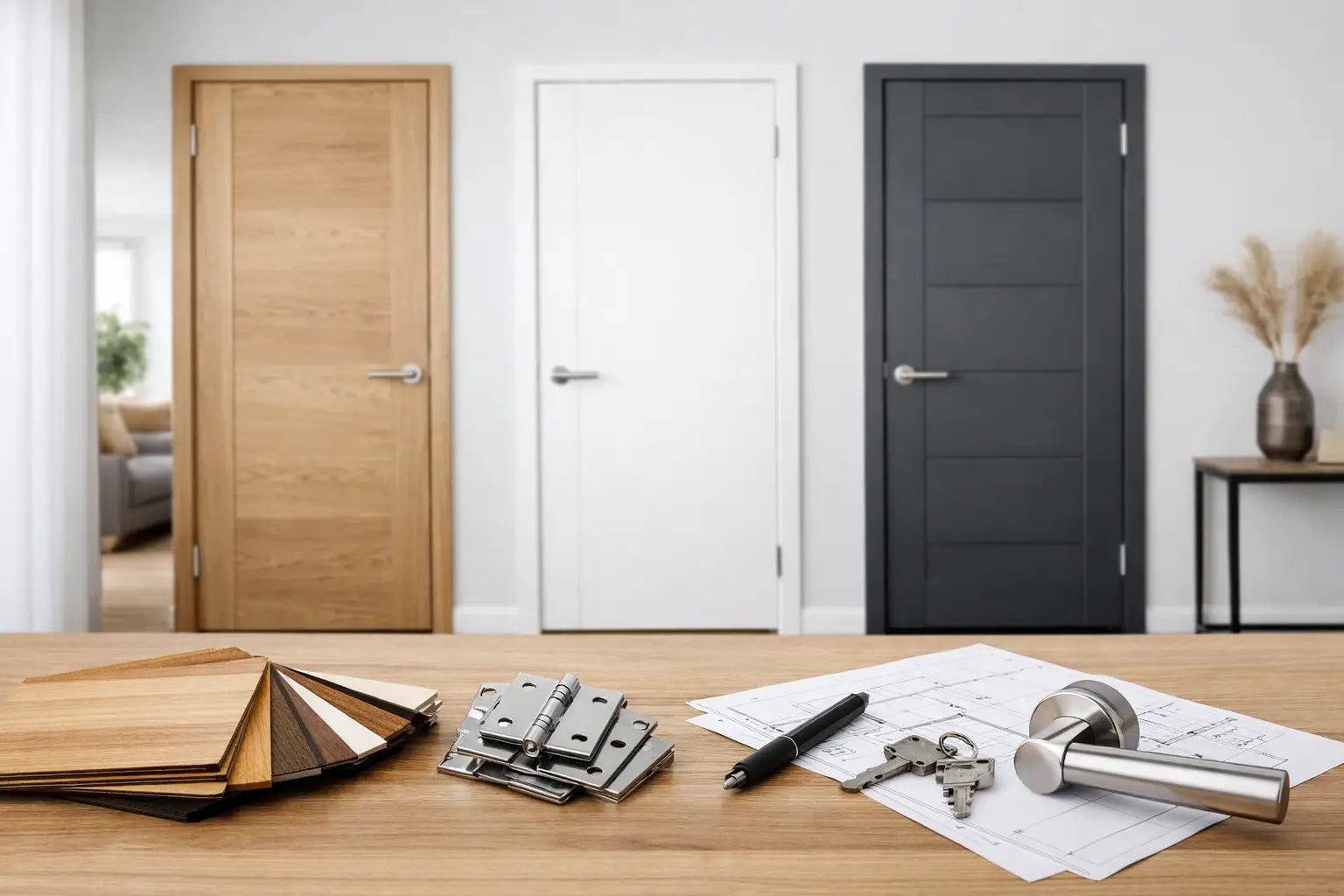
A poorly specified internal doorset often reveals its problems only after installation, when correcting them becomes more time-consuming and expensive. Common issues include uneven gaps around the door, poorly aligned latches, mismatched finishes between the door leaf and frame, or, more importantly, a doorset that fails to meet the required fire safety or performance standards. These problems can affect not only the appearance of the installation but also its functionality, durability, and compliance with UK building regulations.
To avoid these issues, more homeowners, developers, landlords, and trade professionals are choosing complete internal doorsets rather than sourcing the door leaf, frame, and ironmongery separately. A factory-prepared internal door set is designed with compatible components that work together, helping to ensure accurate fitting, consistent clearances, and a high-quality finish. Many pre-assembled doorsets are also available with certified FD30 and FD60 fire ratings, acoustic performance, and pre-fitted hardware, making them an efficient and reliable solution for both residential and commercial projects.
By selecting a complete internal doorset from the outset, you can reduce installation time, minimise on-site adjustments, and achieve a professional finish with greater confidence. Whether you're renovating a single property or specifying multiple doors for a new-build development, a fully integrated doorset offers improved performance, simplified installation, and long-term value.
What is an internal doorset?
An internal doorset is a pre-engineered door package supplied as a coordinated unit rather than separate parts. It typically includes the door leaf, frame, or lining, and may also include hinges, lock prep, seals, architrave options, and pre-fitted ironmongery, depending on the specification.
The key advantage is control. When a doorset is manufactured as one system, sizing, tolerances, and compatibility are handled in advance. That reduces guesswork on site and gives you a cleaner route to a reliable fit, especially where consistency matters across multiple rooms or plots.
For residential projects, that can mean less time spent matching a door slab to a lining and hardware pack. For commercial or compliance-led jobs, it can mean clearer specification and a more dependable path to achieving the required performance.
Why choose an internal doorset over a door leaf?
A door leaf on its own still suits many projects. If you are replacing like-for-like in an existing frame that is square, sound, and correctly sized, a door-only option can be cost-effective. But that approach depends heavily on the condition of the opening and the quality of site preparation.
A doorset is often the better choice where speed, consistency, and finish are priorities. Because the components are designed to work together, installation tends to be more straightforward and the finished result more predictable. That matters in new builds, renovations with multiple openings, landlord refits, and any job where repeatability saves time and avoids remedial work.
There is also a compliance angle. Fire-rated internal doorsets are particularly valuable because certification is tied to the tested assembly, not just the leaf. If you mix and match parts without checking compatibility, you can create a setup that looks correct but does not perform as intended.
Internal doorset options by project type
The right specification depends on where the doorset is going and what it needs to do.
For a standard home interior, the focus is usually on appearance, durability, and ease of fitting. White primed, oak veneered, black finished, and glazed designs remain popular because they let buyers match the look of the rest of the property without overcomplicating the purchase.
For rental property and managed accommodation, hard-wearing finishes and straightforward maintenance tend to matter more. In those settings, a pre-assembled option can also reduce fitting time between tenancies.
For self-build and developer projects, internal doorsets help keep specifications consistent across multiple rooms. You are not sourcing a frame from one place, hardware from another, and hoping the sizes line up on site. That joined-up approach is often worth more than the headline saving of buying individual parts.
For offices, schools, healthcare, and other commercial settings, performance takes priority alongside appearance. That could mean fire resistance, acoustic control, heavier-duty ironmongery, or more robust frame construction. In those cases, buying from a specialist supplier becomes particularly important because the technical details matter.
Fire-rated internal doorset requirements
When fire performance matters
If the opening forms part of a protected route or sits in a location where building regulations require fire resistance, a fire-rated internal doorset should be specified from the outset. Common options include FD30 and FD60, with the rating reflecting the tested period of fire resistance.
This is where buyers can come unstuck if they treat the door, frame, and seals as separate purchases. A compliant fire door assembly relies on the correct combination of components, including intumescent strips, smoke seals where required, hinges, glazing systems, and latch hardware.
Why the full set matters
A fire door leaf alone is not the same as a fire doorset. The frame dimensions, seal positions, hinge specification, and installation detail all affect performance. For landlords, developers, and contractors, that makes the complete set a safer and more practical route than trying to build the specification piece by piece.
It also makes procurement easier. Instead of chasing multiple products and checking compatibility manually, you can source a coordinated package that supports the intended application.
Style, finish, and glazing choices
One reason internal doorsets have become more popular is that they no longer feel purely functional. Buyers can now choose pre-assembled solutions across a broad range of looks, from traditional panelled oak styles to contemporary flush, grooved, and black-framed glazed designs.
The finish should be chosen with the setting in mind. Oak and woodgrain veneers bring warmth and suit both classic and modern interiors. White primed sets are useful where decorating flexibility matters. Black finishes create contrast and work well in more design-led spaces, but they also show marks more readily, so location matters.
Glazed internal doorsets can improve light flow in halls, kitchens, and home offices, but privacy and safety need to be considered. Clear glazing may be ideal between living spaces, while obscure or more limited glazing can suit bathrooms or utility areas better. In fire-rated applications, any glazed section must form part of the tested specification.
Sizing, handing, and installation considerations
This is the point where a good buying decision can be undone by rushed measurements. Internal doorsets are only as good as the information used to specify them. Structural opening size, wall thickness, floor finish levels, and handing all need checking before order.
Handing is a common source of confusion, especially on larger projects. A left-hand set ordered instead of a right-hand set can speed up installation quickly. The same applies to frame depth if the final wall build-up has not been confirmed.
Tolerance on site still matters. Even with a pre-assembled system, the opening must be suitable and the set installed correctly. A doorset reduces fitting variables, but it does not remove the need for competent installation. That is especially true for fire-rated products, where gaps, fixings, and seals must match the specification.
Hardware and finishing details
An internal doorset can be supplied at different levels of completion. Some buyers want the frame machined and the leaf prepared so their joiner can fit selected ironmongery on site. Others prefer a more complete package with hinges fitted, latch prep done, and the set ready for faster installation.
There is no single right choice. Trade buyers may want flexibility because they are matching hardware schedules across a development. Homeowners often prefer a simpler route where the practical specification has already been thought through. The main thing is to be clear before ordering about what is included and what still needs to be sourced.
Finish coordination is often overlooked until late in the process. Door style, frame finish, handle colour, hinges, and latch faceplates all contribute to the final look. If the project is design-led, it is worth confirming those details at the same time rather than treating hardware as an afterthought.
Cost versus value
A doorset usually costs more upfront than buying a door leaf on its own. That much is obvious. The more useful question is whether it lowers the total cost of the job once fitting time, remedial work, specification checking, and finishing quality are factored in.
On a single replacement in a perfectly serviceable frame, a door leaf may still be the best-value option. On multi-door projects, fire door installations, or jobs with tight programme demands, a doorset often makes better commercial sense. Fewer site adjustments, fewer compatibility issues, and a more consistent finish can justify the higher initial outlay.
That is why many buyers now treat internal doorsets as a specification-led purchase rather than a simple commodity item. They are buying time, consistency, and confidence, not just a slab and a frame.
Choosing the right supplier for an internal doorset
Not every retailer handles technical door products with the same level of detail. If you are buying an internal doorset, particularly a fire-rated or project-based one, you need clear product information, sensible category options, and support that can answer specification questions properly.
That is where a specialist supplier adds value. A broad range across finishes, brands, fire ratings, and hardware options makes it easier to compare suitable products instead of forcing a compromise. Door Supplies Online serves both straightforward home improvement purchases and more technical specification routes, which is exactly what many UK buyers now need.
The best buying experience is not just about price, although competitive pricing matters. It is about reducing uncertainty. When the opening, rating, finish, and hardware schedule all need to line up, product depth and knowledgeable support become part of the value.
If you are choosing doors for a whole renovation, a new-build plot, or a compliance-led upgrade, it pays to think beyond the leaf. A well-specified doorset can save time, reduce site headaches, and deliver a more dependable finish from the day it is fitted.
For more information about our interior or exterior doors or door accessories, give us a call at 01603 622261 and speak to a member of our expert team today, or email us at sales@doorsuppliesonline.co.uk. We look forward to hearing from you.