
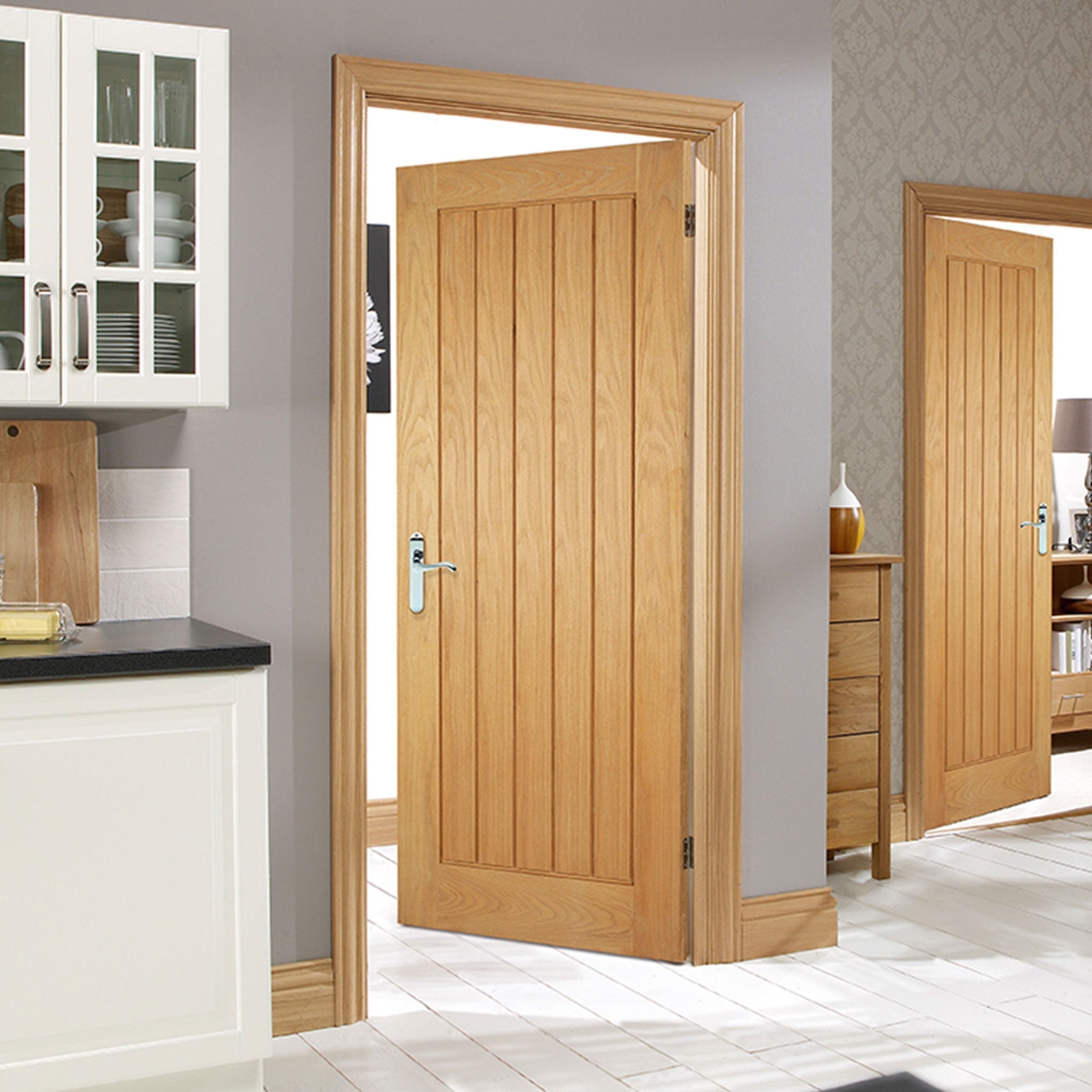
If you're specifying an entrance door for a flat, upgrading a rental property, or managing a new-build development, PAS 24 door sets are often the preferred choice for meeting enhanced security requirements. Security is no longer simply a desirable feature; it is a key consideration for many residential projects and building specifications. While a door may appear robust, it must be independently tested and certified to the appropriate standard to demonstrate that it can withstand attempted forced entry. Choosing a PAS 24 certified door set helps provide confidence that your entrance door meets recognised security performance standards.
Understanding what a PAS 24 door set actually includes is essential. It is far more than a door leaf fitted with a quality lock. A certified PAS 24 doorset is a complete, factory-tested assembly comprising the door leaf, frame, locking system, hinges, glazing (where applicable), seals, ironmongery, and all associated hardware. Every component is tested together as a single unit to ensure the complete system performs as intended under enhanced security testing.
What PAS24 means in practice
PAS24 is a UK security standard used to assess the enhanced security performance of doorsets and windows. For doors, it is widely specified where resistance to opportunistic attack is required, particularly in new-build residential settings and flat entrance applications.
For buyers, the practical takeaway is simple. If a product is described as PAS24, the doorset should have been tested as a complete configuration. That does not mean every version of that door automatically qualifies. Changes to glazing, hardware, letterplates, viewers, frame details, or threshold design can affect whether the supplied set matches the tested specification.
This is where many purchasing mistakes happen. Someone sees a door style they like, then assumes adding alternative ironmongery or requesting a bespoke size will still leave the product within the same certification route. Sometimes it does. Sometimes it does not. With compliance-led products, the detail matters.
Why PAS24 doorsets are commonly specified
The strongest reason is that they help meet security expectations in residential developments. They are often required or preferred for flat entrance doors, communal settings, and properties where a higher level of tested security performance is expected.
There is also a commercial reason. For developers, landlords, and contractors, specifying PAS24 doorsets can reduce ambiguity. Instead of assembling a door leaf, frame, and hardware package from mixed components and hoping the result performs as intended, you select a predefined system that has undergone formal testing.
That tends to make procurement cleaner and site decisions easier. It can also help avoid the false economy of buying pieces separately, only to discover later that the assembled door does not satisfy the original requirement.
PAS24 doorsets vs standard door and frame sets
A standard external door set-up may be perfectly suitable for some applications, but it is not automatically a PAS24 doorset. The difference is the testing and the evidence behind the finished assembly.
A basic entrance door package might include a solid leaf, frame, hinges, and lock. On paper, the individual components may appear strong enough. The issue is that compliance is not judged on appearances or assumptions. PAS24 relates to the performance of the full doorset when tested in the specified configuration.
This is particularly important for flats and shared residential buildings. In those settings, the door is doing more than providing privacy and kerb appeal. It is part of the security strategy for the building and often part of a wider compliance picture.
Where fire performance also comes into the picture
Many buyers looking at flat entrance doors are not only thinking about security. They are also dealing with fire performance. That is why PAS24 is often discussed alongside FD30 or other fire-rated specifications.
These are not interchangeable standards. PAS24 deals with security performance. A fire rating relates to how long a door assembly can resist fire under test conditions. In a flat entrance application, both may be required depending on the project and the building design.
That is why pre-assembled fire door sets with PAS24 capability are so widely used in specification-led projects. They bring together the door leaf, frame, and compatible hardware in a format intended to simplify ordering and reduce site risk. It is a more controlled route than trying to build compliance from separate products after the event.
What to check before buying PAS24 doorsets
The first thing to confirm is the exact application. A front entrance to a house, a flat entrance opening onto a communal corridor, and a commercial door in mixed-use premises may all have different requirements. The right product depends on where it is being fitted and what standards the project calls for.
Next, check that the doorset is supplied as a tested system, not just as a door leaf with optional extras. Ask whether the frame, glazing, lockset, hinges, seals, and threshold arrangement match the tested specification. If you need a viewer, a letterplate or access control preparation, make sure those details are compatible with the certified construction.
Size is another area to handle carefully. Bespoke dimensions are often possible, but they need to sit within the manufacturer’s approved scope. The same applies to finish choices. Veneers, laminates, painted faces, and glazing options can vary between product ranges, but not every aesthetic option will be available on every compliant doorset.
If fire performance is also needed, confirm the full specification rather than assuming an external-looking door has the right rating. A security doorset and a fire-rated flat entrance doorset may look similar, yet they serve different technical requirements.
Why pre-assembled doorsets make life easier
For trade buyers, the appeal is straightforward. A pre-assembled doorset can save fitting time, reduce on-site guesswork, and cut down the chance of incompatible components being used. That matters in larger developments where repeatability, programme control, and call-back reduction all affect margin.
For homeowners and renovators, the benefit is slightly different but just as valuable. Buying a complete doorset from a specialist supplier removes much of the uncertainty around which frame, hardware, and door construction belong together. Instead of piecing a system together from separate categories, you are selecting a package designed to work as one unit.
That does not mean every project needs the same level of specification. If you are replacing a rear external door in a straightforward domestic setting, the right solution may differ from what is needed for a block of flats. The point is to buy for the application, not simply for the label.
Common misunderstandings around PAS24 doorsets
One common misunderstanding is that a stronger lock alone makes a door PAS24 compliant. It does not. Hardware is part of the performance, but the standard applies to the assembled doorset.
Another is that a door style can be freely customised without affecting compliance. In reality, changes to glazing size, apertures, ironmongery, or frame construction may alter the tested arrangement. That is why product data and supplier guidance matter.
There is also a tendency to focus only on certification and ignore practicality. Security performance is essential, but so are finish, durability, maintenance, and lead time. A developer may need consistency across multiple plots. A landlord may prioritise hard-wearing finishes and reliable hardware. A self-builder may want a product that satisfies both compliance and appearance in one purchase. A good specification balances all of those factors.
Choosing the right supplier for PAS24 doorsets
This is a category where specialist knowledge counts. Buyers need clear product categorisation, accurate technical information, and realistic guidance on what can and cannot be changed within a tested design.
A specialist supplier is usually better placed to help you compare flat entrance doors, fire-rated options, external doorsets, and hardware packages without blurring the lines between them. That is especially useful if your project includes several door types and you want one source for compliant products, coordinated ironmongery, and dependable lead times.
Door Supplies Online serves that kind of buyer well because the range goes beyond standard internal doors into technical categories where specification detail matters. For customers balancing design, compliance, and budget, that specialist focus makes the buying process far more straightforward.
Getting the specification right the first time
The best way to approach PAS24 doorsets is to treat them as a complete product category, not as a standard door with a few upgrades added on. Start with the opening type and project requirement, then match the security level, fire performance, where relevant, finish, hardware, and hand over the tested system being supplied.
That approach saves time later. It reduces avoidable site issues, helps maintain compliance, and gives you a door assembly that has been designed to perform as a unit. When security is part of the brief, buying with that level of clarity is rarely the expensive option - it is usually the sensible one.
If you are comparing products now, the useful question is not simply whether a door looks right. It is whether the full doorset, exactly as supplied, is right for the building, the standard, and the people using it every day.
For more information about our interior or exterior doors or door accessories, give us a call at 01603 622261 and speak to a member of our expert team today or email us at sales@doorsuppliesonline.co.uk. We look forward to hearing from you.