
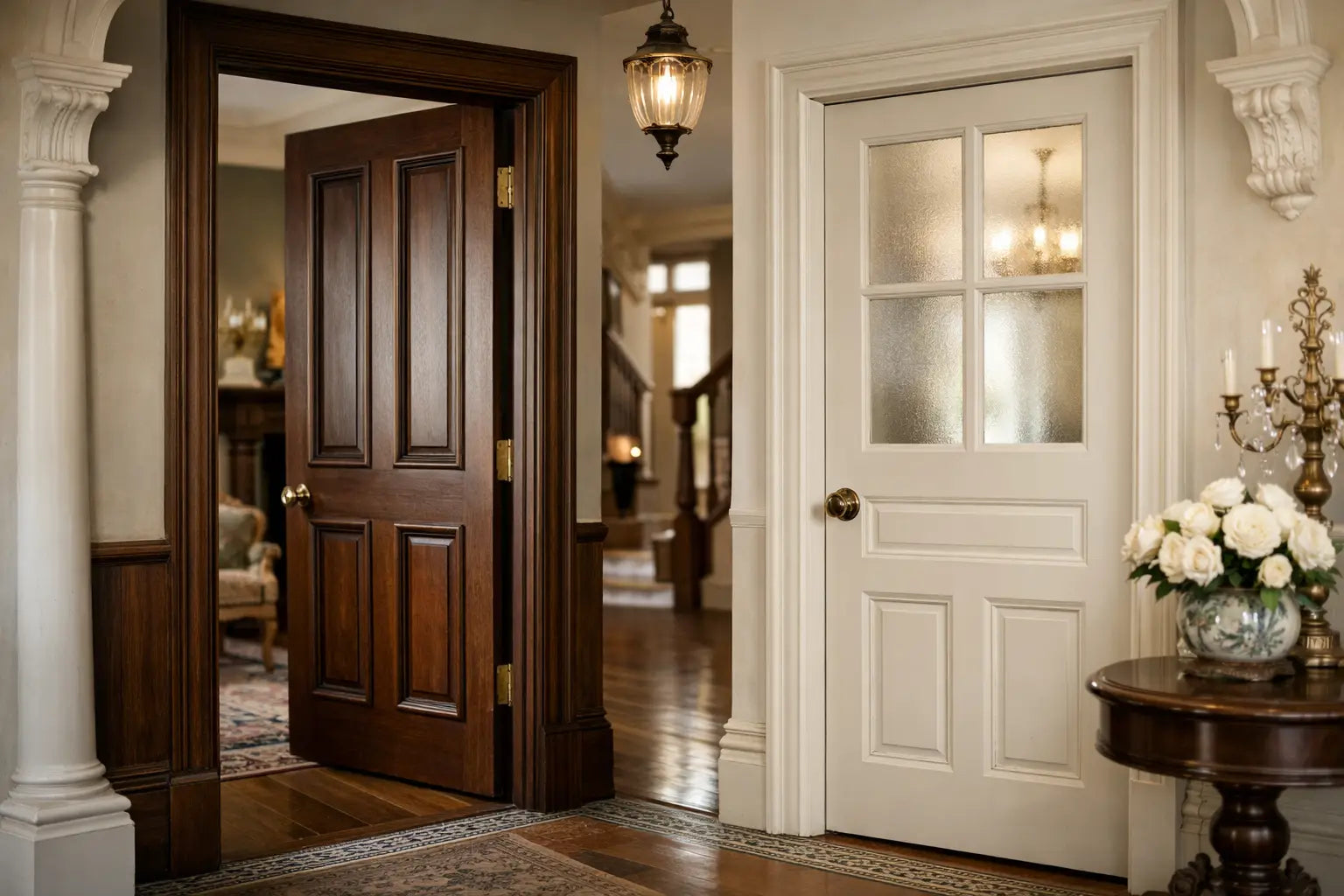
Choosing the best internal doors for a Victorian house requires careful consideration, as the wrong door can easily detract from the property's original character. A door that is too plain, lightweight or overly contemporary can look out of place, even if the flooring, skirting boards and decorative mouldings have been beautifully restored. To achieve an authentic finish, it's important to select Victorian internal doors that reflect the proportions, panel design, glazing and craftsmanship typical of the period while meeting the demands of modern living.
Whether you're renovating a period home, restoring original features or replacing worn-out doors, the goal is to strike the right balance between traditional aesthetics and everyday practicality. Today's Victorian-style internal doors are available with modern performance features, allowing homeowners to retain the charm of their property without compromising on safety, comfort or durability.
What makes a door right for a Victorian property?
Victorian interiors were rarely minimal. Doors were part of the architectural detail, sitting alongside deep skirtings, architraves, ceiling roses and fireplaces. In most cases, the most convincing replacements are panelled internal doors with strong vertical proportions and a bit of visual weight.
Four-panel doors are often the safest place to start. They suit a wide range of Victorian terraces, semis and larger villas because they echo the classic proportions found in many original joinery schemes. In more formal properties, you may also see two-panel or heavily moulded designs, particularly where reception rooms were intended to feel more decorative than bedrooms or service spaces.
Flush doors can work in later extensions or loft conversions, but they rarely look at home in the principal rooms of a Victorian house. If period consistency matters, traditional stile-and-rail construction and panel detailing will usually give a better result.
Best internal doors for Victorian house style
For most projects, there are three door types worth serious consideration: panelled solid doors, glazed panel doors and fire-rated traditional doors. The right mix is often more effective than using one style everywhere.
Panelled doors for bedrooms, lounges and dining rooms
A solid panelled door is the standard recommendation for original-style rooms. It gives the right visual depth, helps with sound reduction and feels more substantial in use. That matters in older houses, where light modern doors can feel flimsy against period mouldings and thicker walls.
If the property still has some original doors in place, match the panel layout as closely as possible rather than choosing a generic traditional style. Exact replication is not always possible, especially in standard off-the-shelf sizes, but getting close on panel proportions and edge detail will preserve the feel of the house.
Primed internal doors are often the practical choice where you want to colour-match existing woodwork. Many Victorian homes suit painted finishes particularly well - think of off-whites, stone tones, deep greens or darker heritage shades. Unfinished oak can also work, but usually better in houses where the joinery scheme is already timber-led rather than painted.
Glazed internal doors for dark hallways and receptions
Victorian layouts are attractive, but they are not always generous with natural light. Long corridors, enclosed stair halls and back reception rooms can benefit from glazed internal doors that borrow light without losing the traditional look.
This is where clear glazed or frosted glazed panel doors come into their own. A half-glazed or panel-over-panel design can sit comfortably in a Victorian setting if the glazing bars and mouldings are in keeping. They are especially effective between hallways and sitting rooms, kitchens and dining spaces, or at the end of narrow passages where a solid door would block too much light.
The trade-off is privacy. Clear glazing is ideal where brightness is the priority, while obscure or frosted glass is usually better for studies, bathrooms or spaces that need some screening. If you are replacing a door in a principal room facing the hallway, glazing can make the whole ground floor feel less enclosed.
Fire-rated doors where compliance matters
The best internal doors for Victorian house upgrades are not always purely about appearance. In some layouts, particularly rental properties, HMOs, loft conversions and certain renovation projects, fire door specification matters just as much as style.
That does not mean compromising the character of the property. Traditional-style FD30 internal fire doors are widely available in panelled and glazed designs, giving you the chance to retain a period look while meeting current requirements. This is often the best route for stair enclosures, kitchens opening onto escape routes, and upper-floor accommodation where fire resistance is required.
Specification is important here. A fire door is not just a thicker door leaf. The frame, hinges, latch, intumescent strips, glazing system and installation all need to be appropriate to maintain the rating. If the property needs compliant fire protection, buying with the full doorset or compatible components in mind will save time and avoid costly mistakes later.
Choosing between painted, primed and oak finishes
Finish has a big impact on whether a replacement door feels authentic. In many Victorian houses, painted internal doors are the most natural fit because that was historically common and still works well with decorative trim. White primed doors are useful where speed matters, but a final topcoat in a heritage-appropriate colour usually gives a stronger result than leaving them bright white.
Oak internal doors are popular for good reason. They add warmth, they suit natural flooring, and they can bridge the gap between period and contemporary schemes. But they are not right for every Victorian house. In a heavily traditional interior with ornate skirting and original fireplaces, fully finished oak can sometimes feel more Edwardian or modern-country than strictly Victorian.
A good rule is to look at the rest of the joinery. If the skirting, architraves and staircase are painted, painted doors often make more sense. If the property already features exposed timber tones, oak may sit comfortably.
Size, proportions and why standard replacements can look wrong
Older houses do not always match modern standard sizes neatly. Victorian door openings can be taller, narrower or simply inconsistent from room to room. That is why proportion matters almost as much as style.
A door with the right number of panels can still look wrong if the rails are too chunky or the overall shape is too squat for the opening. Before ordering, check the actual opening size, the frame condition and whether any trimming allowance is available. In some cases, bespoke or carefully selected oversize options are worth the extra spend because they preserve the visual line of the property.
This is also where experienced trade fitting makes a difference. A well-chosen door can still disappoint if the margins are uneven, the hinges are under-specified or the architrave detailing is ignored.
Matching hardware to Victorian doors
The door leaf does most of the visual work, but ironmongery finishes the job. A traditional panelled door paired with the wrong handle can quickly lose its period credibility.
In many Victorian schemes, satin brass, polished brass, antique brass, black and some aged finishes work well, depending on the property and the wider décor. Rim locks, mortice knobs, lever-on-rose and lever-on-backplate options can all be suitable. The right choice depends on how formal the interior is and whether you are aiming for strict restoration or a practical traditional look.
Privacy hardware also needs thought. Bathrooms and bedrooms often need thumbturns or privacy sets, and if you are specifying fire doors, the hardware must also be compatible with the door rating.
A practical buying approach for Victorian renovations
If you are updating a whole house, avoid choosing each door in isolation. Start by identifying which rooms need solid privacy, which need borrowed light and which need fire-rated protection. From there, you can build a coordinated scheme rather than ending up with mismatched styles that weaken the overall finish.
For example, a Victorian terrace might suit solid four-panel doors to bedrooms and reception rooms, a glazed traditional door between the hallway and lounge, and an FD30 panelled door to the kitchen if required by the layout. That gives consistency without forcing one specification into every opening.
It is also worth thinking beyond the door leaf. Frames, linings, architraves, skirting and hardware all affect the final result, especially in older homes where replacement work can expose uneven walls or worn original joinery. Buying from a specialist supplier makes this easier because you can source by style, finish, glazing and fire rating rather than trying to piece everything together from a general merchant.
At Door Supplies Online, this is exactly where a specialist range matters. If you need traditional internal doors, glazed options, FD30 solutions and matching ironmongery in one place, it is far easier to compare the practical specification as well as the look.
The right Victorian door does not need to be overly ornate, and it does not need to be expensive for the sake of it. It simply needs to respect the age of the property, work properly day to day, and suit the standard the rest of the renovation is trying to achieve. If you get that balance right, the doors stop feeling like replacements and start feeling like they have always belonged there.
For more information about our interior or exterior doors or door accessories, give us a call at 01603 622261 and speak to a member of our expert team today or Email us at sales@doorsuppliesonline.co.uk. We look forward to hearing from you.