
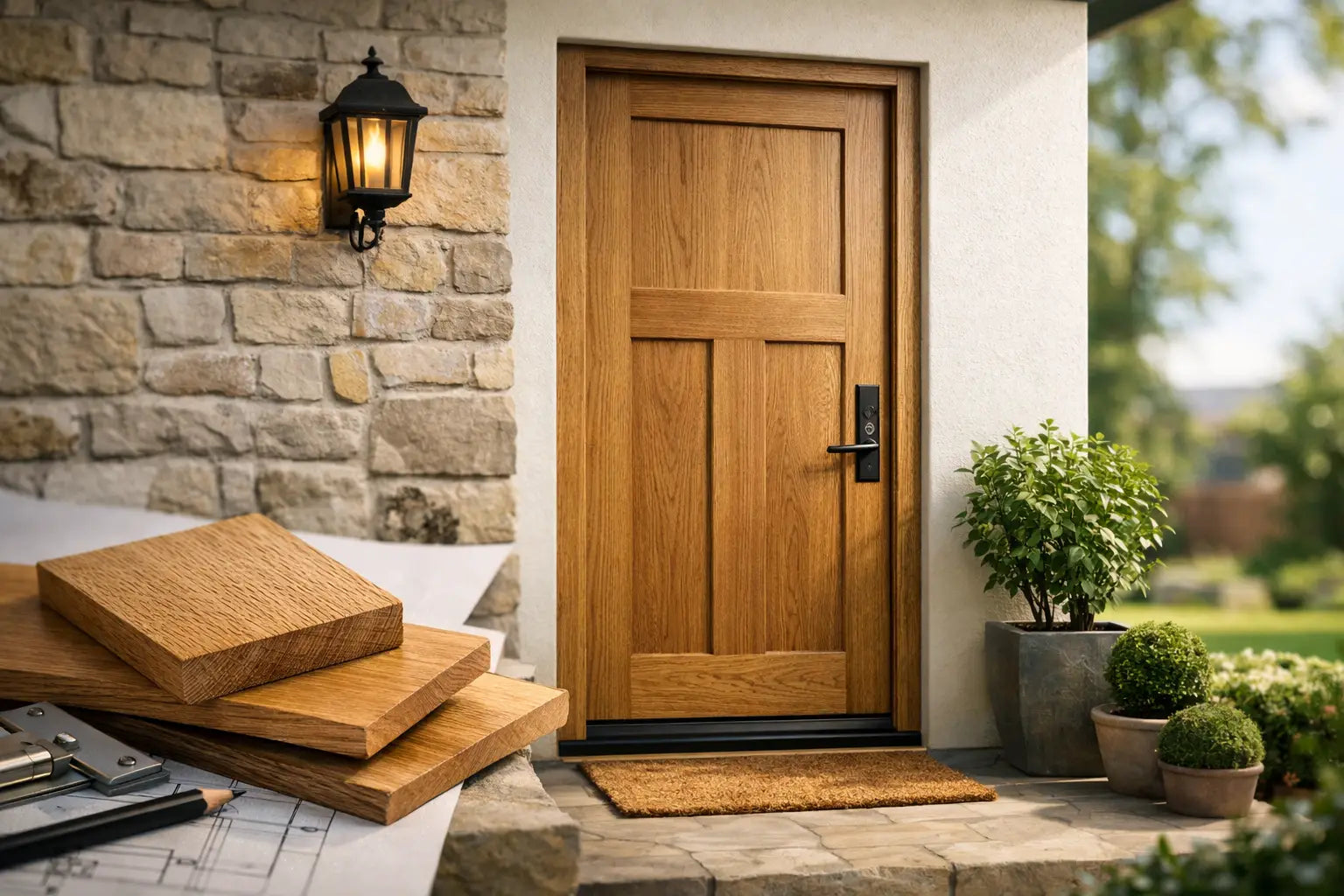
A poorly chosen external solid oak door may look impressive when first installed, but its true performance becomes apparent over time. Inferior-quality timber or an unsuitable specification can lead to swelling during wet weather, movement through seasonal temperature changes, draughts around the frame, and a finish that fails to complement the property's character. That is why external solid oak doors remain a popular choice for homeowners, renovators, developers, and trade professionals seeking a durable, secure, and visually striking entrance that delivers long-term performance.
For decades, solid oak external doors have been valued for combining timeless style with exceptional strength and durability. The natural density of oak makes it well-suited to the demands of daily use, while its distinctive grain and rich character create an entrance that enhances both traditional and contemporary homes. Whether you're restoring a period property, renovating a cottage, converting a barn, or adding warmth to a modern extension, an external oak door offers an authentic appearance that painted timber and many composite alternatives cannot fully replicate.
Beyond their aesthetic appeal, solid oak front doors provide excellent longevity when properly finished and maintained. They can improve kerb appeal, enhance security, and add lasting value to your property, making them a worthwhile investment for both residential and commercial projects. With a wide range of traditional and contemporary designs available, choosing a high-quality external solid oak door ensures you benefit from the natural beauty of real timber while enjoying reliable performance for years to come.
Why external solid oak doors remain a popular choice
There is a reason oak keeps appearing on residential specifications. It is hardwearing, visually distinctive, and well-suited to both traditional and more contemporary designs. A properly manufactured and correctly finished external oak door can give a property a more substantial look than many lightweight alternatives.
That said, buyers should separate appearance from performance. Not every oak door is built to the same standard, and external use places far greater demands on construction, finishing, and installation than internal use. Exposure to rain, sun, and temperature changes will test every part of the door, from the stiles and rails to the glazing, seals, and hardware.
For many customers, the appeal comes down to three priorities. First, external oak creates a premium first impression. Second, it offers a practical route to a strong timber door. Third, it works across a wide range of house styles, from classic panelled entrances to glazed rear doors opening onto a garden.
What to check before you buy external solid oak doors
The first question is not style. It is a location. A fully exposed front elevation on a coastal or high-wind site will place more strain on a timber door than a sheltered porch entrance or covered side access. If the opening gets heavy weather, specification matters even more.
Construction quality is key. A good external oak door should be designed specifically for external applications, not adapted from an internal pattern. Buyers should also pay attention to thickness, glazing specification where relevant, and whether the door is supplied unfinished or factory finished. Unfinished oak gives flexibility, but it also places more responsibility on the installer or homeowner to seal every edge, face, and cut correctly before fitting.
Sizing is another area where mistakes can become expensive. Trade buyers will already know that assuming an opening is "close enough" can create delays on-site. For homeowners replacing like-for-like, measuring the slab alone is not always enough. The frame condition, threshold, tolerances, and any required hardware prep all need to be considered before ordering.
If security is a priority, and for most entrance doors it should be, think beyond the timber itself. Locking system, hinges, glazing security, frame quality, and overall installation all contribute. Even a strong oak door will only perform as well as the system around it.
Solid oak, engineered oak, and what the term really means
This is where buyers need a practical rather than romantic view. The phrase "solid oak" is widely used in the market, but it is worth understanding how the door is made. Some products use solid oak components throughout, while others may use engineered construction with oak facings or laminated sections to improve stability.
That is not automatically a drawback. In many cases, engineered construction is chosen precisely because it can help reduce movement and improve consistency in external conditions. What matters is honest product specification and suitability for external use. A trade customer sourcing for a renovation project may value traditional material authenticity, while a homeowner may simply want the best balance of appearance, durability, and price.
Style options for external oak doors
Oak is remarkably flexible from a design point of view. Traditional boarded, ledged and panelled styles remain a strong choice for cottages, older terraces and character properties. They suit natural finishes particularly well and can work beautifully with black ironmongery or heritage-style hardware.
For more standard residential settings, panelled oak doors offer a familiar and versatile look. A four-panel or six-panel design can feel timeless rather than old-fashioned, especially when paired with clean frames and quality glazing details.
Glazed external oak doors are often chosen for rear entrances, kitchens, utility rooms, and garden-facing openings where light matters just as much as access. Here, the design choice needs to balance privacy, daylight, and thermal performance. Clear glazing can brighten darker areas, while decorative or obscure glazing may be better for entrances facing public spaces.
Contemporary oak designs are also increasingly popular. Simpler lines, vertical glazed sections, and cleaner detailing allow oak to work well in modern extensions and self-build projects. The finish then becomes central to the look - natural, lightly stained or oiled oak gives a very different result from a darker or more traditional treatment.
Finishing, weathering, and maintenance
This is where many external timber doors either perform well or start to disappoint. Oak is durable, but it still needs proper finishing and ongoing care. External exposure means UV, rain and seasonal movement are always part of the equation.
If the door is supplied unfinished, every surface must be sealed before installation, including top and bottom edges, hinge recesses, lock cut-outs, and glazing beads where specified by the manufacturer. Missing even small areas can allow moisture ingress, and that often leads to movement, staining, or finish breakdown later on.
Maintenance expectations should be realistic. External oak doors are not fit-and-forget products in the way some buyers assume. They generally need periodic inspection and refinishing, especially on exposed elevations. South-facing positions can take more sun and UV damage, while west-facing doors may see the worst of the rain.
For some customers, that maintenance is part of the appeal of real timber. For others, it may make an alternative material more practical. The right choice depends on whether natural character and repairability outweigh the need for lower upkeep.
Glazing, insulation, and everyday performance
A door has to do more than look good from the driveway. It needs to work properly every day, hold heat effectively, and close securely without fuss. If you are specifying a glazed oak door, check the glazing type and energy performance carefully.
Well-made external doors can offer strong thermal performance, but the door leaf alone is only part of the story. Draught exclusion, threshold design, frame fit, and installation standards will influence real-world results. A premium slab fitted into a poor frame will not deliver what the customer expects.
This matters on renovation projects where existing frames may be out of square or nearing the end of their service life. In many cases, replacing the frame at the same time gives a better result and avoids compromising a quality new door.
Cost, value, and where oak sits in the market
External oak sits in a more premium bracket than many basic softwood doors, but the pricing needs to be viewed in context. Buyers are usually paying for better material quality, stronger visual appeal, and a product that can add value to the property when selected and maintained properly.
The cheapest option upfront is not always the most economical over time. If a low-cost door starts twisting, leaking, or failing visually after a short period, replacement and remedial work can quickly wipe out any savings. On the other hand, there is little point in over-specifying an expensive oak entrance for a low-use secondary opening if a simpler solution would do the job.
That is why product selection should be based on use, exposure, and property type rather than price alone. A self-builder may want a statement front entrance. A landlord may prioritise durability and presentability across multiple units. A joiner fitting for a private client may need a style-led result with dependable lead times and matching ironmongery options.
Who do external solid oak doors suit best
They are a strong fit for buyers who want natural timber character and are prepared to maintain it properly. They also suit projects where a painted manufactured finish would feel too flat or where the building itself calls for a more authentic material choice.
They may be less suitable where exposure is severe, and maintenance is likely to be neglected, or where the client wants the timber to look without the ongoing care. In those cases, it is better to be direct about trade-offs at the point of purchase than to create problems after installation.
For homeowners, renovators, and trade customers sourcing through a specialist such as Door Supplies Online, the real advantage is being able to compare styles, specifications, and supporting products in one place rather than treating the door as a standalone purchase. Frame choice, hardware, finish, and intended use all matter.
A good external oak door should feel right every time it opens and closes. If you choose with the property, exposure, and installation in mind, it will do more than improve the entrance - it will earn its place on the building for years to come.
For more information about our interior or exterior doors or door accessories, give us a call at 01603 622261 and speak to a member of our expert team today, or email us at sales@doorsuppliesonline.co.uk. We look forward to hearing from you.