
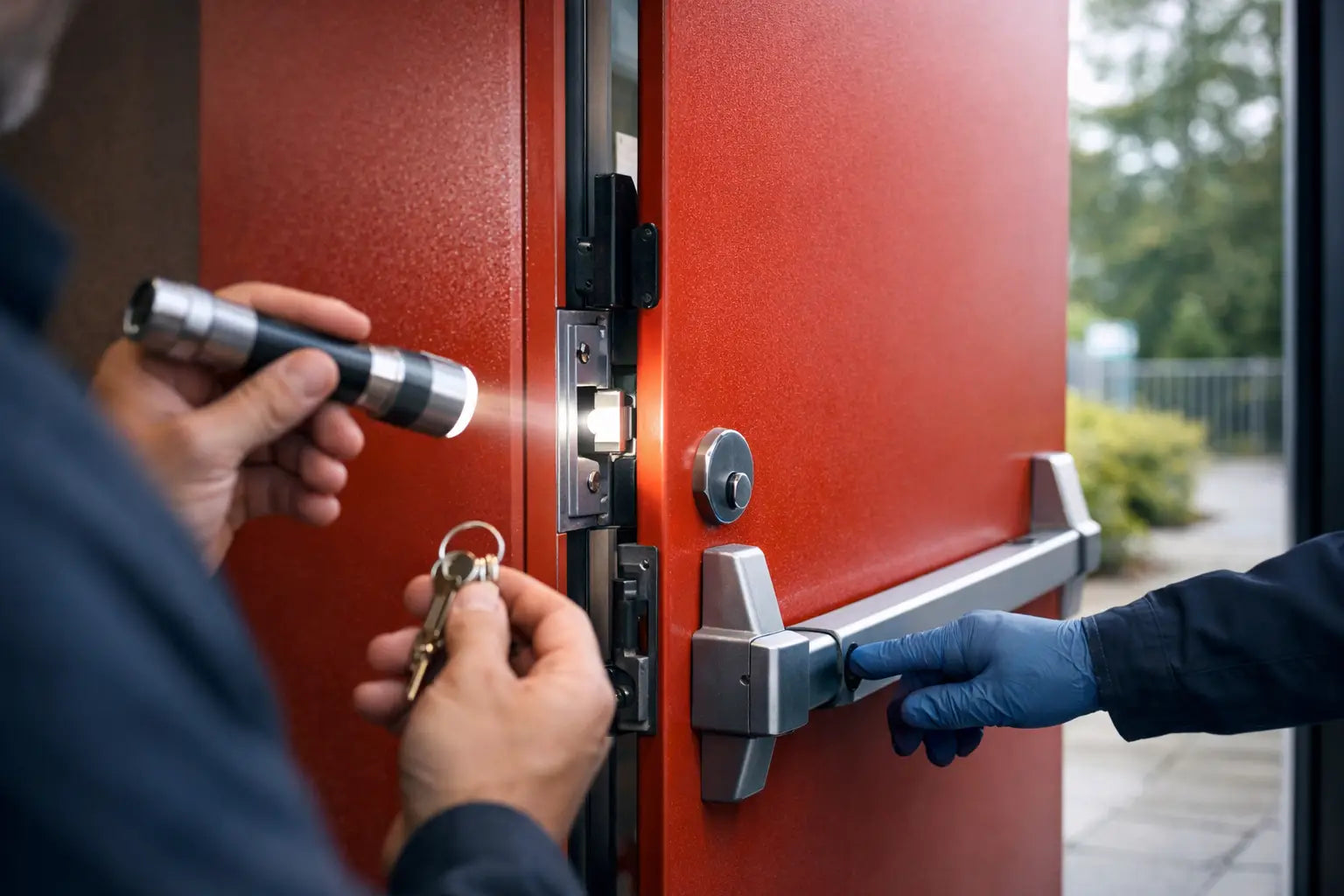
When an entrance door is required to provide fire protection, the specification becomes just as important as its appearance. External fire doors must do far more than enhance the look of a property; they need to deliver certified fire resistance, reliable security, weather protection, and long-term durability while complying with UK Building Regulations. Choosing the wrong product can result in installation delays, failed inspections, additional costs, and the need to replace frames, seals, or ironmongery to achieve compliance. Selecting the correct external fire door from the outset helps avoid these issues and ensures the complete door assembly performs as intended.
For homeowners, landlords, developers, and trade professionals, the challenge is rarely finding an entrance door with the right style. The real priority is selecting an external fire-rated door that is appropriate for its intended location, supplied with the correct FD30 or FD60 fire rating, and fully compatible with the required frame, intumescent seals, glazing, locks, and ironmongery. A complete, certified external fire door set provides greater confidence that all components have been designed and tested to work together, helping to simplify installation and support compliance.
Whether you're specifying an apartment entrance fire door, securing a commercial building, or upgrading a residential property, choosing a specialist external fire door offers long-term benefits beyond fire safety alone. High-quality fire doors combine robust construction, enhanced security, thermal efficiency, and weather resistance with attractive designs that complement both traditional and contemporary architecture. By investing in a certified external fire door set, you can achieve the ideal balance of safety, performance, and kerb appeal while reducing the risk of costly on-site complications.
Where external fire doors are usually needed
External fire doors are most commonly specified where a door forms part of a protected escape route or separates areas of higher fire risk from the outside. In practice, that can include flat entrance doors opening onto communal corridors, doors from commercial spaces, plant areas, service rooms, or certain outbuildings and ancillary spaces, depending on the building layout and regulations.
This is also why the phrase can mean slightly different things depending on the project. Some buyers are looking for a fire-rated external door leaf for a commercial or residential application. Others actually need a complete doorset for a flat entrance, where fire performance, smoke control, and security are all part of the specification. The detail matters because not every external-grade door is fire-rated, and not every fire door is suitable for external exposure.
External fire doors are about more than fire rating
The first question most people ask is whether they need FD30 or FD60. That is a good starting point, but not the whole picture. The fire rating tells you how long the door assembly is designed to resist fire under test conditions, but the real-world performance depends on the complete setup.
That includes the frame, intumescent strips, smoke seals where required, hinges, closers, latches, glazing system, and the way the door is fitted. If you mix products that were not intended to work together, you can quickly undermine the rating you thought you were buying.
On an external opening, there is another layer to consider. The door also needs to cope with weathering, temperature changes, and regular daily use. Timber, steel, and aluminium options all bring different advantages. Timber can suit traditional residential projects and premium entrance applications, while steel and aluminium are often favoured where durability, lower maintenance, or a more commercial appearance is needed.
What to check before you buy
A product listing can make a door sound straightforward, but specification-led buying always benefits from slowing down and checking the details. The first thing to confirm is whether you need a door leaf only or a complete doorset. If the opening is part of a more regulated environment, a pre-assembled set can make life easier because compatibility between components is already considered.
The second point is certification and evidence of performance. You should know what fire rating the product carries, whether it has been tested or certified for the intended use, and whether any glazing, letterplates, viewers or hardware need to be included within an approved specification. This is particularly important on flat entrance doors, where fire performance and security can sit side by side.
The third point is exposure. An external location brings rain, sun, temperature movement and wear. That affects material choice, finish, maintenance expectations, and the suitability of seals. A door that performs well internally may not be appropriate on an exposed elevation.
Security and compliance often go together
Many buyers treat fire safety and security as separate decisions, but on entrance doors, they usually overlap. Flat entrance doors are the clearest example. In many schemes, the door must help protect the escape route in the event of fire while also meeting a security standard such as PAS24 where required by the specification.
That means the lock, cylinder, hinges, frame reinforcement, and hardware are not just decorative finishing items. They are part of the door's overall performance. If you are replacing an older entrance door in a block or sourcing multiple sets for a development, it is sensible to look at complete systems rather than trying to build a compliant set from unrelated parts.
Material choice depends on the project
There is no single best material for all external fire doors. The right option depends on the building type, desired appearance, level of exposure, and budget.
Timber fire doors can be the right fit where visual warmth, traditional styling, or a painted finish is important. They can work particularly well in residential settings, but they need the correct construction and finishing system for external use. Some buyers assume any oak-style or veneered fire door can be used outside if it is well-coated. That is not a safe assumption.
Steel external fire doors tend to be chosen for utility, plant, service, and commercial settings where durability is a priority and design is secondary. They are often a practical answer for harder-working environments.
Aluminium systems can suit modern projects, flat schemes, and commercial entrances where you want a cleaner architectural look with strong weather performance. They can also offer a good balance between appearance and long-term maintenance.
Do not overlook frames, seals, and ironmongery
A well-specified door leaf can still fail on site if the supporting components are wrong. Frames must be suitable for the rating and the application. Intumescent strips need to be the correct type and positioned properly. Smoke seals may be required depending on the door's role within the building. Closers, hinges, locks, and handles should also be compatible with the tested or approved door construction.
This is one of the biggest differences between buying from a general retailer and buying from a specialist supplier. A specialist range makes it easier to source matching hardware, frames, and door furniture that suit the product category you are buying from. That reduces guesswork and helps avoid expensive returns or fitting problems later.
Glazing, vision panels, and finishes
Glazed external fire doors can be useful where visibility, borrowed light, or design consistency matters. In commercial settings, vision panels can improve safety and practicality. In residential developments, glazing may be part of the architectural look. But glazing in a fire-rated external door is not a decorative afterthought. The glass type, bead system, and tested configuration all matter.
The same goes for finishes. Paint grade, laminate, steel-coated, and factory-finished options can all be suitable in the right context, but finish durability and maintenance requirements should be considered from the start. A busy entrance in a managed block has different demands from a lightly used external storage room door.
When a doorset is the smarter choice
For many projects, especially where speed, consistency, and compliance matter, a complete external fire doorset is the safer route. Instead of sourcing the leaf, frame, seals, and ironmongery separately, you are buying a system intended to work together.
That can be especially helpful for developers, landlords, and trade buyers managing multiple openings. It simplifies ordering, reduces on-site decision-making, and supports a cleaner specification process. It also helps when you need consistency across a project in both appearance and technical performance.
At Door Supplies Online, that specialist approach is what makes complex buying more manageable. A broad range is useful, but it only delivers value if the categories, ratings and compatible product options are clear enough to specify with confidence.
Common buying mistakes to avoid
The most frequent mistake is assuming all fire doors can be used externally. They cannot. Another is focusing purely on the fire rating while ignoring weather exposure, security requirements, or the need for a complete certified assembly.
There is also a tendency to treat hardware as interchangeable. On fire-rated external doors, which can create problems quickly. A lockset, closer, or glazed aperture outside the intended specification can affect compliance. Finally, many buyers leave sizing too late. If the opening is non-standard, it is far better to address that early than to force a standard product into an unsuitable situation.
Getting the specification right the first time
If you are buying for a home renovation, a flat entrance replacement, or a larger commercial project, the most practical starting point is to define the door's role in the building. Is it protecting an escape route, securing a communal area, serving a plant room, or forming part of a flat entrance? Once that is clear, the rating, material, hardware, and doorset options become far easier to narrow down.
Price still matters, of course. But with external fire doors, value is not just the ticket price. It is buying the right product once, avoiding compliance issues, and reducing the risk of remedial work after installation.
If there is one useful rule to keep in mind, it is this: treat an external fire door as a complete performance product, not simply a door leaf. That mindset leads to better choices, smoother fitting, and fewer problems once the building is occupied.
For more information about our interior or exterior doors or door accessories, give us a call at 01603 622261 and speak to a member of our expert team today, or email us at sales@doorsuppliesonline.co.uk. We look forward to hearing from you.