
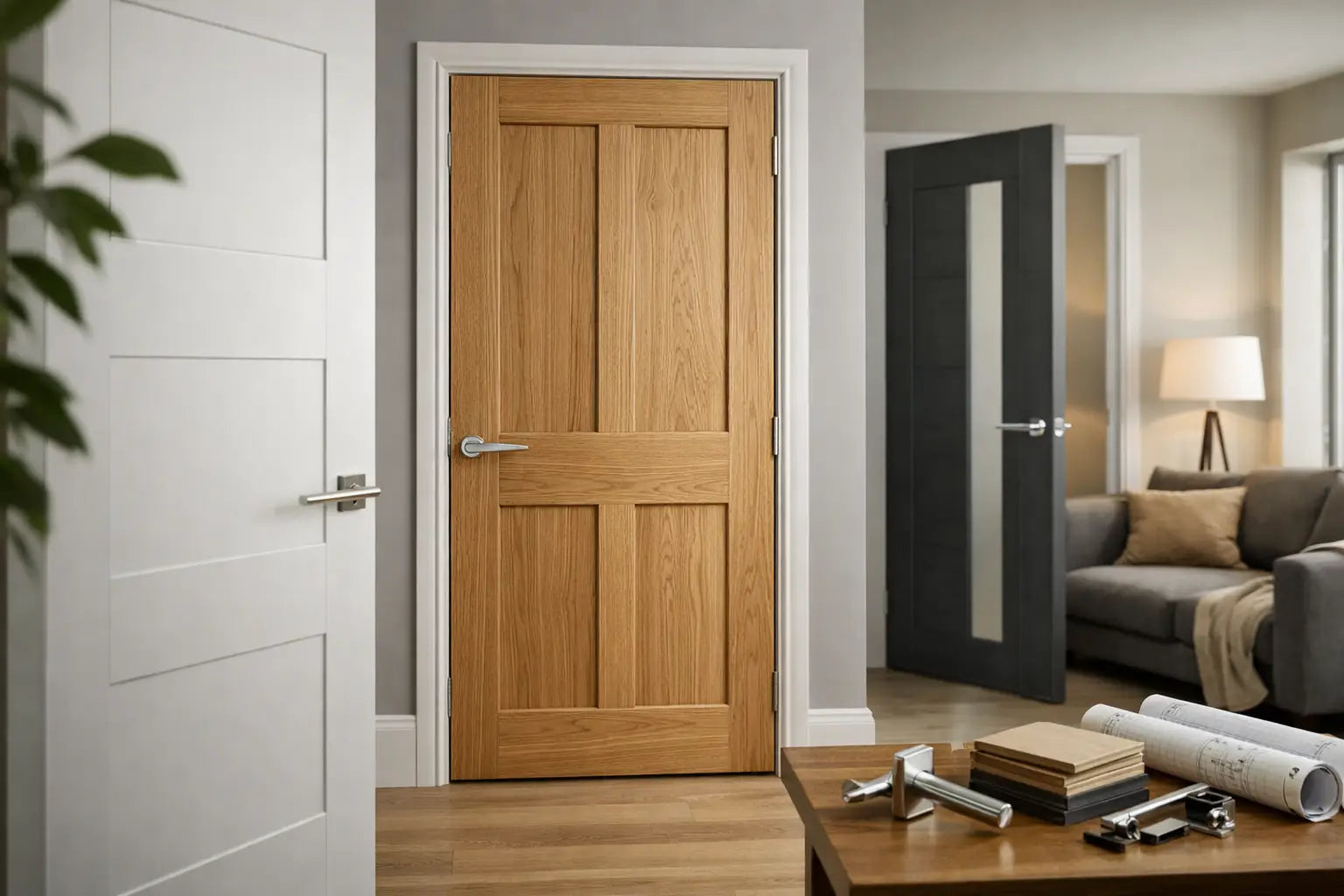
An XL Joinery internal doors review needs to look beyond the showroom finish. A door can look right in a photograph yet prove costly if its construction, size, finish or fire rating does not suit the opening. XL Joinery is a familiar name in UK interior joinery because its range covers the practical middle ground: recognisable styles, broad size availability and options for both straightforward replacements and more considered refurbishment projects.
For homeowners, landlords, and trade buyers, the appeal is having a choice without having to switch between multiple brands. The range includes traditional and contemporary designs, as well as primed and unfinished options, glazed doors, and fire-rated variants. The important point is that specifications vary by door, so the right buying decision comes from matching the individual product to the room, frame and required performance.
What XL Joinery internal doors do well
XL Joinery’s strongest point is breadth of design. Whether the project calls for a simple white panel door, a warm oak look, a black statement finish or a glazed design to bring borrowed light into a hall, there is usually a coherent style family to consider. That matters when several rooms need doors that feel intentional rather than pieced together.
The traditional side of the collection suits period homes, cottages and renovation work. Panelled designs, shaker-inspired profiles and oak finishes can sit comfortably with existing skirtings, architraves and joinery. At the other end, cleaner lines and contemporary glazing patterns are better suited to extensions, new-build interiors and flats.
There is also a useful distinction between doors supplied ready for finishing and those supplied primed. An unfinished oak door gives greater control over stain, oil or lacquer, which can be valuable when matching flooring or fitted furniture. A white primed door shortens the decorating process, although it still needs a suitable topcoat for a durable finished surface. Neither route is automatically better. It depends on the desired colour, programme and who is carrying out the finishing.
Construction and feel: check the individual specification
It is easy to treat all internal doors as broadly the same, but their core construction affects weight, sound reduction, longevity and the quality of the close. XL Joinery offers different constructions across its collection, including lighter internal doors and more substantial solid-core options. A heavier door generally feels more planted in use and can be a sensible choice for bedrooms, studies or shared living spaces where a little more privacy is welcome.
That does not mean the heaviest door is always the best purchase. Lightweight doors can be entirely suitable for low-traffic cupboards, box rooms or budget-led rental refreshes, provided expectations are realistic. They are easier to handle during fitting and may reduce pressure on older frames and hinges. The trade-off is a less substantial feel and, usually, lower acoustic performance.
Glazed doors deserve a closer look too. They are particularly effective between a dark hallway and a living room, kitchen or dining space, where natural light can travel further into the home. Consider the glass style as carefully as the door design. Clear glazing maximises light and openness, while obscure or textured glass gives privacy for home offices, bathrooms and reception rooms.
Sizing, trimming and fitting are where value is won or lost
A well-priced door is not good value if it cannot be fitted correctly. Before ordering, measure each structural opening rather than assuming every existing leaf is identical. Older properties often have slight variations from room to room, and a previous installer may have trimmed doors more heavily than the frame can accommodate now.
Check the stated nominal size, thickness, and handing, where relevant and permitted trimming allowance on the exact door. A joiner should allow for the finished floor level, hinges, latch clearance and even gaps around the leaf. If new flooring is still to be laid, that needs to be factored in before the door is cut.
This is especially important with veneered, glazed, panelled and fire doors. Excessive trimming can spoil proportions, expose a core or compromise performance. Doors with raised or detailed panels may offer less flexibility than a plain flush design, while glazed doors require careful handling to avoid stress around apertures. A qualified installer will assess the opening before cutting rather than treating the maximum trimming figure as a target.
Are XL Joinery fire doors a good option?
For projects requiring fire separation, XL Joinery’s FD30 and FD60 options can offer a practical way to retain a coordinated internal design. A fire-rated door is not merely a thicker version of a standard door. Its tested construction is part of a complete fire door assembly, which means the frame, hinges, intumescent seals, glazing system, closer where required and installation all matter.
The door leaf must be selected to the required rating and fitted in line with its certification and manufacturer guidance. Do not assume that a standard frame, decorative hinge or ordinary latch is suitable simply because it physically fits. In flats, communal buildings, conversions and commercial premises, the specification may also be shaped by building control, a fire risk assessment or the responsible person’s requirements.
For domestic work, fire doors are commonly needed between an integral garage and the house, or in loft conversions and protected escape routes, depending on the layout. Requirements differ by property and project, so it is worth confirming what applies before choosing a style. The visual consistency available across some ranges is useful, but compliance must lead the decision.
Finish quality and ongoing maintenance
The finish you choose influences both appearance and how forgiving the door will be in daily use. Oak veneer and unfinished timber designs provide natural variation, which is part of their appeal. They should be finished with a compatible product on all faces and edges before or immediately after fitting, following the relevant product guidance. Sealing every edge helps limit uneven moisture movement and gives the best chance of an even appearance over time.
White primed doors are popular because they can be painted to match walls, trims or a contrasting colour scheme. Their final result depends heavily on preparation and paint quality. A careful light sand, proper primer where needed and durable topcoats will look far better than a rushed single coat. Dark painted doors can create real impact, but they show chips, dust and finger marks more readily in busy family homes.
Like any timber-based joinery, internal doors should be protected from persistent damp, extreme humidity and direct water exposure unless the product is specifically designed for that environment. A poorly ventilated bathroom, for example, can be harder on a door than a dry bedroom. Choosing the correct product and maintaining extraction is more sensible than expecting a standard internal leaf to solve a moisture problem.
Price and value: who are they best for?
XL Joinery internal doors tend to make most sense for buyers who want a recognised brand, a wide choice of designs and the ability to coordinate doors through a property. They are not necessarily the cheapest route for every opening, particularly where a basic budget door would do the job. Equally, a premium bespoke door may be more appropriate for a listed property, an unusual opening or a scheme with a very specific timber match.
For a typical renovation, the value lies in selecting the right level of product rather than overspending on every room. Put the budget towards the doors that are seen and used most often, such as the hallway, kitchen and living room doors. Use a simpler, compatible design for storage rooms or less prominent spaces if the scheme allows. Remember to price the full job: door leaves, frames or linings, architraves, hinges, latches, handles, glazing and labour all contribute to the installed cost.
Door Supplies Online can help buyers compare the relevant XL Joinery options alongside frames, ironmongery and fire door components, making it easier to build a complete specification rather than ordering the leaf in isolation.
The verdict on XL Joinery internal doors
XL Joinery is a credible choice for UK projects that need style range and practical specification options in one brand. Its doors are particularly effective when a homeowner or contractor wants to carry a consistent look across multiple rooms while retaining choices around oak, primed, glazed and fire-rated formats. The caveat is straightforward: quality and suitability sit with the individual product specification, not the brand name alone.
Before placing an order, measure every opening, decide the final floor level, confirm the finish and check whether a standard, solid-core or fire-rated construction is needed. That small amount of planning is what turns a good-looking internal door into one that performs properly for years.
For more information about our interior or exterior doors or door accessories, give us a call at 01603 622261 and speak to a member of our expert team today, or email us at sales@doorsuppliesonline.co.uk. We look forward to hearing from you.