
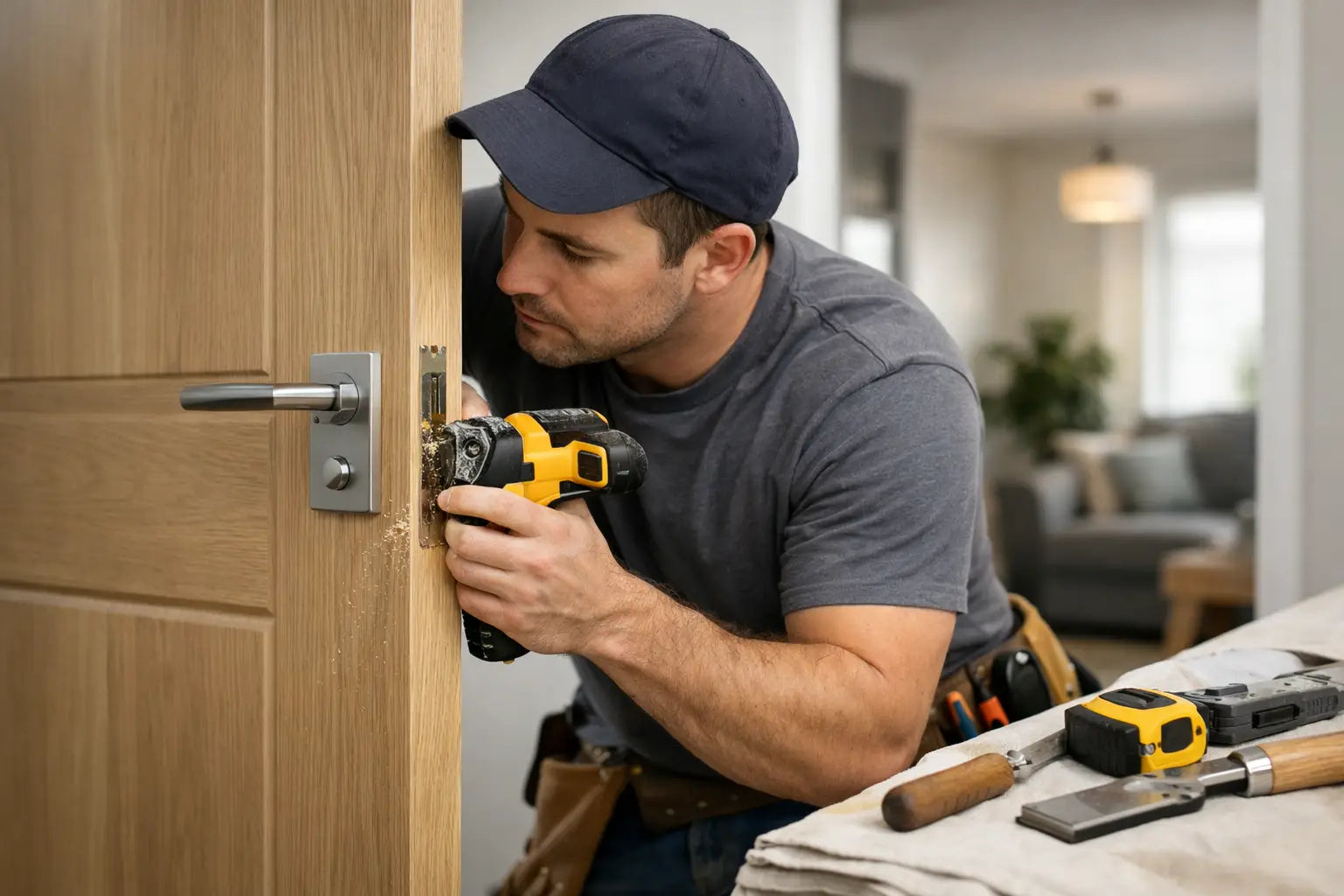
A door that binds on the carpet, catches on the frame or swings shut on its own usually comes down to the fitting, not the door itself. If you are looking up how to fit internal doors, the real job is getting three things right at once - size, alignment and ironmongery. Miss one, and even a high-quality door will feel poor in use.
Internal door fitting is straightforward in principle, but accuracy matters. A few millimetres can be the difference between a clean, professional result and a door that needs constant adjustment. That is why it pays to check the opening properly, understand where trimming is acceptable, and choose hinges, latches and handles that suit the weight and construction of the door.
Before you fit internal doors, check the basics
Start with the frame, not the door. Measure the opening width at the top, middle and bottom, then the height on both sides and in the centre if needed. Older properties are rarely perfectly square, so work to the smallest measurement and check for twist by placing a straight edge across the frame.
You also need to know what floor finish is going in. If carpet, underlay or new flooring will be fitted after the door, account for that now. Many fitting problems happen because the installer sizes the door to the subfloor, then loses clearance once the final finish is down.
At this stage, confirm what type of door you are fitting. Solid core, hollow core, glazed and fire doors all have different trimming allowances and hardware requirements. A standard internal oak door may allow some reduction, but a glazed door often has more restricted trim margins, and an FD30 fire door must be fitted to the manufacturer's instructions to maintain compliance. If you are fitting a fire door, that is not an area for guesswork.
Tools and materials that make the job easier
You do not need a workshop full of kit, but the right tools save time and improve accuracy. A tape measure, pencil, combination square, sharp plane, circular saw or track saw, chisels, hammer, drill driver, hinge jig if you use one, screws, packers and a decent level will cover most domestic installs. A pair of trestles also makes trimming and marking much easier.
Good screws matter more than many people think. Cheap screws can snap or cam out, especially when fixing into hardwood or solid core doors. If the hinges are poor quality or underspecified for the door weight, the door may drop over time, so match the hardware to the door rather than treating hinges as an afterthought.
How to fit internal doors step by step
Offer the door up to the opening before cutting anything. This gives you a quick sense of where material needs to come off and whether the frame is out. Mark the door with the face side and hinge side so you do not lose orientation once it is on the bench.
For most internal doors, you are aiming for an even gap around the sides and top, usually around 2mm to 3mm. At the bottom, the gap depends on the floor finish and whether ventilation is needed. In many homes, around 8mm to 10mm works, but it depends on the room, the threshold detail and the finished floor level.
Trim evenly where possible. If you need to remove width, take a little from each side rather than all from one edge, unless the door design or the manufacturer's instructions say otherwise. Mark cut lines clearly, use masking tape over finished faces if needed, and cut with the best face supported to reduce breakout. Plane back to the line for a tighter finish.
Once trimmed, offer the door back into the frame using packers underneath to set the bottom gap. Check the margins. If the top gap is inconsistent, the frame may be out of level. If the side gap closes at one end, the frame or the door edge may need further adjustment. This is the point to correct it, not after the hinges are fixed.
Marking and fitting hinges
Most internal doors use three hinges, especially with solid core doors, fire doors and heavier glazed styles. Lighter hollow core doors may sometimes be hung on two, but three gives better support and helps reduce long-term drop.
Mark the hinge positions on the door first. A common approach is one hinge around 150mm to 180mm from the top, one around 225mm to 250mm from the bottom, and the third centred between them. Transfer those positions to the frame carefully so they line up exactly.
Score around the hinge leaf with a sharp knife, then chop the recess with a chisel or use a router and jig if preferred. The hinge should sit flush with the door edge and frame lining. Too deep and the gap will widen. Too shallow and the door will bind.
Fix one screw per hinge first and test the fit before driving all screws home. This allows minor adjustment if the door needs shifting slightly. Once the door is hanging true and the margins are even, add the remaining screws.
Latches, handles and privacy hardware
The latch position usually sits around 900mm to 1050mm from the floor, often to line in with other doors in the property. Mark the spindle centre, drill the handle holes cleanly from both sides to avoid splintering, then bore the latch hole into the door edge.
Keep the latch centred and square. If the latch body sits twisted, the handle action will feel poor and the keep may not line up cleanly. Once the latch is fitted, mark the strike plate on the frame, chop the recess and test the closing action before final fixing.
Bathroom doors, lockable bedroom doors and paired hardware sets need a bit more care with alignment, but the principle is the same. Take your time on marking out, because neat ironmongery is one of the details people notice immediately.
It depends on the door type
Panel doors, flush doors, glazed doors and fire doors all behave differently. A heavyweight oak door will need firmer support and sharper tools than a lightweight moulded door. A glazed internal door may be less forgiving on trimming because of rail and stile dimensions. A fire door may need specific hinges, intumescent protection, certified hardware and controlled gaps.
That is why product information matters. On some doors, generous trimming is possible. On others, particularly veneered, glazed or certified products, trimming beyond the allowed amount can spoil the appearance or invalidate performance. If you are ordering for a project where compliance matters, pre-assembled door sets can remove a lot of risk because the frame, leaf and hardware specification are designed to work together.
Common fitting mistakes to avoid
The most common mistake is measuring once and cutting too much. You can always take a little more off, but you cannot put material back on without turning a simple install into a repair job. The second is ignoring the finished floor level. The third is assuming every frame is square because the old door looked acceptable.
Hinge setting is another problem area. If the recess depth varies, the door will twist as it closes. If screws are too short or not suitable for the door construction, the hinges can work loose. On rebated pairs or specialist doors, incorrect hardware selection can cause problems that trimming alone will not solve.
There is also a commercial consideration. Spending time trying to make the wrong door fit the wrong opening is rarely cost-effective. In many cases, ordering the correct size, door type and matching ironmongery from the outset gives a better result and saves labour.
When to call a professional
If the frame is badly out of square, the walls are moving, or you are fitting fire-rated doors that need to meet specific performance requirements, professional installation is usually the right choice. The same applies to larger renovation jobs where multiple doors need consistent gaps, handle heights and finish quality across the property.
For trade buyers, landlords and developers, consistency is often as important as the install itself. Standardising door styles, hardware finishes and frame details across a project makes maintenance easier and gives a cleaner final result.
Choosing the right door before fitting starts
A well-fitted door starts with the right specification. Consider the room use, desired finish, glazing level, acoustic needs and whether you need standard internal doors, pocket door systems or fire-rated products. Matching the door to the opening and the application will always make fitting easier.
At Door Supplies Online, that usually means choosing with both style and performance in mind - not just oak or black, glazed or solid, but also construction type, hardware compatibility and where certification matters.
A good internal door should open cleanly, close neatly and feel right every time you use it. If you approach the fitting with careful measuring, the correct allowances and hardware that suits the door, that is exactly what you get.
For more information about our interior or exterior doors or door accessories, give us a call at 01603 622261 and speak to a member of our expert team today or email us at sales@doorsuppliesonline.co.uk. We look forward to hearing from you.