
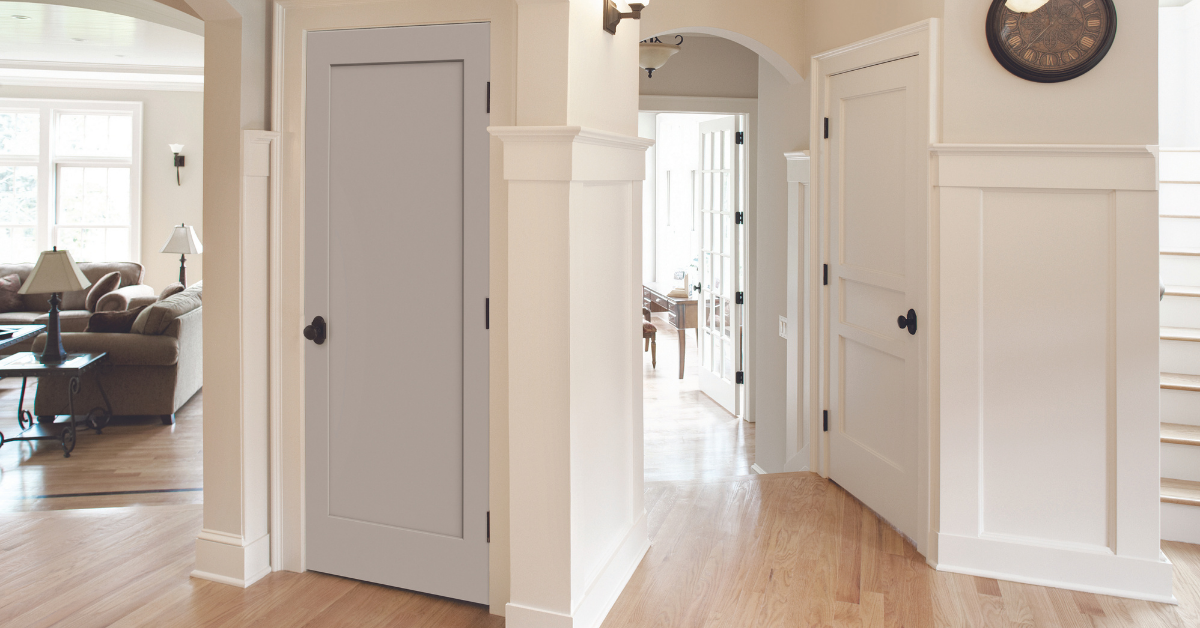
When floor space is limited, choosing the right door can make a surprisingly big difference. Traditional hinged doors need a clear area to swing into the room, which can make compact bedrooms, bathrooms, en-suites, utility rooms and home offices feel even smaller.
The best doors for small spaces are designed to reduce or eliminate this swing area. Depending on the room and available wall space, options include pocket doors, sliding doors, folding doors and narrow-opening doors.
Each solution has different advantages. A pocket door can disappear into the wall, a sliding door moves alongside the wall, a folding door requires very little clearance and a narrow-opening door can provide a more conventional appearance where space is restricted.
This guide compares the main space-saving doors and explains which options can work best for different rooms.
1. Space-Saving Sliding Doors
Sliding doors are a game-changer for small rooms where space is at a premium. Unlike traditional hinged doors that require clearance to swing open, sliding doors glide horizontally along a track. This design maximizes floor space, making sliding doors an ideal choice for closets, bathrooms, or tight corners.

2. Pocket Doors for Ultimate Space Efficiency
If you're aiming for the utmost space efficiency, consider pocket doors. These doors slide into a concealed wall pocket when open, completely disappearing from view. Perfect for small bathrooms or closets, pocket doors provide an unobstructed entrance without sacrificing precious square footage.

3. Bi-Fold Doors for Style and Versatility
Bi-fold doors consist of panels that fold accordion-style, creating a wide opening and allowing for a seamless transition between spaces. They are excellent for closets, pantries, or laundry rooms, providing easy access while maintaining a neat and compact appearance.

4. Choose Light and Glass for Visual Expansion
Opting for doors with glass panels or a lighter color palette can visually expand a small room. Glass doors allow natural light to flow through, creating an open and airy feel. French doors with glass panels are an elegant choice that enhances the sense of space and connectivity between rooms.
5. Consider Barn Doors for a Rustic Touch
Barn doors, once reserved for traditional farmhouses, have become a trendy and functional design element. Mounted on a track, barn doors slide horizontally, adding a rustic touch to modern interiors. They are an excellent option for small rooms, especially when traditional swinging doors are impractical.
6. Opt for Pocket French Doors for Elegance
For a touch of elegance and a space-saving solution, consider pocket French doors. The classic appeal of French doors combined with the pocket design allows you to create a grand entrance without sacrificing floor space.

7. Reflective Surfaces for Illusion of Space
Mirrored or reflective surfaces on doors can create the illusion of more space by bouncing light around the room. Consider mirrored closet doors or doors with reflective finishes to add a touch of glamour while making the room feel larger.
8. Custom Solutions for Awkward Spaces
In small rooms with unconventional layouts, custom doors may be the perfect solution. Tailoring the door size, style, and functionality to fit the specific requirements of the space ensures a perfect fit and maximizes usability.
Best Doors for Small Utility Rooms
Utility rooms can be difficult to access because washing machines, tumble dryers, storage units and shelving often occupy much of the available space.
A pocket or sliding door can prevent the door leaf from obstructing the room.
Folding doors can also work well where the opening is close to appliances or storage.
For a cupboard containing laundry appliances, a bi-fold or folding door can provide access without requiring a large swing area.
Best Doors for Small Home Offices
A compact home office can benefit from a door that does not take up valuable desk or storage space.
Pocket doors provide a clean appearance and can allow the room to be closed off when required.
Sliding doors can also work well, particularly if you want a glazed design that allows light into the workspace.
A glazed internal door can make a small office feel more open while still providing a degree of separation.
Pros and Cons of Different Doors for Small Spaces
Pocket doors
Pros:
- Excellent space saving
- Door disappears when open
- Clean appearance
- Ideal for compact rooms
Cons:
- More complex installation
- Requires suitable wall space
- Existing walls may need modification
Sliding doors
Pros:
- No floor swing
- Easy to operate
- Wide range of styles
- Good for open-plan layouts
Cons:
- Requires clear wall space
- Surface-mounted tracks can be visible
- Wall space cannot always be used for furniture
Folding doors
Pros:
- Compact opening movement
- Useful for wardrobes
- Good for awkward spaces
- Can create wide openings
Cons:
- Takes some space inside the opening
- More moving components
- Folded sections remain visible
Narrow hinged doors
Pros:
- Familiar installation
- Traditional appearance
- Can work where wall space is restricted
- Straightforward hardware options
Cons:
- Still requires swing space
- Reduces usable floor area
- Smaller opening width
How to Choose Doors for Small Spaces
Start by measuring the room rather than choosing a door based purely on appearance.
Measure:
- The existing door opening
- Available wall space beside the opening
- Floor space in front of the doorway
- Wall construction
- Furniture positions
- Required access width
Then consider how the door will move.
If there is no useful floor space but plenty of wall space, a sliding door could work.
If wall space is also limited, a pocket door may be more appropriate if the wall can accommodate the pocket system.
If neither option is practical, a folding or narrow hinged door may provide a simpler solution.
Do Space-Saving Doors Need Special Hardware?
Many space-saving door systems require specialist hardware.
Depending on the design, this may include:
- Sliding door tracks
- Pocket door frames
- Soft-close mechanisms
- Folding door hardware
- Rollers
- Pull handles
- Flush pulls
- Door locks
- Floor guides
The hardware should be compatible with the door's weight, thickness and intended application.
For pocket and sliding doors, the correct track and hardware system is particularly important for smooth operation.
Can You Use Glazed Doors in Small Spaces?
Yes. Glazed doors can be useful in compact rooms because they allow light to pass between spaces.
For example, a glazed sliding door between a kitchen and dining area can help maintain a sense of openness while still providing separation.
Glazed pocket doors can also combine the space-saving benefits of a pocket system with increased light transmission.
Privacy glass or suitable obscured glazing can be considered for bathrooms, offices and bedrooms where required.
Are Pocket Doors Better Than Sliding Doors for Small Spaces?
The choice depends on the room.
A pocket door uses the cavity within the wall, while a surface-mounted sliding door uses the wall beside the opening.
A pocket door can therefore preserve more usable wall space when open, but installation can be more involved.
A sliding door can be easier to install in some situations because the wall does not necessarily need to accommodate a pocket cavity.
The right choice depends on the existing wall construction, available space and desired appearance.
Frequently Asked Questions
What are the best doors for small spaces?
The best doors for small spaces include pocket, sliding, folding and narrow hinged doors. The right option depends on available wall space, floor space, room function and installation requirements.
What type of door saves the most space?
Pocket doors can provide significant space savings because the door slides into the wall rather than swinging into the room or travelling across the face of the wall.
Are sliding doors good for small rooms?
Yes. Sliding doors eliminate the traditional door swing, making them useful for bedrooms, bathrooms, kitchens, offices and other compact rooms. They do, however, require sufficient wall space beside the opening.
Are pocket doors good for small bathrooms?
Yes. Pocket doors are often well suited to small bathrooms and en-suites because they remove the door swing from the usable floor area.
Are folding doors good for small spaces?
Folding doors can be useful where a conventional hinged door takes up too much room. They are particularly practical for wardrobes, cupboards and utility areas.
What door is best for a small bedroom?
Pocket and sliding doors can both work well in small bedrooms. A pocket door can free up wall space when open, while a sliding door can be easier to install where there is a suitable wall beside the opening.
Can I use a narrow door in a small bathroom?
A narrow door can be an option where the opening and access requirements allow it. However, check the required clear opening and any applicable building requirements before reducing the door width.
Conclusion:
Choosing the right doors for small rooms involves a thoughtful balance between functionality and aesthetics. By considering space-saving designs, incorporating glass or reflective surfaces, and exploring creative options like sliding or barn doors, you can optimize your small spaces and make a stylish statement. With this guide, you're equipped to select doors that not only enhance the practicality of your rooms but also contribute to the overall charm and functionality of your home.
For more information about our interior or exterior doors or door accessories, give us a call at 01603 622261 and speak to a member of our expert team today or Email us at sales@doorsuppliesonline.co.uk. We look forward to hearing from you.