
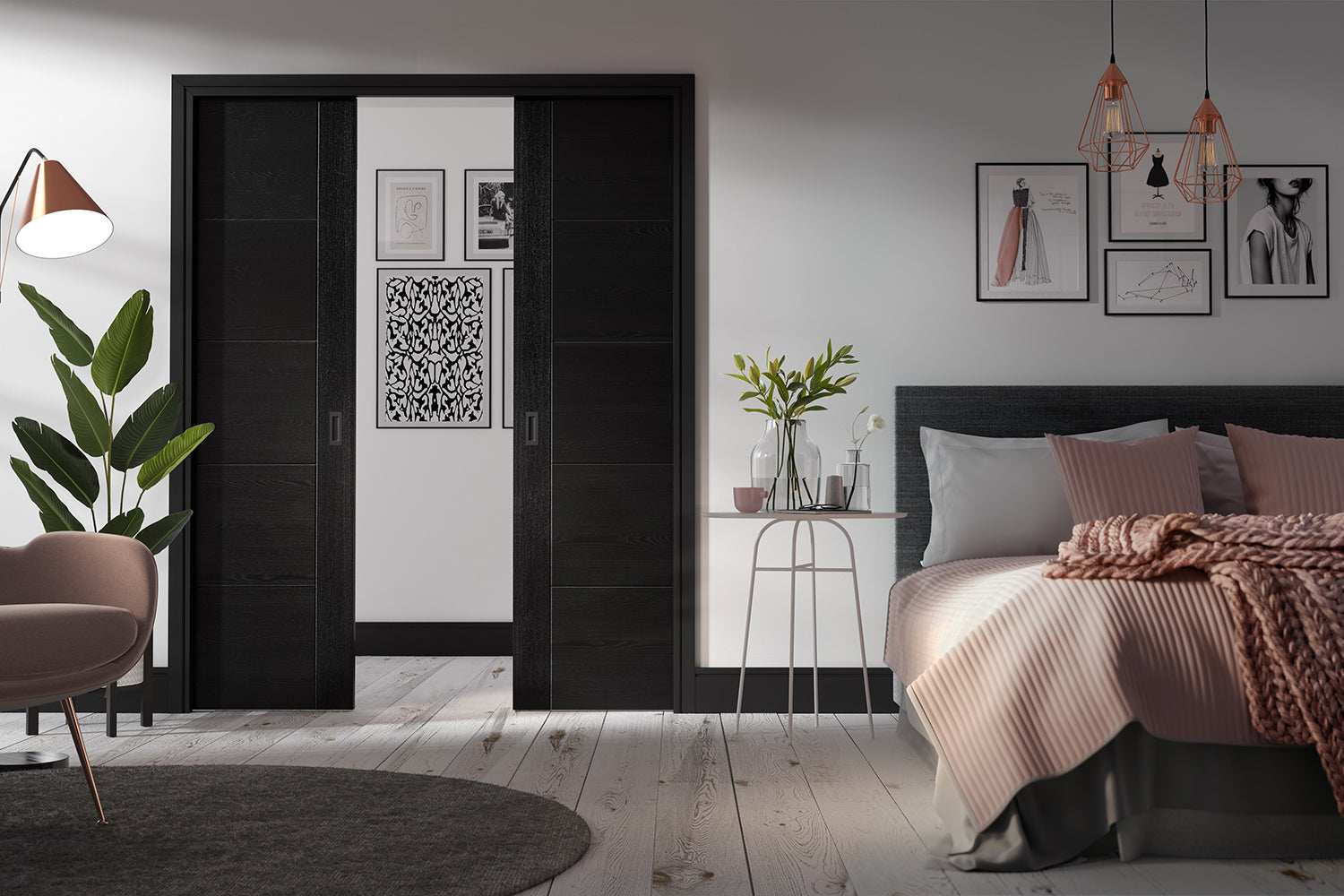
Can Pocket Doors Be Fire Rated?
Pocket doors have become increasingly popular in modern homes, apartments, and commercial buildings thanks to their ability to save space and create a sleek, contemporary appearance. By sliding neatly into a concealed cavity within the wall, they eliminate the need for a traditional door swing and can make smaller rooms feel more open and functional.
However, when fire safety becomes part of the specification, many homeowners, architects, and developers ask the same question:
Can pocket doors be fire-rated?
The answer is yes, but only when the entire system has been specifically designed, tested, and certified as a fire-rated pocket door system.
This distinction is important. A standard pocket door installation is not automatically fire-rated simply because a fire door leaf is used. Fire performance depends on the complete assembly, including the frame, pocket system, seals, hardware, and installation method.
In this guide, we'll explain how fire-rated pocket doors work, where they can be used, and what to look for when specifying a certified system.
What Is a Pocket Door?


A pocket door is a sliding door that disappears into a cavity within the wall when opened.
Unlike conventional hinged doors, pocket doors:
- Require no swing space
- Maximise usable floor area
- Create a clean architectural appearance
- Improve flexibility in compact layouts
- Work well in open-plan designs
They are commonly used in:
- En-suite bathrooms
- Utility rooms
- Walk-in wardrobes
- Apartments
- Accessible living spaces
- Offices
- Hotels
The challenge arises when fire protection is required.
Why Standard Pocket Doors Are Not Fire Rated
Many people assume that installing an FD30 fire door leaf onto a sliding system automatically creates a fire-rated opening.
Unfortunately, it does not.
Fire doors are tested as complete assemblies.
This includes:
- Door leaf
- Frame
- Seals
- Hardware
- Closing mechanisms
- Installation configuration
A standard pocket door system introduces several challenges:
Gaps Around the Door
Fire doors rely on carefully controlled clearances.
Pocket systems can create larger gaps that compromise performance.
Lack of Intumescent Protection
Fire doors use intumescent seals that expand during a fire.
Standard pocket systems often cannot accommodate these correctly.
Sliding Mechanisms
Traditional fire door testing is usually based on hinged assemblies.
Sliding systems require separate testing and certification.
Structural Pocket Construction
The wall cavity itself becomes part of the tested system.
Without certification, fire resistance cannot be guaranteed.
What Is a Fire-Rated Pocket Door?
A fire-rated pocket door is a specially designed sliding door system that has undergone fire testing as a complete assembly.
These systems are engineered to:
- Resist fire spread
- Limit smoke transfer
- Maintain compartmentation
- Meet specific fire resistance periods
Common ratings include:
FD30 Pocket Doors
Provide up to 30 minutes of fire resistance.
FD60 Pocket Doors
Provide up to 60 minutes of fire resistance.
The certification applies to the complete system rather than individual components.
How Certified Fire Door Pocket Systems Work


Certified fire-rated pocket systems are significantly more sophisticated than standard sliding doors.
Key features typically include:
Fire-Tested Pocket Frames
The cavity framework is designed specifically for fire resistance.
Intumescent Seals
Special seals expand when exposed to heat.
These help close gaps and prevent fire spread.
Fire-Rated Door Leaves
The door itself is manufactured to achieve a specific fire rating.
Certified Ironmongery
Tracks, rollers, guides and hardware must form part of the tested assembly.
Smoke Control Components
Many systems include additional smoke seals to limit smoke transfer.
Each component contributes to the overall certification.
Why Fire Certification Matters
When specifying fire doors, certification is essential.
A certified fire-rated pocket door system demonstrates that:
- Testing has been carried out
- Fire resistance has been independently verified
- Performance criteria have been met
- Installation requirements are defined
Without certification, there is no evidence that the system will perform as intended during a fire.
This is particularly important in:
- Apartment buildings
- Care homes
- Hotels
- Student accommodation
- Commercial developments
Where Can Fire-Rated Pocket Doors Be Used?
Certified systems can be used in a wide range of applications.
Residential Properties
Fire-rated pocket doors can protect while maximising space.
Popular locations include:
- Utility rooms
- Garage access doors
- Plant rooms
- Home offices
Apartments
Space efficiency makes pocket doors attractive in apartment design.
However, appropriate certification is essential.
Hotels
Pocket systems help improve room layouts while maintaining compliance.
Healthcare Buildings
Sliding fire-rated systems can assist accessibility requirements.
Commercial Offices
Modern workplaces often use pocket doors for flexible space planning.
Benefits of Fire-Rated Pocket Door Systems
Space Saving
The most obvious benefit is improved space utilisation.
Traditional doors require clearance to swing open.
Pocket doors eliminate this requirement.
Modern Appearance
They provide a clean, minimalist aesthetic.
This makes them popular in contemporary architecture.
Accessibility
Pocket doors can improve movement through buildings.
They are often easier to operate in restricted spaces.
Fire Protection
Certified systems provide compartmentation and fire resistance.
Design Flexibility
Architects can create layouts that would be difficult with hinged doors.
Limitations of Fire-Rated Pocket Doors
While they offer many advantages, there are limitations.
Higher Cost
Certified systems are generally more expensive than standard pocket doors.
Installation Requirements
Correct installation is critical.
Poor installation can invalidate certification.
Wall Construction Constraints
The pocket cavity requires sufficient wall depth.
Product Availability
There are fewer certified options compared to traditional fire door sets.
Fire-Rated Pocket Doors vs Traditional Fire Doors
| Feature | Fire-Rated Pocket Door | Traditional Fire Door |
|---|---|---|
| Space Saving | Excellent | Limited |
| Fire Protection | Certified Systems Only | Widely Available |
| Installation | Specialist | Simpler |
| Cost | Higher | Lower |
| Design Appeal | Modern | Traditional & Modern |
| Product Choice | More Limited | Extensive |
For many projects, traditional fire door sets remain the most straightforward option.
However, where space is at a premium, fire-rated pocket doors can provide an effective solution.
Are Fire-Rated Pocket Doors Suitable for Apartment Entrance Doors?
In most cases, apartment entrance doors are supplied as hinged fire door sets rather than pocket doors.
This is because entrance doors typically require:
- Robust compartmentation
- Acoustic performance
- Security certification
- Self-closing functionality
Combining all these requirements into a pocket door system can be challenging.
For apartment entrances, certified fire door sets remain the most common specification.
Common Mistakes When Specifying Pocket Fire Doors
Using a Fire Door Leaf with a Standard Pocket Kit
This does not create a certified fire-rated system.
Ignoring Installation Requirements
Certification often depends on specific installation methods.
Substituting Hardware
Replacing tested components may invalidate certification.
Altering the Pocket Structure
Modifications can compromise fire performance.
Assuming All Pocket Doors Are Tested
Only certified systems should be specified where fire resistance is required.
Choosing the Right Fire-Rated Pocket Door System
When selecting a fire-rated pocket door, ask:
Has the Entire System Been Fire Tested?
Certification should cover the complete assembly.
What Fire Rating Is Achieved?
FD30 and FD60 are the most common ratings.
Are Smoke Seals Included?
Smoke control may be as important as fire resistance.
What Installation Requirements Apply?
Follow manufacturer guidance carefully.
Is Third-Party Certification Available?
Independent certification provides additional assurance.
The Future of Fire-Rated Pocket Doors


As modern architecture continues to favour open-plan living and space-efficient design, demand for fire-rated pocket doors is expected to grow.
Manufacturers are increasingly developing systems that combine:
- Fire resistance
- Acoustic performance
- Accessibility
- Modern aesthetics
- Space-saving functionality
This makes certified pocket door systems an increasingly attractive option for architects and developers seeking both compliance and design flexibility.
Conclusion
So, can pocket doors be fire-rated?
Yes, but only when the entire pocket door assembly has been specifically designed, tested, and certified as a fire-rated system.
A fire door leaf alone is not enough. Fire performance depends on the complete assembly, including the pocket frame, seals, hardware, and installation method.
For homeowners, architects, developers, and contractors, understanding this distinction is essential. When specified correctly, fire-rated pocket doors can offer the perfect balance of space-saving design, modern aesthetics, and certified fire protection. However, as with all fire safety products, certification and proper installation should always come first.
For more information about our interior or exterior doors or door accessories, give us a call at 01603 622261 and speak to a member of our expert team today, or email us at sales@doorsuppliesonline.co.uk. We look forward to hearing from you.