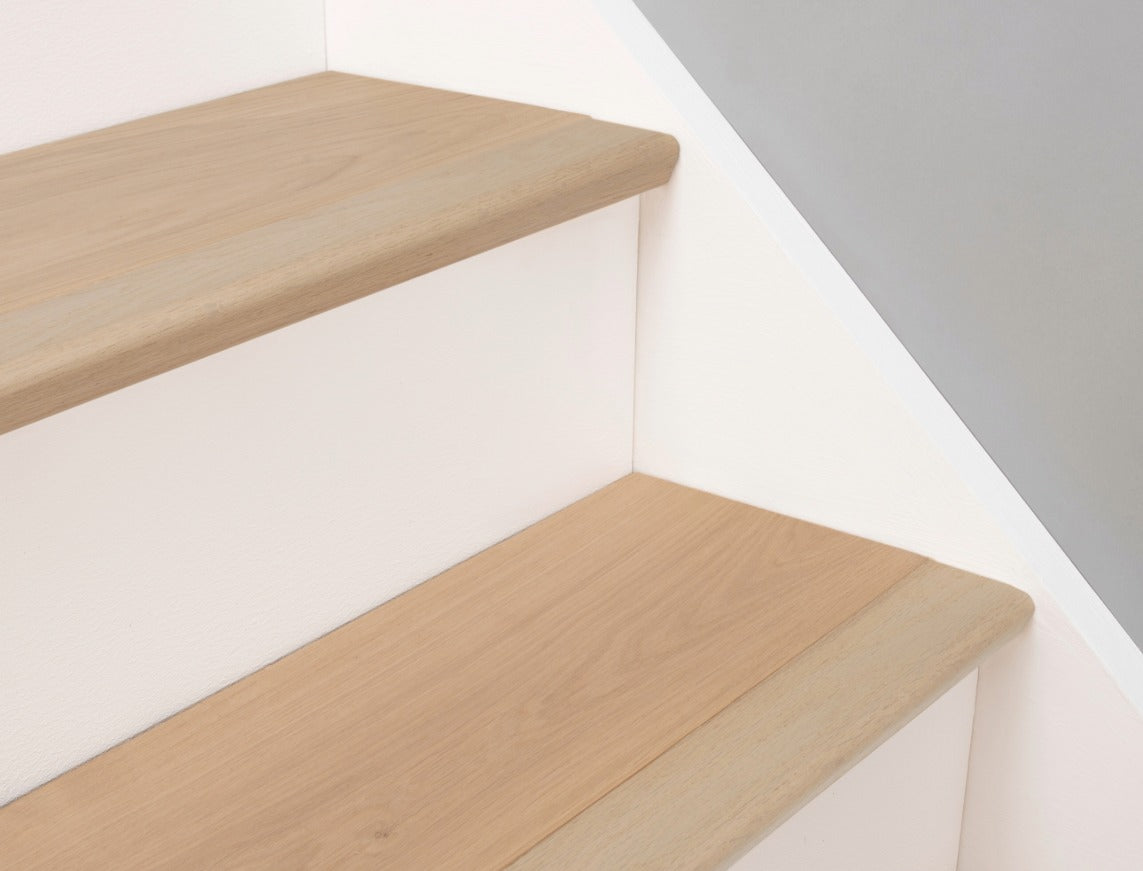
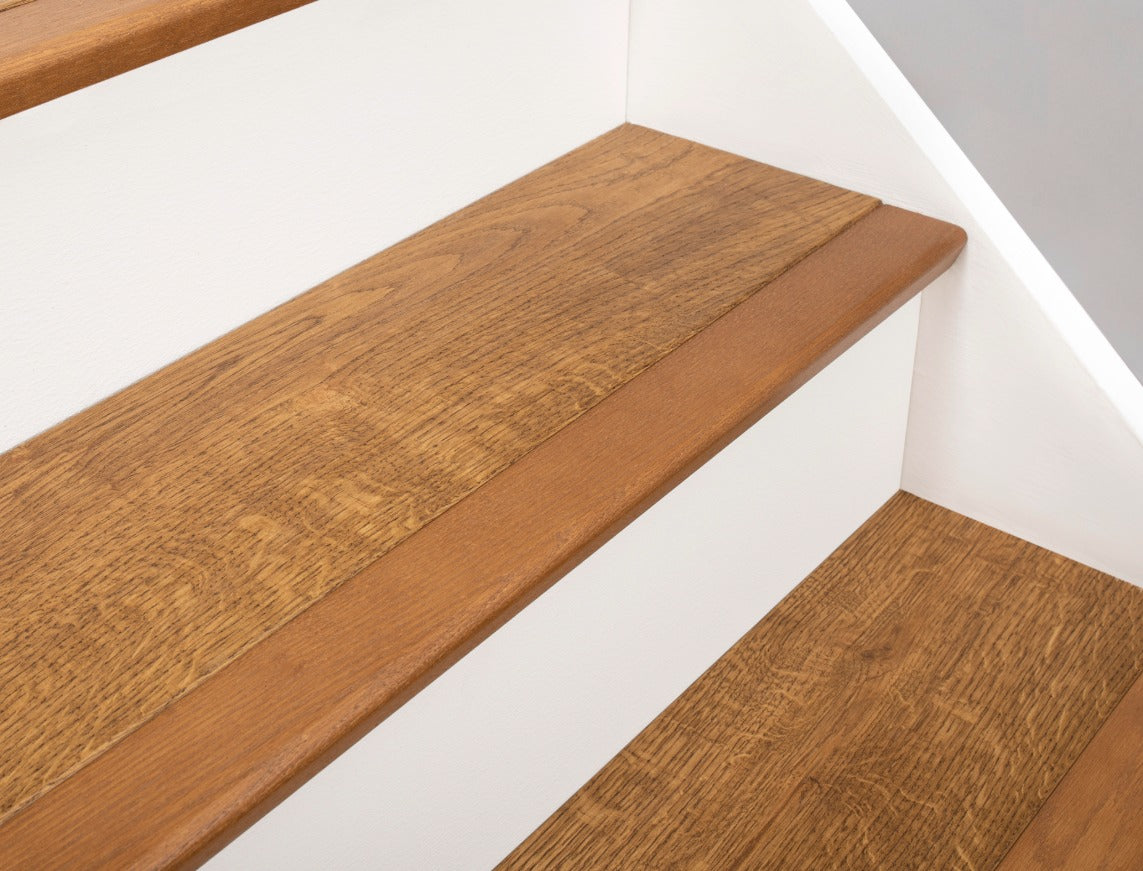
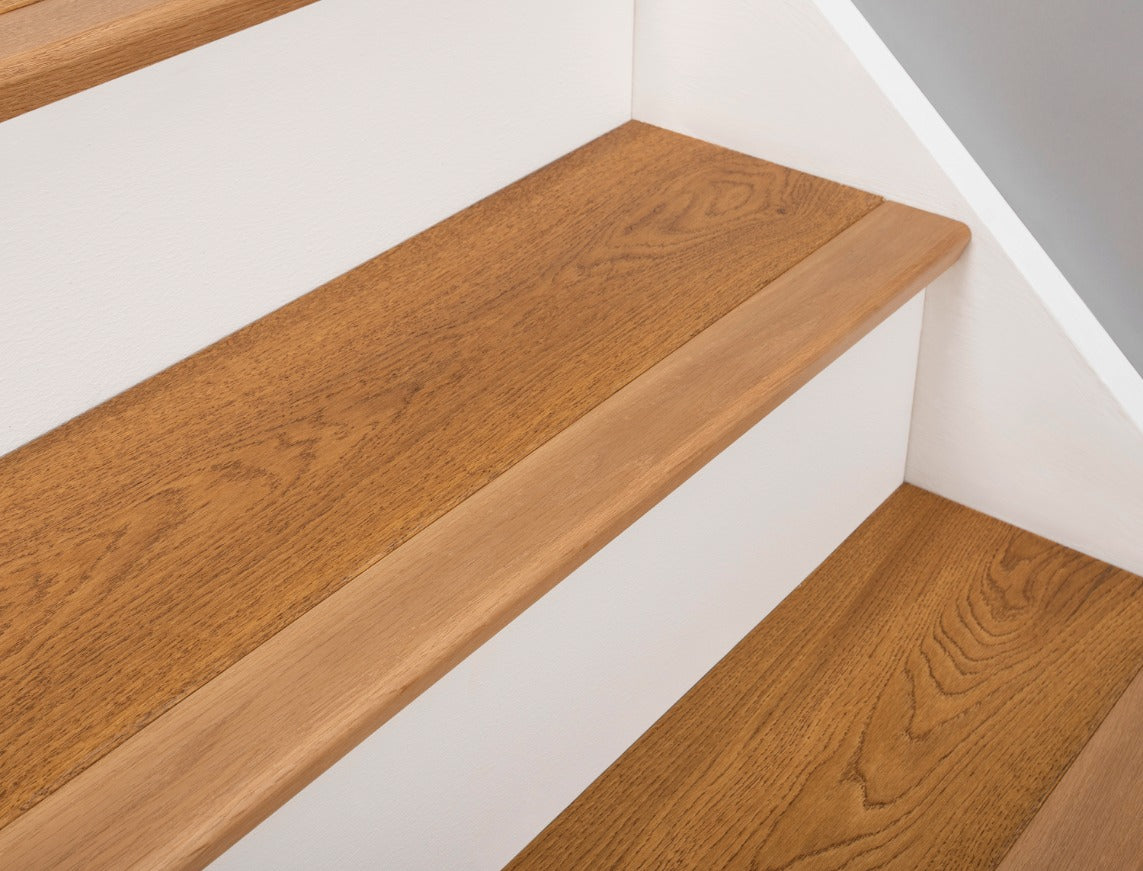
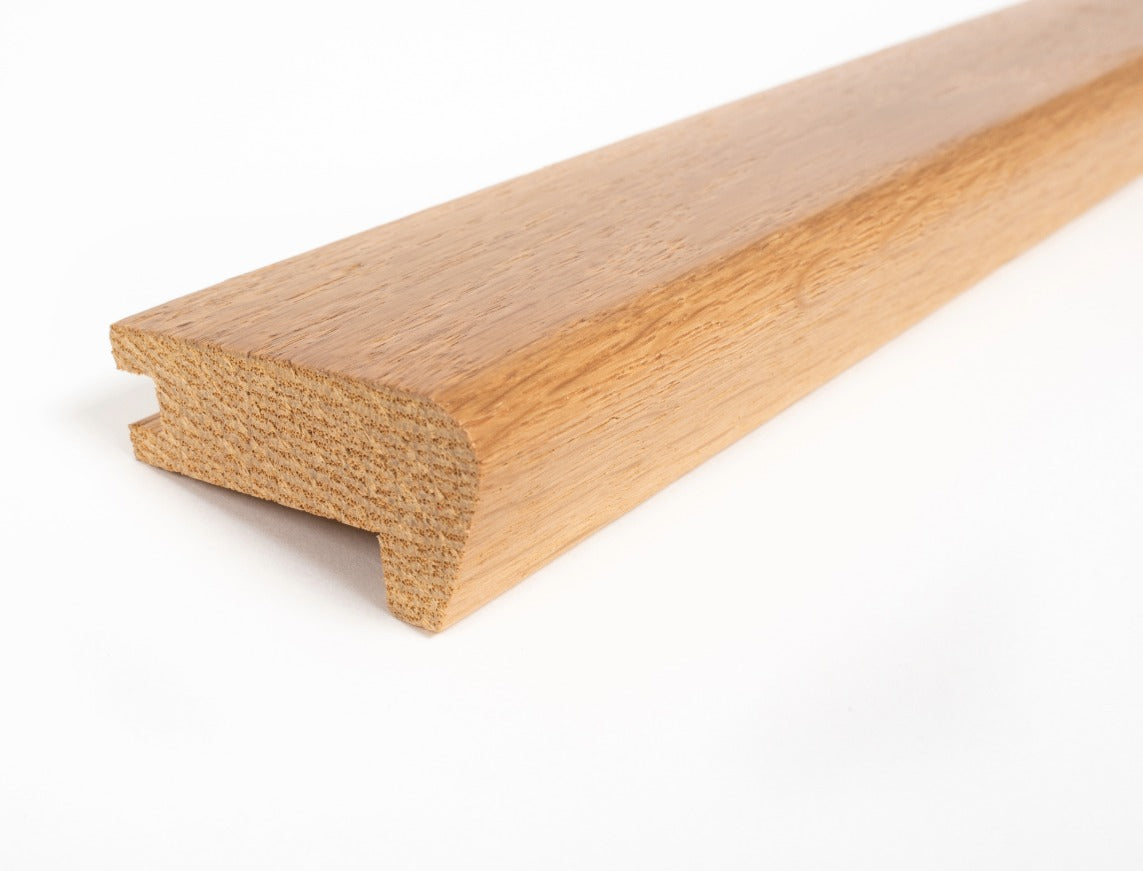
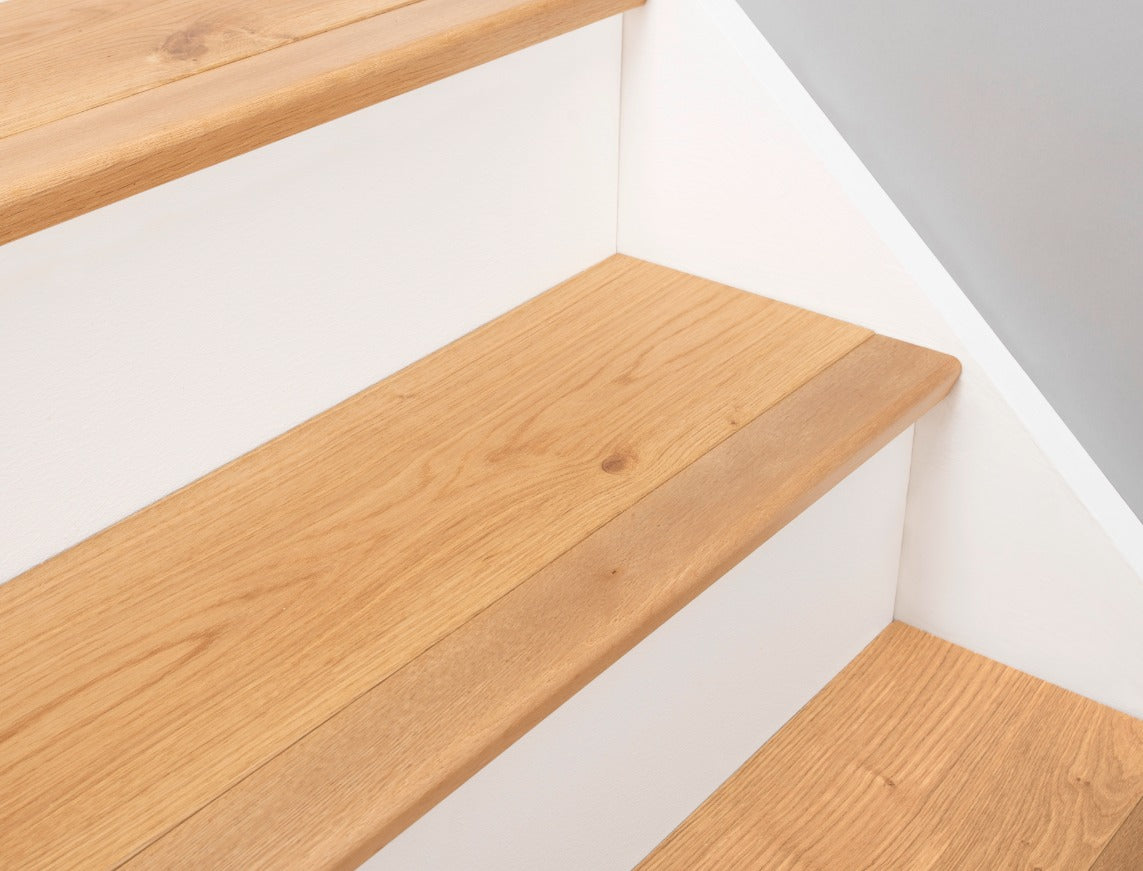
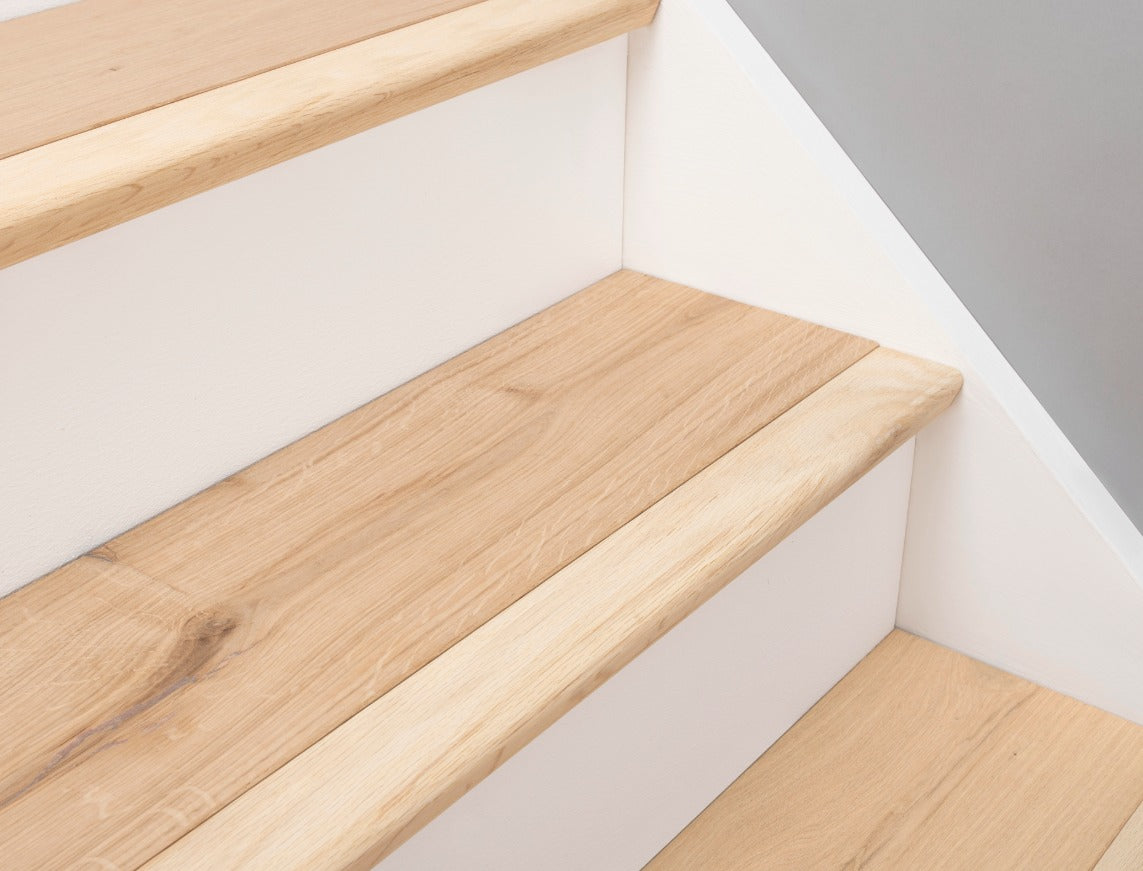
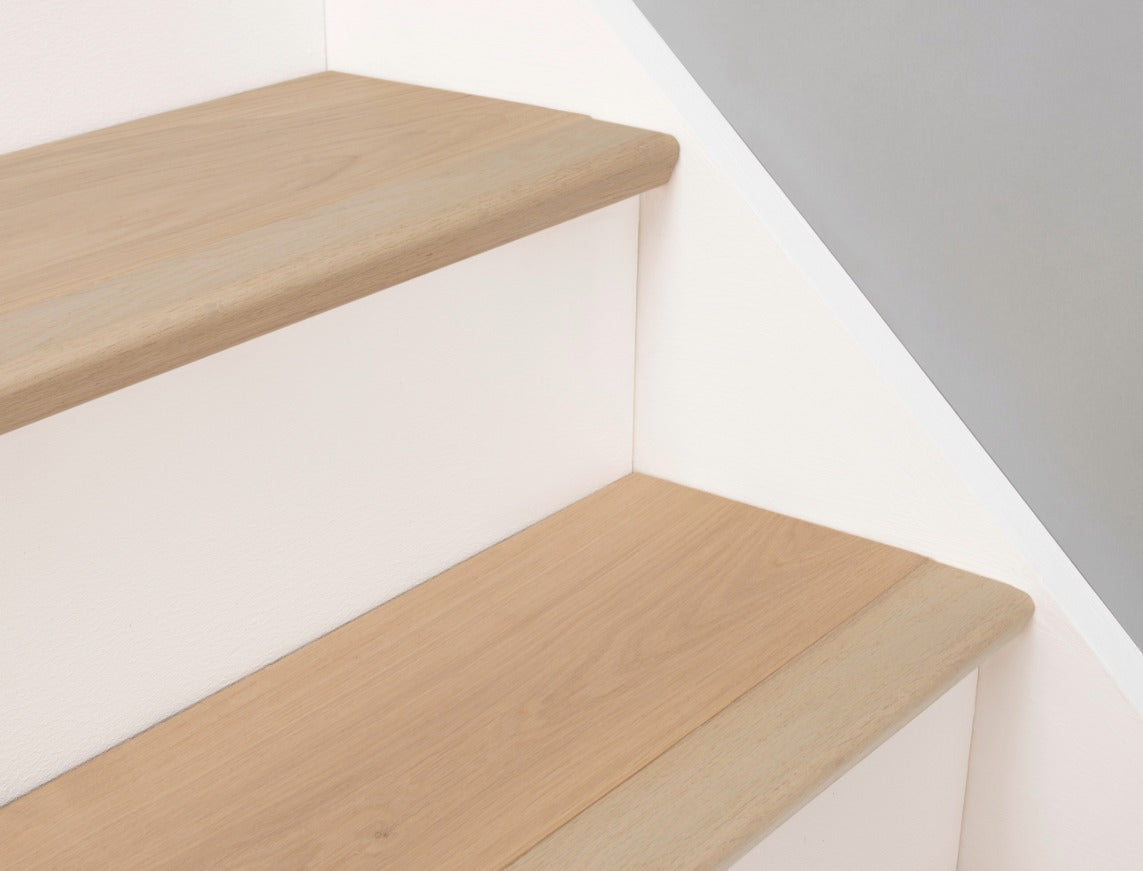
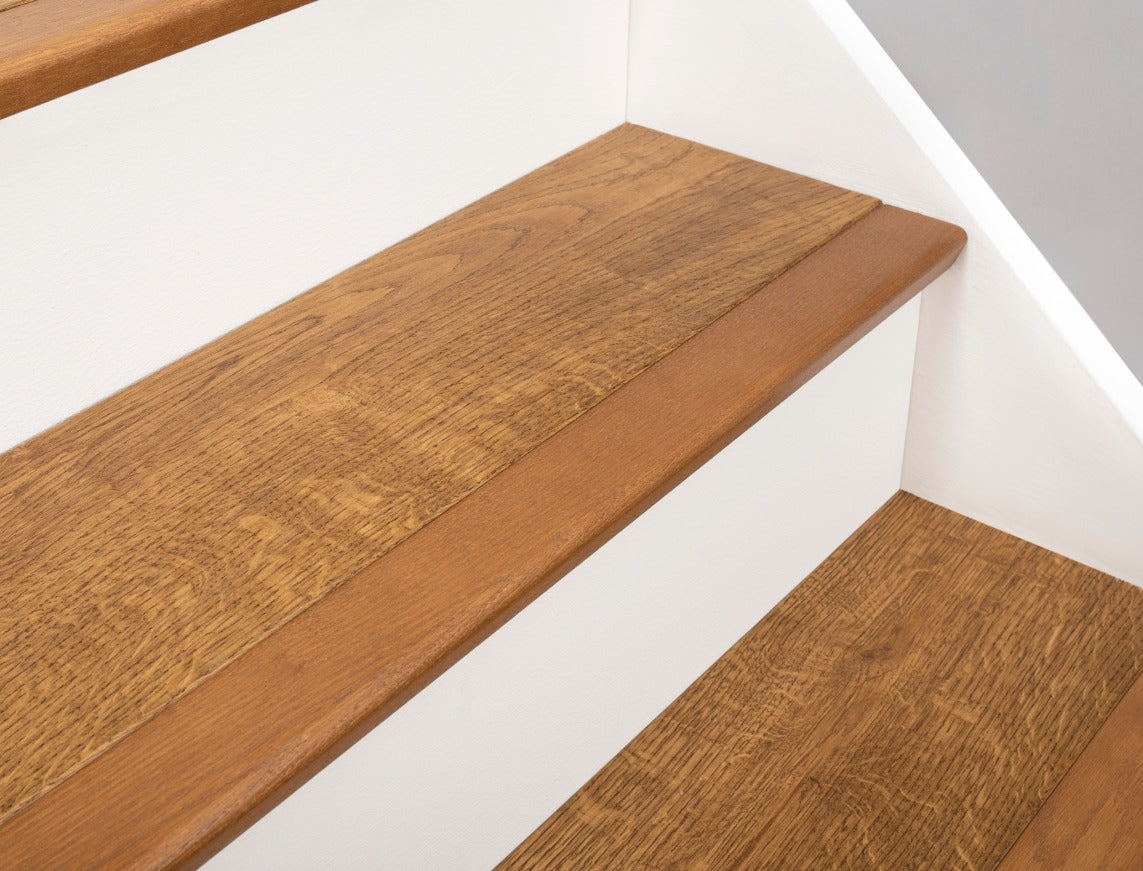
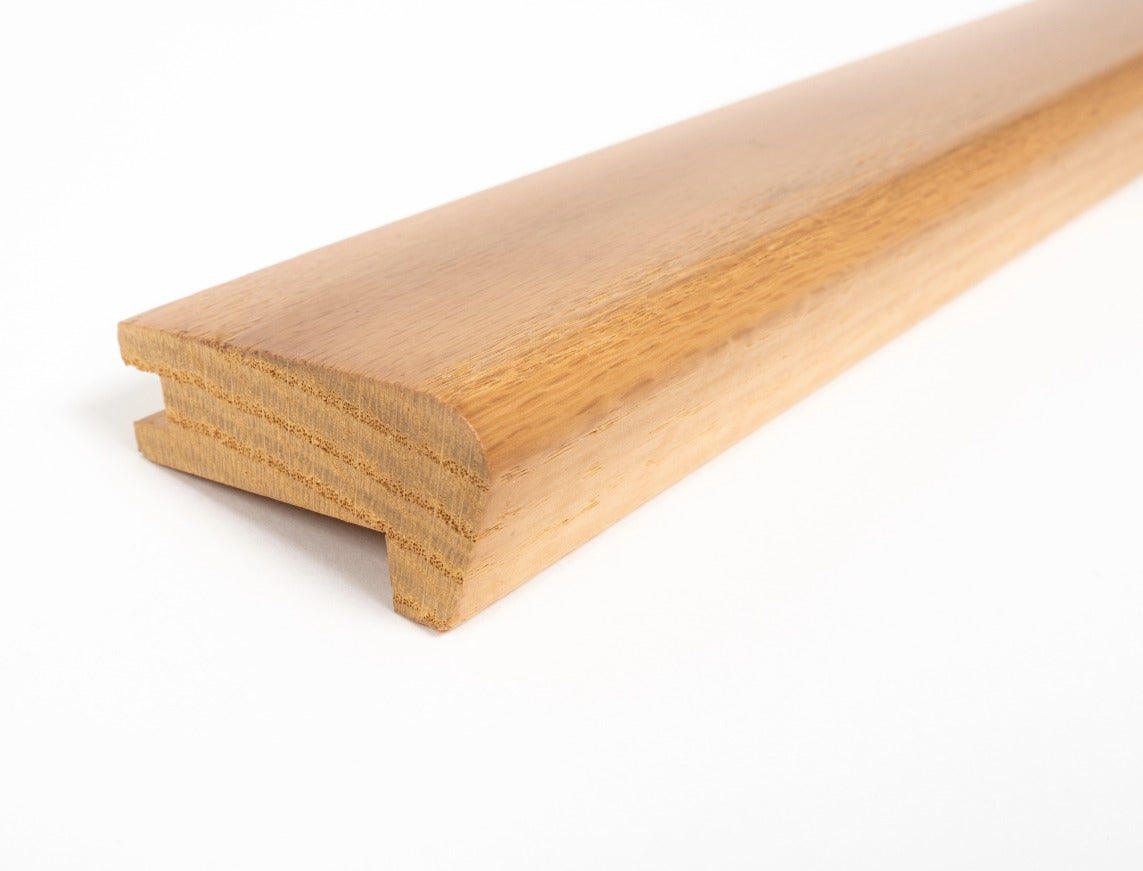
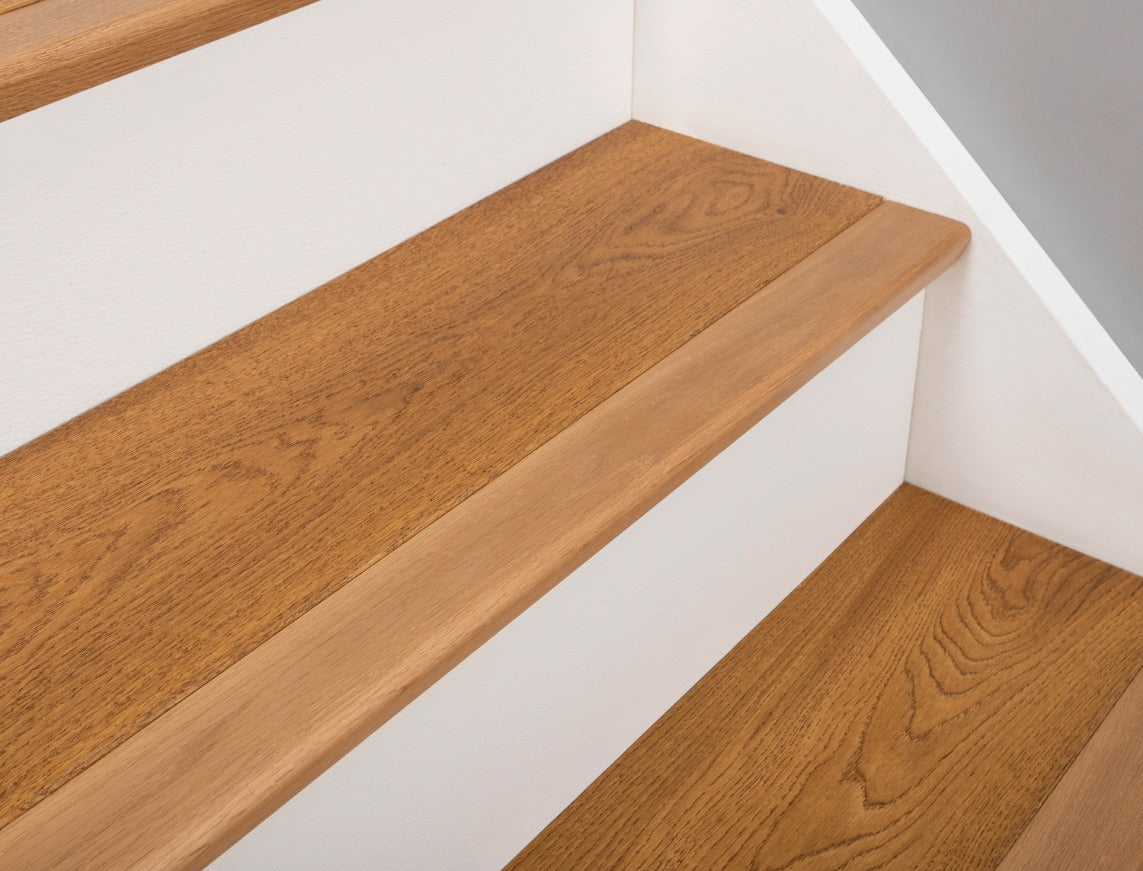
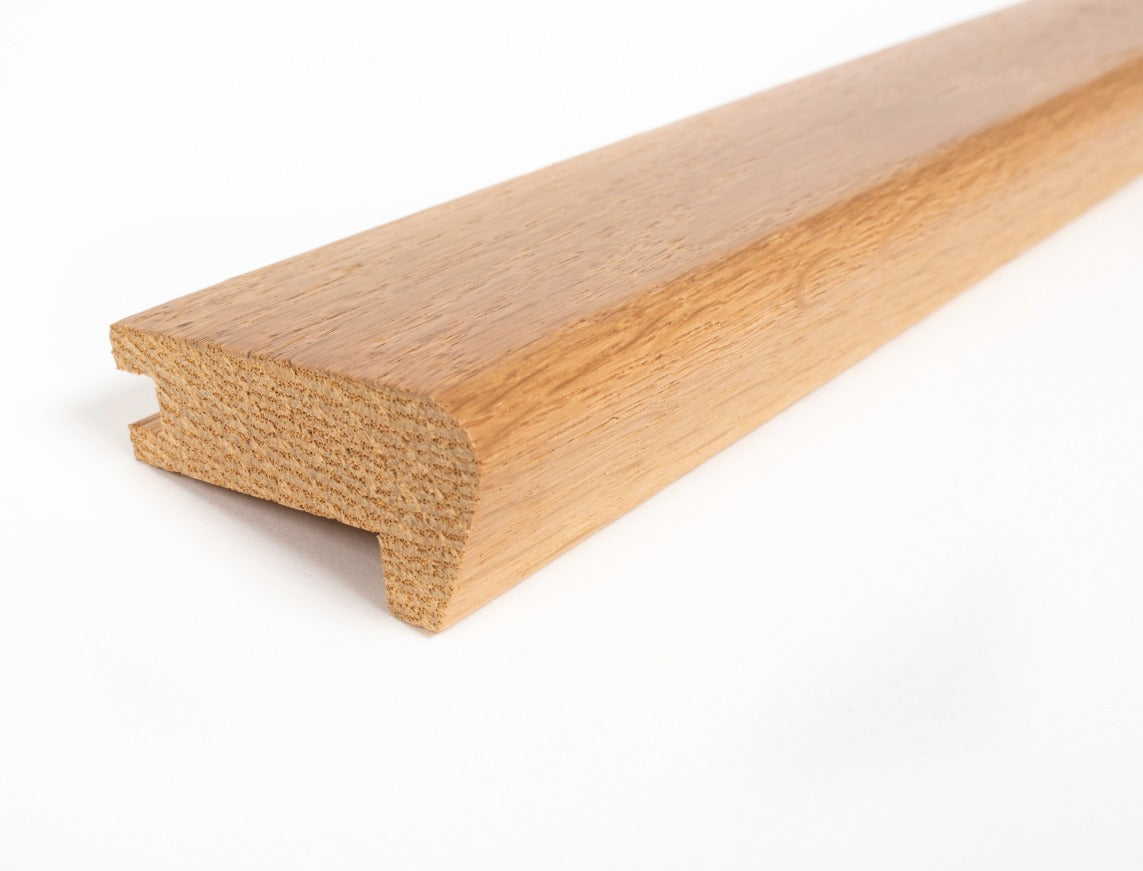
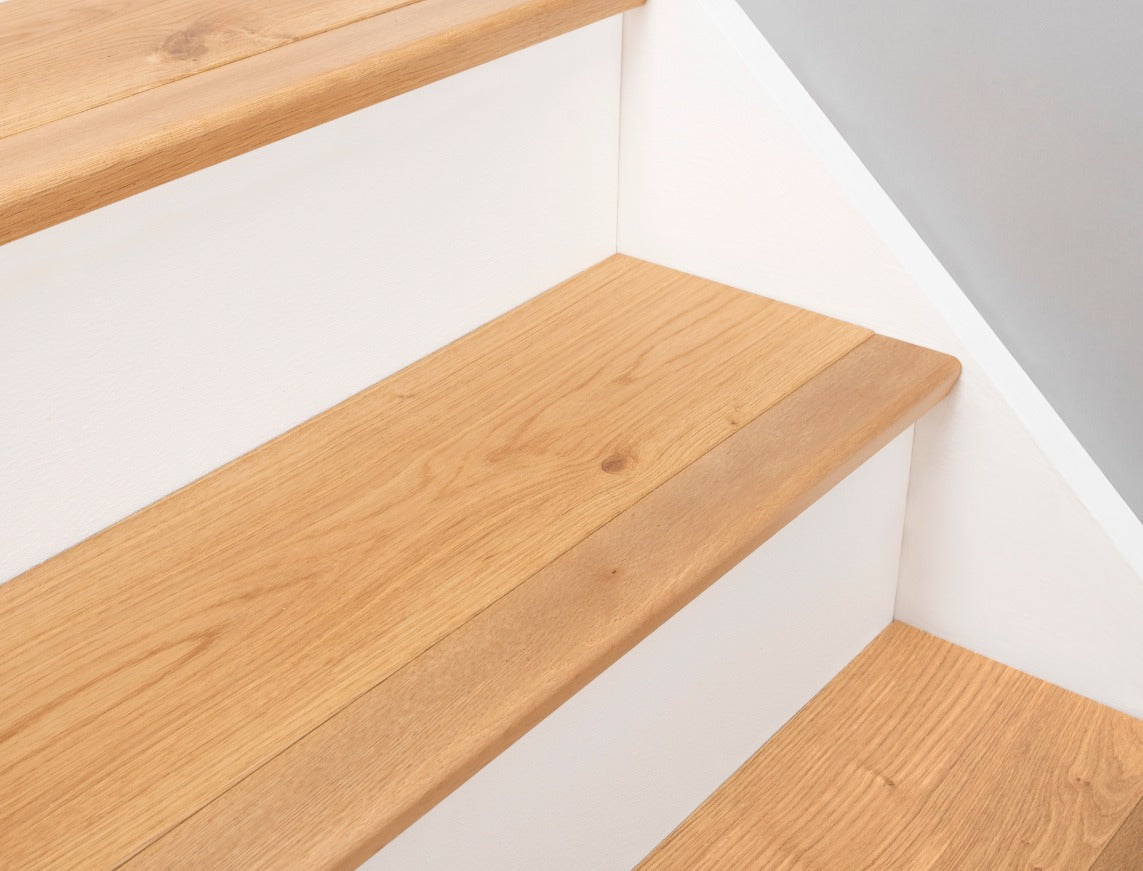
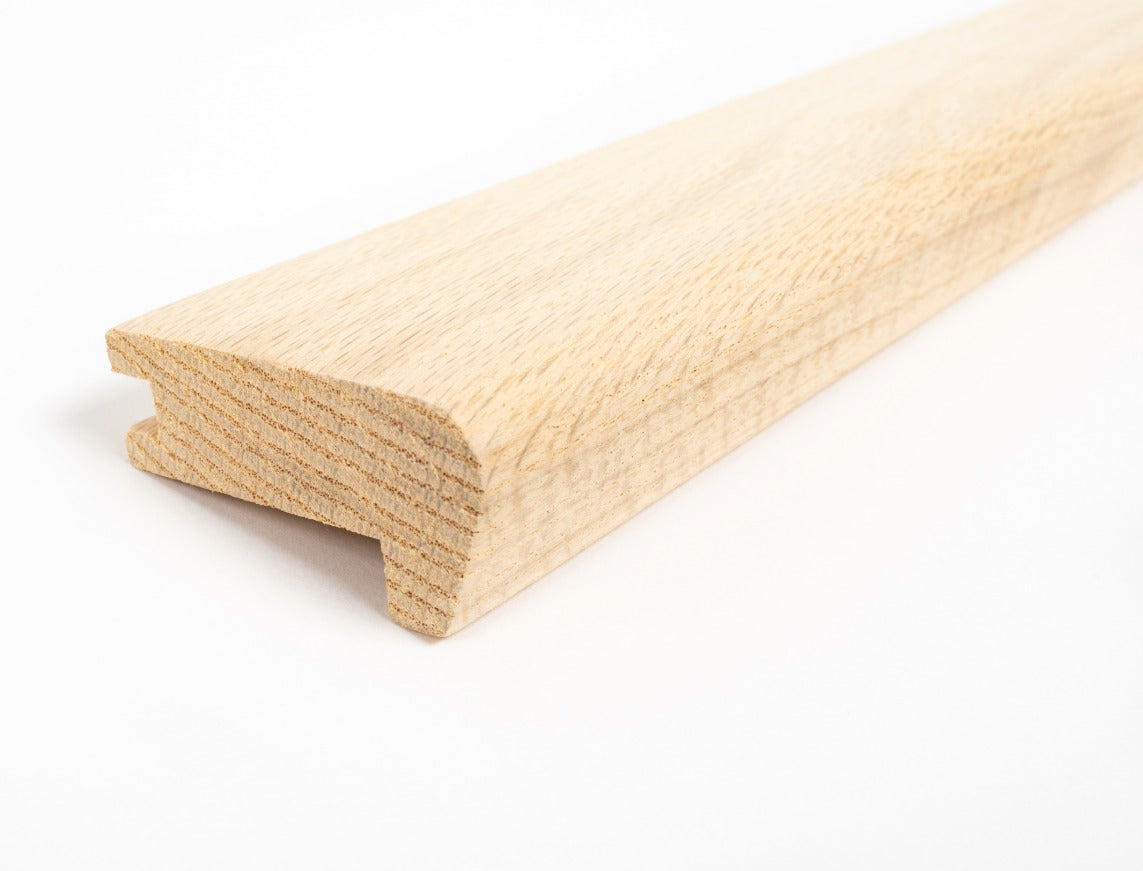
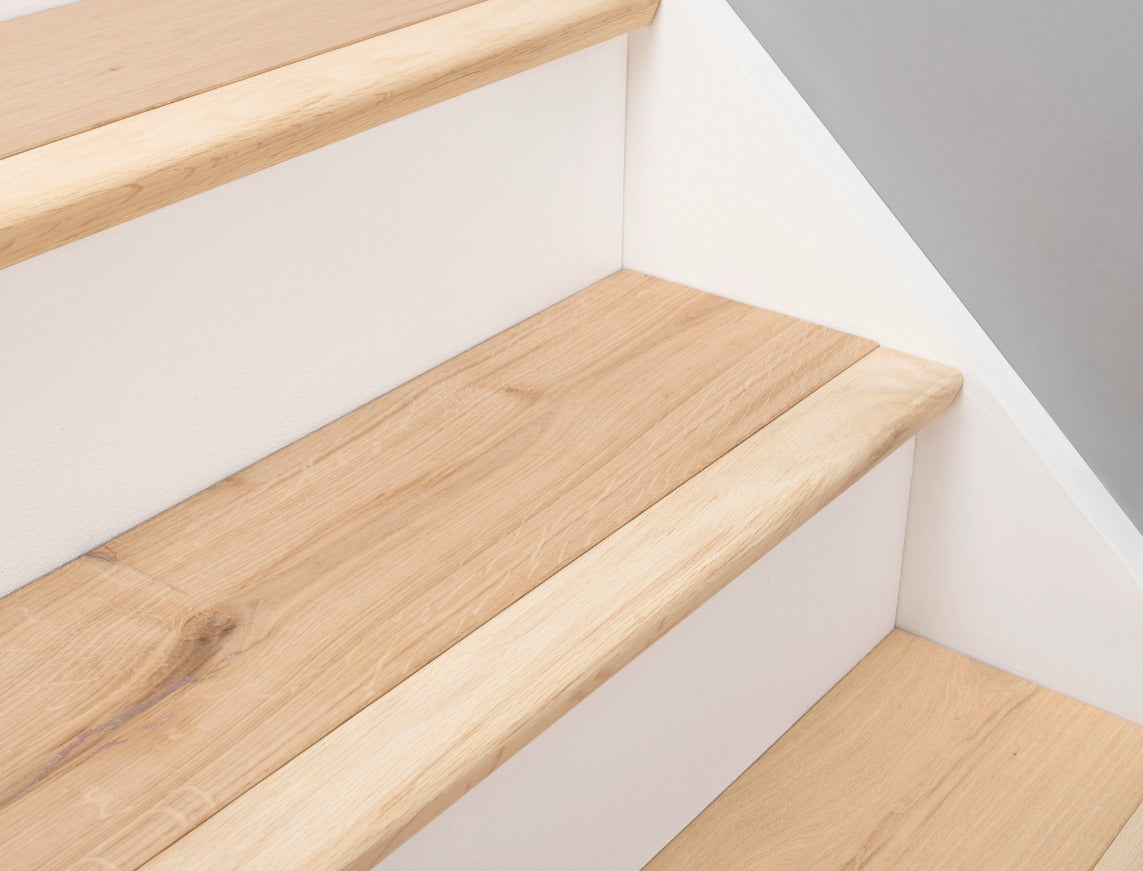
The leading edge of a step takes more wear than any other part of a staircase, and it is the part everyone sees from below. Stair nosing finishes that edge properly and protects it from the daily impact of feet landing on it.
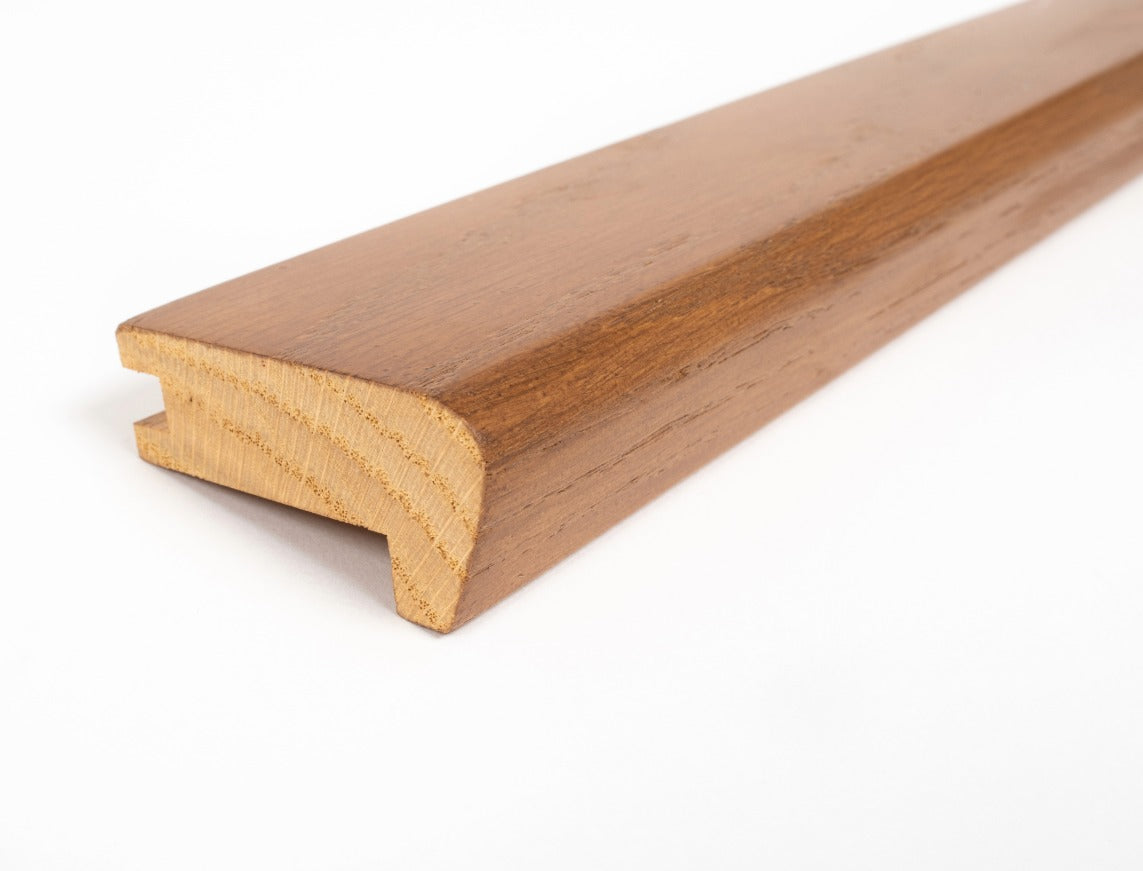
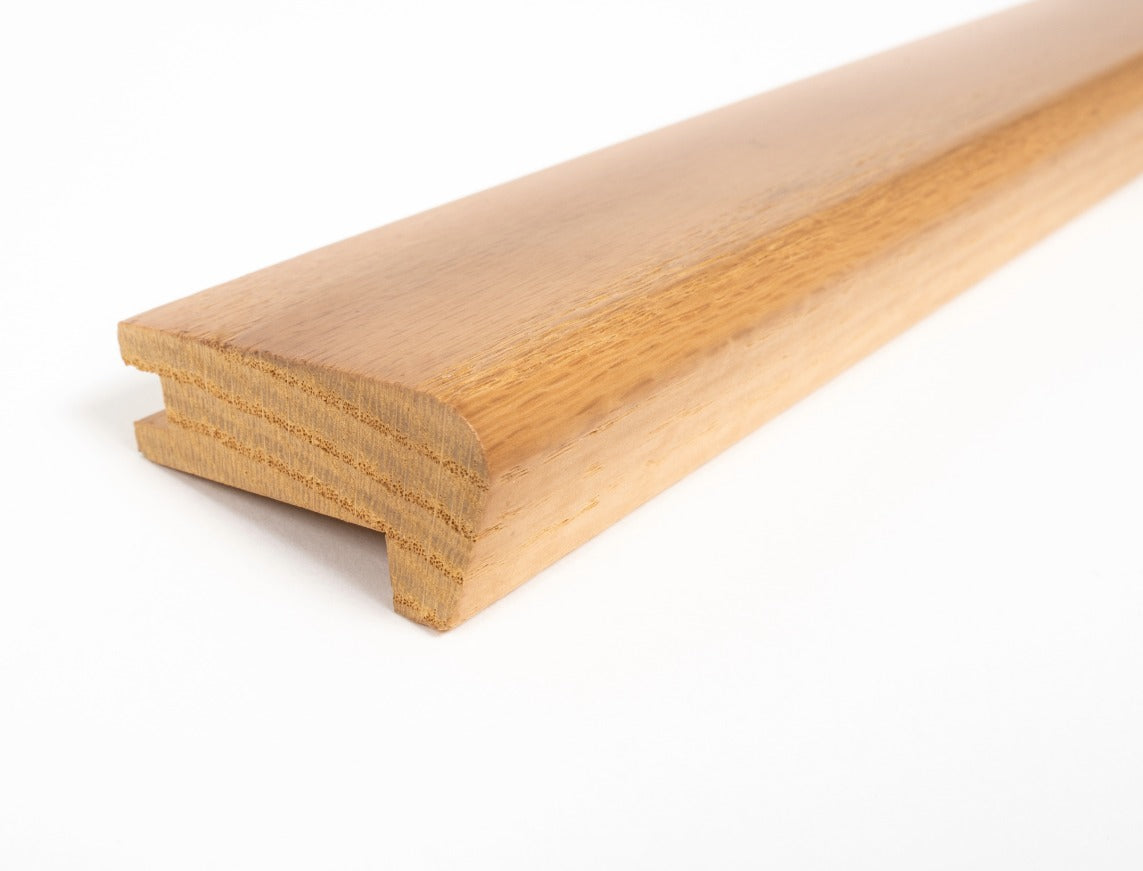
Our nosing is solid oak, available in the same finishes as our oak flooring, so a staircase reads as a continuation of the floor rather than a separate job.
One length per step, fitted once the flooring is laid. Next-day delivery on orders placed before 12pm.
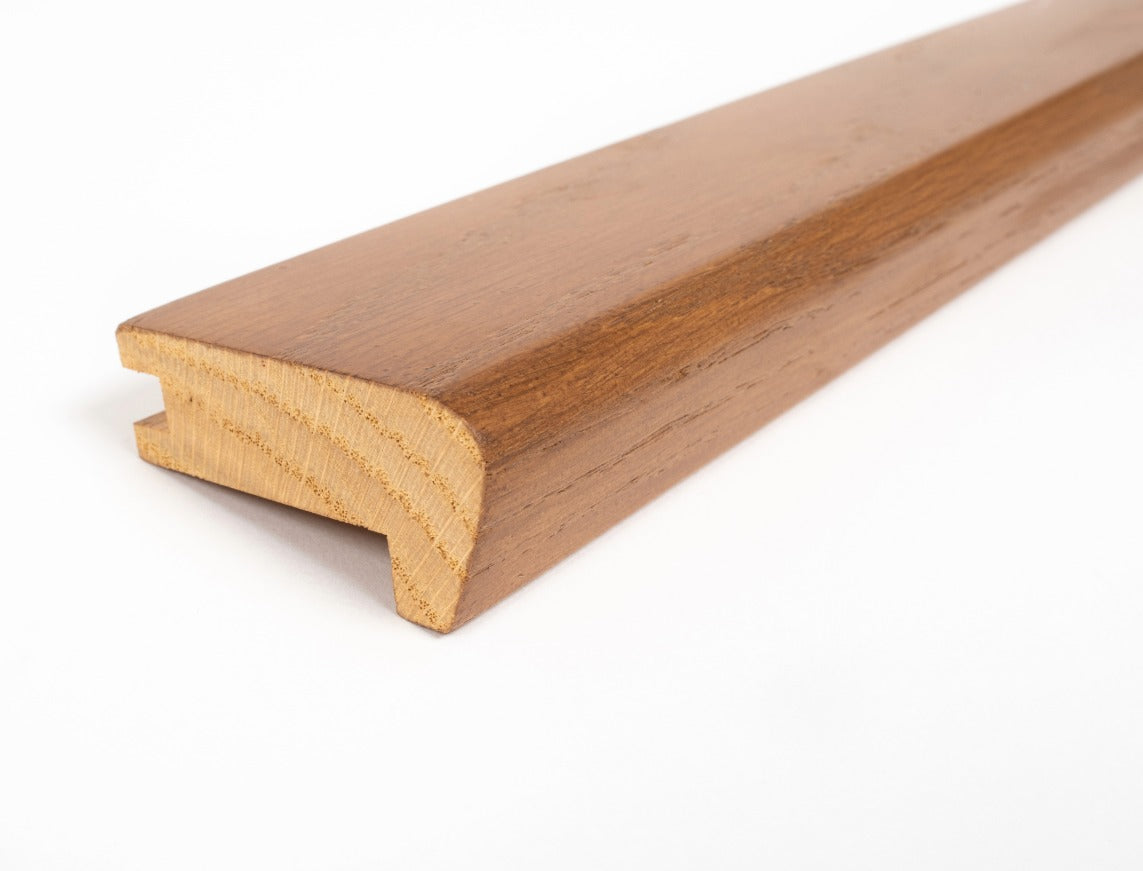
Three things at once. It gives the step a defined, hard-wearing edge instead of an exposed board end. It covers the join between the tread and the riser. And it protects the most vulnerable part of the step from the impact of feet, which lands squarely on that edge every time.
There is a safety element too. A defined edge with a visible contrast helps people judge the step, particularly going down and particularly in poor light.
Stairs are the one place to take advice
A loose or badly fitted nosing on a staircase is a genuine hazard rather than a cosmetic problem. If you are not confident, this is the part of a flooring job worth handing to a fitter.
Matching your floor
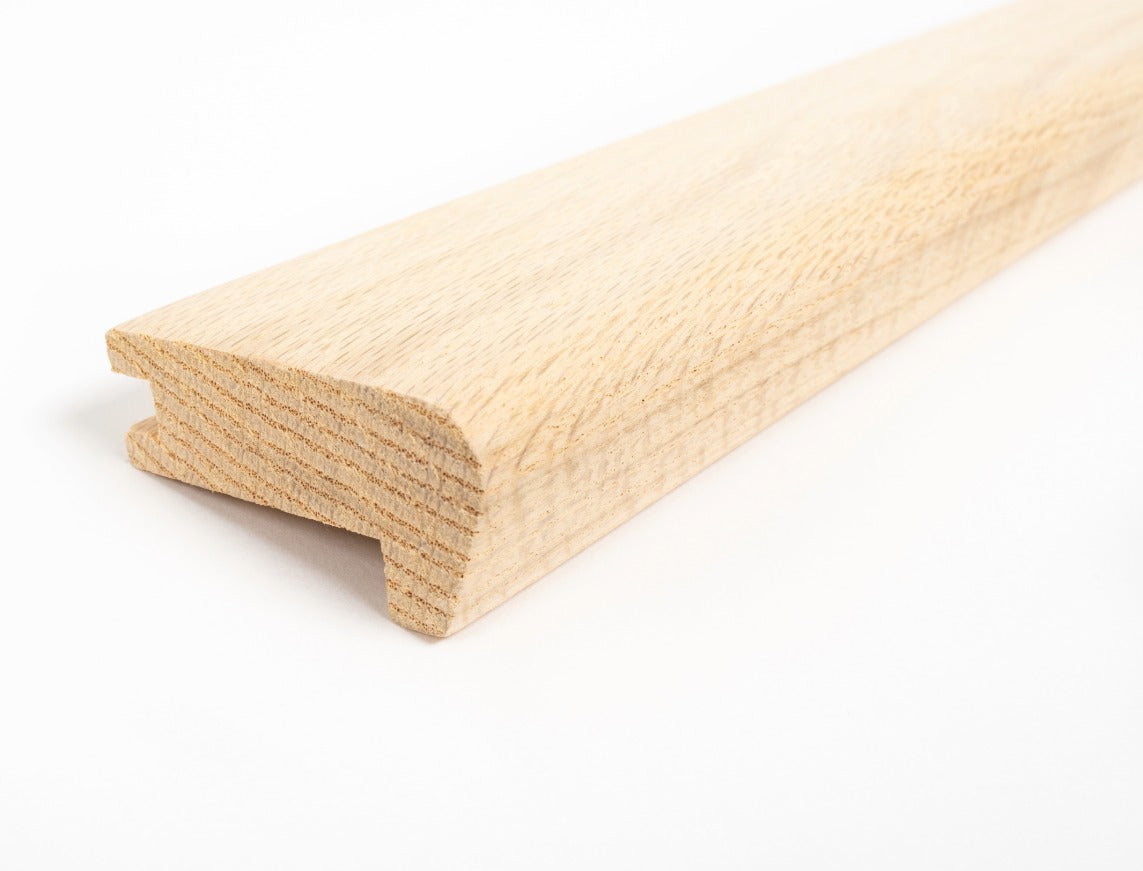
Our stair nosing is solid oak in the same finishes as our engineered oak and solid oak ranges: unfinished, lacquered, golden, oiled and invisible oiled.
Match the finish as well as the colour. A lacquered nosing against an oiled floor will catch the light differently even where the colour is identical, and on a staircase that difference is at eye level.
Unfinished nosing is worth considering if you are finishing the floor on site, since both can then be sealed together for an exact match.
Fitting stair nosing
Nosing is fitted after the flooring on each tread is laid. It sits over the front edge, covering the exposed board end and the join with the riser below.
Cut each piece to the width of the step. Stairs are rarely perfectly consistent, particularly in older houses, so measure every step individually rather than cutting them all to one length. Fix securely, since a nosing that works loose on a stair is more than a cosmetic problem.
How much will you need?
One length per step. Count the treads, not the risers, and remember any landings with a step down. Add one spare, since a miscut on a staircase is more annoying than one on a floor.
If the floor continues at the top and bottom of the stairs, you may also need threshold profiles where it meets the landing.
Stair nosing: frequently asked questions
What is stair nosing?
A profile fitted to the front edge of each step. It finishes the exposed edge, covers the join between tread and riser, and protects the part of the step that takes most wear.
Do I need stair nosing?
If your floor continues onto stairs, yes. Without it the board end is exposed on the most vulnerable part of the step.
How many do I need?
One per step, plus a spare. Count treads rather than risers.
Can I fit stair nosing myself?
It is achievable, but a stair nosing must be fixed securely. If you are not confident, this is the part of the job worth handing to a fitter.
Will it match my flooring?
Our nosing comes in the same finishes as our oak flooring. Wood varies naturally, so expect a close match rather than an identical one.
Are my steps all the same width?
Often not, particularly in older properties. Measure each step individually rather than cutting every piece to one length.
What else will I need?
Beading around the perimeter of adjoining rooms and threshold profiles at the top and bottom of the stairs.
Count your steps before you order
Next-day delivery on orders placed before 12pm, and free over £500.