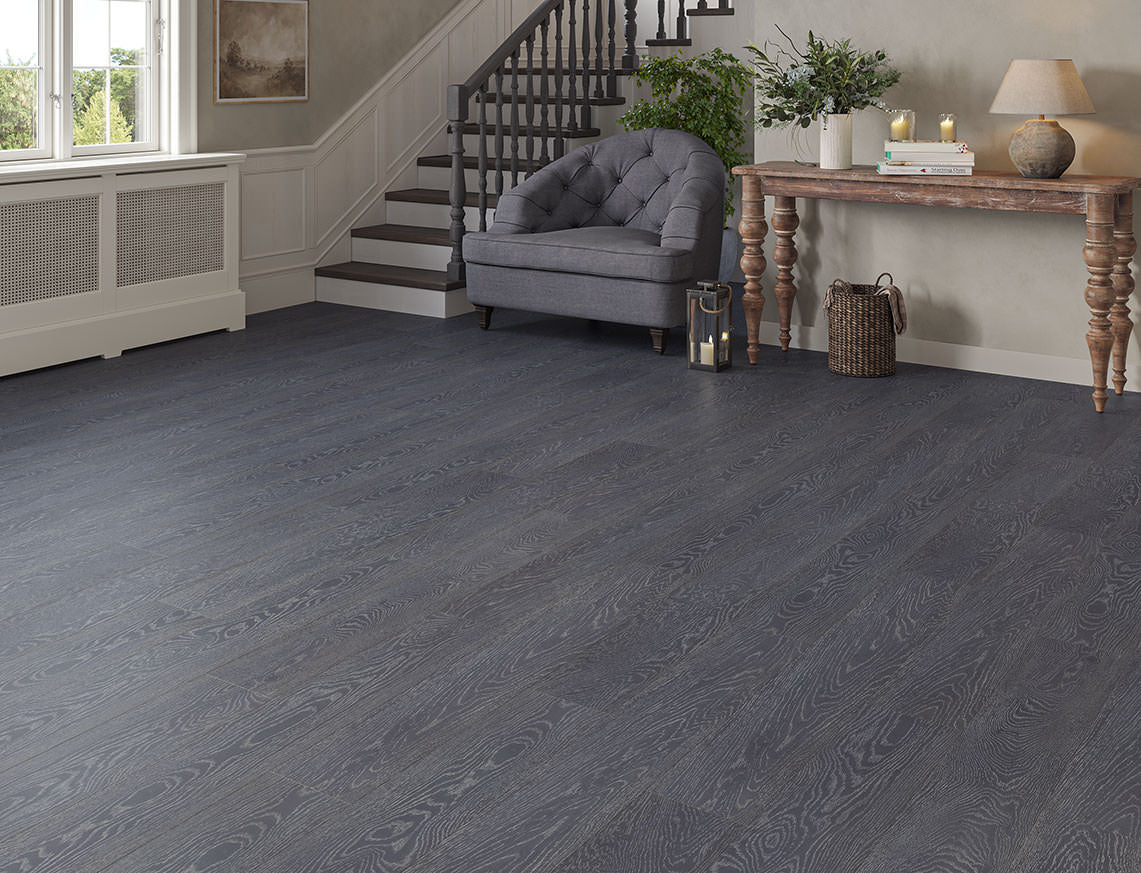
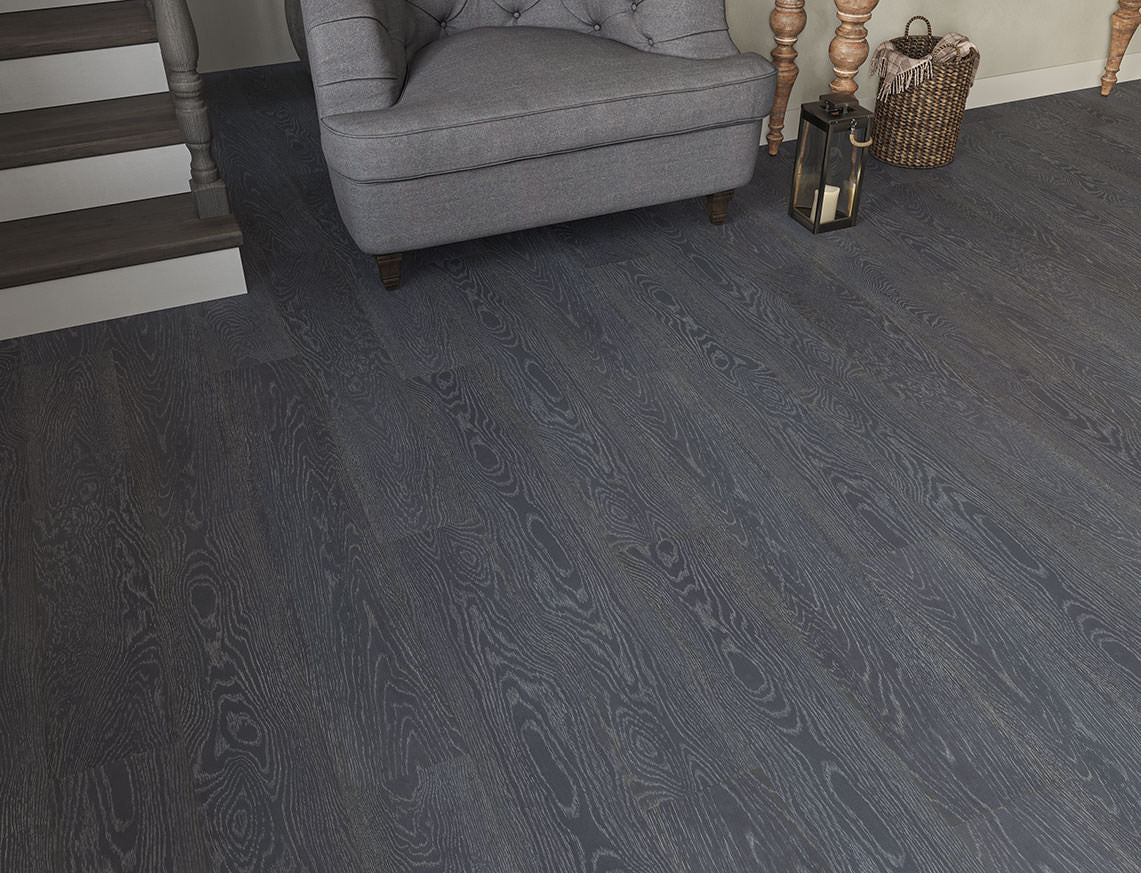
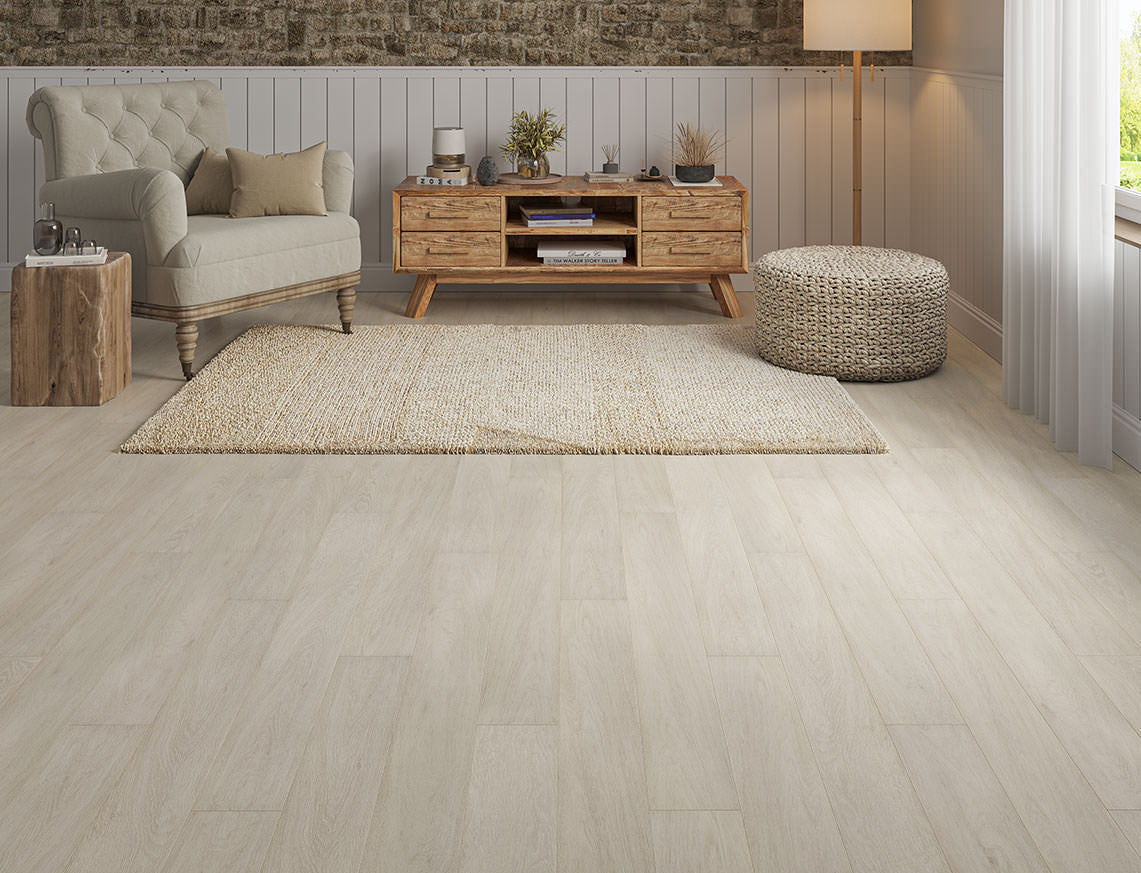
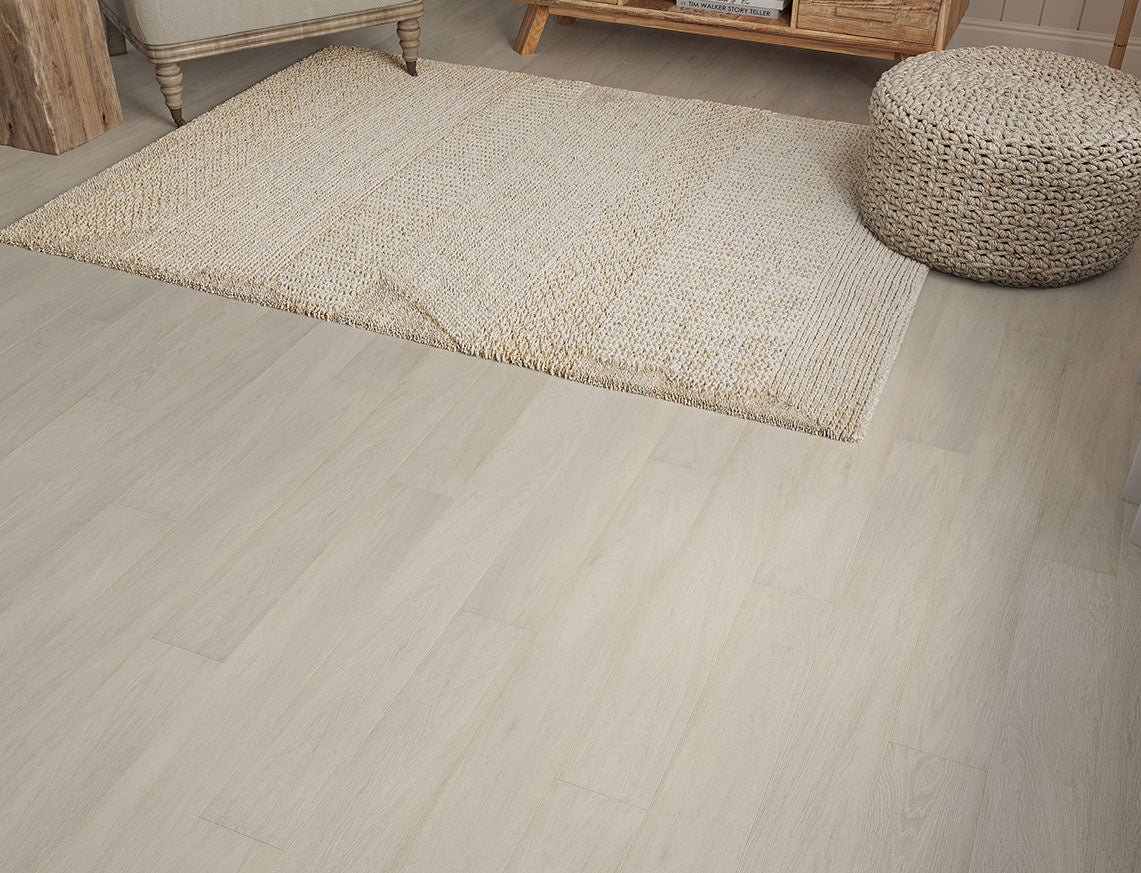
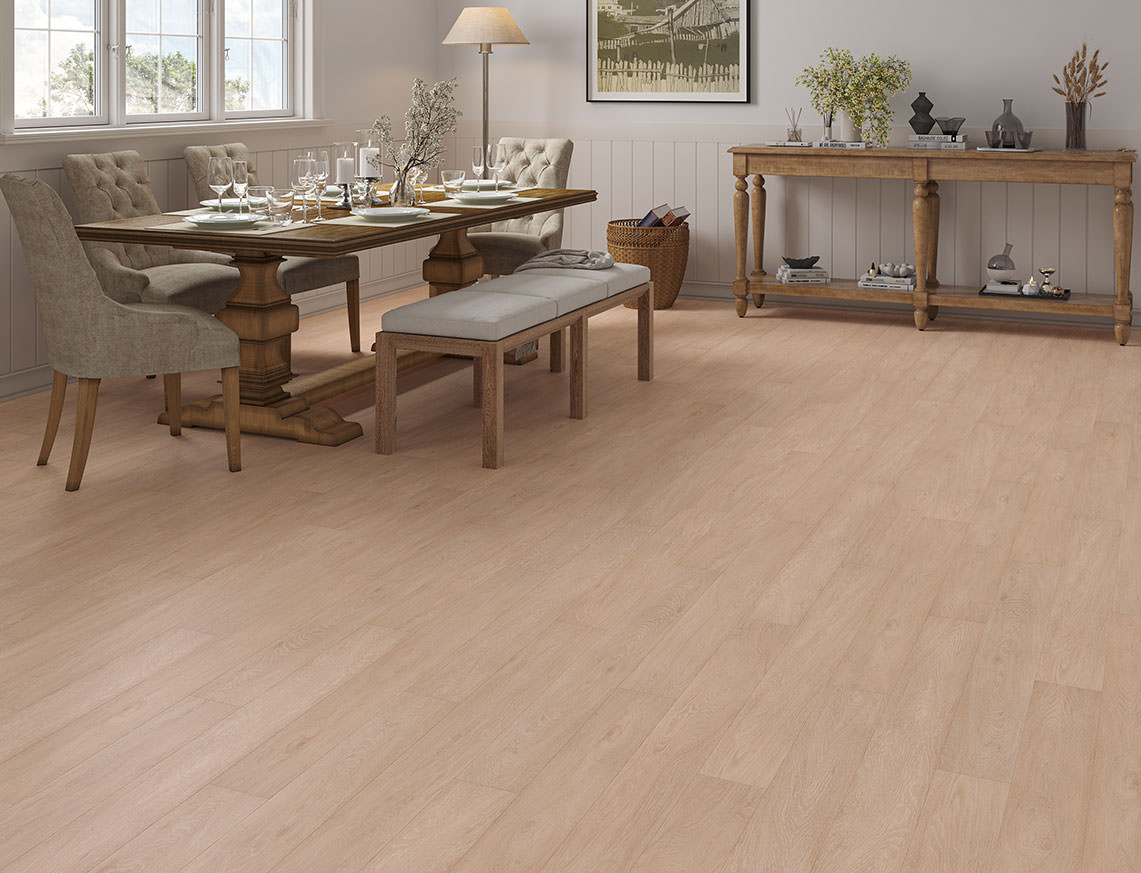
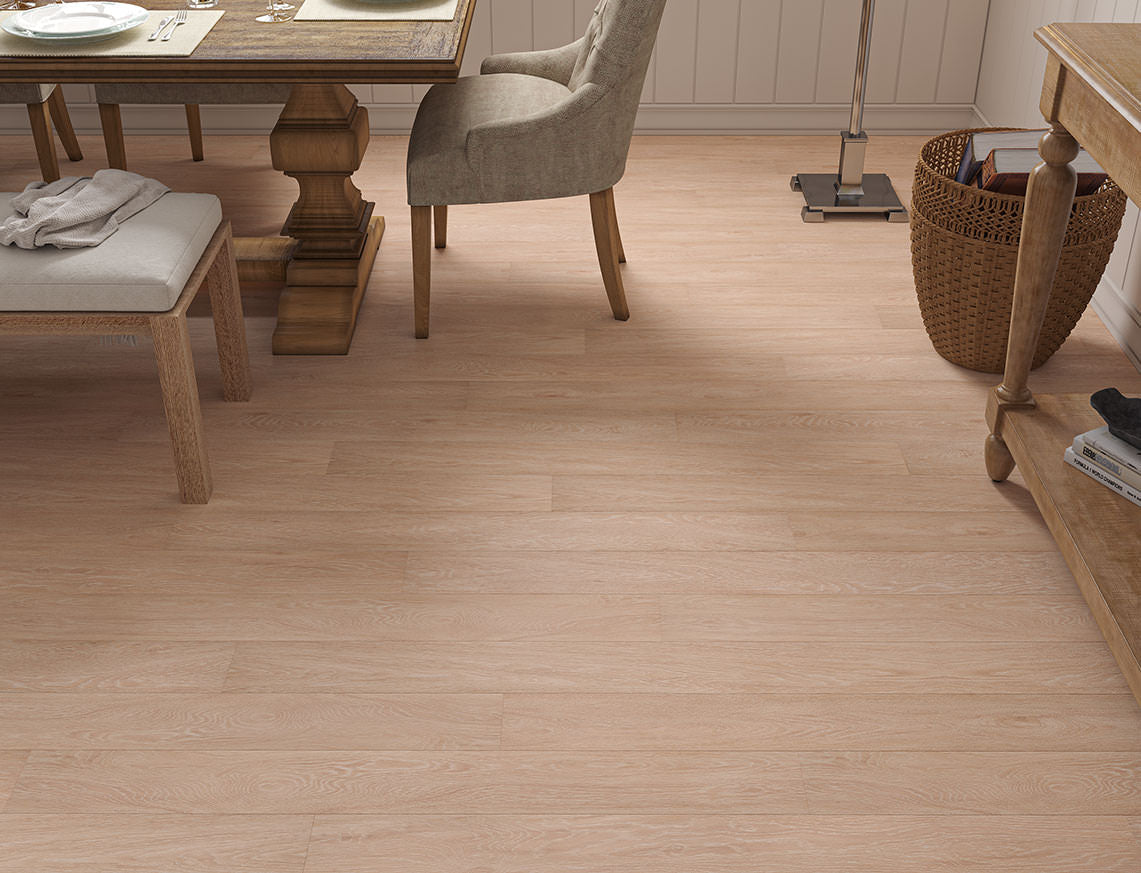
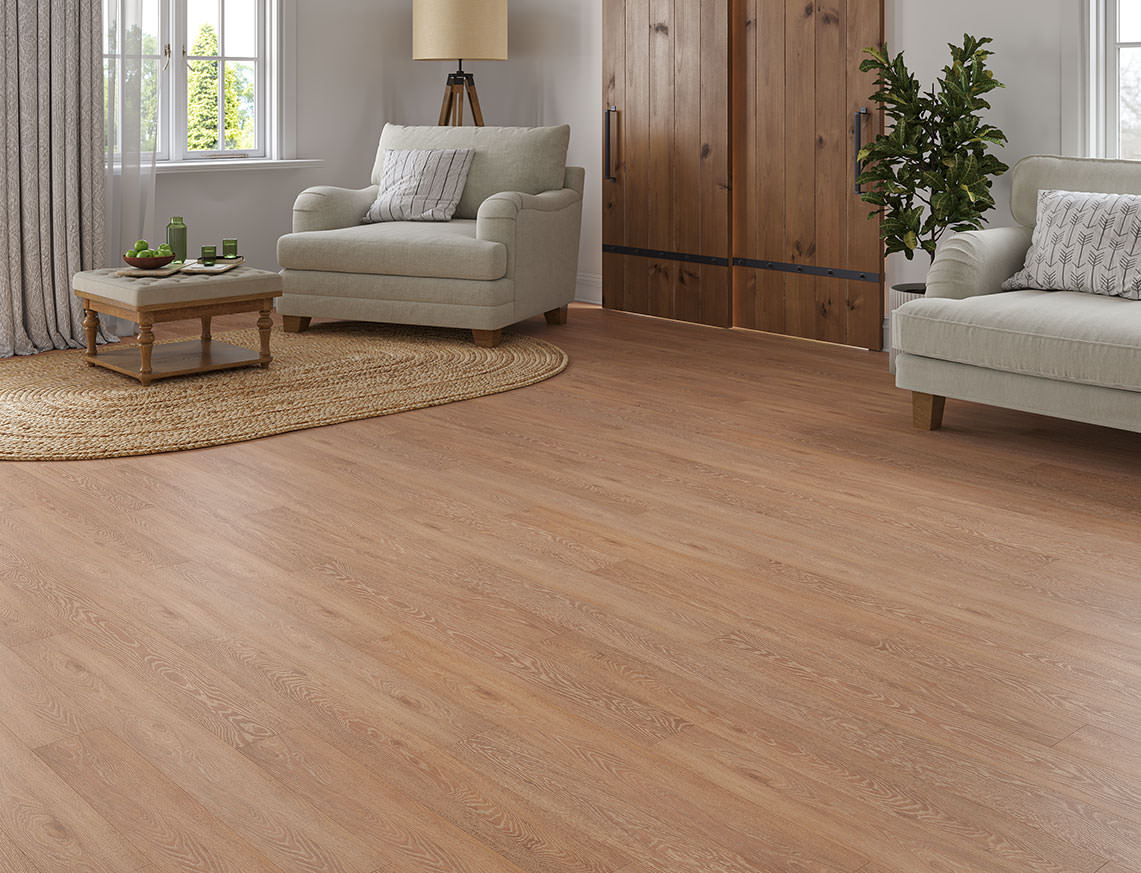
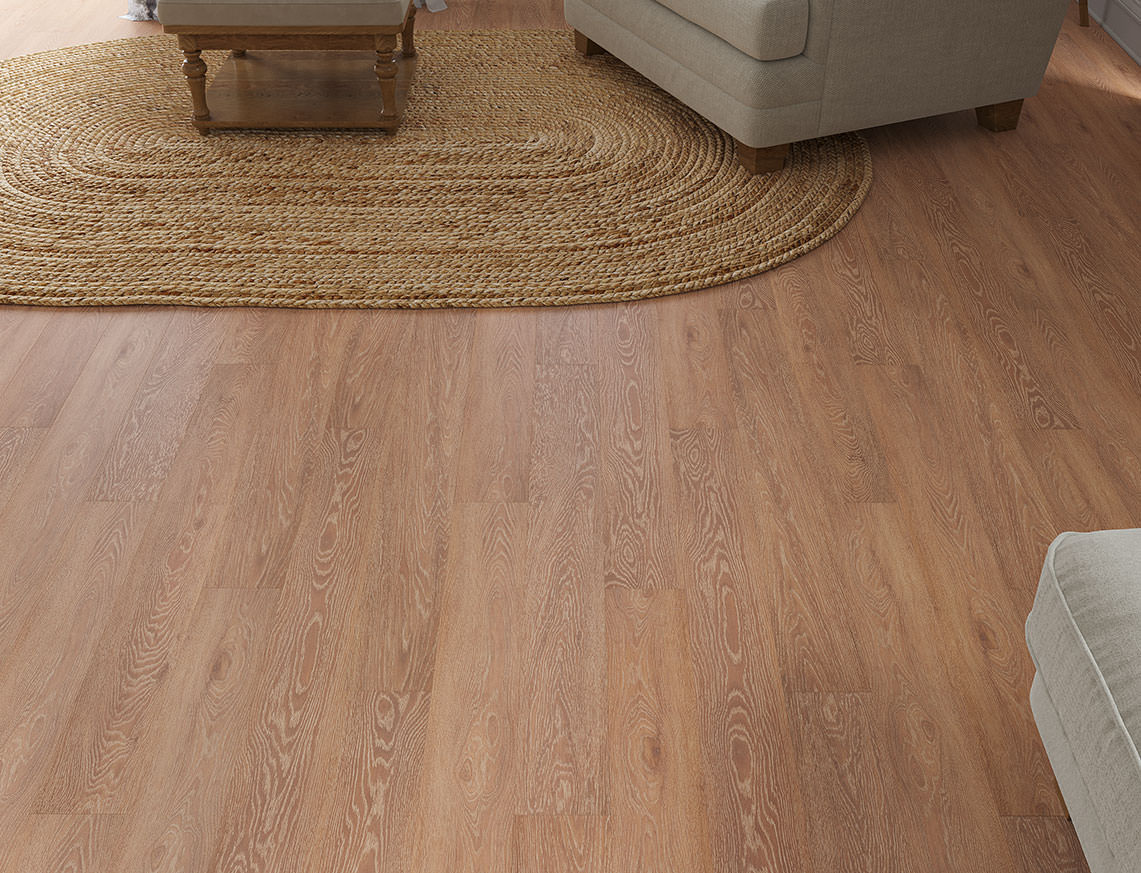
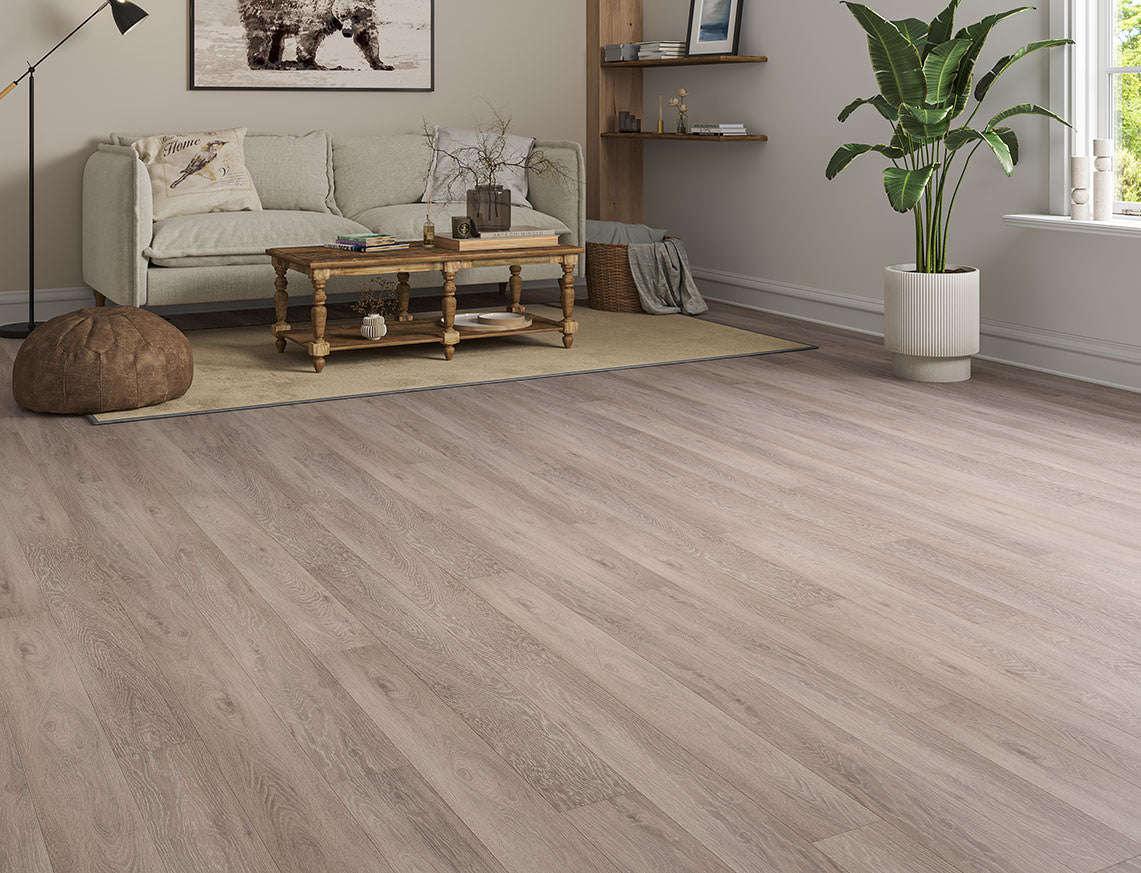
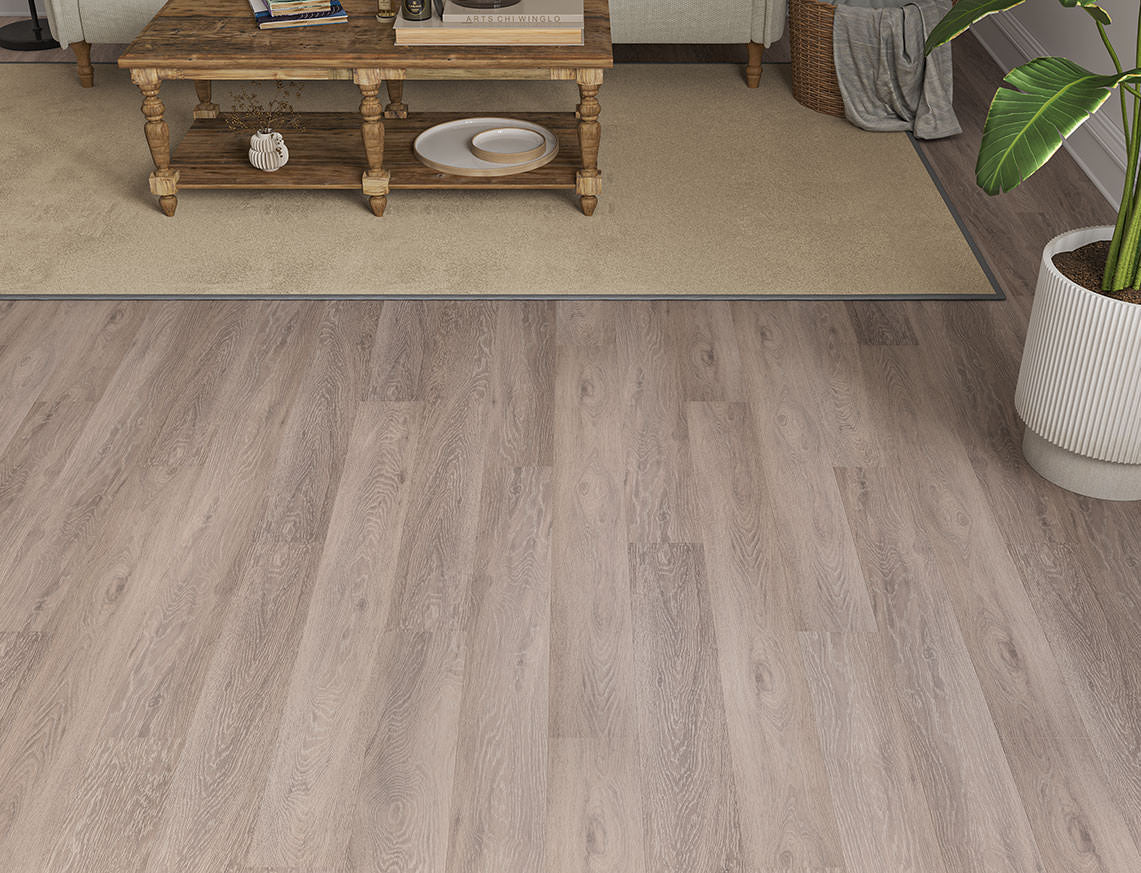
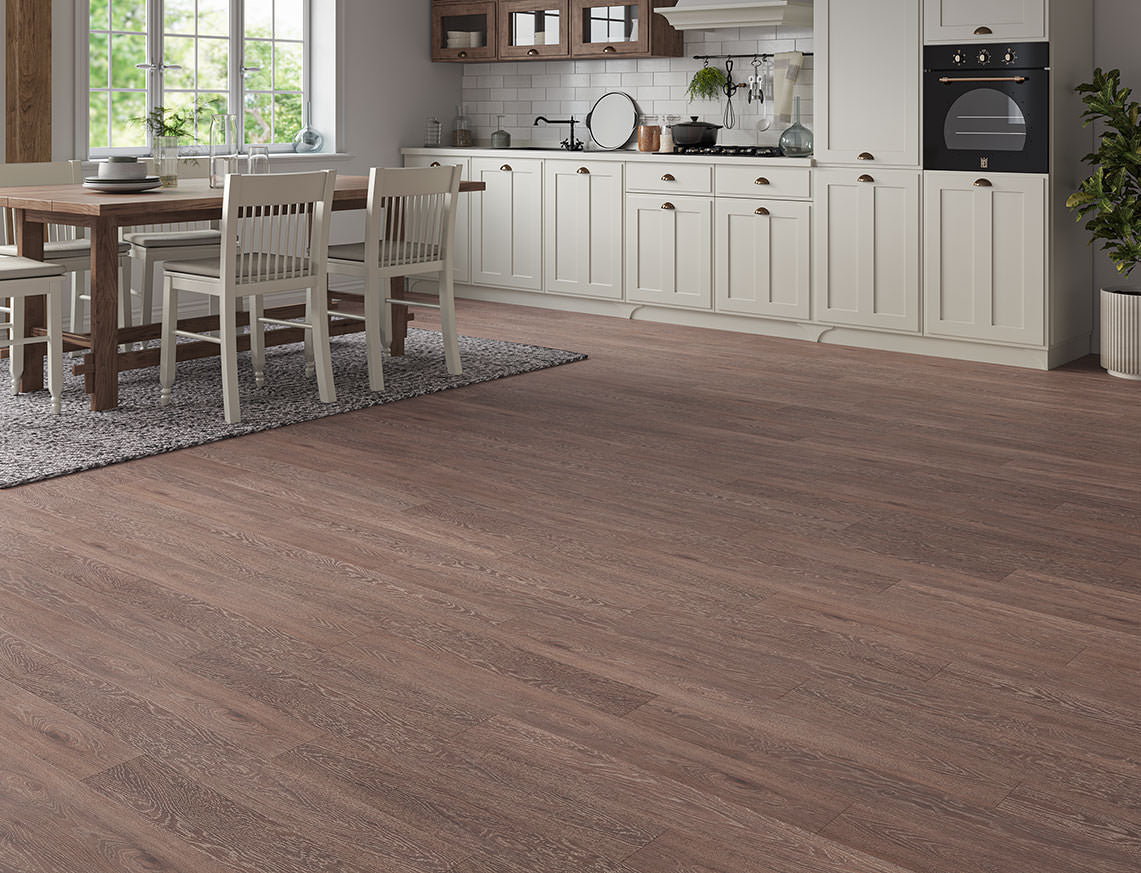
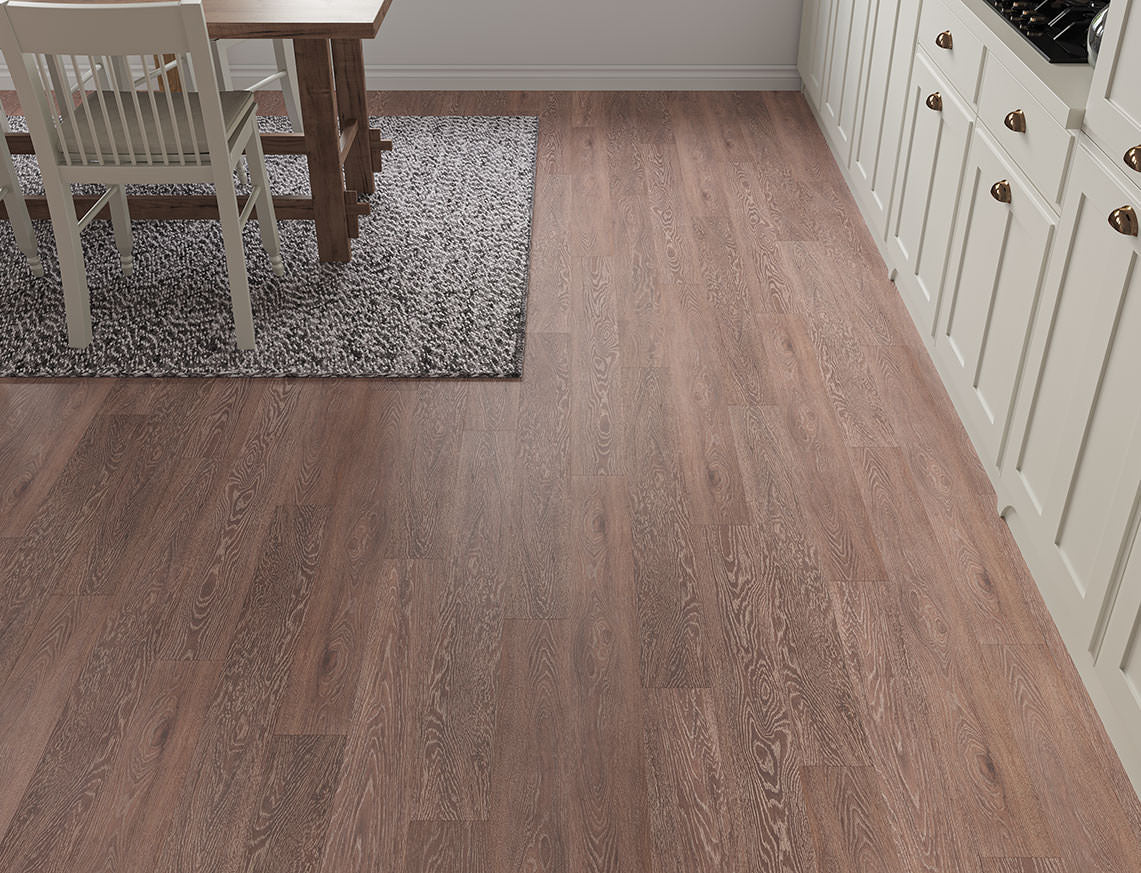
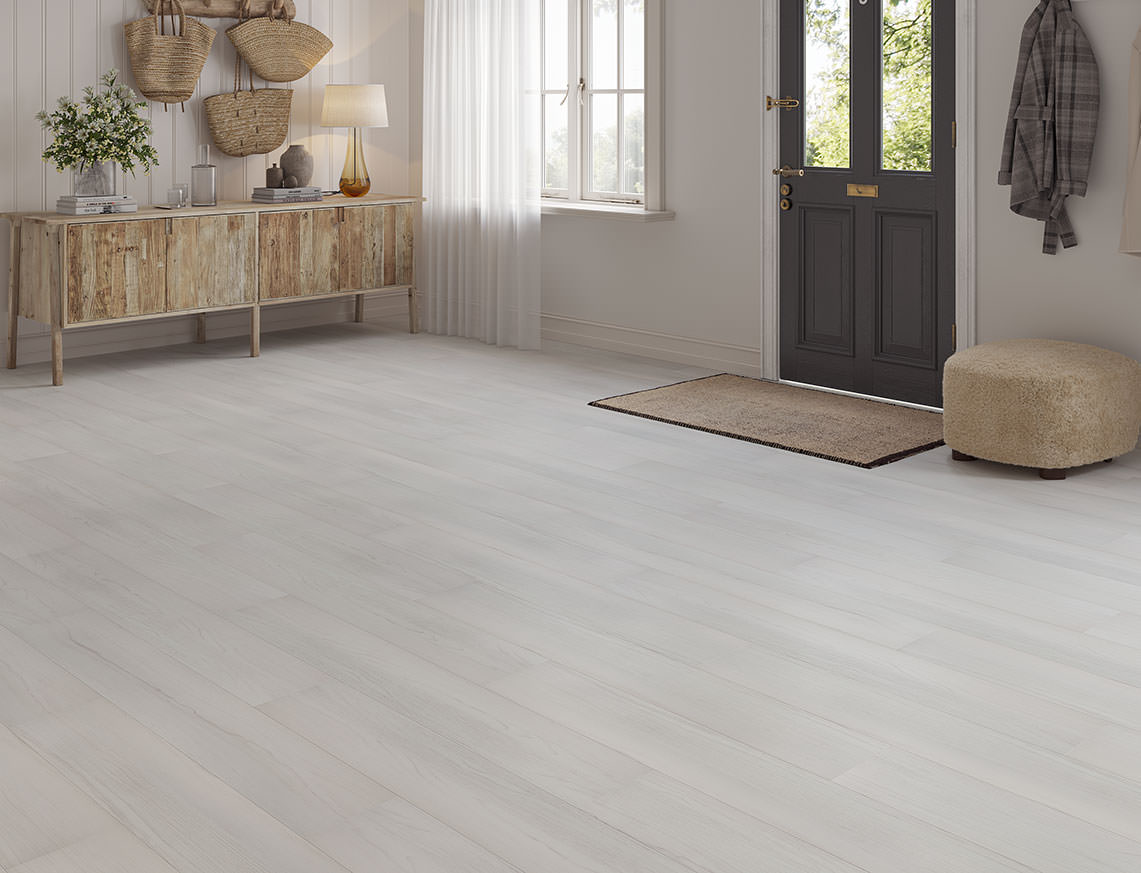
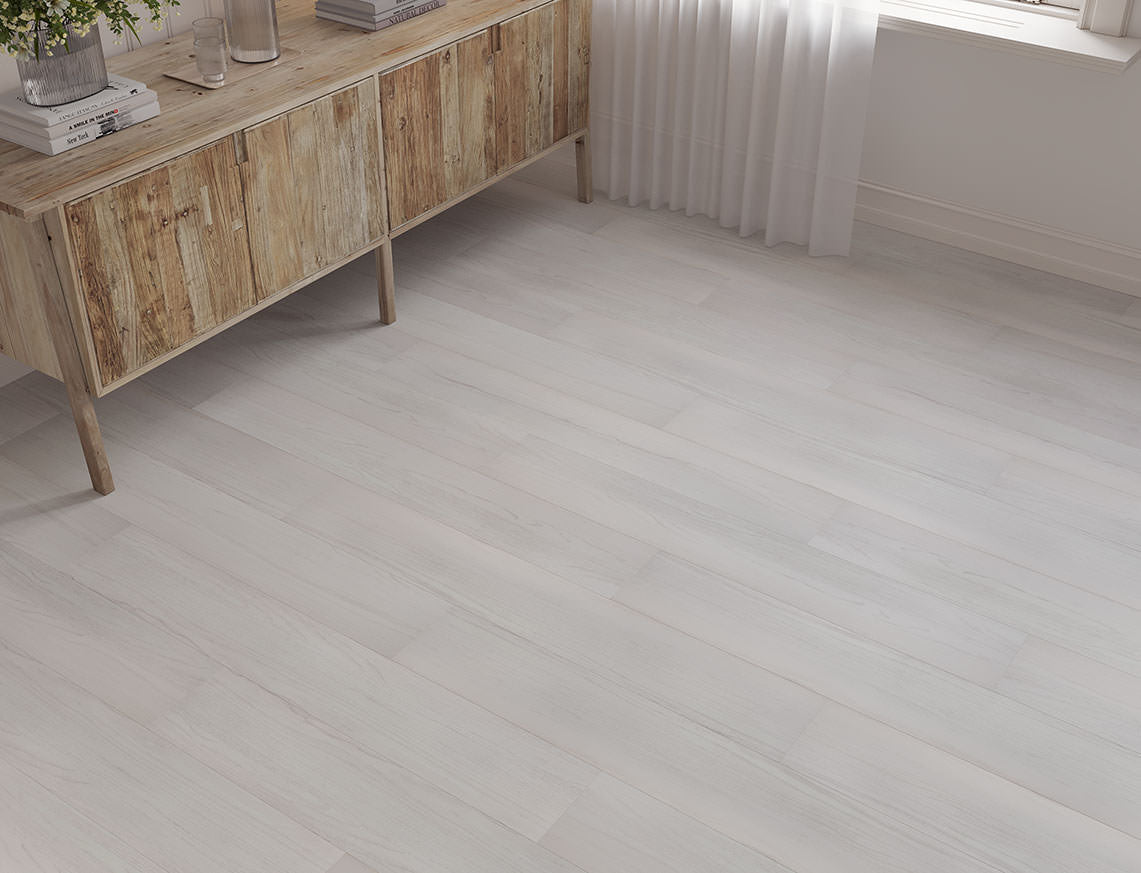
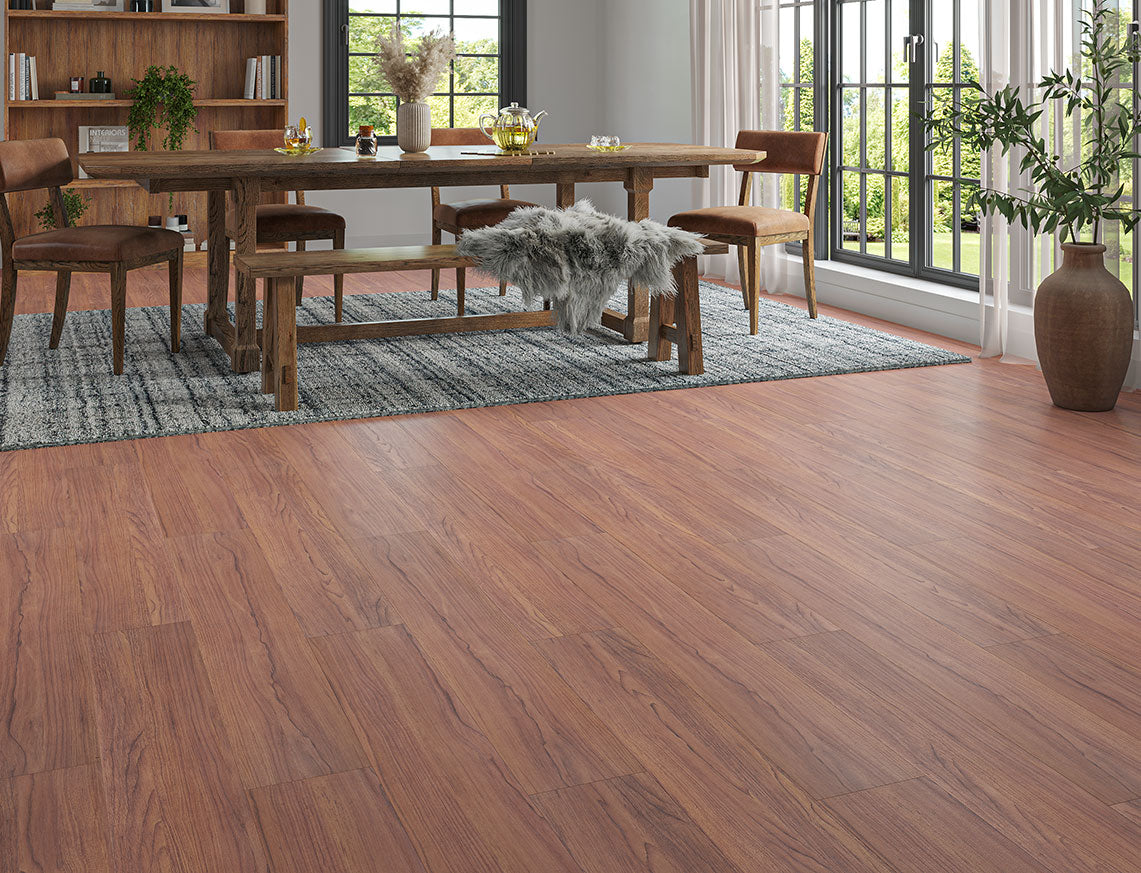
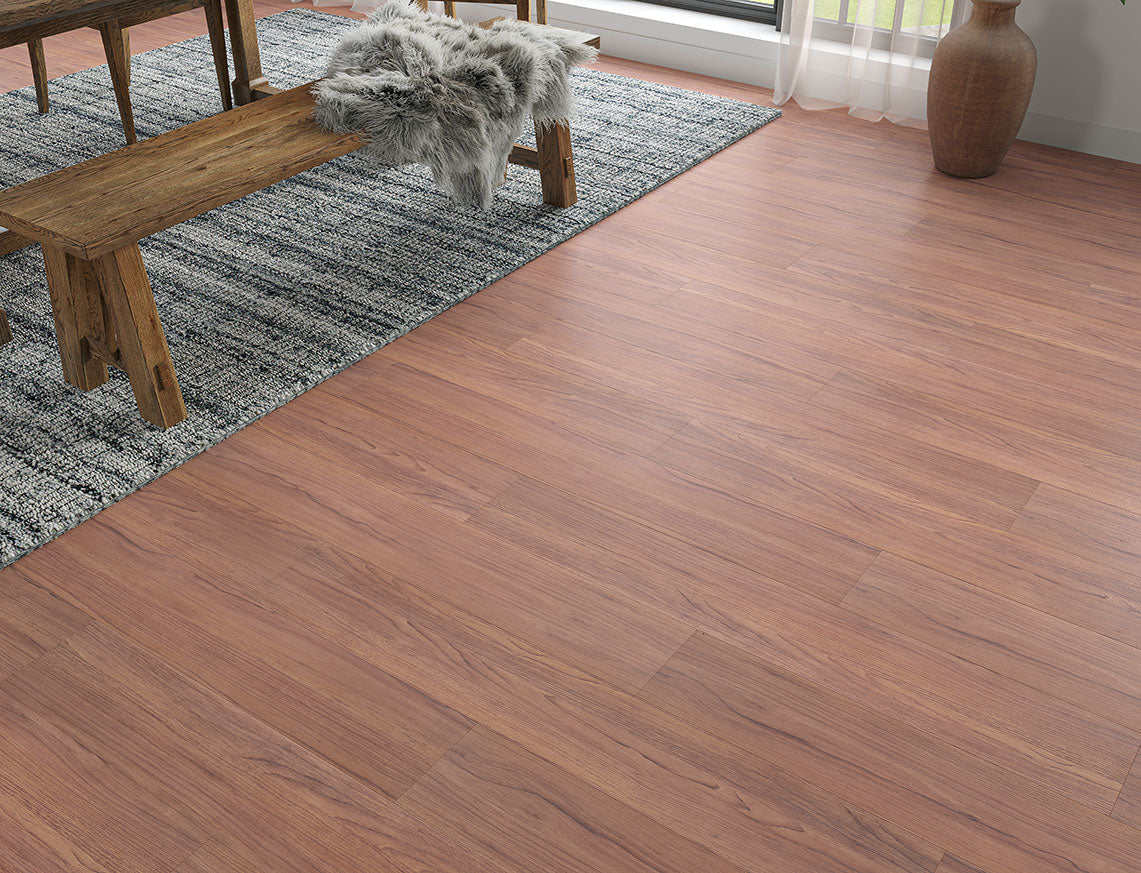
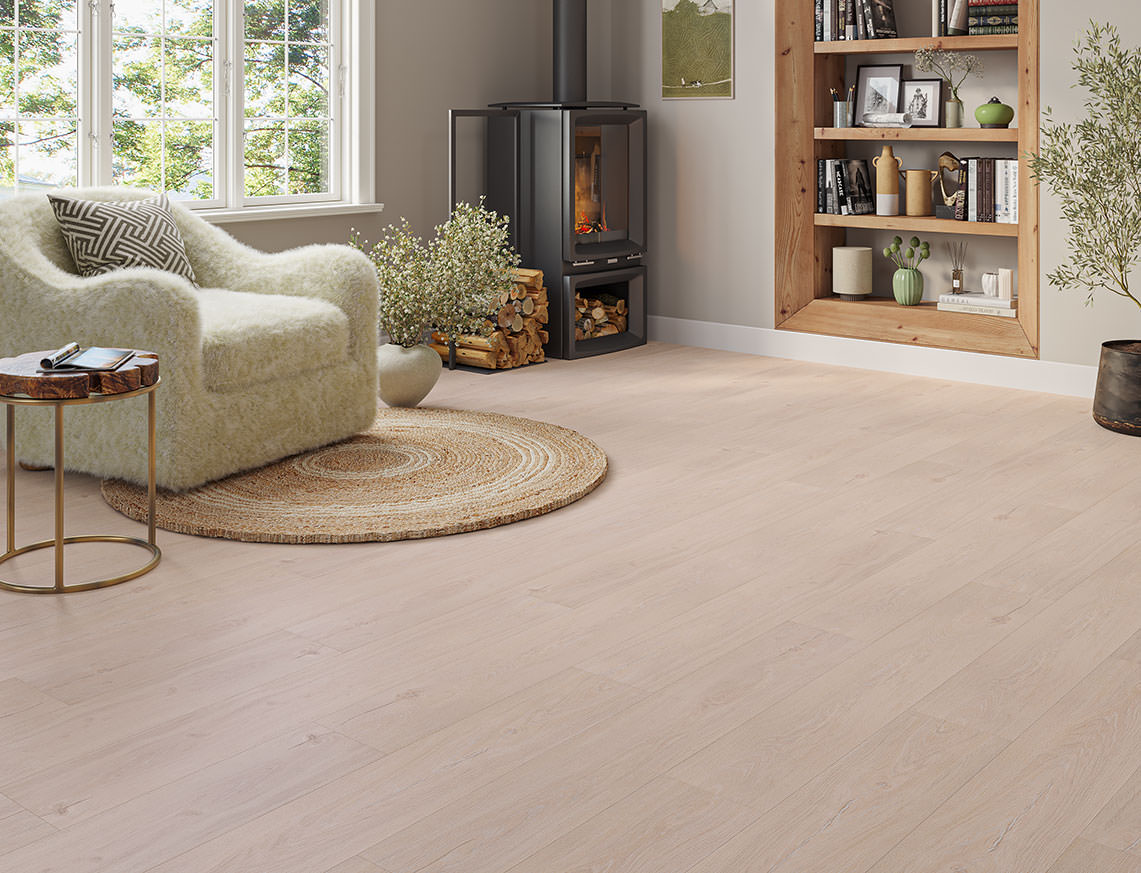
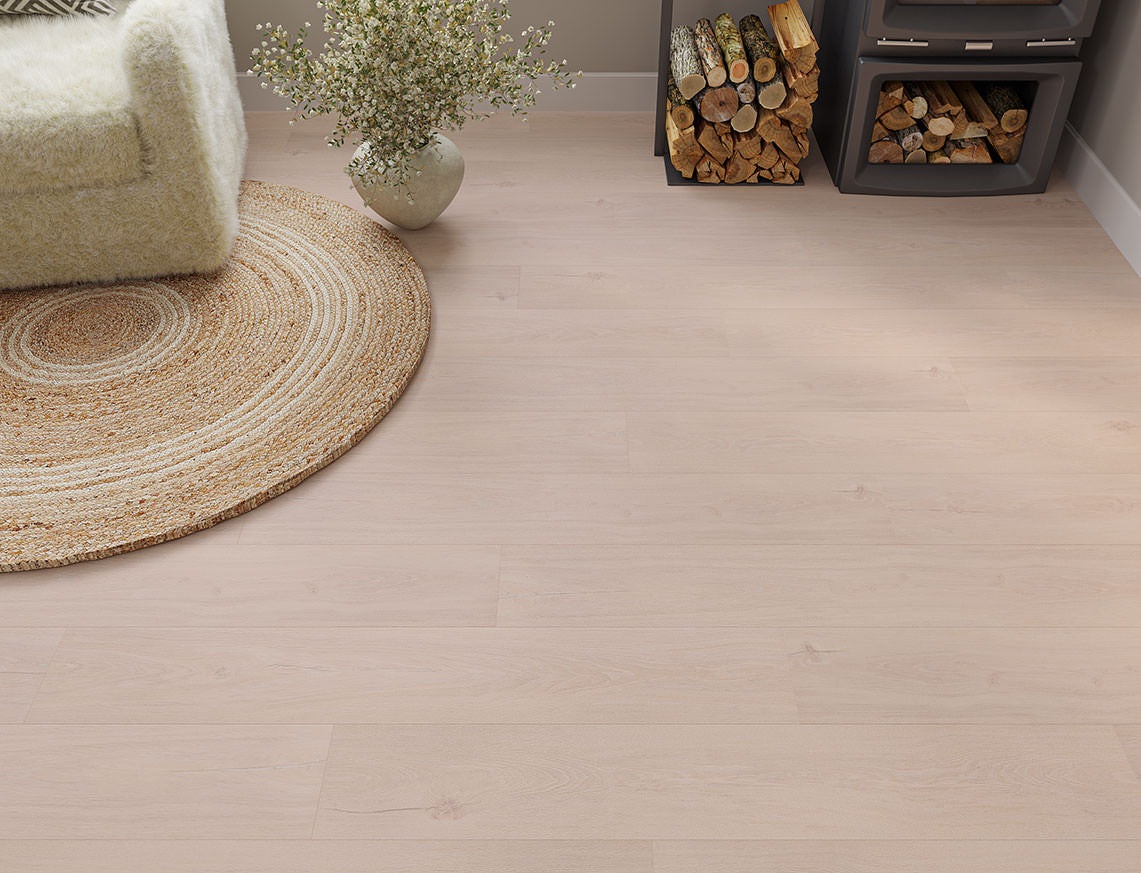
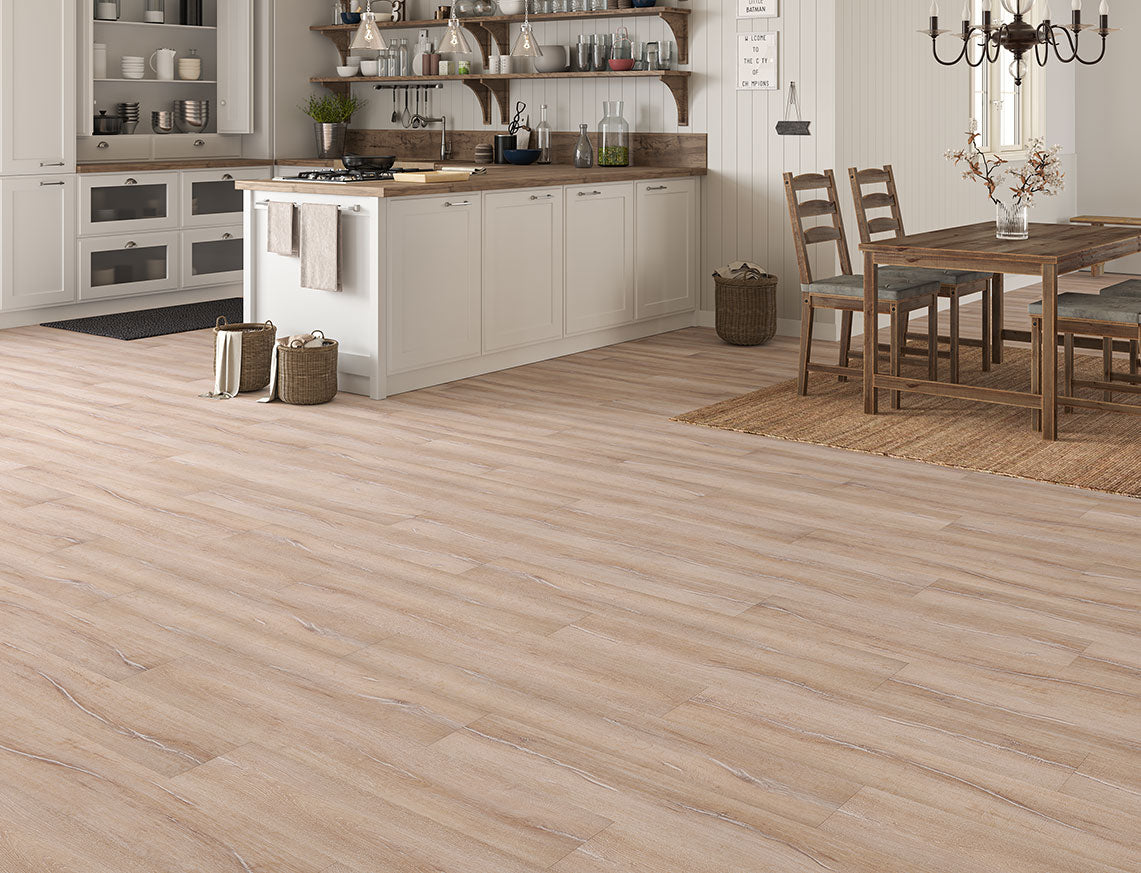
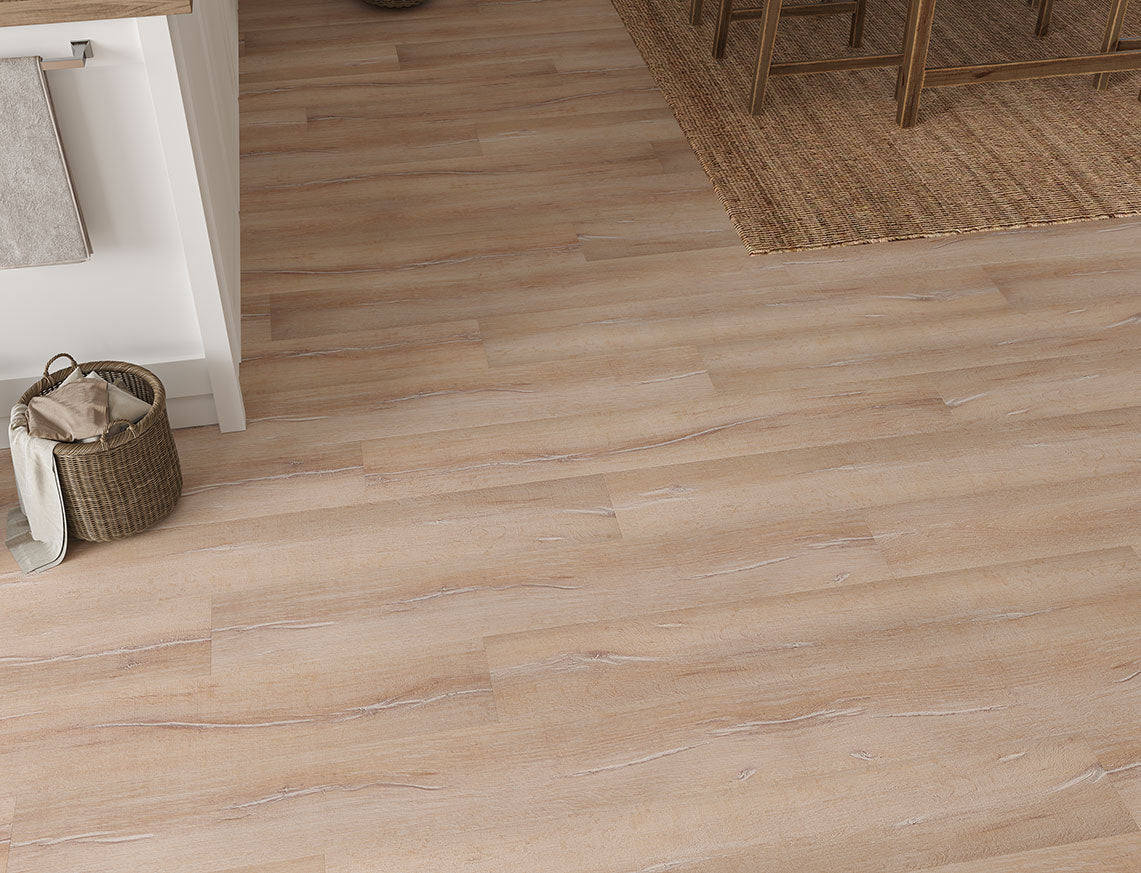
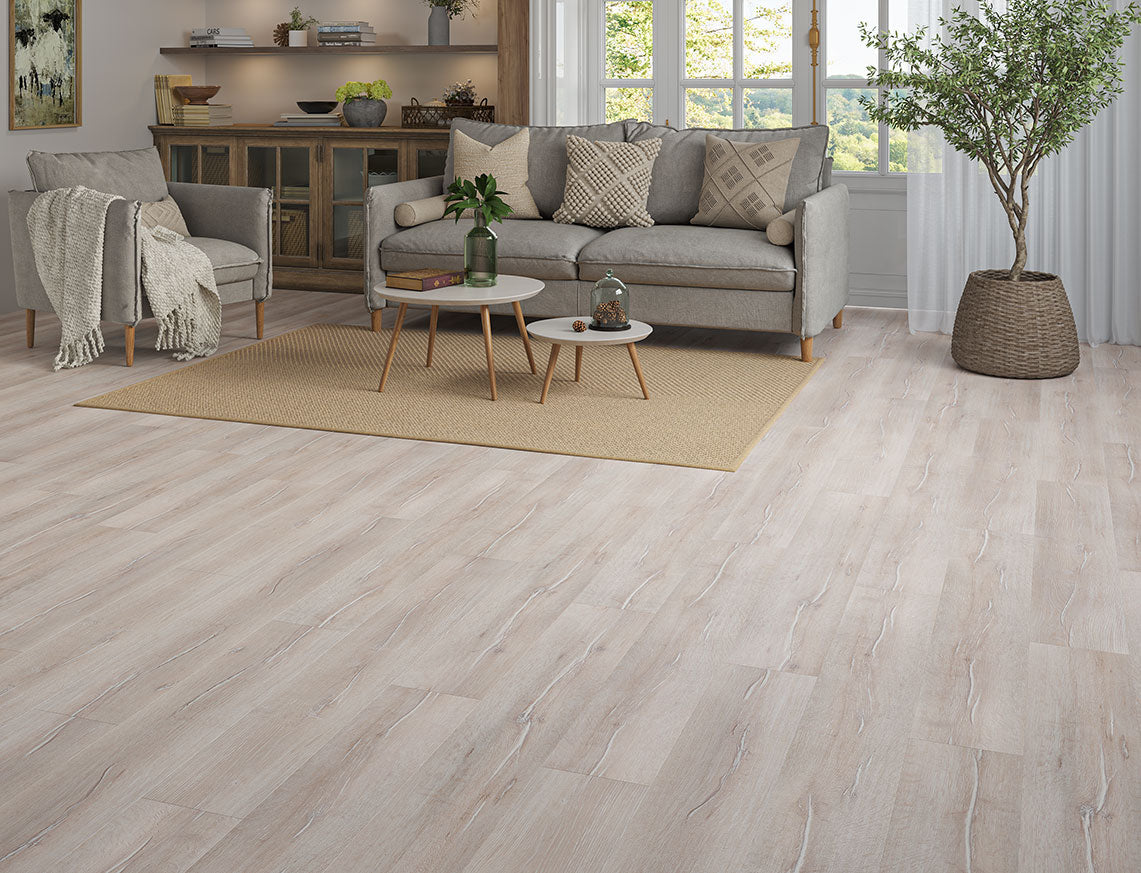
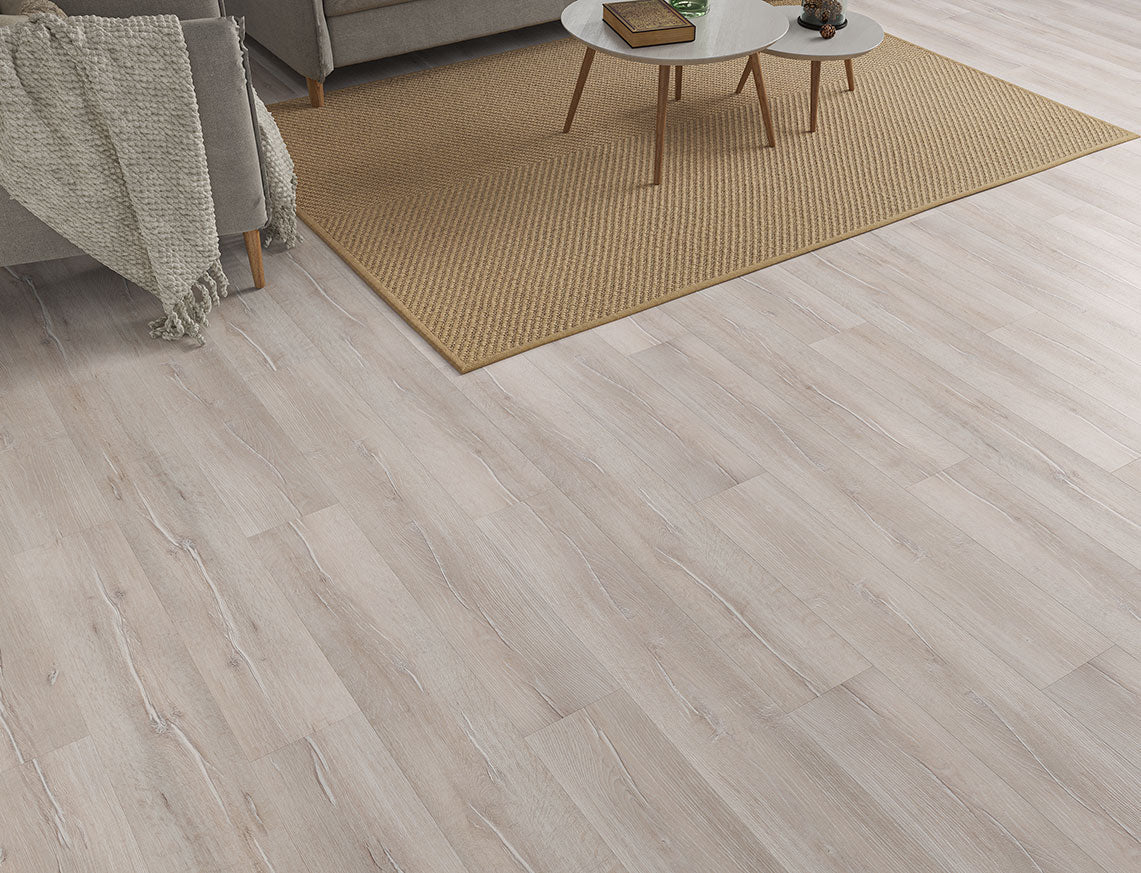
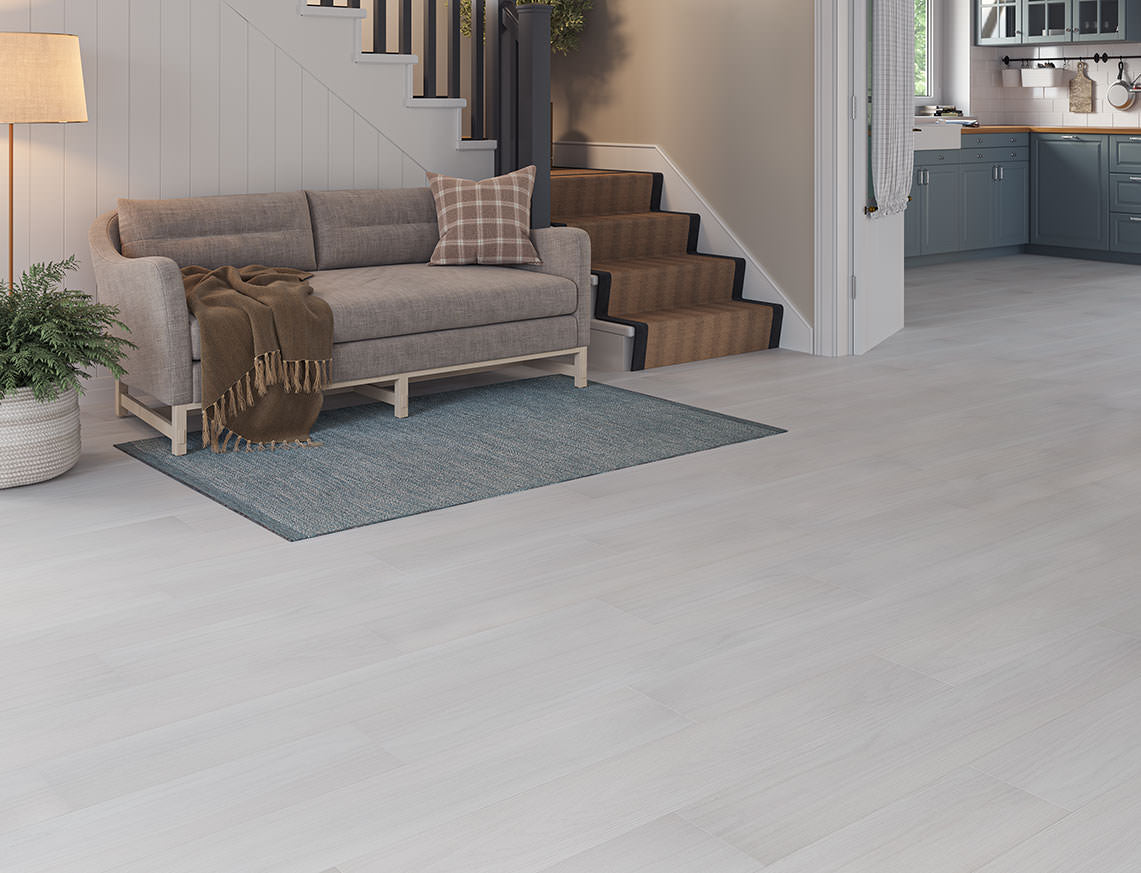
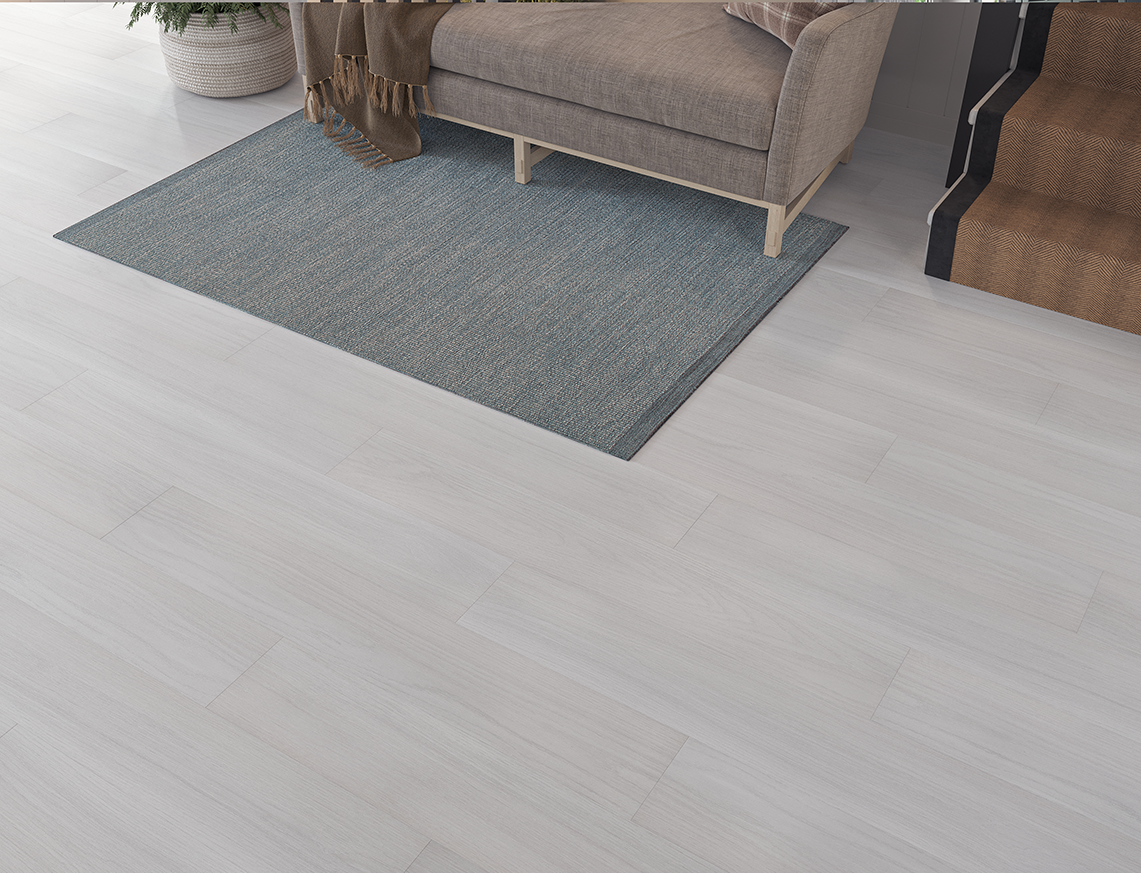
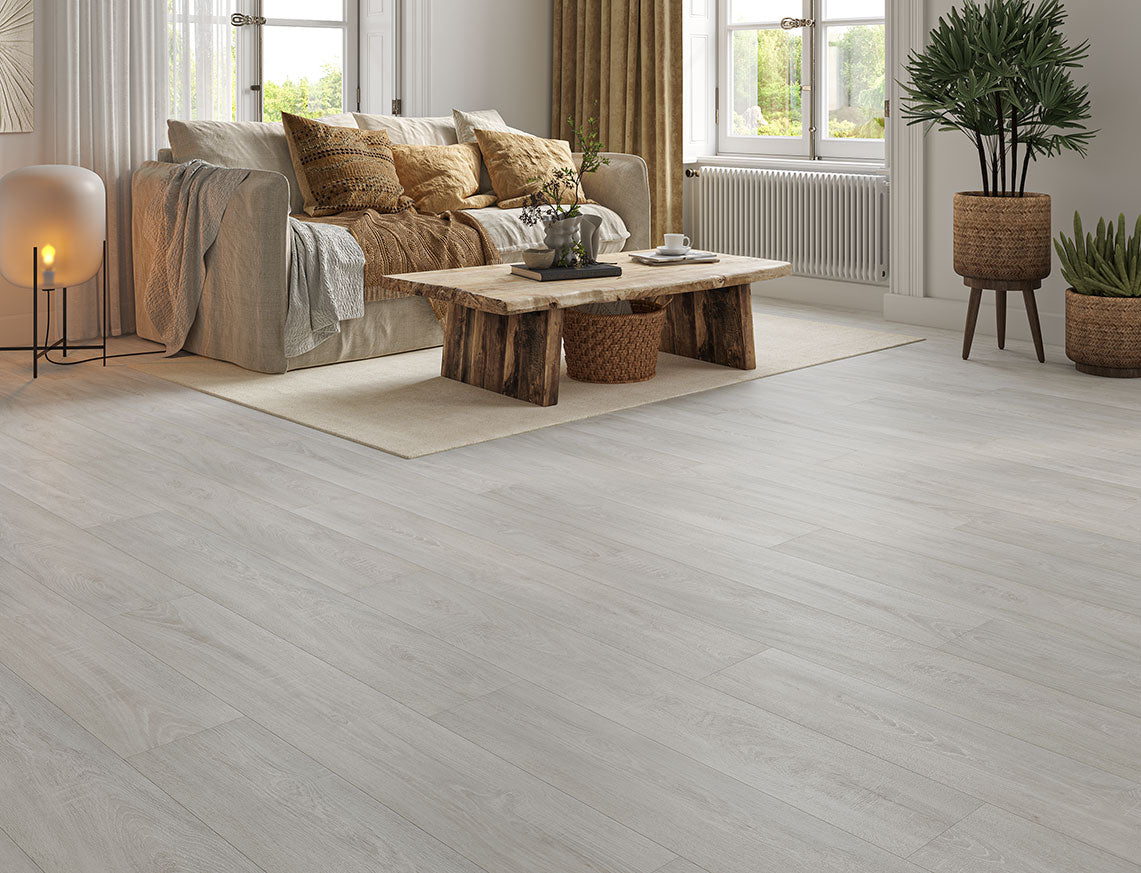
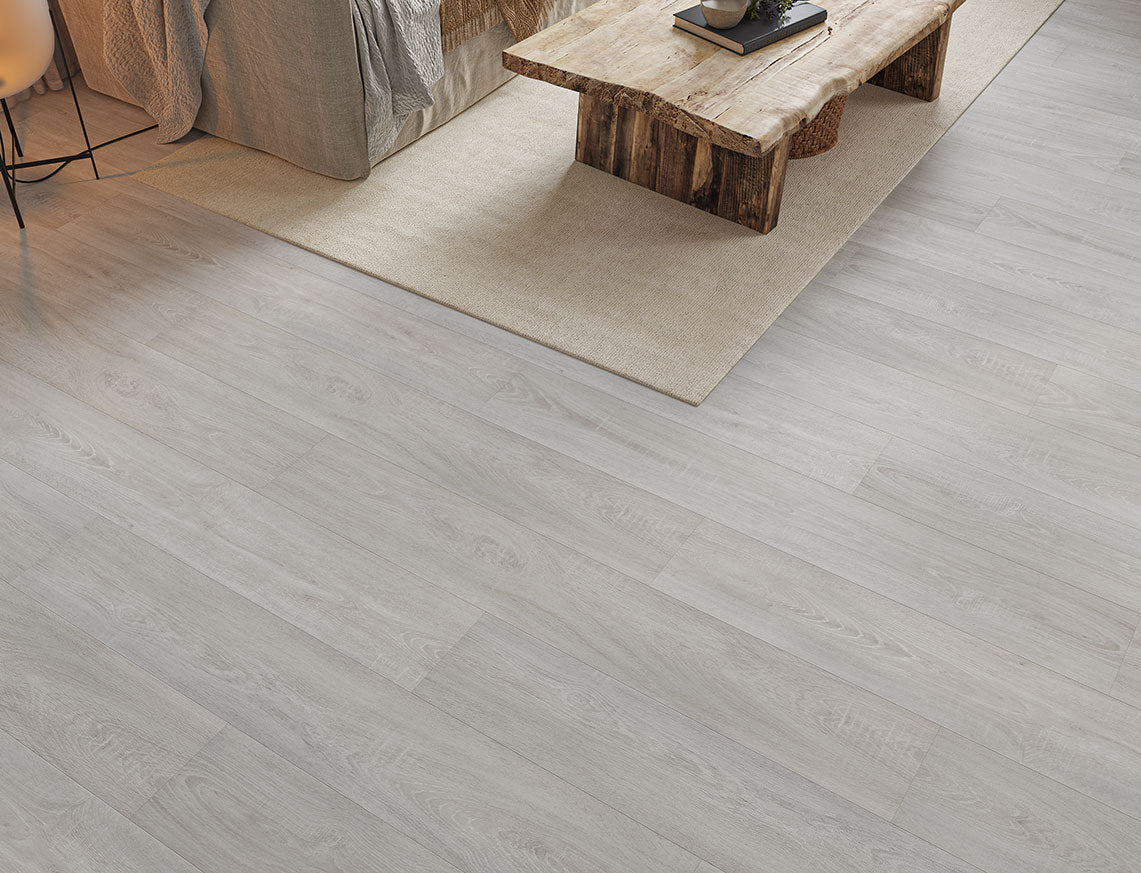
The easiest room in the house to choose a floor for. Moisture is not a concern, traffic is moderate, and there is rarely underfloor heating to work around. Almost everything we sell is a candidate.
That freedom is worth using. This is the room where a patterned floor gets seen and appreciated, where an oiled finish can be enjoyed rather than merely tolerated, and where solid oak comes into its own because the conditions finally suit it.
It is also the room people look at most, so it is worth ordering a few free A5 samples and living with them for a week before deciding.
In a kitchen the choice is narrowed by spills and heating. In a bathroom it is narrowed to one material. A living room imposes almost no constraints, which means you can choose on appearance rather than on what will survive.
Solid oak
This is where solid oak belongs. Stable humidity, no underfloor heating in most homes, and a room where a traditional floor earns its keep. It can be sanded and refinished more times than anything else we sell, so it will outlast several changes of decor.
Engineered oak
The same real oak surface with far more stability, and available in much wider boards. Necessary if you do have underfloor heating, and the sensible default if the living room opens onto a kitchen or hallway where conditions vary. Browse engineered oak.
Laminate and vinyl
Laminate resists scratching better than real wood, which matters with dogs and furniture that gets moved. Vinyl is the quietest floor underfoot, which is worth knowing in a room used in the evenings or above a bedroom.
The room for a pattern
If you are going to lay a patterned floor anywhere in the house, lay it here. A living room is where people sit and look at the floor, and where furniture is arranged around it rather than fitted over it.
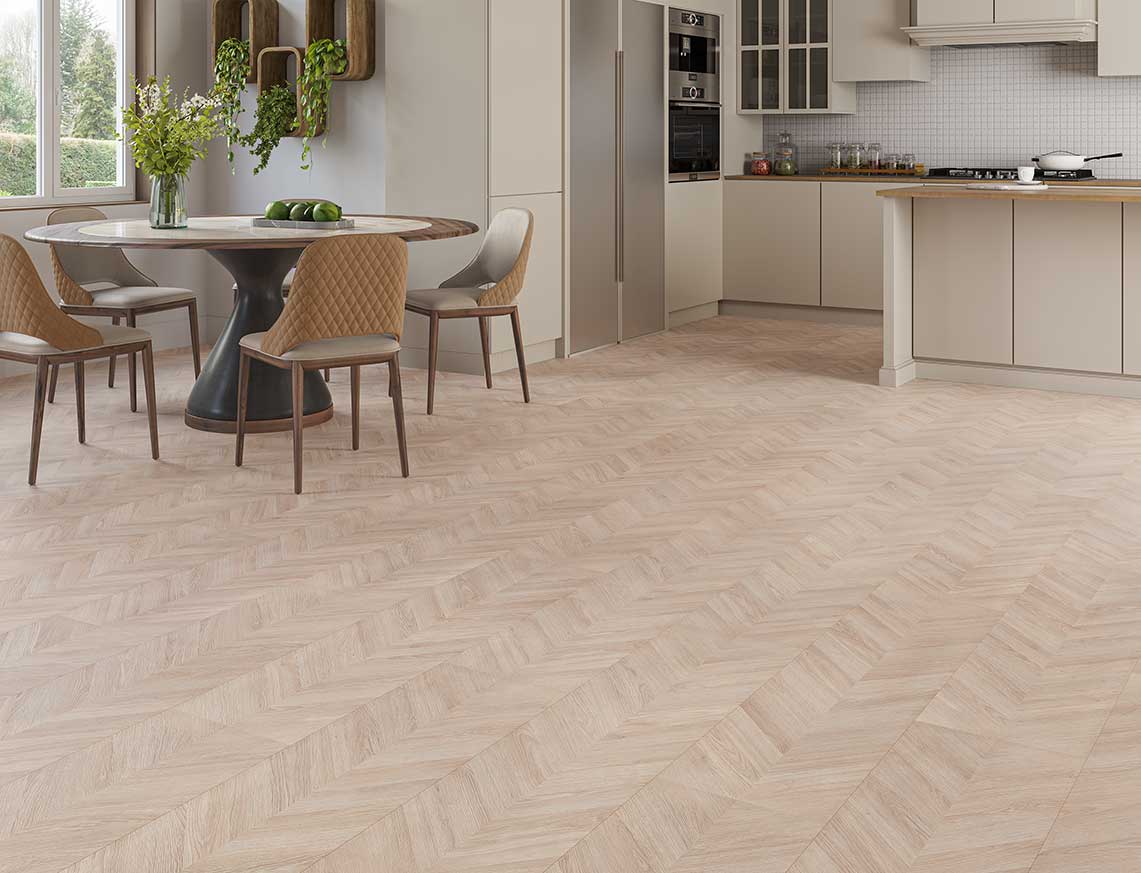
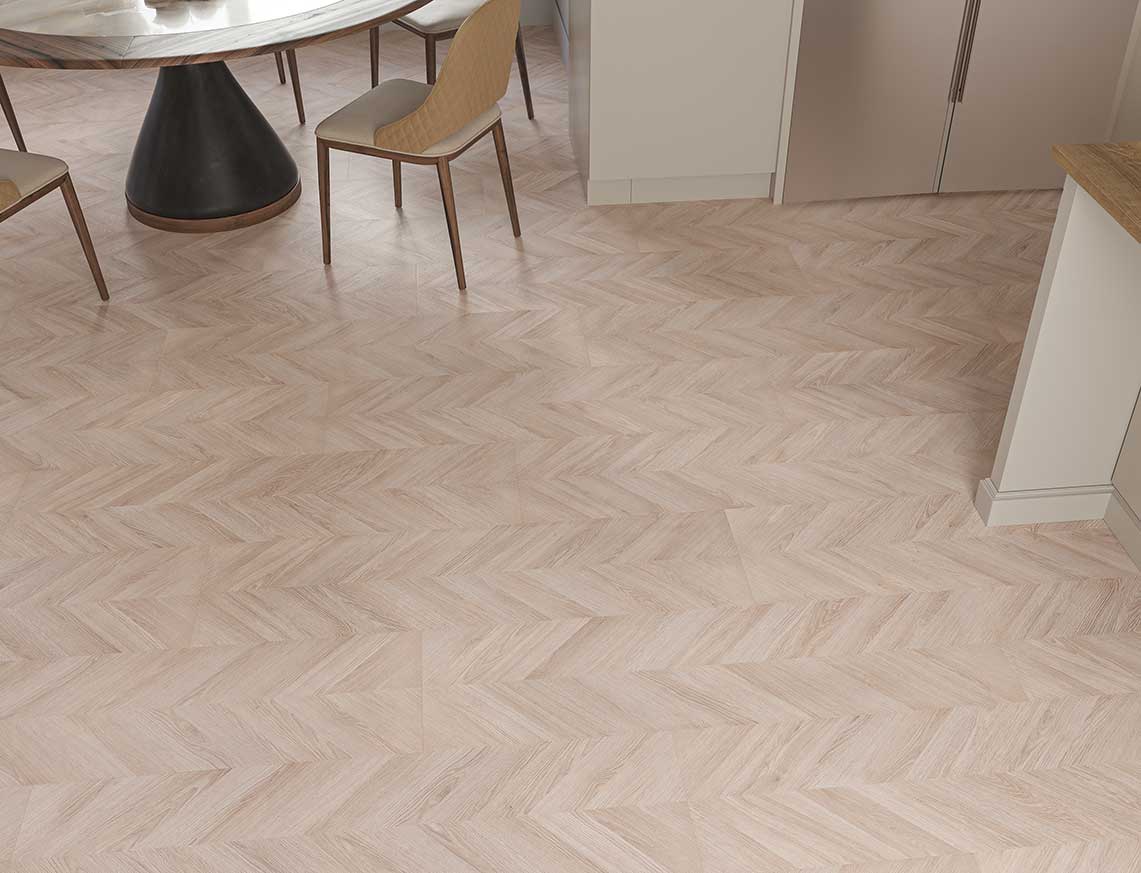
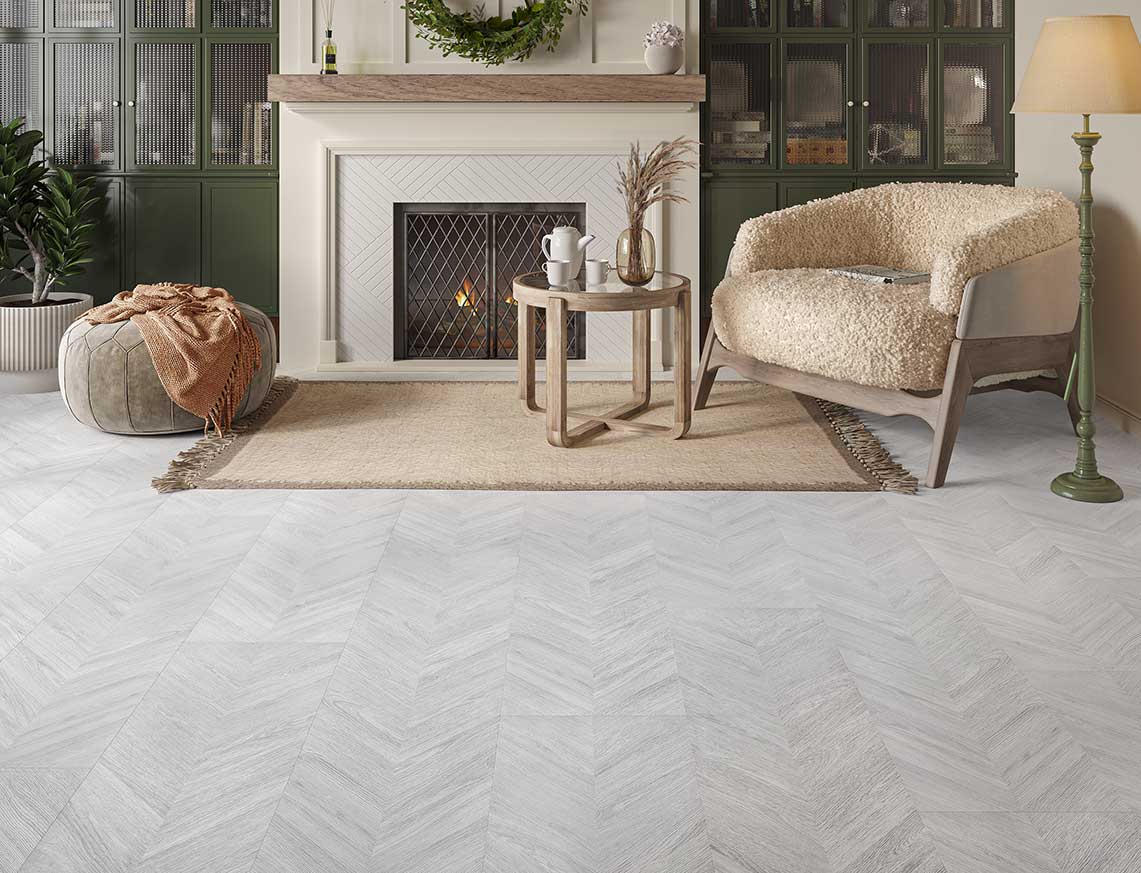
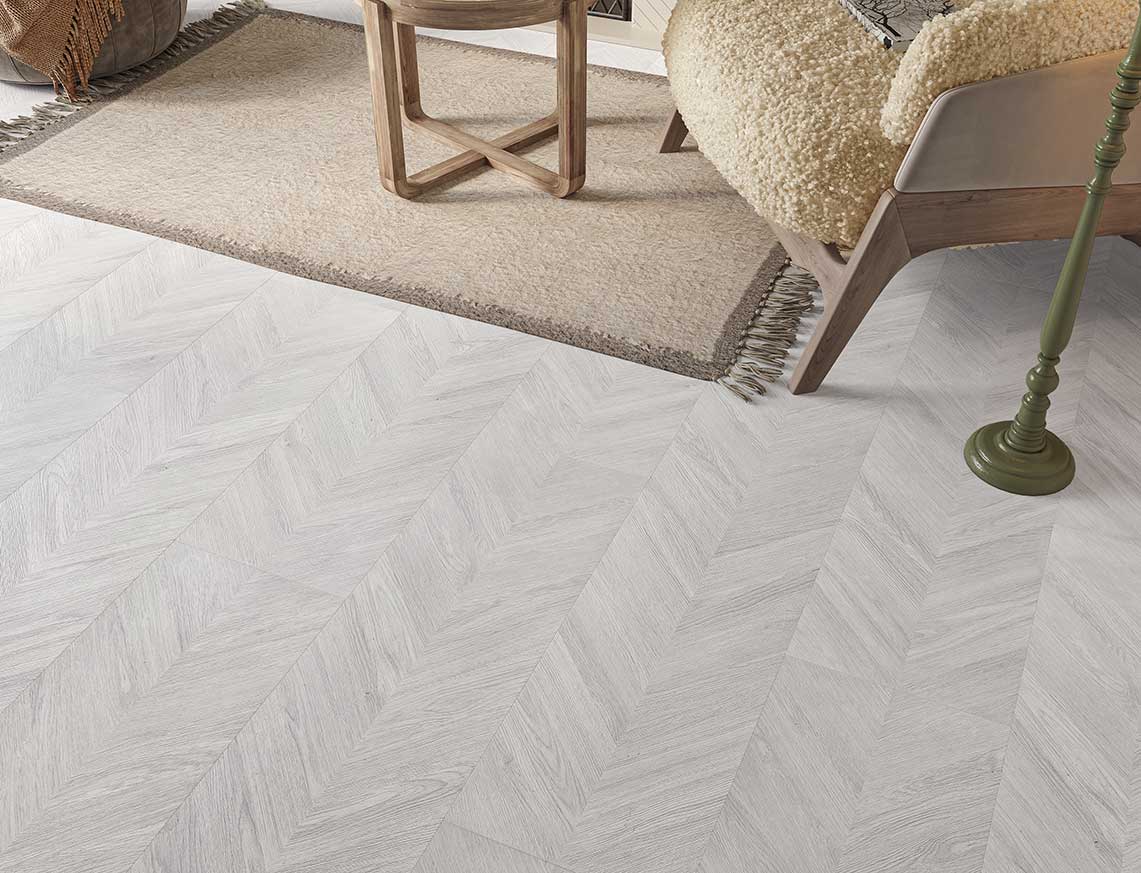
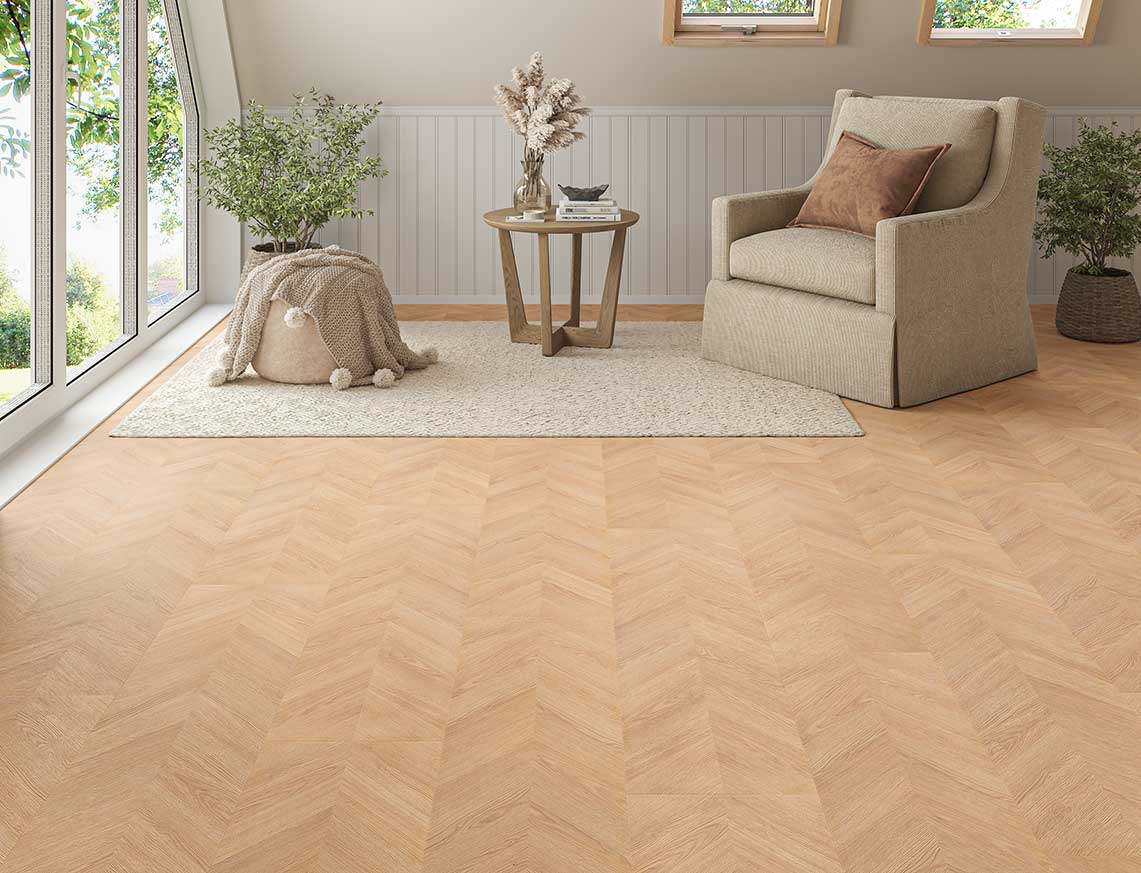
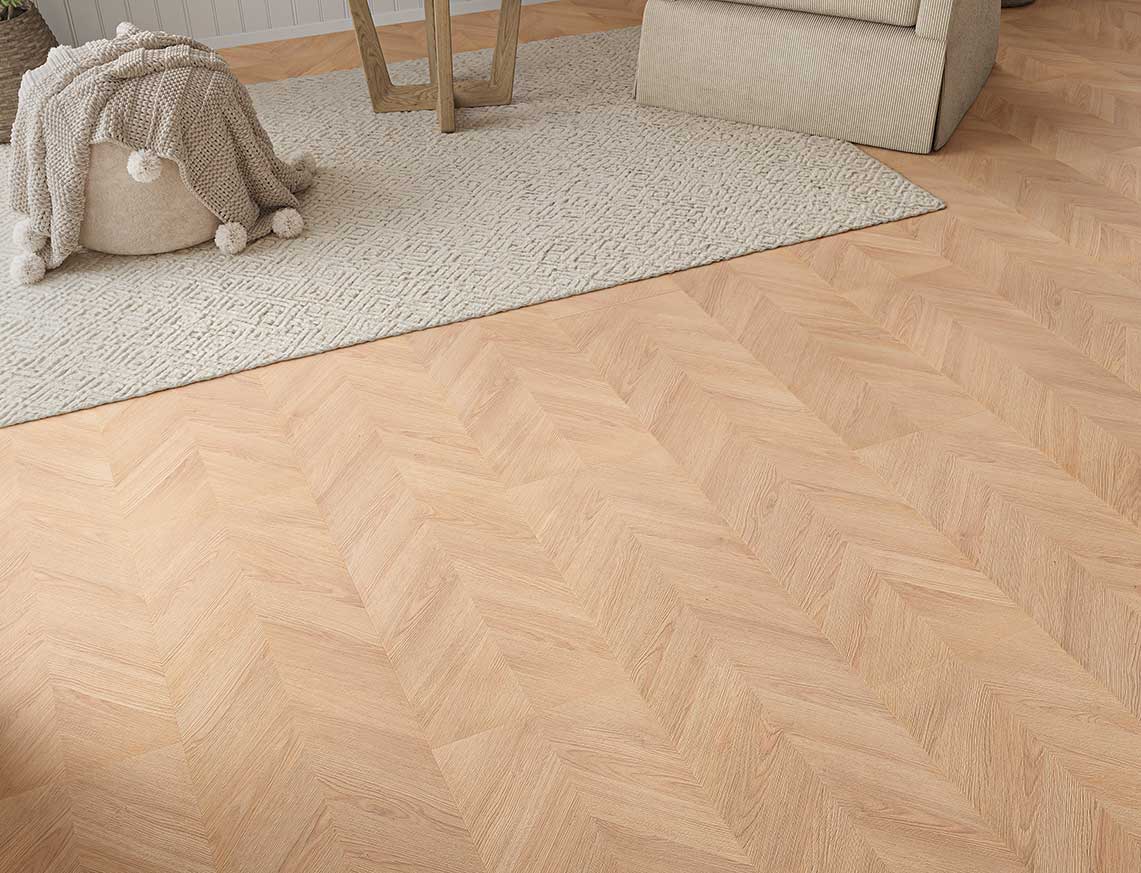
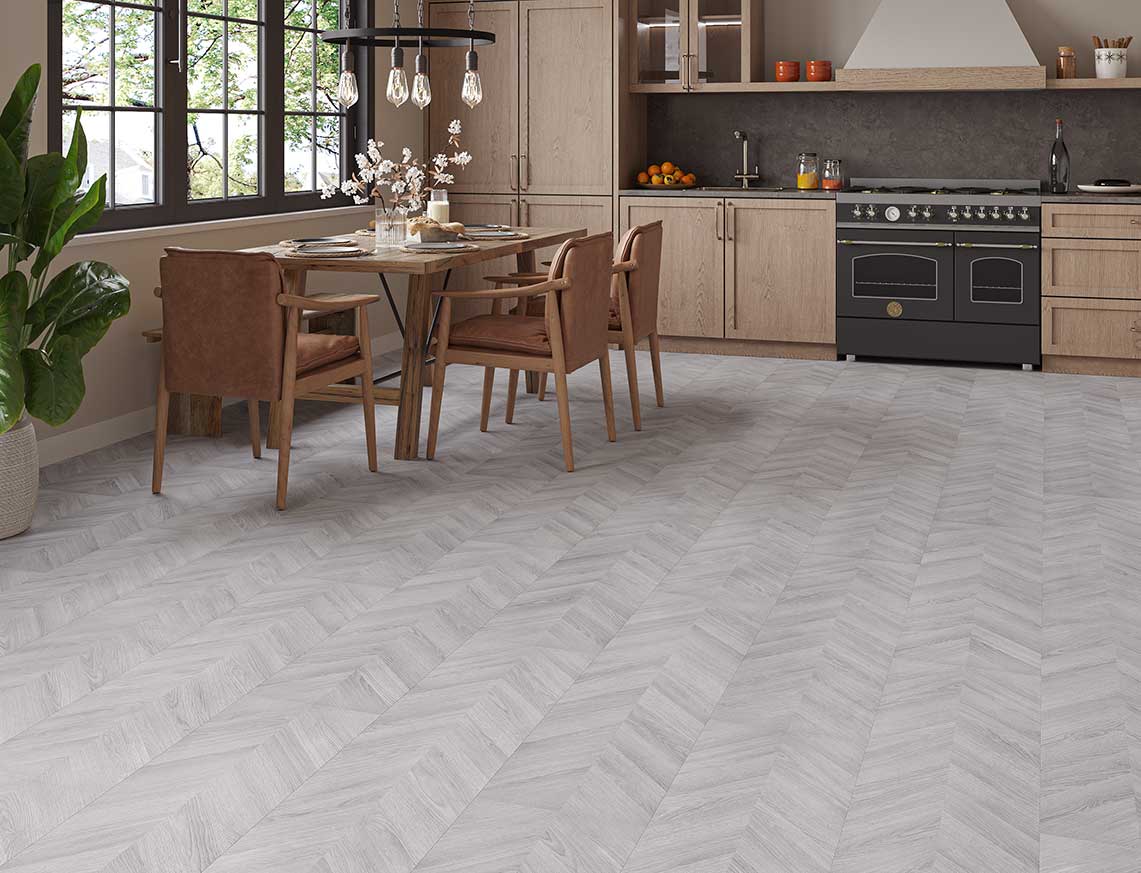
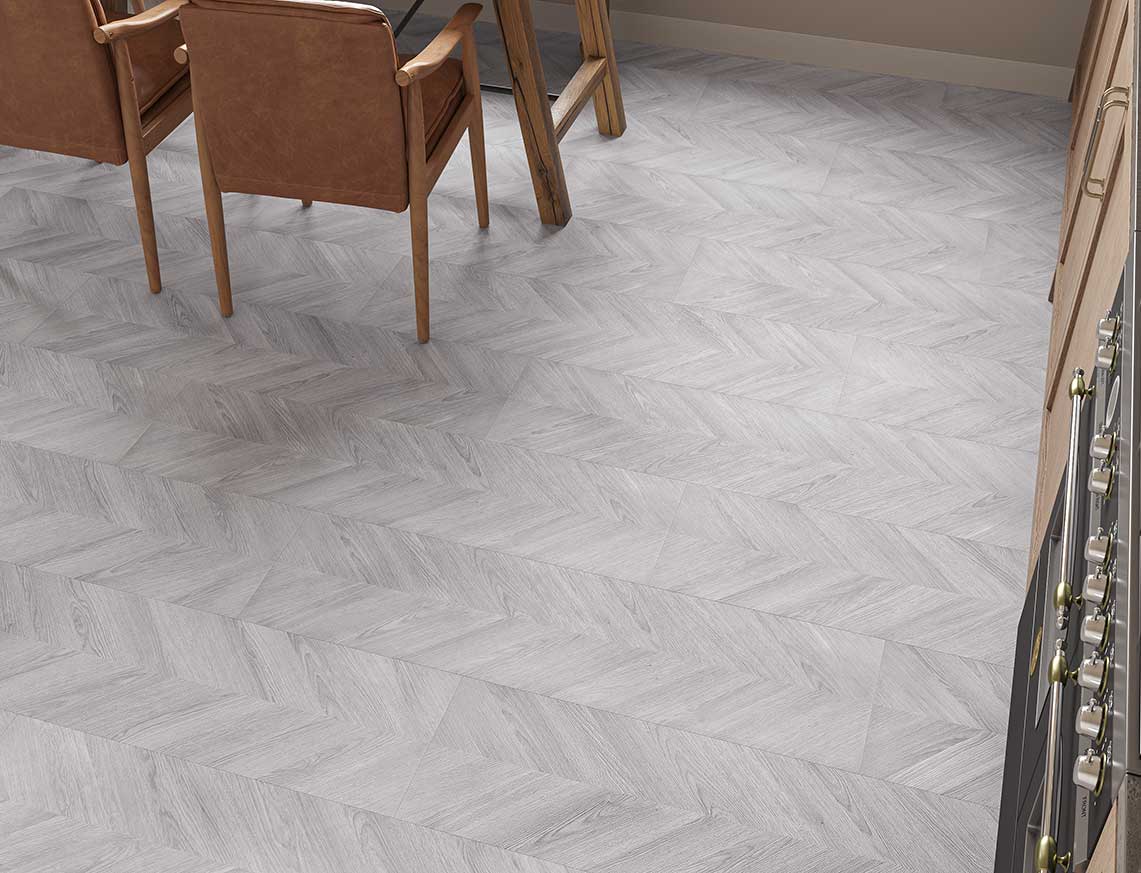
Herringbone is the classic choice and suits period properties and modern rooms equally. Chevron is sharper and emphasises the length of a room, which works well in a through lounge. Versailles panels need real floor area to read properly, but in a generous room they are the most striking floor we sell.
Allow 15% for cuts on any patterned layout rather than the usual 10%.
Consider an oiled finish
Oiled floors look softer and more natural than lacquered ones, and scratches can be spot-repaired rather than needing the whole floor redone. In a kitchen we would steer you towards lacquer for its spill resistance. In a living room, oil is worth the small amount of upkeep.
Choosing colour and board width
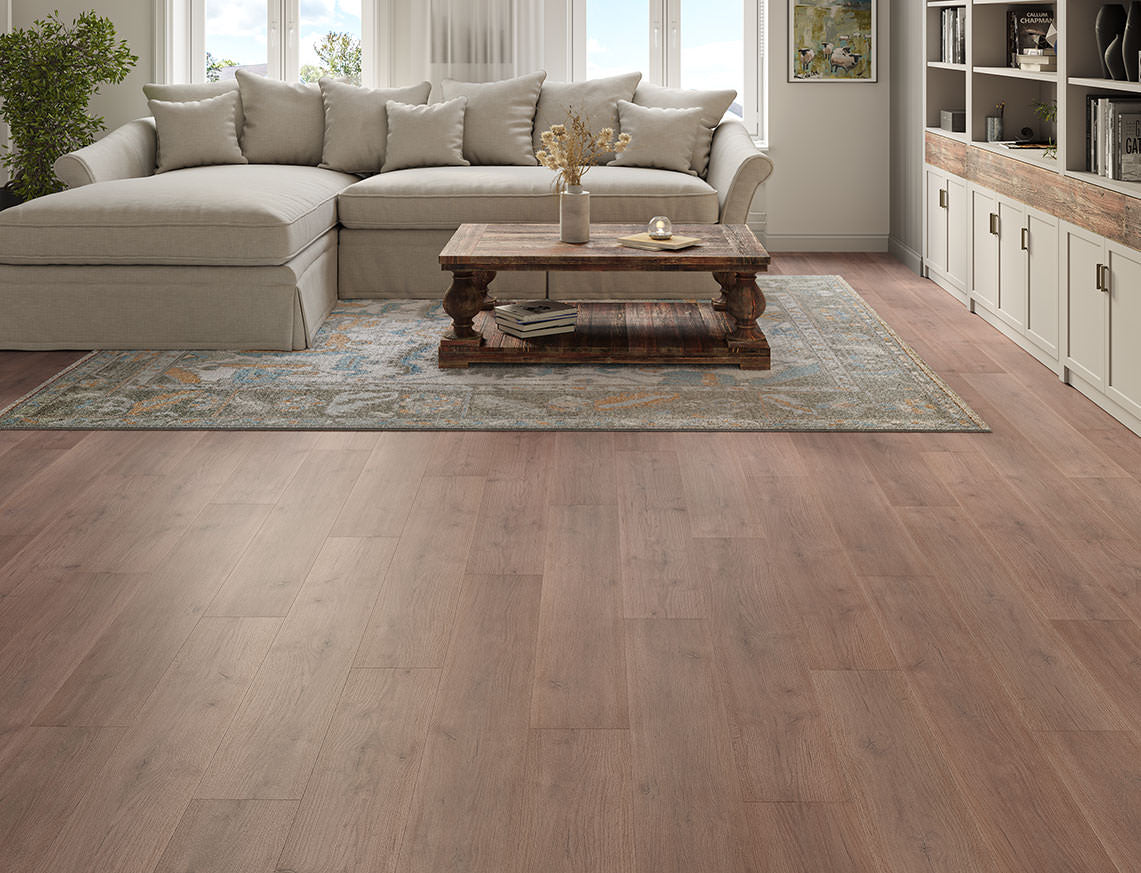
Living rooms often have more furniture and more fixed woodwork than any other room. Hold your sample against the skirting, the doors, the fireplace surround and anything you are keeping, before judging it on its own.
Wider boards suit larger rooms and show more grain; narrower boards suit smaller or more traditional spaces. On colour, pale naturals keep a room feeling open, while smoked and darker tones give a more enclosed, formal feel that suits a room with good natural light.
Sound underfoot
Worth a thought if the living room is upstairs, in a flat, or above a bedroom. Hard floors carry footfall through a building in a way carpet does not.
A good acoustic underlay makes a substantial difference, and the impact sound reduction figure in decibels is listed on each one. Vinyl is naturally the quietest floor underfoot; solid oak is the most resonant.
How much will you need?
Measure the full floor including alcoves, bay windows and into any doorways. For an L-shaped room, split it into rectangles and add them together. The flooring calculator on every product page lets you enter several areas and works out the packs, including the right allowance for cuts.
Almost anything works, which makes it a question of look rather than performance. Solid oak for tradition, engineered oak for versatility, laminate for durability, vinyl for quietness.
Can I lay solid wood in a living room?
Yes, and it is the room where solid oak makes most sense. The exception is if you have underfloor heating, in which case choose engineered oak instead.
Is herringbone too much for a living room?
Rarely. A wider block in a pale colour reads as quite restrained. Narrow blocks in a dark colour make a much stronger statement, which may be exactly what you want.
Which way should the boards run?
Usually along the length of the room, or towards the main window. Running boards across a narrow room emphasises the narrowness.
Will a hard floor make the room echo?
It changes the acoustics compared with carpet. A rug, curtains and soft furnishings settle it quickly, and a good acoustic underlay reduces what travels through the structure.
Will furniture scratch the floor?
Felt pads under every leg will do more to protect a floor than anything else. Laminate resists scratching best; oiled wood is the easiest to repair when it does happen.
Should the living room floor match the hallway?
If you can see one from the other, a single floor makes the space feel larger. Where they are visually separate, changing is fine. Our flooring by room page covers the whole-house view.