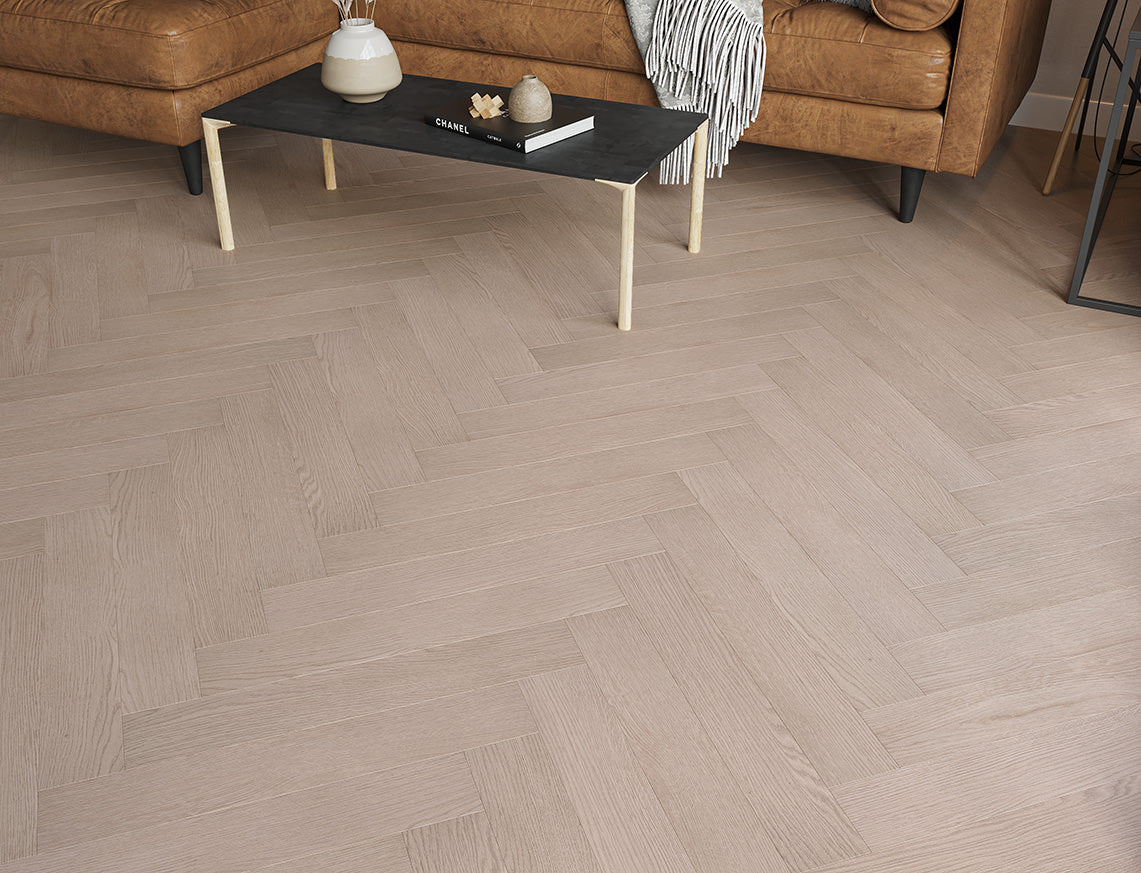
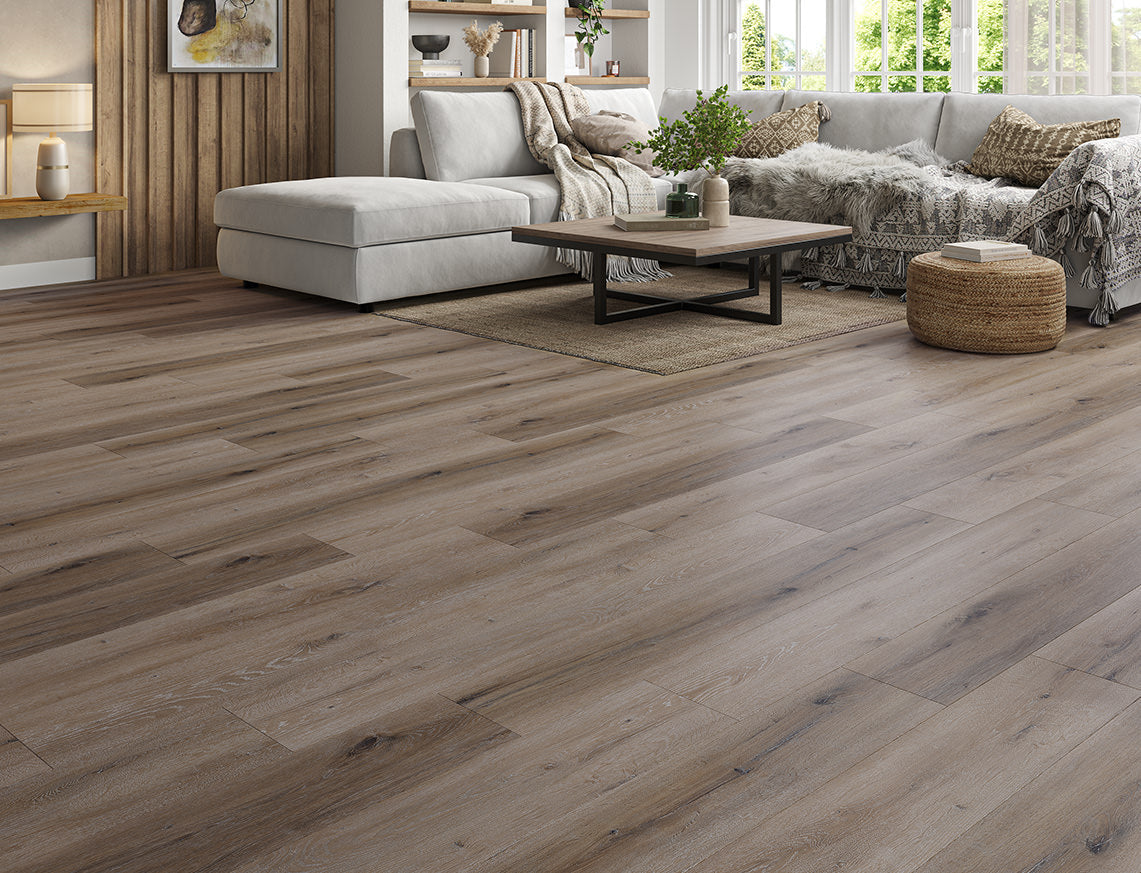
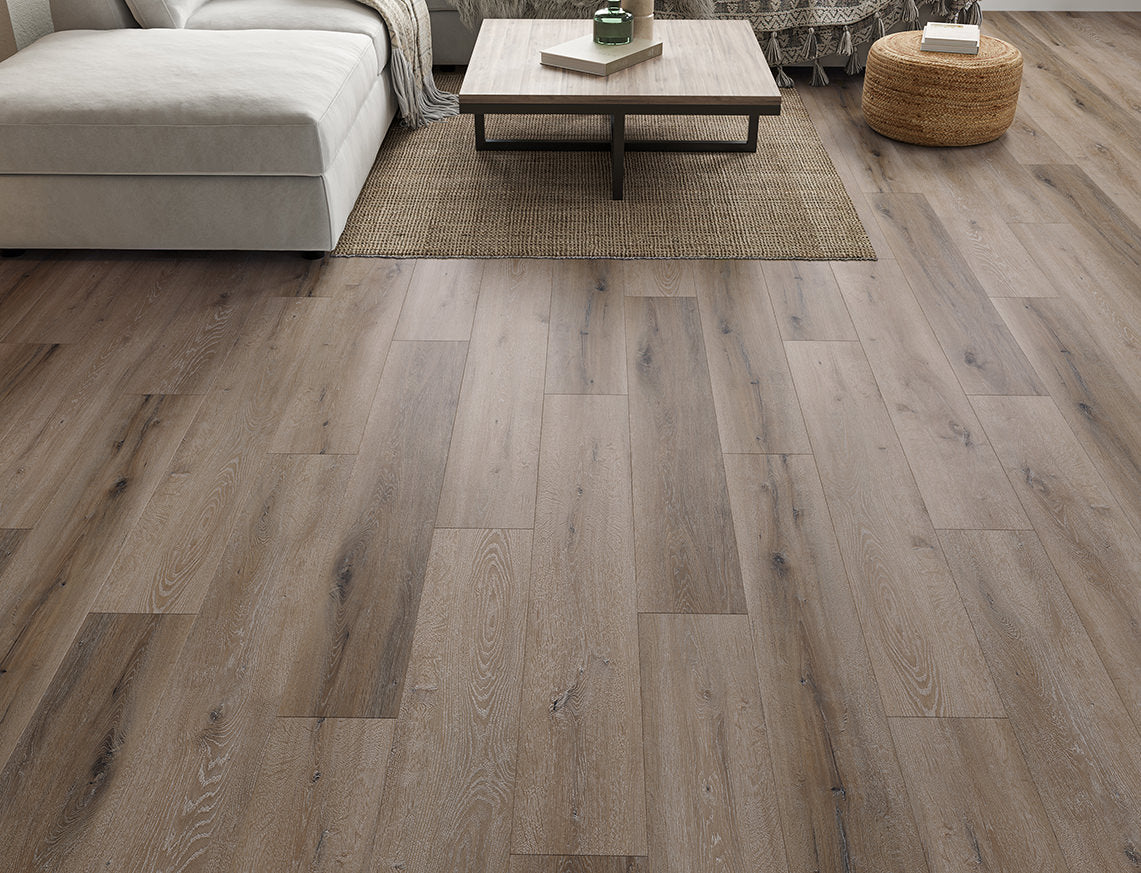
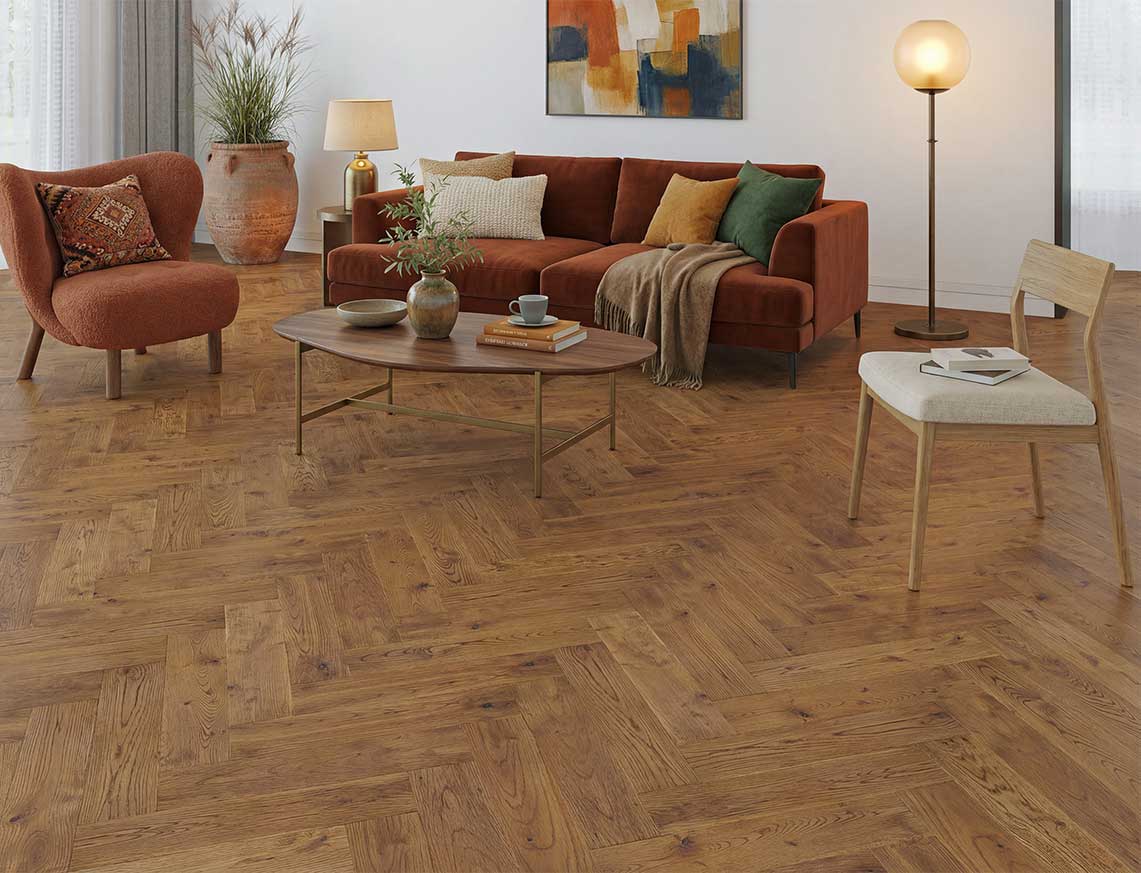
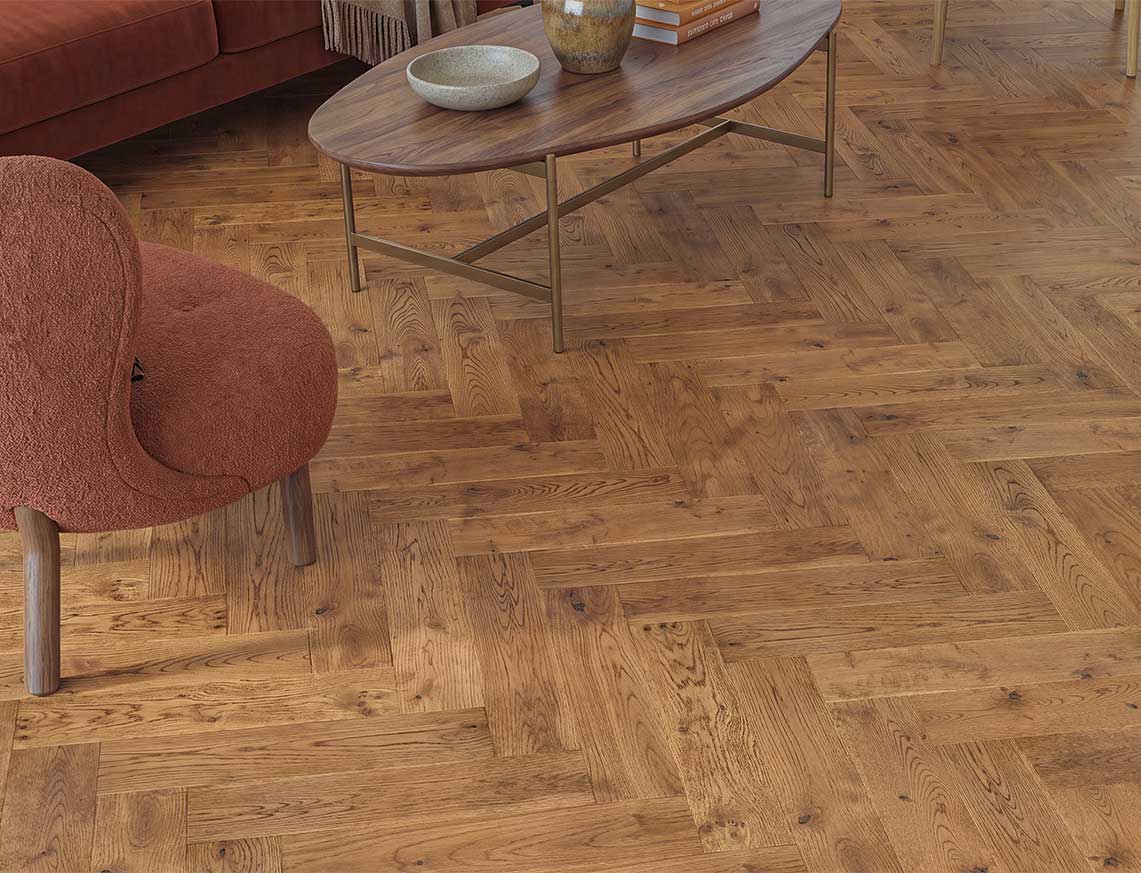
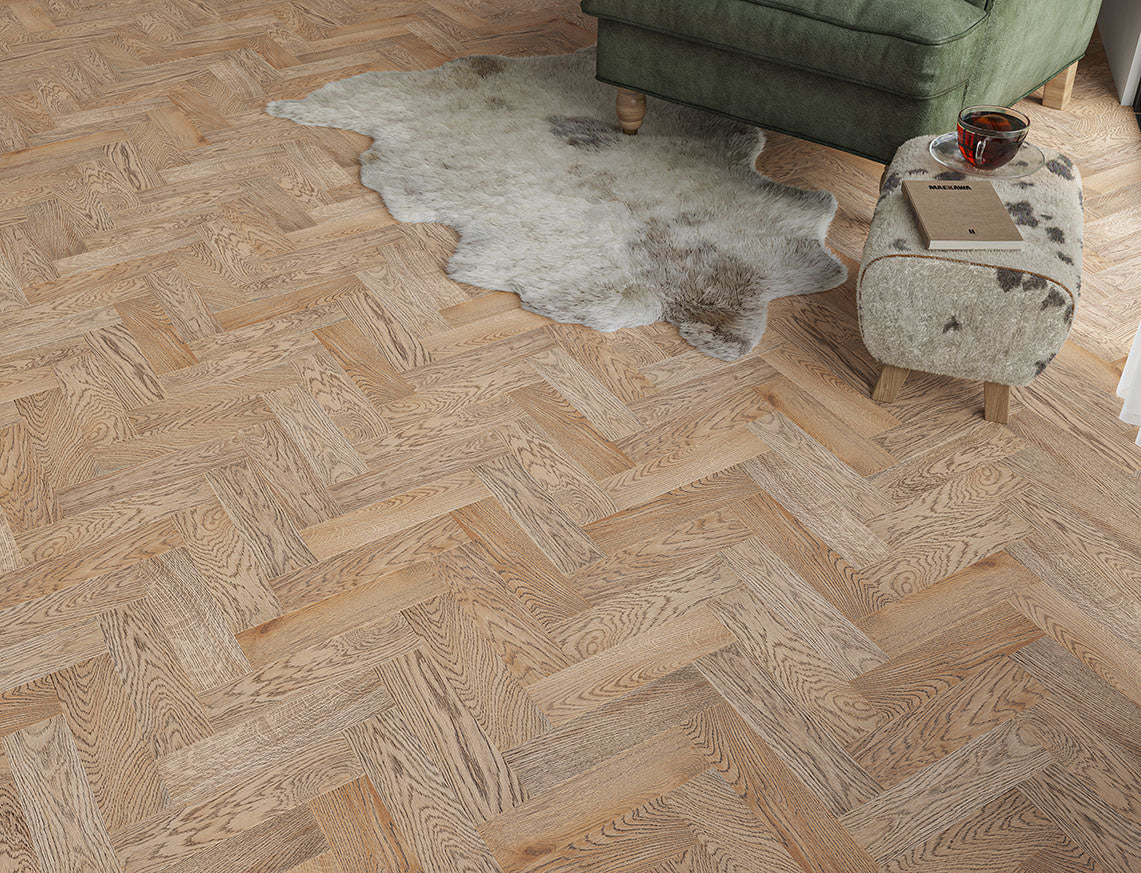
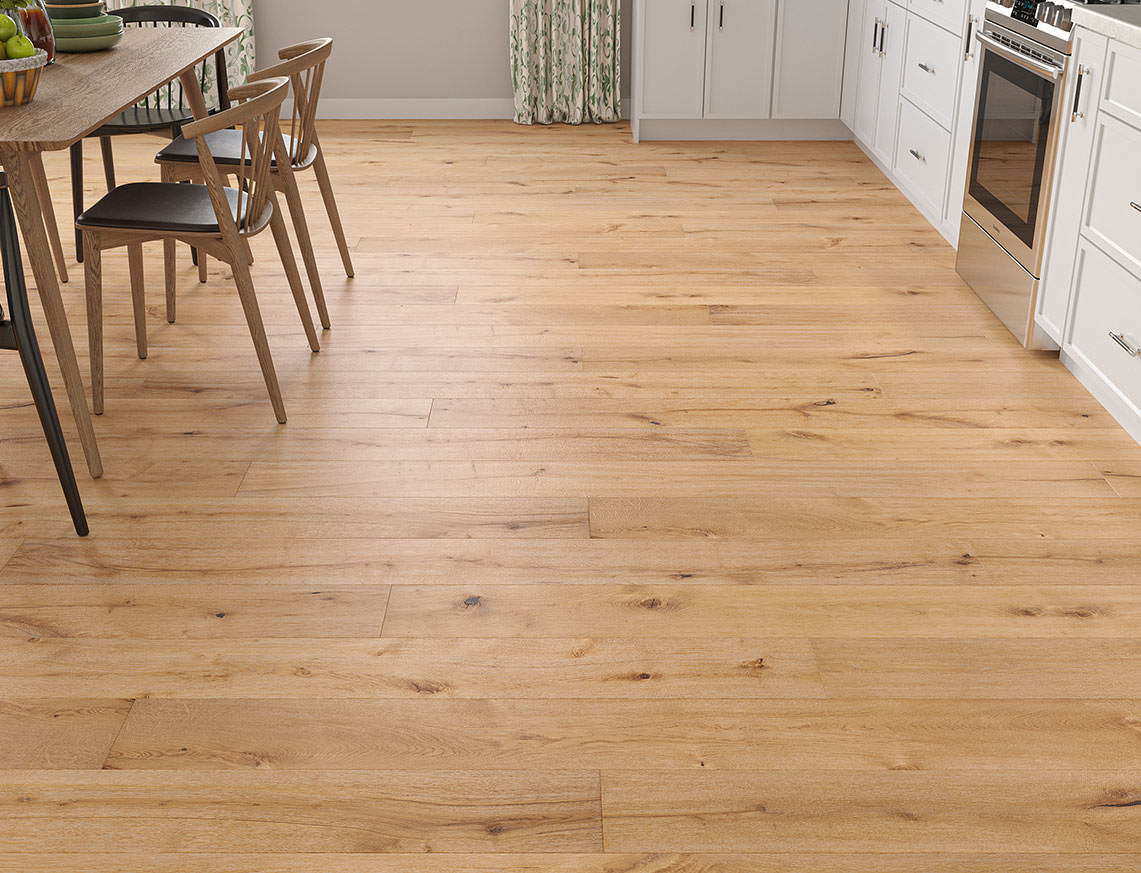
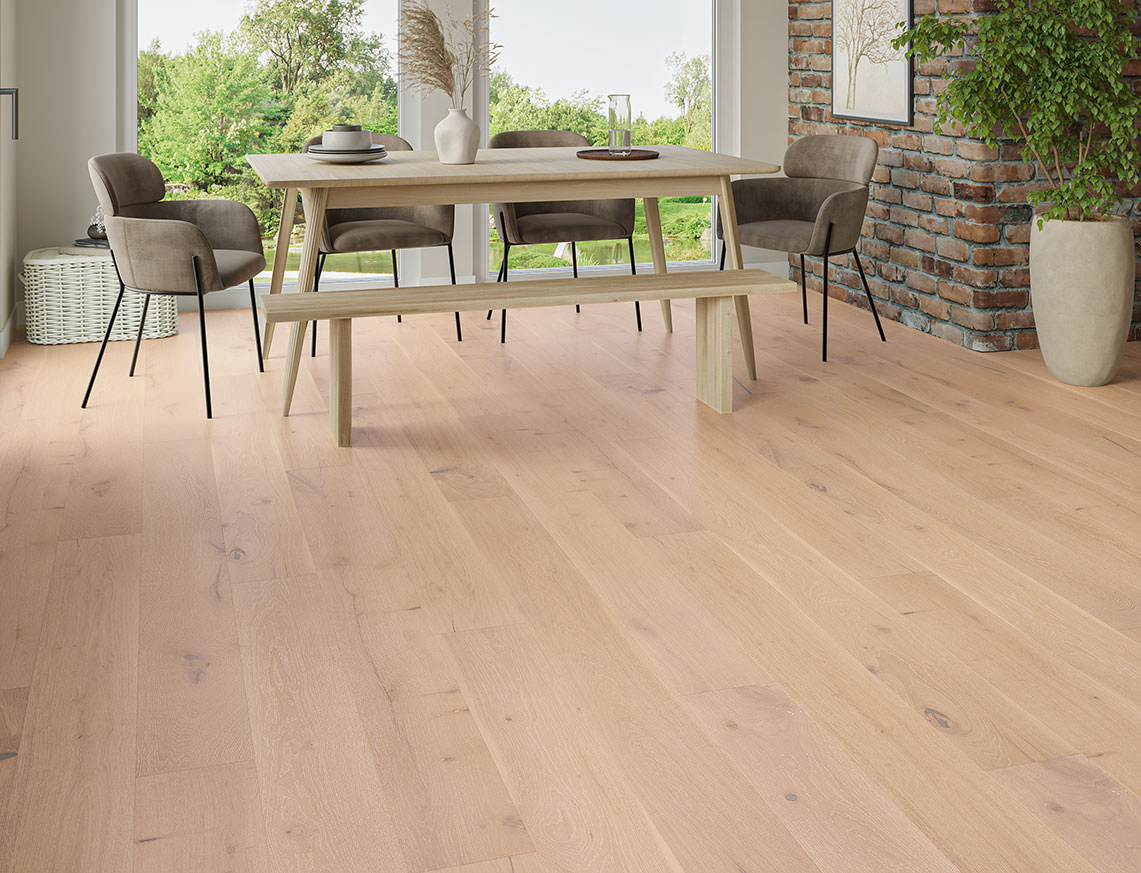
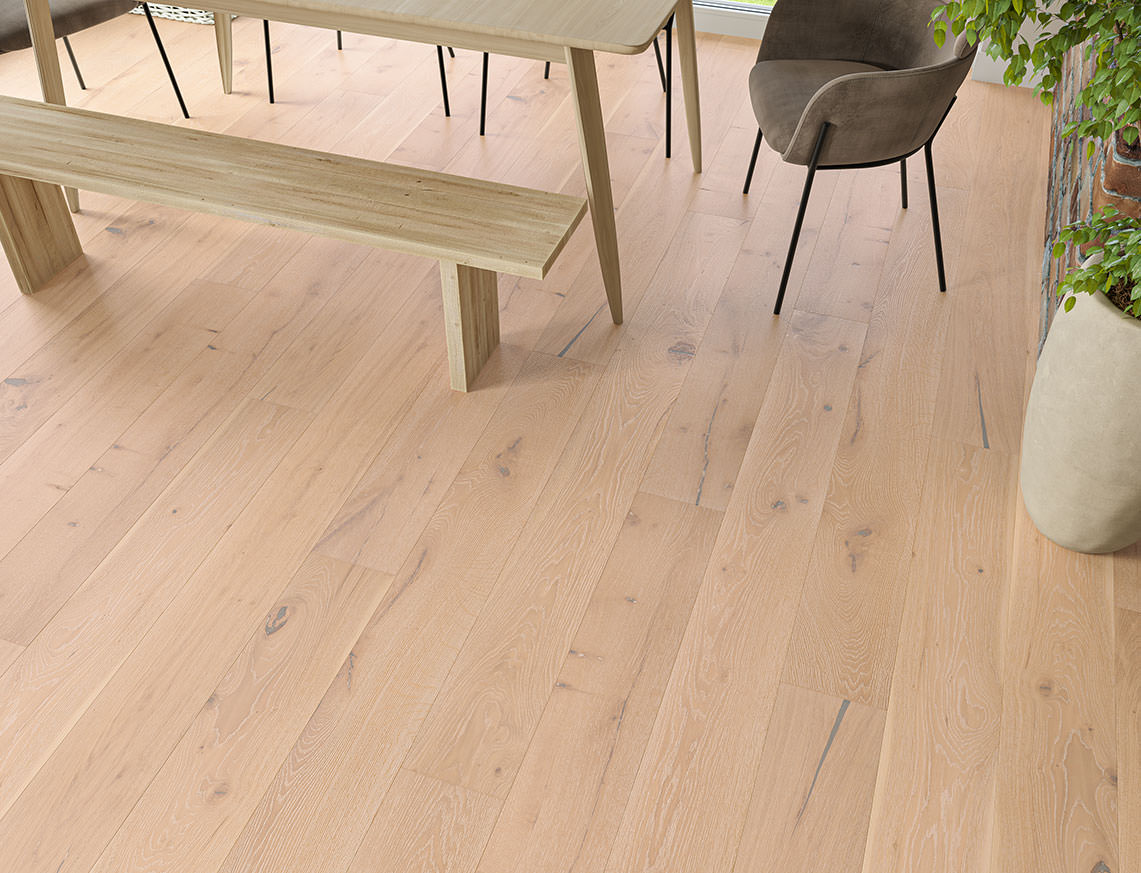
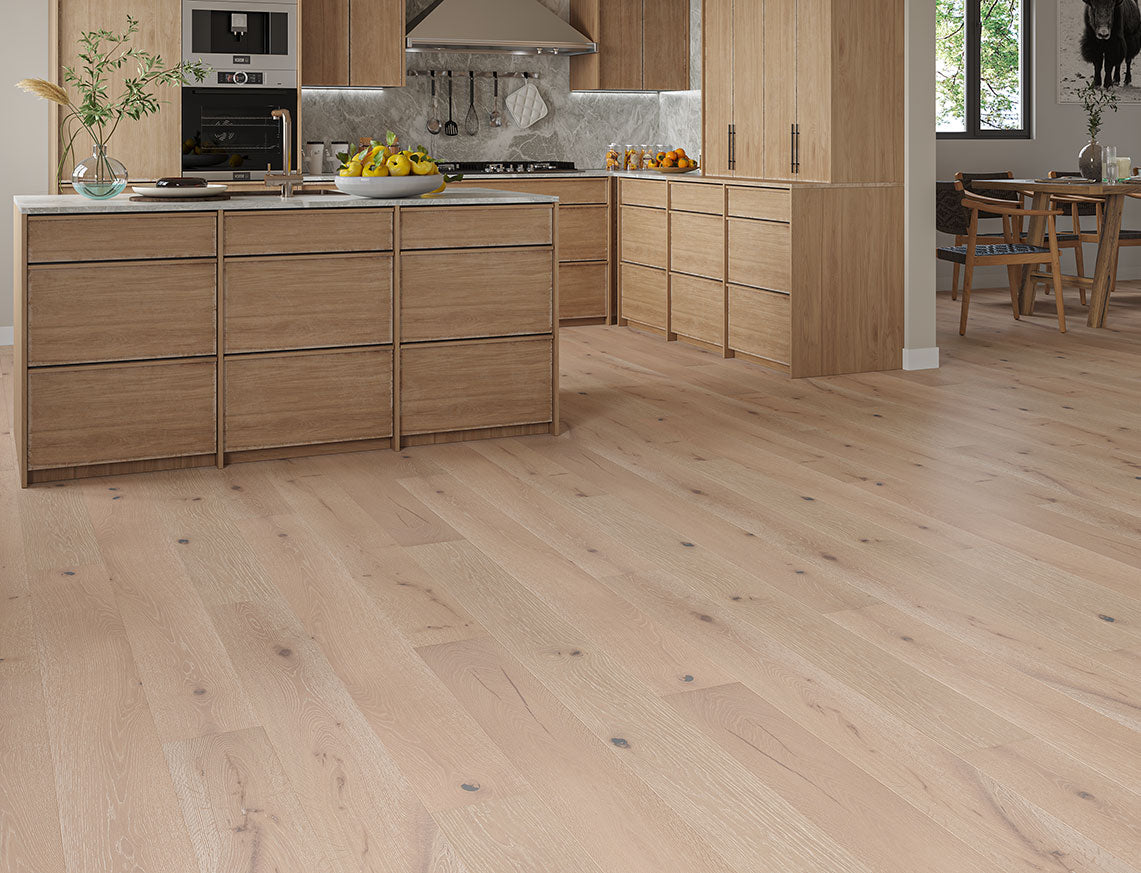
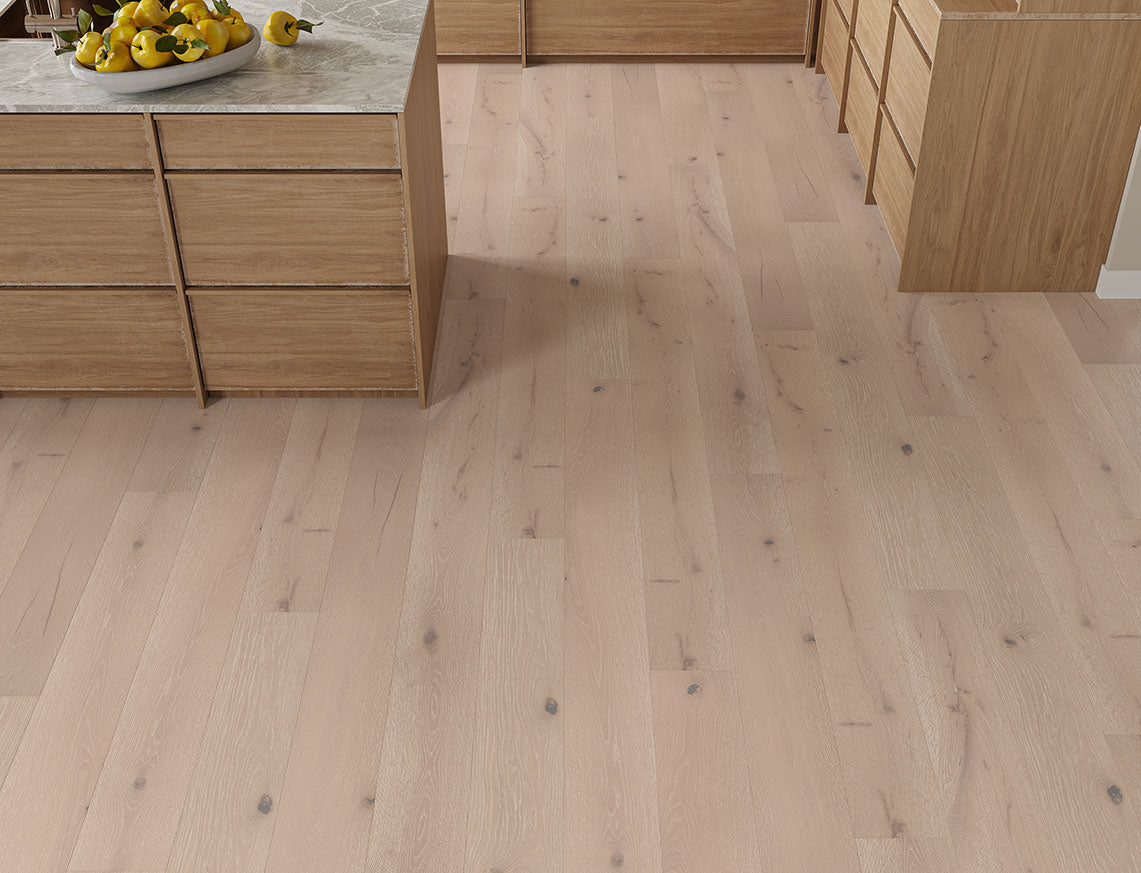
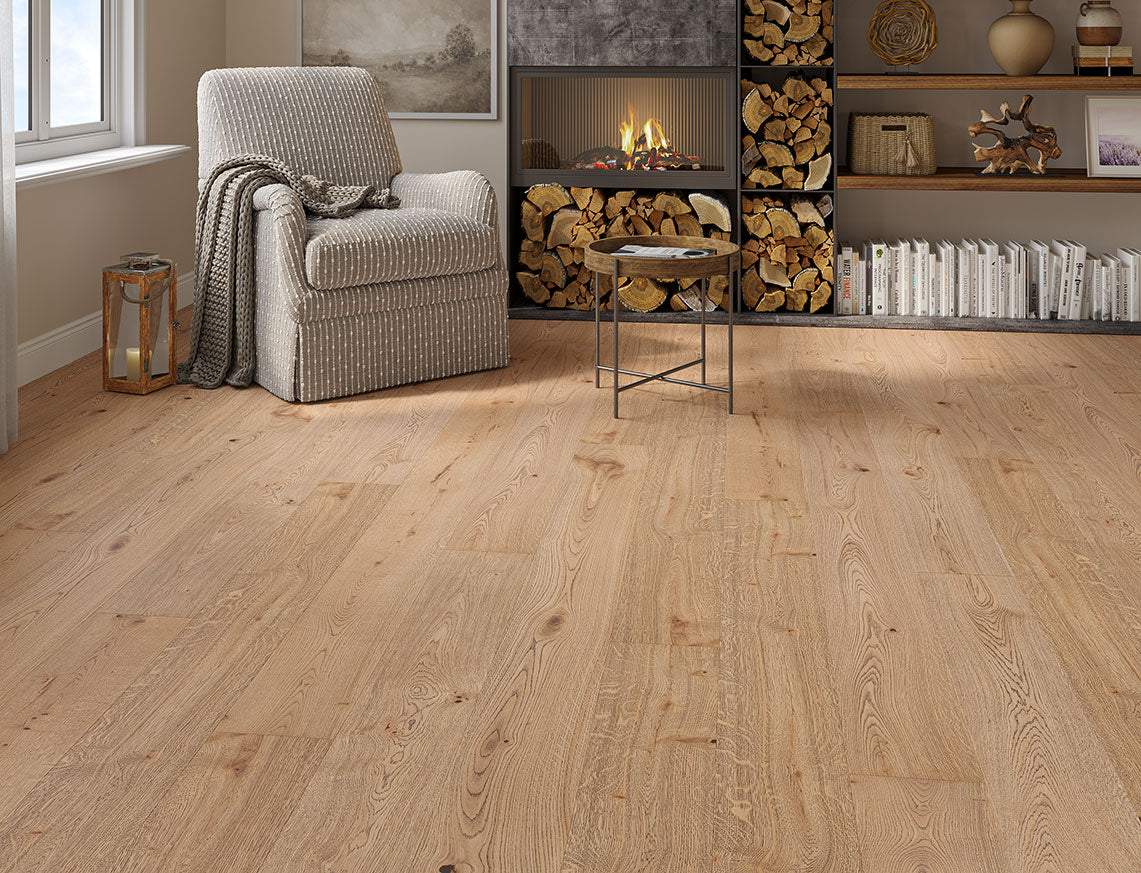
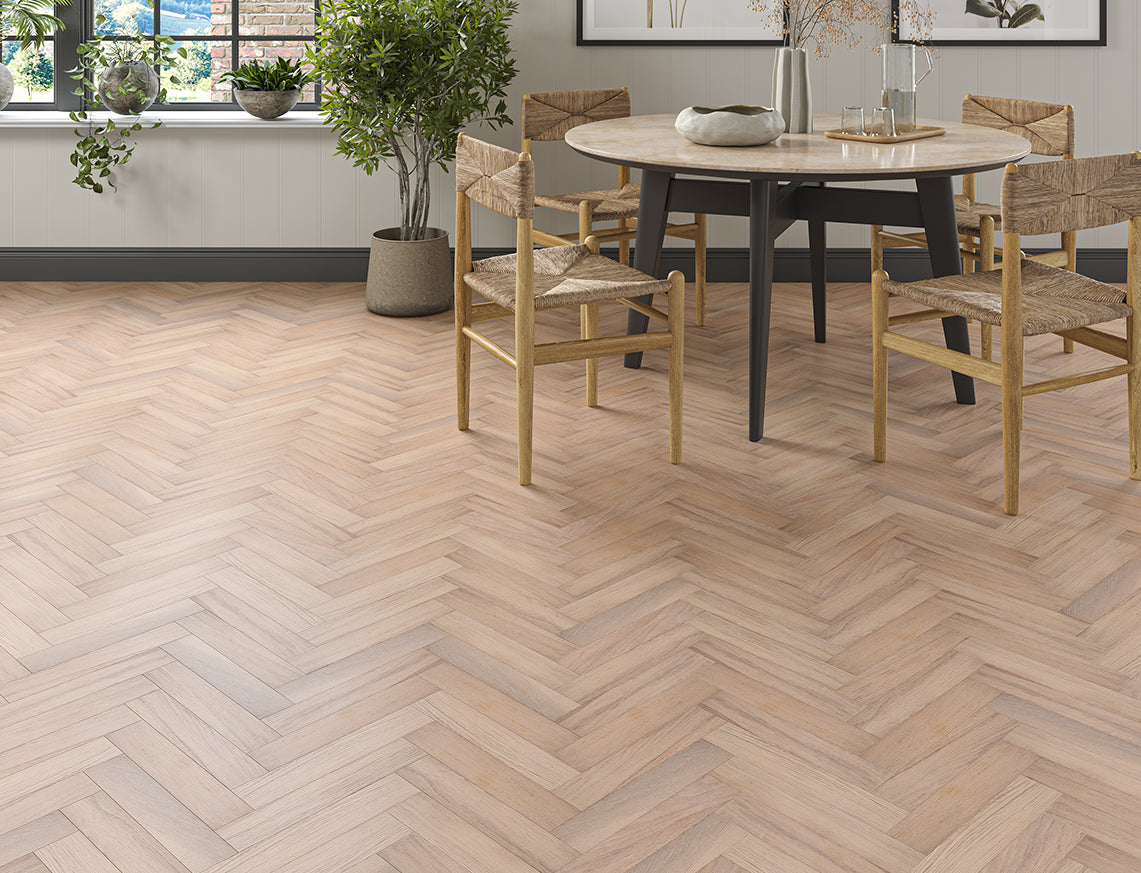
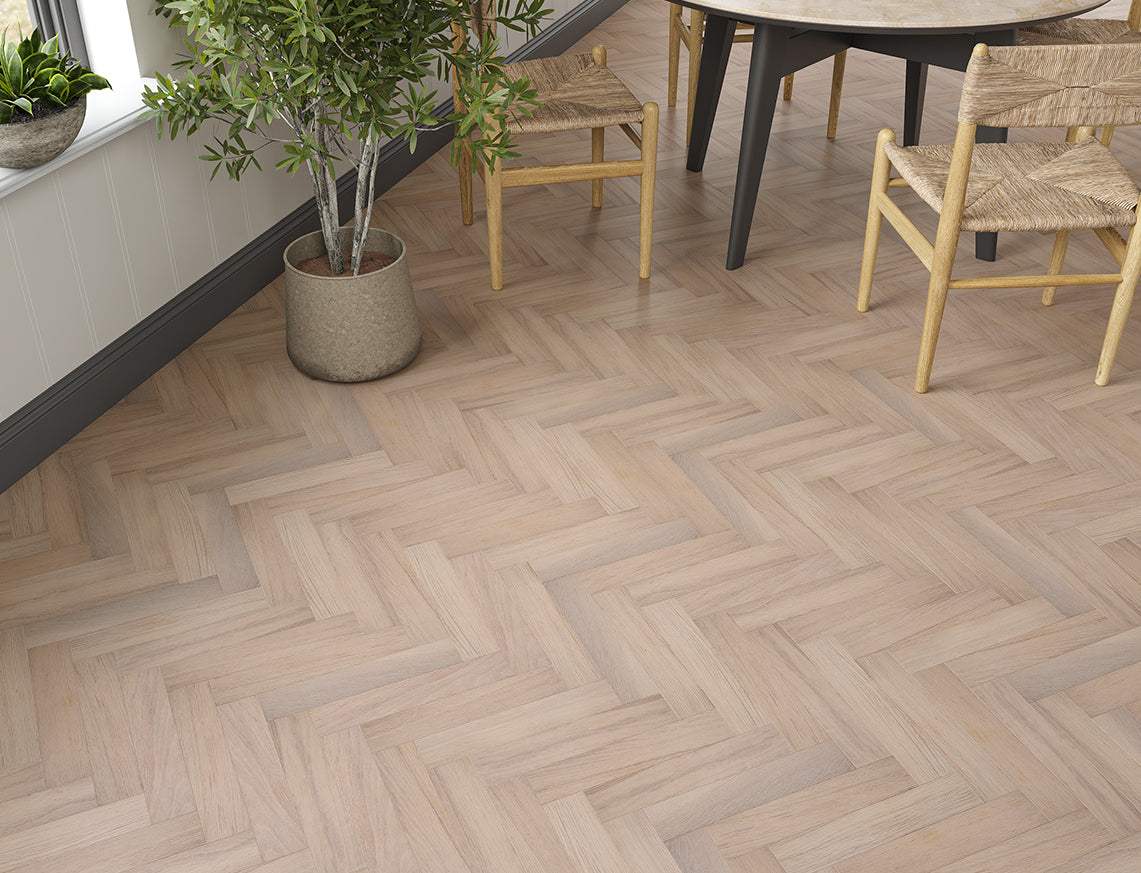
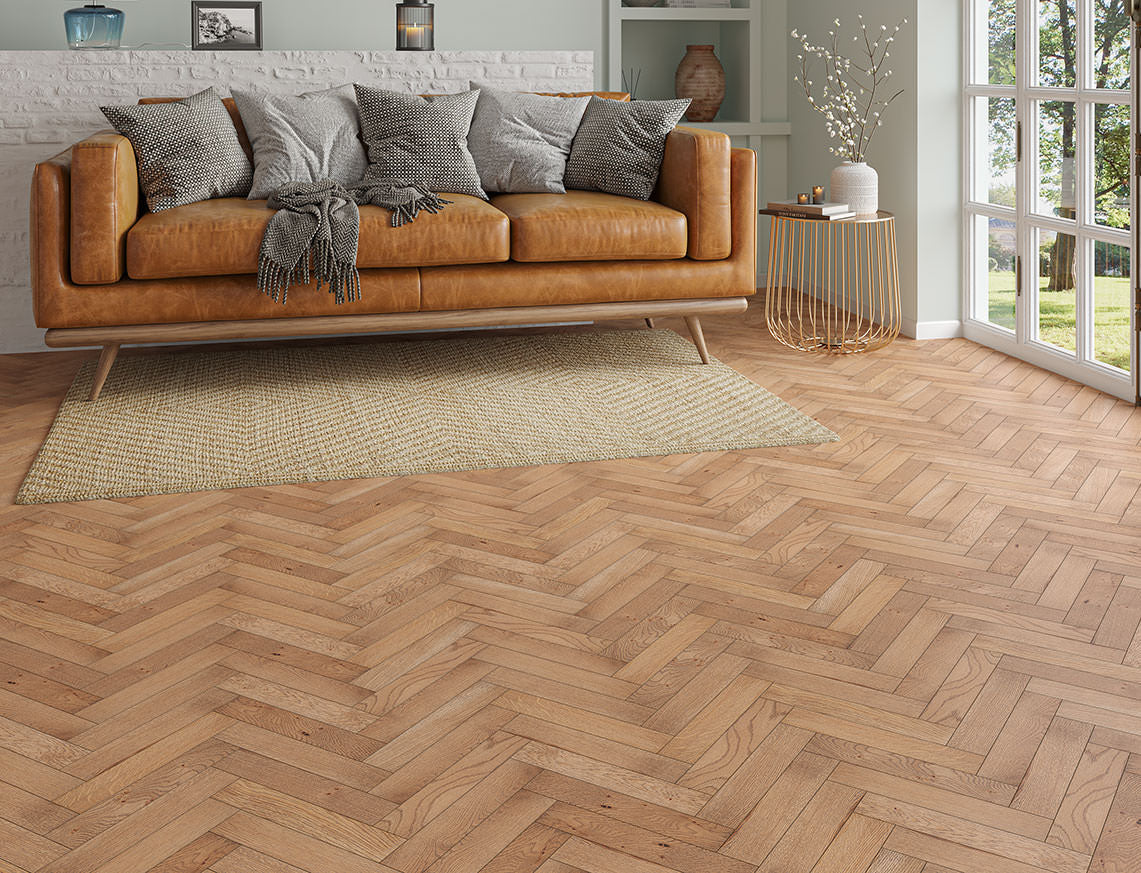
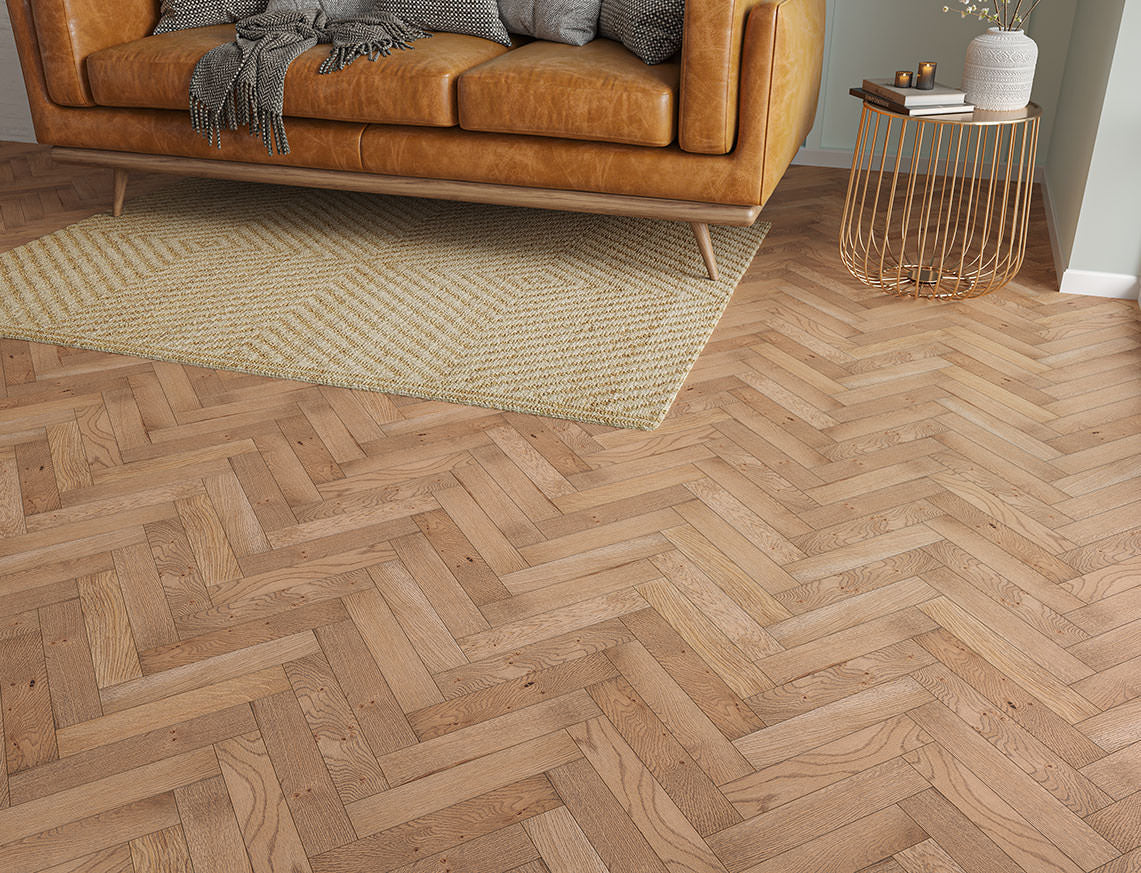
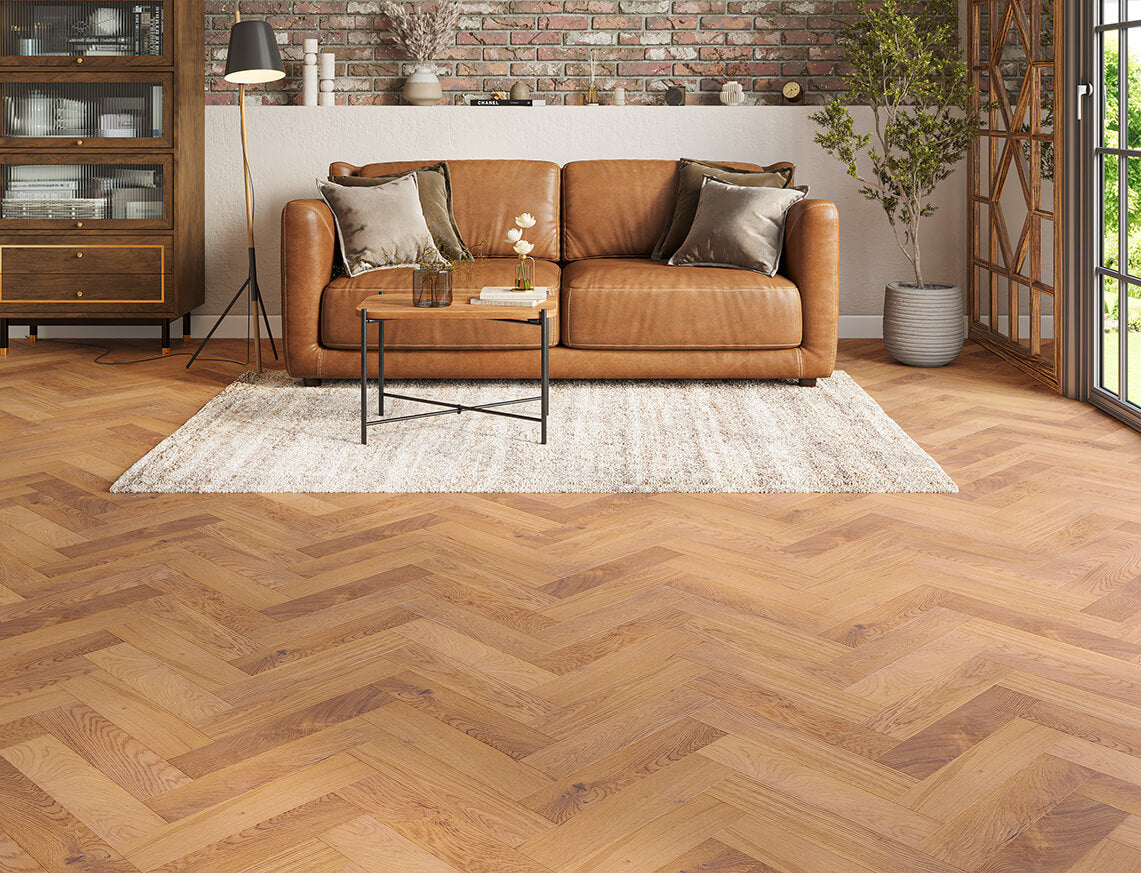
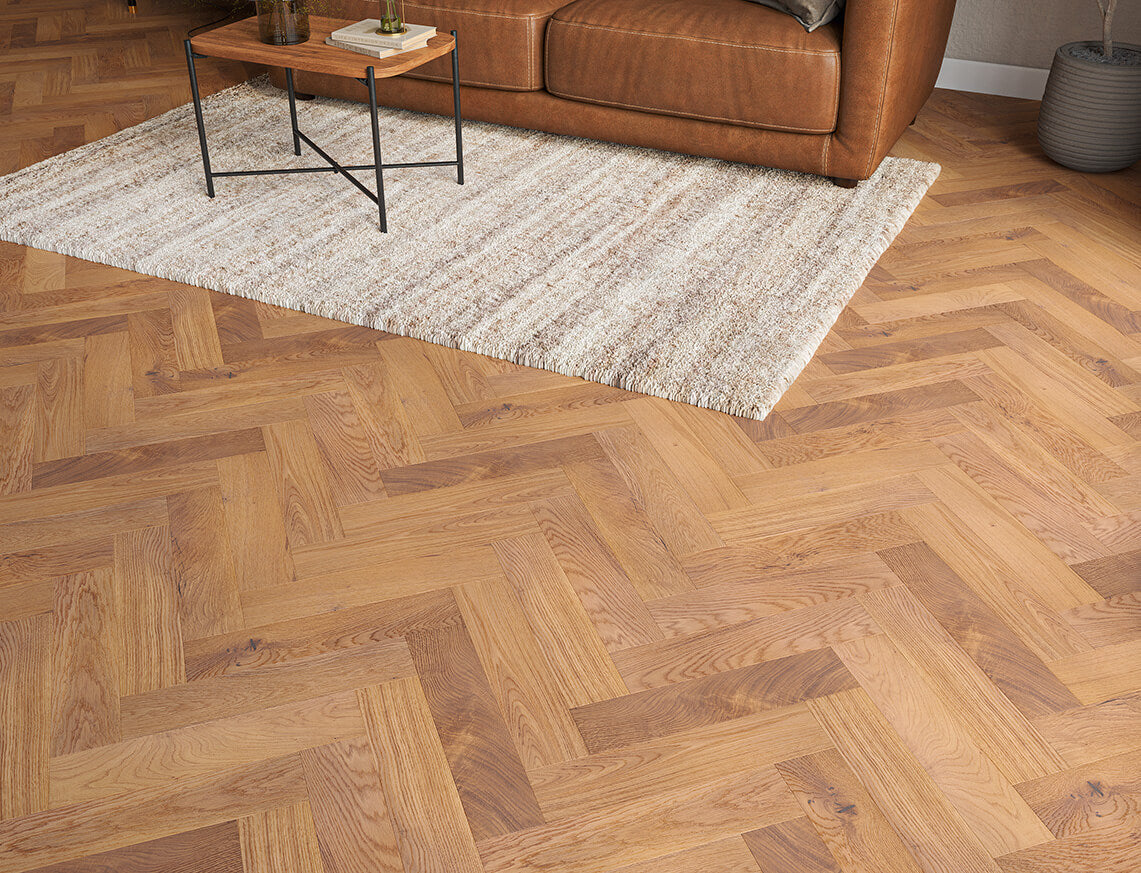
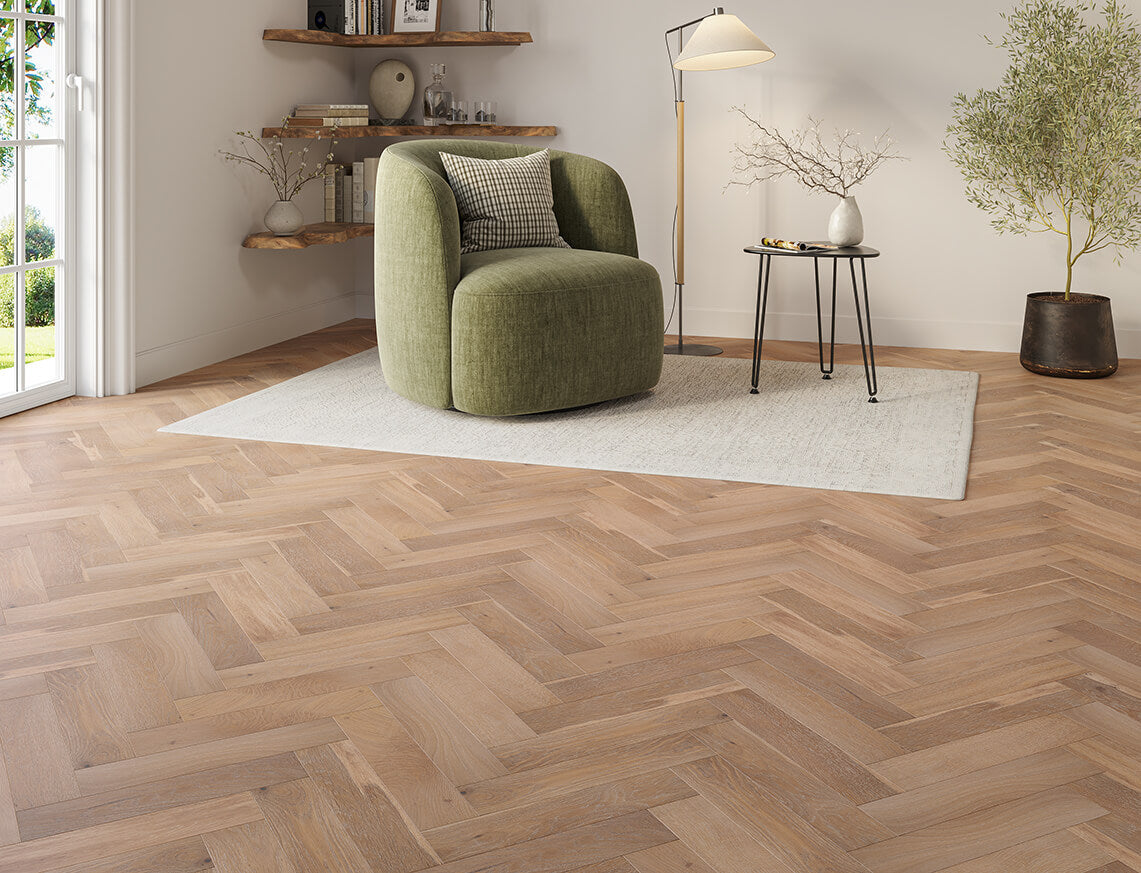
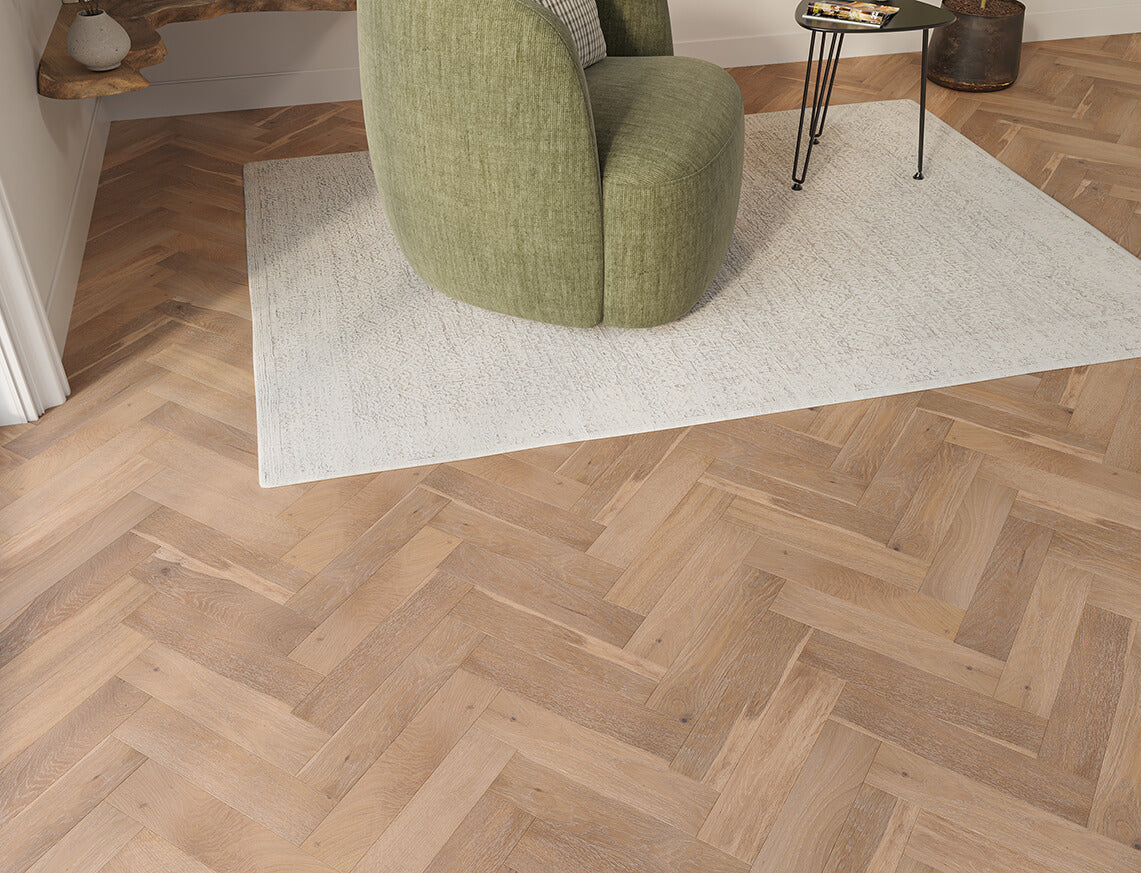
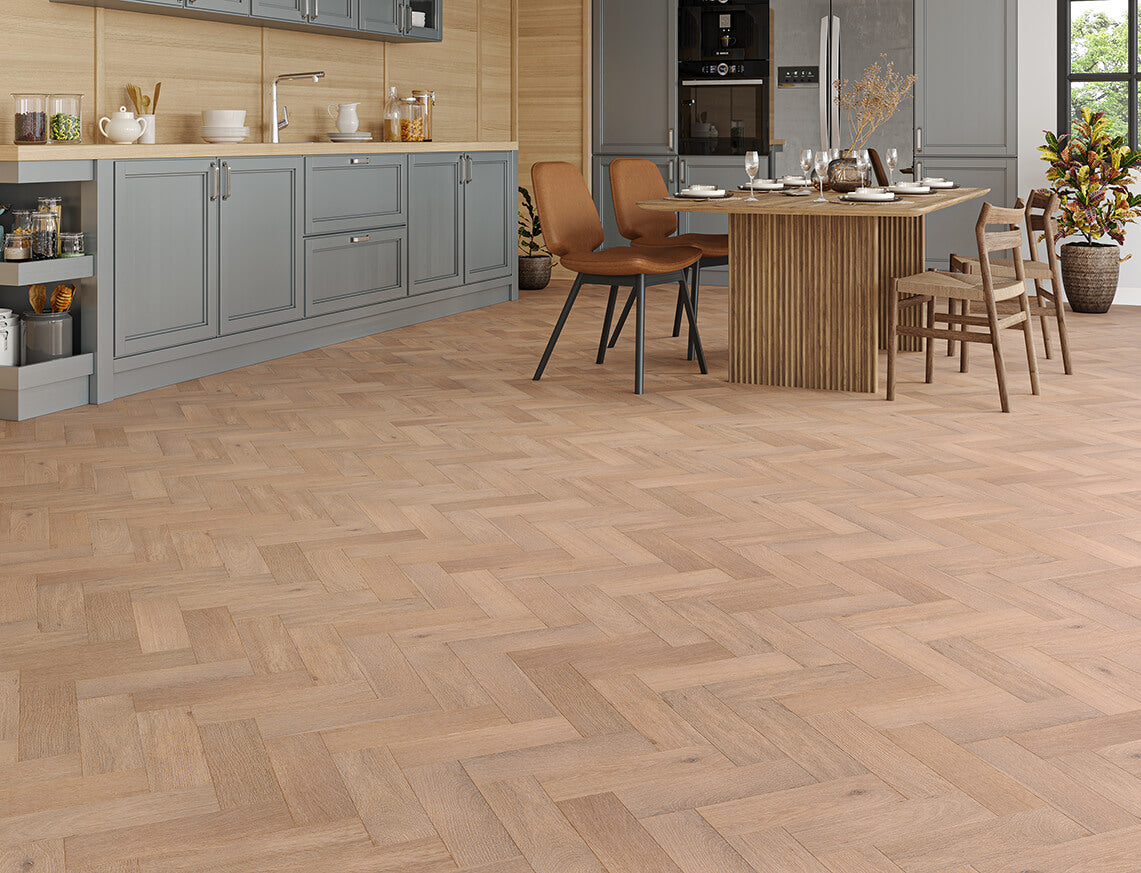
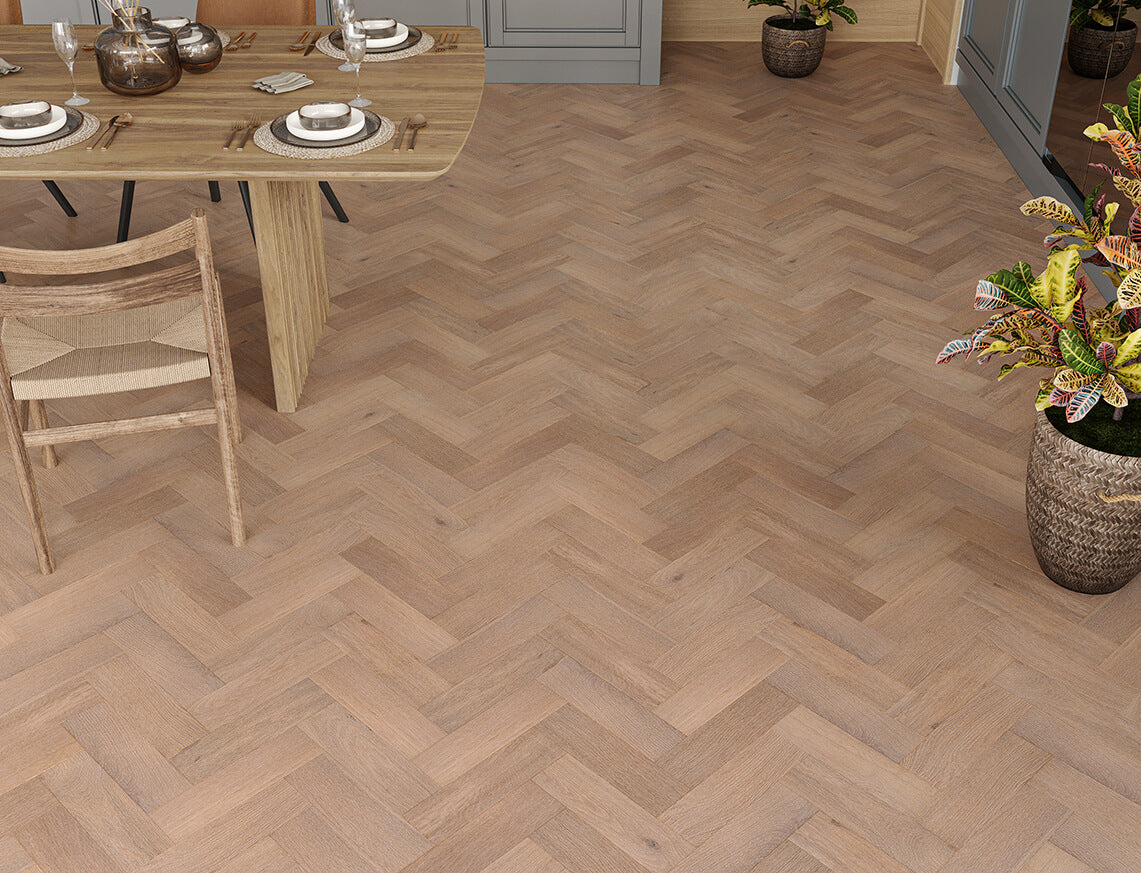
Smoking is a process rather than a stain. The timber is exposed to ammonia, which reacts with the tannin naturally present in oak and darkens the wood from within rather than colouring the surface.
The result is a richer, deeper colour with more variation between boards than a surface stain produces, because tannin content varies naturally across a tree. That variation is the appeal, and it is what distinguishes a smoked floor from a simply dark one.
Available in engineered oak across plank and patterned layouts. Free A5 samples, delivered next-day.
Oak contains tannin, and tannin reacts with ammonia vapour to darken. Placed in a sealed chamber, the timber changes colour through its thickness rather than only on the surface. The longer the exposure, the deeper the colour.
Two consequences follow, and both are worth understanding.
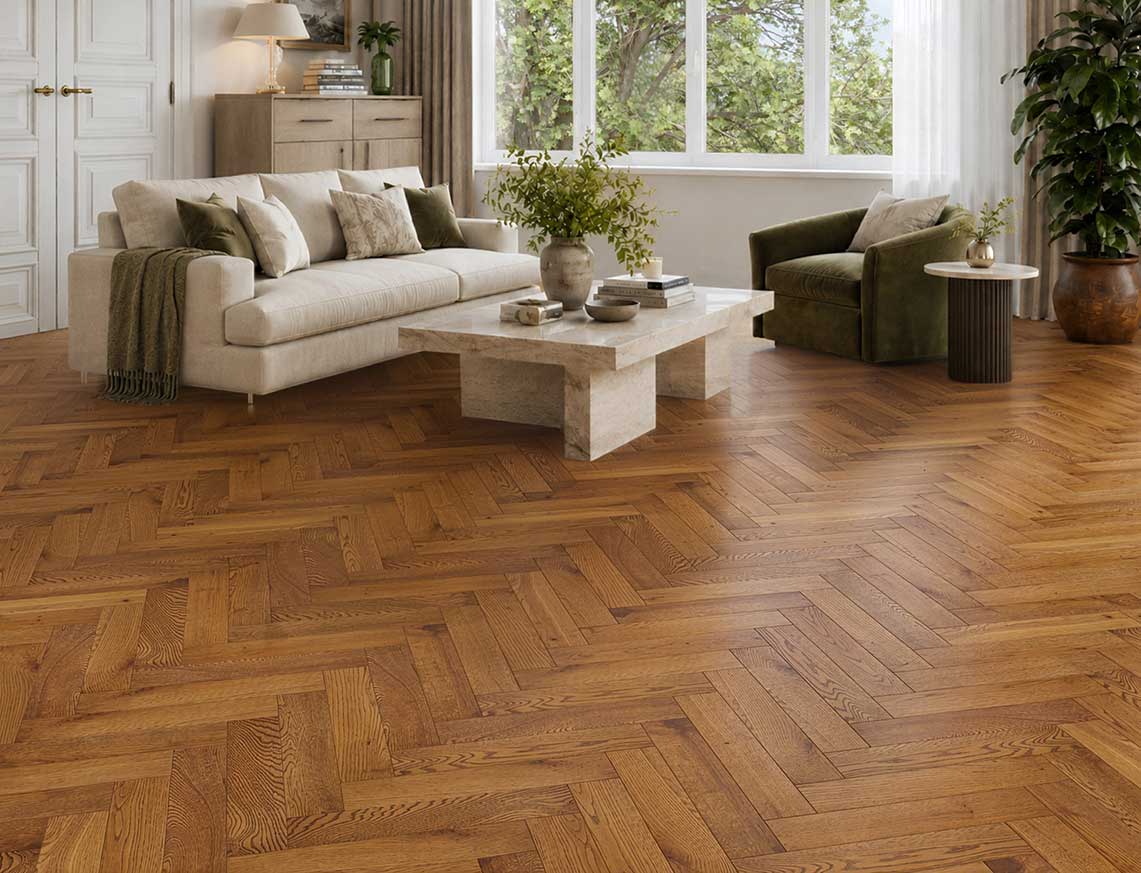
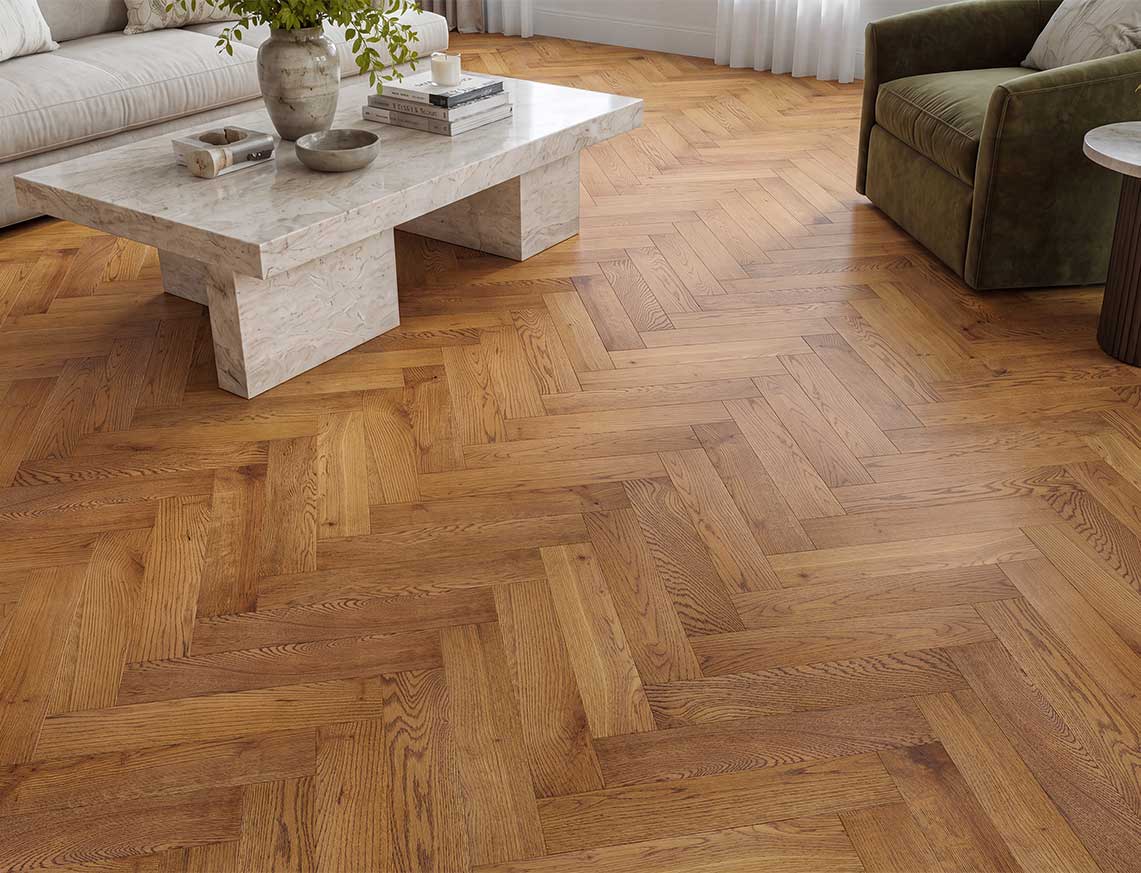
First, colour varies more between boards than it would with a stain, because tannin is not evenly distributed through a tree. A smoked floor has genuine tonal movement across it.
Second, because the colour goes into the timber rather than sitting on it, a scratch reveals darkened wood rather than a pale line. That is a practical advantage over a surface-stained floor of similar depth.
Expect variation, and lay for it
Board-to-board variation is a feature of smoked oak rather than a fault. Open several packs at once and mix the boards as you lay, so the tonal range spreads evenly across the room rather than leaving a noticeably darker patch in one corner.
What a smoked floor does to a room
Smoked floors give a room depth and a settled, grounded feel. They read as considered rather than neutral, which is the appeal for people who find pale floors bland.
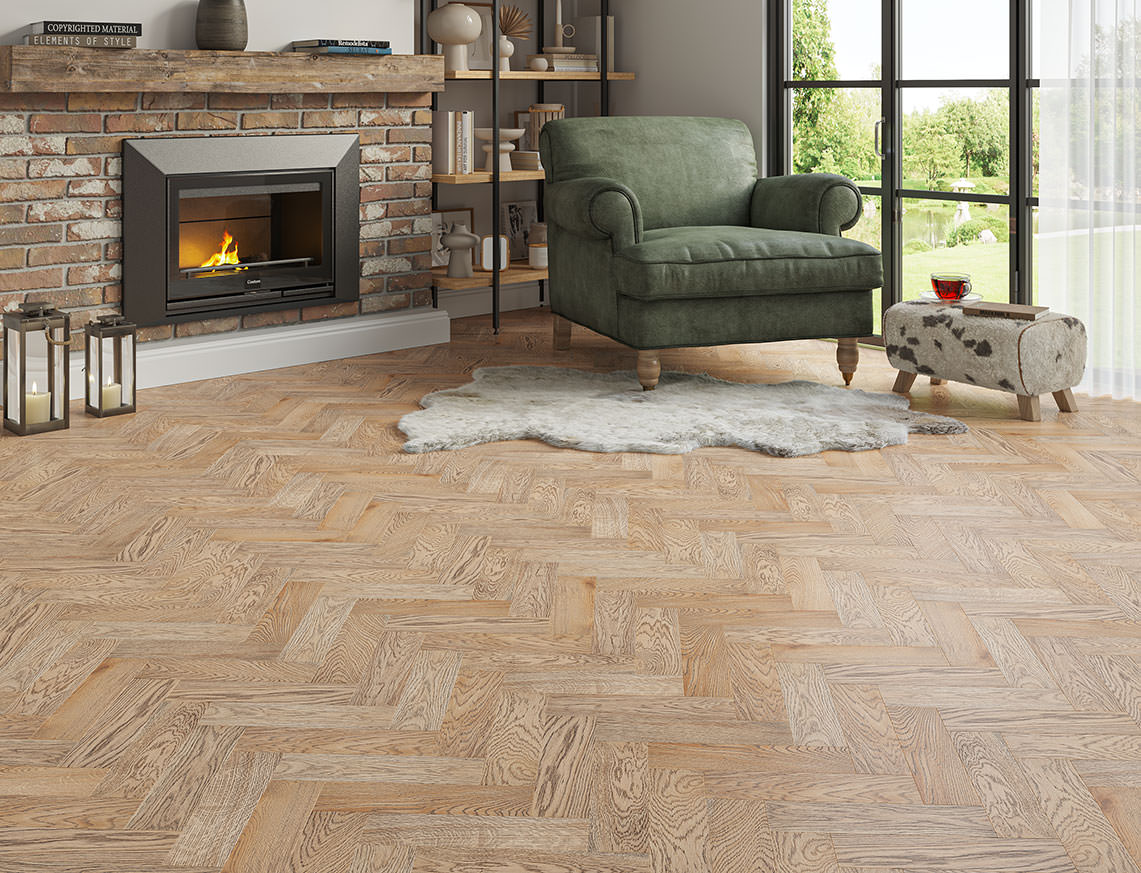
They suit rooms with reasonable natural light best, where the tonal variation across the boards has something to catch. In a darker room a smoked floor can flatten into a single dark surface, losing the movement that makes it interesting.
Like any deeper floor, they show dust and footprints more readily than a mid-tone. Worth weighing against how much you like the look.
Smoked, stained or dark?
All three can produce a dark floor, and they are not the same thing.
Smoked is a chemical reaction that darkens the timber itself, giving natural variation and colour through the board.
Stained is pigment applied to the surface, giving a more uniform colour but a paler line if scratched deeply.
Naturally dark timbers such as walnut are simply that colour to begin with. Our dark flooring collection covers deeper floors of all kinds.
What smoked floors pair with
Pale walls and units give the contrast that shows a smoked floor at its best. White, off-white and pale grey all let the floor be the darkest element in the room.
Brass and warm metals sit particularly well against smoked oak, which is why the combination appears so often in kitchen schemes.
Existing dark woodwork needs the same undertone check as any wood-on-wood pairing. Smoked oak leans warm and slightly grey; a red-toned dark door may not agree with it.
Judging a smoked floor properly
A single A5 sample cannot show you the variation that makes a smoked floor what it is. It shows you one board out of a range, and the next board may be noticeably lighter or darker.
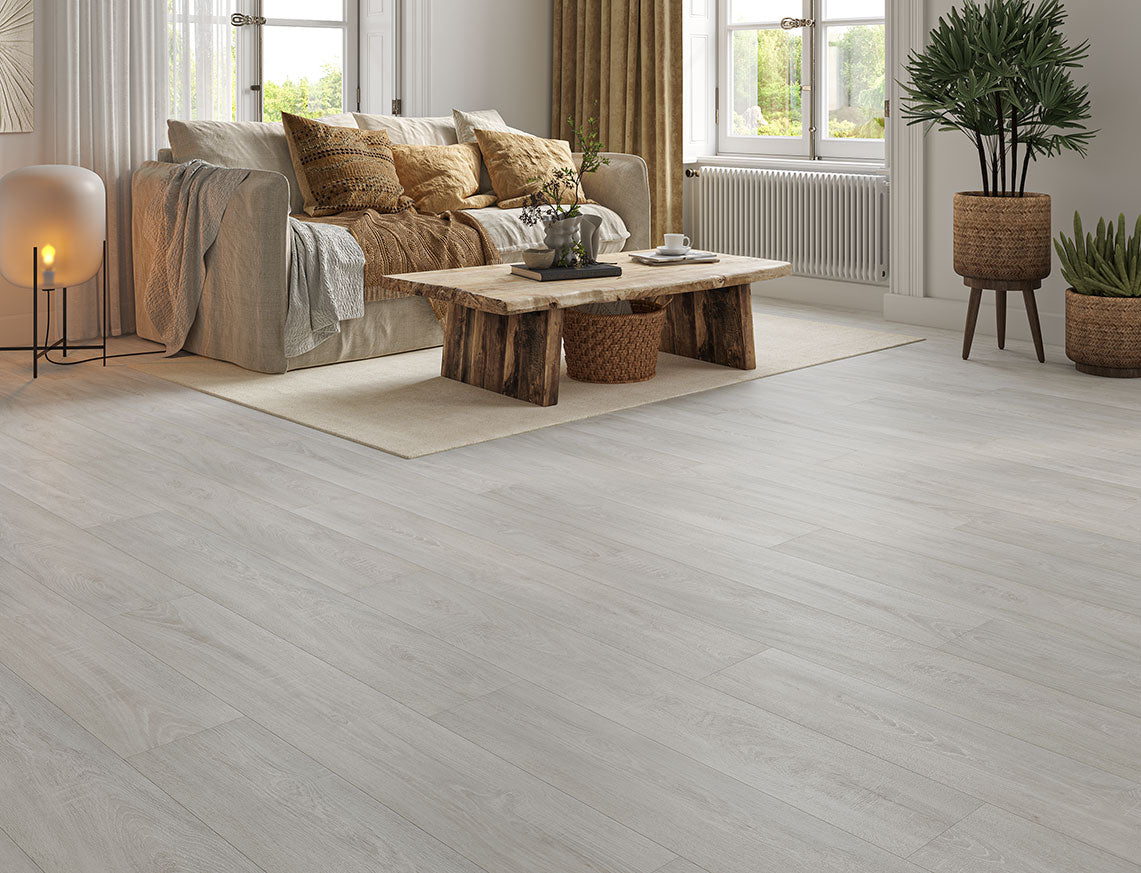
Order a free sample for the colour and finish, and study the room-set photograph on the product page for the tonal spread across a whole floor. The two together give you the full picture.
Smoked flooring: frequently asked questions
What is smoked oak flooring?
Oak darkened by exposure to ammonia, which reacts with the tannin in the timber. The colour develops within the wood rather than being applied to the surface.
Is smoked oak the same as fumed oak?
The terms are generally used interchangeably for the same ammonia process.
Why do the boards vary in colour?
Tannin content varies naturally through a tree, so different boards darken to different degrees. It is characteristic of the process rather than a defect.
Is smoked oak better than stained?
Different rather than better. Smoked gives natural variation and colour through the board. Stained gives a more uniform result. Which you prefer is a matter of taste.
Can smoked oak be sanded?
Yes, as many times as the wear layer allows, and because the colour goes into the timber it survives sanding better than a surface stain. The wear layer is listed on each product page.
Does smoked flooring show dust?
More than a mid-tone, as any deeper floor does. Regular sweeping and a doormat at external doors make the most difference.