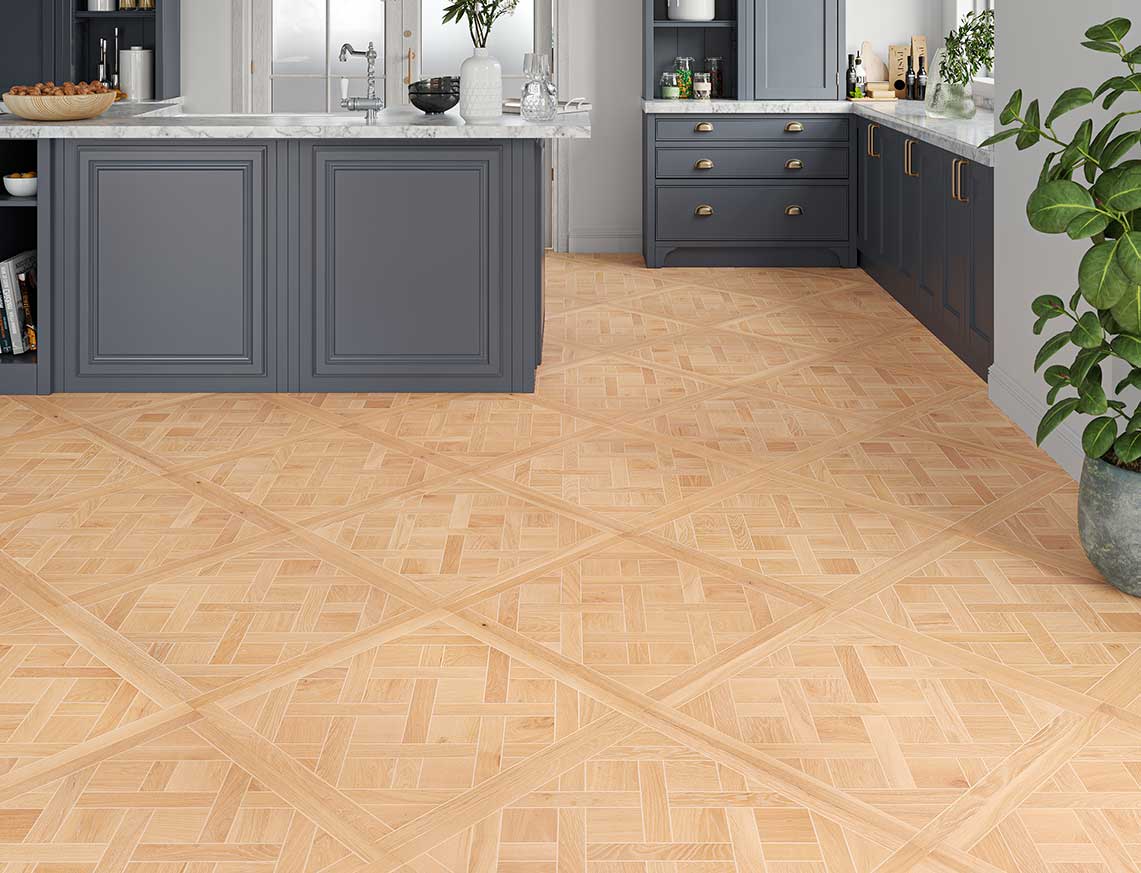
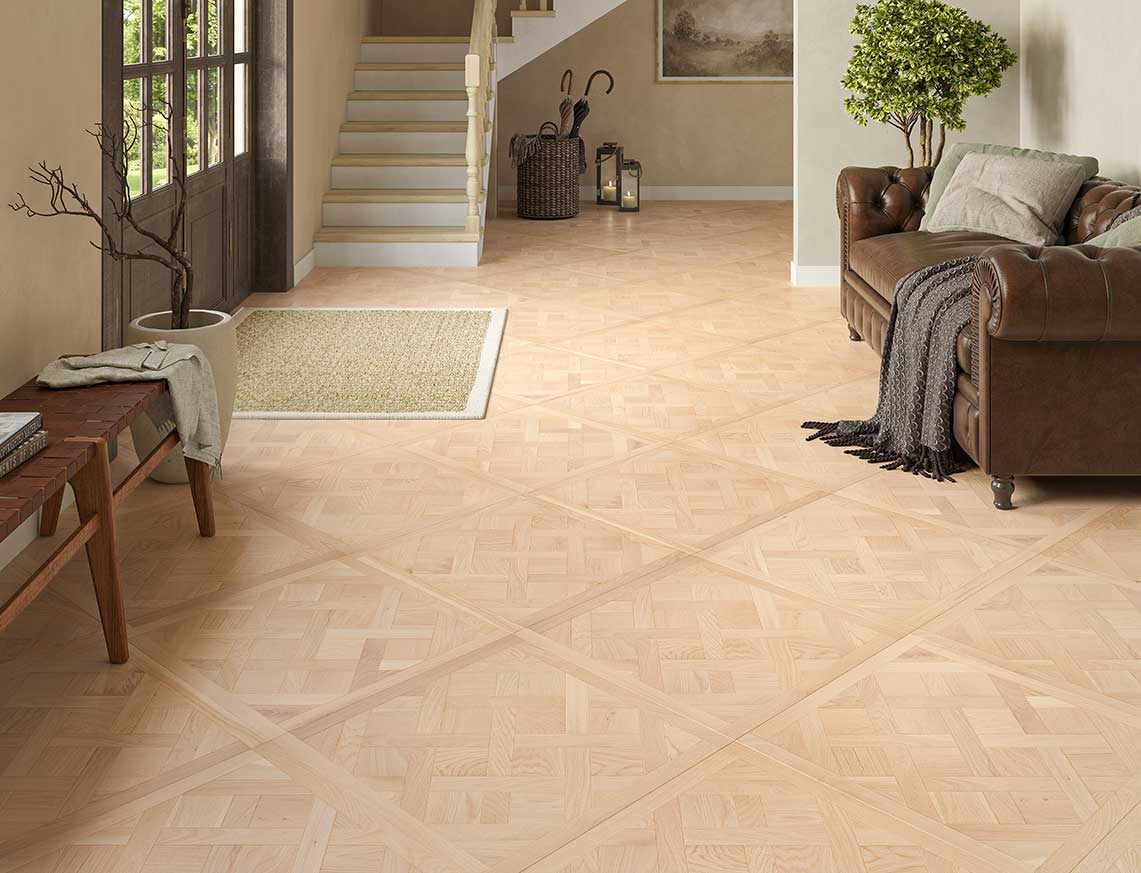
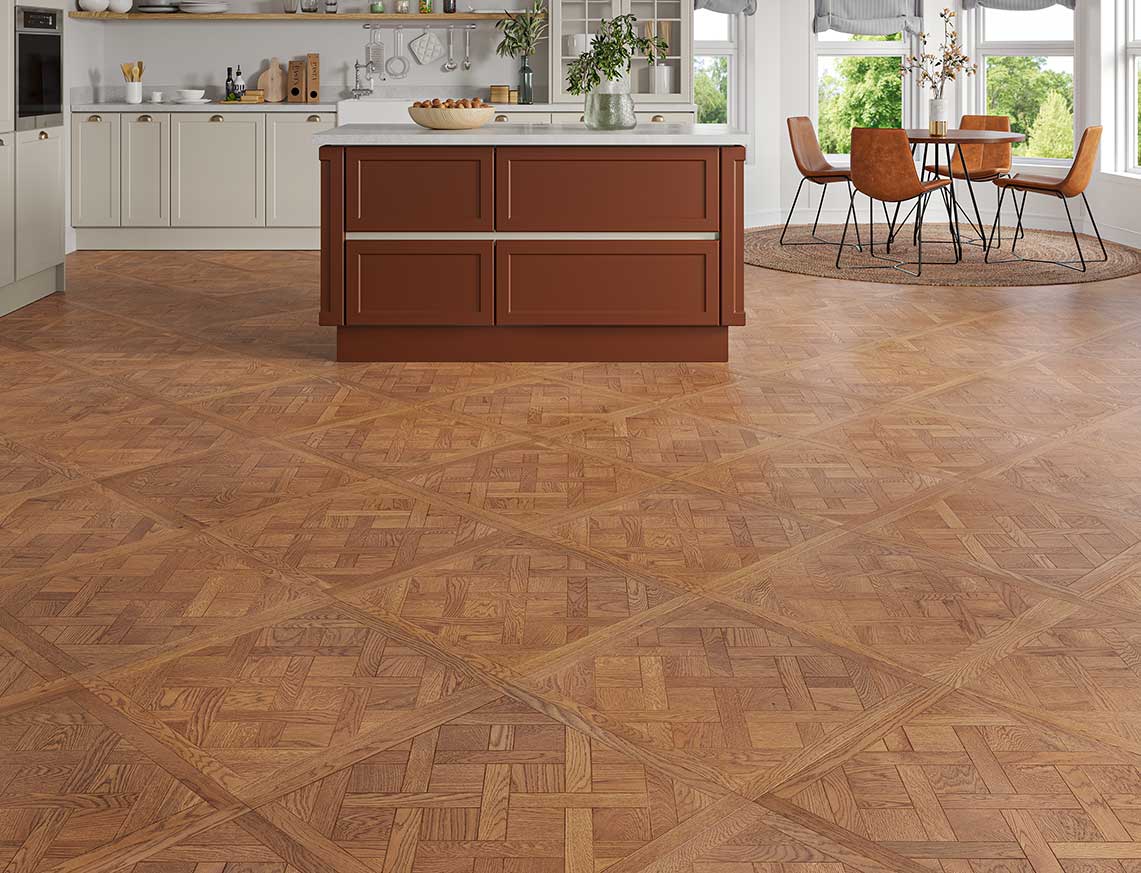
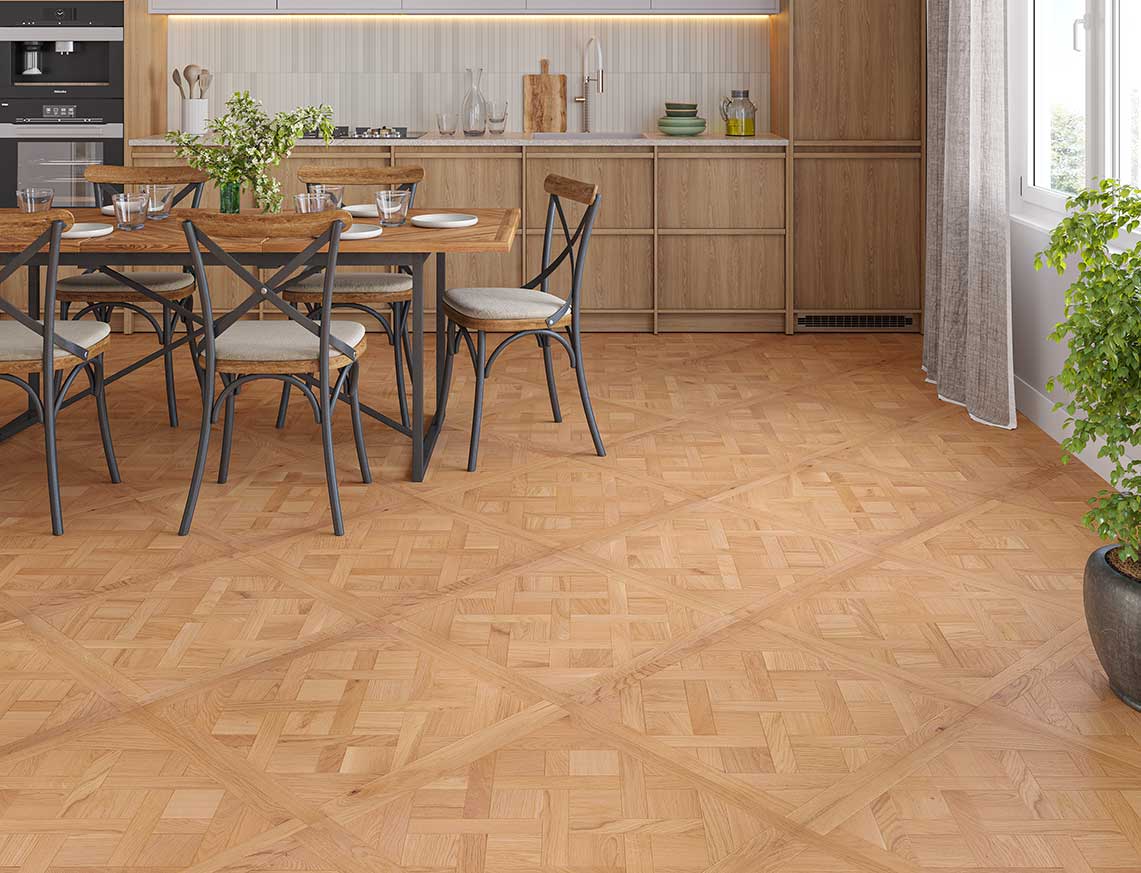
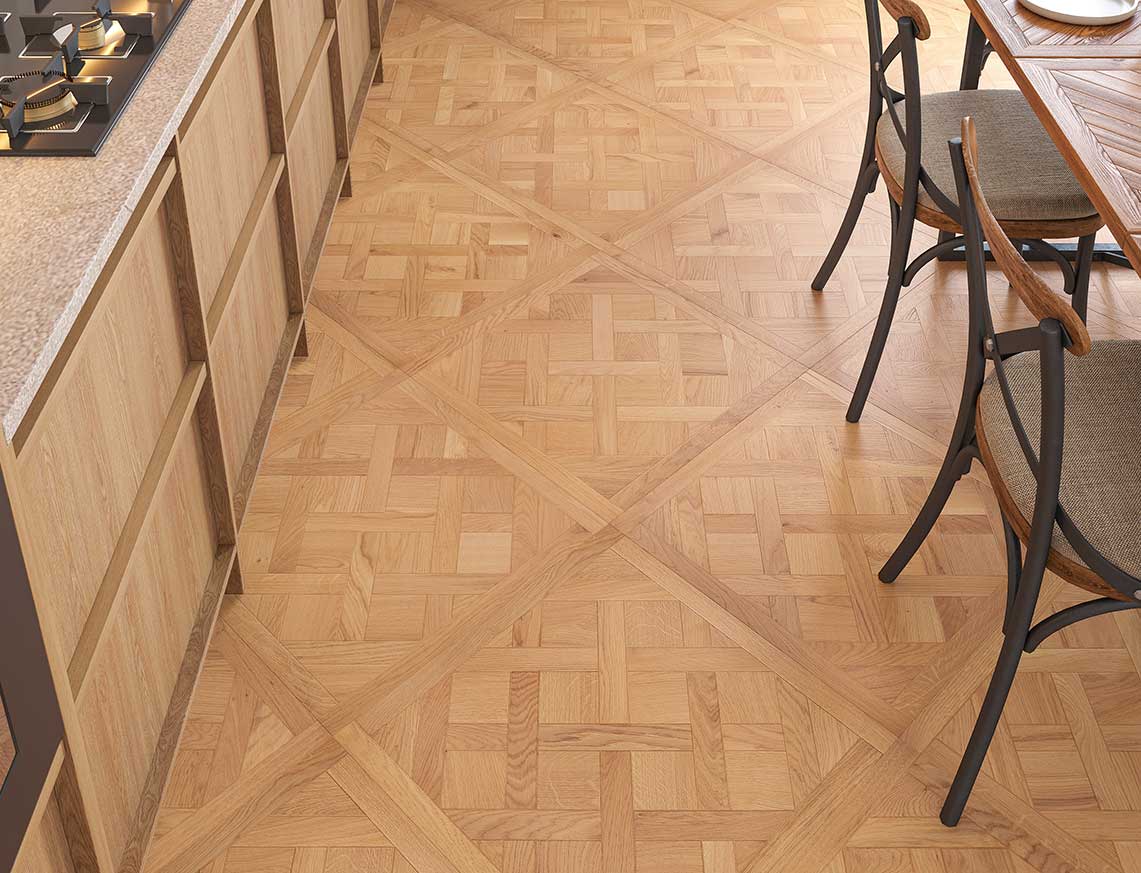
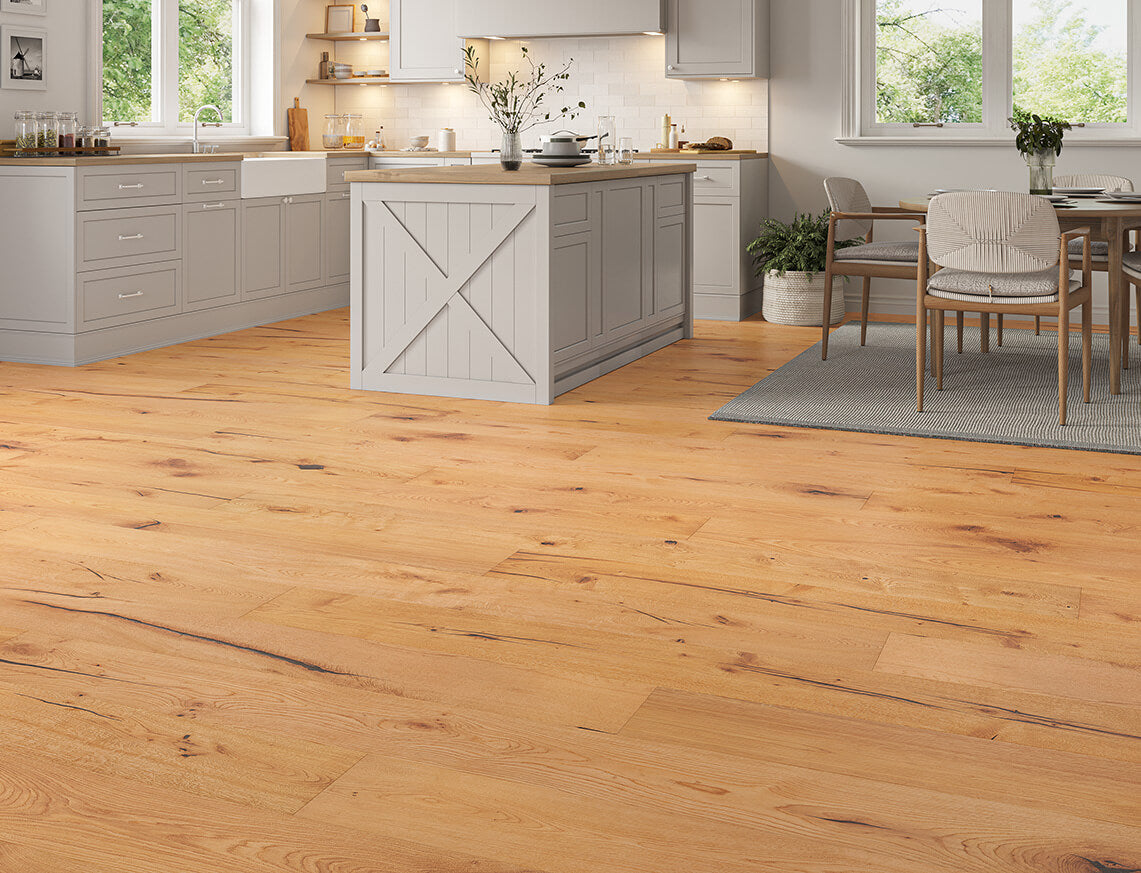
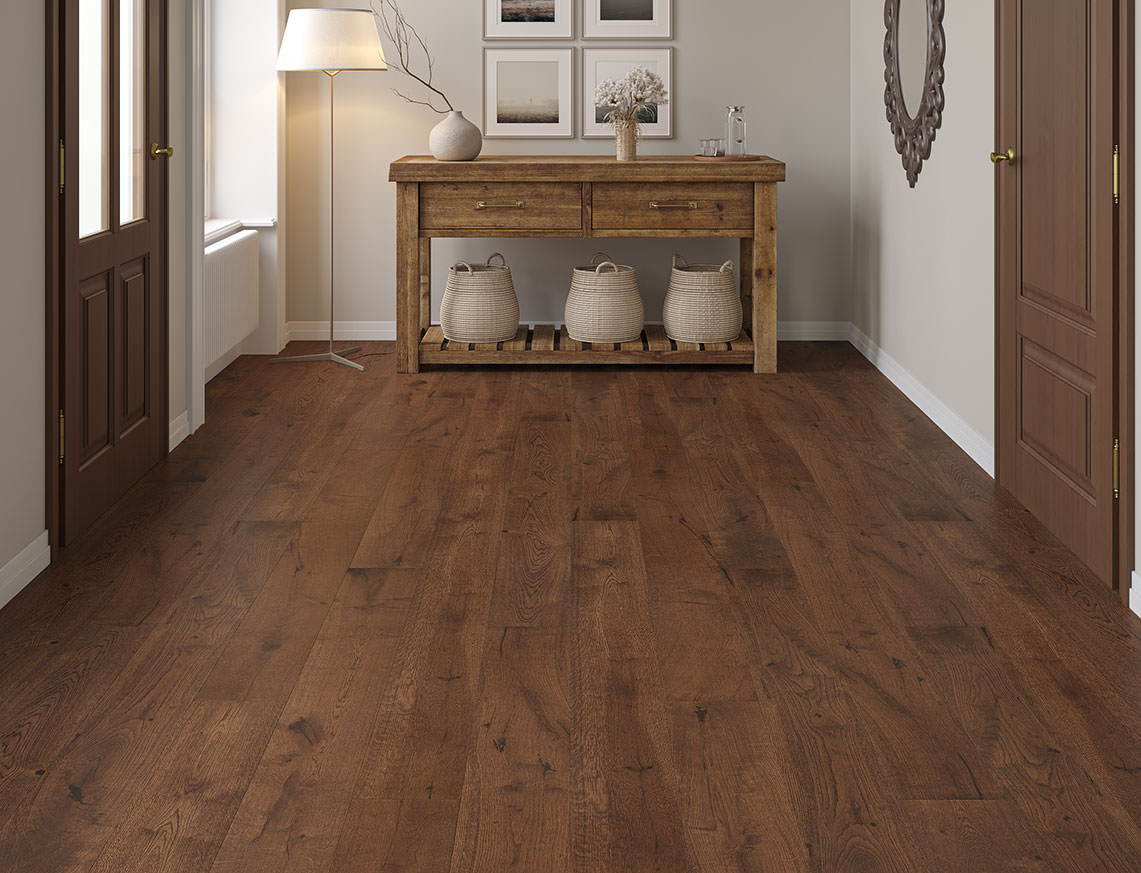
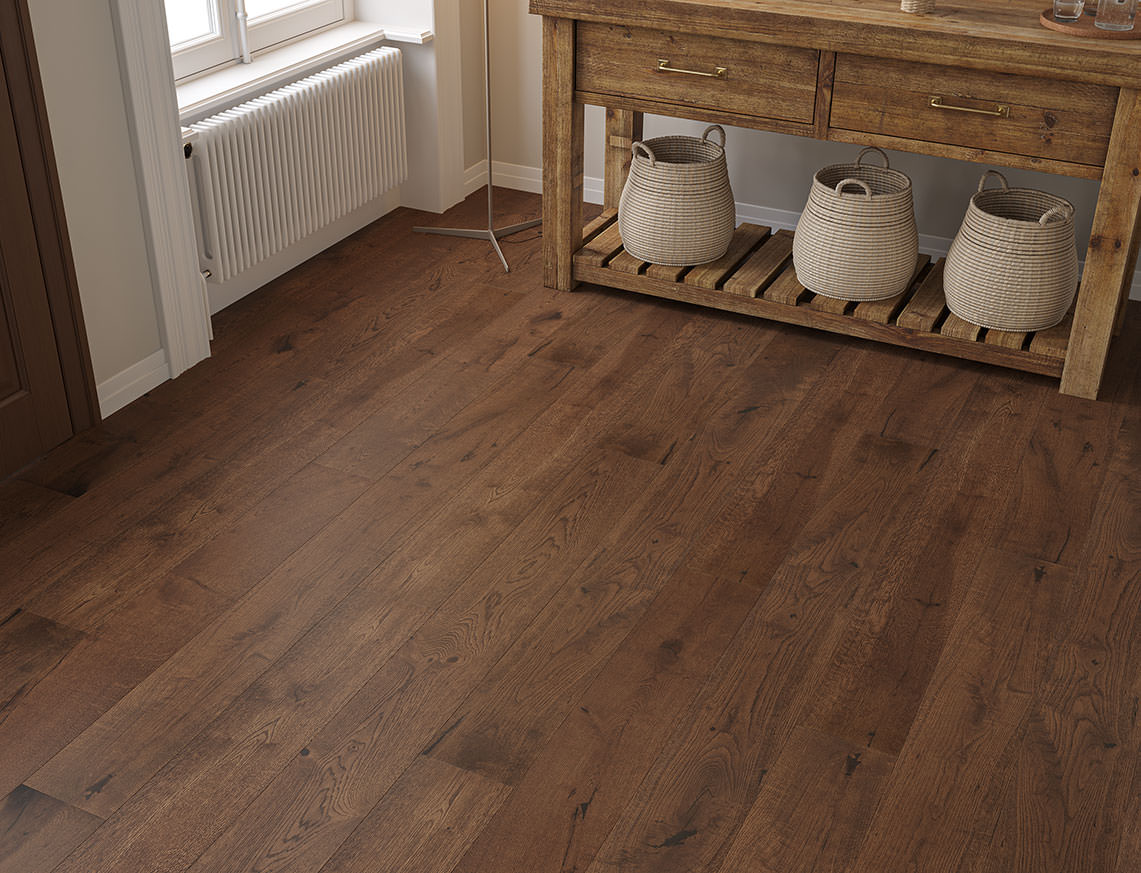
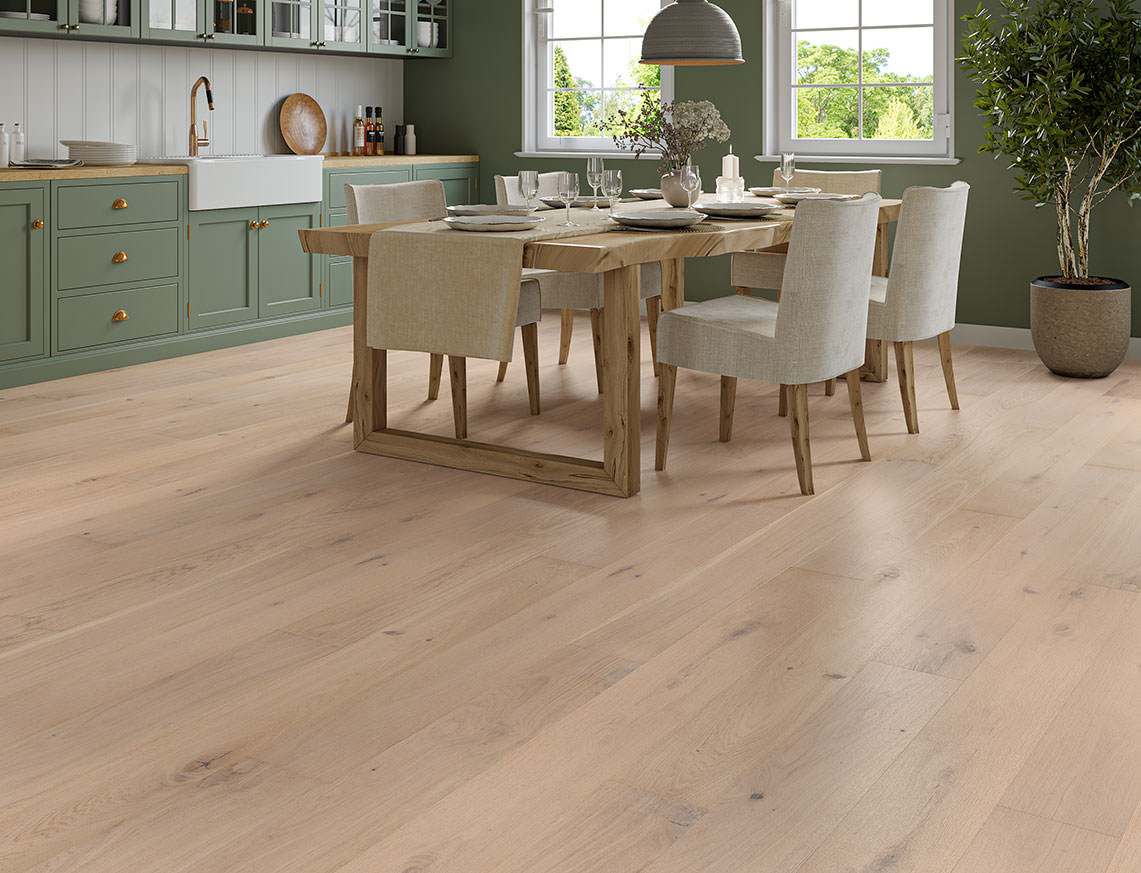
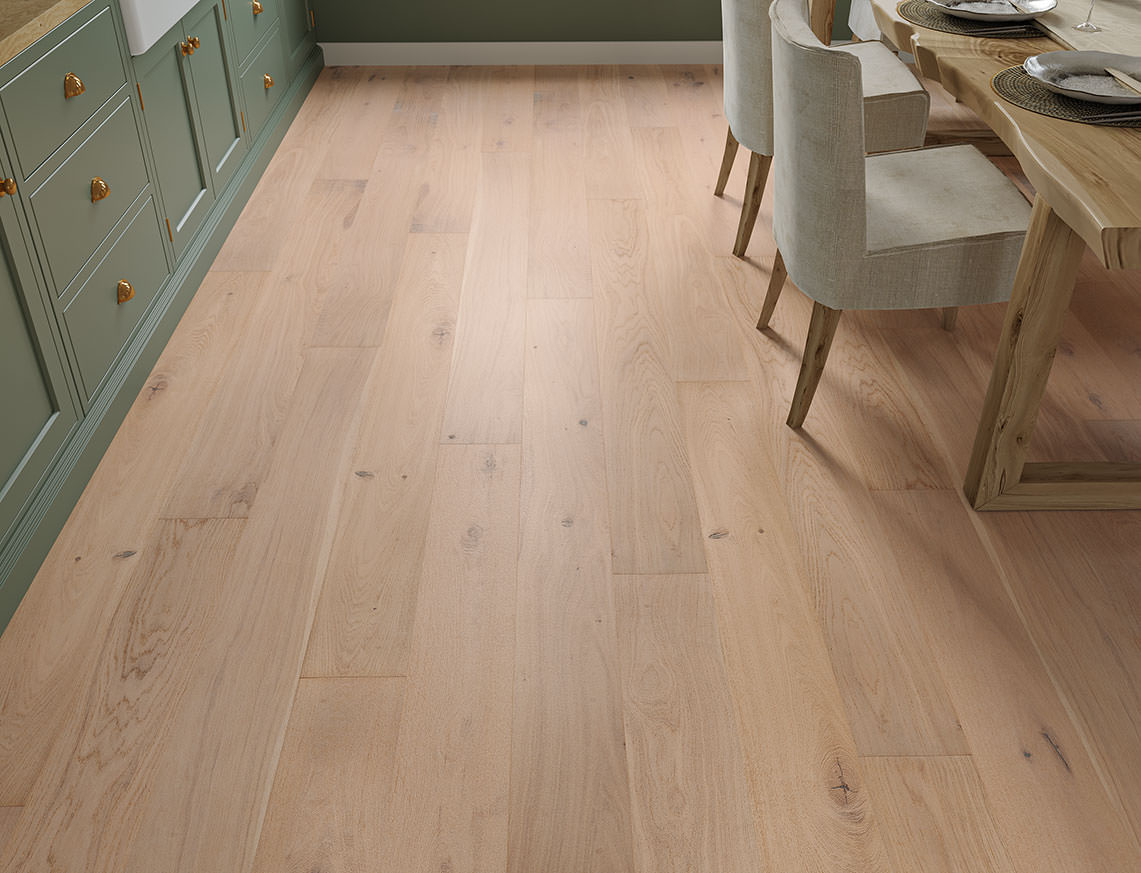
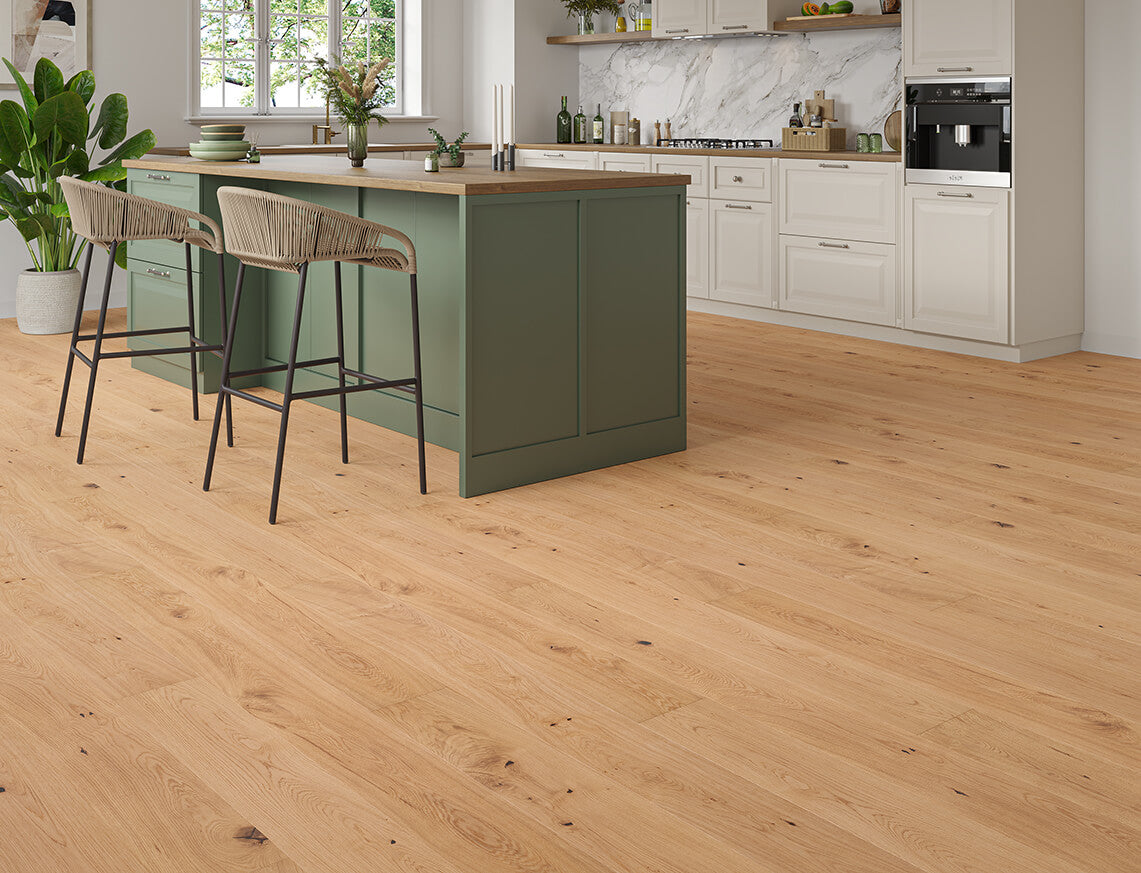
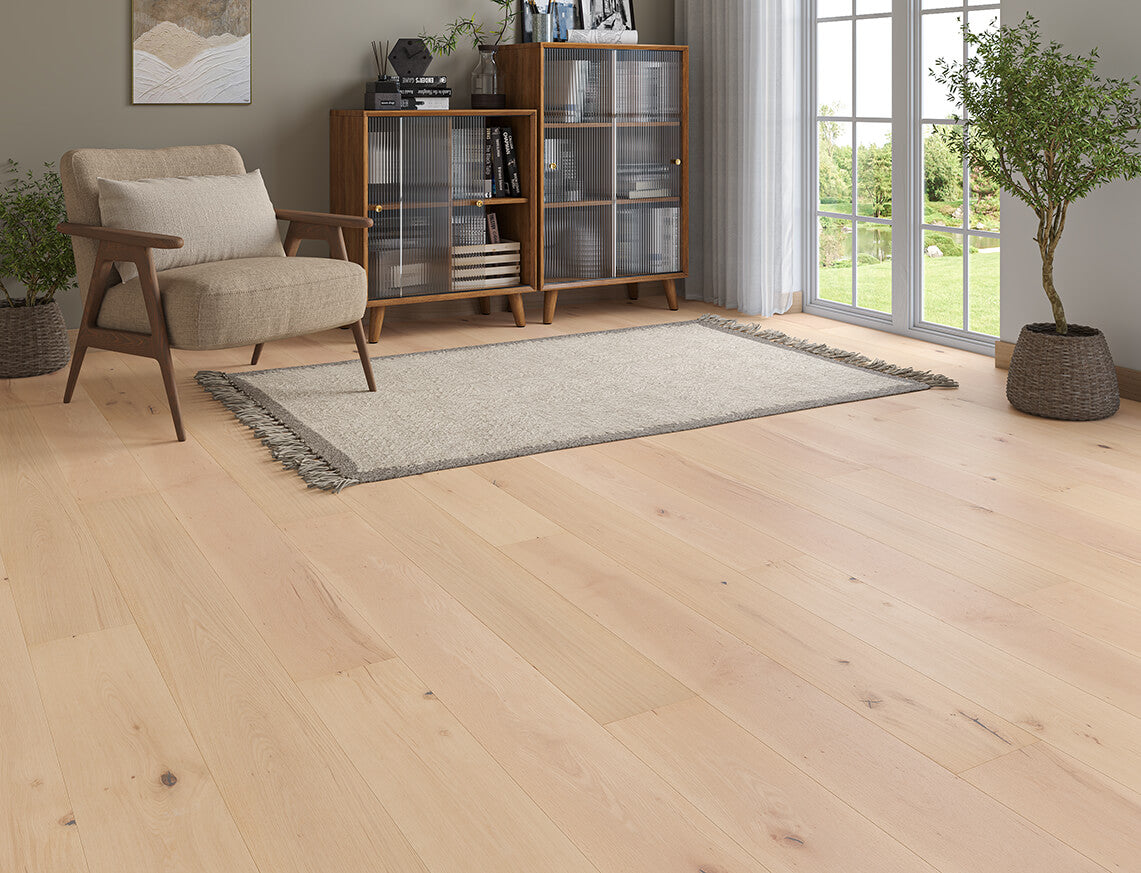
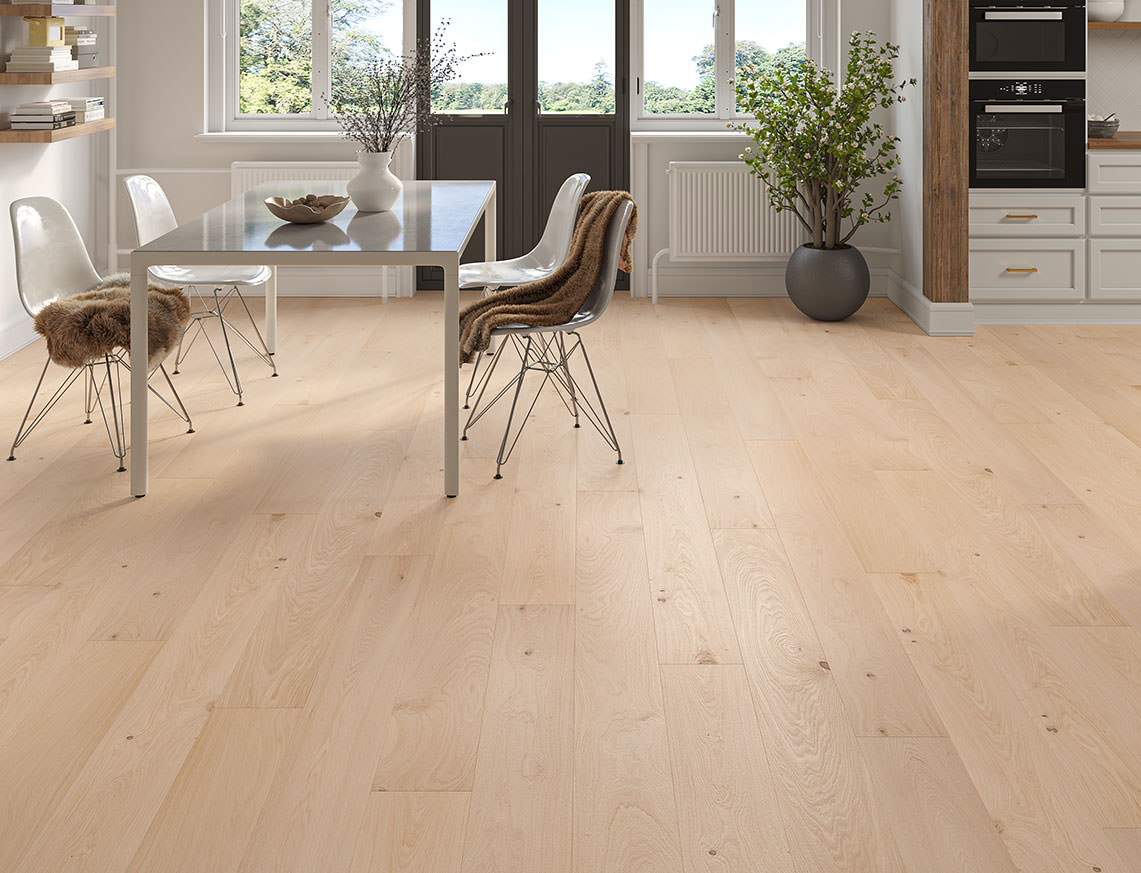
A kitchen floor works harder than any other in the house. Spills, dropped pans, constant traffic and usually underfloor heating beneath it, all in the room where you most want the floor to look good.
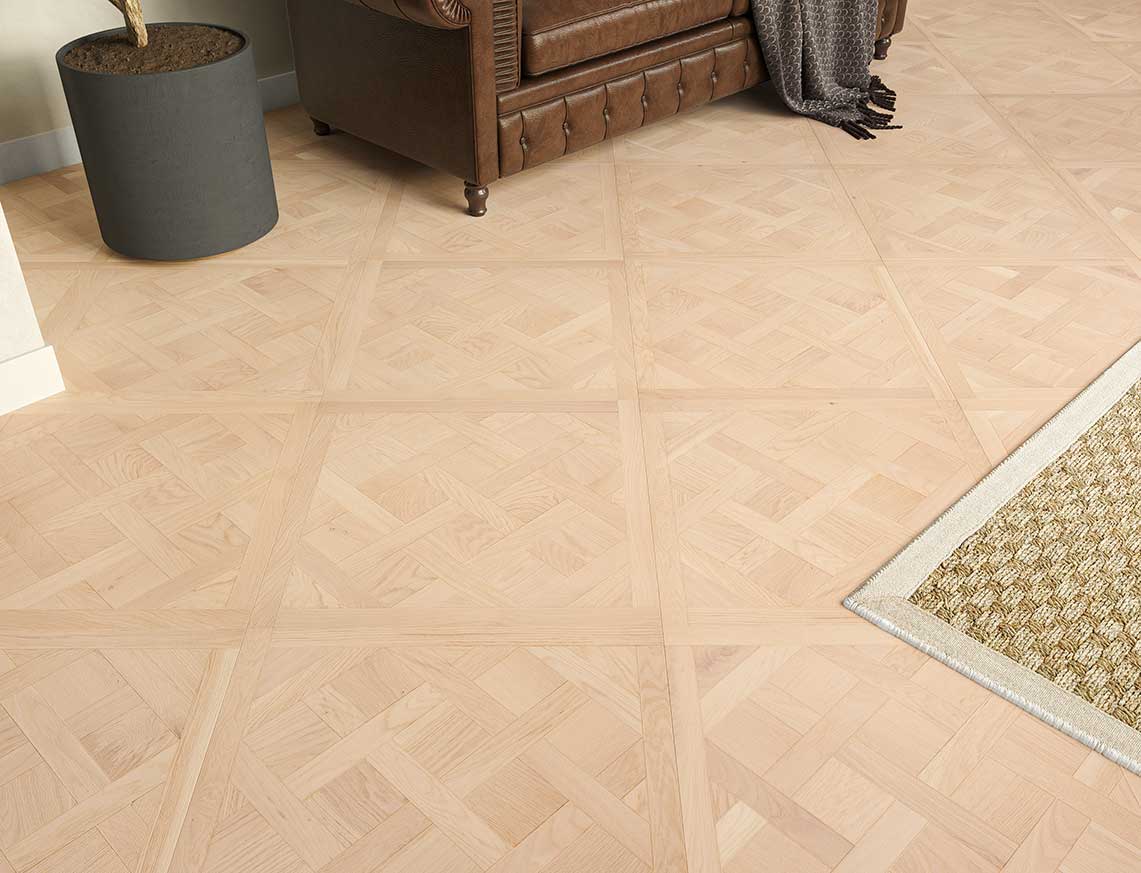
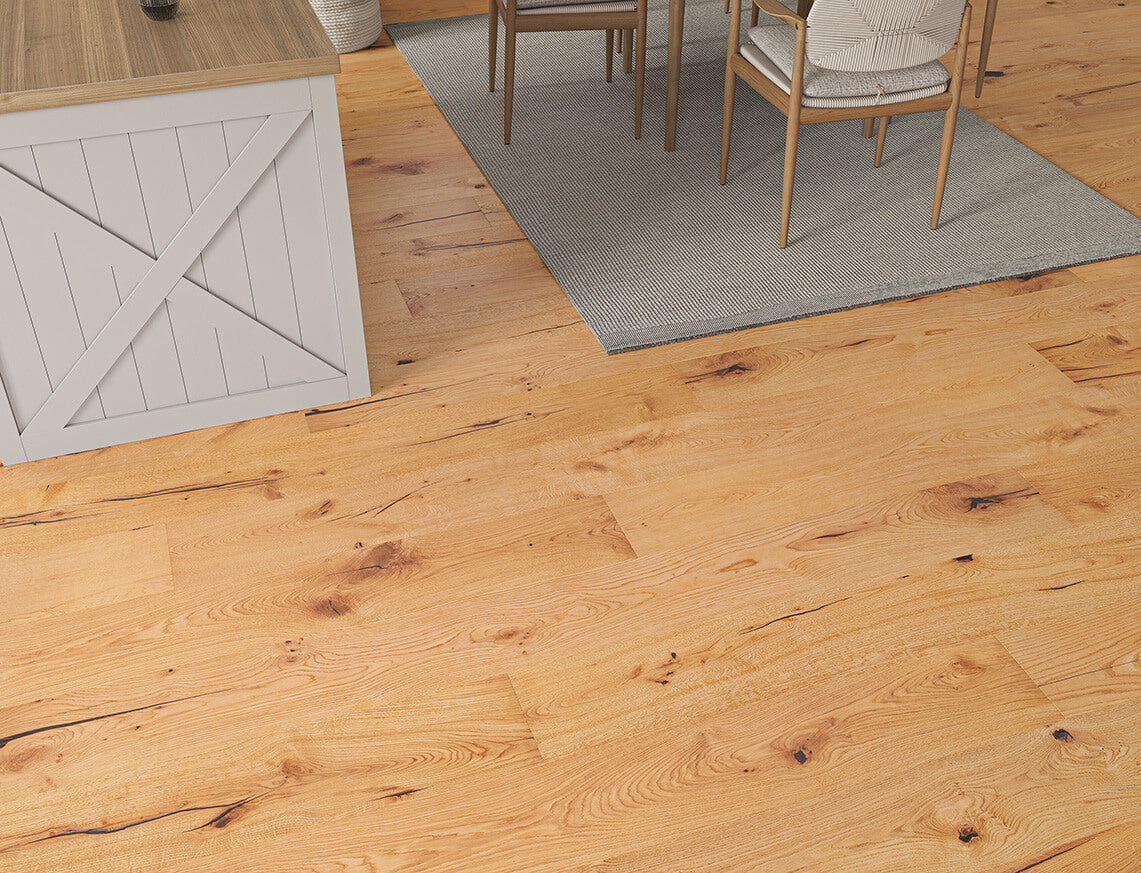
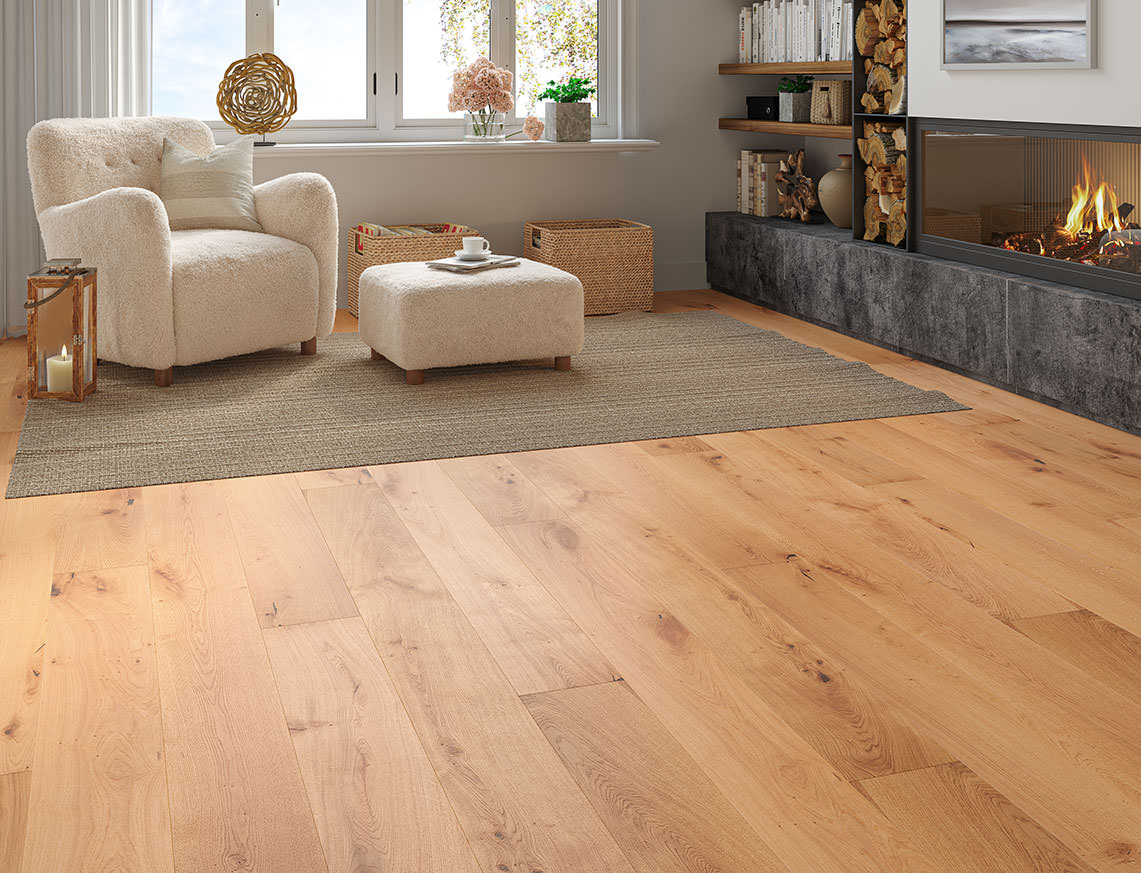
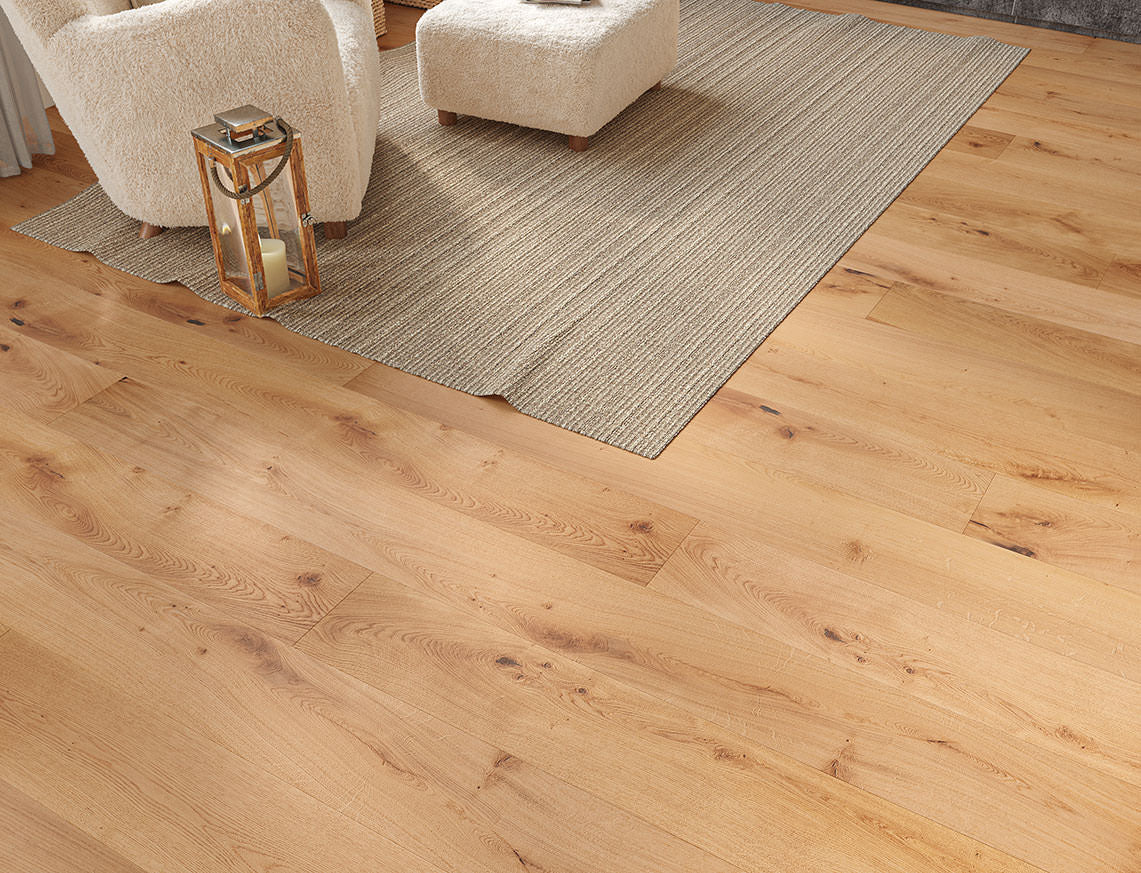
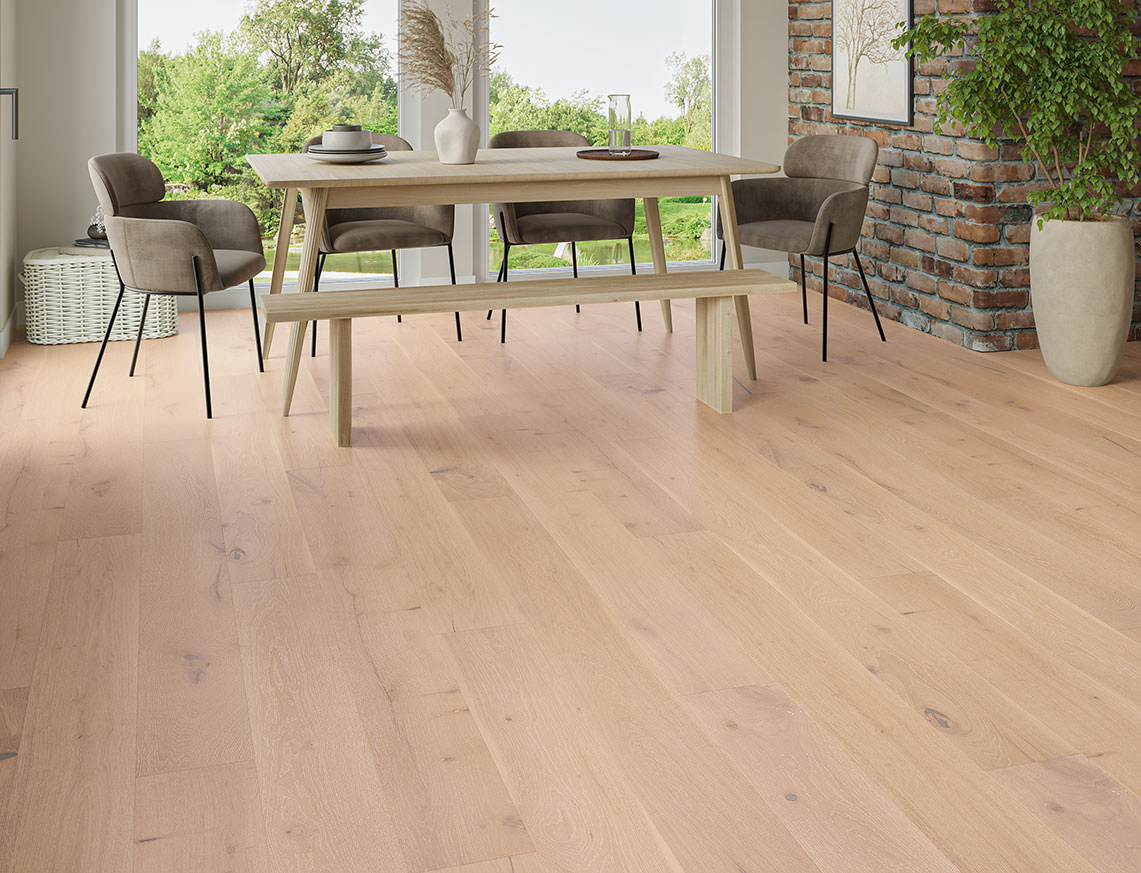
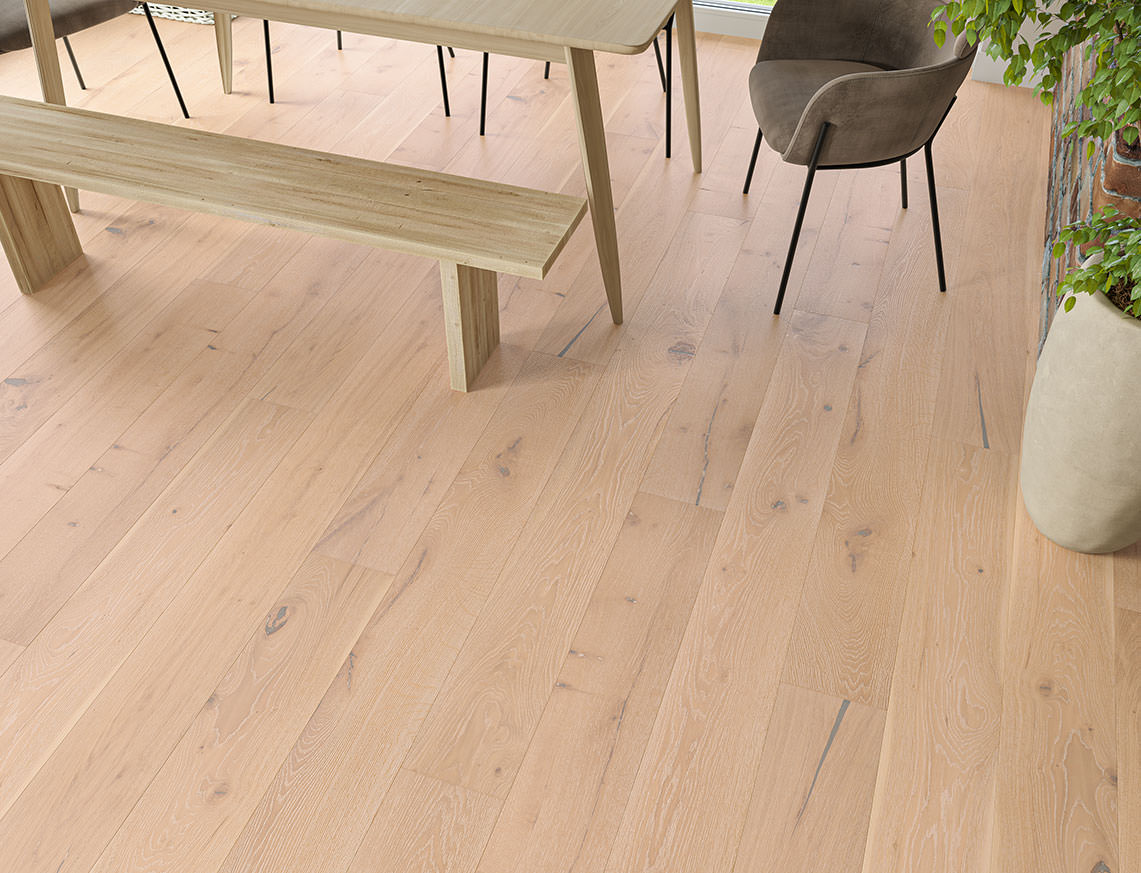
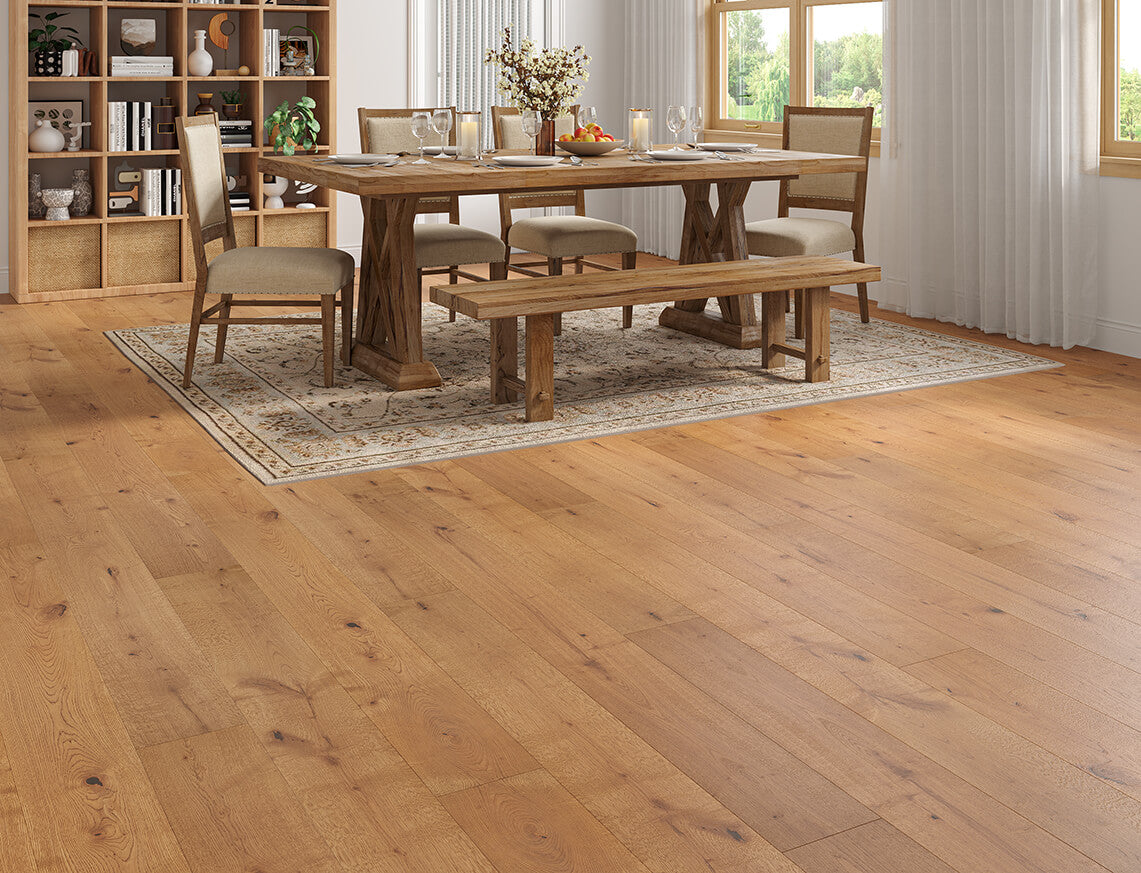
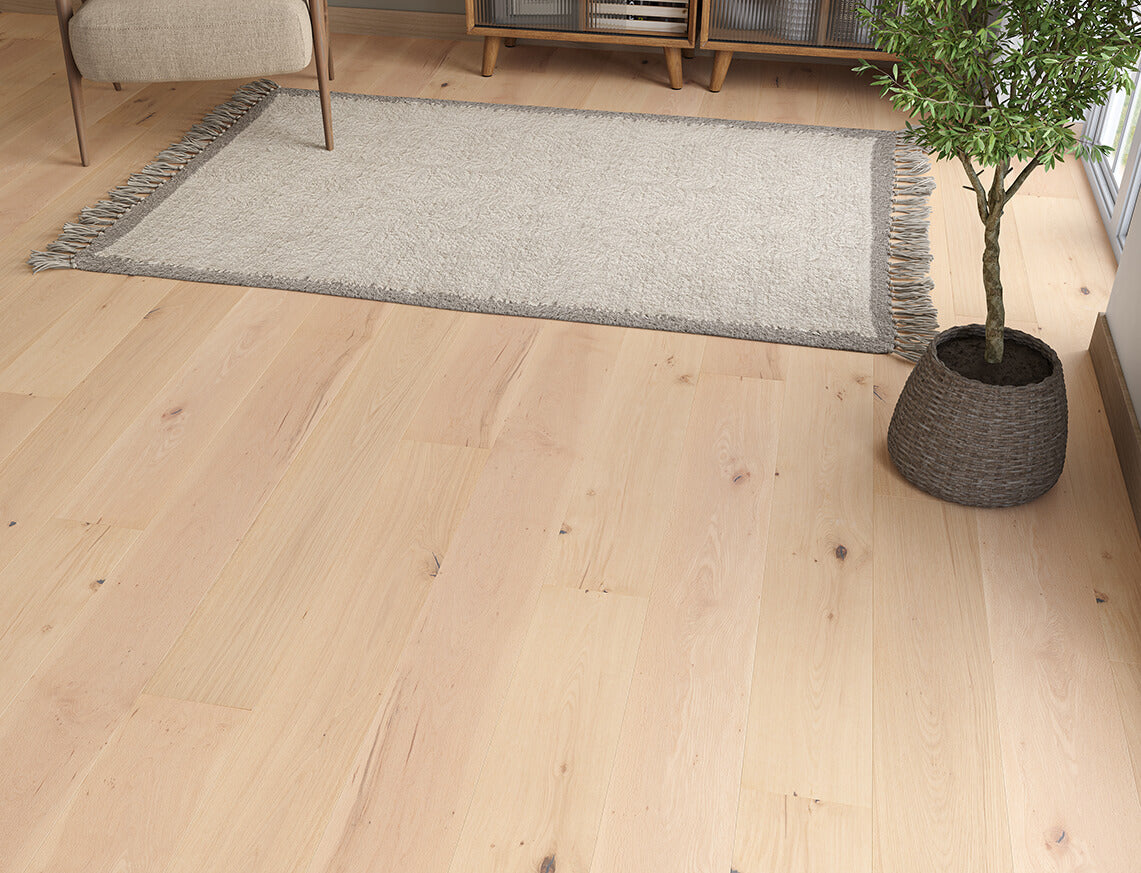
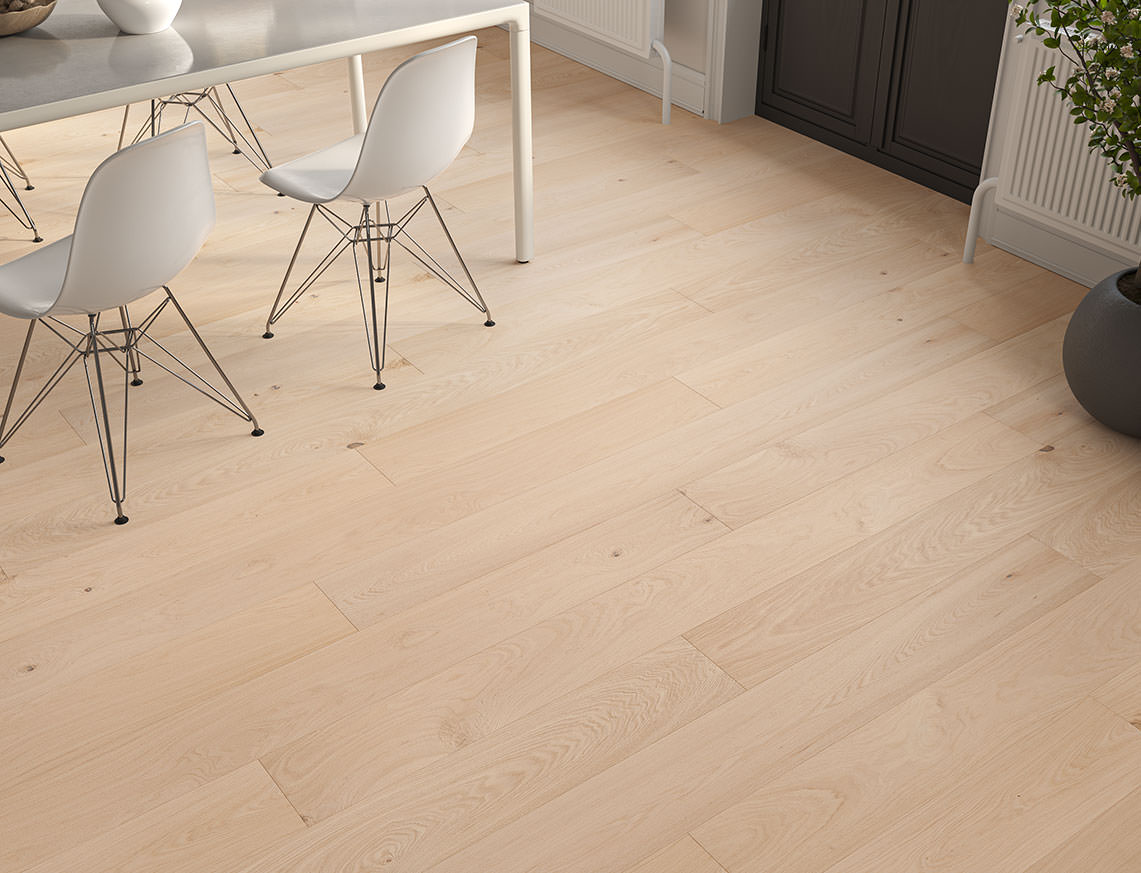
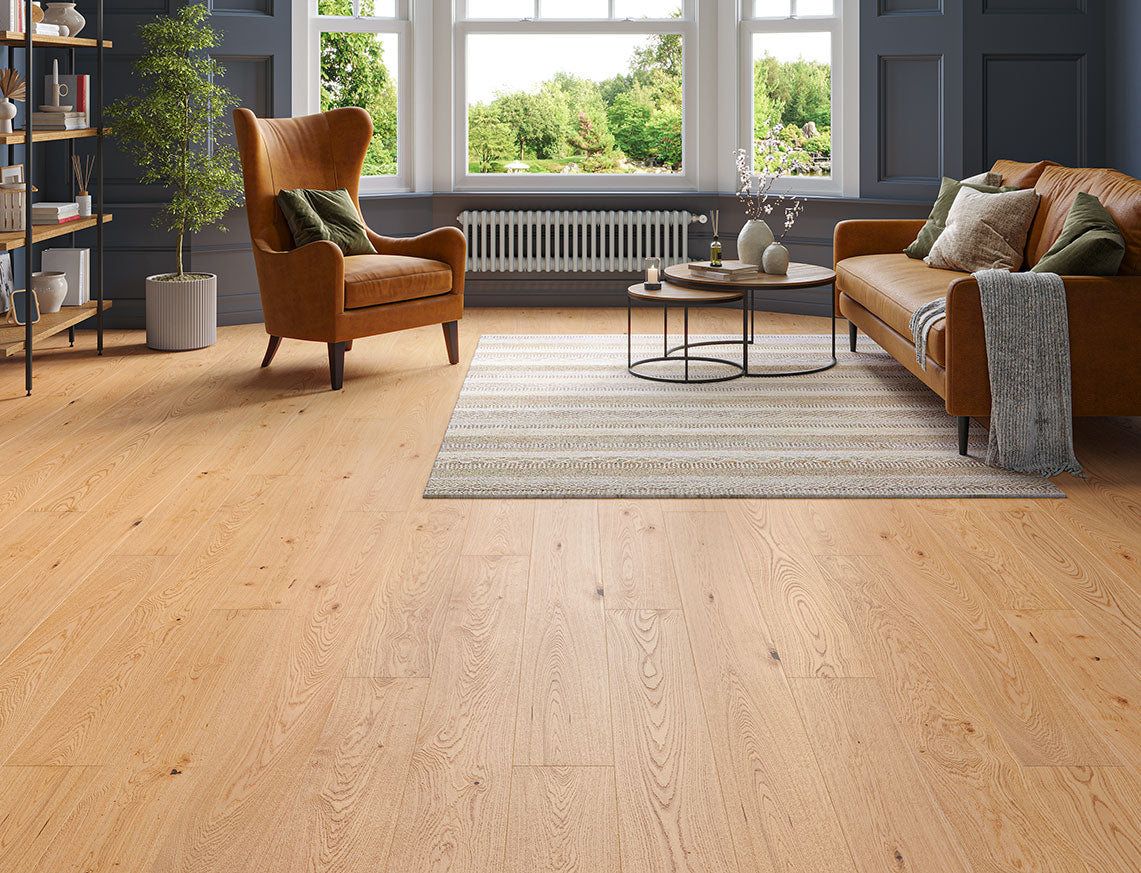
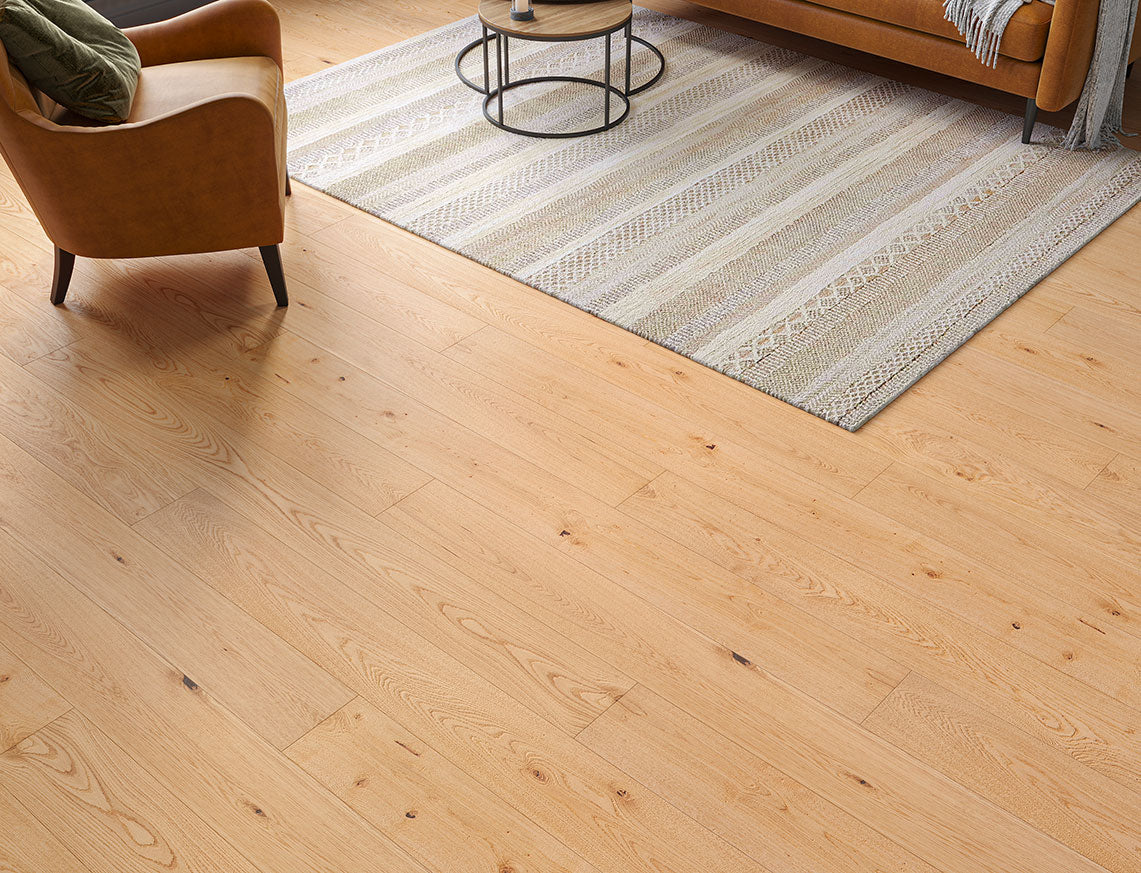
Every floor in this collection is suited to those conditions. Engineered oak for a genuine wood surface that stays stable over heating, laminate for maximum scratch resistance, and vinyl where the floor needs to shrug off anything at all.
Free A5 samples on every floor, delivered next-day, so you can hold them against your units and worktop before you commit.
Three things decide it. How the floor copes with moisture, how it handles traffic, and whether it can live over underfloor heating. Get those right and the choice comes down to colour and pattern.
The one thing we would steer you away from is solid oak. It moves too much with changes in humidity and heat, and a kitchen offers plenty of both. Where solid wood cups or gaps, an engineered board stays put.
The three sensible options
Engineered oak
Laminate
LVT / SPC
Real wood surface
Yes
No
No
Handles spills
Wipe promptly
Wipe promptly
Waterproof
Scratch resistance
Moderate
Very high
High
Underfloor heating
Yes
Most
Yes
Can be refinished
Yes
No
No
Choose lacquered over oiled
If you go for engineered oak, a lacquered finish gives a harder, more sealed surface that copes better with spills than an oiled one. Oiled floors look softer and can be spot-repaired, but they need more attention in a kitchen.
Wear layer matters more in a kitchen
If the kitchen is the busiest room in your house, and in most homes it is, choose a thicker wear layer than you would for a bedroom. A 4mm or greater oak surface takes more punishment and allows more sandings over the life of the floor.
The same principle applies to vinyl and laminate, where a thicker protective overlay resists scuffing for longer. The specification on every product page lists it.
Colour and pattern in a kitchen
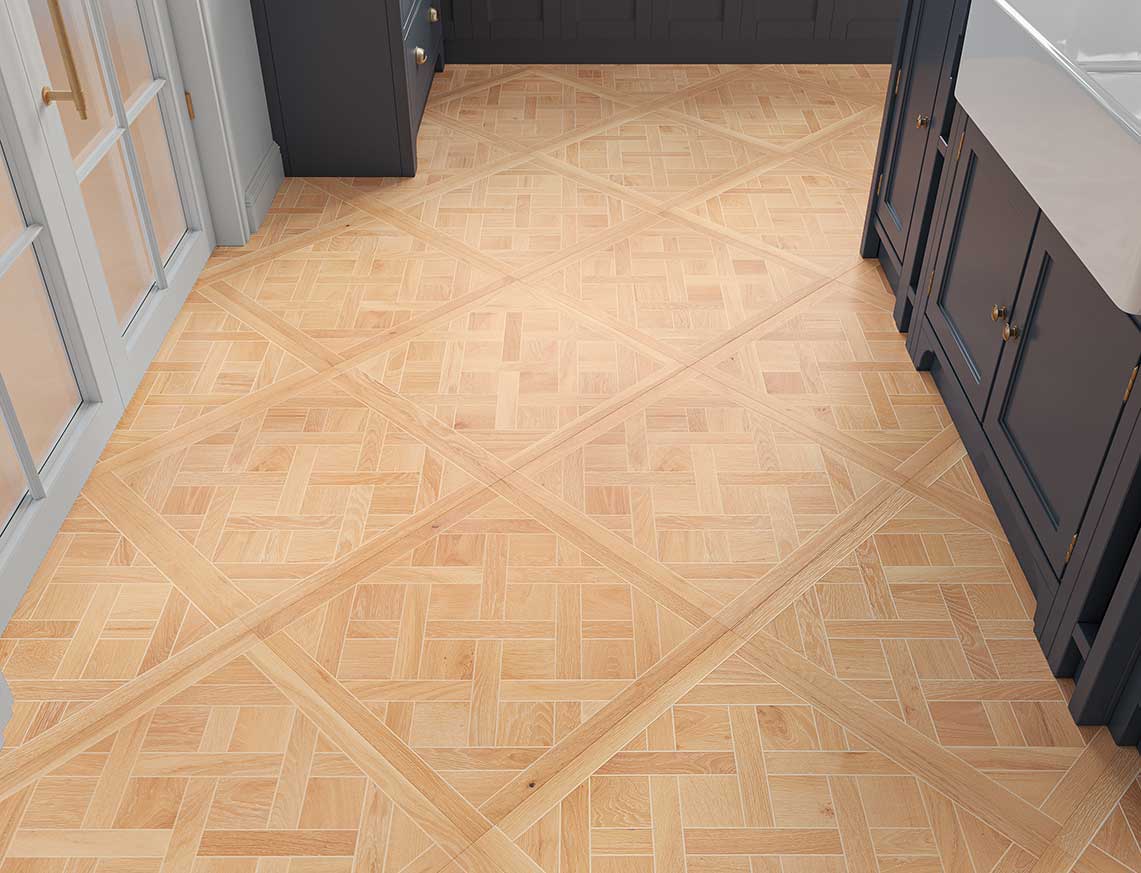
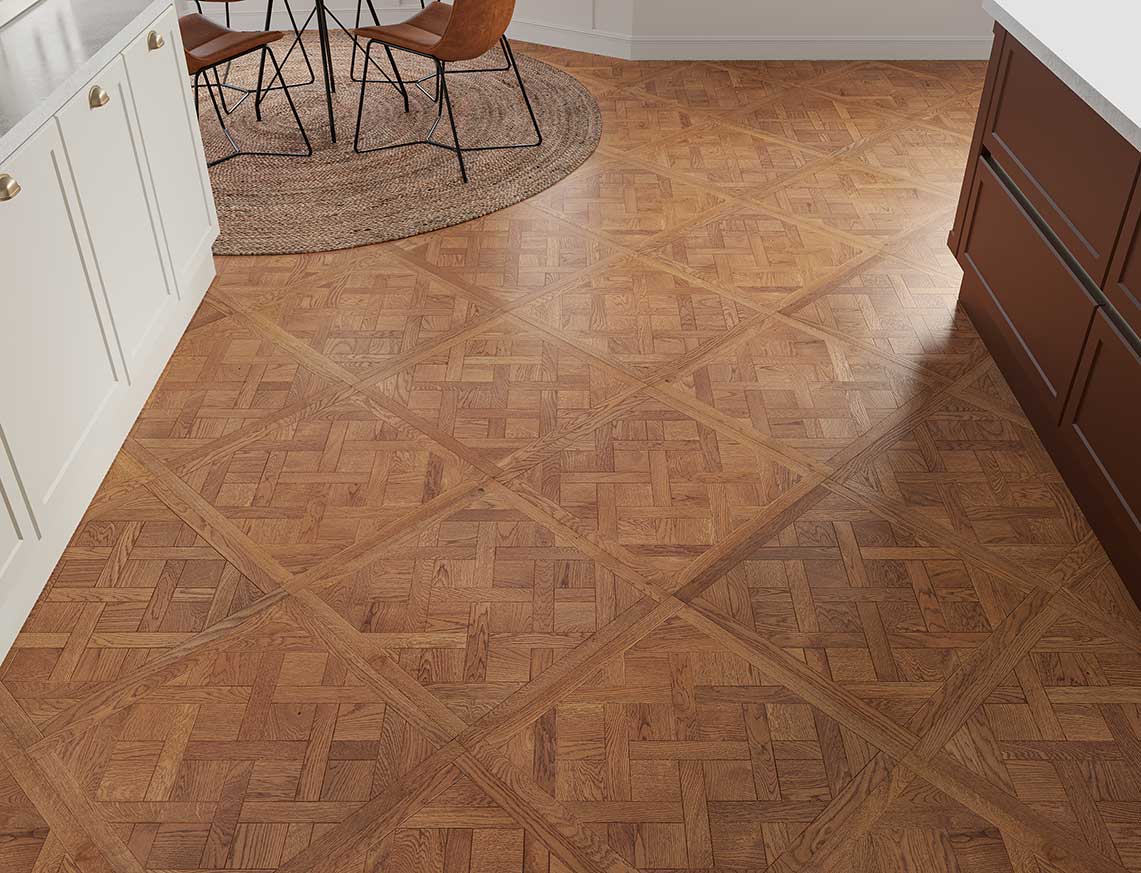
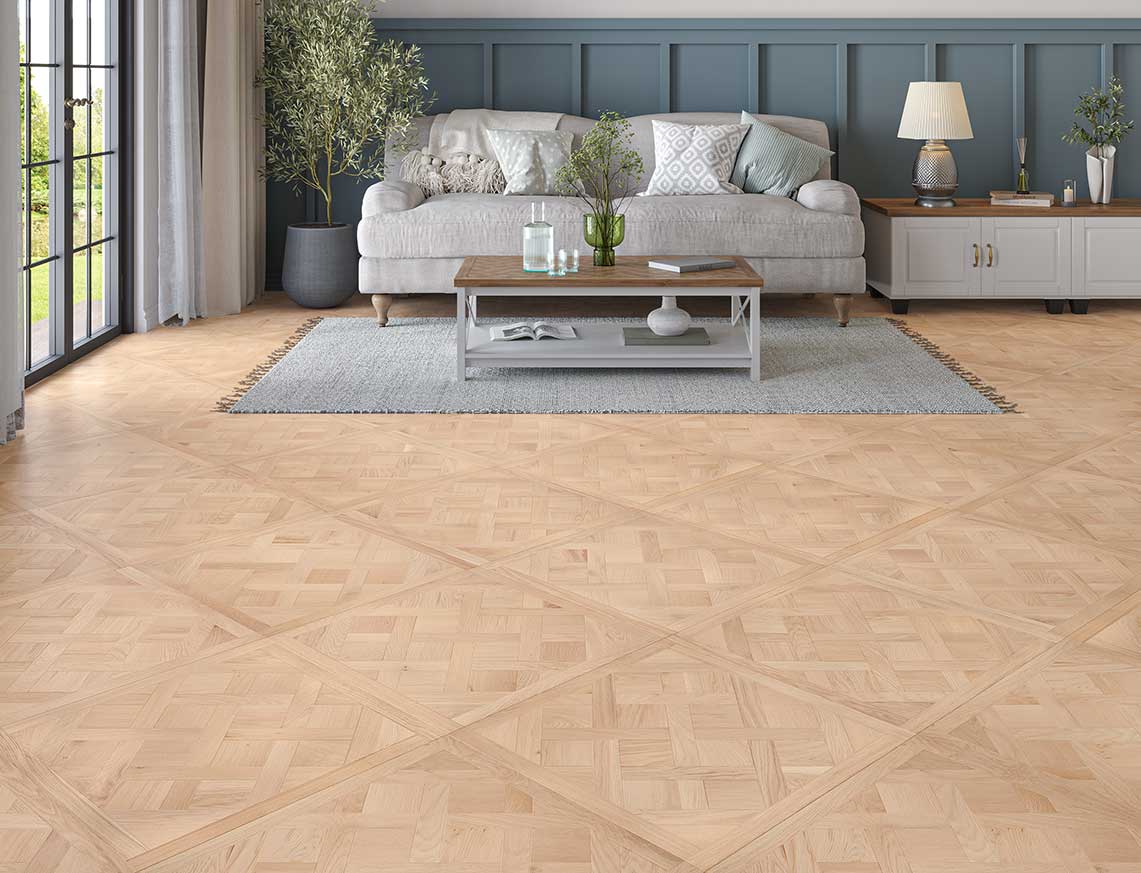
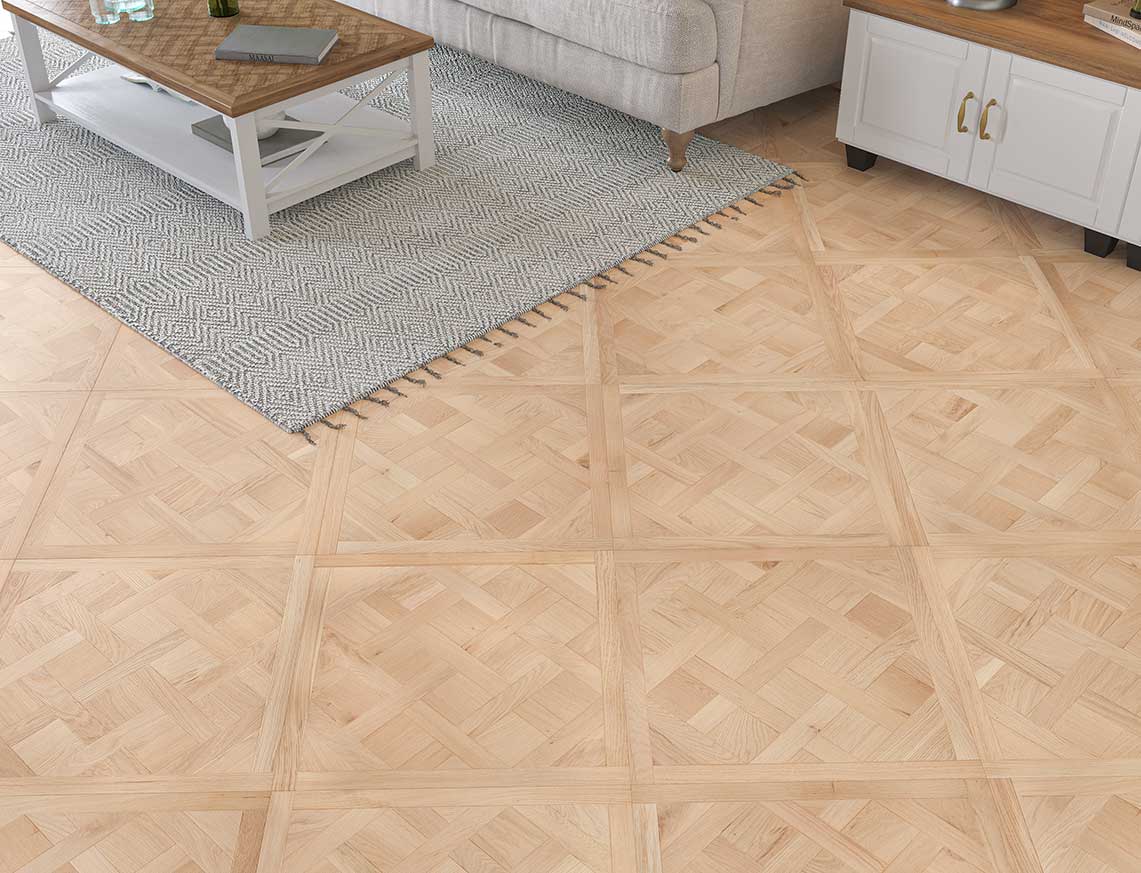
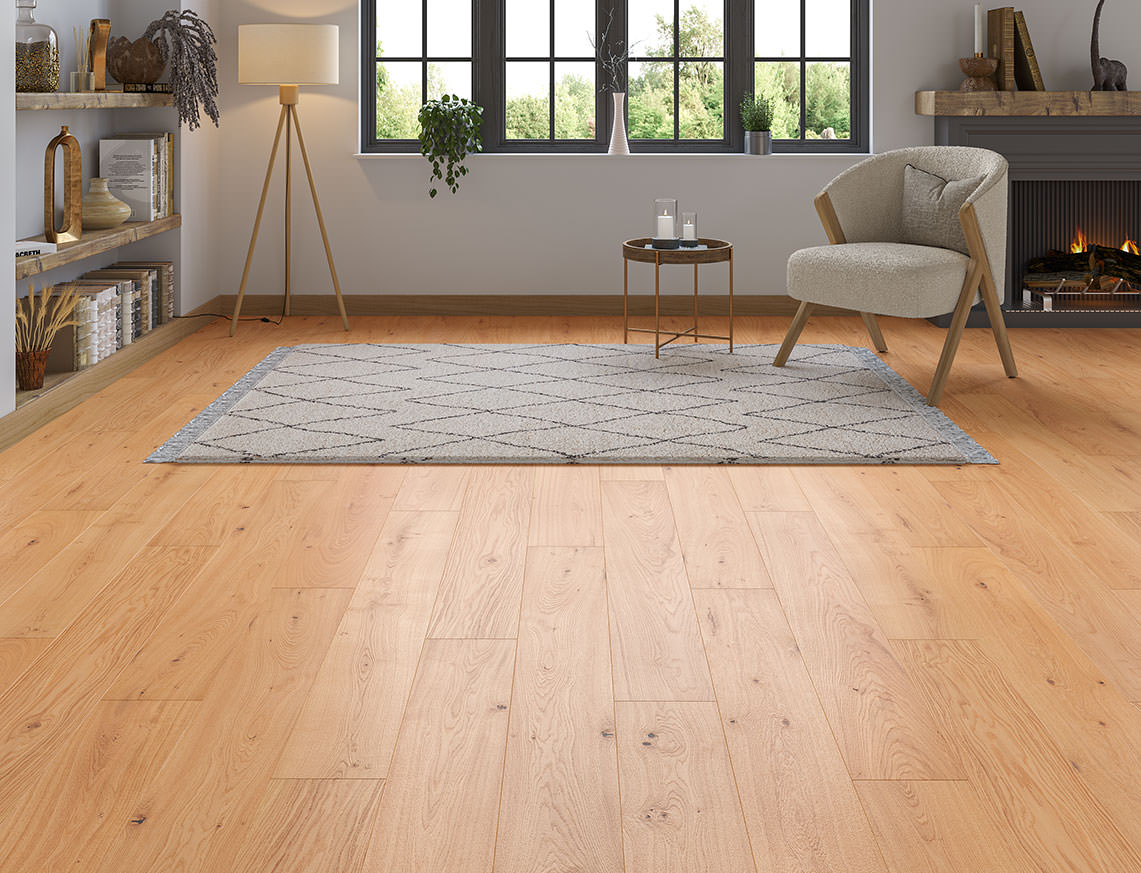
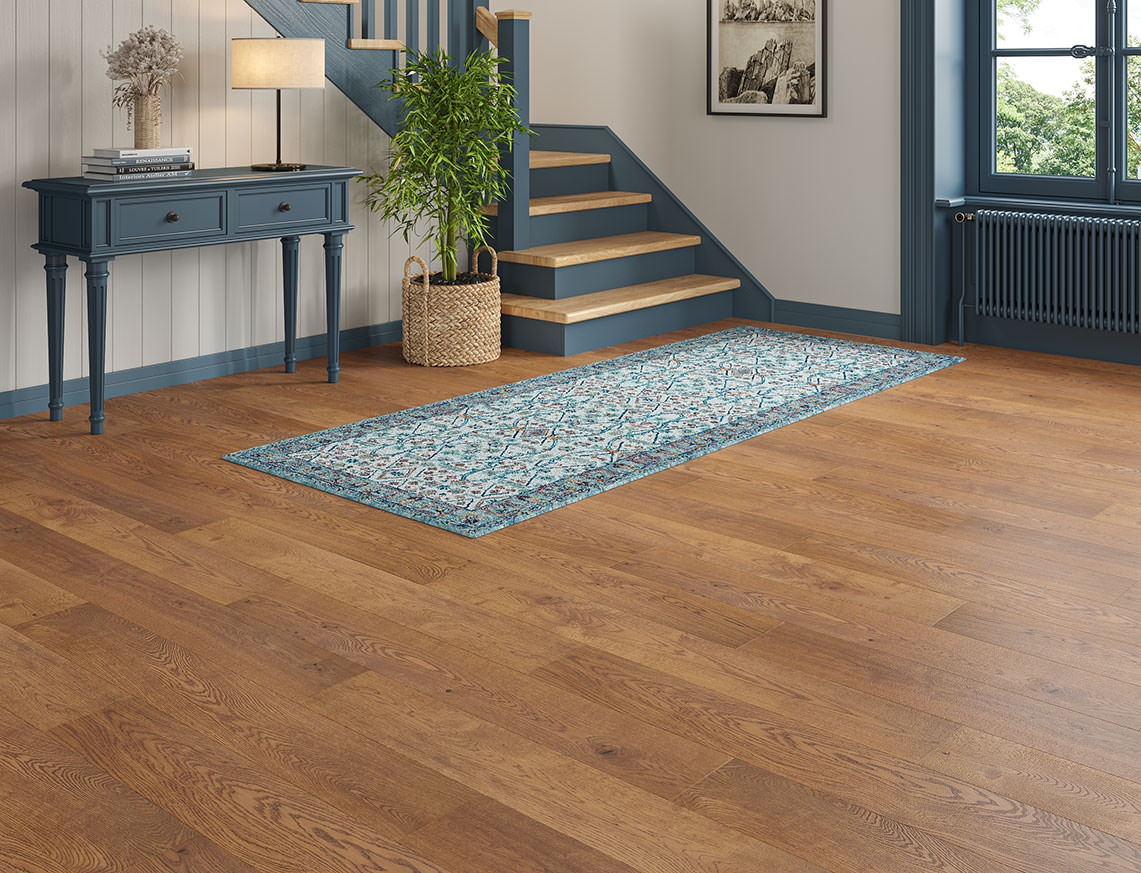
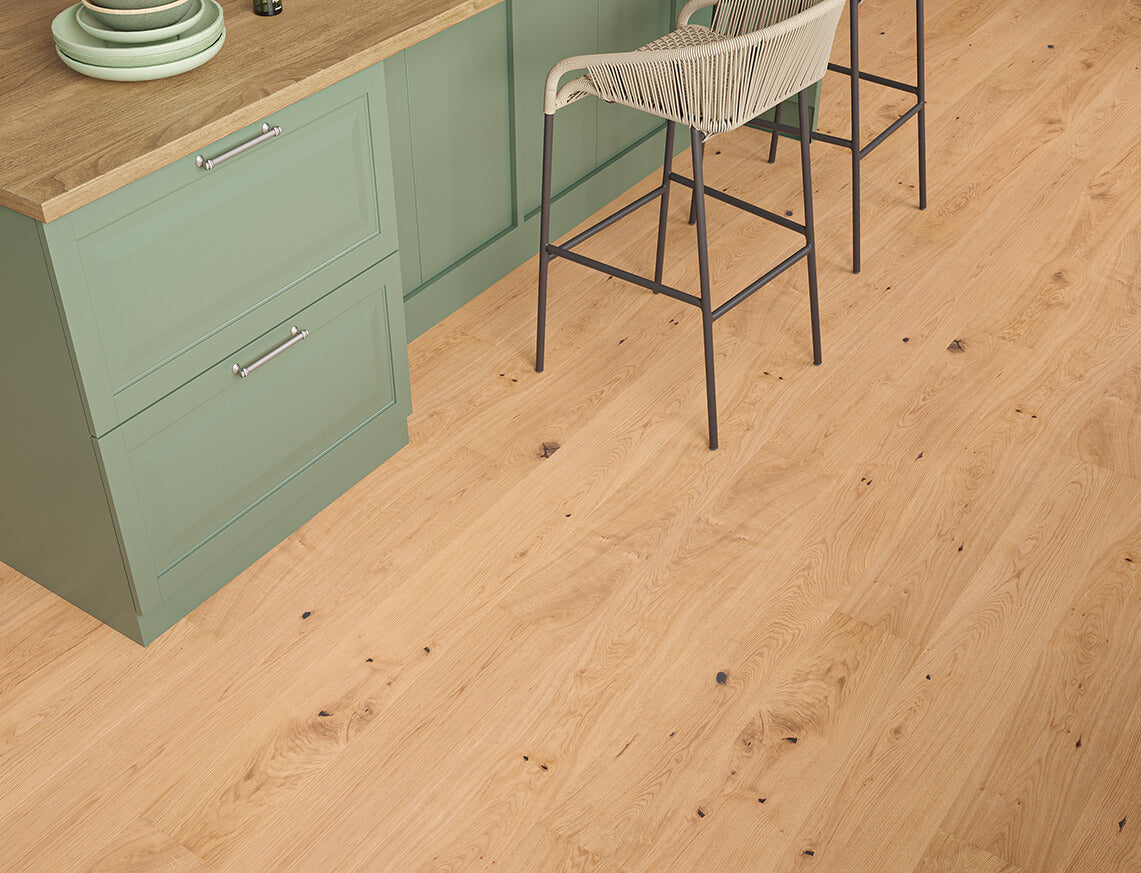
Hold your sample against the units, the worktop and the doors before deciding. A floor that works against a white kitchen will read quite differently against navy or oak cabinetry, and the units are usually the thing you are not replacing.
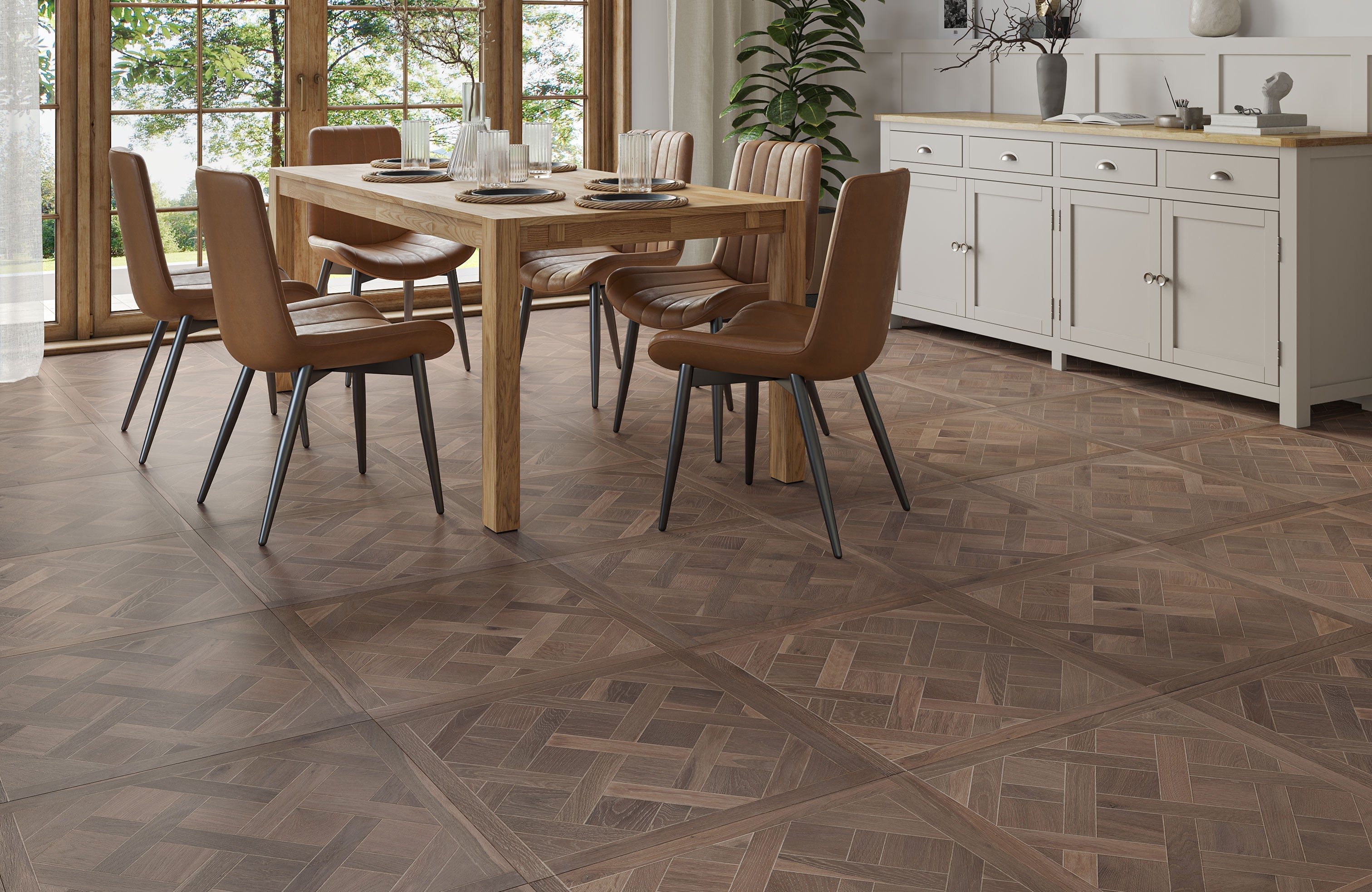
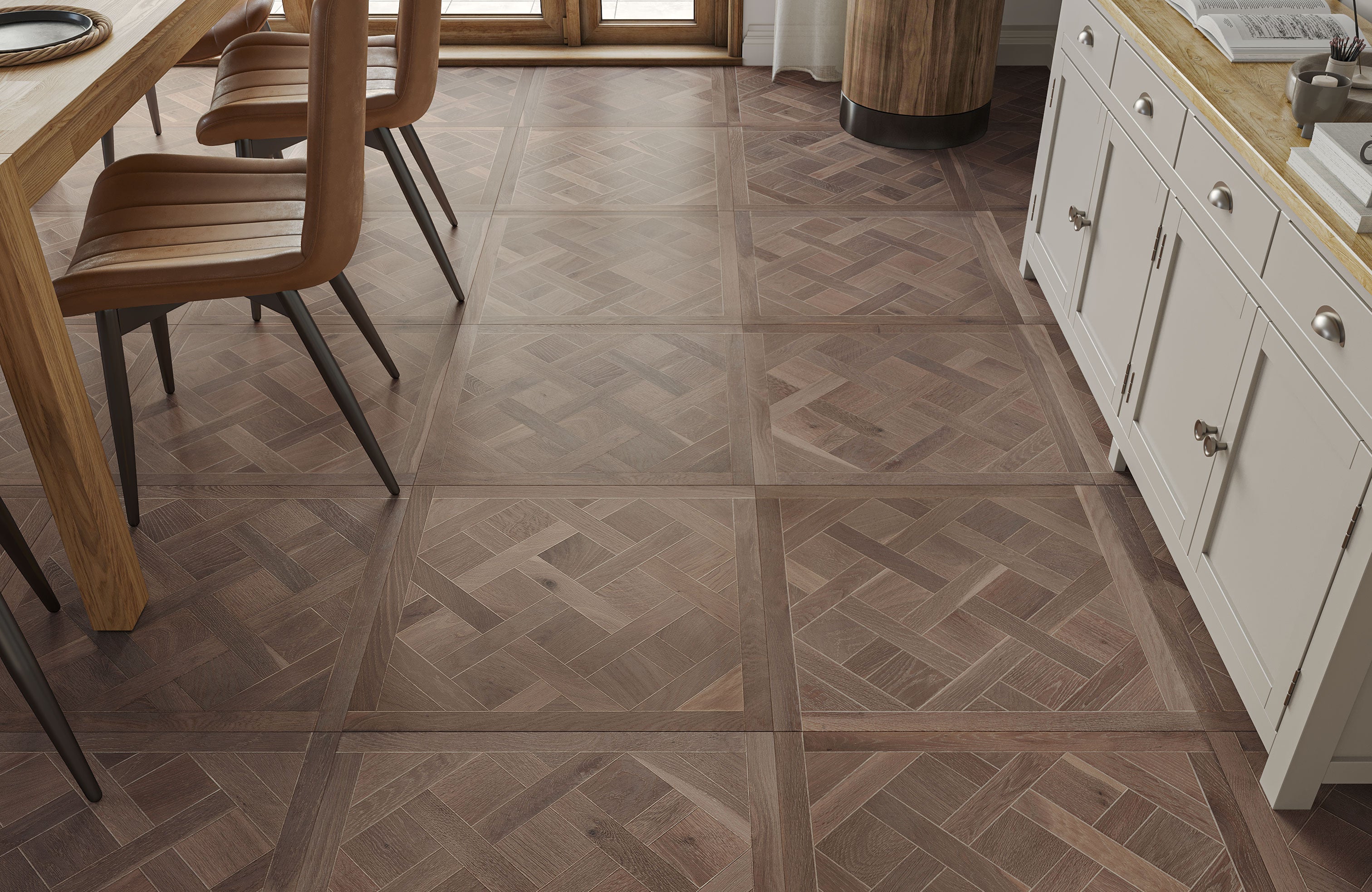
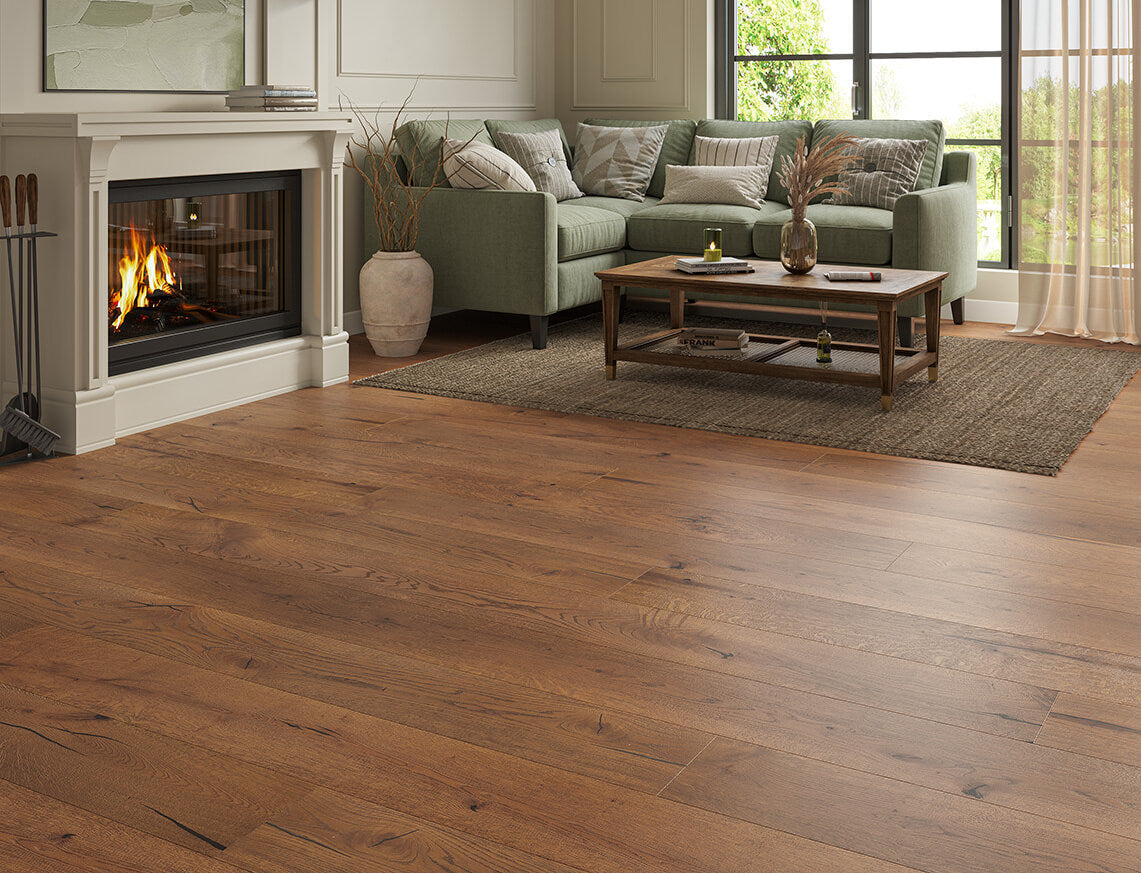
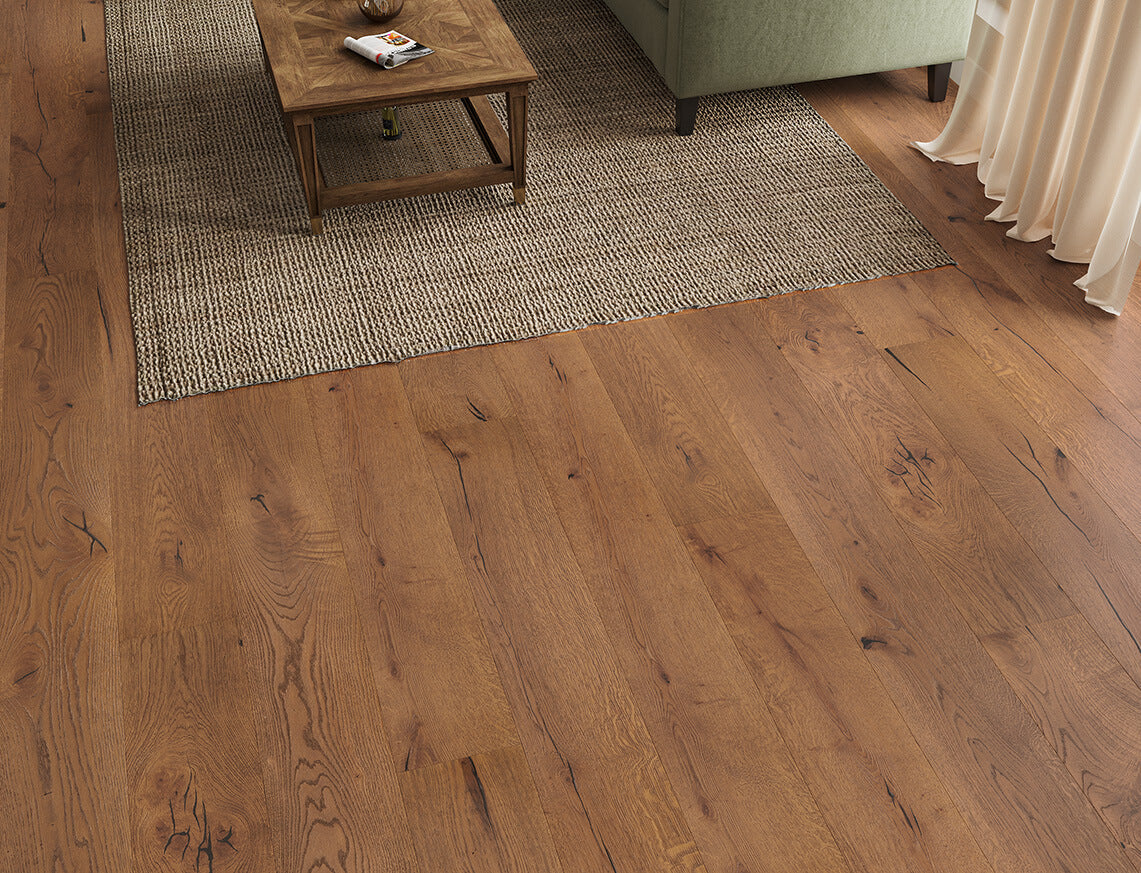
Mid-tone greys and browns hide crumbs and footprints better than either very pale or very dark floors, which is worth knowing in a room that gets swept more than any other. Herringbone works particularly well in open-plan kitchen-diners, where the pattern helps define the space.
Fitting a kitchen floor
Decide early whether the floor runs under the units or up to them. Running it underneath looks better and means the kitchen can be changed later without relaying the floor, but it costs more in material. Up to the units saves material but ties the two together.
Leave the expansion gap at every fixed object, including the units and any pipework. A floor trapped beneath a fitted kitchen cannot move, and a floor that cannot move will lift. Our fitting guides cover this in more detail.
How much will you need?
Measure the full floor including under the units if the floor is running beneath them, and into any doorways. The flooring calculator on every product page works out how many packs you need, including the allowance for cuts.
You will also need underlay unless it is pre-attached, beading for the perimeter, and threshold profiles where the kitchen meets another room.
We would not advise it, particularly over underfloor heating. Solid oak moves with changes in humidity and temperature, and a kitchen has both. Engineered oak gives the same appearance with far more stability.
Is laminate waterproof enough for a kitchen?
Laminate is water-resistant rather than waterproof. It is fine in a kitchen where spills are wiped promptly, but standing water will damage the core over time. If you want genuine waterproofing, choose vinyl.
Should the floor go under the kitchen units?
If budget allows, yes. It means you can change the kitchen later without relaying the floor, and it avoids an awkward edge along the plinth line.
Which colour hides crumbs best?
Mid-tone greys and browns. Very pale floors show crumbs and dark hair; very dark floors show dust and footprints.
Can kitchen flooring go over underfloor heating?
Engineered oak, vinyl and most laminates can. Suitability is stated on every product page. Follow the manufacturer's temperature limit and bring the heating up gradually after fitting.