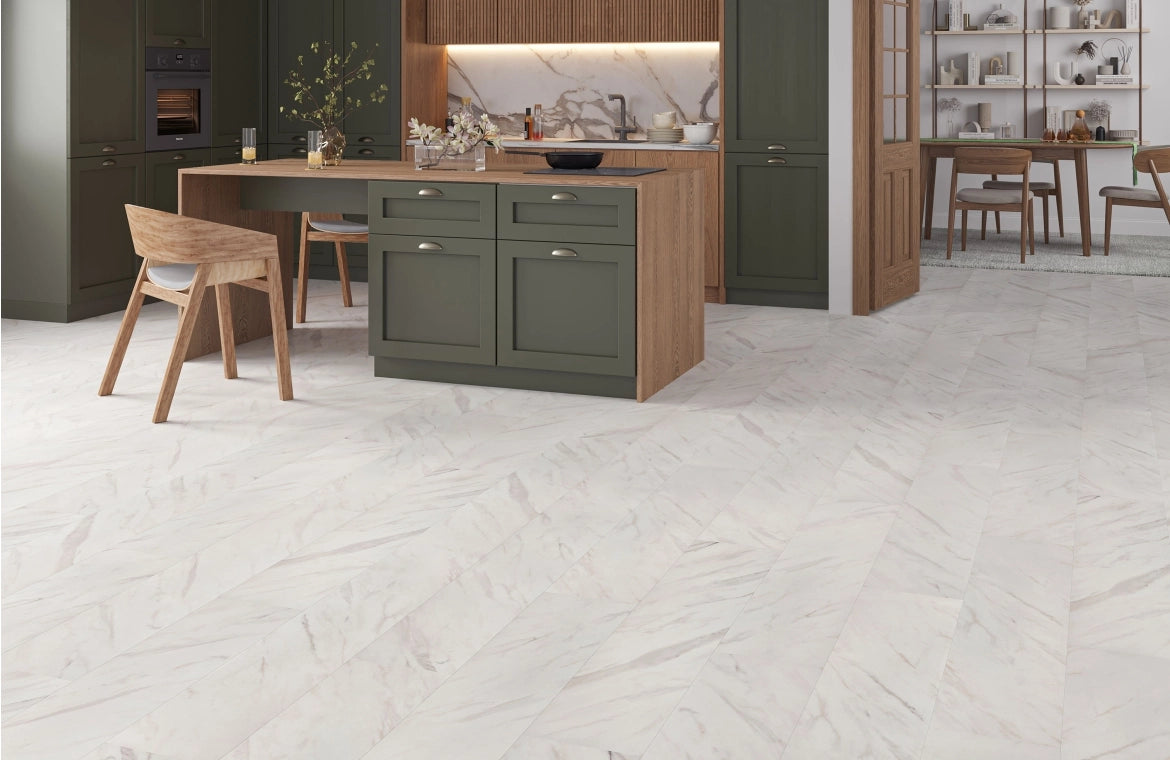
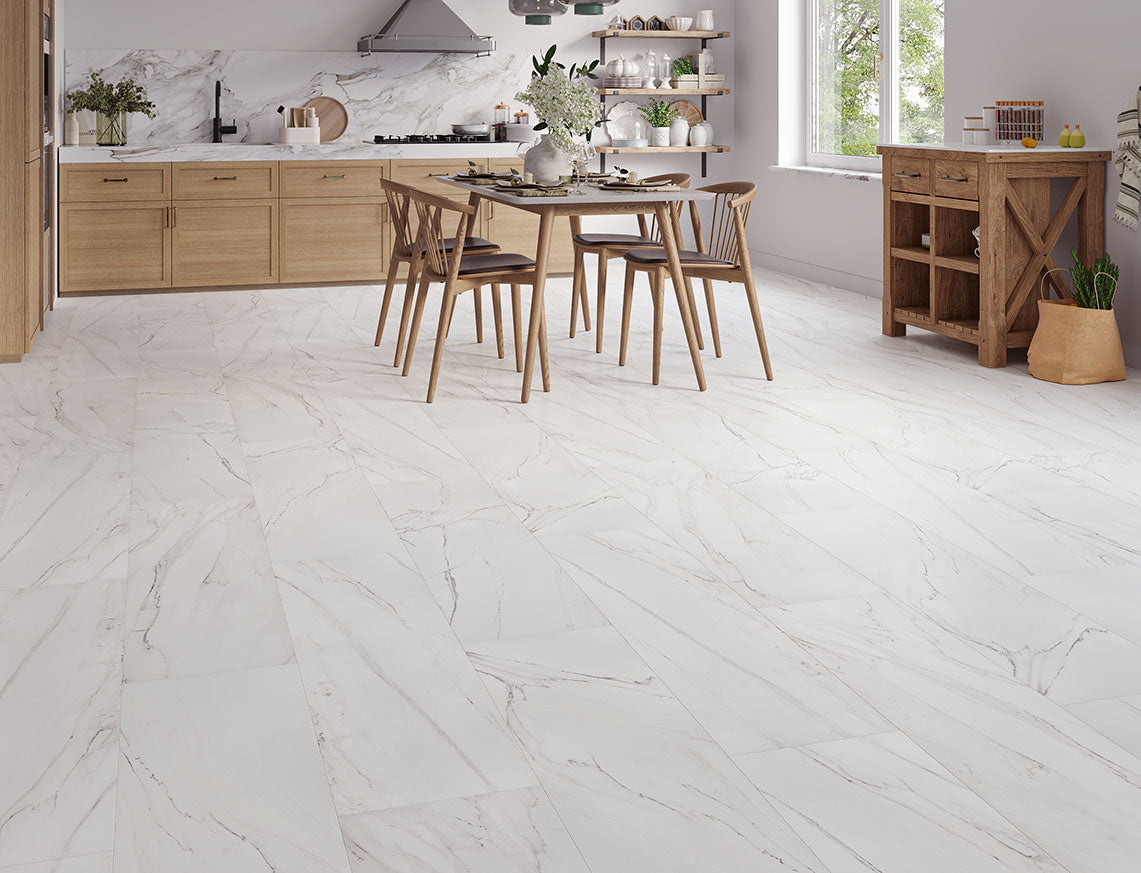
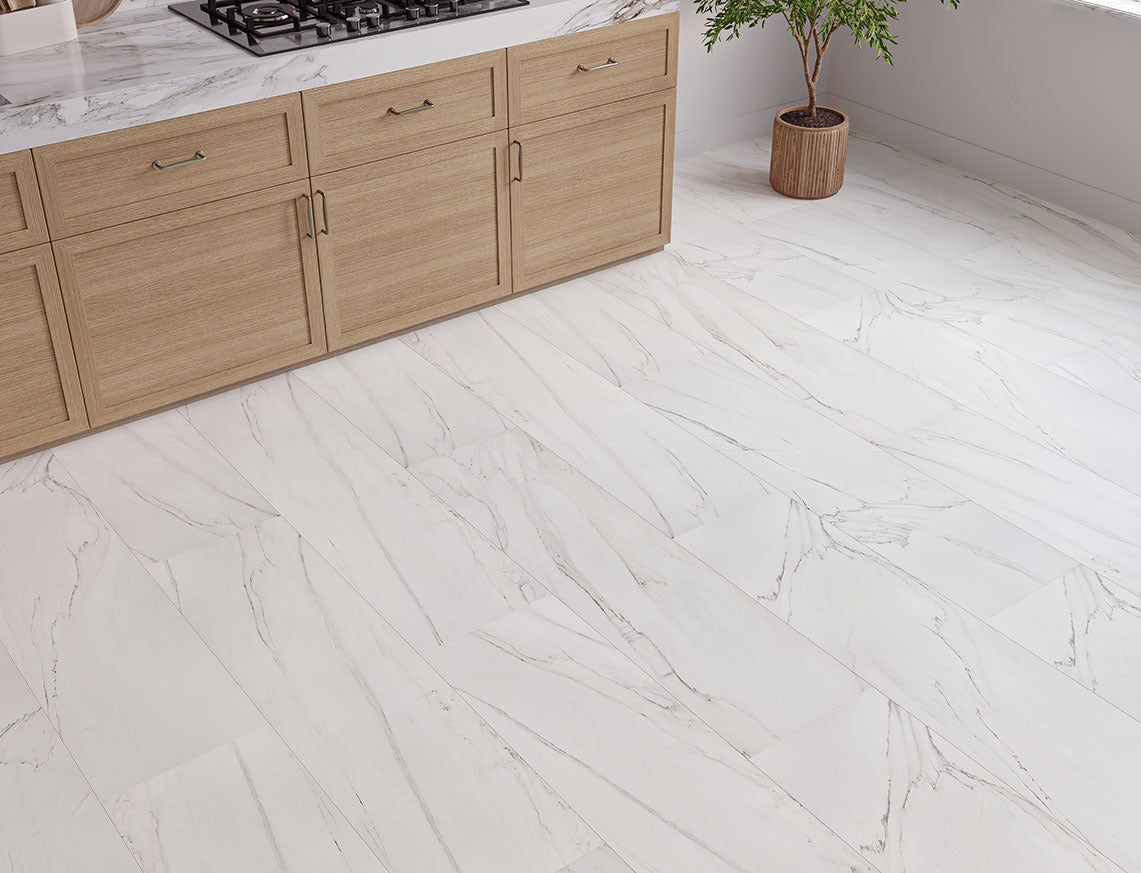
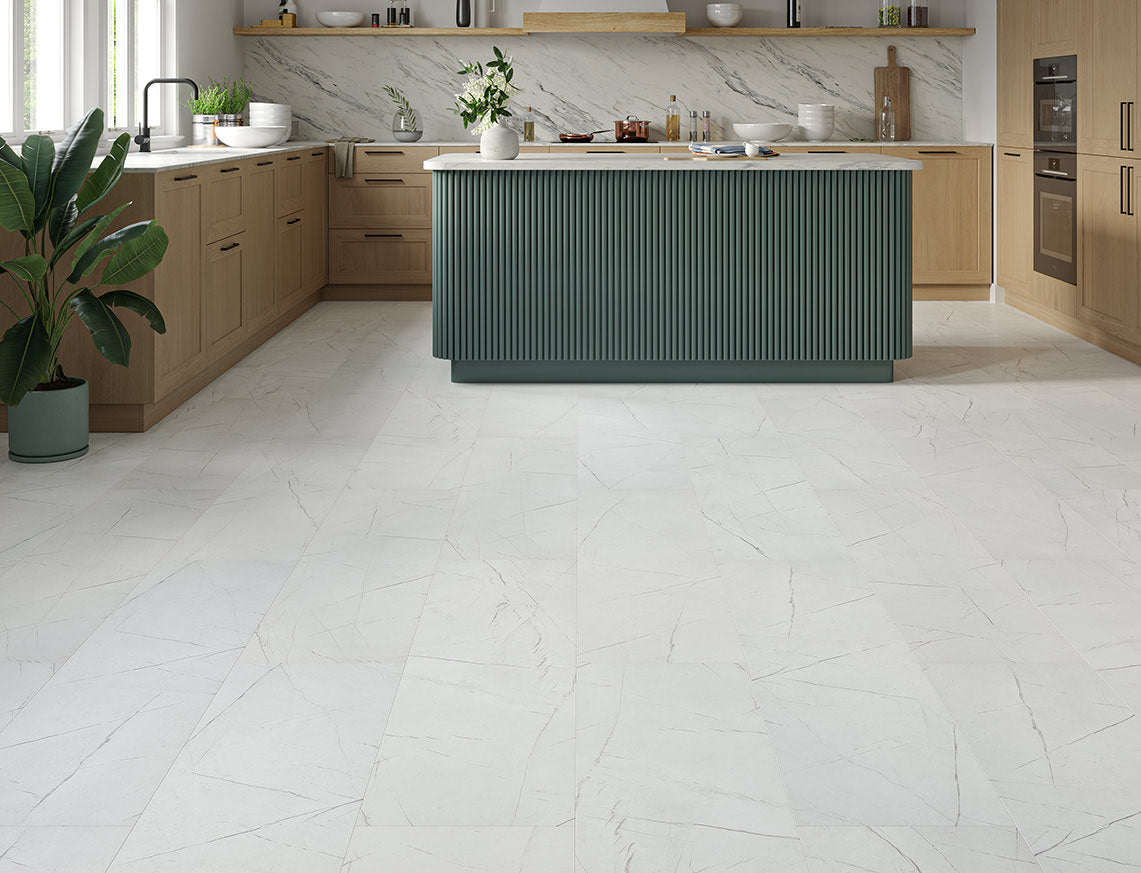
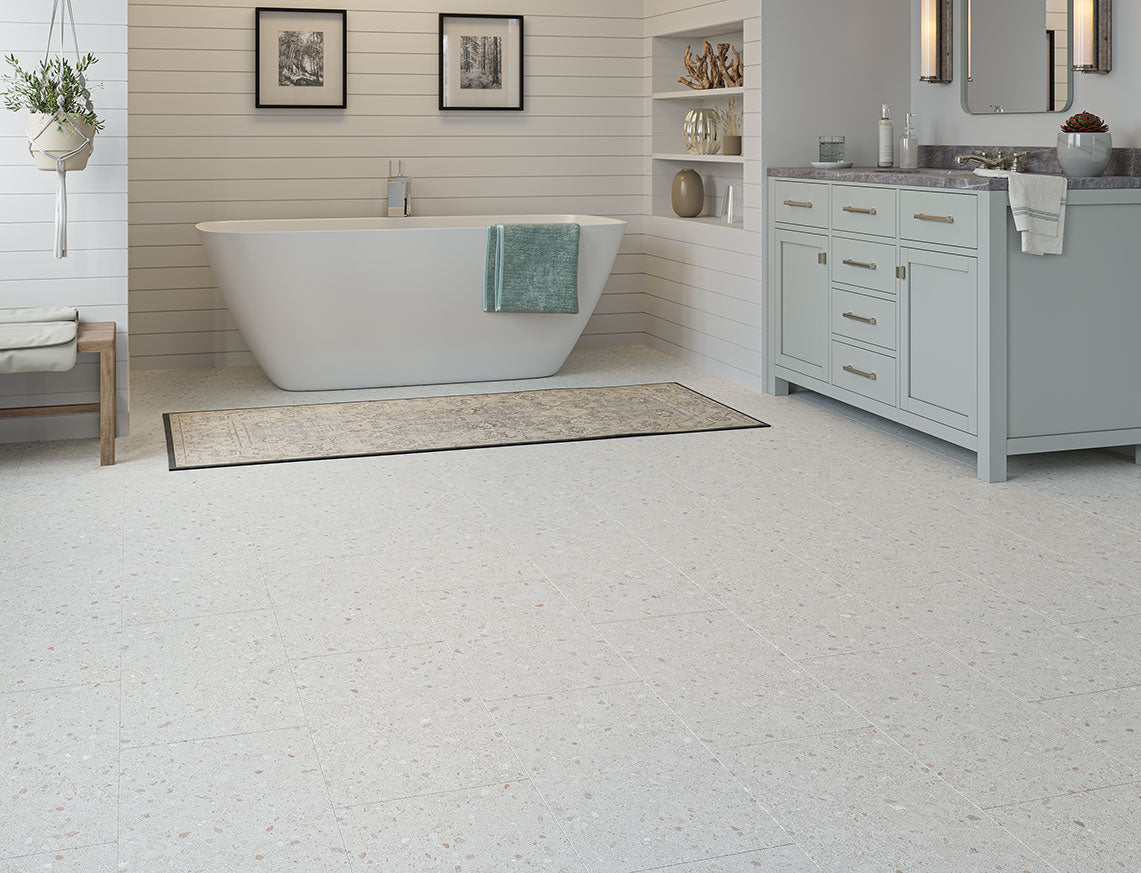
Genuinely white floors, in marble, terrazzo and stone designs rather than timber. This is the collection for a bright, hard-floor look, particularly in kitchens and bathrooms where a stone finish suits the room but the cost and coldness of real stone do not.
All of it is vinyl or laminate, which means the designs are printed and embossed rather than natural. That brings practical advantages: warmer underfoot than stone, quieter, easier to fit, and in the case of vinyl, fully waterproof.
Free A5 samples, delivered next-day, so you can see the pattern and texture in your own light.
Worth being clear about the difference, since the two are easily confused.
This collection covers floors that are genuinely white: marble veining, terrazzo speckle, distressed stone. Our white-washed collection covers oak with white pigment worked into the grain, which is a wood floor that happens to be pale.
If you want a floor that reads as timber, go there. If you want a floor that reads as stone, you are in the right place.
The designs
Marble
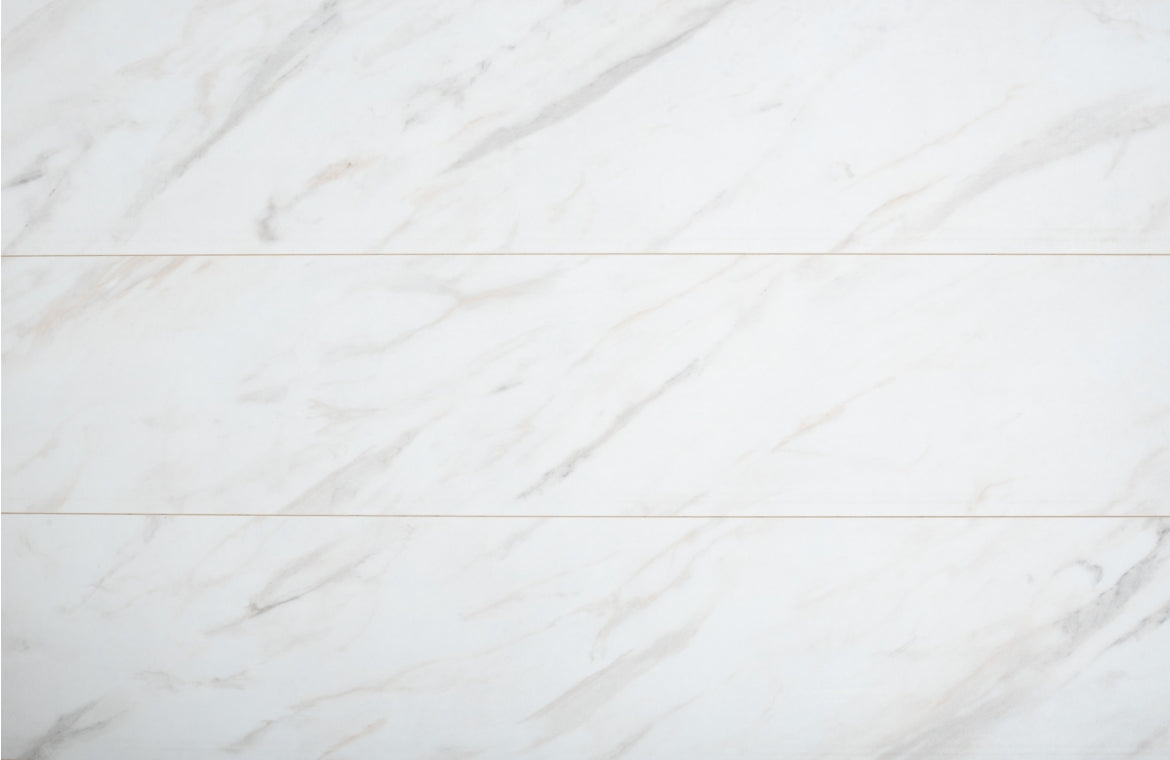
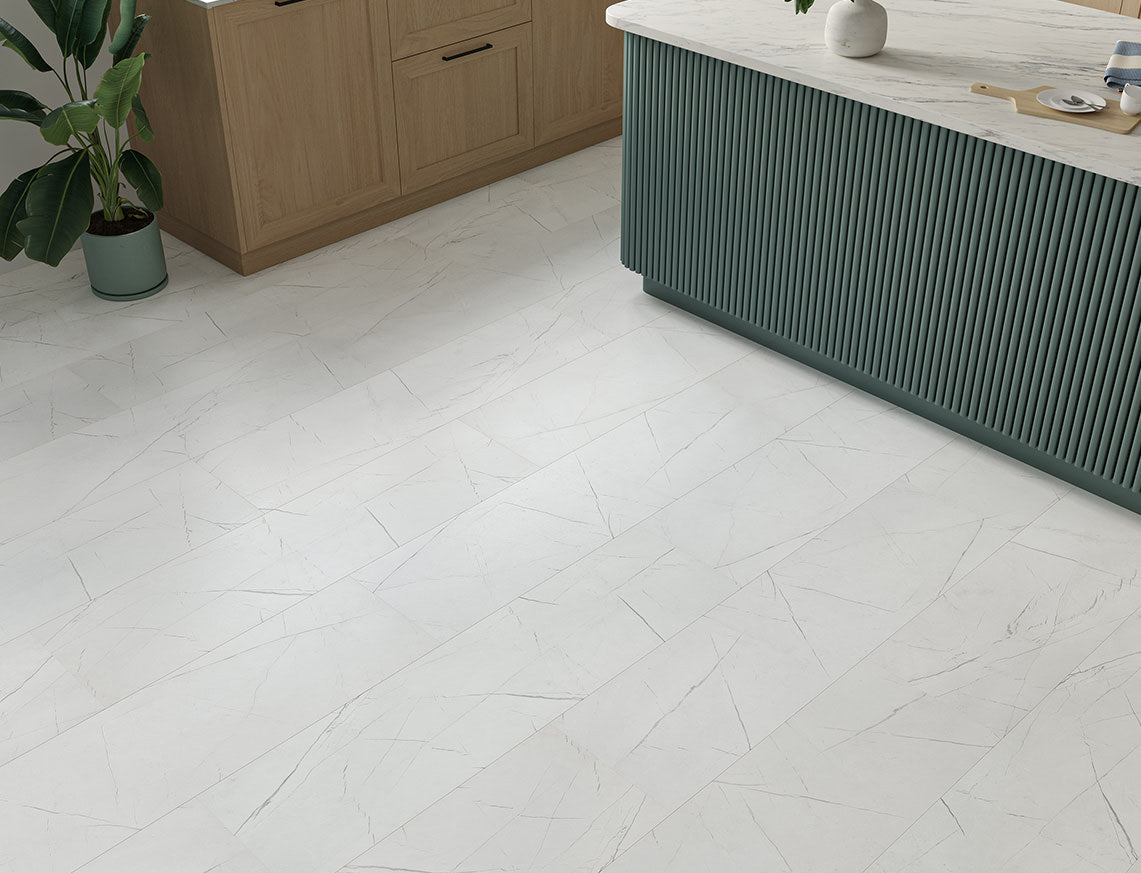
Veined designs giving the look of a marble floor, with the veining running across the tile rather than repeating tightly. The most classical of the group and the one that suits a formal bathroom or a period kitchen.
Terrazzo
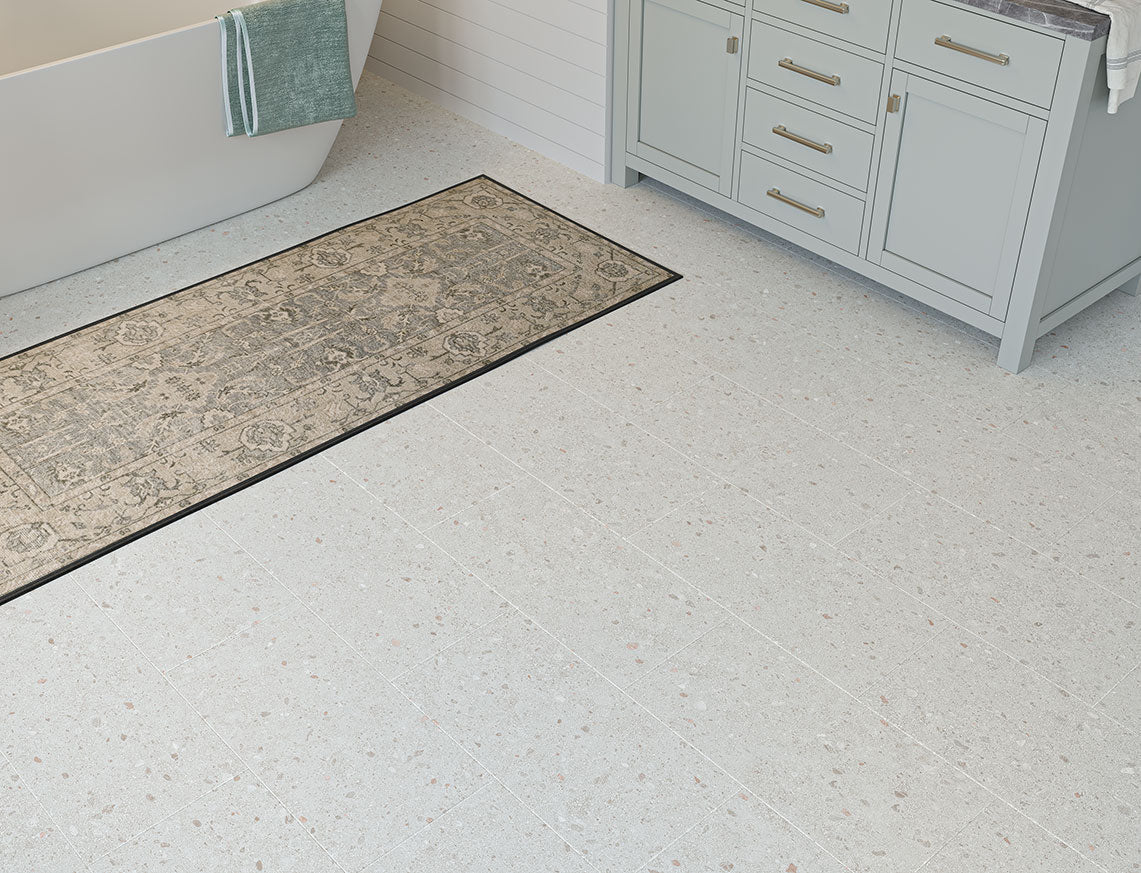
Speckled aggregate designs, contemporary in feel and rather more forgiving day to day than a plain white floor, since the speckle disguises small marks.
Distressed and weathered stone
Softer, more textural designs with tonal variation across the tile. Less crisp than a marble, and easier to live with in a room that gets real use.
Warmer and quieter than the real thing
Vinyl and laminate do not draw heat from your feet the way stone and ceramic do, so a tile-effect floor feels noticeably warmer even without underfloor heating. They are also considerably quieter underfoot, which matters in a kitchen or bathroom used early in the morning.
What a white floor does to a room
It maximises light. A white floor reflects more than any other colour, which makes it the strongest option for a small bathroom, an internal room with no window, or anywhere that feels dark and needs opening up.
It also reads as clean and contemporary, which is why white floors appear so often in bathroom and kitchen schemes. The tile-effect designs reinforce that, since a stone floor carries associations of a hard-working, easy-to-clean room.
The honest consideration is that a plain white floor shows marks. Terrazzo and distressed designs disguise this far better than a clean marble, so the pattern matters as much as the colour if the room gets heavy use.
What white floors pair with
Almost any wall colour. A white floor is the most neutral base there is, which gives you complete freedom above it.
Darker units and vanities gain real definition against it, and the contrast is what stops an all-white room feeling flat.
Warm timber and brass stop a white floor reading clinically. Some warmth elsewhere in the room usually improves it.
White walls and white units can be striking but risk feeling stark. Texture, in the floor pattern or elsewhere, is what makes an all-white scheme work.
Judging a white floor properly
The pattern scale is what a sample cannot show you. A marble vein or a terrazzo speckle reads very differently across a whole floor than on a single A5 piece, and tile-effect designs repeat in a way that becomes apparent only at scale.
Order a free sample for the colour, texture and warmth, and study the room-set photograph on the product page for how the pattern behaves across an area.
White flooring: frequently asked questions
Is white flooring practical?
More than people expect, particularly the terrazzo and distressed designs where the pattern disguises marks. A plain white marble shows more and needs more attention.
What is the difference between white and white-washed flooring?
White flooring is tile-effect vinyl and laminate in stone and marble designs. White-washed is oak with white pigment in the grain, which reads as wood.
Is white flooring suitable for a bathroom?
Vinyl in this collection is fully waterproof, which makes it well suited to bathrooms. Check the material on the product page, since laminate is water-resistant rather than waterproof.
Is it warmer than real tile?
Noticeably. Vinyl and laminate do not conduct heat away from your feet the way stone and ceramic do, so the floor feels warmer even without underfloor heating.
Does white flooring make a room look bigger?
It reflects more light than any other colour, so yes, particularly in a small or windowless room.
Will the pattern repeat noticeably?
All printed designs repeat at some scale. Look at the room-set photograph on the product page to see how it reads across an area rather than on a single tile.
Can I fit it myself?
Click-system vinyl and laminate are designed for competent DIY fitting. The joining method is listed on every product page, and our fitting guides cover the basics.