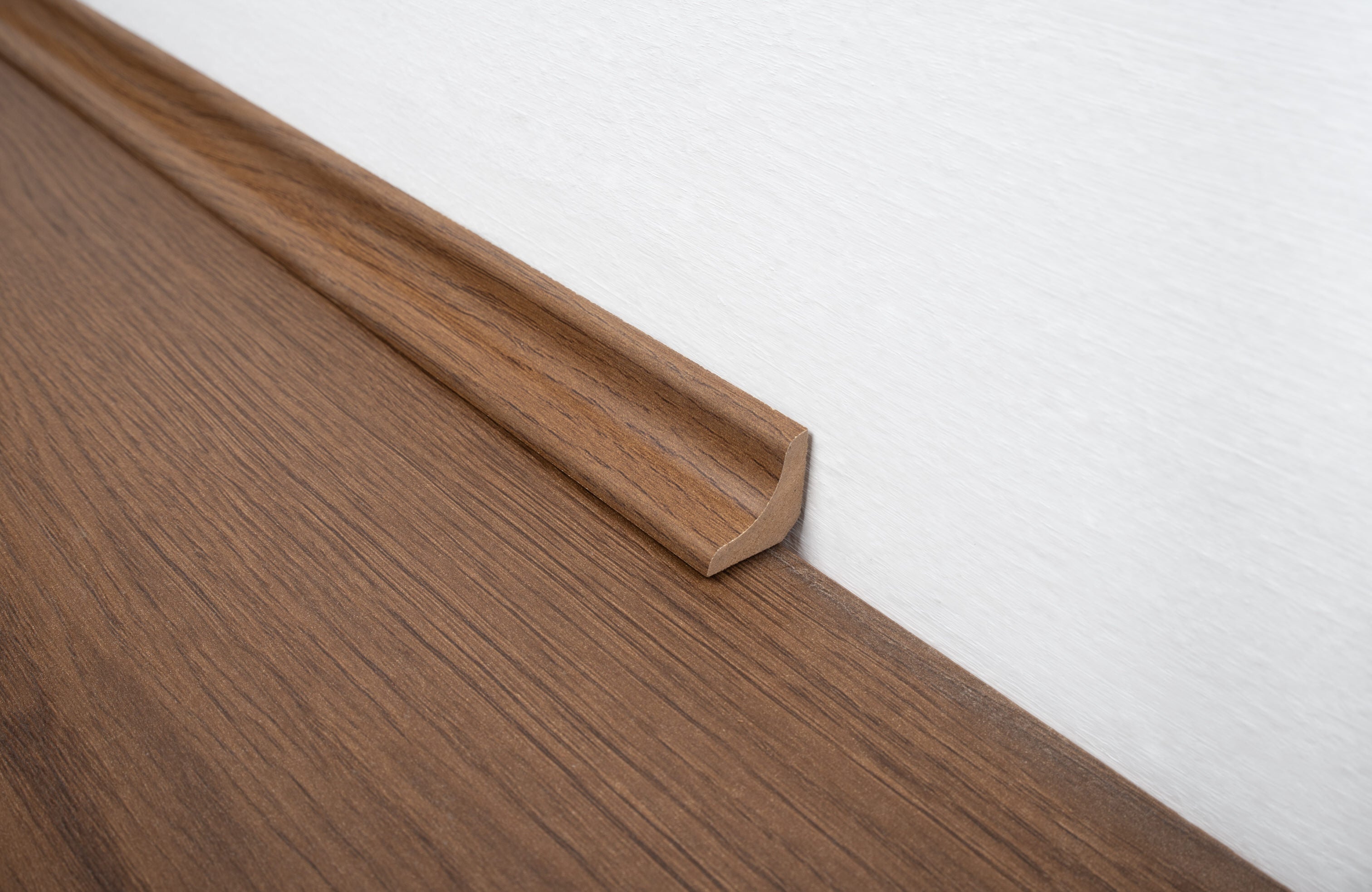
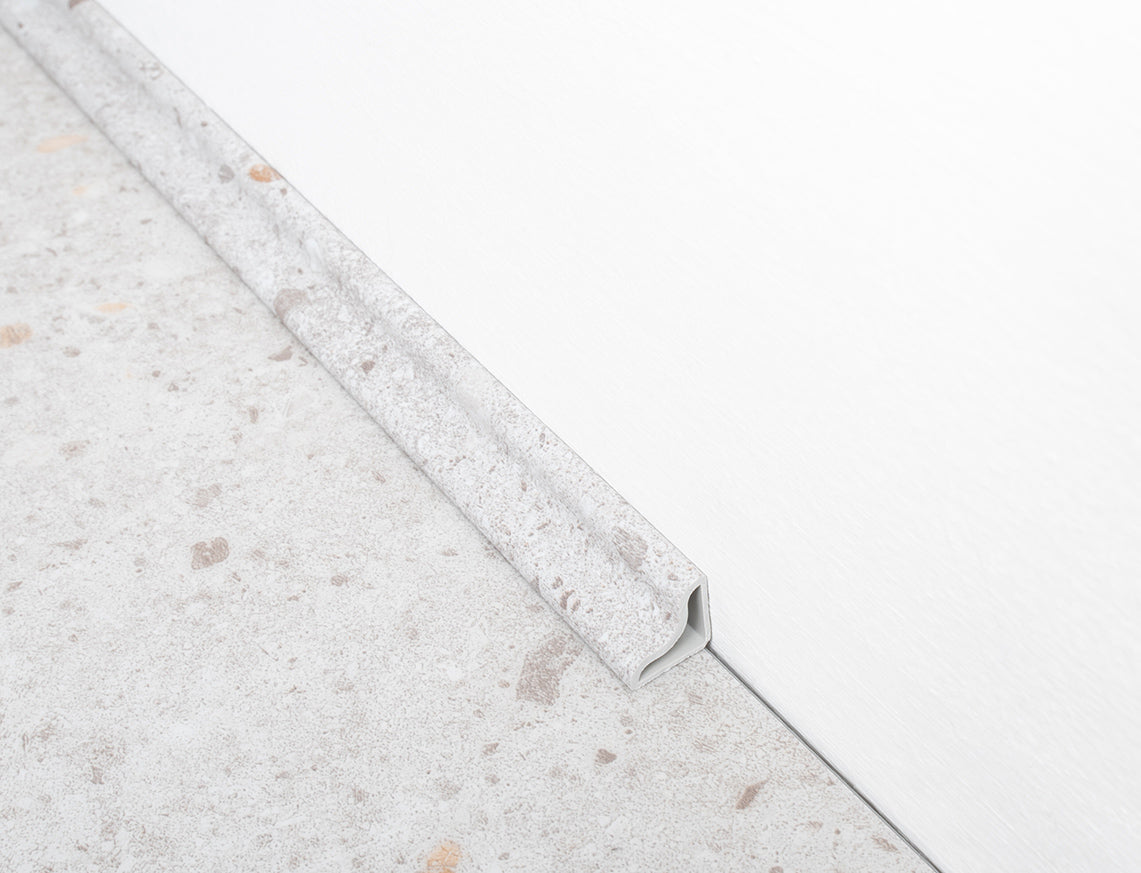
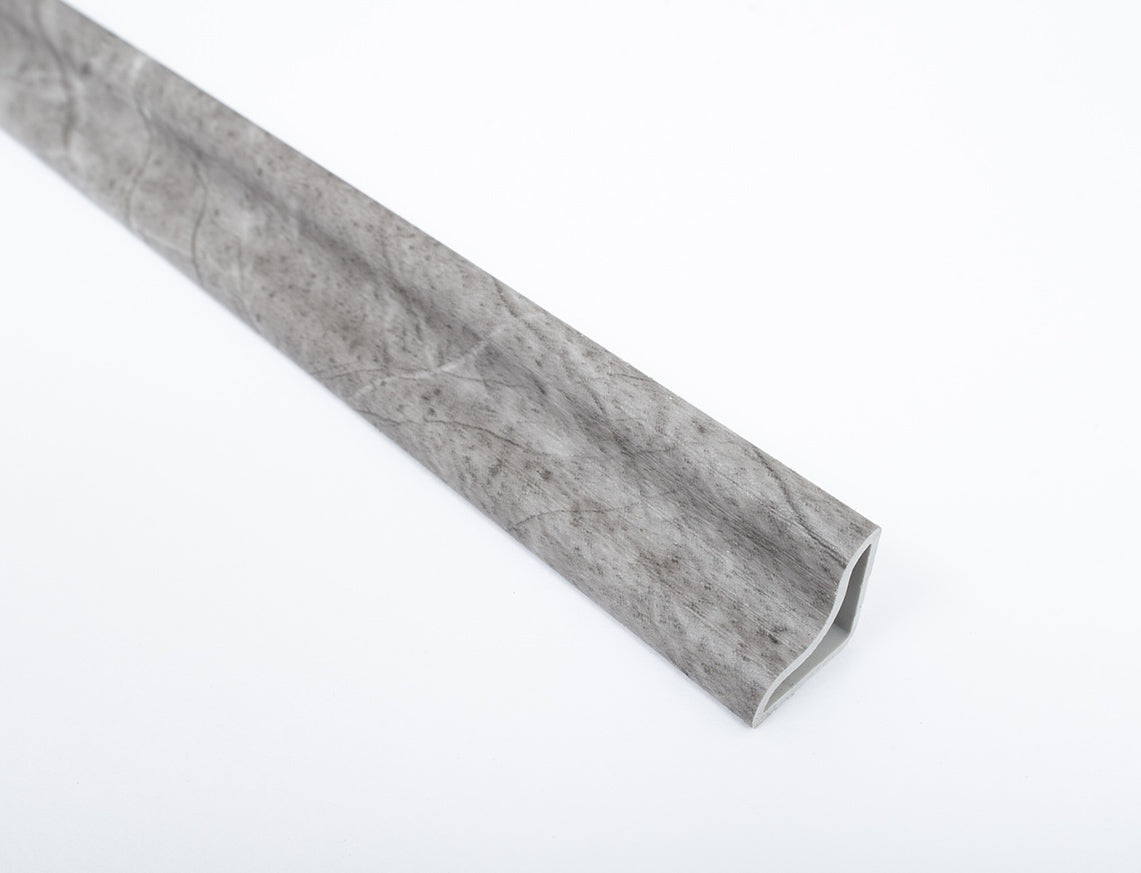
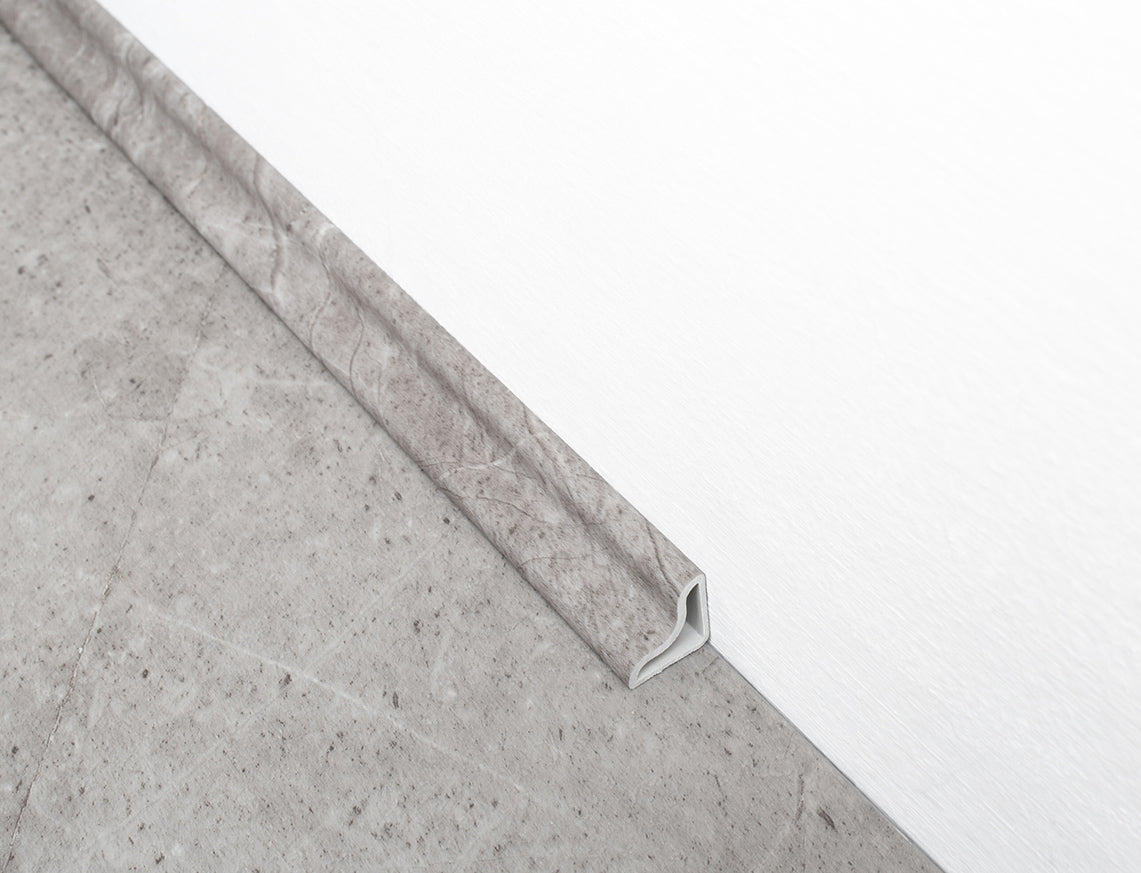
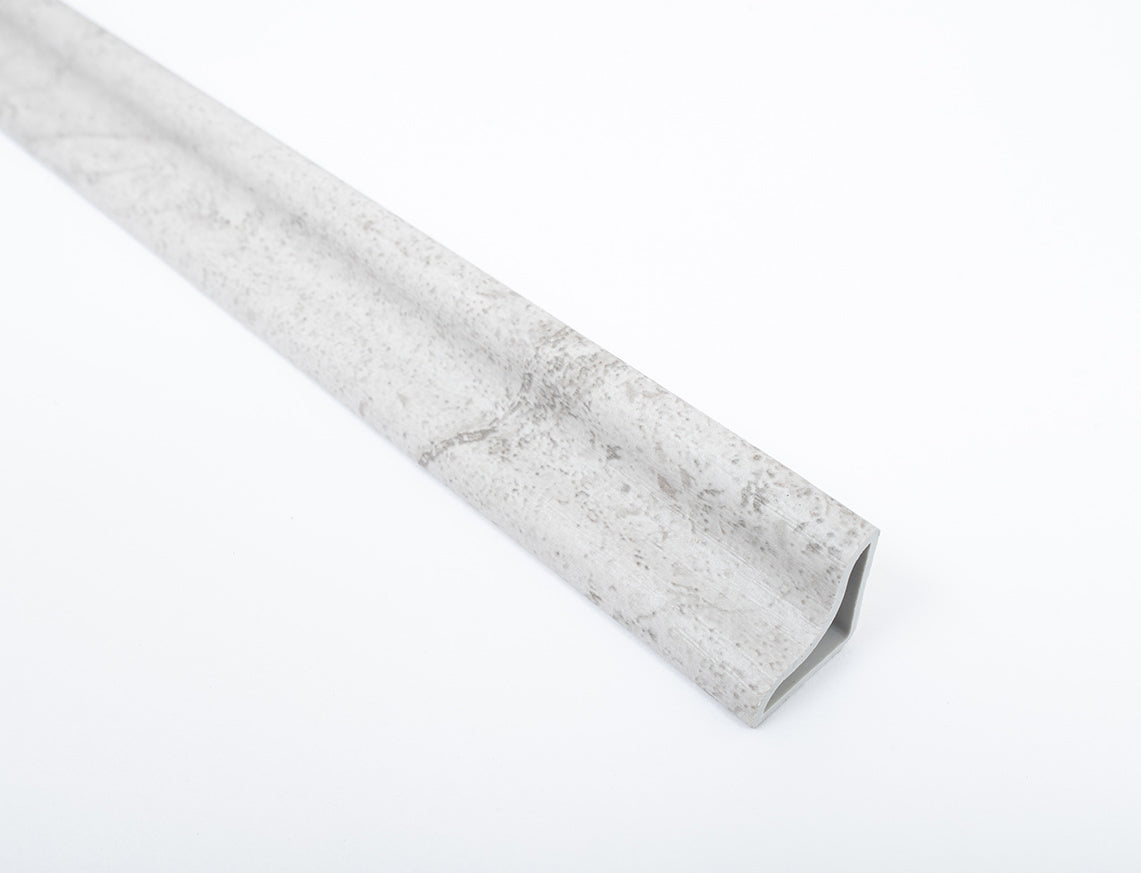
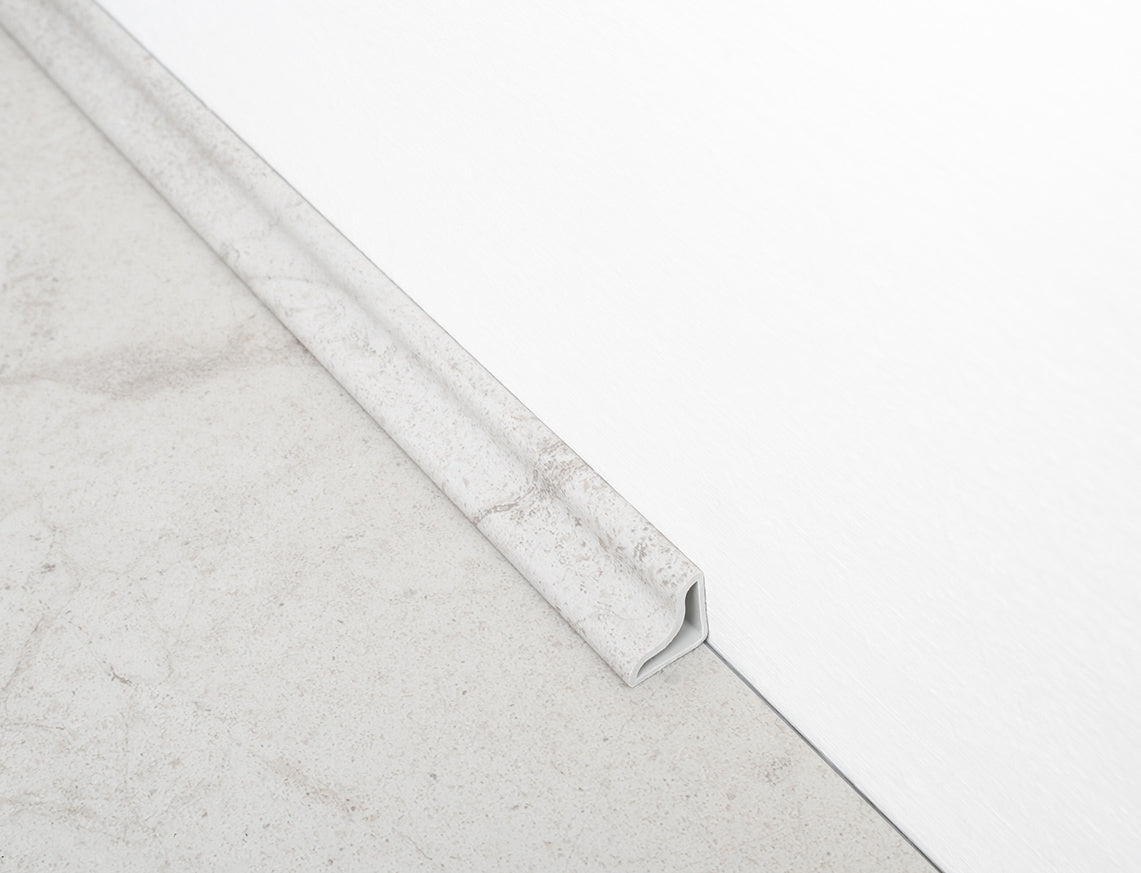
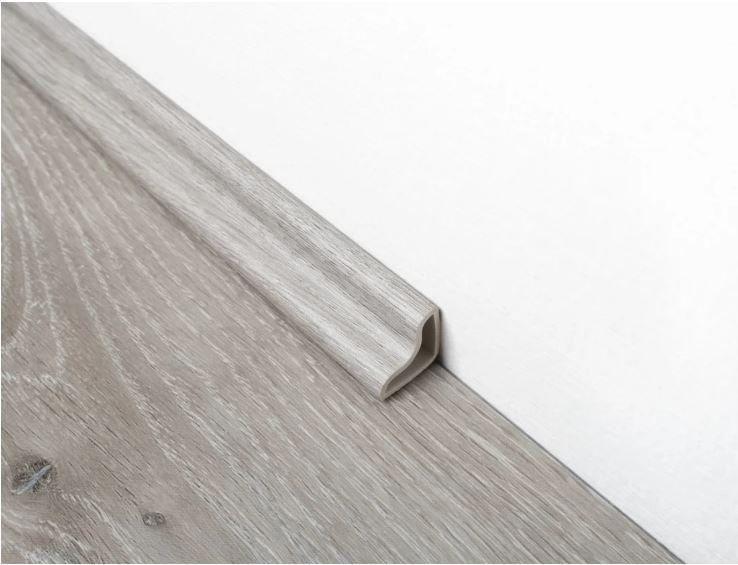
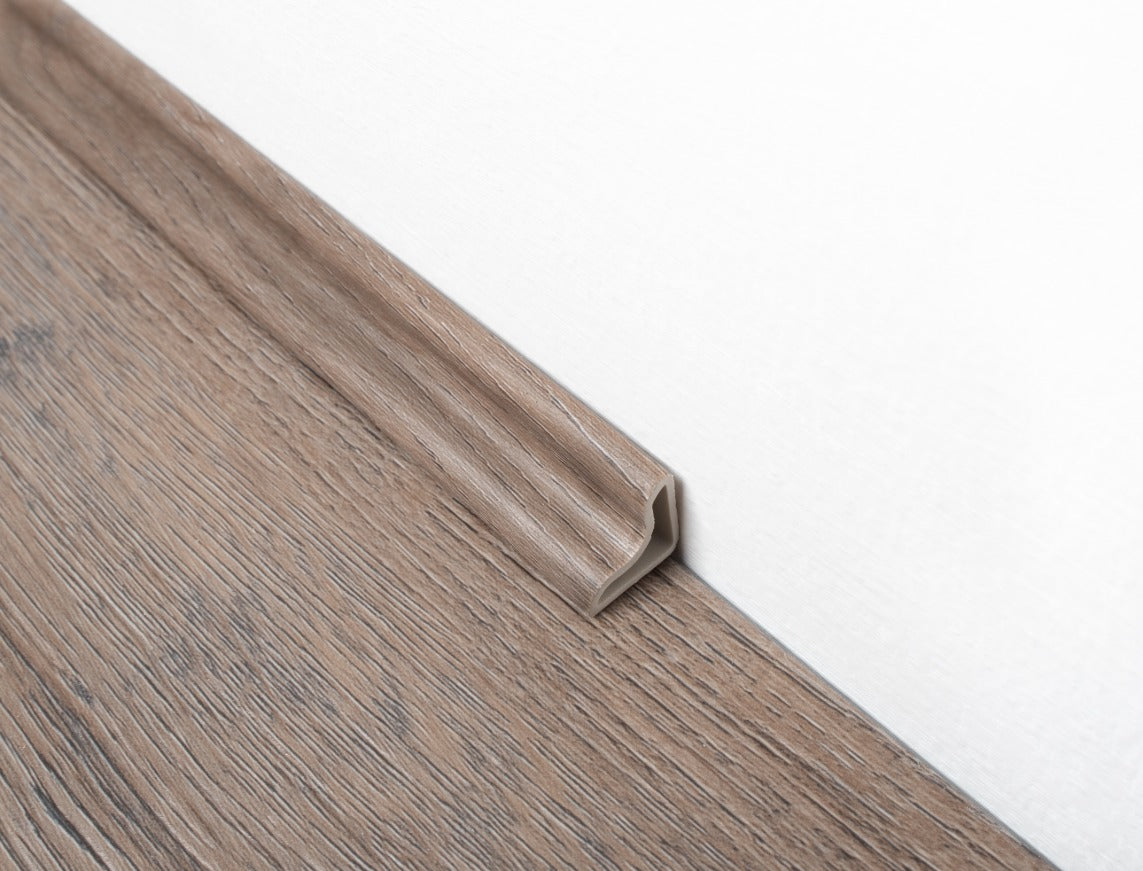
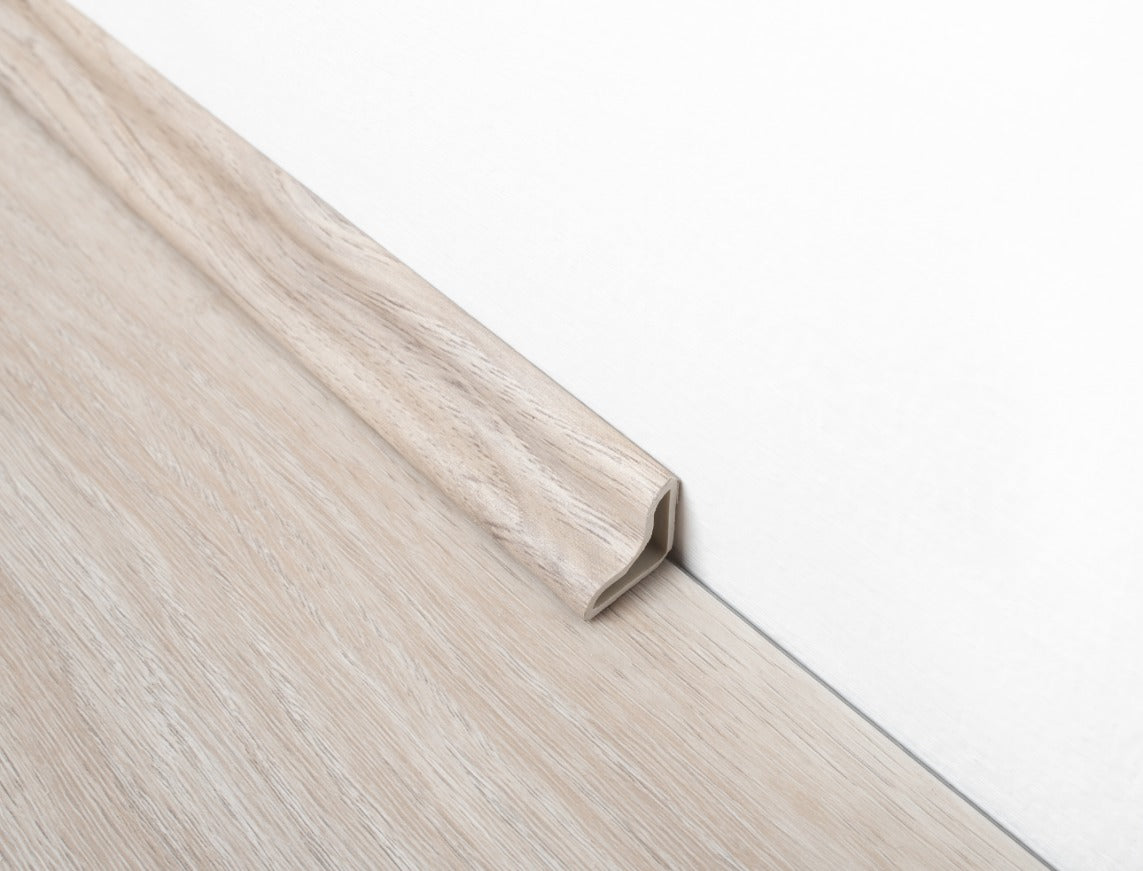
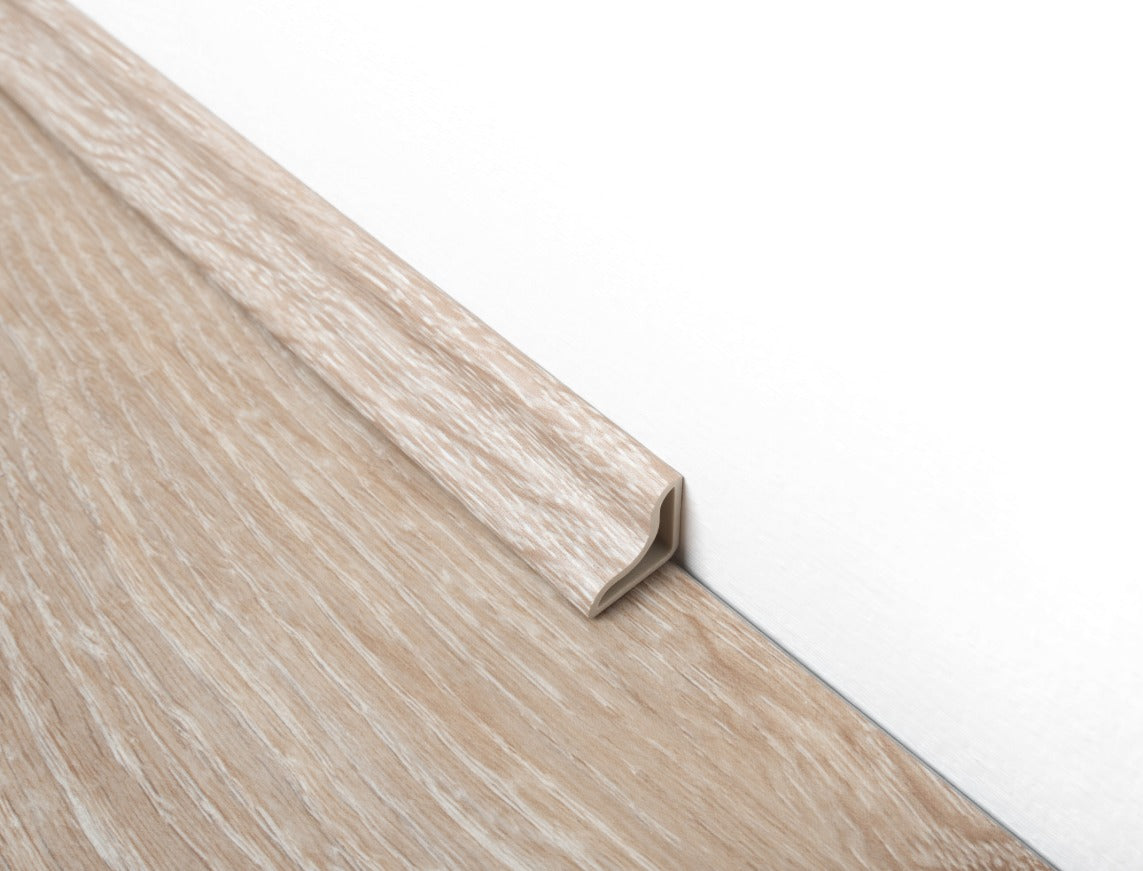
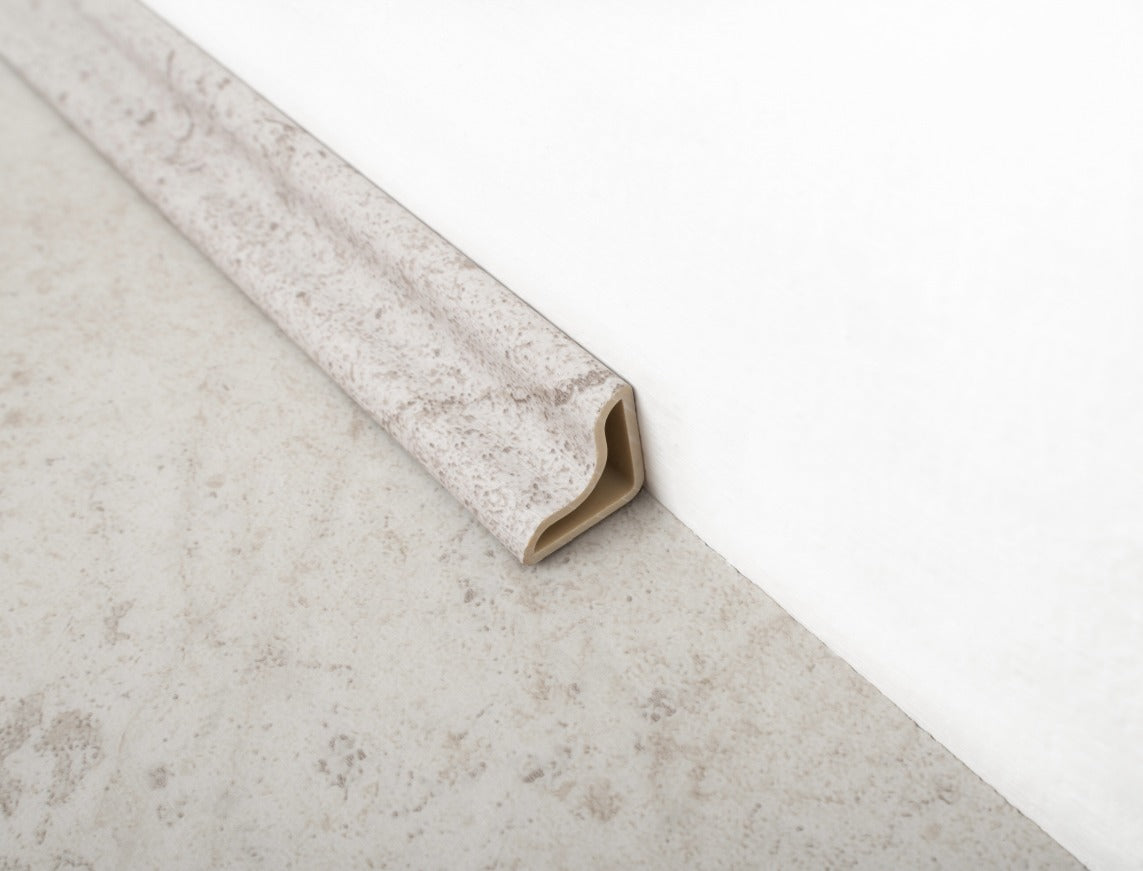
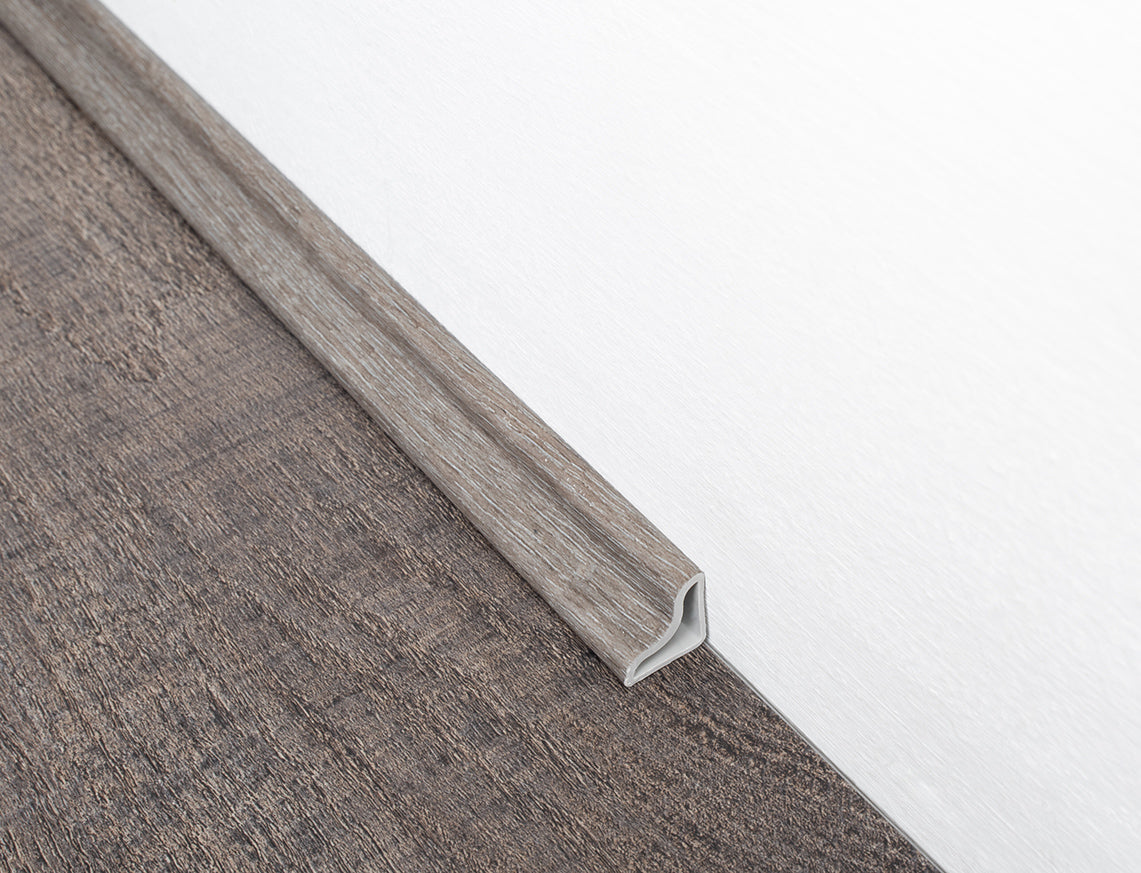
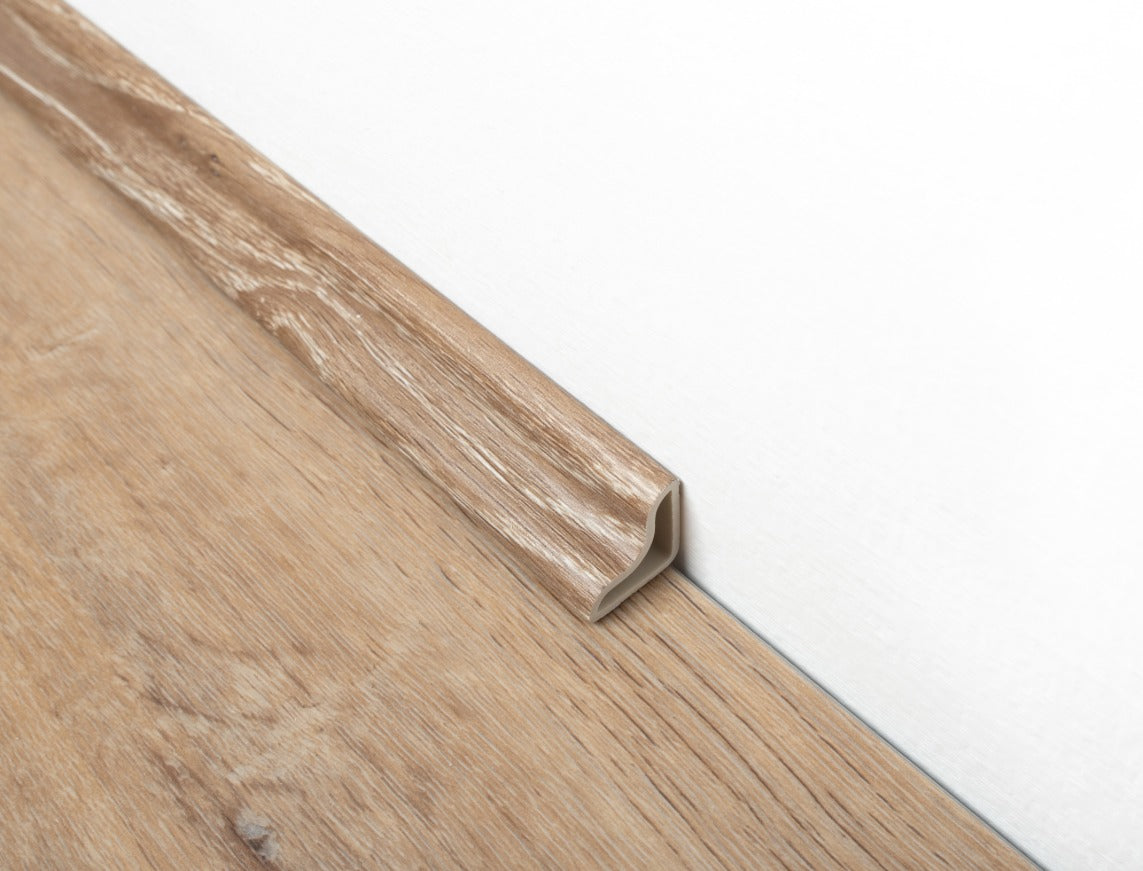
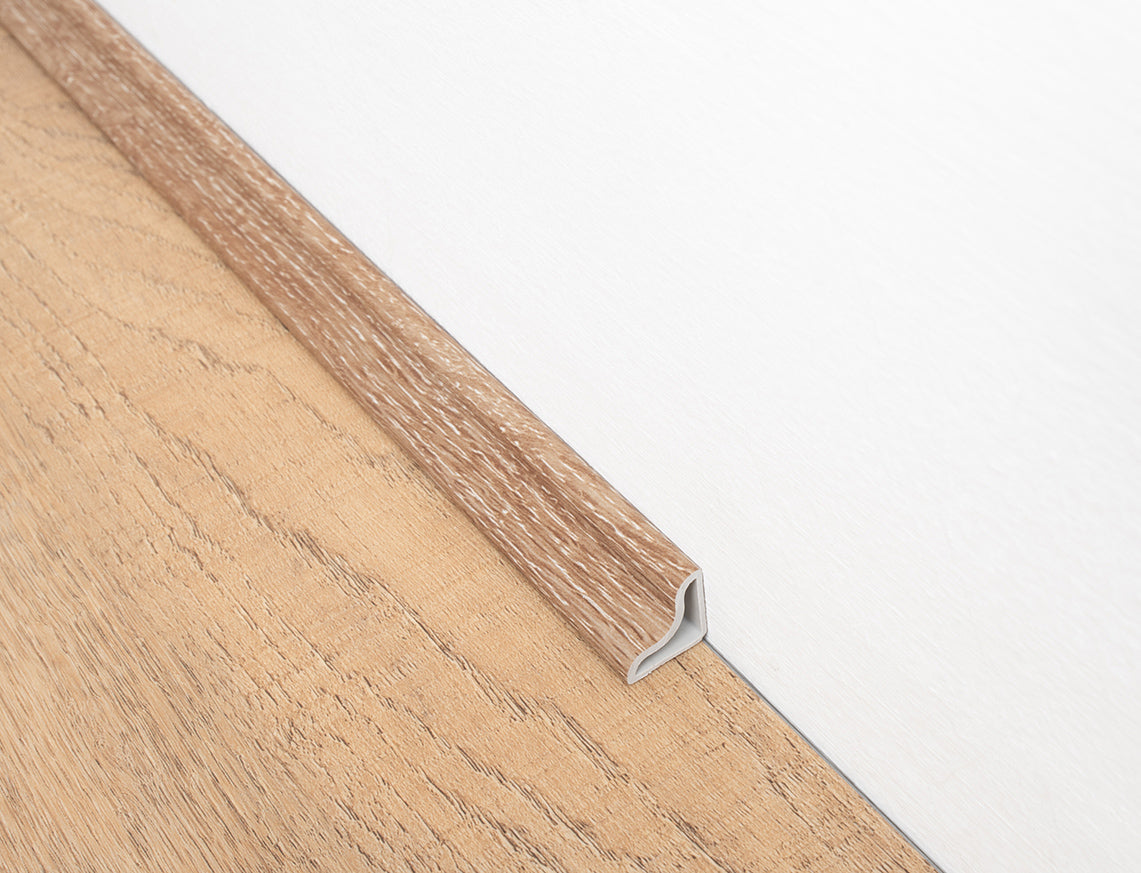
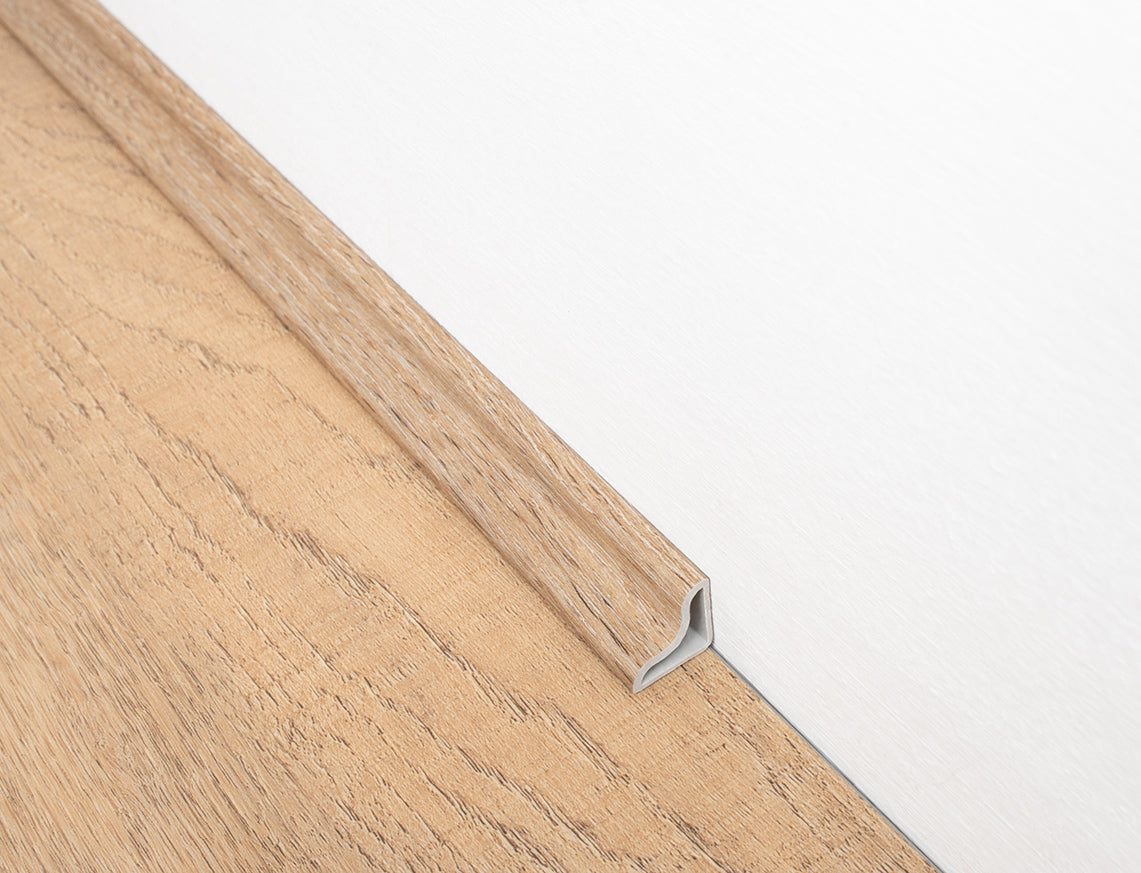
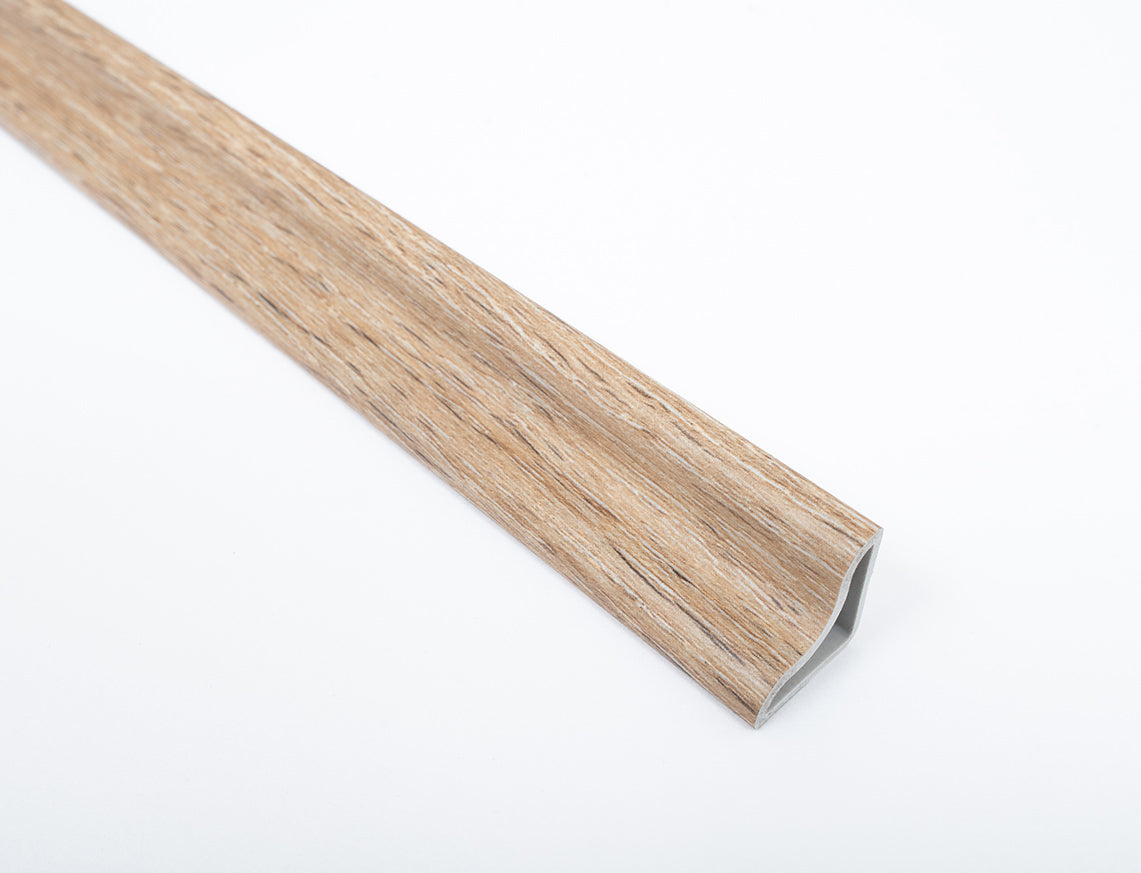
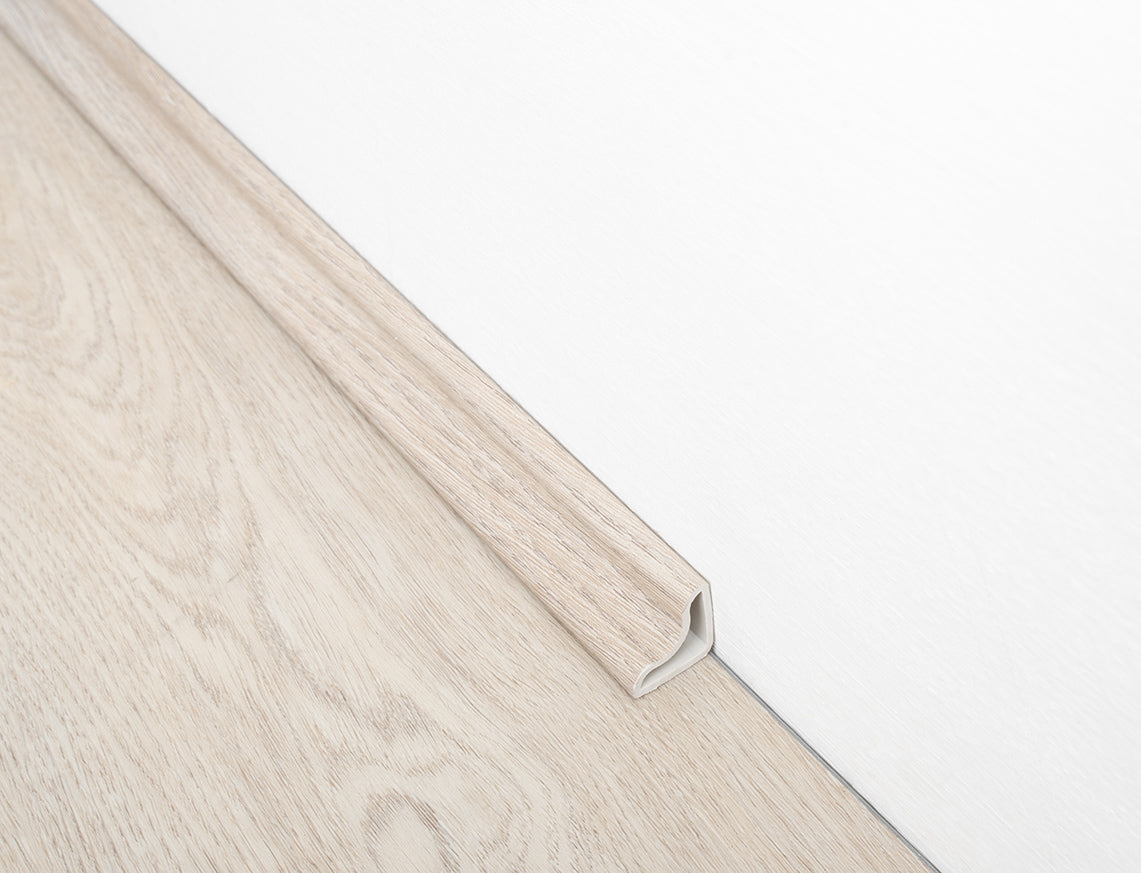
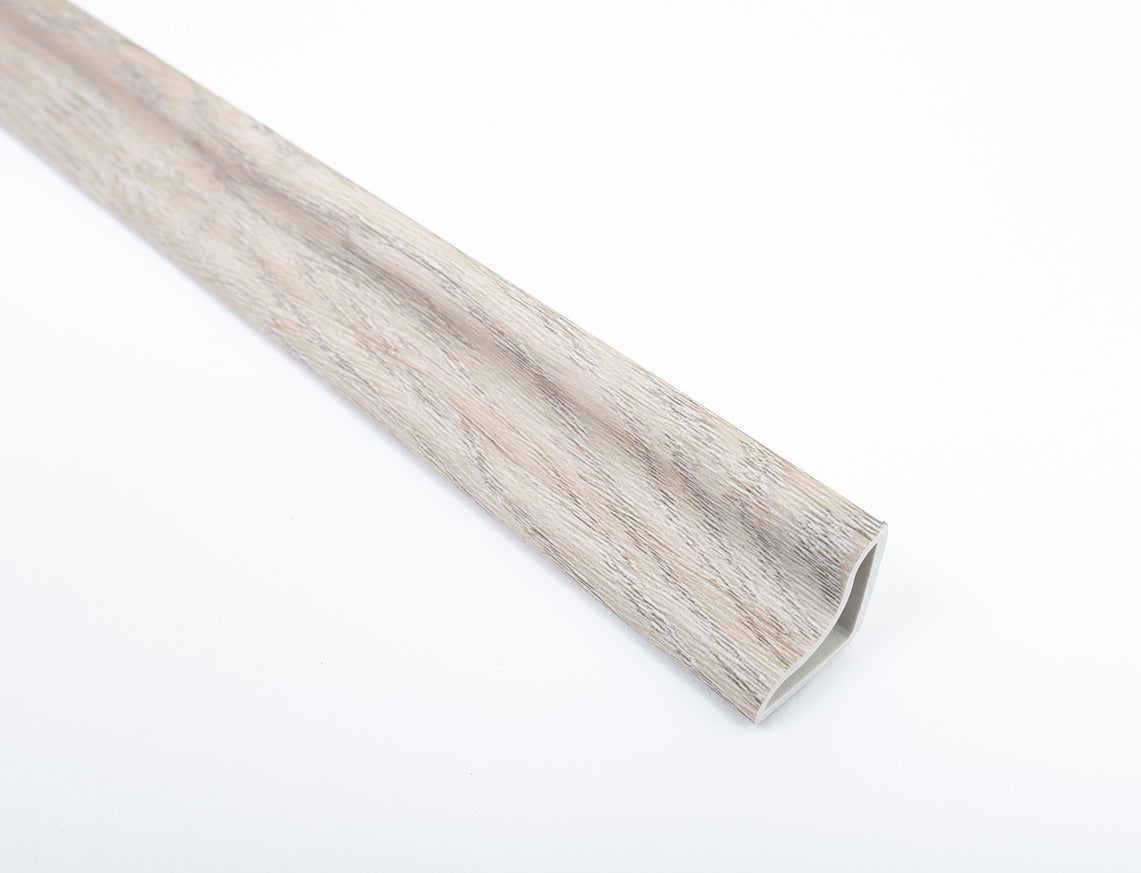
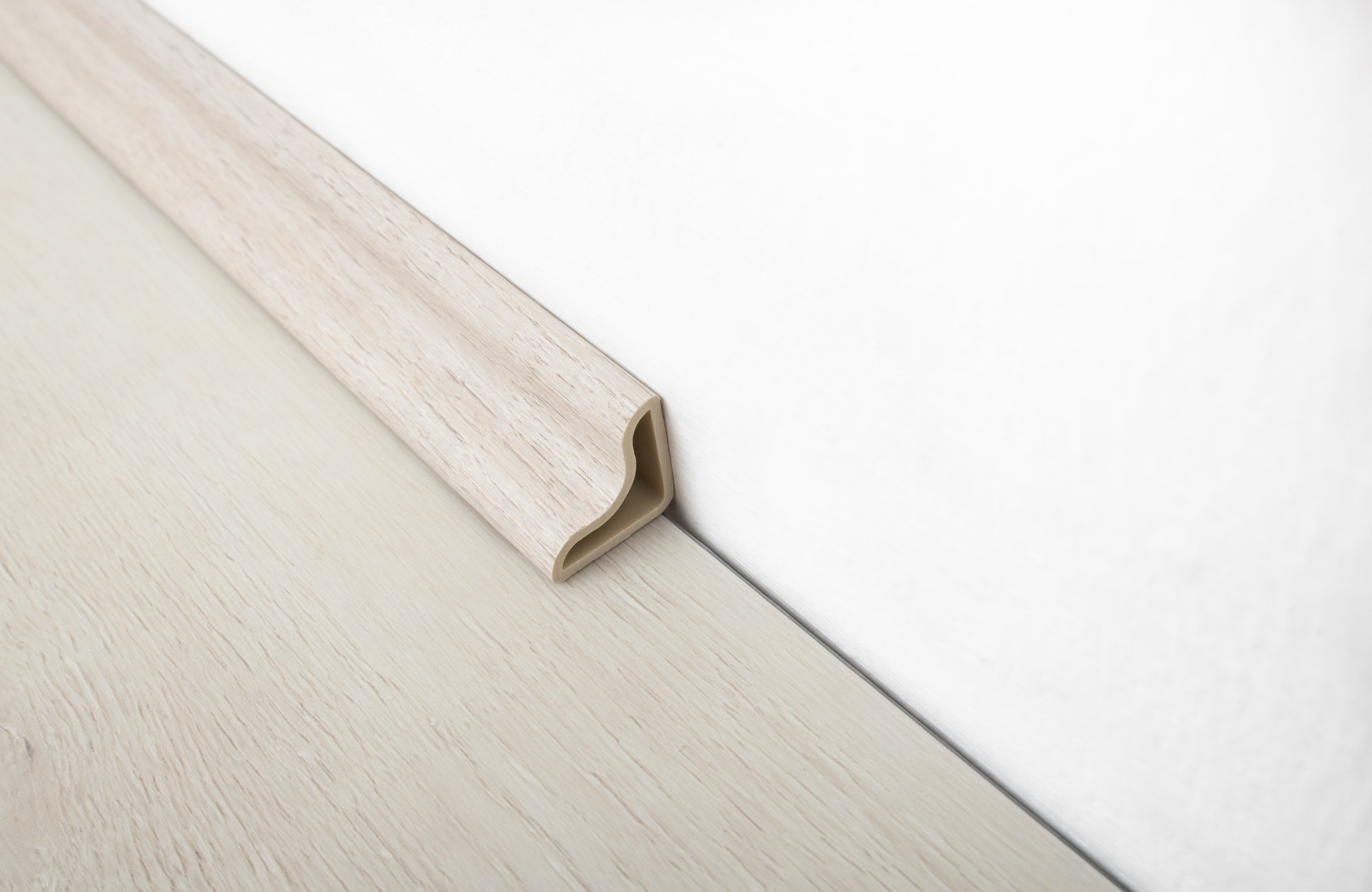
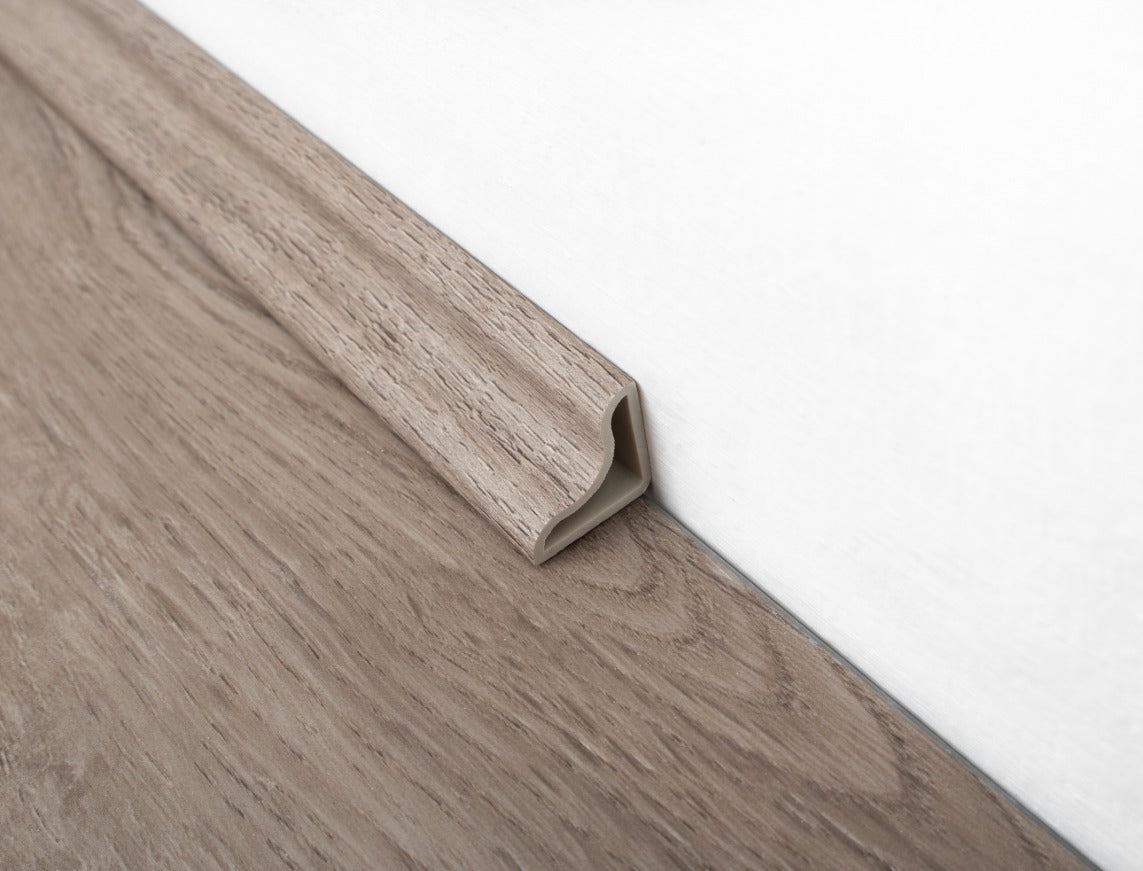
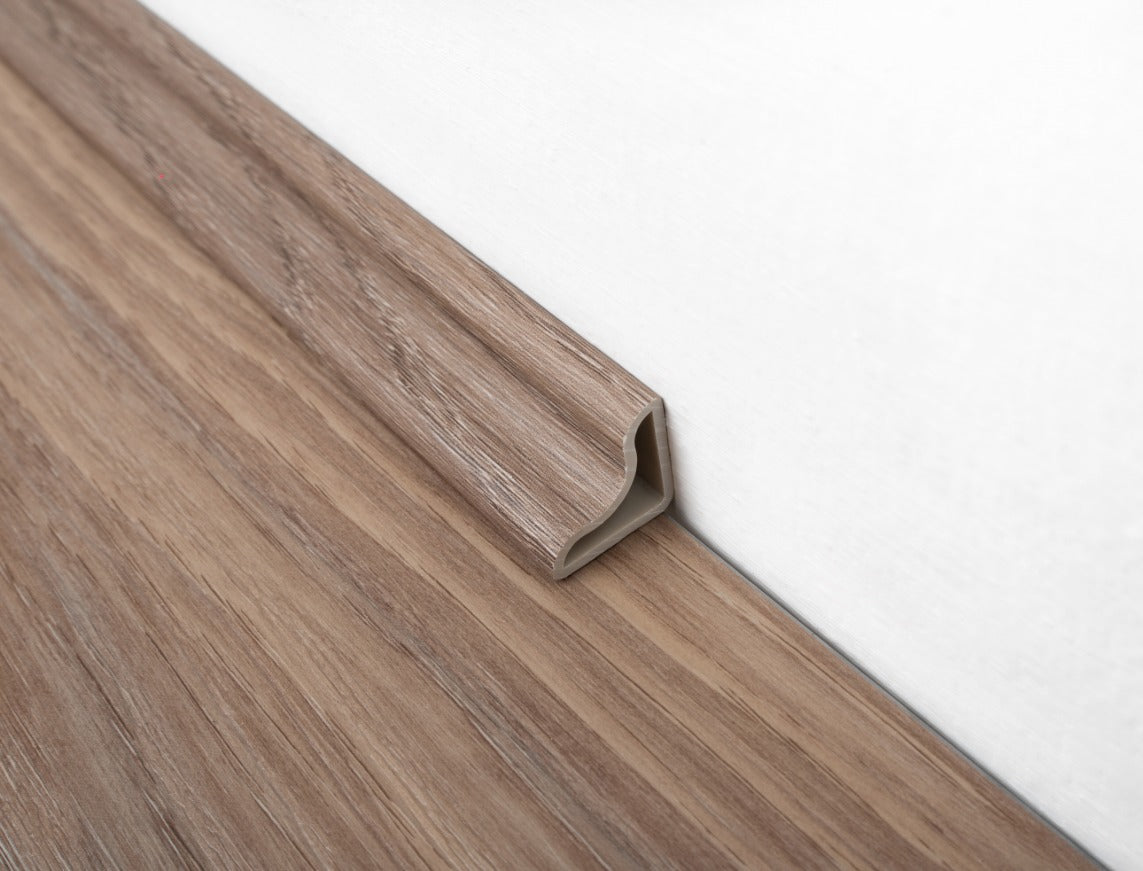
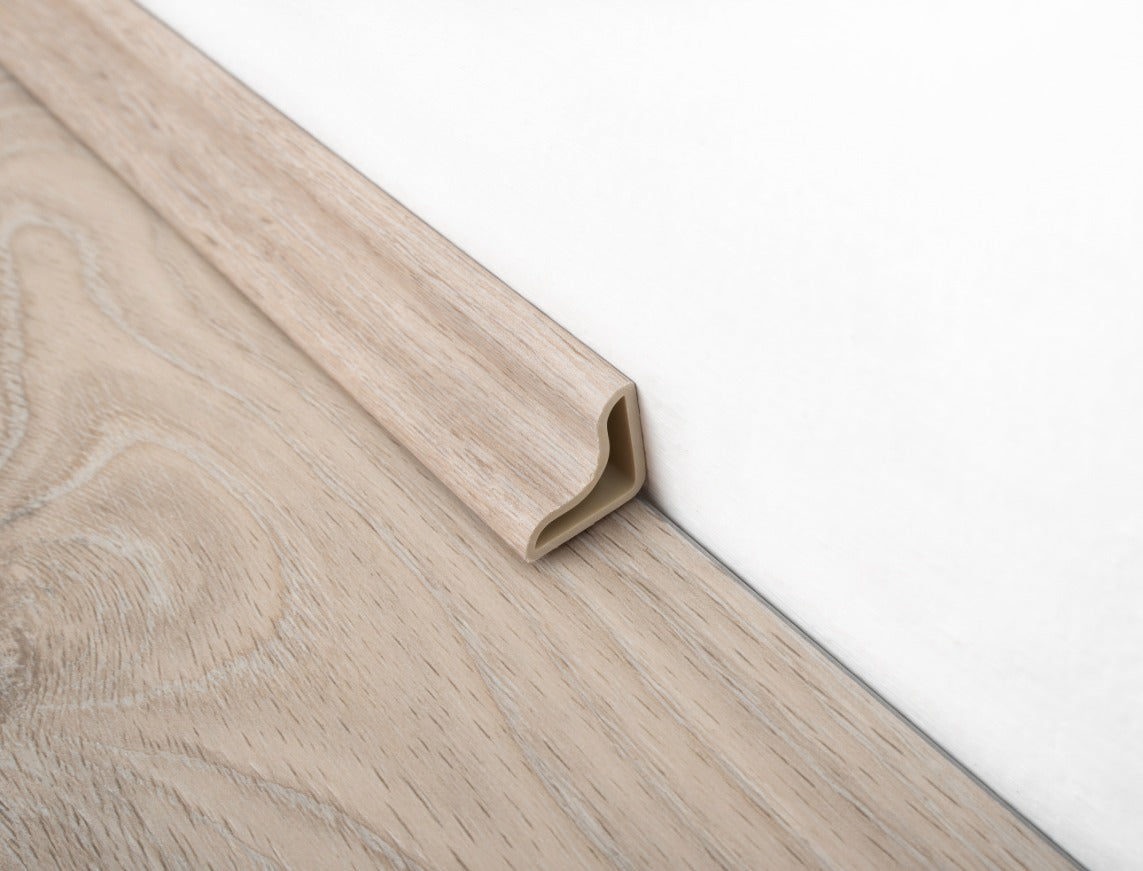
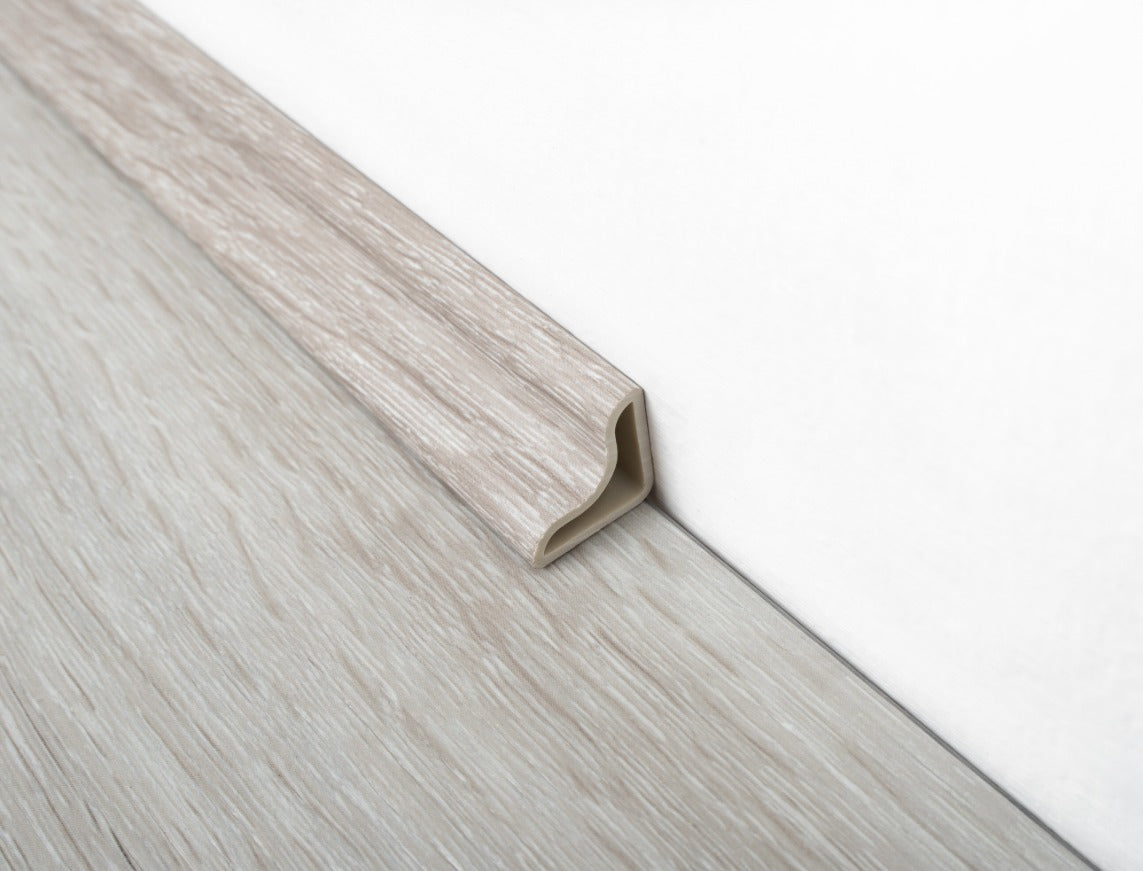
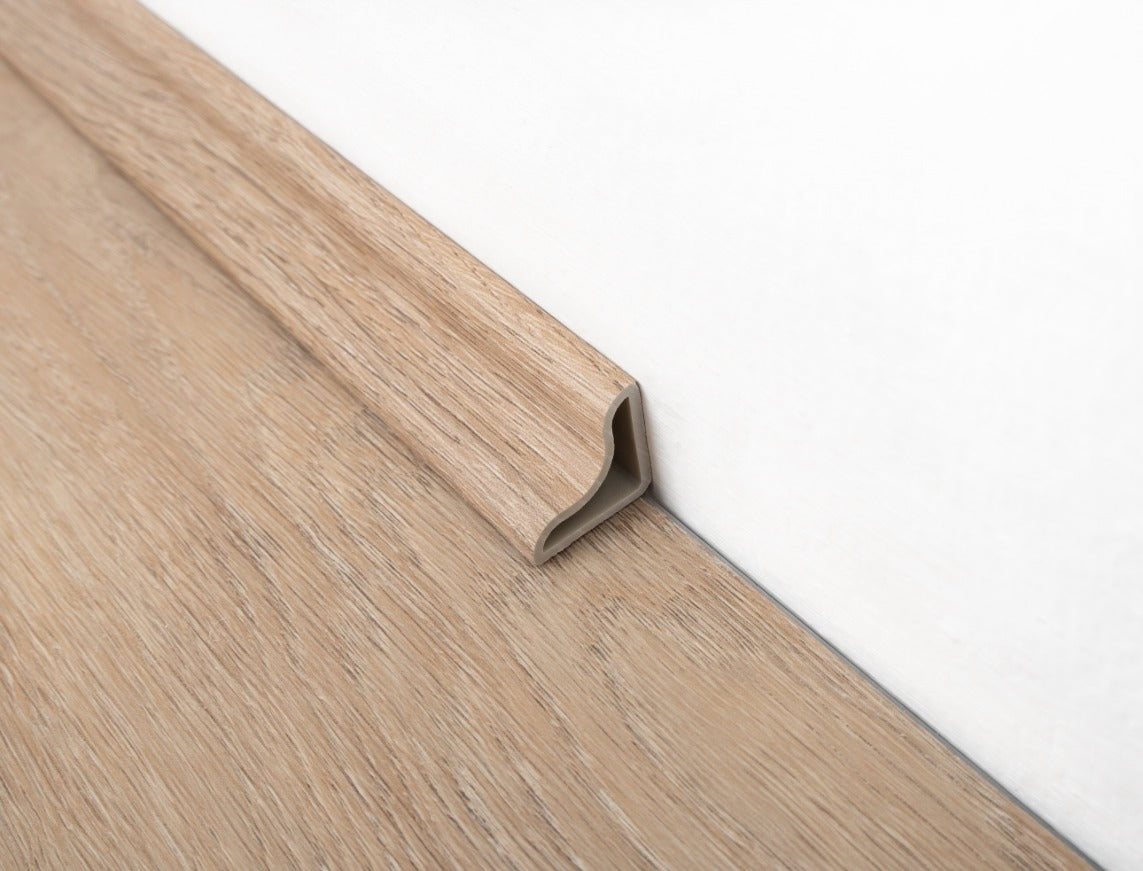
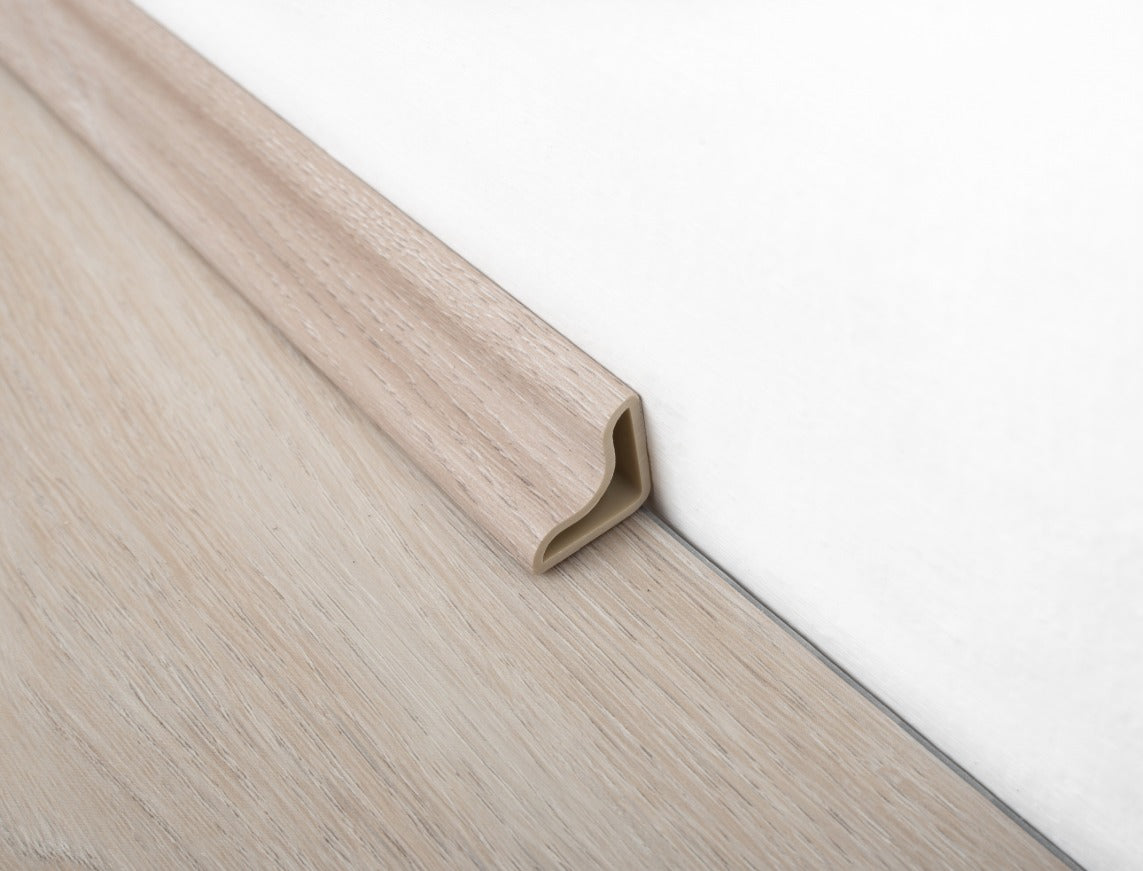
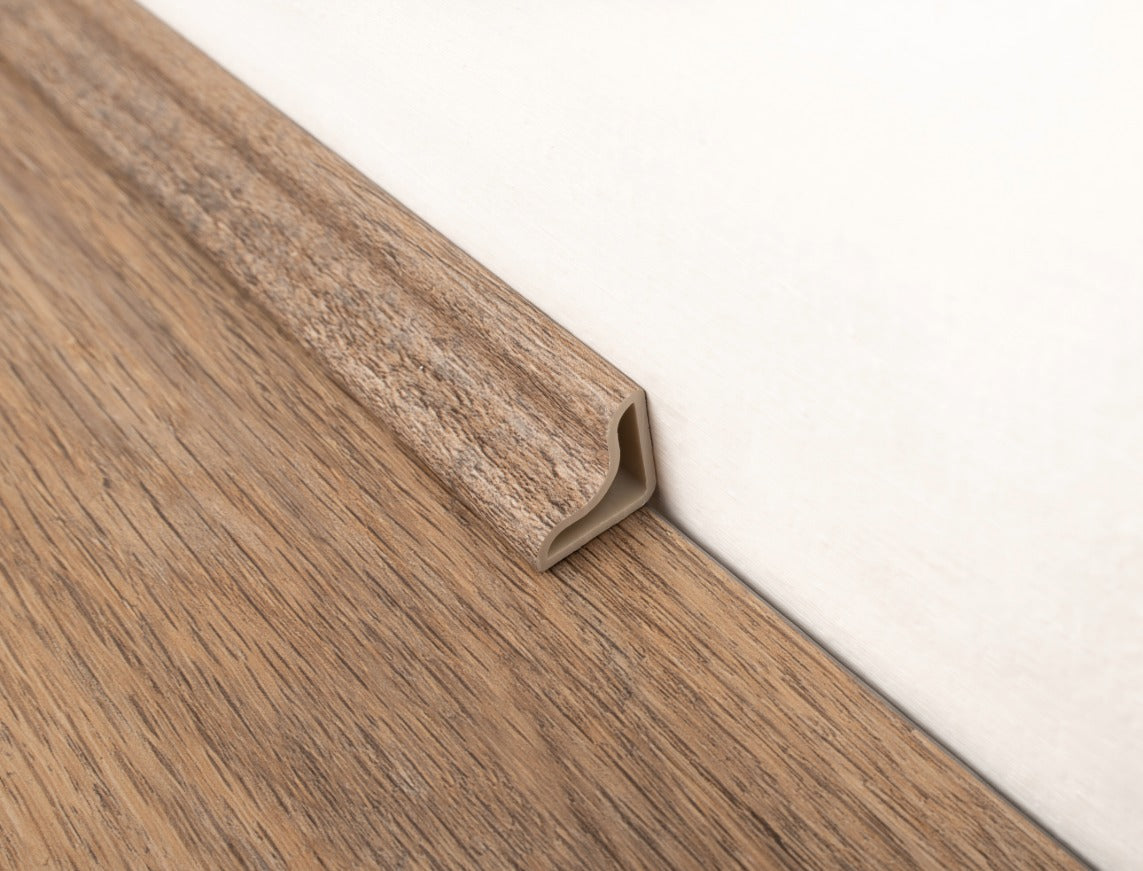
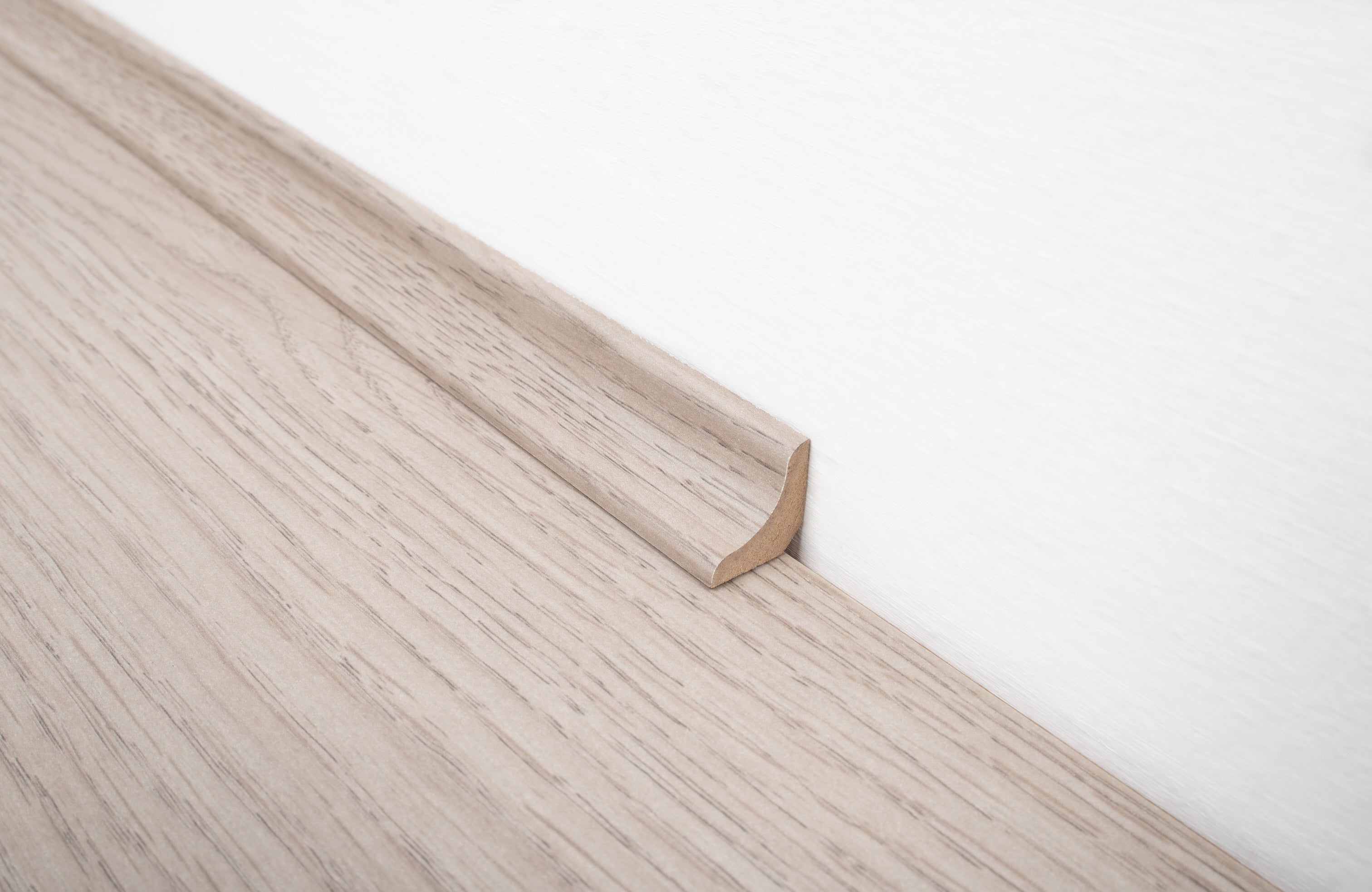
Every floating floor needs a gap around the edge so it can move. Beading covers that gap and turns an unfinished edge into a proper one, without lifting your existing skirting.
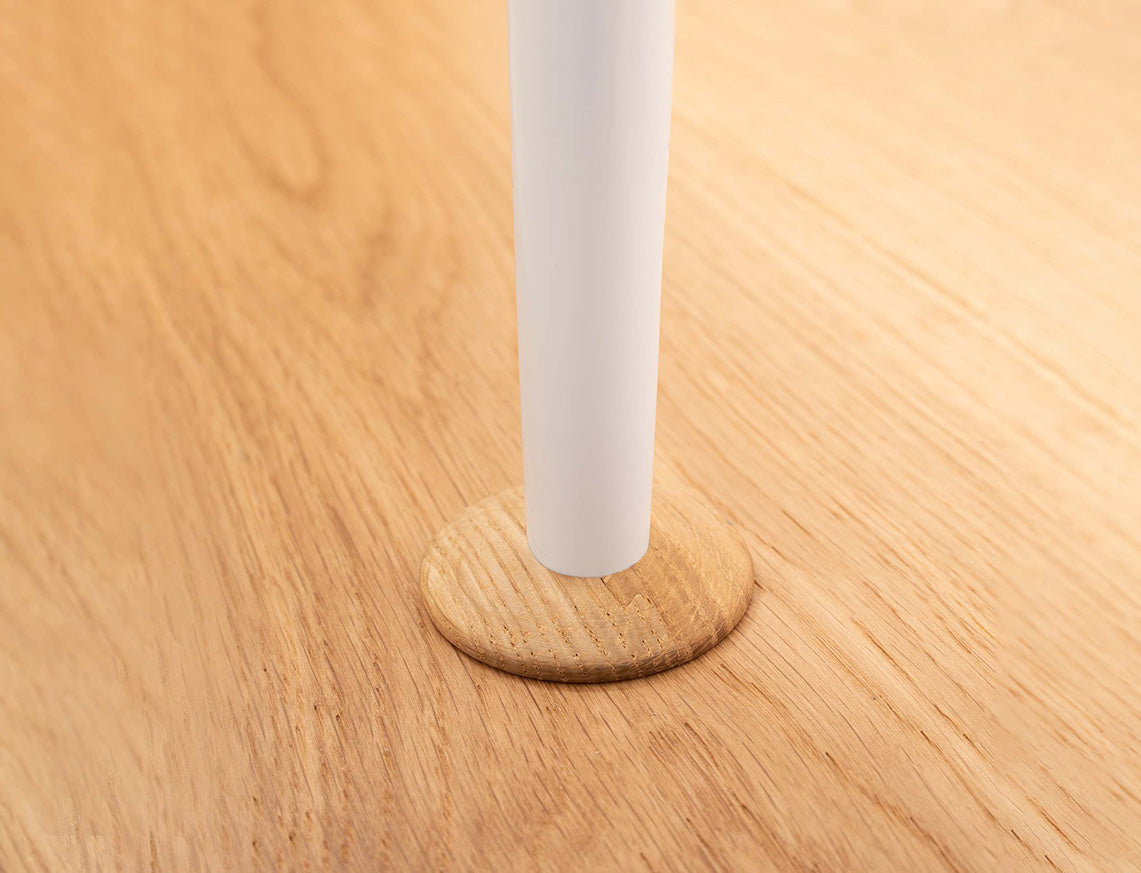
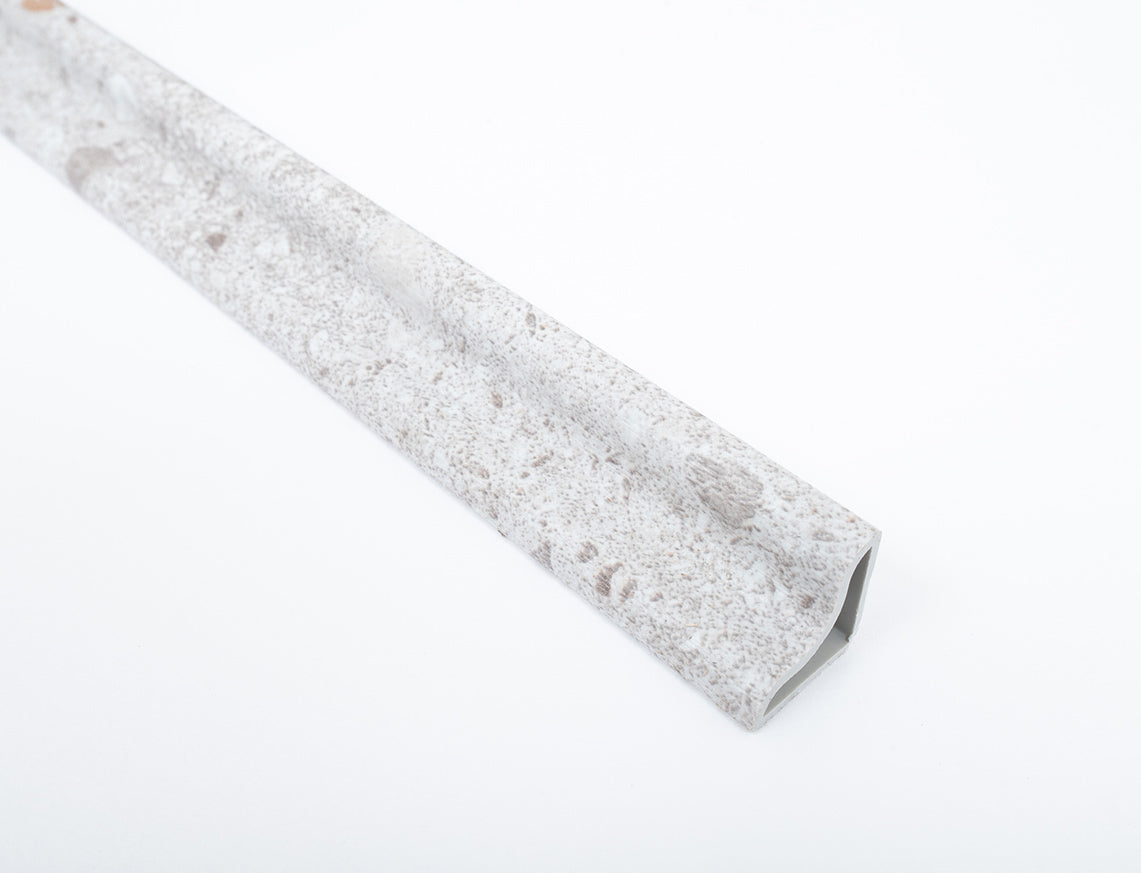
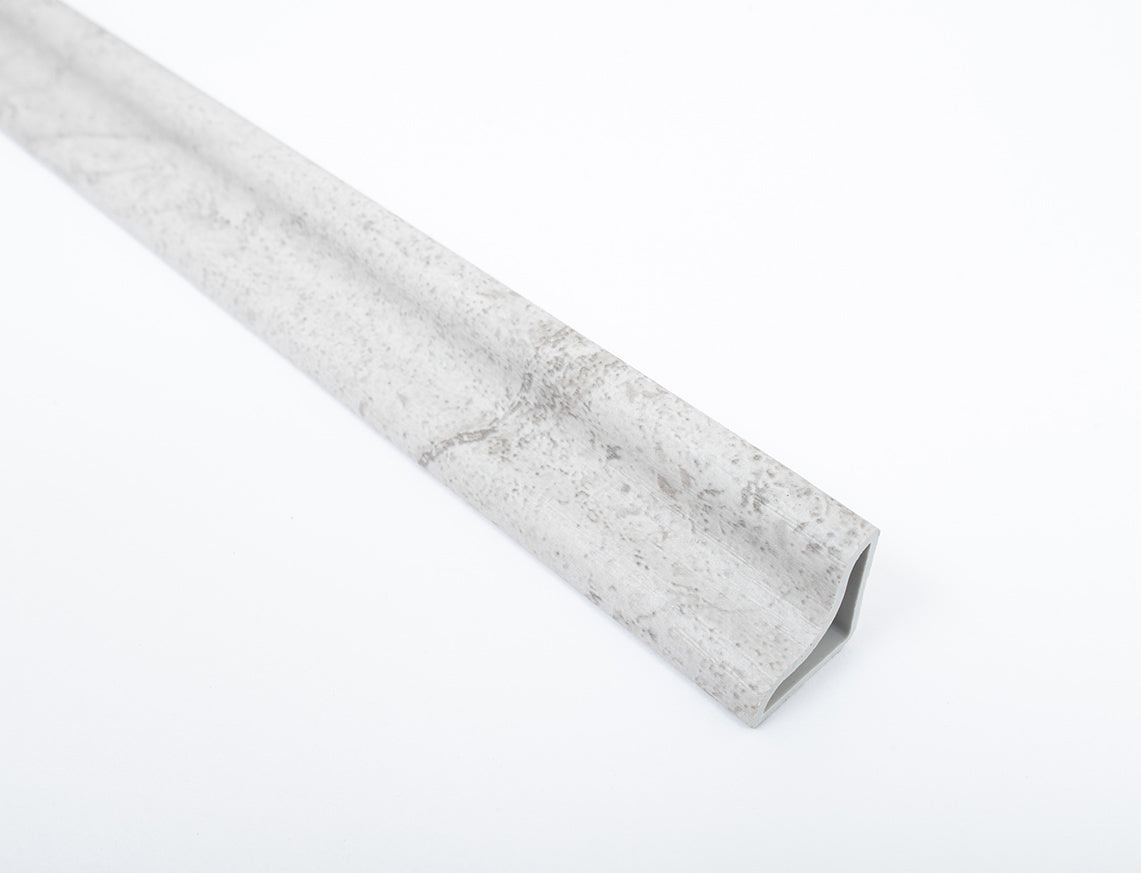
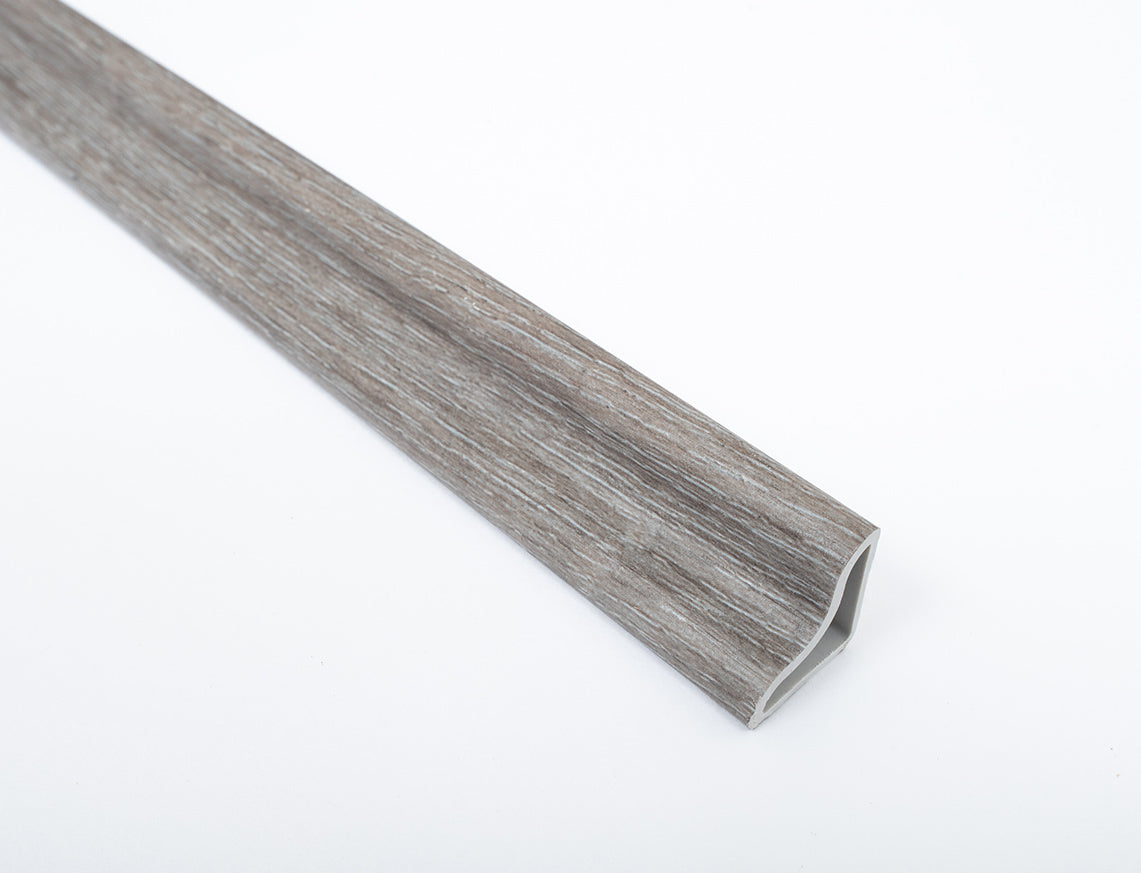
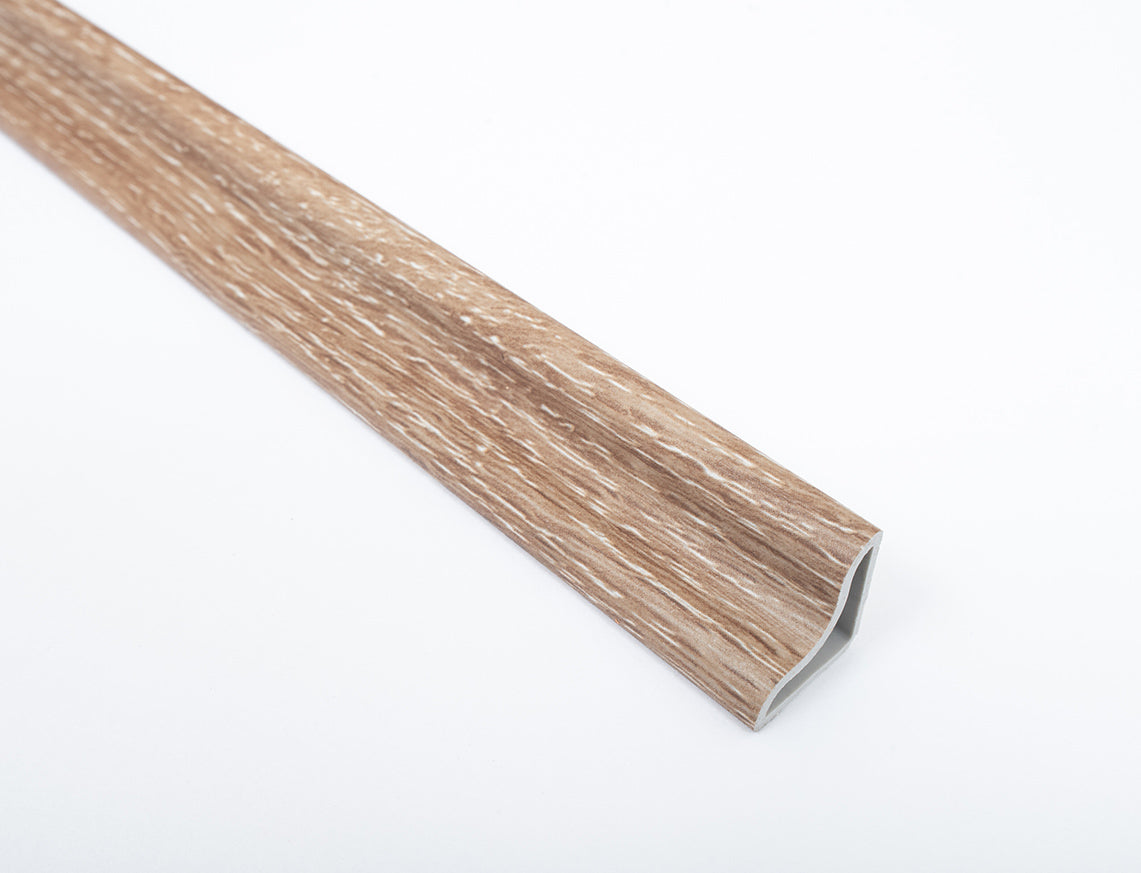
Our range covers solid oak scotia in the same finishes as our oak floors, plus colour-matched profiles for laminate and vinyl ranges. Matching the finish is what makes the edges disappear rather than announce themselves.
Supplied in 2400mm lengths, delivered next-day, and easy to fit with nothing more than a mitre saw and some pins.
A floating floor moves with changes in temperature and humidity. The expansion gap around the perimeter gives it somewhere to go. Without that gap the floor has nowhere to expand into and will lift or buckle, usually in the middle of the room.
The gap is functional but not attractive, so beading covers it. The alternative is removing your skirting, laying the floor under it and refitting, which is considerably more work.
Fix it to the skirting, never the floor
This is the single most important thing about fitting beading. Pinning it to the floor defeats the whole purpose, because the floor can no longer move beneath it. Fix into the skirting board every time.
Choosing the right beading
Match the floor, not the skirting
Beading reads as part of the floor rather than part of the wall, so it should match the boards. A white bead against an oak floor draws attention to itself; an oak bead in the same finish disappears.
Match the finish as well as the colour
Our solid oak beading comes in the same finishes as our engineered oak range: unfinished, lacquered, golden, oiled and invisible oiled. An oiled bead against a lacquered floor will read differently even in the same colour, because the two reflect light differently.
Laminate and vinyl
Colour-matched profiles are available for our laminate and vinyl decors. Check the decor name on your flooring product page and choose the matching trim.
Fitting beading
Beading is one of the more approachable parts of a flooring job. Cut to length with a mitre saw, mitre the internal and external corners at forty-five degrees, and fix with panel pins or adhesive into the skirting.
Work around the room in one direction so each length butts cleanly into the last. Corners are where the job is judged, so take the time to get the mitres right and fill any small gaps.
How much will you need?
Measure the perimeter of the room, subtract the width of any doorways, then divide by the length of one piece and round up. Add one extra length for mitred corners and the inevitable miscut.
Doorways need threshold profiles rather than beading, so count those separately.
Beading and trims: frequently asked questions
What is scotia beading?
A concave moulding that sits in the angle between the floor and the skirting, covering the expansion gap. Scotia refers to the curved profile.
Should beading match the floor or the skirting?
The floor. It reads as the edge of the floor rather than the base of the wall, and matching it makes the join disappear.
Can I fix beading to the floor?
No. Fix it to the skirting so the floor stays free to move. A floor pinned at the edges cannot expand and will lift.
Can I use beading instead of skirting?
No, they do different jobs. Beading covers the expansion gap at the base of existing skirting. If there is no skirting, you would fit skirting first.
How do I cut the corners?
Mitre both pieces at forty-five degrees so they meet cleanly, using a mitre saw or mitre box. Internal and external corners are cut in opposite directions.
Will the beading match exactly?
Solid oak trims come in the same finishes as our oak floors, and laminate and vinyl profiles are colour-matched to their decors. Wood varies naturally between pieces, so a close match rather than an identical one is what to expect.