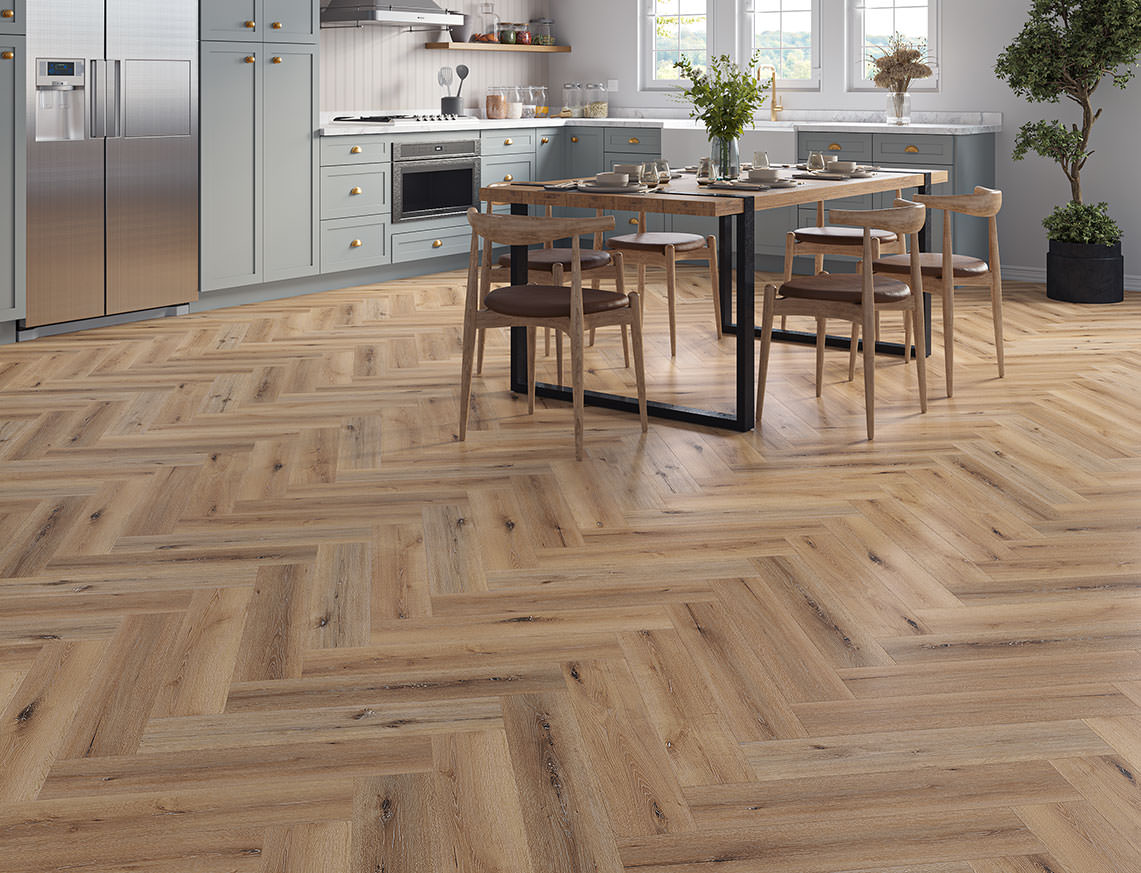
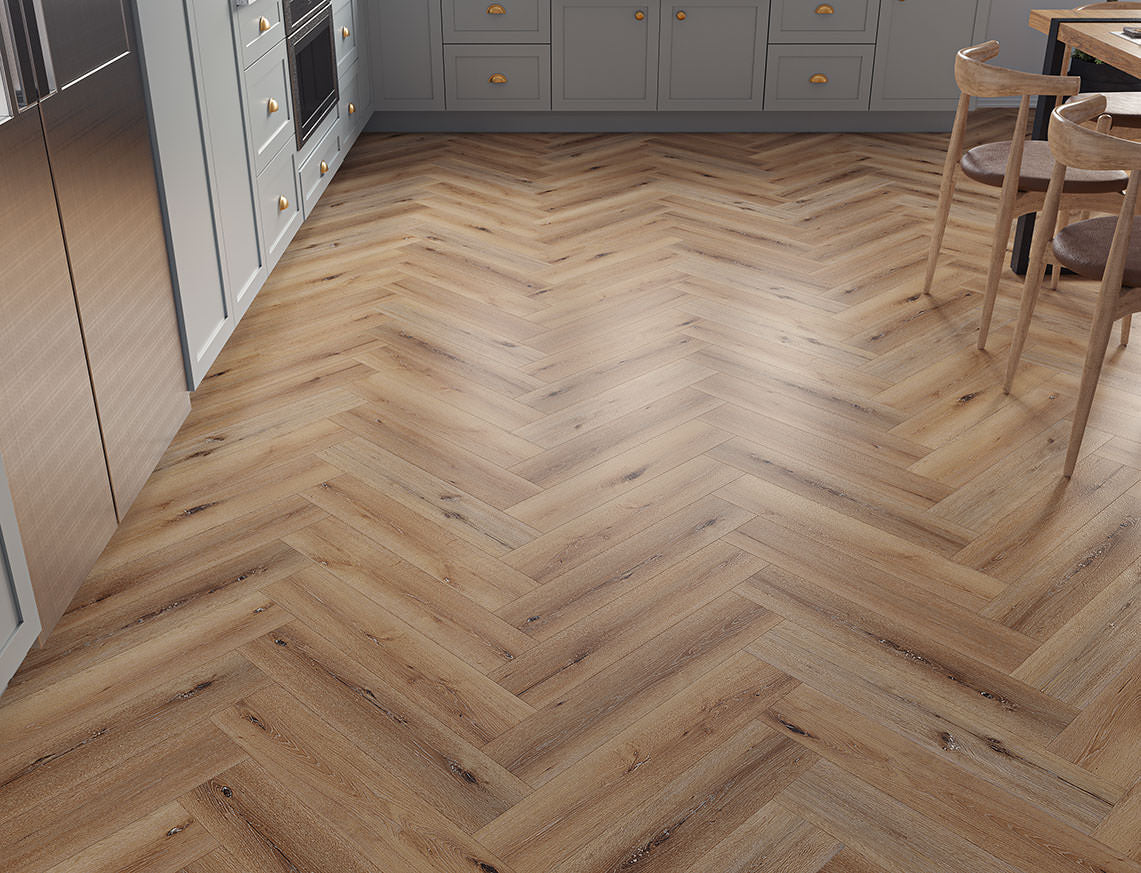
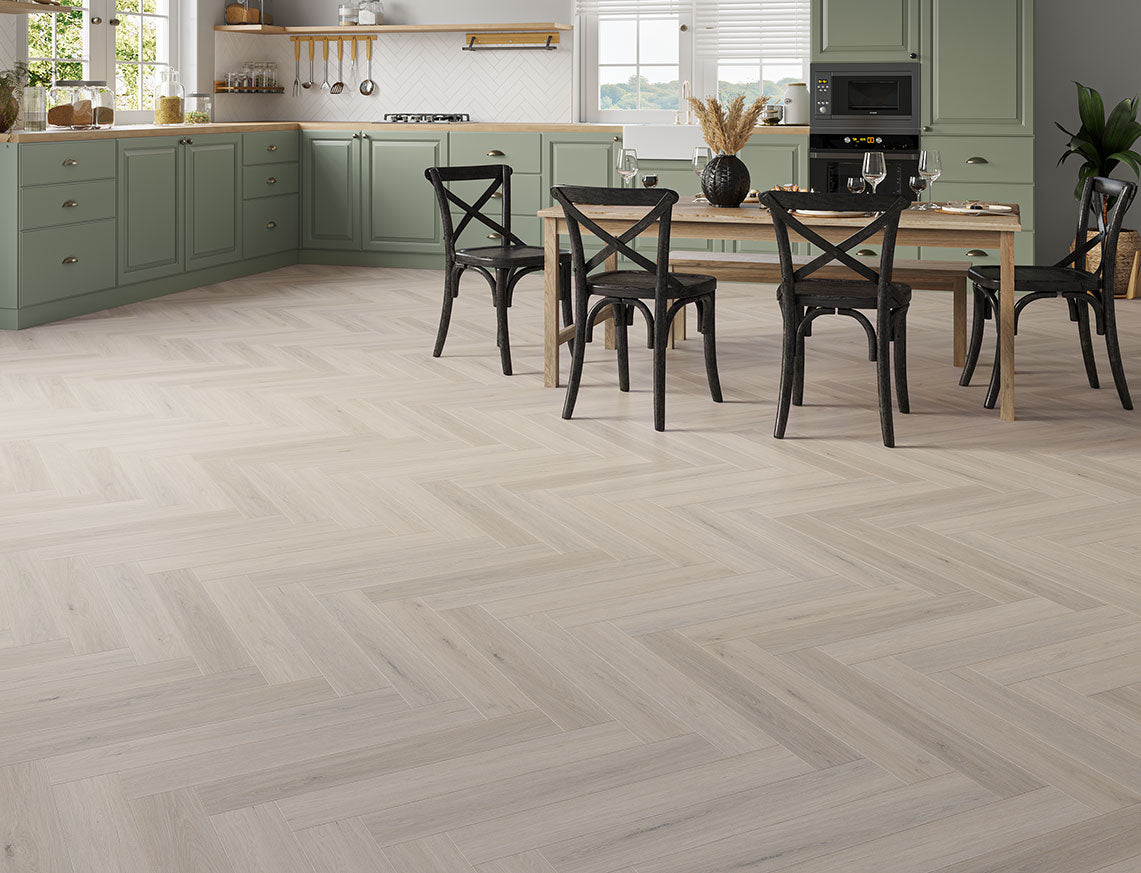
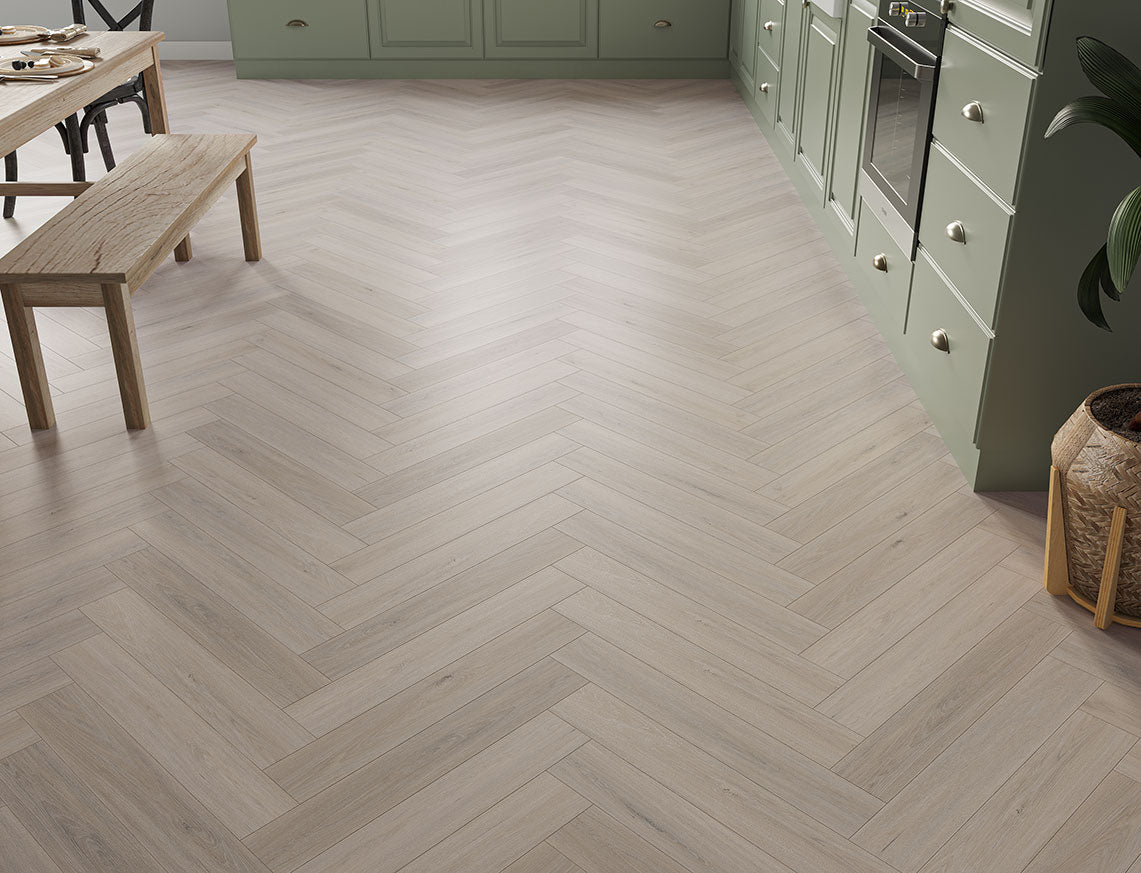
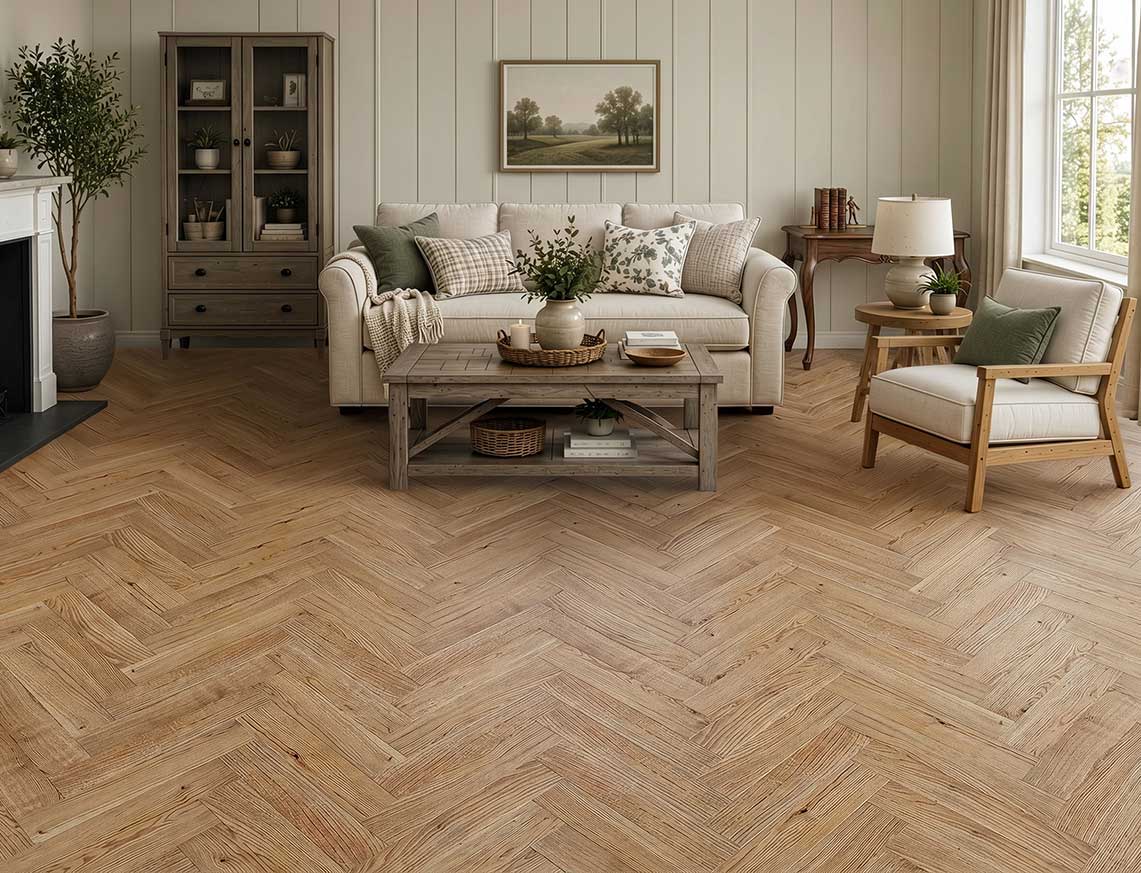
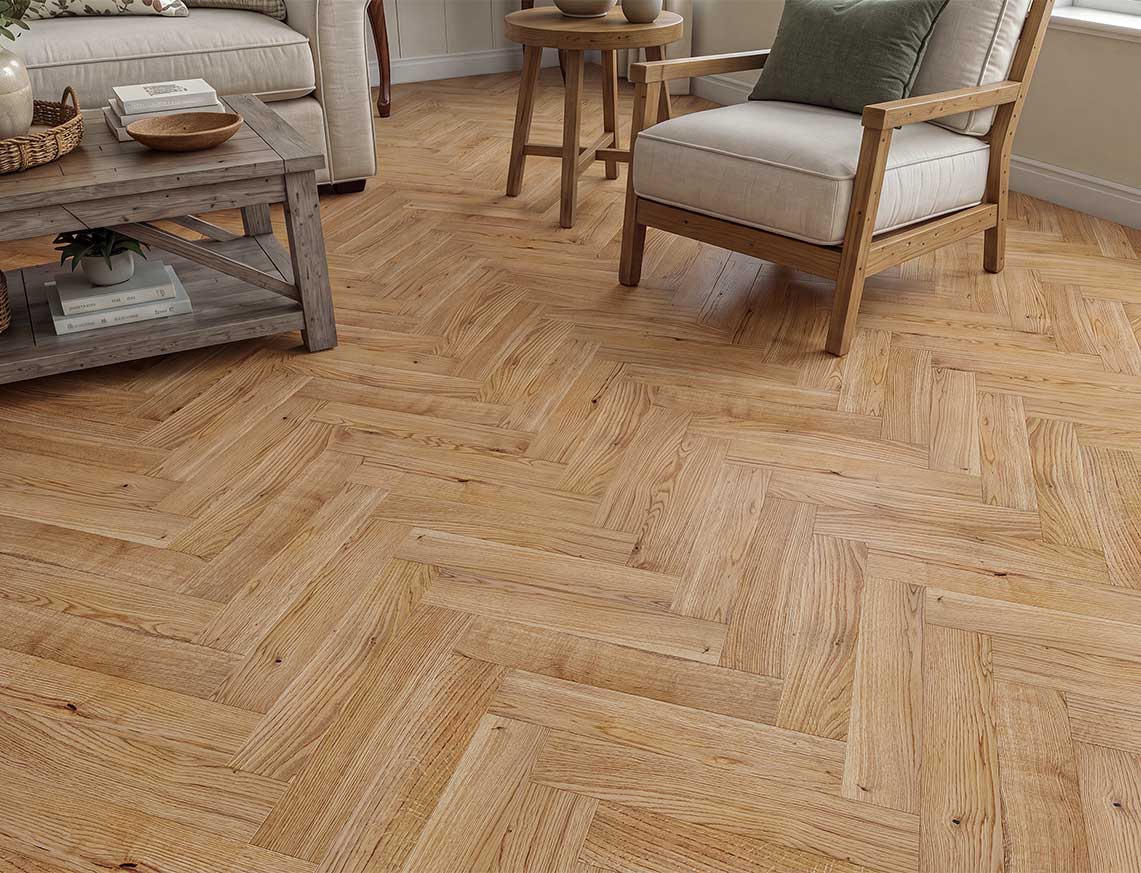
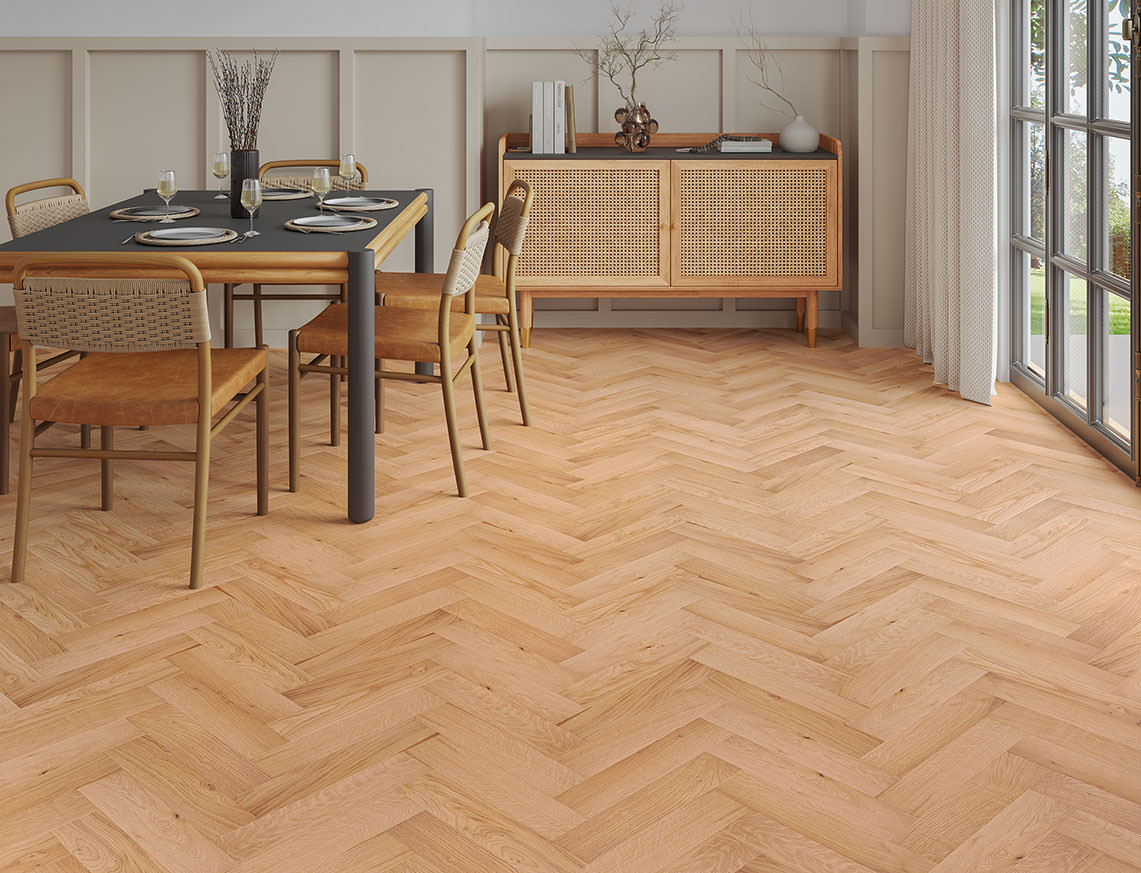
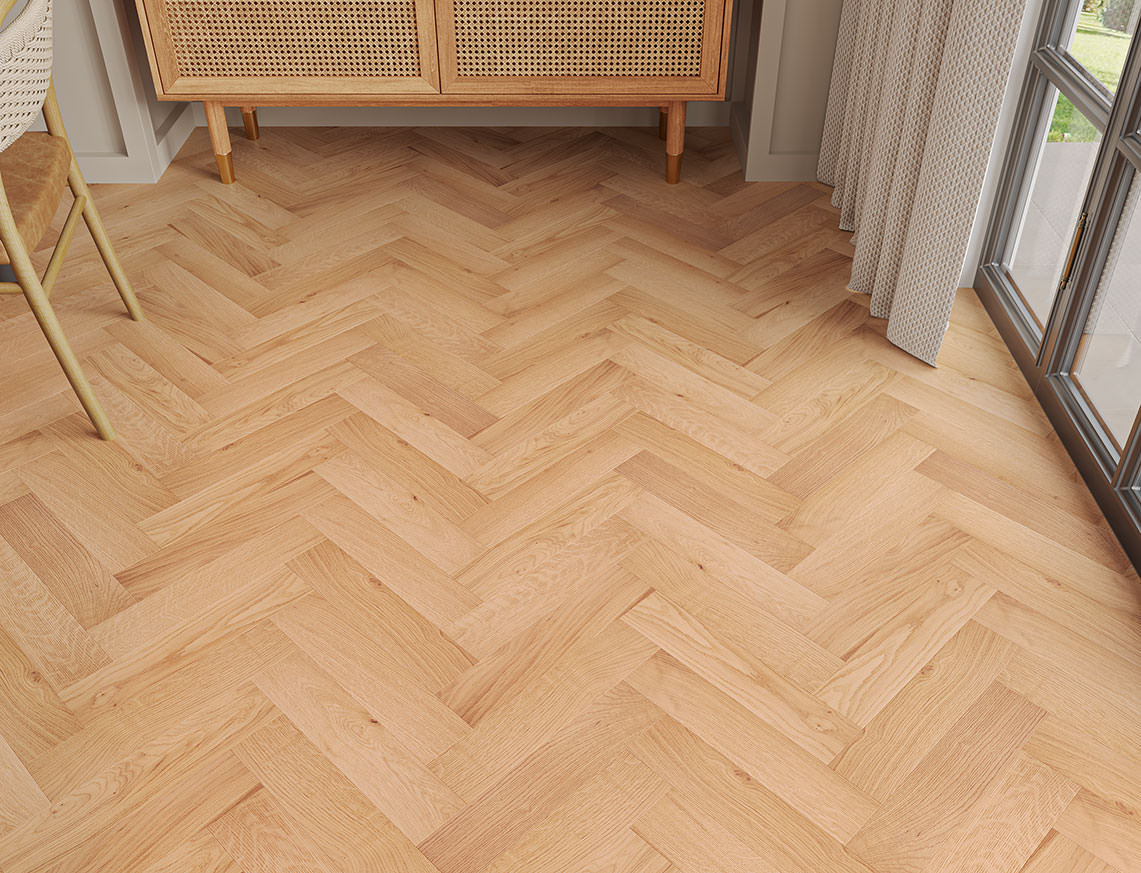
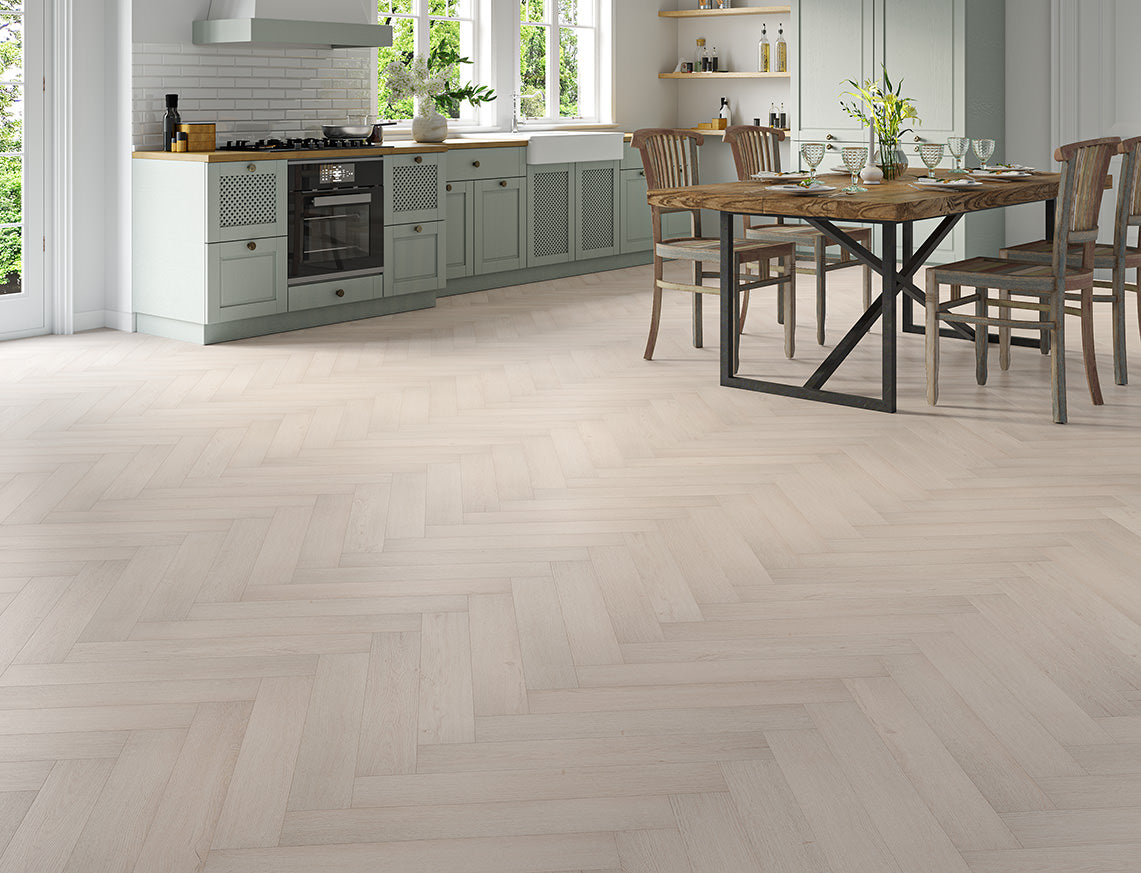
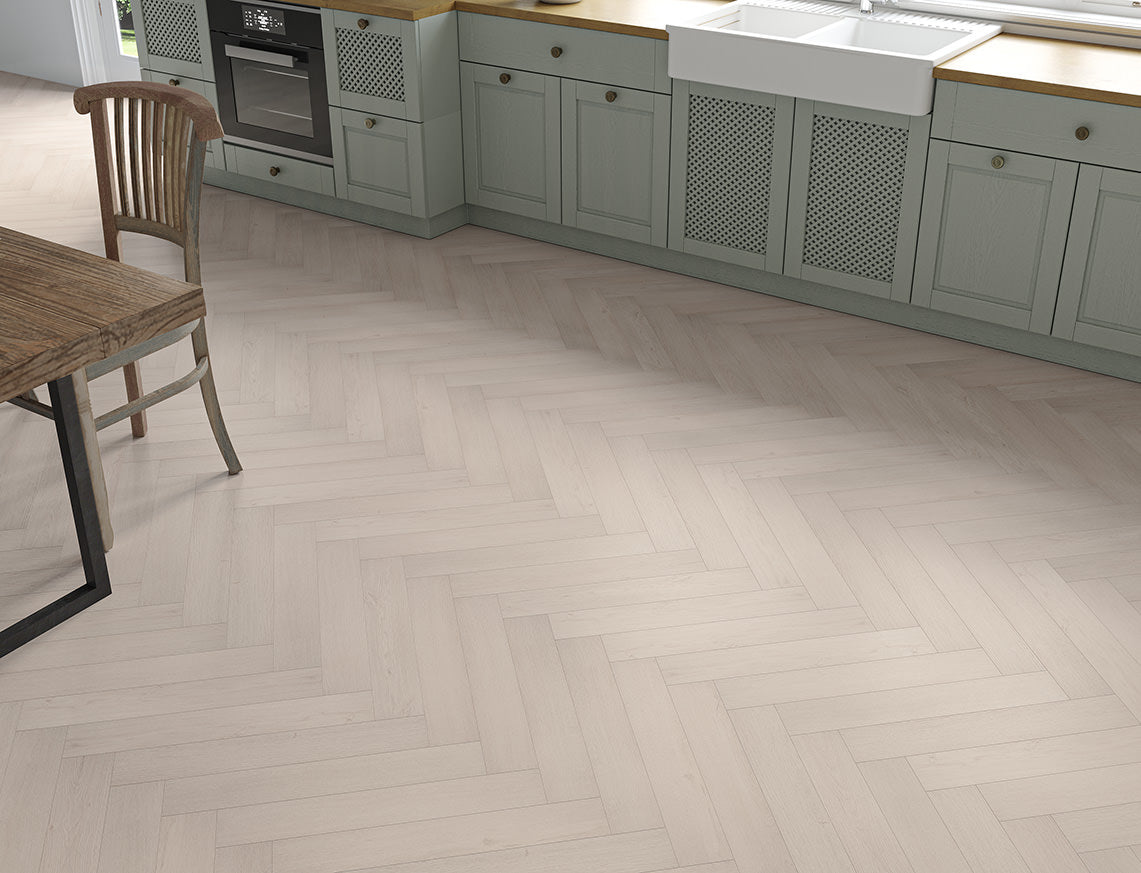
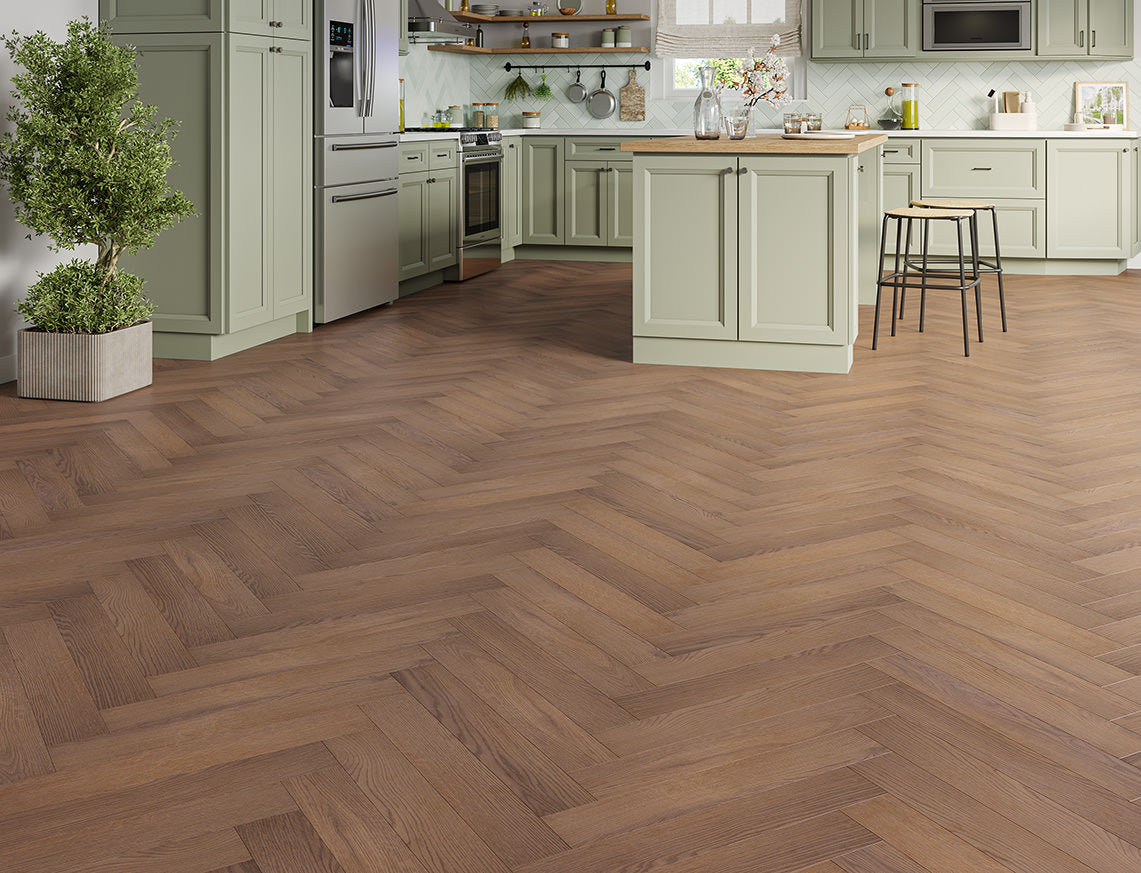
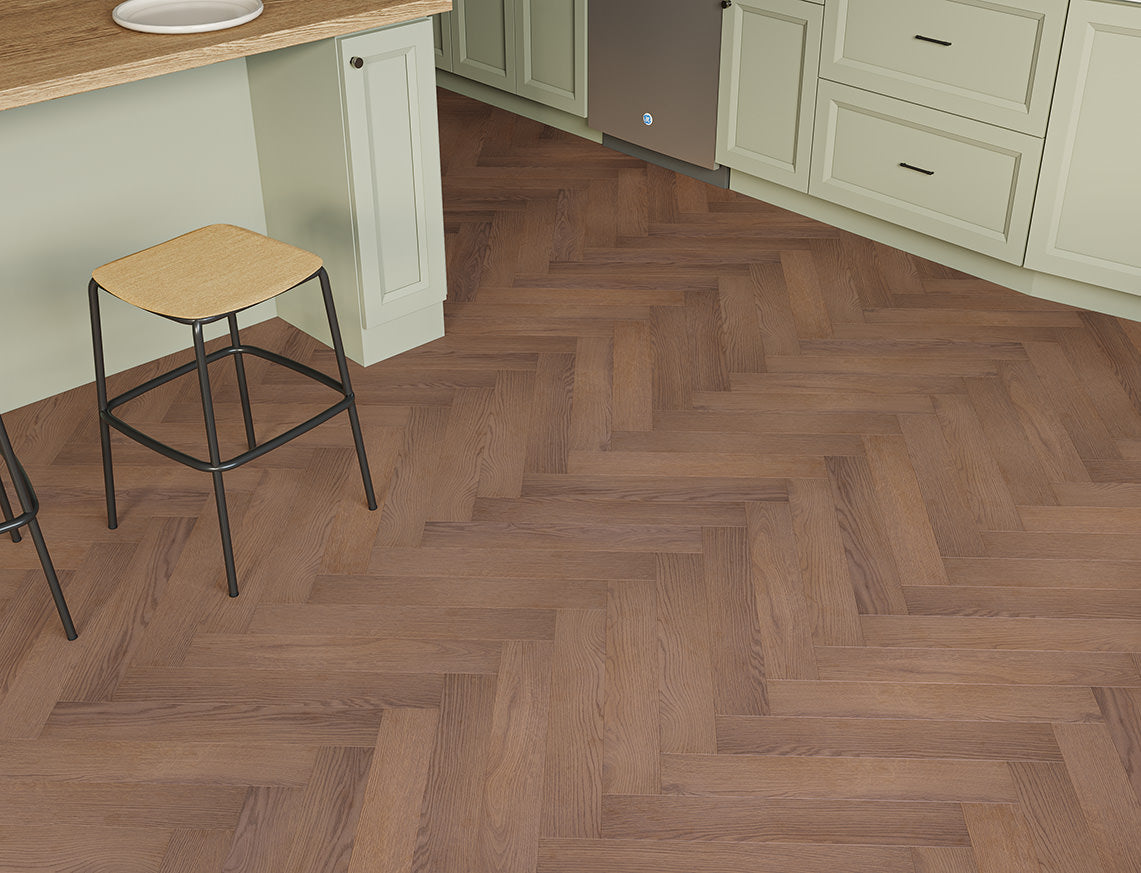
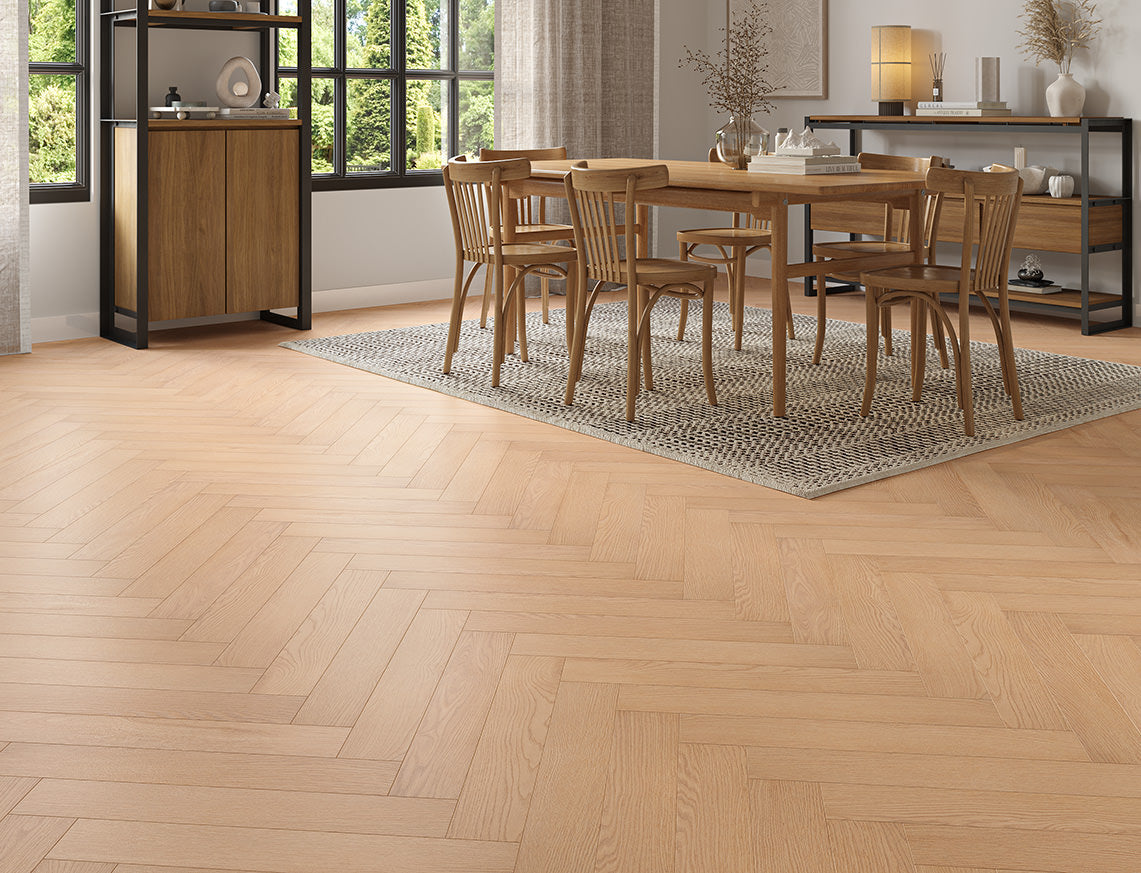
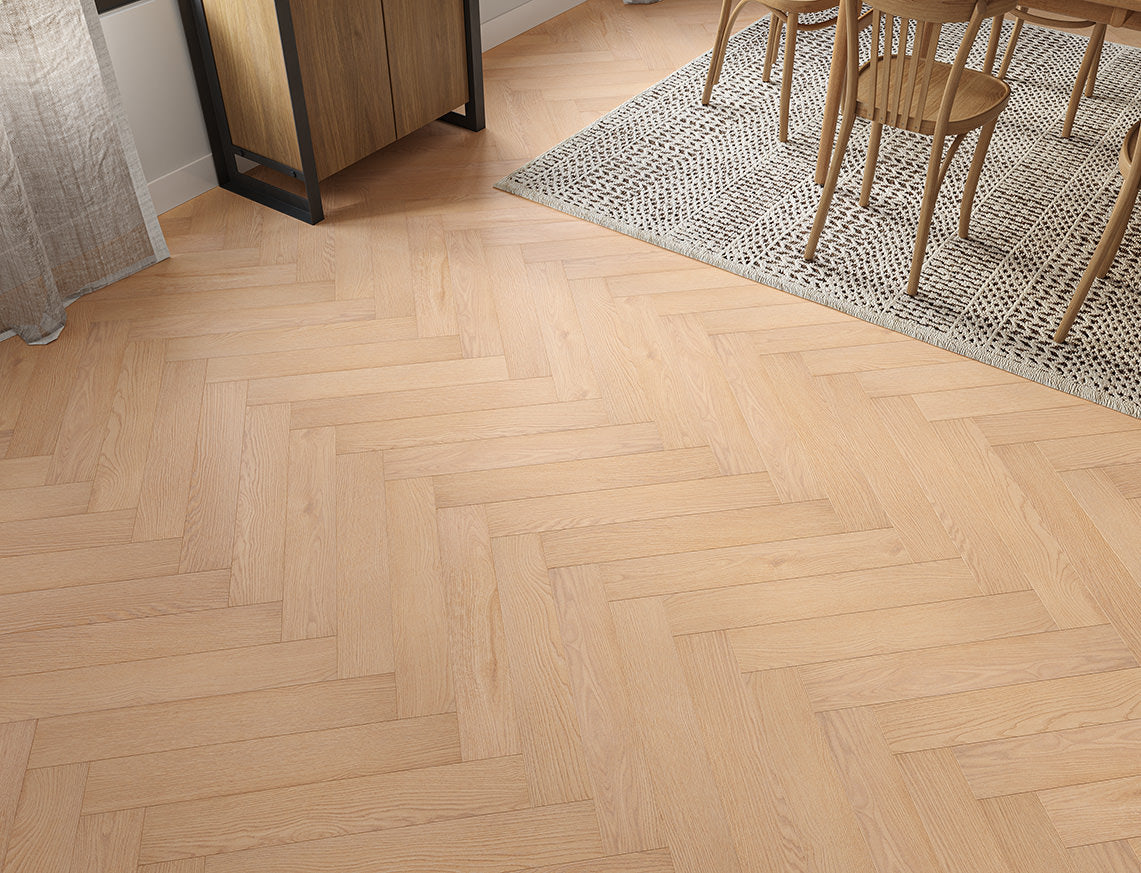
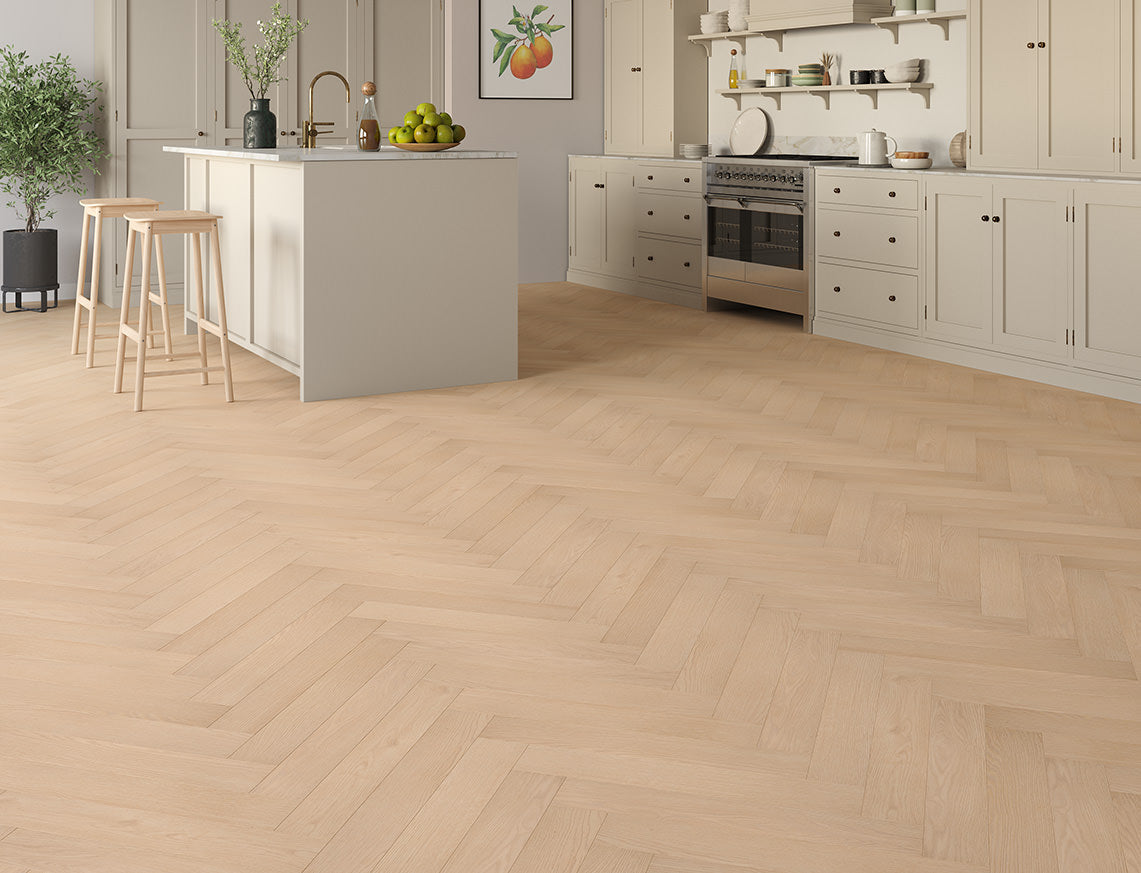
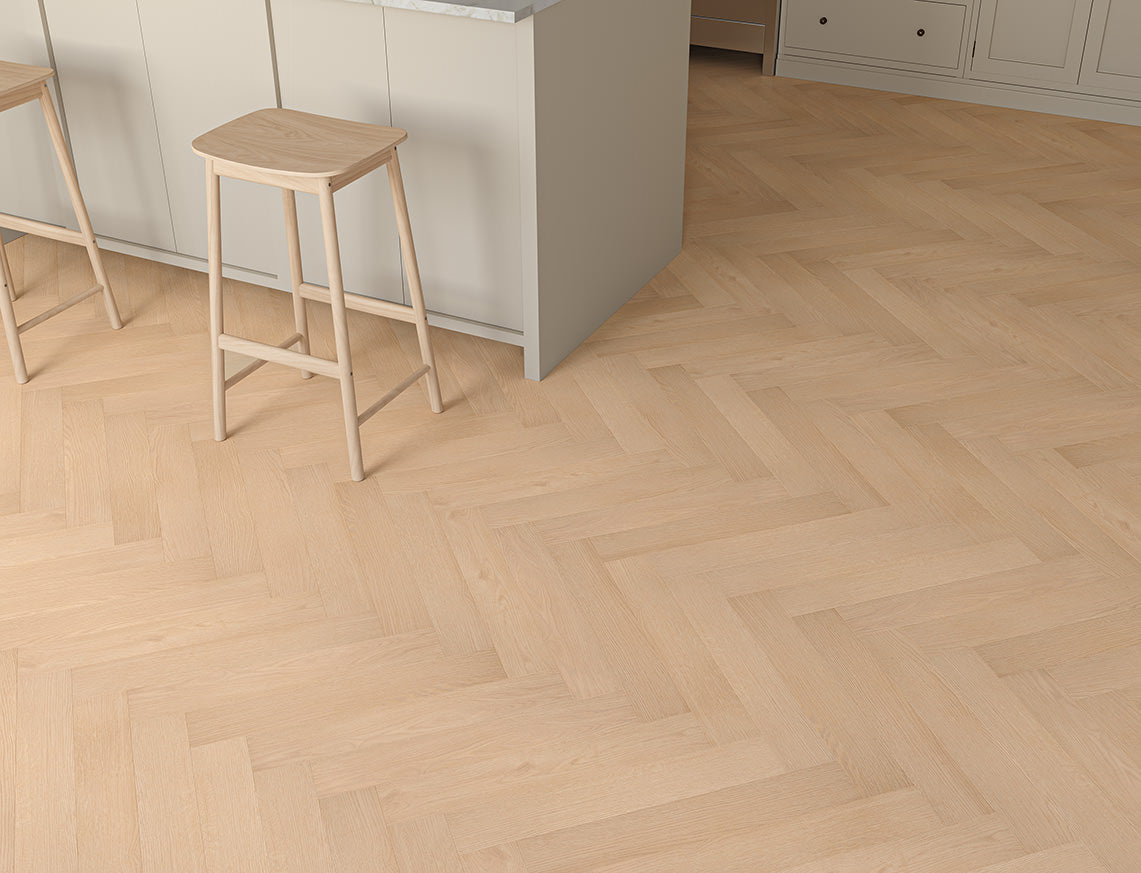
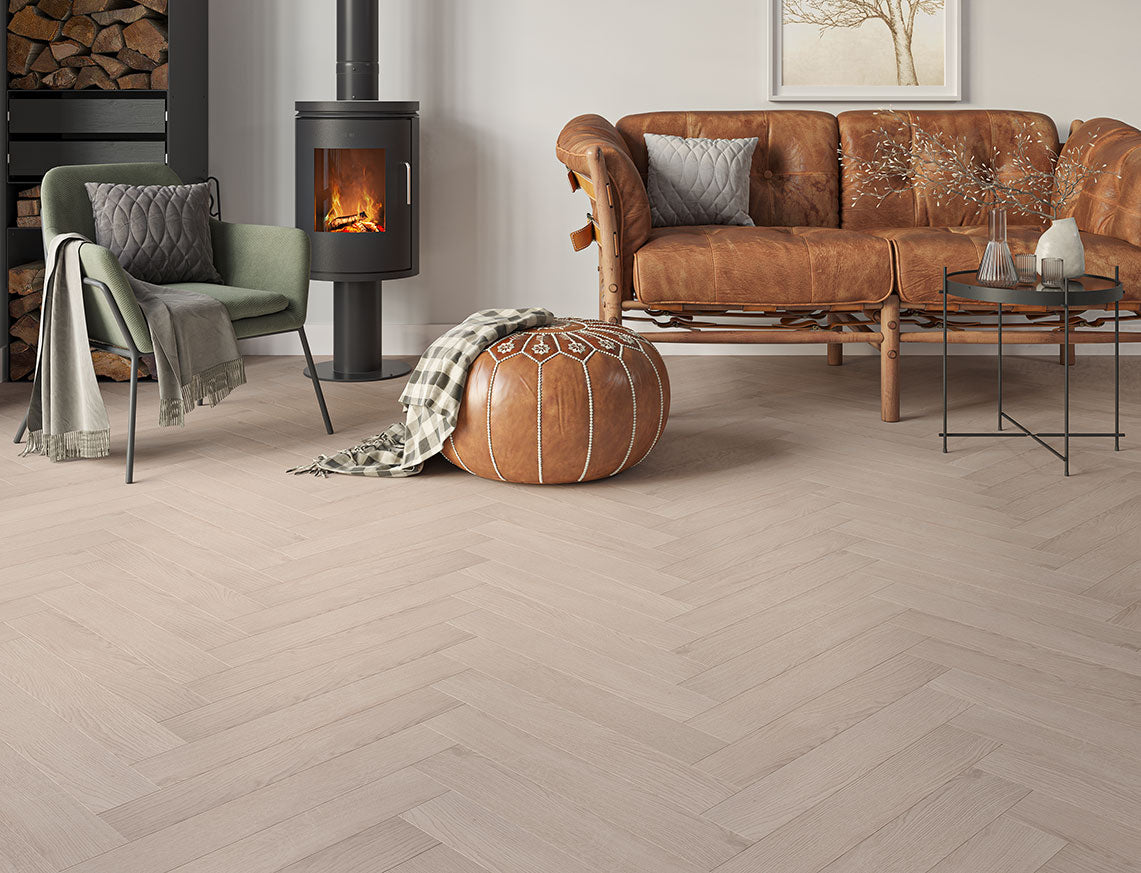
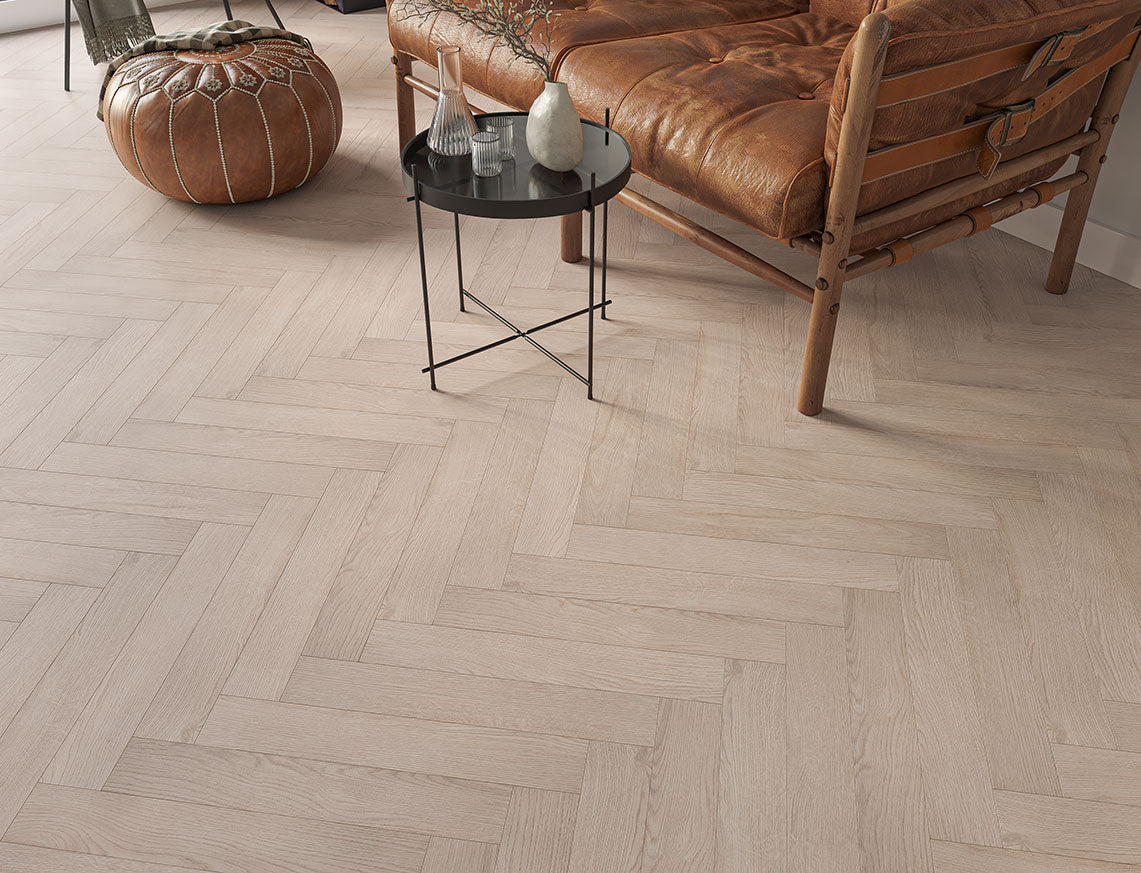
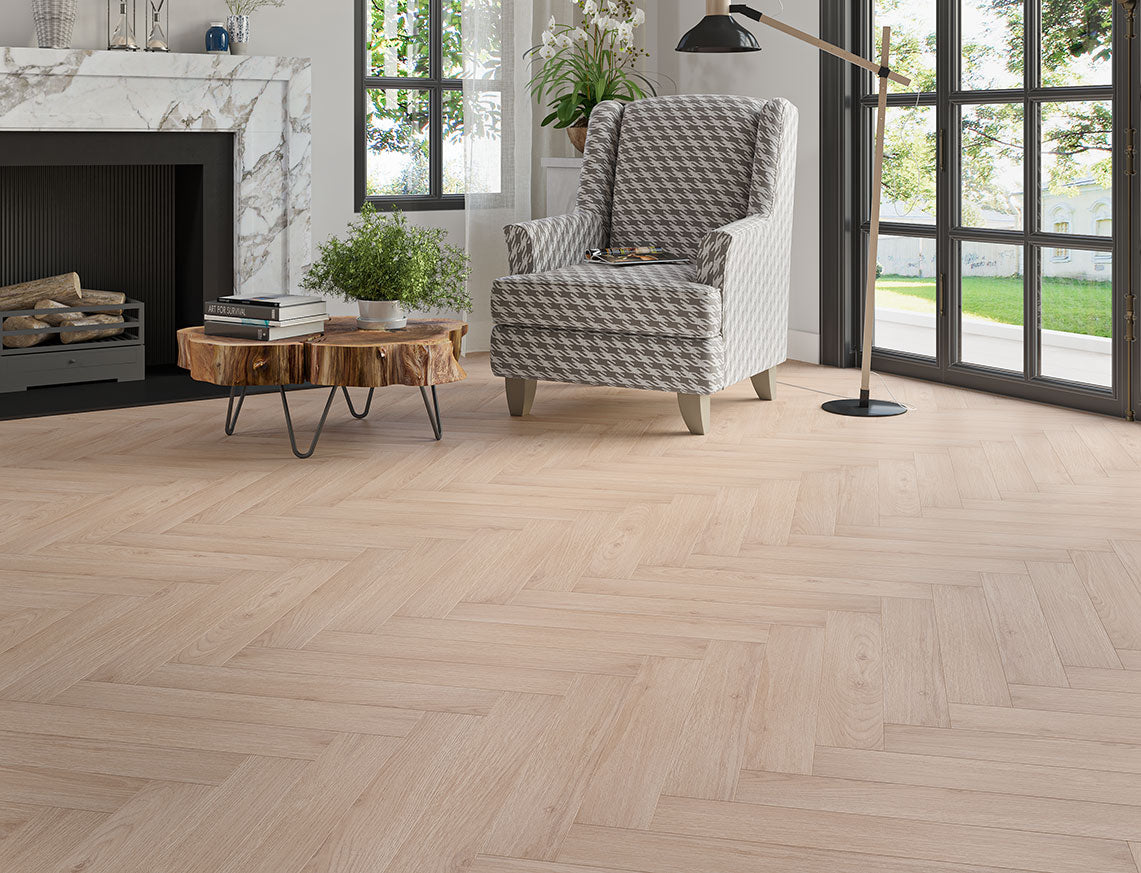
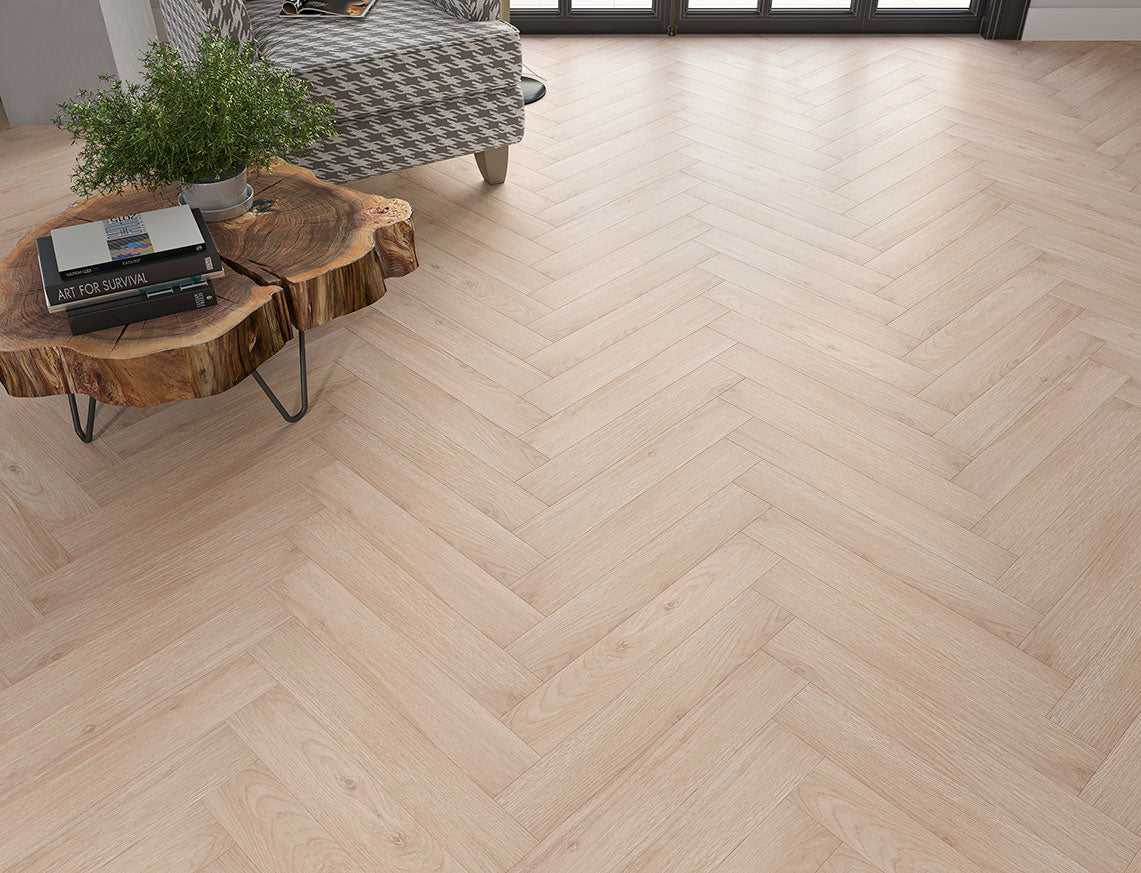
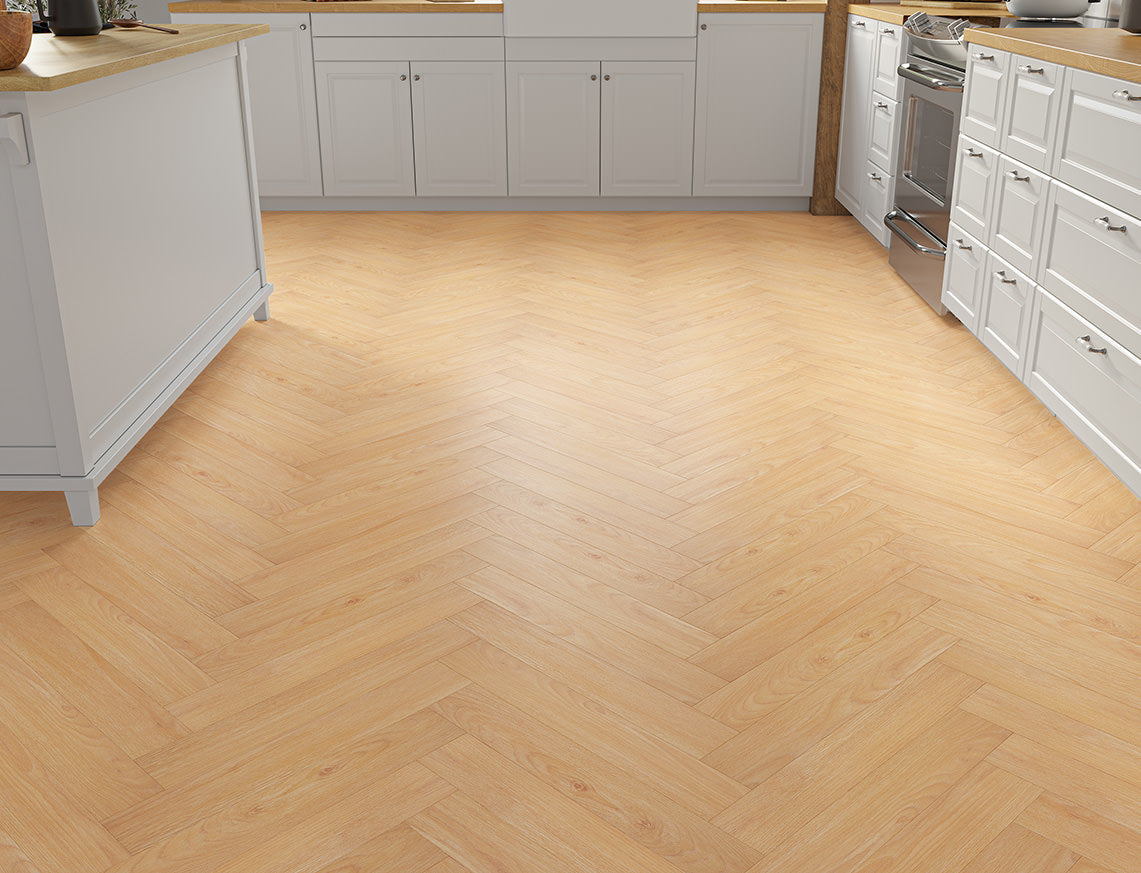
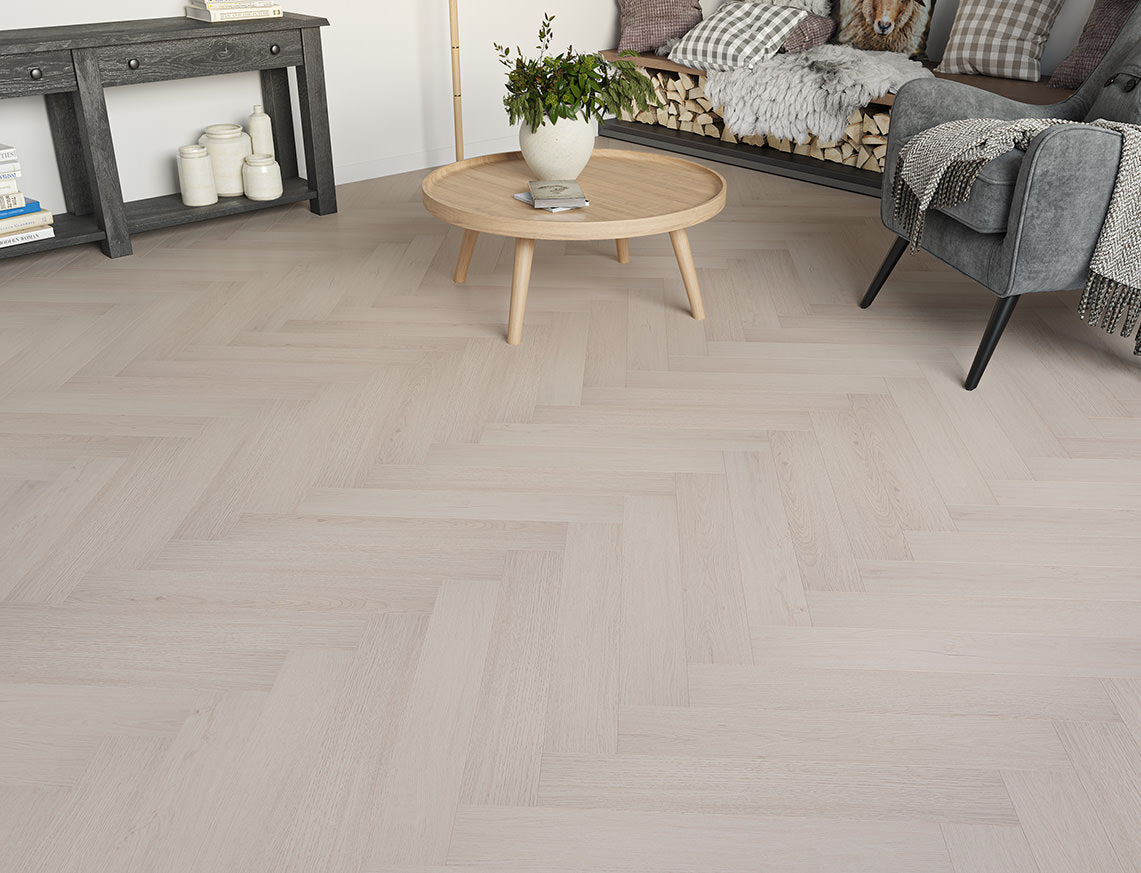
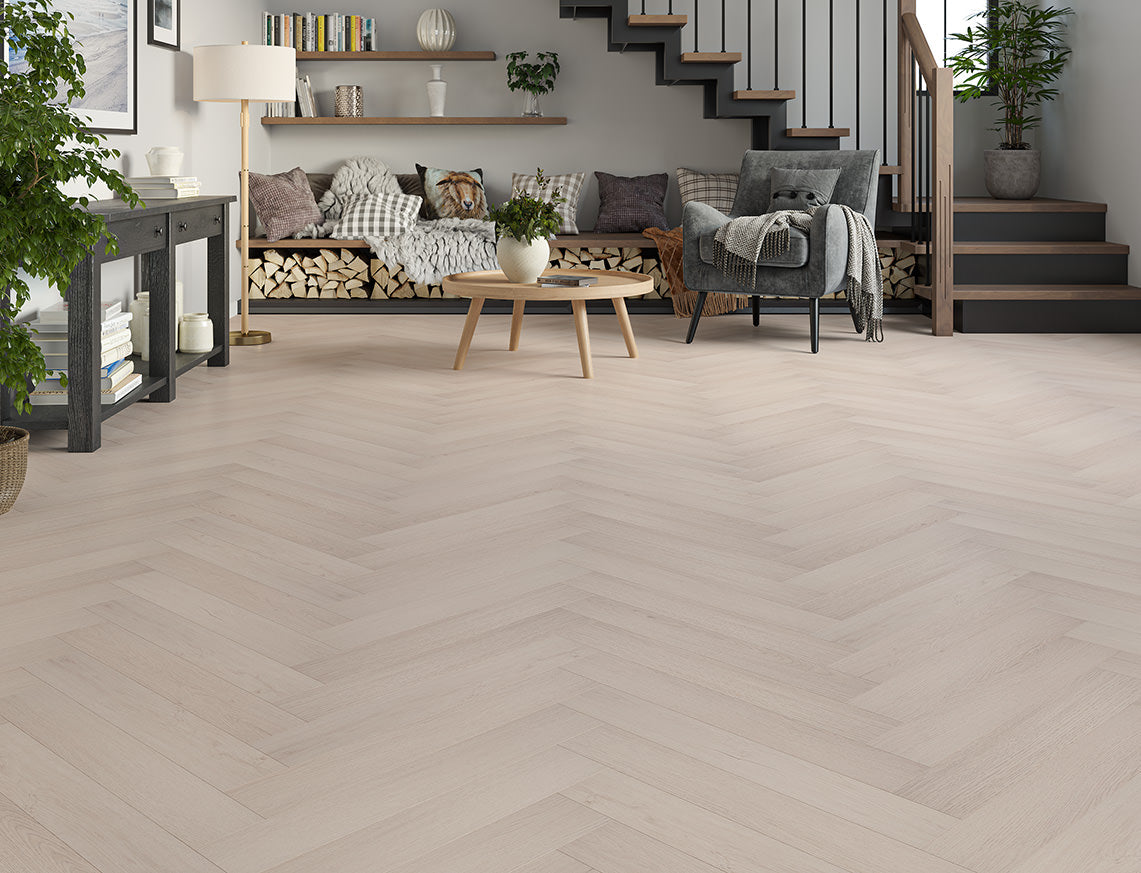
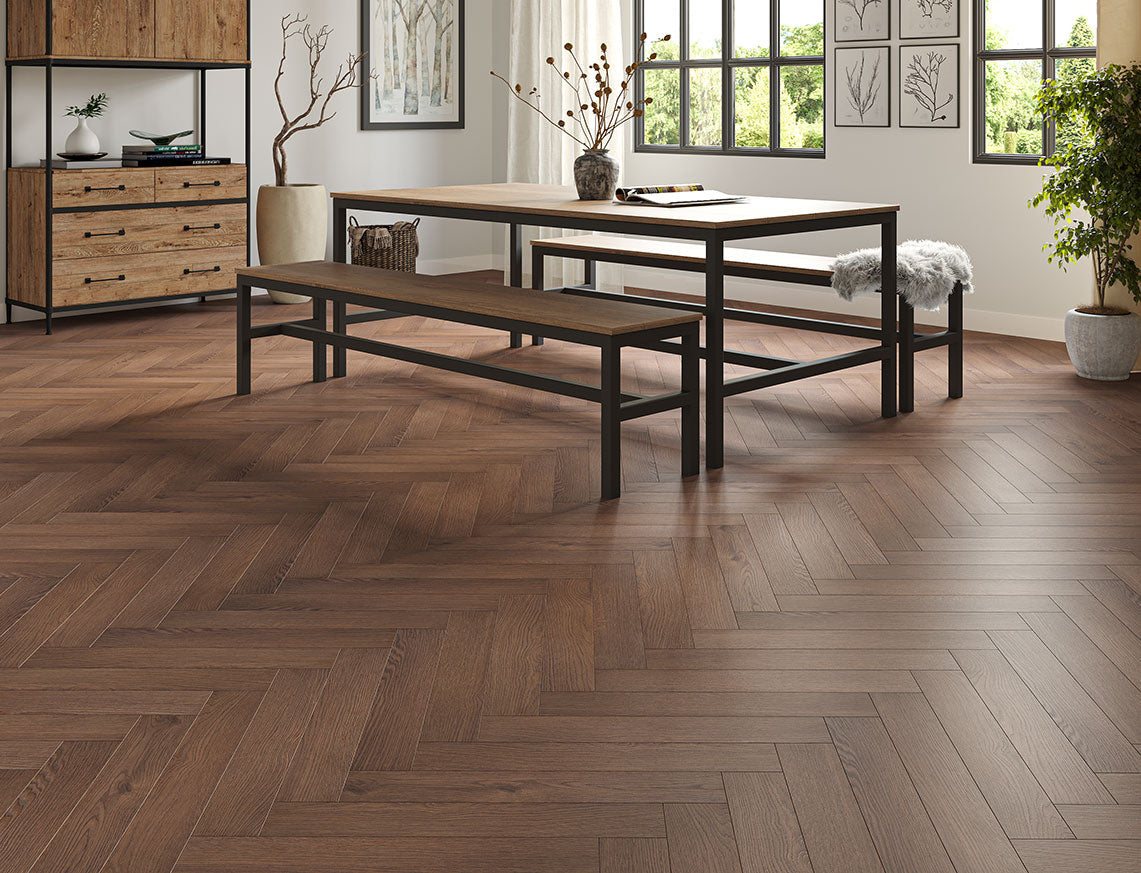
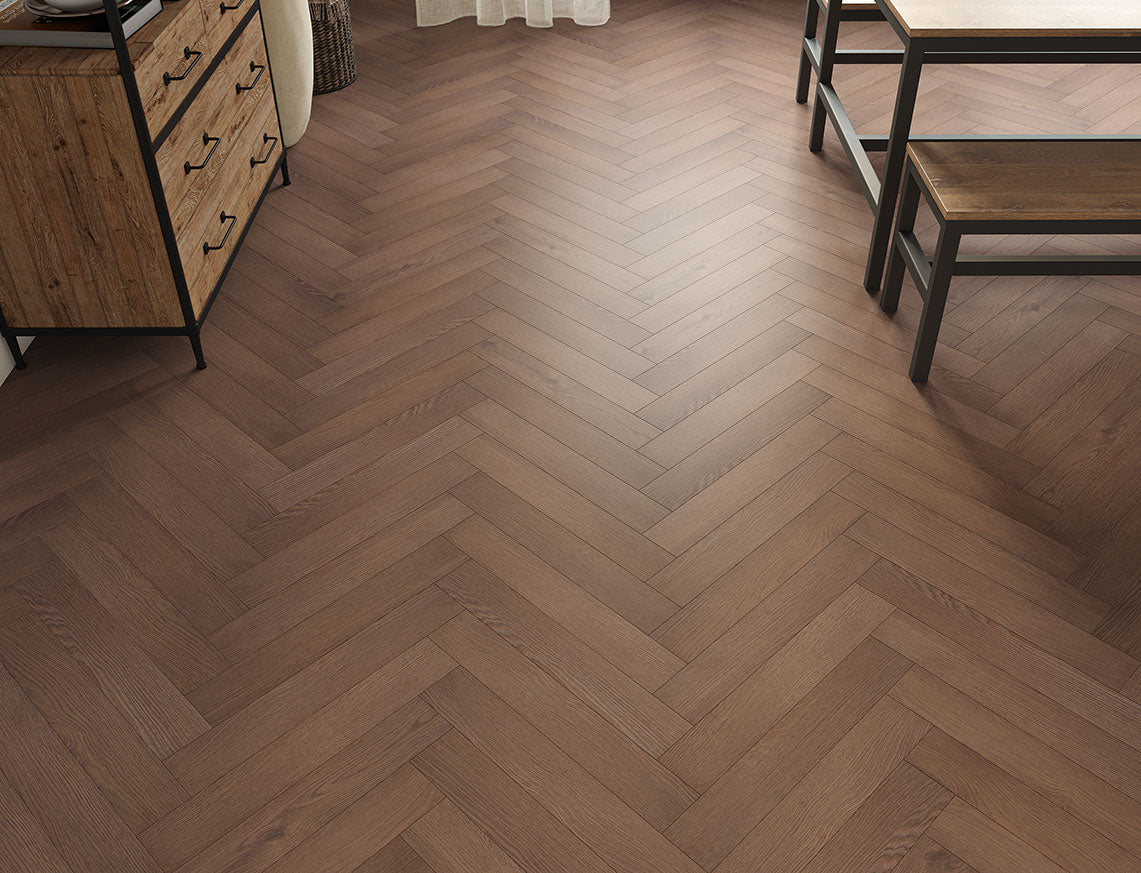
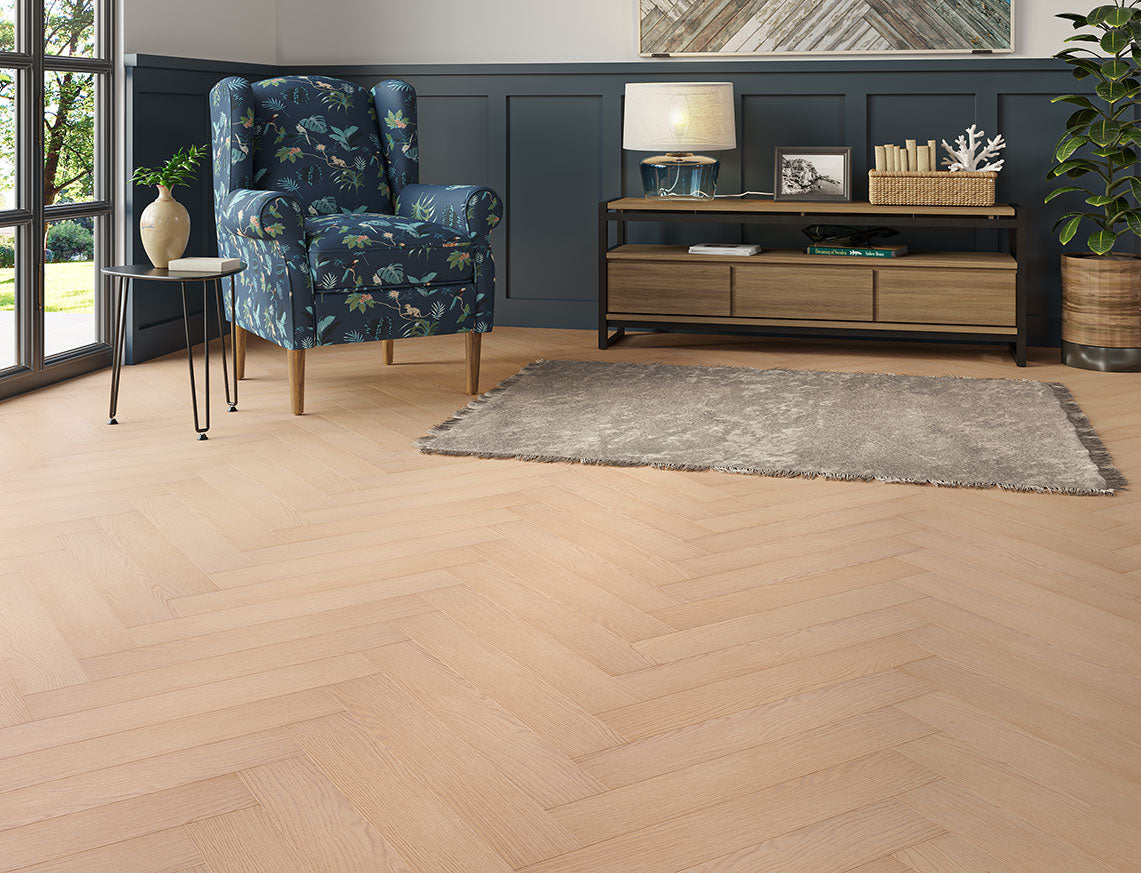
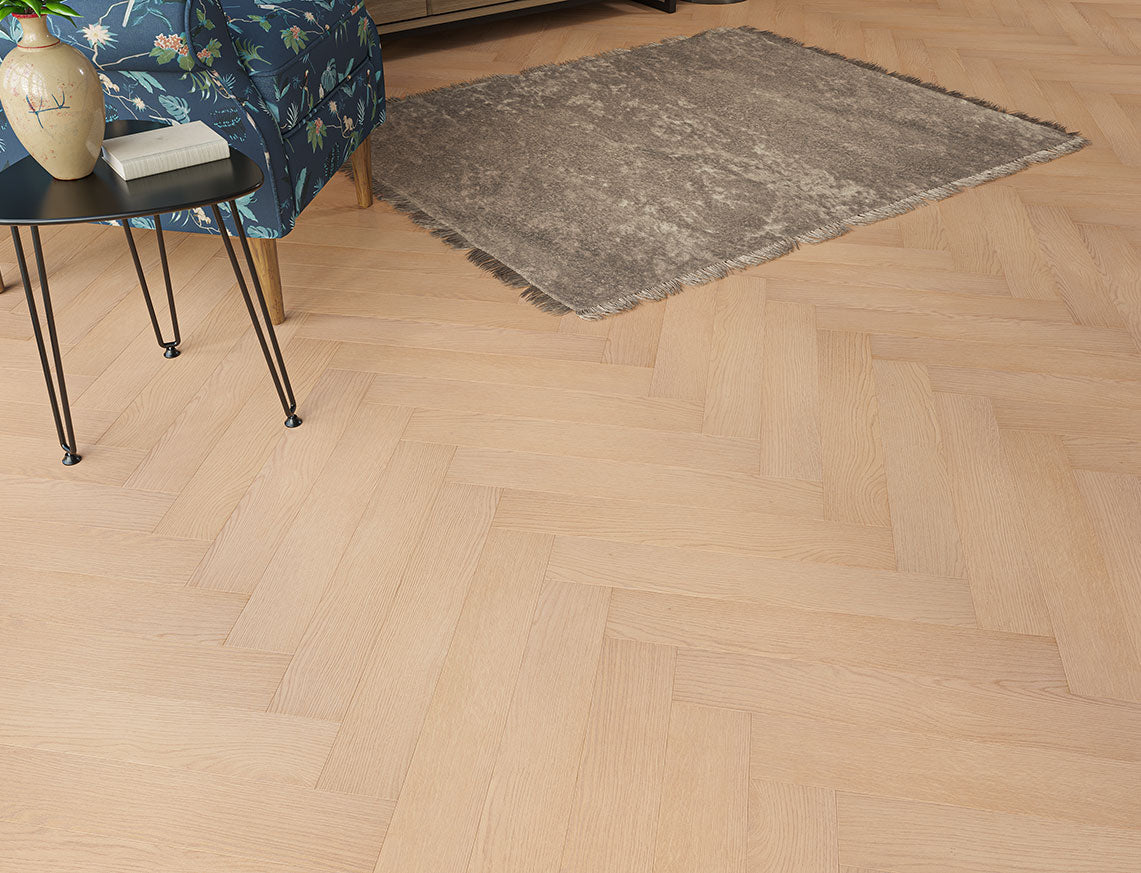
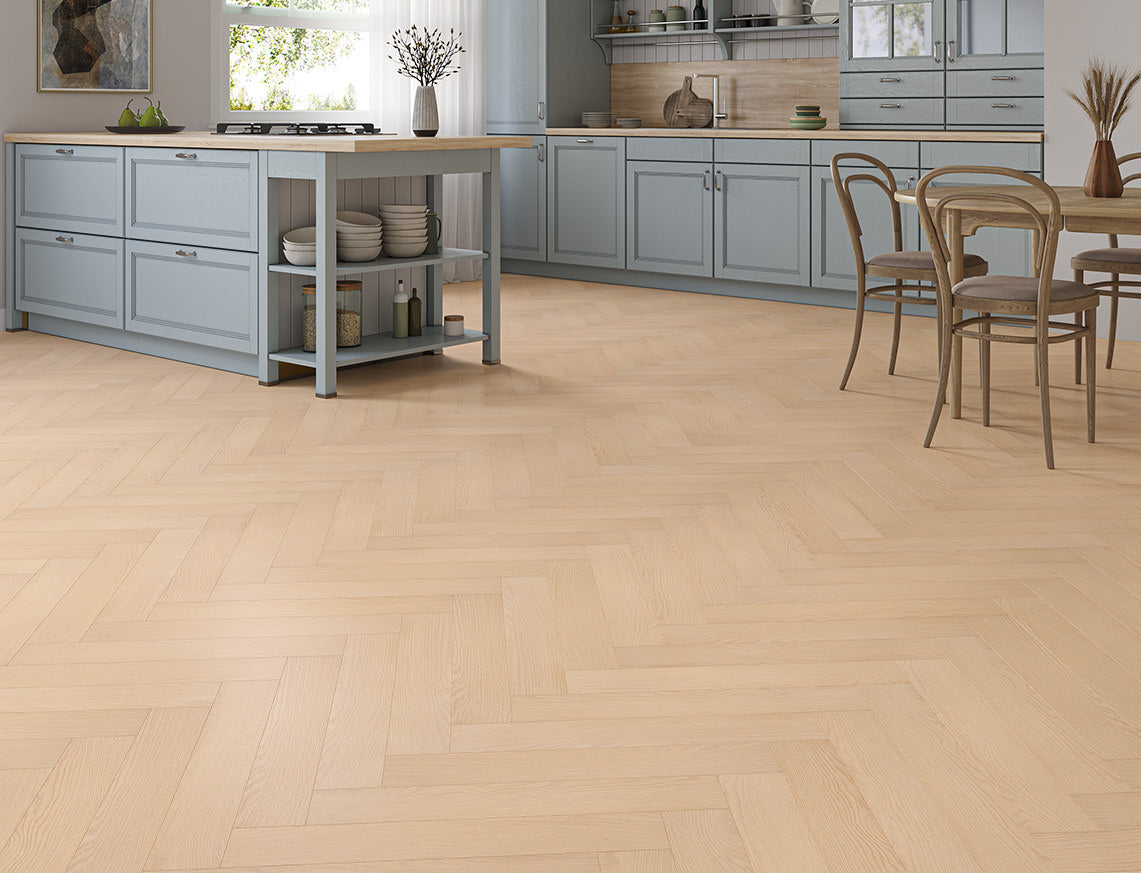
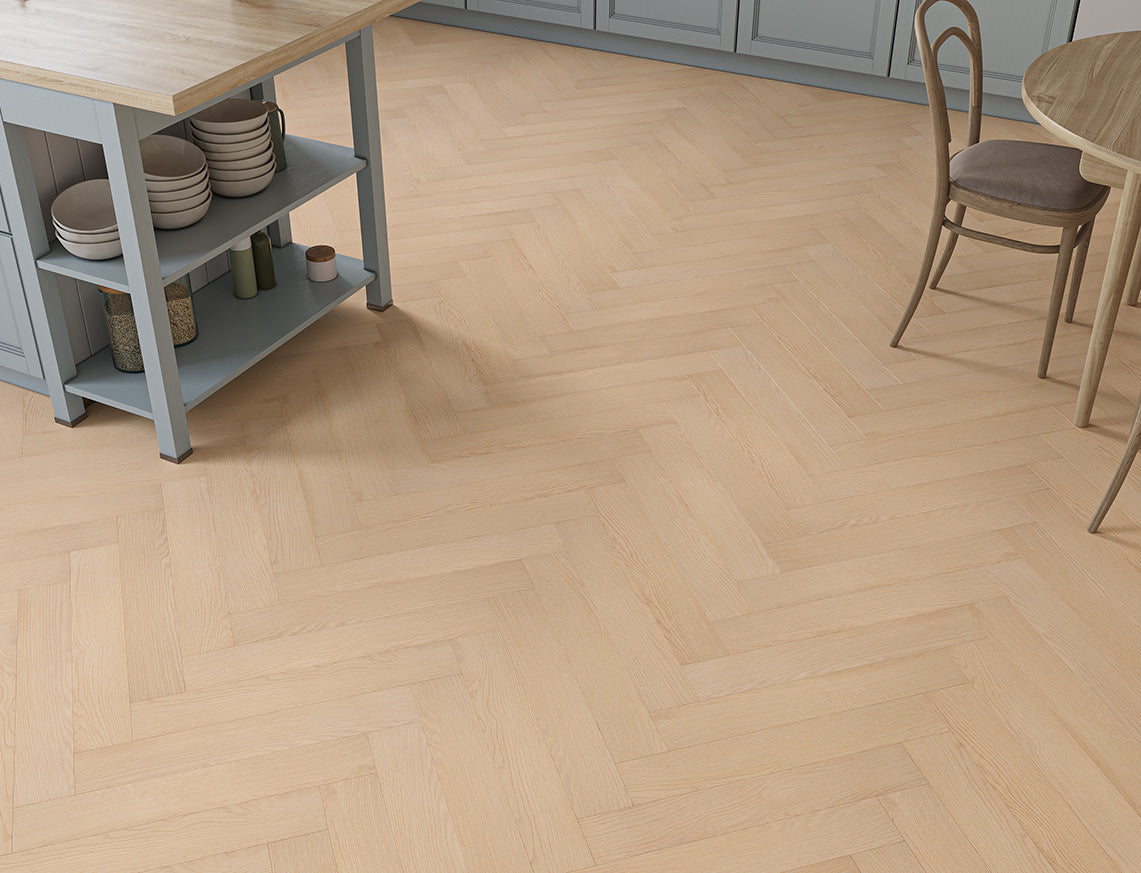
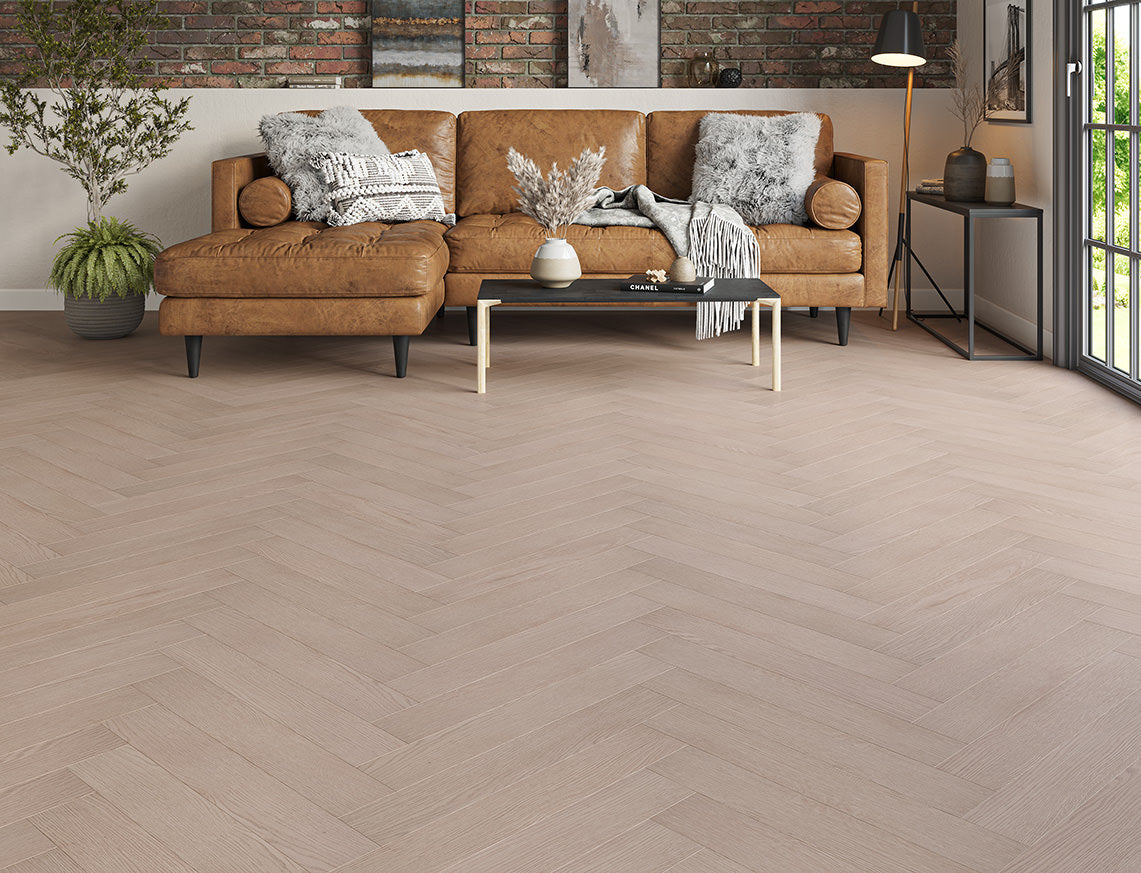
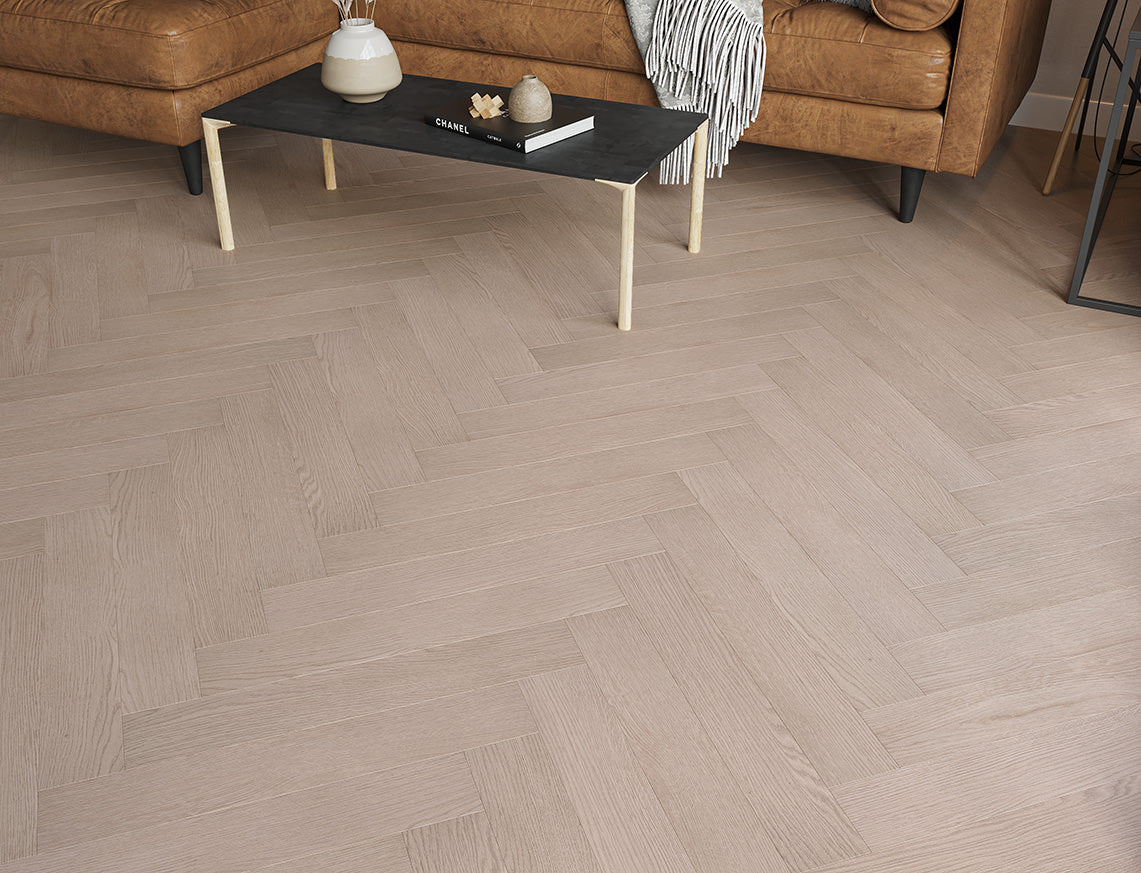
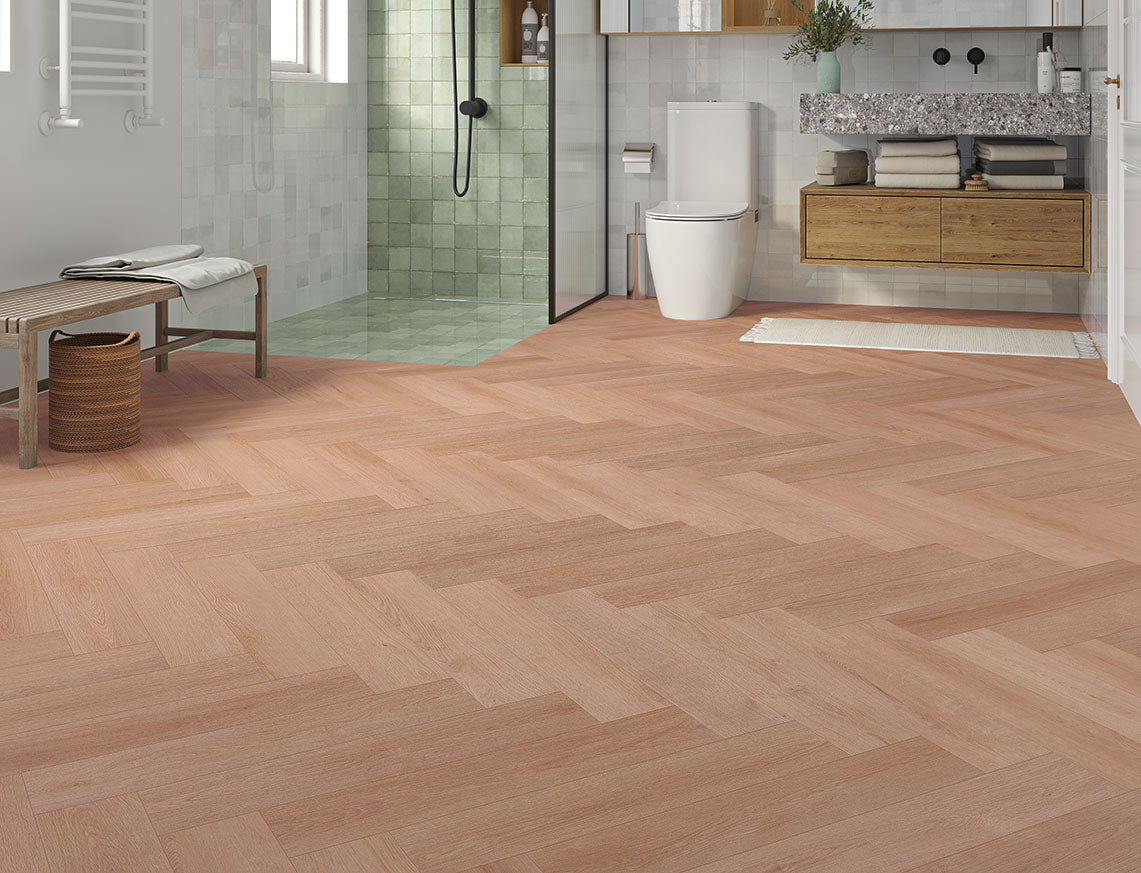
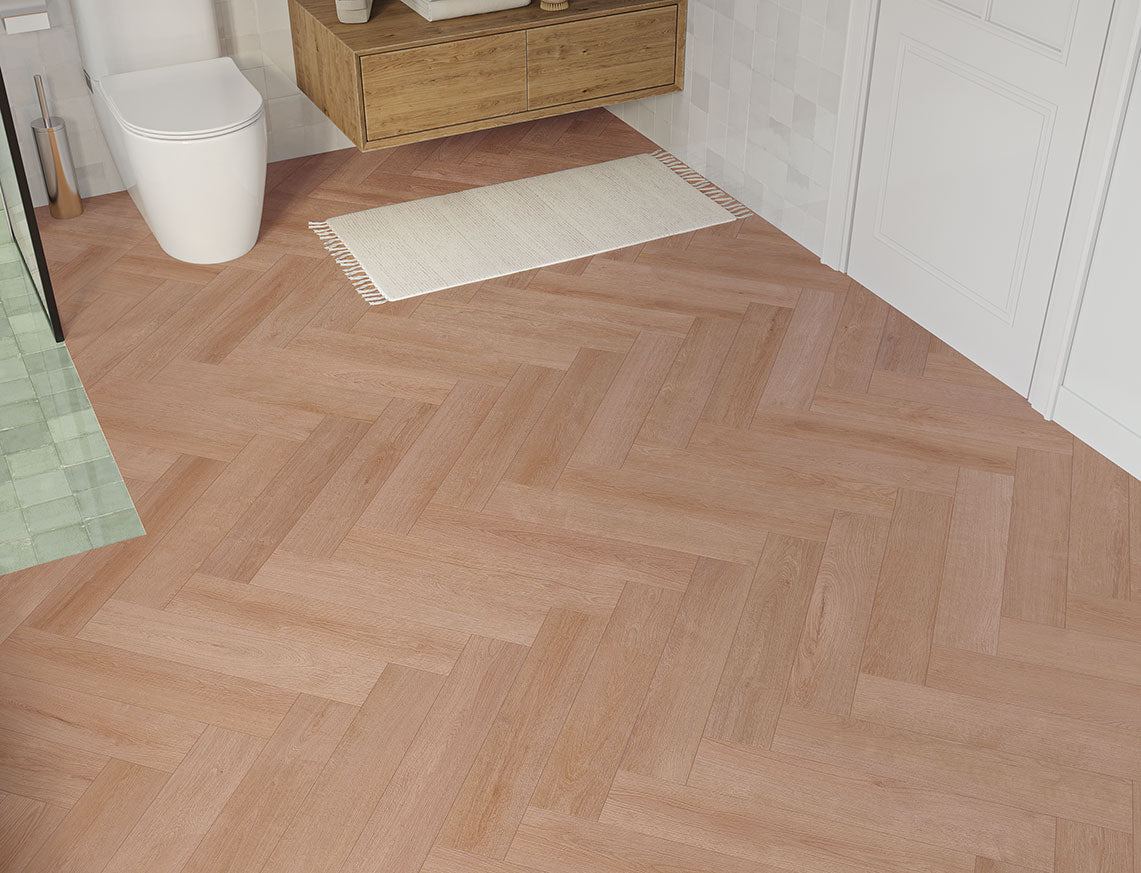
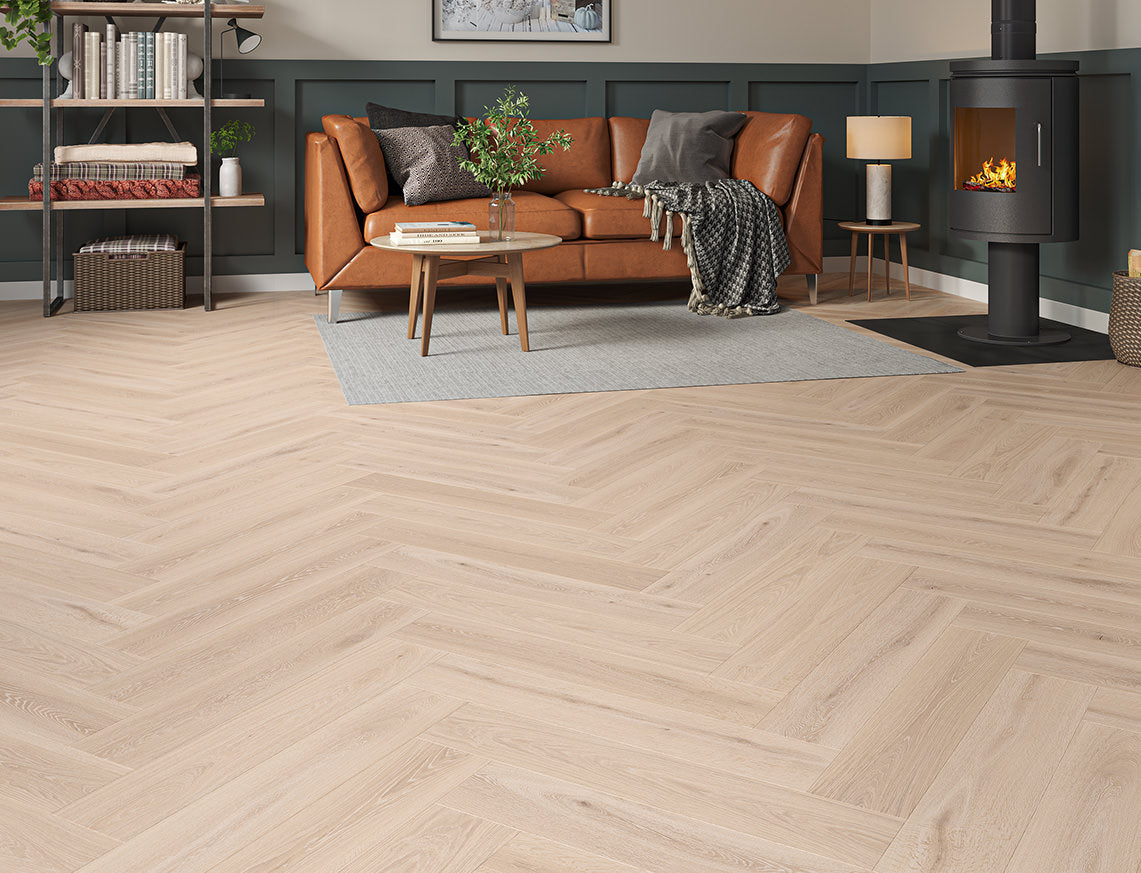
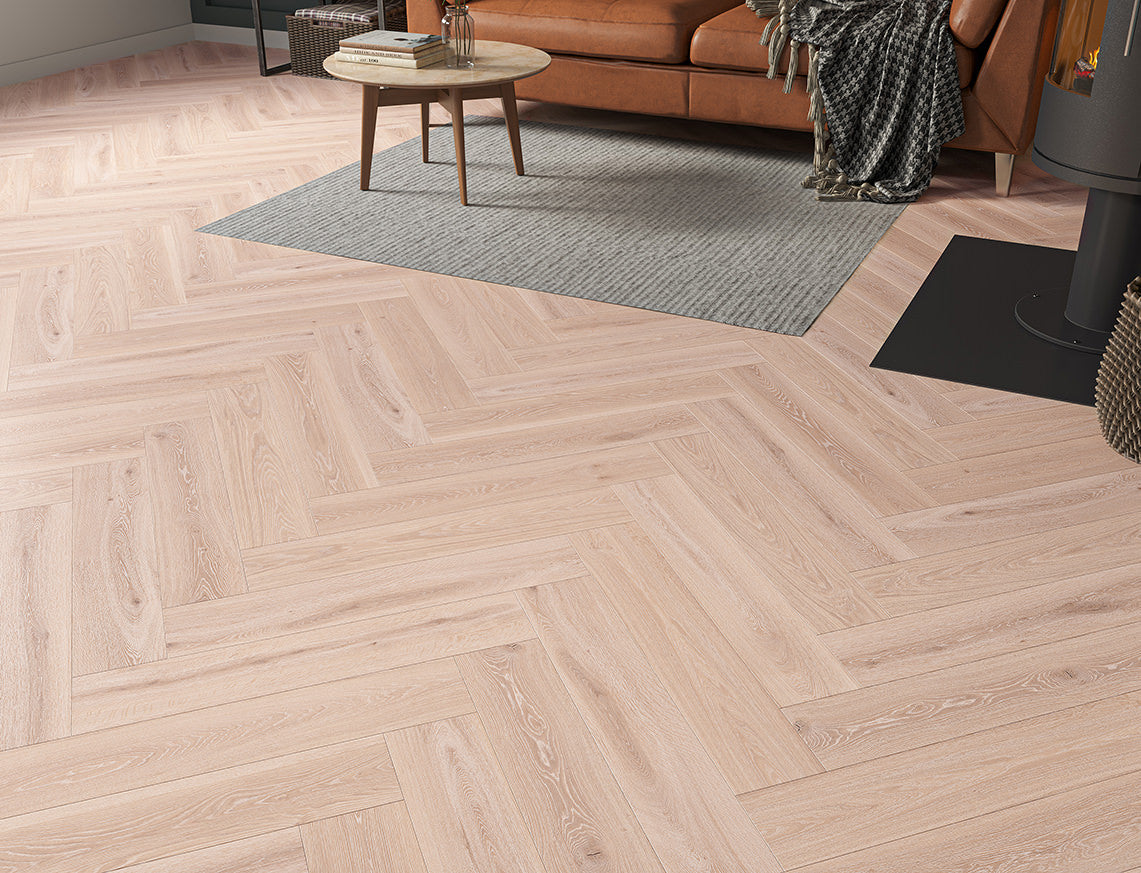
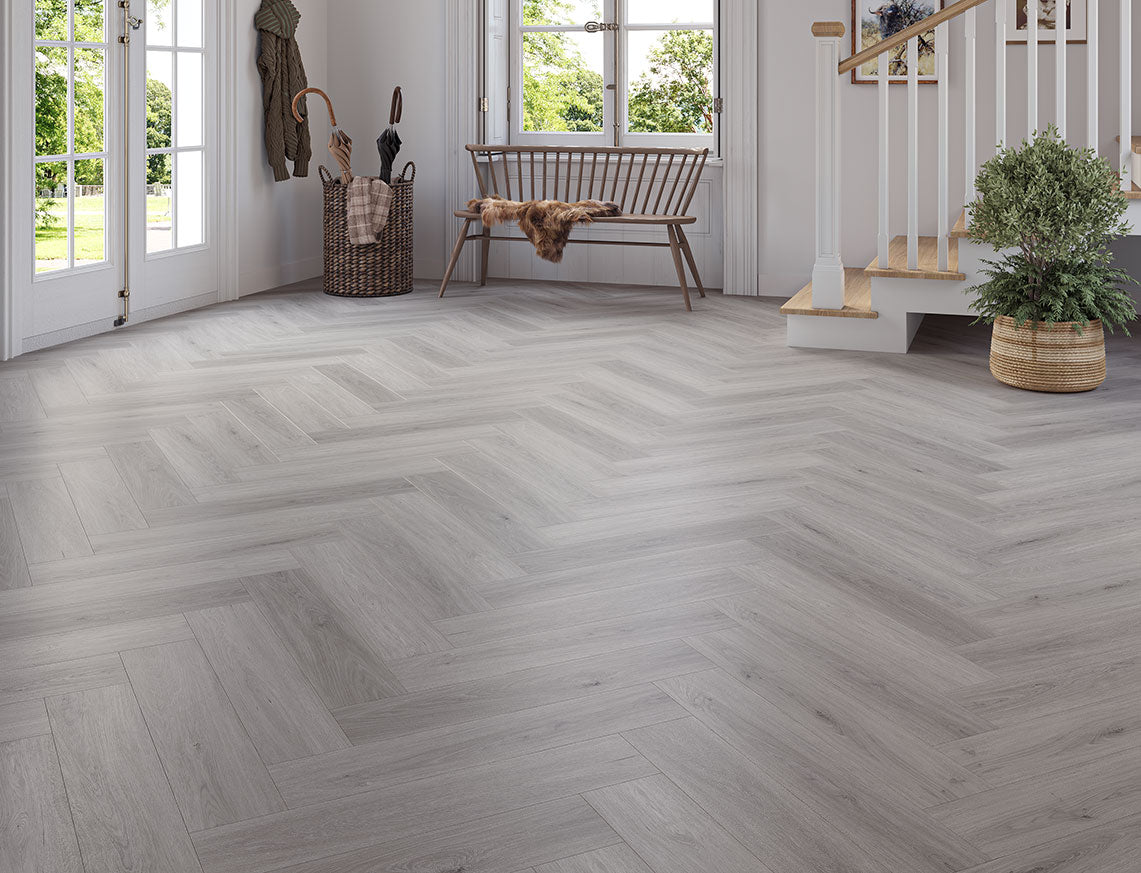
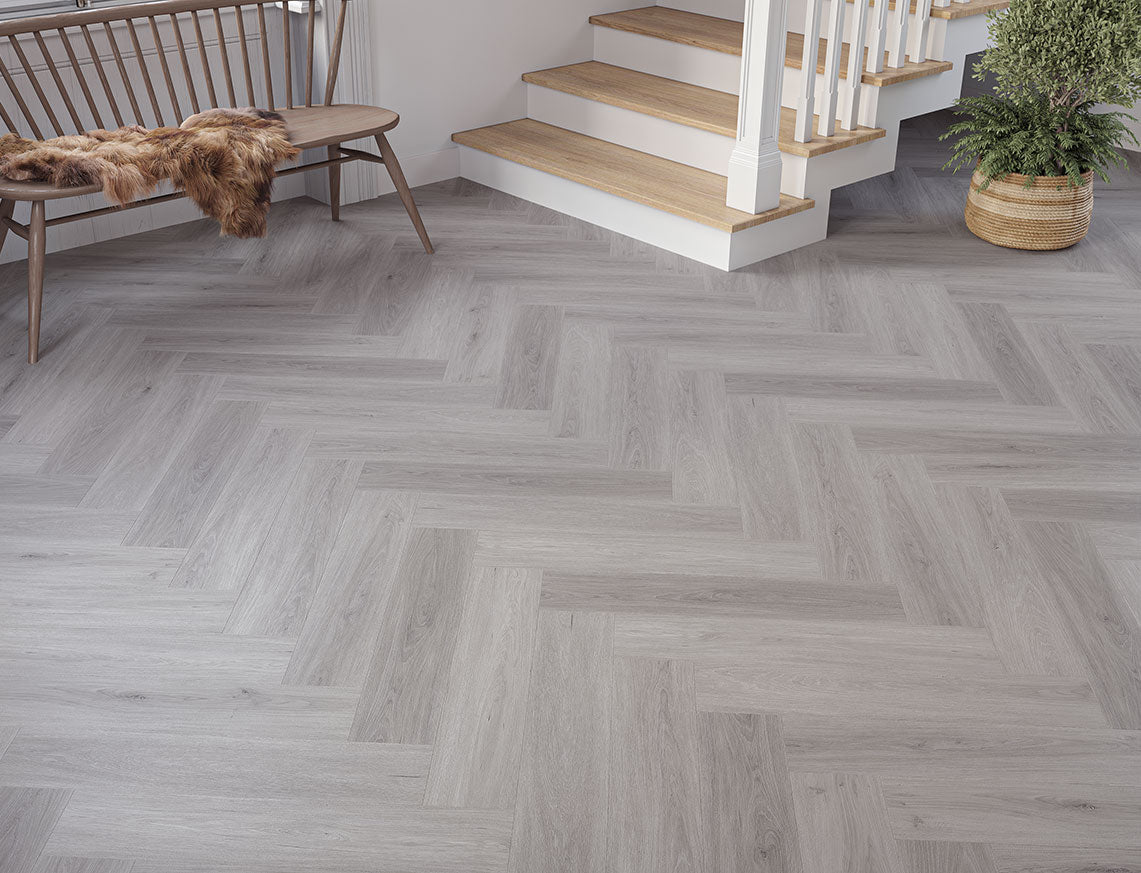
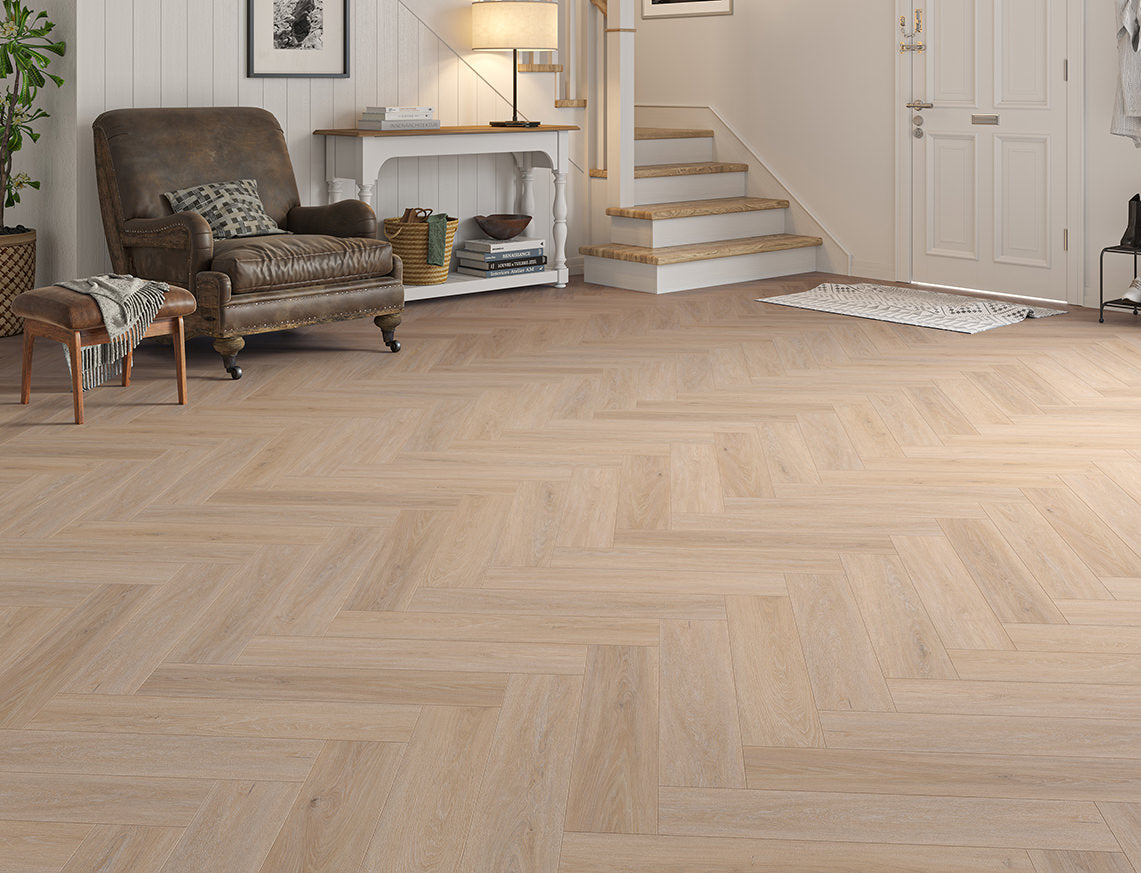
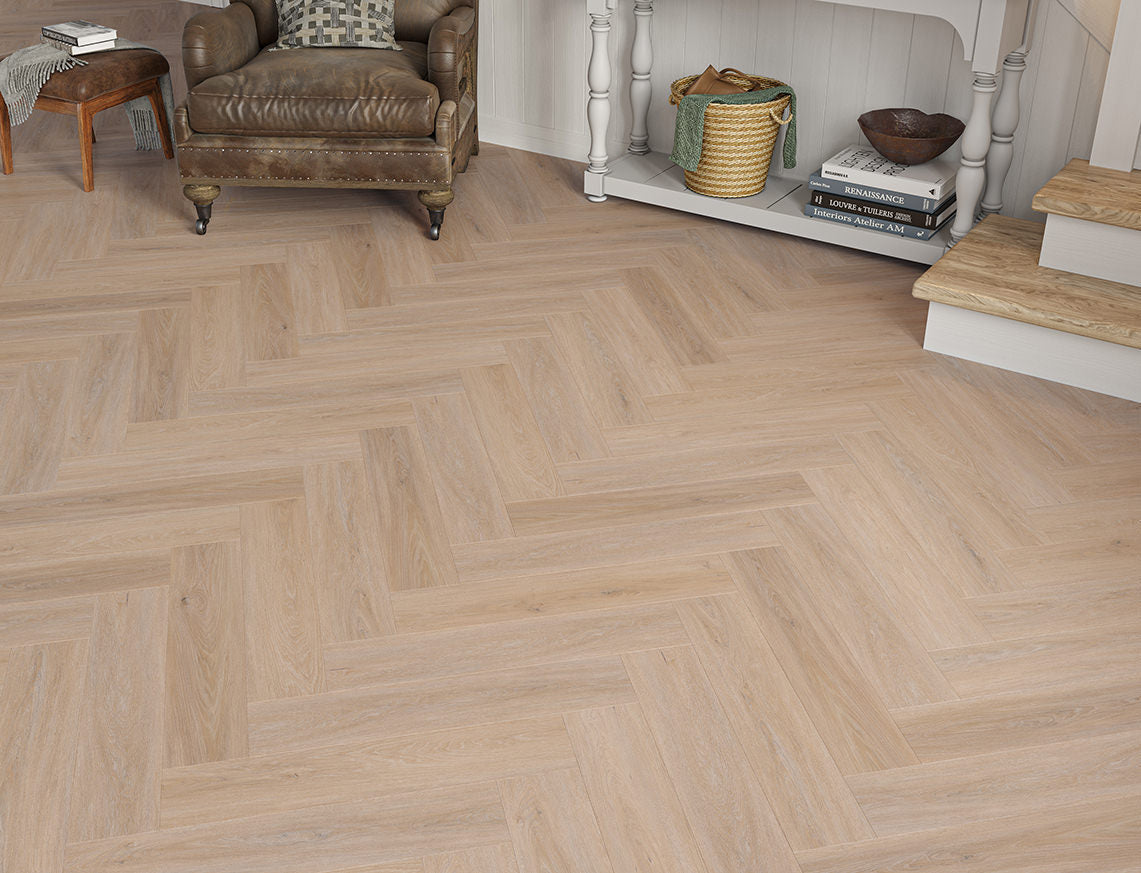
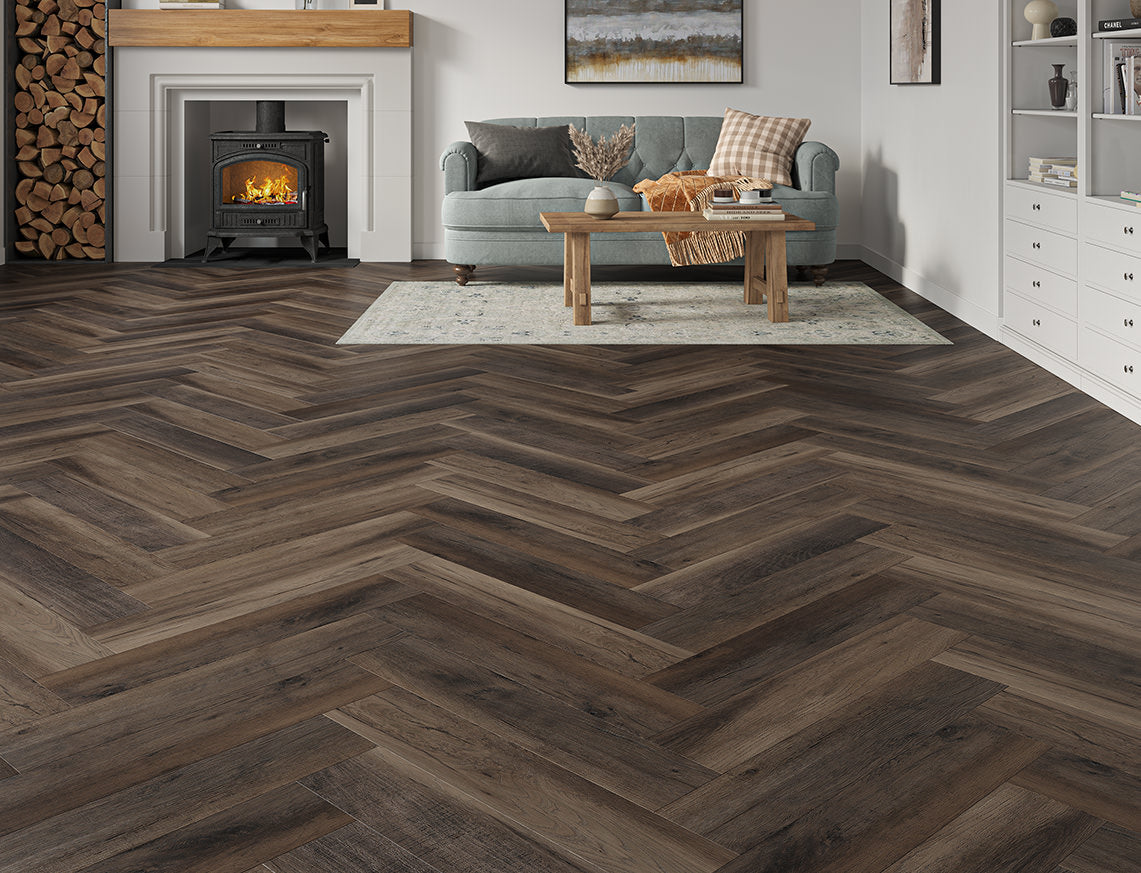
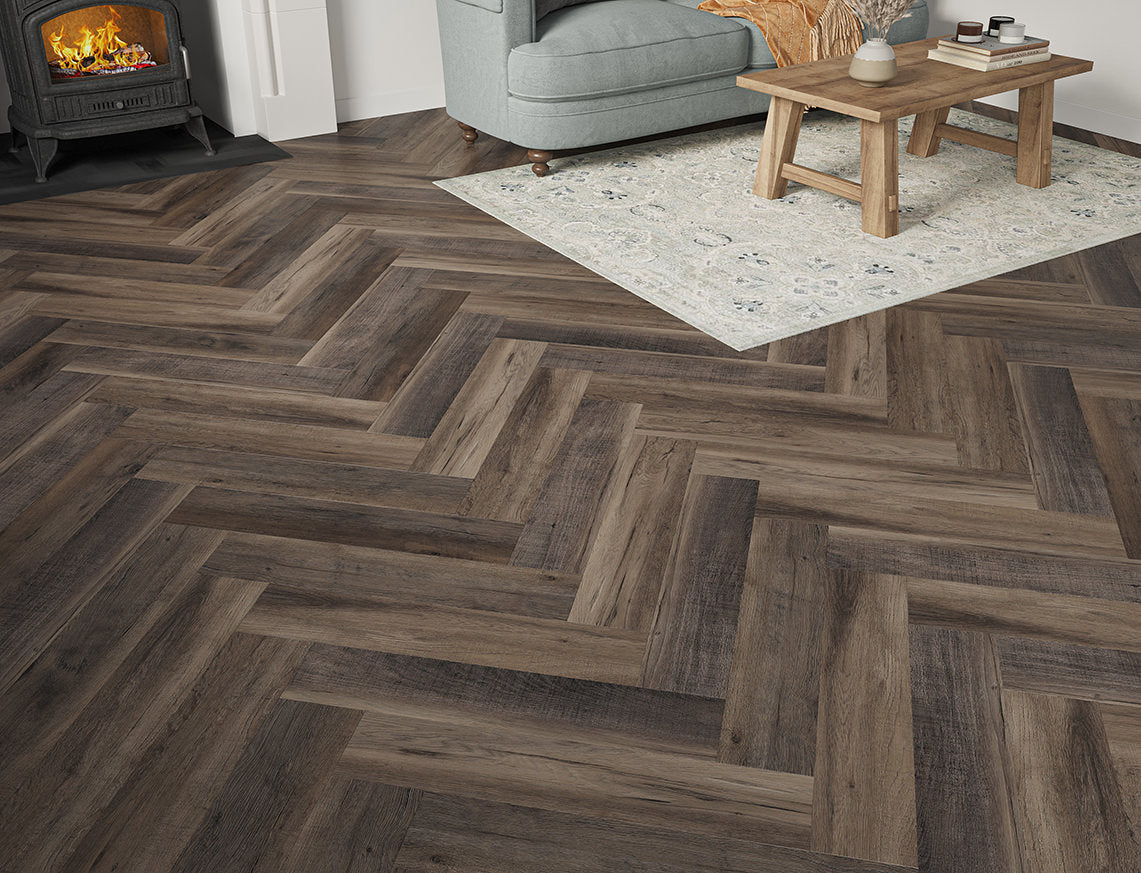
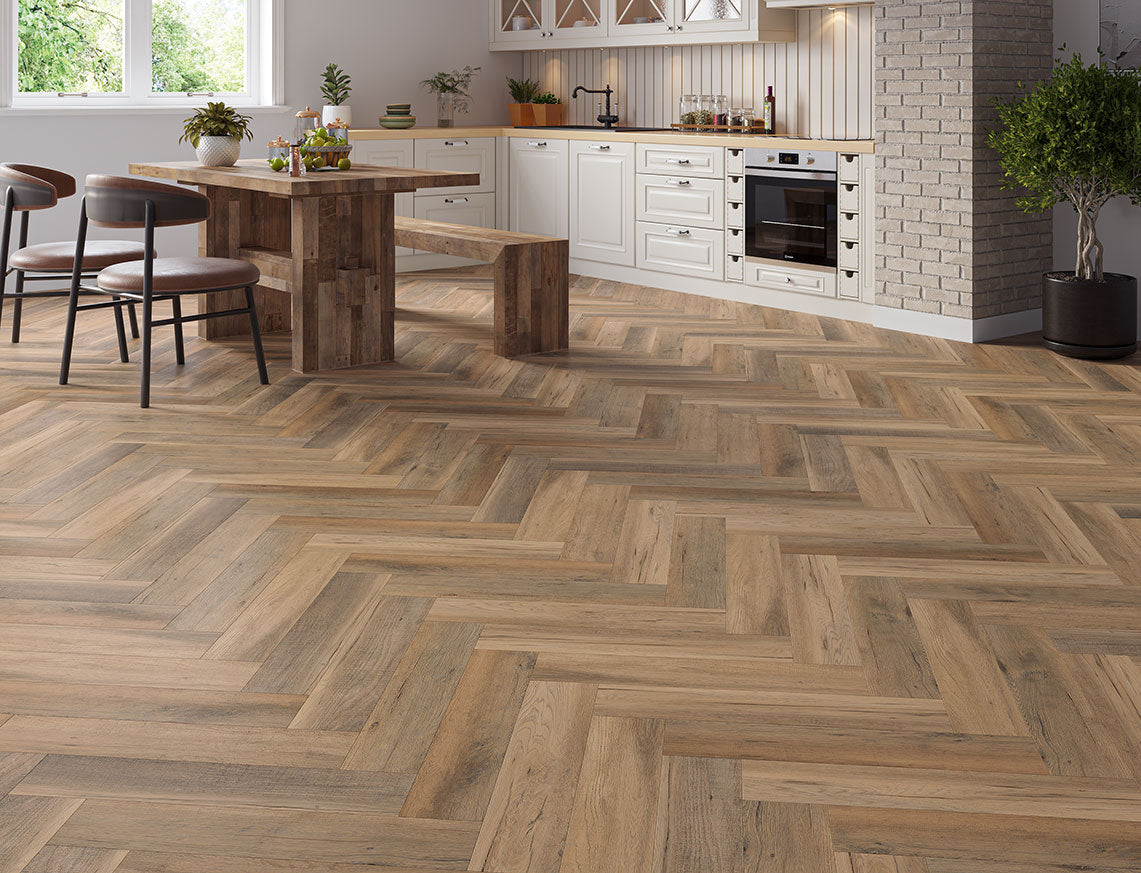
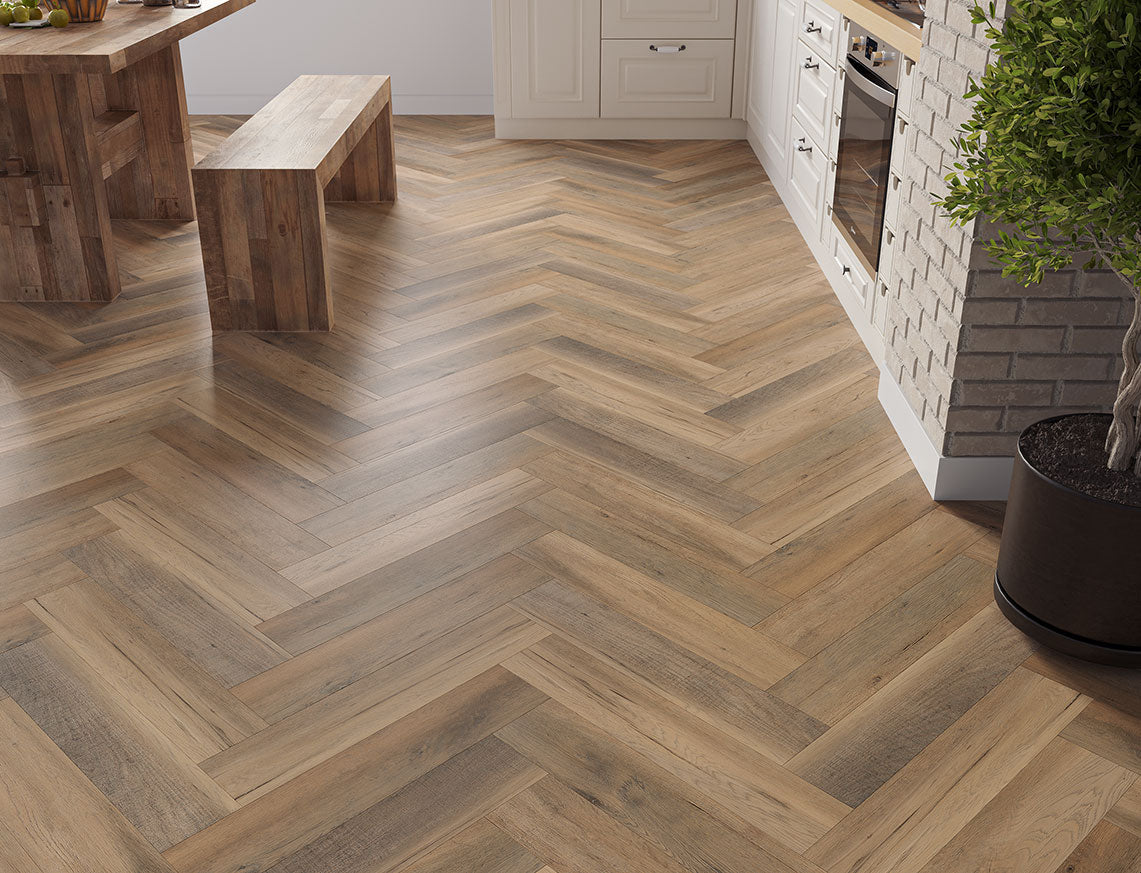
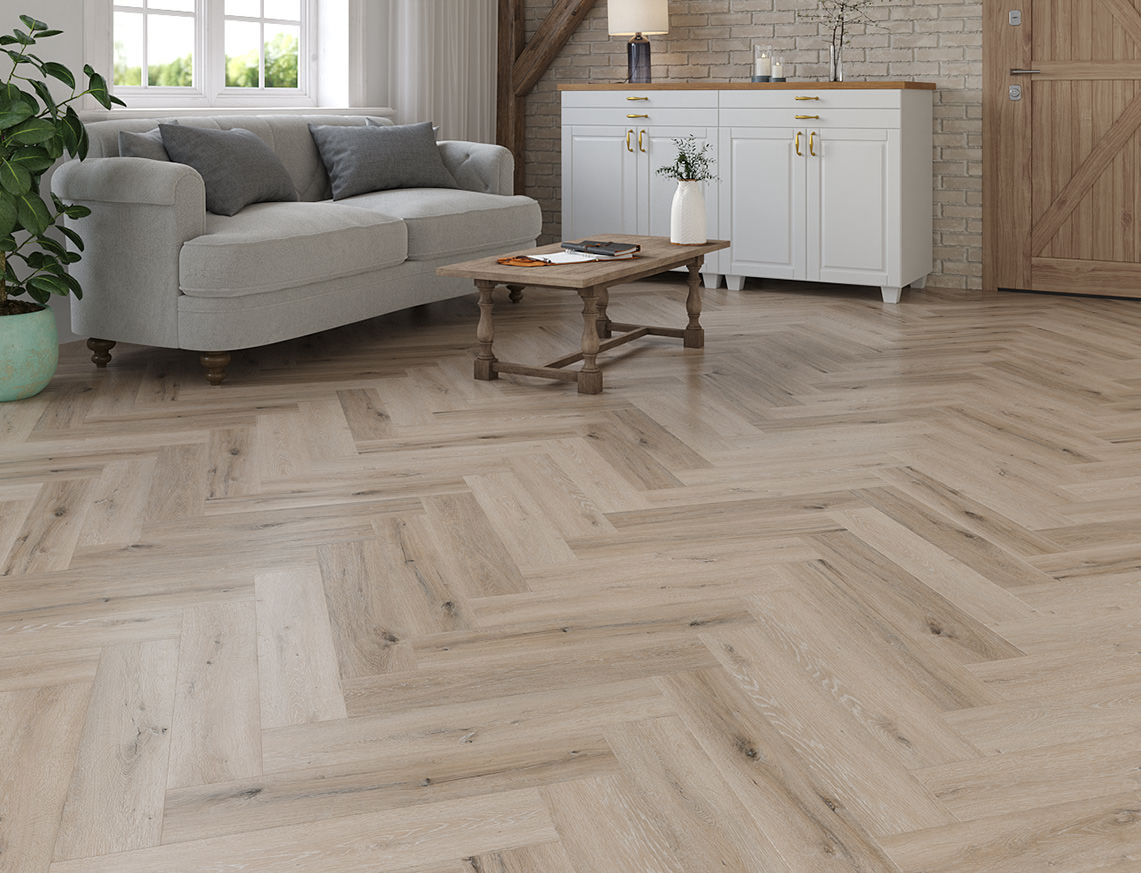
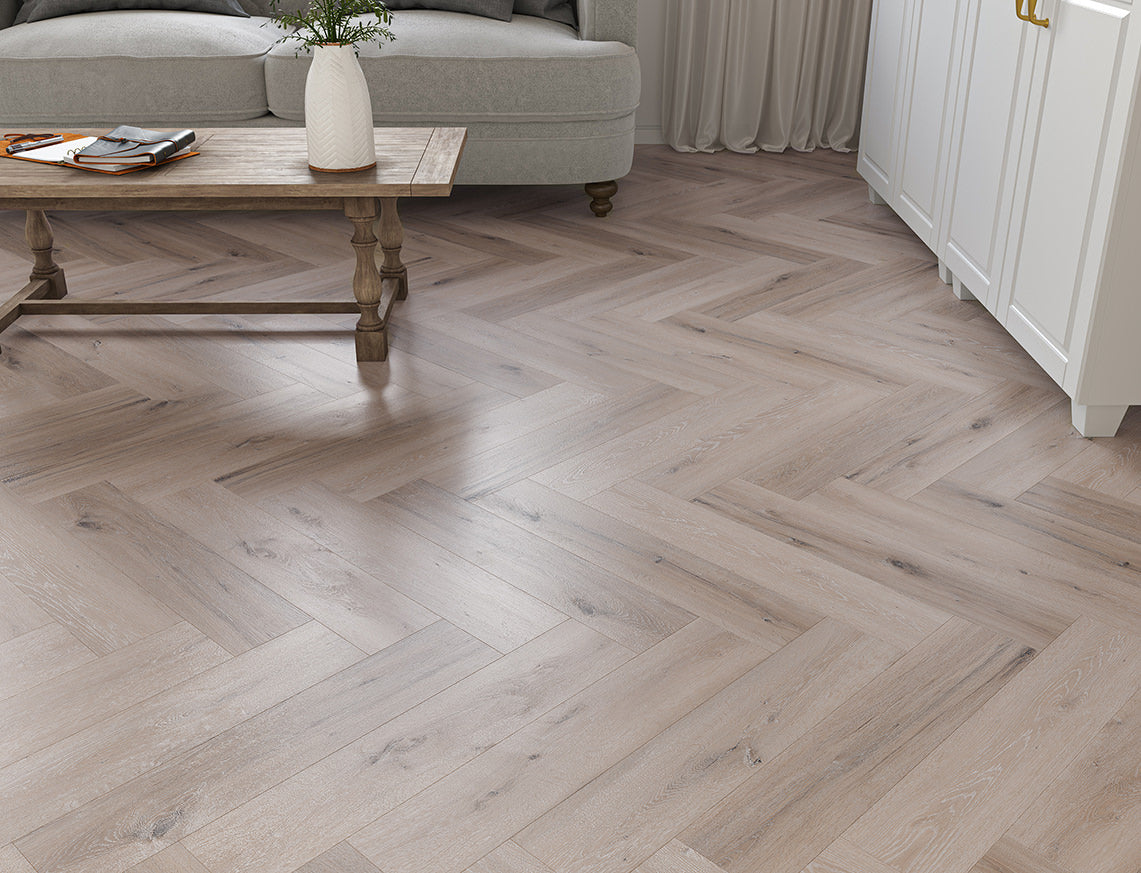
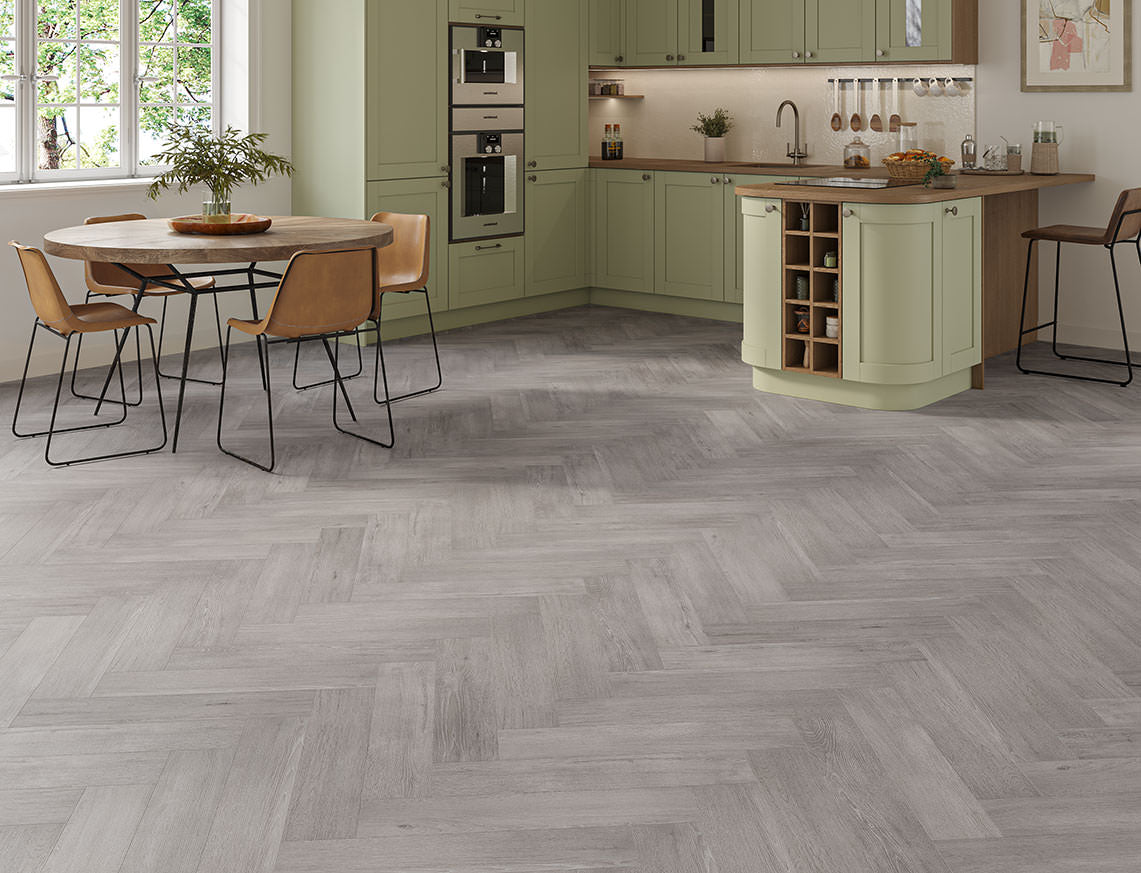
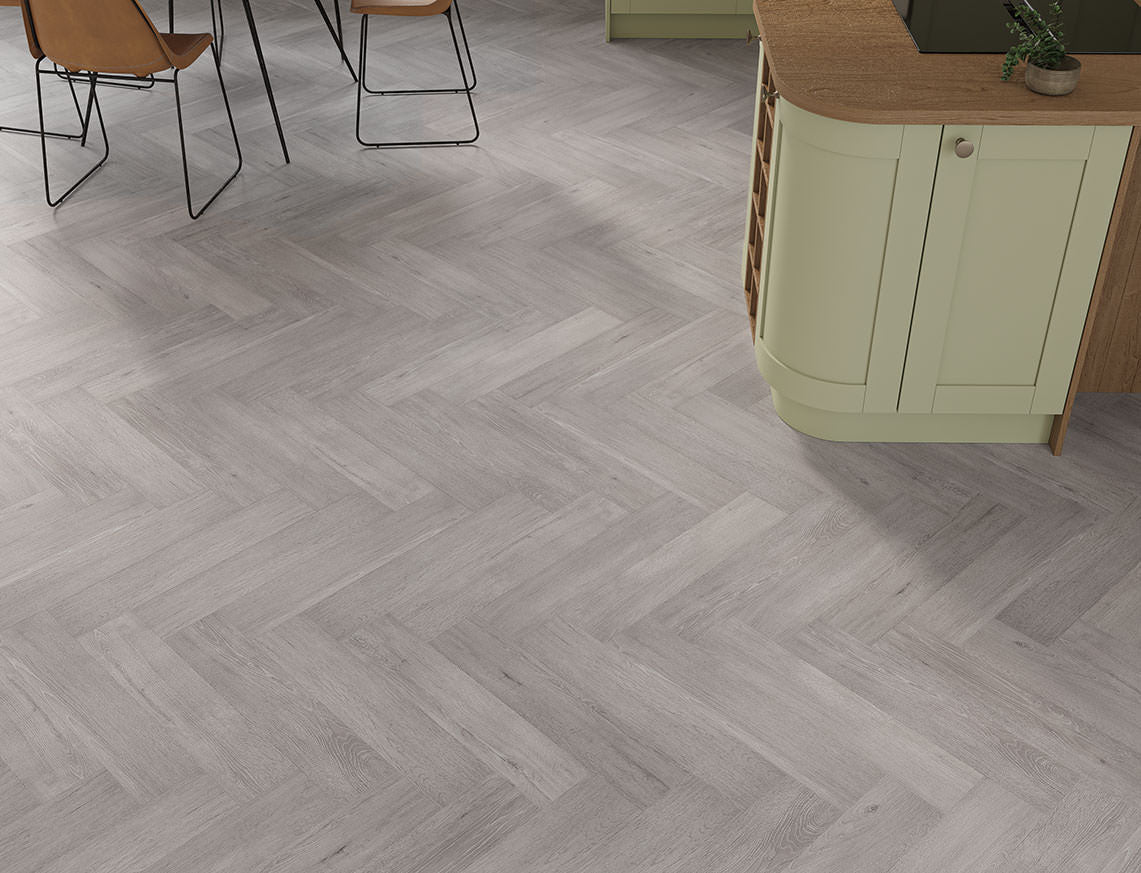
Short blocks laid at right angles into the classic zigzag. Herringbone is the pattern that turns a floor into a feature, and it has been the defining look in British interiors for years now, for good reason.
Sixty-seven designs across every material we sell: engineered oak, solid oak, laminate and SPC vinyl. Colours run from pale naturals and whitewashed tones through golden oak and greys to deep smoked browns.
Free A5 samples on every design, delivered to your door, so you can see the grain and colour in the room it is destined for before you commit.
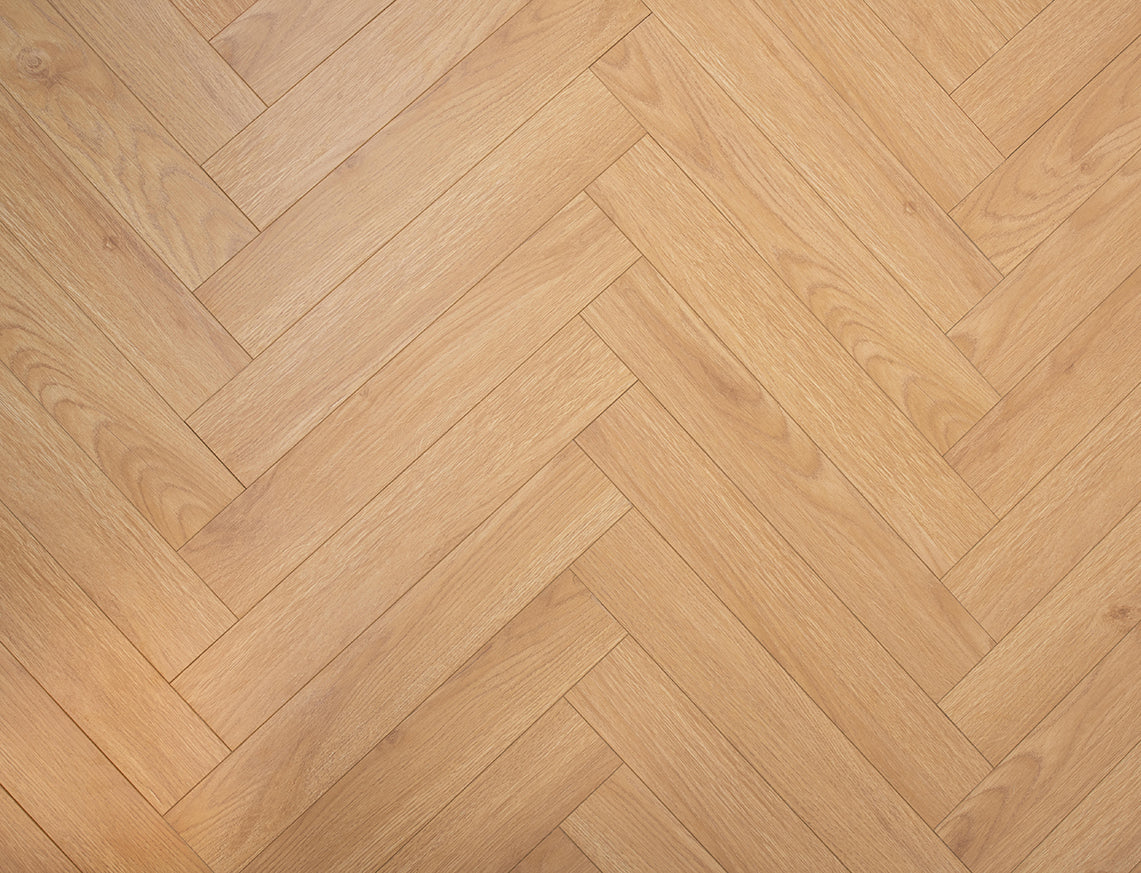
Herringbone is a parquet pattern made from rectangular blocks, laid so that the end of one block meets the side of the next at ninety degrees. The result is a staggered zigzag running across the room, each row stepping past the one before.
The blocks are cut square at both ends, which is what separates herringbone from chevron. It is the older of the two patterns, found in country houses and civic buildings across Europe for centuries, and it has aged rather well.
Herringbone or chevron?
They look similar in a photograph and quite different underfoot.
Herringbone
Chevron
Block ends
Cut square
Cut at an angle
Effect
Staggered zigzag
Continuous point
Character
Traditional
Contemporary
Materials available
Oak, laminate and vinyl
Oak and laminate
Range size
67 designs
8 designs
Herringbone reads as the more classical of the two and suits period properties particularly well. Chevron is sharper and draws the eye down the length of a room.
Herringbone in every material
Herringbone is the one pattern we stock right across the range, so the decision is about budget, room and how the floor will be fitted rather than about the look.
Engineered oak herringbone
The traditional choice and our largest single group at thirty-four designs. A real oak surface on a stable multi-ply core, suitable for underfloor heating, and available in the widest spread of colours and finishes. Browse engineered oak herringbone.
Solid oak herringbone
Oak all the way through, so it can be sanded and refinished repeatedly over its life. Solid boards move more with humidity than engineered ones and are not generally suited to underfloor heating. Browse solid oak flooring.
Laminate herringbone
The affordable route to the same look, with a harder surface that resists scratching from pets and furniture. Click systems make it the most straightforward herringbone to fit yourself. Browse laminate flooring.
SPC and LVT vinyl herringbone
Fully waterproof, so herringbone becomes possible in a bathroom or utility where timber would not be sensible. Warm underfoot and quiet to walk on. Browse SPC and LVT vinyl.
Choosing a block size
Block width changes the character of the floor more than most people expect. Narrower blocks give a busier, more intricate pattern with more repeats across the room. Wider blocks read as calmer and more contemporary, and show more of the grain in each piece.
As a rough guide, narrower blocks suit smaller rooms and traditional interiors, and wider blocks suit larger open spaces. If in doubt, order samples of both and lay them side by side on the existing floor.
Samples do not show scale
An A5 sample of herringbone shows you a single block, not the pattern. Look at the room-set photograph on the product page alongside the sample in your hand, since the repeat reads very differently across a whole floor.
Fitting herringbone
Herringbone is more demanding to fit than plank. The pattern has to be set out from a centre line so it runs true, and any error in the first few rows compounds across the room.
Tongue and groove herringbone in oak is normally bonded to the subfloor rather than floated, because of the way the pattern distributes movement. Laminate and vinyl herringbone generally use click systems and are more forgiving, though the setting out still matters. Unless you have laid a patterned floor before, this is one where an experienced fitter earns their fee. The installation method is listed in the specification on every product page, and our fitting guides cover the principles.
How much will you need?
Allow 15% for cuts rather than the usual 10%. Angled cuts at every wall waste considerably more material than a straight plank layout, and the perimeter of a herringbone floor produces a lot of offcuts that cannot be reused.
The flooring calculator on every product page applies the right allowance automatically and works out how many packs your room takes. You will also need beading for the perimeter, threshold profiles at doorways, and adhesive if the floor is being bonded down.
Order the full quantity in one go. Shade varies slightly between production batches, and on a patterned floor a mismatched block is more noticeable than it would be in a plank layout.
Herringbone flooring: frequently asked questions
What is the difference between herringbone and chevron?
Herringbone blocks are cut square and meet at right angles, producing a staggered zigzag. Chevron blocks are cut at an angle so they meet in a continuous point.
How much extra should I order for herringbone?
15%, rather than the 10% we recommend for plank floors. The angled cuts around the perimeter produce more waste.
Can I fit herringbone flooring myself?
Click-system laminate and vinyl herringbone is achievable for a confident DIY fitter, provided the setting out is done carefully. Oak herringbone is usually bonded down and better suited to a professional.
Does herringbone make a room look smaller?
Not necessarily. A wider block in a pale colour can make a small room feel larger, since the pattern draws the eye outwards. Very narrow blocks in a dark colour will read as busier in a small space.
Which direction should herringbone run?
Most commonly the point of the pattern runs towards the main door or window, so it draws you into the room. Your fitter will set it out from a centre line to keep it true.
Is herringbone suitable for underfloor heating?
Engineered oak, laminate and vinyl herringbone generally are. Solid oak generally is not. Suitability is stated in the specification on every product page.
Can I use herringbone in a kitchen or bathroom?
Kitchens yes, in any material. For a bathroom or utility choose SPC or LVT vinyl, which is fully waterproof. Room suitability is listed on every product page.
Is herringbone more expensive than plank?
The floor itself is often comparable per square metre, but you need more of it because of the higher waste allowance, and fitting takes longer. Budget for both.