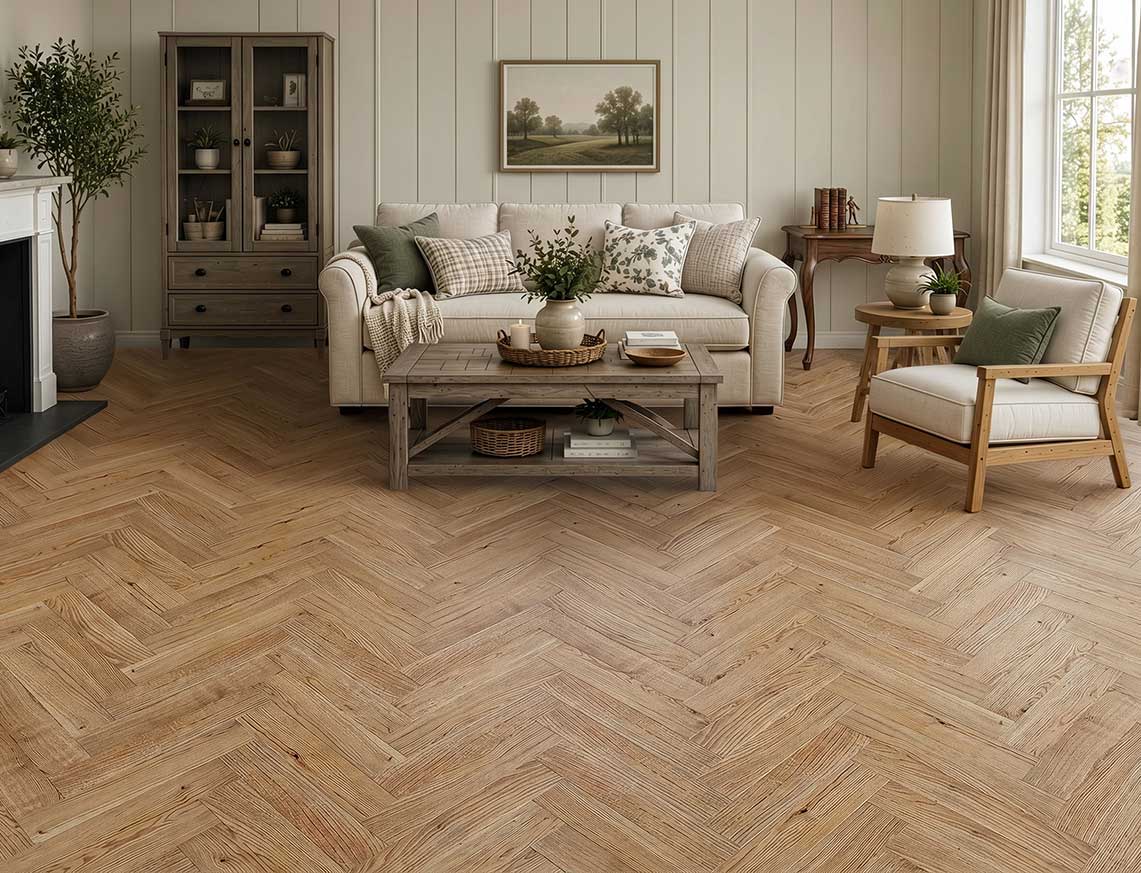
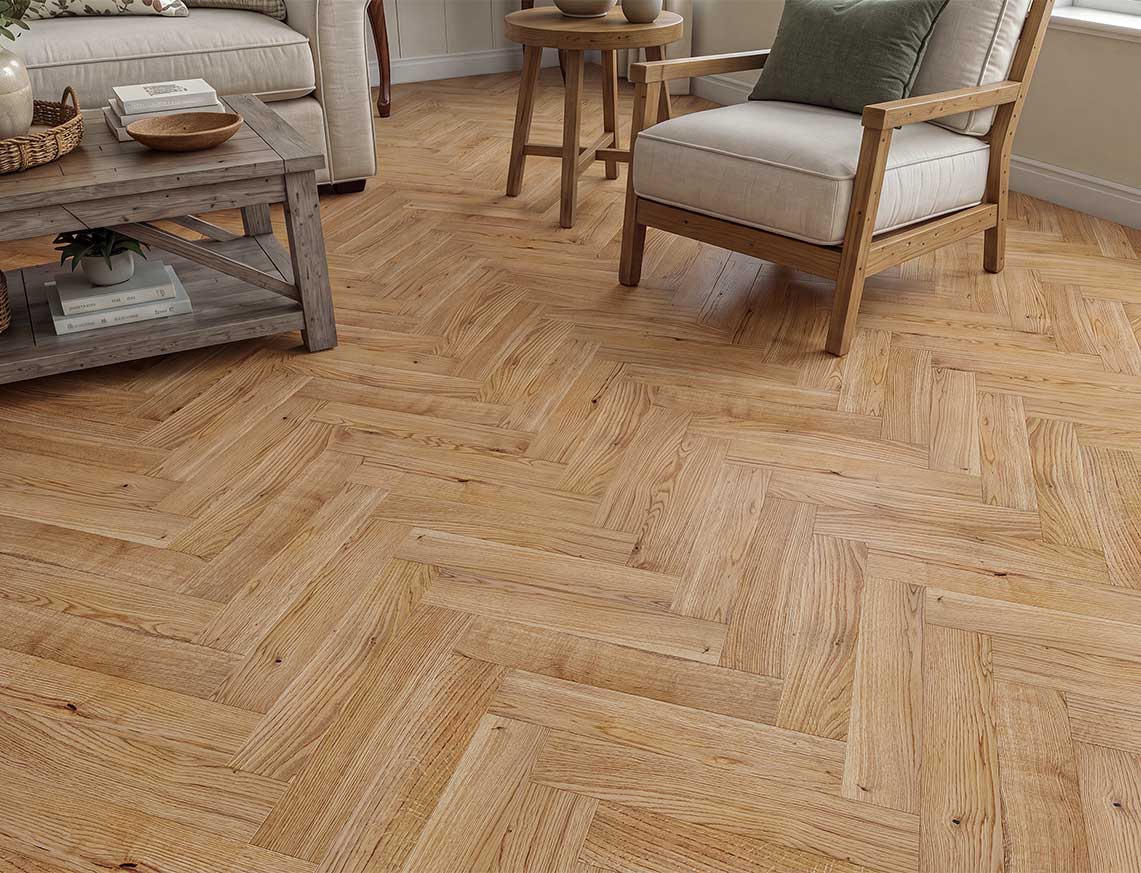
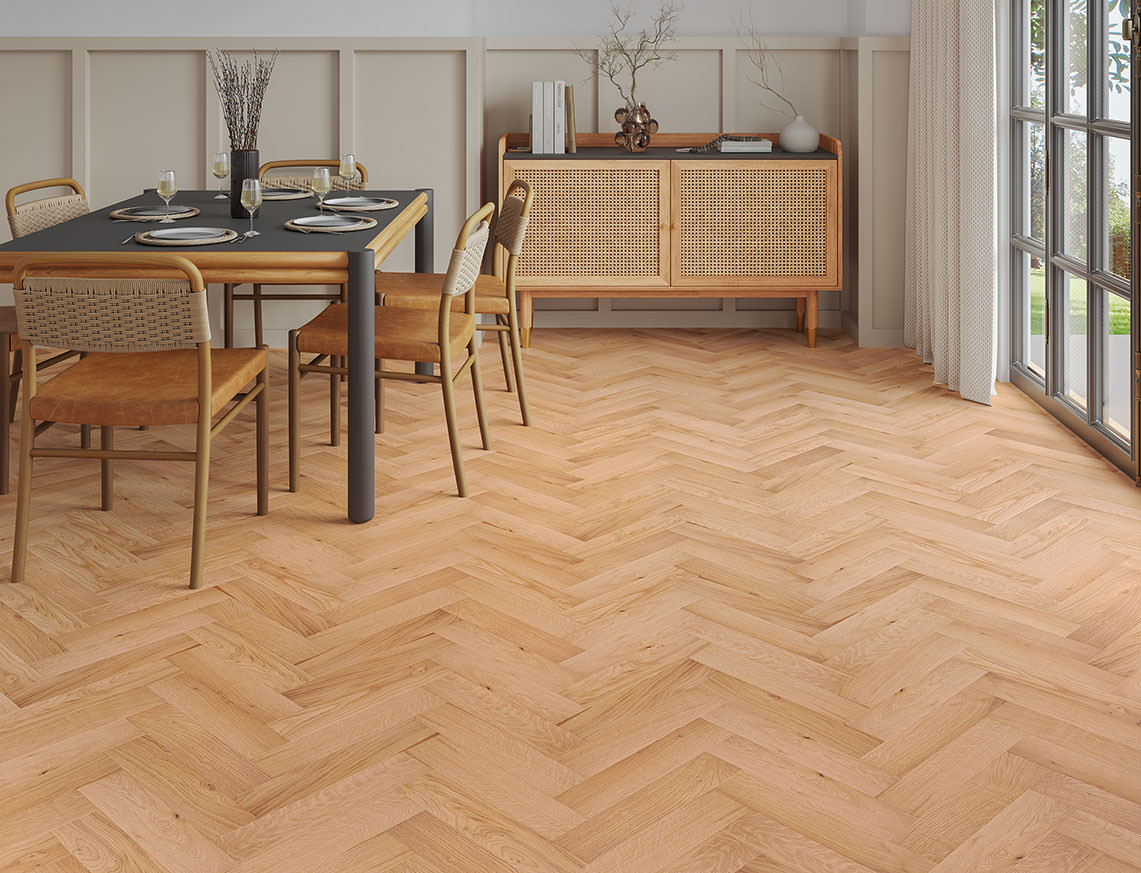
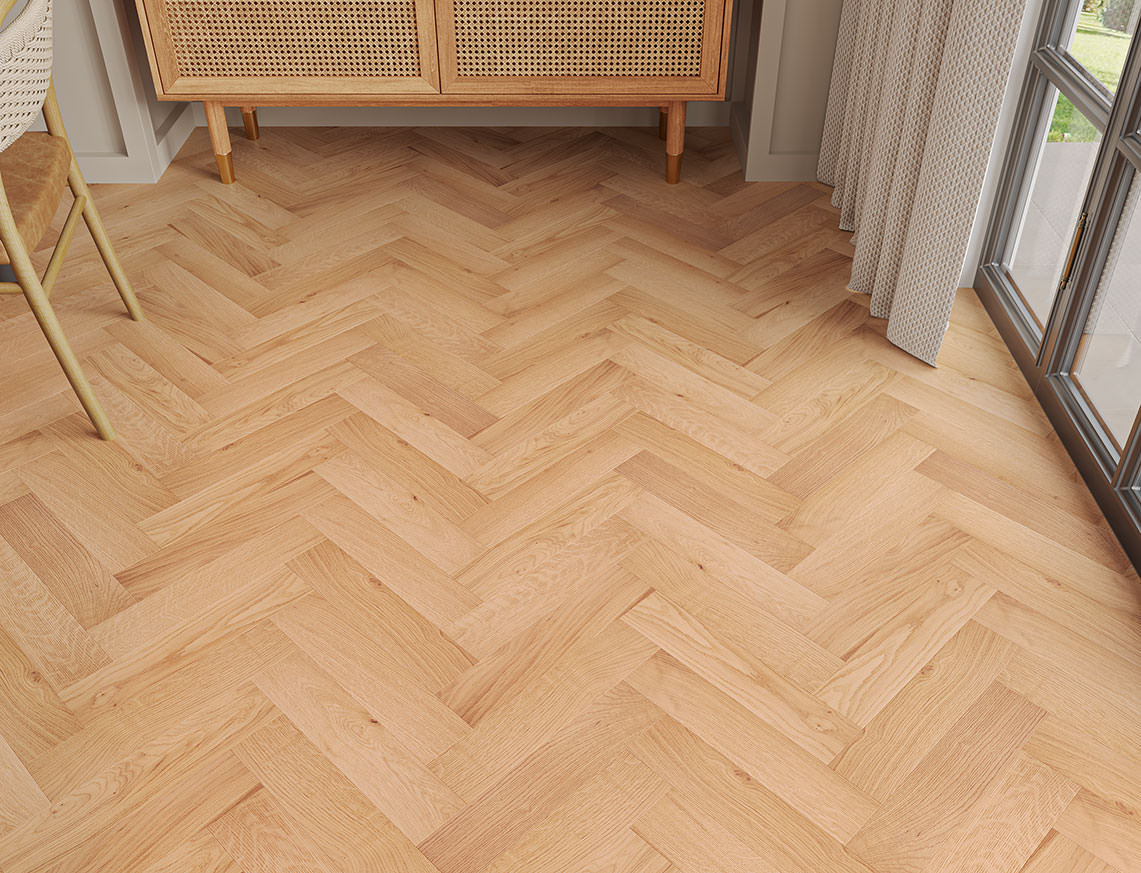
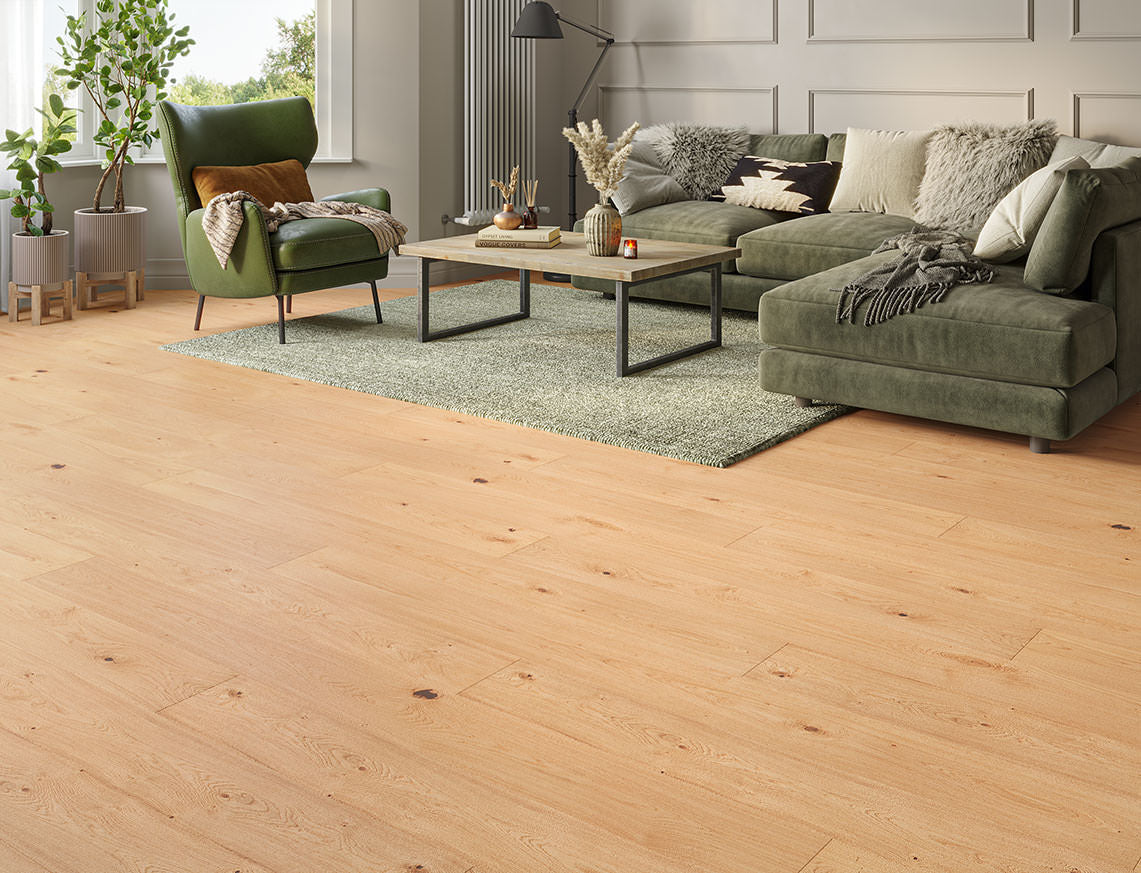
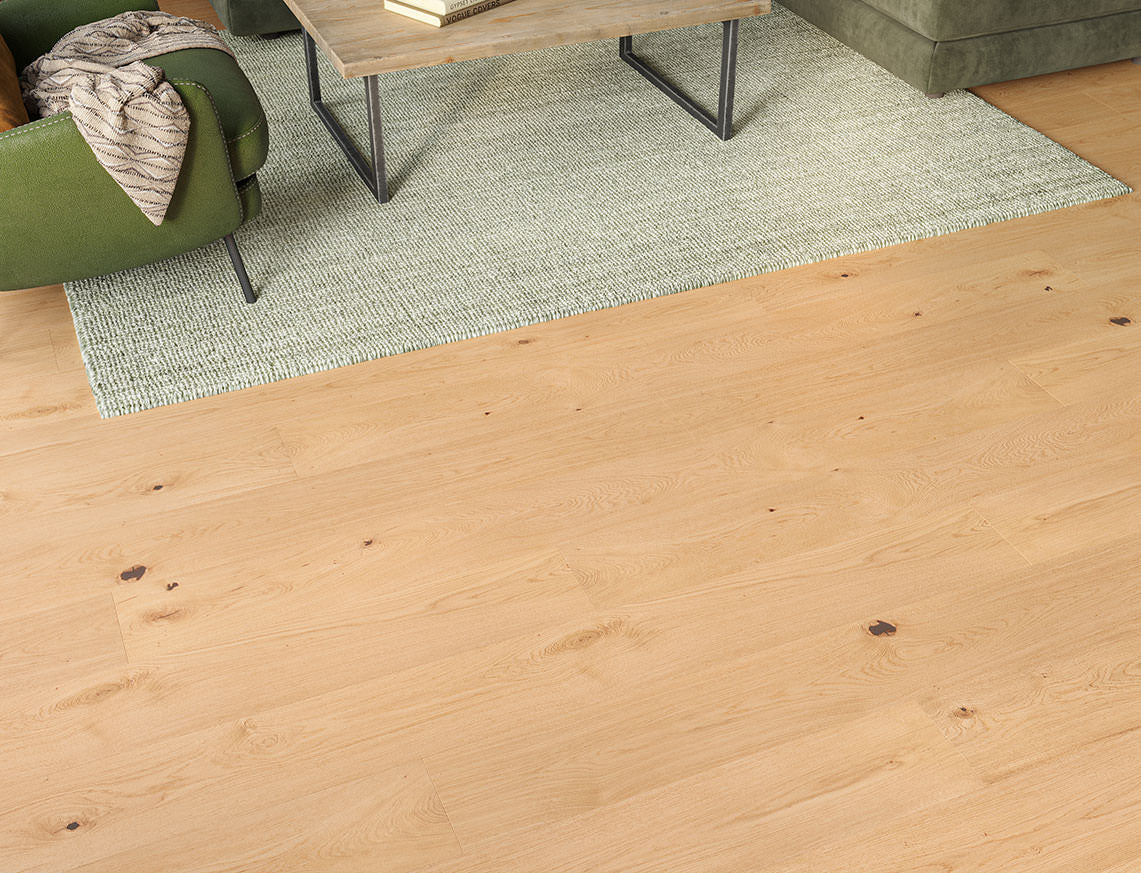
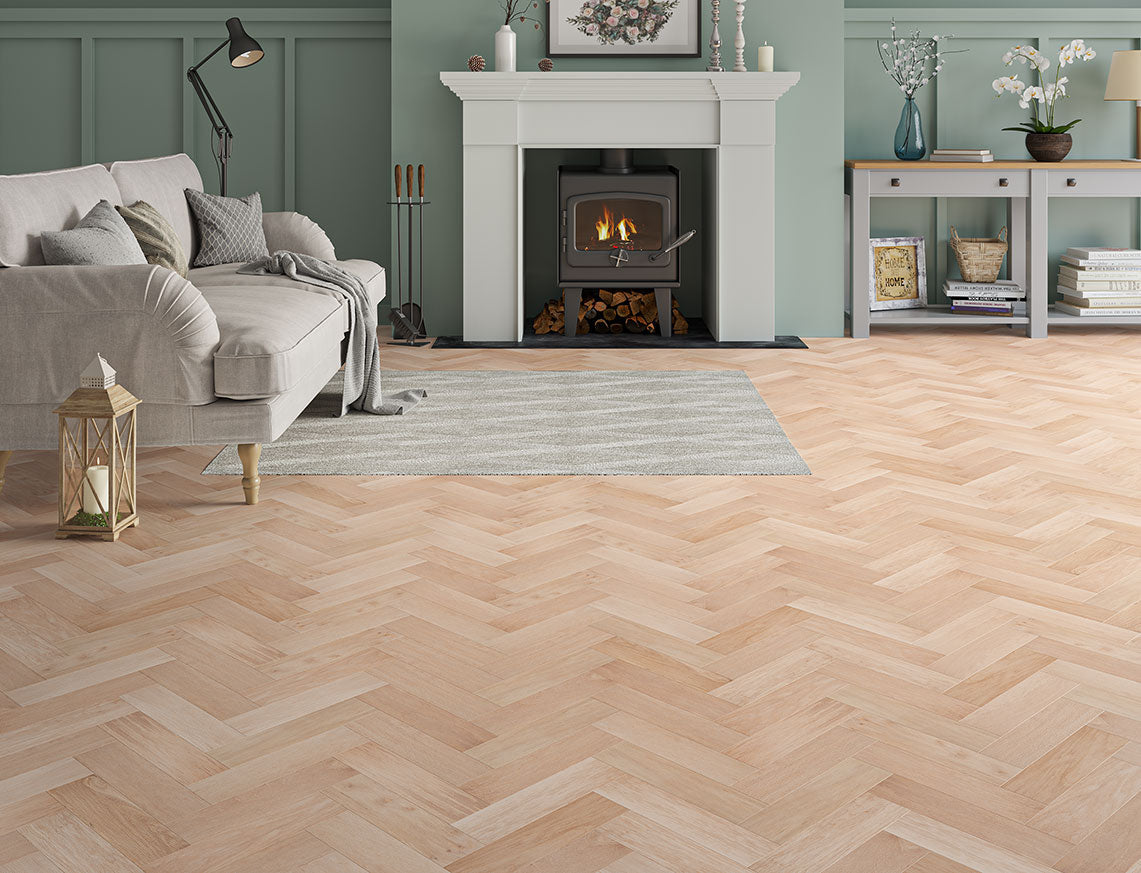
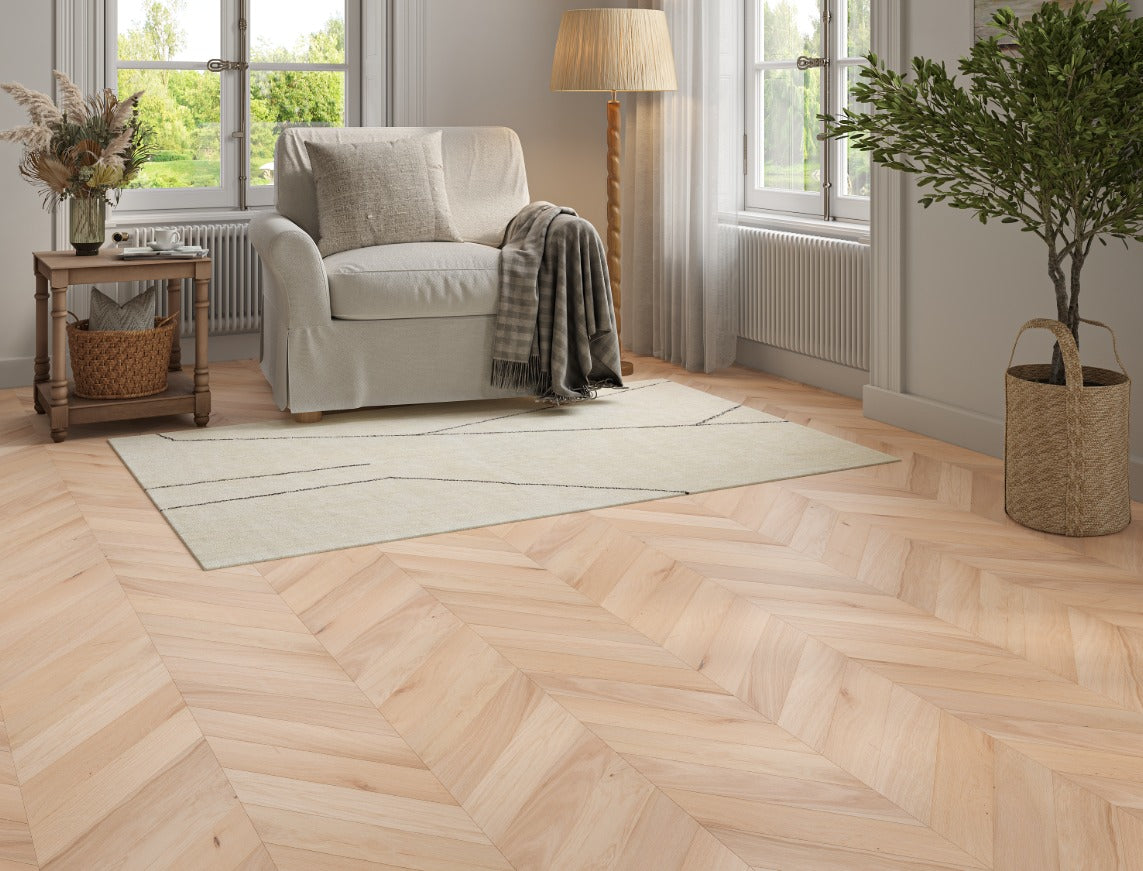
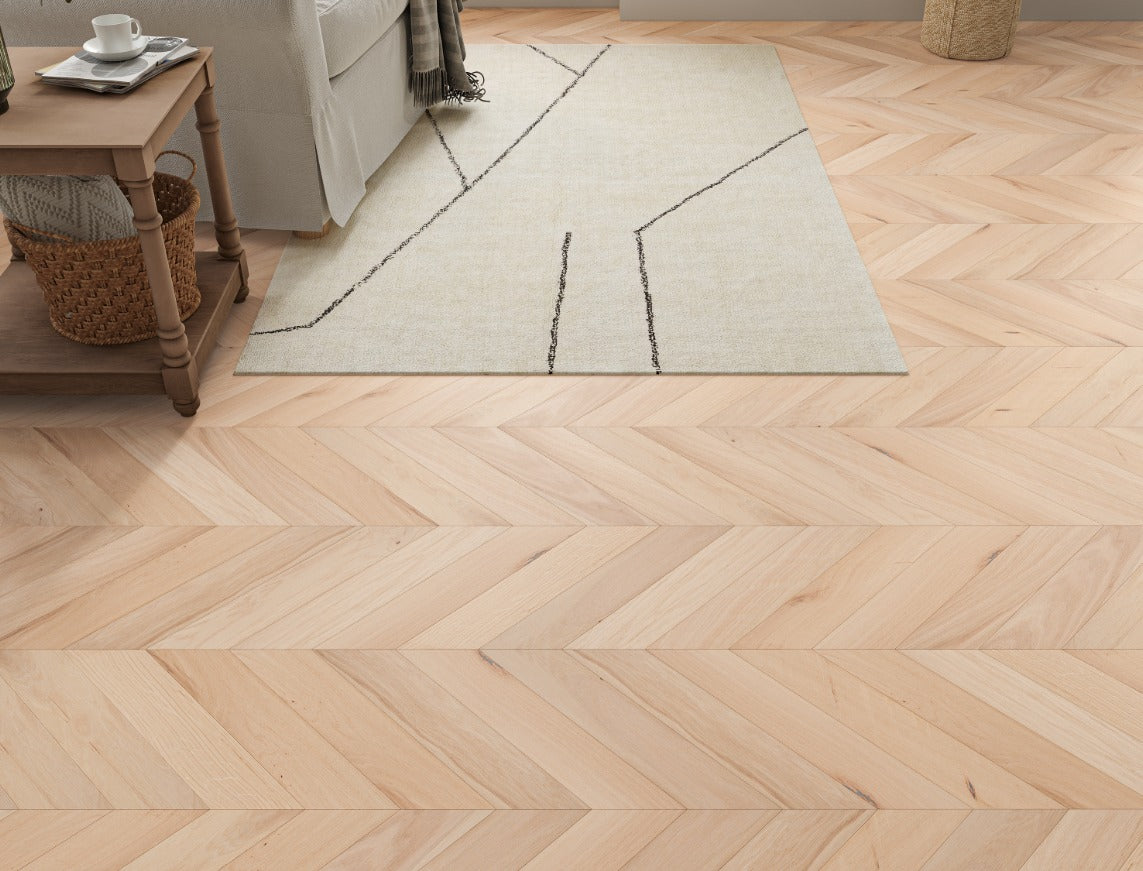
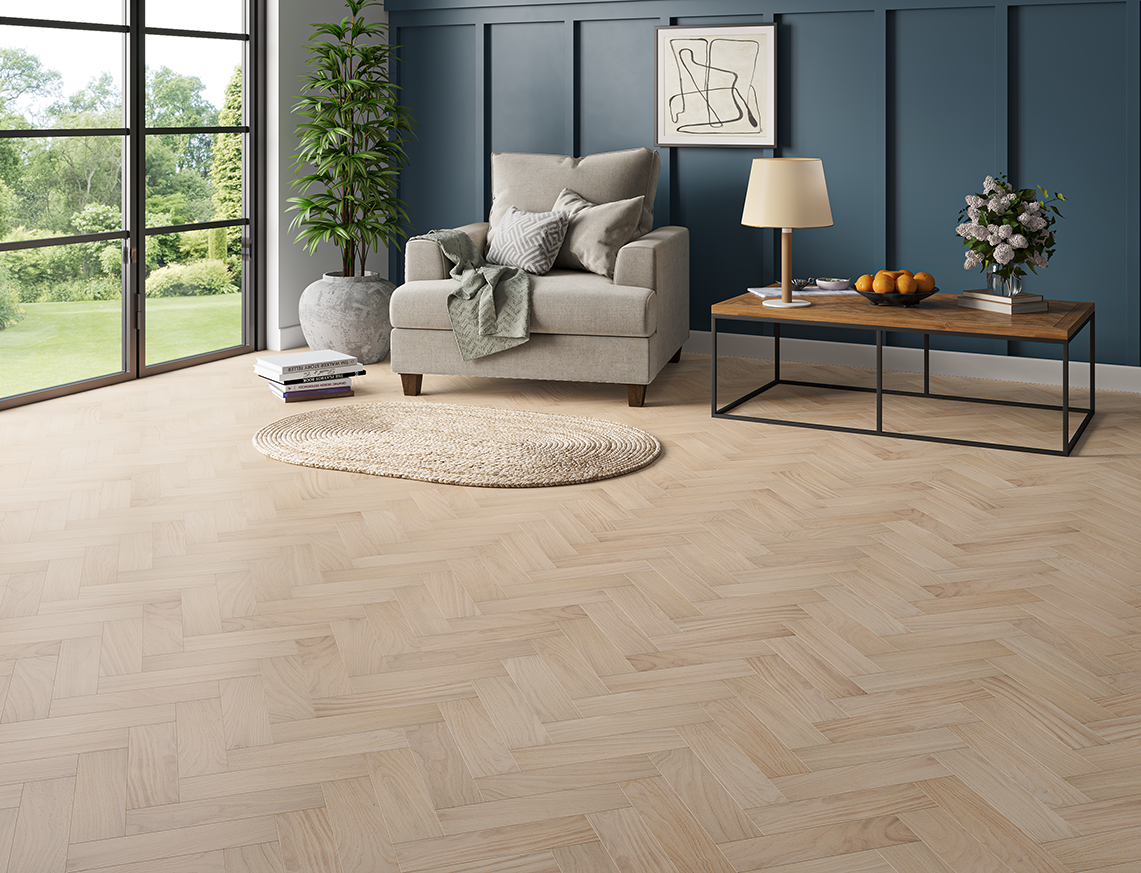
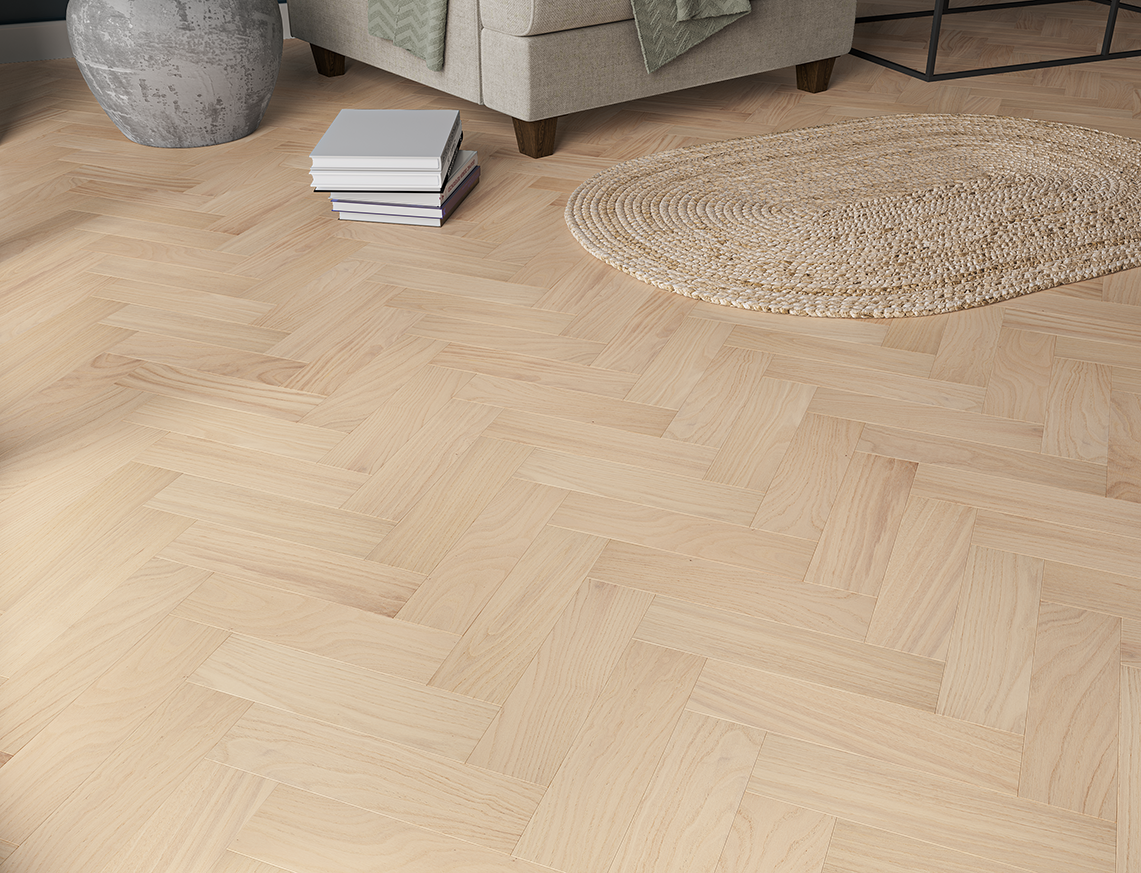
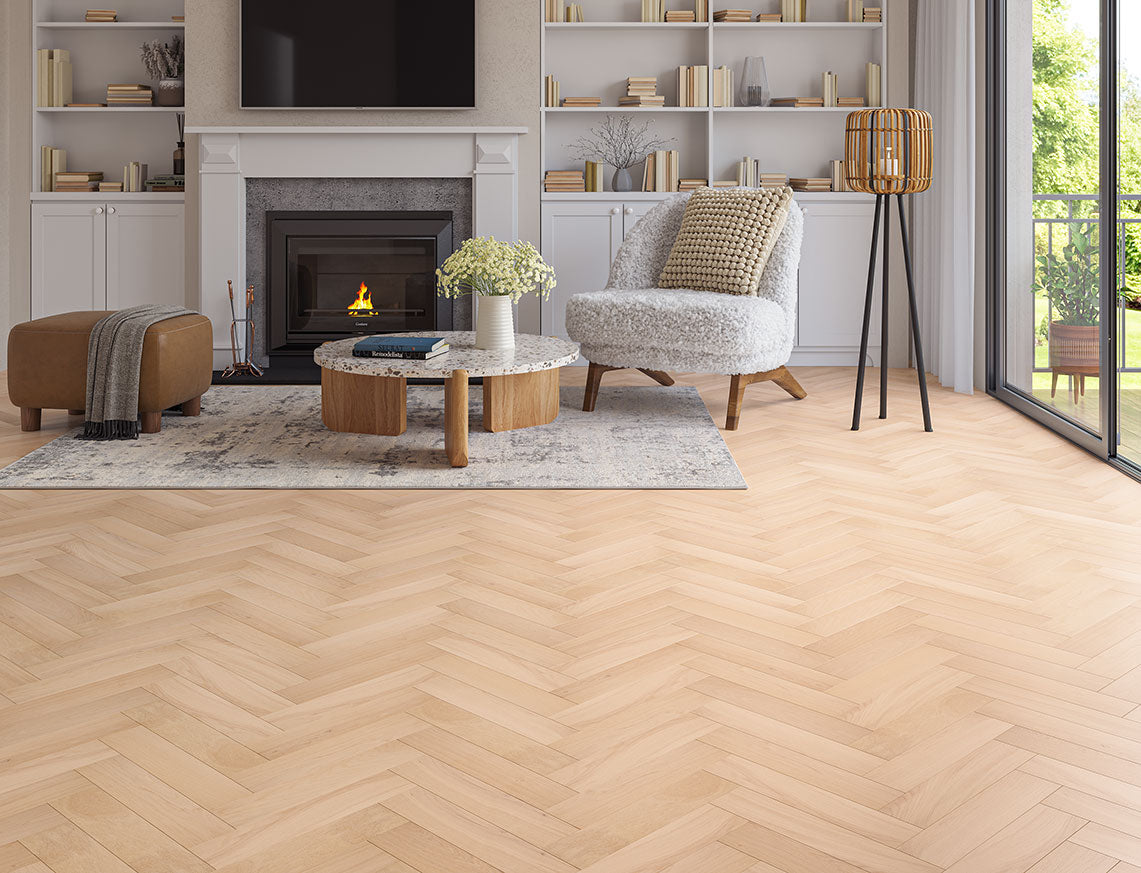
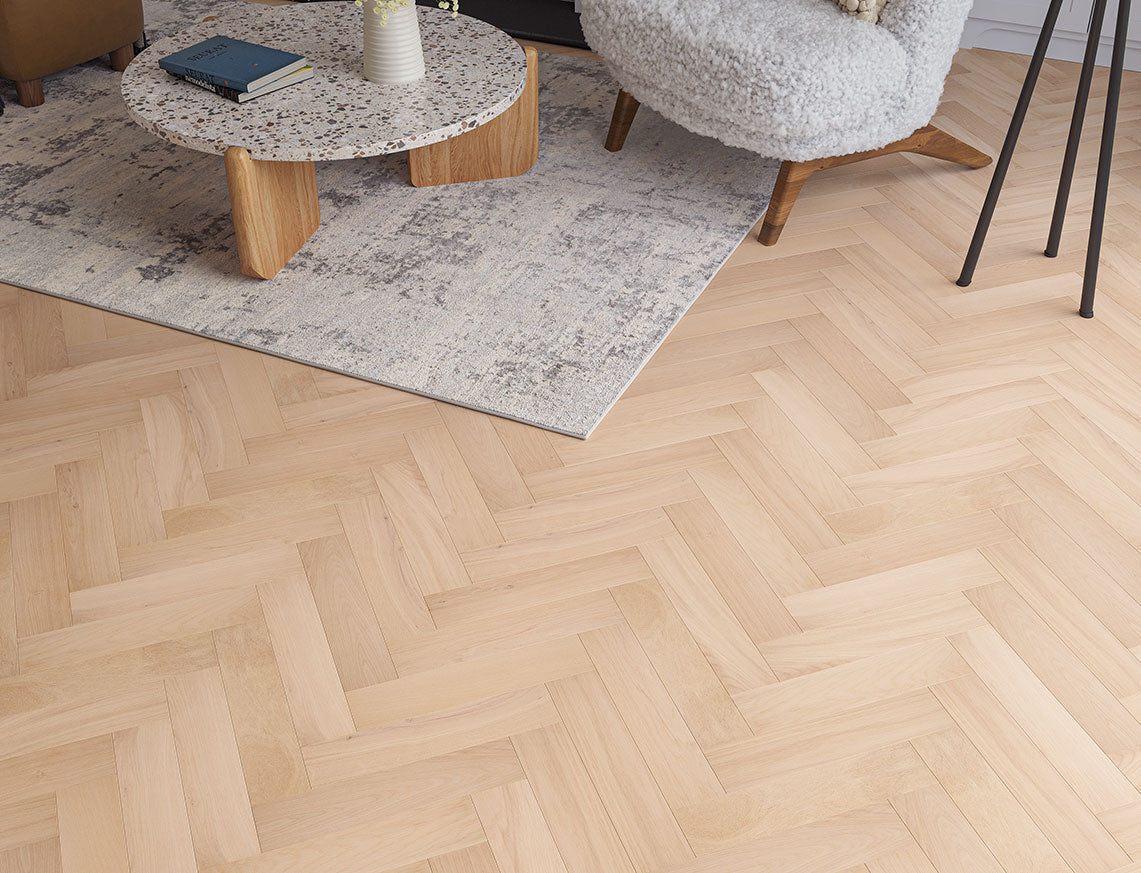
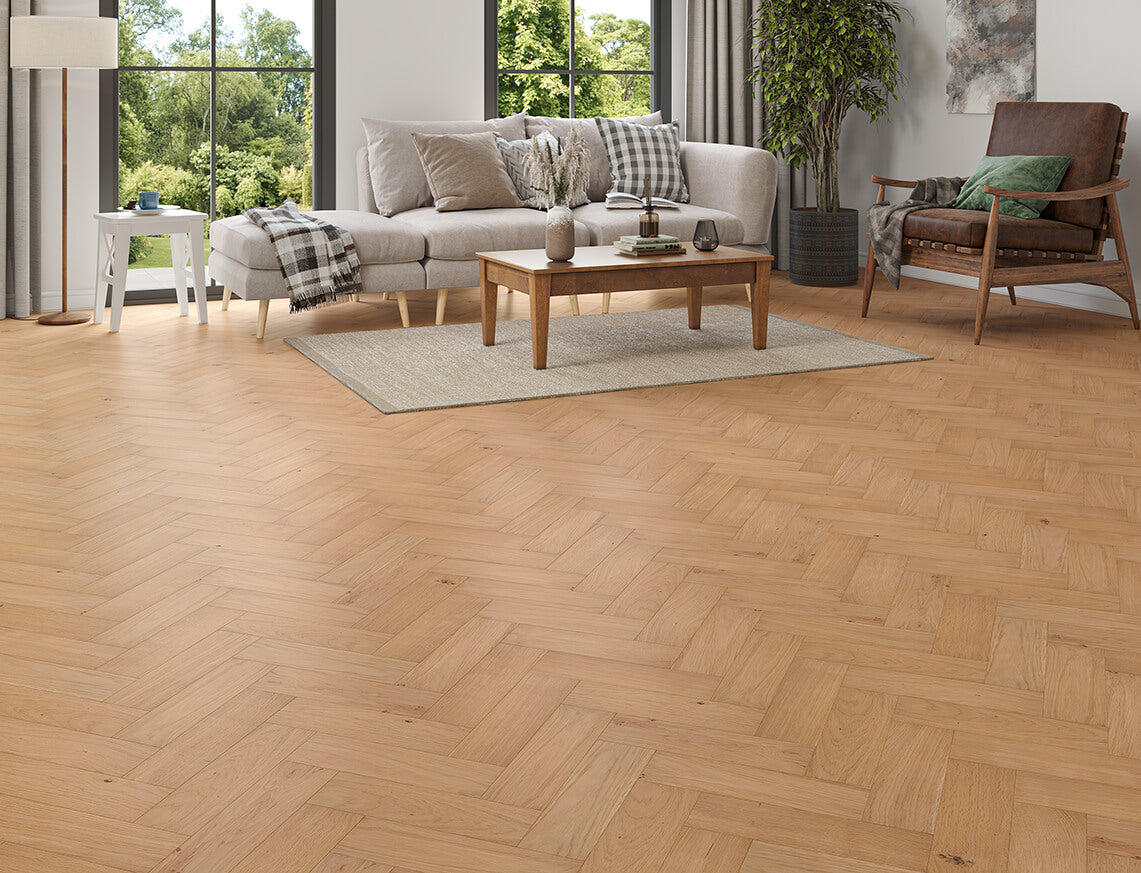
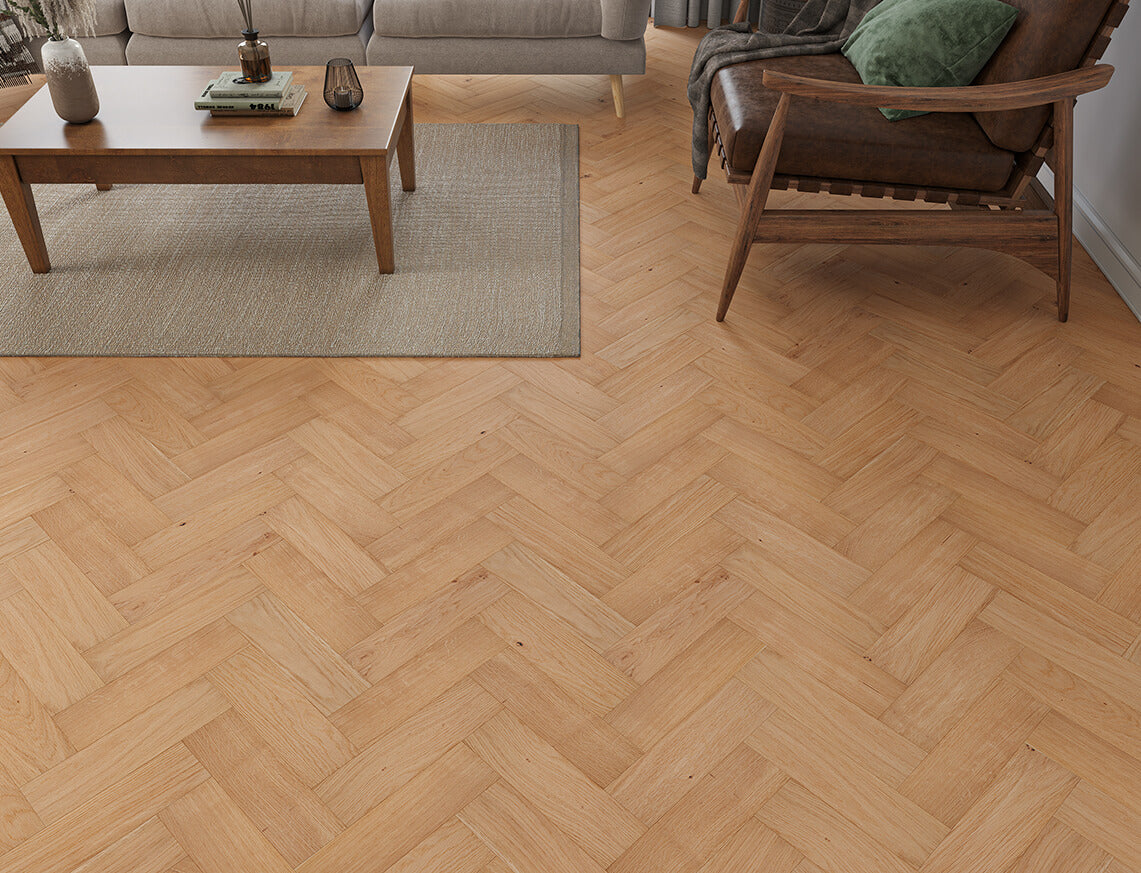
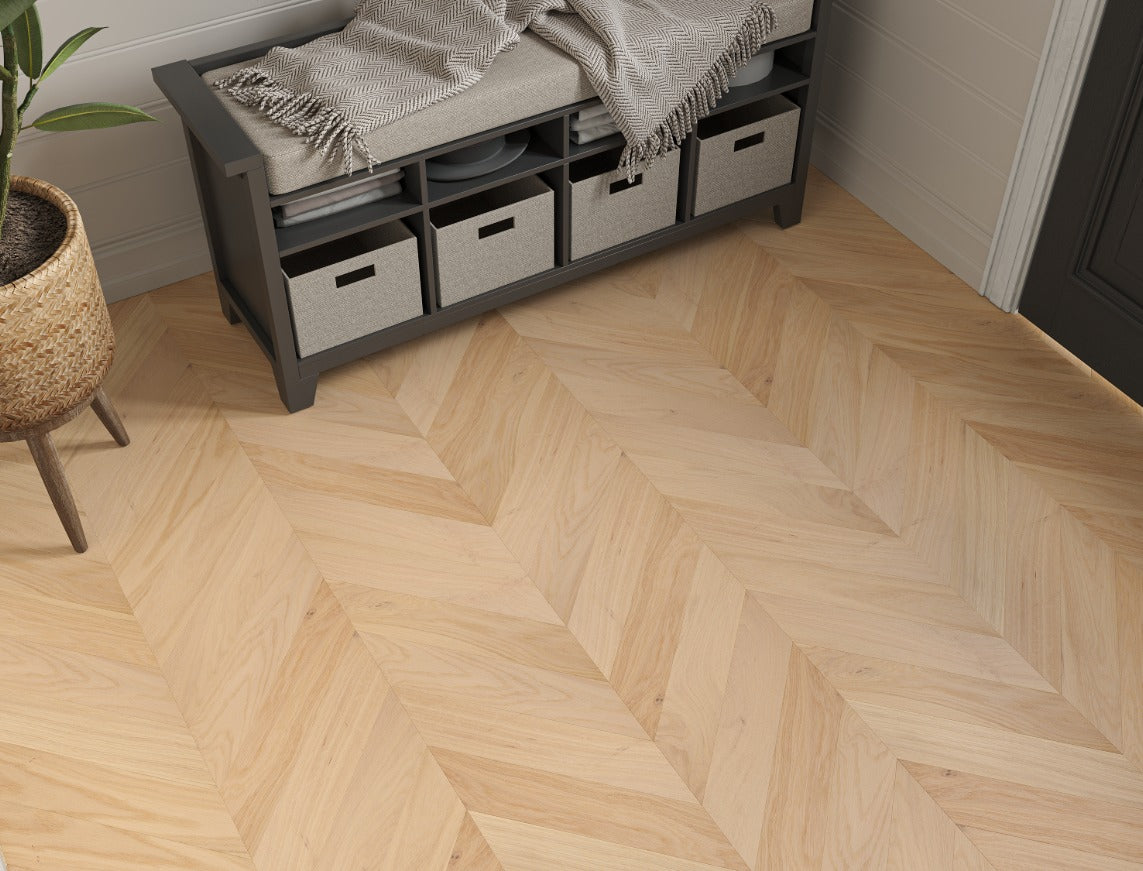
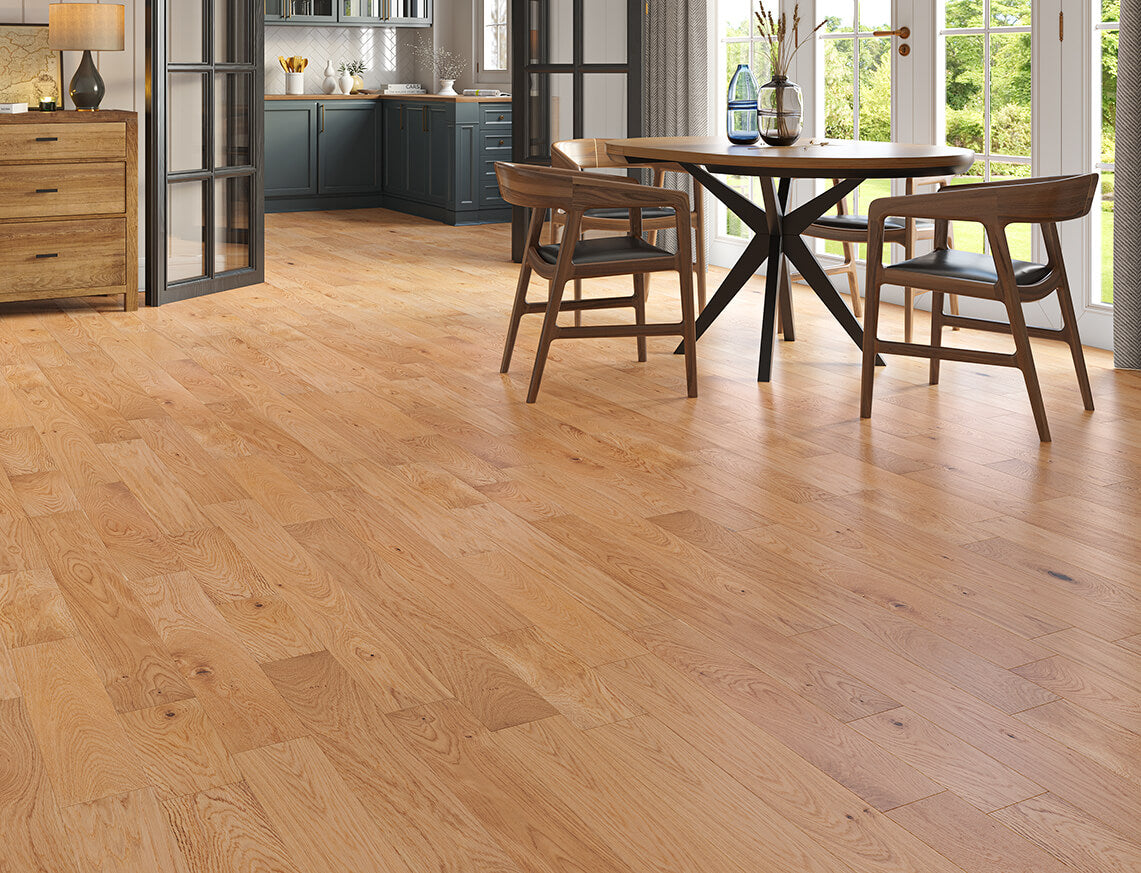
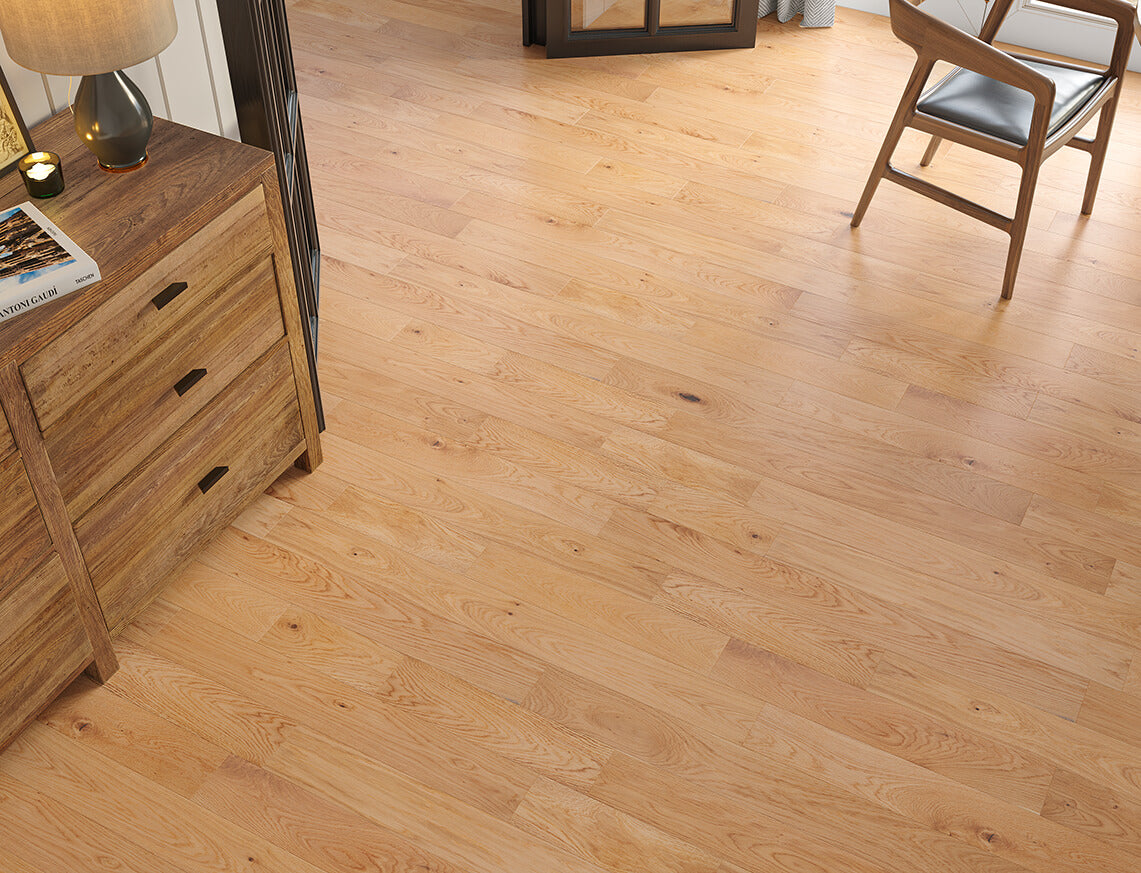
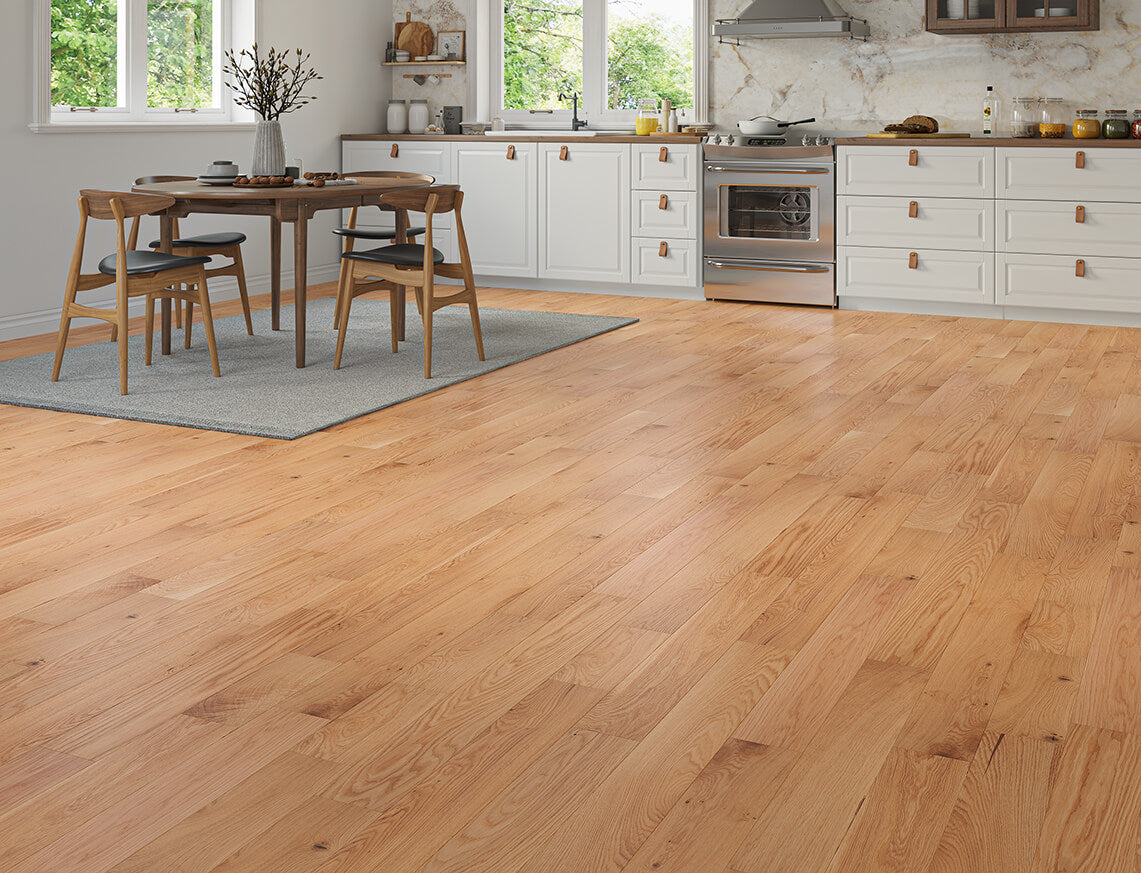
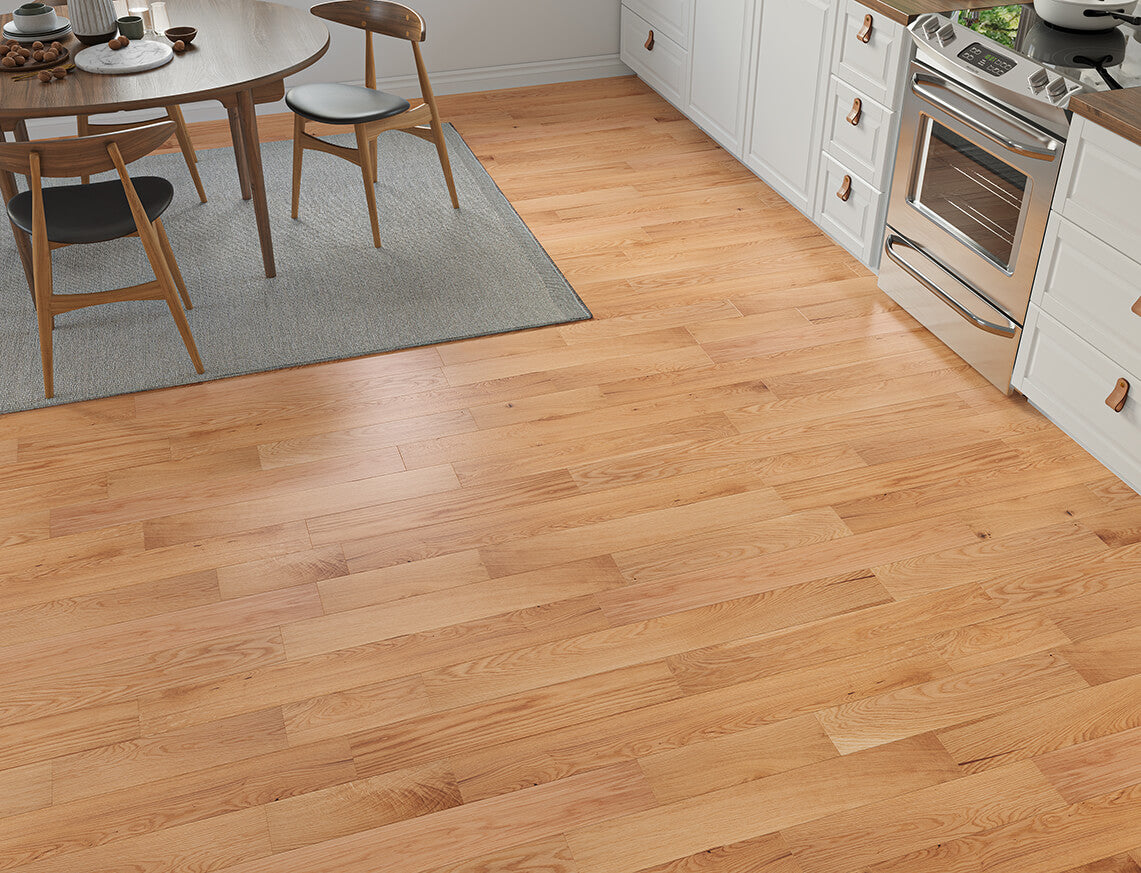
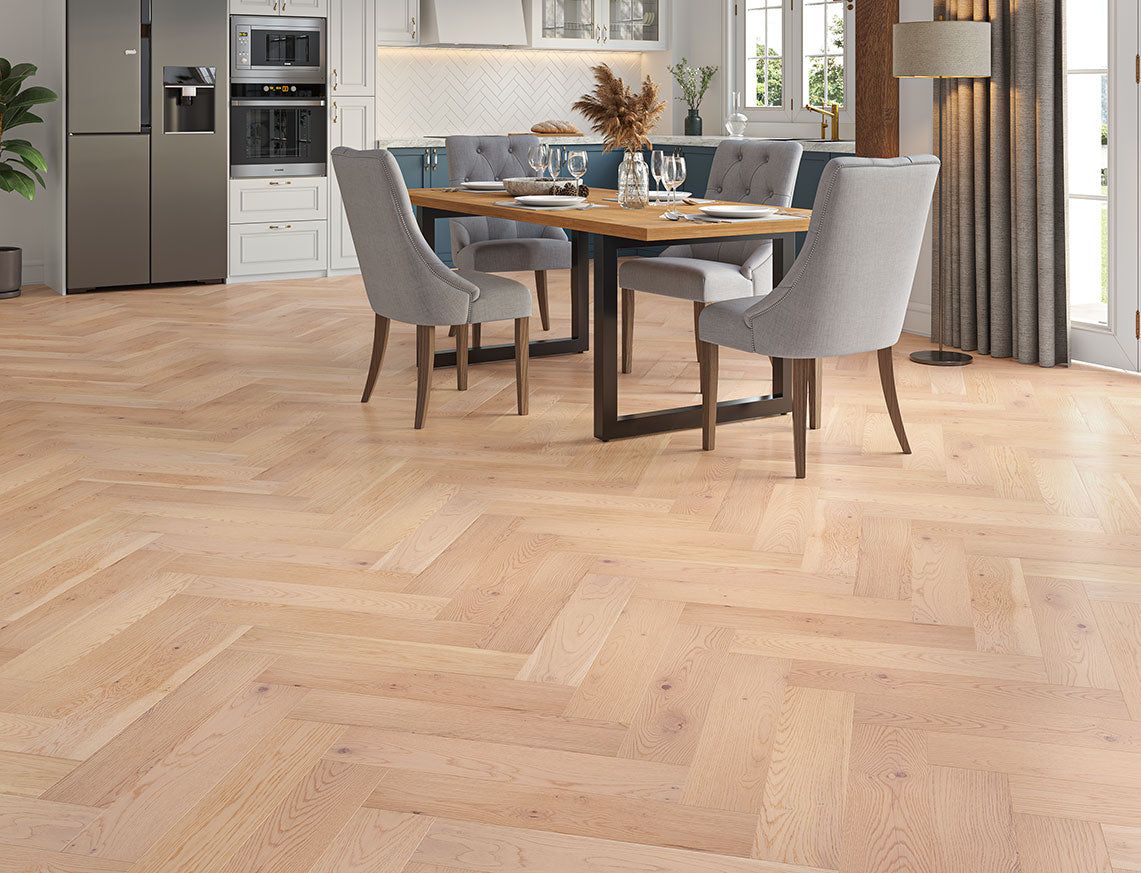
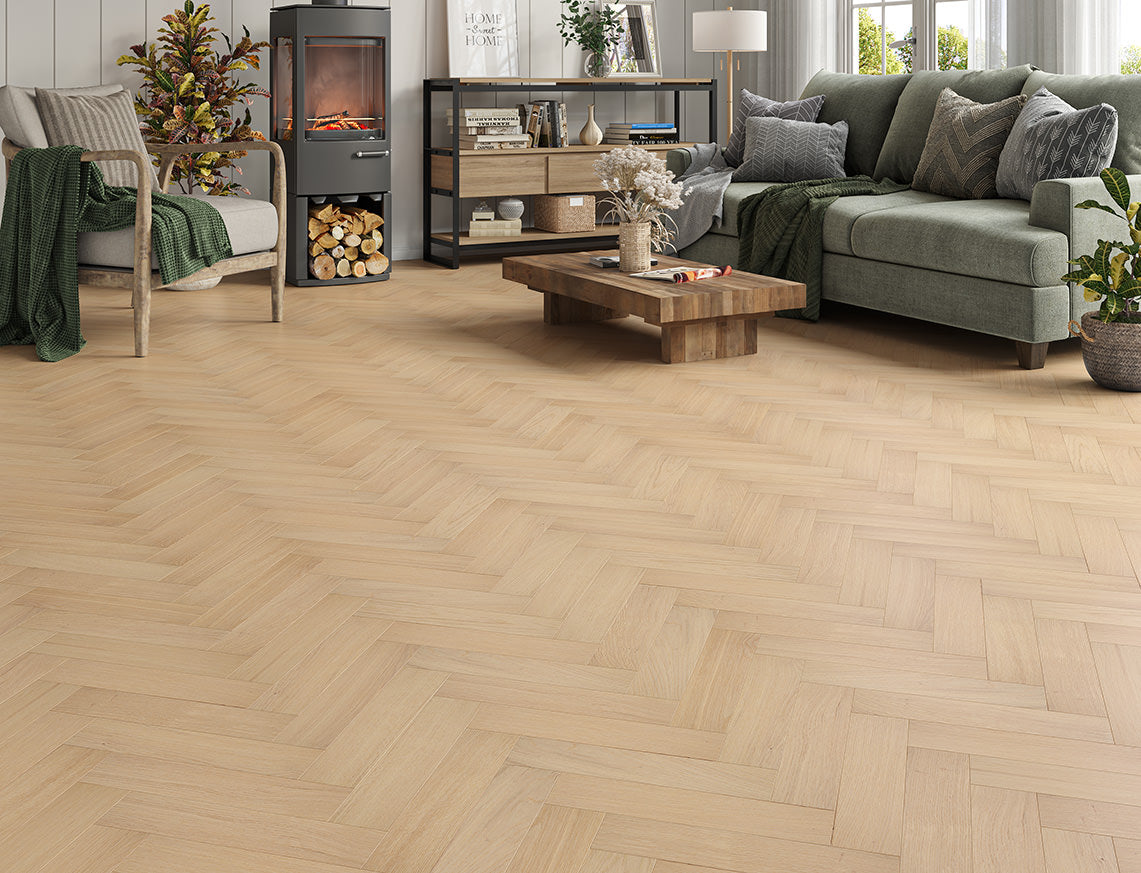
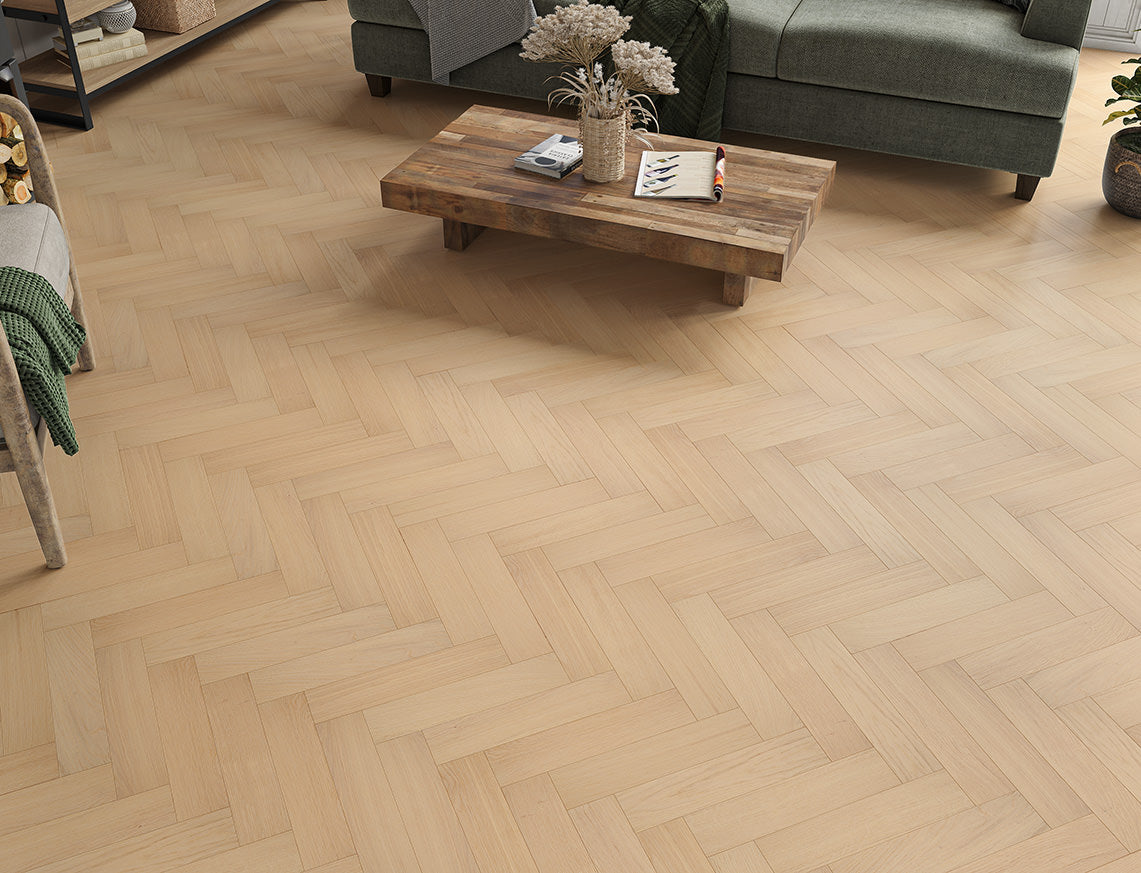
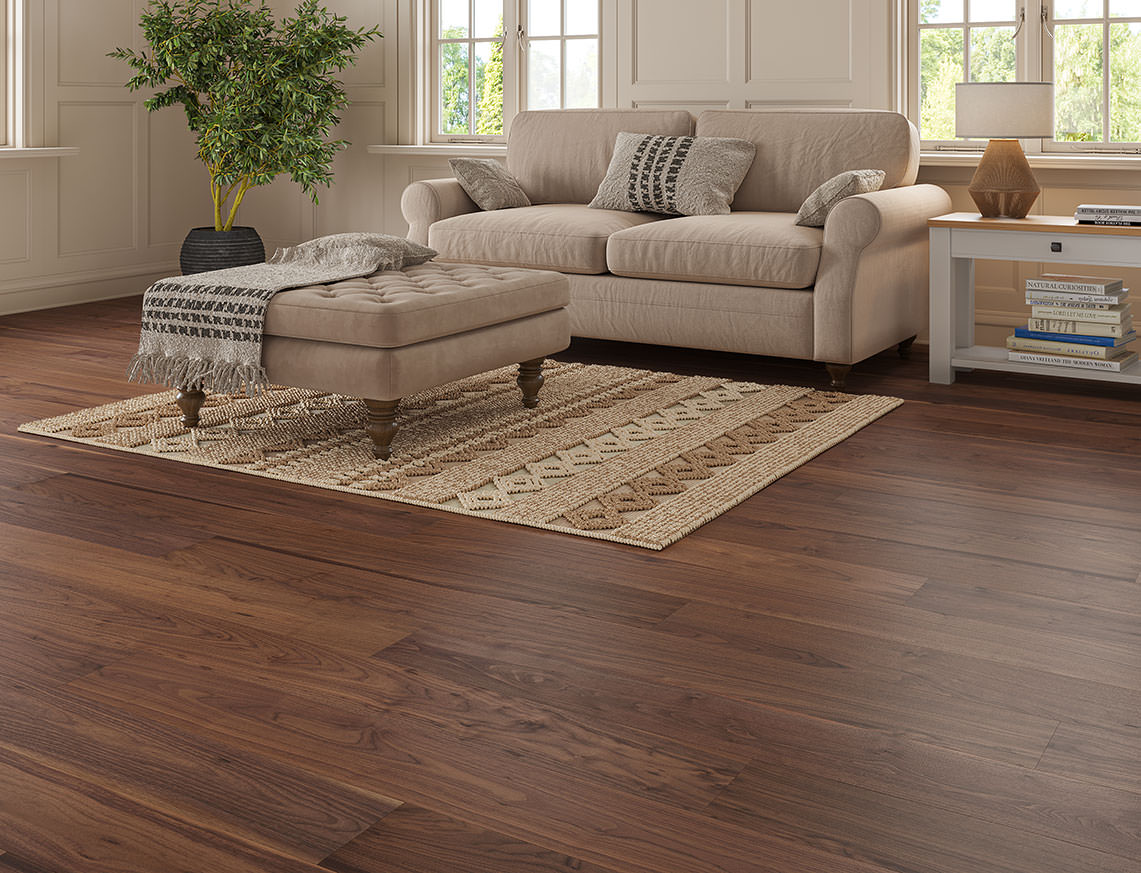
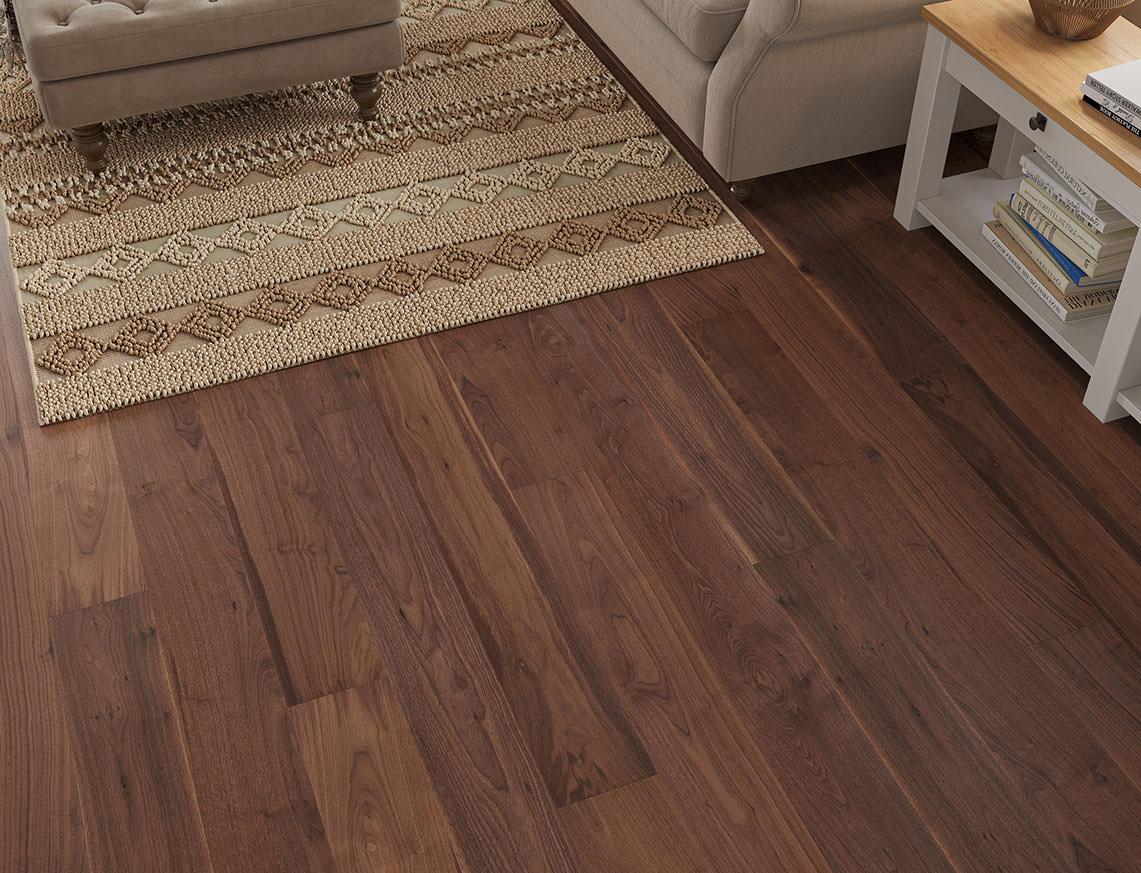
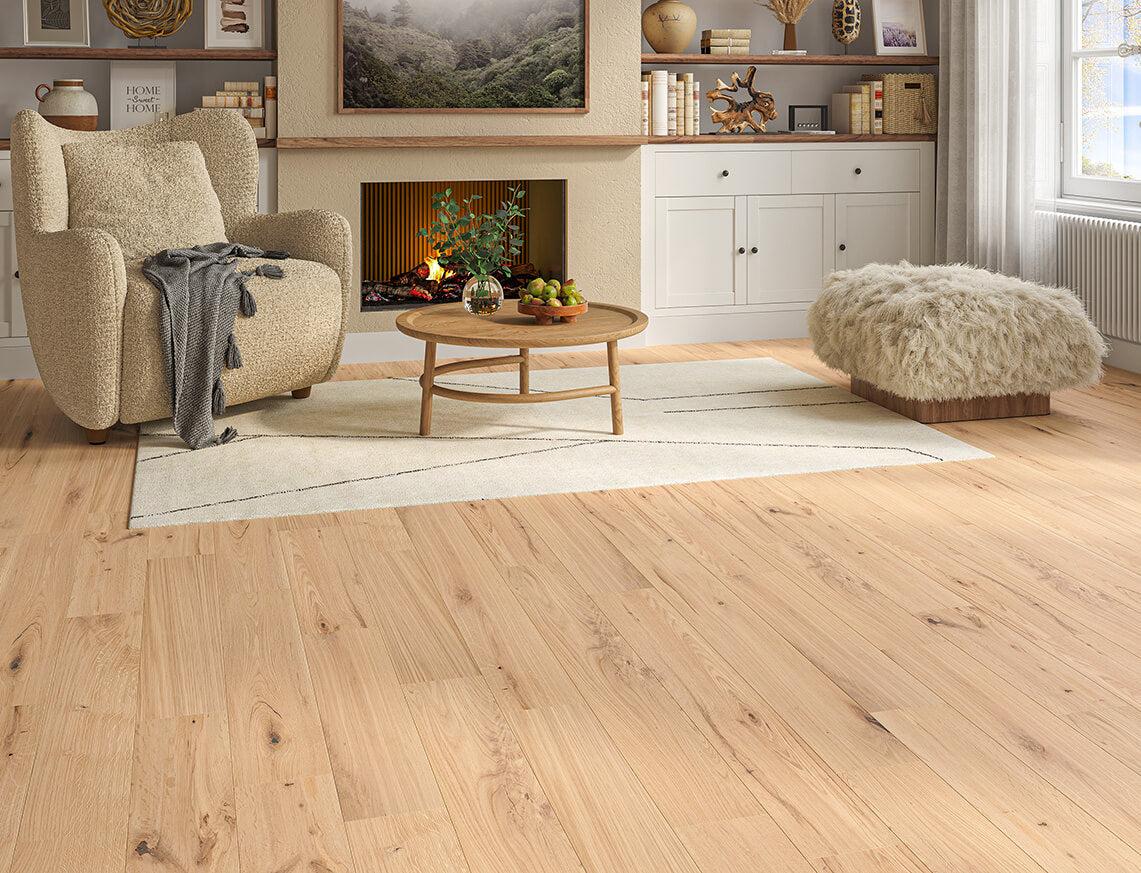
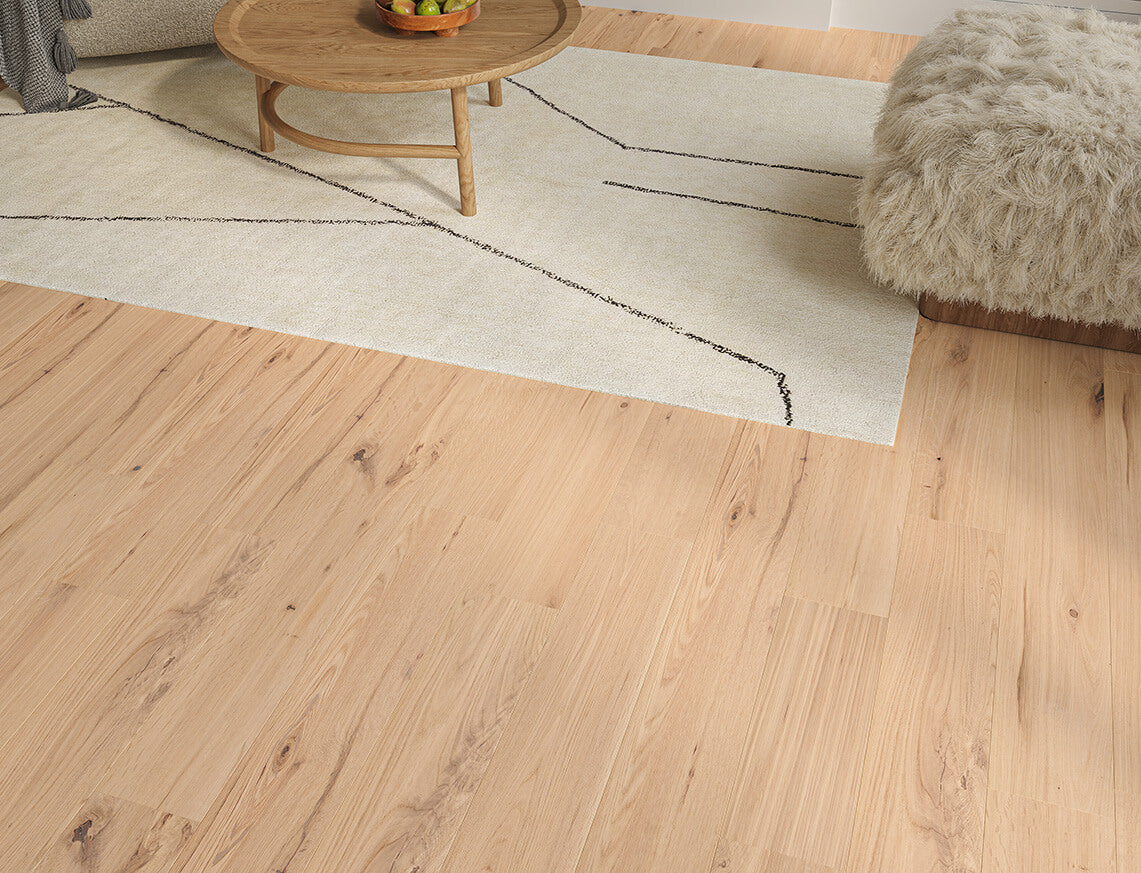
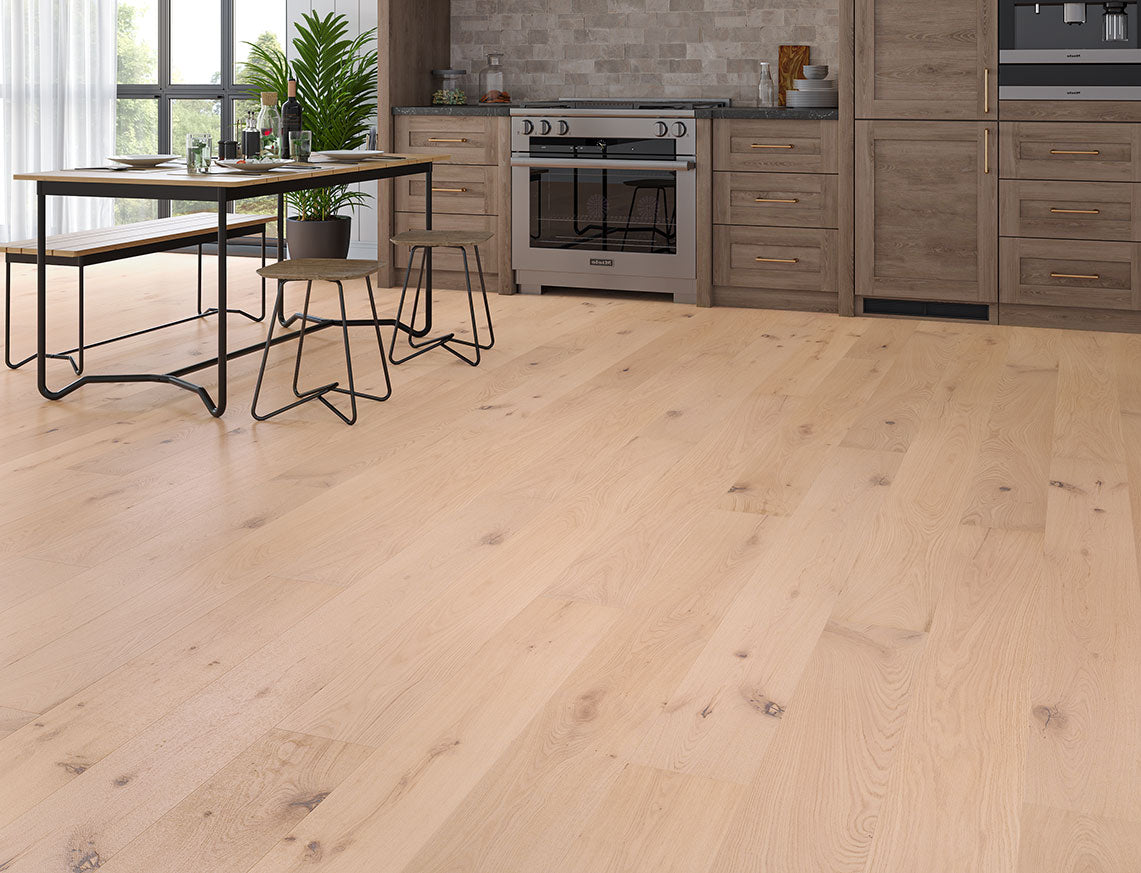
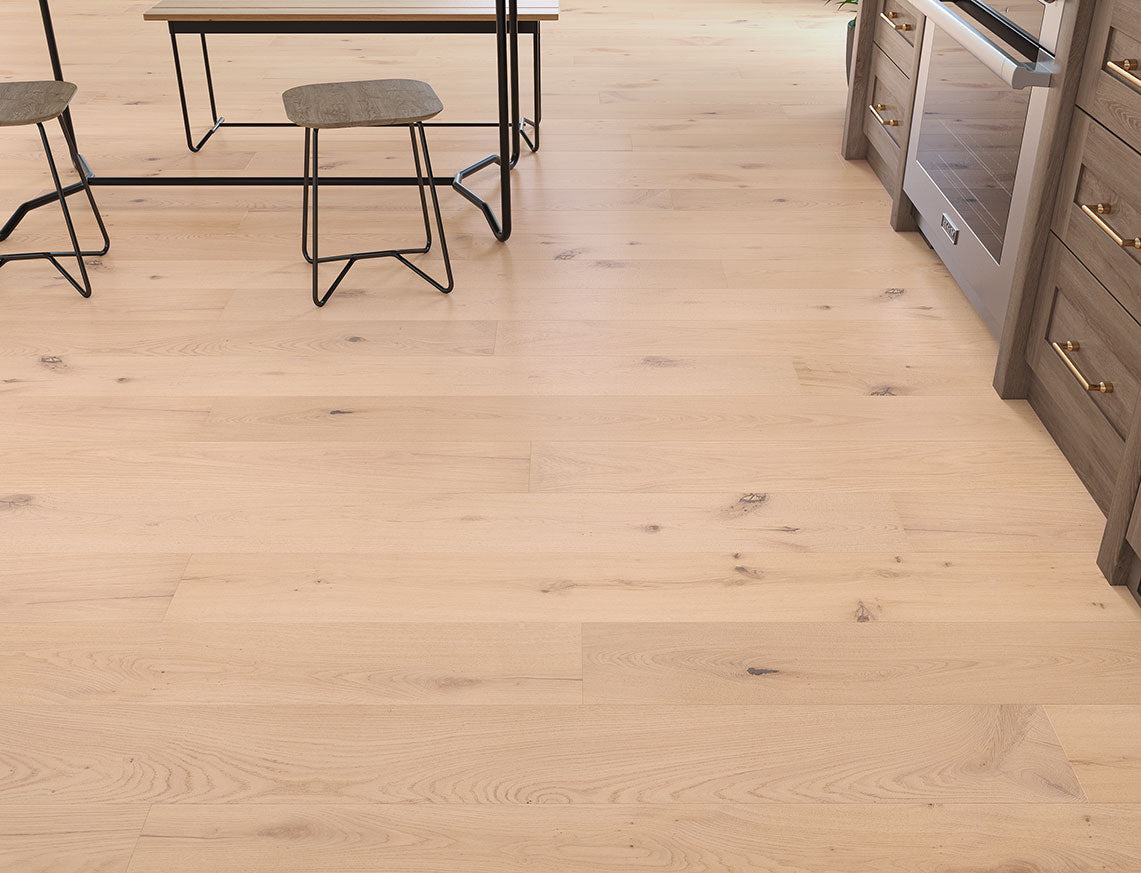
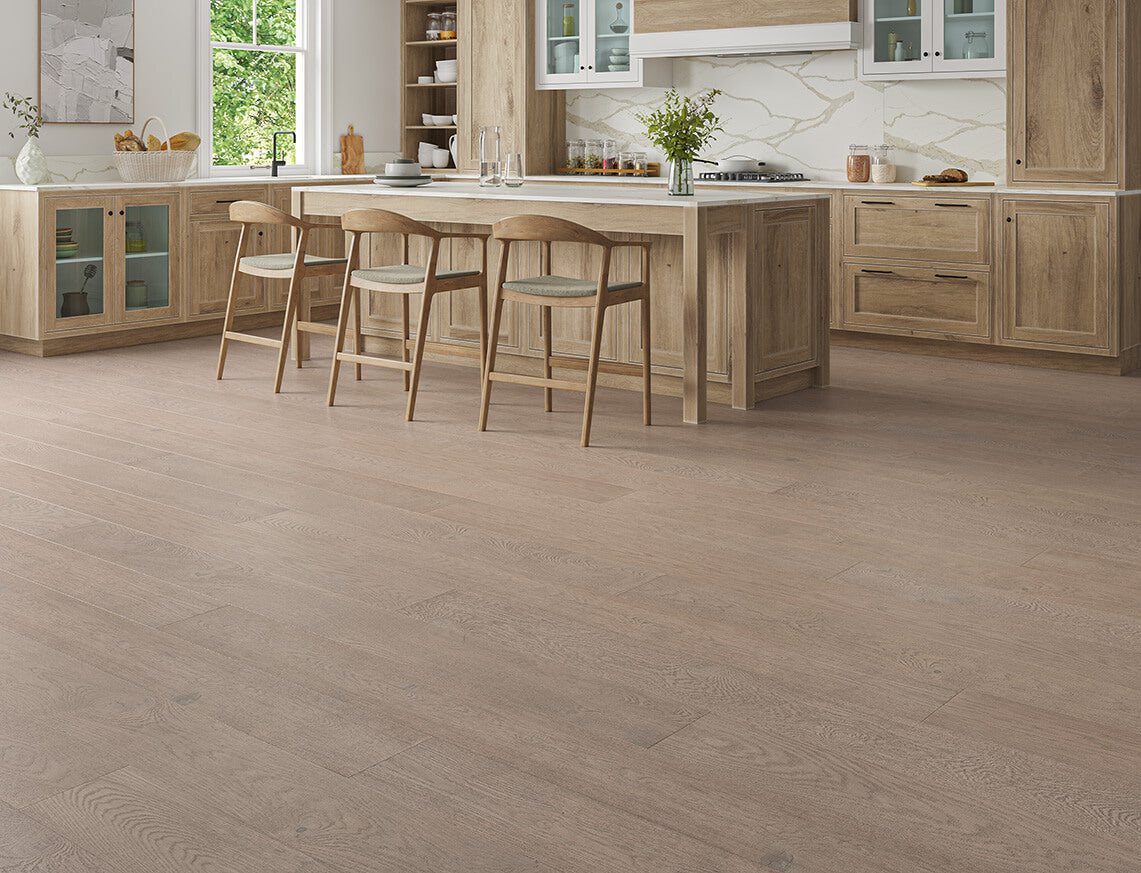
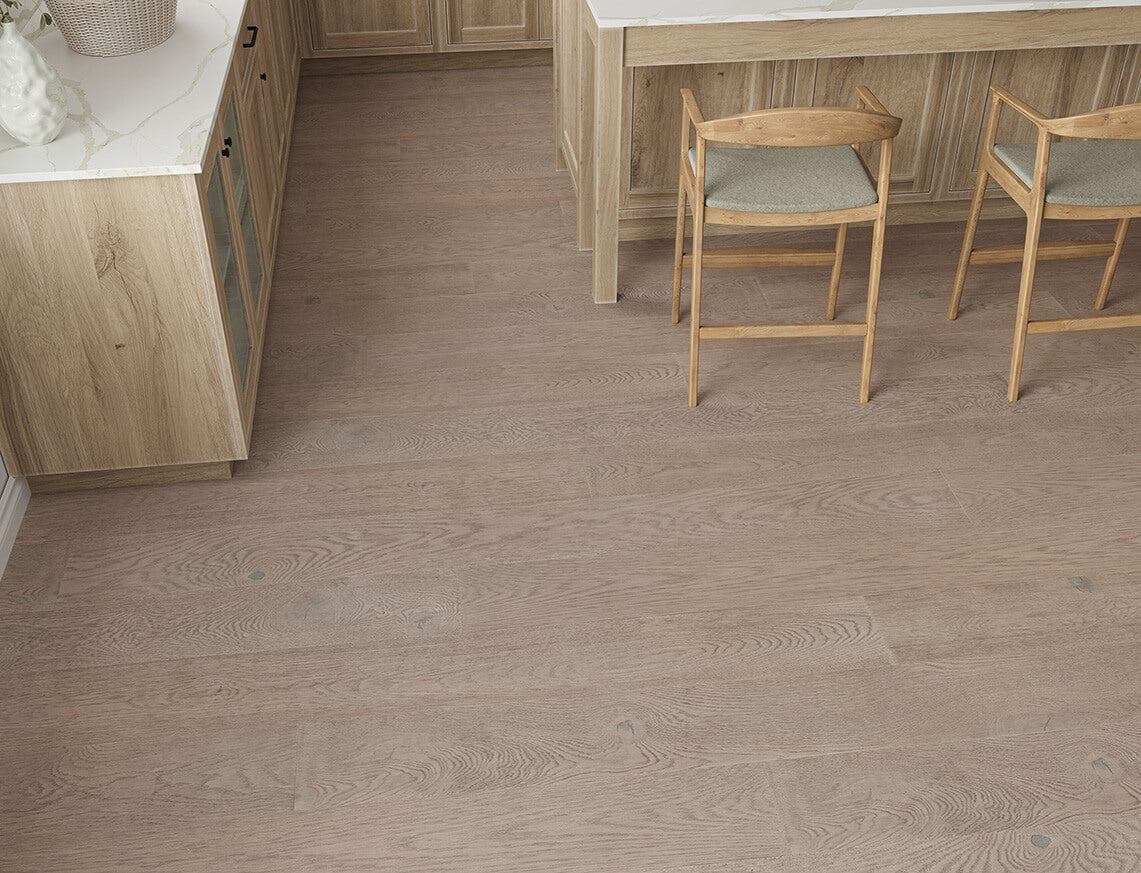
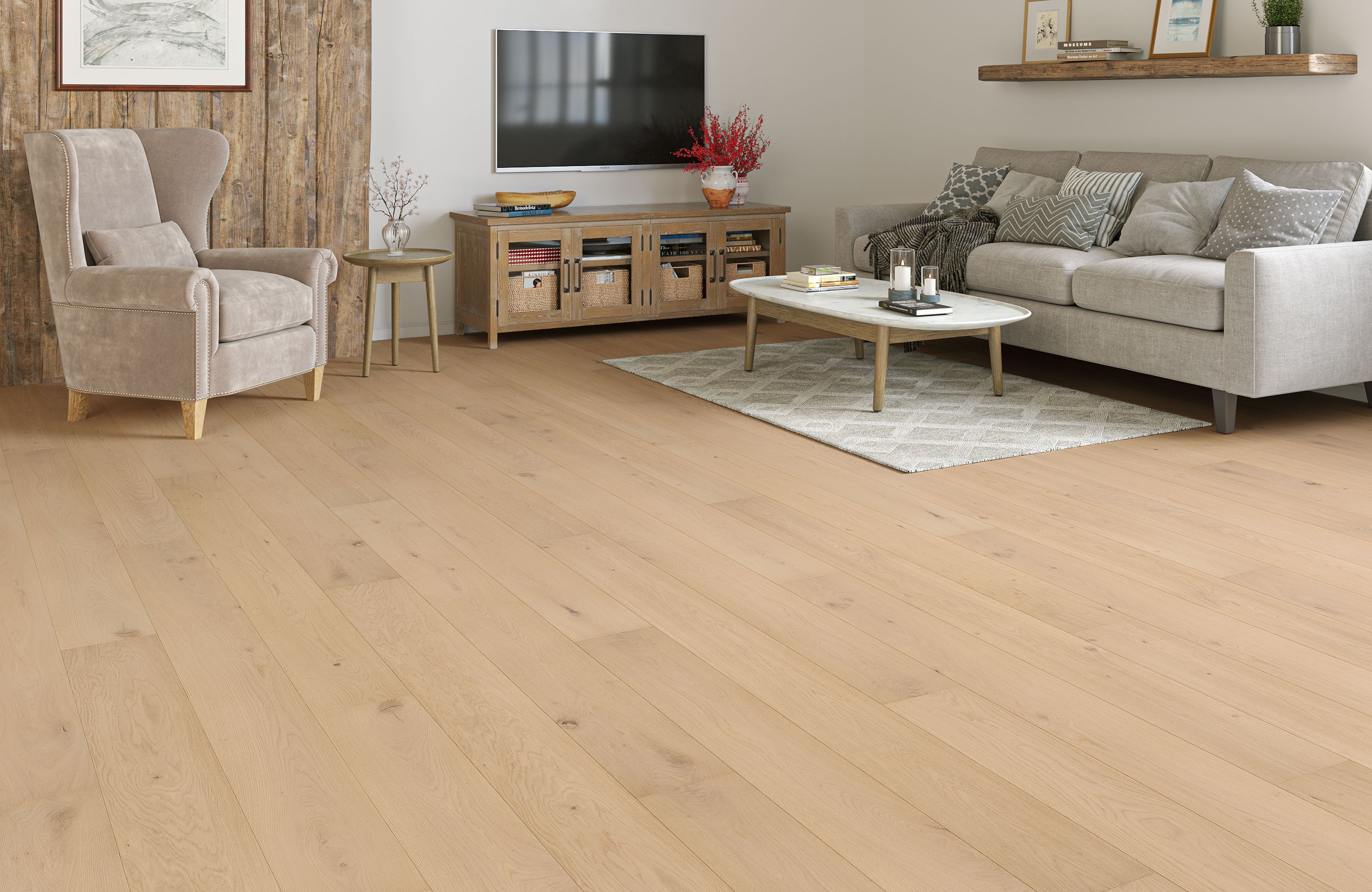
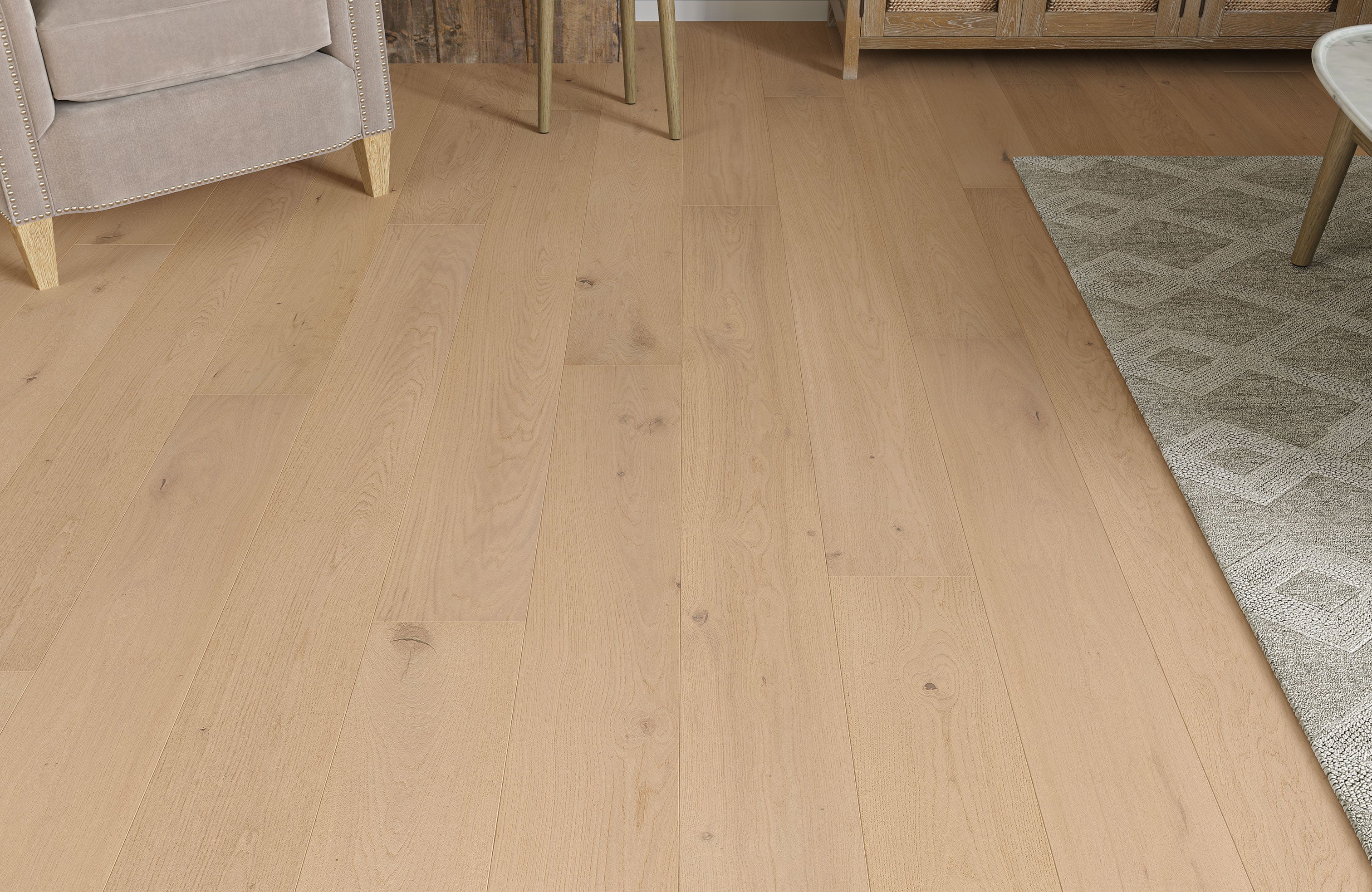
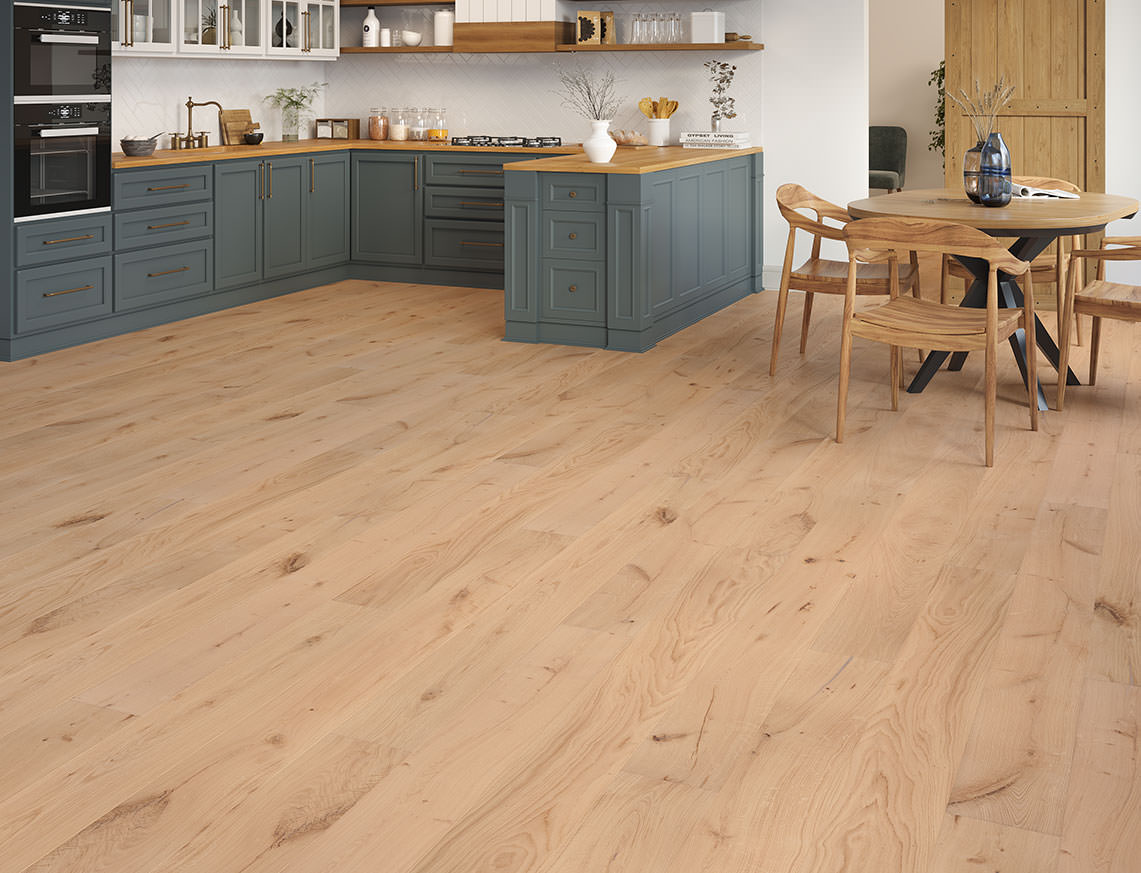
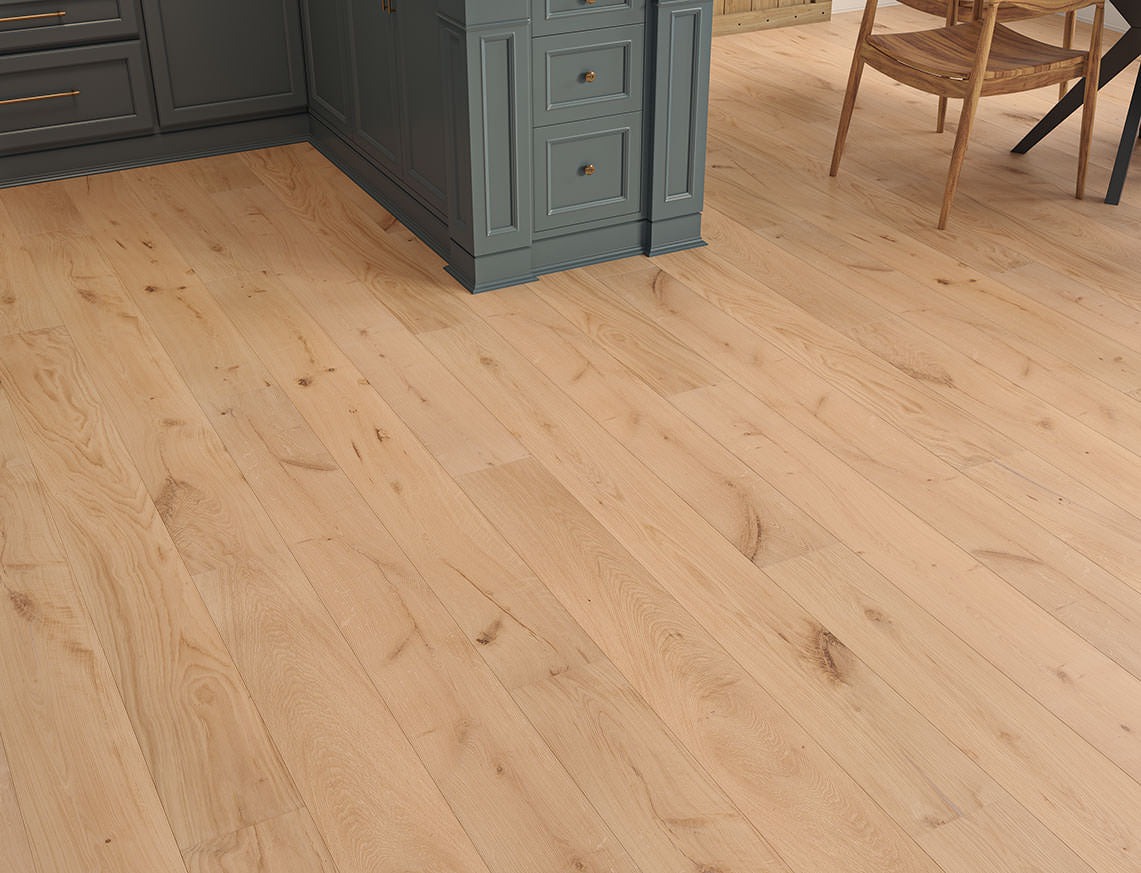
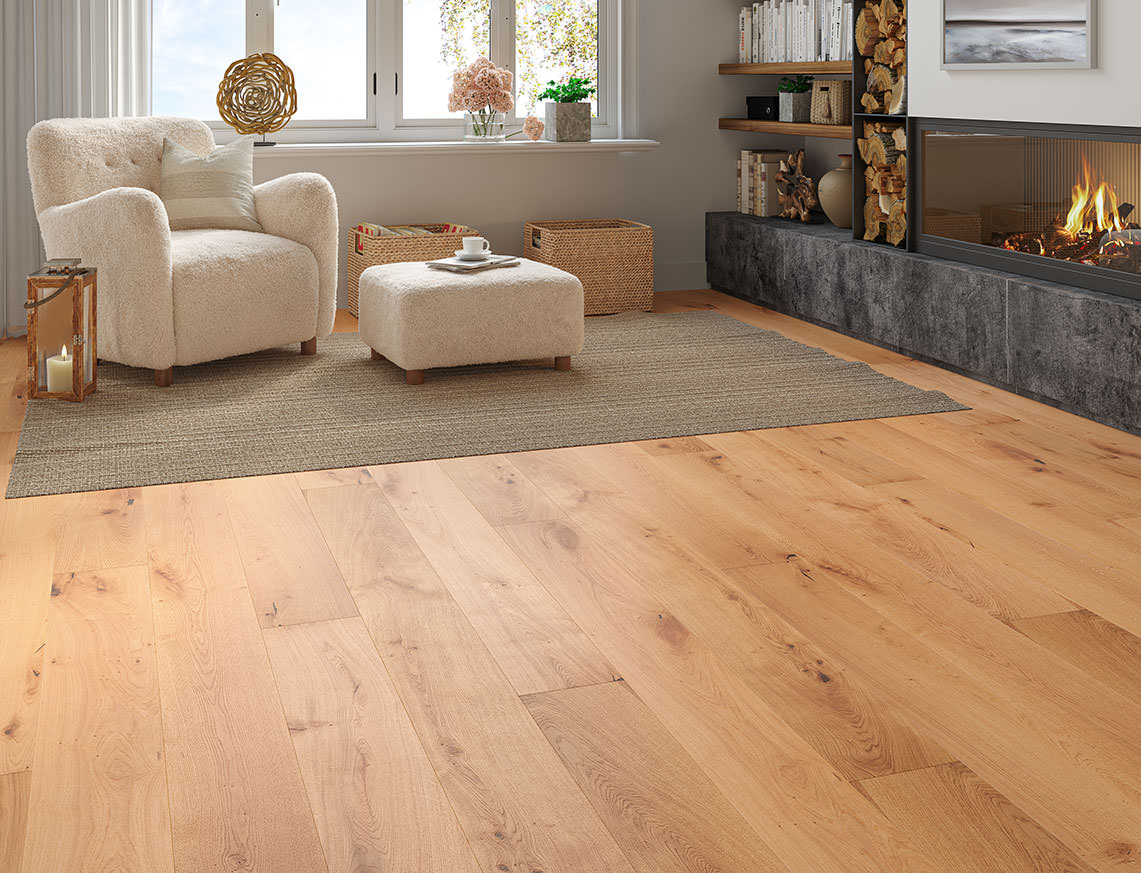
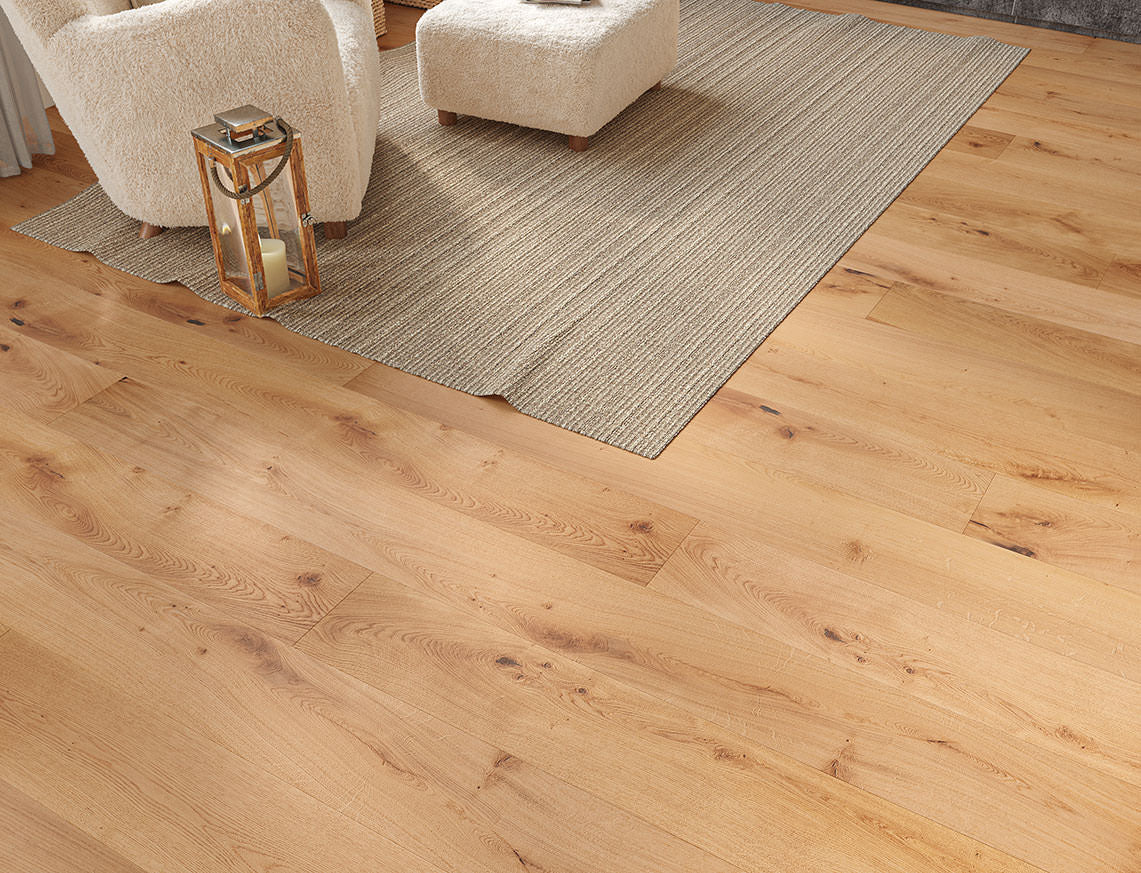
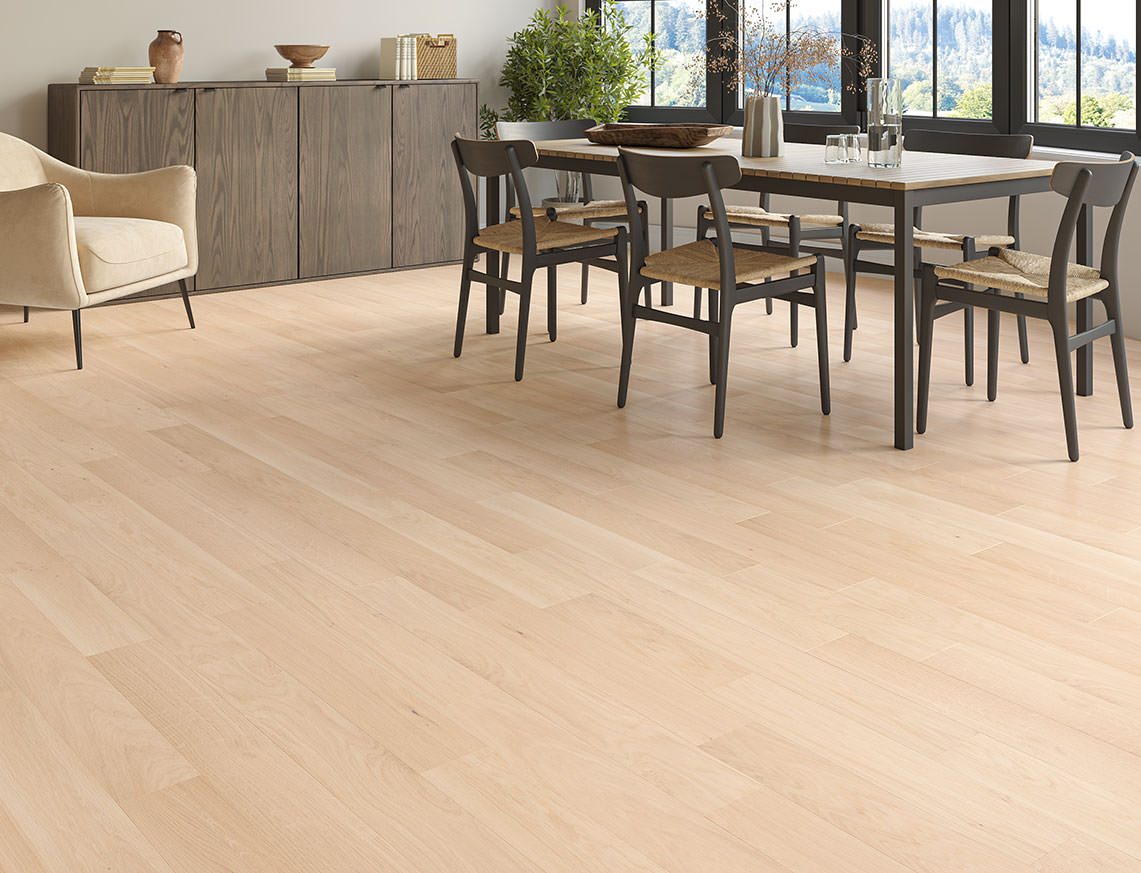
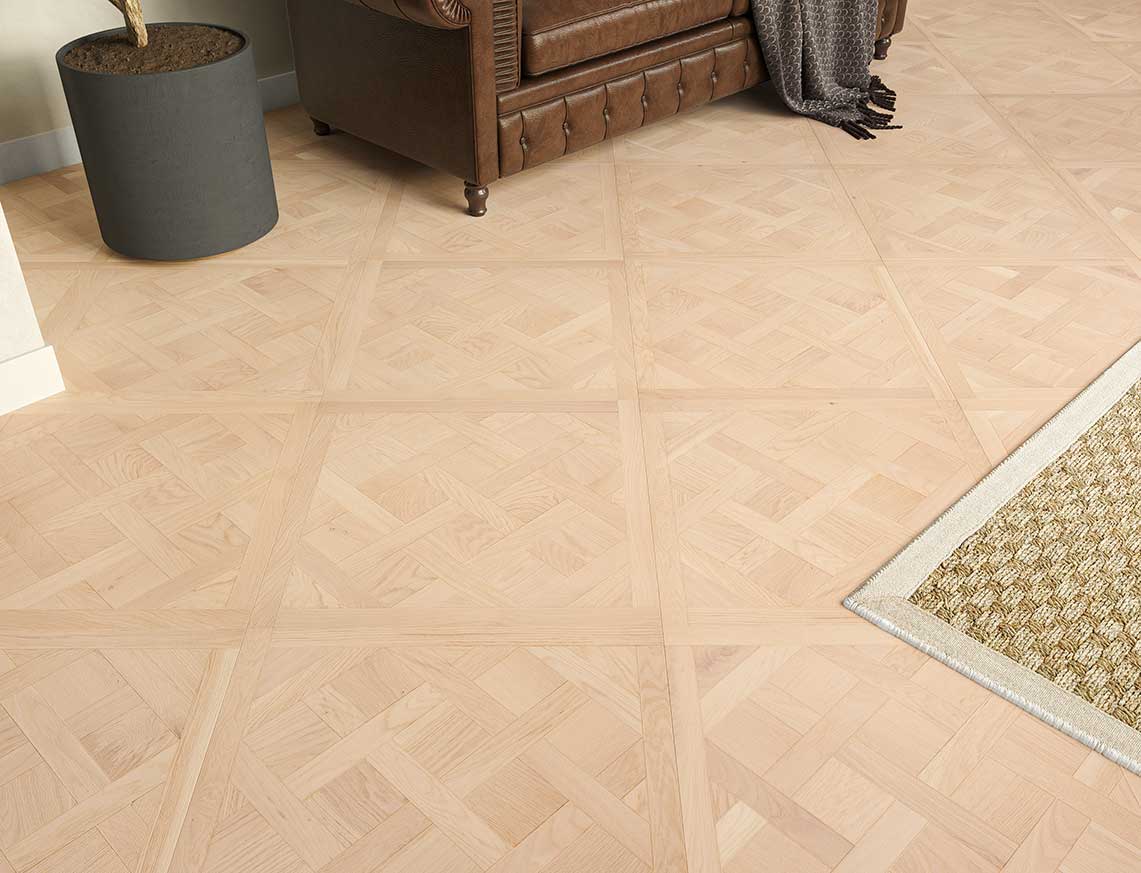
Pale oak tones that bounce what daylight a room has and make a space feel larger. Natural and light is our biggest colour group and the most forgiving place to start, because it sits comfortably with almost any wall colour, kitchen or existing woodwork.
The group covers a lot of ground. Raw unfinished oak, floors with a clear lacquer or invisible oil that leaves the timber close to its natural shade, soft blondes, and pale whitewashed tones with a hint of white worked into the grain.
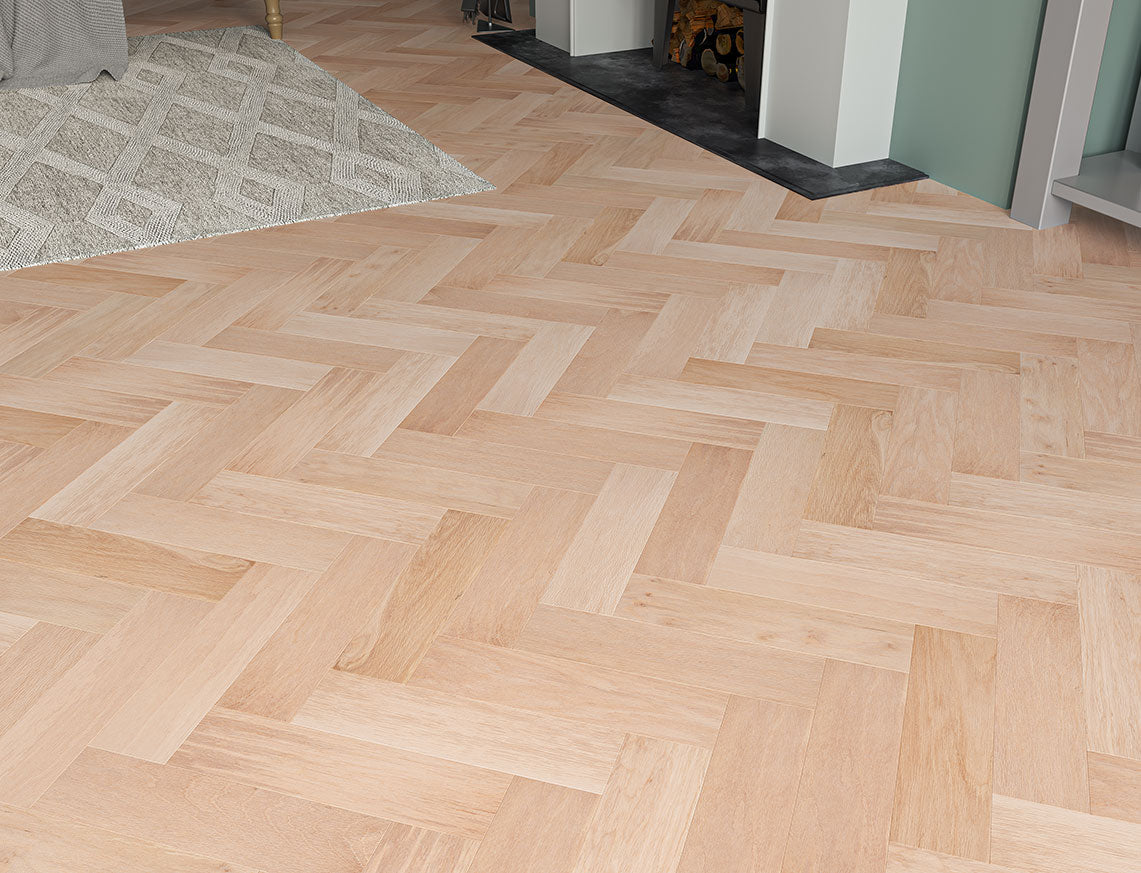
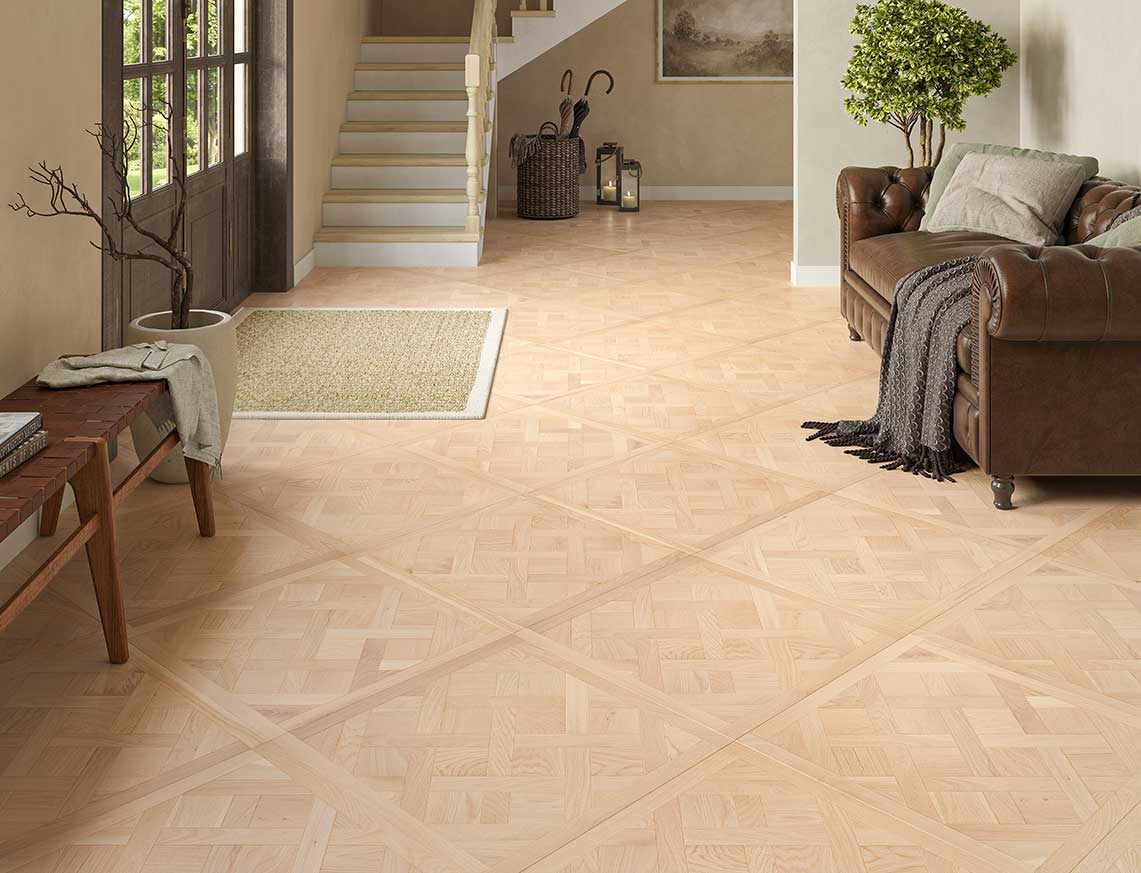
Available across engineered oak, solid oak, laminate and vinyl, in plank, herringbone and chevron. Free A5 samples, delivered next-day.
Light floors reflect rather than absorb, which is why a pale floor makes a room feel bigger and brighter than a dark one of the same size. In a north-facing room, or a space with one small window, that effect is worth having.
They are also the most forgiving choice when you are not replacing everything at once. A pale oak floor sits happily against white walls, grey units, painted furniture and existing oak doors, which is why it is the usual choice for whole-house projects where several rooms have to work together.
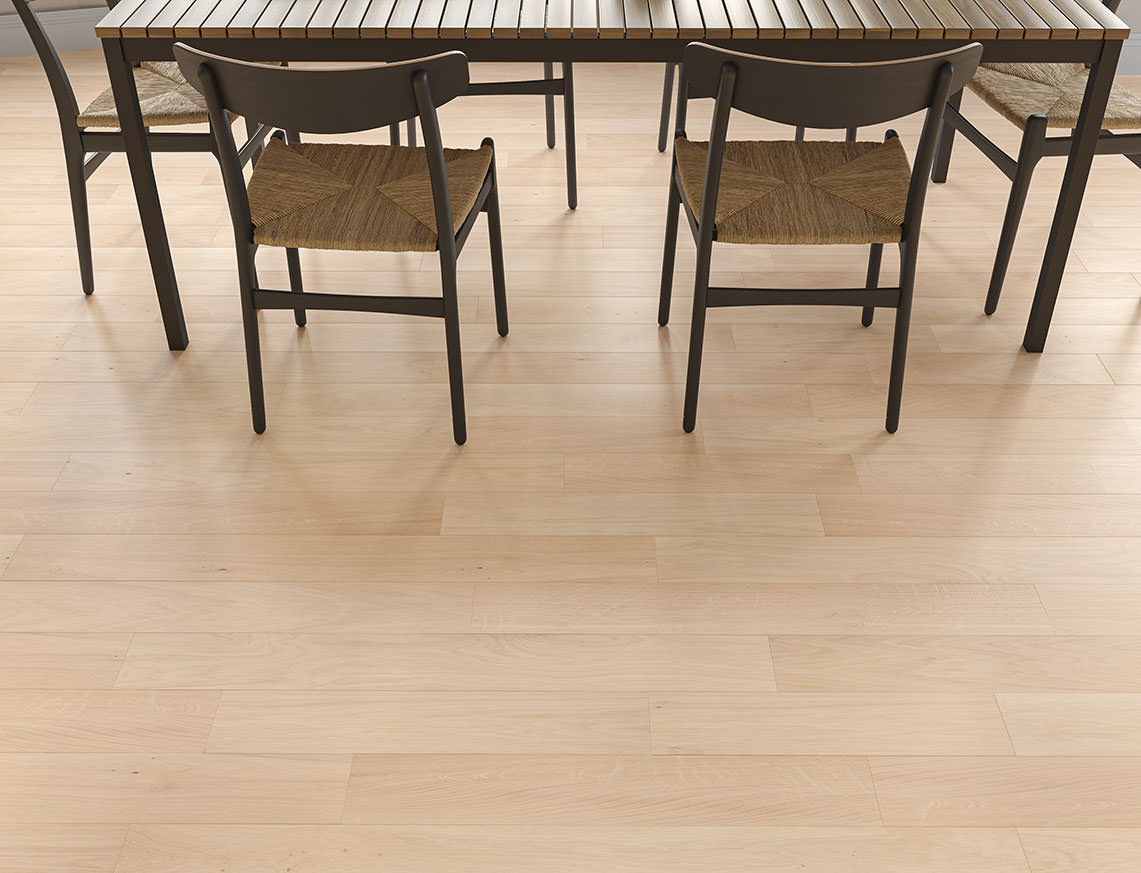
The trade-off is that pale floors show crumbs, dark hair and pet marks more readily than a mid-tone. Something to weigh if the floor is going in a busy kitchen rather than a bedroom.
The range within natural and light
Unfinished oak
Supplied raw and sanded and sealed on site once laid. It gives you complete control over the final colour and sheen, and lets you match an existing floor exactly. More work at fitting stage, but the most flexible option.
Clear and invisible finishes
Invisible oil and clear UV lacquer are designed to protect the timber without changing its colour, so the board stays close to raw oak. Invisible oil in particular is made to look untreated, which is exactly the appeal for some people and slightly confusing for others expecting a visible finish.
Blondes and soft naturals
Warmer than a raw oak and cooler than a golden tone. These sit in the middle of the group and are the safest choice if you are unsure, since they read as neutral in most lighting.
Pale whitewashed tones
Where a white pigment is worked into the grain, giving a chalkier, cooler pale. If that is the look you are after, our white-washed collection covers it in more depth.
Finish changes the colour as much as the colour does
Two boards in the same pale oak can look quite different depending on the finish. Lacquer reflects more light and reads slightly cooler and cleaner. Oil absorbs it and looks softer and warmer. Brushed textures add a depth that photographs rarely capture.
What pale floors work with
Almost everything, which is the point. A few pairings worth knowing:
White and off-white walls give the Scandinavian look most people picture with a pale floor. Clean and bright, though it can feel stark without texture elsewhere in the room.
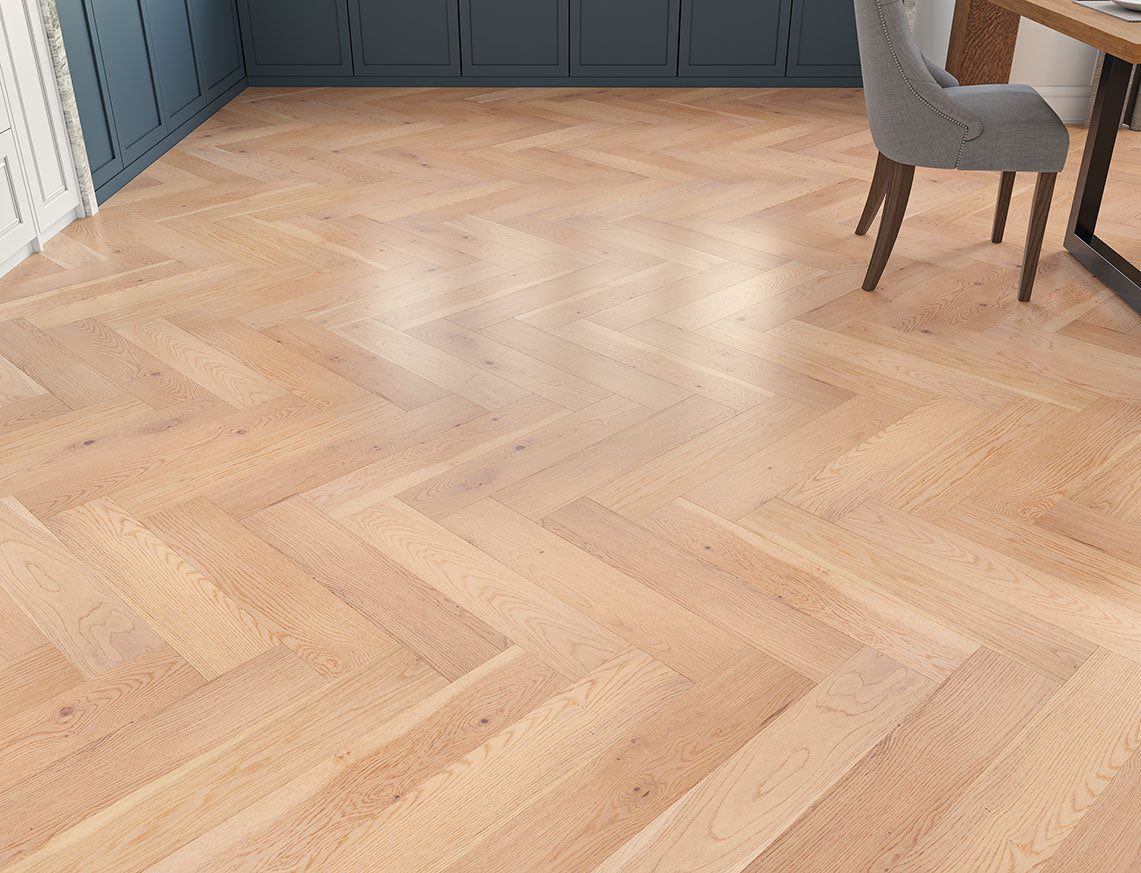
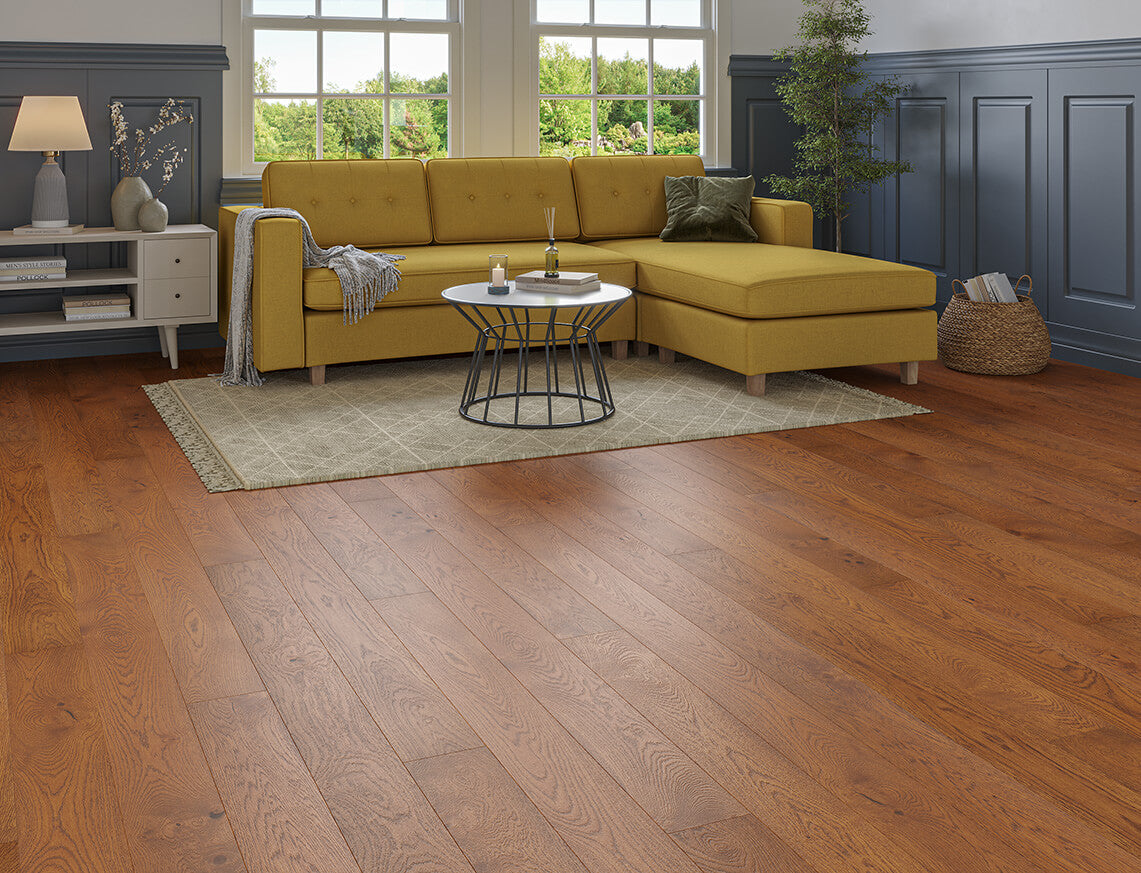
Navy, sage and darker units use the floor as contrast, and pale oak is one of the few floors that holds its own against a strong cabinet colour without fighting it.
Existing oak doors and skirting usually sit well, though the undertone matters. A yellow-toned oak door against a cool pale floor can look mismatched, which is why holding the sample against the woodwork is worth the ten minutes.
Judging a pale floor properly
Pale floors shift more between daylight and artificial light than mid-tones do, because there is less pigment to anchor the colour. A board that reads warm and creamy at midday can look distinctly cooler under an evening lamp.
Order a free sample, lay it flat on the existing floor in the actual room, and look at it in the morning, the afternoon and after dark. Then hold it against your skirting, doors and units. It is the single most useful thing you can do before committing.
Natural and light flooring: frequently asked questions
Does light flooring make a room look bigger?
Generally yes. Pale floors reflect more light than dark ones, which makes a room feel more open, particularly where natural light is limited.
Do light floors show more dirt?
They show crumbs, dark hair and pet marks more than mid-tones, though they hide dust and light-coloured debris better than a dark floor. Mid-tone browns and greys are the most forgiving overall.
What is the difference between natural and whitewashed?
Natural leaves the oak close to its own colour. Whitewashed has a white pigment worked into the grain, giving a chalkier, cooler pale with more contrast in the grain pattern.
Will a pale floor yellow over time?
Oak develops a warmer tone with age and light exposure, which most people find attractive. Direct sunlight accelerates it and can do so unevenly where rugs sit, so moving rugs occasionally is worth doing.
Does natural flooring suit period properties?
It can work very well, particularly in narrower boards or a herringbone layout. Wide pale planks read as more contemporary, which may or may not be what a period room wants.