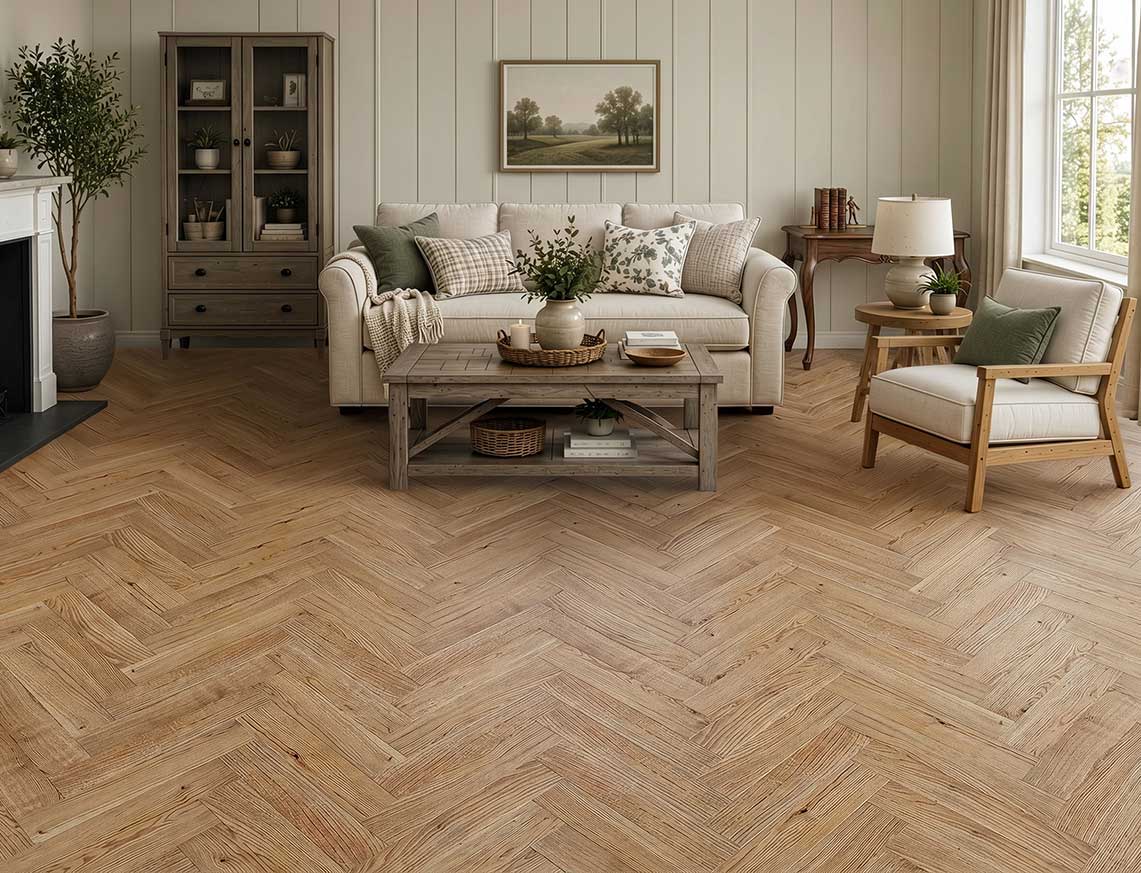
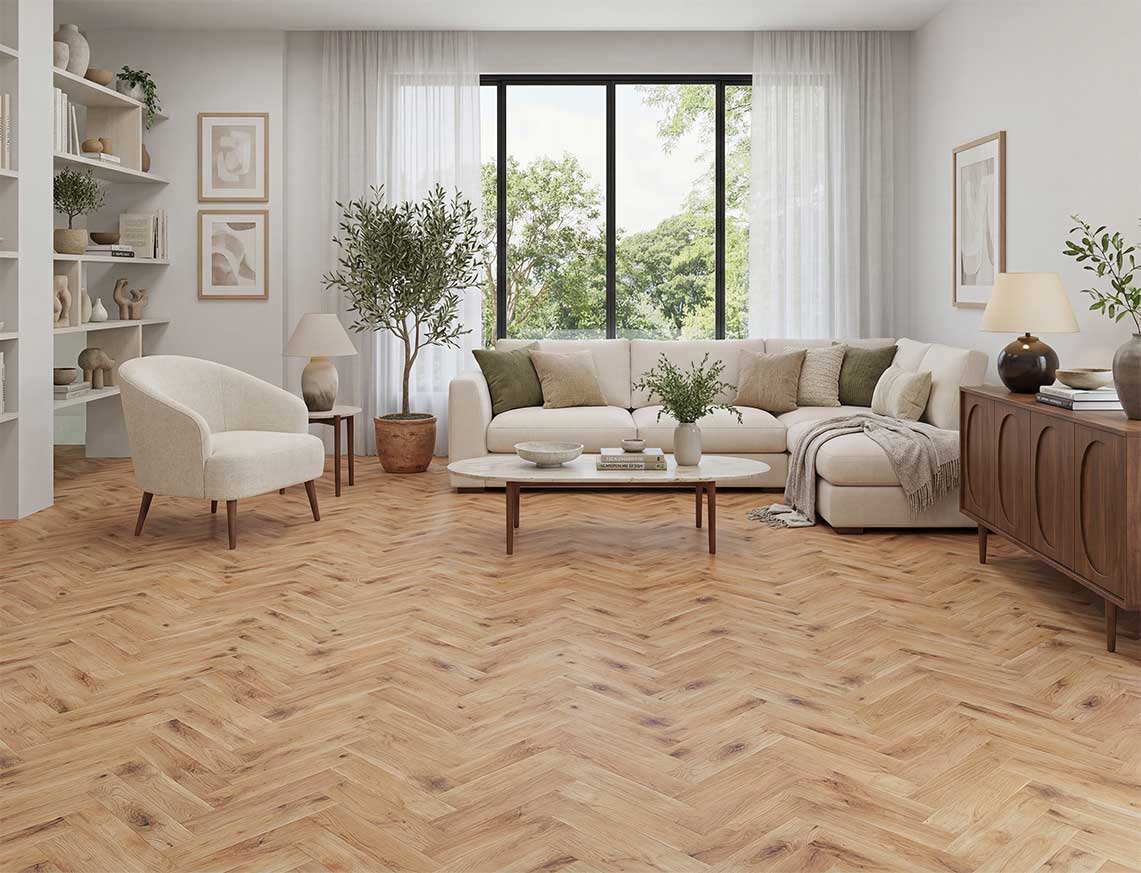
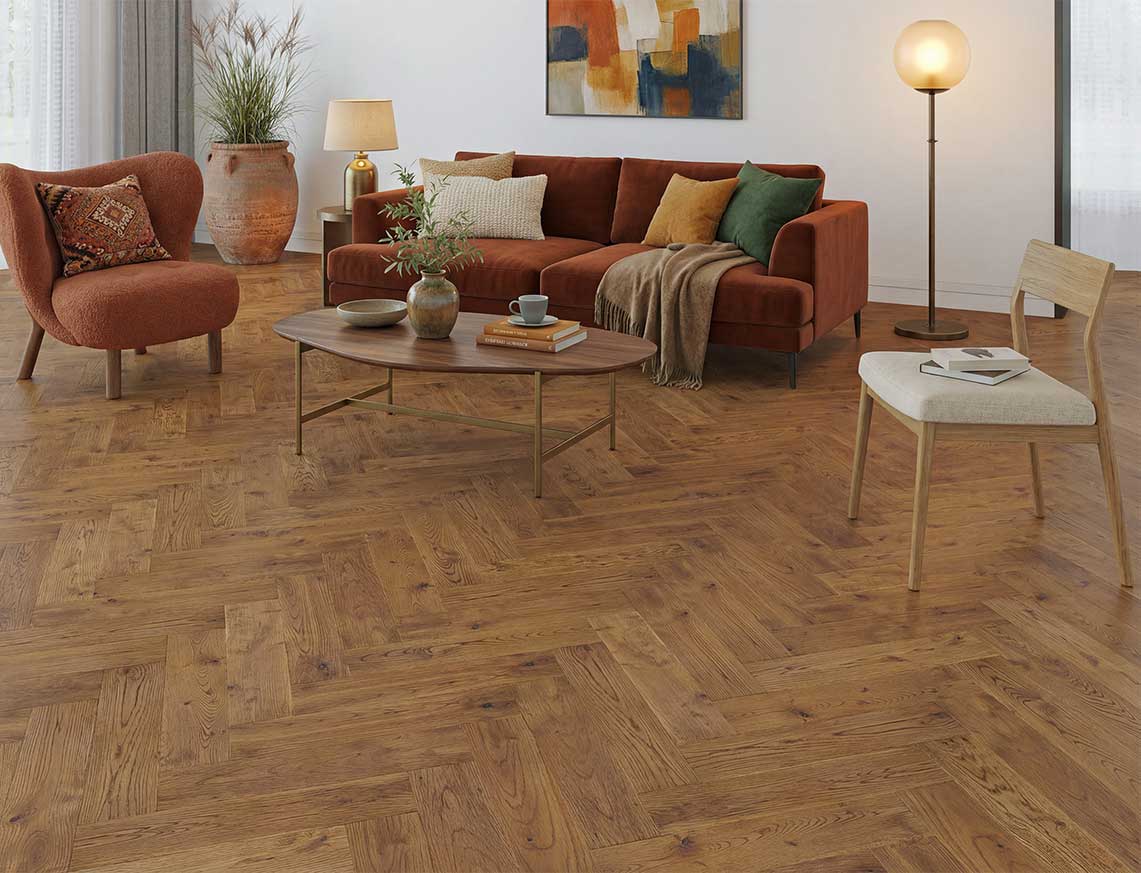
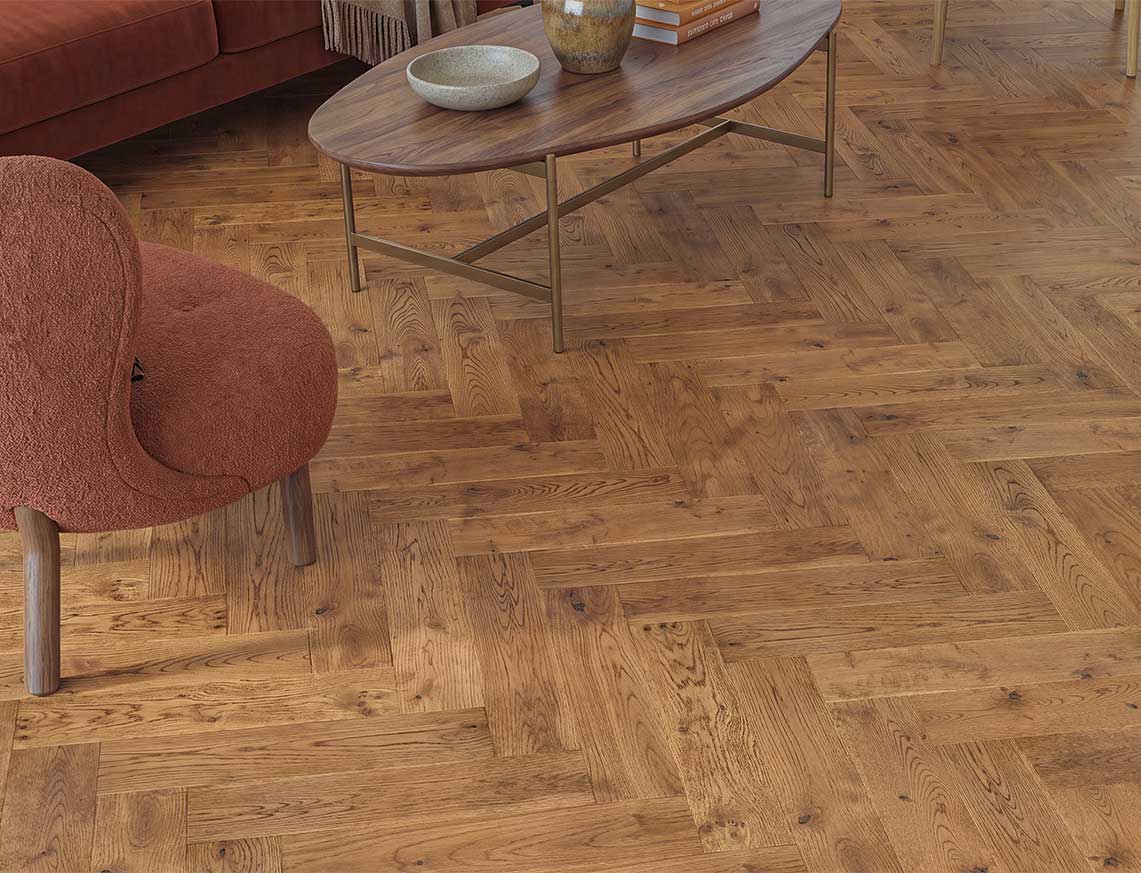
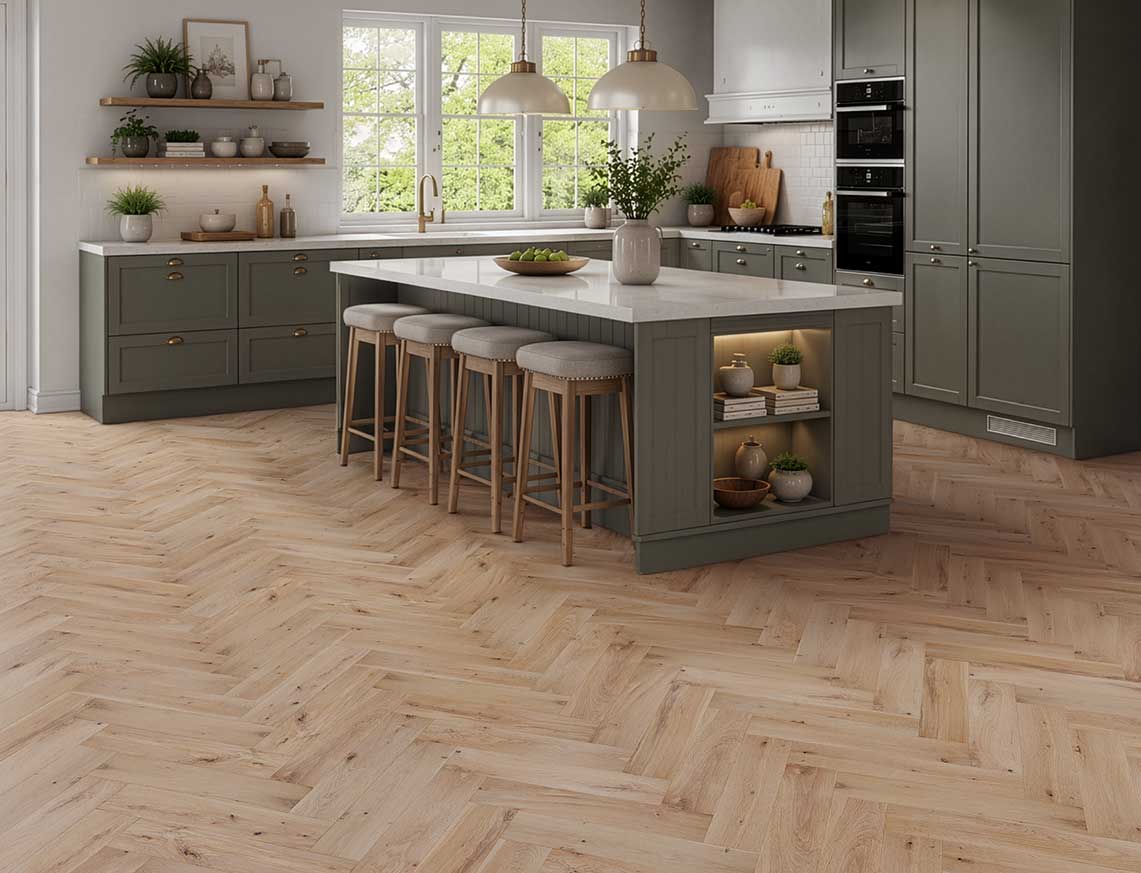
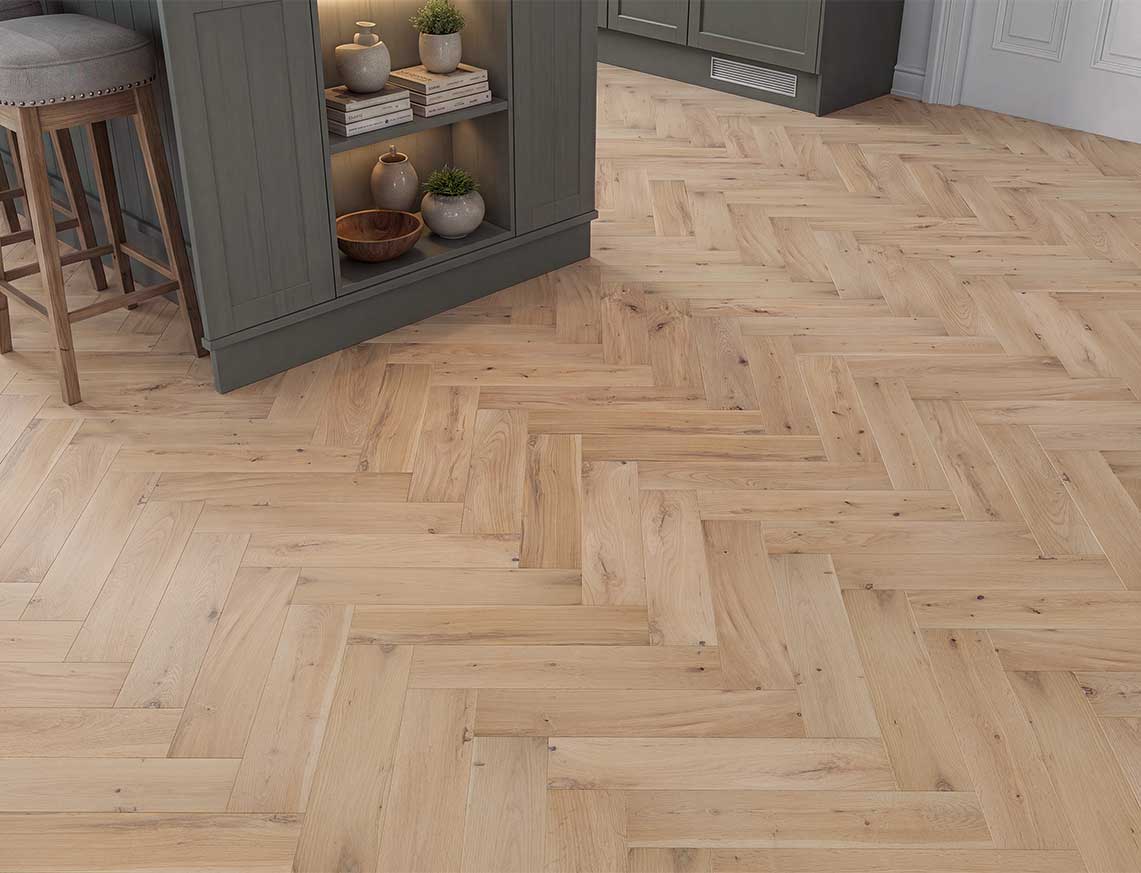
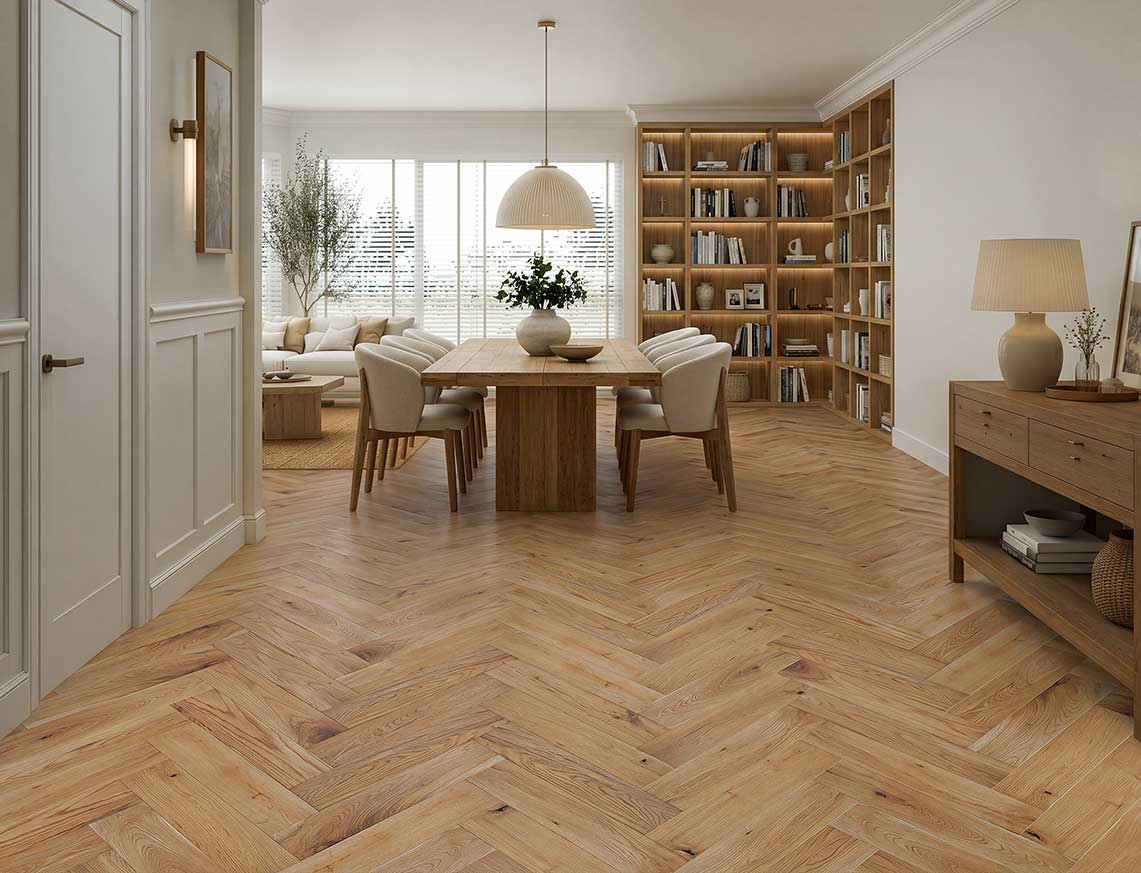
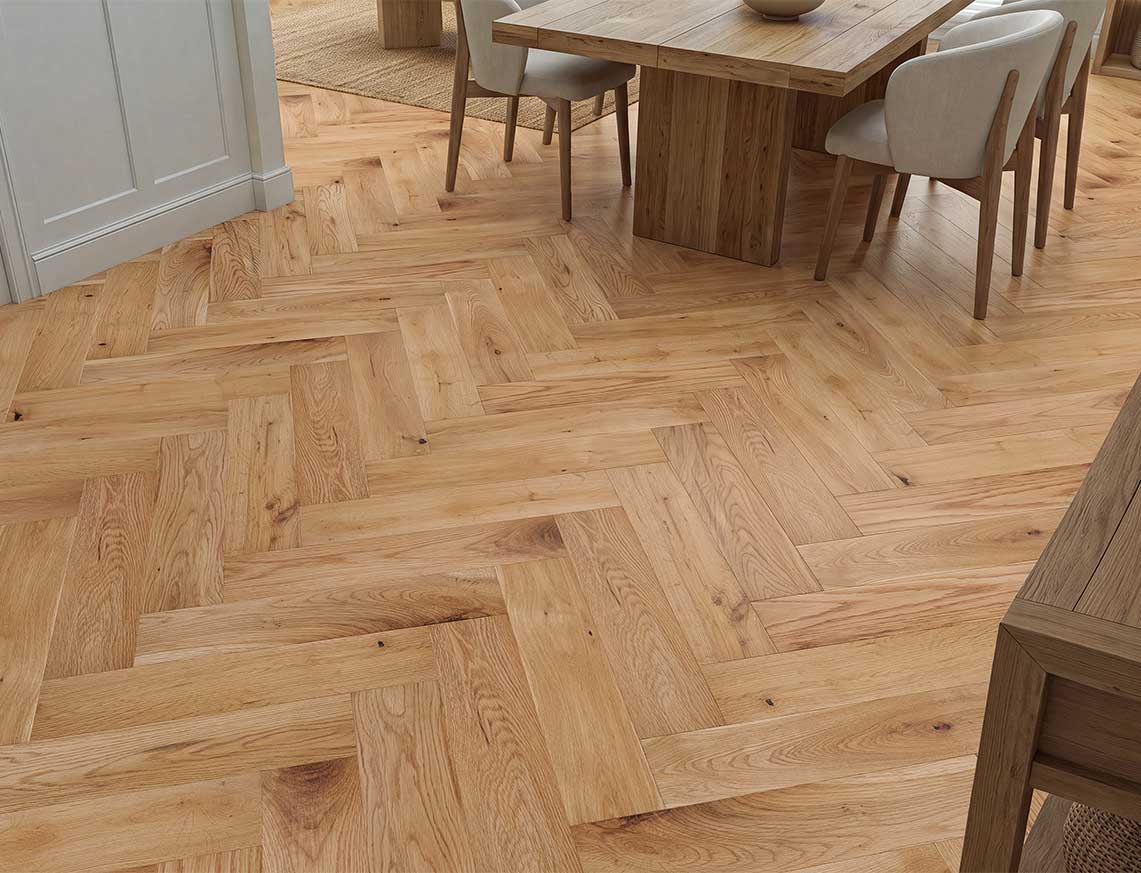
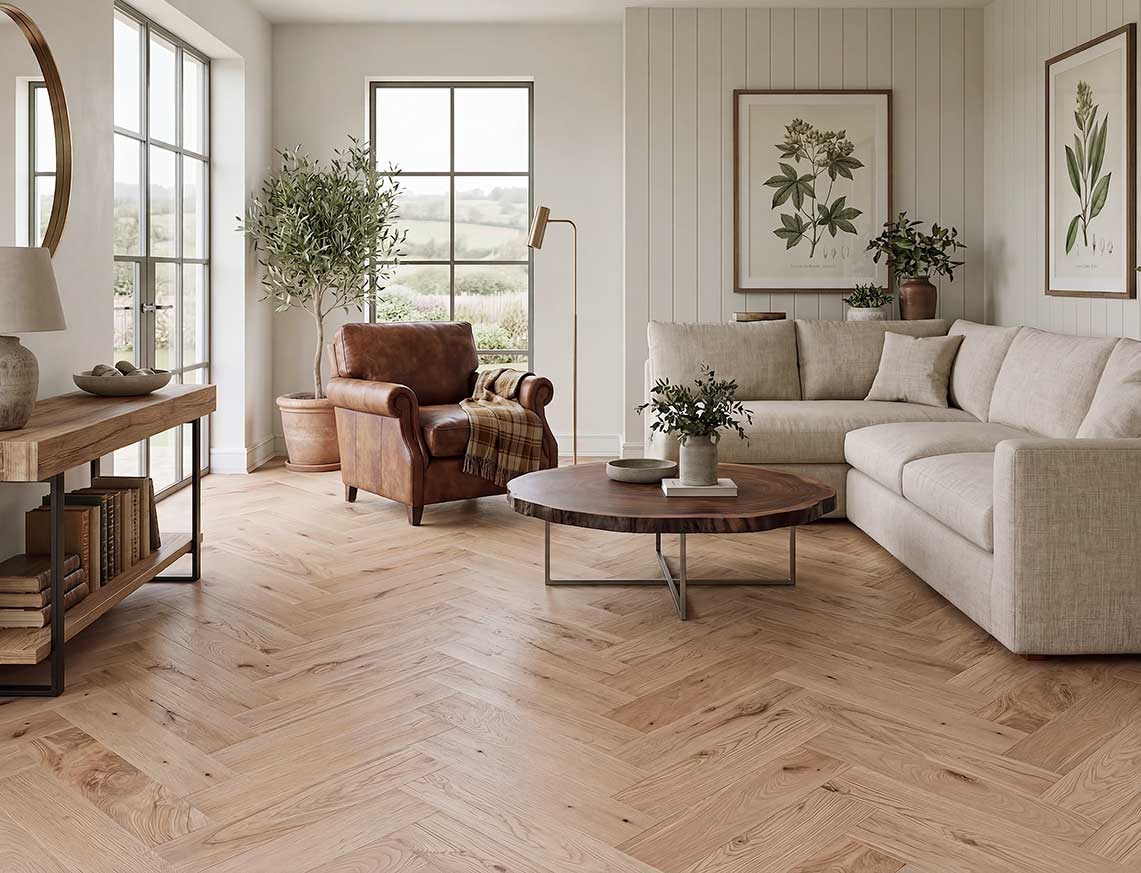
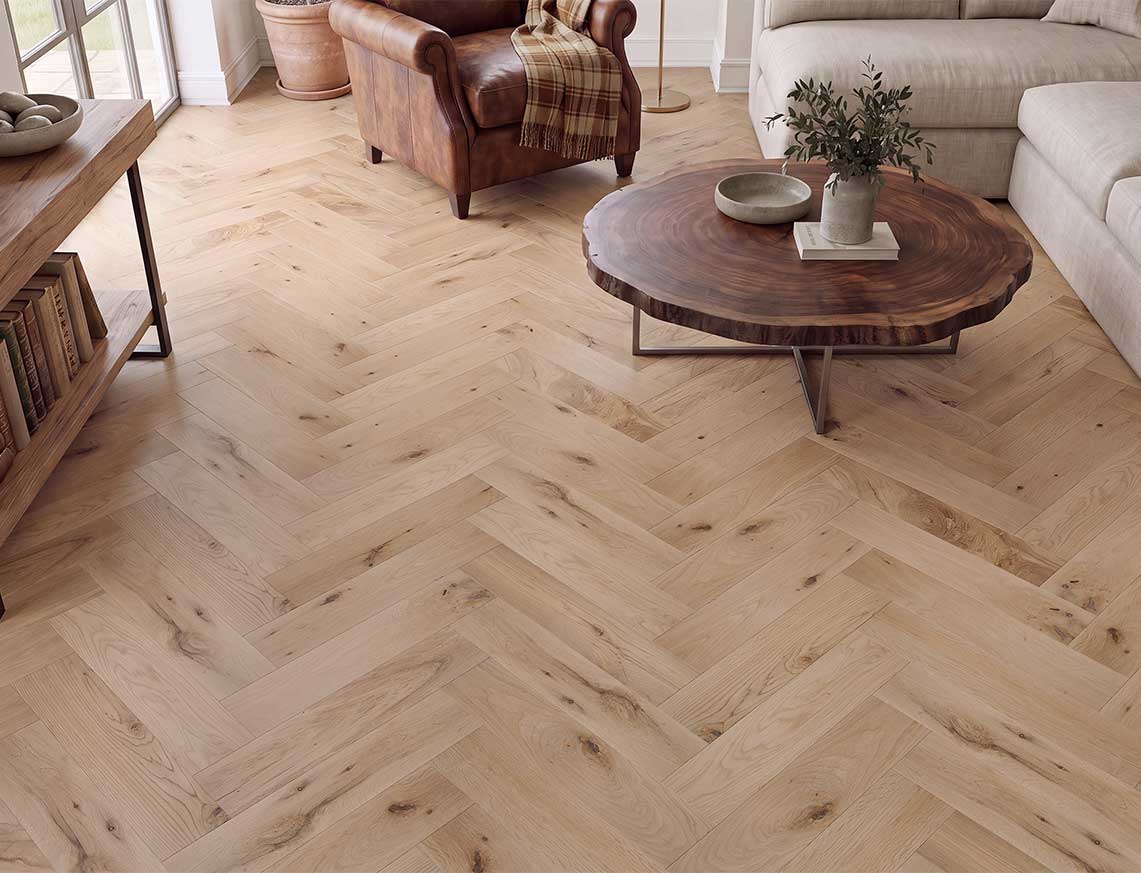
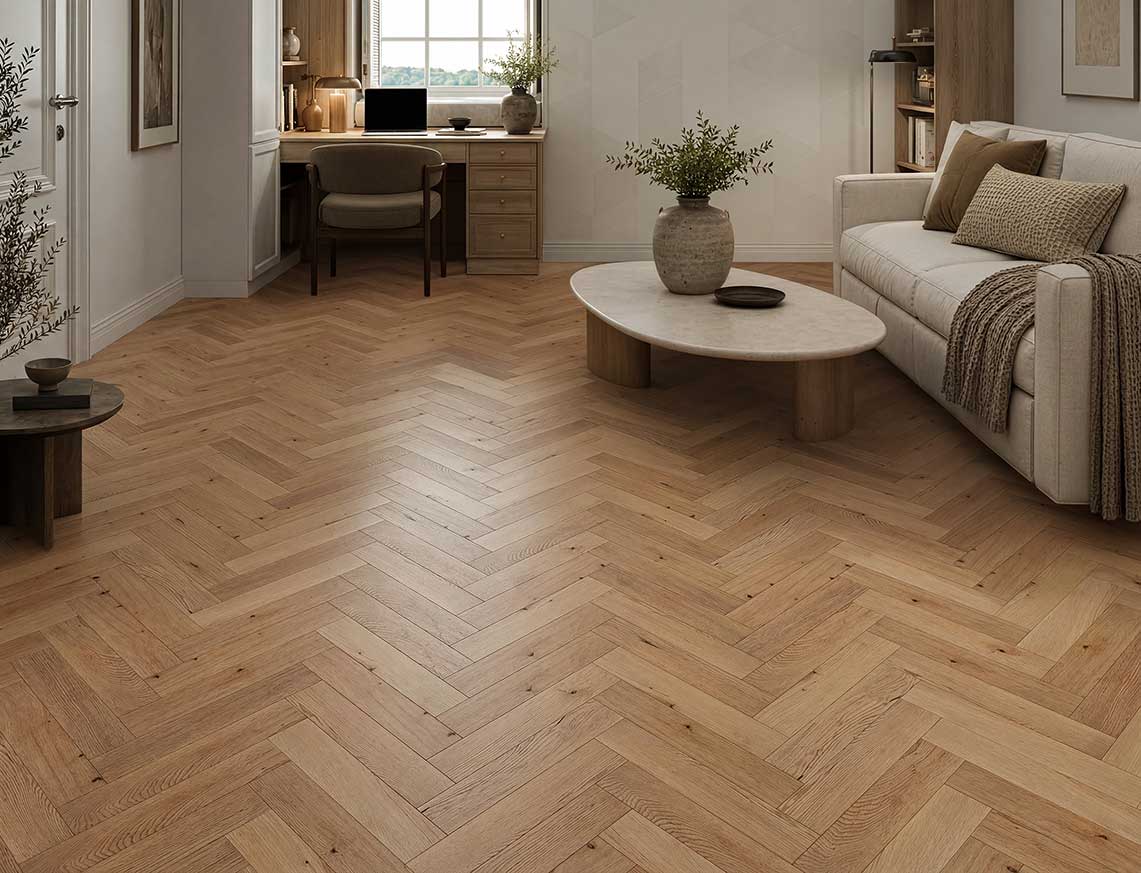
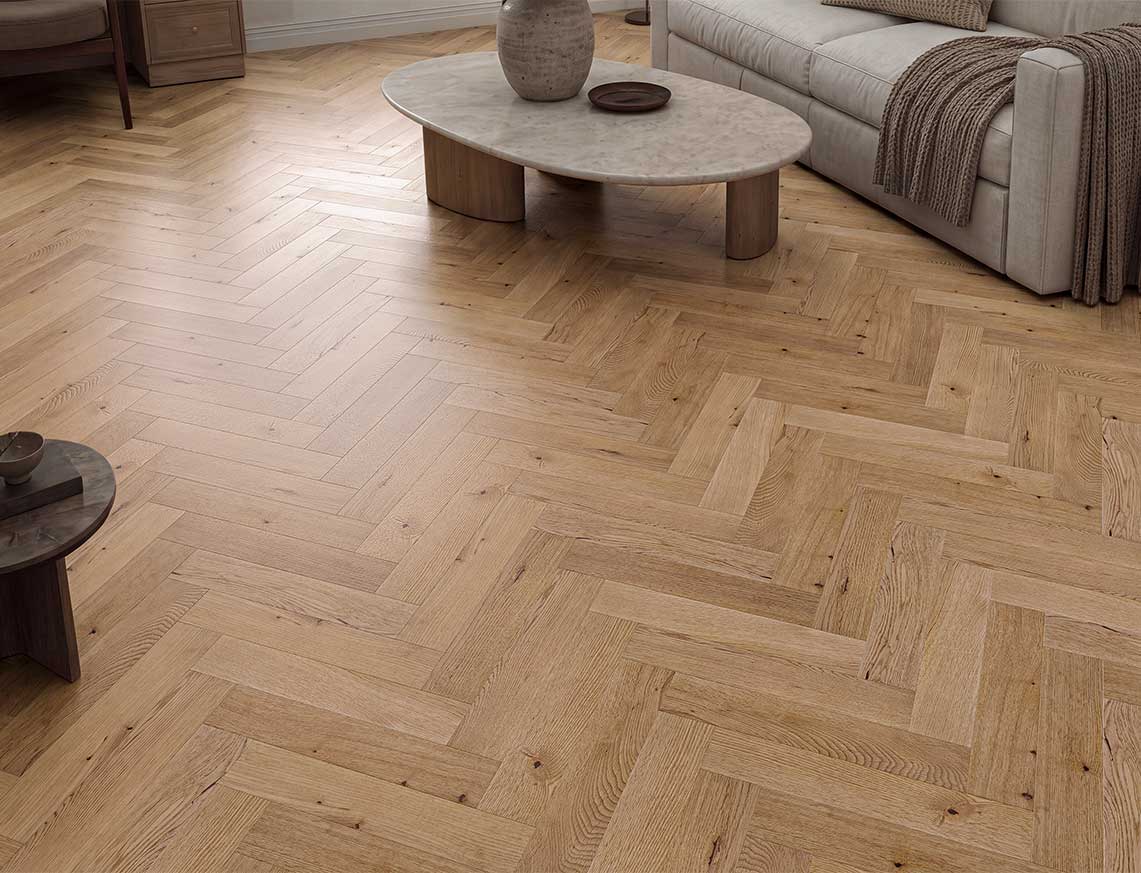
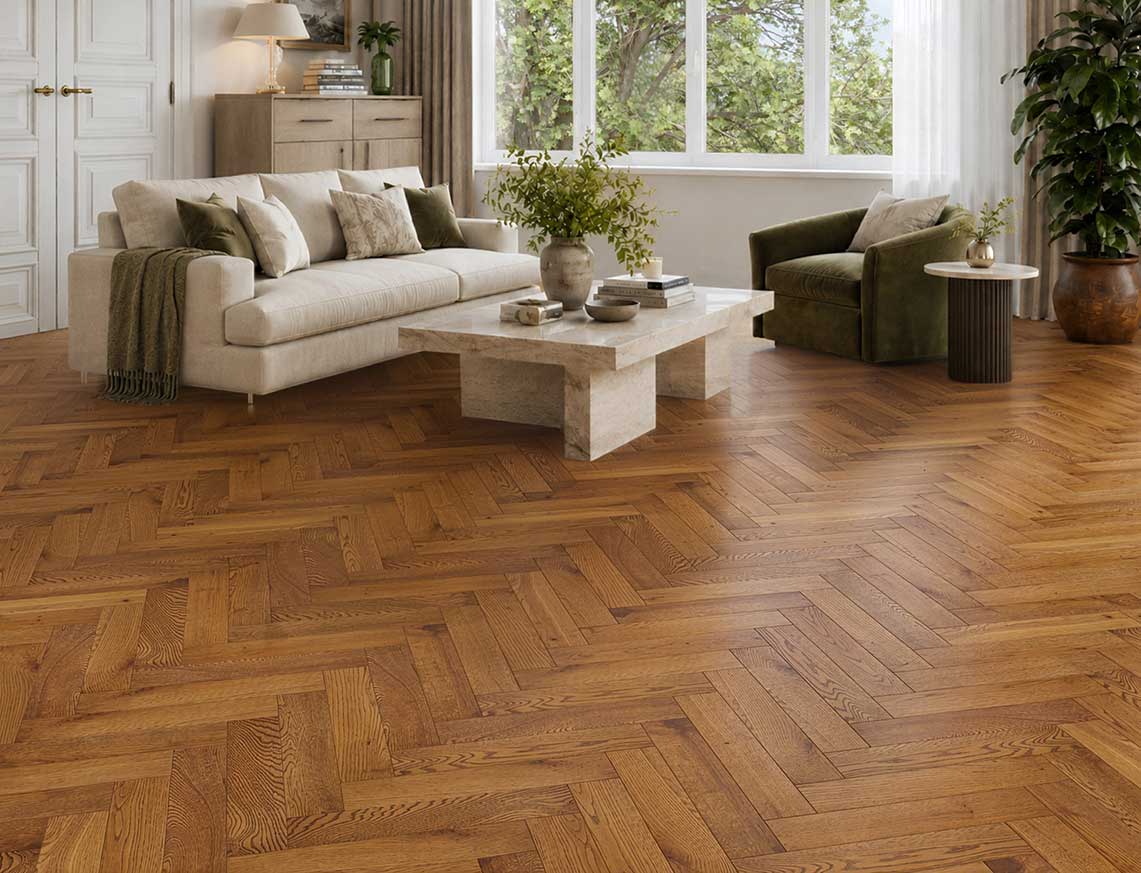
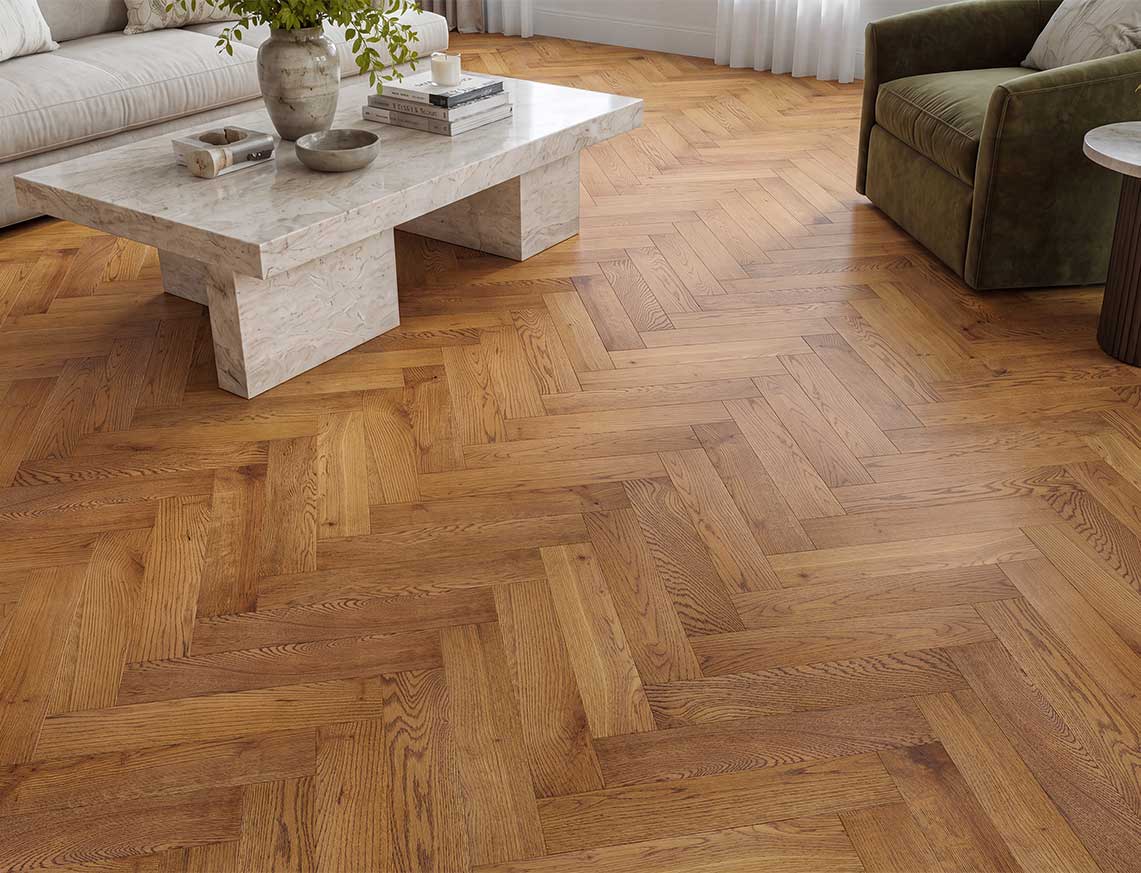
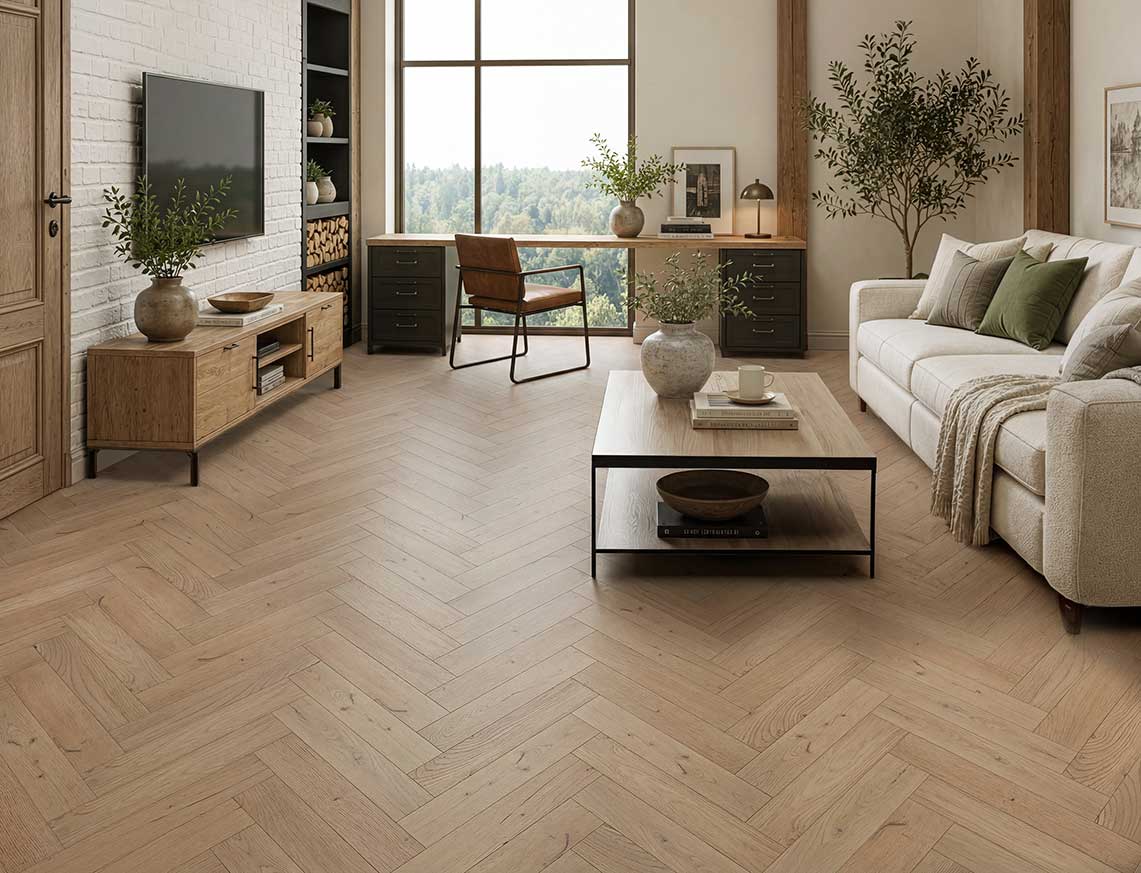
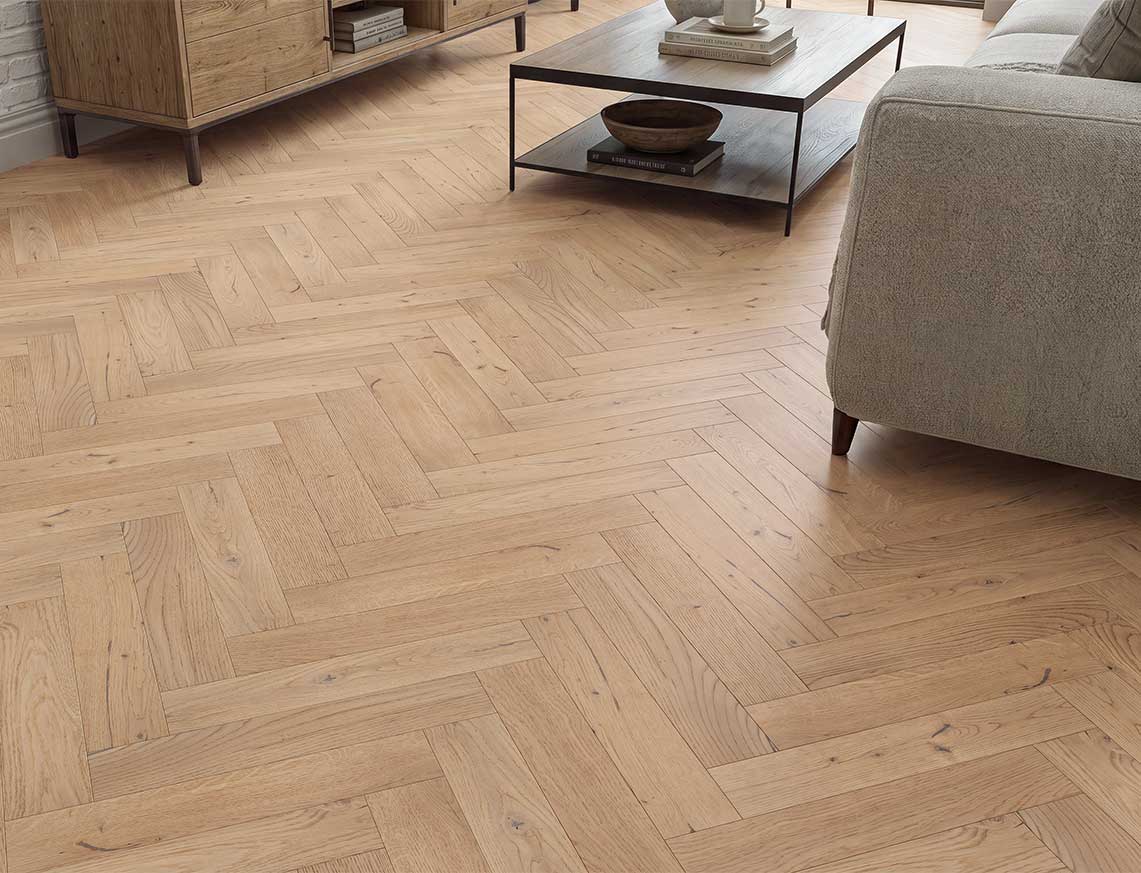
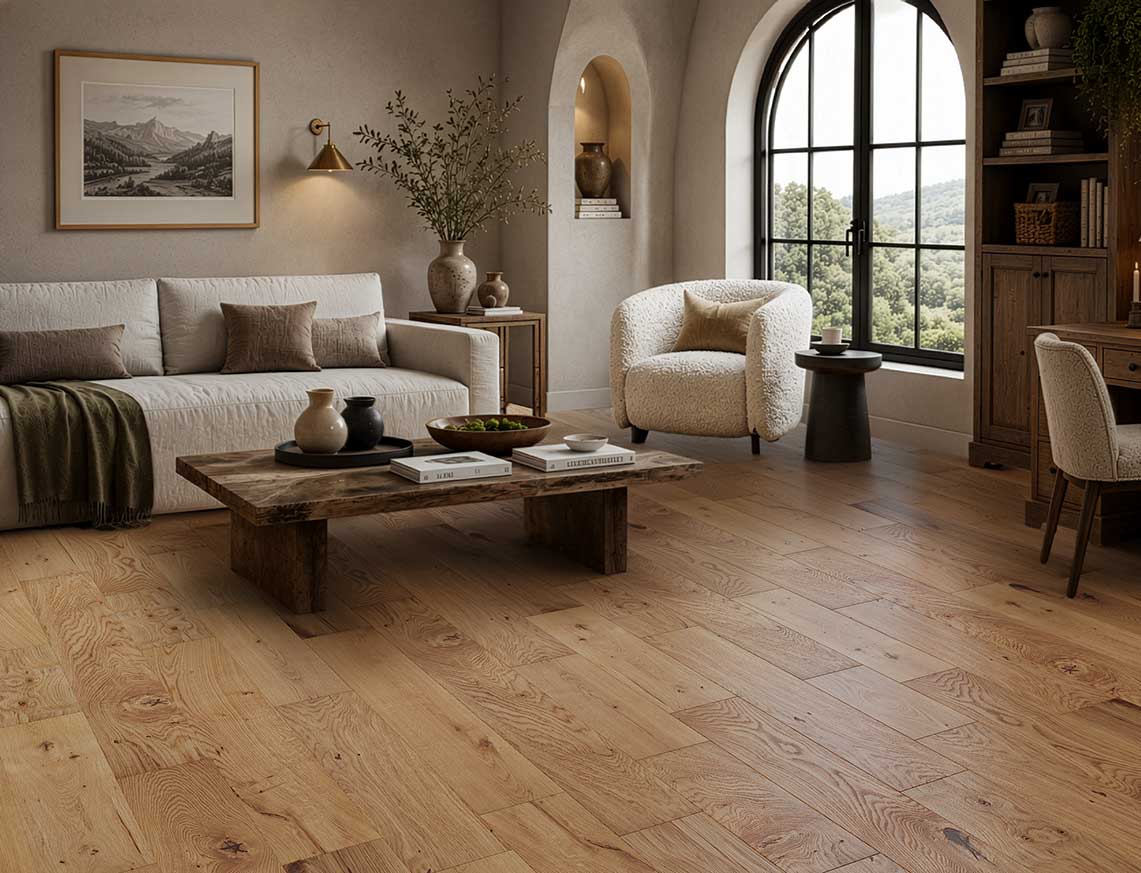
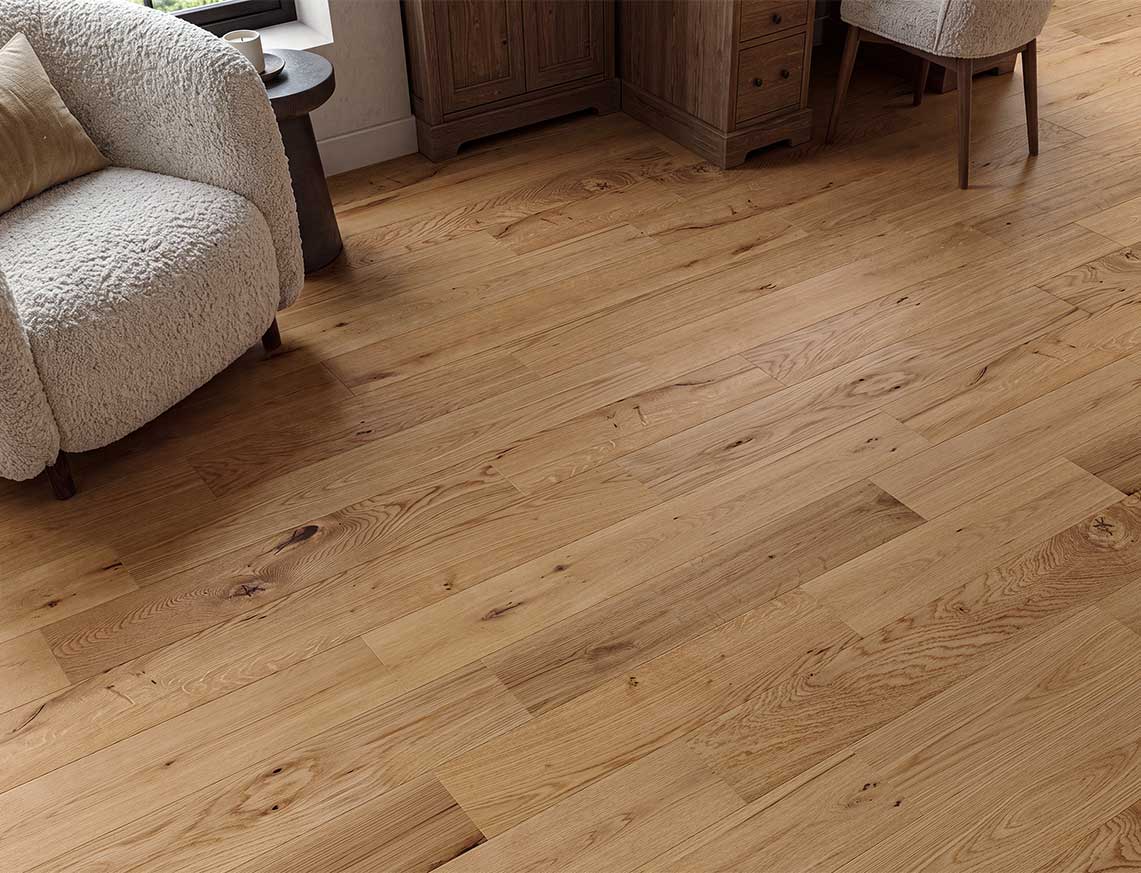
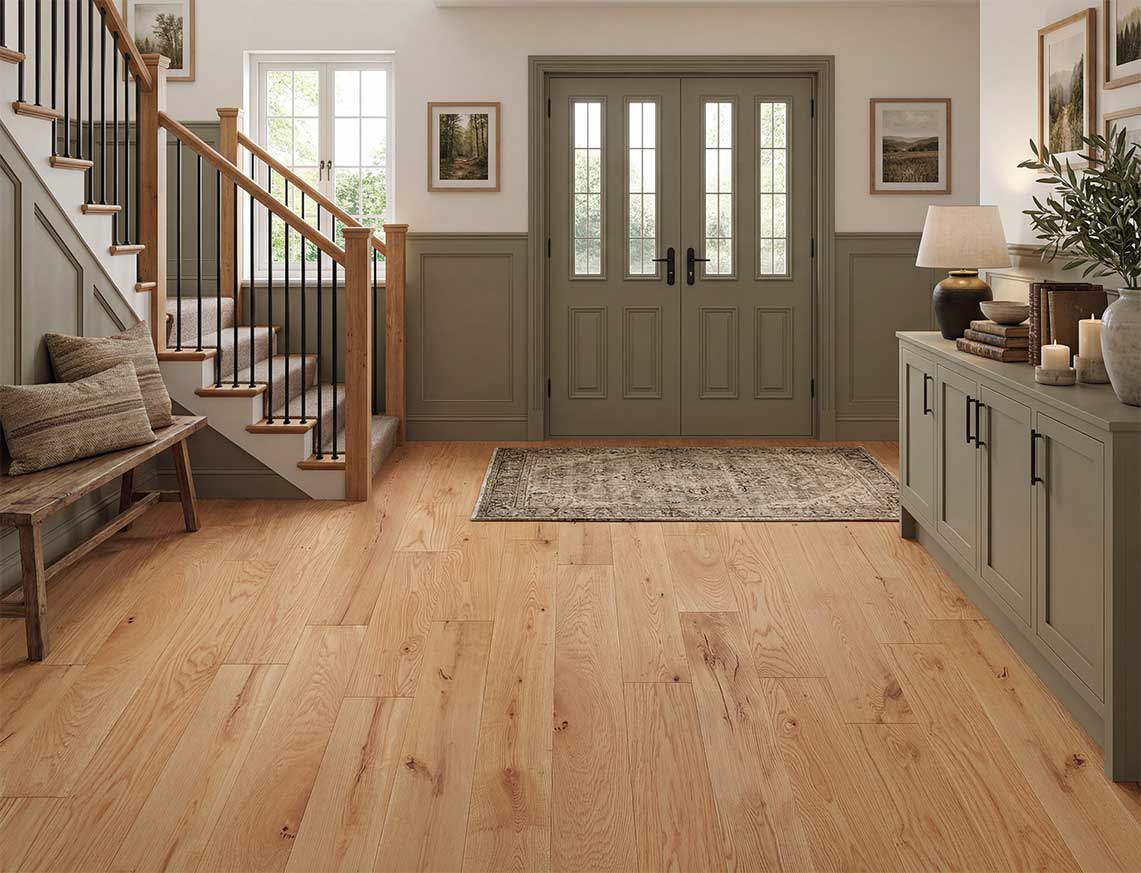
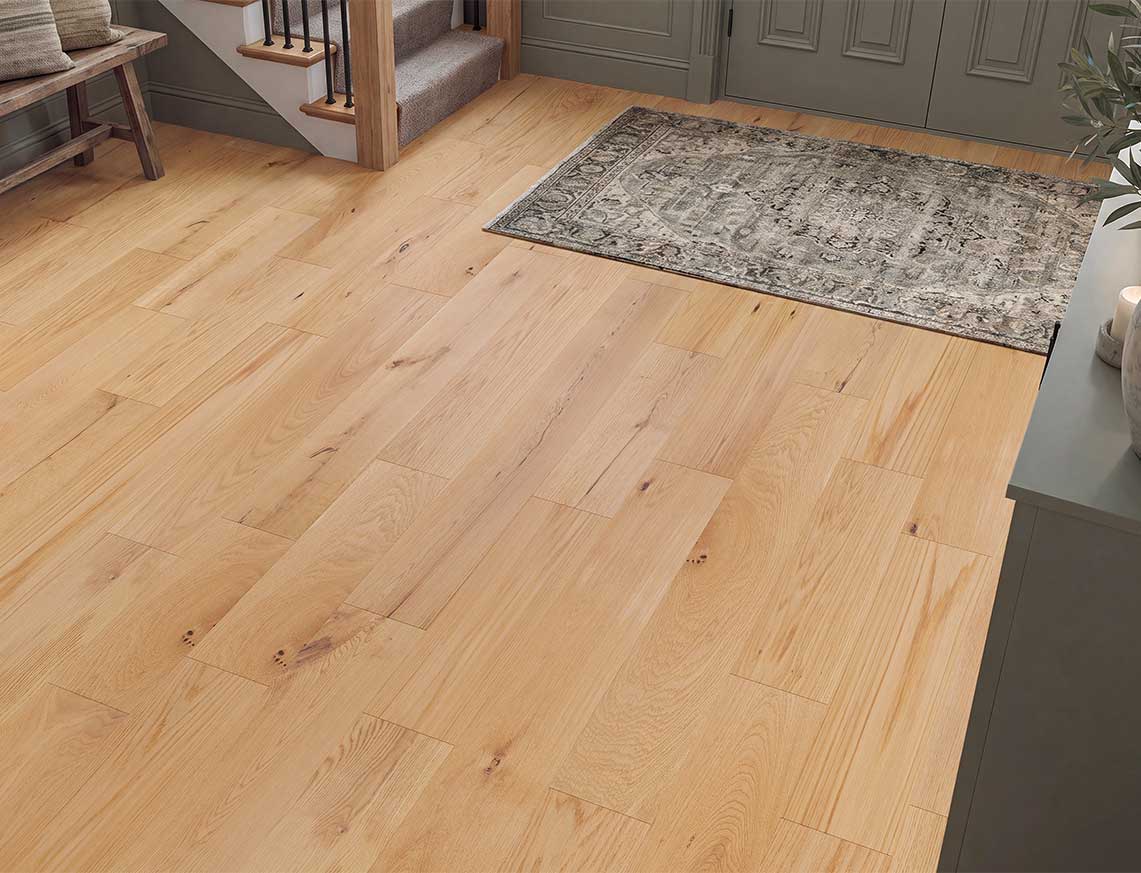
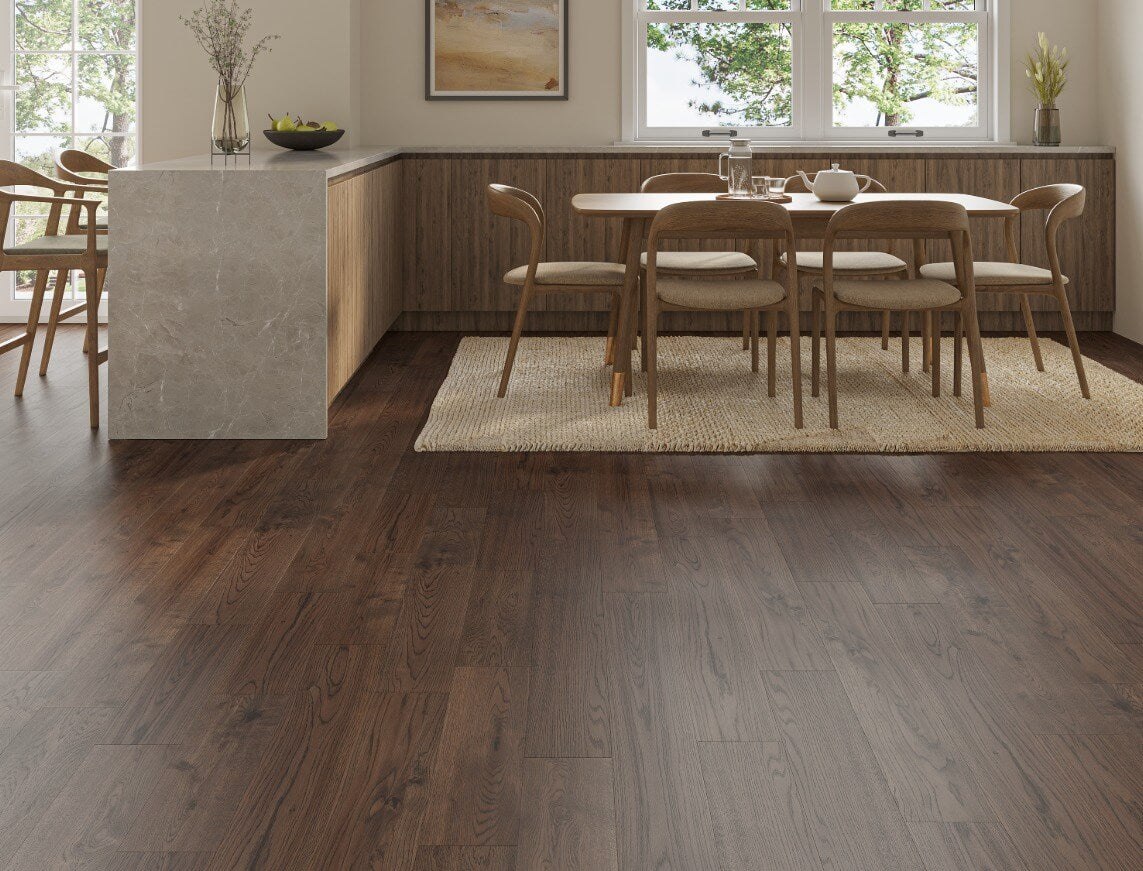
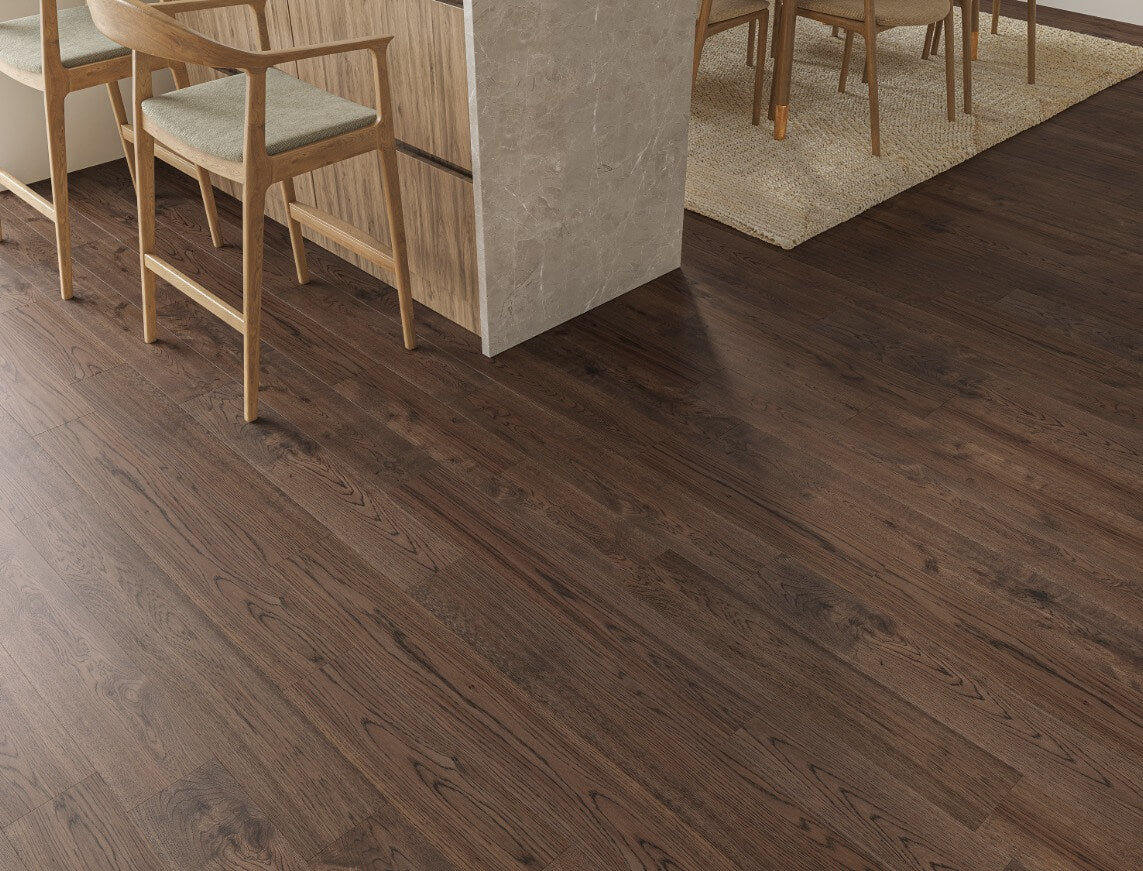
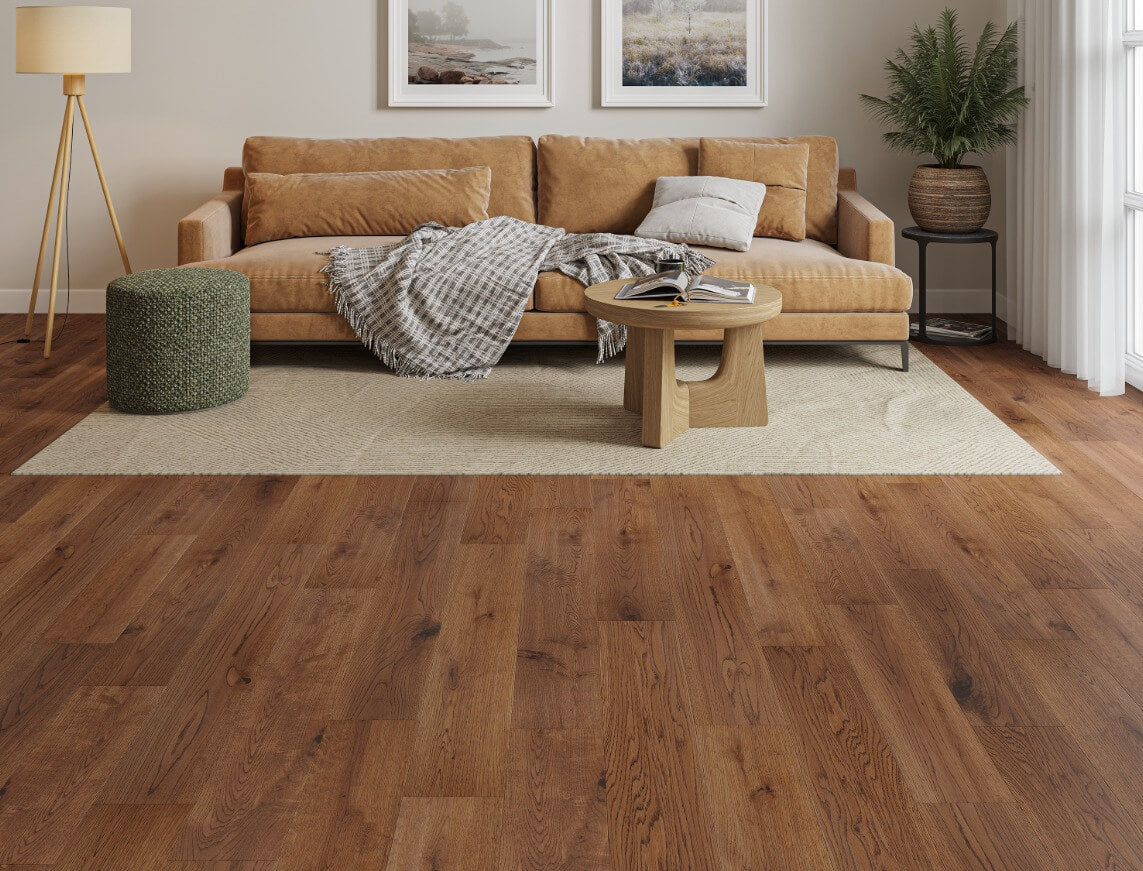
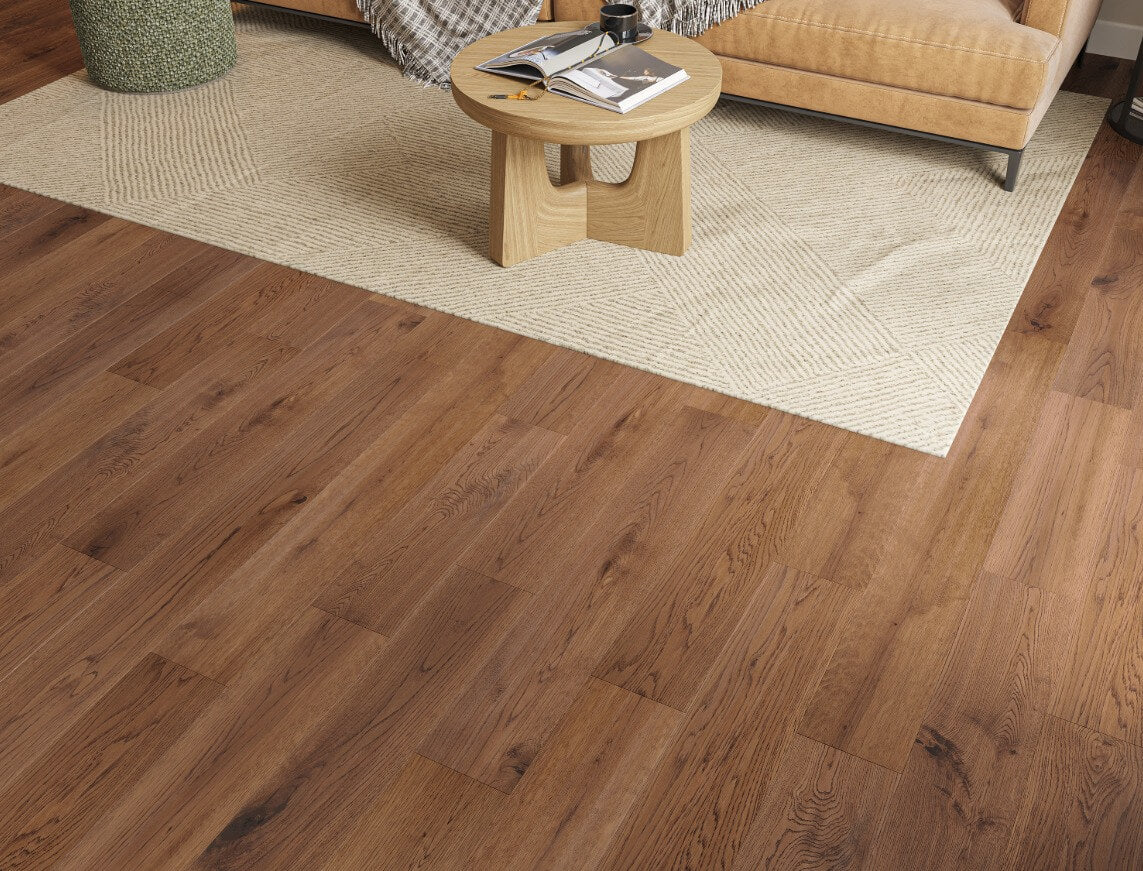
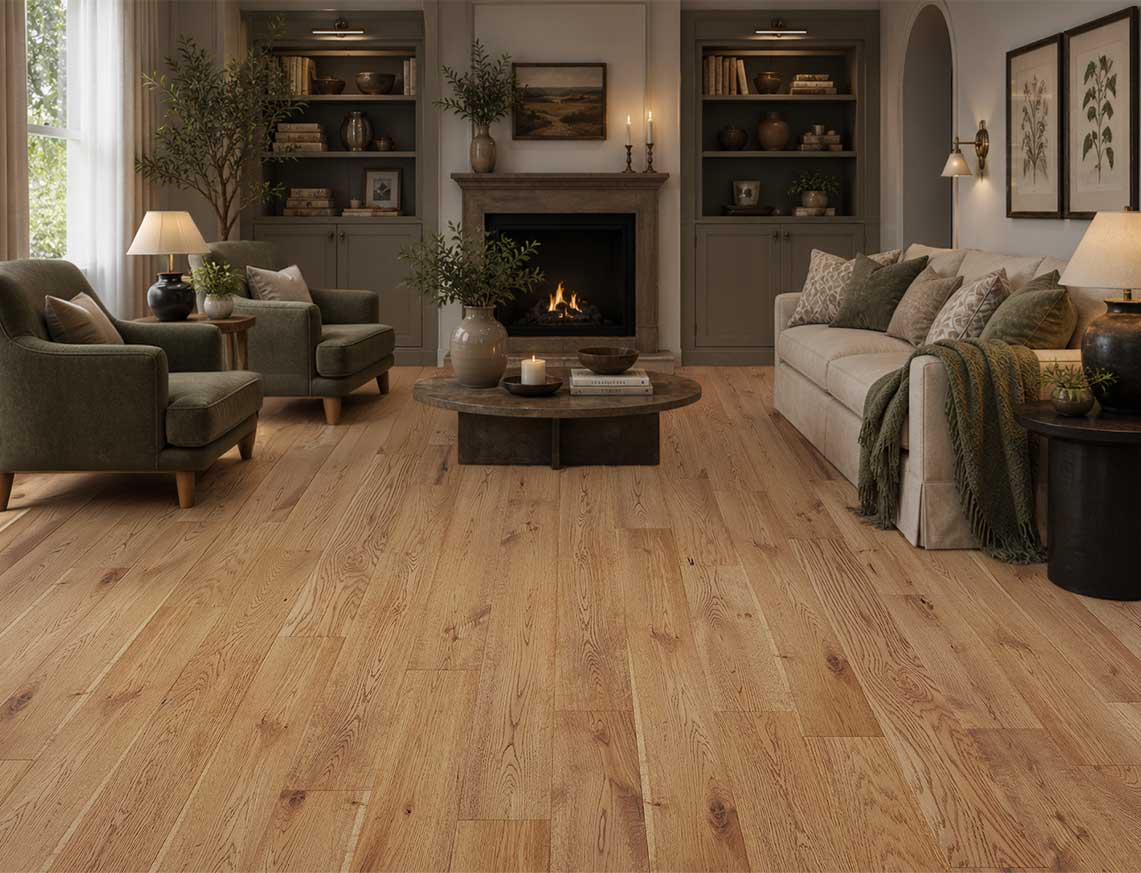
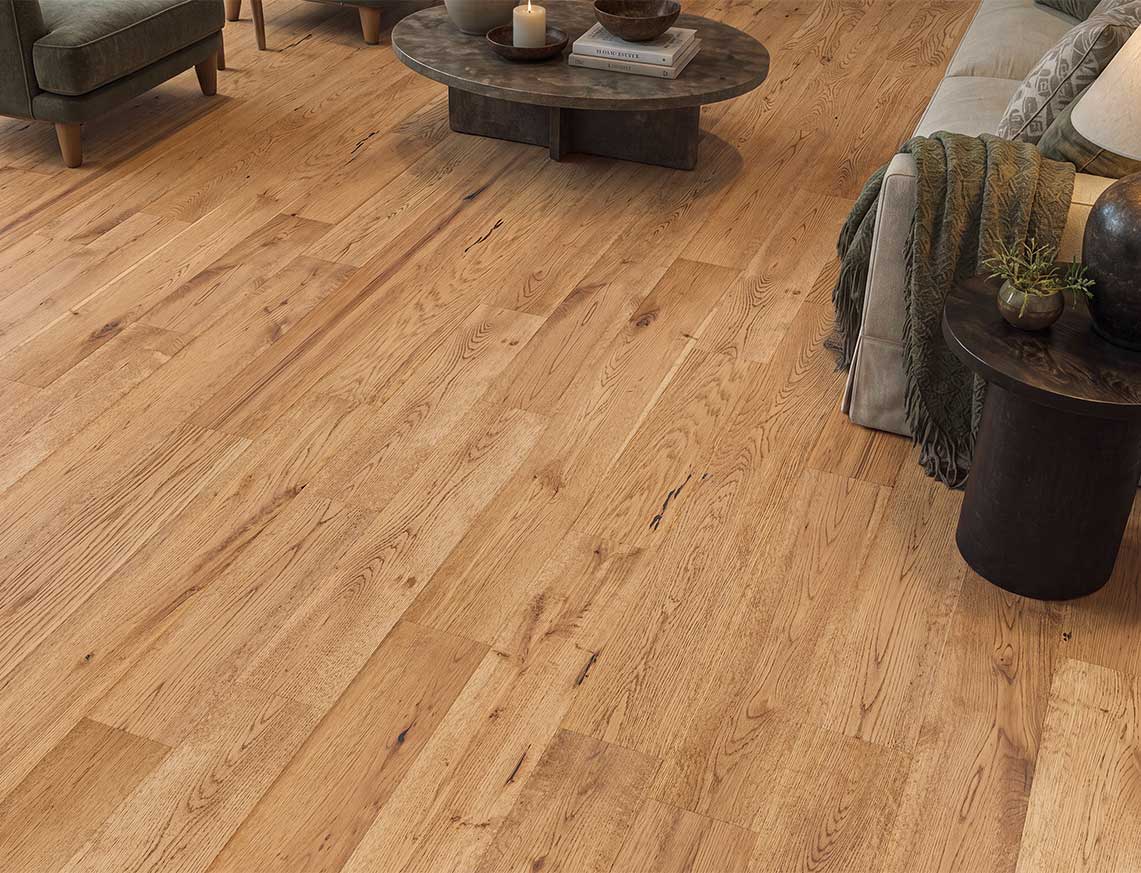
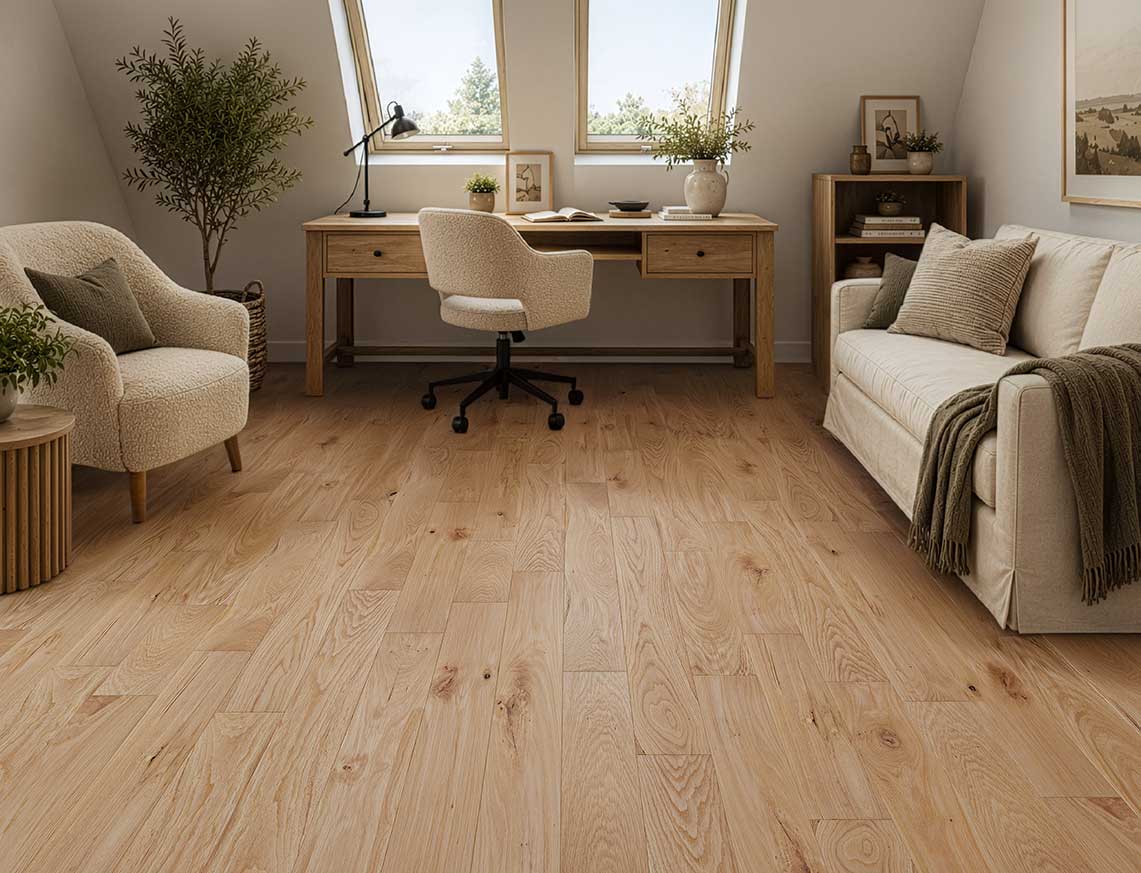
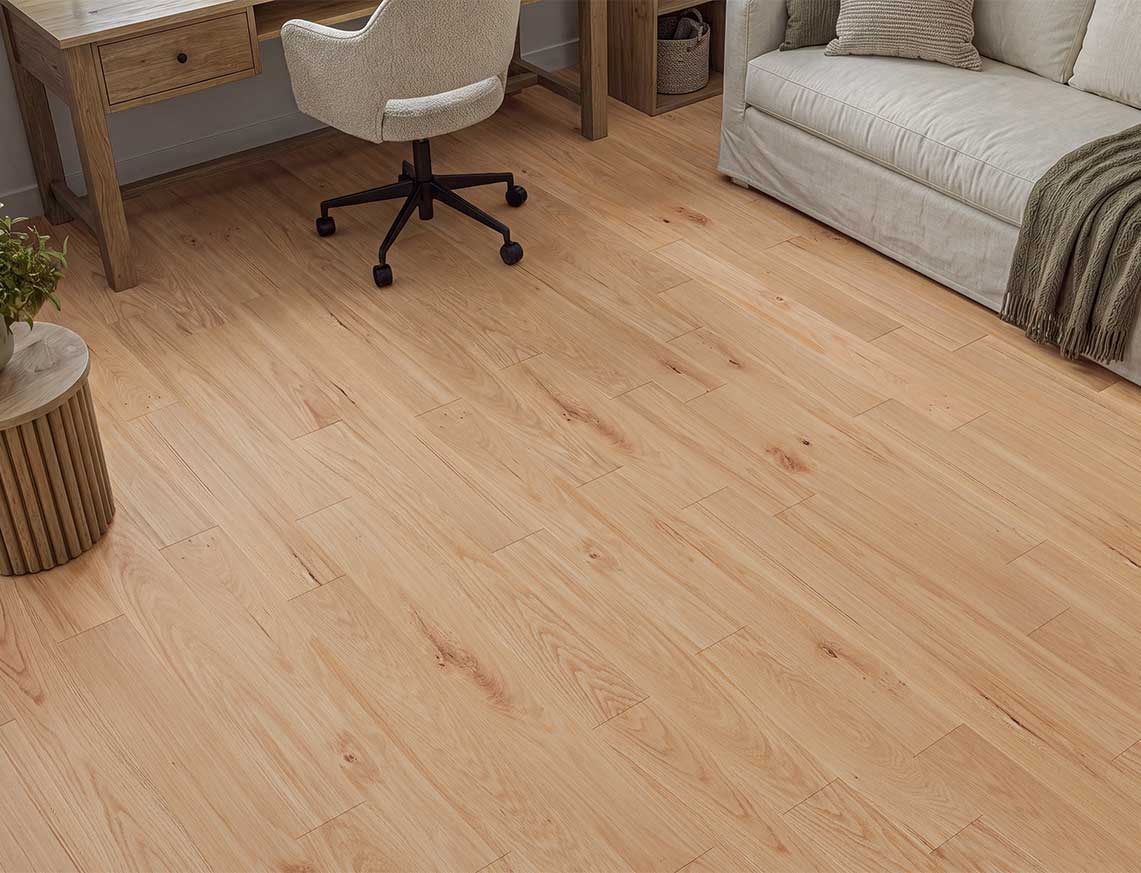
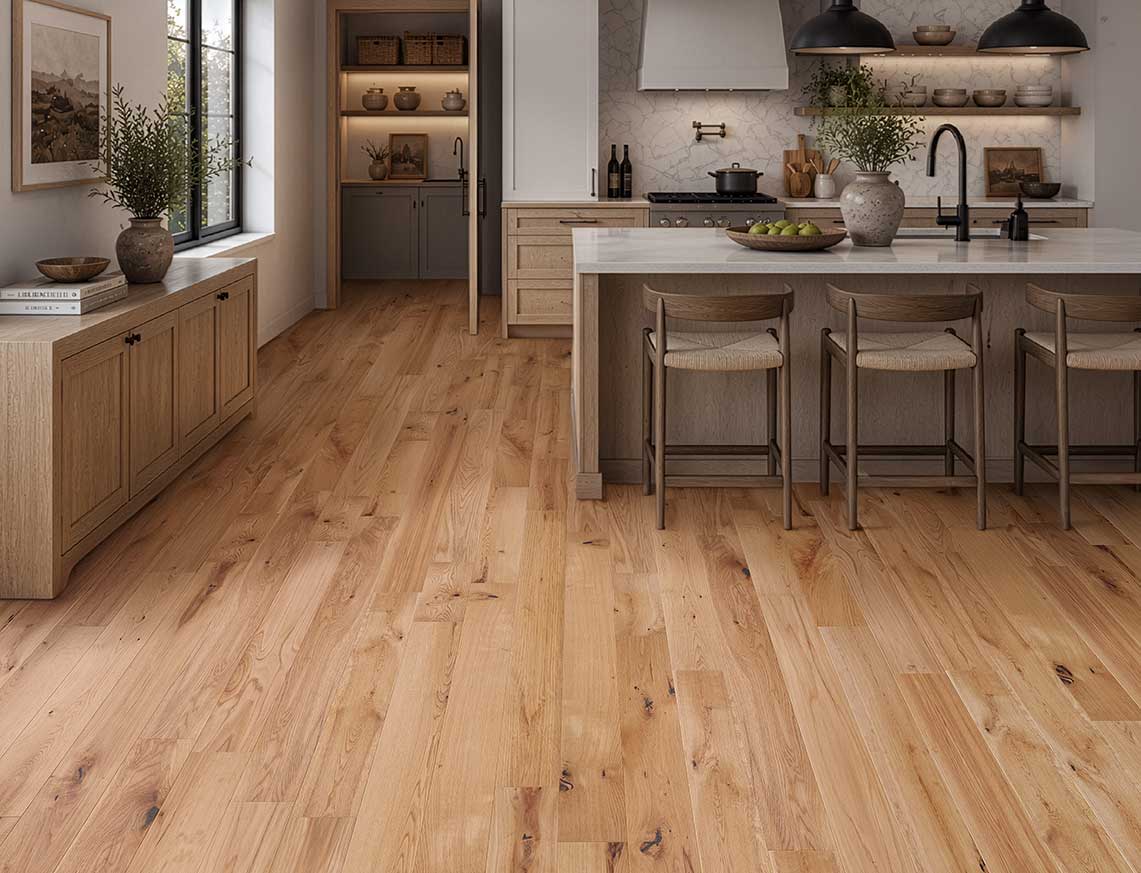
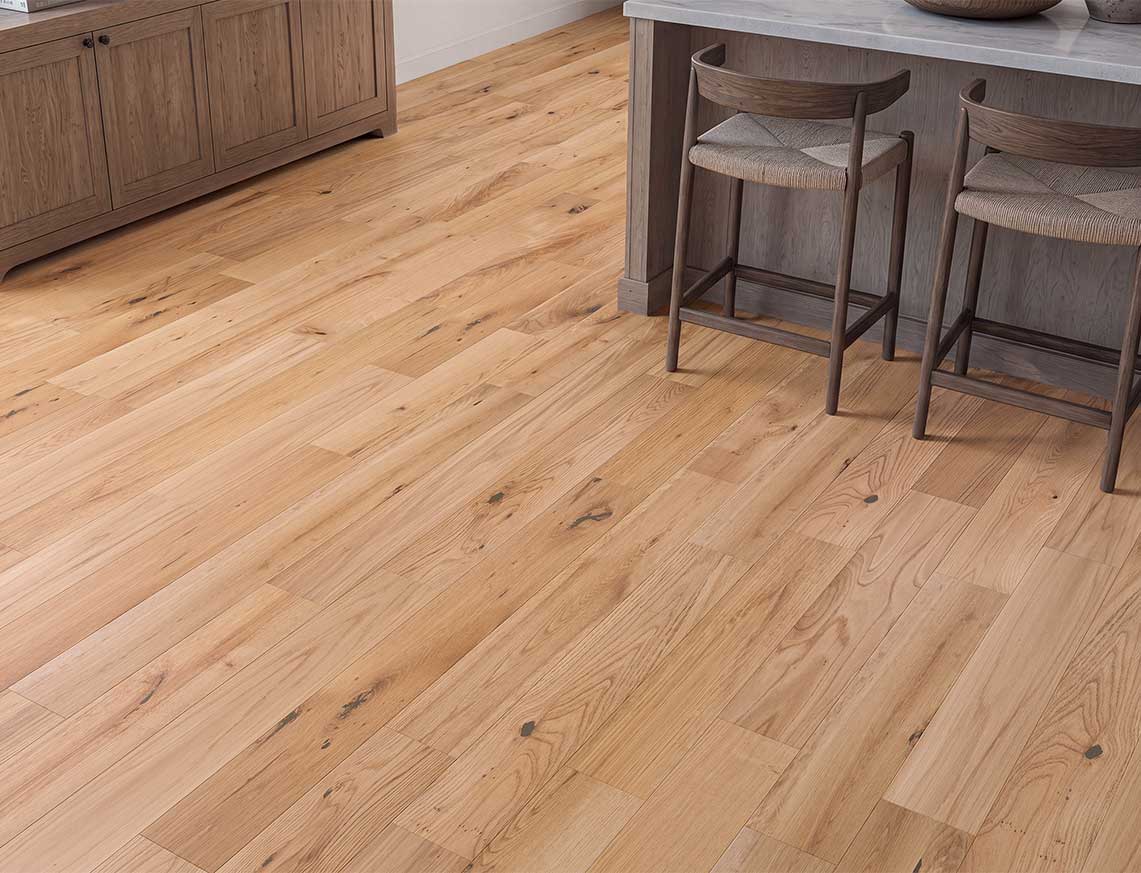
Solid oak flooring milled from a single piece of timber through the full thickness of the board. No core, no backing layer, just oak. It is how wood floors have been made for centuries, and it remains the choice for period properties and anywhere a genuinely traditional floor is wanted.
Because the whole board is oak, it can be sanded back and refinished repeatedly. A solid floor laid today can reasonably be expected to outlive several changes of decor, which is what separates it from every other type of flooring we sell.
Available in a range of finishes from unfinished through to lacquered and oiled, with free A5 samples on every board so you can see the grain and colour in your own light before committing.
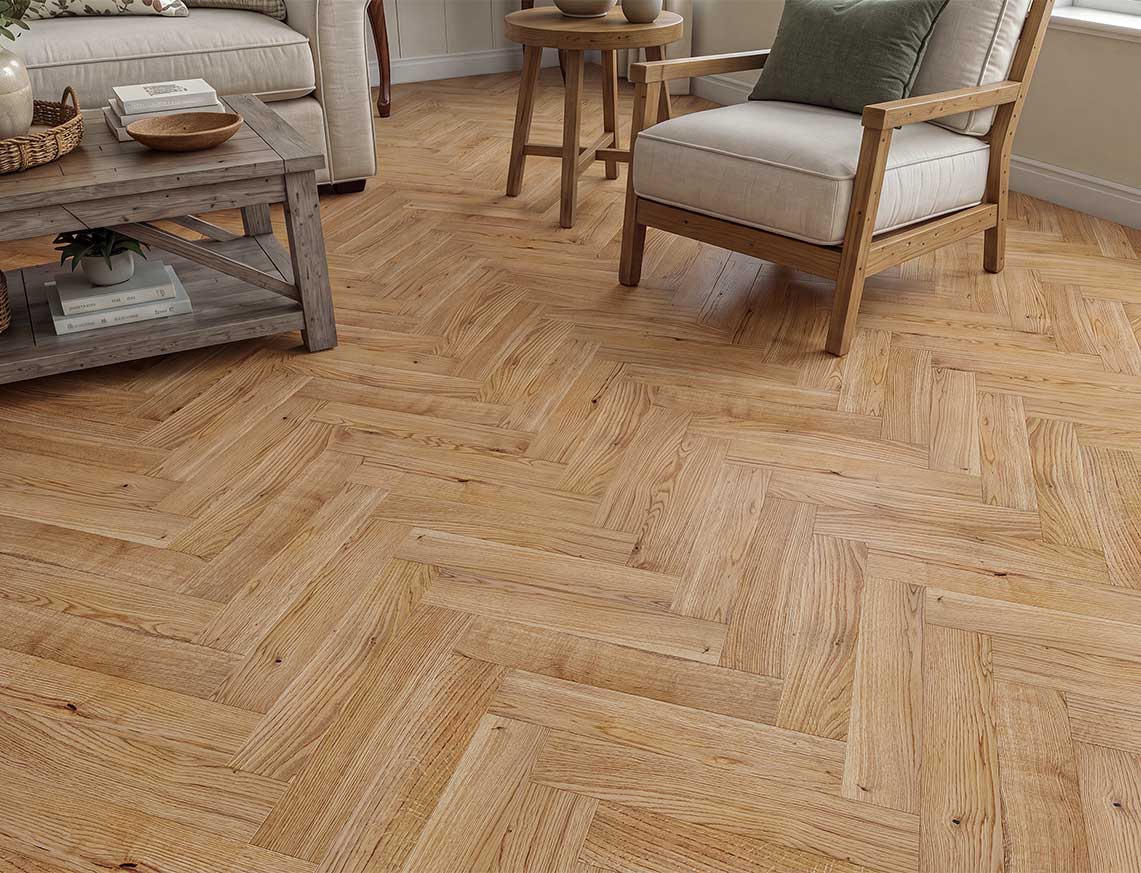
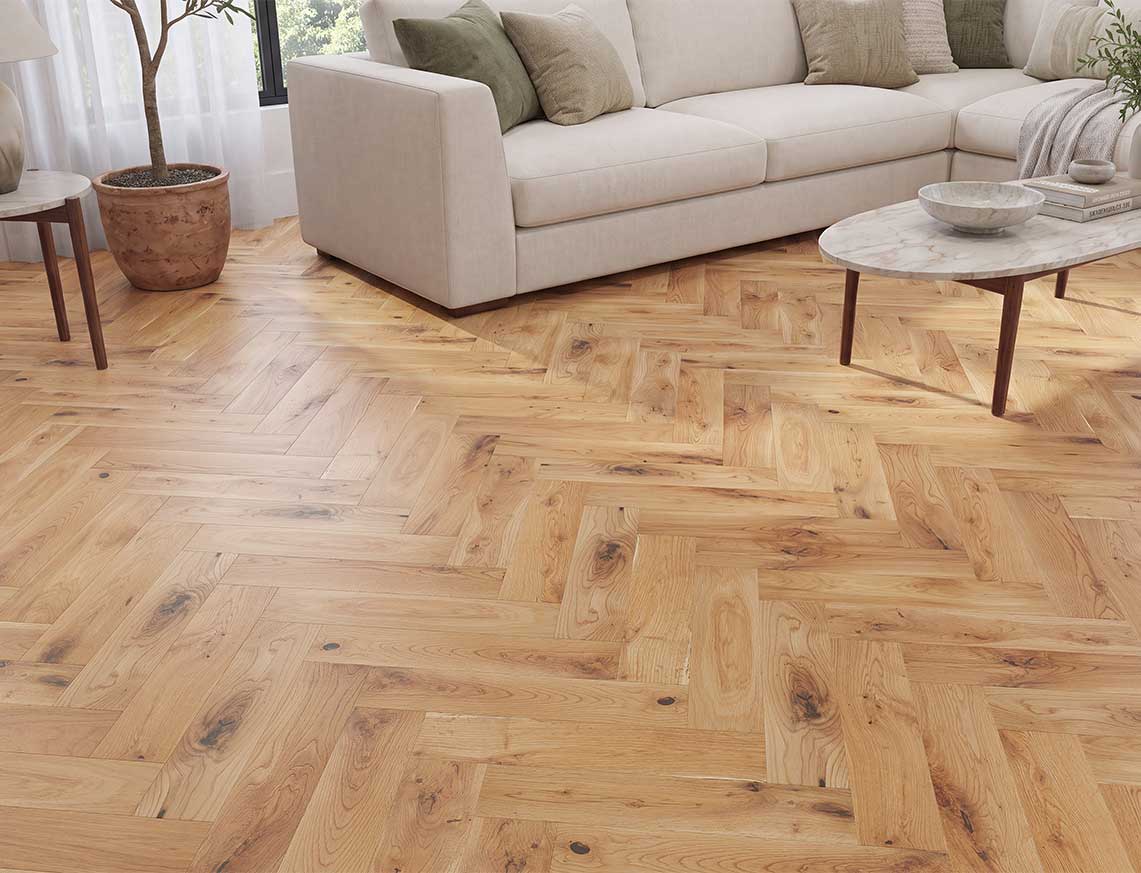
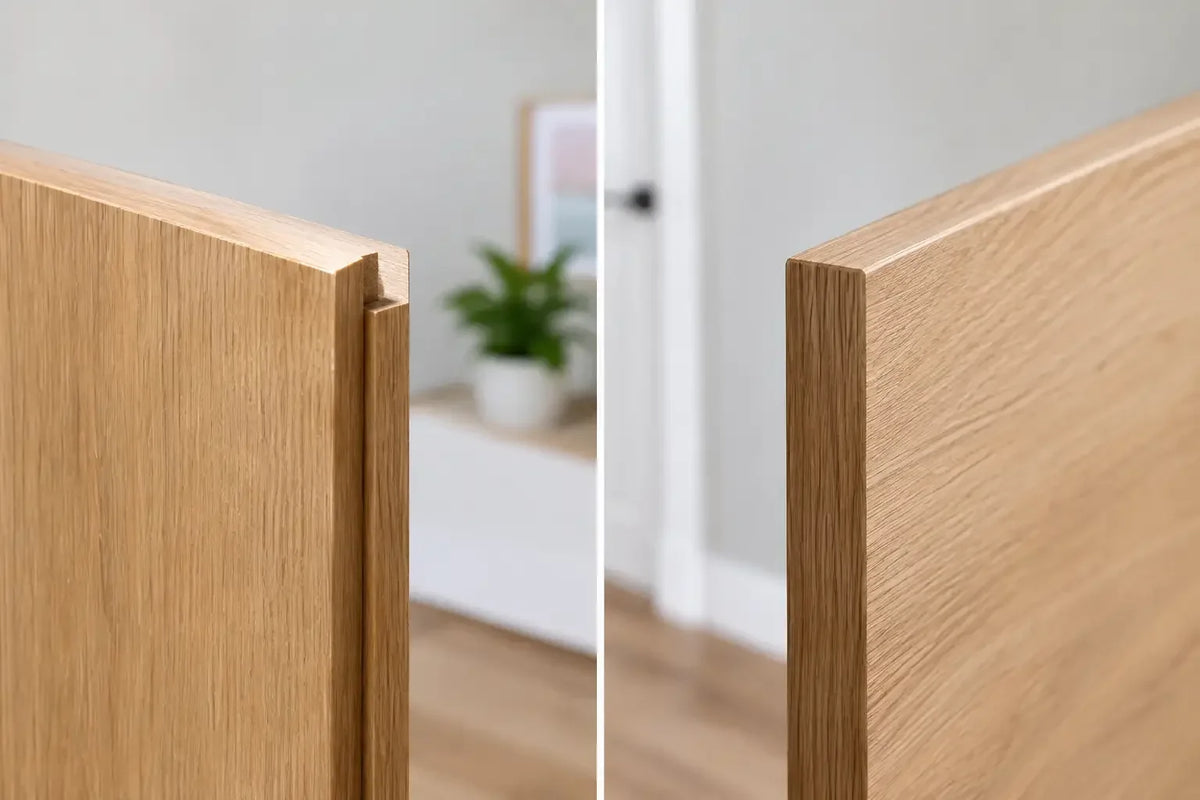
A solid oak board is exactly that: one piece of oak, typically 18mm to 20mm thick, milled from a single plank. There is no plywood core beneath the surface and no veneer on top. What you see is what the board is made of, all the way through.
That construction is what gives solid oak its longevity. Where an engineered board can only be sanded as many times as its wear layer allows, a solid board can be taken back and refinished again and again across decades of use.
Solid oak or engineered oak?
Both give you a real oak surface. The difference is what happens with humidity.
Solid oak
Engineered oak
Real oak surface
Yes
Yes
Movement with humidity
Significant
Minimal
Underfloor heating
Generally not
Yes
Sanding life
Longest
Depends on wear layer
Board widths
Narrower
Up to 600mm
Solid oak expands and contracts as the moisture in the air changes. That is entirely normal for a natural material, but it means the floor needs a stable environment. If you have underfloor heating, a new build still drying out, or a conservatory, engineered oak is the better choice.
Where solid oak works best
Living rooms, bedrooms, dining rooms and hallways in established properties without underfloor heating. Not recommended for bathrooms, kitchens with underfloor heating, or conservatories.
Fitting solid oak
Solid boards are usually secret nailed or bonded to the subfloor rather than floated. That makes them better suited to an experienced fitter than to DIY.
Acclimatisation matters more here than with any other floor type. Leave the packs flat and unopened in the room where they will be laid, for the period your manufacturer specifies, and leave an expansion gap at every wall. Our fitting guides cover the principles.
Finishes
Our solid oak comes lacquered, oiled or unfinished. Lacquer gives a harder, more sealed surface. Oil soaks in and leaves a softer, more natural look that can be spot-repaired. Unfinished boards are sanded and sealed on site once laid, which lets you match an existing floor exactly.
How much will you need?
Solid oak is sold by the pack, and each range covers a different area. The flooring calculator on every product page works out how many packs your room takes, including an allowance for cuts.
You will also need beading for the perimeter and threshold profiles at doorways. Order the full quantity in one go, as shade varies slightly between production batches.
Solid oak flooring: frequently asked questions
Can solid oak flooring be used with underfloor heating?
Generally not. Solid oak moves too much with changes in temperature and humidity. Choose engineered oak instead, which is designed for it.
How many times can solid oak be sanded?
Several times over the life of the floor, considerably more than an engineered board with a thin wear layer. It is the main practical advantage of solid oak.
Is solid oak suitable for kitchens?
Only where there is no underfloor heating and spills are dealt with promptly. Engineered oak is the more forgiving choice for most kitchens.
Can I fit solid oak myself?
It is usually secret nailed or glued down rather than floated, so we would recommend an experienced fitter unless you have done it before.
Why does solid oak cost more?
You are paying for oak throughout the board rather than a surface layer over a core. It also lasts longer, since it can be refinished repeatedly.
Does the colour vary between boards?
Yes, and that is part of the appeal. Mix boards from several packs as you lay so the variation is spread evenly across the floor.