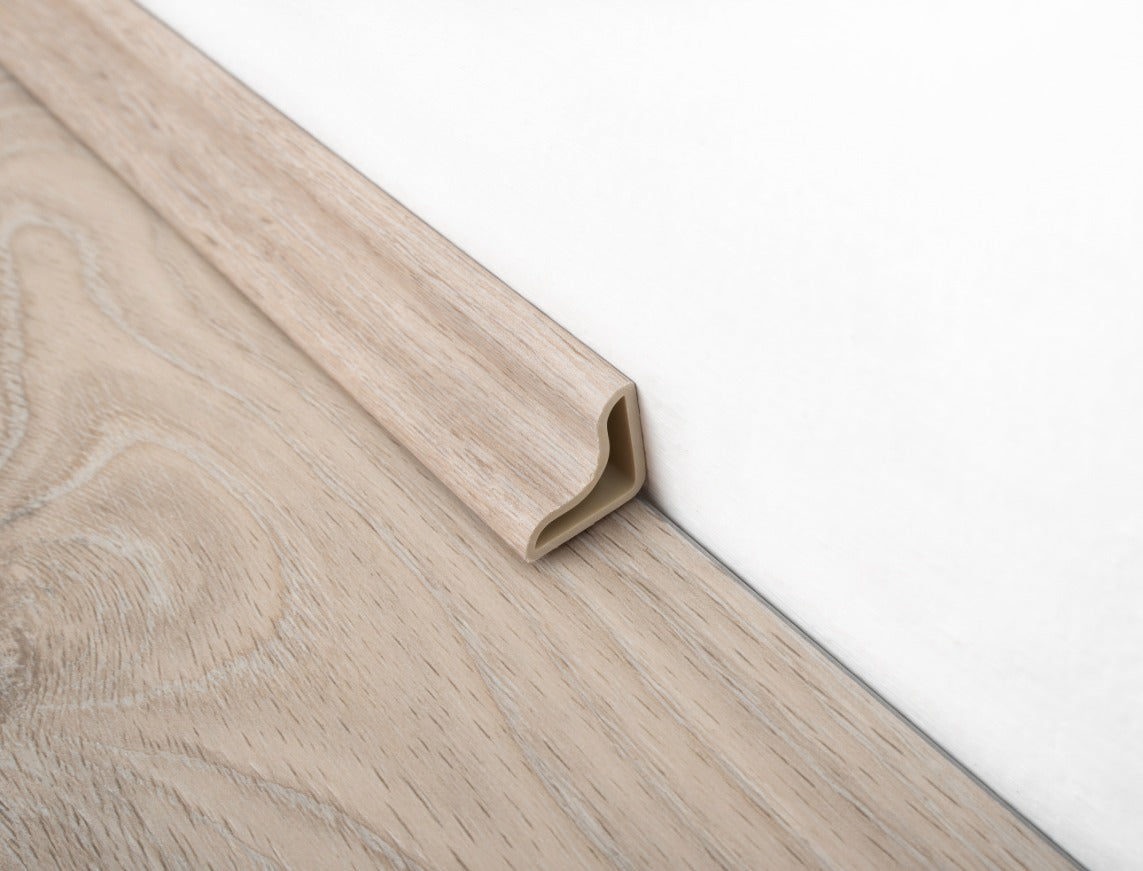
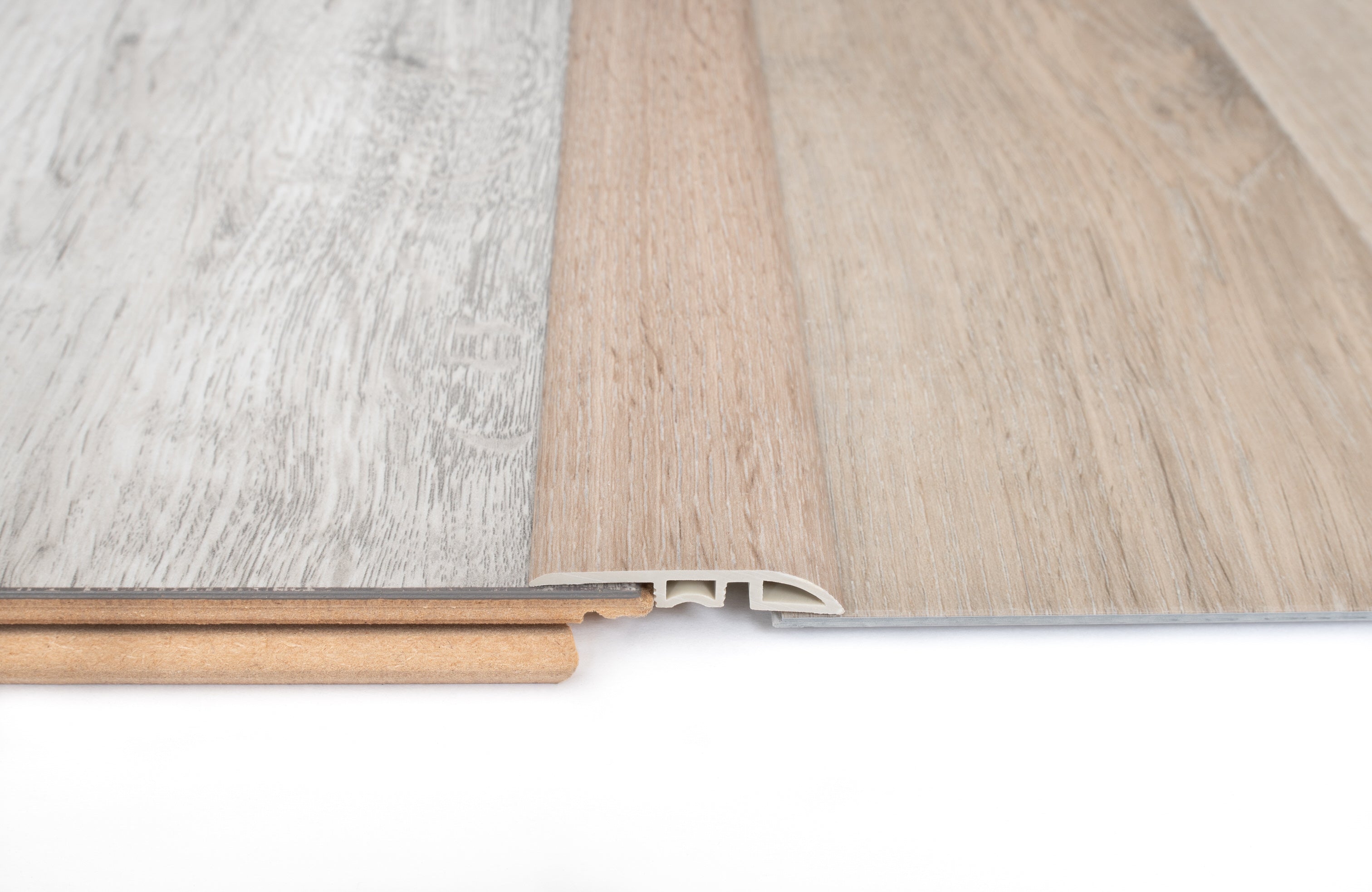
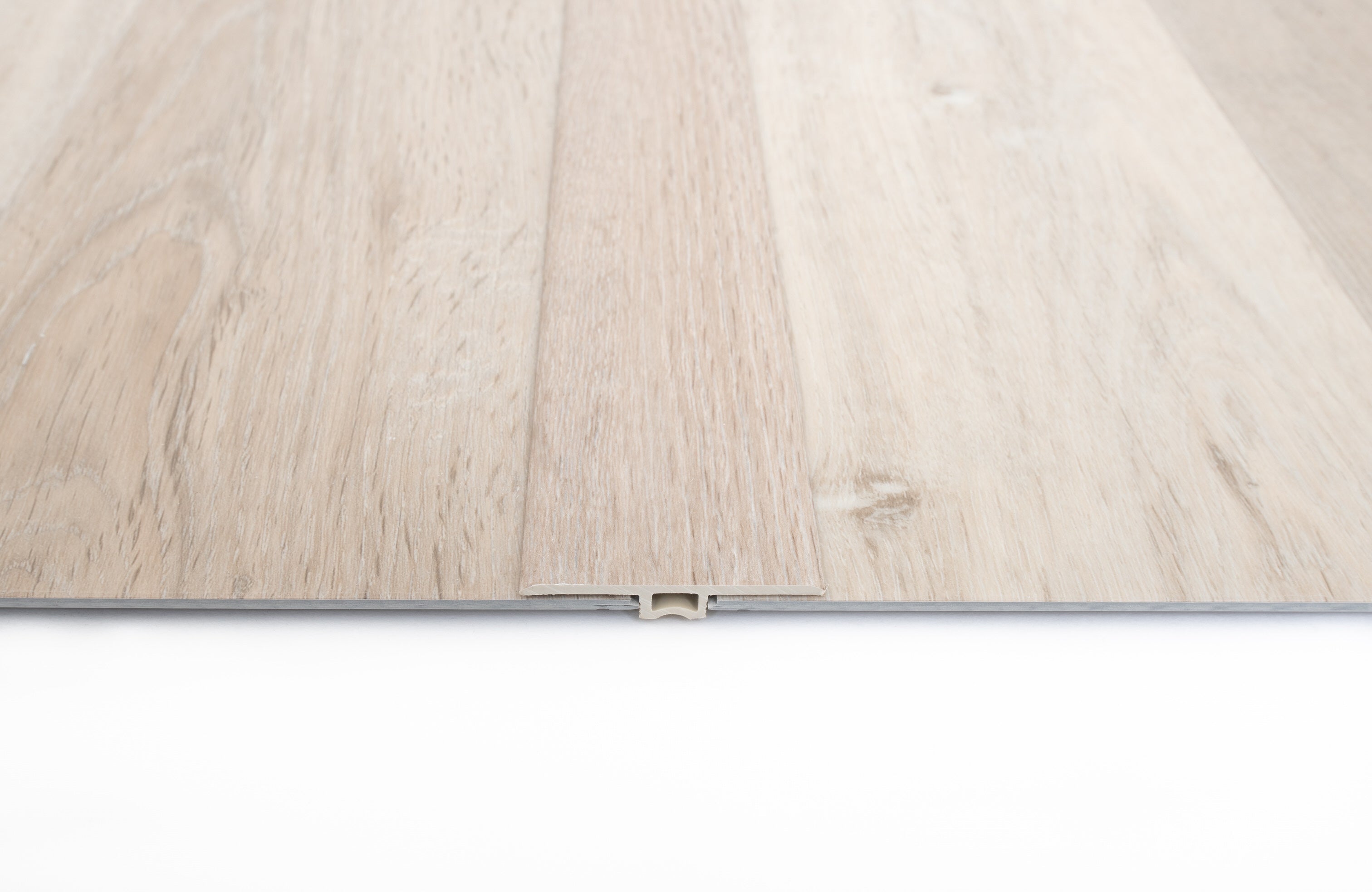
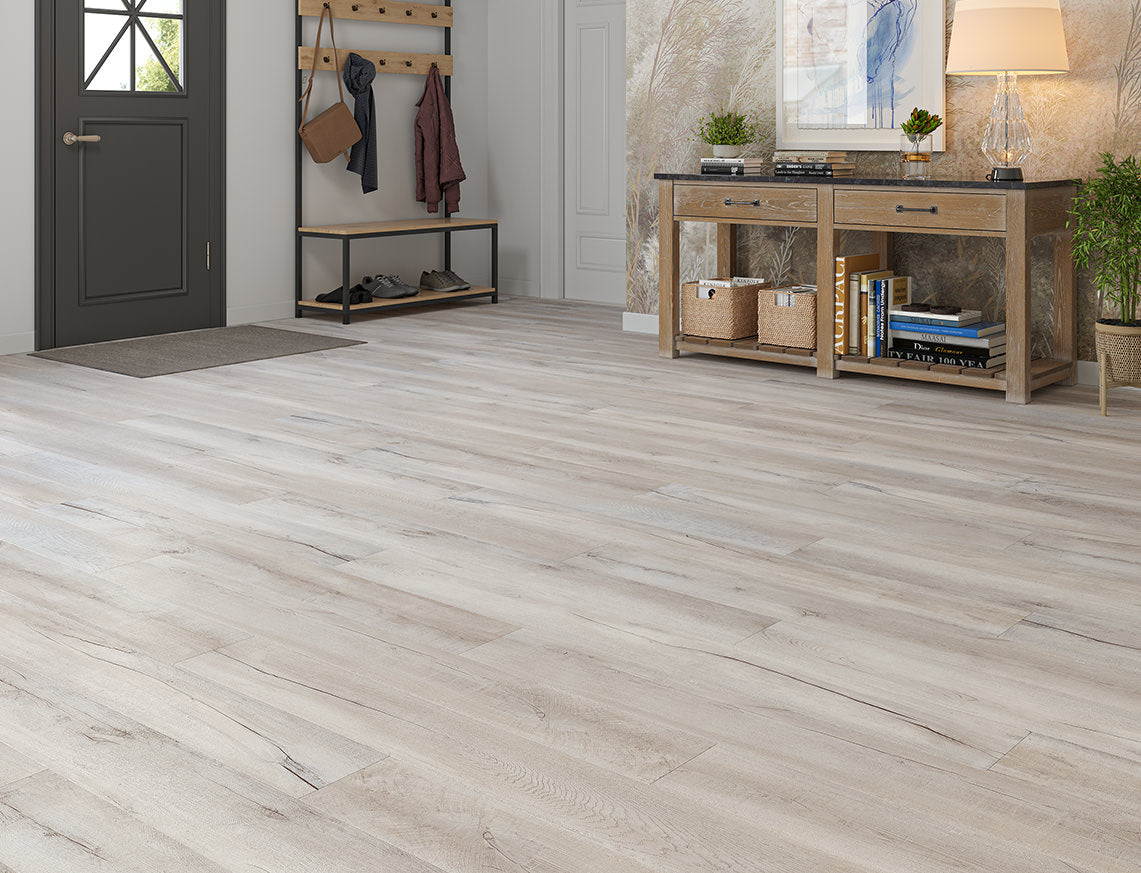
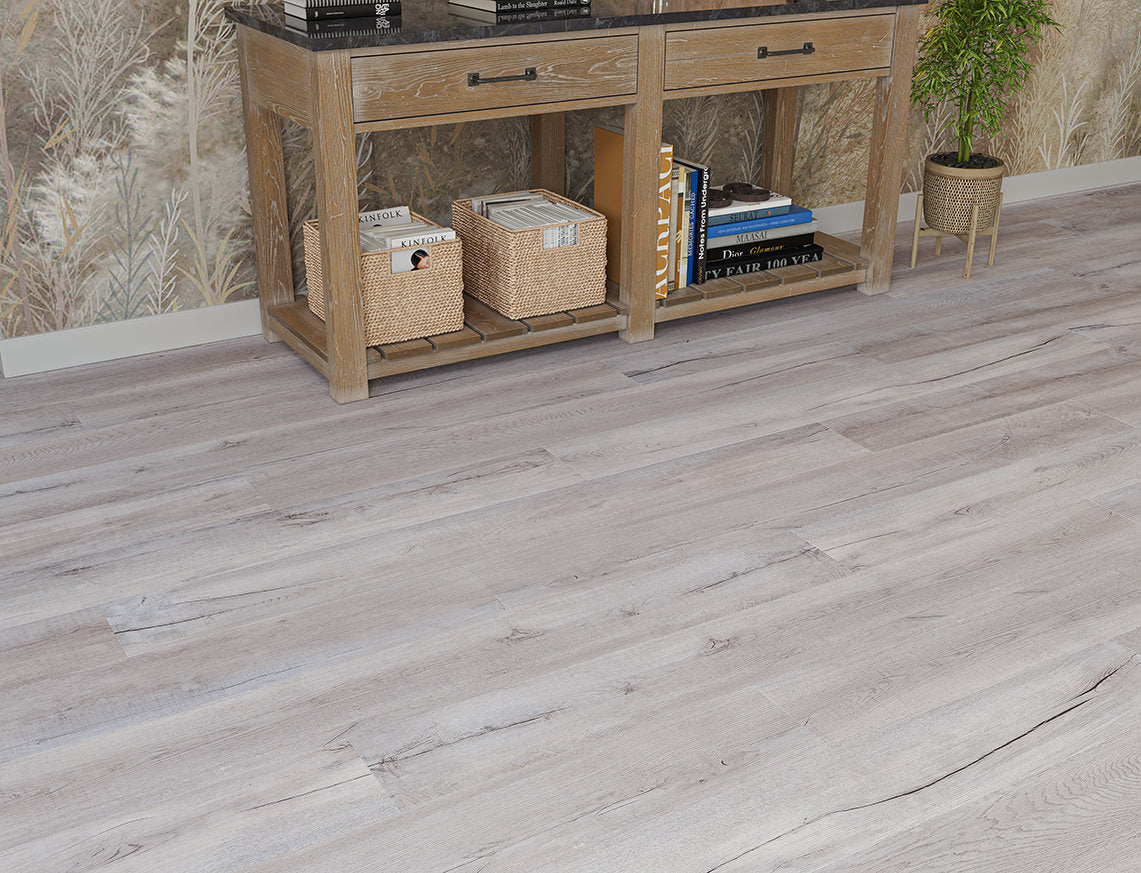
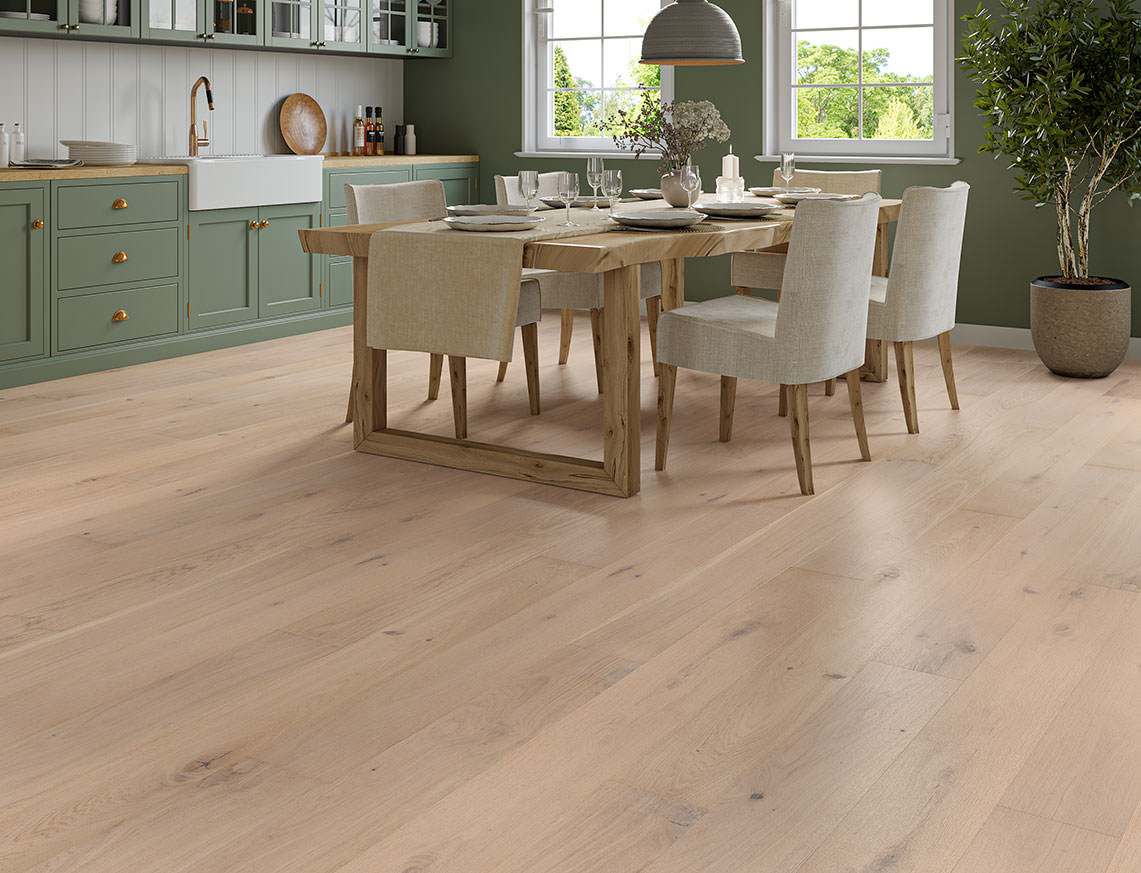
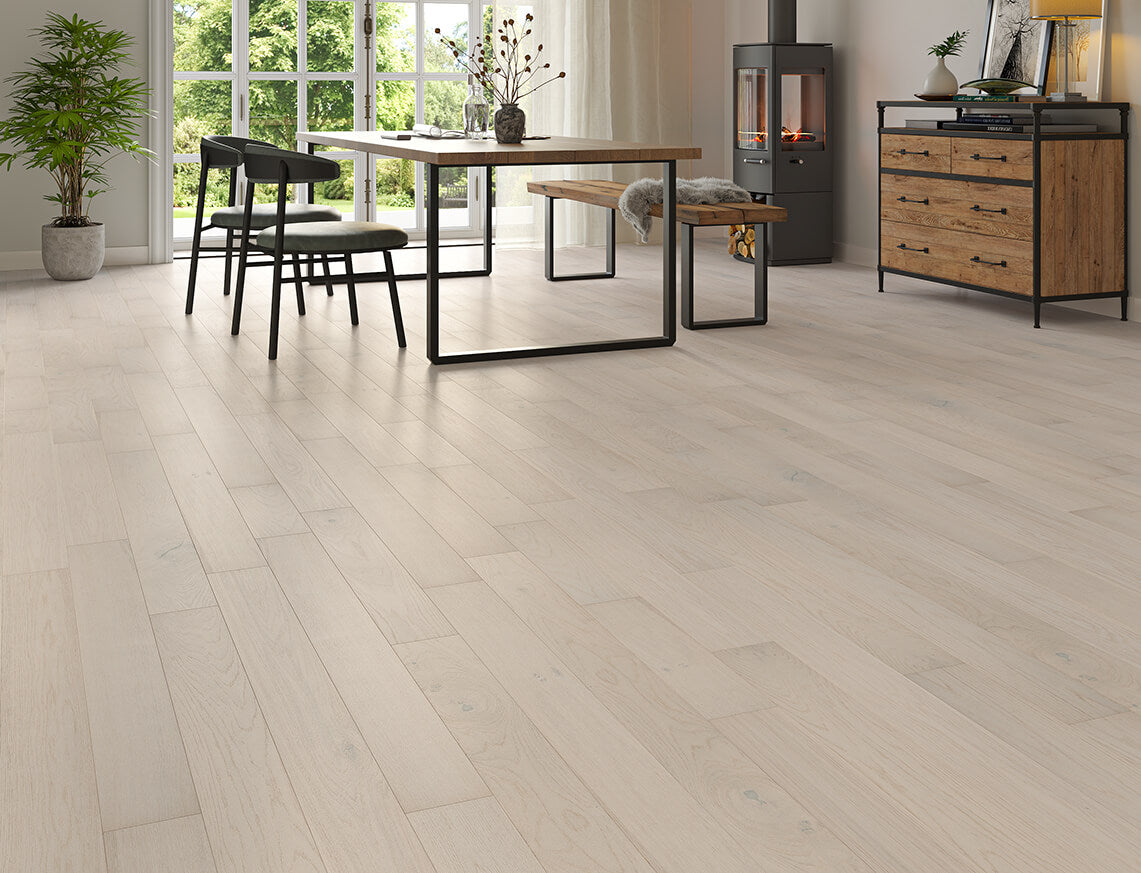
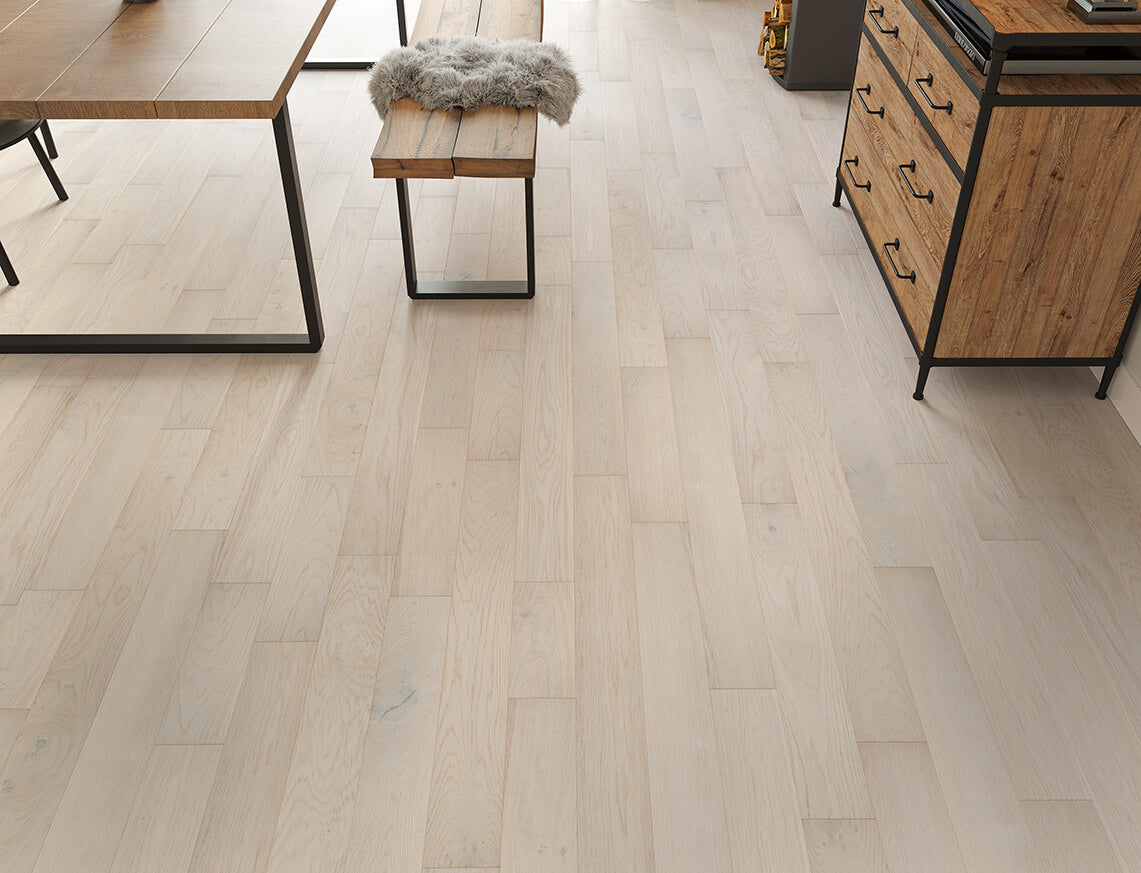
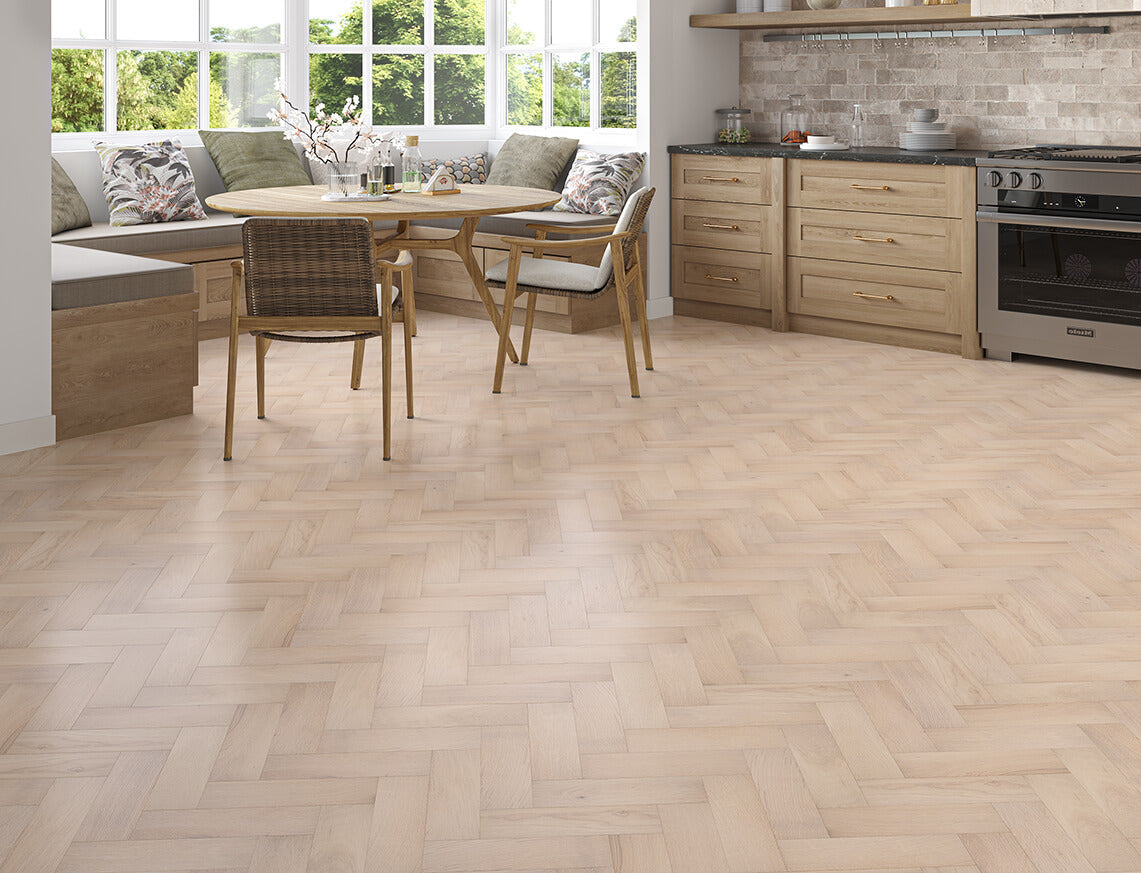
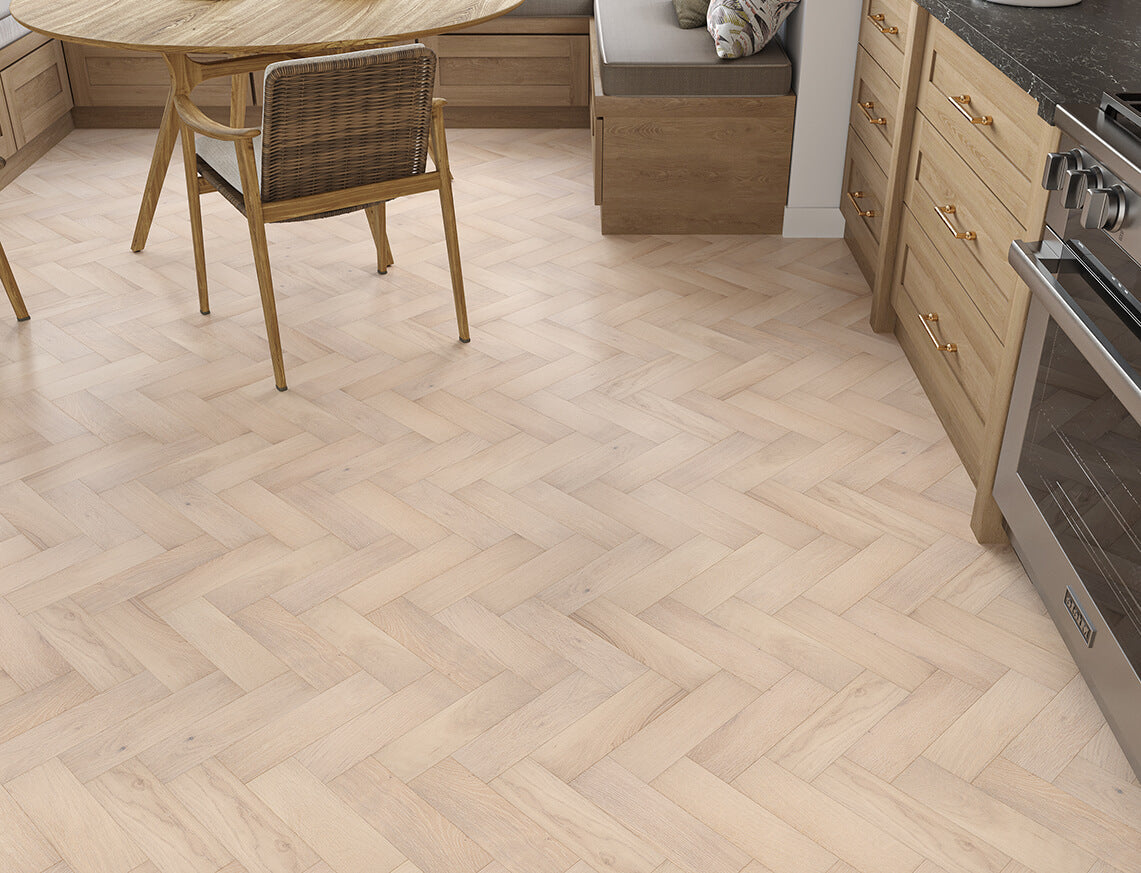
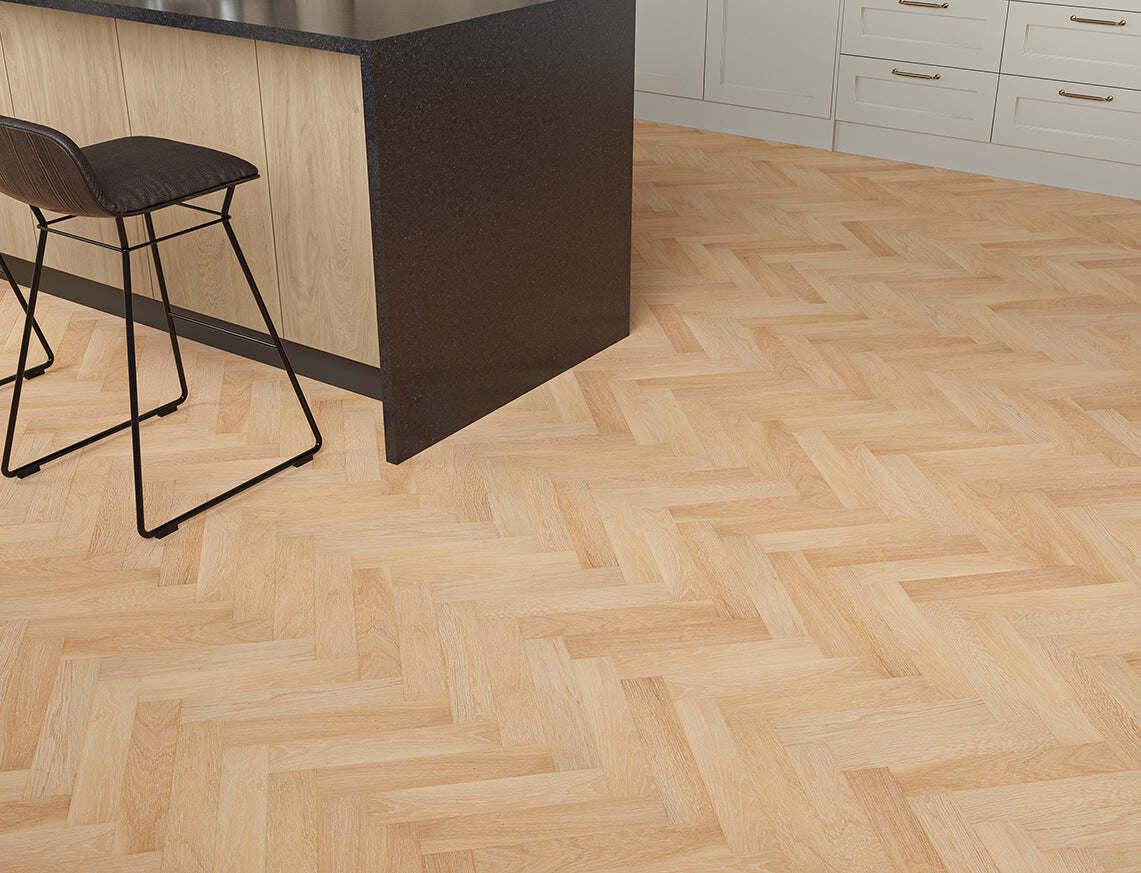
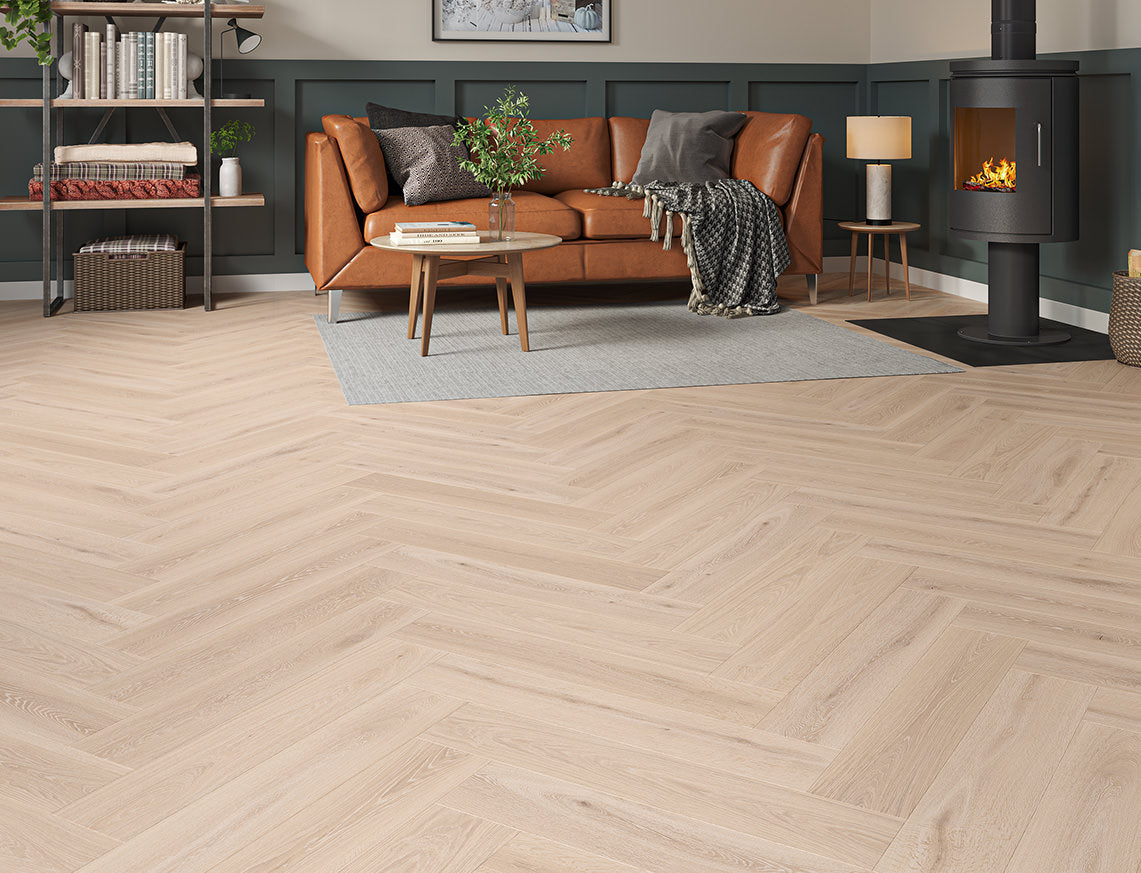
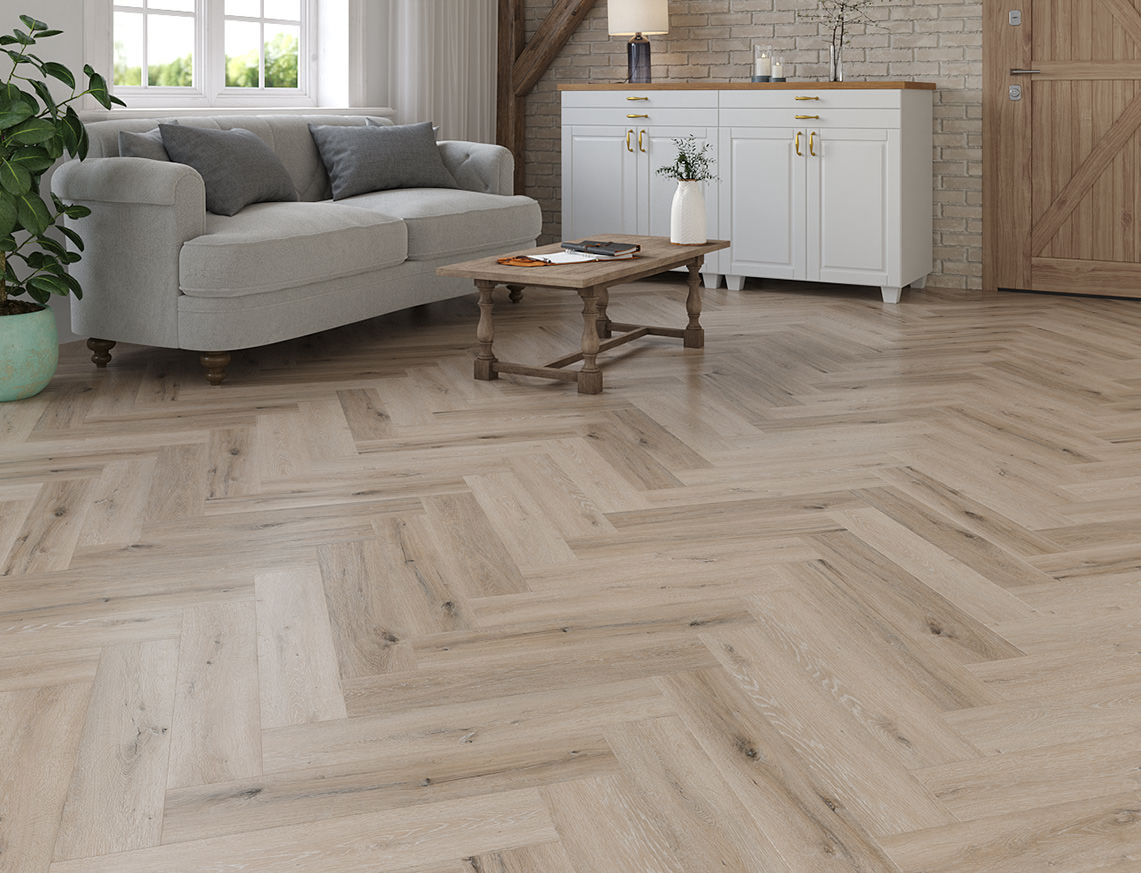
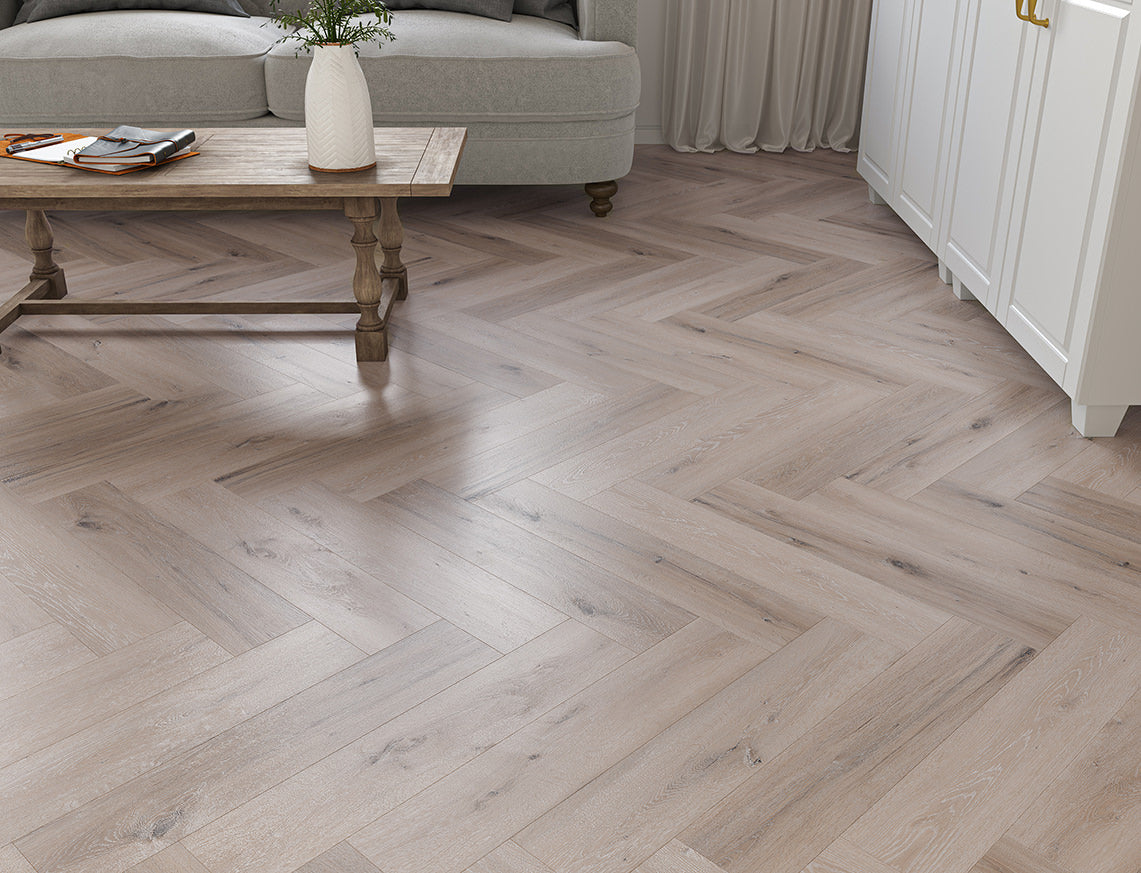
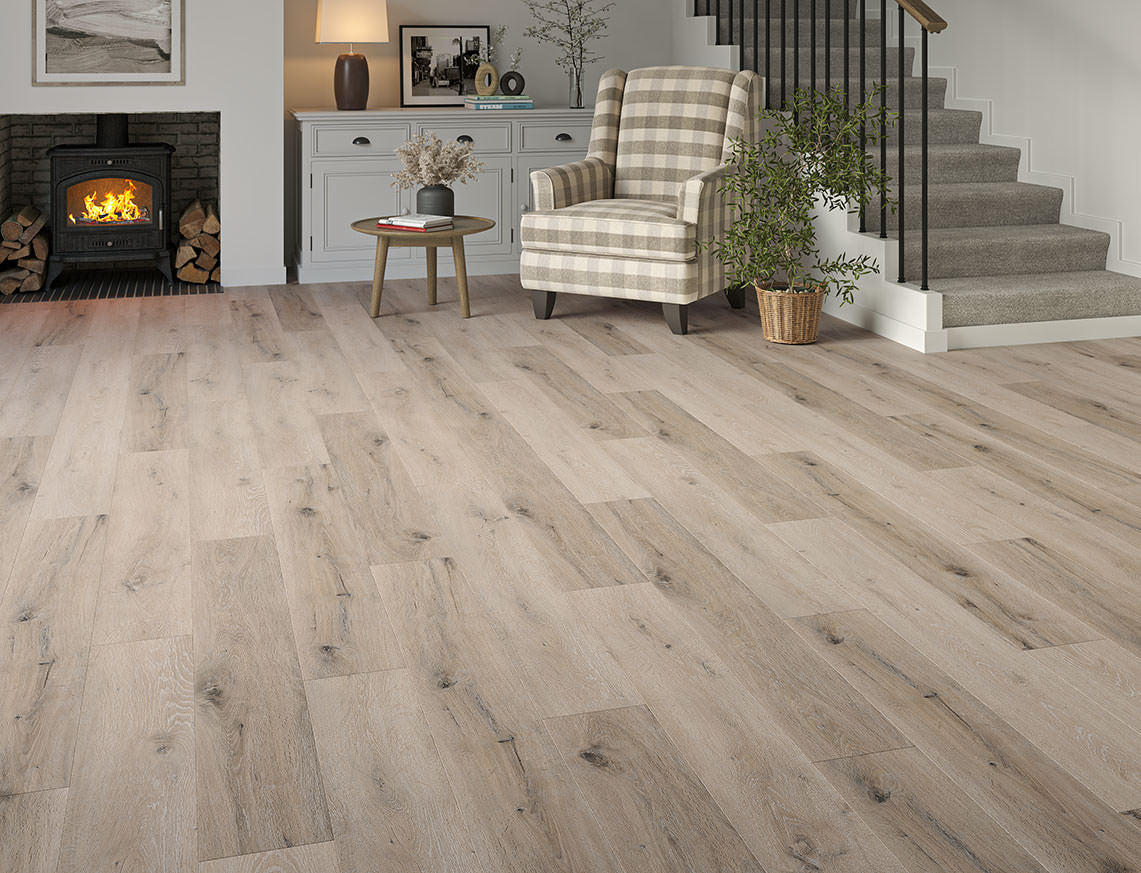
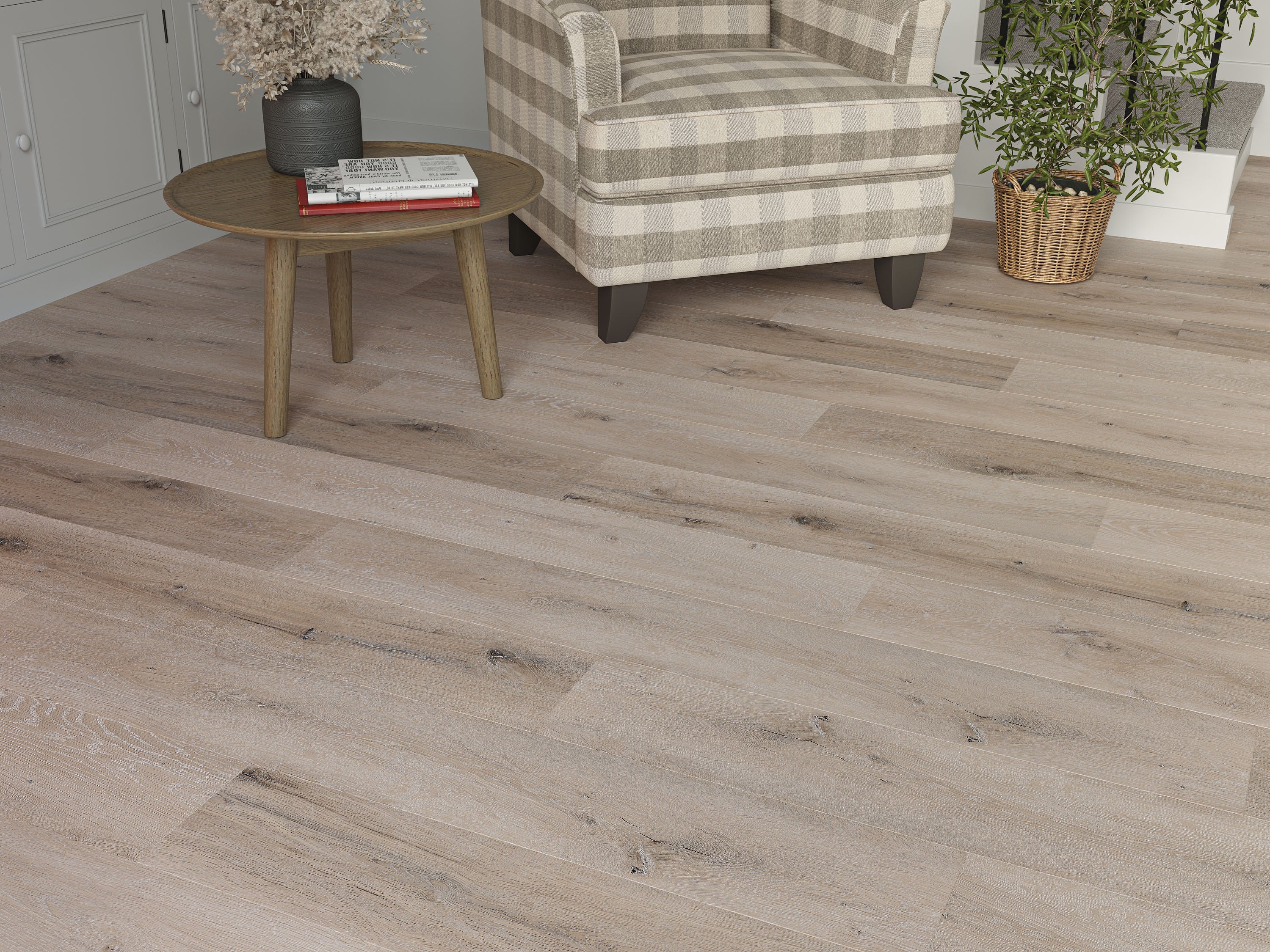
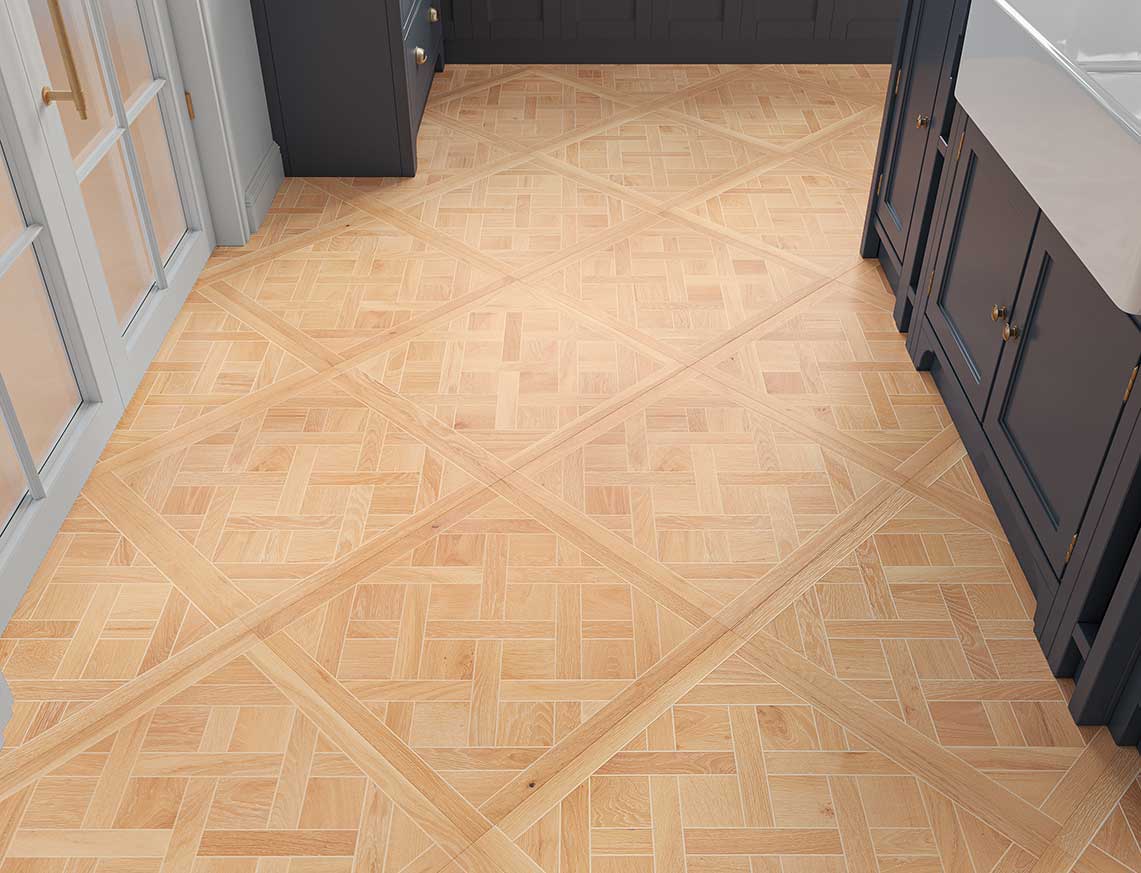
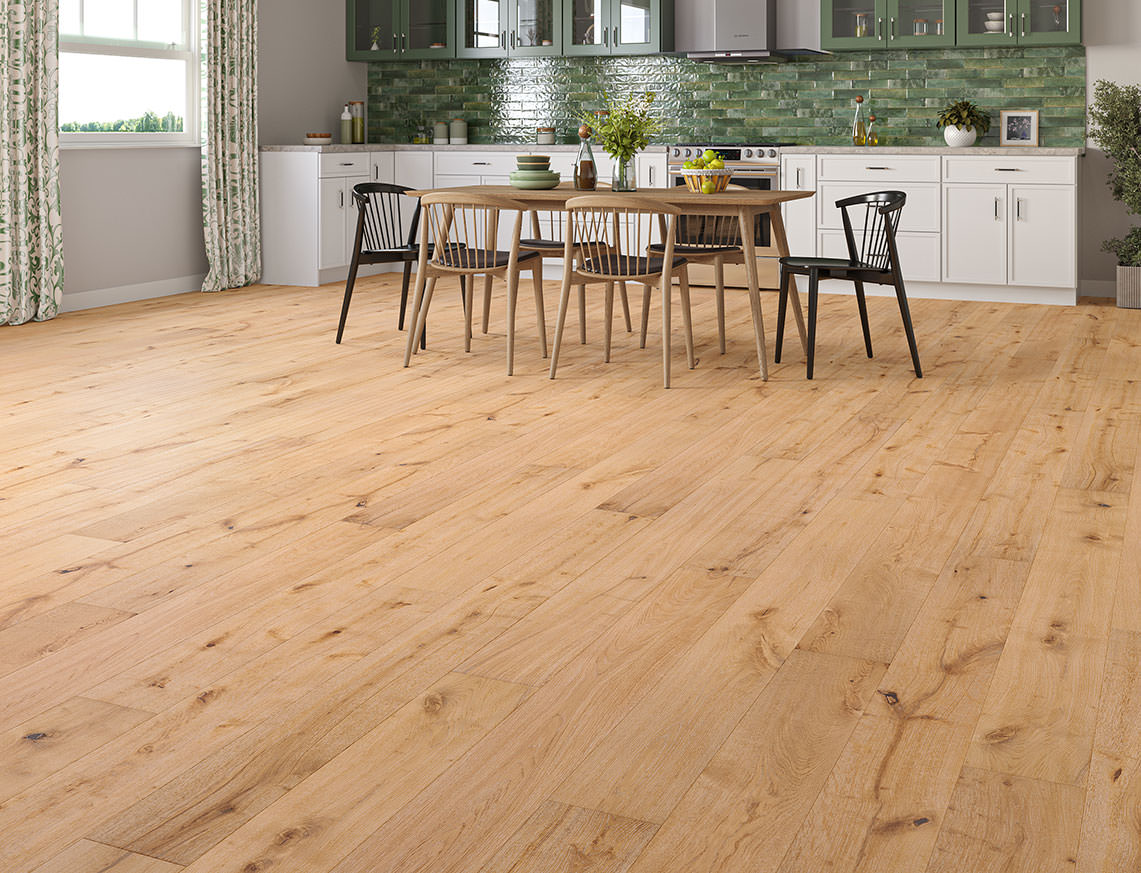
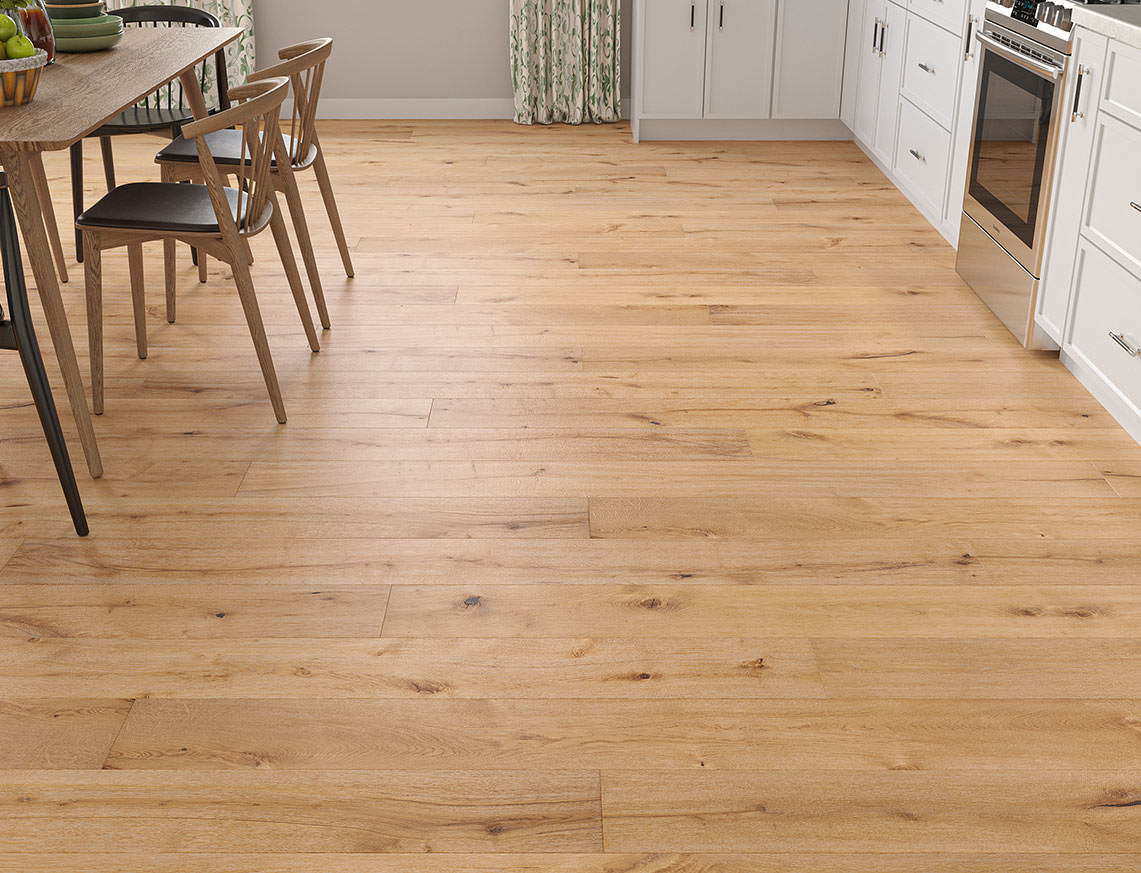
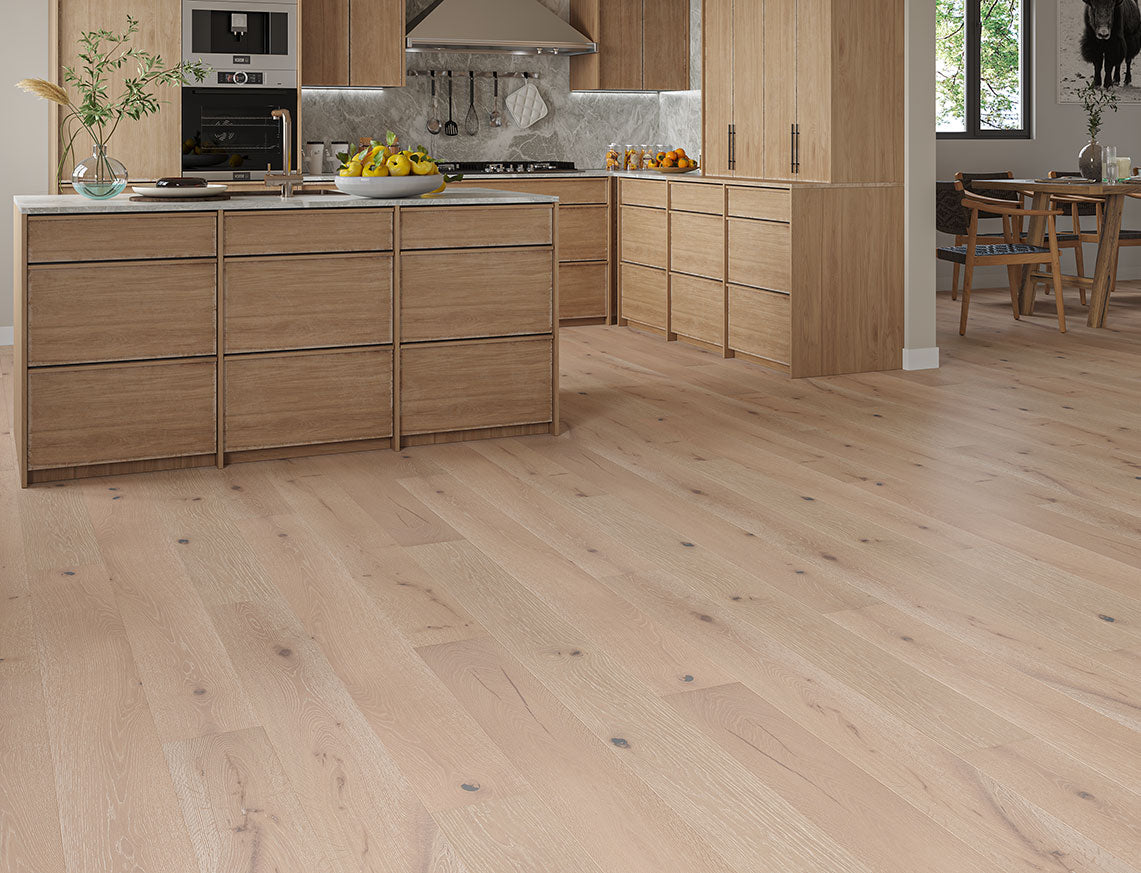
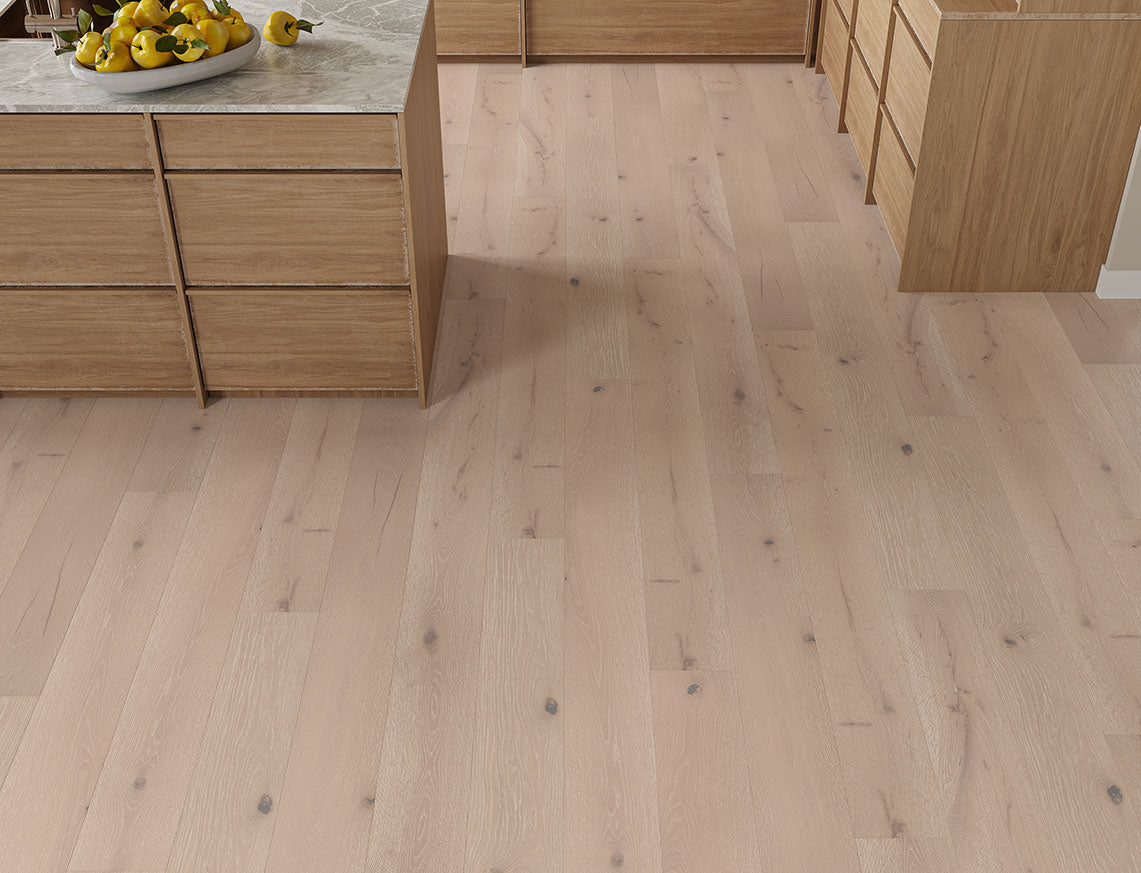
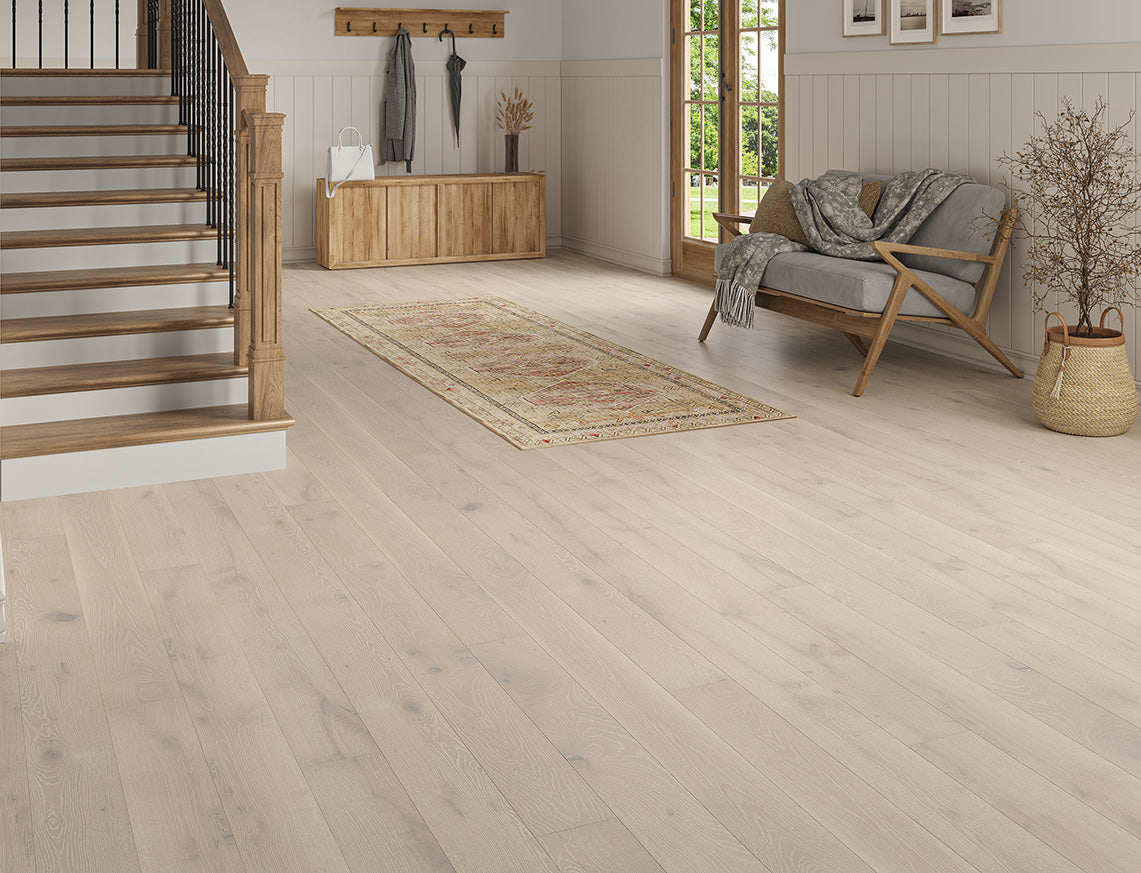
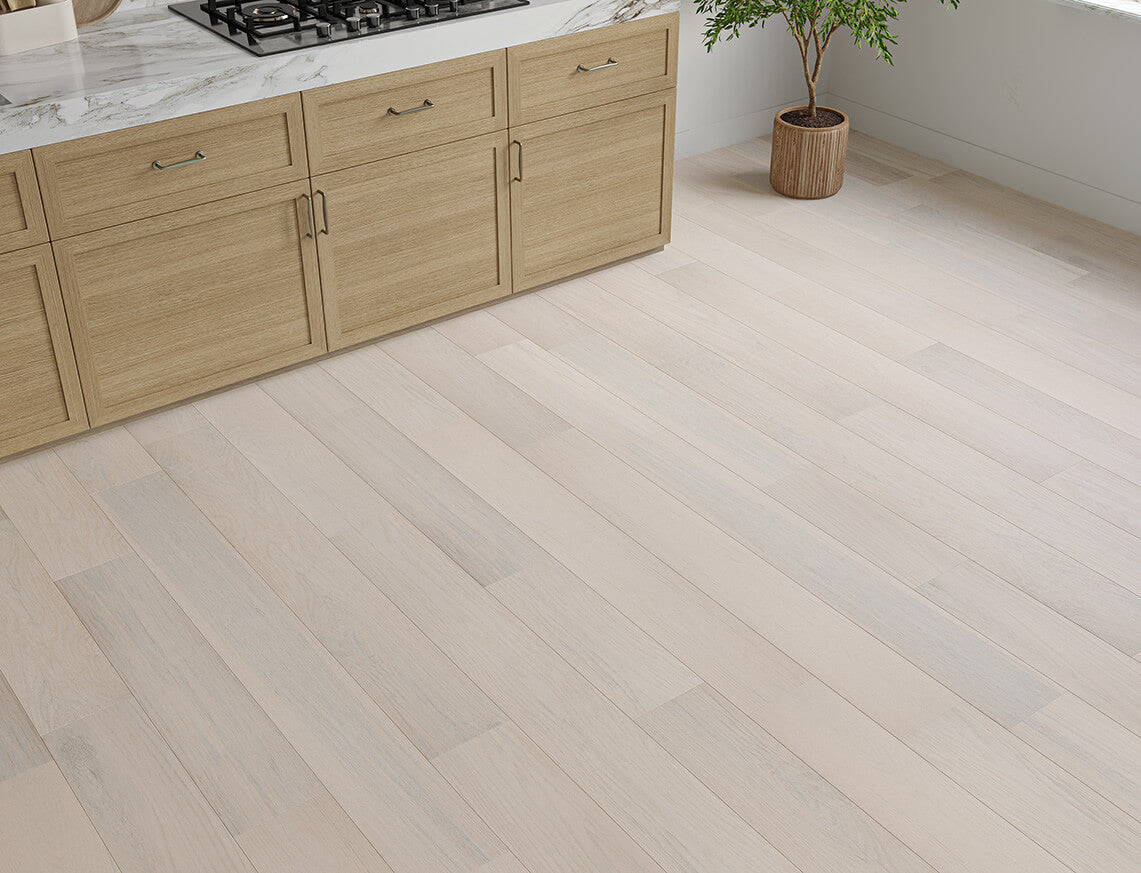
Oak with a white pigment worked into the grain, giving a chalky, softened pale that keeps the character of the wood visible. Where a plain pale floor is simply light, a white-washed one has contrast between the whitened grain and the timber around it.
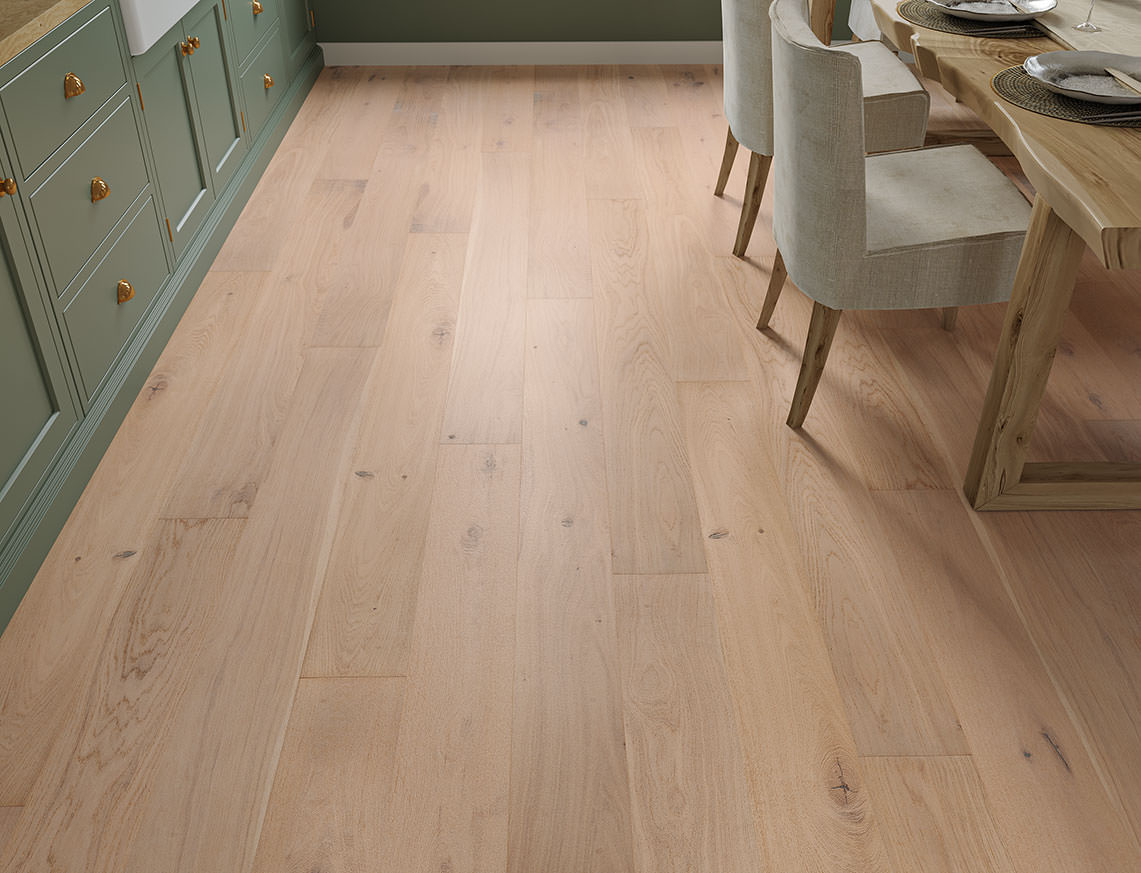
The group includes white-brushed floors, where the surface is brushed to open up the grain before the pigment goes on. That produces a subtle two-tone effect with real depth, and a texture you can feel underfoot.
It suits coastal, Scandinavian and relaxed contemporary interiors. Available in engineered oak across plank and patterned layouts. Free A5 samples, delivered next-day.
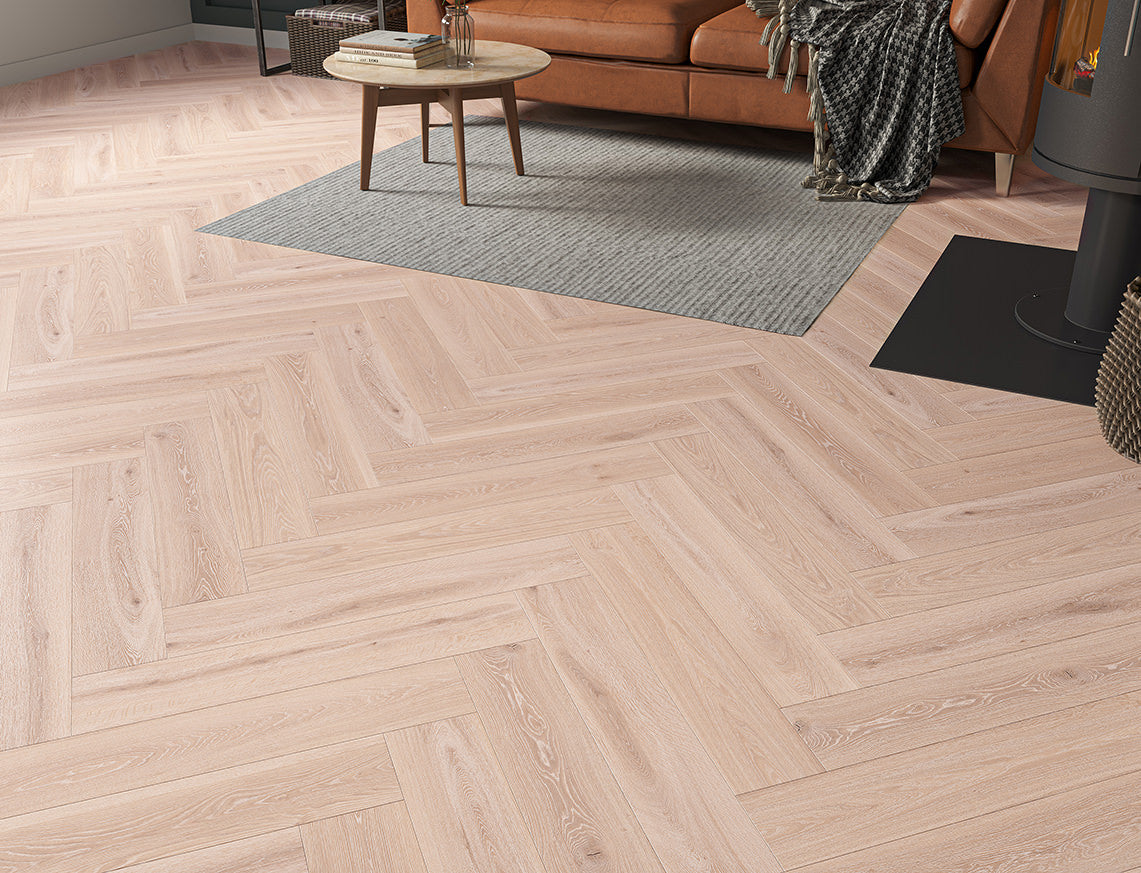
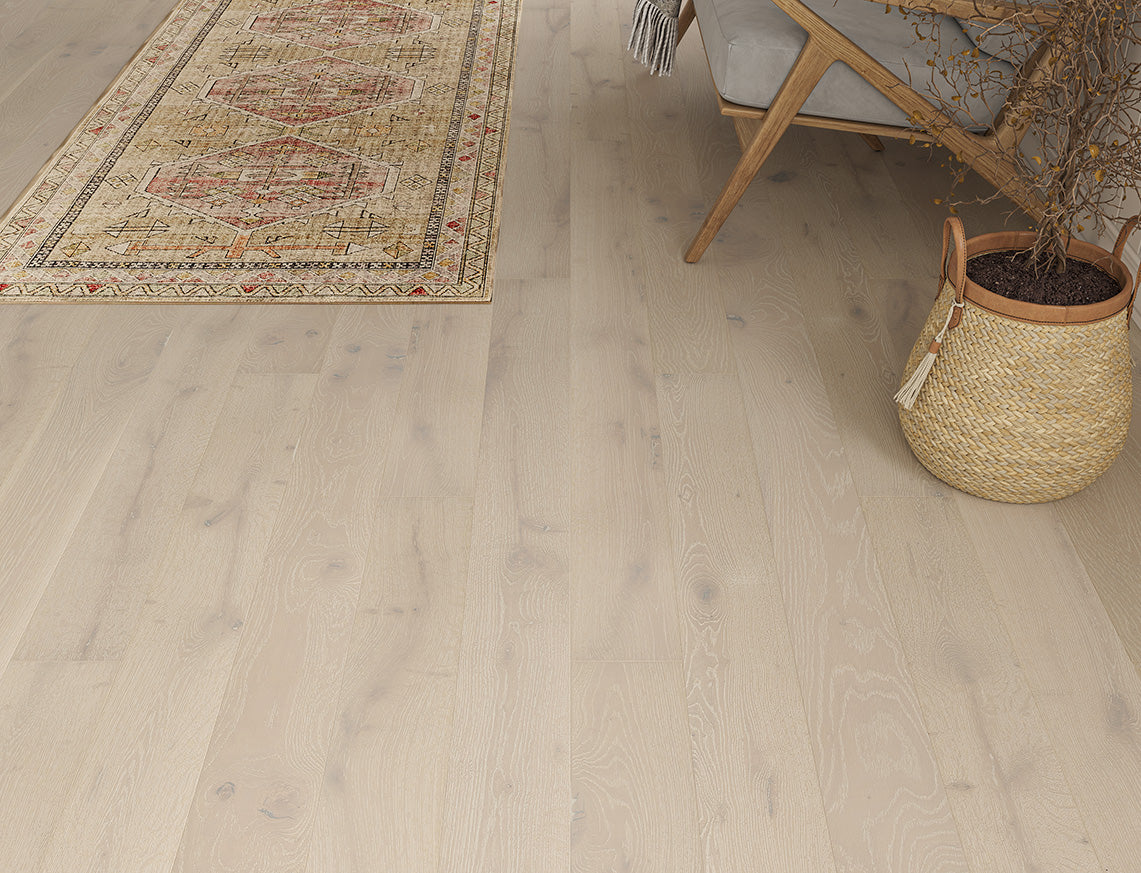
A white or off-white pigment is applied to the oak so that it settles into the grain rather than covering the surface uniformly. The result is pale, but not flat: the open grain holds more pigment than the denser wood around it, so the pattern of the timber shows through as a lighter tracery.
That is the difference between a white-washed floor and a painted one. You still read it as wood.
White-brushed
Brushing removes some of the softer grain before the pigment is applied, deepening the texture and increasing the contrast between the whitened grain and the surface. The effect is more pronounced than a plain white-wash, and the board has a tactile quality that a photograph does not convey.
White-washed is not the same as white
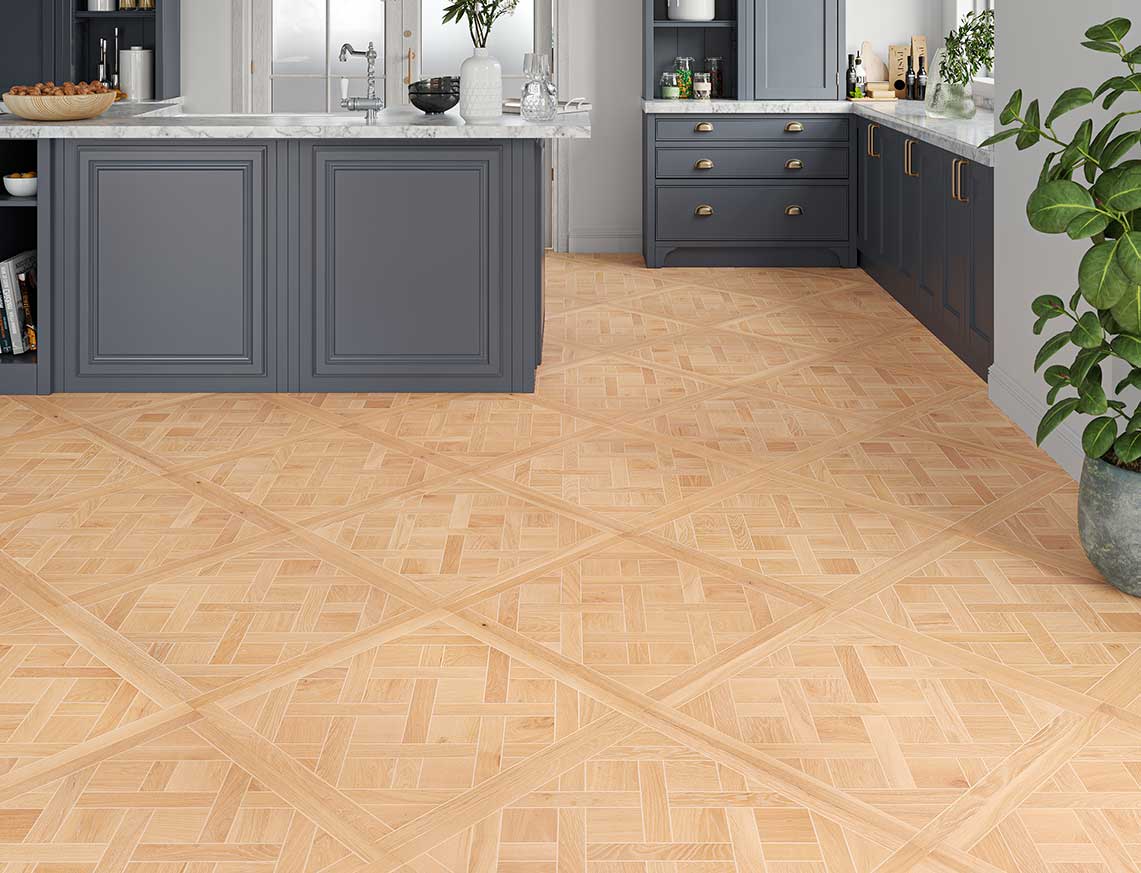
A white-washed floor is oak with white worked into it, and the wood grain remains the dominant feature. Our white flooring collection is a different thing altogether, covering genuinely white stone, marble and terrazzo designs.
What a white-washed floor does to a room
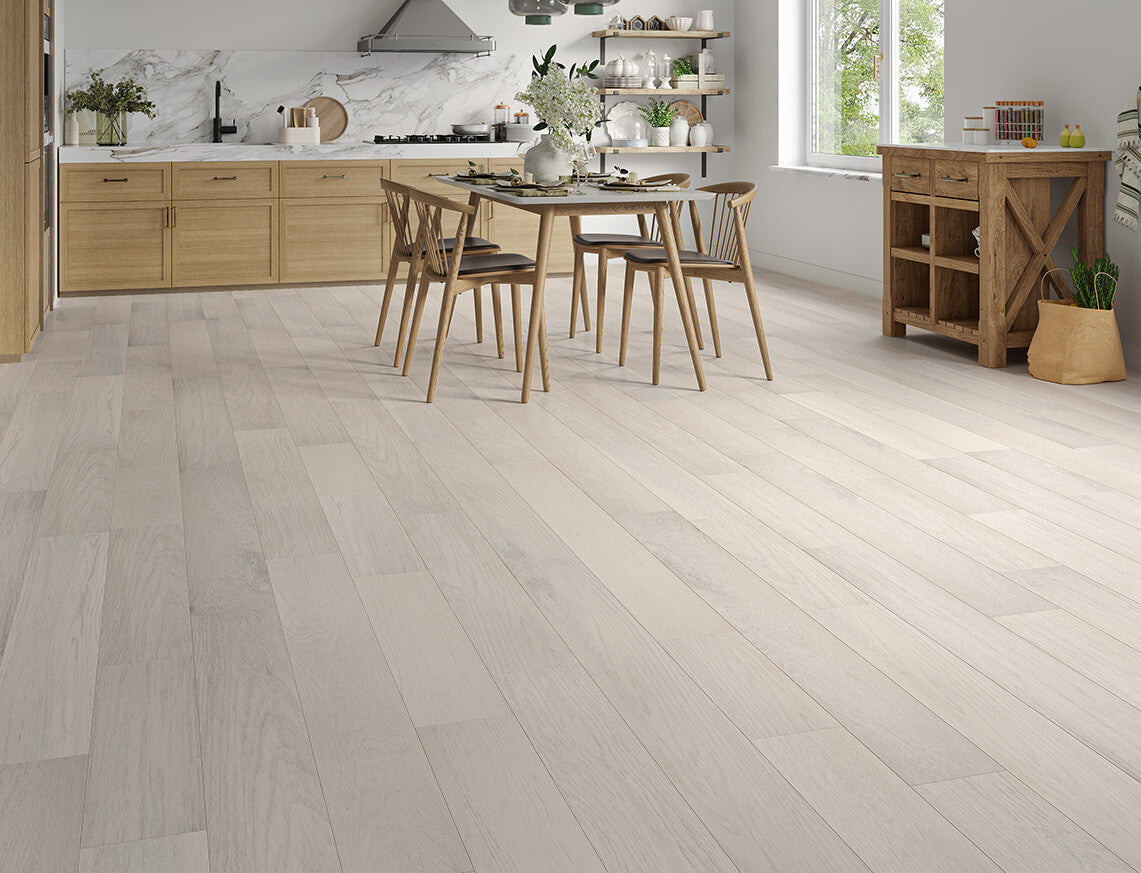
It lightens a space in the way any pale floor does, but with more interest than a plain one. The grain contrast gives the floor something to look at, which stops a light-toned room feeling washed out.
It also reads as cooler than a natural oak, since the white pigment cuts the yellow tones that oak carries naturally. That makes it a useful option if you like the airiness of a pale floor but find plain oak too warm.
The consideration is the same as for any pale floor: crumbs and dark marks show more than on a mid-tone. The grain pattern helps disguise this better than a uniform pale surface would.
What white-washed floors pair with
Soft white and pale grey walls give the coastal and Scandinavian look most people are after with this floor. Add warmth through textiles and timber furniture, or it can read cold.
Muted blues and greens sit beautifully against a white-washed floor, and the pairing is what makes it such a common choice in coastal properties.
Painted furniture and shaker kitchens work particularly well, since both share the same slightly chalky quality as the floor.
Existing golden oak woodwork is the pairing to test carefully. A cool white-washed floor against warm yellow-toned doors can look at odds. Hold a sample against them before deciding.
Judging a white-washed floor properly
The texture is the part photographs miss. A white-brushed board looks flat on a screen and quite different in the hand, where you can see the pigment sitting in the grain and feel the relief of the brushing.
Order a free sample and look at it in daylight, where the grain contrast shows best. Run your hand across it. Then hold it against your walls and any woodwork that is staying.
White-washed flooring: frequently asked questions
What is white-washed flooring?
Oak with a white pigment worked into the grain, giving a pale, chalky finish while keeping the wood grain visible.
What is the difference between white-washed and white flooring?
White-washed is oak with white in the grain, so it still reads as wood. White flooring covers genuinely white stone, marble and terrazzo designs.
What is white-brushed oak?
Oak that has been brushed to open the grain before the white pigment is applied, giving more texture and a stronger two-tone effect than a plain white-wash.
Does white-washed flooring look cold?
It reads cooler than a natural oak, since the pigment cuts oak's yellow tones. Warm textiles, timber furniture and warm lighting balance it easily.
Will the white wear off?
The pigment sits within the grain and is protected by the finish over it, so it wears as the finish does rather than rubbing away. Follow the care guidance for your floor's finish.
Does it suit period properties?
It can, particularly in a coastal or country setting, and especially in narrower boards. In a formal period room a golden or brown tone may sit more naturally.