
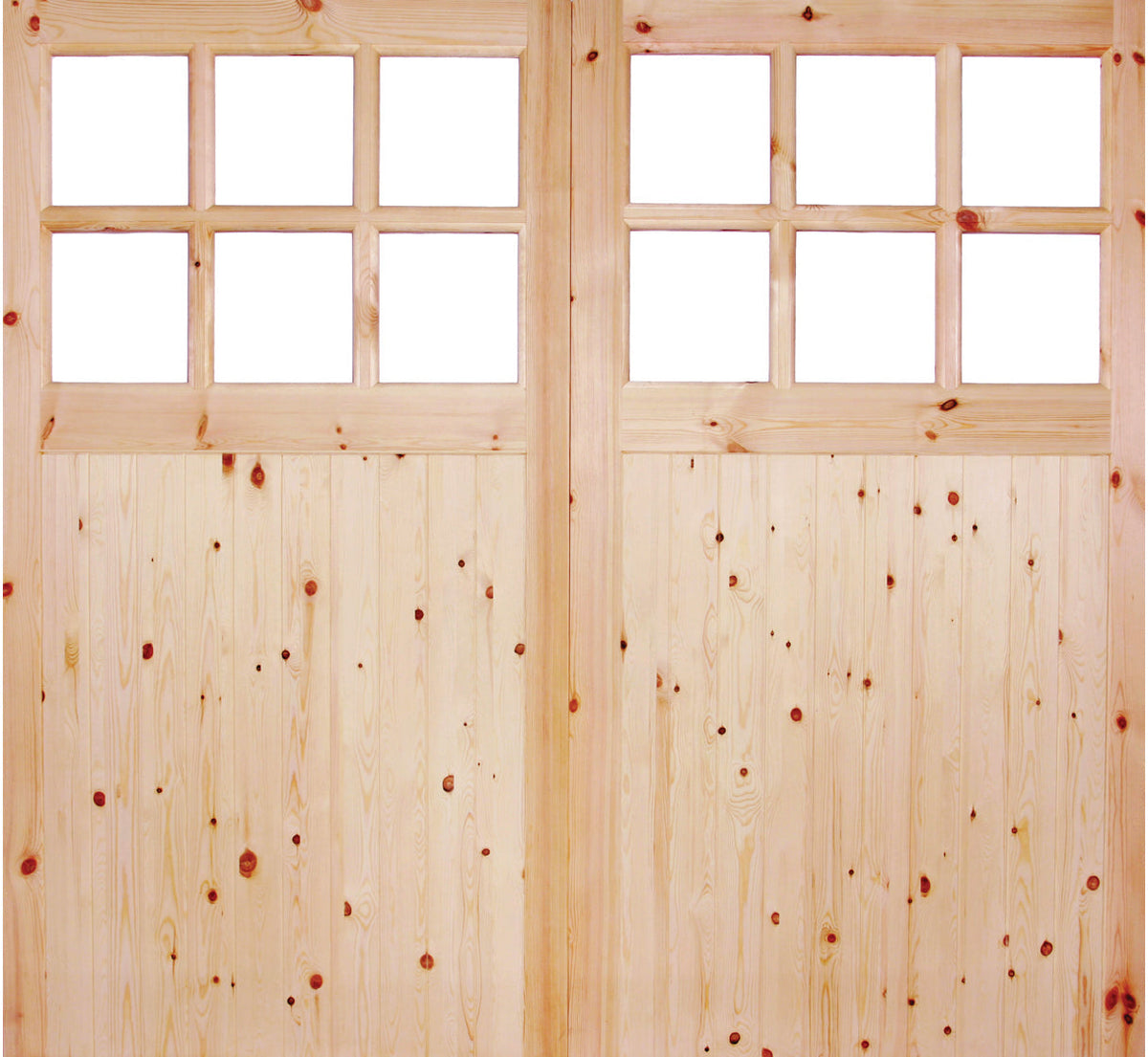
Choosing the right timber door can significantly impact your home's appearance, durability, and long-term value. Among the many softwood options available, Redwood and Hemlock remain two of the most popular choices for internal and external doors. Both timbers offer unique characteristics, making them suitable for different applications and design preferences.
Whether you're renovating a traditional property, building a new home, or upgrading your existing doors, understanding the differences between Redwood and Hemlock can help you make a more informed decision.
Redwood vs Hemlock at a Glance


| Feature | Redwood | Hemlock |
|---|---|---|
| Appearance | Warm reddish tones | Light cream to pale brown |
| Grain Pattern | Prominent and distinctive | Fine and uniform |
| Durability | Good durability | Moderate durability |
| Workability | Easy to machine and finish | Easy to work with |
| Stability | Good dimensional stability | Excellent stability |
| Cost | Generally more affordable | Slightly more premium |
| Best For | Traditional and rustic homes | Contemporary and modern interiors |
What Is Redwood?
Redwood is one of the most widely used softwoods in the UK door industry. Often sourced from Northern Europe and Scandinavia, redwood is valued for its strength, versatility, and attractive grain pattern.
Despite being classified as a softwood, high-quality redwood offers impressive durability and structural stability. It is commonly used for:
- Internal doors
- External doors
- Door frames
- Staircases
- Joinery projects
- Window frames
The timber typically displays warm honey, golden, or reddish-brown tones that create a welcoming and traditional appearance.
Advantages of Redwood Doors
Natural Character
Redwood features visible growth rings and attractive grain patterns that add character and warmth to a room.
Excellent Value
Compared to many hardwoods, redwood provides an attractive balance between affordability and performance.
Easy to Finish
The timber readily accepts:
- Paint
- Wood stains
- Oils
- Varnishes
- Wax treatments
This flexibility makes it suitable for virtually any interior style.
Durable Performance
When properly maintained and treated, redwood doors can last for decades while retaining their appearance and structural integrity.
What Is Hemlock?
Hemlock is another premium softwood commonly used for interior doors and bespoke joinery. Unlike redwood, hemlock features a much finer and more consistent grain pattern, making it particularly appealing for modern interiors.
Originating primarily from North America and parts of Asia, hemlock is known for its:
- Straight grain
- Uniform texture
- Smooth finish
- Dimensional stability
Its pale appearance provides a clean and sophisticated look that works exceptionally well in contemporary homes.
Advantages of Hemlock Doors
Modern Appearance
The subtle grain structure creates a sleek and elegant finish that complements minimalist interior designs.
Excellent Stability
Hemlock experiences very little warping or twisting when properly manufactured, making it a reliable long-term choice.
Smooth Surface
Its fine texture allows for exceptionally smooth painted or stained finishes.
Strong Yet Lightweight
Hemlock provides good structural strength while remaining relatively lightweight compared to some alternative timbers.
Appearance Comparison
Redwood


Redwood offers:
- Richer colour variations
- Visible grain patterns
- Traditional character
- Rustic charm
- Natural warmth
It works particularly well in:
- Period properties
- Country homes
- Farmhouse interiors
- Traditional renovations
Hemlock


Hemlock provides:
- Cleaner appearance
- More consistent grain
- Lighter natural colour
- Contemporary appeal
- Smooth visual finish
It is ideal for:
- Modern homes
- Scandinavian interiors
- Minimalist designs
- New-build developments
Winner for Appearance
The better choice depends entirely on your preferred style:
- Choose Redwood for warmth and traditional character.
- Choose Hemlock for a clean and contemporary look.
Durability and Strength
When selecting a door, appearance is important, but durability matters just as much.
Redwood Durability
Redwood has long been used in construction due to its reliable strength and resilience.
Benefits include:
- Good resistance to everyday wear
- Strong structural properties
- Suitable for internal and external applications
- Long service life with proper treatment
Many external timber doors are manufactured using engineered redwood because of its dependable performance.
Hemlock Durability
Hemlock is durable but generally performs best indoors.
Advantages include:
- Stable construction
- Resistance to shrinkage
- Minimal movement
- Reliable long-term performance
However, untreated hemlock is generally less weather-resistant than treated redwood for external applications.
Winner for Durability
For external use, Redwood often has the advantage.
For internal applications, both timbers perform extremely well.
Workability and Manufacturing
Door manufacturers value both timbers because they are relatively easy to machine and shape.
Redwood
Redwood:
- Cuts easily
- Sands well
- Takes stains effectively
- Responds well to machining
- Can be manufactured into intricate designs
This makes it popular for:
- Panel doors
- Cottage doors
- Traditional joinery
Hemlock
Hemlock:
- Machines cleanly
- Produces smooth edges
- Paints exceptionally well
- Creates uniform finishes
- Minimises grain show-through
It is often preferred for:
- Flush doors
- Contemporary doors
- Painted interior doors
Winner for Workability
Both perform excellently, though:
- Redwood excels for stained finishes.
- Hemlock excels for painted finishes.
Maintenance Requirements
Redwood Maintenance
Redwood requires periodic care, especially for external doors.
Recommended maintenance includes:
- Repainting every few years
- Re-oiling stained finishes
- Inspecting protective coatings
- Cleaning dirt and debris
Proper maintenance can significantly extend lifespan.
Hemlock Maintenance
Hemlock generally requires:
- Occasional cleaning
- Repainting when needed
- Routine inspections
Because it is commonly used internally, maintenance demands are often lower.
Winner for Maintenance
For internal doors, Hemlock often requires less ongoing maintenance.
Cost Comparison
Budget is often a major consideration when choosing timber doors.
Redwood Pricing
Redwood doors are generally:
- More widely available
- Cost-effective
- Suitable for large projects
- Excellent value for money
This makes them popular among homeowners seeking quality without excessive cost.
Hemlock Pricing
Hemlock can be slightly more expensive due to:
- Its premium appearance
- Consistent grain
- High-quality finish potential
However, the difference is often relatively small.
Winner for Budget
Redwood typically offers better value and lower overall cost.
Environmental Considerations
Many homeowners now prioritise sustainability when selecting building materials.
Both redwood and hemlock can be sourced from responsibly managed forests.
When shopping for timber doors, look for certification from:
- Programme for the Endorsement of Forest Certification (PEFC)
Certified timber ensures responsible forest management and environmental stewardship.
Which Timber Is Best for Internal Doors?
For internal applications:
Choose Redwood If You Want:
- Traditional character
- Visible timber grain
- Warm natural tones
- Rustic aesthetics
- Better value
Choose Hemlock If You Want:
- Smooth painted finishes
- Modern interiors
- Minimalist design
- Consistent appearance
- Contemporary styling
Which Timber Is Best for External Doors?
For external applications, redwood generally offers greater versatility due to its durability and ability to accept protective treatments effectively.
Many manufacturers use engineered redwood cores for:
- Front doors
- Back doors
- Stable doors
- French doors
Hemlock is less commonly specified for exposed external environments.
Final Verdict: Redwood or Hemlock?
There is no universal winner because each timber serves different design goals.
Choose Redwood if:
- You prefer traditional aesthetics.
- You want visible wood grain.
- You need a versatile timber for internal or external use.
- Budget is an important consideration.
Choose Hemlock if:
- You prefer contemporary interiors.
- You want a smooth painted finish.
- Consistency and clean lines matter most.
- The doors are primarily for indoor use.
Ultimately, both timbers offer excellent performance, attractive finishes, and long-lasting value. By considering your home's architectural style, maintenance preferences, and budget, you can confidently choose the timber door that best complements your living space.
Conclusion
Redwood and Hemlock remain two of the most trusted timber choices for modern door manufacturing. Redwood brings warmth, character, and exceptional value, while Hemlock delivers contemporary elegance and refined simplicity. Whether you're upgrading a single room or undertaking a full renovation, selecting the right timber can transform the appearance and functionality of your home for years to come.
For more information about our interior or exterior doors or door accessories, give us a call at 01603 622261 and speak to a member of our expert team today or Email us at sales@doorsuppliesonline.co.uk. We look forward to hearing from you.