
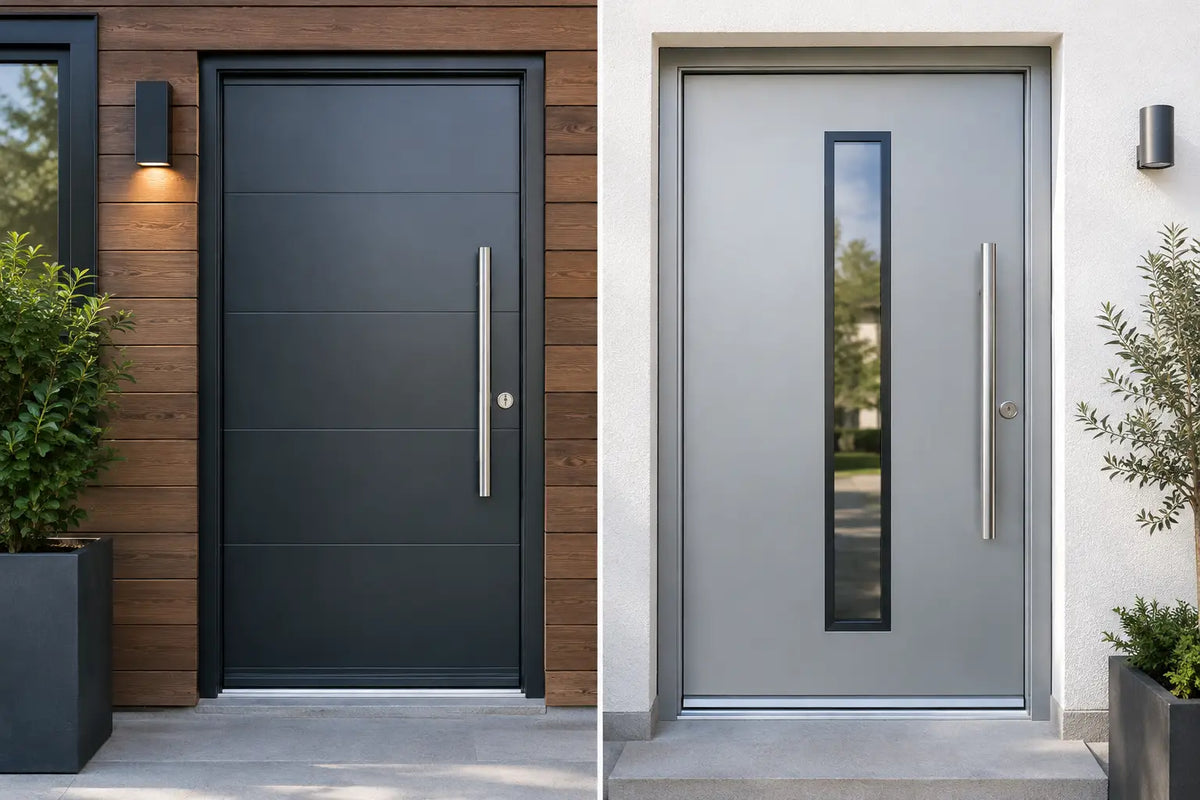
Steel and aluminium external doors can look remarkably similar, particularly when they feature slim sightlines, large glazed panels and contemporary dark finishes. However, when comparing steel vs aluminium external doors, the differences become more noticeable in terms of design flexibility, cost, thermal performance, durability and maintenance requirements. Choosing the right material involves considering more than appearance, as it can affect available door sizes, glazing options, hardware compatibility and long-term performance.
Whether you are replacing an existing front door, installing a modern entrance screen or choosing new patio doors, understanding the differences between aluminium and steel doors will help you find the right solution for your property. Both materials offer distinctive advantages, but the best option depends on your budget, architectural style, exposure to the elements and performance requirements.
Steel external doors are often chosen for their slim profiles, refined detailing and premium industrial appearance, making them particularly suitable for contemporary and architectural projects. In comparison, aluminium external doors offer greater design flexibility for many larger glazed openings, alongside relatively low maintenance and a wide choice of colours and configurations.
By comparing the appearance, strength, insulation, security and maintenance requirements of steel and aluminium doors, you can make a more informed decision and choose an external door system that complements your property while meeting your practical needs.
Steel versus aluminium external doors: the key difference
Steel is naturally strong, allowing manufacturers to form slim sections that carry substantial glass panels without making the frame appear heavy. This is why steel external doors are closely associated with heritage-style glazing, loft-inspired partitions and elegant grid designs. They can give a home a distinctly architectural finish, particularly in black, bronze or carefully specified colour coatings.
Aluminium is much lighter and highly adaptable. It can be extruded into a broad range of insulated frame profiles, from slimline hinged doors to wide sliding, folding and fixed-screen systems. Its low weight is an advantage during installation and makes it especially practical where a large opening, frequent use or complex configuration is involved.
Both materials can create a high-quality entrance or rear-door solution. The right comparison is between complete, tested door systems rather than metal alone. Frame depth, thermal breaks, glass specification, locking arrangement, seals and installation quality all have a major effect on the finished performance.
Appearance and sightlines
If the brief is for very slim frames, steel has a clear visual appeal. Its inherent strength means it can achieve refined mullions and glazing bars, so more of the opening is glass. This works particularly well on period renovations, extensions that connect old and new parts of a property, and projects seeking a traditional Crittall-style effect.
Aluminium external doors can also offer impressively narrow profiles, although the exact sightline depends on the system and whether the door is hinged, sliding or bifolding. Aluminium has greater scope for contemporary formats, including wide-format sliding doors, corner openings and integrated sidelights. Powder-coated finishes are available in a wide choice of colours, while dual-colour options can provide one shade outside and another inside.
Choose steel when the fine, crafted profile is central to the design. Choose aluminium when you need the design freedom to build a wider glazed arrangement around the door. For a modest single-leaf entrance, the visual difference may be more important than the structural one. For a large garden elevation, aluminium's range of configurations often becomes the deciding factor.
Thermal performance is about the complete system
Bare metal conducts heat, so neither steel nor aluminium should be judged by raw material alone. Modern external door systems use thermal breaks to interrupt the path through the frame, alongside insulated panels, quality weather seals and suitable double or triple glazing.
Aluminium has long been widely available in thermally broken systems, with many options designed for demanding residential energy targets. Steel systems can also achieve strong thermal performance, but profile design and glazing choice are especially important because slim steel frames leave less room for insulation than deeper aluminium sections.
Ask for the declared U-value for the complete door set, not a figure for the glazing only. A low centre-pane value can sound impressive while the overall frame-and-glass performance is less favourable. Also check whether the stated value applies to the exact size, opening style and glass build-up you are considering.
Location matters. A sheltered rear opening and a wind-exposed front elevation place different demands on weathering. Good perimeter seals, correctly detailed thresholds and professional fitting help prevent draughts and water ingress regardless of whether the frame is steel or aluminium.
Security and compliance
A steel frame may feel inherently more secure, but security depends on the complete construction. A well-specified aluminium door with multi-point locking, reinforced sections, secure hinges and laminated glazing can provide excellent resistance to attack. Equally, a steel door must have an appropriate locking system and be correctly fixed into a sound structure.
Where a project needs a recognised security standard, look for a door set tested to the required specification, such as PAS 24 where applicable. This is particularly relevant to new builds, flats, developments and projects with a formal specification. Do not assume that a material label alone confirms compliance.
Glazed doors deserve additional attention. Toughened safety glass is commonly used where required, while laminated glass can add security benefits by helping hold the pane together if broken. The choice should be made with the door supplier and installer based on the position of the glass, the level of access and the project specification.
If the external door forms part of a fire compartment or is an entrance door to a flat, fire and smoke requirements may also apply. In that situation, source a complete tested fire door set with compatible frame, seals, glazing and hardware rather than adapting a standard external door.
Strength, size and everyday use
Steel is exceptionally rigid for its thickness. That makes it well suited to slim glazed doors and fixed screens where profile proportions are a priority. It is also a strong option for feature entrance doors that need a premium, tailored feel.
Aluminium offers an excellent strength-to-weight ratio and is generally easier to operate in larger formats. For wide sliding doors, multi-panel arrangements or doors with substantial glass areas, its lighter weight can reduce the load on hinges, rollers and fixings. This does not mean every aluminium system can span every opening - maximum panel sizes and weights vary by manufacturer.
For a frequently used family entrance, consider practical details beyond the frame. Check handle position, threshold height, opening direction, door closer requirements and whether the lock suits daily use. A beautifully specified door that catches on an uneven threshold or has an awkward handle will soon become frustrating.
Maintenance and suitability for UK conditions
Both materials can give many years of service with the right finish and care. Aluminium does not rust, which makes it a sensible choice for damp locations and coastal properties. It still needs occasional cleaning to remove pollution, salt deposits and general grime, particularly near the sea.
Steel requires more attention to its protective coating. High-quality galvanising, priming and powder coating provide strong protection, but damage to the finish should be dealt with promptly. Scratches, chips and areas around joints deserve inspection because exposed steel can corrode if moisture reaches it.
This is not a reason to rule steel out. It is a reason to specify the finish properly and be realistic about the environment. A covered front porch in an inland location is very different from a fully exposed coastal elevation. Ask about the coating warranty, cleaning guidance and suitability for your postcode before placing an order.
Cost: compare like for like
The purchase price of steel versus aluminium external doors can vary considerably. Steel is often the higher-cost option for bespoke slimline designs, partly because of the material, fabrication and specialist finishing involved. Aluminium benefits from a mature range of standardised systems, which can make it more cost-effective for many residential doors and larger glazed installations.
However, a basic comparison can be misleading. A door price may exclude glazing, handles, locks, sidelights, frame extensions, delivery, installation and making good. Compare quotations on the same basis: opening size, colour, glass specification, security standard, threshold, hardware and fitting scope.
Aluminium can offer better value where the project calls for large areas of glass or multiple panels. Steel can justify its premium where narrow profiles are a defining part of the architecture. The best value is the door set that meets the brief without paying for performance or detailing you do not need.
How to make the final choice
Start with the opening and the intended use. A narrow front door, a glazed side return, a statement rear extension and a wide garden slider each point towards different system strengths. Then confirm the practical specification: required U-value, security level, glass type, exposure, desired colour and maximum panel dimensions.
It is worth ordering with the frame, glazing and compatible ironmongery considered as one package. This reduces the risk of mismatched components and makes it easier to assess the finished look and performance. Door Supplies Online can help customers narrow down the options where a project needs both design guidance and a clear technical specification.
A carefully measured opening, a system suited to its location and a competent installation will matter long after the first impression. Choose steel for the slender profile you genuinely want, or aluminium for its adaptable, low-maintenance performance - then specify the complete door set with the same care as the material itself.
For more information about our interior or exterior doors or door accessories, give us a call at 01603 622261 and speak to a member of our expert team today, or email us at sales@doorsuppliesonline.co.uk. We look forward to hearing from you.