
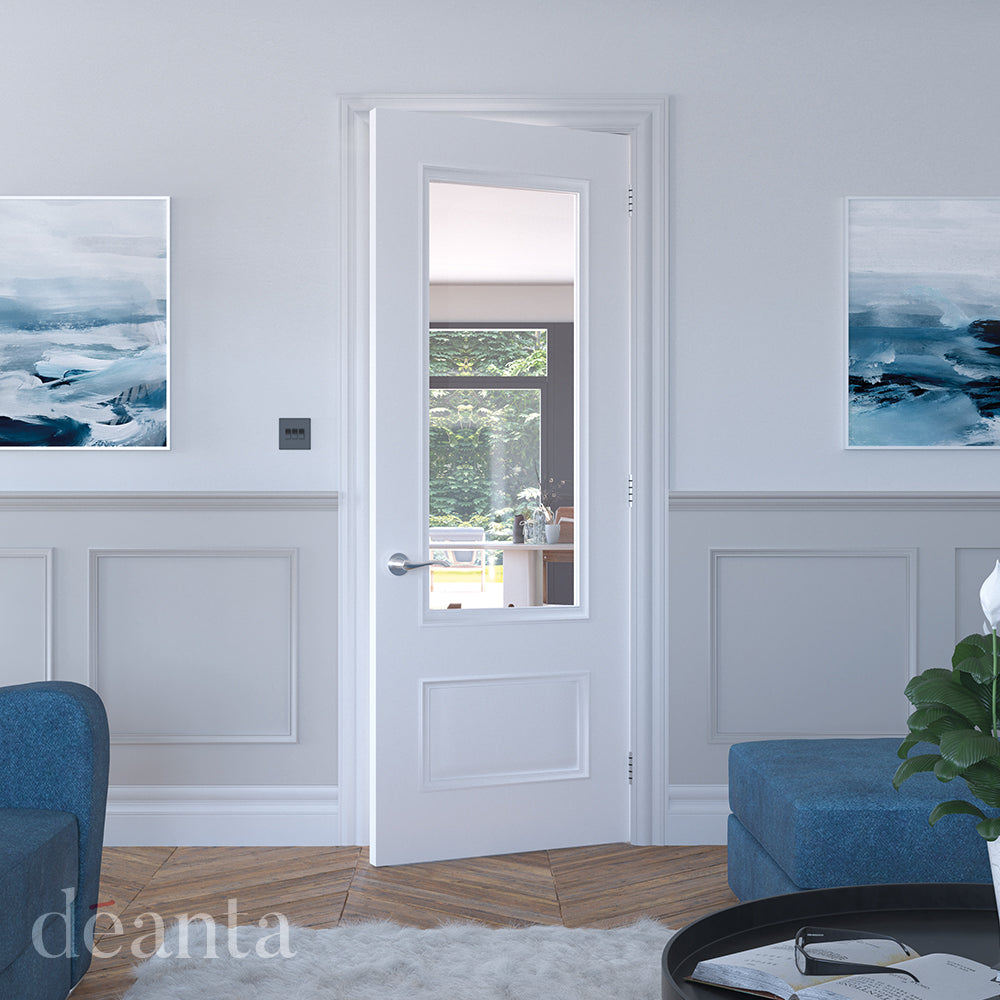
Doors are something we use every day without thinking about them, until something goes wrong or we need to replace one. Whether you’re renovating, buying internal doors, or simply trying to understand door terminology, knowing the anatomy of a door helps you make better decisions and avoid costly mistakes.
This guide breaks down every major door component, from the door slab itself to hinges, frames, architraves, and hardware. It also explains how each part works together to create a fully functional and secure door system.
We’ll cover:
- Parts of a door explained
- Parts of a door frame
- Door terminology glossary
- Internal vs external door components
- Hinges, handles, locks, and ironmongery
- Architraves and finishing details
- Visual-style breakdowns (descriptive diagrams)
This is your complete reference guide to understanding how doors are built and installed in UK homes.
Parts of a Door Frame
A typical door frame consists of:
- Head – The horizontal section across the top of the frame.
- Jambs – The two vertical sides that support the door.
- Stop – The raised strip that the door closes against.
- Threshold – The bottom section on many external doors, helping to seal against weather and draughts.
- Architrave – The decorative trim that covers the joint between the wall and frame.
Anatomy of a Door
The main parts of a door include:
- Door leaf
- Hinges
- Lock or latch
- Door handle
- Strike plate
- Weather seals (external doors)
- Glazing panels (where applicable)
Door Handle Anatomy
A typical door handle includes the lever or knob, spindle, backplate or rose, fixing screws and latch mechanism. Together, these components allow the door to open, close and latch securely.
Parts of an Exterior Door
An exterior door also features additional components such as weather seals, a threshold, multipoint locking system, letterplate, door viewer and security cylinder to improve insulation and protection.
Understanding the anatomy of a door frame makes it easier to choose compatible replacement parts, install new door hardware and maintain safe, reliable operation.
Why Understanding Door Components Matters


Most homeowners only think about doors as a single object, but in reality, a door is a system made up of multiple engineered parts.
Understanding these components helps you:
- Choose the right door type
- Diagnose problems (like sticking or misalignment)
- Communicate with installers or joiners
- Improve home security
- Maintain doors properly
- Select compatible hardware
Whether you are installing internal doors, upgrading a front entrance, or planning a bespoke renovation, knowing the terminology gives you a major advantage.
Main Parts of a Door (Door Leaf Explained)


The door leaf (or door slab) is the main moving part of the door, the section that opens and closes.
1. Door Leaf (Door Slab)
This is the actual door panel.
Types include:
- Solid core doors
- Hollow core doors
- Panel doors
- Flush doors
- Glazed doors
Function:
- Provides privacy
- Security barrier
- Design focal point
2. Door Core (Internal Structure)
Inside the door leaf is the core material.
Common cores:
- Solid timber core
- Engineered core
- Honeycomb (lightweight)
- MDF core
The core determines:
- Weight
- Durability
- Sound insulation
- Thermal performance
3. Door Surface / Finish
This is the visible outer layer:
- Veneer (oak, walnut, etc.)
- Painted finish
- Laminated surface
- Primed ready-to-paint surface
Parts of a Door Frame Explained


The door frame is the structural surround that holds the door leaf in place.
1. Door Jambs (Side Frames)
These are the vertical sections on each side of the door.
Function:
- Support hinges
- Keep door aligned
- Transfer weight to wall
2. Door Head (Top Frame)
The horizontal top section of the frame.
Function:
- Connects both jambs
- Provides structural stability
3. Threshold (Sill – External Doors)
Found mainly in external doors.
Function:
- Weather protection
- Air seal
- Water resistance
4. Door Stop
A small strip inside the frame.
Function:
- Prevents the door from swinging through
- Ensures correct closing position
Related concept: door frame kits often include all these components pre-cut for easier installation.
Hinges: The Movement System of a Door


Hinges are what allow the door to open and close smoothly.
Types of Hinges:
- Butt hinges (most common)
- Concealed hinges (modern look)
- Spring hinges (self-closing)
- Heavy-duty hinges (external doors)
Function:
- Support door weight
- Control movement
- Maintain alignment
Poor-quality hinges often cause:
- Squeaking
- Drooping doors
- Misalignment
Related internal topic: door hinge adjustment and maintenance
Door Handles and Hardware (Ironmongery)


Door hardware is often called ironmongery in the UK.
1. Door Handles
Used to open and close the door.
Types:
- Lever handles
- Knob handles
- Pull handles
2. Latch Mechanism
Inside the door, the latch keeps it closed.
Function:
- Engages with strike plate
- Keeps door shut without locking
3. Locks
Provide security.
Common types:
- Mortice locks
- Euro cylinder locks
- Bathroom thumb-turn locks
Related topic: door lock types explained
4. Escutcheon Plates
Cover the keyhole or cylinder opening for a clean finish.
Architraves: The Decorative Frame


The architrave is the decorative trim surrounding the door frame on the wall side.
Function:
- Covers gaps between frame and wall
- Adds decorative detail
- Enhances architectural style
Styles:
- Modern square edge
- Traditional ogee profile
- Chamfered minimalist trim
Architraves play a major role in interior design consistency, especially when matched with:
- Skirting boards
- Door styles
- Flooring
Door Panels (Traditional Design Element)


Panel doors are made up of multiple sections instead of a flat slab.
Common Styles:
- 2-panel doors
- 4-panel doors
- Shaker doors
- Georgian-style doors
Benefits:
- Classic appearance
- Strong structure
- Timeless design
Glazing in Doors (Glass Components)


Glazed doors include glass panels inside the door leaf.
Types of Glass:
- Clear glass
- Frosted glass
- Textured glass
- Decorative patterned glass
Benefits:
- Allows natural light
- Creates an open feel
- Improves interior flow
Related topic: glazed internal doors for light optimisation
Door Frame Components vs Door Leaf Components
| Door Leaf | Door Frame |
|---|---|
| Moves | Fixed structure |
| Provides privacy | Provides support |
| Includes panels/glass | Includes jambs and head |
| Contains core material | Anchored to wall |
External Door Anatomy vs Internal Doors


External doors include additional components for security and weather protection.
External Door Additions:
- Weather seals
- Thresholds
- Multi-point locking systems
- Reinforced cores
Internal Doors:
- Simpler structure
- Focus on design and privacy
- Lightweight cores
Door Terminology Glossary (Quick Reference)
Door Leaf
The main moving part of the door.
Door Frame
The fixed structure holding the door.
Jamb
Vertical side of the frame.
Head
Top horizontal frame section.
Architrave
Decorative trim around frame.
Latch
Mechanism that keeps the door closed.
Strike Plate
Metal plate where the latch engages.
Escutcheon
Cover plate around keyhole.
Door Stop
Prevents door from swinging through frame.
Common Door Problems Linked to Components
Understanding anatomy helps diagnose issues.
Sticking Door
Likely causes:
- Misaligned hinges
- Swollen door leaf
- Frame movement
Loose Handle
Caused by:
- Worn spindle
- Loose screws
Door Not Closing Properly
Often due to:
- Frame misalignment
- Latch issues
Squeaky Door
Usually hinge-related.
How Door Components Work Together
A door is a system where every part plays a role:
- Hinges control movement
- Frame provides structure
- Latch ensures closure
- Handles provide access
- Architraves finish appearance
When all components are properly aligned, the door operates smoothly, securely, and quietly.
Final Thoughts
Understanding the anatomy of a door gives you a deeper appreciation of how important each component is, not just for function, but also for design, security, and durability.
From the door leaf and frame to hinges, handles, locks, and architraves, every element contributes to performance and aesthetics.
Whether you’re:
- Installing new internal doors
- Upgrading home security
- Renovating interiors
- Or simply learning door terminology
This knowledge helps you make more confident and informed decisions.
A well-built door isn’t just a single product; it’s a carefully engineered system where every component matters.
For more information about our interior or exterior doors or door accessories, give us a call at 01603 622261 and speak to a member of our expert team today or Email us at sales@doorsuppliesonline.co.uk. We look forward to hearing from you.