
The best handles for Shaker doors respect the style's restraint. A Shaker door earns its appeal from proportion: clean stiles, rails and a simple recessed panel. The right door handle adds a useful finishing detail without competing with the frame, whether you are updating a single internal door or specifying ironmongery for a whole renovation.
There is no single correct answer. A period cottage, a contemporary extension and a busy utility room can all use Shaker-style doors, yet each calls for a different handle profile and finish. Choose Shaker door handles that suit the door's scale, the room's use and the wider scheme, then check they are compatible with the door's construction and any fire-rating requirements.
Best handles for Shaker doors by style
For a classic painted Shaker door, a traditional lever handle on a round or square rose is usually the most dependable choice. It has enough presence to sit comfortably on the flat rail area, while its familiar shape works with the honest, unfussy character of Shaker joinery. Polished chrome gives a lighter, more traditional look; satin chrome is practical and understated; antique brass brings warmth to off-white, sage, navy and deep green doors.
A lever on backplate creates a more formal, traditional finish. It is particularly effective where the property has existing period details, such as panelled doors, skirting and architraves. Backplates also provide a defined location for the keyhole or bathroom turn and release, which can make a run of doors appear more considered. They need enough clear timber around them, so check the size of the lock block and the available rail width before ordering.
For a cleaner, more contemporary result, choose a straight or gently curved lever on rose. Matt black handles have become a popular match for white, pale grey and natural oak Shaker doors because they give the door a crisp outline without introducing too much ornament. This works especially well when black hinges, sockets or stair parts are already part of the design. The trade-off is that matt black is visually assertive: in a small room with dark walls and dark doors, it may make the joinery feel heavier than intended.
Knurled levers, reeded details and aged brass finishes can add texture while retaining a simple silhouette. Use them selectively. These finishes suit refined kitchens, bedrooms and renovated Victorian or Edwardian homes, but an overly decorative handle can dilute the plain-spoken quality that makes Shaker doors work.
Oak and timber Shaker doors
Oak Shaker doors have more natural grain and visual movement than painted versions. Satin nickel, satin stainless steel and brushed brass are reliable options because they complement rather than fight the timber. Black hardware can look sharp against pale oak, particularly in modern schemes, but choose a slim, uncomplicated lever rather than an ornate design.
A practical point matters here: if the door is veneered, make sure the latch and handle positions are set out carefully. Once drilled, a misplaced fixing is much harder to disguise than it is on a painted door.
Cup pulls and knobs for Shaker cupboard doors
Shaker is often associated with kitchens, and the rules change slightly for cabinets. Cup pulls are one of the strongest choices for base units and drawers. Their curved form has a traditional utility feel, while the compact profile keeps the cabinetry looking orderly. Pairing cup pulls on drawers with small knobs on wall cupboards is a proven combination for classic Shaker kitchens.
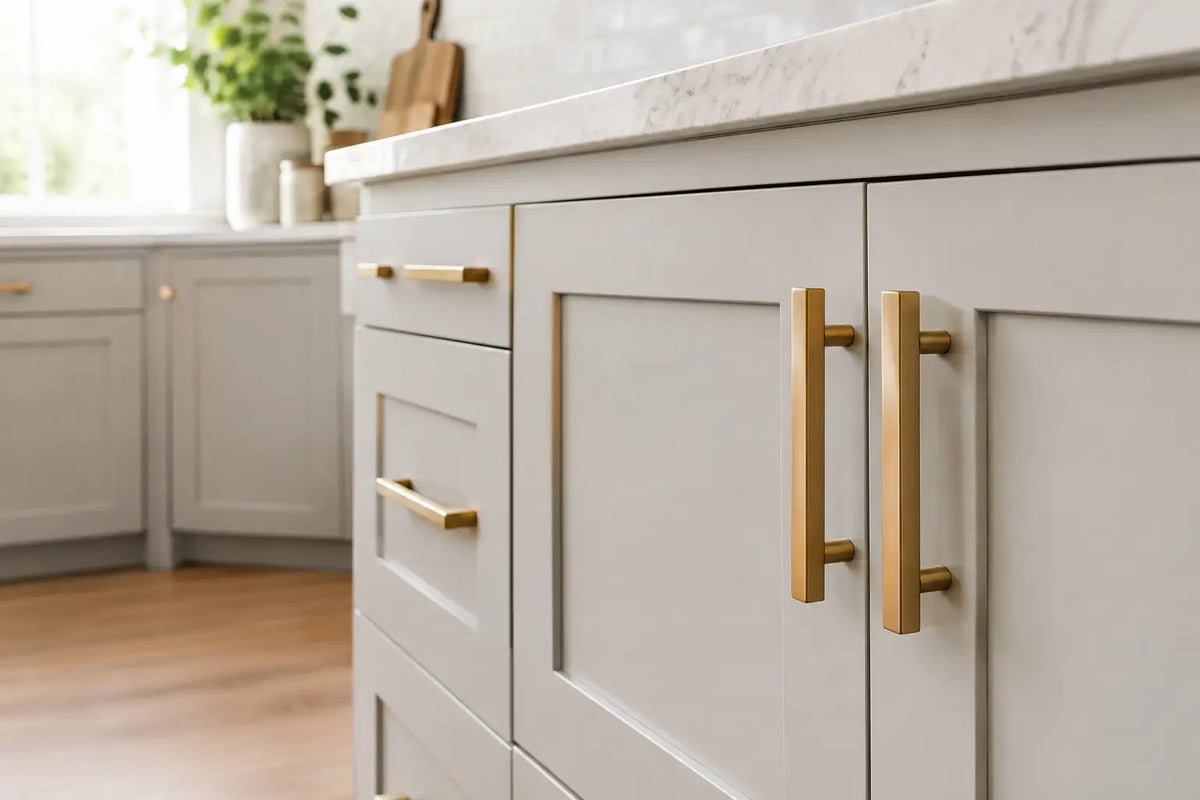
For a more modern kitchen, bar handles are a sensible alternative. A slim T-bar or narrow pull gives a contemporary line while still sitting comfortably with the door’s framed construction. Longer bar handles can work on tall larder units, but do not automatically fit the longest handle available. A handle that stretches too far across the centre panel can look out of scale and make opening the door less comfortable.
Knobs are the most discreet option, and they are particularly suited to smaller cupboard doors, bedside furniture and utility cabinetry. They are less convenient on wide, heavy drawers, where a cup pull or bar handle gives better grip. If you prefer one handle style throughout, test it on the heaviest drawer before committing to the full order.
Get the handle size and position right
Even a well-chosen handle can look wrong if it is oversized or fitted in the wrong place. Internal Shaker doors generally suit handles that sit neatly within the lock rail area rather than dominating it. The rose or backplate must have sufficient flat surface around it, and the lever should clear the door frame, architrave and any adjacent furniture.
On cupboard doors, positioning should follow the frame rather than the centre panel. Knobs are commonly installed towards the opening edge and around the meeting point of the stile and rail. Bar handles are often placed vertically on tall units and horizontally on drawers. Keeping this alignment consistent across a kitchen or fitted storage run makes a greater visual difference than choosing a more expensive finish.
Handle centres also need to match the latch or lock case. If you are replacing existing hardware, measure the fixing centres, spindle position and backset before selecting a new design. This avoids exposed holes, awkward plate sizes and unnecessary remedial work.
Choose a finish that works beyond the door
Hardware should connect the door to the rest of the interior, not exist in isolation. Satin chrome and satin nickel are versatile choices where appliances, taps and lighting are mixed or likely to change. They are forgiving of fingerprints and suit most white, grey and oak Shaker doors.
Polished chrome is brighter and more reflective, making it useful in bathrooms, contemporary homes and spaces with chrome sanitaryware. Brass, whether lacquered, antique or brushed, introduces warmth and looks particularly effective against heritage colours, timber flooring and aged oak. Its tone varies considerably between ranges, so it is worth keeping all visible door hardware within a coordinated family where possible.
Matt black is a strong specification choice for modern interiors, industrial details and monochrome schemes. It works best when repeated with black hinges, door stops or framing details. Mixing several unrelated black finishes can look accidental, as some are deep charcoal while others have a softer, textured coating.
Do not overlook hinges, latches and privacy hardware
A handle is only one part of the door furniture. The finish should coordinate with the hinges, latch, lock, door stop and, where needed, bathroom turn and release. A beautifully chosen brass lever paired with bright chrome hinges tends to look unfinished, particularly on a new door installation.
For bathrooms and WCs, select a compatible privacy turn that fits the handle style and door thickness. For bedrooms or home offices requiring a lock, make sure the chosen backplate or escutcheon works with the required keyhole type. This is also the point to confirm whether the door is left- or right-handed if the chosen lever design is handed rather than universal.
Fire doors need compatible ironmongery
If the Shaker door is FD30 or FD60 fire-rated, style must follow compliance. Fit hardware that is suitable for the specified fire door assembly, including the correct hinges, latch or lock, intumescent protection where required, and an approved self-closing arrangement where applicable. Drilling and cutting should follow the door manufacturer’s instructions, as excessive or incorrectly positioned apertures can compromise performance.
Do not assume that a standard internal lever or decorative knob is suitable simply because it fits physically. A fire door is a tested system, and its ironmongery needs to support that system. This is especially relevant for landlords, commercial properties and shared accommodation, where specification and installation must stand up to scrutiny.
A practical way to make the final choice
Start with the setting. Choose a lever on rose for a versatile internal Shaker door, a backplate for a more traditional scheme, cup pulls and knobs for classic cabinetry, or a slim bar handle for a modern interpretation. Then narrow the finish to one that appears elsewhere in the room, check dimensions against the rail or cupboard frame, and confirm the hardware specification before fitting.
Door Supplies Online stocks door furniture alongside internal doors, fire doors and finishing products, making it easier to coordinate a complete project rather than treating handles as an afterthought. Order enough for the full run, including spares where appropriate, because finishes and ranges can change over time.
The right handle should feel natural in the hand and inevitable on the door - a small detail that lets the calm geometry of Shaker joinery do its job.
For more information about our interior or exterior doors or door accessories, give us a call at 01603 622261 and speak to a member of our expert team today, or email us at sales@doorsuppliesonline.co.uk. We look forward to hearing from you.