
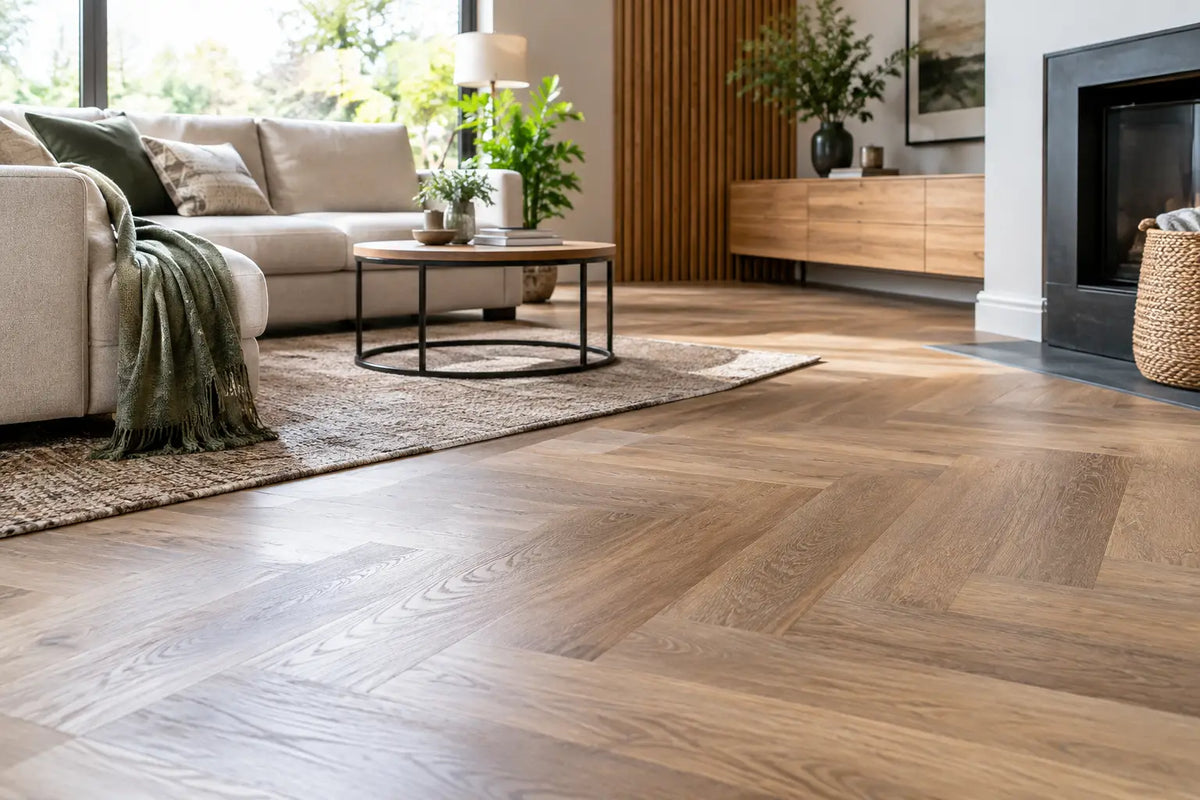
Choosing new flooring can transform more than the look of a room. The right floor covering can change how natural light moves through a hallway, create a seamless flow between adjoining spaces and bring doors, skirting boards and ironmongery together for a more cohesive interior. The latest flooring trends for UK homes focus on more than fashionable colours and finishes. Homeowners are increasingly looking for durable, practical flooring that complements their interior style and suits the demands of everyday living.
Whether you are renovating your home, updating a rental property or specifying materials for a project, choosing the right flooring means balancing appearance with performance. Consider how well it will cope with muddy shoes in an entrance hall, frequent cleaning in a rental property, underfloor heating or heavy foot traffic in an open-plan kitchen and dining area. This guide explores the latest flooring trends, popular materials and practical considerations to help you choose a floor that works beautifully with the rest of your home, including your doors and joinery.
Flooring trends moving towards warmth and longevity
Cool grey floors dominated many refurbishments for years, but warmer, more natural shades are now the more versatile choice. Think honeyed oak, smoked oak, muted walnut and mid-brown timber effects with visible grain rather than a uniform, flat finish. These tones bring warmth to white walls and black hardware without making a space feel overly traditional.
The appeal is practical as well as visual. Mid-tone flooring is generally more forgiving of dust, everyday marks and small scratches than very pale or near-black finishes. It also sits comfortably alongside the oak, primed white and black internal door styles commonly used in UK renovations. A warm floor can soften the cleaner lines of a black glazed door, while a darker wood tone can give a simple white four-panel door more presence.
Natural variation is another clear direction. Homeowners increasingly want knots, grain movement and subtle tonal changes that make a floor feel less manufactured. That does not mean every project needs rustic boards. A cleaner select-grade oak or refined wood-effect plank may better suit a contemporary extension. The key is avoiding an overly repetitive pattern, particularly in larger rooms where it becomes more noticeable.
Wider and longer boards remain popular
Wide-plank flooring continues to be specified because it creates a calmer, less interrupted surface. Fewer joins can make a compact lounge or bedroom feel broader, while long planks draw the eye through an open-plan layout. In period homes, wider boards can also feel appropriately substantial when paired with traditional mouldings and panelled doors.
There is a trade-off. Wider real-wood boards may react more noticeably to changes in humidity, and subfloor preparation becomes especially important. In older properties with uneven floors, a carefully chosen engineered wood product or quality luxury vinyl tile may provide a more predictable result than solid timber.
Wood, engineered timber and LVT: choose for the room
The most useful flooring trends do not require the same material throughout the house. A coordinated scheme can use different products in different rooms, provided their tone, plank direction and transitions are planned properly.
Engineered wood for authentic character
Engineered wood remains a strong choice where genuine timber is the priority. Its layered construction offers greater stability than solid wood, making it suitable for many modern homes and, subject to the manufacturer's specification, compatible with underfloor heating. It brings depth, texture and the option of sanding or refinishing in the future, depending on the wear layer.
It is not the lowest-maintenance option. Spills should be dealt with promptly, and entrances benefit from good mats to protect the surface from grit. For a living room, dining room or dry hallway, it can be an investment that improves with age. For a busy family kitchen or a property with dogs, the finish and maintenance commitment need careful consideration.
LVT for hard-working spaces
Luxury vinyl tile, often referred to as LVT, is one of the most commercially sensible choices in current flooring. Modern planks can reproduce oak, herringbone and stone effects with convincing texture, while offering excellent resistance to everyday moisture and wear. It is particularly well suited to kitchens, utility rooms, entrance areas and rental properties where durability and straightforward cleaning matter.
LVT is also available in warmer timber shades that avoid the artificial grey finishes of earlier ranges. Herringbone LVT remains popular, but it needs enough clear floor area to show the pattern properly. In a narrow hallway or small cloakroom, a straight plank can look less busy and create a more straightforward installation.
A quality installation is essential. The subfloor must be clean, dry and level, particularly with gluedown LVT where imperfections can show through. Saving money on preparation often creates problems that no attractive plank design can disguise.
Tiles and stone effects with softer styling
Stone-look porcelain and tile-effect LVT still have a place, especially around external doors, in kitchens and in utility spaces. The current preference is for warmer limestone, pale travertine and soft clay shades rather than stark polished grey. These finishes complement oak doors, brass or bronze ironmongery and off-white wall colours particularly well.
Porcelain is exceptionally durable, but it can feel cold underfoot without underfloor heating and may be less forgiving if crockery is dropped. LVT offers a warmer, quieter alternative, although it will not deliver the same mineral depth or very long-term resilience as quality porcelain.
Flooring trends for coordinated interiors
A floor should not be selected in isolation from the doors and finishing details around it. Internal doors divide a home visually, and their finish has a major effect on whether the flooring looks intentional.
For a modern scheme, natural oak flooring with black internal doors or black-framed glazed doors gives contrast without relying on cold tones. Keep the floor mid-warm rather than orange, then repeat black in lever handles, hinges, stair spindles or lighting where appropriate. Too many unrelated finishes can make a well-specified floor look like an afterthought.
In more traditional properties, oak or walnut-toned floors work well with panelled doors, detailed architraves and aged brass hardware. A white painted door remains the most flexible option, particularly when the floor has strong grain or a deep colour. It gives the eye a clean break and allows the timber beneath to become the feature.
Continuity is valuable in open-plan spaces, but it is not always necessary to run one material from front door to back door. A durable stone-effect surface at an external entrance can meet a timber-effect floor in the living area using a neat threshold or transition strip. The important part is matching the undertone. A yellow oak beside a cool charcoal tile will often clash, whereas warm oak beside soft beige stone feels deliberate.
Skirting, thresholds and door clearances matter
Finishing details are where flooring projects can lose their polished appearance. New floor levels may affect whether an existing internal door clears the finished surface, particularly with underlay, engineered boards or tile backer boards. Measure before ordering and allow for trimming only where the door construction and fire performance permit it.
Fire doors require additional care. An FD30 or FD60 door assembly must retain the correct gaps, seals and specified components. Do not assume a fire door can simply be cut down to suit a thicker floor. Consult the door's certification and installation guidance before altering it, especially in flats, shared buildings and commercial settings.
Skirting boards and architraves should also be planned early. Some renovations retain existing skirting and fit the floor up to it with a beading trim. This can be practical, but removing and refitting skirting usually provides a neater, more permanent result. Where a contemporary look is the aim, clean square-edged skirting and simple door linings allow a natural floor to take centre stage.
Pattern is a feature, not a requirement
Herringbone, chevron and parquet-inspired floors add detail, but they are not automatically the right answer. Herringbone has enduring appeal in Victorian terraces, formal reception rooms and larger kitchen extensions. It can create a premium appearance, particularly in engineered oak or carefully specified LVT.
However, patterned flooring costs more to install, produces more waste and can compete with highly detailed doors, decorative tiles or busy furnishings. A straight-laid wide plank is often the better choice for an already characterful property. For a quieter new-build interior, herringbone can provide the architectural interest that the room otherwise lacks.
Plank direction deserves the same attention. Running boards towards the main light source or along the length of the room will usually make the space feel more generous. In hallways, boards laid lengthways naturally lead visitors through the home. Check how that direction meets adjoining rooms before installation, rather than treating each doorway as a separate decision.
Make a trend-led choice that will still work later
The most reliable approach is to use current flooring trends as a filter, not a rulebook. Choose warmth over short-lived novelty, texture over artificial uniformity and materials that suit the room's demands. Then check samples against your doors, frames, skirting and hardware in natural light, including at different times of day.
A well-chosen floor gives every connected detail a stronger foundation. Whether you are replacing a hallway surface, fitting out a rental property or specifying a full renovation, Door Supplies Online can help make the door and finishing elements feel properly coordinated rather than chosen one product at a time.
For more information about our interior or exterior doors or door accessories, give us a call at 01603 622261 and speak to a member of our expert team today, or email us at sales@doorsuppliesonline.co.uk. We look forward to hearing from you.