
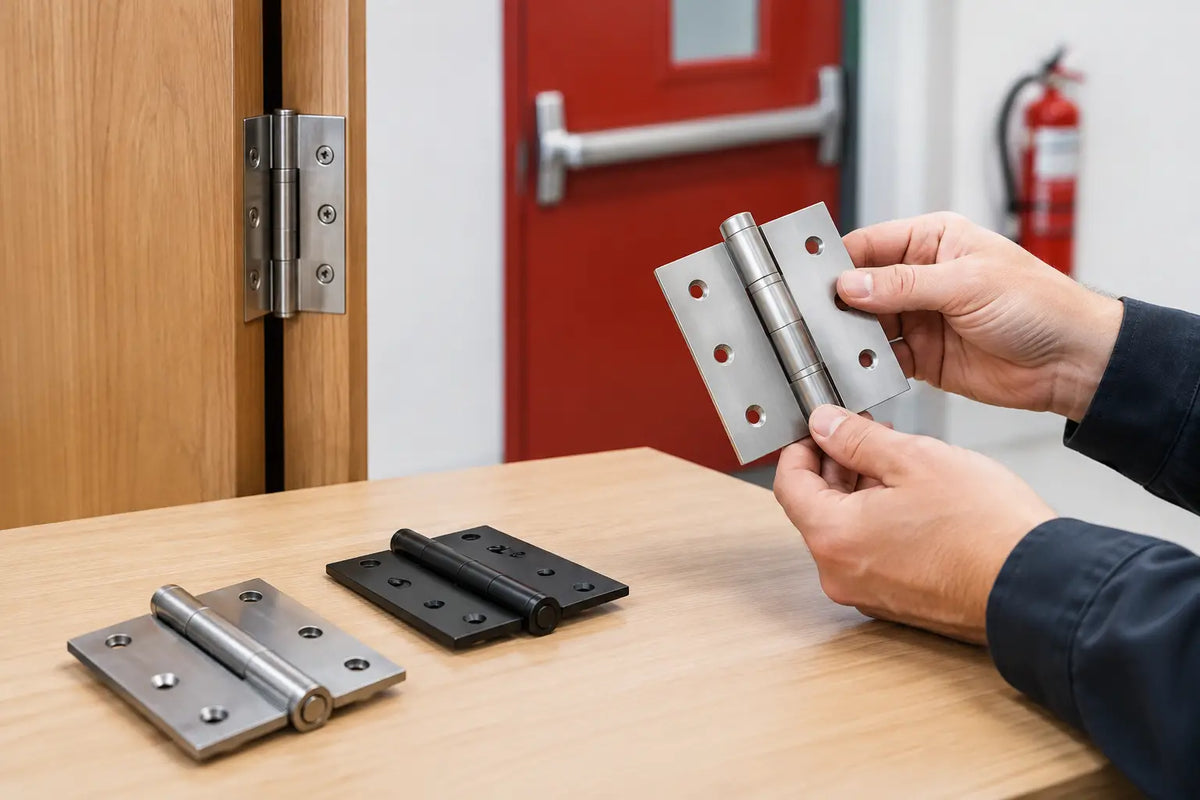
A fire door can only perform as intended when every component is suitable for the complete doorset. Fire door hinges may be relatively small compared with the door leaf and frame, but they carry the door’s weight, help maintain correct alignment and need to perform reliably as part of the fire door assembly. Using standard internal door hinges on a fire-rated door can compromise the performance of the tested doorset.
For homeowners replacing a flat entrance door, landlords upgrading rental properties, or trade customers specifying FD30 fire doors or FD60 fire doors, choosing the correct fire rated door hinges is essential. The hinges should be compatible with the specific door and its tested or certified configuration, rather than selected based on appearance alone.
When choosing fire door hinges, consider more than the fire rating. Door weight, height, width, construction, frame, closing device, hinge size, fixings and finish can all affect suitability. Always check the door manufacturer's requirements and the relevant certification before fitting or replacing hinges on a fire-rated door.
What makes a hinge suitable for a fire door?
A fire door hinge is generally a steel, ball-bearing hinge that has been assessed for use on a fire-resisting door assembly. In a fire, ordinary hinges may distort, lose strength or allow the leaf to drop away from the frame. A suitably rated hinge is designed and tested to retain the leaf in position for the required period, helping the door resist the spread of fire and smoke.
Look for hinges that are fire rated and supported by relevant test evidence or certification for the application in question. Many quality hinges are tested to BS EN 1935, the standard covering single-axis hinges, and are supplied with a classification showing their grade and suitability. Grade 13 hinges are commonly specified for fire doors, but the grade alone should not be treated as a universal answer. The door manufacturer’s installation instructions and fire test evidence take priority.
The hinge must be compatible with the complete assembly. That includes the door leaf, frame material, intumescent strips, latch or lock, closer, glazing where fitted, and the fixing method. A fire door is not simply a fire-rated leaf with any hardware attached.
Fire door hinges: start with the door specification
The first question is whether you are fitting an FD30, FD60 or another rated door. An FD30 door is designed to provide 30 minutes of fire resistance, while an FD60 door is designed for 60 minutes when correctly specified and installed. As the door becomes larger, heavier or carries a higher rating, hinge requirements often become more demanding.
Check the label, plug or documentation supplied with the door or doorset. This should identify the fire rating and point to the approved hardware requirements. Pre-assembled fire door sets simplify this part of the process because the compatible leaf, frame, seals and ironmongery are specified together. For a separately supplied door leaf and frame, careful checking is essential before ordering hardware.
Do not assume that a hinge marked as suitable for FD30 is automatically suitable for every FD60 installation. Equally, a hinge that has the correct fire performance may not have enough load capacity for a particularly tall, wide or solid-core door. The product specification should cover both fire use and the door weight it will carry.
Door size and weight affect hinge quantity
Three hinges are common on many standard fire doors, but this is not a fixed rule for every installation. A heavy solid-core leaf, a tall commercial door, frequent-use entrance door or door fitted with a closer may require four hinges. Some specialist doorsets have their own tested hinge arrangement that must be followed exactly.
Adding hinges can seem like a sensible safety measure, yet it should not be done without reference to the manufacturer’s guidance. Changing the number, size or position of hinges can move away from the tested configuration. The practical answer is straightforward: use the quantity, hinge size and positioning set out in the door or doorset instructions.
Ball bearings, materials and hinge grades
Ball-bearing hinges are widely used for fire doors because they provide smoother movement and are better suited to carrying heavier leaves than basic washered hinges. They can also reduce wear in high-traffic settings such as communal corridors, offices and commercial premises.
Steel is the usual choice for fire-rated hinge construction. Stainless steel is particularly useful where corrosion resistance is required, including external locations or buildings exposed to damp conditions. Brass and decorative finishes can be suitable only where the product is specifically rated and evidenced for the fire door application. Never select a hinge solely because its finish matches the handles.
A product’s grade under BS EN 1935 indicates factors such as durability, door mass and suitability for use on fire or smoke doors. It is helpful when comparing products, but it does not replace project-specific compatibility. A Grade 13 hinge with the correct evidence is a familiar choice for many UK fire door applications, provided it meets the door manufacturer’s requirements.
Hinge size, position and fixings matter
Hinges need enough leaf height, width and knuckle strength to support the door without sagging. Common sizes such as 102 x 76 mm may suit many standard internal fire doors, but there is no one-size-fits-all specification. A heavier FD60 door may require a larger or heavier-duty hinge.
Correct positioning is equally important. Hinges are normally set close to the top and bottom of the door, with a third hinge positioned to support the leaf effectively, but dimensions should follow the door manufacturer’s instructions. Incorrectly positioned hinges can cause binding, uneven gaps or premature wear. Those defects can stop a fire door from closing fully.
Use the correct number and type of screws supplied or specified with the hinge. Substituting short, lightweight or unsuitable screws is a common fitting mistake. The screws must achieve a secure fixing into the door and frame materials without splitting timber or damaging the hinge recess. Where intumescent hinge pads or liners are required by the test evidence, fit them exactly as instructed.
Intumescent protection around hinges is not automatically required in every situation, so avoid treating it as an optional upgrade or a universal rule. It depends on the tested doorset specification. These materials expand in heat to help close gaps around ironmongery, but their effectiveness relies on correct product selection and installation.
Matching safety requirements with the right finish
Fire-rated hardware does not have to disrupt the look of a property. Hinges are available in finishes including satin stainless steel, polished stainless steel, satin chrome, polished chrome, black and antique brass-effect options. This makes it possible to coordinate hinges with handles, latches, closers and other ironmongery across a renovation or new-build scheme.
The order of decision-making matters. First select a hinge that meets the technical specification. Then choose the finish from the compliant options. This is especially relevant for black internal doors, period-style renovations and projects where matching architectural ironmongery is a visible part of the design.
For exposed or humid locations, consider maintenance as well as appearance. A finish that looks right in a dry bedroom may not be the best choice for an external door or a regularly cleaned communal entrance.
Fitting is part of fire door performance
Even correctly specified fire door hinges cannot compensate for a poorly fitted door. The leaf should sit square in the frame and close freely onto the latch without being forced, sticking on the floor or catching at the head. Consistent gaps around the leaf are needed for the seals and door to perform as designed.
If a door is fitted with a self-closing device, check that it closes from any open position and fully engages the latch. A door wedged open, dragging on the floor or failing to latch is not providing its intended protection. Where a fire door installation is part of regulated work or a higher-risk building, use a competent installer who understands the relevant project requirements.
Avoid trimming a fire door, altering hinge recesses substantially or replacing hardware without checking the manufacturer’s permitted limits. Small site changes can affect certification and fire performance. When in doubt, retain the documentation for the door and hardware, then confirm the approved specification before work begins.
Routine checks keep hinges working properly
Hinges deserve attention during regular fire door inspections. Open and close the door several times, looking for rubbing, loose screws, excessive movement at the hinge knuckle or a leaf that has dropped out of line. Check for signs of corrosion, damage or paint buildup that restricts movement.
A small adjustment made early can prevent a larger problem later. However, if hinges need frequent tightening, the door is sagging, or the leaf will not close and latch, investigate the cause rather than repeatedly making minor adjustments. The issue may be the frame, closer, fixings or an unsuitable hinge specification.
When replacing hinges, change them like for like unless the door manufacturer confirms an alternative. Replacing only one hinge with a different model can alter the way the door hangs and may take the assembly outside its tested arrangement.
Choosing fire door hardware is a specification decision, not just a finishing touch. Start with the door’s fire rating and test evidence, confirm the load and usage demands, then select a compatible hinge in a finish that suits the project. That approach keeps the installation looking right while giving the door the support it needs when it matters most.