
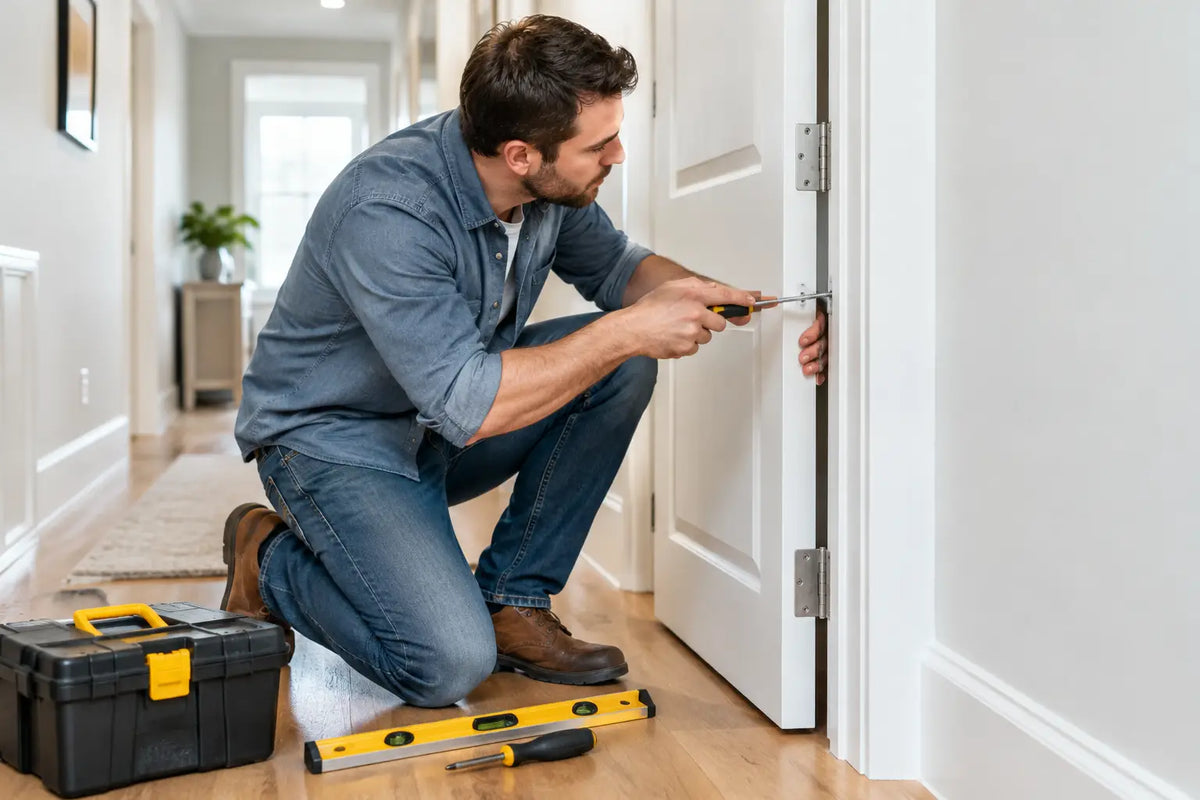
A door that catches every time it closes is more than an everyday annoyance. A sticking door can mark flooring, damage the frame, strain hinges and, in the case of a fire door or external door, affect how the complete door assembly performs. The good news is that most homeowners and tradespeople can fix a sticking door once they identify exactly where it is binding, rather than immediately reaching for a plane.
Before You Fix a Sticking Door, Find the Cause
Close the door slowly and watch the gap around all four sides. A consistent narrow gap usually points to a door that has swollen with moisture. A gap that is tight at the top or bottom on the hinge side is more likely to be a hinge or frame issue. If the door closes into the frame but needs force to latch, the problem may be the latch, keep or strike plate instead.
Look for fresh scuff marks on the door edge, frame, threshold or floor. A sheet of paper can also help: slide it around the perimeter while the door is nearly closed. Where the paper jams is where the clearance has disappeared.
This diagnosis matters because the right repair depends on the door type. A lightweight internal hollow-core door can often be adjusted or lightly planed. A veneered oak door needs more care to avoid breaking through the finish. A fire door must not be altered casually, as its certified performance depends on the tested door, frame, seals, hinges and gaps working together.
Check the Hinges First
Loose hinges are one of the most common reasons a door drops and rubs on the frame or floor. Open the door, support its weight from underneath with a wedge, then check each hinge screw. Tighten loose screws by hand, taking care not to overtighten and strip the timber.
If a screw simply spins, the hole has enlarged and the hinge is no longer holding securely. For a minor repair, remove the screw, fill the hole with glued timber slivers or a suitably sized hardwood plug, allow the adhesive to cure, then drill a pilot hole and refit the screw. On a heavier solid-core, external or fire-rated door, it may be appropriate to use longer screws that reach sound timber behind the frame, but only where this is compatible with the frame construction and door specification.
Check for worn, bent or poorly aligned hinges as well. A door that has been fitted with insufficient hinges may sag over time. Standard internal doors commonly use three hinges, while heavier doors and fire doors often require three or more certified hinges of the correct grade. Replacing hinges can improve operation, but fire door hardware should always match the relevant fire-door specification.
When hinge adjustment is enough
If tightening the hinges lifts the latch side clear of the floor and restores an even gap, stop there. There is no value in removing material from a door that is correctly sized once the hinges are secure. This is especially relevant with finished doors, where cutting and refinishing creates additional work and can affect the appearance of the edge.
Look for Seasonal Swelling and Humidity
Timber doors naturally react to changes in moisture. During wet or humid weather, an unfinished edge can absorb moisture and swell. A door may stick in winter yet operate perfectly after a dry spell, particularly in older properties with variable heating and ventilation.
First, make sure the room is adequately ventilated and that there is no leak around an external opening, bathroom or plumbing run. If the door has only recently started binding, allow the property to dry before making permanent alterations. Planing too early can leave an unsightly oversized gap when the timber contracts again.
Inspect the top, bottom and hinge edges of the door. These areas are sometimes missed when a door is decorated, but they need a suitable finish to limit moisture uptake. Once the cause is resolved, seal any freshly exposed timber with a compatible primer, paint, lacquer or oil system. Match the finish to the door material and manufacturer guidance, particularly for oak veneer, pre-finished doors and exterior products.
Plane the Door Only Where It Is Catching
When the hinges are sound and the door is genuinely too tight, controlled trimming is the practical solution. Mark the binding area precisely using a pencil. Remove the door from its hinges and place it on stable trestles or a protected workbench.
Take off small amounts at a time. A sharp hand plane offers good control for minor adjustments, while a powered planer is quicker but easier to overdo. Work with the grain where possible, check your progress regularly and avoid taking material from more of the edge than necessary. A few millimetres can make a substantial difference.
For a door rubbing on carpet, first confirm whether the floor finish has changed. New carpet, underlay, engineered flooring or tiles can all reduce the clearance at the bottom. Trimming the bottom edge is often appropriate, but allow enough clearance for normal movement and ventilation requirements. The correct gap varies by door type and setting, so do not assume that a large gap is harmless.
After planing, lightly sand the cut edge and refinish it before rehanging the door. This protects the timber and gives a cleaner result. If the door is veneered, use particular restraint: the veneer layer is thin, and aggressive planing can expose the core beneath.
Adjust a Latch That Is Catching
A door can feel as though it sticks when the leaf itself has adequate clearance but the latch is striking the keep plate. Check whether the latch lines up with the opening in the strike plate. A witness mark around the opening, or a latch that clicks against metal before engaging, usually confirms the problem.
Start by tightening the handle and strike-plate screws. If the frame or door has moved slightly, loosen the strike plate and reposition it by a small amount. You may need to file the opening carefully where the adjustment required is minimal. Do not remove excessive metal, as this can leave the latch loose and make the door rattle.
A poorly operating latch can also be caused by a loose handle, a damaged spring cassette or an incorrectly fitted tubular latch. If the latch bolt does not retract smoothly, replacement is usually more reliable than trying to force a worn mechanism back into service. Choose hardware suited to the door weight, use and finish, and ensure bathroom locks, privacy sets or external locking products meet the requirements of the location.
Take Extra Care With Fire Doors
Do not treat an FD30 or FD60 fire door like an ordinary internal door. Fire doors rely on controlled perimeter gaps, correct intumescent or smoke seals, compatible hinges, a suitable self-closing device where required, and a frame that has been installed as part of the tested system. Excessive planing can create a gap that allows smoke and fire to pass sooner than intended.
If a fire door is sticking, begin with simple checks: look for loose hinges, damaged seals, a failed closer or debris in the frame. Never plane through intumescent strips or remove them to make the door shut more easily. If the leaf is swollen, the frame is distorted, or material needs to be removed from a fire door edge, seek advice from a competent fire-door professional. The right outcome is a door that both closes freely and continues to provide its intended protection.
The same caution applies to communal entrance doors, flat entrance fire doors and commercial fire doors. These are not suitable candidates for trial-and-error repairs, particularly where building management, insurance or compliance responsibilities apply.
When the Frame or Floor Is the Real Problem
Not every sticking door is at fault itself. Settlement, movement in an older property, a swollen timber frame or an uneven floor can all alter the opening. Check whether the frame is visibly out of square and whether the door binds along a long section rather than at one local point. If it does, repeatedly shaving the door may conceal a larger installation issue.
For external doors, inspect the threshold, weather seals and drainage paths. A warped door, damaged threshold or swollen frame can lead to draughts and water ingress as well as poor operation. Replacement components or a new pre-assembled doorset may be the more dependable option when several parts have deteriorated together.
A properly fitted door should close without force, latch securely and retain sensible, even clearances. Start with the hinges, identify the exact contact point and remove only what is necessary. That measured approach protects the door, the finish and, where relevant, the safety performance that the assembly was designed to deliver.
For more information about our interior or exterior doors or door accessories, give us a call at 01603 622261 and speak to a member of our expert team today, or email us at sales@doorsuppliesonline.co.uk. We look forward to hearing from you.