
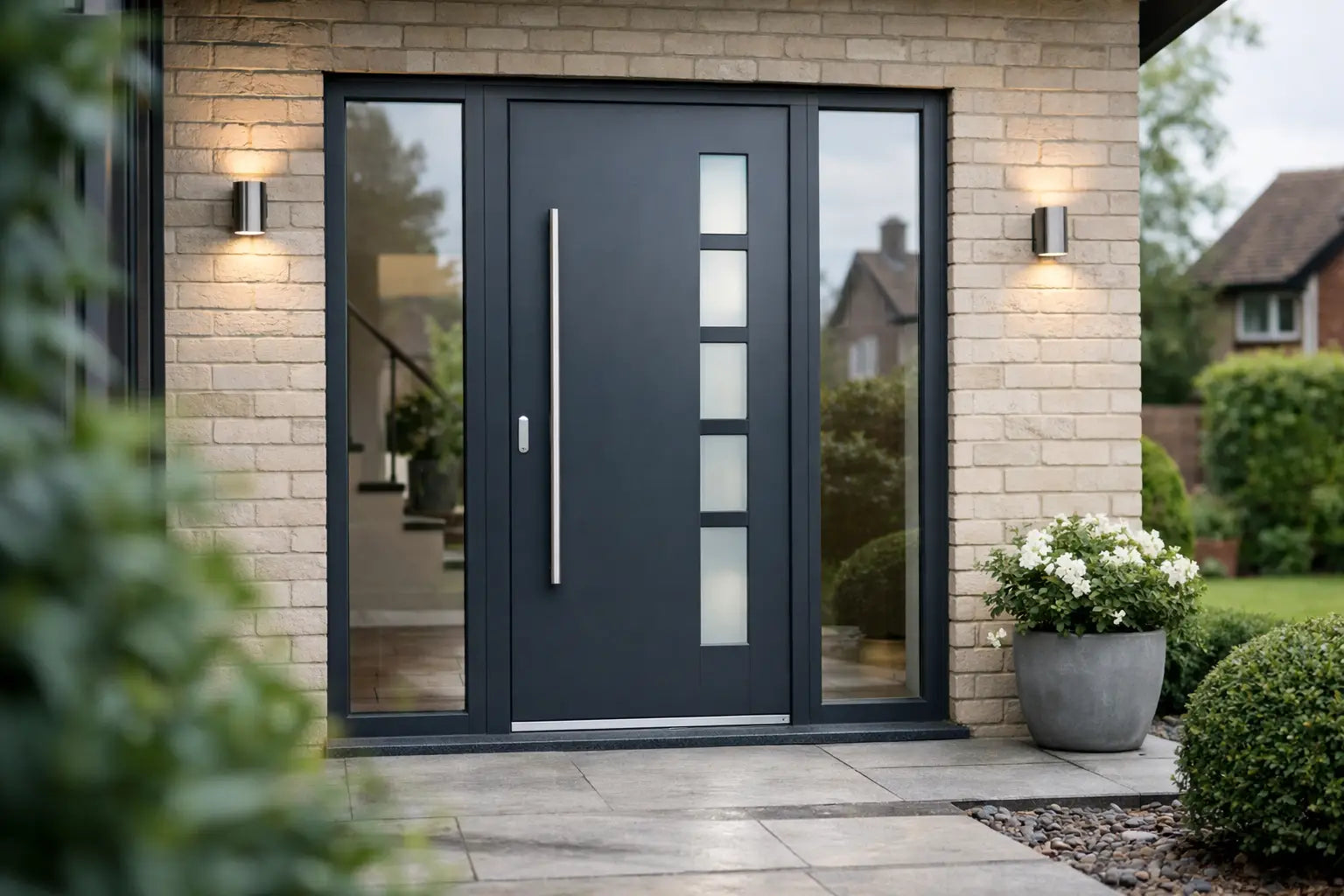
A front door has to do more than look smart from the pavement. It must cope with rain, temperature changes, daily use and the security expectations of a modern home. The main aluminium front door benefits are its combination of slim contemporary styling, dependable strength, low upkeep and the potential for excellent thermal and security performance when the whole door set is specified correctly.
For homeowners replacing a tired timber or uPVC entrance door, and for developers seeking a consistent finish across several properties, aluminium offers a high-specification option without making the entrance feel heavy or over-designed. It is not automatically the right choice for every project, however. Size, exposure, budget, glazing and installation all affect the final result.
Why aluminium suits a modern entrance
Aluminium is strong for its weight. That allows manufacturers to create wider panels, taller doors and larger glazed sections without the bulky sightlines often associated with other materials. A crisp frame, flush panel and a large vertical glazing section can bring more natural light into a hallway while retaining a clean, architectural appearance.
Design choice is another major advantage. Powder-coated aluminium is available in popular finishes including anthracite grey, black, white and a broad range of RAL colours. Some door designs also combine aluminium with textured panels, decorative grooves or wood-effect finishes. This makes it easier to coordinate an entrance with contemporary windows, a black garage door, exterior cladding or traditional brickwork.
The finish should be chosen with the property in mind. A bold black door can suit a modern extension or rendered façade, while softer grey, green or heritage-inspired tones may sit more comfortably on a period renovation. Viewing a colour sample outdoors is sensible, as daylight can make a noticeable difference to its appearance.
Aluminium front door benefits for security
The material itself is only one part of door security. A secure entrance depends on the complete assembly: the frame, hinges, locking system, cylinder, glazing, reinforcement and professional fitting. A well-specified aluminium door set can provide a very high level of protection because the frame and sash are designed to work together under force.
Look for a multi-point locking system that engages at several points around the frame rather than relying on a single central lock. Security hinges, anti-lift features and a quality cylinder are equally important. If the door includes glazed areas, toughened or laminated safety glass should be considered, particularly where the glass is close to the lock or could provide easy access after breakage.
For projects with a defined security requirement, check whether the selected door set has been tested to the relevant standard, such as PAS 24. This is particularly relevant to new-build work, flat entrances and developments where a specification may require evidence of performance. Do not assume that every aluminium external door has the same rating simply because it is aluminium.
Better insulation comes from the full specification
Older metal doors earned a reputation for feeling cold, but modern aluminium systems are engineered very differently. Quality external doors use thermally broken profiles. These incorporate an insulating barrier between the inner and outer sections of aluminium, reducing the route through which heat can transfer.
An insulated door panel, effective weather seals and correctly specified double or triple glazing also contribute to thermal efficiency. The figure to compare is the whole-door U-value, where available, rather than the performance of the panel or glass alone. A lower U-value indicates less heat loss, but the best option depends on the building, its existing insulation and any Building Regulations requirements that apply to the work.
Glazing needs careful consideration. Larger glass areas can brighten a narrow hall and improve the kerb appeal of the entrance, yet they may affect the overall U-value and privacy. Obscure, satin or patterned glass can let daylight through while limiting views into the home. For an exposed north-facing entrance, a more insulated panel design with a smaller glazed section may be the more practical choice.
Low maintenance without a painted finish
One of the most attractive aluminium front door benefits is the reduced maintenance burden. Unlike a painted timber door, aluminium does not need routine sanding, filling and repainting to maintain its weather-resistant outer surface. This can be particularly useful for busy households, landlords and property managers responsible for several homes.
Routine care is straightforward. Wash the door and frame occasionally with warm water and a mild detergent, then rinse and dry with a soft cloth. Keep drainage channels clear, wipe the seals and follow the hardware manufacturer's guidance for lubricating locks and hinges. Avoid abrasive pads, solvent-based cleaners and strong chemicals, which can damage the coated finish or affect moving parts.
Low maintenance is not the same as no maintenance. Coastal homes, city-centre properties and entrances beside busy roads may need more frequent cleaning because salt, pollution and airborne debris can settle on the surface. If the property is in a particularly exposed location, ask about the recommended coating specification and care routine before ordering.
A long-lasting choice with strong visual value
A front door is one of the most visible upgrades a property can receive. Aluminium can give an older house a sharper entrance and help a new-build feel more considered. Because the material remains stable, it is less prone to swelling, shrinking or warping as the seasons change than timber. That stability can help doors continue to operate cleanly, provided the frame is fitted squarely and the building movement has been properly accounted for.
There is also a sustainability case, although it deserves a balanced view. Aluminium is widely recyclable and can be reused without losing its core material properties. Producing aluminium requires significant energy, so the environmental value of a door depends on factors including recycled content, expected service life, thermal performance and whether it avoids premature replacement. A durable door that is maintained and retained for many years is generally a more sensible purchase than one chosen only for a short-term trend.
The upfront price is often higher than a basic uPVC door and can exceed some standard timber options. That cost may be justified by the design, security specification, finish and lifespan, but it is worth comparing like for like. Check whether the quoted price includes the frame, threshold, glazing, lock cylinder, handles, side panels and delivery. These details can change the true project cost considerably.
Choosing the right aluminium door set
Measurements should never be treated as an afterthought. Establish whether you are replacing a door within an existing frame or ordering a complete pre-hung door set. Measure the structural opening carefully, and allow for fitting tolerances, packers, insulation, sealant and the required threshold arrangement. An outward-opening or inward-opening door also needs enough clear space to operate safely.
Threshold choice matters for both weather protection and access. A low threshold can improve accessibility, but the entrance must still manage wind-driven rain and comply with the needs of the building. Properties on exposed elevations may need a more weather-conscious configuration than a sheltered porch entrance.
Before placing an order, confirm the handing, opening direction, external viewing side, hardware finish and handle height. Consider how the door will be used every day: whether you carry prams through it, need a letterplate, want a digital lock, or need privacy from a public pavement. These practical decisions are easier to resolve before manufacture than after delivery.
For a straightforward replacement or a more technical renovation, Door Supplies Online can help buyers compare aluminium external door styles and the specifications behind them. The aim should be a door that suits the property rather than simply the latest colour trend.
When aluminium may not be the best fit
Aluminium is an excellent option for many entrances, but there are cases where another material may be preferable. A listed building or conservation-area property may require a traditional timber profile or formal approval for any change to the façade. Where a very specific period detail is essential, timber can offer a more authentic visual result.
Budget also matters. If the priority is a basic, cost-effective replacement for a rental property, a quality uPVC door may provide the required weather performance and security at a lower initial price. Conversely, if the project calls for an unusually wide opening, a dramatic glazed entrance or a coordinated modern exterior, aluminium often becomes the stronger candidate.
Choose the door around the opening, exposure and use of the property, then specify the frame, lock, glass and threshold with equal care. That is how an aluminium entrance delivers lasting value rather than simply a good first impression.
For more information about our interior or exterior doors or door accessories, give us a call at 01603 622261 and speak to a member of our expert team today, or email us at sales@doorsuppliesonline.co.uk. We look forward to hearing from you.