
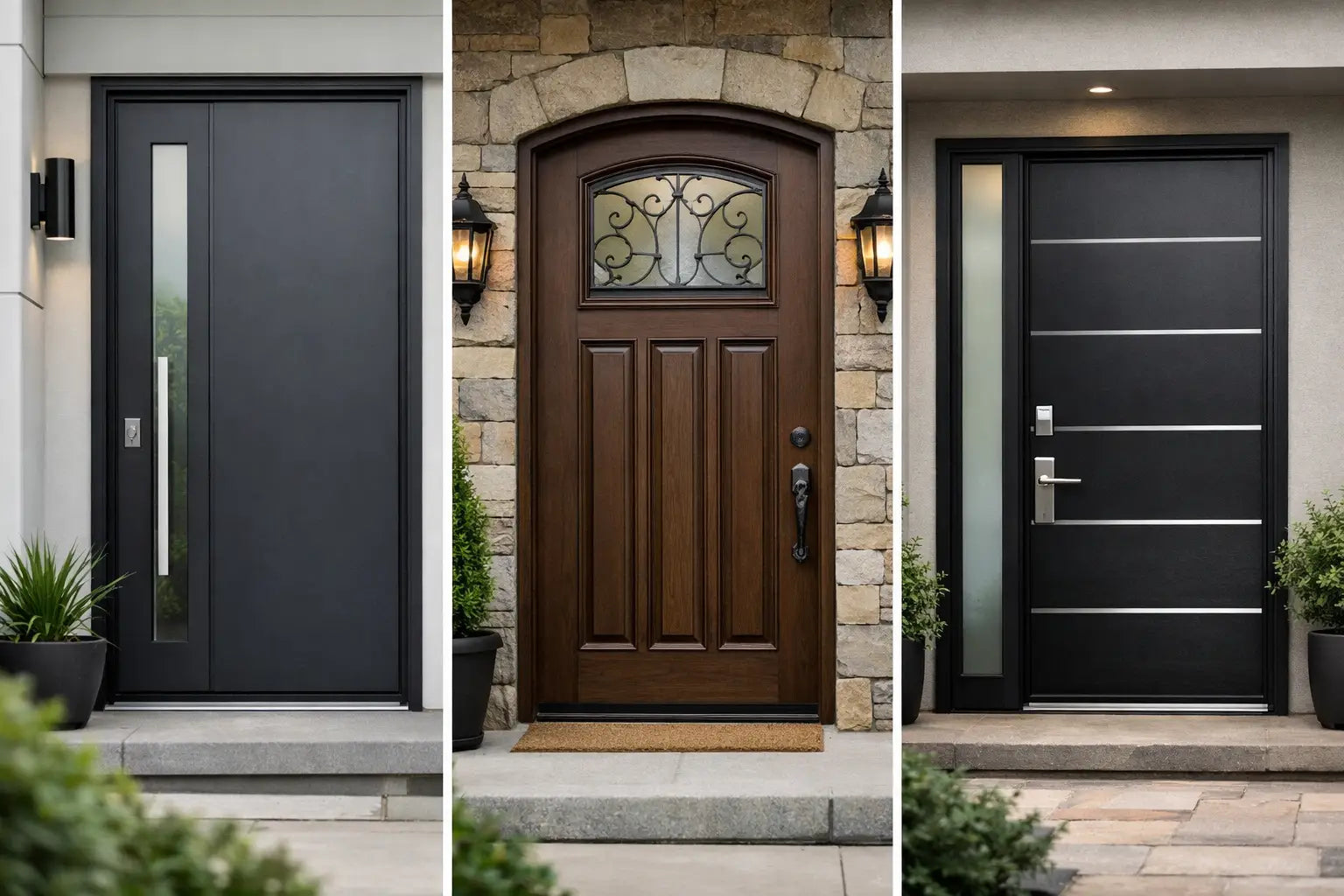
A front door has to perform harder than almost any other element on the exterior of a property. It needs to withstand rain, wind, temperature changes and daily use, create a strong first impression and provide a secure barrier between your home and the outside world. The best entrance doors combine style, security, weather resistance and thermal performance, rather than compromising performance for appearance.
For a straightforward replacement, a well-specified composite front door can provide a practical combination of durability, security and design flexibility. Choosing a colour and finish that complements the brickwork, windows and other exterior features can also improve the overall appearance of the property.
For a contemporary self-build or renovation, an aluminium entrance door may be a better option. Slim profiles, clean lines and large areas of glazing can create a modern entrance while providing the strength required for everyday use. Aluminium is also available in a wide range of colours and finishes, making it suitable for contemporary and architectural projects.
Flat entrances, rental properties and commercial buildings can introduce different requirements, particularly where fire safety is involved. In these situations, a suitable fire-rated entrance doorset may be required, with the door, frame, seals, hardware and other components specified to work together.
When choosing an entrance door, start with the property, location and intended use. Consider security, thermal efficiency, weather performance, fire protection, glazing, maintenance and budget before selecting the style and finish. Specifying the complete doorset correctly will help ensure your new front door looks right while delivering the performance required for the building.
What makes the best entrance doors?
The best door for one property is not automatically the best for another. A sheltered porch reduces exposure to the weather, while a coastal or open-site home needs a finish and construction that can cope with more demanding conditions. A period property may call for a traditional panelled design; a modern extension can carry a wider, more minimal door without looking out of place.
Before narrowing down finishes and glazing, consider four practical factors: security, insulation, weather resistance and size. A good entrance door should be supplied with a suitable frame, reliable locking and compatible hardware. It should also suit the opening available, particularly where you are replacing an older imperial-size door or upgrading a non-standard entrance.
Thermal performance matters too. A poorly performing front door can make a hall feel cold and draughty, even where the rest of the property has been improved. Look at the complete construction rather than the face finish alone. The door leaf, frame, seals, threshold and glazing all affect how the entrance performs.
Best entrance door materials for UK properties
Composite doors: a practical all-round choice
Composite entrance doors are a popular choice for homes because they combine a tough outer skin with an insulated core and low-maintenance finish. They are available in traditional and contemporary styles, including solid, glazed and cottage-inspired designs, with a wide choice of colours, woodgrain effects and decorative glass.
For many replacement projects, composite is the sensible middle ground. It offers strong day-to-day durability without the regular finishing work associated with natural timber. However, it is still important to check the full specification. The quality of the frame, locking system, hinges, weather seals and glazing can vary considerably between door ranges.
Aluminium doors: clean lines and long-term durability
Aluminium entrance doors suit contemporary homes, extensions and projects where a sharp architectural finish is the priority. They can accommodate bold colours, sleek pull handles, large glazed elements and wider formats that would be less practical in some other materials.
Aluminium is naturally stable and requires little routine maintenance beyond cleaning. It is particularly useful where you want to coordinate an entrance door with aluminium windows, bi-fold doors or sliding patio doors. The trade-off is usually cost: a quality aluminium door can command a higher budget, especially when specified with sidelights, specialist glazing or bespoke dimensions.
Timber doors: character with a maintenance commitment
A timber entrance door can give a property warmth and detail that manufactured materials cannot always replicate. Oak and engineered timber options work especially well on traditional houses, cottages and heritage-style renovations. They can also be painted in a chosen colour for a more tailored look.
Timber needs proper protection from the elements. A door under a porch is likely to have an easier life than one facing prevailing weather with no shelter. Regular inspection and re-finishing are part of ownership, so timber is best chosen by buyers who value its natural appearance and are prepared to maintain it correctly.
Steel doors: strength for specific applications
Steel entrance doors are often selected for commercial premises, utility areas, communal locations and high-security applications. They offer strength and can be specified for demanding environments, but the exact door construction matters. A steel door for a commercial back entrance is not necessarily the right visual or thermal choice for the front of a family home.
Where appearance is as important as security, consider the overall design, including the frame, threshold and ironmongery. A heavy-duty door can look purposeful and smart when correctly specified, but it should complement the building rather than feel like an afterthought.
Security starts with the complete door set
A secure front door is more than a strong slab. The frame must be fitted correctly, the locks need to suit the door type, and the hinges, keeps and hardware must all work as a system. A high-specification lock cannot compensate for poor installation or an unsuitable frame.
For homes, look for multipoint locking, quality cylinders and security hardware appropriate to the door. If you are comparing options for a new-build, development or flat scheme, certification such as PAS 24 may be relevant. PAS 24 is commonly specified where enhanced security is required, but it should be selected as part of the wider project specification rather than treated as a badge alone.
Glazing deserves equal attention. Glass near locks or handles should be specified with security and safety in mind, while obscure glass can maintain privacy in a busy street. Side panels and fanlights are an effective way to bring daylight into a dark hallway, but they should be chosen with the same care as the main door leaf.
Fire-rated flat entrance doors need a different approach
For flat entrances and certain multi-occupancy buildings, fire performance can be a central requirement. FD30 and FD60 doors are designed to provide fire resistance for specified periods when correctly manufactured, installed and maintained as a complete system.
This is not an area for mixing individual components without checking compatibility. A fire-rated door leaf, frame, intumescent strips, smoke seals, hinges, closer, lock and letterplate may all form part of the tested specification. In many cases, a pre-assembled fire door set makes purchasing and installation more straightforward because the core elements are supplied as a matched system.
Flat entrance fire doors may also need to meet security requirements alongside fire performance. Always establish what is required by the building’s responsible person, fire risk assessment, architect or building control team before ordering. Choosing a door based on appearance alone can create expensive delays later in the project.
Get the size, handing and hardware right
Measuring is the stage where otherwise good door choices can go wrong. Measure the structural opening carefully and decide whether you are buying a door slab, frame and door separately, or a complete pre-hung doorset. A pre-assembled set can save fitting time and reduce the risk of incompatible parts, particularly on projects with several matching entrances.
Check the opening direction too. Consider where the handle will sit, whether an inward-opening door clears internal furniture and whether an outward-opening option is appropriate for the site. Select letterplates, knockers, viewers, pull handles, and escutcheons early, as they affect drilling positions, security, and the finished look.
Plan colour coordination rather than leaving it until checkout. A black, anthracite grey or deep green door can create a strong modern entrance, while oak and painted timber suit more traditional schemes. Match the hardware finish to external lighting, house numbers and any visible gate furniture for a more considered result.
A front door is a long-term purchase, not a quick decorative update. Choose the specification that suits the property’s exposure, security needs and style, then buy the complete solution with confidence. Door Supplies Online can help make that process clearer, whether you need a single replacement entrance door or a more technical doorset for a larger project.
For more information about our interior or exterior doors or door accessories, give us a call at 01603 622261 and speak to a member of our expert team today, or email us at sales@doorsuppliesonline.co.uk. We look forward to hearing from you.