
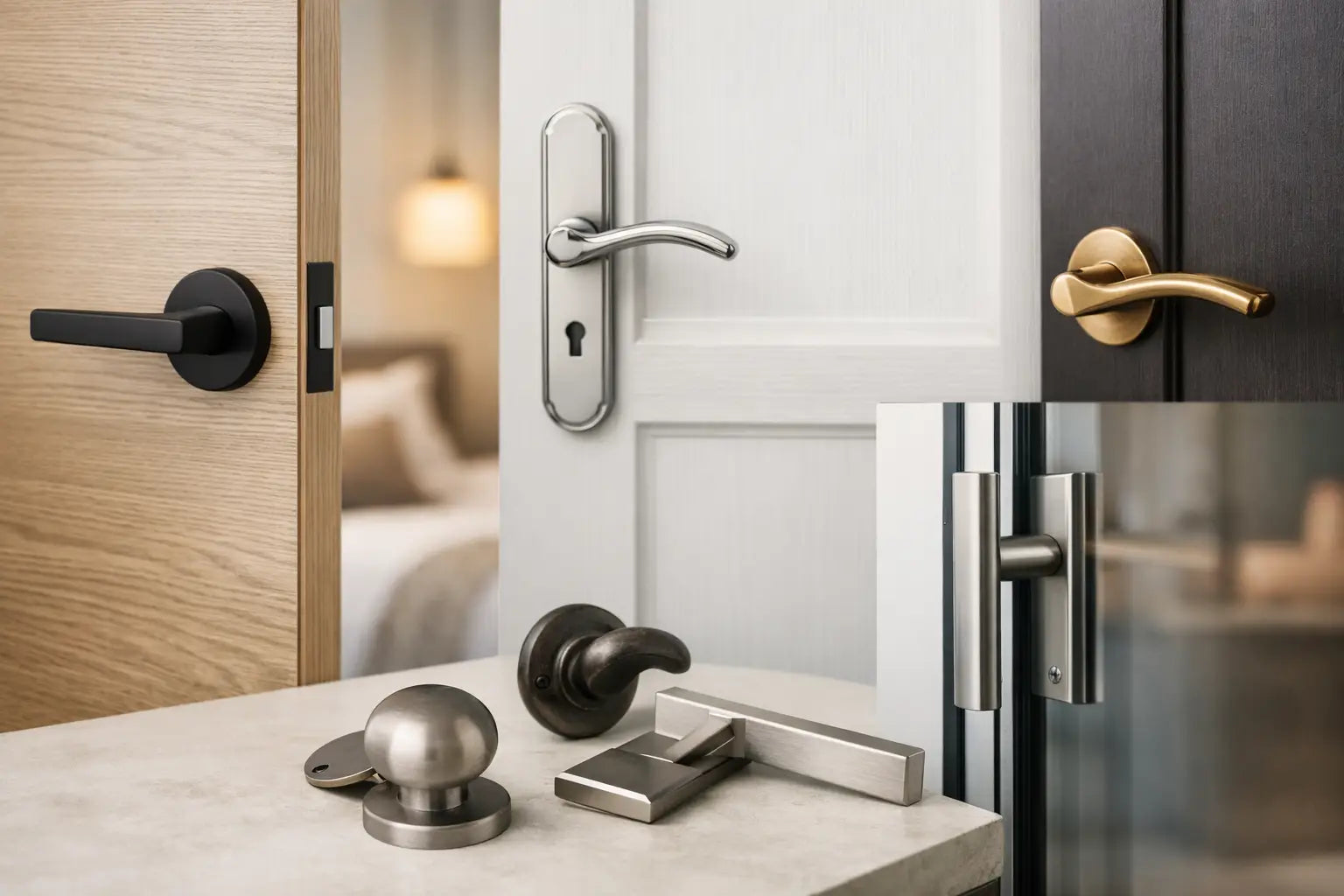
A door can be beautifully crafted, expertly finished and professionally installed, yet still feel incomplete the moment you reach for the handle. Door handles are one of the most frequently used pieces of door hardware, making their design, finish, functionality and specification just as important as the door itself. The right internal door handle or external door handle enhances the overall look of a room, provides lasting comfort in everyday use and ensures compatibility with the door's intended purpose. The wrong choice can detract from the design, feel awkward to operate or fail to meet the performance requirements of fire doors or secure external entrances.
For a simple interior update, choosing a door handle may focus primarily on style and finish. However, for home renovations, new builds, rental properties and commercial developments, factors such as durability, security, accessibility and building regulations become equally important. Whether you're selecting lever door handles, door handles on rose, door handles on backplate or fire-rated door handles, always start by considering the purpose of the door before narrowing down the best design, finish and specification for your project.
Choose door handles by function first
Before comparing brass, black or chrome finishes, decide how each door needs to operate. A passage door between a lounge and a hallway normally requires a latch handle only. A bathroom needs a privacy lock. A bedroom, home office or utility room may need a key lock, depending on the level of privacy or security required.
A lever handle on rose is a popular choice for contemporary interiors. The handle sits on a compact circular or square rose, leaving the lock, latch and bathroom turn as separate items. This creates a clean, flexible look and works particularly well with modern panelled, flush and glazed internal doors.
Lever handles on the backplate combine the handle and keyhole, or handle and bathroom lock, on one longer plate. They suit more traditional properties and are often a practical option when replacing existing hardware, especially if an old handle has left fixing marks or a larger area of discolouration on the door face. Backplates are available in latch, keyhole and bathroom versions, so check that every door has the correct function before ordering.
For cupboards, wardrobes and pocket door systems, knobs, pulls and flush handles may be more appropriate than a conventional lever. Pocket doors need recessed hardware that will not obstruct the door as it slides into its cassette. A projecting handle can prevent the system from operating properly.
Match the handle to the latch and lock
Door furniture is only part of the working set-up. A latch handle needs a tubular latch or mortice latch, while a locking door needs a compatible sashlock, deadlock or bathroom lock. The centre measurement - the distance between the handle spindle and keyhole or turn - must match the lock case when using a backplate.
For lever-on-rose handles, check the spindle size, rose diameter and the depth of the latch. Most domestic internal doors use familiar standard sizes, but assuming compatibility can cause avoidable fitting delays. If you are replacing hardware on existing doors, measure first and compare the details with the product specification.
Style, finish and proportion
Door handles should relate to the door, not compete with it. Slim, squared levers complement contemporary black aluminium-style glazing and minimalist internal doors. Curved levers, aged brass and traditional backplates tend to sit more naturally alongside four-panel, Victorian, cottage and oak designs.
Black handles offer a clear contrast against white primed doors and can create a coordinated look with black hinges, door stops and light fittings. They are equally effective on natural oak, although a heavily grained or character oak door can suit warmer finishes such as antique brass, satin brass or bronze.
Polished chrome remains a useful option for bright, modern interiors, particularly where bathroom taps and accessories are chrome. Satin chrome and brushed stainless steel are more forgiving of fingerprints and everyday marks. Brass has a warmer, more decorative character, but there is a trade-off: the finish must be repeated with enough consistency across the home to look intentional. Mixing polished chrome downstairs with satin brass upstairs can work, but it needs a clear divide rather than a random selection of finishes.
Proportion matters too. A large, statement handle can overwhelm a narrow internal door, while a very small lever may look undersized on a tall or wide door. Consider the handle's overall length, the size of its rose or backplate, and the scale of the room. On double doors, matching lever handles usually give a balanced appearance, although dummy handles or pull handles may be required where one leaf is fixed.
Fire door handles need a different level of care
An FD30 or FD60 fire door is a tested doorset component, not simply a heavier door leaf. Any hardware fitted to it must be suitable for the fire rating and installation method. This includes the latch or lock, hinges, closer, intumescent protection where specified, and the door handles themselves.
Do not select fire door handles on appearance alone. Look for hardware that has been tested or assessed for the relevant fire rating, and confirm it is appropriate for the particular door construction. A fire-rated lever handle may still need a compatible fire-rated latch, correctly sized fixings and intumescent protection behind the rose or backplate where the manufacturer requires it.
The holes drilled for a latch, lock and spindle can affect the door's fire performance if they are positioned incorrectly or made larger than permitted. This is one reason pre-assembled fire door sets can be a sensible choice for projects where speed, consistency and compliance matter. They reduce the amount of site machining required, though installation must still follow the supplied instructions.
For communal, commercial and multi-occupancy buildings, door hardware can have additional requirements. Escape routes may require panic hardware, while self-closing fire doors need handles and latches that allow the door to close and latch reliably. Accessibility also matters: a lever that is easy to grip and operate is generally preferable to a round knob, particularly in shared or public-facing environments.
External doors: security and weather exposure
External door handles have a tougher job than internal hardware. They are exposed to rain, temperature changes and frequent use, and they form part of the security arrangement for the entrance. The handle must be suitable for the door material and locking system, whether that is a timber front door, composite door, aluminium door or steel security door.
Many modern external doors use multipoint locking. In these cases, the handle configuration, cylinder type and fixing centres must match the lock system. A security handle may protect the cylinder, helping to resist common forms of attack, but it needs to be correctly paired with the rest of the door hardware.
Finish is not only an aesthetic decision outside. Choose a product designed for external use and consider the exposure of the property. A sheltered porch places less demand on the finish than a coastal home or an entrance facing prevailing weather. Regular cleaning with a soft cloth and mild soap will help maintain the appearance; abrasive cleaners can damage plated, lacquered and coated finishes.
Small details that make fitting easier
Check door thickness before ordering. Internal doors vary, and rebated pairs, fire doors and external doors may need longer spindles, bolts or specialist fixings. Also consider whether the handle is sprung. A sprung handle has an internal return mechanism and can help support the latch action. An unsprung handle relies more heavily on the latch, so it should be used only with a latch designed to provide adequate spring return.
Plan the complete finish before fitting the first handle. Hinges, latches, locks, bathroom turns, escutcheons, door stops and cabinet furniture do not always need to match exactly, but they should look like part of the same scheme. In a whole-house project, ordering the hardware together is the simplest way to avoid subtle differences between finishes or ranges.
At Door Supplies Online, the most useful approach is to filter hardware by finish, function and application, then check the technical details against the door you are fitting. That is particularly valuable when a project combines standard internal doors with fire doors, pocket doors or a secure external entrance.
A well-chosen handle is felt before it is noticed. Give equal attention to the hand feel, the latch or lock behind it and the door it serves, and the finished result will look considered every time someone opens it.
For more information about our interior or exterior doors or door accessories, give us a call at 01603 622261 and speak to a member of our expert team today, or email us at sales@doorsuppliesonline.co.uk. We look forward to hearing from you.