
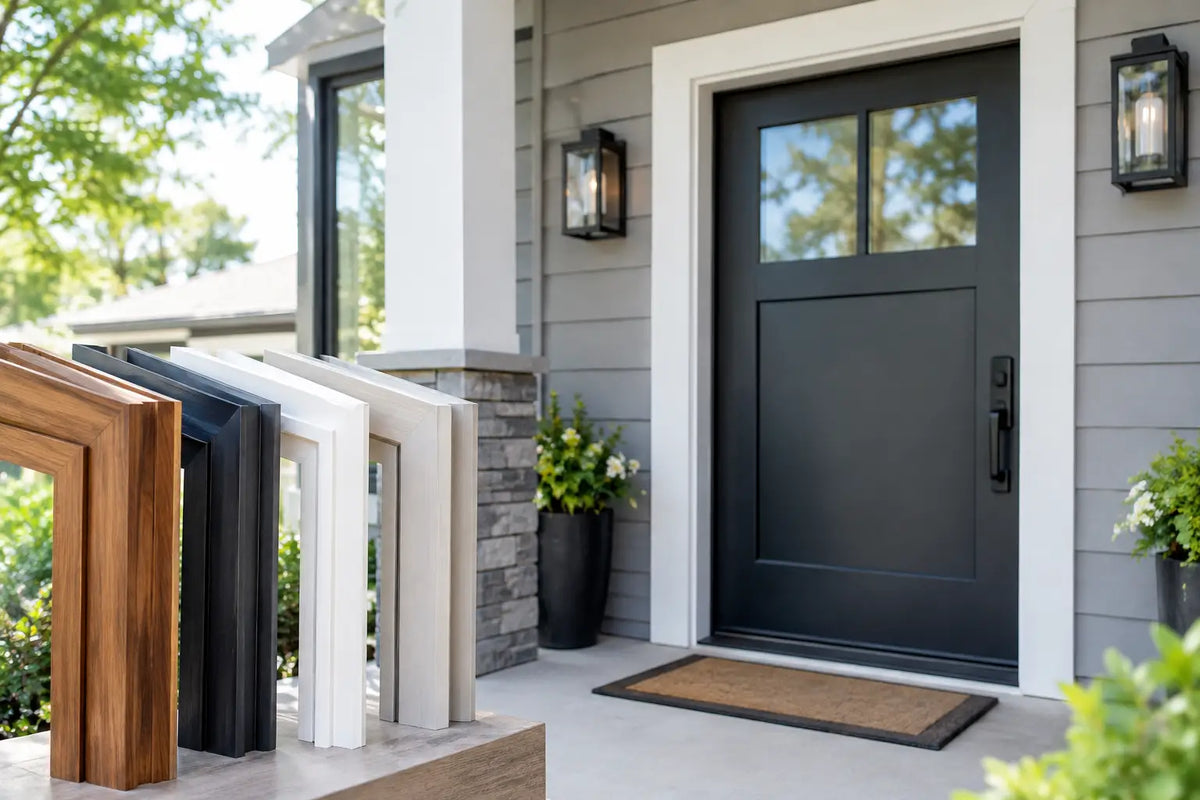
A front door can look perfect in a showroom but still disappoint after installation if it is fitted with the wrong frame. Choosing the right external door frame involves more than matching its appearance to the door. You also need to consider how the complete entrance will perform against rain, temperature changes, security requirements and everyday use.
An external door frame plays an essential role in the overall performance of an entrance door. It supports the door leaf, provides secure fixing points for hinges and locks, and helps create an effective weather seal against draughts and water ingress. Choosing a frame with the correct material, dimensions and specification is therefore just as important as selecting the door itself.
Whether you are replacing an existing entrance, upgrading your home's security or planning a new installation, understanding the different types of external door frames will help you make the right choice. From timber and aluminium to uPVC and composite options, the best frame should complement your door, suit your property and provide reliable performance for years to come. A properly specified and installed external door frame also helps ensure smooth operation, effective weather protection and a secure, well-finished entrance.
Start with the opening, not the door style
Measure the structural opening carefully before narrowing down materials or finishes. This is the opening in the wall, rather than the size of the existing door leaf. Width, height and depth all matter, as does the condition of the surrounding brickwork, render or timber structure.
An external frame needs room for packers, mechanical fixings, sealant and any threshold or cill arrangement. Ordering to the exact brick opening size leaves no practical tolerance for installation and can lead to trimming, poor seals or an uneven reveal. A joiner or competent installer should confirm the required overall frame size, especially in older properties where openings are rarely perfectly square.
Also establish whether you are replacing a door and frame together or retaining an existing frame. Reusing a sound hardwood frame can work when the new door is made to suit it, but it is often false economy if the frame is twisted, damp-damaged or lacks adequate weathering. A new door set or matching frame-and-door combination gives better control over fit, seals and ironmongery positions.
Know the difference between door size and frame size
A door leaf measurement does not tell you the overall footprint of the installation. The frame adds its own width around the leaf, while a threshold may add height below it. If sidelights, fanlights or glazed panels are involved, the full assembly needs to be measured and specified as one unit.
This point is particularly relevant for made-to-measure entrance doors. Confirm whether dimensions are quoted as structural opening, frame outer size or leaf size before placing an order. It prevents one of the most costly mistakes in external joinery: receiving a well-made product that simply cannot be fitted correctly.
Choose a frame material that suits the exposure
The best material depends on the door construction, the property style, the location and the amount of weather the entrance receives. A sheltered porch places very different demands on a frame than a coastal front elevation exposed to driving rain.
Timber frames for traditional character and flexibility
Timber remains a popular choice for external door frames, particularly with timber, engineered oak and traditional panelled doors. It offers warmth, can be machined for particular moulding profiles and is easier to repair locally than many manufactured alternatives. A painted softwood frame can be a cost-effective option when it is properly primed, sealed and maintained.
For a more demanding location, hardwood offers greater natural durability, although it comes at a higher initial cost. Whichever timber is selected, check that the frame is suitable for external use and that all cut ends, joints and fixing points will be protected during installation. Water entering unsealed end grain is a common cause of early failure.
Timber needs periodic attention. Painted finishes should be inspected for cracking or worn edges, while stained or oiled products need maintenance in line with the coating system. That commitment is worthwhile for many period homes, but it should be factored into the buying decision rather than treated as an afterthought.
uPVC, aluminium and steel for low-maintenance performance
uPVC frames are generally chosen alongside uPVC external doors where thermal efficiency, value and minimal upkeep are priorities. They are practical for many homes, although the available profiles and colours may not suit every architectural style.
Aluminium frames offer slim sightlines, excellent stability and a strong choice of contemporary powder-coated finishes. They are particularly effective with glazed entrance doors, large side panels and modern extensions. Look for thermally broken profiles, which reduce the route for heat to transfer through the metal.
Steel frames are usually specified for commercial, security-led or specialist residential applications. They provide high strength and can support demanding door configurations, but the full assembly must be designed to manage thermal performance, corrosion protection and appropriate hardware. Material alone does not guarantee quality - the seals, threshold, glazing and installation are equally significant.
Match the frame to the door and the ironmongery
A frame should be selected as part of a complete entrance system. Its rebate depth, hinge preparation, lock keep positions and weather seals must suit the door thickness and construction. A heavy solid-core or security door needs a frame and hinges capable of supporting its weight without dropping over time.
This is also where pre-assembled door sets can simplify the process. The door is hung in its compatible frame and supplied with factory-set clearances, subject to the product specification. For homeowners and trade installers, that can reduce site work and remove uncertainty around hinge positions or rebated details. It is not always the right route for a non-standard opening, but it is a strong option where speed and dependable fit are priorities.
Think about the hardware early. Multipoint locking, security hinges, letterplates, door closers and restrictors all affect the frame. For example, locking keeps must be accurately positioned and securely fixed into a suitable reinforcement or solid timber section. Decorative handles may catch on narrow glazed side panels, while a projecting letterplate may be unsuitable for a door exposed to severe weather.
Prioritise weathering at the threshold and joints
The lower part of an external doorway does the hardest work. Rain runs down the face of the door, wind drives water towards gaps, and shoes bring in grit and moisture. A proper external threshold should direct water away from the property while maintaining a practical step-over and, where required, suitable accessibility.
A cill can project beyond the outer face of the wall to throw water clear. Its size and profile depend on the wall construction, render depth and frame design. On a replacement project, check that the new cill will not bridge a cavity, obstruct drainage or sit awkwardly against existing paving.
Weather seals around the head and jambs should compress evenly when the door closes. Too little compression can cause draughts and water ingress; too much can make the door difficult to latch. Good fitting is therefore as important as the quality of the seals themselves. Sealant around the outside of the frame is a final weather barrier, not a substitute for correctly designed drainage and flashings.
Security and compliance are system decisions
For an external entrance, security is determined by the combined performance of the door, frame, locks, hinges, glazing and installation. A strong door in a lightly built or poorly fixed frame creates a weak point. Ask how the frame is reinforced, where locks engage and whether hinges include security features where appropriate.
New dwellings may need to meet requirements under Part Q of the Building Regulations in England, while specific developments, insurers or local requirements can call for products tested to recognised security standards such as PAS 24. These requirements apply to the relevant door set or assembly, not a collection of individually impressive components. If compliance is needed, ensure the exact configuration being ordered has the required evidence.
Fire performance calls for the same care. An external door is not automatically a fire door, and where a fire-rated entrance door is required, the compatible frame, seals, hardware and installation detail must be specified together. FD30 and FD60 products should never be treated as ordinary doors with a few additional strips added on site.
Do not overlook finish, proportion and maintenance
The frame is always visible. Its width affects how substantial the entrance feels, and its finish can either coordinate with the door or create a deliberate contrast. Black aluminium can sharpen a contemporary glazed frontage; painted timber can complement sash windows; oak can bring character to a more traditional property.
Consistency matters around the whole opening. Consider the internal reveal, architrave or lining, external mouldings, cill, letterplate and house numbers before committing to a finish. A frame that works in isolation can look out of place once these adjoining details are installed.
Finally, be realistic about maintenance. Timber rewards periodic care, aluminium and uPVC largely need cleaning and seal checks, and any moving parts require occasional adjustment or lubrication. Choosing a frame that suits both the property and the level of upkeep you are prepared to give it is usually the decision that continues to look right long after fitting day.
For more information about our interior or exterior doors or door accessories, give us a call at 01603 622261 and speak to a member of our expert team today, or email us at sales@doorsuppliesonline.co.uk. We look forward to hearing from you.