
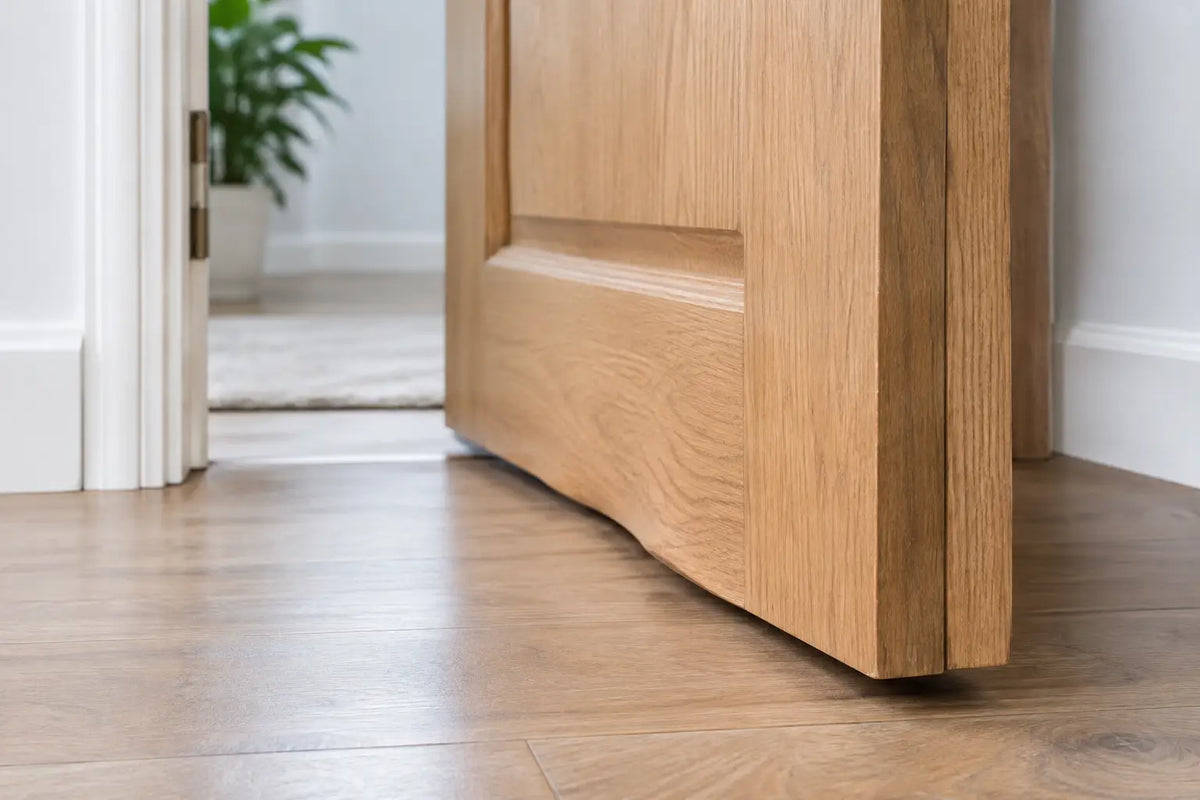
A door that suddenly catches at the top, rubs against the frame or refuses to latch properly may be showing signs of swelling. Understanding the common causes of door swelling is essential before attempting repairs, sanding the edges or replacing the door. In most cases, swelling is linked to excess moisture, changing humidity levels or insufficient fitting clearance. Identifying the underlying problem will help you choose the right solution and prevent further damage.
Timber is a naturally hygroscopic material, meaning it absorbs and releases moisture from the surrounding air. As humidity increases, a wooden door can absorb moisture and expand, causing it to stick against the frame or become difficult to open and close. Some seasonal movement is normal, particularly in older UK homes and rooms where temperature and humidity levels fluctuate throughout the year.
However, persistent wooden door swelling can indicate a more serious problem, such as water ingress, poor ventilation, inadequate installation clearance or an unsuitable door specification for its location. External doors and internal doors in kitchens, bathrooms and utility rooms can be particularly affected by moisture exposure.
Understanding why doors swell, recognising the early warning signs and knowing how to fix a swollen door can help maintain smooth operation, protect the timber and extend the life of your door.
The main door swelling causes
High humidity and seasonal movement
Warm, damp air raises the moisture content of timber. This is particularly noticeable in bathrooms, utility rooms, kitchens and poorly ventilated properties, but it can affect internal doors anywhere during prolonged wet weather. The edges of the door may bind against the frame, often at the top or on the latch side, before the timber settles again in drier conditions.
Solid timber doors generally move more than engineered doors because their construction contains continuous timber sections. Engineered oak, pine and painted doors are made with a more stable core or layered construction, but they are not immune to movement. They still need a suitable finish on every face and edge to limit moisture uptake.
A door that only sticks for a few weeks in winter may simply need better ventilation and correctly maintained finishes. A door that remains tight throughout the year needs closer inspection.
Water reaching the door or frame
Direct water exposure is one of the most damaging door swelling causes. Common sources include a leaking radiator pipe, an overflowing bath, a failed external threshold seal, driving rain around an entrance door, or water tracking down from a damaged gutter. External doors are especially exposed where the sill, weather bar, drainage path or surrounding masonry is not managing water effectively.
Look closely at the bottom rail and lower edges. Dark staining, lifting paint, a soft texture, open joints or veneer bubbling suggest that the door has been wet rather than simply exposed to humid air. If the frame is also swollen or discoloured, the water source must be resolved first. Planing the door without fixing the leak will only create a temporary gap before the problem returns.
Incomplete sealing and finishing
Unfinished or poorly finished edges allow moisture to enter quickly. This is a frequent issue after a door has been trimmed to size, especially along the bottom edge, hinge recesses and lock cut-outs. These areas are less visible once fitted, but they still require sealing in line with the manufacturer’s instructions.
Factory-finished doors offer consistent protection, while unfinished doors need a compatible primer, paint, stain, lacquer or oil system before installation. The top and bottom edges should not be overlooked. On external timber doors, use a finish designed for exterior conditions and maintain it when the coating begins to crack, fade or lose water resistance.
Insufficient fitting gaps
A door can appear to be swelling when the real issue is that it was fitted too tightly from the outset. Every hinged door needs operating clearance around its perimeter, allowing for normal movement, paint build-up and the way the building itself changes over time. The exact gap depends on the door type, frame and manufacturer’s instructions, but there must be enough room for free operation without compromising performance.
New floors are a common culprit. Carpet, underlay, engineered timber flooring, tiles or a thicker threshold can reduce the bottom clearance after the door has been fitted. Likewise, a replacement door installed into an older frame may be too close at the head or jamb even if it initially opens and closes.
Do not remove excessive material immediately. First check whether the door is rubbing in one precise point or binding along a full edge. A localised rub can be caused by a loose hinge, failed screw fixing or a frame that has moved out of square. Broad, even contact is more likely to be moisture movement or inadequate original clearance.
Building movement and distorted frames
Doors and frames do not exist separately from the structure around them. Settlement in a new build, seasonal movement in older properties, damp masonry or alterations to a partition can pull a frame out of square. The door may then scrape at the top corner, sit unevenly against the stop or refuse to latch despite looking straight when viewed from the room.
Check the reveal gaps around the leaf, the hinge screws and the frame with a straightedge or level. A door that has dropped on the latch side can often be corrected by tightening fixings or adjusting hinges. A twisted frame or substantial structural movement may need a joiner or builder to assess it before any door work takes place.
How to diagnose a swollen door before making repairs
Start by observing where and when the door catches. If it binds after showers, laundry drying indoors or periods of wet weather, humidity is a strong possibility. If only the lower corner is affected and the timber looks damaged, investigate water ingress. If the issue started immediately after laying flooring or redecorating, the fitting clearance may be the answer.
Open the door and inspect all edges in good light. Fresh, pale timber on an edge can reveal where it has been rubbing. Also look for cracked paint, raised grain, black marks, loose veneer and gaps at joints. Check that hinge screws are tight and seated securely in sound timber. Screws that spin in enlarged holes can allow a heavy door to drop enough to catch the frame.
It is sensible to let a damp door dry naturally before deciding how much timber to remove. Improve ventilation, use extractor fans in wet rooms and maintain a steady background temperature where possible. Forcing a wet door shut can damage the latch, hinges, frame and decorative finish.
The right fix depends on the door type
For an internal non-fire-rated timber door with minor seasonal binding, a light adjustment may be sufficient once the door is dry. A joiner can plane a small amount from the affected edge, ease it evenly and reseal the exposed timber. This should be a controlled correction, not a way to compensate for a continuing leak or a badly distorted frame.
If swelling is caused by failed paint or varnish, remove loose coating, allow the timber to dry fully, prepare the surface and apply a suitable complete finish. Treat all cut edges, not just the visible face. Severely softened or delaminated doors are unlikely to regain their original strength or appearance and are usually better replaced.
External door repairs require more caution. Check the threshold, weather seals, drainage and any glazing seals before refinishing or trimming the leaf. A correctly specified external door should suit its exposure level, with durable finishing and appropriate weather protection. Sheltered and highly exposed entrances have very different demands.
Fire doors need specialist care
Never casually plane, drill or alter an FD30 or FD60 fire door because it is sticking. Fire doors work as tested assemblies, with controlled clearances, compatible frames, hinges, seals and hardware. Removing too much material can affect the door’s fire performance, while a swollen door may indicate a broader issue with the frame, seals or building moisture.
A competent fire door specialist should assess a fire door that is binding, damaged or no longer self-closing correctly. This is particularly relevant in flats, shared buildings, commercial premises and rental properties, where maintaining the fire-resisting door set is a safety and compliance matter rather than a cosmetic repair.
Preventing swelling in replacement doors
The best prevention begins before fitting. Choose a door construction suited to the room or external location, allow for the manufacturer’s required clearances and ensure the frame is square and securely fixed. Store doors flat, dry and indoors before installation rather than leaving them in a damp garage, unheated extension or directly on a concrete floor.
For timber doors, finish every required surface before hanging and reseal any trimmed area immediately. Use extractor fans in bathrooms and kitchens, deal with plumbing leaks promptly, and keep external drainage clear so water is directed away from the threshold. If a room has persistently high humidity, an engineered or moisture-resistant specification may be a more sensible long-term choice than a solid timber door.
When replacing a damaged leaf, consider the complete door set rather than the door alone. A new pre-assembled set can provide a correctly matched frame, leaf, seals and ironmongery arrangement, reducing the risk of clearance and compatibility problems. Door Supplies Online can help homeowners and trade buyers compare internal, external and fire door options where performance, finish and fit all need to work together.
A sticking door is usually an early warning, not something to force past. Find the moisture or fitting issue, protect the timber properly and make only the adjustment the door genuinely needs.
For more information about our interior or exterior doors or door accessories, give us a call at 01603 622261 and speak to a member of our expert team today, or email us at sales@doorsuppliesonline.co.uk. We look forward to hearing from you.