
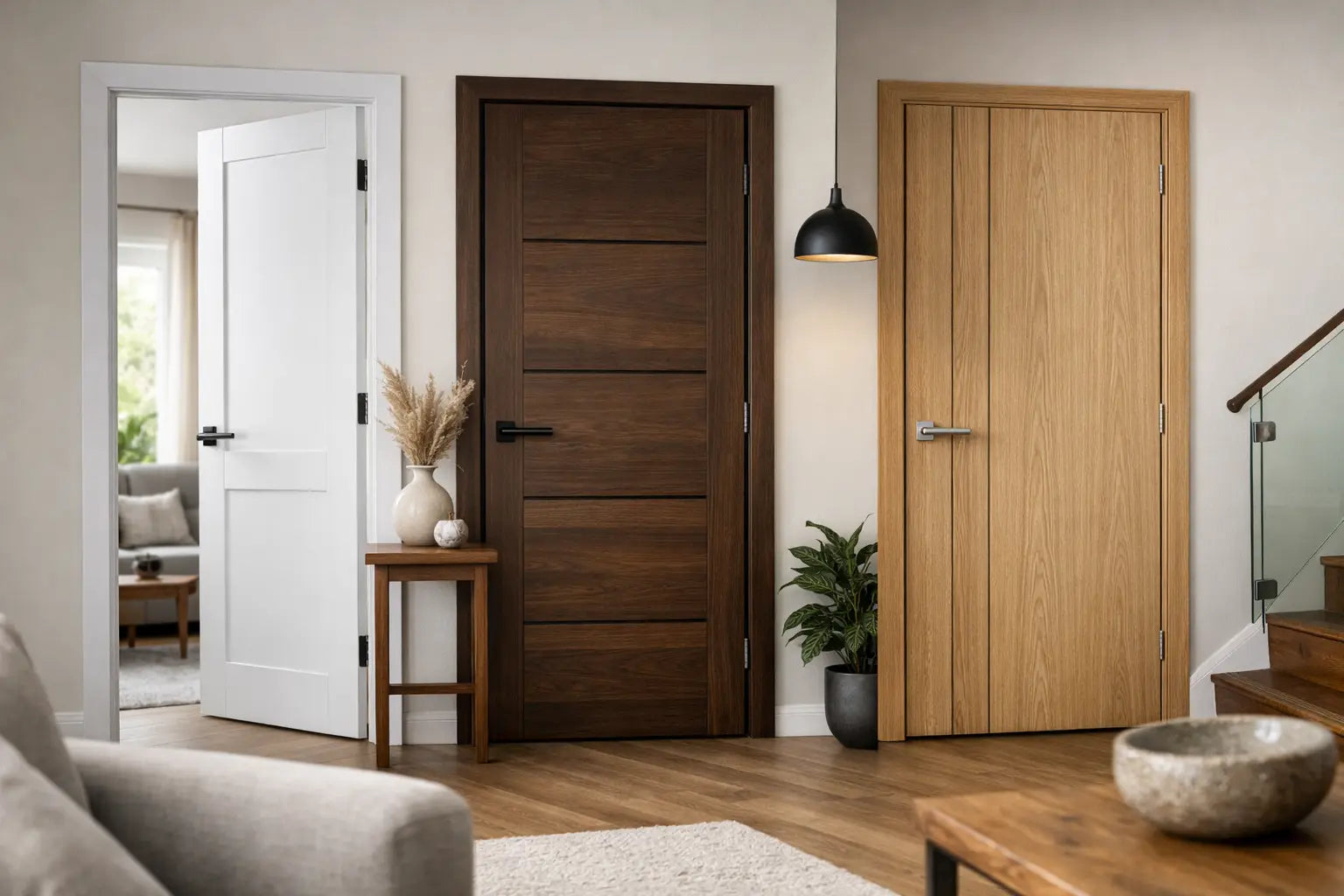
A door may look impressive in a showroom or online, but its true impact becomes clear when it is installed throughout a hallway, landing and multiple rooms. This Deanta door range review looks beyond appearance to explore why Deanta internal doors are a popular choice for UK homeowners, developers and trade professionals. From design consistency and build quality to material options, fire door availability and ease of installation, choosing the right door involves much more than selecting a style.
Deanta has earned a strong reputation for manufacturing high-quality internal doors that combine premium craftsmanship with competitive pricing. Positioned above many standard replacement doors without reaching the cost of bespoke joinery, the Deanta door range offers an excellent balance of style, durability and value. Whether you're renovating a period property, completing a new-build development or upgrading a single room, Deanta provides a wide selection of doors to suit every project.
What the Deanta range does well
The central strength of the Deanta range is choice with coordination. Rather than forcing buyers to compromise on a similar-looking door for a cupboard, dining room or protected hallway, many ranges provide complementary solid and glazed designs. This helps create a deliberate, consistent scheme rather than a collection of doors bought separately over time.
Contemporary designs are particularly well represented. Clean vertical grooves, slim glazed panels and geometric details suit extensions, flats and modernised period homes. Ranges such as Montreal and Ely appeal where a crisp, linear look is wanted, while more traditionally proportioned panelled styles offer an easier fit for cottages, Victorian terraces and conventional family homes.
The finish options also give buyers more control over the final result. Pre-finished oak saves time on site and gives a uniform appearance, which can be useful across larger developments or rental properties. White primed doors allow a chosen paint colour to run through joinery, skirting and architraves. Black and darker painted finishes bring definition to a room, but they do show dust, fingerprints and small knocks more readily than lighter alternatives.
Deanta door range review: materials and finish
A good-looking design is only part of the buying decision. Deanta doors are available in several constructions, and the right one depends on location, budget and the level of daily use. Oak-faced and real-wood options bring natural grain and warmth, while primed doors provide flexibility for decorators. Engineered timber construction is common within this part of the market and helps manage the movement associated with natural timber, particularly in centrally heated homes.
For homeowners, the key question is whether the selected finish suits the expected upkeep. A factory-finished oak door is convenient and generally gives a more even surface than site finishing, but it limits colour changes later. A primed door needs painting before fitting is complete, adding labour and drying time, yet it can be refreshed years down the line without replacing the door.
Glazed doors deserve a closer look too. They are highly effective in darker halls, internal kitchens and dining spaces where borrowed light is valuable. Clear glazing gives the greatest brightness, whereas obscure or patterned glass provides more privacy. Check the exact glazing specification on the product selected, especially when the door is intended for a bathroom, study or room facing a busy circulation area.
Style choices for different properties
Deanta is not a one-style brand, which is useful, but it means narrowing the range before comparing prices. A four-panel or shaker-style door generally works best in traditional and transitional interiors. It can sit comfortably with painted timberwork, classic lever handles and warmer wall colours without becoming overly decorative.
For newer schemes, flush or grooved doors provide a sharper architectural line. Vertical detailing can make standard-height doors feel taller, while horizontal patterns can make a wide hallway feel more balanced. Black doors work well against pale walls and natural oak floors, although they need to be considered with ironmongery. Matte black handles can create a fully tonal look; polished chrome gives stronger contrast but may clash if other fittings use brass or bronze.
If a property has a mixture of older and newer spaces, avoid choosing solely from a close-up image. Consider sightlines from the hall, whether the door will be viewed alongside original features, and the width of the surrounding frame and architrave. A contemporary door can look excellent in a renovated kitchen extension but disconnected beside ornate period mouldings.
Fire doors: where specification matters most
Deanta offers FD30 fire-door options in selected designs, allowing a more coordinated appearance where fire protection is required. This is a significant benefit for landlords, developers and homeowners undertaking loft conversions or work subject to Building Regulations. However, a fire door should never be treated as an ordinary internal door with a heavier leaf.
The rating applies to the tested doorset or compatible installation arrangement, not simply the door slab. The correct frame, hinges, intumescent strips, latch or lock, closers where required, gaps and seals all contribute to performance. A glazed fire door must also use the specified fire-rated glazing system. Substituting components because they look similar can compromise compliance.
Before ordering, confirm whether an FD30 leaf is sufficient for the project and establish the required handing, size and configuration. Some sites will benefit from a pre-assembled fire door set, particularly where speed of installation and repeatable compliance are priorities. For a straightforward replacement in an existing house, a leaf may be suitable, but only if the frame and associated components can be specified correctly.
Sizing, trimming and fitting considerations
Most internal door problems are created before the door is hung. Measure the structural opening and existing frame carefully, then allow for the selected frame, linings, floor finish and the manufacturer’s permitted trimming. Do not assume every door can be cut down by the same amount. Excessive trimming can affect proportions, weaken the construction or invalidate the fire rating.
This is especially relevant with grooved, glazed and fire-rated designs. A small reduction may be permitted within stated limits, but a door with panels positioned close to the edge offers less flexibility than a plain design. New flooring can also alter the required clearance at the bottom of the door, so it is sensible to decide whether the finished floor will be installed before or after hanging.
Match the ironmongery to both the look and the weight of the door. Solid-core and fire doors need suitable hinges, while passage doors, bathrooms and bedrooms require different latch or privacy arrangements. Choosing handles early prevents the common mistake of discovering that the desired latch backset or hinge finish is unavailable once the doors are already on site.
Is Deanta good value?
Deanta is generally positioned as a quality-led, mid-market to premium domestic door choice. It is unlikely to be the cheapest route for a basic replacement, and it should not be judged against hollow-core budget doors alone. The value is in the finish, design depth and ability to specify a matching family of doors across a property.
For a single utility-room door, a lower-cost alternative may be perfectly sensible. For a full renovation, the case for Deanta is stronger because consistency has a visible effect on the completed interior. A coordinated oak, primed or black scheme can raise the perceived quality of the whole project, particularly when frames, architraves and handles are chosen with equal care.
Trade buyers should balance the purchase price against fitting time and snagging risk. A pre-finished option can reduce decorating work, while a clearly specified fire-door solution can avoid costly corrections later. As with any branded range, compare like for like: construction, finish, glazing, certification, size and whether the price includes the components needed for installation.
Who should choose a Deanta door?
Deanta is a particularly good fit for homeowners who want internal doors to be a visible design feature rather than an afterthought. It also suits developers and landlords who need a dependable, repeatable specification across several rooms or properties. The range is less compelling if the brief is simply the lowest possible cost, or if a property needs an exact historic replica that only bespoke joinery can provide.
The most successful orders start with a complete room-by-room schedule: door style, size, finish, glazing, fire rating, frame, hinges, handles and any required seals or closers. Door Supplies Online can help buyers source across those categories rather than leaving vital details to be resolved after delivery.
Choose the Deanta design that suits the building as well as the moodboard, specify fire-door components as a system where they are needed, and allow the fitter enough information to do the job properly. That is where a well-chosen door range earns its value every day.
For more information about our interior or exterior doors or door accessories, give us a call at 01603 622261 and speak to a member of our expert team today, or email us at sales@doorsuppliesonline.co.uk. We look forward to hearing from you.