
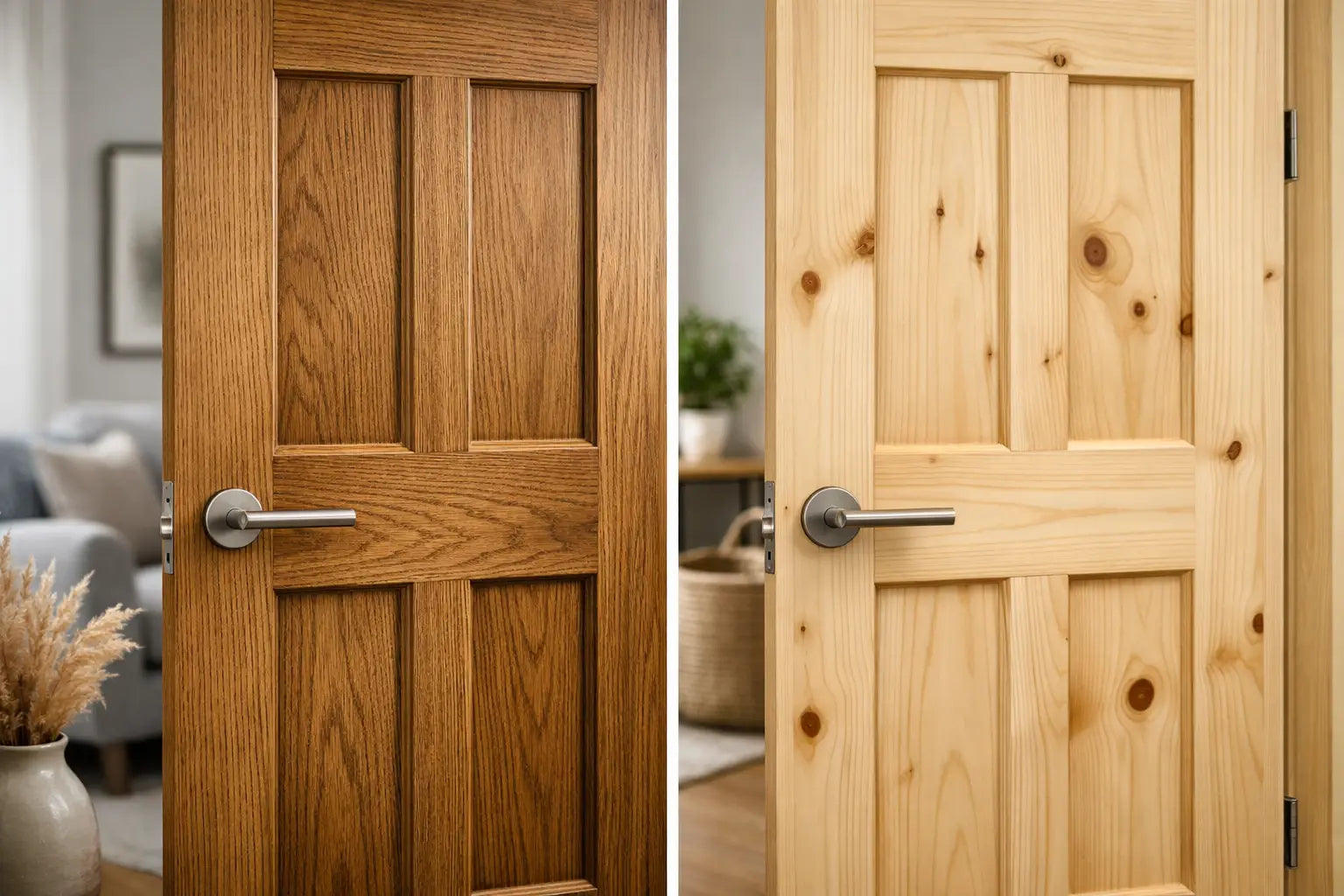
Choosing the right door can transform the look and feel of a hallway, living room or bedroom, making it one of the most impactful upgrades in any home. When comparing oak doors vs pine doors, the decision typically comes down to appearance, durability, maintenance and budget. Oak internal doors are renowned for their strength, distinctive natural grain and premium finish. In contrast, pine doors offer a more affordable, lightweight option that is ideal for painting or staining to suit a variety of interior styles.
Neither timber is the perfect choice for every project. The best option depends on several factors, including whether you're installing internal or external doors, the amount of daily use the door will receive, whether an FD30 fire door is required, and how the door complements the rest of your home's interior design. Solid oak doors are often chosen for high-traffic areas due to their durability, whereas pine doors provide excellent value for bedrooms, cupboards and other low-traffic spaces.
Oak doors vs pine: the key differences
Oak is a hardwood, while pine is a softwood. That does not mean every oak door is identical or every pine door is unsuitable for demanding use, but it does explain the practical differences buyers notice first.
Oak is denser and generally more resistant to knocks, dents and everyday wear. Its grain is pronounced, with natural variation in colour and pattern that gives each door a distinct character. A solid oak or oak-veneered door suits homes where timber is part of the design scheme, from traditional cottages to contemporary extensions with black ironmongery and pale flooring.
Pine is lighter in weight, easier to machine and typically less expensive. It has a softer, more uniform appearance, often with knots and a warm yellow tone before finishing. Because pine marks more readily, it is less often chosen for a clear natural finish in high-traffic spaces. It is, however, a sensible material for painted doors, especially where a consistent colour is more important than visible grain.
The distinction is not simply hardwood good, softwood bad. A well-made engineered pine door can be stable and useful in the right setting, while a poorly specified oak door may still be the wrong product for a humid bathroom, an exposed entrance or a fire-rated opening.
Appearance and style
Choose oak when you want the timber itself to be the feature. Its natural figuring works especially well in shaker, cottage, ladder-panel and contemporary flush designs. Clear lacquer, hardwax oil and light stains preserve the grain, although a test area is worthwhile because oak can take colour differently across boards and veneers.
Oak also coordinates easily with other joinery. Oak skirting, architraves, handrails and flooring can create a considered finish, but they do not need to match exactly. In fact, trying to match every oak tone perfectly can make normal timber variation more obvious. Complementary undertones and a consistent finish are usually more effective.
Pine has a more informal character. Unfinished pine can suit period properties, utility rooms, workshops and simple cottage interiors, but knots may show through light paint unless they are correctly sealed. For a crisp painted finish, use knotting solution where required, a suitable primer and a durable topcoat. A factory-primed door can reduce preparation time where a painted scheme is planned.
If you are selecting glazed doors, consider the frame material as part of the design. Oak can make glazing feel more substantial and architectural, whereas pine keeps the overall look lighter and often more cost-conscious.
Strength, weight and everyday use
Oak's density is a genuine advantage in busy family homes, rental properties and commercial-style interiors where doors receive regular use. It is less prone to superficial damage than pine and has a reassuringly solid feel when hung correctly. That extra weight, though, means the frame, hinges and fixings need proper attention.
For a heavy oak door, use quality hinges of the correct size and quantity. A joiner may recommend three hinges as a minimum for many standard internal doors, with more or heavier-duty hinges for tall, wide or particularly weighty leaves. The hinge side of the lining must be sound, and screws must bite into solid timber rather than only a thin frame section.
Pine is easier to handle during fitting and places less load on hinges. That can be useful for lighter internal doors and straightforward replacements. Its softer surface is the trade-off: bags, toys, vacuum cleaners and moving furniture are more likely to leave a mark. Small dents can sometimes be improved, but pine will never be as hard-wearing as oak in a hard-used corridor.
Door construction matters as much as species. A solid oak door, an engineered oak door and an oak veneered door are different products. Engineered construction uses layers or timber components arranged to improve consistency, while an oak veneer provides the visible hardwood finish over a stable core. A quality oak veneered door can be an excellent choice for internal use, delivering the appearance of oak at a lower weight and price than a solid timber alternative.
Price: initial outlay versus long-term value
Pine usually has the lower purchase price, making it attractive for whole-house projects, landlord refurbishments and rooms where painted doors are the objective. It can also be less costly to cut, plane and fit because it is easier to work.
Oak costs more because the material is denser, slower-growing and valued for its natural finish and durability. The gap varies considerably with construction, glazing, panel design, size and whether the door is supplied unfinished, pre-finished or as part of a complete door set.
It is worth pricing the complete job, not just the door leaf. Include the frame or lining, hinges, latch, handles, finishing products, glazing where applicable and fitting. A cheaper pine door may need more paint preparation, while a pre-finished oak door can reduce labour and disruption. For multiple doors, choosing one consistent range also helps keep stile widths, panel details and finish levels aligned.
Internal doors, external doors and moisture
For most internal rooms, both oak and pine can work well if the door is designed for internal use and fitted with suitable clearances. Bathrooms, en-suites and kitchens need extra thought because steam and changing humidity can affect timber. Good ventilation, a suitable finish on all faces and edges, and correct installation are essential.
External doors face a very different set of demands. Rain, sunlight, temperature swings and security requirements mean you should not select an external door on timber species alone. Look for a product specifically made for exterior use, with appropriate construction, weather protection and finishing guidance. The frame, threshold, seals and drainage details are every bit as important as the door itself.
Oak can be an excellent external timber choice when properly specified and maintained, but it still needs a suitable exterior coating and regular inspection. Pine used externally should be purpose-made, treated and protected for that application. An internal pine door is never a substitute for an external entrance door, regardless of how much paint is applied.
For exposed locations, a composite, aluminium or steel external door may be the more practical long-term option. Timber can offer beautiful character, but it requires a realistic commitment to maintenance.
Fire doors: do not choose by timber appearance alone
If an opening requires an FD30 or FD60 fire door, the fire rating takes priority over the oak or pine look. A fire door is a tested system, not just a heavier door leaf. Its performance depends on the compatible frame, intumescent strips, hinges, latch or lock, self-closing arrangement where required, seals and correct installation.
Oak-faced and pine-faced fire doors are available, allowing the finish to complement the wider scheme. However, do not cut or alter a fire door beyond the manufacturer's stated allowances, and never assume a standard timber door can be upgraded to fire-rated status with paint, seals or additional hinges.
For flats, communal areas, loft conversions, integral garages and commercial projects, confirm the required rating and specification before ordering. A pre-assembled fire door set can simplify the process by supplying compatible components together, although it must still be installed correctly.
Making the right choice for your project
Oak is usually the stronger choice when you want a premium natural timber finish, greater resistance to day-to-day knocks and a door that feels substantial. It is particularly well suited to main living spaces, character renovations and projects where oak joinery or flooring already sets the visual direction.
Pine is often the better value choice for painted interiors, secondary rooms and larger refurbishment programmes where controlling cost matters. It is light, versatile and straightforward to work with, provided you accept that it needs more protection from dents and a careful paint finish if knots are present.
Before placing an order, measure the structural opening and existing door carefully, then check the required handing, thickness, finish, trim allowance and hardware. If the door must meet a fire, security or acoustic requirement, specify that first and choose the timber finish second. A correctly sized, properly hung door will give better service than a more expensive material forced into the wrong opening.
The most useful question is not simply whether oak is better than pine. It is whether the chosen door suits the room, the level of use, the required performance and the finish you want to maintain. Get those details right at the start, and the door will look considered every time it closes.
For more information about our interior or exterior doors or door accessories, give us a call at 01603 622261 and speak to a member of our expert team today, or email us at sales@doorsuppliesonline.co.uk. We look forward to hearing from you.