
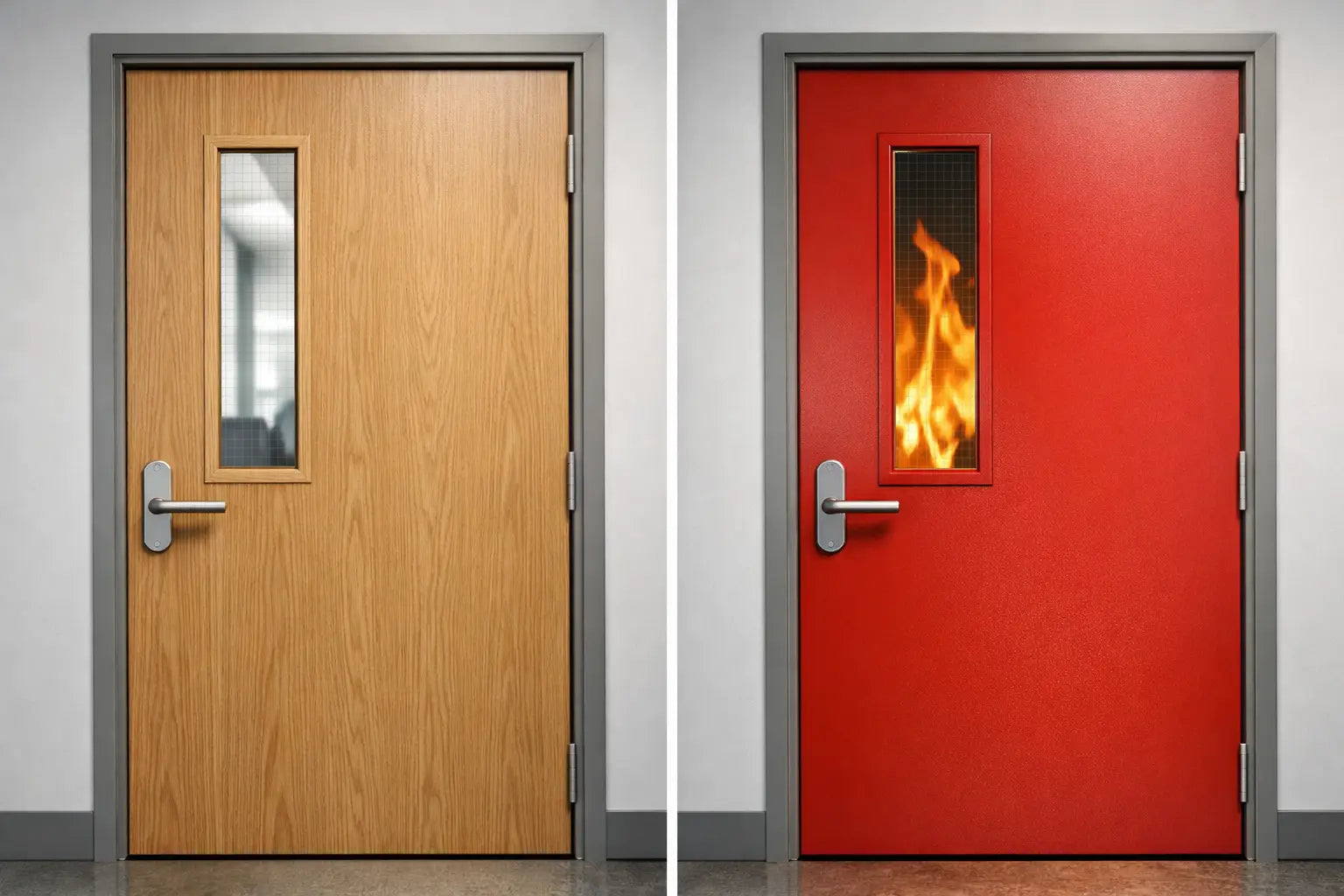
A new door may look perfectly installed, but without the right hardware, it can still feel incomplete or fail to perform as intended. Door ironmongery sets bring together the essential components, including door handles, hinges, latches, locks, and accessories, to create a coordinated, functional, and long-lasting solution. By choosing a complete door hardware set, homeowners, developers, and trade professionals can achieve a consistent finish throughout a property while simplifying the specification and ordering process for single-room renovations or large-scale developments.
Selecting the right door ironmongery set offers more than just matching finishes. A carefully chosen set helps ensure compatibility between the door, frame, and hardware, reducing installation time and avoiding issues caused by mismatched components. Whether you're fitting internal doors, pre-hung doorsets, fire doors, or external entrance doors, using coordinated ironmongery improves both appearance and everyday performance while delivering a professional finish.
FD30 vs FD60: the key difference
FD30 and FD60 refer to the fire-resistance period achieved by a tested fire door assembly. An FD30 door is designed to resist fire for at least 30 minutes, while an FD60 door is designed to resist fire for at least 60 minutes.
That time is intended to slow the spread of fire and heat between parts of a building. It can provide occupants with more time to leave safely and give the emergency services a better opportunity to respond. However, the rating applies to a tested assembly, not merely to the leaf itself. A fire-rated door leaf fitted with the wrong frame, unsuitable hinges, or missing seals may not deliver the performance expected of it.
Fire doors are commonly tested to standards such as BS 476-22 or BS EN 1634-1. The test evidence, certification, and manufacturer’s installation instructions should always be checked for the specific product being installed. Do not assume that components approved for one fire door will be acceptable for another.
What is an FD30 fire door used for?
FD30 doors are the most widely specified fire doors in many domestic and light-commercial settings. They are often used to protect escape routes and separate higher-risk areas from the rest of a property.
Typical applications can include doors between an integral garage and a home, doors opening onto a protected stair enclosure, and certain internal doors within houses in multiple occupation or converted flats. Flat entrance doors may also require a fire-rated specification, often with smoke control, depending on the building design and fire strategy.
An FD30 door is not always suitable just because a standard internal door occupies the same opening. The required rating will depend on the building type, number of storeys, means of escape, use of the room, and whether the door forms part of a protected route. For a refurbishment, the existing arrangement should be assessed before ordering a replacement.
FD30 doors are available in a wide choice of styles, including flush, panelled, oak veneered, primed, glazed, and contemporary designs. This makes them a practical option where fire performance must sit alongside a coordinated interior scheme. Where glazing is included, it must be fire-rated and fitted as part of the tested specification.
FD30S and smoke control
The letter “S” after a fire rating indicates smoke leakage performance. An FD30S door provides 30-minute fire resistance with smoke seals specified to limit the passage of cold smoke at ambient temperature.
Smoke can travel quickly through a building and can be as dangerous as flame. Where a door is required to protect an escape route, smoke seals may be a key part of the specification. These are commonly combined with intumescent strips, which expand in heat to help seal the gap between the door leaf and frame during a fire.
The exact seal type, size, and position must match the manufacturer’s evidence. Some doors are routed to accept strips in the leaf, while others require them in the frame. Do not substitute products or alter a fire door without confirming that the modification is permitted.
When is an FD60 door required?
FD60 doors provide twice the fire-resistance period of an FD30 door and are generally specified where a higher level of compartmentation is required. They are more common in commercial buildings, communal areas, plant rooms, higher-risk locations, and more complex residential developments.
For example, an FD60 doorset may be required where a building’s design calls for a 60-minute fire-resisting enclosure, or where the door protects a critical escape route or separates a particular risk area. The requirement may arise from the building’s approved fire strategy, Building Regulations guidance, an architect’s specification, building control, or a fire risk assessment.
An FD60 door is usually thicker and heavier than an FD30 alternative. This has practical consequences. The frame must be suitable, the hinges need the correct fire rating and load capacity, and a compatible self-closing device may be required. Larger leaves, double doors, vision panels, louvres, and access-control hardware all need to be covered by relevant test evidence.
Because an FD60 doorset can be more substantial, it may also affect the choice of closer and the ease of opening. This matters particularly in busy commercial premises, rental properties, and buildings where accessibility is a consideration. A correct specification balances fire performance with the needs of those using the door every day.
The door leaf is only one part of the fire doorset
A common purchasing mistake is to focus solely on whether the leaf is labelled FD30 or FD60. Fire performance relies on the complete assembly: the leaf, frame, seals, hinges, latch or lock, closer, glazing, threshold arrangement, and installation all work together.
If you are replacing an existing fire door leaf, check whether the current frame is compatible with the new leaf and rating. A damaged, undersized, or unsuitable frame can prevent the assembly from meeting its intended performance. In many projects, a complete pre-assembled fire door set offers a more dependable route, particularly where consistency, speed of fitting, and traceable certification are priorities.
Fire doors should also be installed with the permitted gaps stated by the manufacturer. Excessive gaps around the perimeter, missing intumescent seals, or a poorly adjusted closer can seriously compromise performance. A self-closing fire door must close fully into the frame from any angle, engaging the latch where one is fitted. Wedging it open defeats its purpose unless an approved hold-open system is in place.
Choosing between FD30 and FD60
The first step is not comparing price or style. Confirm the rating required for the opening. For new-build and major refurbishment work, this should be available through drawings, the fire strategy, building control, or the project specification. For an existing rental or commercial property, consult the responsible person, fire risk assessor, or suitably qualified professional where there is any uncertainty.
Once the rating is confirmed, consider the opening size, handing, wall construction, frame type, required finish, and hardware. A fire door should be selected as a coordinated specification rather than as a collection of unrelated parts.
FD30 may be the appropriate choice where a 30-minute door is required, and a broad range of residential styles is needed. FD60 is the right route where the building demands 60-minute protection, but it should not be used as a casual upgrade without checking compatibility with the frame, hardware, and surrounding construction.
For projects with several openings, make a schedule before ordering. Record the required rating, smoke requirement, size, handing, finish, glazing, frame, closer, lock, and signage for each door. This avoids ordering a visually matching door that is unsuitable for its location, and makes it easier for a joiner or installer to fit each set correctly.
Practical buying checks before you order
Before purchasing an FD30 or FD60 door, confirm whether you need a door leaf only or a complete doorset. Check the structural opening and finished frame dimensions rather than relying on the size of the old door. Also, establish whether the door must be self-closing, smoke-sealed, glazed, security-rated, or fitted with access-control hardware.
For communal, commercial, and flat entrance applications, the specification can become more detailed. Security, acoustic performance, accessibility, and fire resistance may all be relevant. In these cases, a purpose-designed doorset is often preferable to trying to build a compliant solution from separate components.
Keep product data, certification information, and installation instructions with the project records. This is useful for handover, future maintenance, and any inspection of the building. Fire doors should also be checked regularly for damage, loose hinges, failed seals, altered hardware, and closing issues.
Door Supplies Online can help simplify the product side of the decision, with FD30 and FD60 options, compatible fire door hardware, and complete fire doorsets for specification-led projects. The final rating and configuration should always follow the requirements for the individual opening.
The best fire door is the one that is correctly rated, correctly assembled and correctly fitted for its location. Confirm the requirement first, then choose the finish and format that delivers it without compromise.
For more information about our interior or exterior doors or door accessories, give us a call at 01603 622261 and speak to a member of our expert team today, or email us at sales@doorsuppliesonline.co.uk. We look forward to hearing from you.