
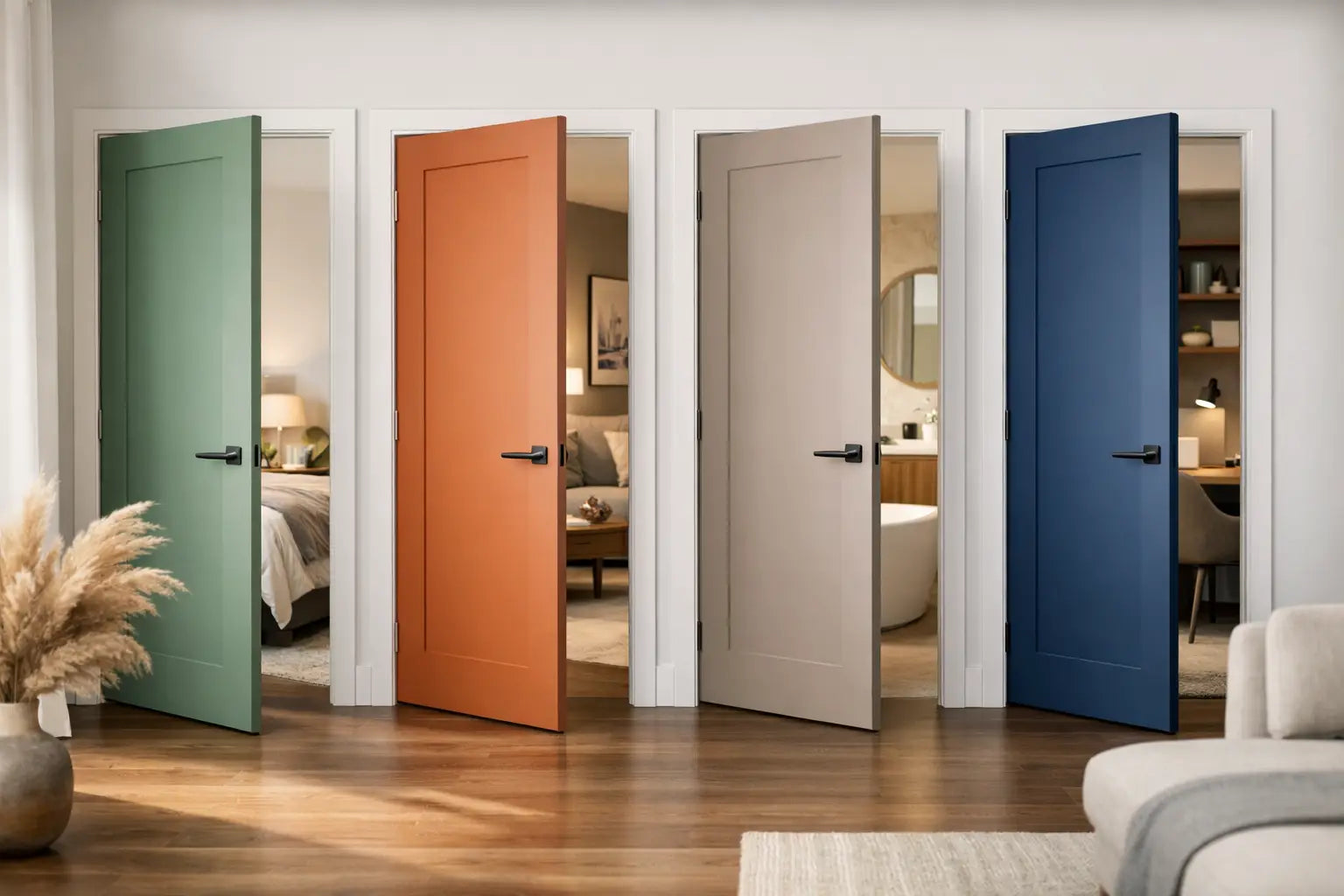
An internal door occupies more visual space than many other design features in a home, making its colour an important part of any interior scheme. Whether positioned along a hallway, landing, or open-plan living area, the right finish can transform the overall look of a property. That's why internal door colour trends for 2026 are moving beyond short-lived fashions and focusing on shades that complement flooring, skirting boards, architraves, wall colours, and door ironmongery. Choosing the right colour helps create a cohesive interior while adding depth, warmth, and character to every room.
Across UK homes, the biggest trend for 2026 internal door colours is the shift towards warm, timeless finishes and carefully balanced contrasts. While white internal doors continue to be a popular choice for their versatility and ability to brighten spaces, homeowners are increasingly opting for soft neutral tones, natural oak finishes, wood-effect veneers, and rich painted colours that bring greater personality to modern and traditional interiors alike. Shades such as beige, cashmere, sage green, stone grey, charcoal, and deep navy are replacing cooler greys, creating homes that feel warmer, more inviting, and better suited to contemporary living.
Internal Door Colours 2026: Warmer, Softer, More Deliberate
Cool greys and bright, blue-based whites have dominated interiors for years. In 2026, warmer shades are the more versatile choice for many projects. Think chalky off-white, light stone, putty, mushroom, muted clay, and gentle taupe. These colours sit comfortably beside oak flooring, brass or bronze hardware, natural textiles, and the increasingly popular warmer wall paints.
A warm neutral door is especially useful where white walls, pale flooring, and limited natural light could otherwise make a room feel flat. It creates a subtle layer of definition without the visual weight of a dark door. This approach works well in Victorian terraces, new-build homes, and rental upgrades, where a timeless finish can offer broad appeal.
Soft whites remain a dependable choice
White is not disappearing, but the exact white matters. A soft white with a cream, grey or beige undertone can look more settled against modern plaster finishes and warm timber furniture than brilliant white. It also tends to be more forgiving of everyday marks around handles and lower rails.
For a clean, coordinated look, paint the door, frame, and architrave in the same shade. This reduces visual clutter on busy landings and in narrow corridors. Alternatively, keep the frame and skirting light while using a slightly deeper tone on the door leaf for a restrained contrast.
Timber tones bring texture without overcomplicating the scheme
Oak internal doors continue to suit both traditional and contemporary interiors, particularly when the grain is natural rather than heavily orange or glossy. Unfinished oak gives the greatest flexibility because it can be oiled, lacquered, or stained to suit the flooring and furniture. Prefinished oak is the practical option where speed, consistency, and reduced site work matter more.
The key is to avoid trying to match every timber surface exactly. An oak door alongside an oak floor can look excellent, but only when the undertones are compatible. If the floor is pale and matt, a richly coloured golden oak door may feel disconnected. A neutral painted door can be a better bridge between different wood finishes.
Deep colours work best when repeated
Black, charcoal, deep green, and dark blue internal doors can give a home real character. They are particularly effective with slimline glazed doors, shaker-style designs, and period panelled doors. Yet a dark finish needs enough contrast around it. In a poorly lit hallway with dark flooring and dark walls, it can make the space feel compressed.
Repeat a deep door colour through black lever handles, dark window frames, a staircase handrail, or selected furniture details. That repetition makes the choice feel intentional. For a lower-commitment version of the same look, use dark doors downstairs or in a home office, then choose a lighter colour for bedrooms and upper-floor circulation spaces.
Choosing Internal Door Colours 2026 Room by Room
A whole-house colour can create a calm, joined-up finish, but it is not the only sensible approach. Different rooms have different levels of light, privacy, and wear, so a successful scheme often uses one main finish with carefully chosen variations.
Hallways and landings benefit from colours that manage scuffs and make adjoining rooms feel connected. Warm white, putty and pale greige are reliable choices. If the property has tall ceilings, original mouldings, or a generous entrance hall, a richer colour can make the joinery feel architectural rather than merely functional.
Living rooms can carry more personality. A dark green or smoky blue panelled door can sit beautifully with warm neutrals, timber furniture, and aged-metal hardware. Glazed doors are useful here because they retain the colour and character of the door while borrowing light from the next room. Clear glazing gives the brightest result; reeded or obscure glass offers more privacy where needed.
Bedrooms generally suit quieter finishes. Matching the door to the wall colour creates a calm, cocooning effect and can make compact rooms appear less interrupted by hard outlines. A pale oak door is another good option where the aim is a natural, relaxed finish. In shared accommodation or rental properties, durable white or light-grey primed and finished doors can be easier to maintain and replace consistently.
Bathrooms, utility rooms, and kitchens need a more practical assessment. Humidity, frequent cleaning, and higher traffic can affect the finish over time. Select a door construction suitable for the location and use a properly specified paint or factory finish rather than treating colour as an afterthought. If there is a risk of splashing or persistent moisture, good ventilation and correct sealing around the door edges are just as important as the colour itself.
Match the Finish to the Door Construction
Colour choice should start with the door type, not end there. A smooth primed door is designed to be painted and is ideal for bespoke colour matching. It gives homeowners, decorators, and developers freedom to use a chosen paint system, although it does require proper preparation, top coats, and drying time.
Prefinished doors offer a controlled factory-applied appearance and a quicker route to installation. They are well-suited to projects where multiple doors must match, where labour time is limited, or where the property needs to remain usable during refurbishment. The trade-off is reduced flexibility later: changing a factory-finished black, white, or grey door to another colour may take more work than repainting a primed model.
For painted doors, consider the sheen level as carefully as the shade. Matt and eggshell finishes look contemporary and soften imperfections, but can be less forgiving where doors receive heavy use. Satin is a practical middle ground, with enough durability for busy family homes, landlords, and commercial-style settings without appearing overly shiny.
Door design also changes how colour reads. Shaker and ladder-style doors give dark paint a crisp, modern look. Traditional six-panel doors suit heritage shades, from off-white to deep green. Flush doors are often best in calm, minimal colours or timber finishes, while industrial-style glazed doors can comfortably take black or graphite because their slim profiles keep the effect light.
Frames, Architraves, and Hardware Make the Colour Work
A door never sits alone. The frame, architrave, hinges, handles, and latches determine whether the finished result looks considered. Painting the door and its surrounding joinery in one colour gives a built-in effect, particularly effective in contemporary renovations. Contrasting the door against a light frame draws attention to the opening and can suit period properties with detailed mouldings.
Hardware should support the temperature of the chosen finish. Satin nickel and polished chrome work neatly with pale whites, greys, and cooler timber tones. Antique brass, bronze, and aged finishes bring warmth to taupe, olive, oak, and darker colours. Matt black is the most flexible option for modern schemes, but it needs consistent use across handles, hinges, and other visible metalwork to avoid looking accidental.
Do not overlook the hinges. A black door with bright brass hinges, or a warm oak door with mismatched chrome hardware, can undermine an otherwise strong specification. Where hinges will be visible, choose a finish that relates to the handles or use concealed hinges where the door and frame system allows.
Colour Choices for Fire Doors and High-Use Properties
Where an internal door is required to provide fire resistance, style must sit alongside compliance. FD30 and FD60 fire doors need compatible frames, hinges, intumescent strips, closers, and seals as part of the complete fire door assembly. Colour does not remove those requirements.
A primed fire door can usually be finished to suit the scheme, but the coating system and preparation must not interfere with seals, labels, glazing details, or the door’s certified construction. Never plane, drill, or alter a fire door beyond the manufacturer’s stated allowances to achieve a different look. For flats, communal areas, rental properties, and commercial settings, selecting a suitable pre-assembled fire door set can make specification and installation more straightforward.
High-traffic homes also benefit from choosing colour with maintenance in mind. Mid-toned neutrals disguise hand marks more effectively than bright white, while very dark painted finishes can reveal dust, scratches, and fingerprints. A durable finish, quality handles, and sensible door stops will protect the investment far better than colour alone.
When choosing a final finish, order samples where possible and view them upright beside the floor and wall paint, not just on a screen. Light changes throughout the day, and a colour that looks refined in a showroom can appear noticeably cooler or darker in a north-facing hall. Door Supplies Online can help you compare door styles, finishes, and compatible ironmongery so the final specification looks right and performs properly once fitted.
For more information about our interior or exterior doors or door accessories, give us a call at 01603 622261 and speak to a member of our expert team today, or email us at sales@doorsuppliesonline.co.uk. We look forward to hearing from you.