
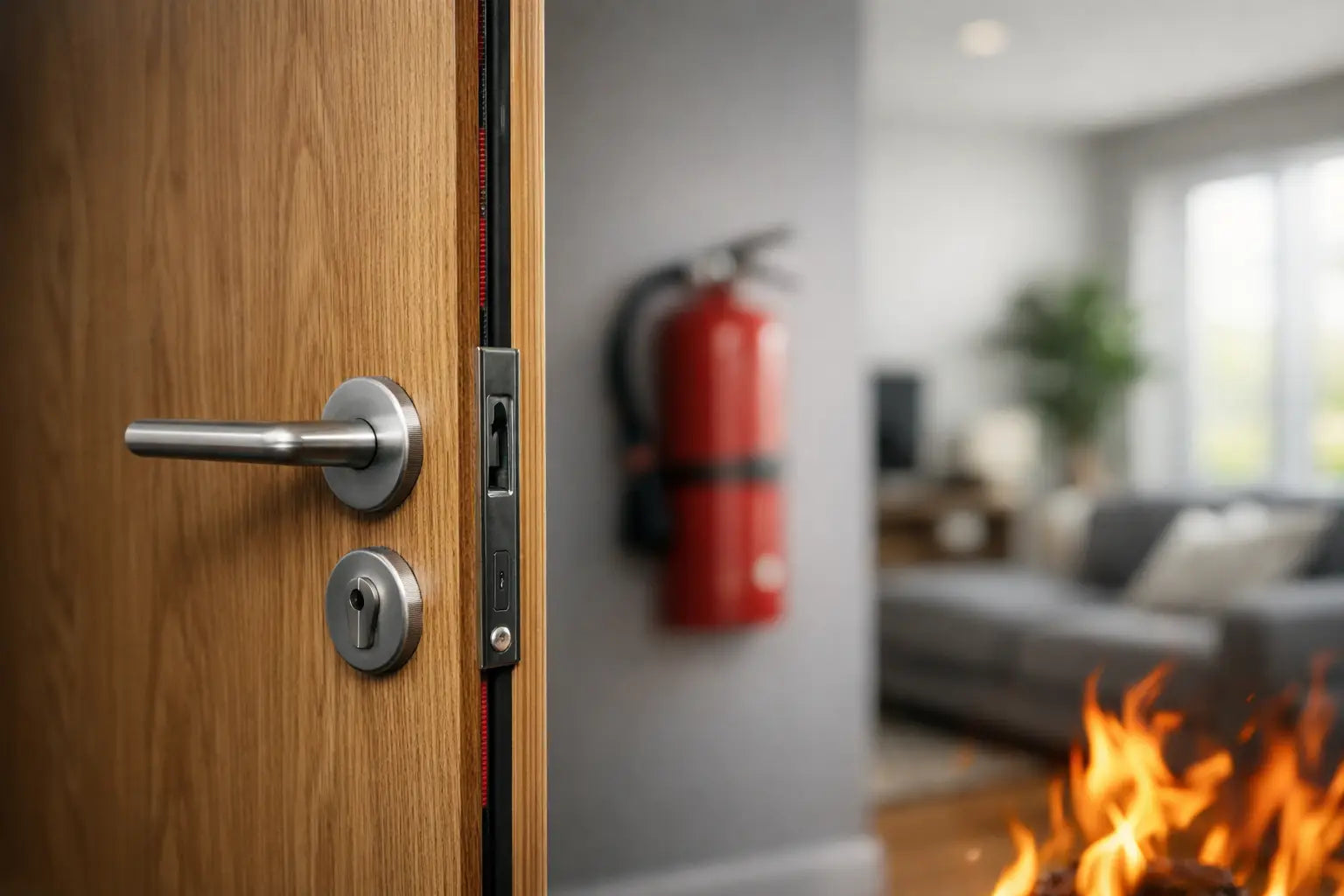
A fire door is only as effective as the complete assembly surrounding it. When choosing LPD fire doors for a flat, rental property, commercial development or home renovation, it's important to remember that fire protection depends on much more than the fire-rated door leaf alone. The door frame, intumescent and smoke seals, hinges, glazing, locks, self-closing device and fire-rated ironmongery must all work together as a compatible, tested system to achieve the required level of fire resistance. Selecting the correct LPD fire door from the outset helps improve fire safety, supports compliance with UK Building Regulations and reduces the risk of costly remedial work after installation.
LPD fire doors are a popular choice for homeowners, developers, landlords and contractors thanks to their combination of certified fire performance, quality craftsmanship and extensive range of styles. Whether you're looking for oak fire doors, white primed fire doors, black internal fire doors or glazed FD30 fire doors, LPD offers designs to complement both traditional and contemporary interiors without compromising on safety. This allows you to maintain a consistent look throughout your property while meeting the necessary fire protection requirements.
Start with the fire rating you need
The most common options are FD30 and FD60. An FD30 door is designed to resist fire for a minimum of 30 minutes when installed as part of a suitable, tested fire door assembly. An FD60 door is designed for 60 minutes. The correct rating is not a matter of personal preference - it is determined by the building layout, use, height and fire strategy.
FD30 doors are widely specified in domestic settings, including between an integral garage and a dwelling, on protected escape routes and in some flats or houses in multiple occupation. FD60 doors are more commonly required in higher-risk or more demanding commercial and multi-occupancy applications. Requirements vary across the UK and by project, so building control, the responsible person, a fire risk assessor or your architect should confirm what is needed before you order.
Do not assume that replacing an existing fire door with the same-looking product is enough. Older doors may not reflect current requirements, and the opening itself may need attention. Measure the structural opening, check the frame condition and establish whether a complete doorset is the more reliable route.
Why LPD fire doors suit design-led projects
Fire safety is non-negotiable, but most projects also need doors that belong with the rest of the interior. LPD fire doors are available across a range of styles, allowing homeowners and specifiers to coordinate fire doors with standard internal doors elsewhere in the property.
For a period renovation, a traditional panelled or oak-effect design can maintain the character of the space. In a contemporary home, a clean flush door, vertical groove detail or dark finish can keep the scheme consistent. Commercial projects often benefit from simple, hard-working designs that suit offices, communal corridors, accommodation and retail back-of-house areas.
Glazed fire doors can be particularly useful where a corridor, entrance hall or communal area needs more natural light. Yet glazing needs closer scrutiny than a standard internal glazed door. The glass, beads, aperture size and configuration must be part of the relevant fire-tested specification. Never alter a fire door by cutting in a new vision panel or changing its glazing arrangement unless this is expressly permitted and carried out to the applicable specification.
Match the door leaf to the complete system
A fire-rated door leaf is not a standalone safety product. It must be fitted within a compatible frame and with the correct supporting components. Product documentation will set out the permitted configuration, including frame material, intumescent seals, hinge type, latch or lock, glazing details and any required closer.
This is where an apparently cheaper purchase can become a false economy. Reusing a damaged frame, fitting decorative hinges that are not suitable, or omitting seals can compromise the performance of the opening. On a compliance-led project, a pre-assembled fire doorset can reduce uncertainty because key components are supplied as an intended system. It can also save fitting time where several identical openings are involved.
The details that make a fire door work
The visible door is just one part of the job. Before buying, plan for the essential components and the person who will fit them. A competent installer should follow the manufacturer’s instructions and the requirements of the tested assembly.
Intumescent strips are fundamental. In a fire, they expand to close gaps around the door edge and help restrict the passage of fire and hot gases. Some applications also require smoke seals, which are usually identified by a brush or blade seal alongside the intumescent material. Whether smoke control is required depends on the door’s specification and the project's fire strategy.
Fire-rated hinges are another critical detail. A heavy fire door generally needs three suitable hinges, although the product instructions should always take priority. The hinges must be correctly fixed and capable of supporting the door through regular use without excessive sagging. If the door binds, drags on the floor or leaves uneven gaps, it needs adjustment rather than being ignored.
A self-closing device is frequently required on fire doors in communal, commercial and higher-risk settings. It must close the door fully onto the latch from any opening position, without slamming so hard that it becomes difficult to use. Wedging a fire door open defeats its purpose. Where a door needs to be held open for access or circulation, use an appropriate approved hold-open solution that releases when needed, rather than a wedge or bin.
Ironmongery should be selected for the particular fire door specification, not just its finish. Handles, latches, locks, letterplates, viewers and access-control hardware can all affect the door’s fire performance. A black handle or satin stainless-steel lever may suit the scheme, but confirm it is compatible before fitting.
Measuring and ordering without costly mistakes
Start by deciding whether you are ordering a door leaf, frame and hardware separately, or a complete fire doorset. A door leaf can offer flexibility where an existing opening is in good condition and a joiner is handling the work. A doorset is often the more straightforward specification choice for flats, developments, commercial refurbishments and any project where consistency matters.
Measure the opening carefully rather than relying on the size of the old door. Allow for the frame, fitting tolerances and the clearances stated in the manufacturer’s installation guidance. Fire doors are commonly supplied in standard sizes, but non-standard openings may need a bespoke solution or a carefully specified frame arrangement.
Check handing, swing direction and the location of locks, closers and access hardware before placing the order. This is especially relevant where a door opens onto an escape route, into a corridor or alongside another door. The direction of travel can affect safety, access and everyday usability.
It is also worth checking whether the chosen door is supplied unfinished, primed, pre-finished or veneered. An unfinished fire door gives greater flexibility for paint or stain matching, but any finishing work must follow the manufacturer’s recommendations. Excessive planing, unauthorised drilling or cutting into the leaf can invalidate its fire performance.
When FD30 may not be enough
An FD30 specification is common, but it should not become a default without checking the building’s needs. Larger buildings, protected stairwells, plant rooms, higher-risk spaces and particular compartment lines may require FD60 or another defined performance level. There may also be requirements for acoustic control, security, accessibility or smoke protection alongside fire resistance.
For landlords and property managers, this matters beyond the initial purchase. Fire doors should be inspected regularly for damage, loose hinges, failed closers, missing seals and excessive gaps. A smart-looking door that does not close properly is not doing the job it was installed to do.
For developers and trade buyers, consistency across the project makes later maintenance much easier. Record the product, rating, configuration and hardware used at each opening. That information is valuable when a door is damaged, refurbished or inspected years later.
Buy for the specification, not just the style
The best LPD fire door is the one that satisfies the fire strategy, fits the opening correctly and suits the interior without creating installation compromises. Start with the rating, then choose the design, finish and glazing option that work within the approved specification.
Door Supplies Online can help simplify the buying process with specialist fire door categories, compatible frames, ironmongery and doorset options for domestic and commercial projects. If there is any uncertainty over rating, configuration or installation, confirm the requirements before ordering. A well-specified fire door is a practical part of the building that people use every day - and one that needs to perform without hesitation when it matters most.
For more information about our interior or exterior doors or door accessories, give us a call at 01603 622261 and speak to a member of our expert team today, or email us at sales@doorsuppliesonline.co.uk. We look forward to hearing from you.