
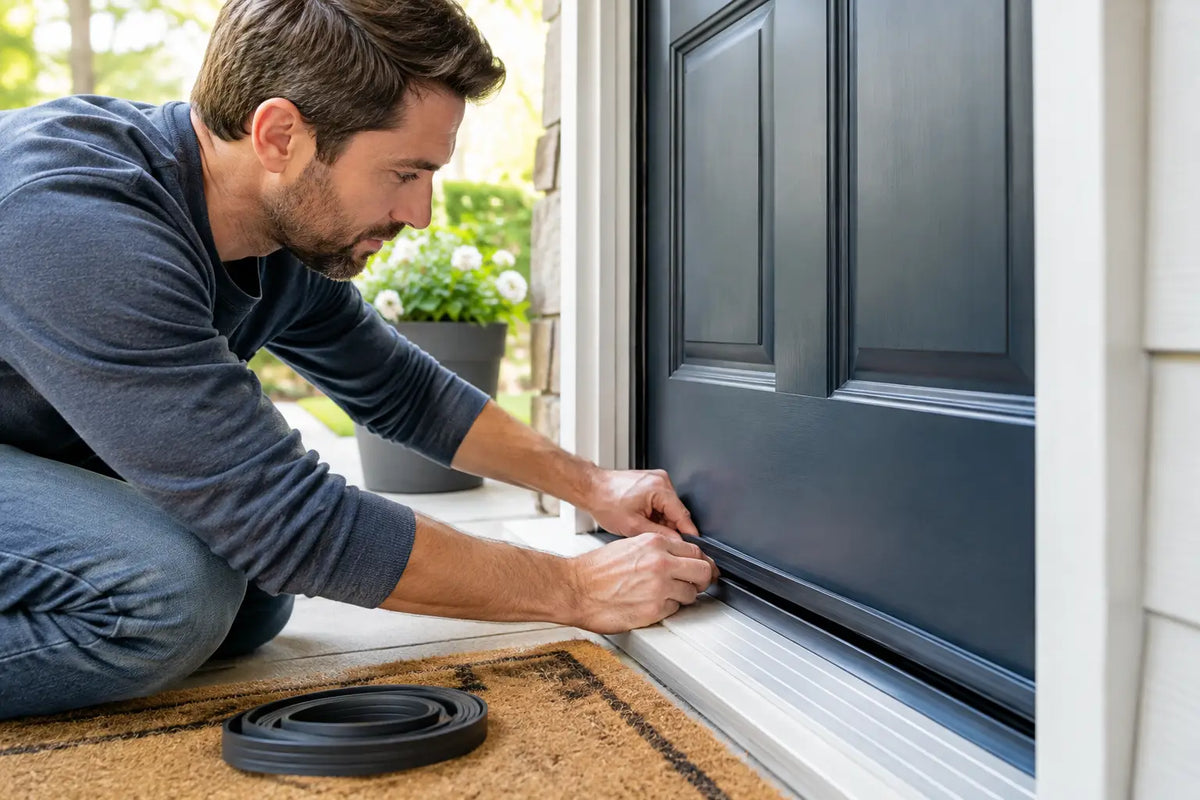
A cold draught around the front door is not always a sign that the door itself needs replacing. In many cases, unwanted draughts come from small gaps around the door frame, hinges, letterplate, threshold or seals. Learning how to seal external doors properly can make a noticeable difference to comfort, energy efficiency and protection from wind-driven rain.
Effective external door draught proofing starts with identifying where air is entering. Check the perimeter of the door, the meeting points between the door and frame, the threshold and areas around hardware such as the letterplate. Damaged, compressed or incorrectly fitted external door seals can allow cold air and moisture into the property, even when the door itself is in good condition.
The correct solution depends on the door material, opening method and condition of the frame. A timber external door may need adjustment, replacement weather seals or repairs to the frame, while a composite, aluminium or steel door may require a replacement gasket, compression seal or threshold adjustment. Some doorsets also incorporate dedicated weather seals designed to work with the manufacturer's frame and hardware.
The aim of sealing an external door is not simply to close every visible gap. The door must still open and close smoothly, lock correctly and allow water to drain as intended. Avoid blocking designed drainage paths or adding seals that prevent the door from closing properly.
Before replacing the entire door, inspect the existing external door seals, frame and threshold. A relatively small adjustment or replacement seal may be enough to eliminate draughts, improve weather resistance and make the entrance more comfortable throughout the year.
Start by finding where the draught is coming from
Before buying weatherstrips, inspect the door on a dry, windy day. Stand inside and run your hand slowly around the opening edge, concentrating on the top corners, hinge side and bottom of the door. A thin piece of paper can also help. Close the door on it at several points; if it pulls out with little resistance, that part of the seal may not be making contact.
Look for daylight around the perimeter, damaged or flattened rubber seals, loose hinges, a door that catches on the frame, and gaps beneath the threshold. On outward-opening doors, pay particular attention to the weather bar and external frame joints. Water must be directed away from the entrance, not trapped behind a seal.
Do not assume every gap needs filling with sealant. External doors need correct clearances to operate reliably through changing temperatures and damp conditions. The problem is a gap that is too large or unprotected, rather than a visible joint in every case.
Check alignment before fitting new seals
A door that has dropped or moved out of alignment will defeat even high-quality weatherstripping. Check whether the latch engages cleanly, whether the reveal is even around the door, and whether there are signs of rubbing at the head or threshold.
Many modern composite, uPVC and aluminium doors have adjustable hinges. Small adjustments can improve compression against the perimeter gasket, but follow the door manufacturer’s guidance or ask a qualified installer if you are unsure. Over-adjusting can make the lock difficult to operate and place unnecessary strain on hinges.
For timber external doors, inspect the hinges, screws and frame first. Tightening loose screws or replacing worn hinges may restore the correct position. If the timber is swollen, decayed or badly distorted, fitting a thicker seal is unlikely to be a lasting repair. Address moisture ingress, failed paint finishes or damaged sections of frame before attempting to draught-proof the opening.
Choose the right seal for each part of the door
There is no single product that suits every edge. A well-sealed external door normally uses a combination of perimeter sealing, a bottom seal and appropriate protection around openings such as letterplates.
Perimeter weatherstrips
The gaps at the sides and head of the door are usually sealed with self-adhesive foam, rubber or brush strips, or with compression seals fitted into a routed groove or frame rebate. Foam strips are inexpensive and can suit a temporary improvement, but they compress and wear relatively quickly on busy entrance doors.
Rubber compression seals are generally the better long-term choice where the door and frame are correctly aligned. They create a consistent seal as the door closes and are commonly used on modern external door systems. Choose a profile sized for the actual gap. A seal that is too thin will not stop the draught; one that is too thick can make the door difficult to close or prevent the multipoint lock from engaging fully.
Clean and dry the frame before applying any adhesive-backed product. Remove old adhesive and loose paint, then fit the strip in short sections without stretching it. Stretching can cause it to shrink back later, leaving an opening at the corners.
Door bottom seals and thresholds
The gap beneath the door is often the biggest source of cold air. The best solution varies according to the threshold type and whether the door opens inwards or outwards.
A surface-mounted brush or rubber sweep can be effective on the inside face of an inward-opening door, particularly where the threshold is fairly even. For a more durable finish, consider a purpose-made automatic drop seal. This lowers a rubber gasket when the door closes and lifts it clear of the floor when the door opens, reducing wear and avoiding a dragging seal.
Where a threshold is damaged, poorly fitted or too low, replacing or correcting it may be more effective than adding a sweep. External thresholds must also manage rainwater safely. Avoid packing drainage channels, weep holes or designed water run-off paths with silicone, foam or brush pile.
Letterplates, keyholes and glazing
A letterplate can admit a surprising amount of cold air. A quality external letterplate with an internal flap or brush liner helps reduce this, while still allowing post to pass through. Check that the flap closes fully and that fixing screws are secure.
For traditional keyholes, a covered escutcheon can reduce draughts. If the door has glazed panels, inspect the beads and seals around the glass. Failed glazing gaskets or cracked putty should be repaired with the correct system, rather than covered with a general-purpose sealant.
Seal the frame-to-wall joint carefully
If air is entering around the outside of the frame rather than between the door and frame, examine the perimeter joint where the frame meets brickwork or render. Cracked external sealant, gaps in mortar and failed pointing can all allow water and draughts into the reveal.
Remove loose material and allow the area to dry before renewing the seal. Use an exterior-grade, flexible sealant appropriate for the frame and wall finish. Very wide gaps may need suitable backing material before sealant is applied, so the joint can move without splitting.
This is a weatherproofing task, not a substitute for repairing a loose frame or significant structural movement. If cracks keep returning, the frame is visibly moving or water is appearing inside the property, it is sensible to seek professional advice before resealing.
Take care with fire doors and certified entrance doors
Not every external door should be altered in the same way. If the door is a fire-rated flat entrance door, communal entrance door, or a certified fire door set, its seals, gaps, hardware and threshold arrangement may be part of its tested specification.
Do not fit ordinary brush strips, foam tape or unapproved hardware where it could affect fire performance, smoke control, self-closing action or the door’s ability to latch. Intumescent strips and cold smoke seals must be compatible with the door set and installed in the specified location. The same caution applies to PAS24 and security-rated entrance doors, where changes can affect performance or warranty.
For a replacement external door, a complete pre-assembled door set can remove much of the uncertainty. The door, frame, seals, threshold and compatible ironmongery are designed to work together, which is particularly useful for renovation projects, new builds and compliance-led specifications.
Test the seal once the work is complete
Close and lock the door several times. It should shut firmly without excessive force, and the handle, latch and locking points should operate normally. Recheck with the paper test around the perimeter, then inspect the outside during rainfall if possible. Look for water sitting on the threshold, bypassing the weather bar or entering at frame corners.
A properly sealed door should feel noticeably less draughty, but it should not make the home stuffy or interfere with planned ventilation. Background ventilators and extractor fans have their own role in controlling condensation and indoor air quality. Do not block them simply because the entrance door has been improved.
When sealing is not enough
Repeated draughts, sticking locks, rotting timber, a warped slab or a cracked threshold are signs that repair work may be reaching its limit. A replacement door or door set can offer a cleaner, longer-lasting result, especially where thermal performance, security and appearance all need upgrading together.
Door Supplies Online offers external doors, frames, thresholds, seals and ironmongery for projects ranging from a straightforward front-door refresh to a full entrance replacement. Measure carefully, check the handing and opening direction, and match each sealing product to the door system rather than relying on a one-size-fits-all fix.
A few millimetres of unwanted space can make an entrance feel cold every day. Deal with the alignment first, use seals that suit the gap and door construction, and your external door can close with the reassuring firmness it was designed to have.
For more information about our interior or exterior doors or door accessories, give us a call at 01603 622261 and speak to a member of our expert team today, or email us at sales@doorsuppliesonline.co.uk. We look forward to hearing from you.