
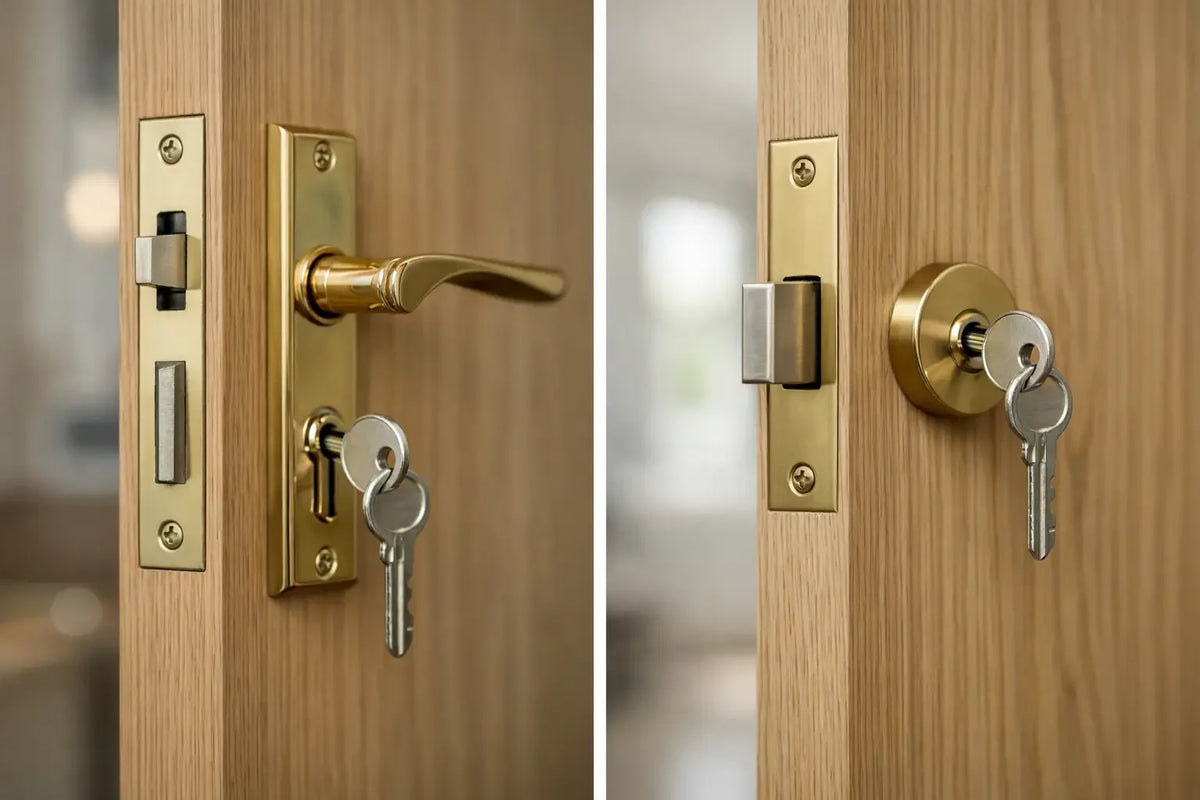
A new door lock may seem like a small finishing detail, but choosing the right door lock can make a significant difference to how a door operates every day. When comparing a sashlock vs deadlock, the key question is not simply which lock is more secure. It is whether the door needs to latch closed as well as lock, who will be using the door, and whether specific fire safety or insurance requirements need to be considered.
Whether you are choosing a front door lock, flat entrance door lock, side entrance lock or internal door lock, the right option depends on the complete door setup. This includes the door, frame, hinges, handles, cylinders or keys, and how occupants need to enter and exit the property.
Understanding the difference between a sashlock and deadlock before installation can help you select the right door hardware for your needs. Choosing your lock before fitting the door handles and preparing the mortice can also help prevent unnecessary alterations and ensure the finished door operates smoothly and securely.
What is a sashlock?
A sashlock is a mortice lock that combines two functions in one lock case. It has a spring latch, operated by the lever handle, and a deadbolt, operated by a key or thumbturn. Closing the door allows the latch to engage with the strike plate in the frame, so the door stays shut without being locked.
When the key is turned, the deadbolt throws into the keep and secures the door. The handle may still retract the latch, but it cannot release the deadbolt. This makes a sashlock a practical all-in-one option where a door must close neatly behind the user and then be locked when required.
Most traditional external doors fitted with lever handles use a sashlock. They are also common on office doors, communal internal doors and some fire door assemblies, provided the lock, latch and hardware are suitable for the required fire rating.
How it works in everyday use
Think of a sashlock as providing both day-to-day closing and key-operated security. You pull the door closed and the latch holds it in place. You turn the key when you want to secure it. There is no need to use a separate tubular latch or roller catch.
Sashlocks are available in different backsets, case depths, finishes and security ratings. The backset is the distance from the door edge to the centre of the keyhole or spindle. This must work with the stile width of the door and the handle design you plan to fit.
What is a deadlock?
A deadlock is a mortice lock with a deadbolt only. Unlike a sashlock, it has no spring latch and no handle spindle. The bolt is thrown and withdrawn by a key from either side, or by a key on one side and a thumbturn on the other, depending on the model.
Because there is no latch, a deadlock does not keep the door closed on its own. A door fitted with a deadlock normally needs a separate closing method, such as a tubular latch, roller catch, magnetic catch or another lock type. On an external hinged door, a separate latch is generally essential if you want the door to stay closed before it is locked.
Deadlocks are often selected where a simple, separate security bolt is needed. They can be fitted above a nightlatch on a timber front door, for example, or used alongside another latch on certain internal doors. Their simpler mechanism can also make them useful where you do not want lever handles to operate a lock case.
Sashlock versus deadlock: the practical difference
The main difference is straightforward: a sashlock latches and locks; a deadlock only locks. That distinction affects the hardware you need, how the door behaves when it closes, and the appearance of the finished installation.
A sashlock is usually the cleaner choice for a single-leaf door with lever handles. One mortice case provides the latch and the security bolt, while the handle and escutcheon or backplate give the door a coordinated finish. It is particularly suited to main entrance doors where users expect to open the door with a handle and close it behind them.
A deadlock is more specialised. It works well as an additional locking point or where a separate latch has already been specified. It can be useful for a traditional front door arrangement with a rim nightlatch, where the nightlatch holds the door closed and the mortice deadlock adds key-operated security. Fitting a deadlock alone to a frequently used external door is rarely convenient, as the door will not latch shut.
There is also a fitting consideration. A sashlock requires a larger and more complex mortice than a deadlock, because it houses both the latch mechanism and bolt. On a narrow-stiled, glazed or panelled door, check that there is enough solid timber in the correct location before choosing a lock case. Cutting an oversized mortice can weaken a door and may affect the performance of a fire door.
Security ratings and insurance requirements
Neither name guarantees a particular level of security. A basic sashlock is not automatically more secure than a high-quality deadlock, and a deadlock is not automatically suitable for an insurer's requirements. Check the specific lock standard, rather than relying on the product type alone.
For many UK domestic external doors, insurers may request a British Standard five-lever mortice deadlock or sashlock, commonly to BS 3621. Locks to this standard are designed for stronger resistance to attack and are usually supplied with a recognised kitemark. Some policies accept other standards or a multi-point locking door system, while others set particular requirements for front, rear and side doors. Read the wording of your policy or ask the insurer before ordering.
A lock is only one part of security. The keep must be fitted securely to a sound frame, with suitable long screws where appropriate. A weak frame, loose hinges, warped door or poorly fitted keep can undermine an otherwise excellent lock. For doors with glazed panels, consider whether the lock position, glazing type and key access create a vulnerability.
Choosing locks for front doors and final exits
Security needs to be balanced with escape. On a final exit door, people inside must be able to leave quickly in an emergency. A key-operated deadlock on the inside can create a risk if the key is missing or left elsewhere.
A thumbturn cylinder or thumbturn-operated lock may be appropriate in some domestic settings, allowing the deadbolt to be released from inside without a key. However, this is not a universal answer. If glazing is close enough to the lock for someone to break the glass and reach the thumbturn, it can reduce security. The right arrangement depends on the door construction, glazing layout, property use and risk assessment.
For flats, rental properties, houses in multiple occupation and commercial premises, escape arrangements may be subject to more specific requirements. Do not assume that a standard domestic lock choice is suitable. Where a door forms part of a managed building or fire strategy, consult the responsible person, building manager or a competent installer before changing the locking arrangement.
Fire doors need compatible hardware
A fire door must be considered as a tested door assembly, not just a fire-rated leaf with ordinary hardware added. If you are fitting a sashlock to an FD30 or FD60 door, choose hardware with suitable fire test evidence for the required rating and follow the door manufacturer's fitting guidance.
The latch function is especially significant. A hinged fire door normally needs to close fully into its frame and remain latched, so a sashlock can be appropriate where key locking is also required. A deadlock without a separate compatible latch will not provide that latching function.
Check the lock case size, intumescent protection requirements, handle specification and the position of the keep. Do not enlarge cut-outs, substitute components or omit intumescent materials without confirming what the door system allows. Pre-assembled fire door sets can simplify this process by bringing compatible doors, frames and ironmongery together.
Size, handing and finish before you buy
Before selecting either lock type, measure the existing mortice where possible. Note the case depth, backset, keyhole position and distance between the handle spindle and keyhole on a sashlock. A replacement that does not match can leave exposed old cut-outs or force you to alter the door.
For a new installation, choose the lock first and then match the handles, escutcheons and hinges. Satin stainless steel, polished chrome, antique brass, matte black and polished brass can all create a coordinated look, but the dimensions matter as much as the finish. Ensure the handle backplate does not cover panel mouldings, glazing beads or previous fixing holes.
Also decide how the door will be used. A busy kitchen-to-utility door may only need a latch. A private study may need a sashlock for occasional privacy and security. A timber front door with a nightlatch may benefit from a separate deadlock. There is no benefit in specifying more locking hardware than the door, frame and daily use genuinely call for.
The best lock is the one that suits the whole door, not just the keyhole. If you are replacing a lock or specifying a new door set, confirm the measurements, security standard and fire or escape requirements before fitting. Door Supplies Online can help make matching your lock, handles and door hardware a more straightforward purchase.
For more information about our interior or exterior doors or door accessories, give us a call at 01603 622261 and speak to a member of our expert team today, or email us at sales@doorsuppliesonline.co.uk. We look forward to hearing from you.