
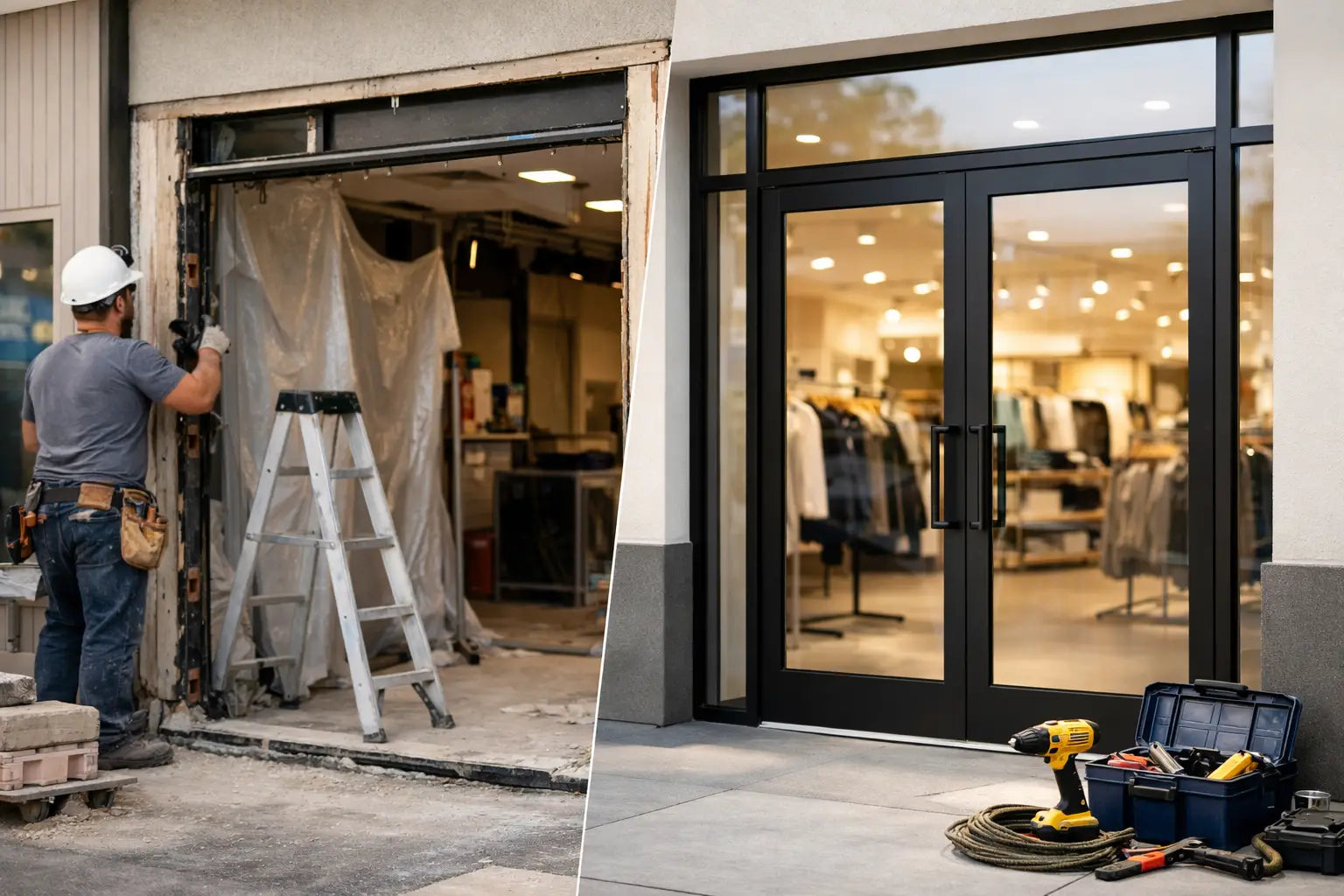
A sticking entrance door, damaged glazing or an outdated shopfront can do more than create a poor first impression. It can restrict customer access, increase heat loss, reduce security and lead to unnecessary maintenance costs. A retail shop entrance replacement should therefore be treated as an important part of the building, not simply selected for its appearance.
For independent retailers, landlords and commercial fit-out teams, the right shop entrance door depends on how the premises are used. A high-street boutique, convenience store, salon or shopping-centre unit can have very different requirements for security, glazing, accessibility, access control and fire safety. Factors such as customer traffic, opening hours and exposure to the weather should also be considered.
When planning a commercial door replacement, it is important to specify the complete entrance system rather than the door leaf alone. The door frame, glazing, hinges, locks, handles, threshold and access-control hardware all need to work together. Choosing the correct specification at the start can improve security, energy efficiency and everyday operation while helping to avoid costly alterations once the shop is open and trading.
Start with the opening, not the new door
The most common mistake is ordering a replacement door from the size of the existing leaf. The existing door may have been altered over time, fitted into an out-of-square opening or paired with a frame that is no longer sound. Measure the structural opening, the finished floor level, the depth of the wall or shopfront profile, and the available space for the door to open and close.
Also consider what sits around the door. Fixed side screens, over-panels, fanlights and glazed shopfront sections can form part of one integrated system. Replacing only the active leaf can be cost-effective where the frame is in good condition, but it may leave mismatched finishes, outdated locks or poor weather performance. Where the frame, hinges or glazing are failing, a complete doorset is usually the more dependable long-term option.
Before selecting a system, establish whether the premises are freehold, leasehold or within a managed retail development. Landlords and centre management teams may require approval for the door design, finish, signage position, security rating or installation method. Listed buildings and conservation areas can add further restrictions, particularly where the original frontage has architectural value.
Think about daily traffic and delivery use
A single-leaf door may be perfectly suitable for a low-footfall shop, but it can become restrictive when customers leave with bulky purchases, prams pass through regularly or staff need to receive stock through the front. Double doors, a wider clear opening or a separate service entrance may be the better choice.
Door handing matters too. The direction of travel must work with the pavement, internal layout, escape routes and counter positions. A door that swings into a narrow aisle or clashes with a display is not a practical installation, however attractive the finish may be.
Retail shop entrance replacement: choosing the right system
For many modern retail premises, aluminium entrance doors are a strong choice. They are well suited to frequent use, can be supplied in a wide choice of colours and glazing configurations, and work neatly with contemporary glazed shopfronts. Thermally broken aluminium profiles are particularly useful where comfort and energy efficiency are priorities.
Steel doors are often selected where strength, security or a slim industrial-style profile is required. They can suit rear access points, service doors and more design-led entrances, although the specification should account for corrosion resistance and the exposure of the site. Coastal or heavily weathered locations may need a more considered finish and maintenance plan.
Timber doors remain a good option for traditional retail frontages, heritage settings and businesses wanting a warmer, more characterful appearance. Hardwood construction, appropriate seals and a durable external finish are essential. Timber can be repaired and refinished, but it requires regular care and may not be the best fit for an entrance that receives constant heavy traffic.
Glazing should be chosen for its performance as well as its appearance. Large glazed areas help merchandising, daylight and visibility into the shop, but they need suitable safety glass and a specification that considers security, privacy and solar gain. Toughened or laminated safety glazing may be required depending on the location and design. Laminated glass can provide additional resistance to forced entry and may help retain the panel if broken.
Build security into the whole entrance
A strong door leaf alone does not create a secure shop entrance. The frame, lock, hinges, glazing beads, cylinders and installation fixings all matter. A weak point in any one of these areas can undermine the rest of the system.
For a street-facing entrance, consider how the premises will be secured at closing time. Multipoint locking, commercial-grade cylinders, protected hinge arrangements and reinforced frames can all be appropriate, depending on the risk level. If the door uses glazed panels, ask whether laminated security glass or an alternative glazing layout is more suitable for the location.
Access control should reflect how staff actually use the building. A key-operated door may be sufficient for a small owner-managed shop. A larger premises may benefit from fob access, keypad entry, electric locking or an intercom arrangement for staff-only areas. These systems need to work alongside the locking hardware and fire escape strategy, rather than being added as an afterthought.
Do not overlook the threshold. It must withstand trolleys, wet footwear and regular foot traffic while helping to control draughts and rainwater. A badly detailed threshold is a frequent source of water ingress, trip hazards and premature floor damage around the entrance.
Check access and fire safety requirements early
The entrance has to be convenient for customers, but it may also have legal and safety implications. Door widths, thresholds, opening forces, manifestation on glazing and ironmongery positions can affect accessibility. Requirements vary by project, building type and whether the work is part of a wider alteration, so it is sensible to seek advice from the relevant designer, Building Control body or competent installer before ordering.
Fire performance is especially important where the entrance forms part of an escape route, opens onto a communal area or separates the sales space from a protected corridor. Not every external retail entrance needs to be a fire door, but where a fire-resisting door is required it should be supplied as a compatible, tested assembly. An FD30 or FD60 door leaf cannot simply be paired with any frame, closer, lock or glazed panel.
A correctly specified fire doorset may include the door leaf, frame, intumescent strips, smoke seals, compatible hinges, latch, closer and glazing system. It also needs to be installed accurately. Gaps, incorrect hardware or unsuitable alterations can affect performance. For final exits, panic or emergency exit hardware must allow people to leave quickly and safely in the direction of escape.
Roller shutters and security grilles can add a layer of protection, but they do not replace a properly specified entrance door or an appropriate escape arrangement. Their operation and placement must not obstruct people leaving the building in an emergency.
Specify hardware for the way the shop trades
Hardware is where a replacement entrance either feels reliable or becomes a daily frustration. Commercial hinges, pivots and door closers should be selected for the expected opening frequency and door weight. A heavy glazed door with a basic domestic closer is likely to slam, drag or fall out of adjustment.
Choose handles that are easy to grip, suitably positioned and consistent with the shop's design. Pull handles, lever handles, push pads and panic bars each serve different purposes. For a customer entrance, the handle should make the direction of operation obvious. For staff access, locking and key management may take priority.
Automatic doors can be worthwhile for high-footfall sites, accessible entrances and stores where customers often carry goods. They require more planning, electrical provision and ongoing maintenance than a manual doorset. In a smaller shop, a well-balanced manual commercial door can offer better value while still providing good access.
Plan installation around trading hours
Replacing an entrance can expose the premises temporarily, so planning matters. Confirm lead times for the door, frame, glazing, hardware and any access-control equipment before arranging closure. A pre-assembled doorset can reduce site work and help control tolerances, particularly when time on site is limited.
A competent installer should check the opening condition before fitting, protect finishes during the work and make good the surrounding reveals, floor junction and weather seals. If the replacement changes the floor level or frame profile, allow for adjustments to mat wells, flooring, alarm contacts, shutters and signage.
Once fitted, the door should be checked for smooth operation, latching, locking, closer action and weather sealing. Keep product details, keys, hardware instructions and fire certification where relevant. These records are useful for maintenance, future alterations and landlord handover.
Compare like for like when setting the budget
The lowest initial price can be misleading if it excludes the frame, safety glazing, commercial hardware, locks or installation-critical seals. Compare complete specifications, including finish, security level, glazing, threshold, closer and any access-control preparation. A door that needs several upgrades after delivery is rarely the economical choice.
For technical or multi-part projects, a specialist supplier such as Door Supplies Online can help narrow the range between standard external doors, commercial doorsets and fire-rated options. The aim is not to over-specify every entrance, but to buy a system that suits the property, the footfall and the risks it faces.
A good shop entrance should disappear into the working day: opening cleanly for customers, locking securely at night and continuing to look the part after thousands of uses. That is the standard worth specifying for.
For more information about our interior or exterior doors or door accessories, give us a call at 01603 622261 and speak to a member of our expert team today, or email us at sales@doorsuppliesonline.co.uk. We look forward to hearing from you.