
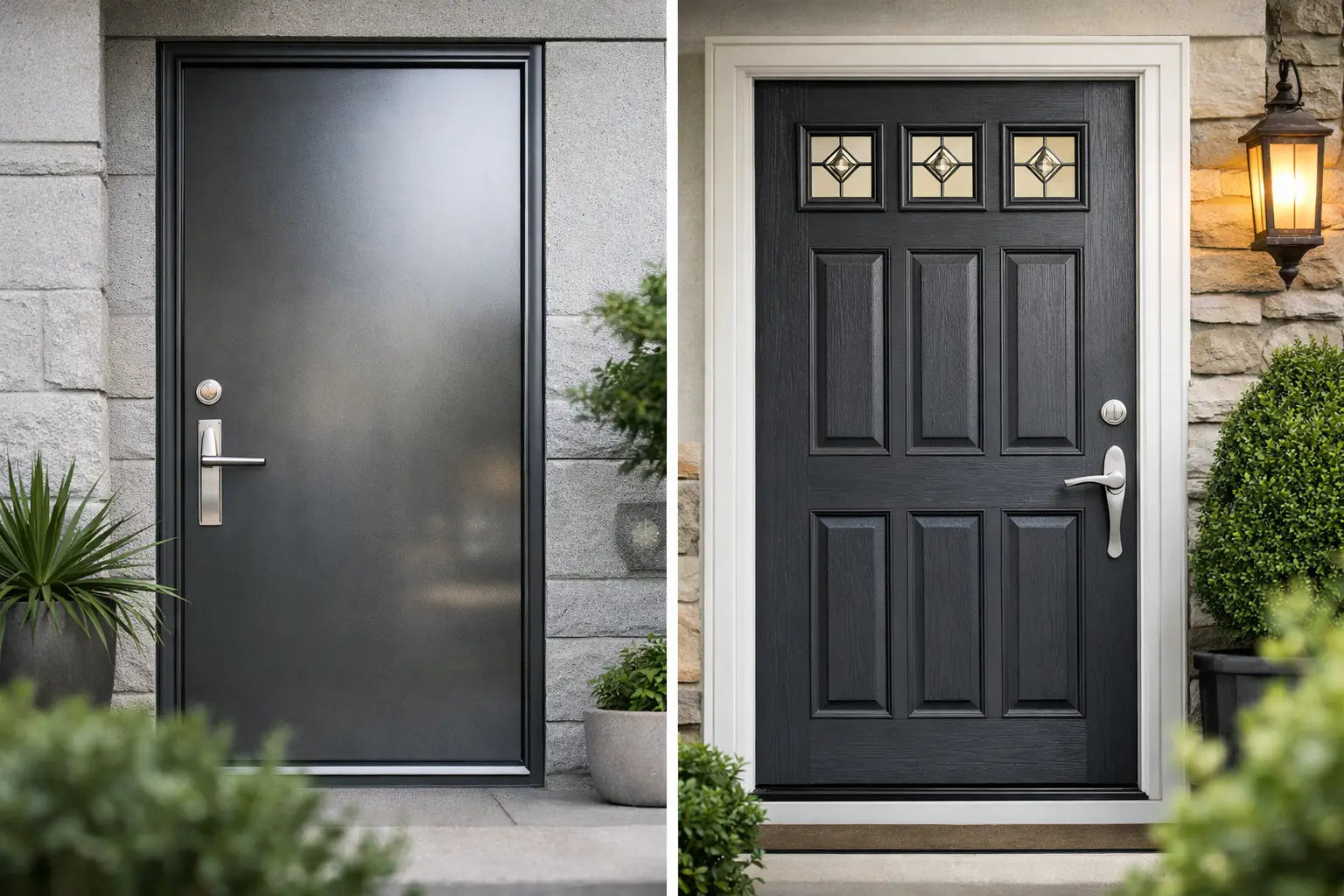
A front door needs to do far more than enhance the appearance of a property. It should provide security, thermal insulation and weather resistance, while operating correctly with the surrounding frame, threshold, hinges and locking system. When comparing steel vs composite doors, the best option depends on your priorities, including security, maintenance, thermal performance, appearance and the architectural style of the property.
Both steel doors and composite doors can provide a durable and secure entrance when correctly specified. Steel is valued for its strength and robust construction, while composite doors combine different materials to provide a balance of security, insulation and design flexibility.
The key difference lies in their construction, appearance, performance and suitability for different projects. A well-specified external doorset is just as important as the door leaf itself, particularly when security, weather resistance and energy efficiency are priorities. When choosing between steel and composite front doors, consider the complete door system rather than focusing solely on the material of the door panel.
Steel vs Composite Doors: The Main Difference
A composite door is built from several materials rather than one solid piece. Most domestic composite entrance doors combine a reinforced frame with an insulated core and durable outer skins, commonly glass-reinforced plastic (GRP). This layered construction gives the door a substantial feel while allowing manufacturers to recreate the grained detail, panels and glazing layouts associated with timber doors.
A steel external door is usually an engineered system with steel-faced panels, insulation within the leaf and a matching steel frame. Premium steel door systems are often thermally broken to reduce heat transfer between the outer and inner faces. They are especially popular for contemporary homes, extensions and projects where narrow sightlines, large glazed areas or a crisp industrial-style look are required.
Neither material is automatically better. A composite door is often chosen for its familiar domestic styling and value, while steel is selected for architectural precision, strength and design flexibility.
Security: Look Beyond the Door Material
Steel has an obvious association with strength, but security should never be judged by the visible face of the door alone. The frame, hinges, glazing, cylinder, multipoint lock and installation all contribute to how the complete entrance performs.
A quality composite doorset can provide a very high level of security. Its reinforced construction and multipoint locking make it suitable for many homes, rental properties and new-build projects. For an enhanced security specification, look for a doorset tested to PAS 24 where this is required or preferred. The standard relates to the complete doorset, not simply the material used to make the door leaf.
Steel doors can offer exceptional resistance to impact and forced entry, particularly when paired with secure locking, reinforced frames and appropriate glazed units. This makes them a strong option for prominent entrances, high-value renovations and commercial-style residential schemes. However, a basic steel door with poor hardware will not outperform a properly tested, professionally fitted composite doorset.
For either option, specify a suitable security cylinder, confirm the lock operation and ensure the frame is securely fixed to a sound opening. A door is only as secure as the system fitted around it.
Thermal Performance and Weather Resistance
Composite doors are known for their insulating cores. They can help reduce draughts at an entrance and generally offer strong thermal performance when fitted with effective seals and a properly detailed threshold. Their GRP skins are designed to tolerate rain, frost and sunlight without the regular painting associated with many timber entrance doors.
Steel conducts heat more readily than composite materials, which is why the quality of the system is vital. Modern insulated steel doors with thermal breaks can achieve very good thermal performance, but not every steel door is built to the same standard. Check the declared U-value for the complete doorset rather than assuming that an insulated-looking leaf will meet your project target.
Weather exposure should also influence the decision. A sheltered urban entrance is very different from a coastal property or an exposed rural elevation. Composite doors are highly practical in demanding weather, provided seals are maintained and the installation is correct. Steel doors need a durable protective finish and careful attention to scratches, cut edges and areas where water could sit. On exposed sites, ask about corrosion resistance and the manufacturer’s finish warranty before specifying a colour.
Appearance: Traditional Detail or Contemporary Precision?
This is often where the choice becomes clear. Composite doors offer a wide selection of traditional and transitional styles, including woodgrain effects, decorative panels, fanlights and patterned or obscured glazing. They suit period-inspired homes, conventional brick properties and homeowners who want the warmth of a timber-style entrance without the ongoing paint cycle.
Steel doors bring a more architectural finish. Slim frames, clean lines and larger glazed sections make them particularly effective on modern extensions and conversions. Black steel-look doors are a popular choice, though steel systems are also available in a wide range of powder-coated colours. They can provide a sharper, more minimal appearance than a moulded composite design.
Consider the proportions of the opening before choosing. A wide entrance with side panels or an overlight may benefit from a steel system’s slim profiles and glazing options. A standard front-door opening on a traditional house may look more natural with a panelled composite door in a heritage colour. The best door should suit the building, not just the latest trend.
Maintenance and Long-Term Ownership
For low day-to-day maintenance, composite doors are hard to overlook. Regular cleaning with mild soapy water, checking drainage and keeping moving hardware lubricated is usually enough. Avoid harsh cleaners and abrasive pads, particularly on decorative glazing and coloured finishes.
Steel doors are also relatively straightforward to maintain, but they require a little more vigilance. Wash the finish periodically, remove salt deposits or pollution where relevant, and inspect for chips or scratches. Any damage to the coating should be dealt with promptly to help prevent corrosion developing beneath the finish.
Composite is not completely maintenance-free. Colour can weather over many years, hardware may need adjustment and seals eventually wear. Steel is not maintenance-heavy either, but its longevity depends heavily on the coating quality, the environment and the care taken during fitting. Keep realistic expectations: every external doorset benefits from routine inspection.
Cost: Compare Like for Like
Composite doors are commonly the more cost-effective route for a high-performing residential entrance door. Pricing varies with size, glazing, colour, sidelights, locking upgrades and whether the door is supplied as a complete frame-and-leaf set. They offer a strong balance of insulation, security and appearance for many replacement projects.
Steel doors generally sit at a higher price point, especially where bespoke sizes, large glazed panels, specialist colours or thermally broken profiles are involved. The additional investment can be justified where the design depends on narrow sightlines, oversized openings or a premium contemporary finish.
When comparing quotations, check what is included. A lower headline price can exclude the frame, threshold, handles, cylinder, glazing specification, delivery or installation. For a fair comparison, assess complete doorsets with equivalent security, thermal and glazing performance.
Fire and Building Requirements
An ordinary steel or composite front door should not be assumed to be a fire door. Where an entrance forms part of a flat opening onto a shared corridor, or where a project has a fire strategy, the required rating may be FD30, FD60 or another tested specification. Fire performance relies on a tested doorset construction, compatible hardware, seals and correct installation.
The same principle applies to Building Regulations, planning conditions and conservation requirements. A replacement door may need to meet particular thermal, security or appearance criteria. For listed buildings and conservation areas, the local authority may have a view on the style, glazing and proportions permitted. Establish these requirements before ordering, particularly if the opening is non-standard.
Which Door Is Right for Your Project?
Choose a composite door when you want a well-insulated, secure and low-maintenance entrance with traditional panel options, wood-effect finishes or a familiar domestic appearance. It is a practical choice for most standard front-door replacements and can provide excellent value when specified as a quality doorset.
Choose steel when the project calls for slim frames, expansive glazing, a modern architectural look or a highly engineered entrance system. It is particularly suited to contemporary homes, premium extensions and wide or bespoke openings where visual precision matters.
Before placing an order, measure the structural opening carefully and decide whether you need a slab, frame or complete pre-assembled doorset. Confirm handing, opening direction, threshold detail, glazing privacy, ironmongery and performance requirements at the same time. A specialist supplier such as Door Supplies Online can help make the specification clearer, but the most successful entrance starts with matching the door system to the property rather than choosing by material alone.
For more information about our interior or exterior doors or door accessories, give us a call at 01603 622261 and speak to a member of our expert team today, or email us at sales@doorsuppliesonline.co.uk. We look forward to hearing from you.