
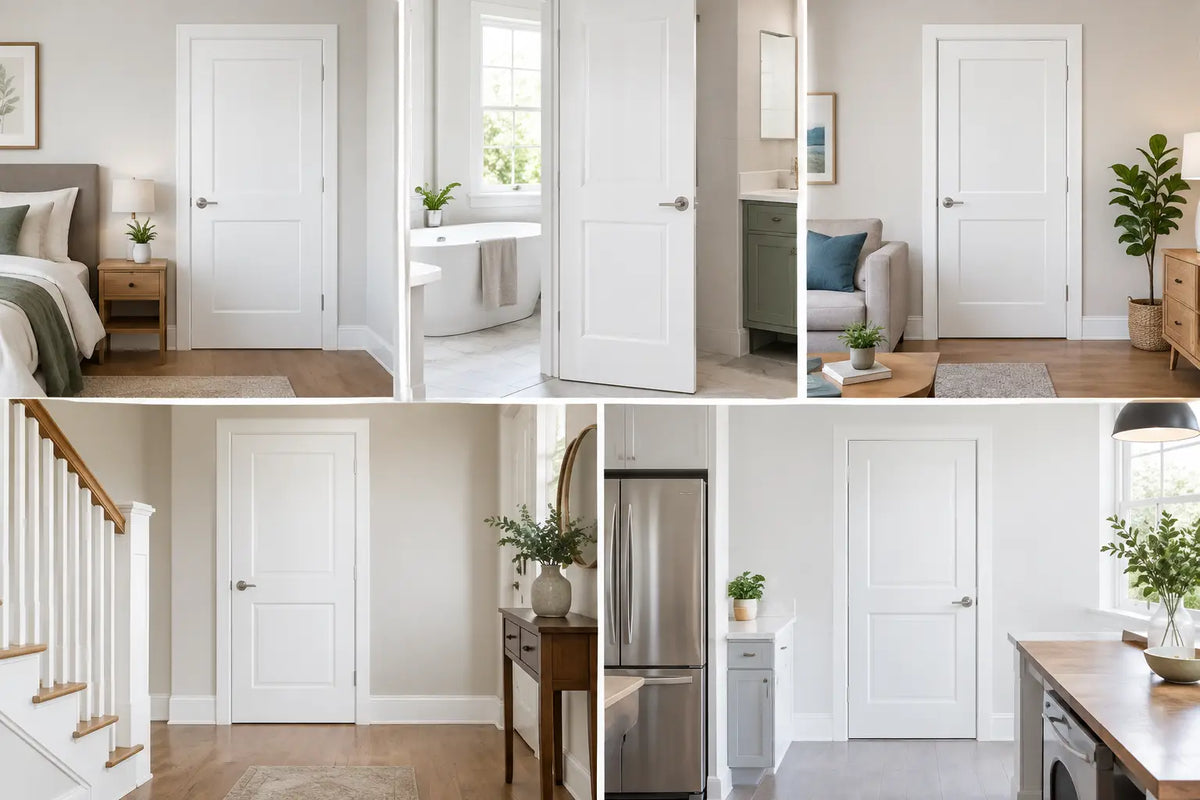
A new white primed internal door can transform an outdated room, creating a brighter, cleaner and more finished look without changing the entire layout. White primed internal doors are a popular choice for UK homes, renovations, landlords, joiners and developers because they provide a versatile base that works with almost any interior style, from traditional period-inspired hallways to modern contemporary spaces.
The key detail is the word primed. White primed doors are prepared with a primer ready for painting, rather than being supplied as a fully finished white door. This gives you the flexibility to choose the final colour, finish and sheen to match your interior décor.
When choosing white primed internal doors, consider the door construction, size, style, glazing and intended room before buying. Once fitted and properly painted, a quality primed internal door can provide a smart, durable and personalised finish at a practical price point.
Why choose white primed internal doors?
A white primed door arrives with a factory-applied undercoat that gives paint a consistent surface to grip. It removes the time-consuming task of priming bare timber or MDF and helps achieve a smoother, more even final coat than a site-applied primer alone. It is a practical option where you want a painted finish but do not want to be restricted to one factory colour.
Although white is the obvious choice, primed doors can also be painted in soft grey, off-white, deep green or a colour matched to skirting and architrave. This is useful in renovation projects where standard white may look too stark against existing joinery. A good quality satinwood, eggshell or other suitable interior wood paint will usually give the durable finish required, subject to the paint manufacturer's instructions.
The trade-off against a pre-finished white door is straightforward. A pre-finished product is ready to hang and avoids wet trades after installation. A primed door needs topcoats on all faces and edges, so allow for preparation, drying time and labour. Where a consistent bespoke colour matters, however, primed doors are often the better specification.
Choosing a style that suits the property
White primed internal doors are available in designs far beyond the plain flush door. The right choice depends on the building's character, the amount of natural light available and how formal you want the interior to feel.
A simple flush or moulded panel door is an efficient choice for rental properties, bedrooms and utility spaces. It is understated, easy to repaint and works with most ironmongery. Shaker-style doors introduce clean vertical and horizontal lines that suit modern homes, kitchen extensions and updated Victorian or Edwardian properties. For a more traditional look, four-panel and six-panel designs create depth and shadow without relying on a timber-grain finish.
Glazed white primed doors deserve consideration in darker halls, landings and dining rooms. Clear or obscure glass panels allow borrowed light to pass between rooms while retaining the painted-frame appearance. Obscure glazing is particularly useful for a home office, bathroom access or any room where privacy is needed. Check the glazing specification carefully where the door will be close to a stairwell, corridor or other safety-critical location.
Matching the door style across the ground floor usually gives the strongest result, but it does not have to be rigid. A glazed version of the same panelled design can be used between the hall and living room, with solid versions serving bedrooms and cupboards. That keeps the visual language consistent while giving each opening the function it needs.
Core construction affects feel, sound and cost
The finish may be the first thing people notice, but the core determines much of a door's day-to-day performance. Lightweight hollow-core doors are economical and easy to handle, making them suitable for low-traffic rooms where acoustic privacy is not a priority. They can be a sensible replacement choice, but they tend to feel less substantial and provide limited sound reduction.
Solid-core and engineered-core doors have a denser construction. They feel more substantial in use, offer better resistance to everyday knocks and can improve the separation of household noise between bedrooms, bathrooms and living spaces. They are also commonly required as the basis for fire door construction. Their extra weight means hinges, frames and fixings must be specified accordingly.
For properties with growing families, house shares or home-working spaces, paying more for solid-core doors can be worthwhile. For a straightforward refurbishment of several light-use rooms, a quality hollow-core design may offer better value. The correct choice is about the room, not simply the highest specification available.
Sizes, handing and fitting allowances
Before ordering, measure each opening individually. Older houses frequently have inconsistent openings, even where the existing doors appear identical. Measure the width, height and thickness of the existing door where possible, then assess the frame condition, floor finish level and clearance required beneath the door.
Common internal door widths include 610mm, 686mm, 762mm and 838mm, but non-standard sizes are regularly needed in period properties and conversion projects. A door should be trimmed only within the manufacturer's stated allowance. Excessive trimming can affect its appearance, construction and warranty, and it is especially critical with glazed and fire-rated doors.
Most internal doors are supplied without hinges, handles or latches, allowing you to choose ironmongery that suits the scheme. Polished chrome gives a crisp modern finish, while satin nickel, matt black, antique brass and pewter can change the character of the same white door completely. Heavy solid-core doors need suitably rated hinges, typically three hinges for standard internal use, although the manufacturer's fitting guidance should always take priority.
Do not overlook the frame, architrave and skirting. Freshly painted white primed doors can make yellowed frames look more obvious. Replacing or repainting surrounding joinery at the same time creates a finished result rather than a door that appears newly inserted into an older opening.
Painting primed doors properly
A factory primer saves time, but it is not an excuse to skip preparation. Inspect each door on delivery before installation for transit marks or minor surface imperfections. A light denib with fine abrasive paper, followed by dust removal, will help the finishing coats flow evenly.
Paint all edges as well as both faces, including the top and bottom edges unless the door manufacturer's instructions say otherwise. Sealing every exposed edge helps reduce moisture absorption and limits the risk of movement, particularly in kitchens, bathrooms and new-build homes that are still drying out. Avoid painting hinges, latches and intumescent components.
It is normally easier to apply the final coats before fitting, then touch in hinge recesses, lock preparations and any handling marks afterwards. If the doors are to be sprayed, protect glass, grooves and panel details carefully. Brush application can be equally effective with the right paint and technique, particularly on moulded doors where a roller may miss recessed areas.
When a primed door is not the right option
White primed doors are versatile, but they are not automatically the best answer. If the programme is tight and decorators are not returning after the joinery is fitted, pre-finished white doors can reduce labour and avoid delays. If the project calls for visible grain, oak, walnut or other timber finishes will provide warmth that paint cannot replicate.
For bathrooms, utility rooms and other humid areas, check whether the chosen door is suitable for the environment and ensure adequate ventilation. Standard internal doors are not the same as external doors and should not be used where they will be exposed to weather. Pocket door systems also need careful planning before plastering or boarding, as the door thickness and hardware must suit the cassette.
Fire doors need a complete specification
A white primed FD30 or FD60 fire door can coordinate neatly with ordinary internal doors, but its appearance must never distract from its purpose. Fire resistance depends on the complete door assembly: the compatible frame, hinges, self-closing device where required, seals, glazing system, latch and correct installation all matter.
An FD30 door is designed to provide 30 minutes of fire resistance when installed as part of a tested or assessed system. It cannot simply be treated like a standard solid door with a fire label. Trimming limits are tighter, intumescent strips may be required in the door or frame, and suitable fire-rated ironmongery is essential. Buildings with flats, loft conversions, protected escape routes or commercial use may have specific requirements, so confirm the specification with Building Control, the project designer or a competent installer before purchase.
This is also where pre-assembled fire door sets can reduce risk on larger or compliance-led projects. They bring compatible components together and can make site installation more straightforward, provided they are fitted in line with the supplied instructions.
A considered finish starts with the right door
The best white primed internal door is not simply the one that looks right in a product image. It is the one that fits the opening correctly, suits the room's traffic and privacy needs, accepts the intended paint finish and, where necessary, meets the relevant fire specification. Selecting the door, frame and ironmongery as one coordinated decision avoids costly compromises later.
For projects with several rooms or more technical requirements, Door Supplies Online can help make the choice more straightforward, from everyday moulded designs to solid-core, glazed and fire-rated options. Take accurate measurements, decide who is completing the finishing work, and choose a door that will still look right when the room changes colour a few years from now.