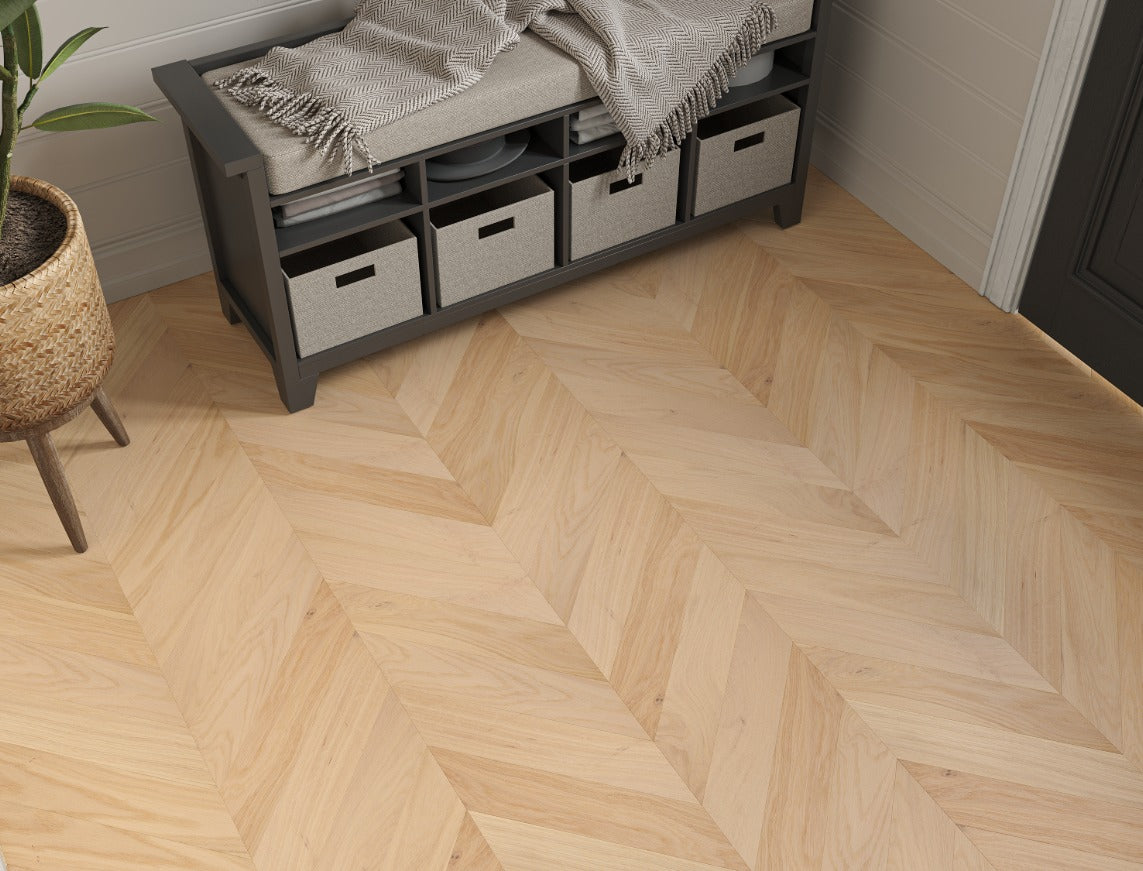
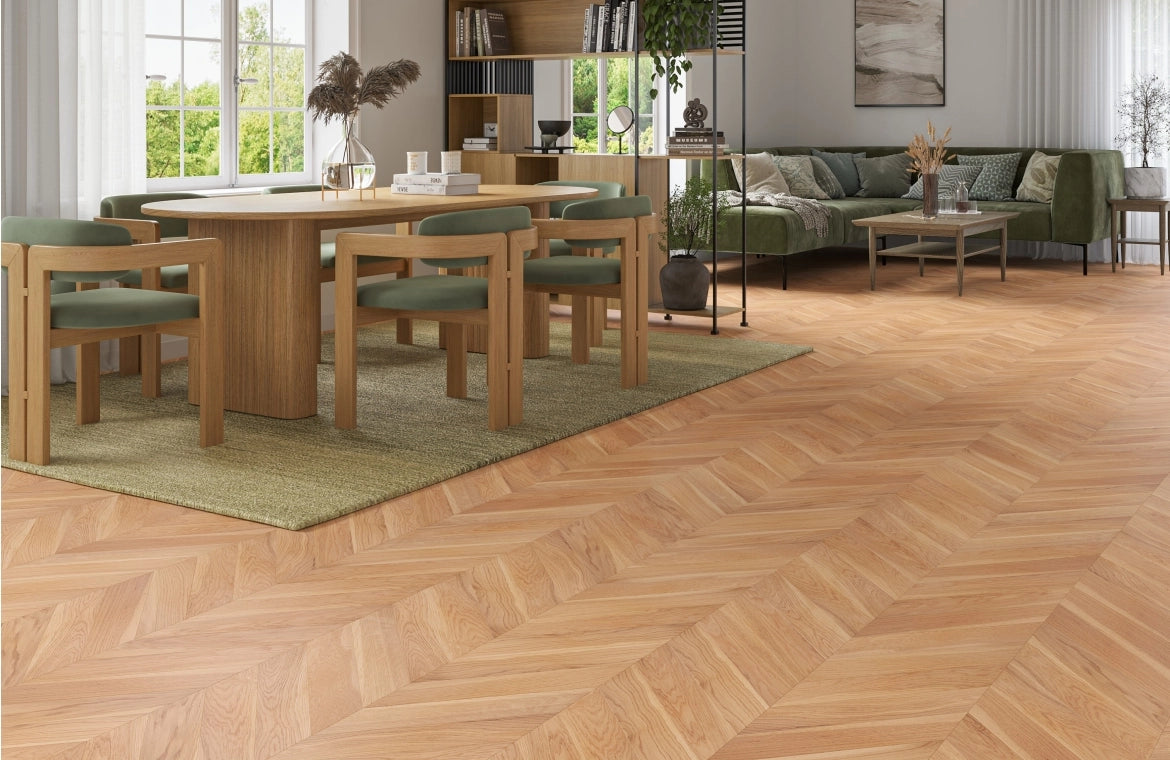
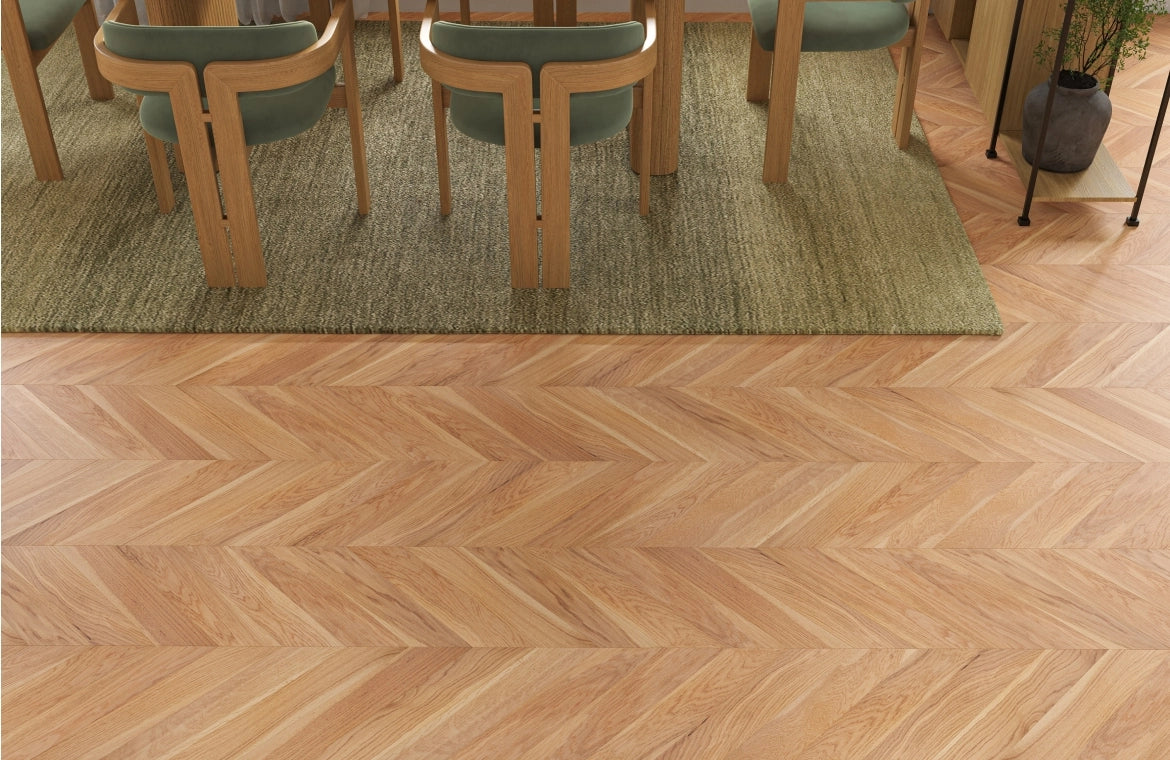
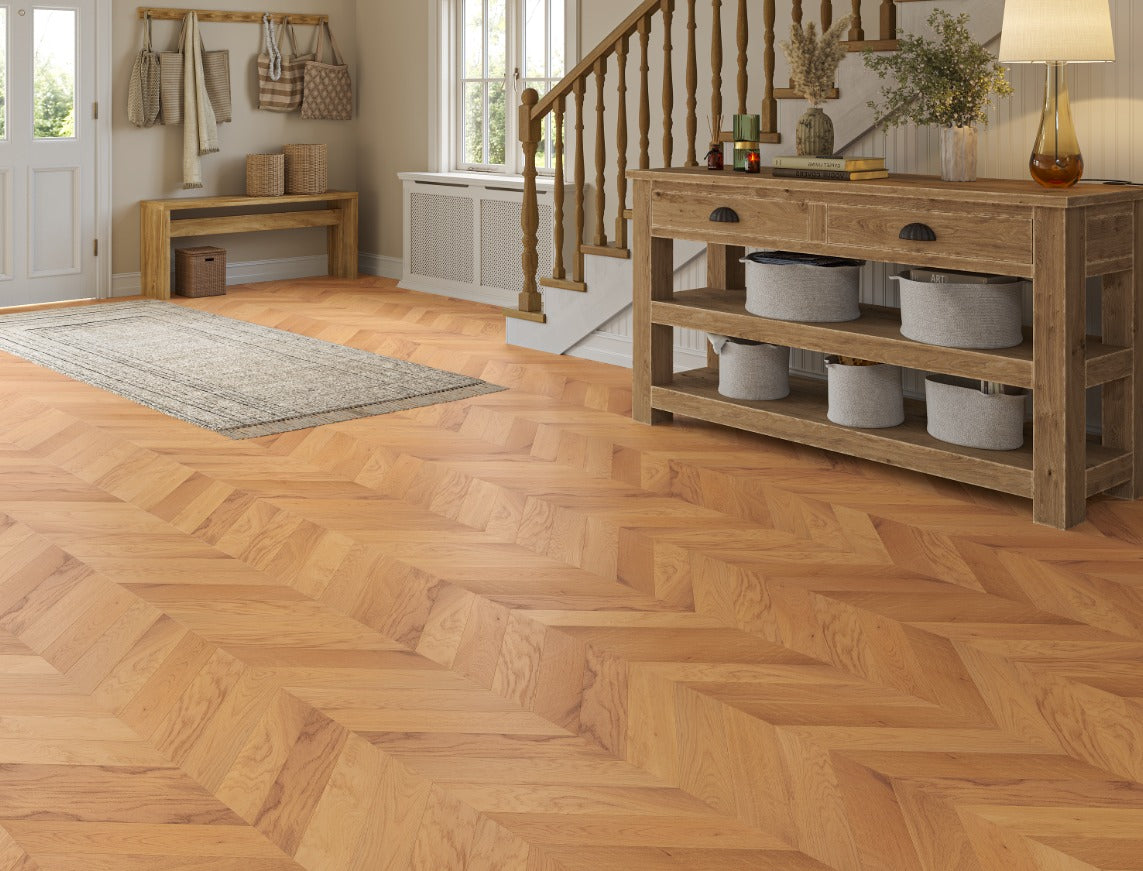
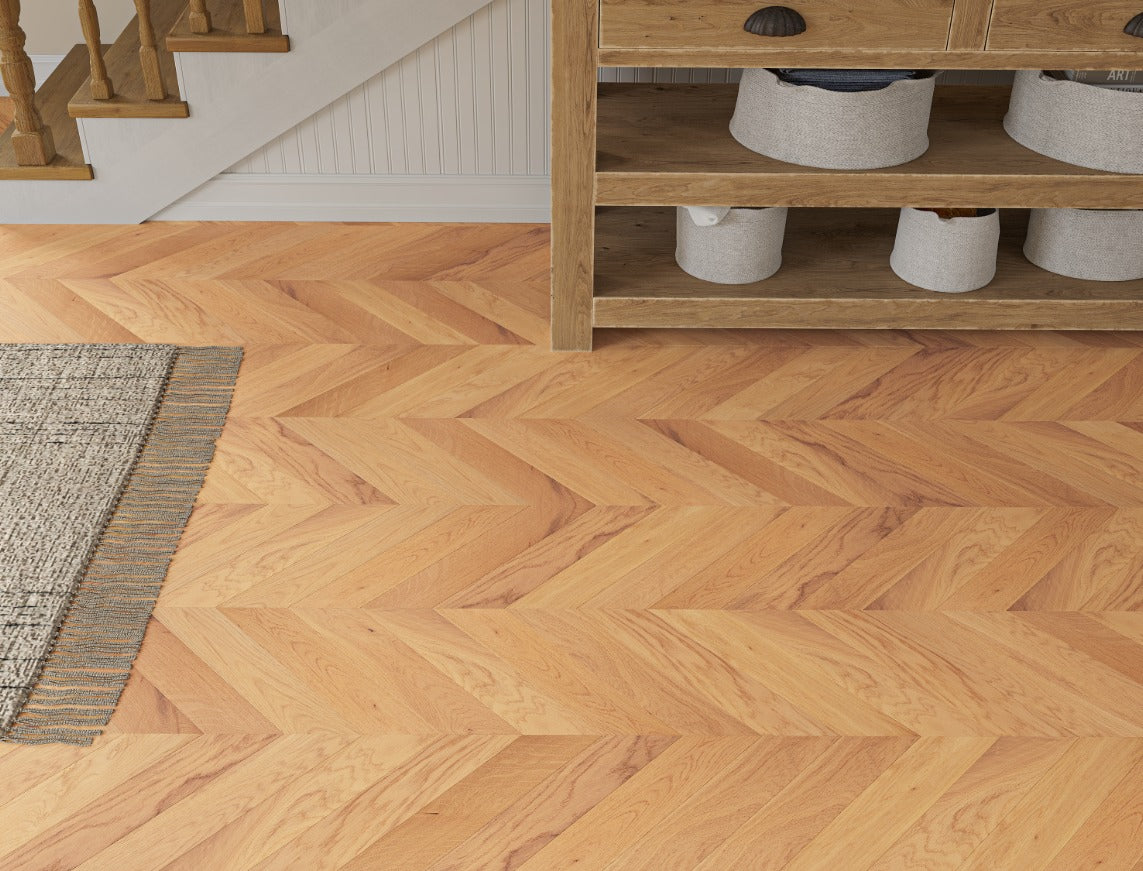
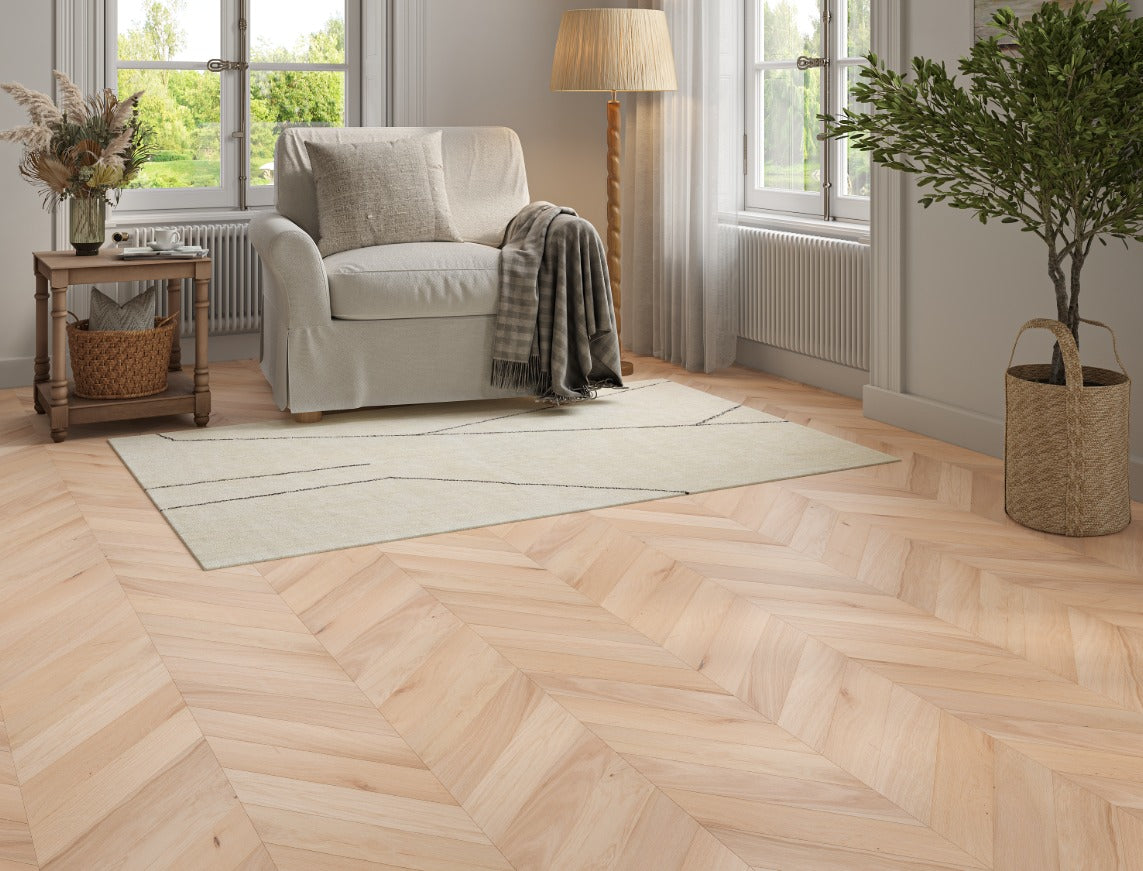
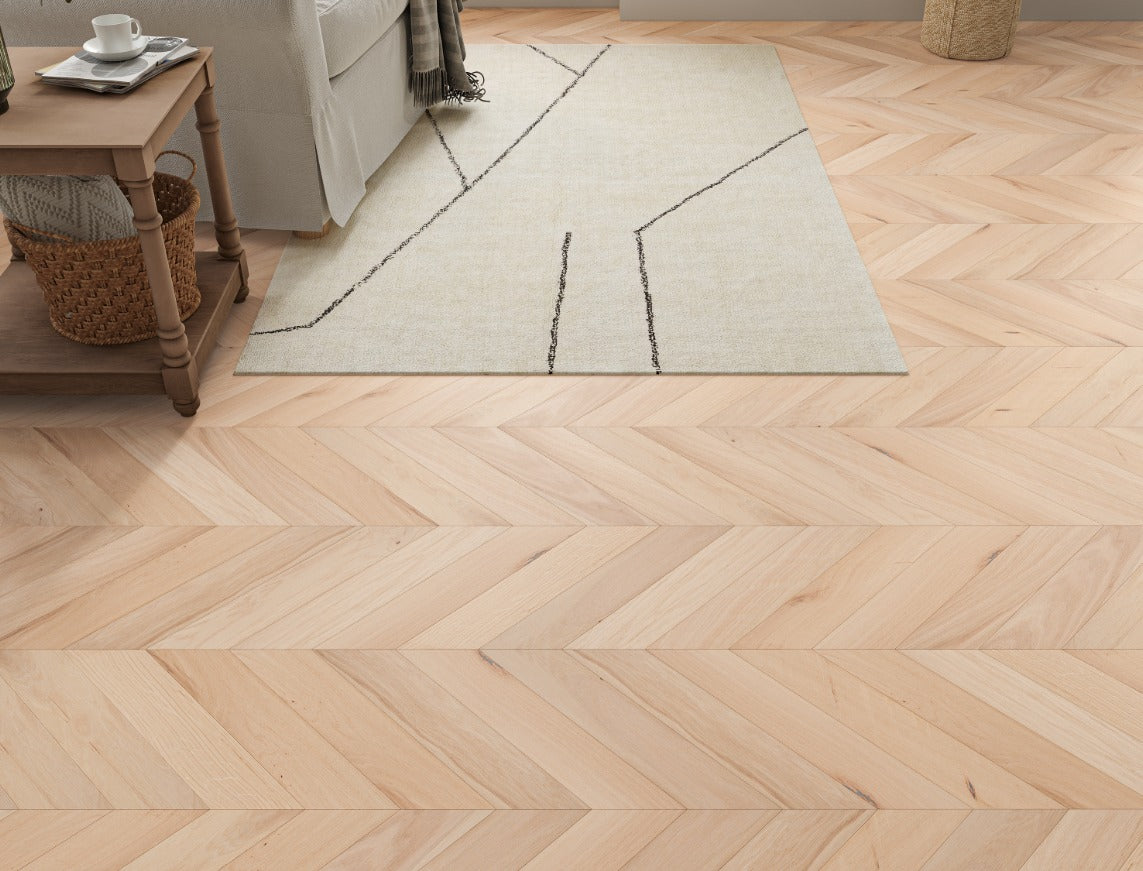
Angled blocks that meet in a continuous point, running the length of the room in an unbroken line. Chevron is the sharper, more contemporary cousin of herringbone, and the pattern that gives a room a sense of direction.
Available in engineered oak and laminate, in colours from pale naturals through to smoked and deeper browns. Because each block is cut at an angle rather than square, chevron is more demanding to produce and to lay, which is part of why it reads as the more considered choice.
Free A5 samples on every design, delivered next-day, so you can see the grain and colour in the room it is destined for before committing.
Chevron is a parquet pattern made from blocks cut at an angle, usually forty-five degrees, at both ends. Laid in opposing rows, those angled ends meet flush to form a continuous V that runs the length of the floor with no break in the line.
That unbroken point is the whole effect. Where herringbone steps and staggers, chevron flows, and the eye follows it down the room. It suits open-plan spaces and long rooms particularly well, since it emphasises the length rather than fighting it.
Chevron or herringbone?
The two are often confused, and the difference comes down to how the blocks are cut.
Chevron
Herringbone
Block ends
Cut at an angle
Cut square
Where blocks meet
Flush, forming a point
End to side, staggered
Effect
Continuous V
Zigzag
Character
Contemporary, directional
Traditional, classical
Best suited to
Long or open-plan rooms
Period properties, any room
Neither is better. Chevron suits modern interiors and rooms with length to play with; herringbone is the more classical pattern and works in almost any space. If you are torn, order a sample of each.
A sample cannot show you a pattern
An A5 chevron sample shows a single angled block. It tells you the colour, grain and finish, but not how the V reads across a floor. Look at the room-set photograph on the product page alongside the sample in your hand.
Choosing a chevron floor
Block width
Narrower blocks give more repeats across the room and a busier, more intricate pattern. Wider blocks read as calmer and show more grain in each piece. Wider generally suits larger, open spaces; narrower suits smaller rooms and more traditional interiors.
Colour and finish
A pattern this strong is affected considerably by colour. Pale natural tones keep it subtle and let the pattern emerge quietly. Smoked and darker colours make the V far more pronounced, which is striking but needs a room with the light to carry it.
Material
Engineered oak gives you a real oak surface on a stable core, suitable for underfloor heating. Laminate gives the same look with a harder, more scratch-resistant surface at a lower cost.
Fitting chevron
Chevron is the most demanding pattern we sell to lay. The whole effect depends on the points meeting cleanly along a true centre line, and any drift in the first rows becomes obvious as the floor progresses. Unlike herringbone, there is no stagger to disguise a small error.
Engineered oak chevron in tongue and groove is normally bonded to the subfloor rather than floated. Laminate chevron generally uses a click system and is more forgiving, but the setting out still matters as much. Unless you have laid a patterned floor before, this is one for an experienced fitter. The joining method is listed on every product page, and our fitting guides cover subfloor preparation and expansion gaps.
How much will you need?
Allow 15% for cuts rather than the usual 10%. Every block that meets a wall has to be cut at an angle, and those offcuts rarely find a second use. Chevron wastes more than any other pattern for exactly this reason.
The flooring calculator on every product page applies the right allowance automatically. You will also need beading for the perimeter, threshold profiles at doorways, and adhesive if the floor is being bonded down.
Order the full quantity in one go. Shade varies slightly between production batches, and on a patterned floor a mismatched block is far more noticeable than it would be in a plank layout.
Chevron flooring: frequently asked questions
What is the difference between chevron and herringbone?
Chevron blocks are cut at an angle so they meet in a continuous point. Herringbone blocks are cut square and meet end to side, creating a staggered zigzag.
How much extra should I order for chevron?
15%, rather than the 10% we recommend for plank floors. The angled cuts around the perimeter waste considerably more material.
Which direction should chevron run?
Usually along the length of the room, with the point leading towards the main door or window. That is what gives chevron its sense of direction. Your fitter will set it out from a true centre line.
Can I fit chevron flooring myself?
We would not recommend it unless you have laid a patterned floor before. The points must meet cleanly and there is no stagger to hide a small error. Engineered oak chevron is usually bonded down as well.
55,000+ Happy Customers & 1,050+ Reviews
Join thousands of UK homeowners who rate us “Excellent” on Trustpilot.
30-Day Money-Back Guarantee
Changed your mind? Return unused doors within 30 days for a refund.
Made to Order Available
Many doors can be made to your exact measurements and finished by our in‑house team.
Expert Help, 5 Days a Week
UK-based door specialists on the phone to help you choose the right door and size.
Fast, Fully Insured Delivery
Quick delivery across mainland UK, fully covered against transit damage.
Professional Fitting Available
Ask our team to arrange trusted local fitters for seamless installation.