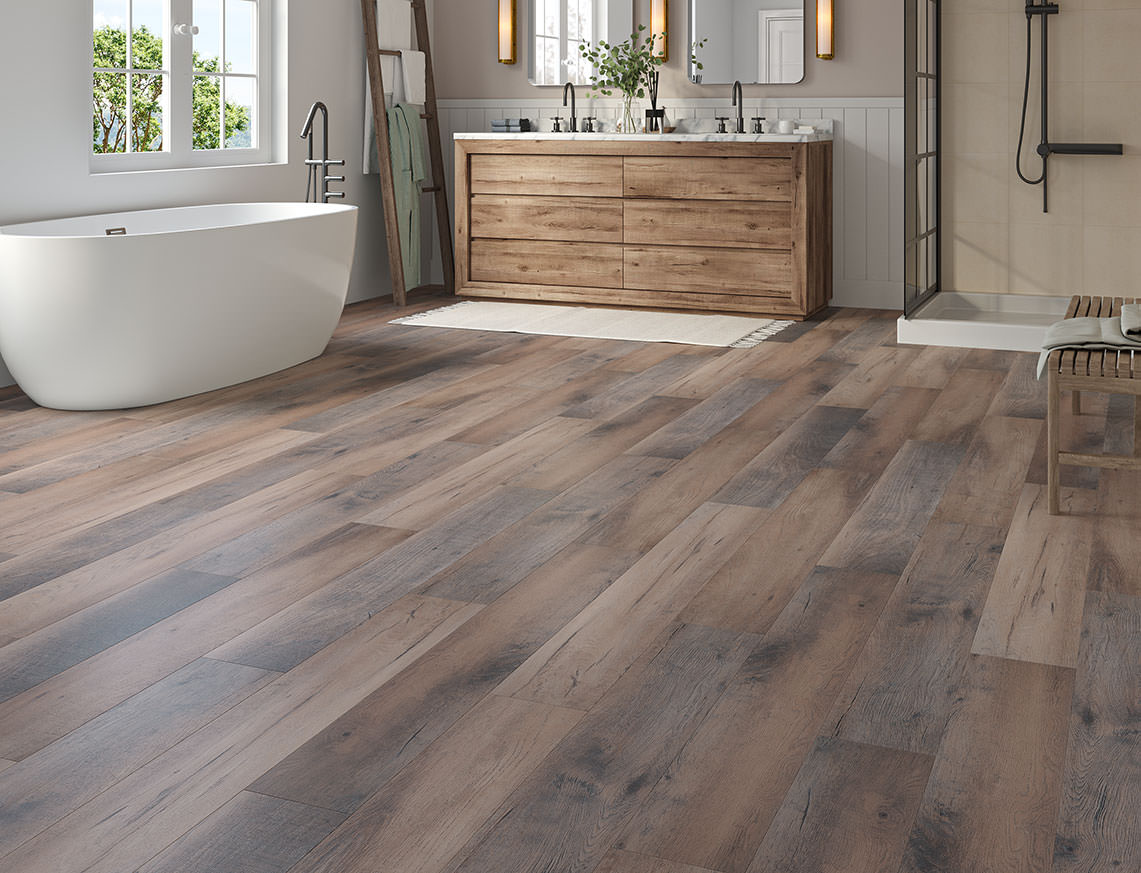
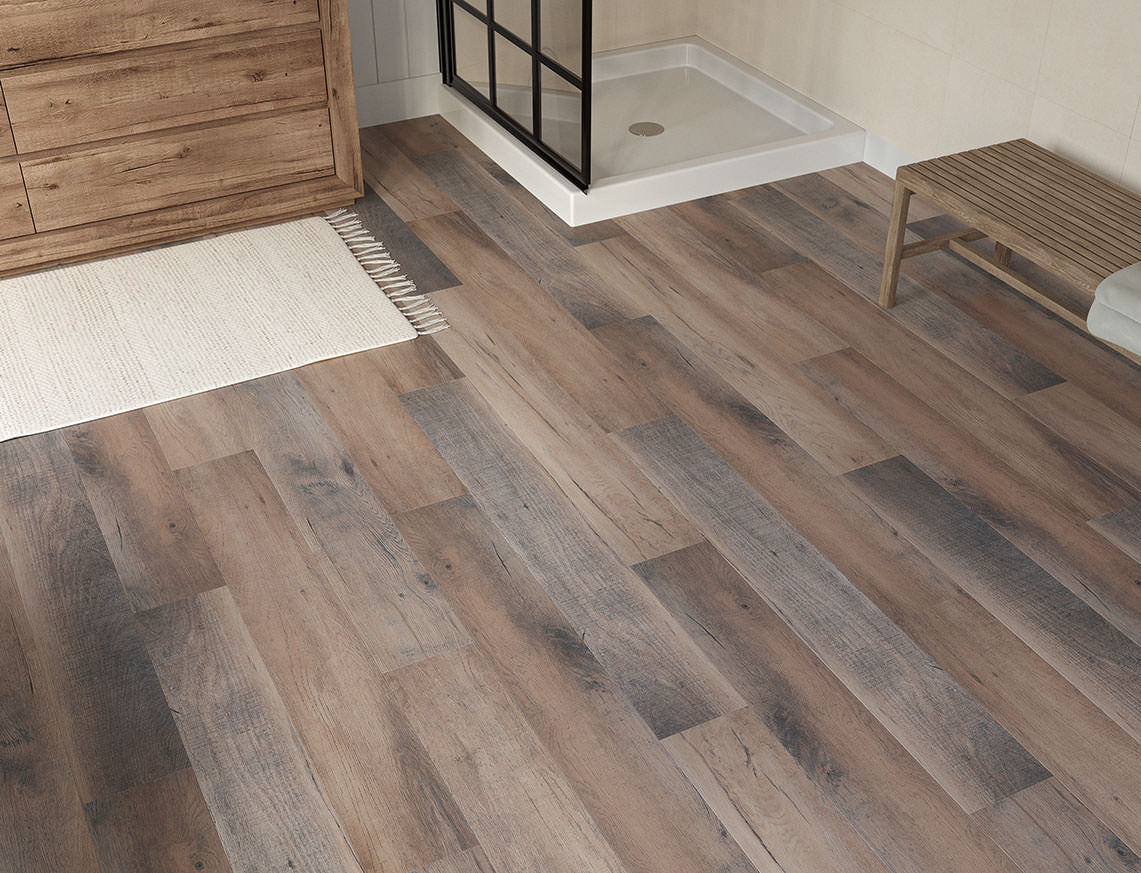
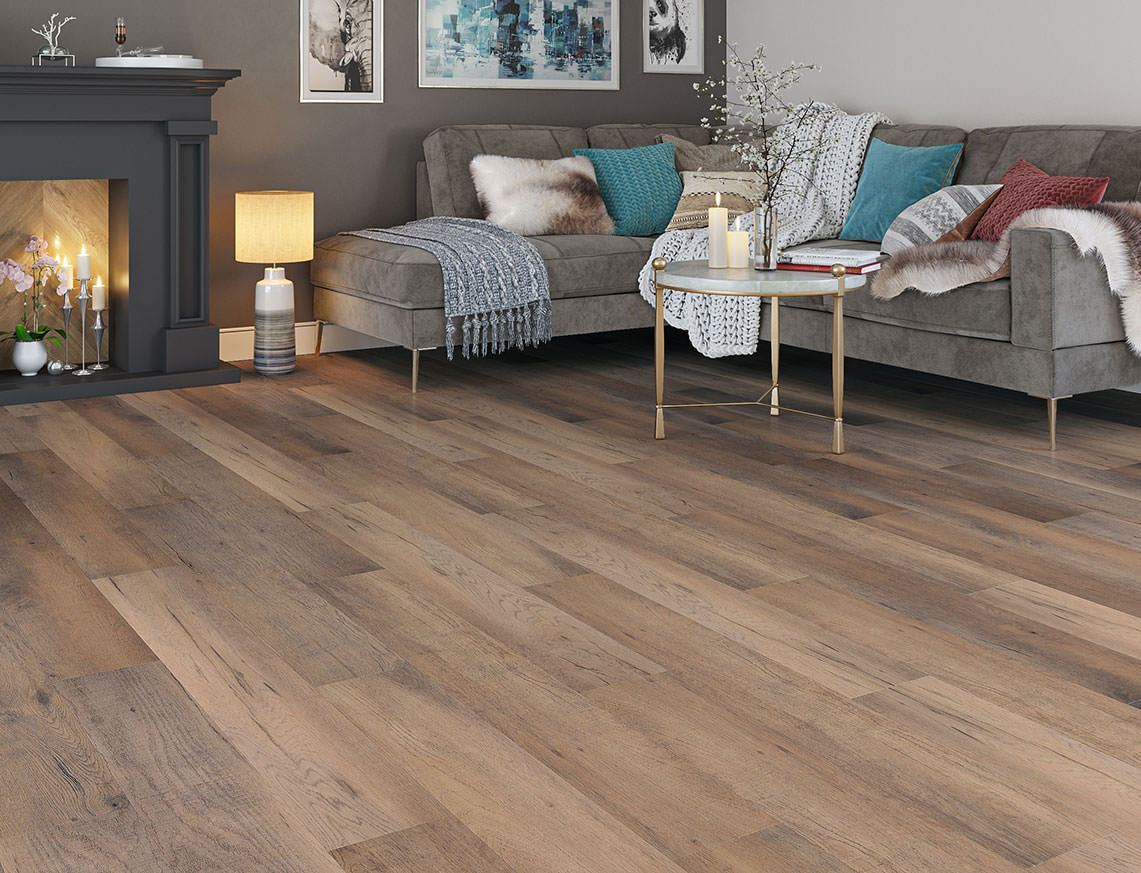
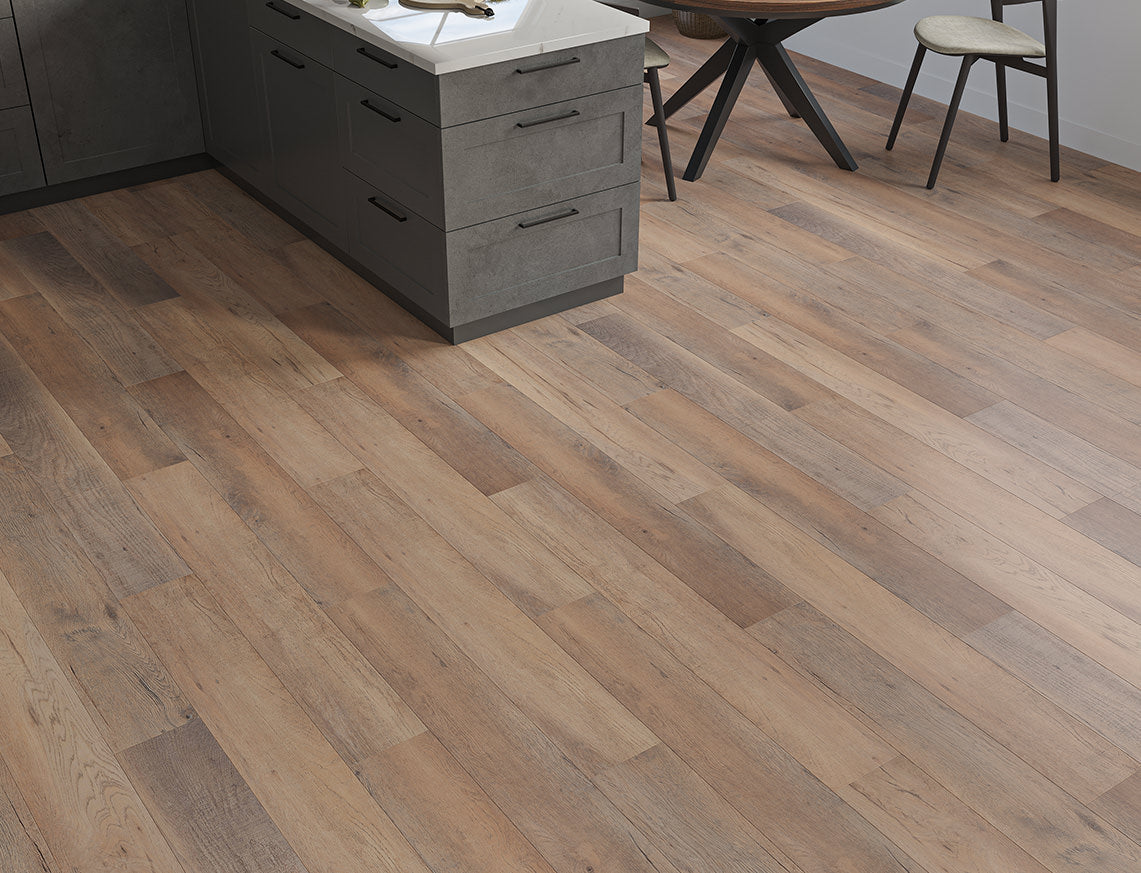
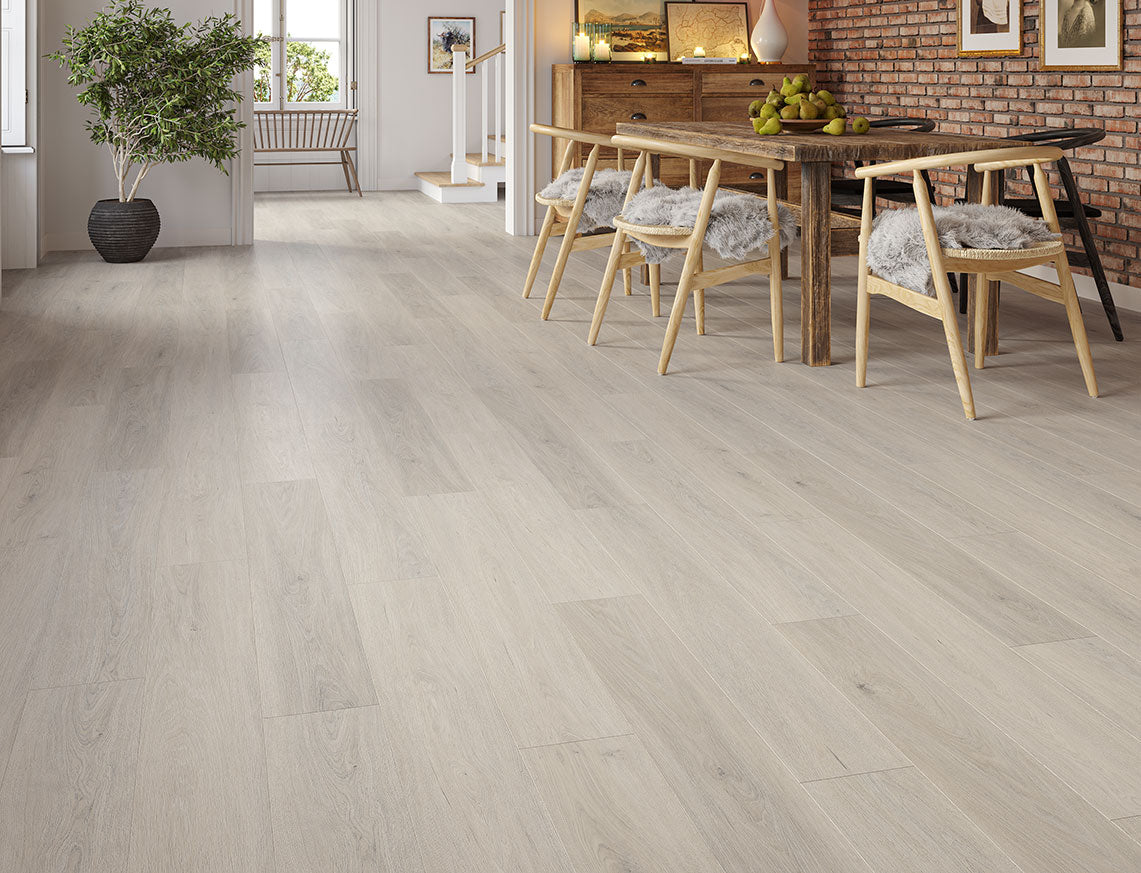
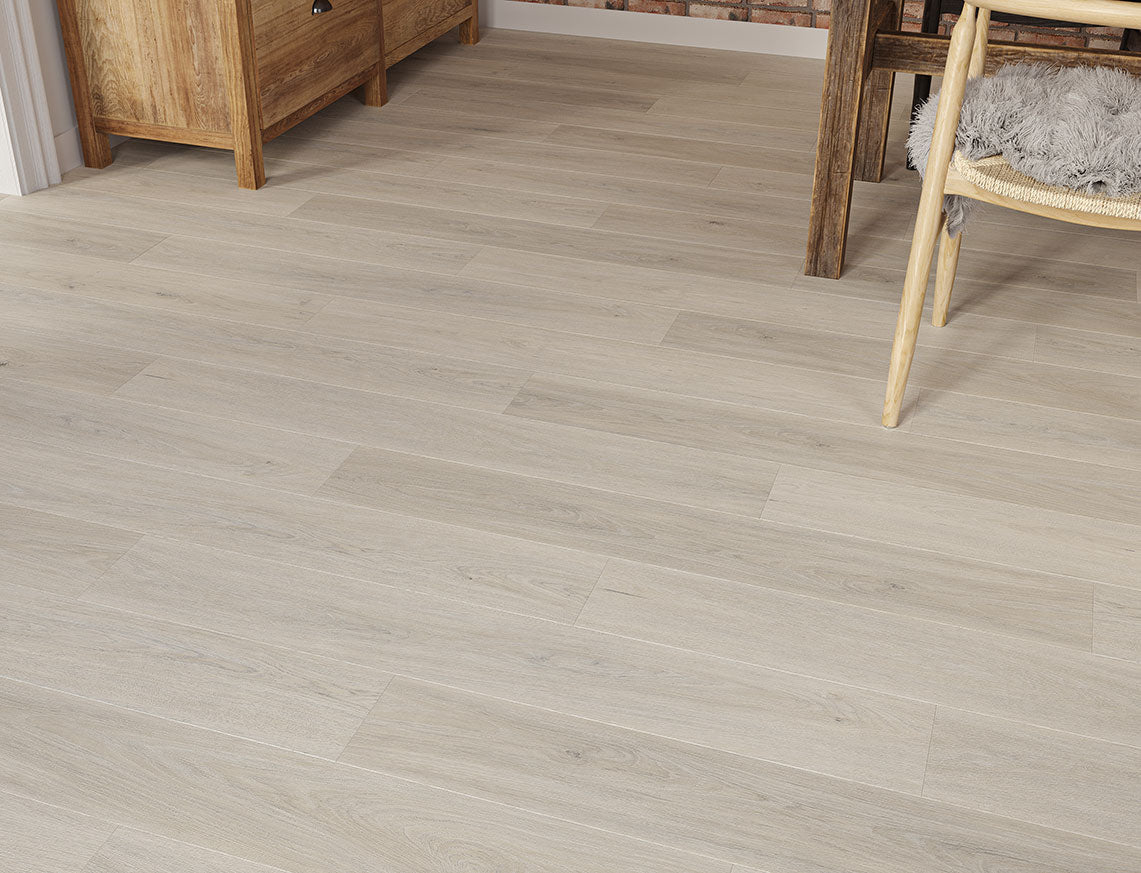
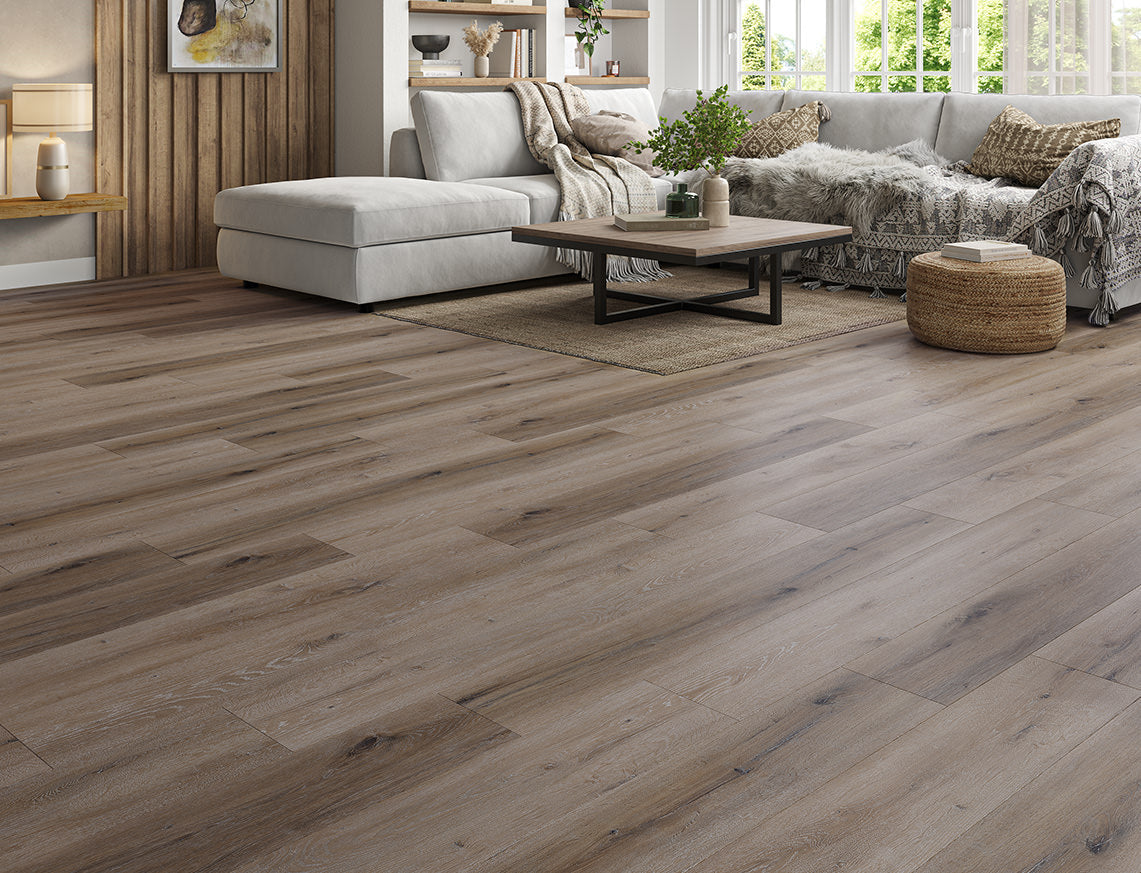
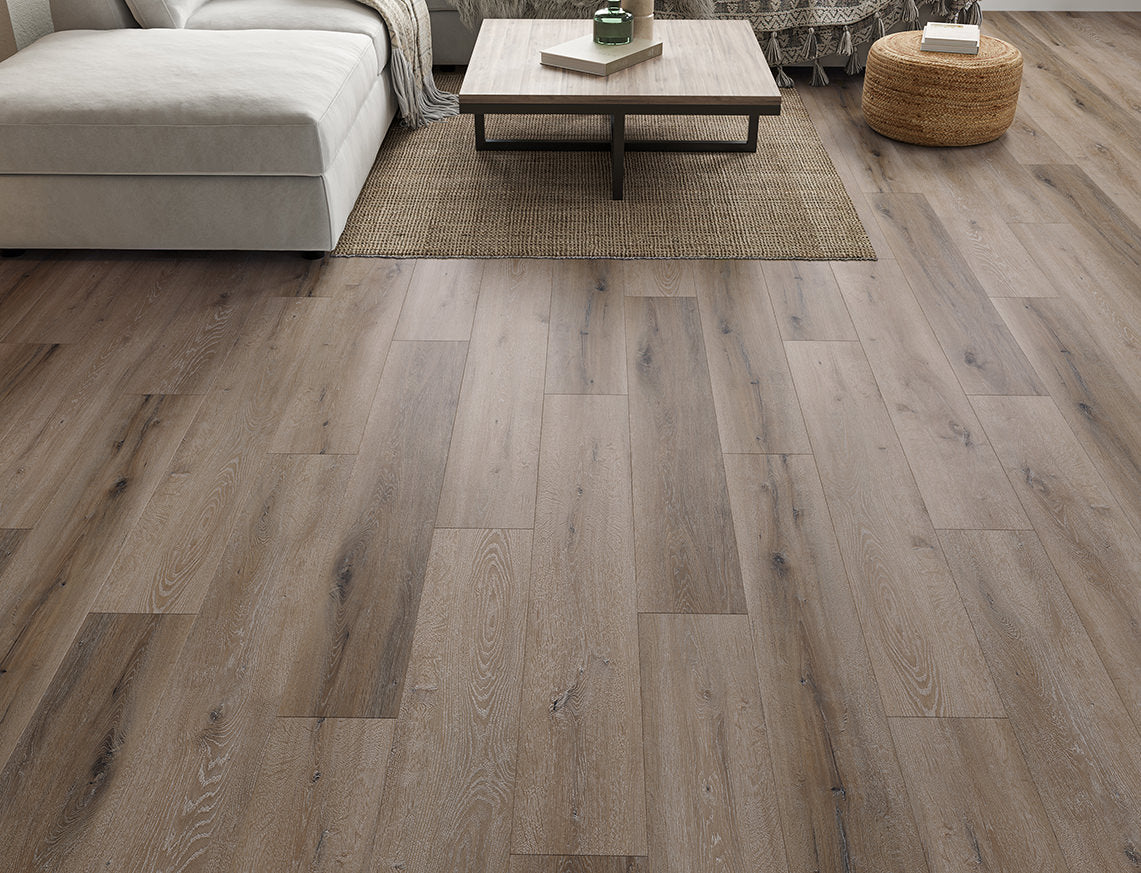
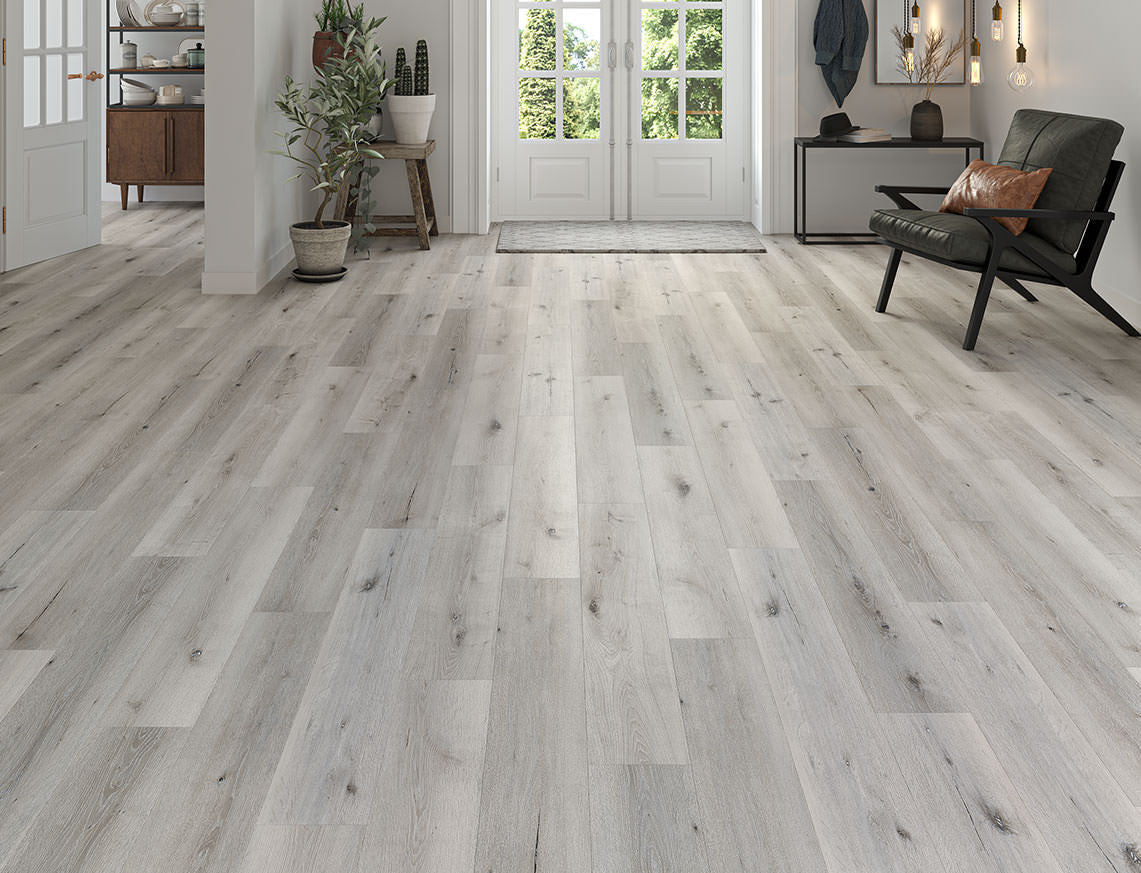
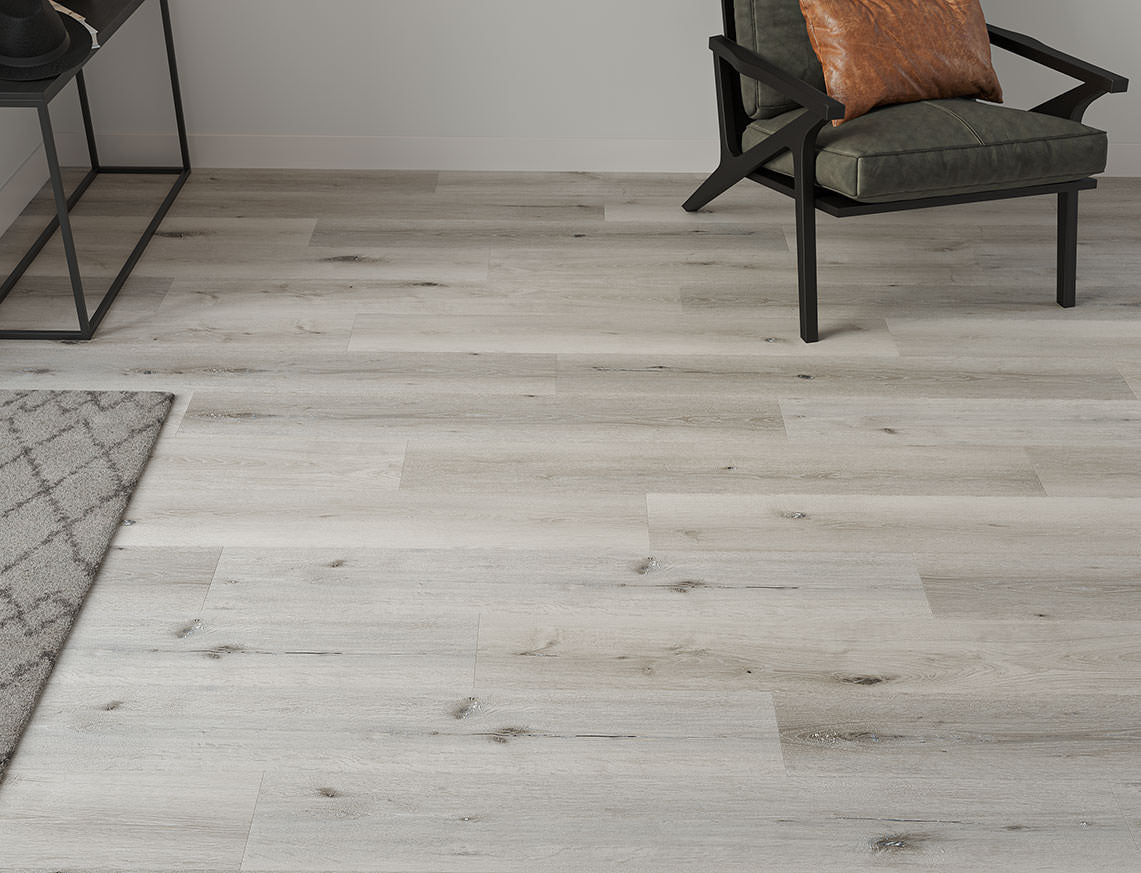
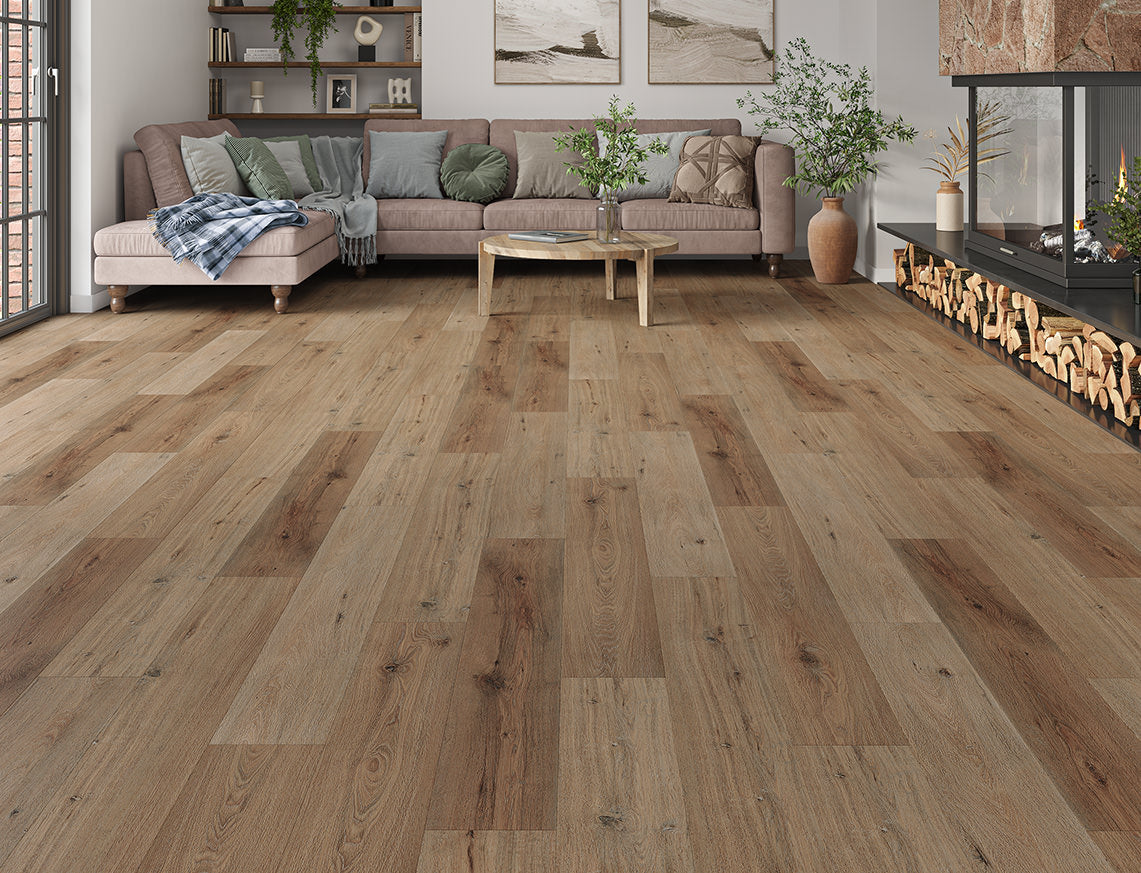
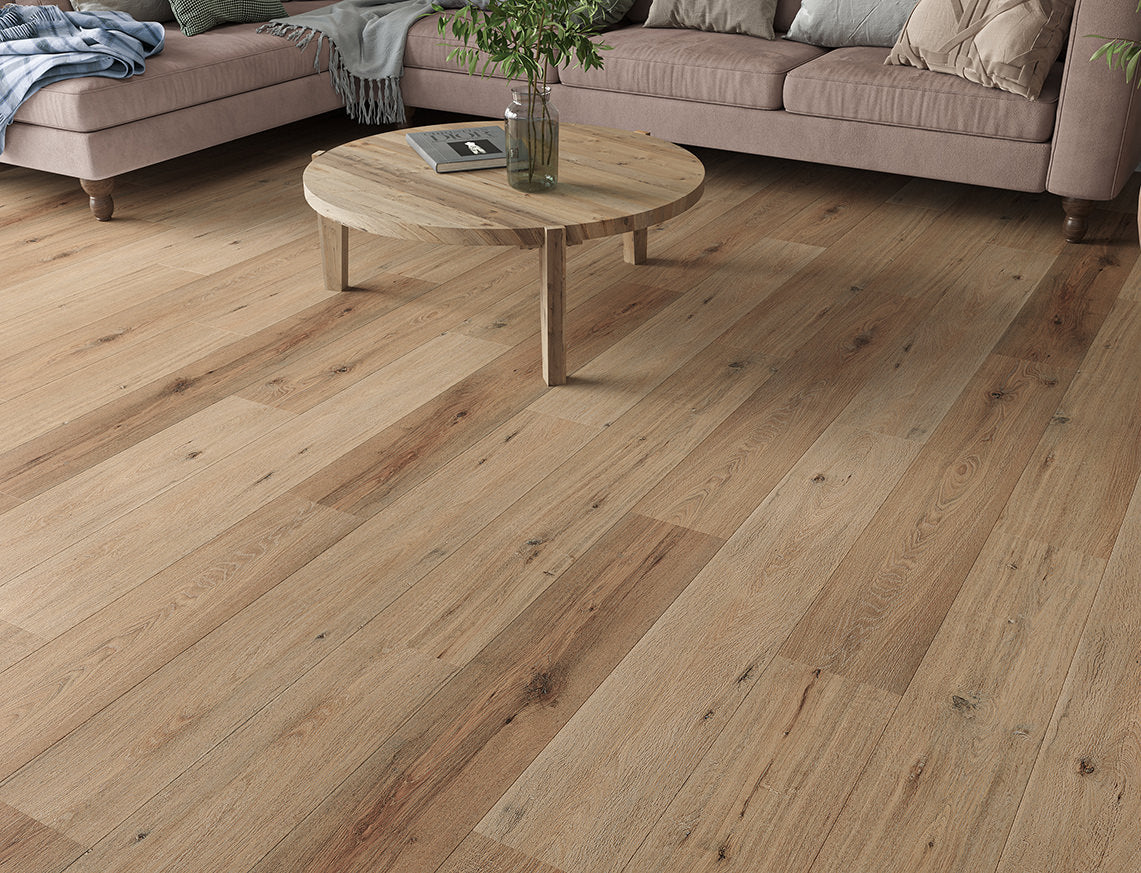
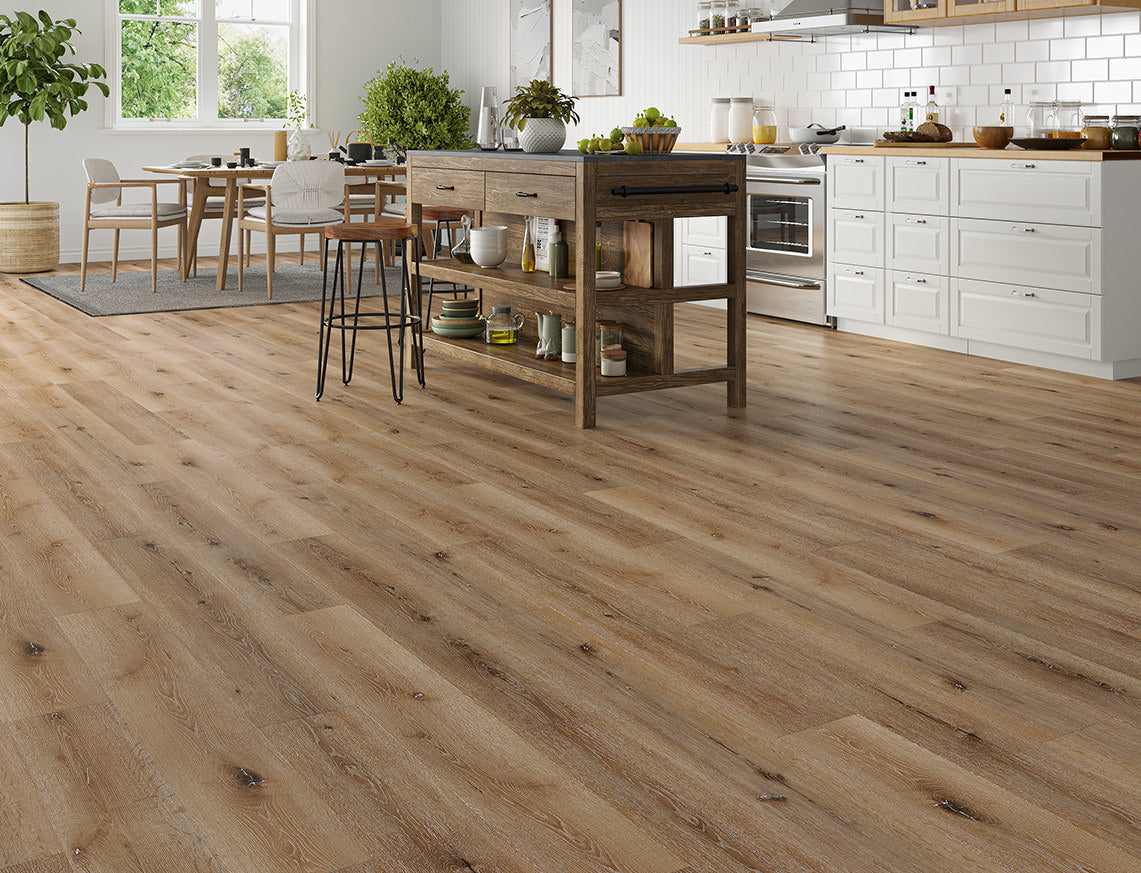
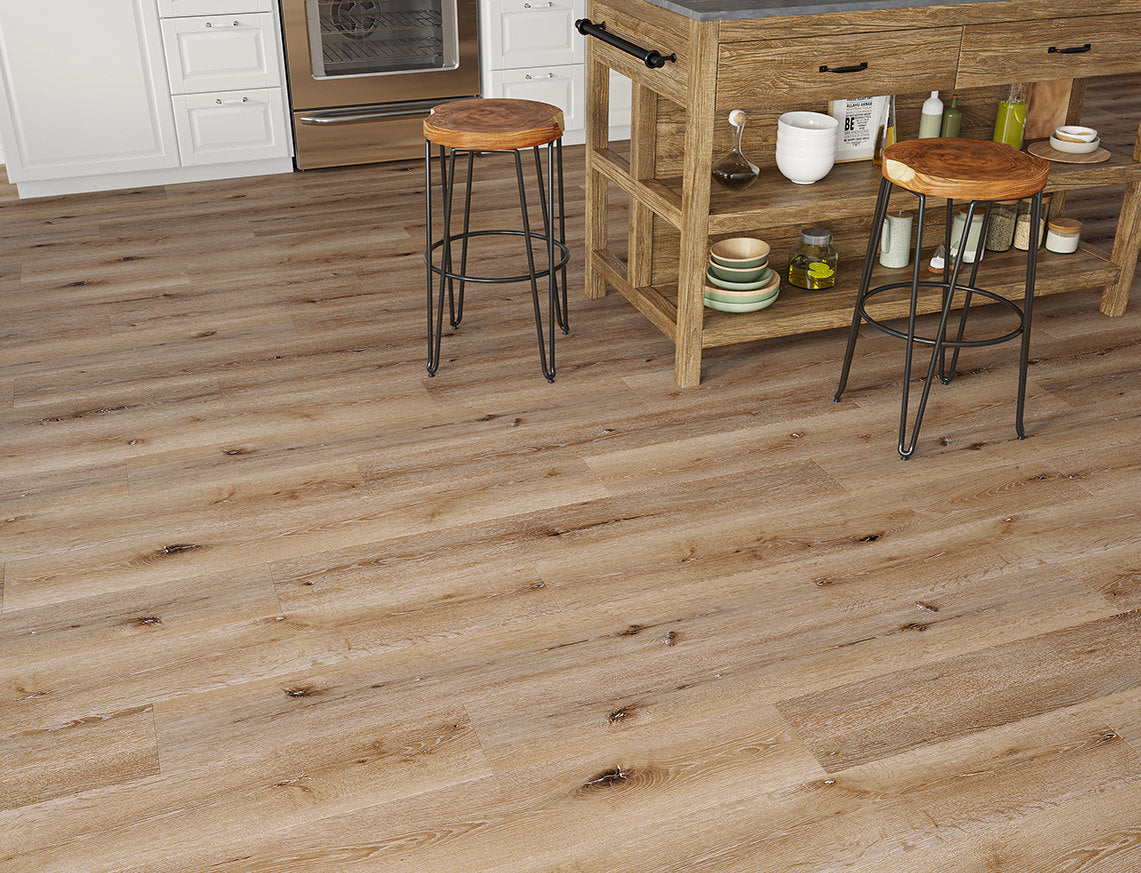
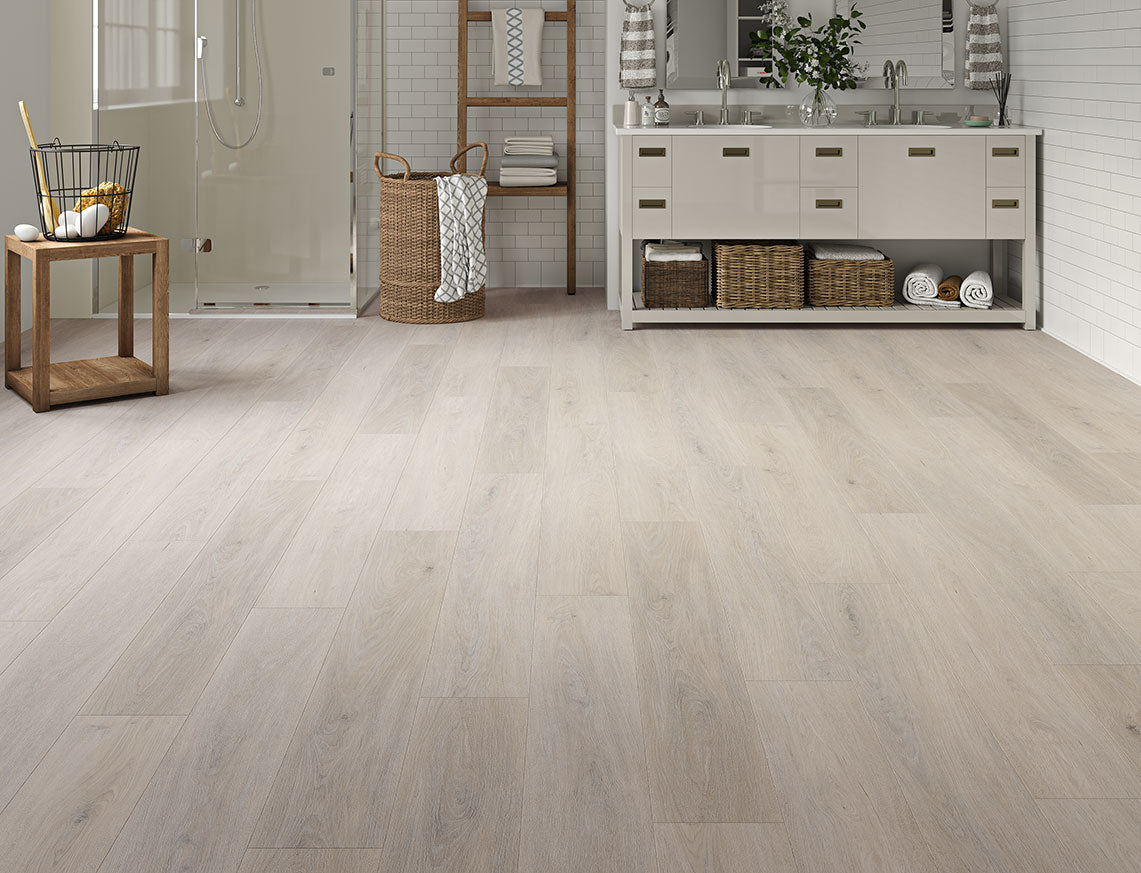
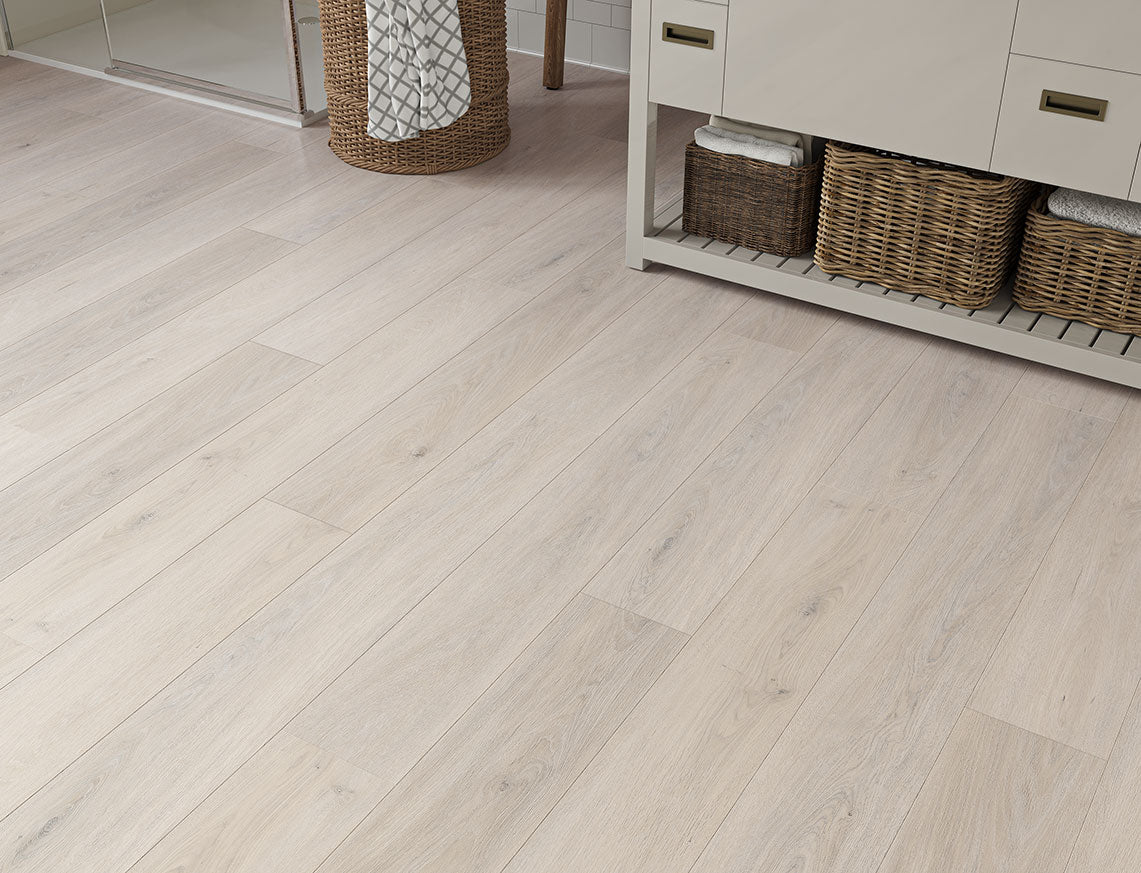
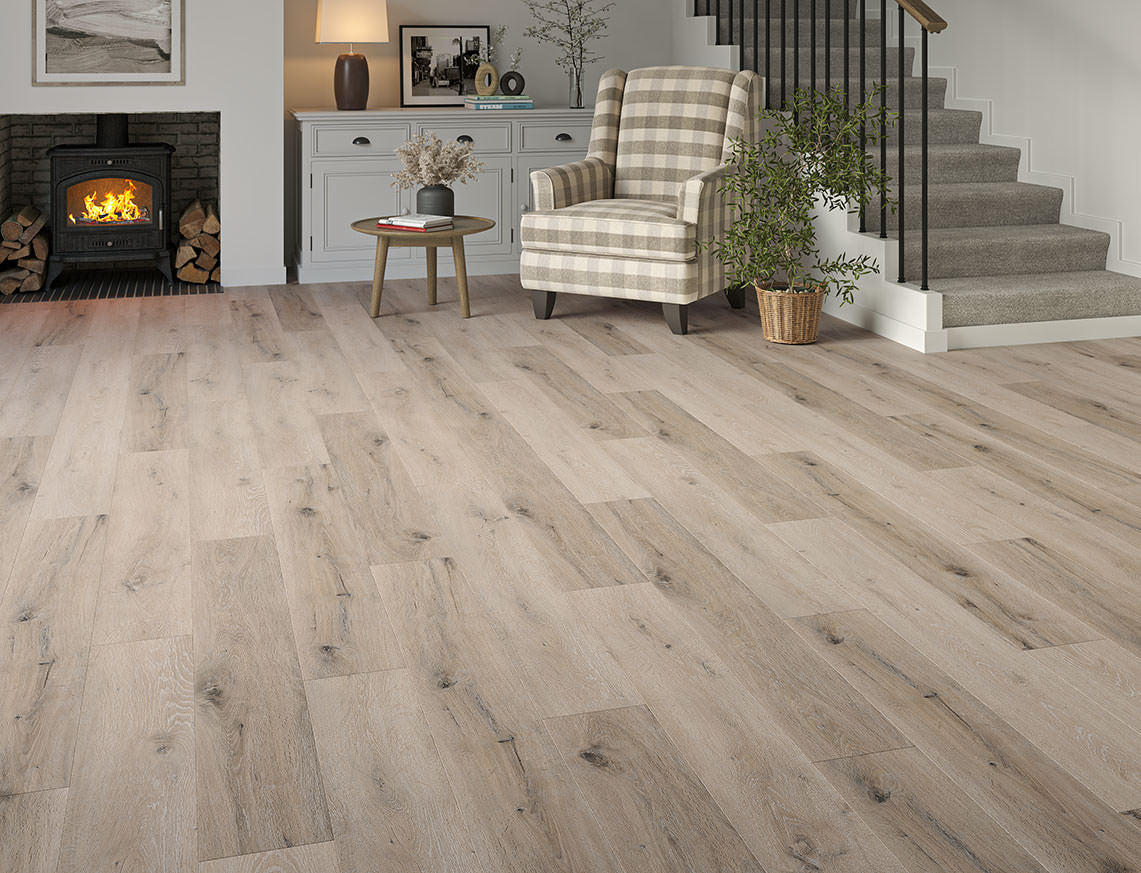
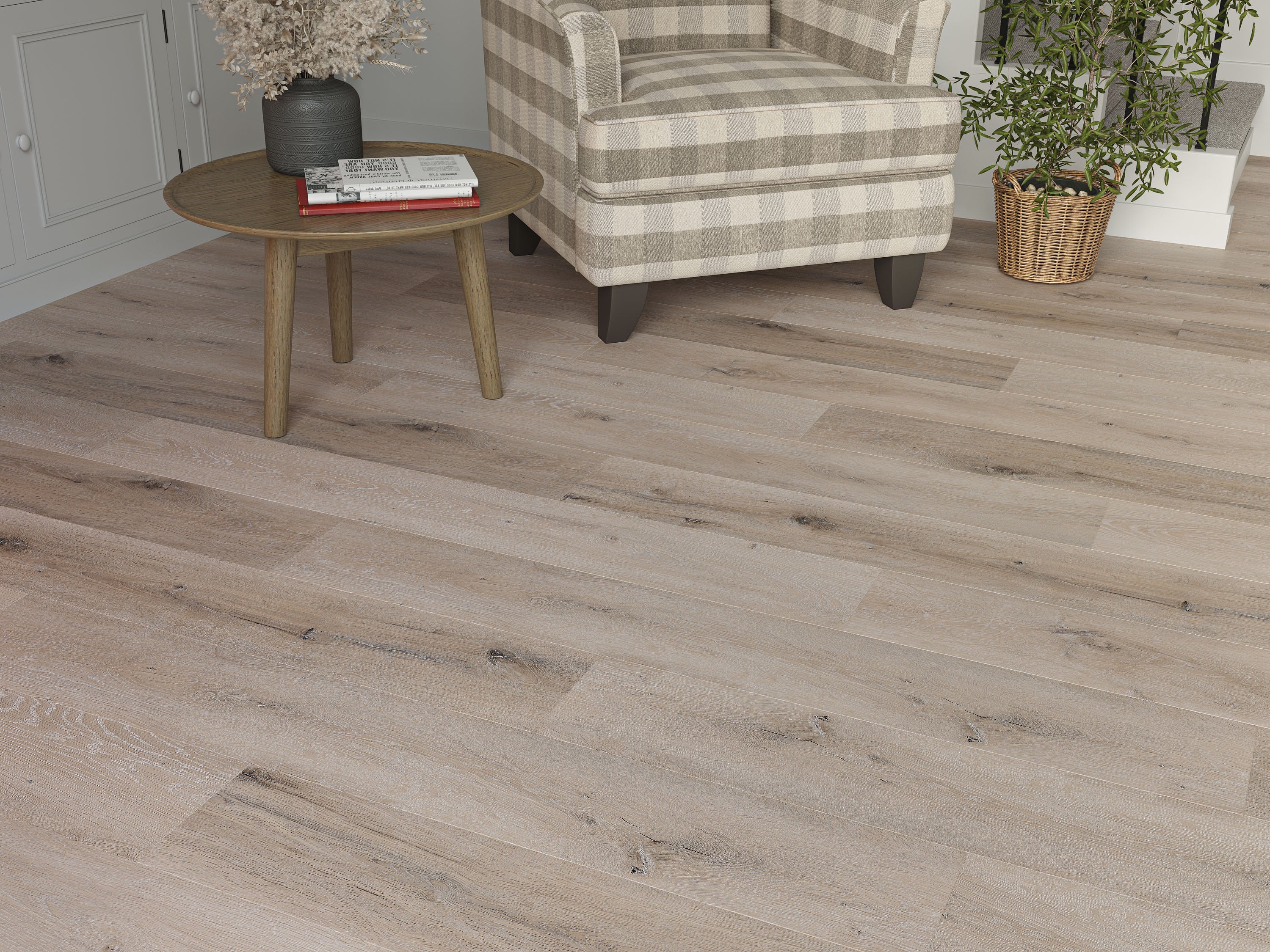
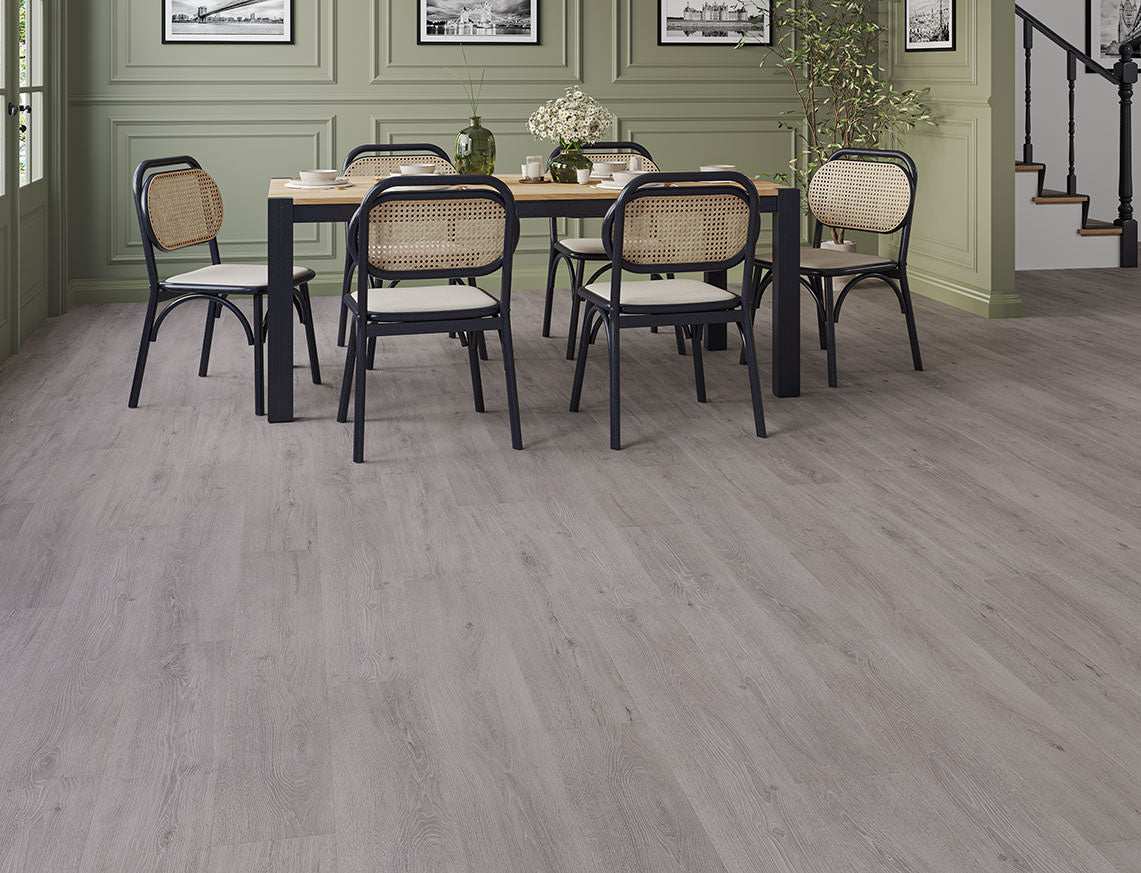
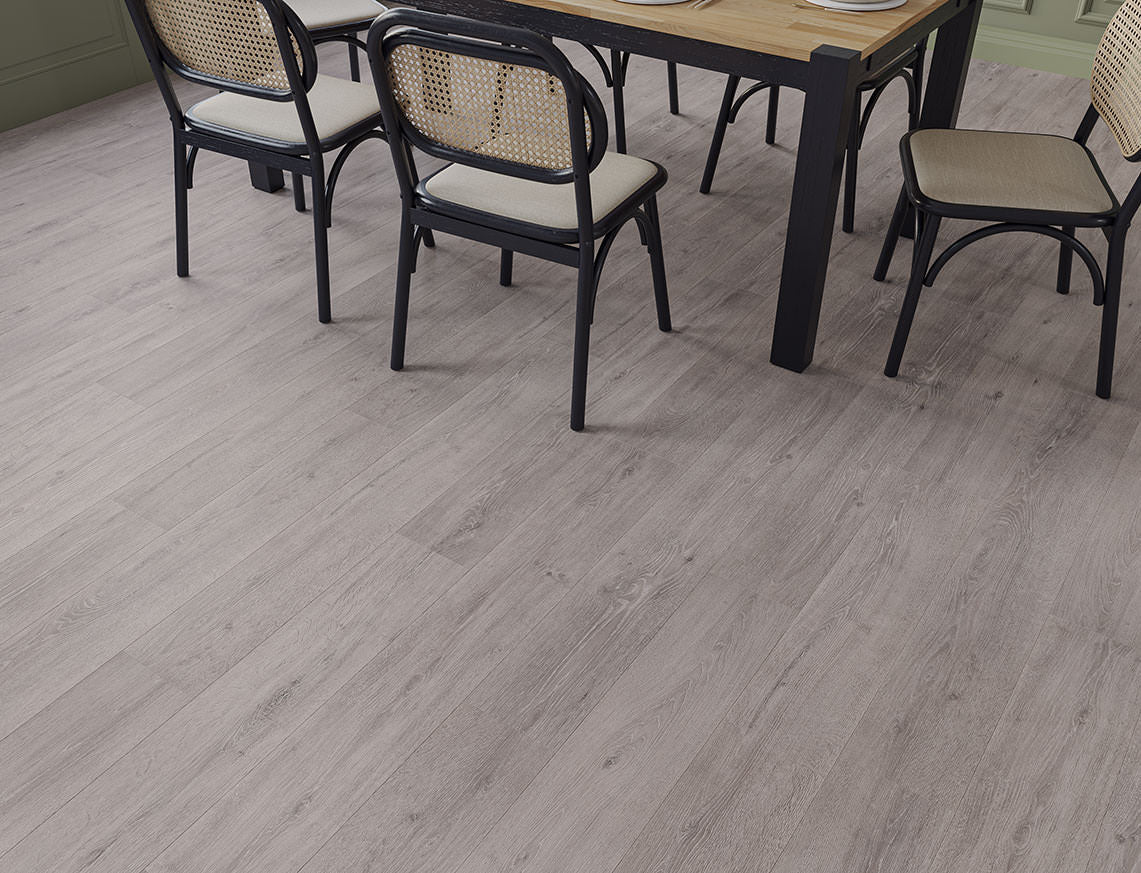
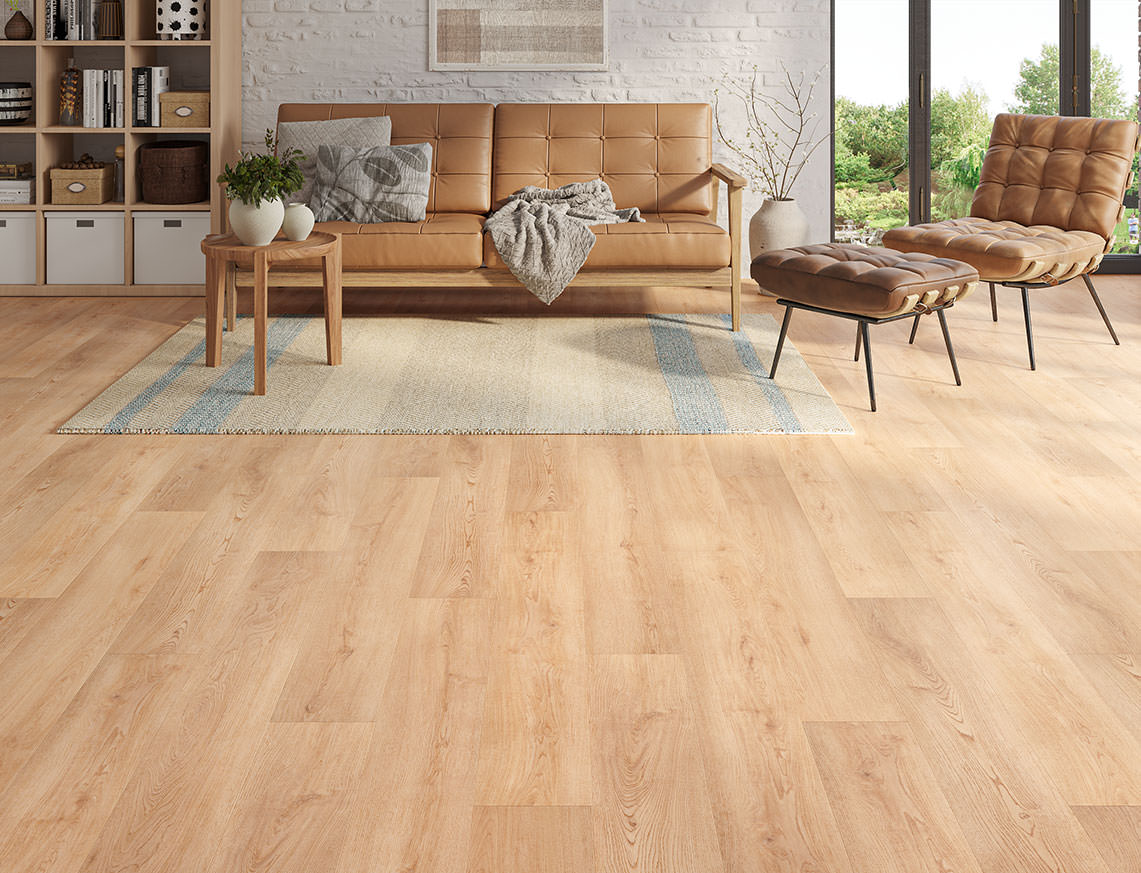
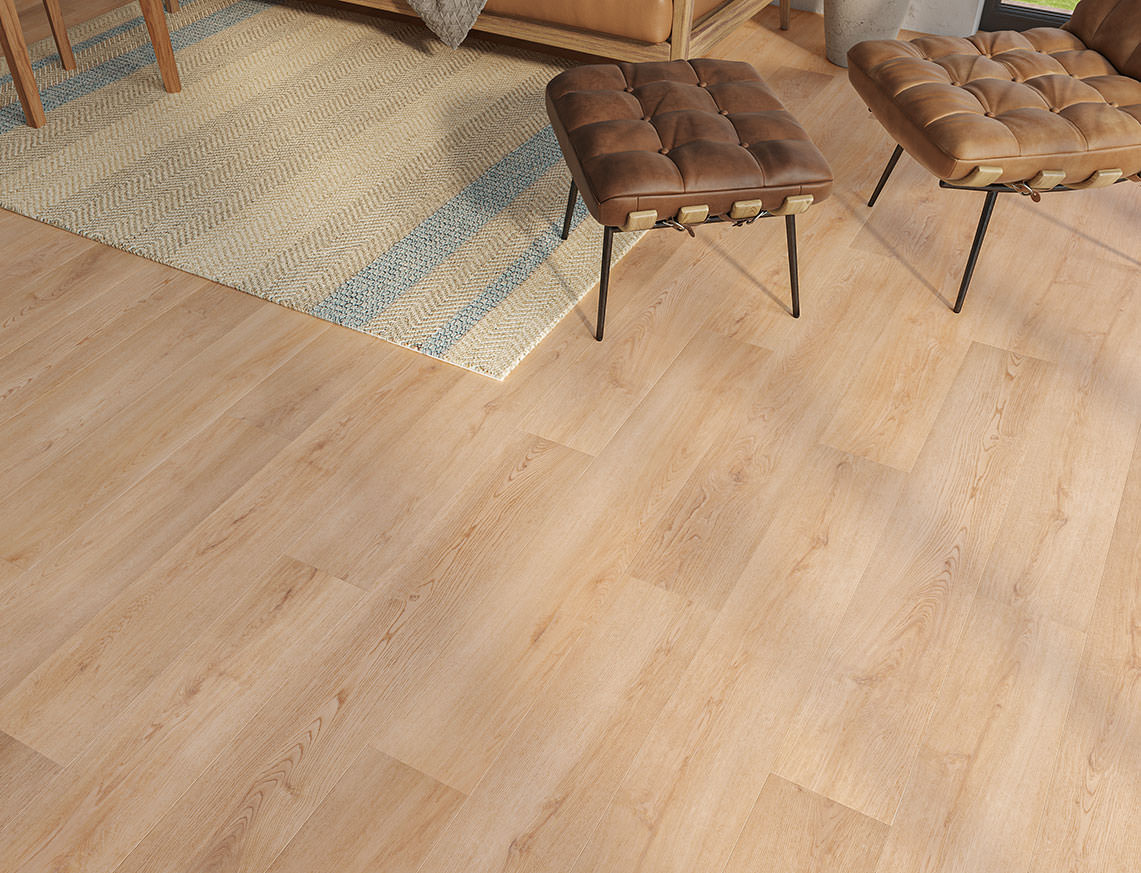
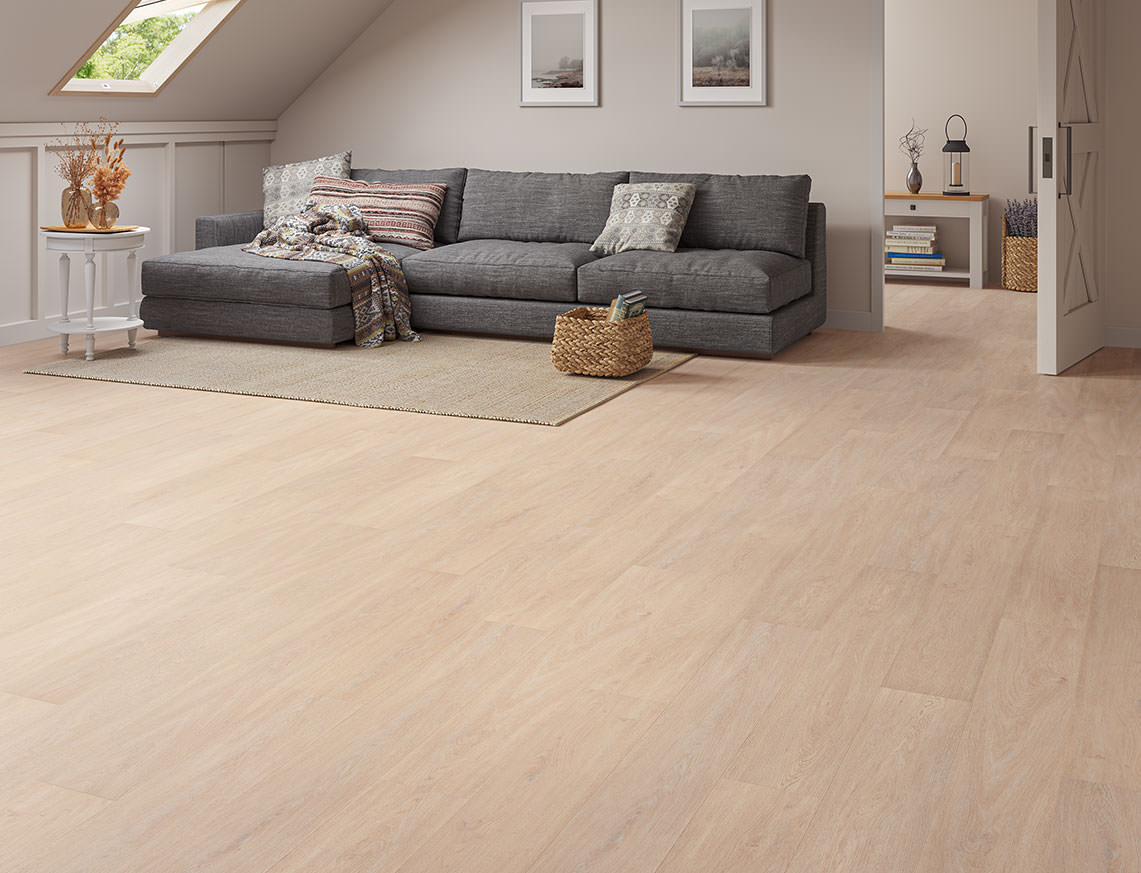
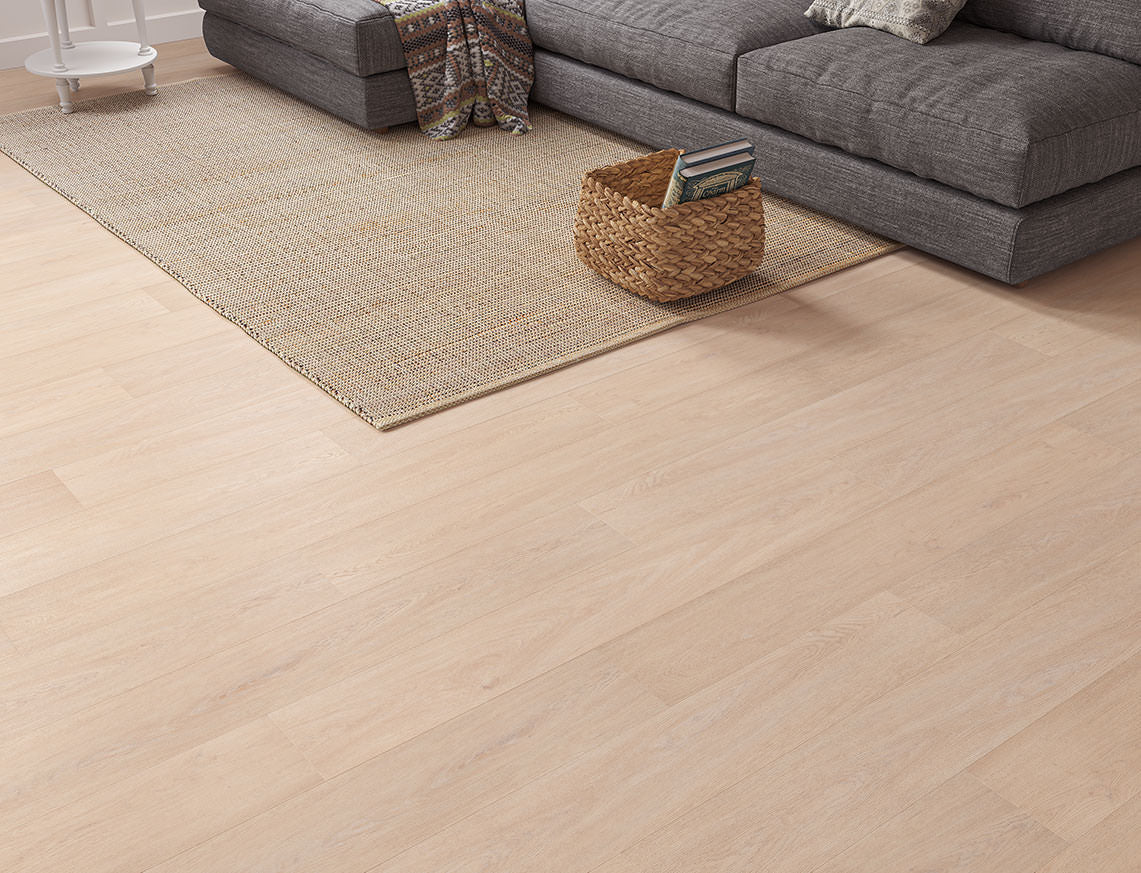
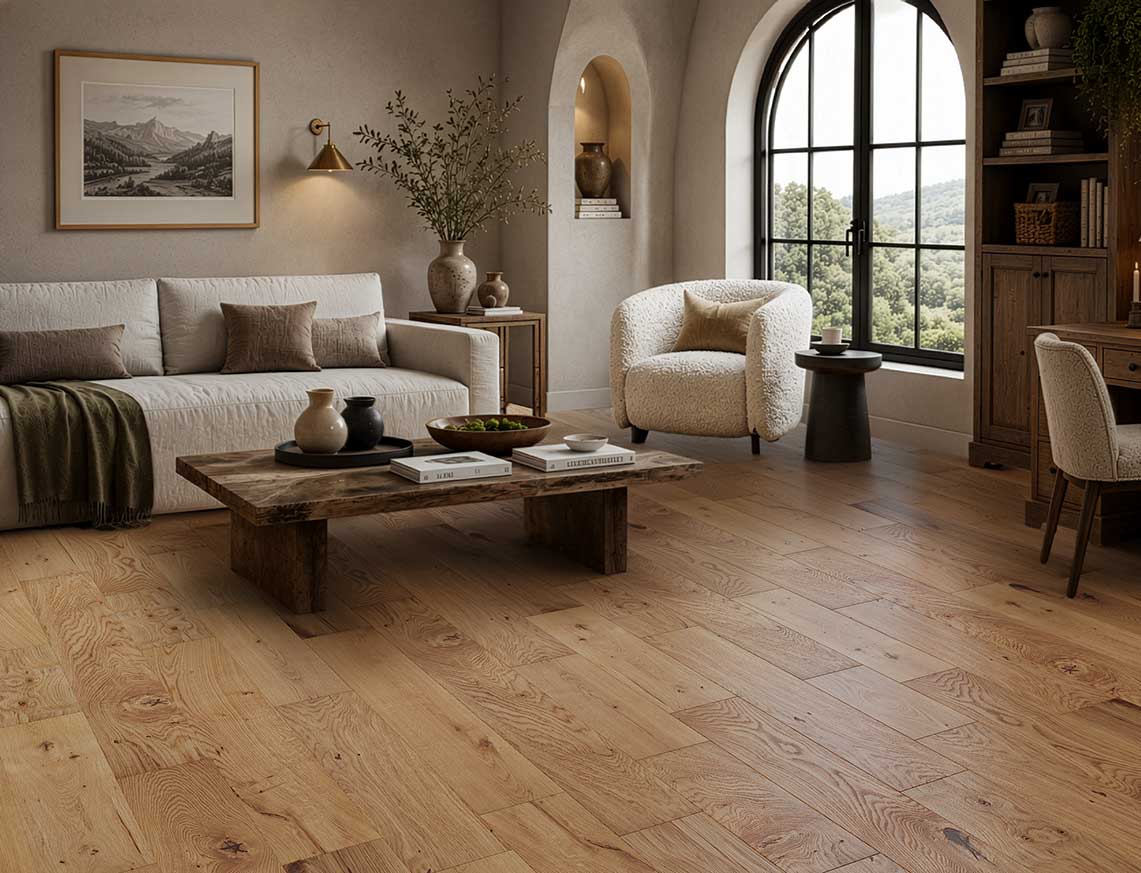
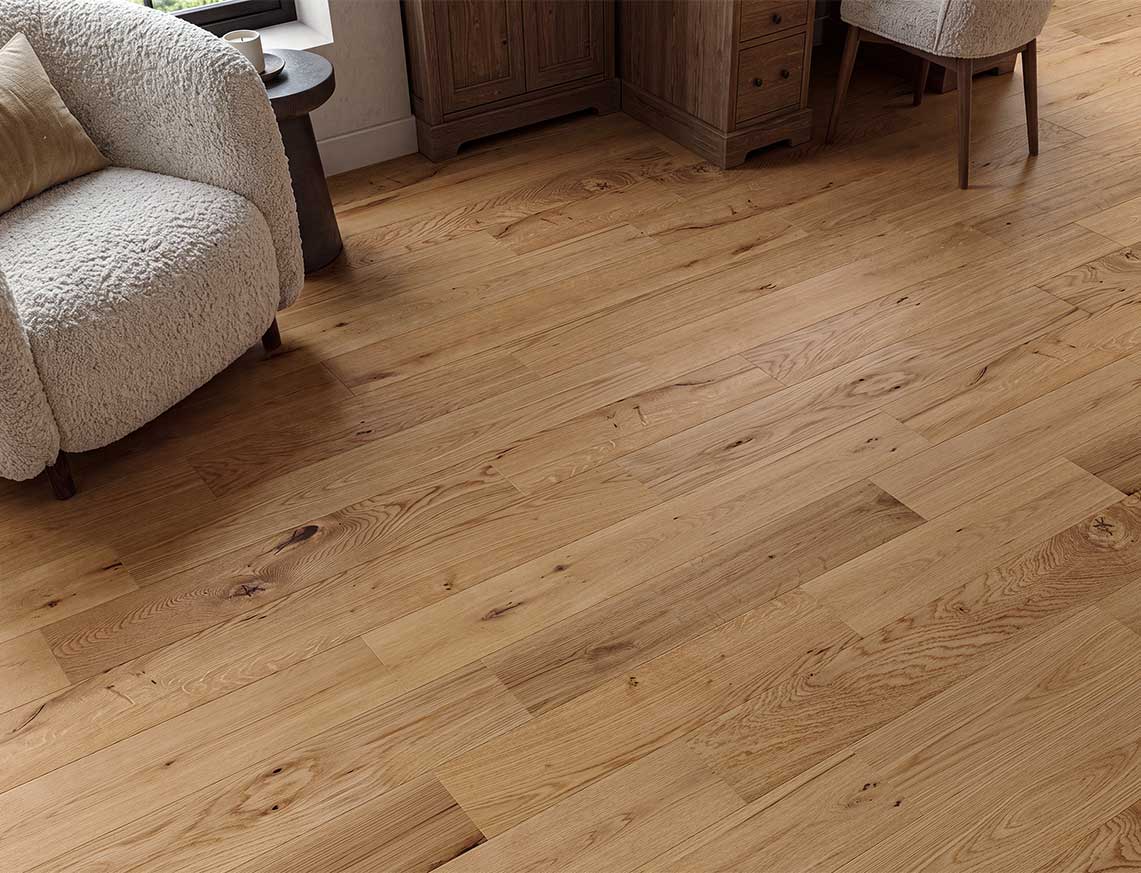
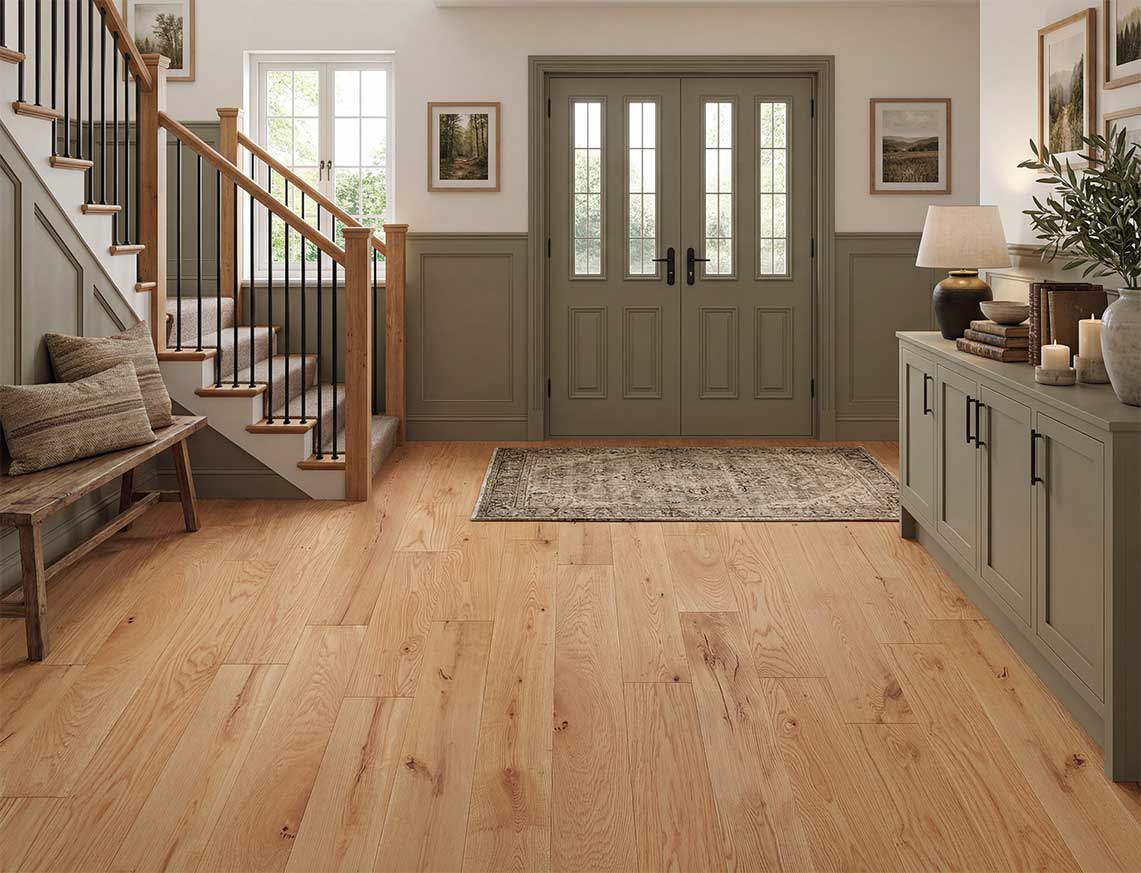
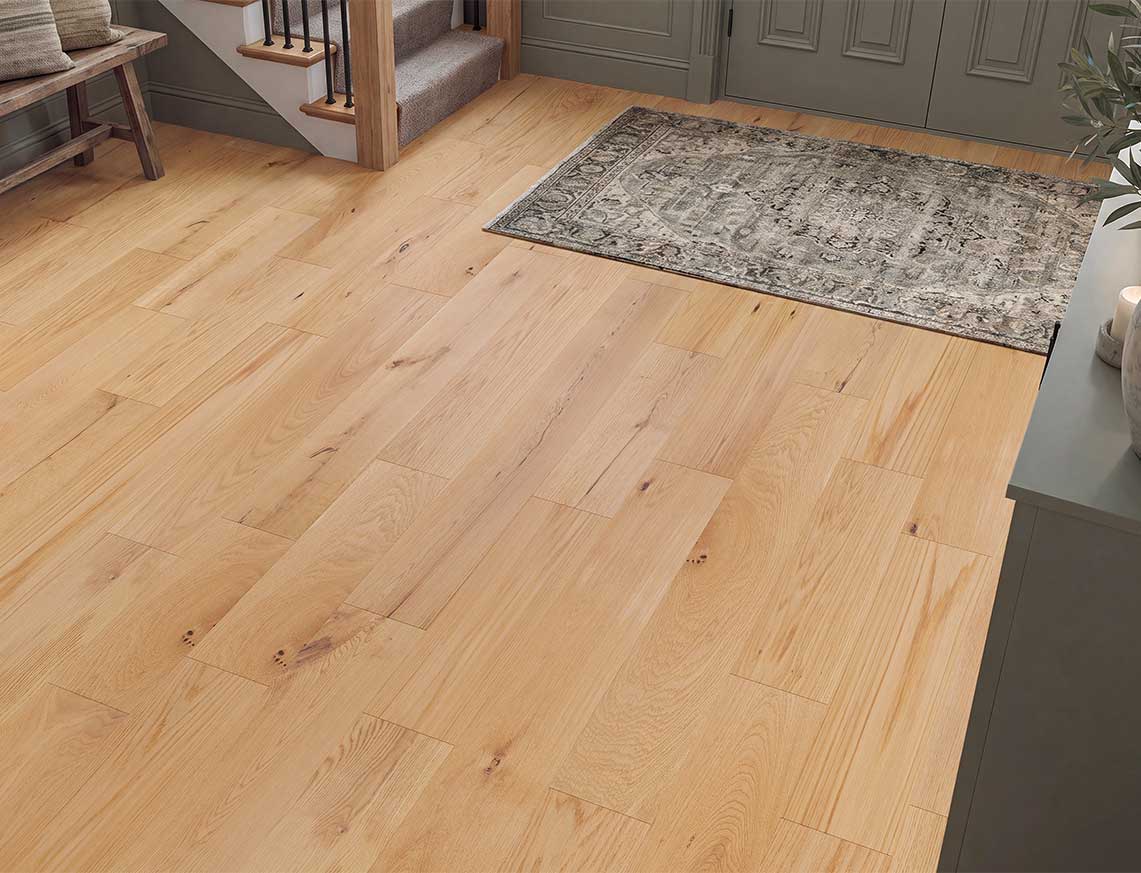
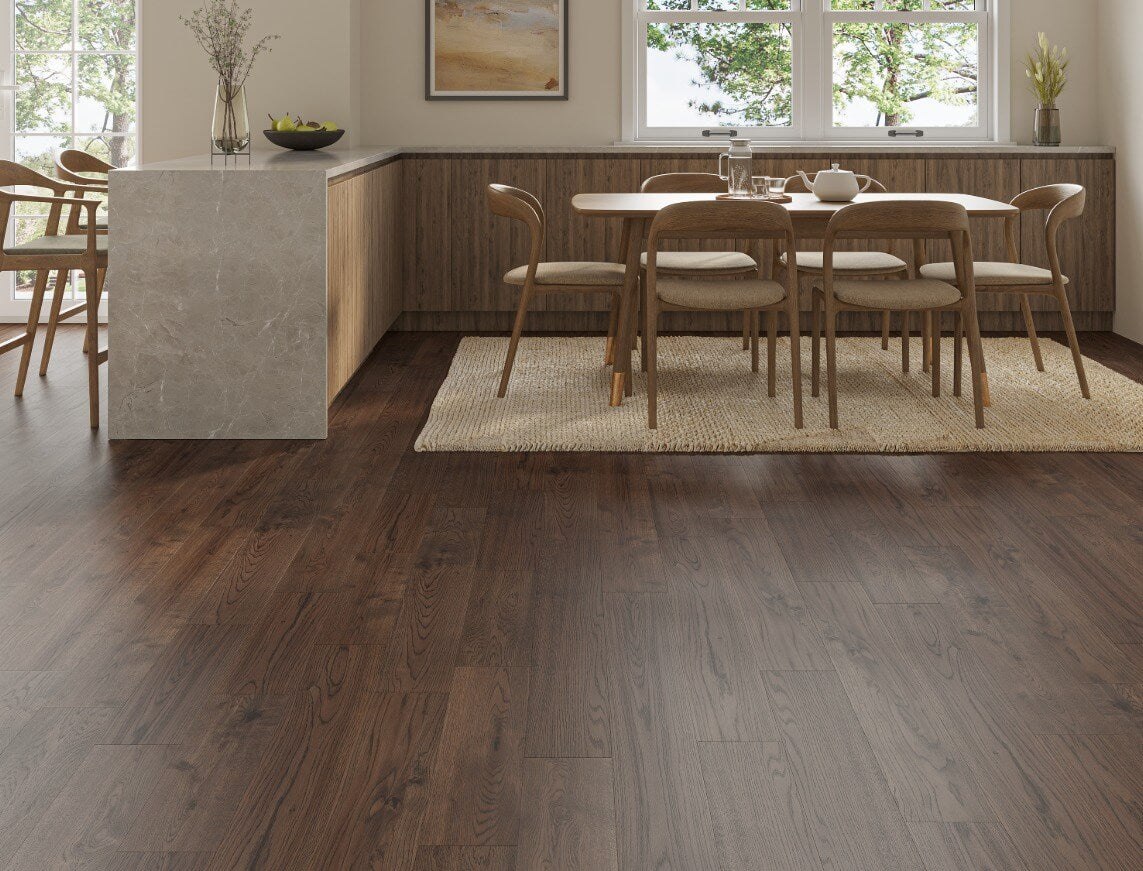
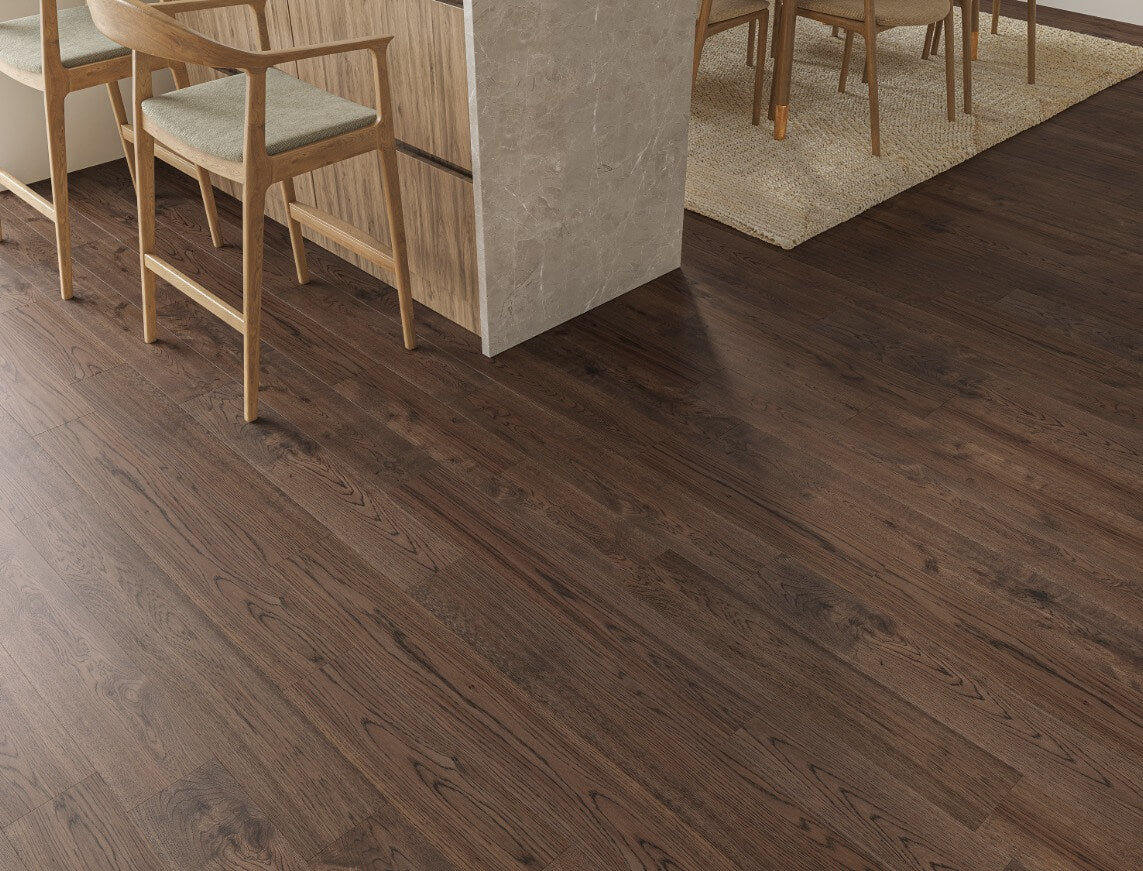
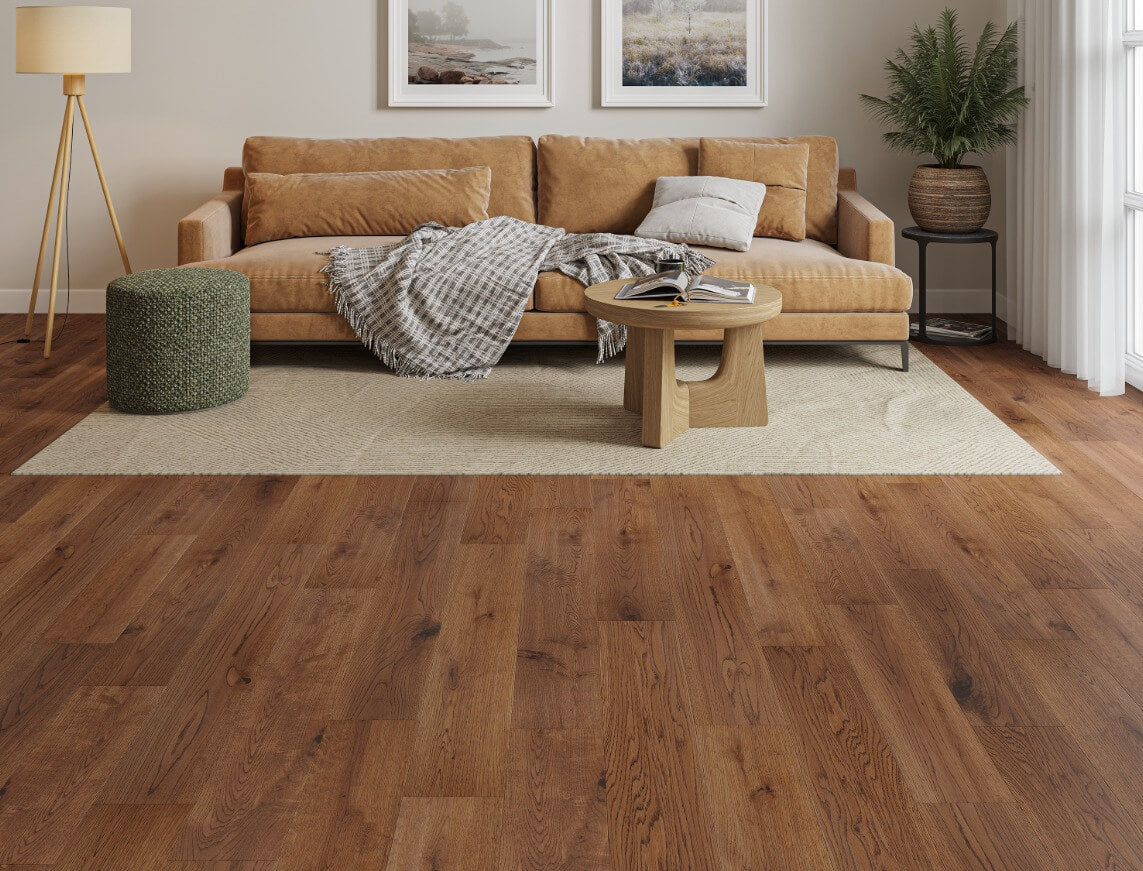
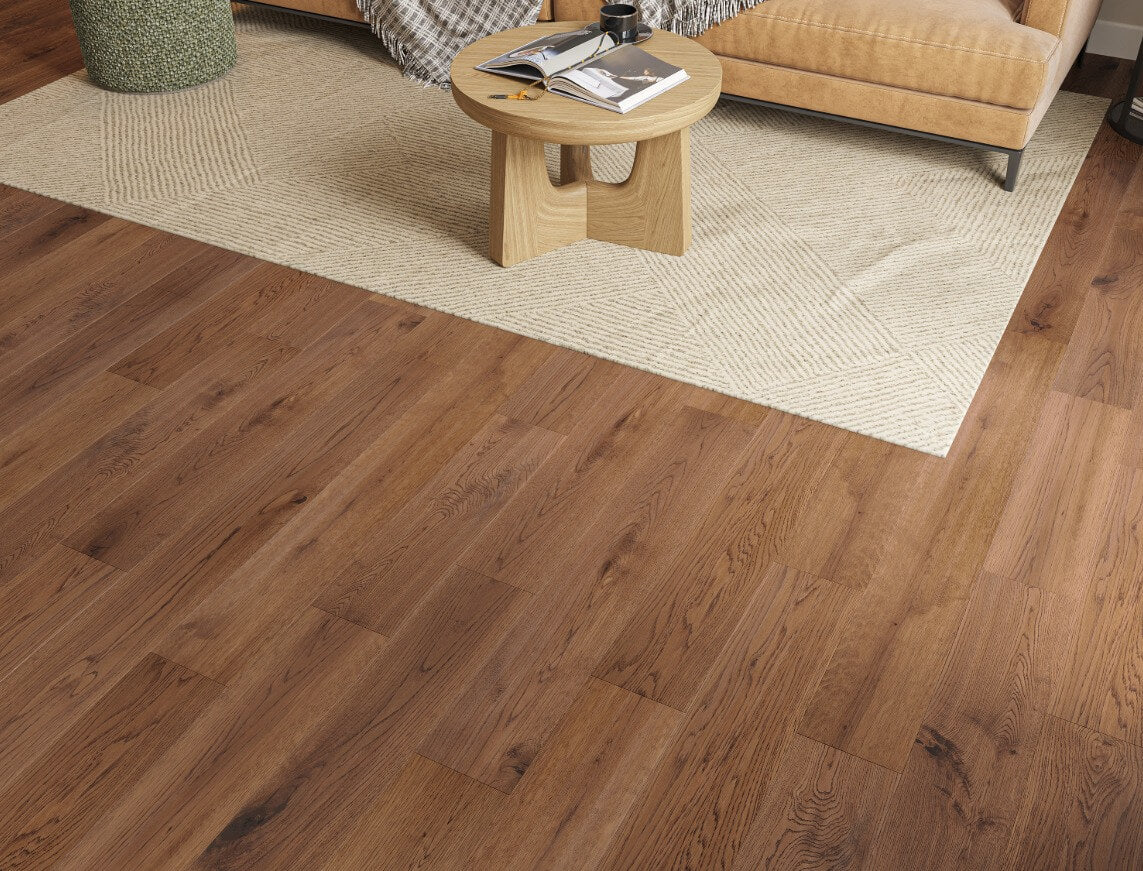
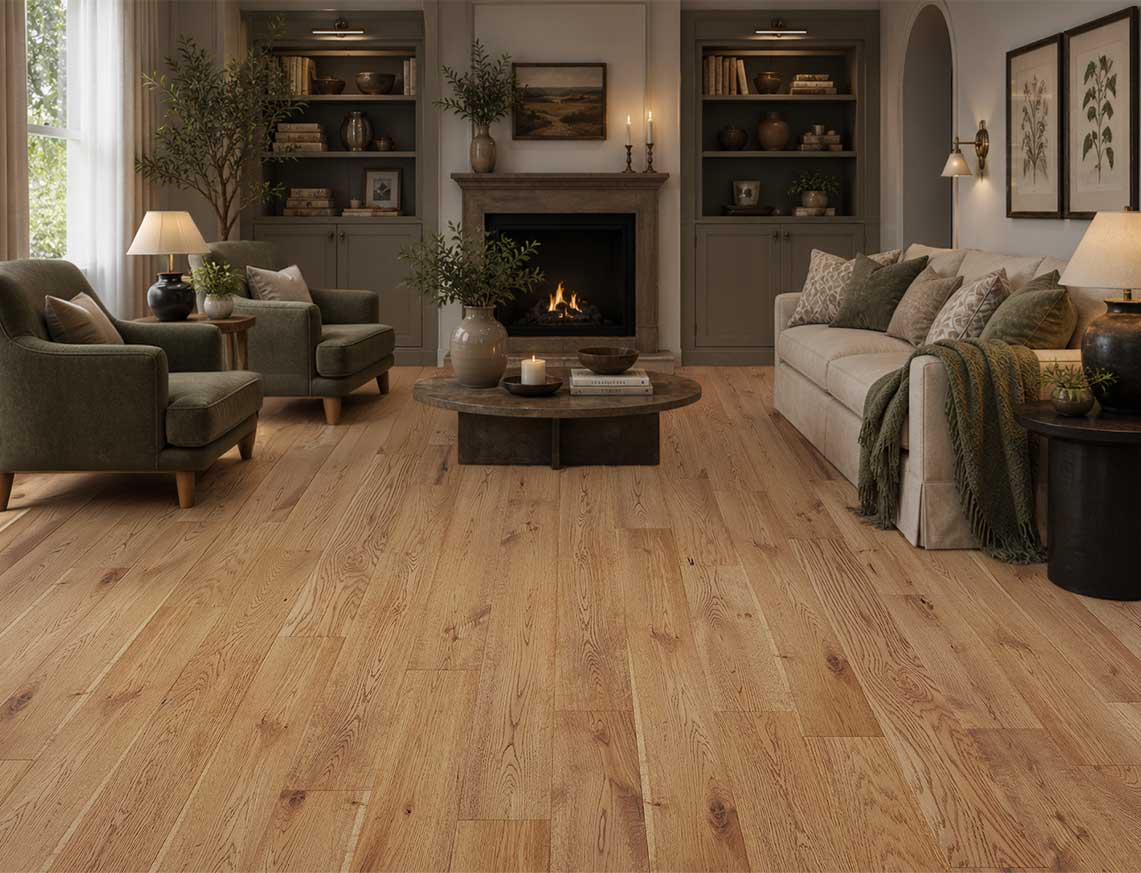
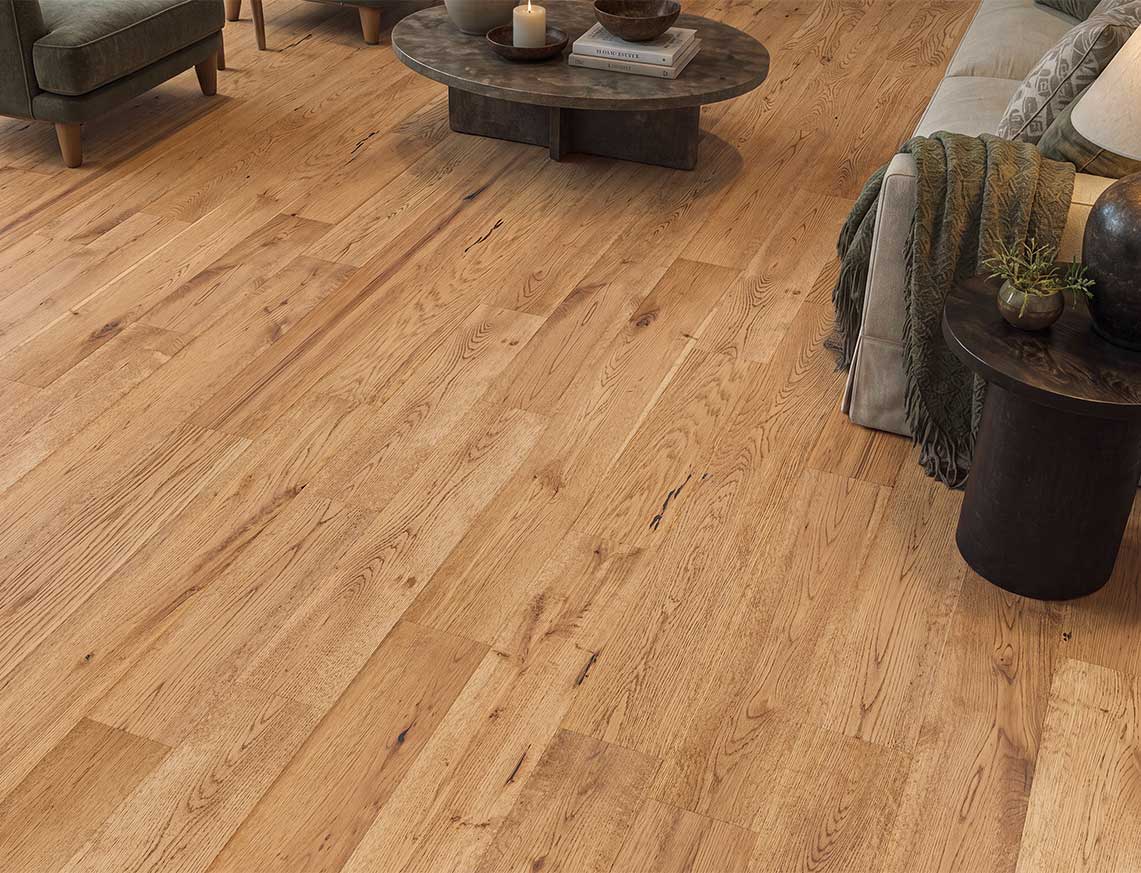
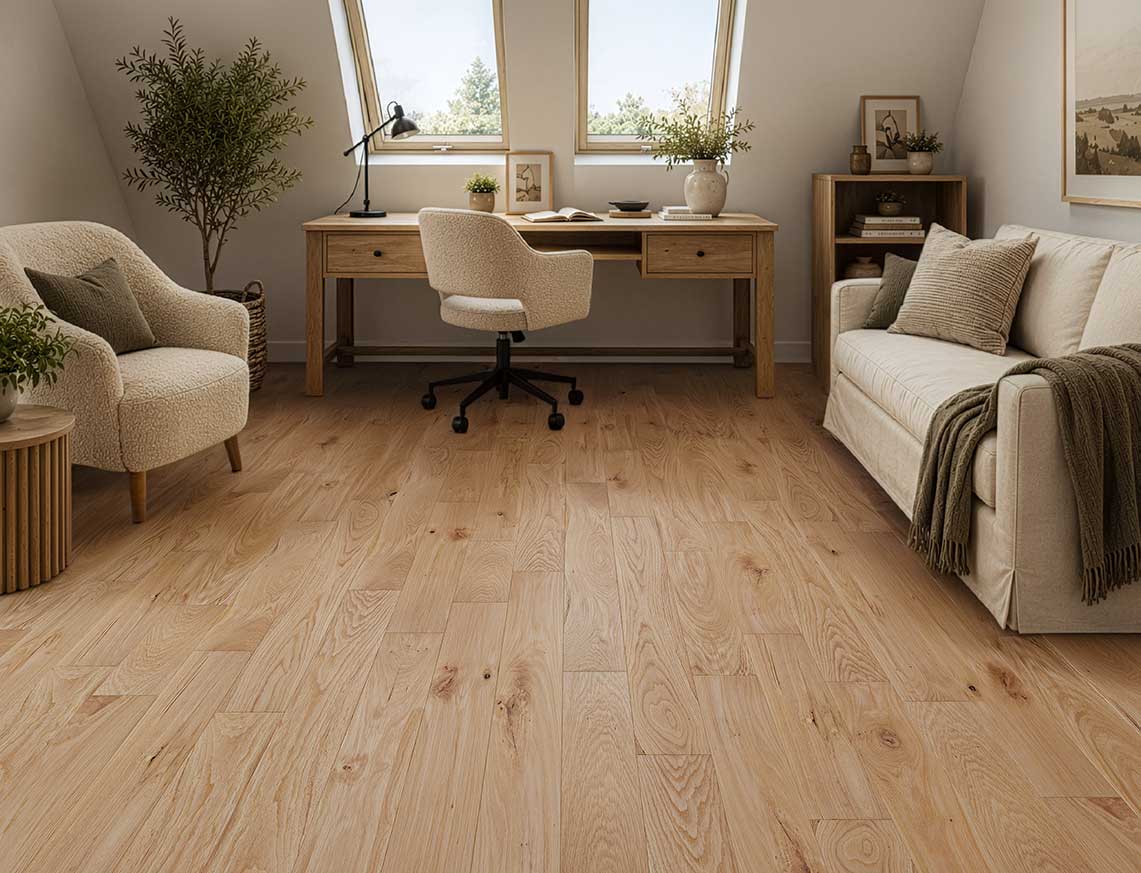
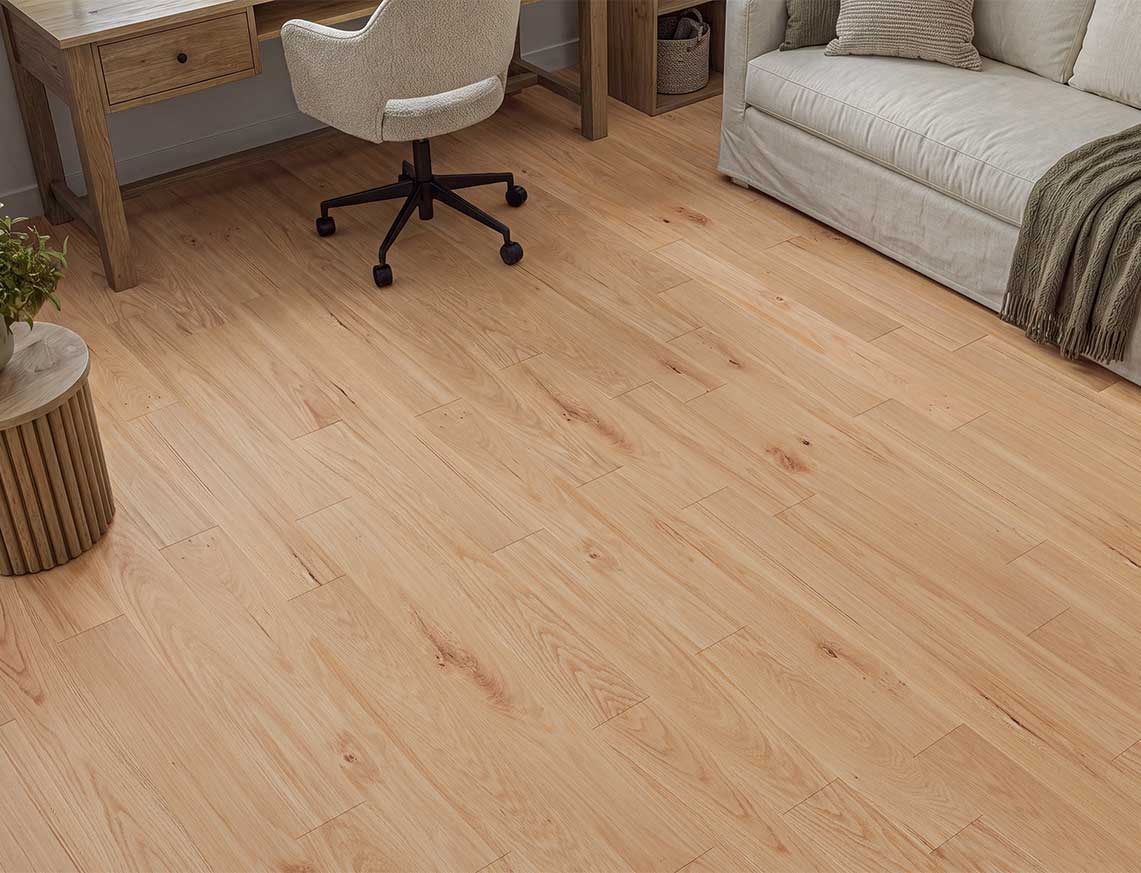
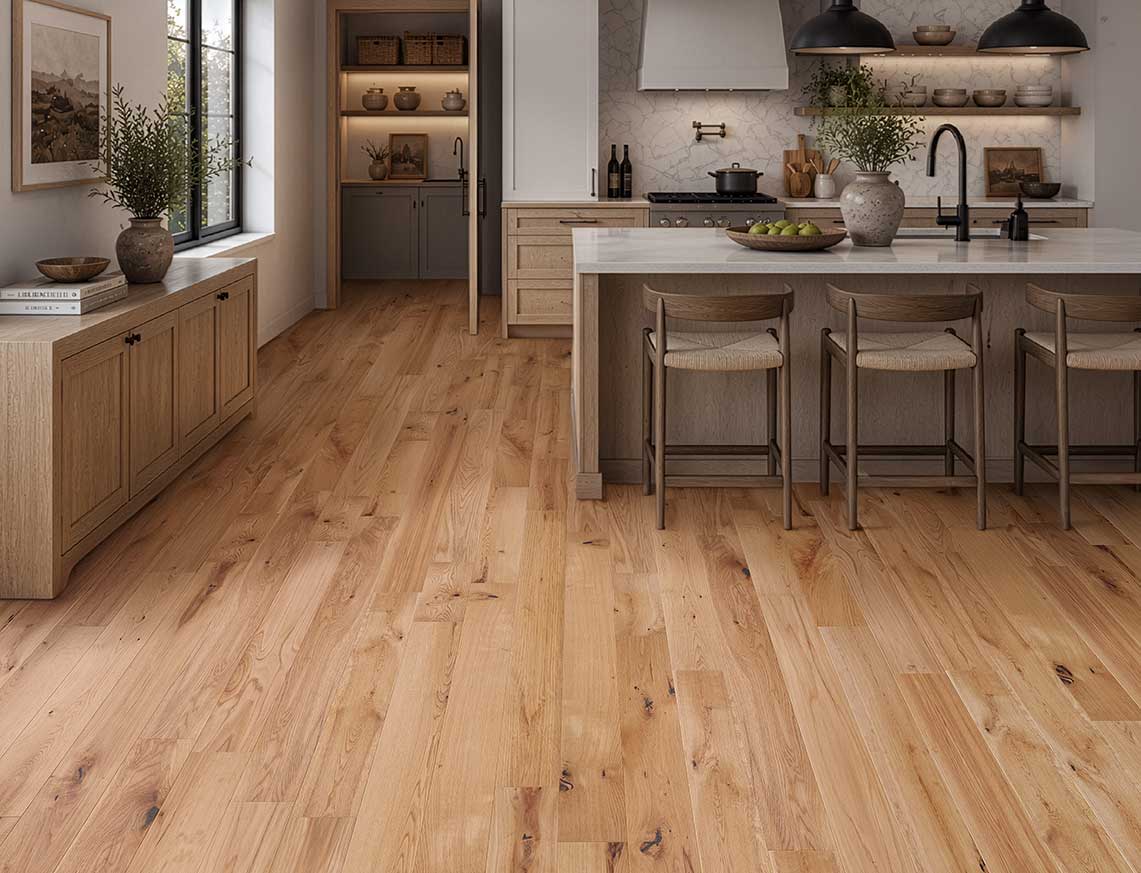
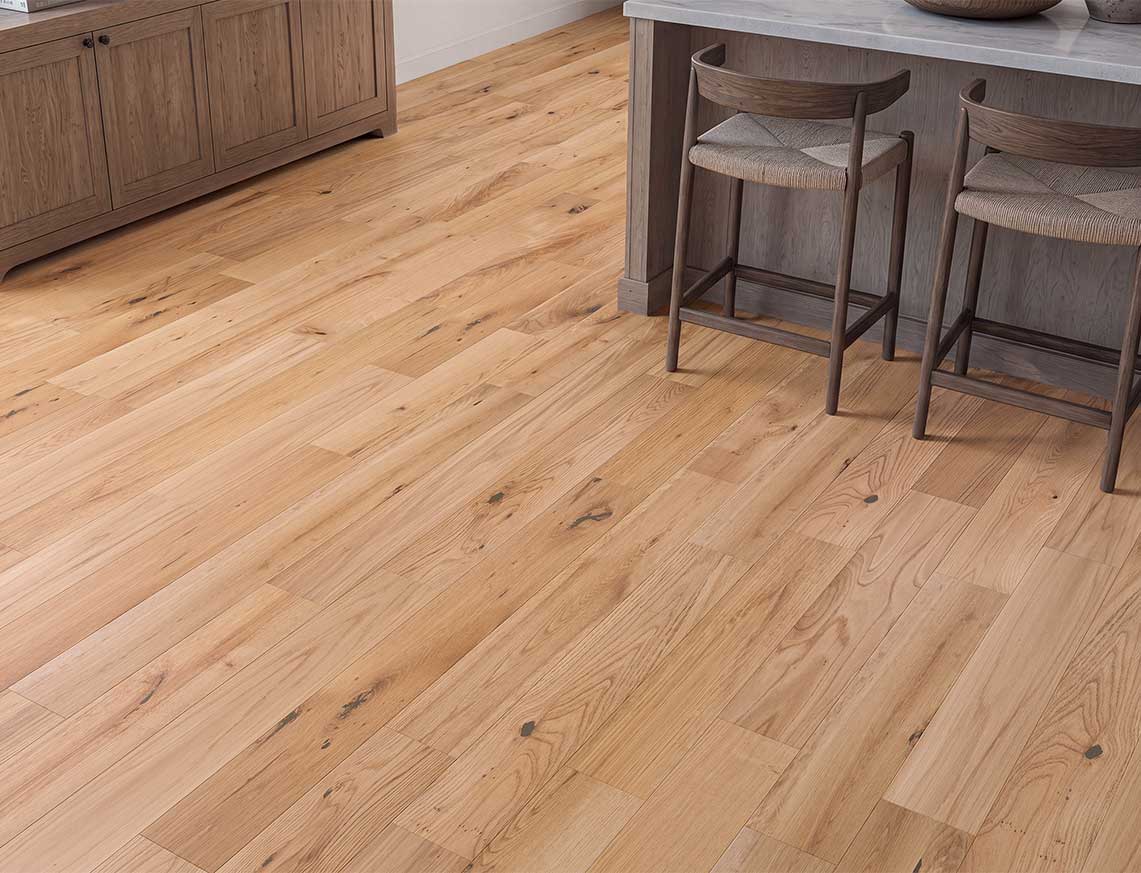
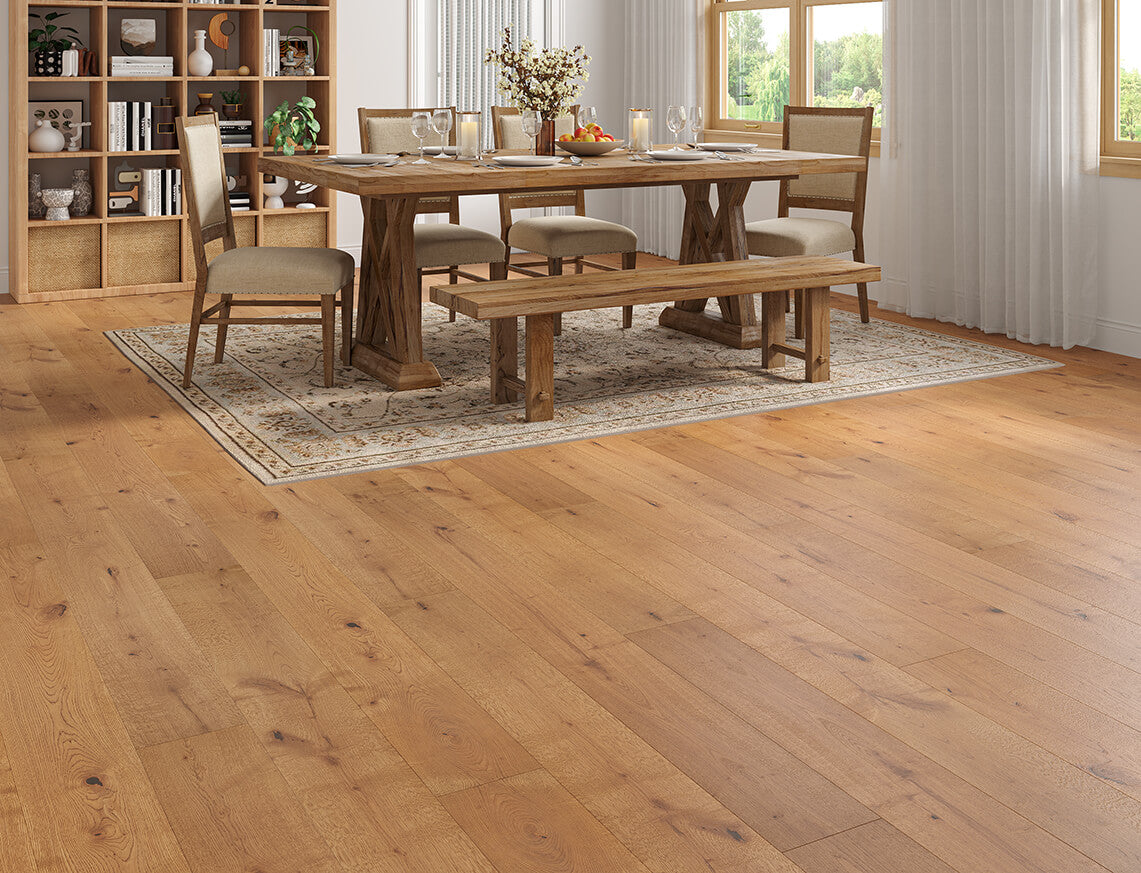
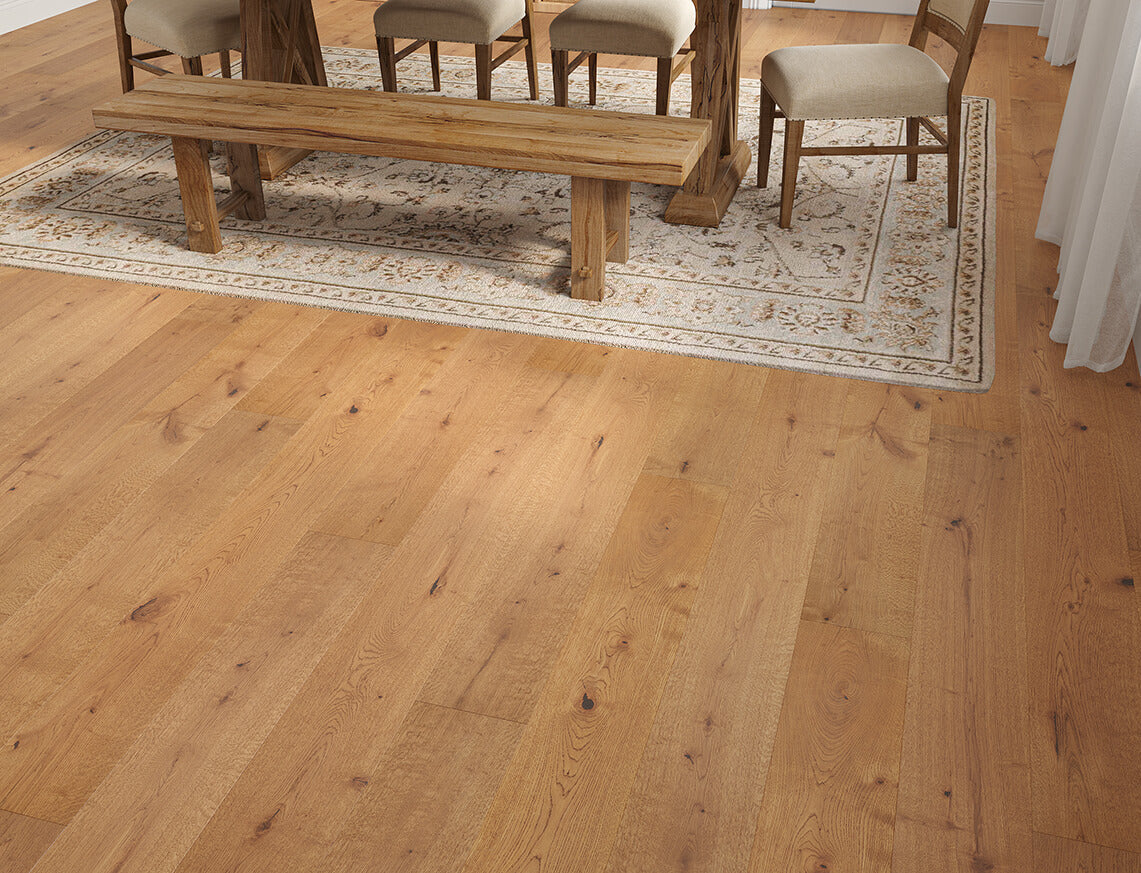
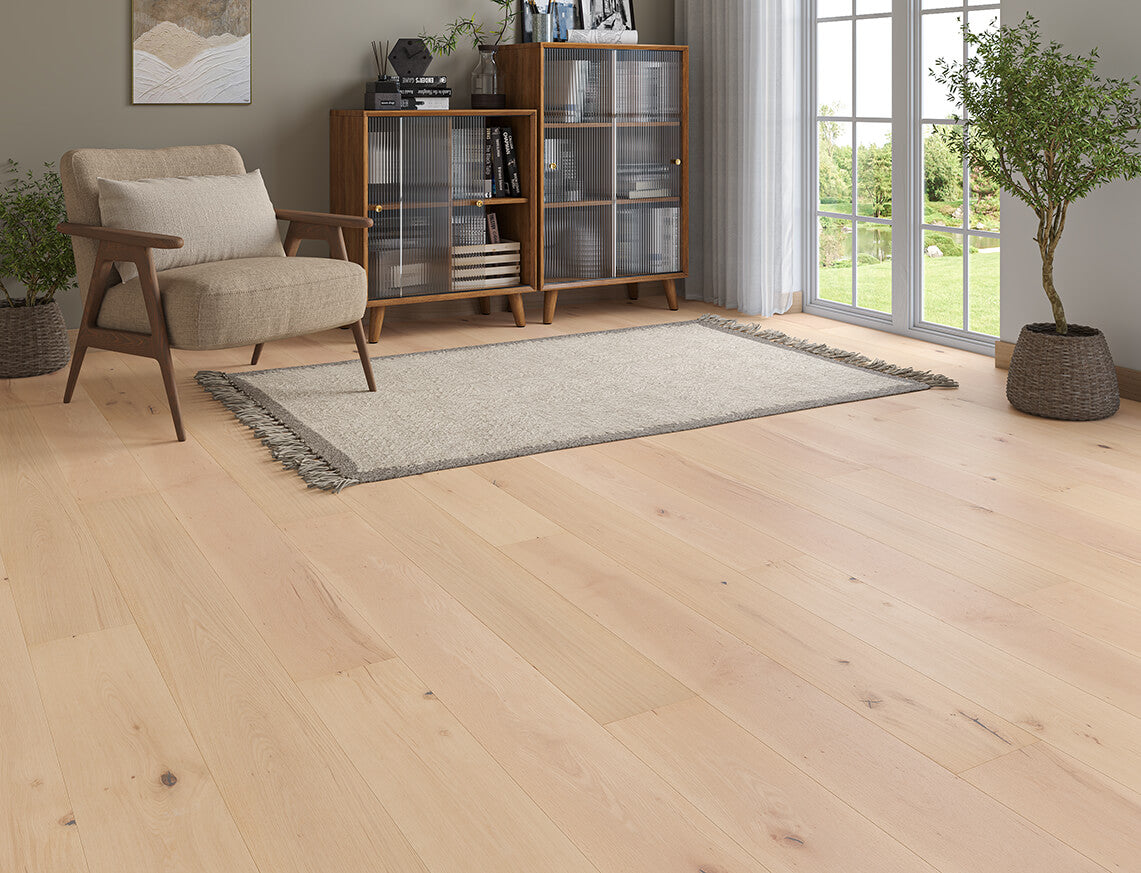
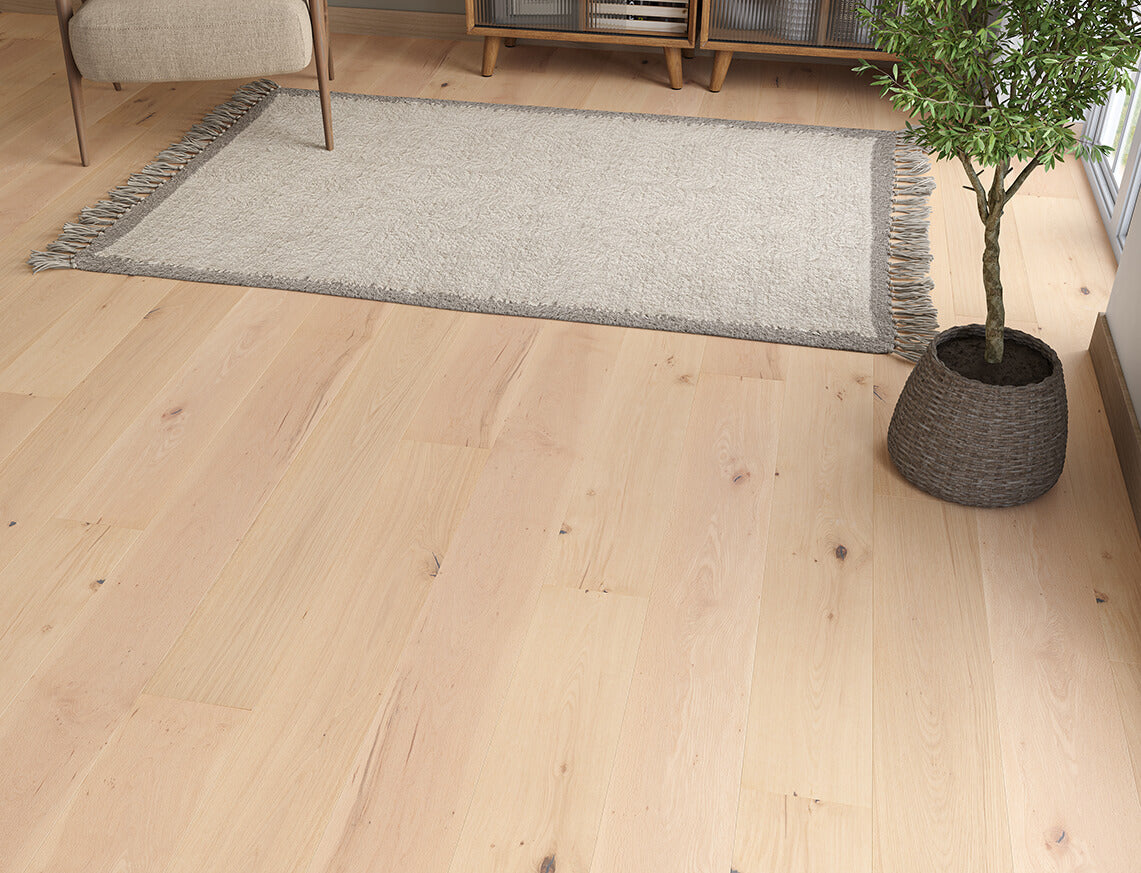
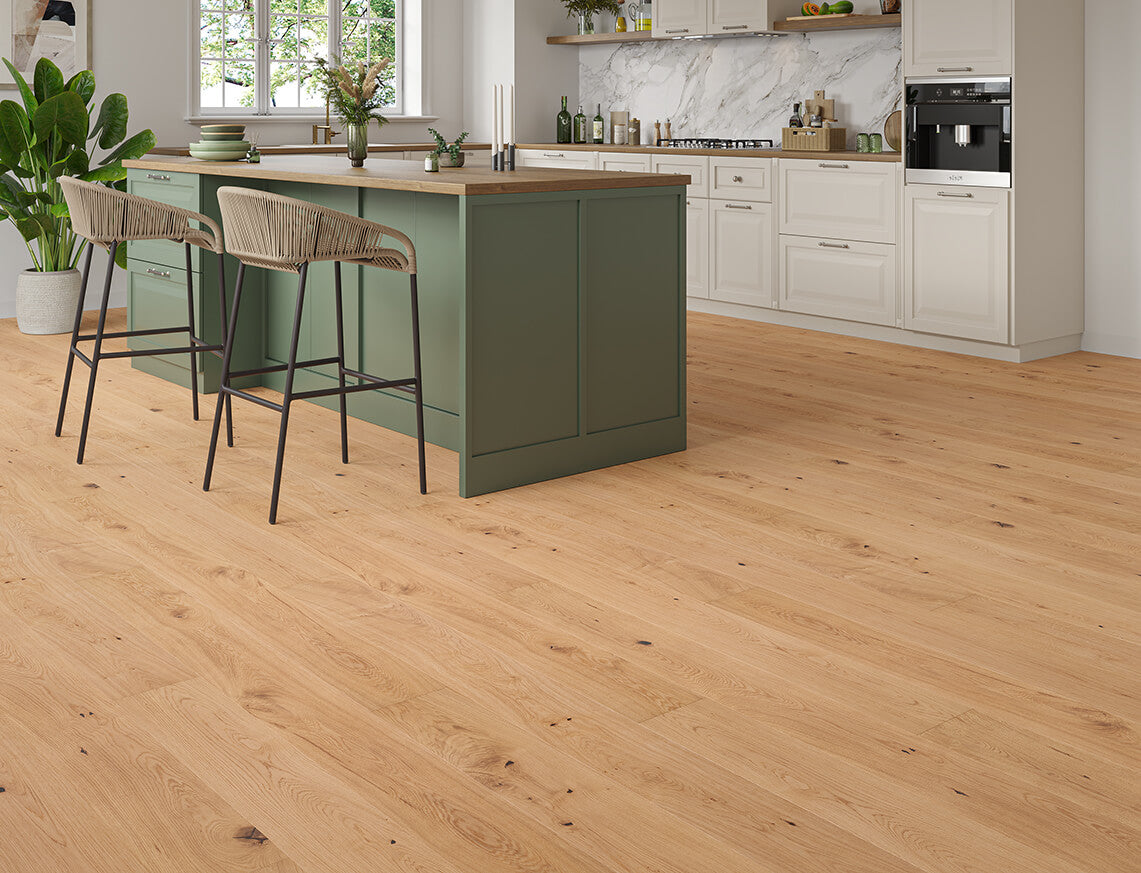
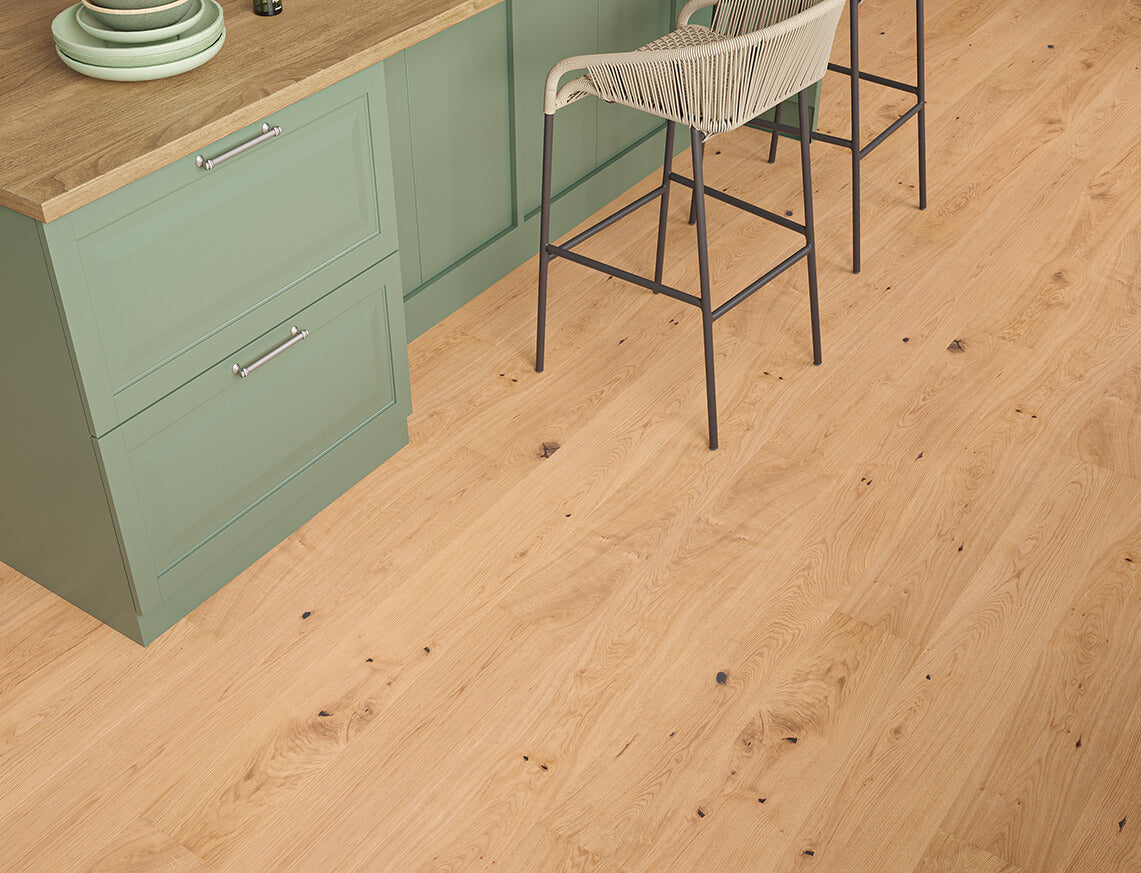
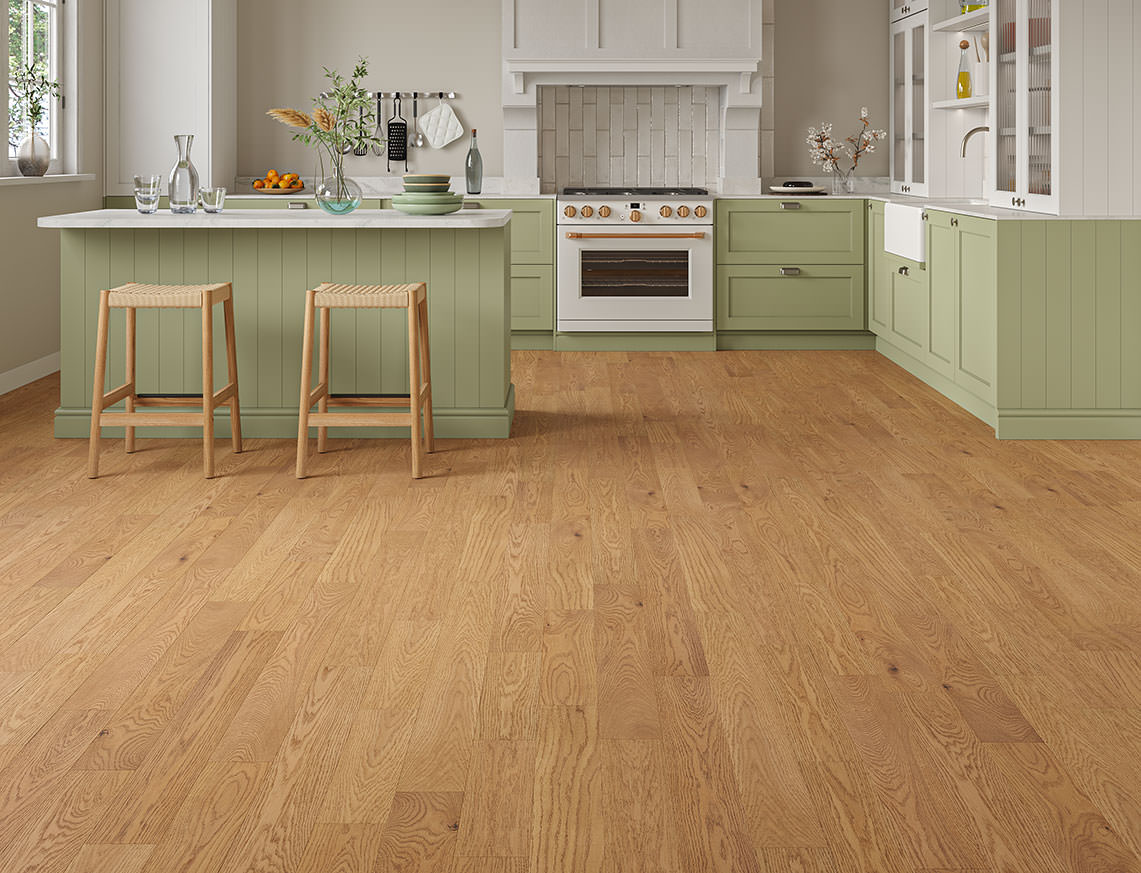
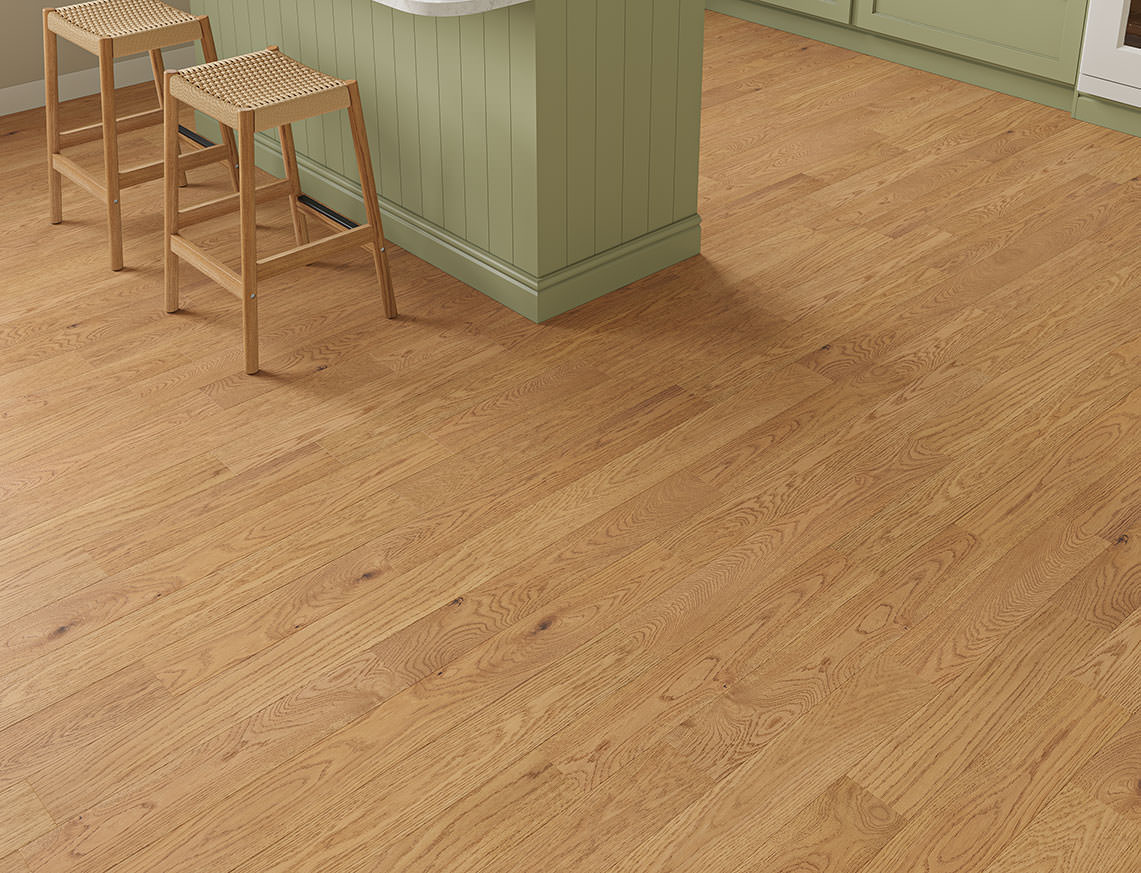
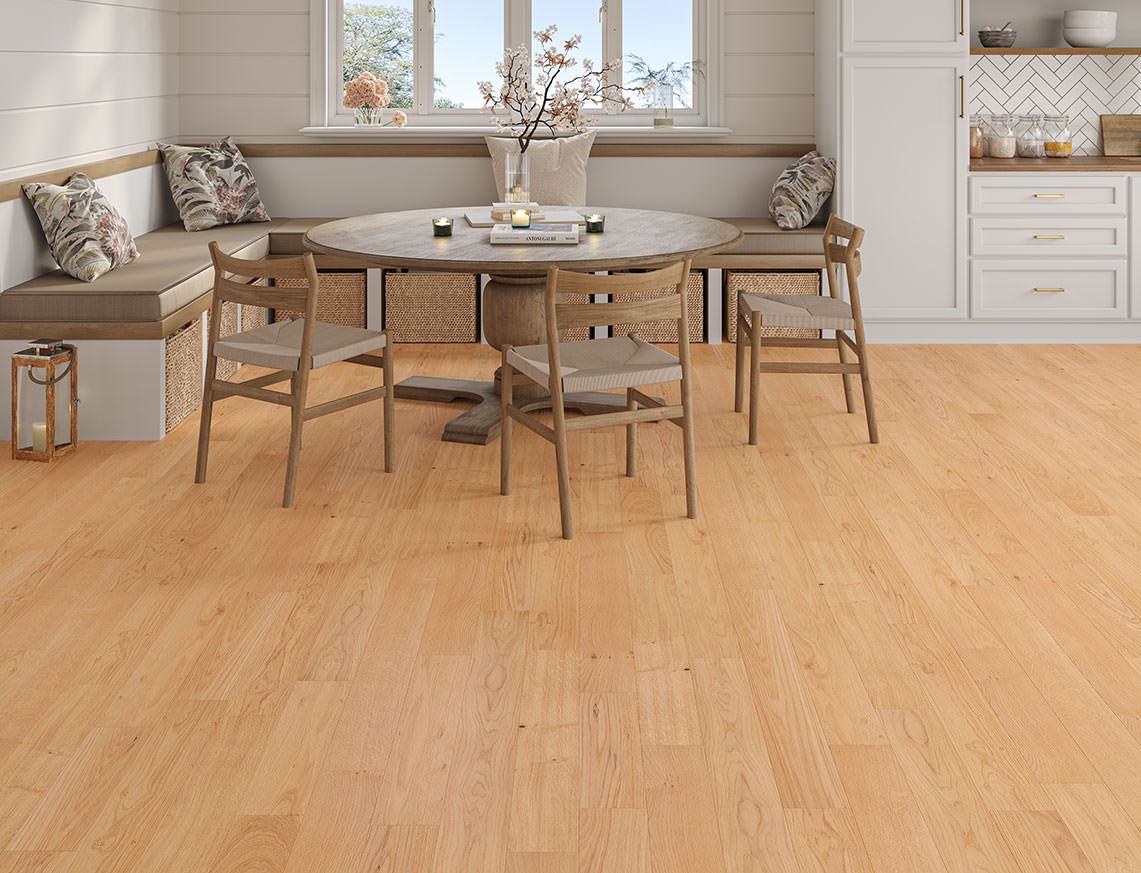
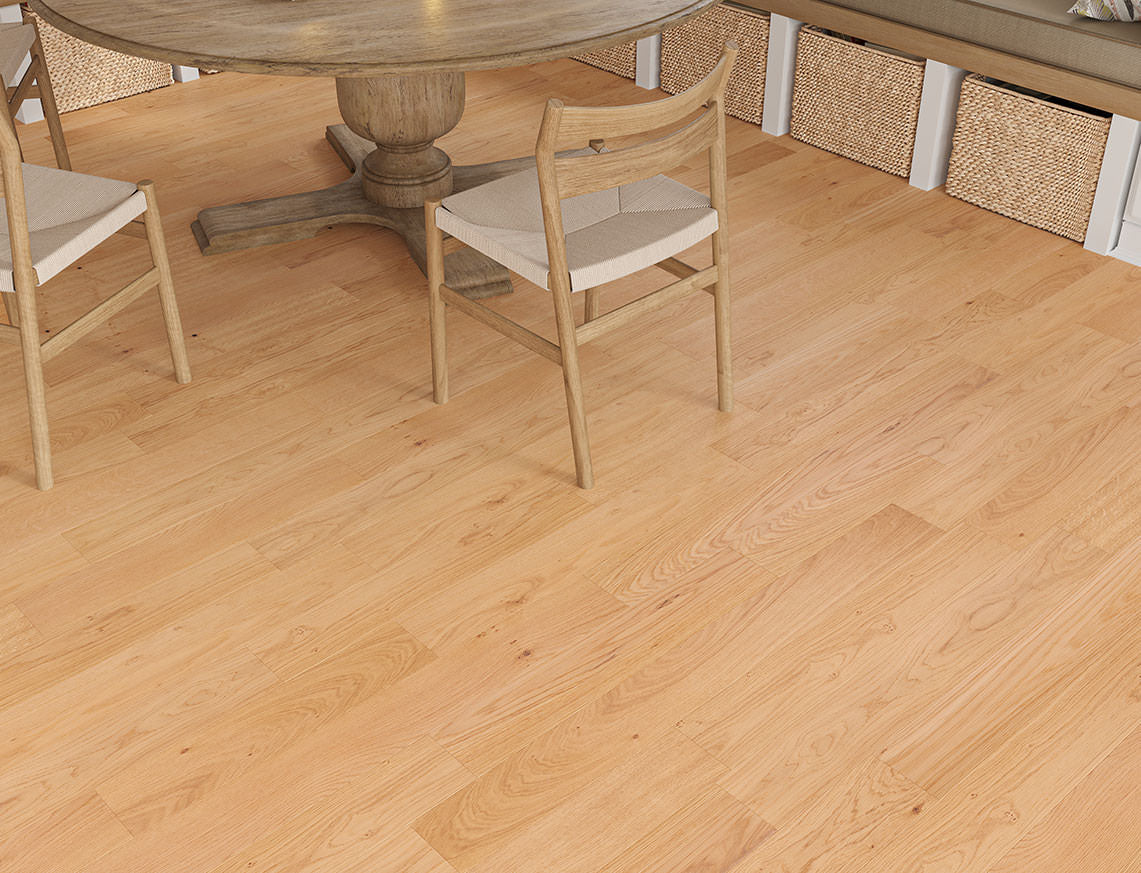
Long straight boards laid in rows, the layout most people picture when they picture a wooden floor. Plank is quiet, timeless and lets the grain do the talking rather than the pattern.
Our largest range by a distance: one hundred and one designs across engineered oak, solid oak, laminate and SPC vinyl. Colours run from pale naturals and whitewashed tones through golden oak and warm browns to greys and deep smoked shades.
Free A5 samples on every design, delivered to your door, so you can see the grain and colour in the room it is destined for before you commit.
Plank flooring is laid in long parallel boards, usually with the joints staggered from row to row so no two ends line up. It is the straightforward layout, and the one every other pattern is a departure from.
What it lacks in drama it makes up for in flexibility. It works in any size of room, it wastes less material than a patterned floor, and it is the only layout a confident DIY fitter can reasonably take on without previous experience.
Plank compared with patterned floors
Plank
Herringbone
Versailles
Unit laid
Long board
Small block
Large square panel
Visual impact
Understated
High
Highest
Waste allowance
10%
15%
15%
Fitting
DIY possible
Professional
Professional
Range size
101 designs
67 designs
8 designs
Plank in every material
Engineered oak plank
The largest group at fifty-nine designs. A real oak surface on a stable multi-ply core, which is what makes it suitable for underfloor heating where solid timber is not. Available in the widest choice of widths, colours and finishes. Browse engineered oak plank.
Solid oak plank
Oak all the way through, so it can be sanded and refinished repeatedly across its life. Solid boards move more with changes in humidity and are not generally suited to underfloor heating. Browse solid oak flooring.
Laminate plank
The most affordable route to a wood look, with a hard wearing surface that stands up to pets, children and furniture. Click systems make it the easiest floor here to fit yourself. Browse laminate flooring.
SPC and LVT vinyl plank
Fully waterproof, warm underfoot and quiet to walk on, which makes it the sensible answer for bathrooms, utilities and busy kitchens. Browse SPC and LVT vinyl.
Choosing a board width
Width changes the feel of a plank floor more than colour does. Narrow boards give more joints across the room and read as traditional and busier. Wide boards show far more of the grain in each piece, have fewer joints and feel calmer and more contemporary.
Wide boards suit larger, open rooms, where the length has somewhere to go. In a narrow hallway a very wide board can look cramped, since you see only two or three across the width.
Which way should the boards run?
Usually along the length of the room, or towards the main source of light, which makes the joints less noticeable. In a hallway, running the boards down the length rather than across it makes the space feel longer.
Fitting plank flooring
Plank is the most forgiving layout we sell. Click-system laminate and vinyl boards are within reach of a careful DIY fitter, provided the subfloor is flat, an expansion gap is left at every wall and the first row is set out straight.
Tongue and groove oak boards are a different job, and are often nailed or bonded to the subfloor rather than floated. The installation method is listed in the specification on every product page, so check that before deciding whether to fit it yourself. Our fitting guides cover subfloor preparation, acclimatisation and expansion gaps.
How much will you need?
Allow 10% for cuts, which is the standard allowance for a straight plank layout. Boards cut at the end of a row can usually start the next one, so plank wastes considerably less than any patterned floor.
The flooring calculator on every product page applies the allowance and works out how many packs your room takes. You will also need beading for the perimeter, threshold profiles at doorways, and underlay if the floor is being floated.
Order the full quantity in one go, since shade varies slightly between production batches.
Plank flooring: frequently asked questions
How much extra should I order for plank flooring?
10%. Straight boards waste far less than patterned floors, which need 15%, because offcuts from the end of one row usually start the next.
Can I fit plank flooring myself?
Click-system laminate and vinyl plank, yes, if the subfloor is flat and you leave an expansion gap. Tongue and groove oak is often nailed or glued down and is better left to a fitter. Check the installation method on the product page.
Which direction should the boards run?
Most commonly along the length of the room or towards the main window, which hides the joints and makes the space feel longer.
Are wide boards better than narrow ones?
Neither is better. Wide boards show more grain and feel contemporary, and suit larger rooms. Narrow boards read as more traditional and work well in smaller spaces and period properties.
Is plank flooring suitable for underfloor heating?
Engineered oak, laminate and vinyl plank generally are. Solid oak generally is not, because it moves more with temperature and humidity. Suitability is stated on every product page.
Which plank flooring is best for a kitchen or bathroom?
For a kitchen, any of the four materials will do. For a bathroom or utility, choose SPC or LVT vinyl, which is fully waterproof. Room suitability is listed on every product page.
Do I need underlay under plank flooring?
If the floor is being floated, yes. If it is being nailed or bonded to the subfloor, no, and you will need adhesive instead. The product page states which method applies.