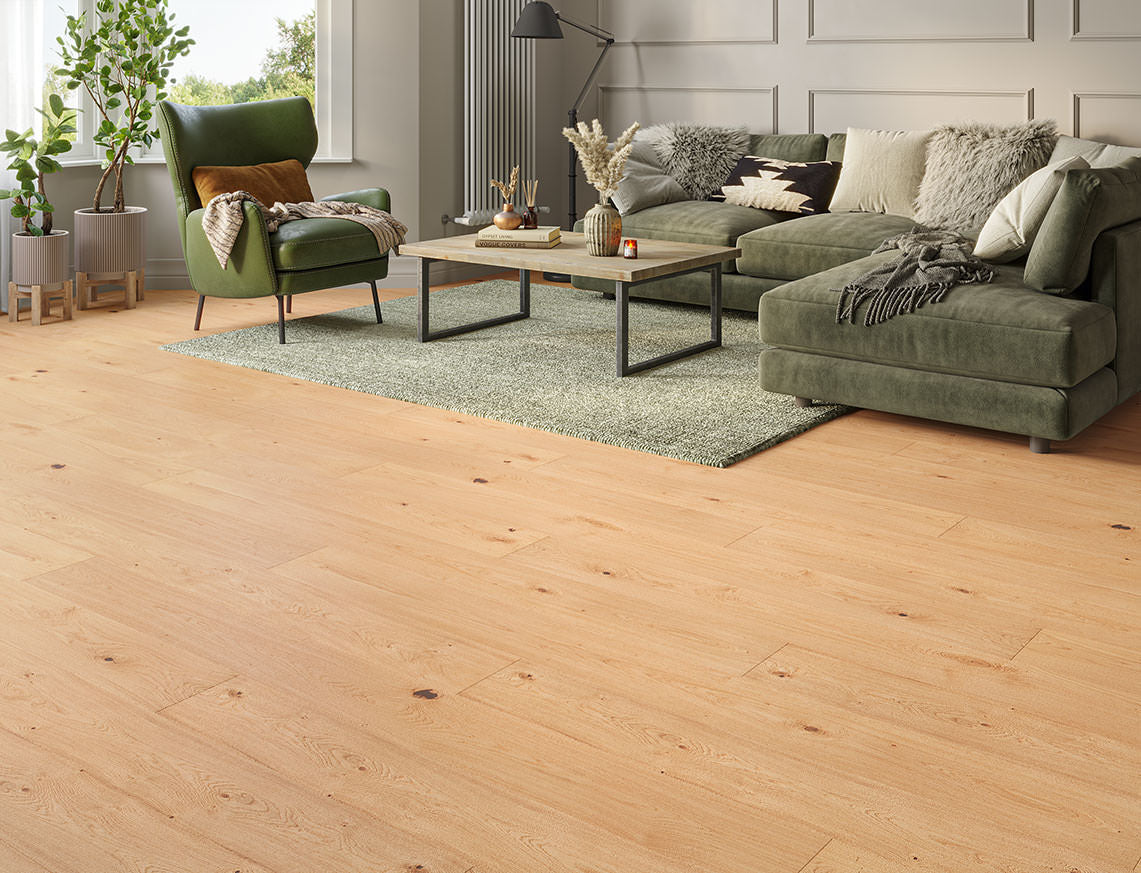
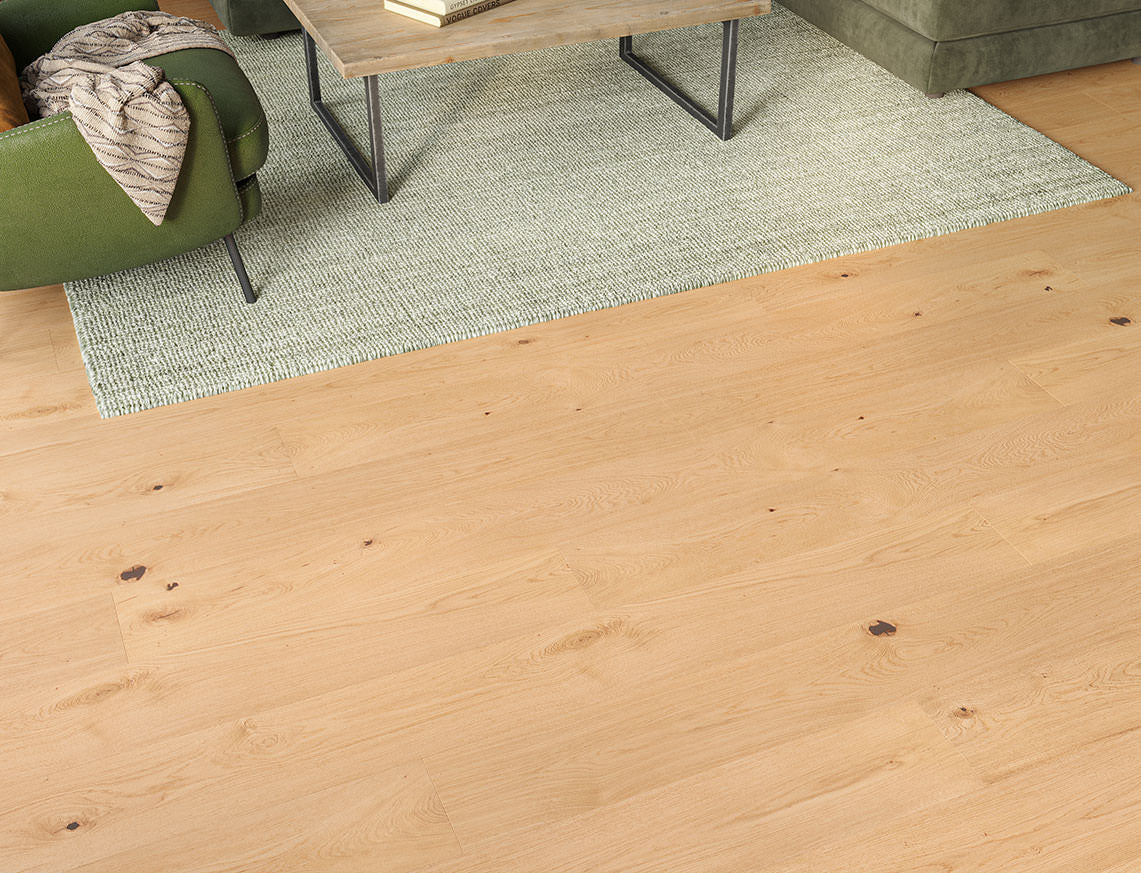
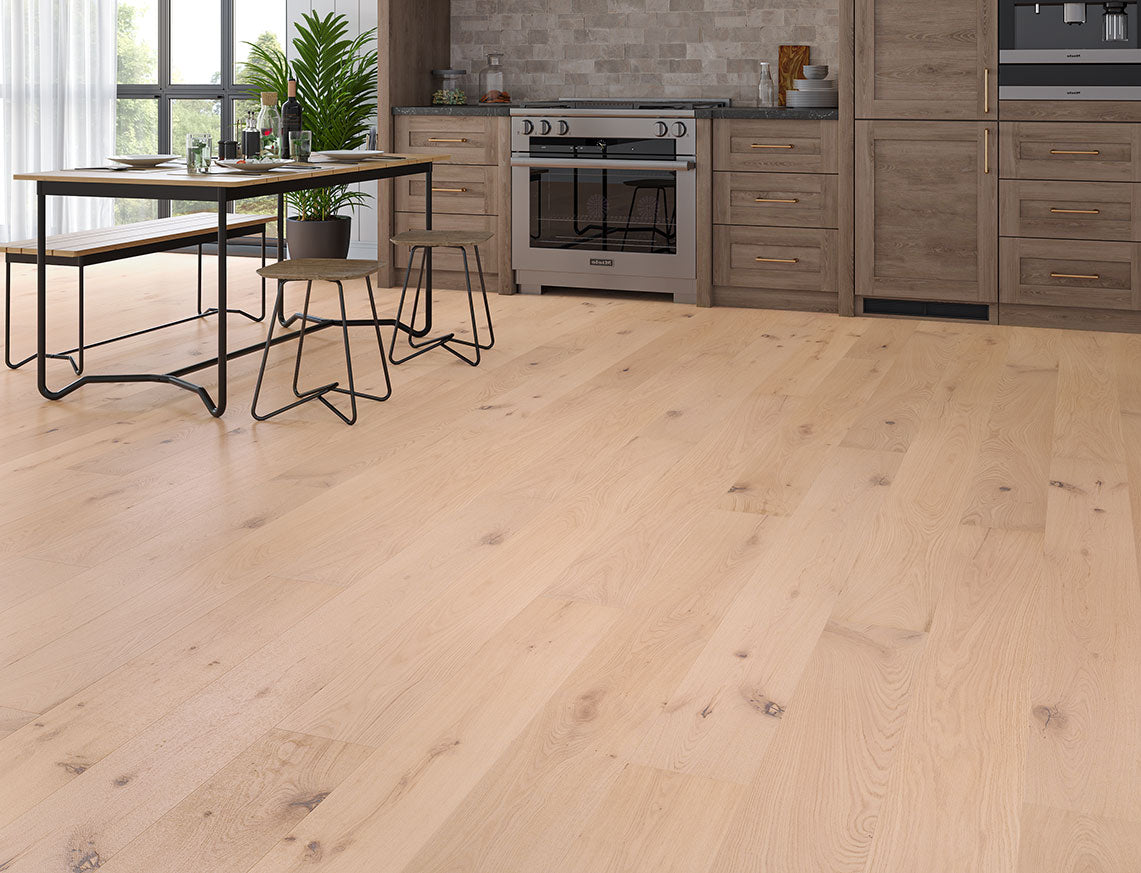
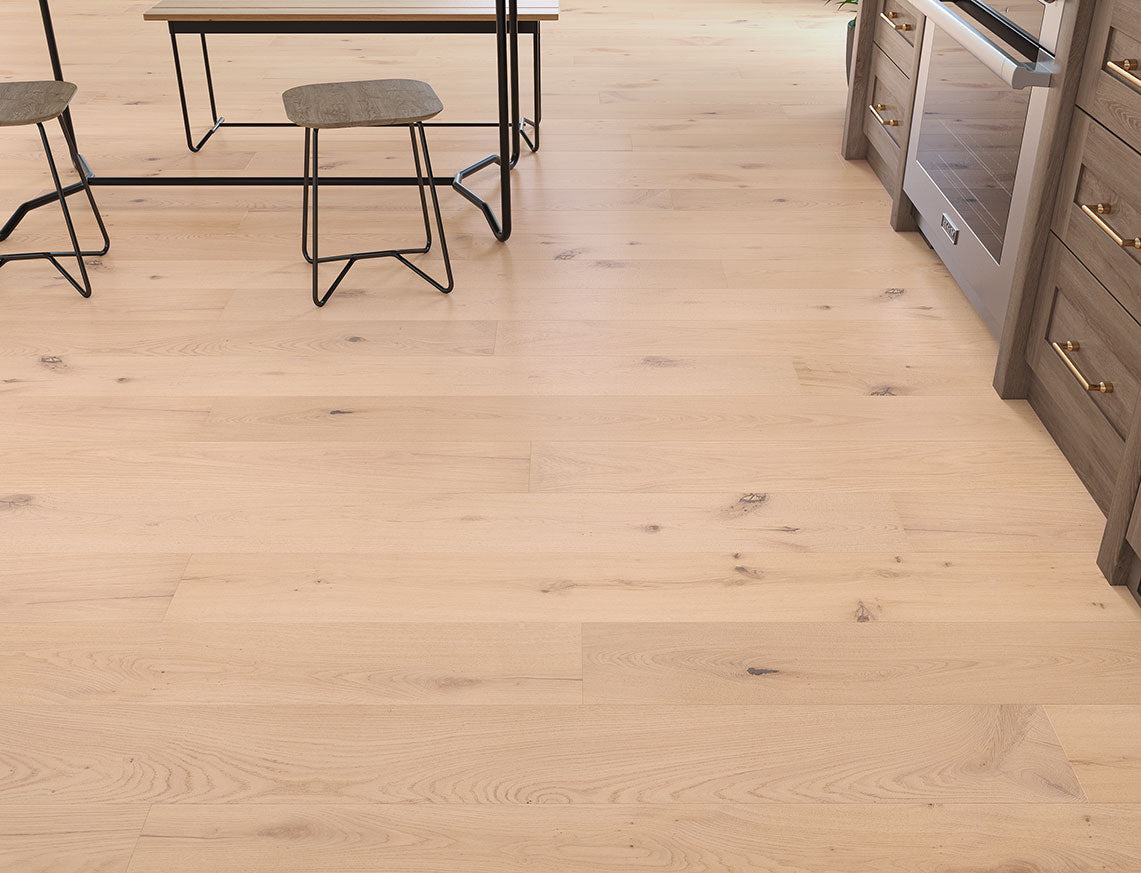
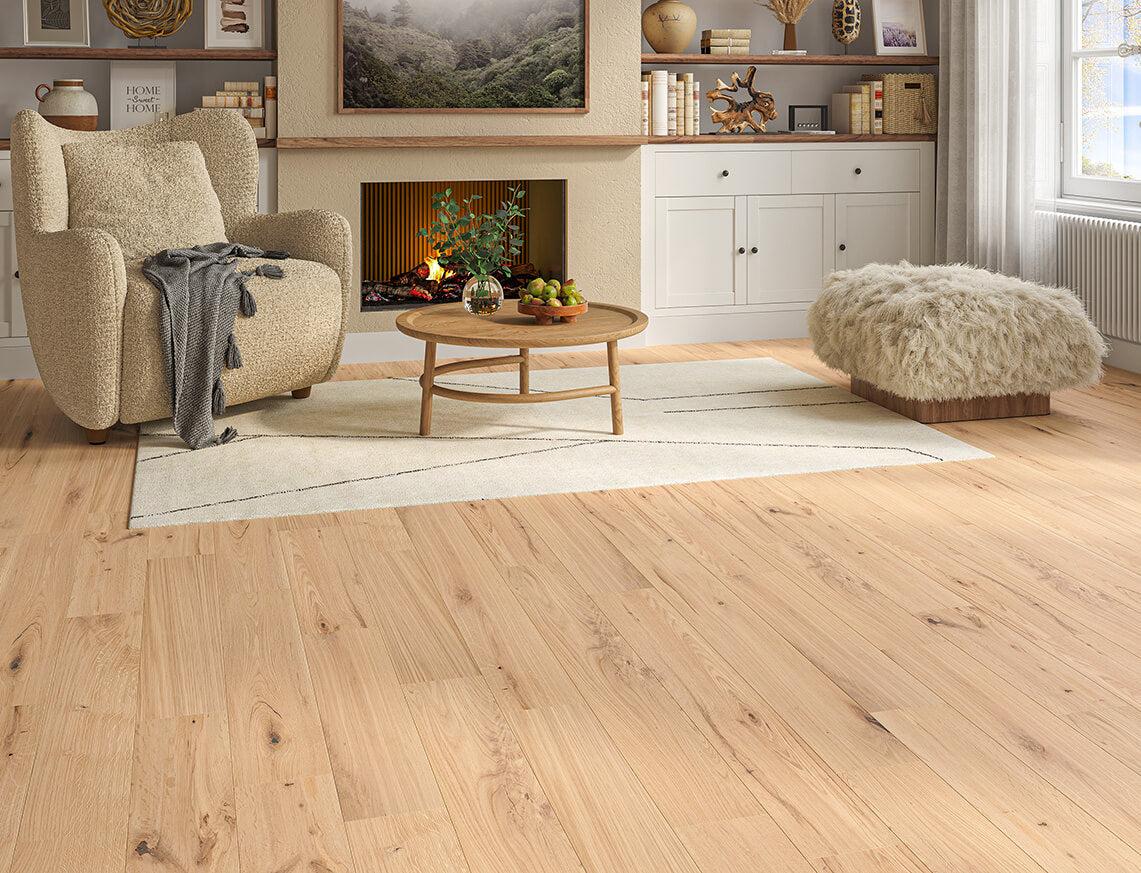
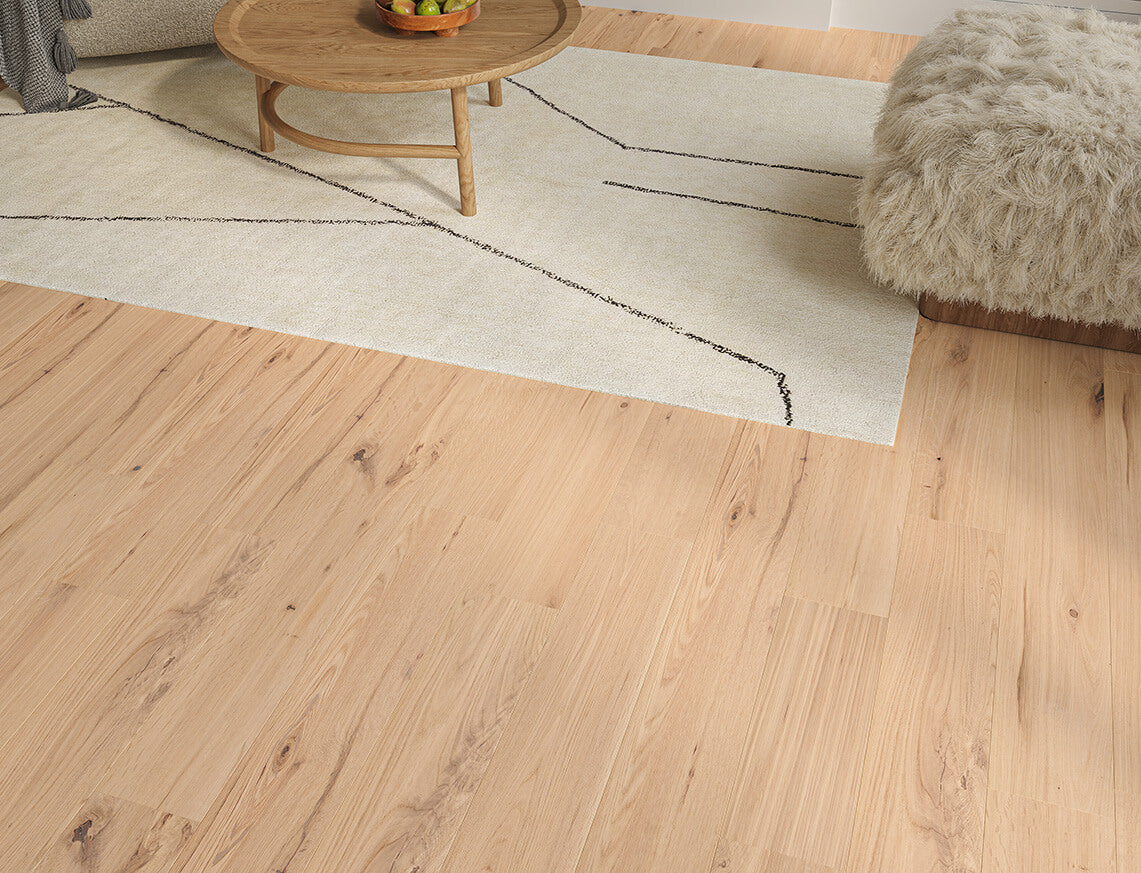
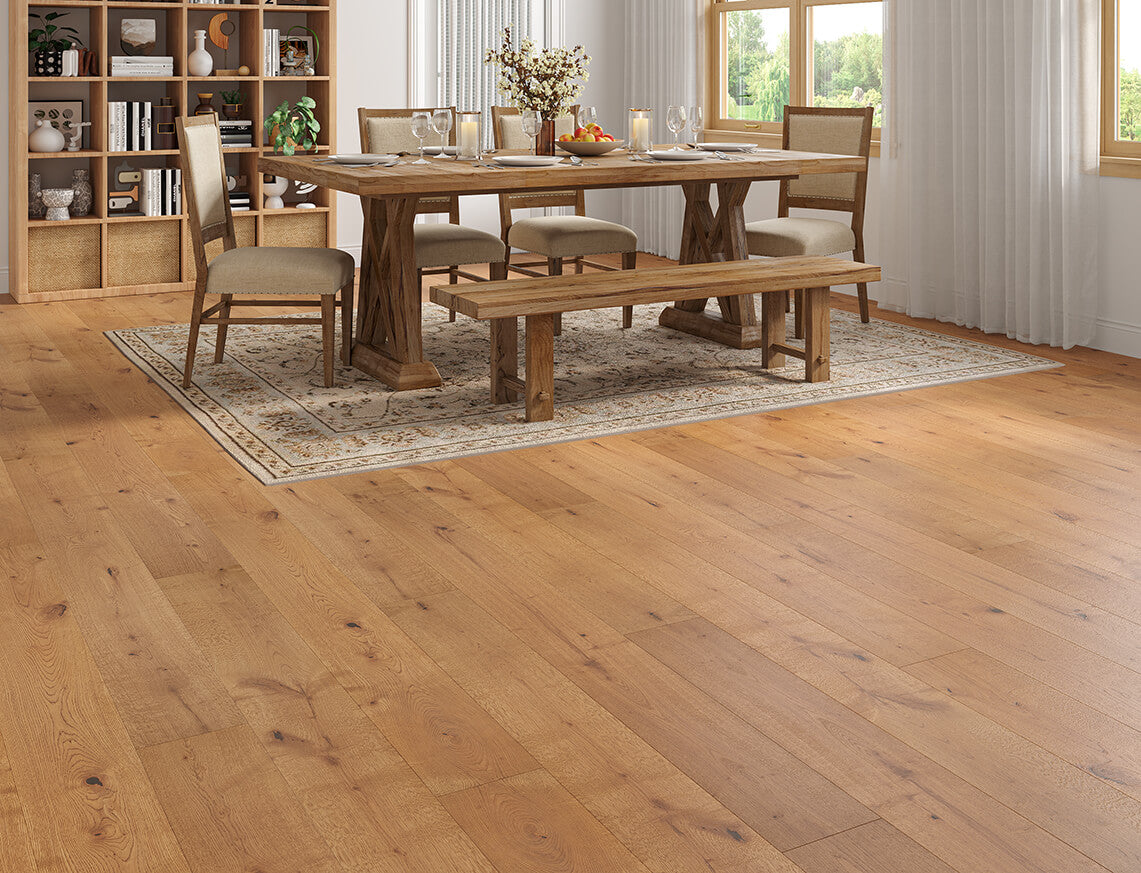
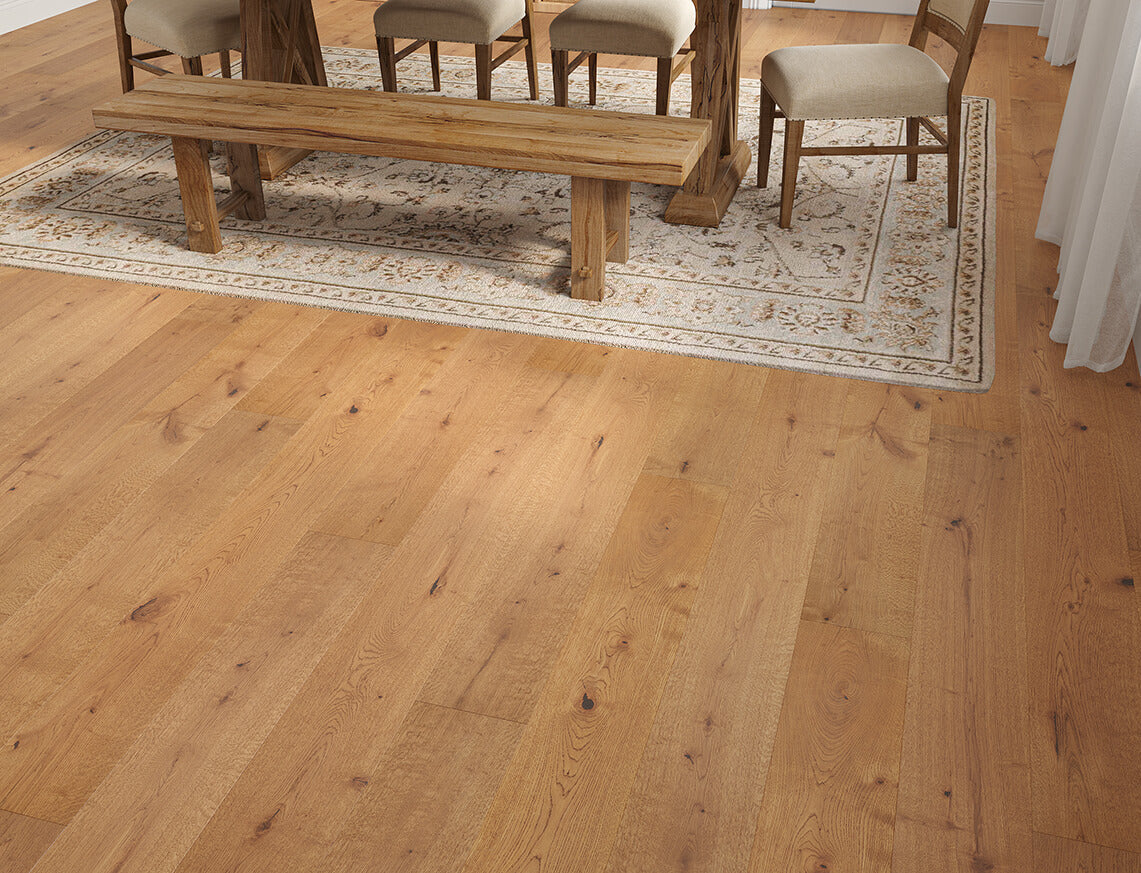
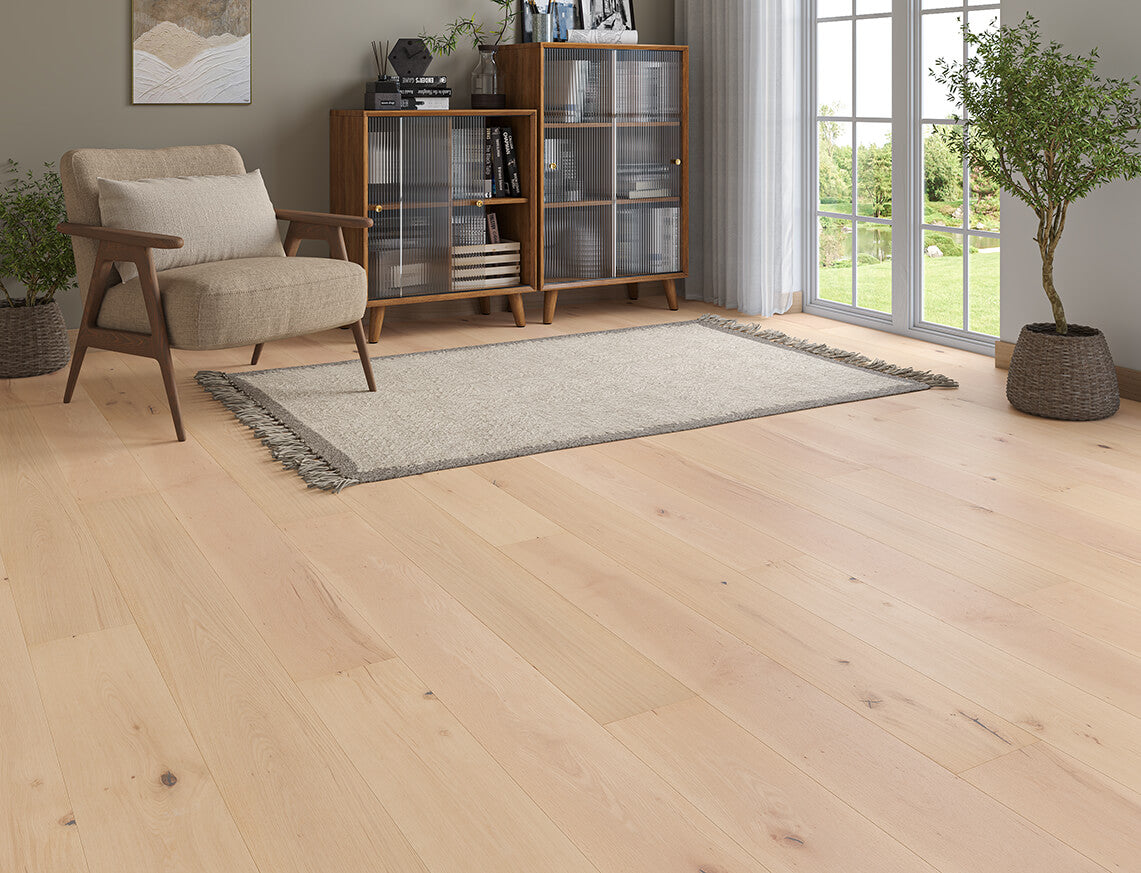
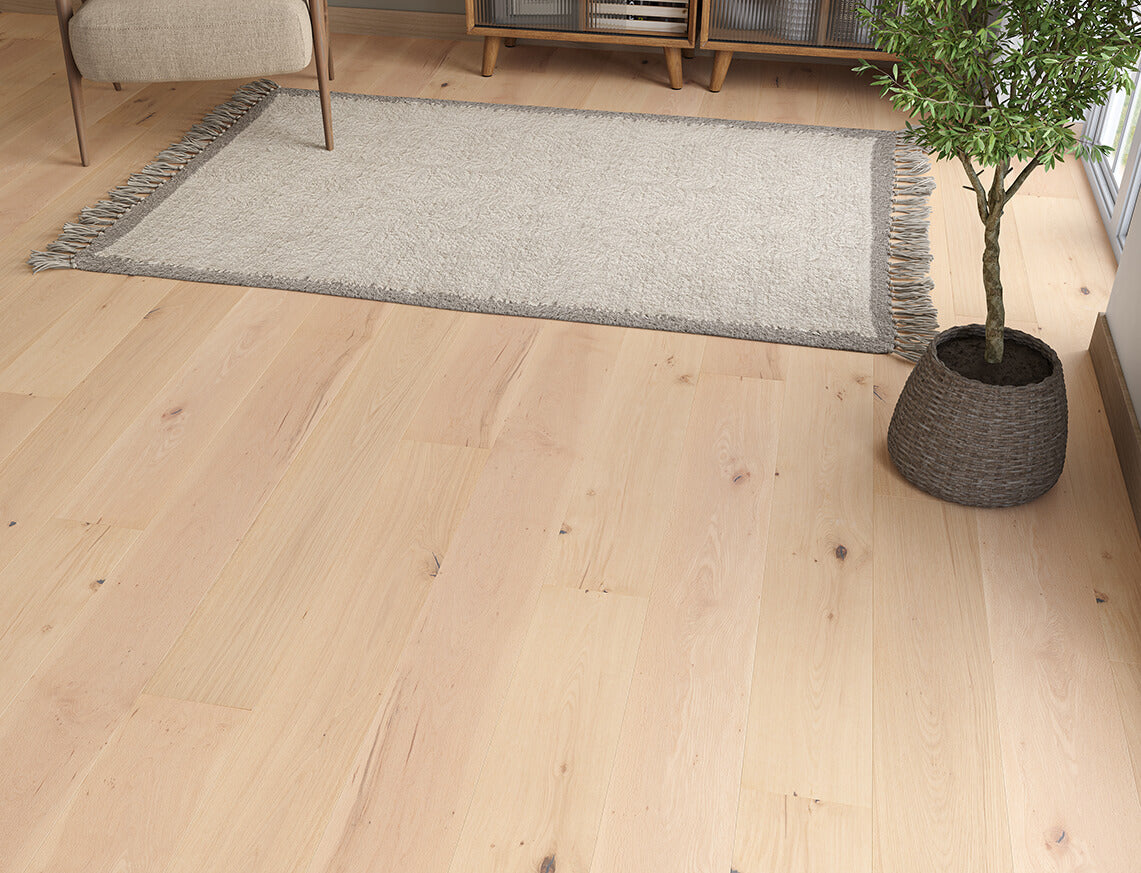
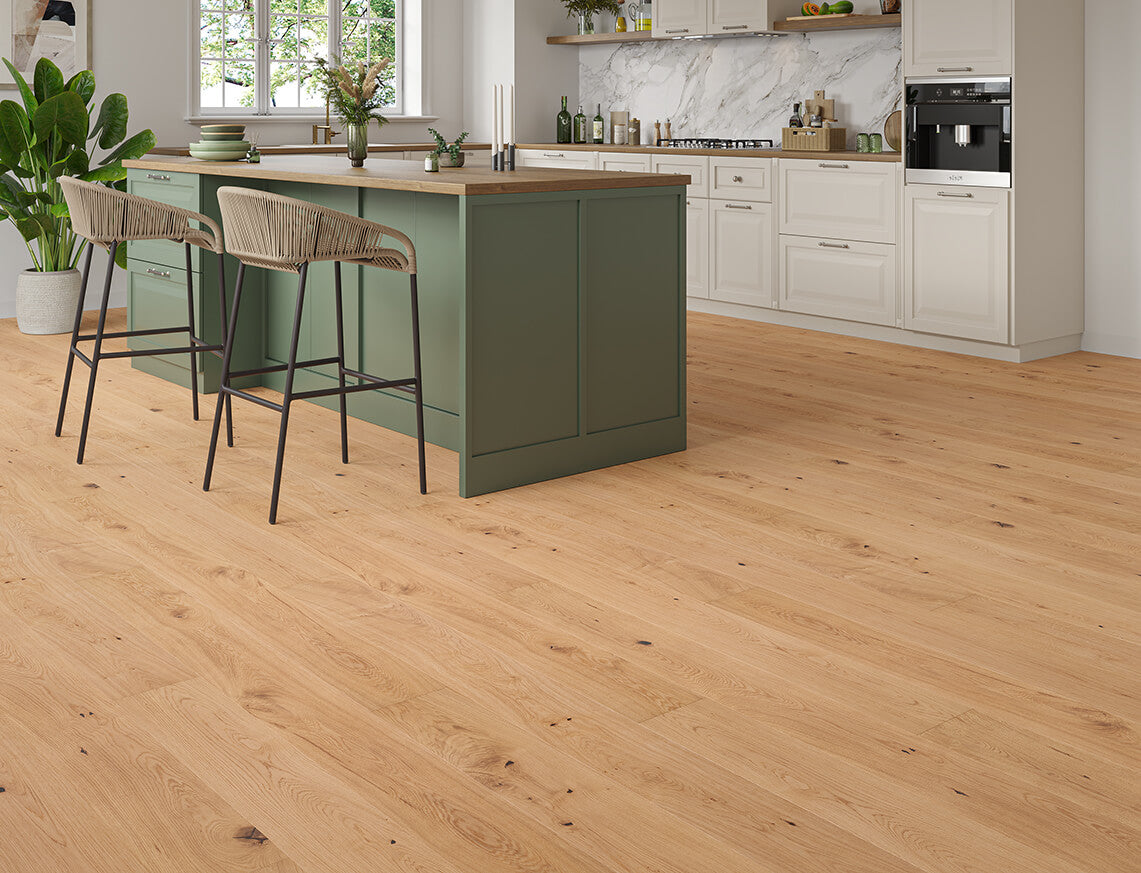
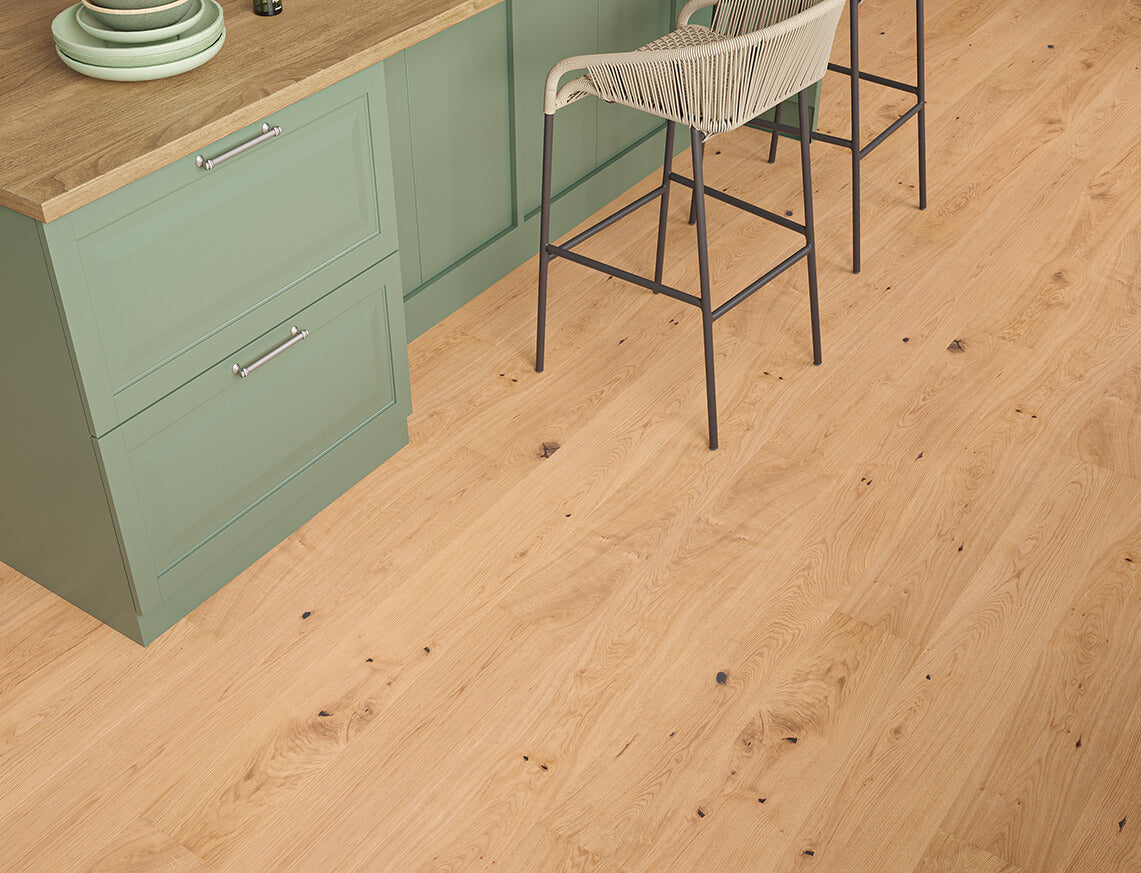
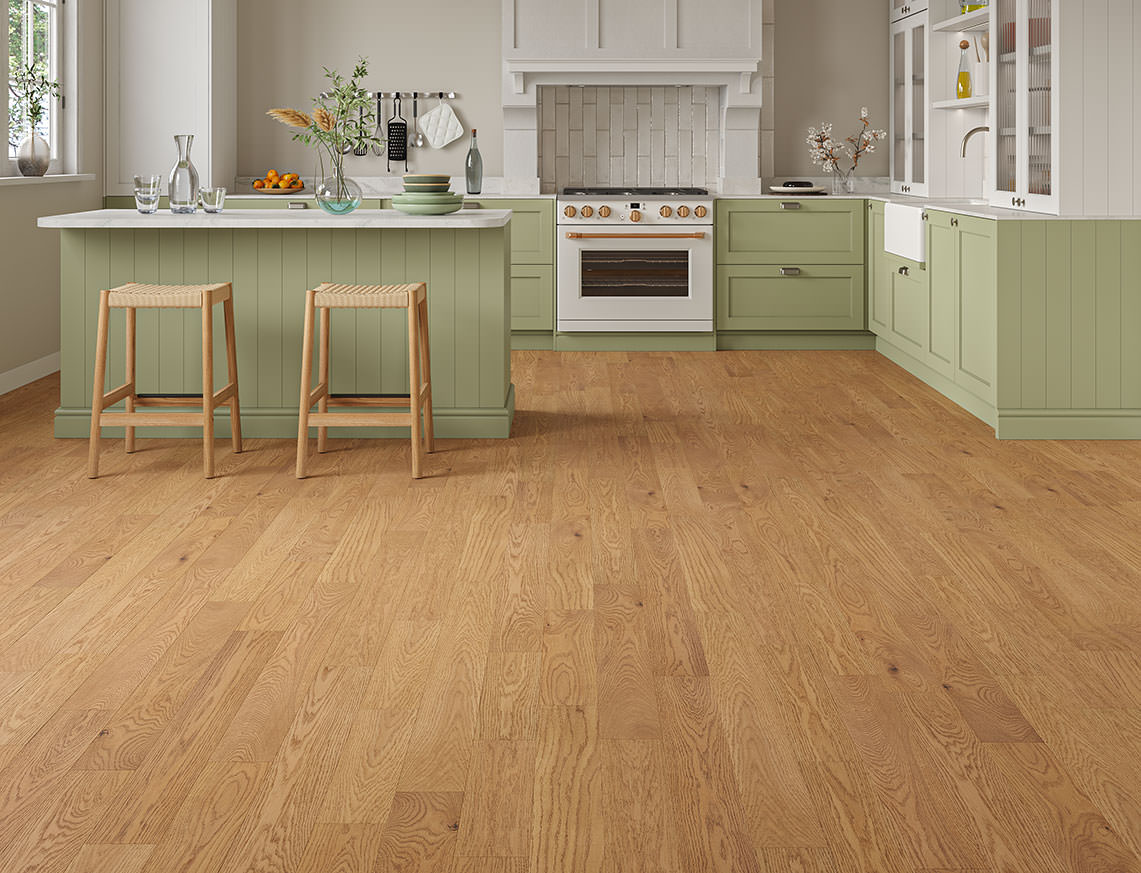
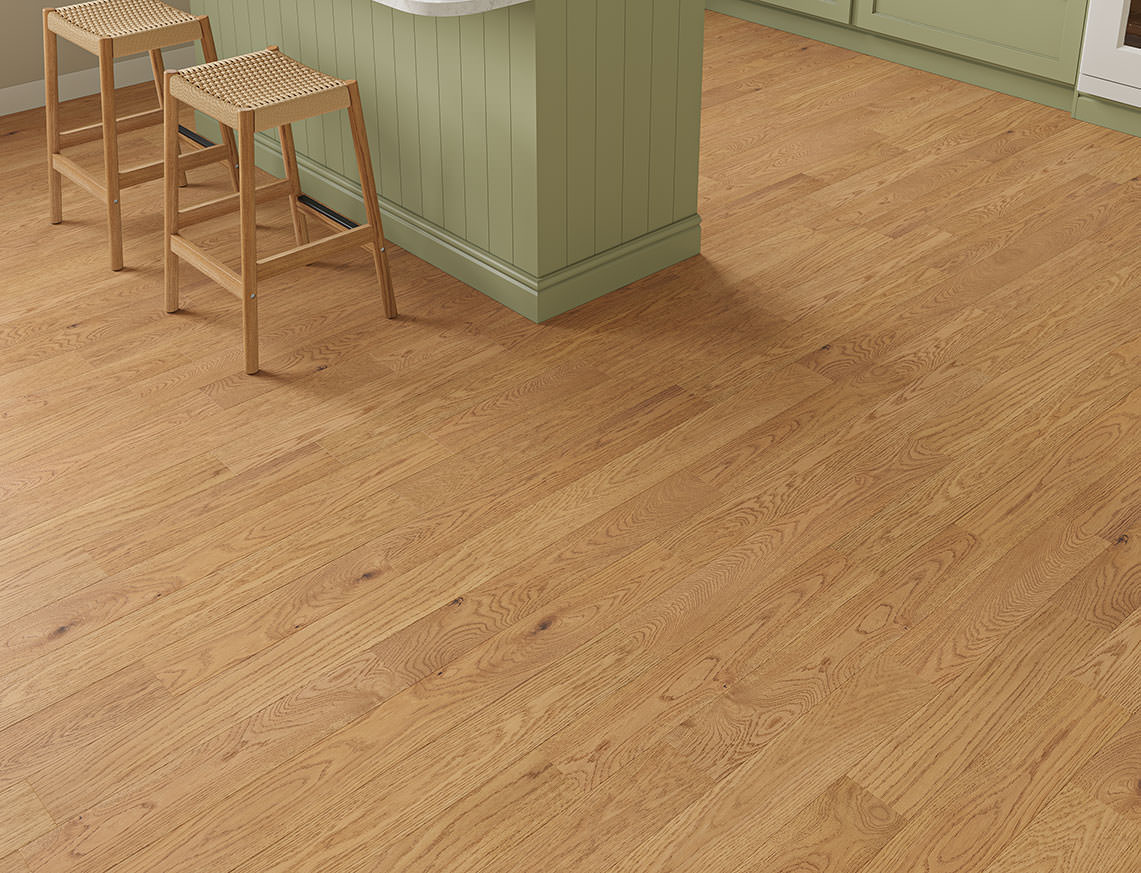
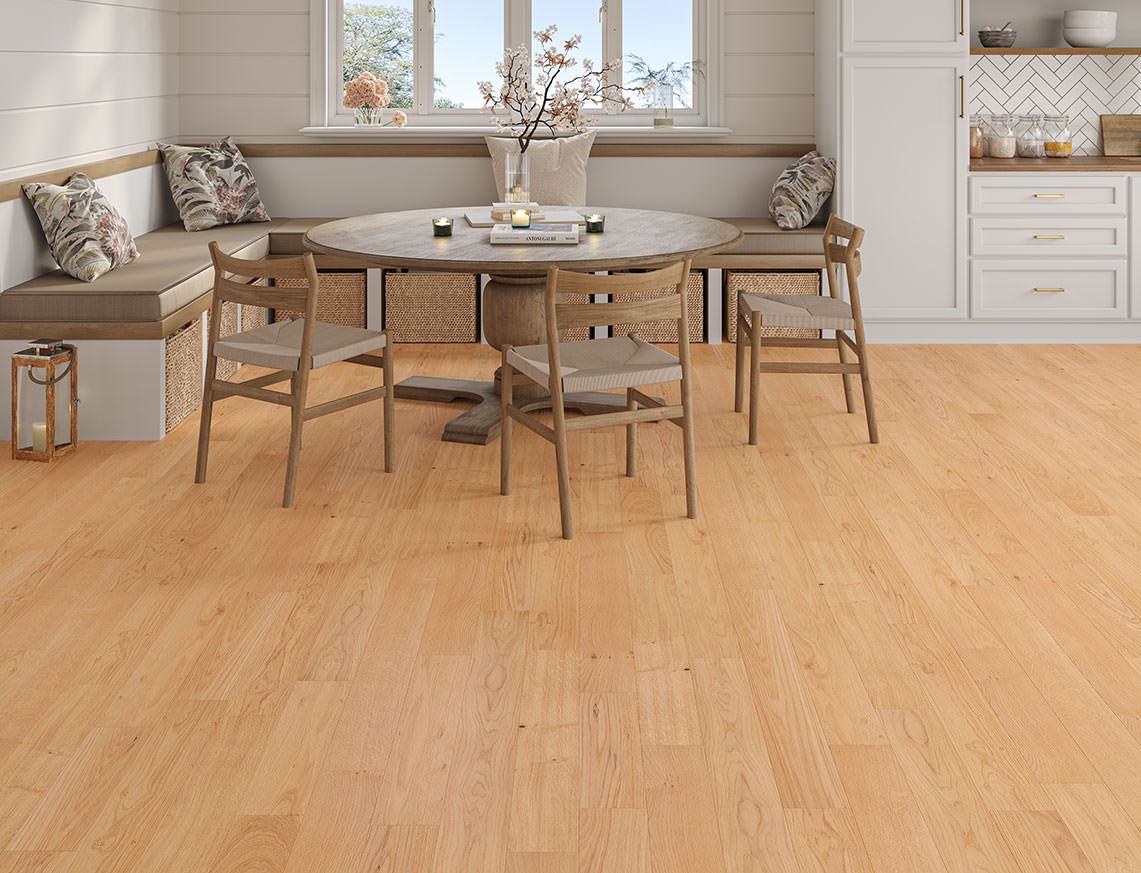
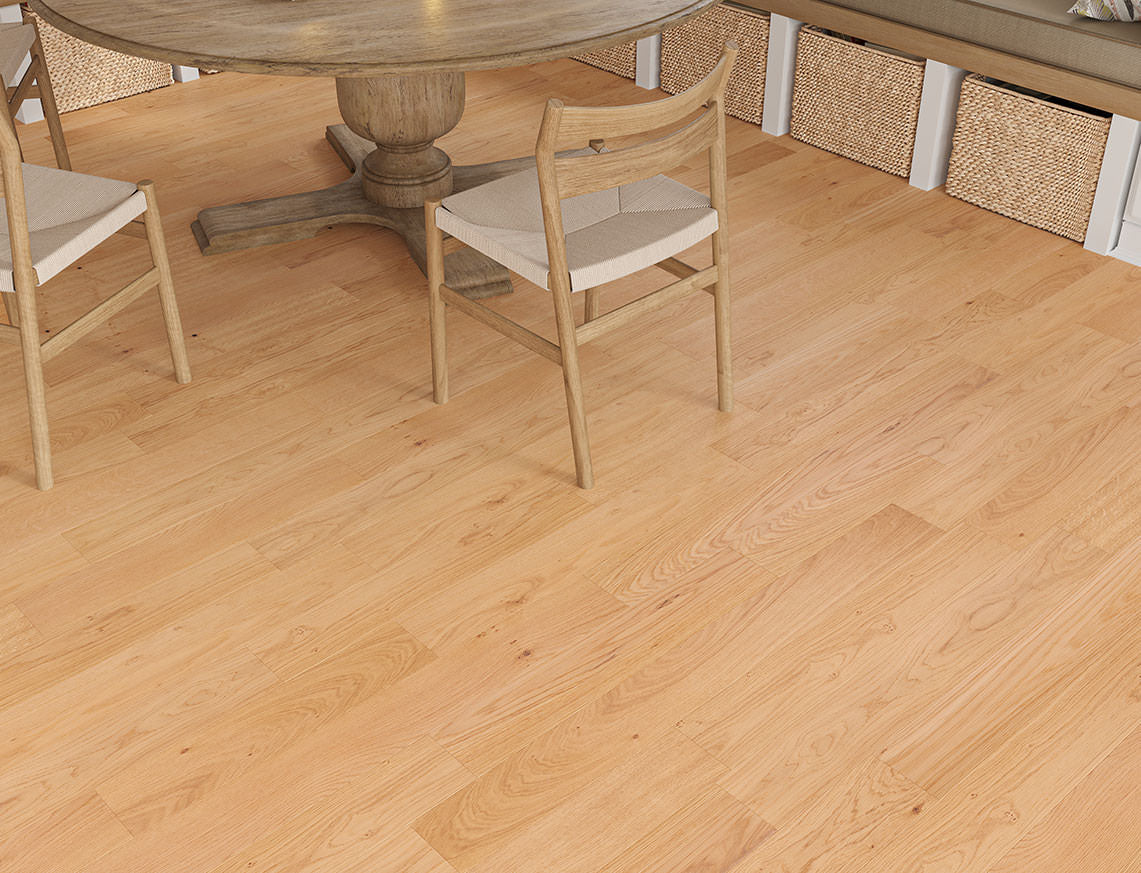
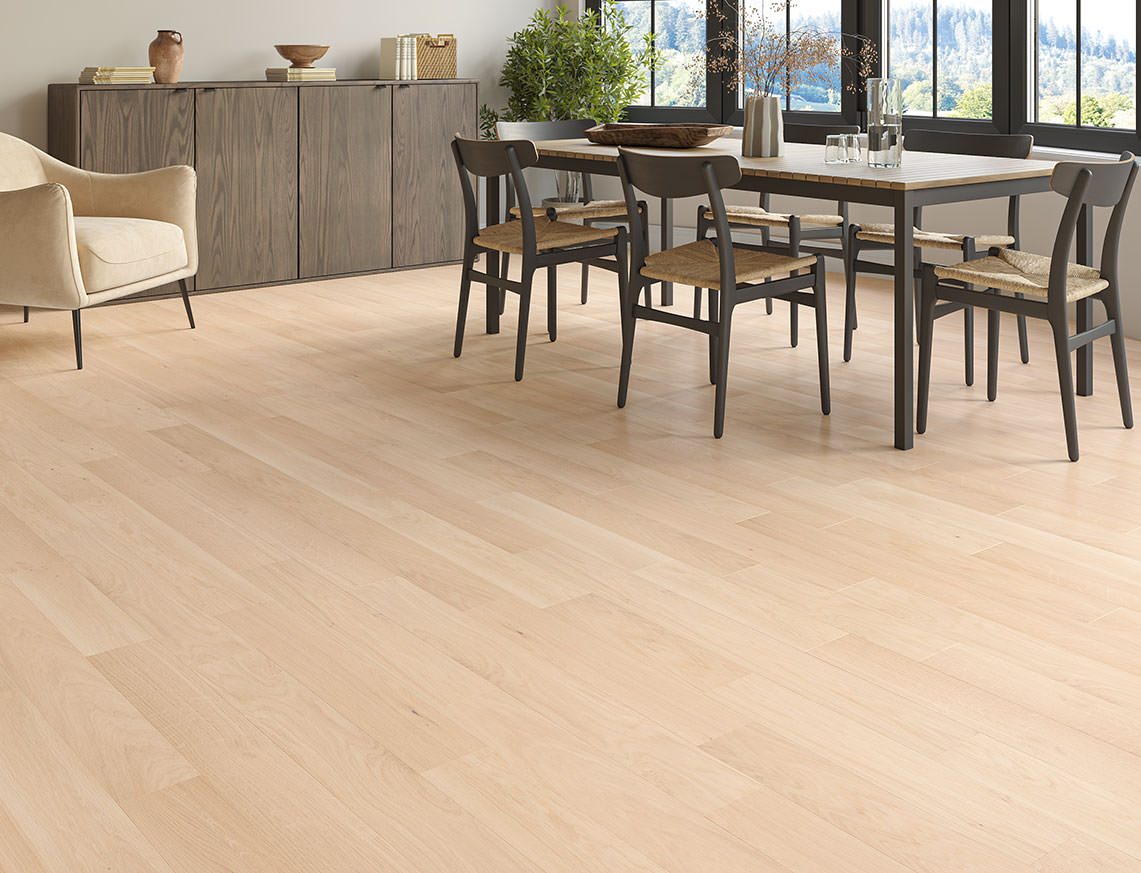
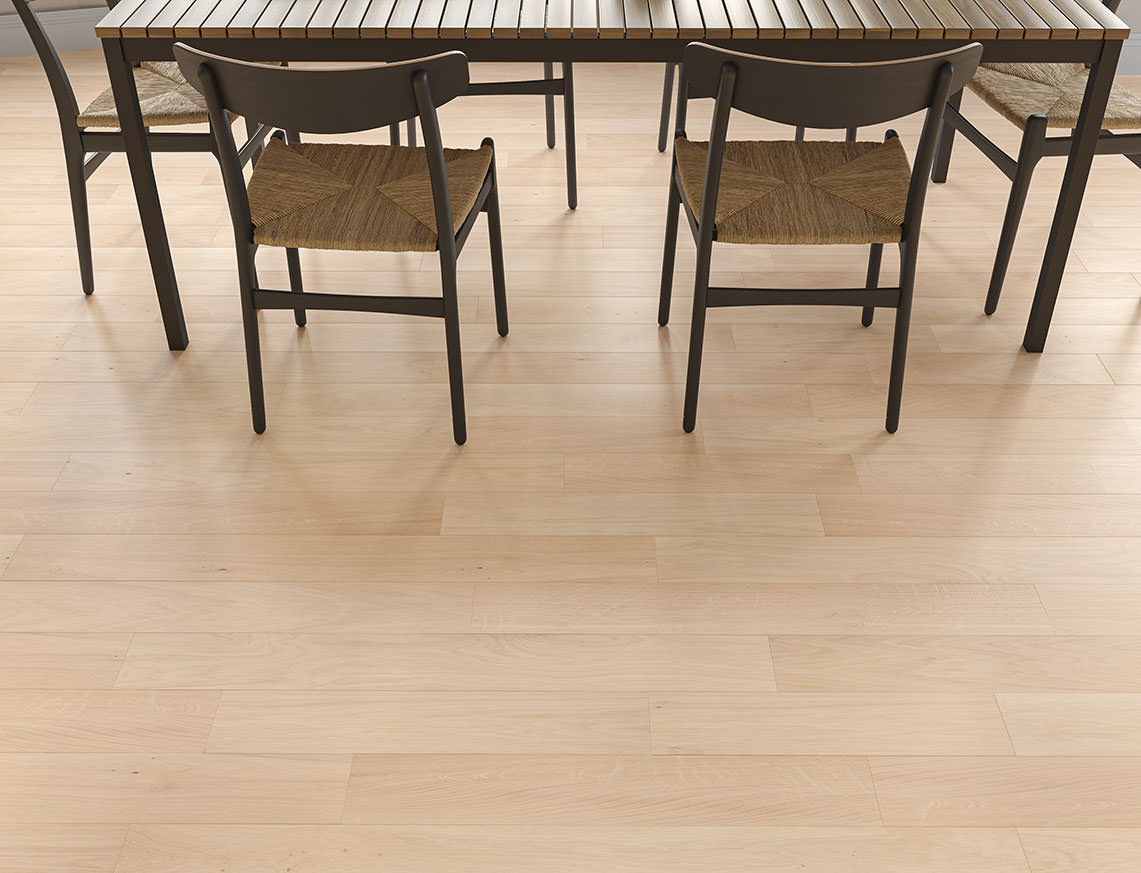
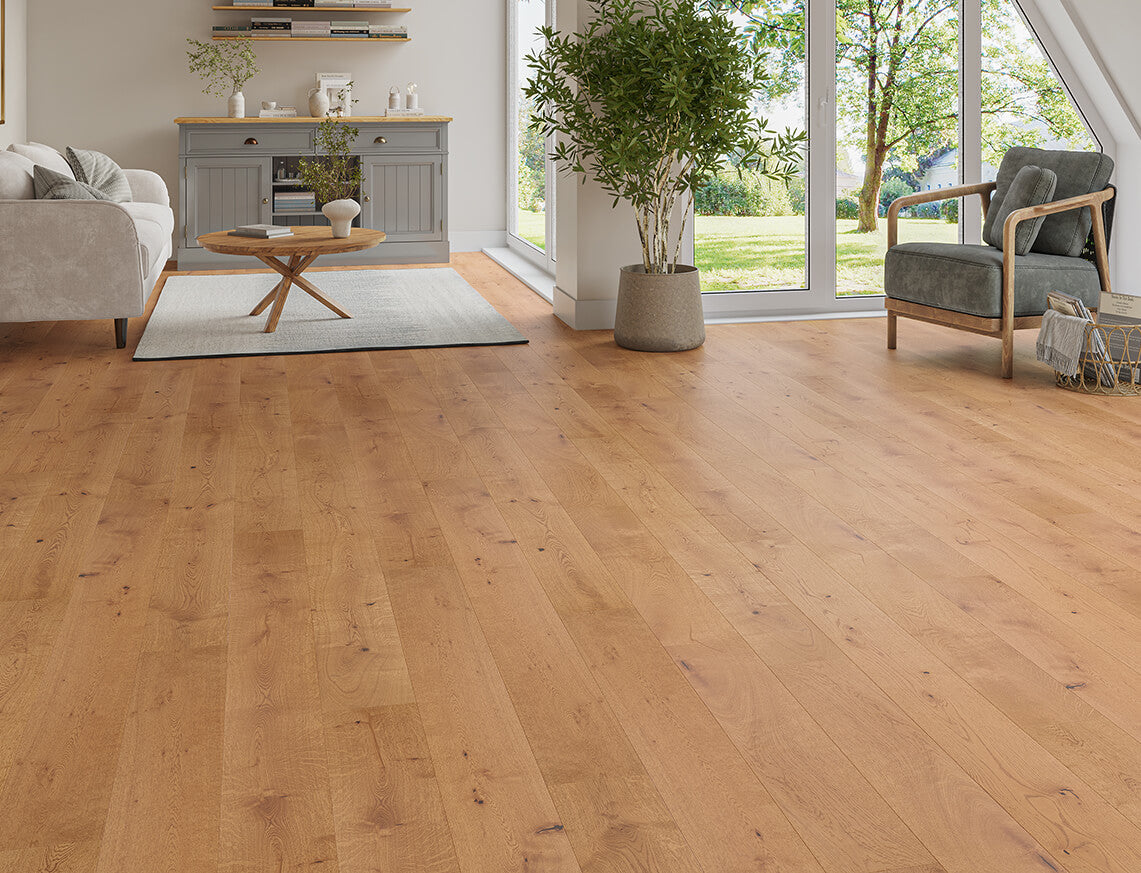
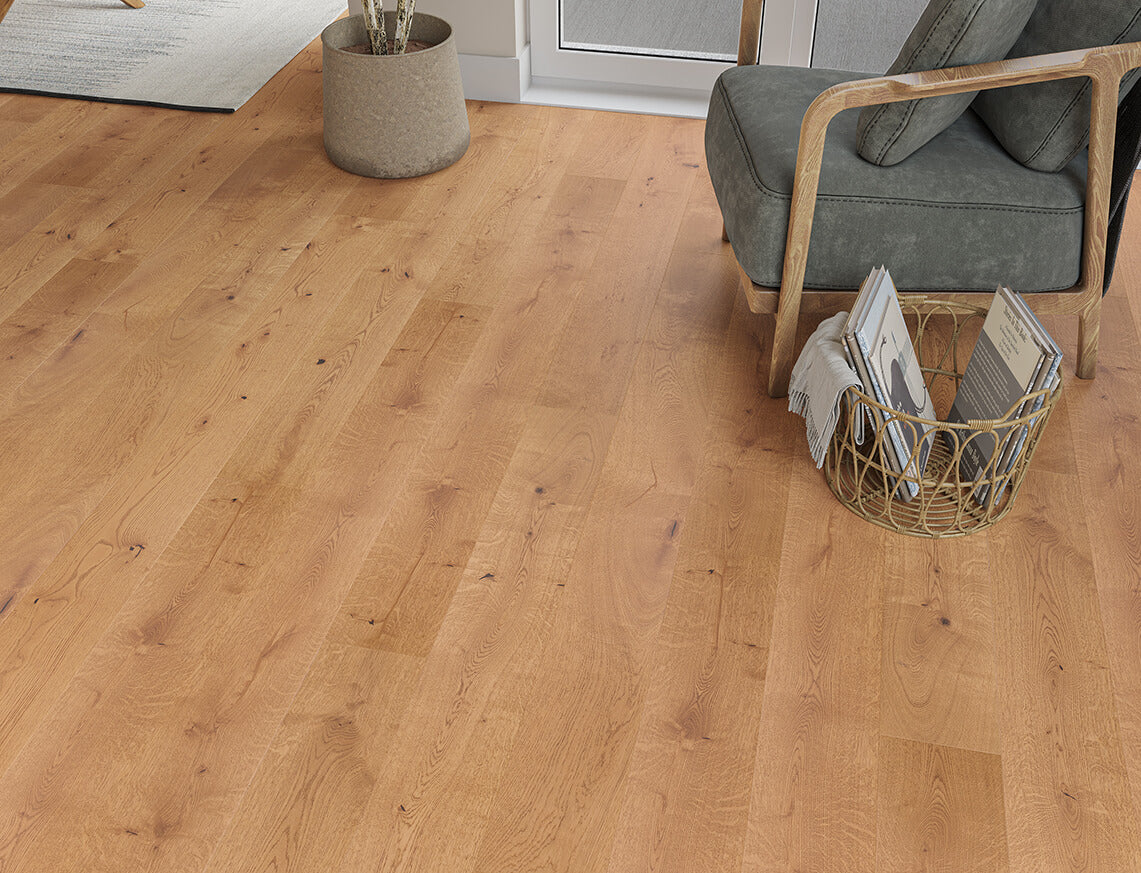
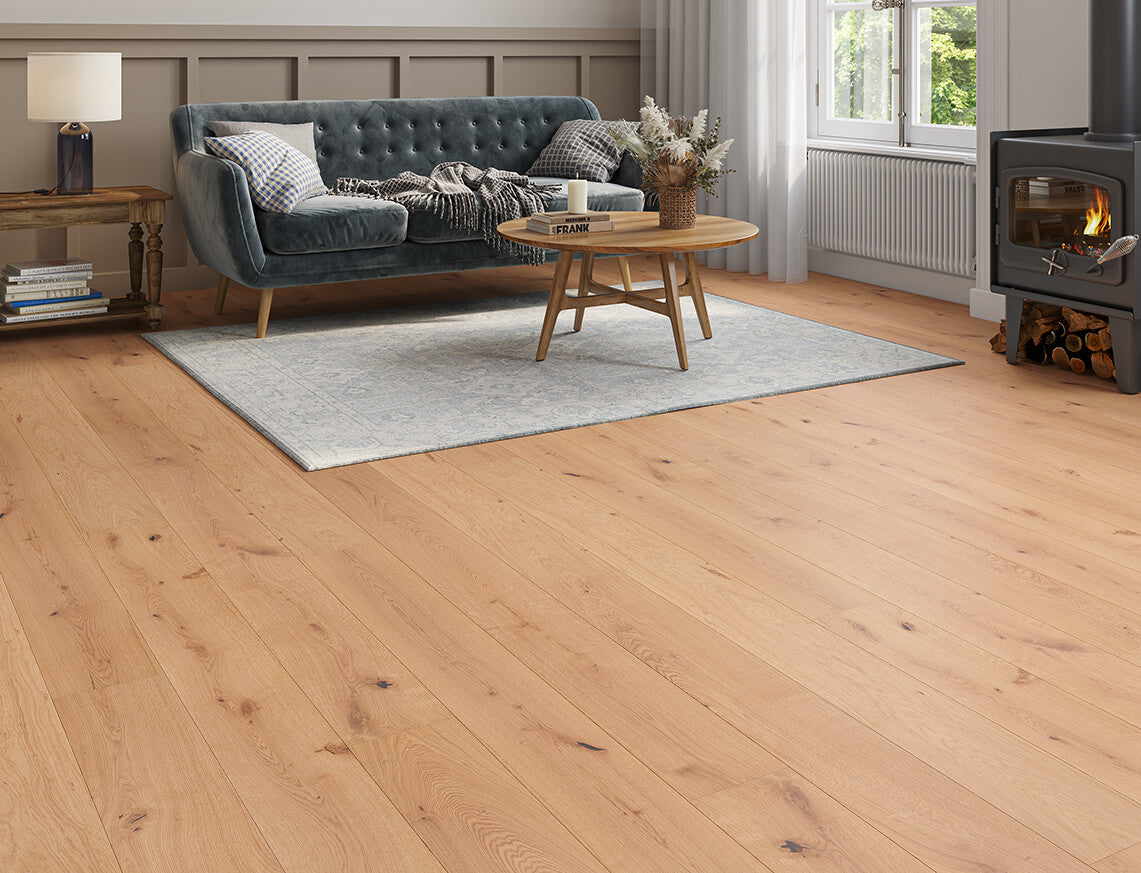
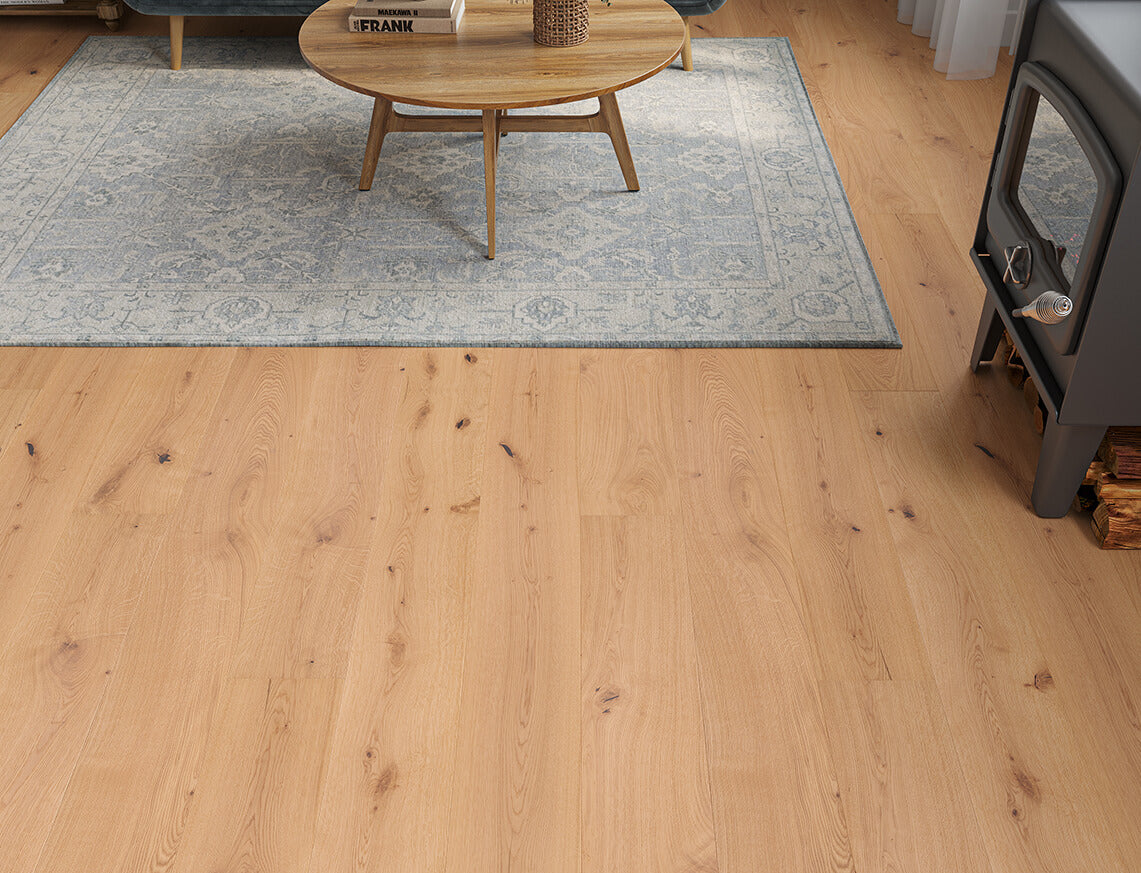
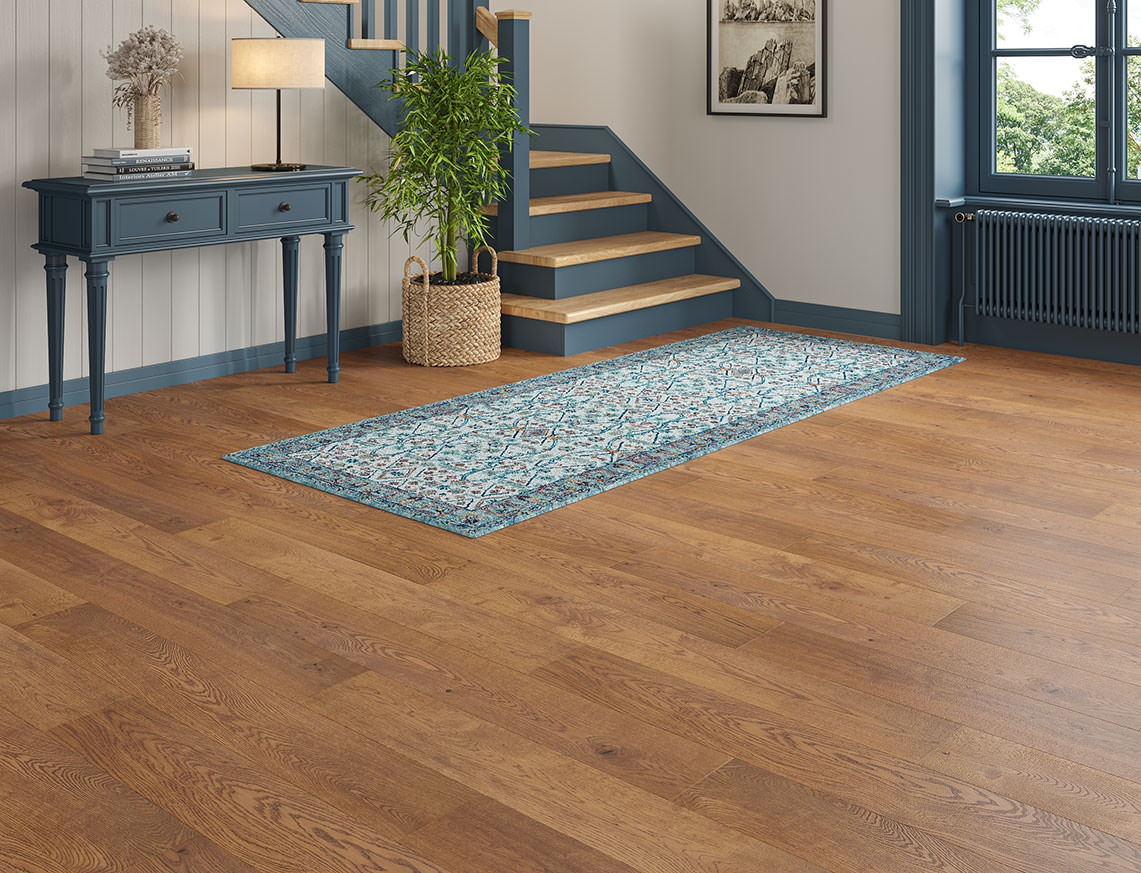
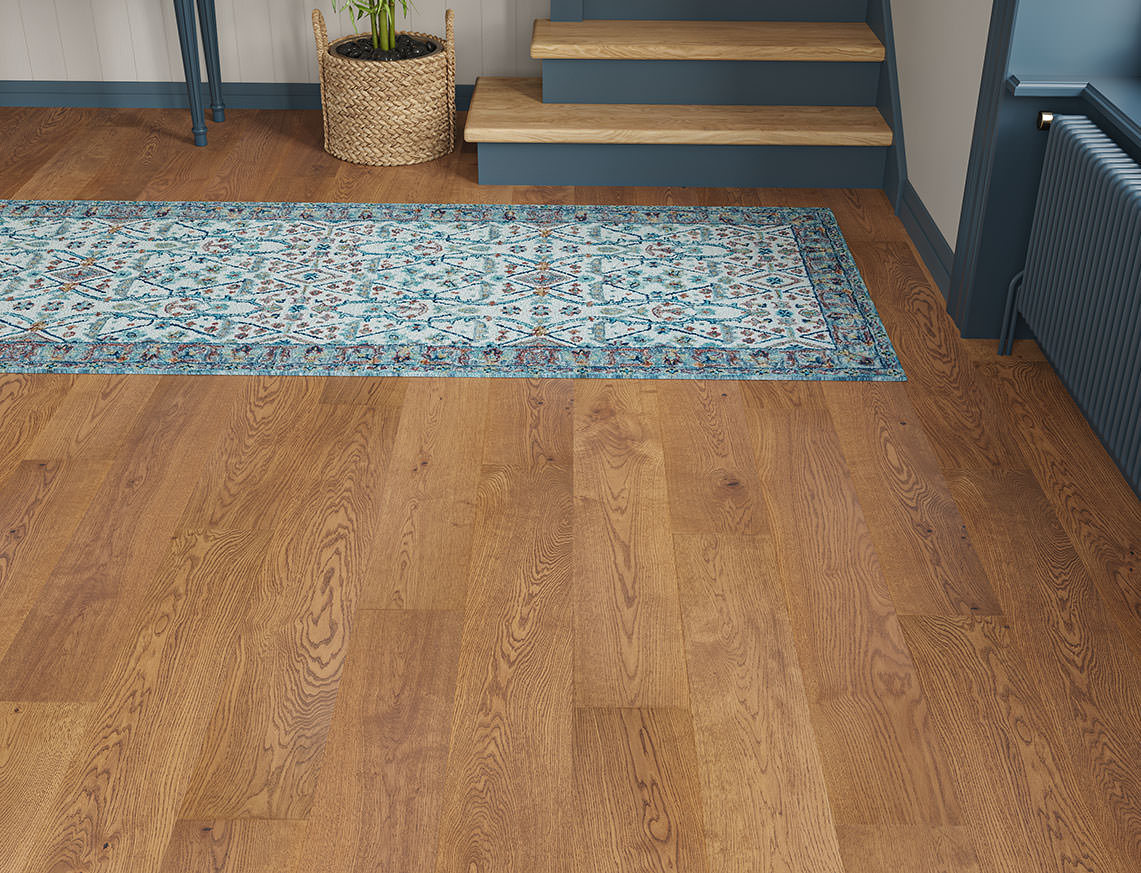
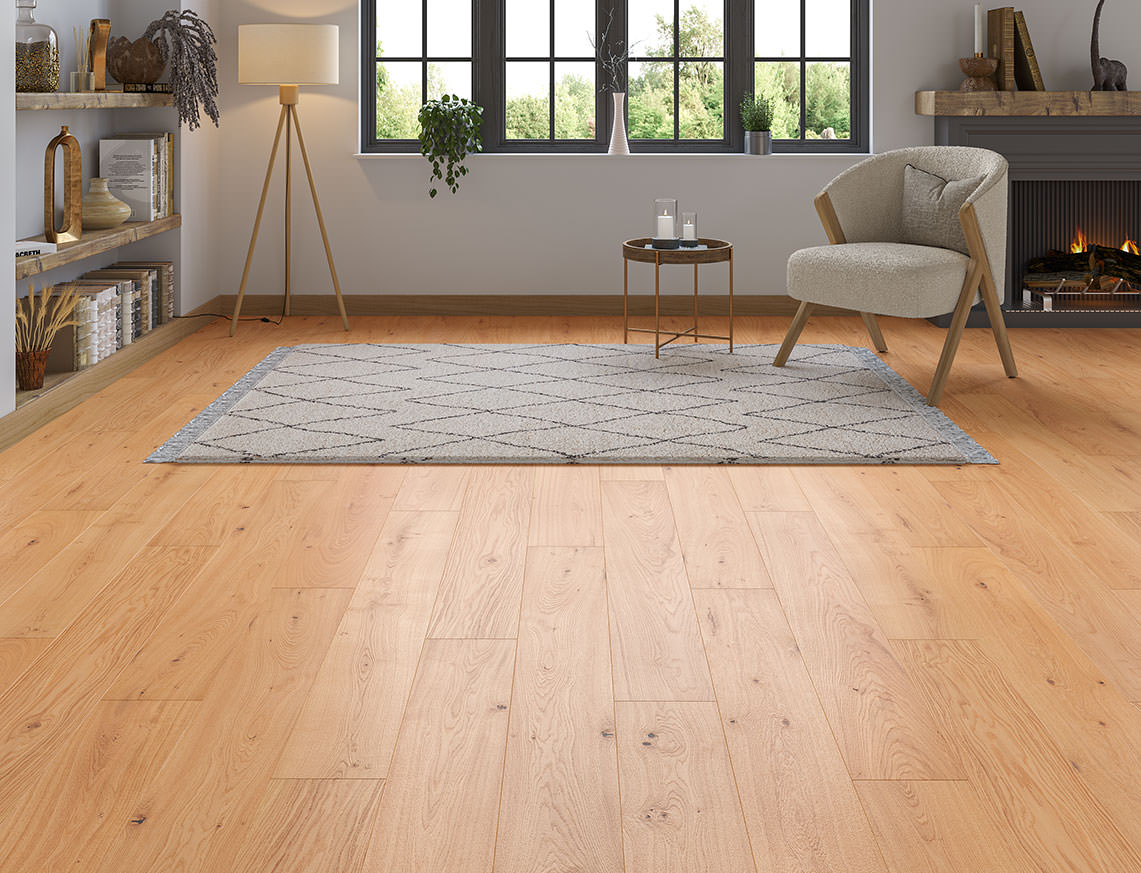
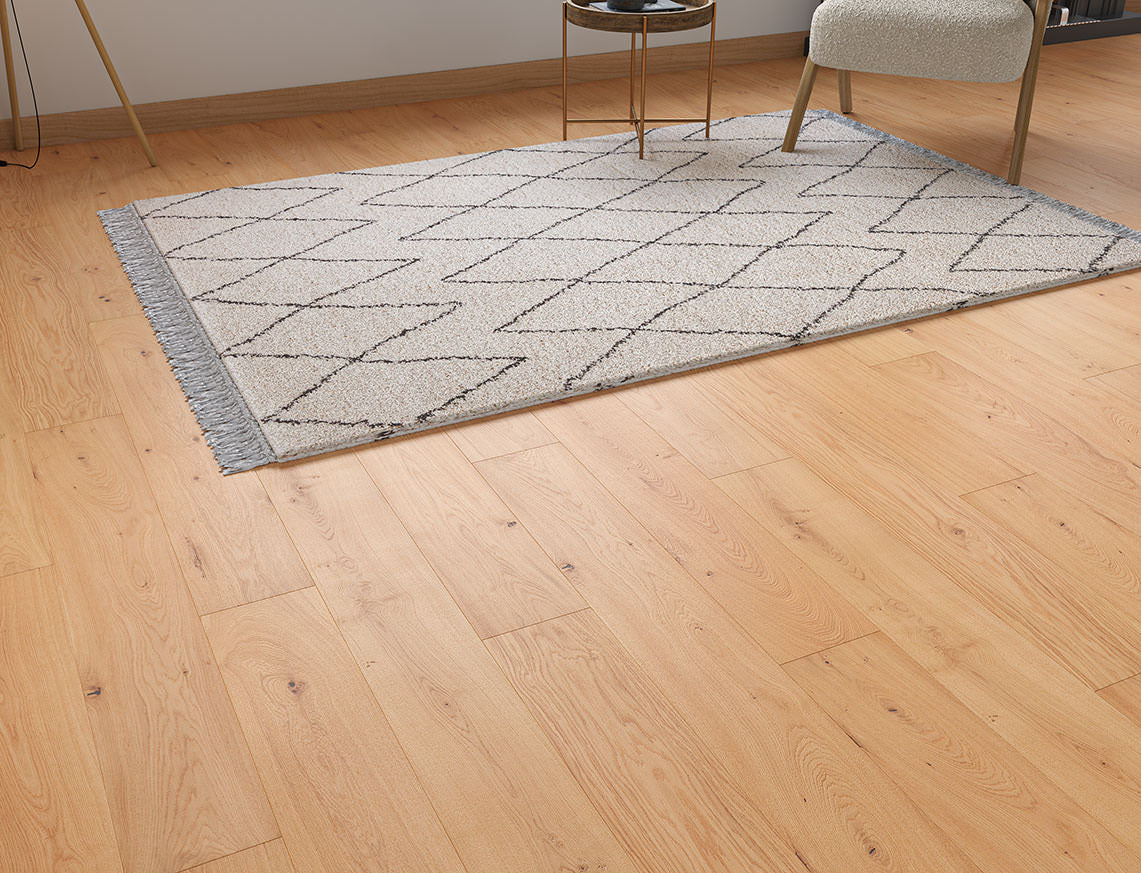
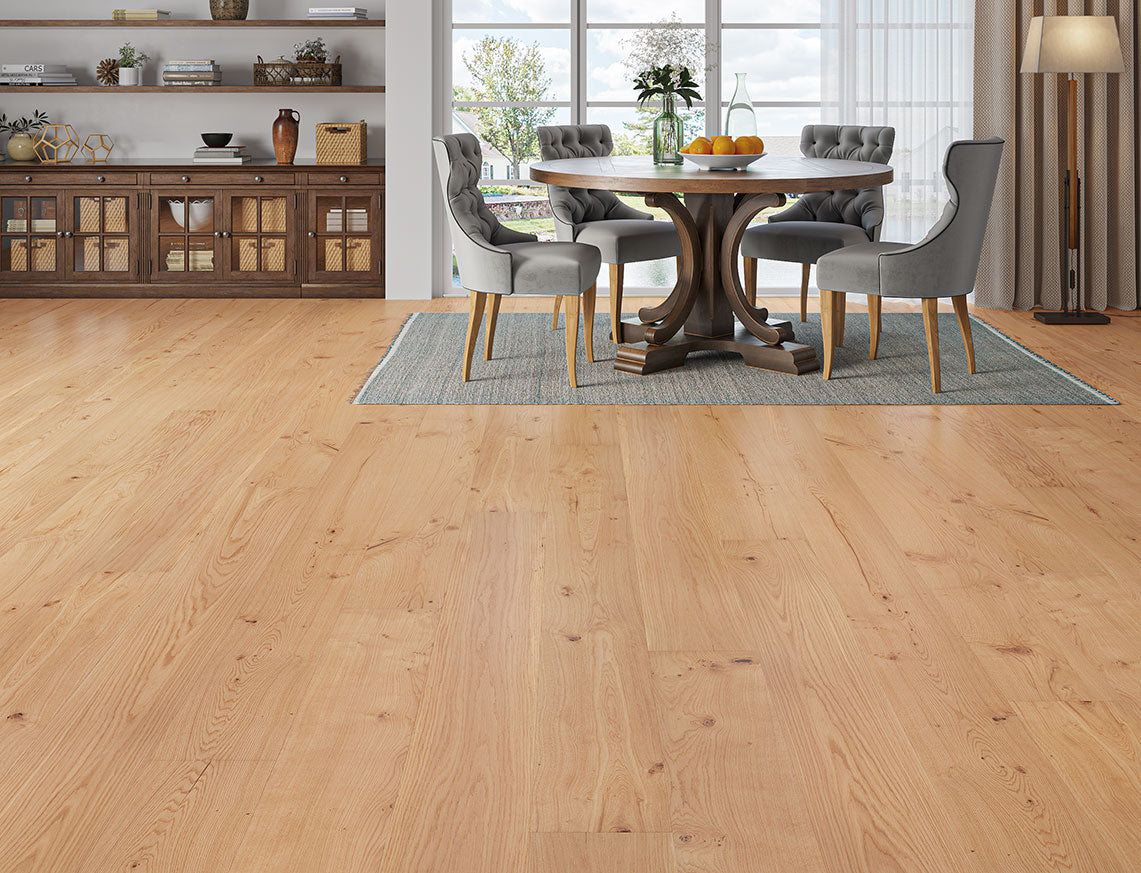
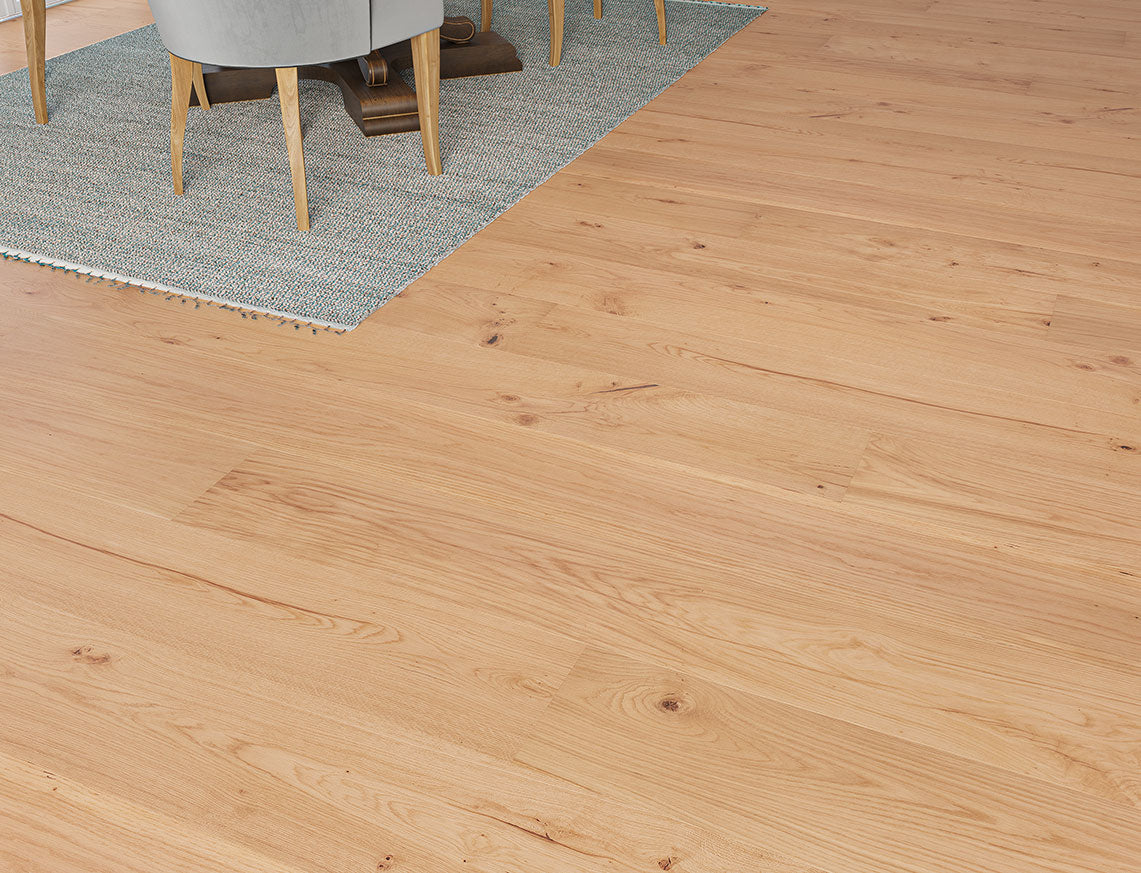
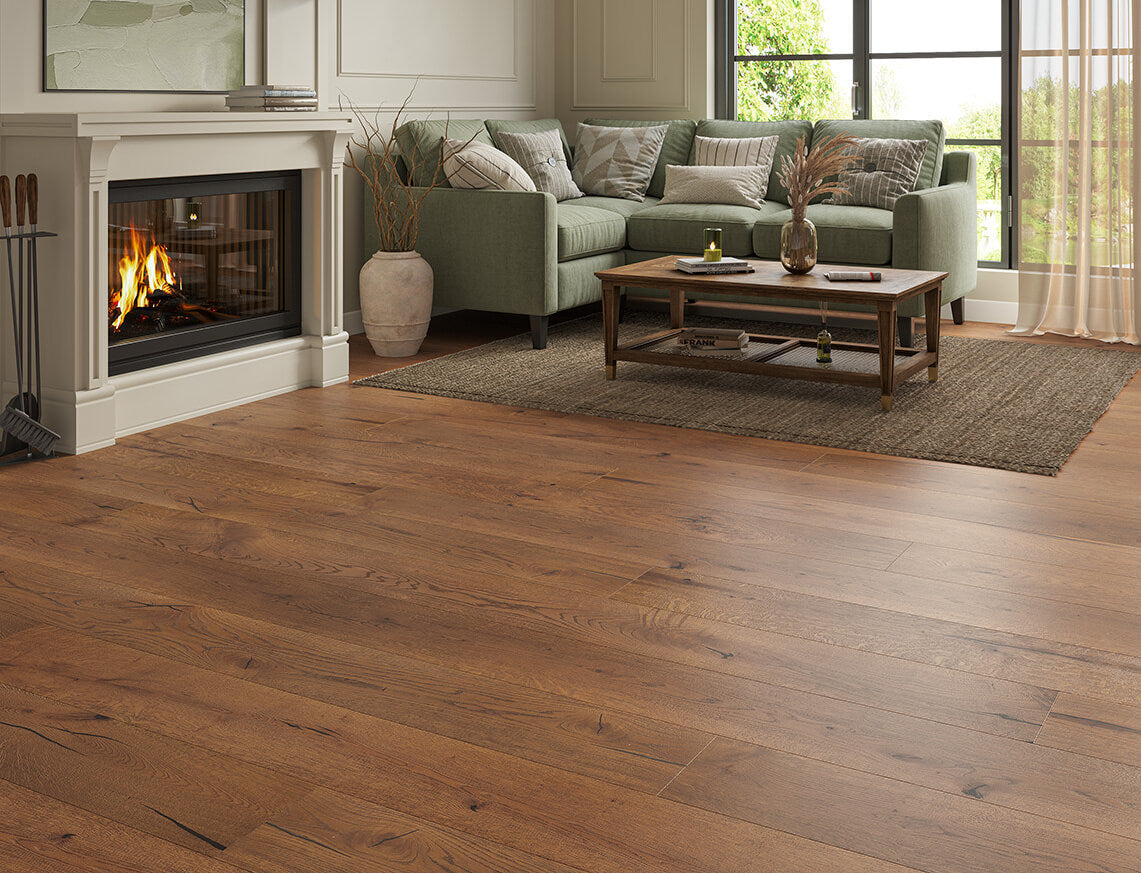
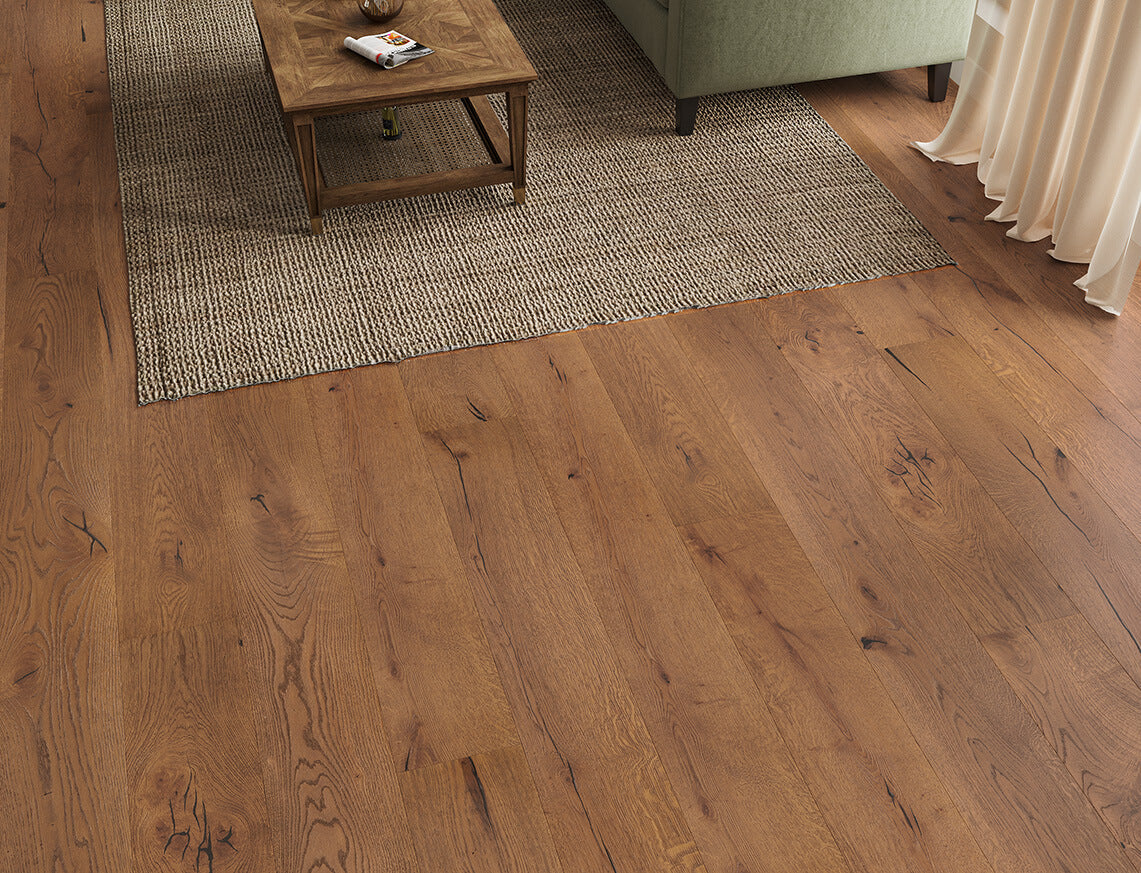
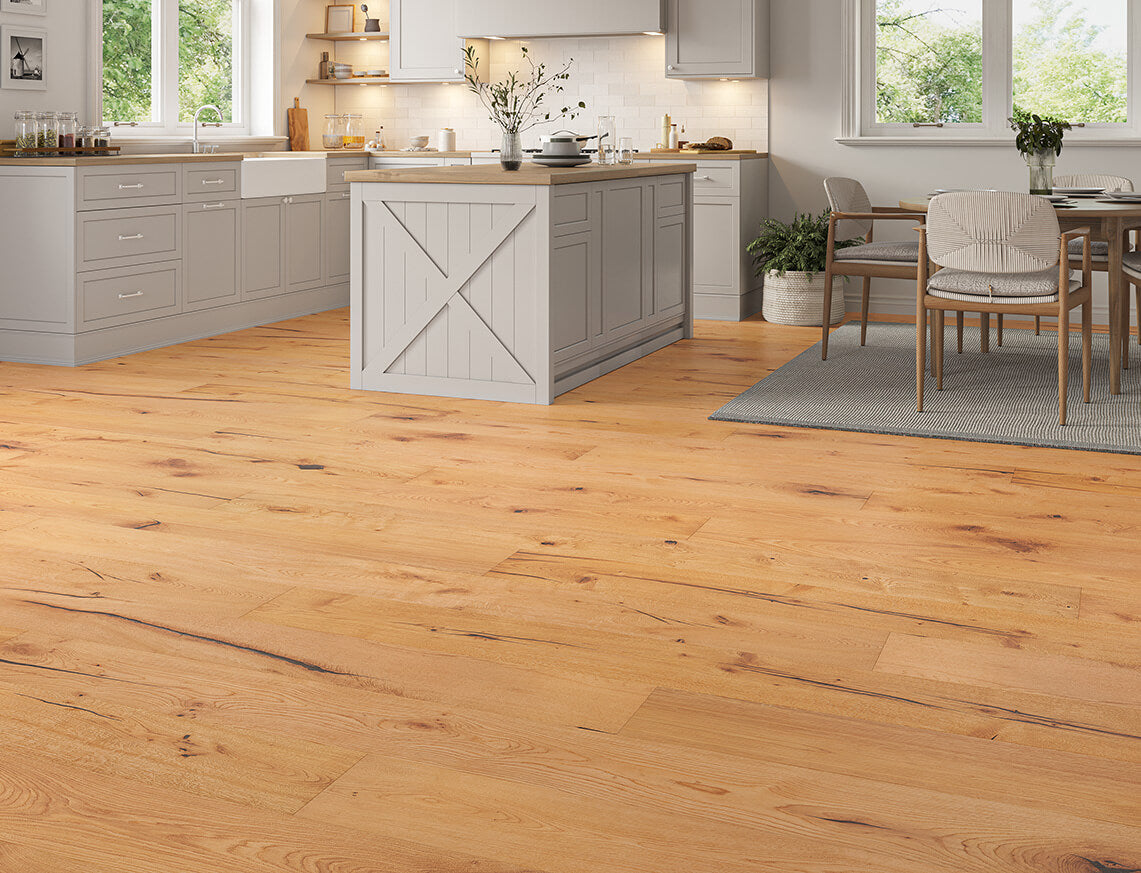
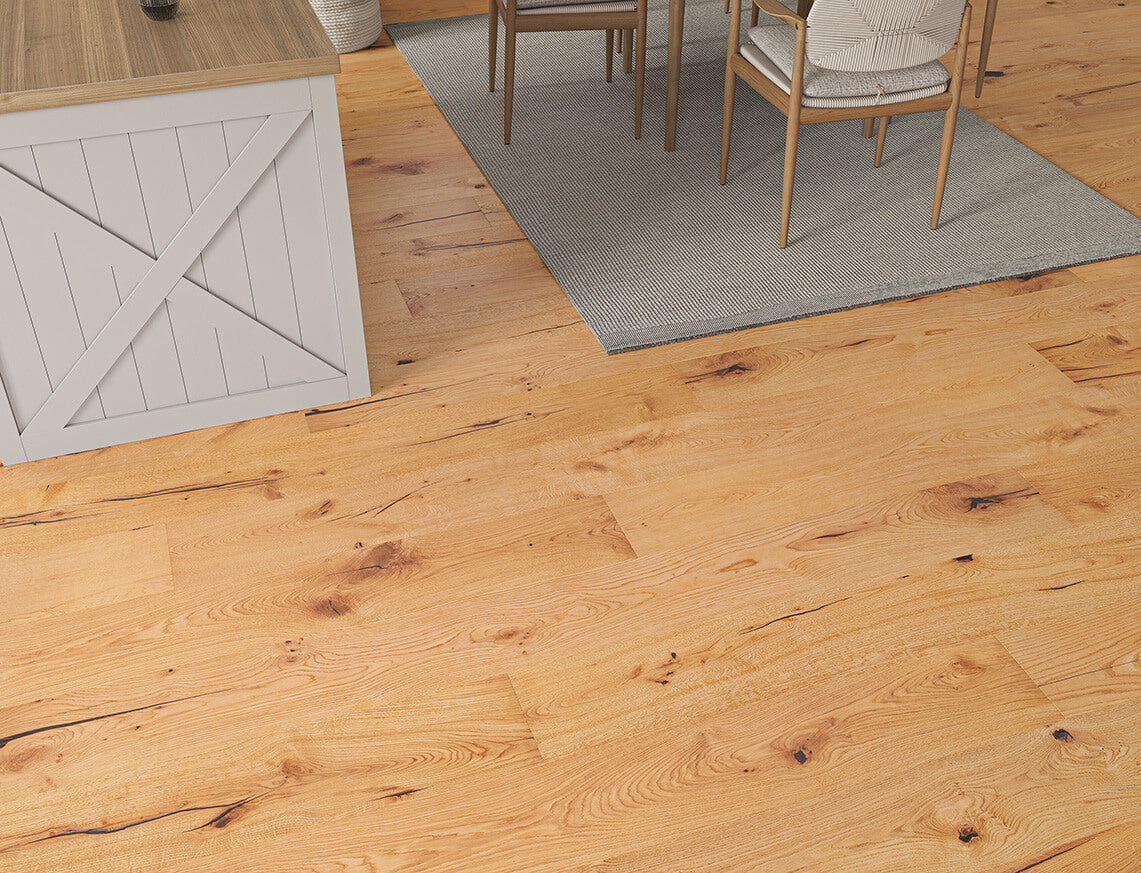
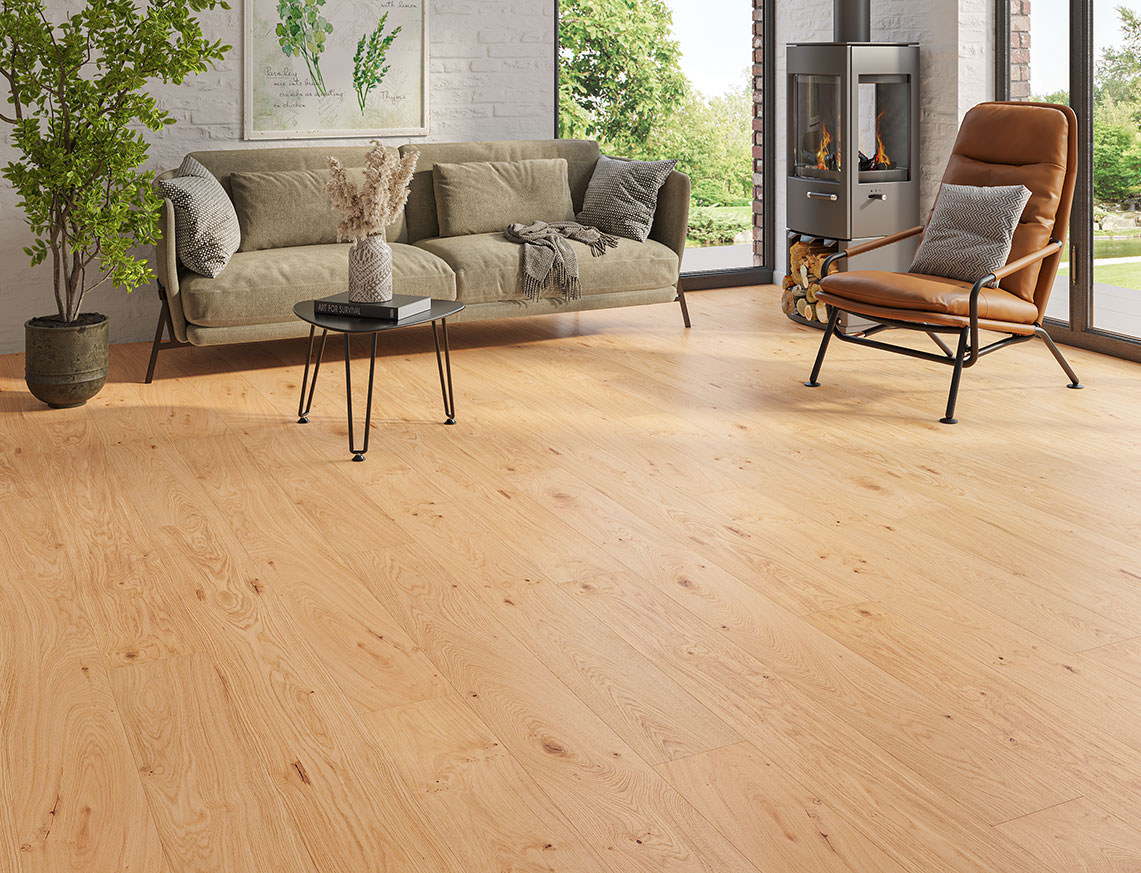
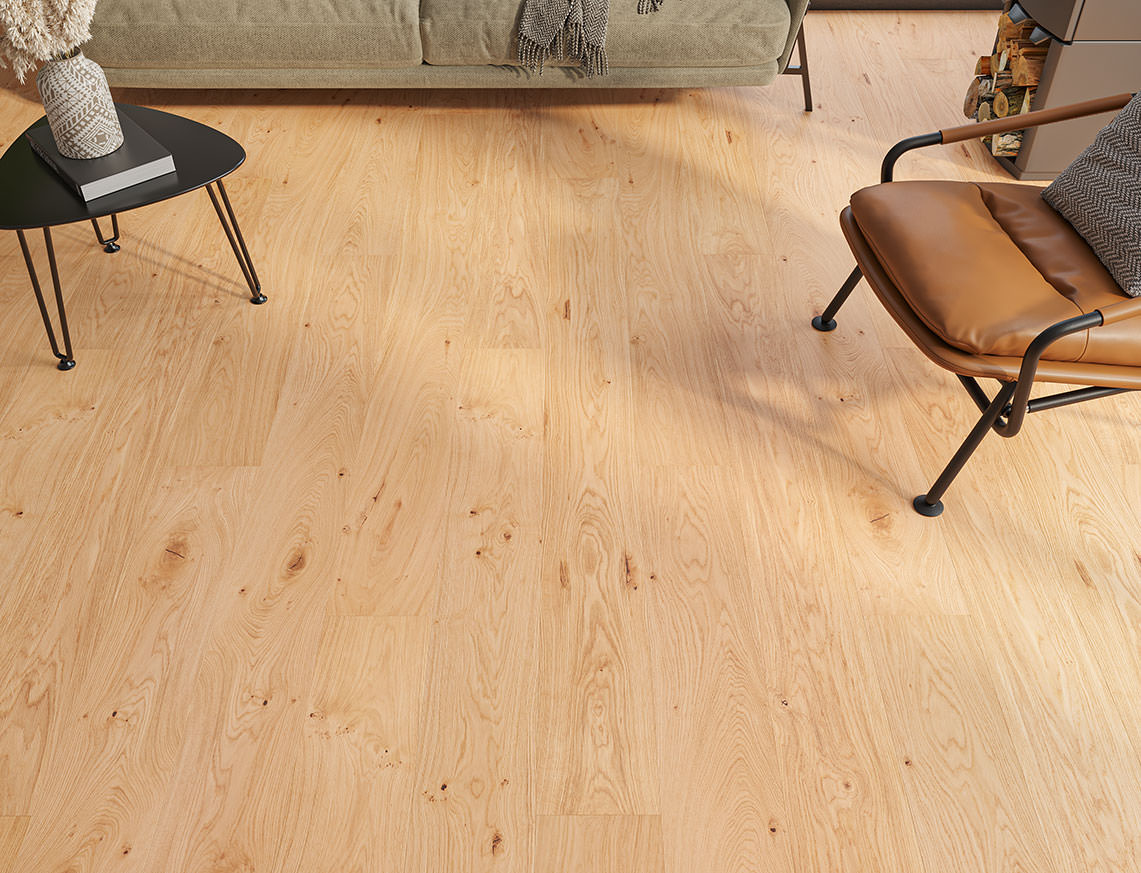
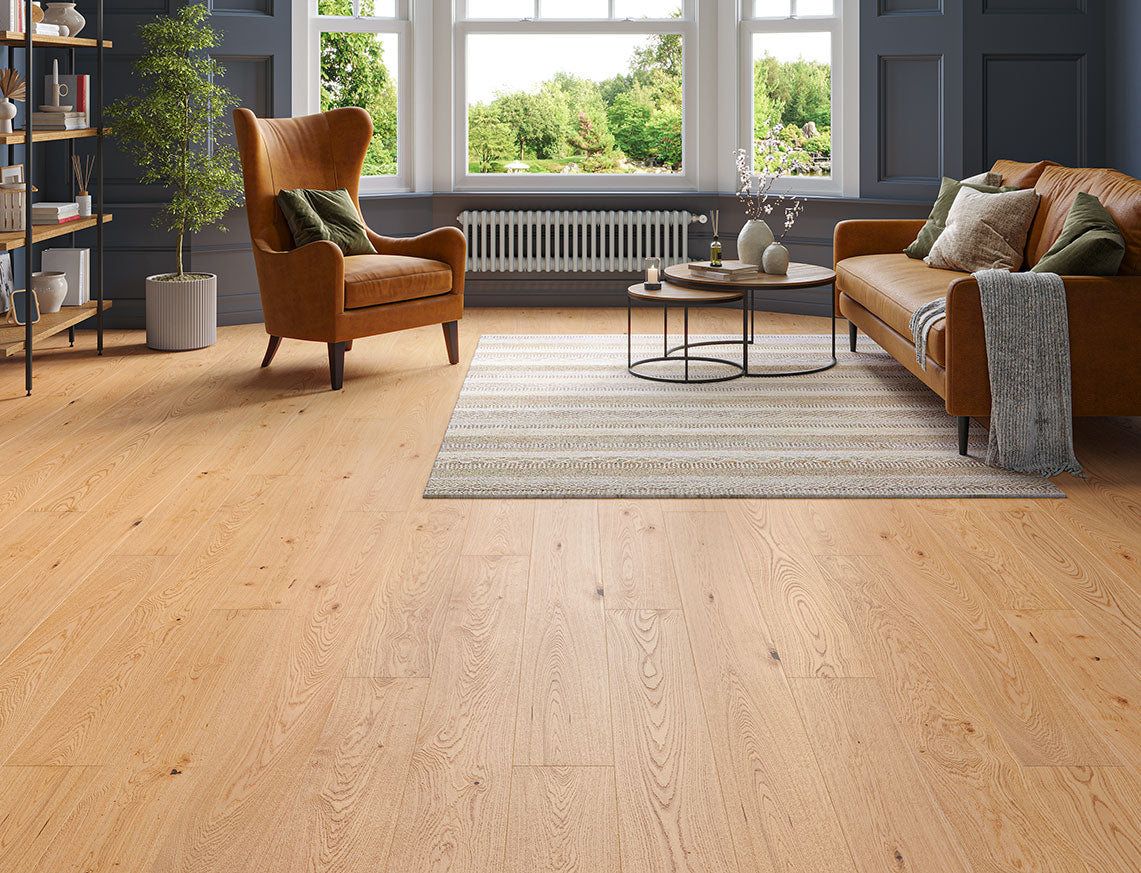
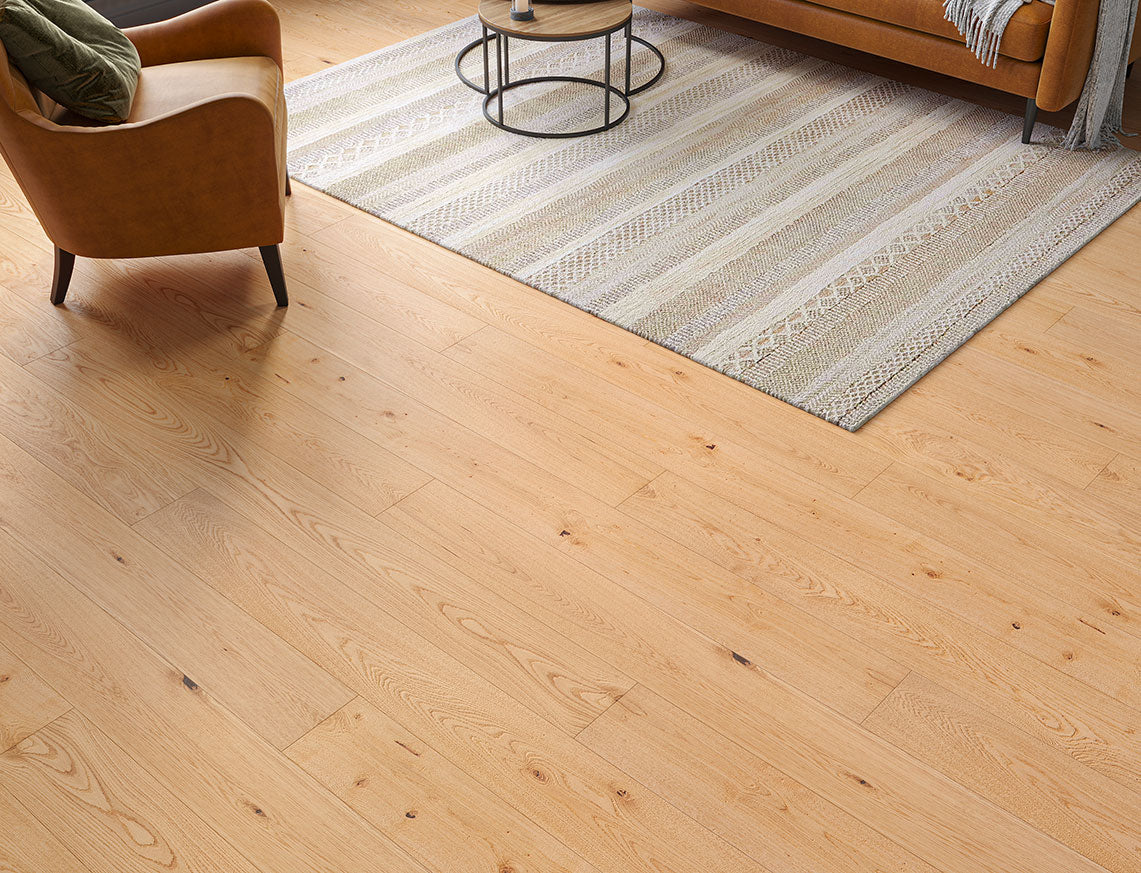
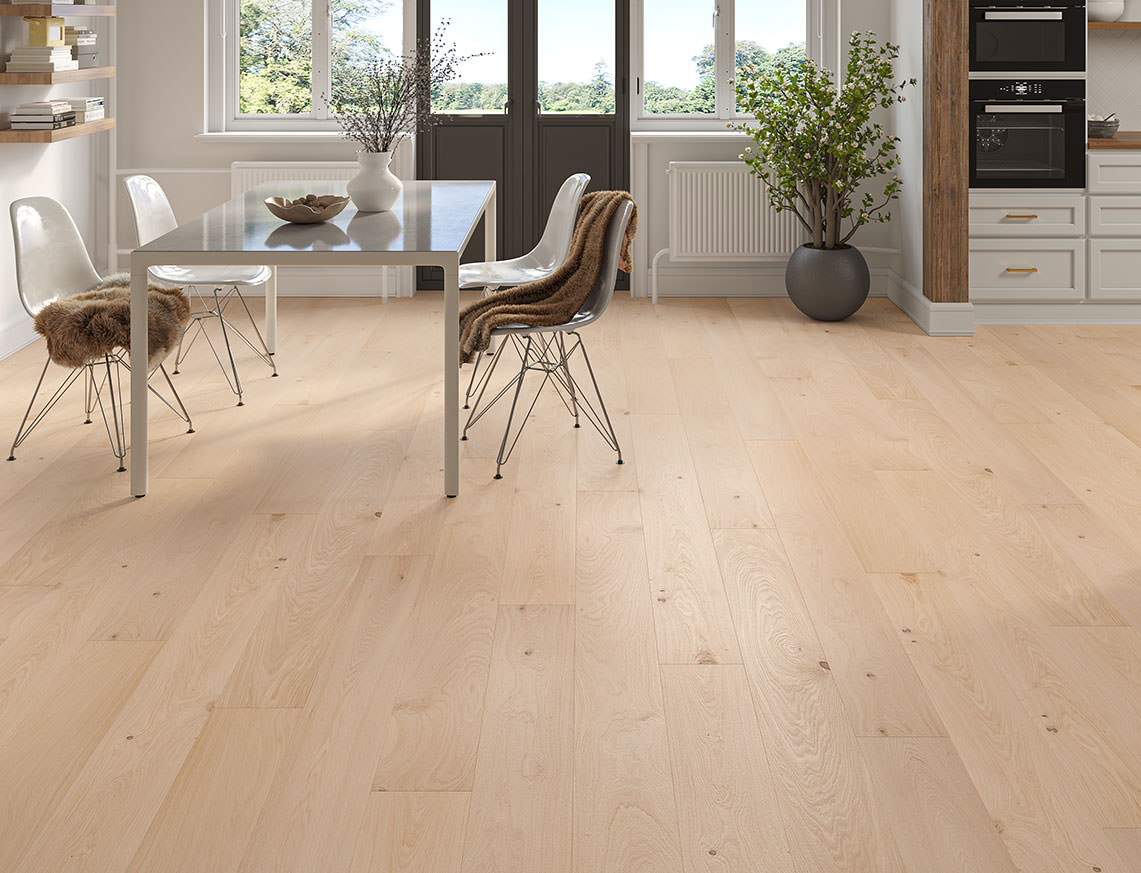
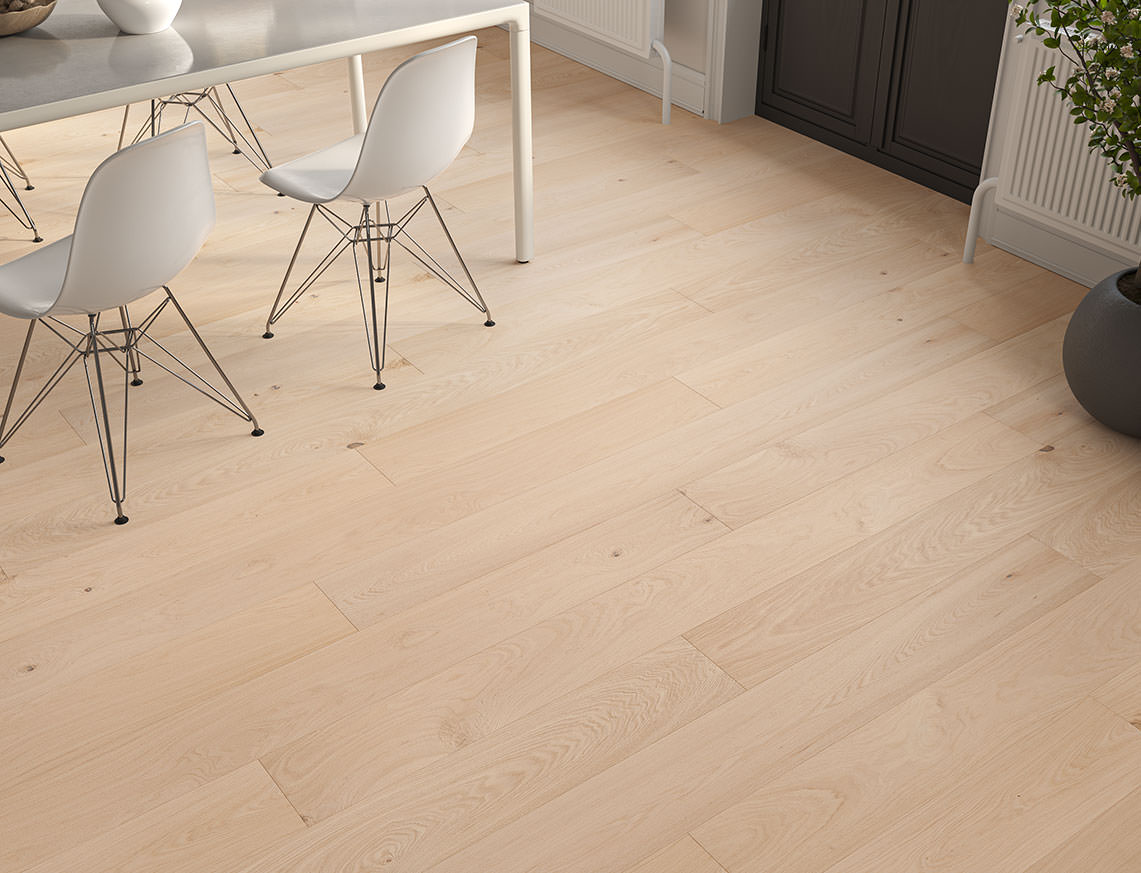
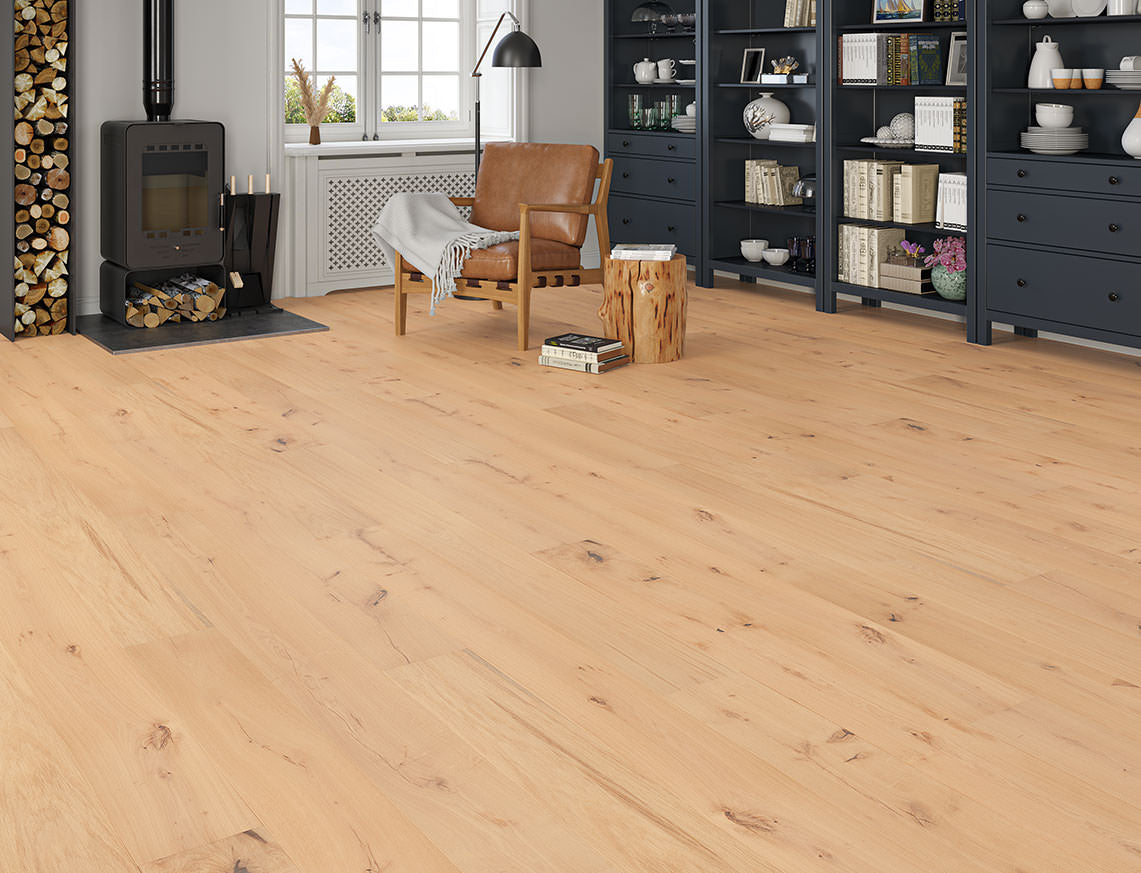
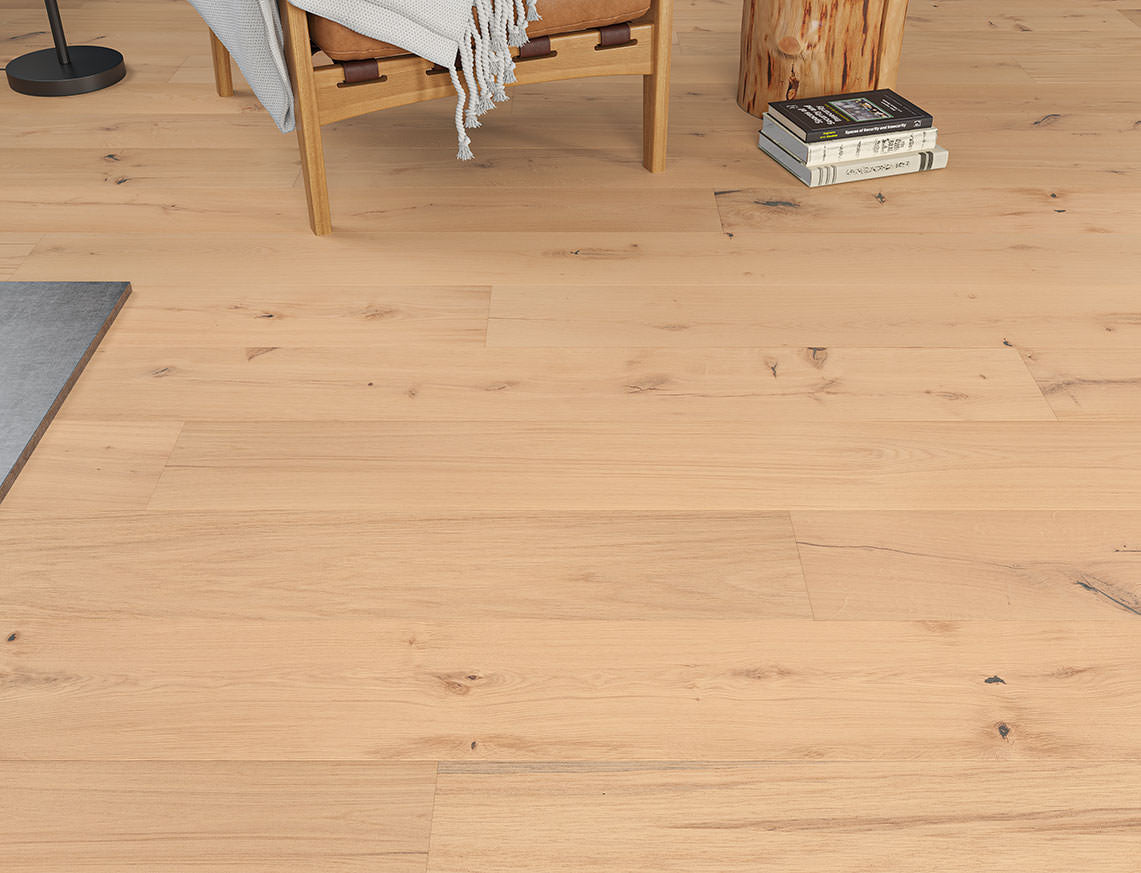
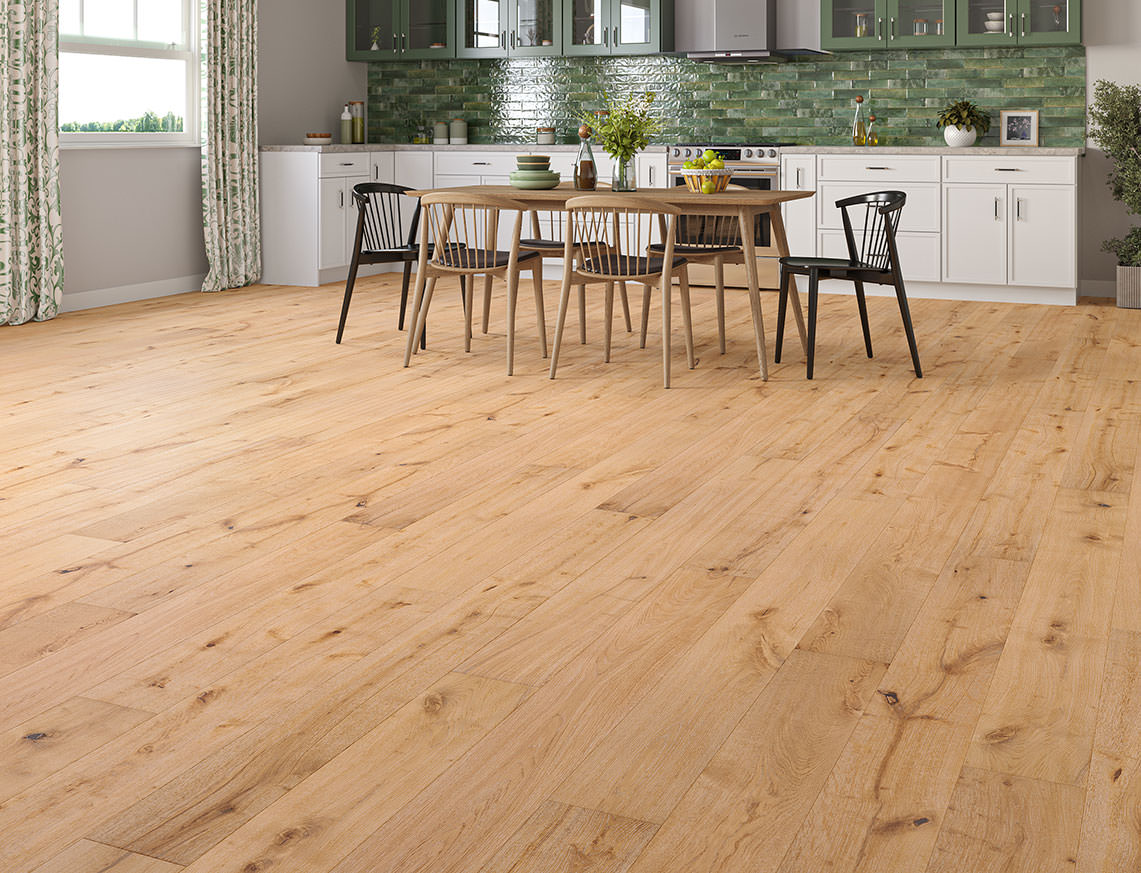
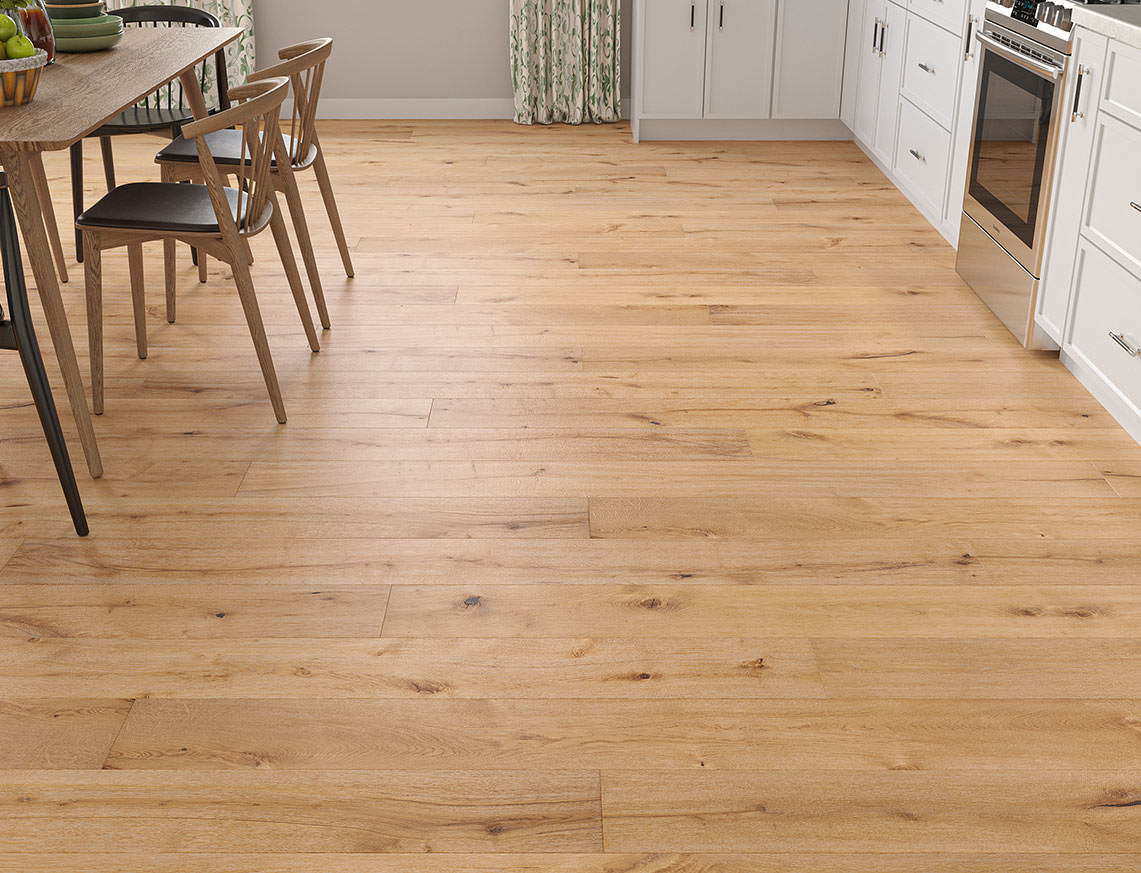
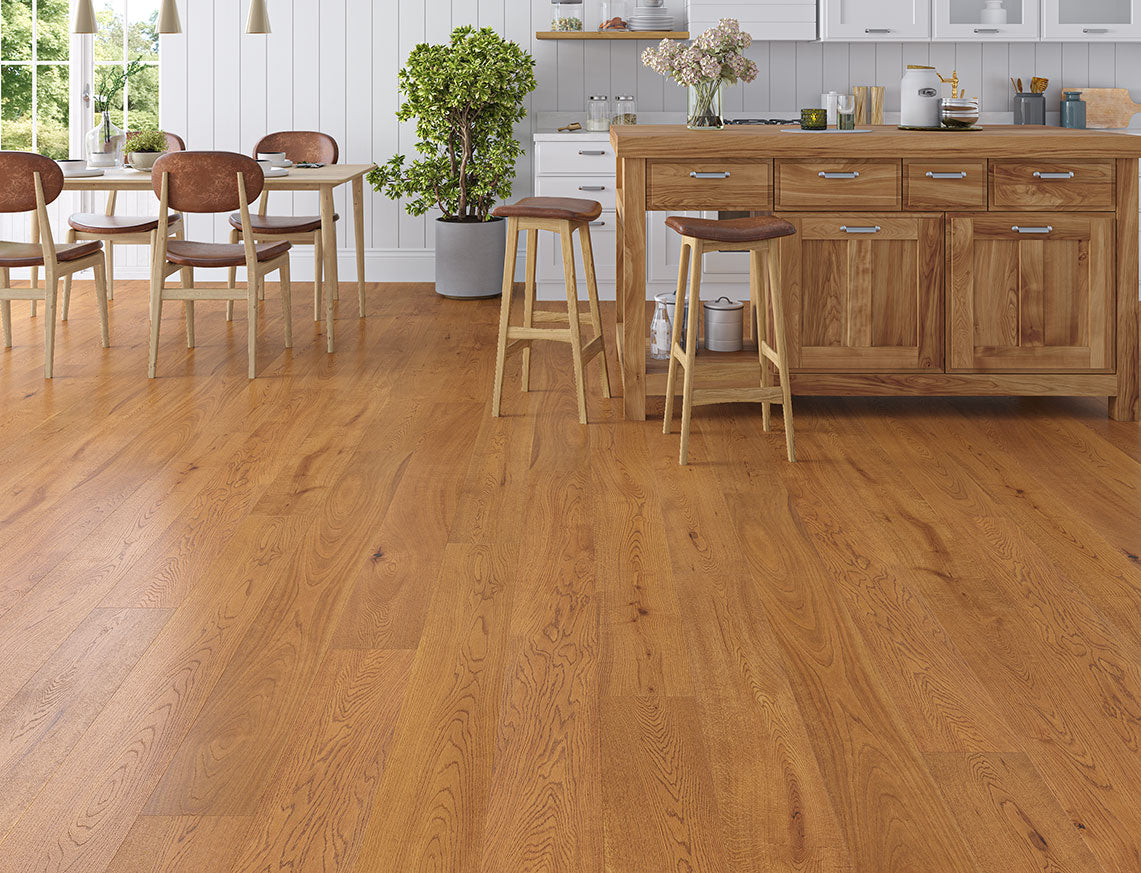
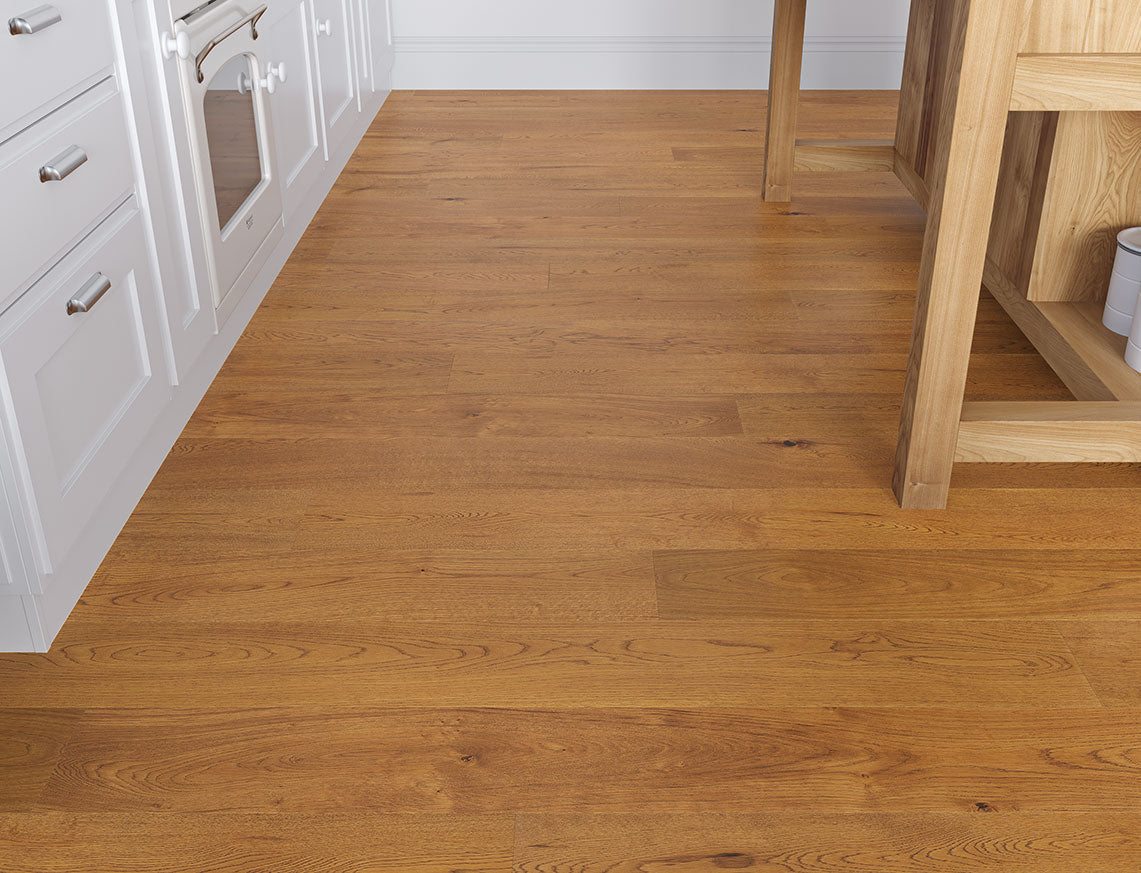
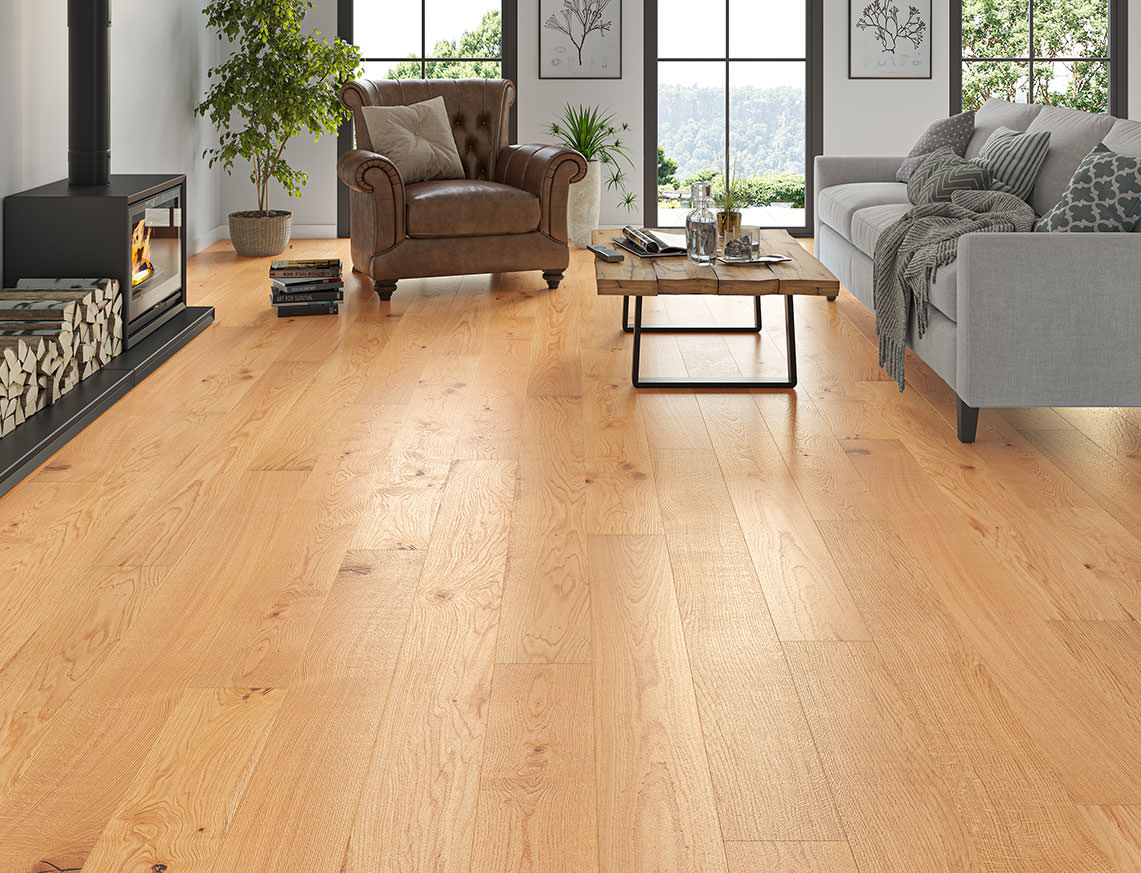
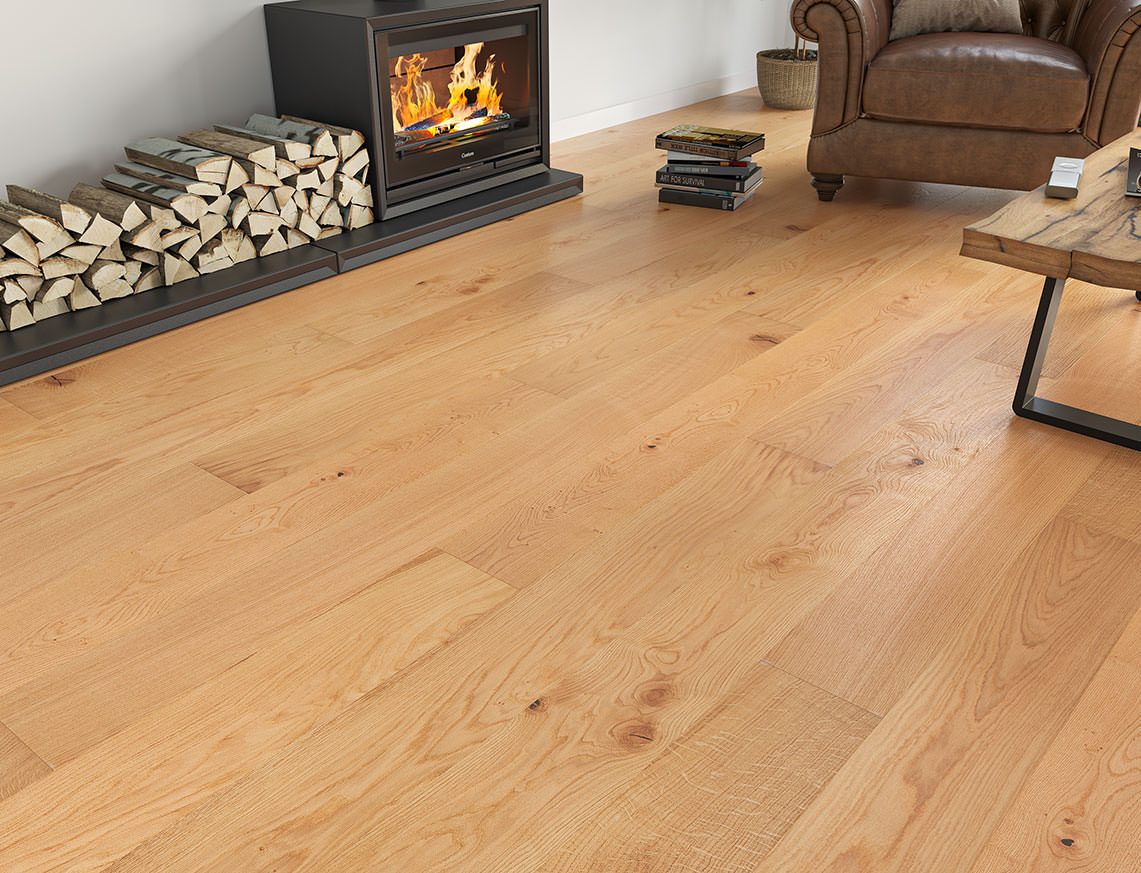
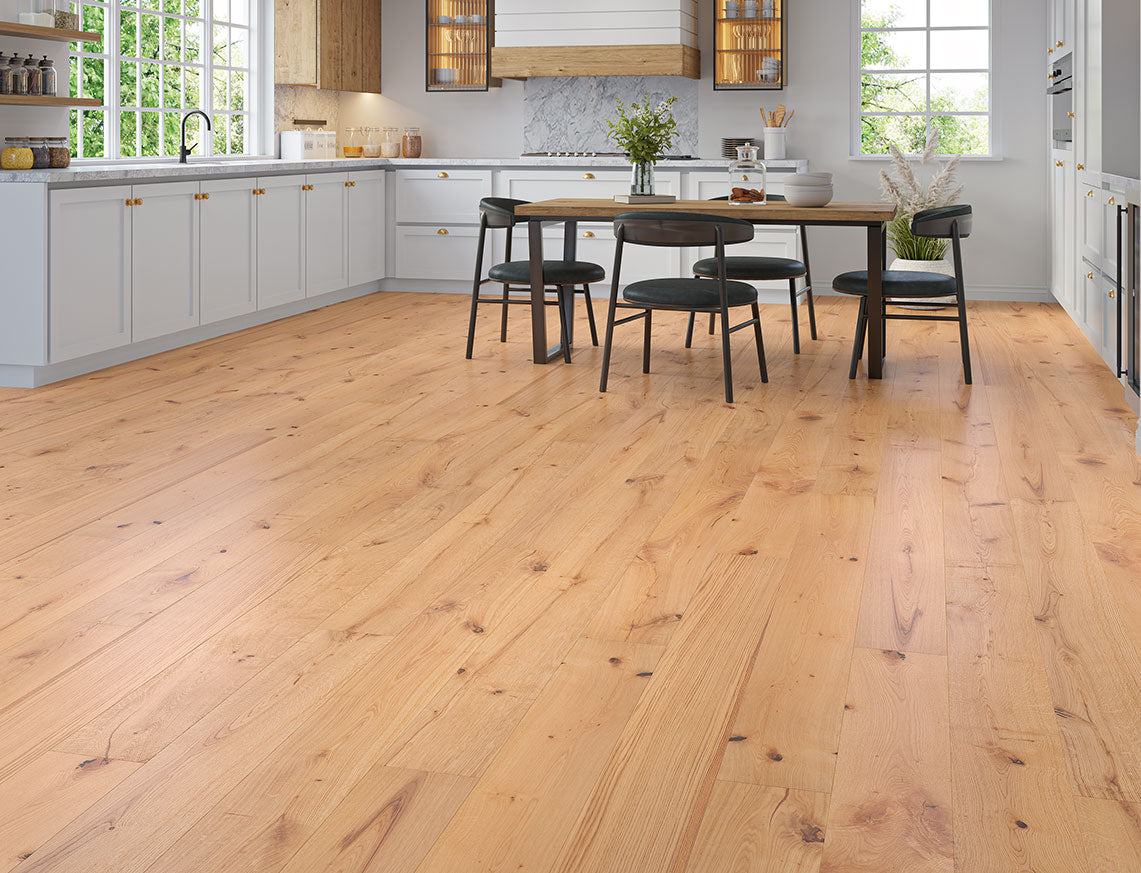
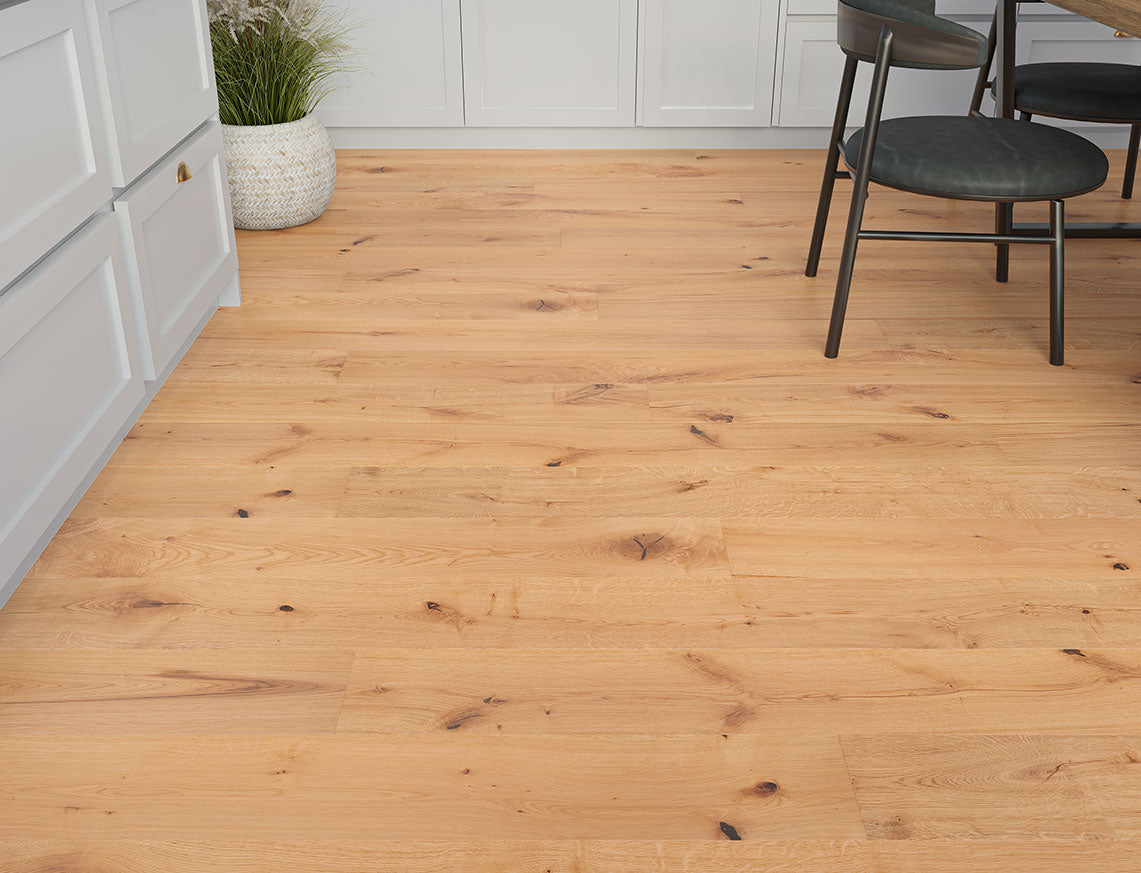
Boards laid end to end in straight rows, the way wood floors have been laid for centuries. Plank is the most versatile layout we sell and the most forgiving to fit, which is why it remains the default choice for most homes.
Available across every material we stock: engineered oak, solid oak, laminate and vinyl. Board widths run from narrow traditional boards through to very wide planks that show off the full grain, in colours from pale naturals to smoked and near-black.
Free A5 samples on every floor, delivered next-day, so you can see the grain and colour in the room it is destined for before you commit.
Plank flooring means boards laid in straight parallel rows, with the joints staggered between rows so the floor reads as continuous rather than gridded. It is the simplest layout, the quickest to lay, and the one that produces least waste.
Because there is no pattern competing for attention, a plank floor lets the grain and colour of the boards do the work. That makes the choice of width and finish matter more here than in any patterned layout.
Choosing a board width
Width changes the character of a plank floor more than anything else. It is worth thinking about before colour.
Board width
Character
Best suited to
Narrow
Traditional, more joints on show
Period properties, smaller rooms
Medium
Balanced, suits most interiors
Whole-house projects
Wide
Contemporary, more grain visible
Large or open-plan rooms
Wide planks are only available in engineered oak, laminate and vinyl. Solid oak is milled from a single piece of timber, which limits how wide a board can be made without excessive movement.
Which way should the boards run?
As a rule, along the length of the room, or towards the main light source. Running boards across a narrow room emphasises the narrowness. Measure before you start so you do not end up with a very thin strip at the far wall.
Plank flooring in different materials
Engineered oak
Real oak surface on a stable multi-ply core. Suitable for underfloor heating and available in the widest boards, since the core prevents the movement that limits solid timber. Browse engineered oak flooring.
Solid oak
Oak throughout the board, the most traditional option, and the one that can be sanded and refinished the most times. Best in stable rooms without underfloor heating. Browse solid oak flooring.
Laminate
A printed decor over a dense core, with an overlay that resists scratching better than real wood. The most affordable route to a plank floor and the easiest to fit. Browse laminate flooring.
LVT and SPC vinyl
Fully waterproof, quiet underfoot and unbothered by temperature change. The only plank floor we would put in a bathroom or utility room. Browse SPC and LVT vinyl.
Fitting plank flooring
Plank is the most straightforward layout to lay. Click-system boards in laminate, vinyl and much of the engineered range are designed for competent DIY fitting. Tongue and groove boards, and solid oak in particular, are usually bonded or secret nailed and better suited to an experienced fitter.
Whatever the material, open several packs at once and mix the boards as you lay. Natural variation is part of a wood floor, but taking every board from one pack in order can leave a noticeably darker or lighter patch. Our fitting guides cover acclimatisation, subfloor preparation and expansion gaps.
How much will you need?
Allow 10% for cuts. Plank produces less waste than any patterned layout, since offcuts from the end of one row can often start the next.
The flooring calculator on every product page works out how many packs your room takes, including the allowance. You will also need underlay unless it is pre-attached, beading for the perimeter, and threshold profiles at doorways.
Plank flooring: frequently asked questions
Are wide planks better than narrow?
Neither is better. Wide planks read as contemporary and show more grain, suiting larger rooms. Narrow boards suit period properties and smaller spaces. It is a question of the room rather than quality.
Which direction should plank flooring run?
Usually along the length of the room, or towards the main window. Running boards across a narrow room makes it feel narrower still.
How much extra should I order?
10% for a plank layout. Patterned floors such as herringbone and chevron need 15%, because the angled cuts waste more.
Can I fit plank flooring myself?
Click-system boards are designed for it and plank is the most forgiving layout to lay. Tongue and groove and solid oak are usually bonded down and better left to a fitter. The joining method is on every product page.
Why do the boards vary in colour?
Wood is a natural material, so grain and shade vary from board to board. That variation is part of the appeal. Mix boards from several packs as you lay so it spreads evenly across the floor.
Is plank flooring suitable for underfloor heating?
Engineered oak, laminate and vinyl planks generally are. Solid oak generally is not. Suitability is stated in the specification on every product page.
Can plank flooring run through the whole house?
Yes, and it usually looks better than changing at every doorway. Bathrooms are the exception, where a waterproof vinyl in a matching decor is the sensible approach. Our flooring by room page covers what suits where.