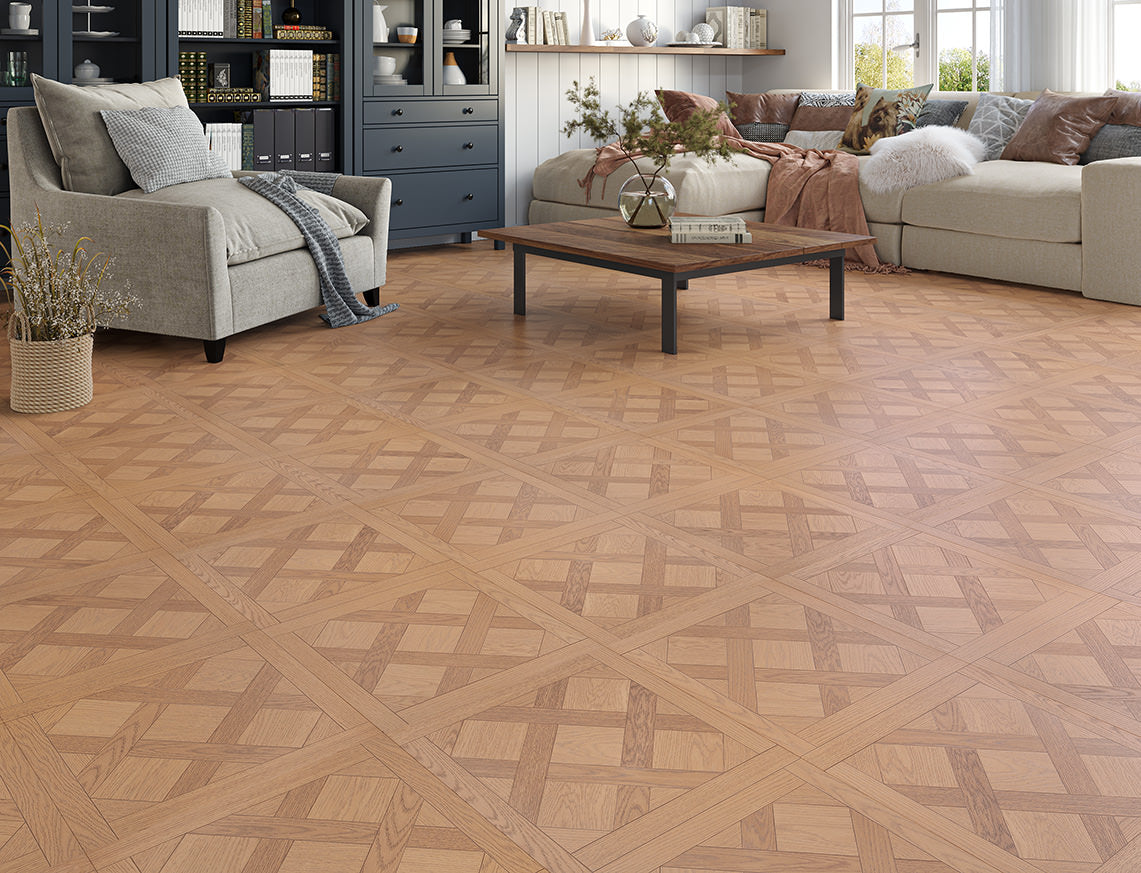
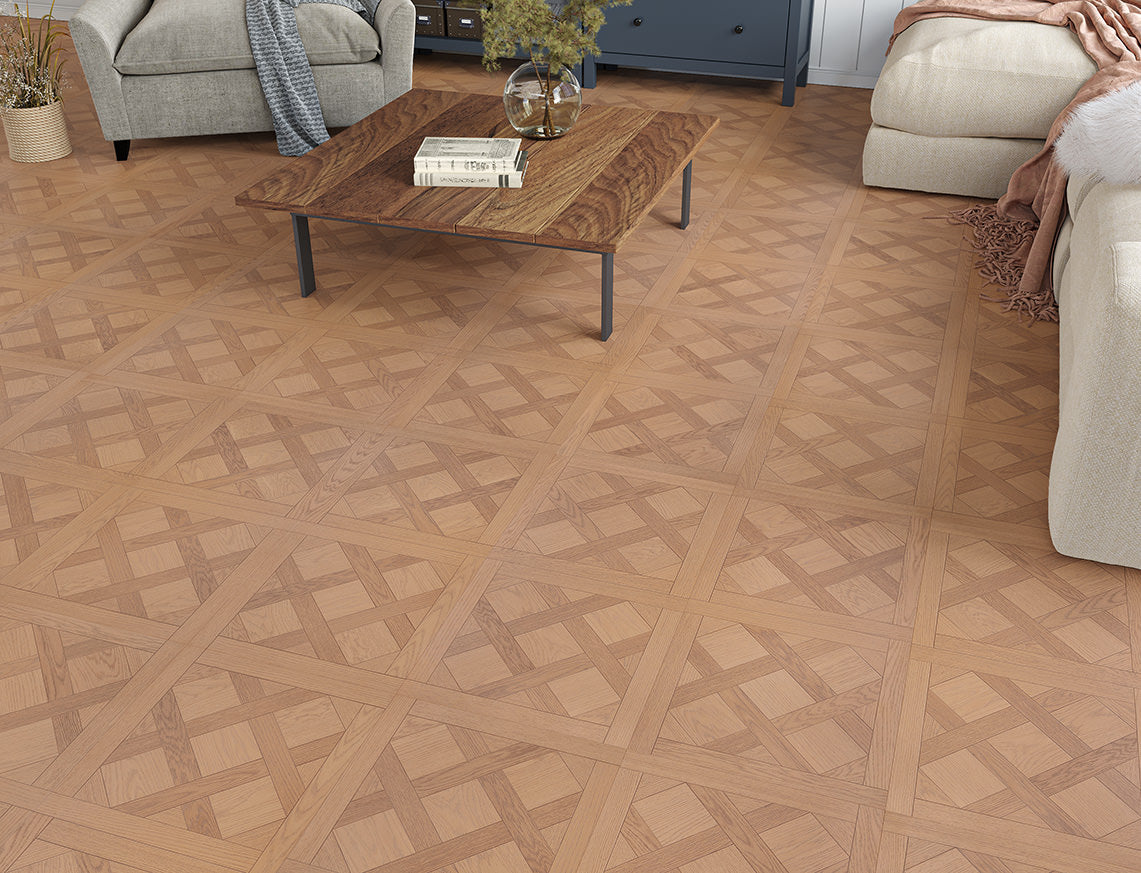
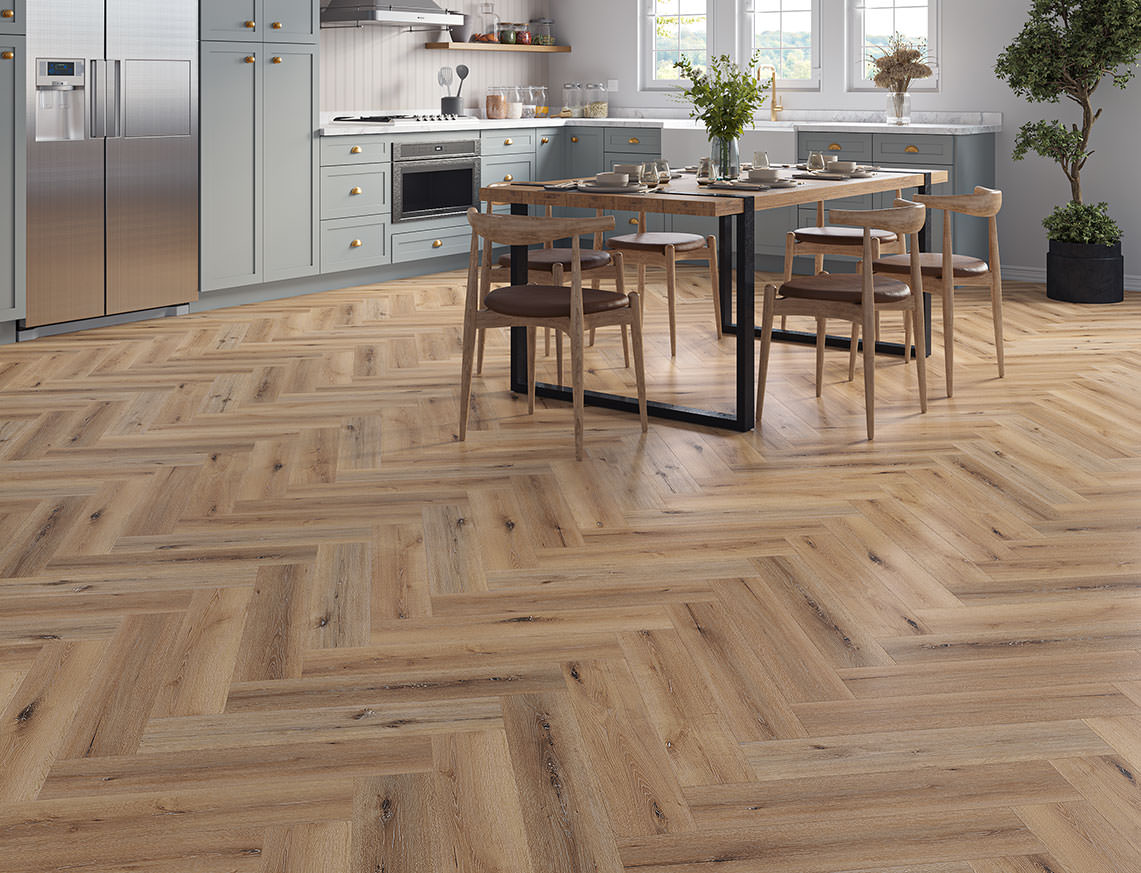
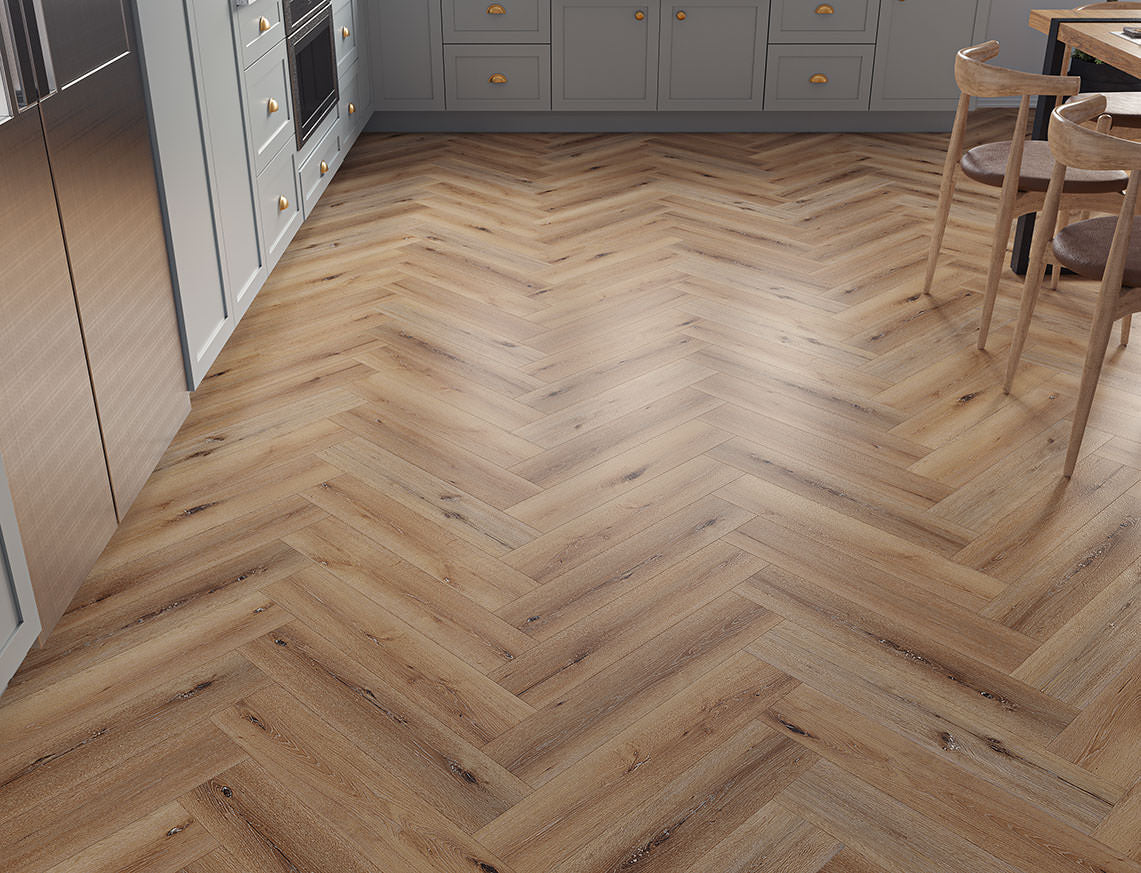
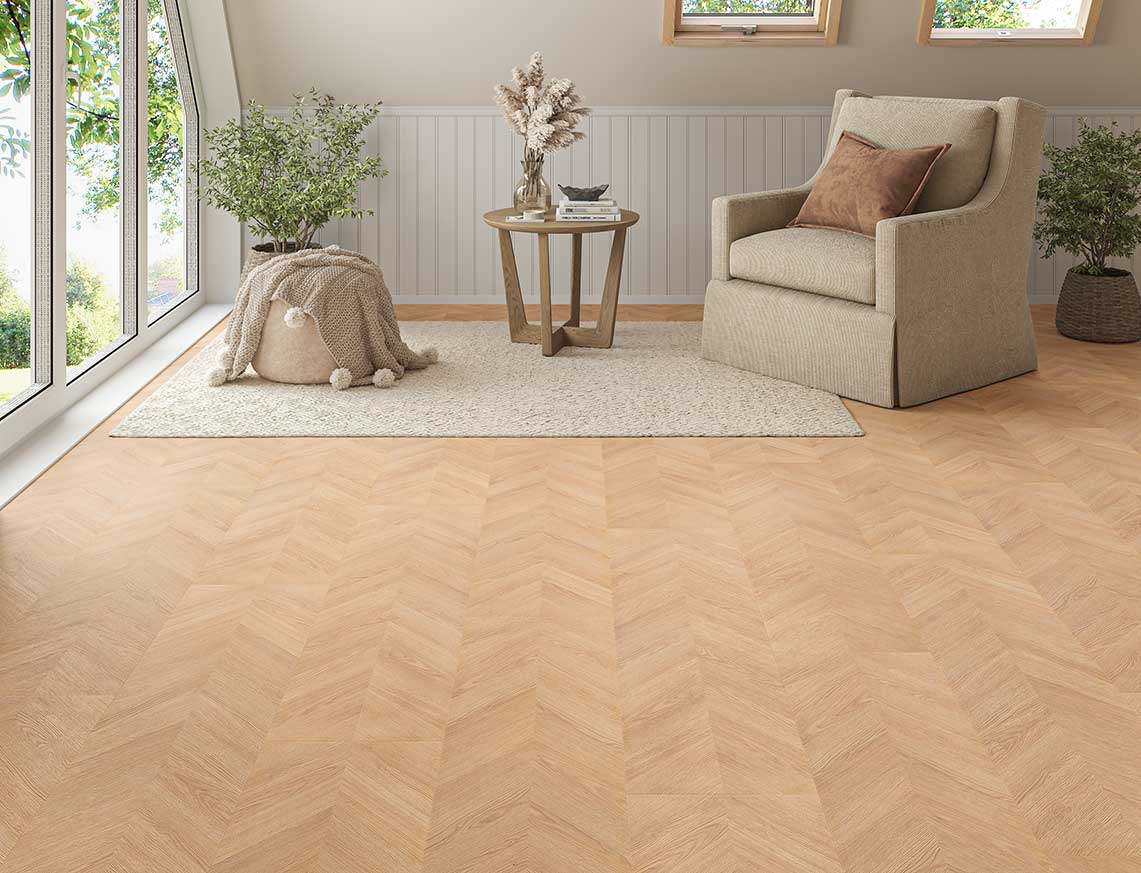
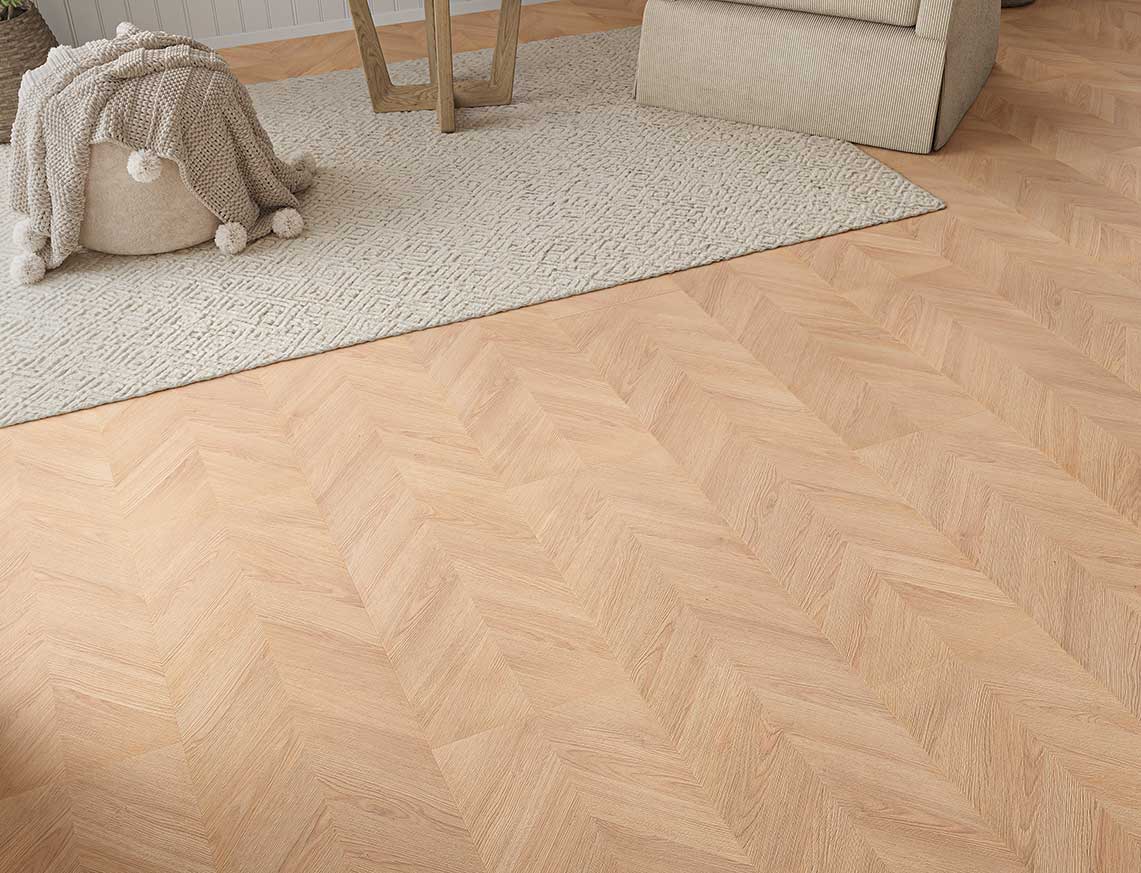
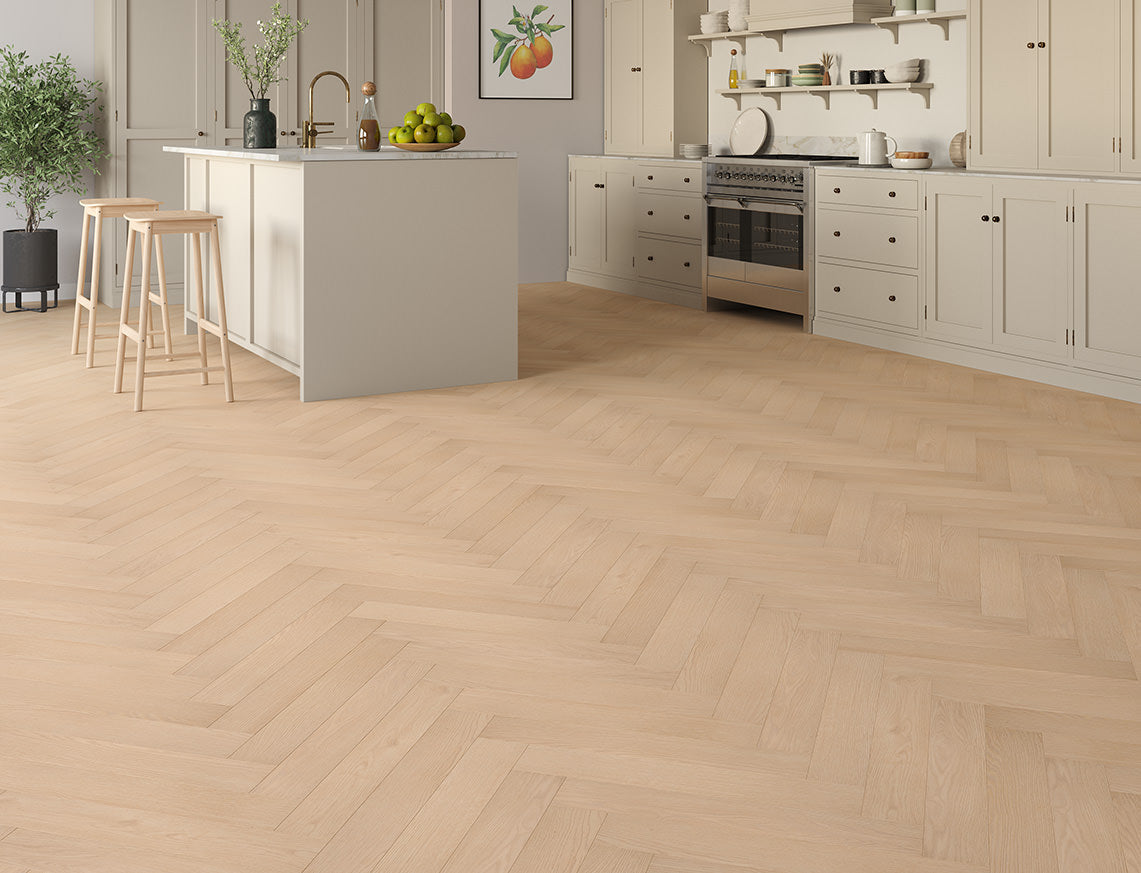
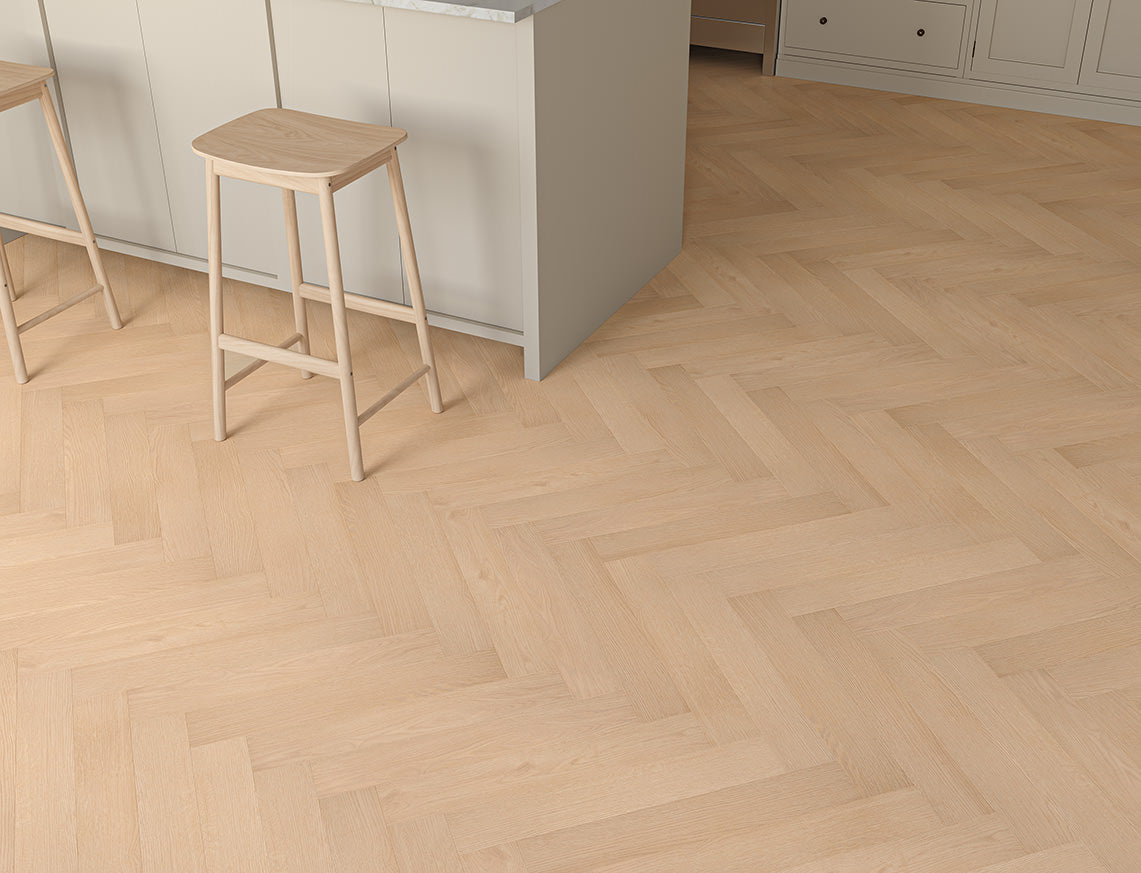
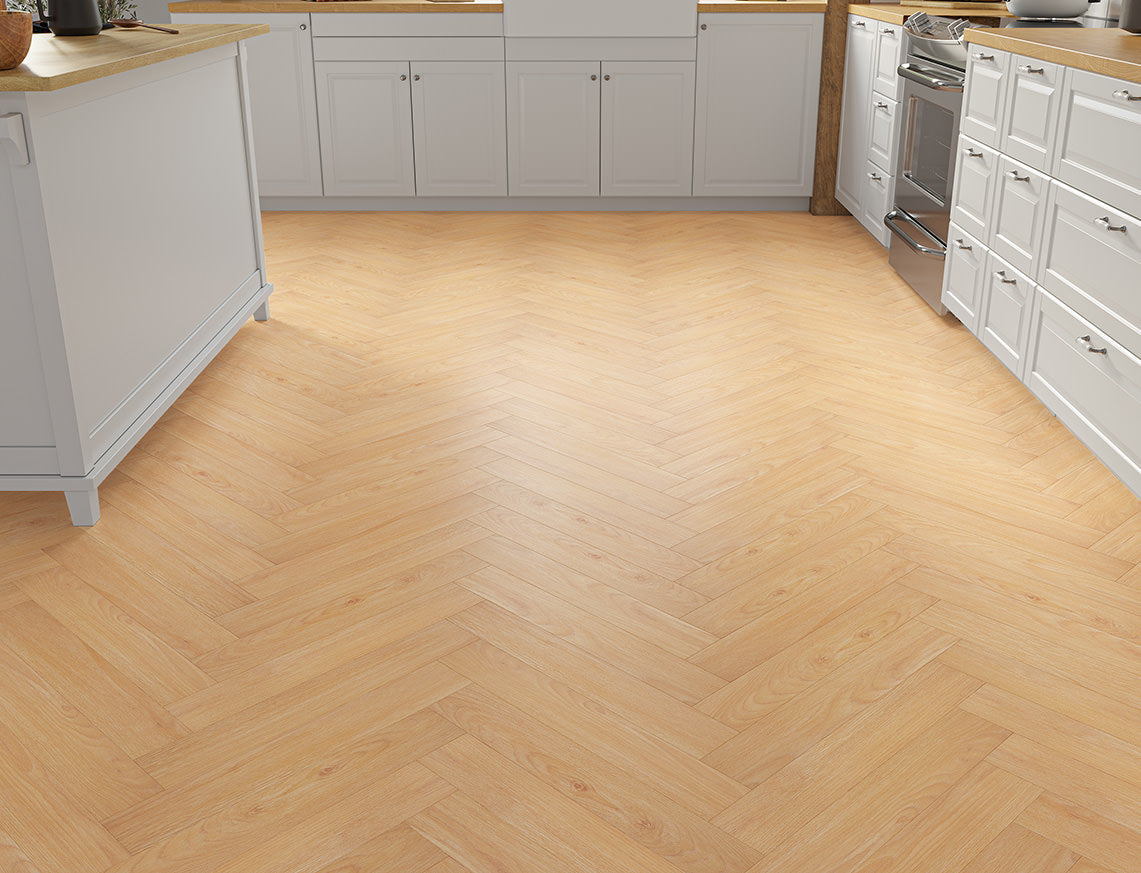
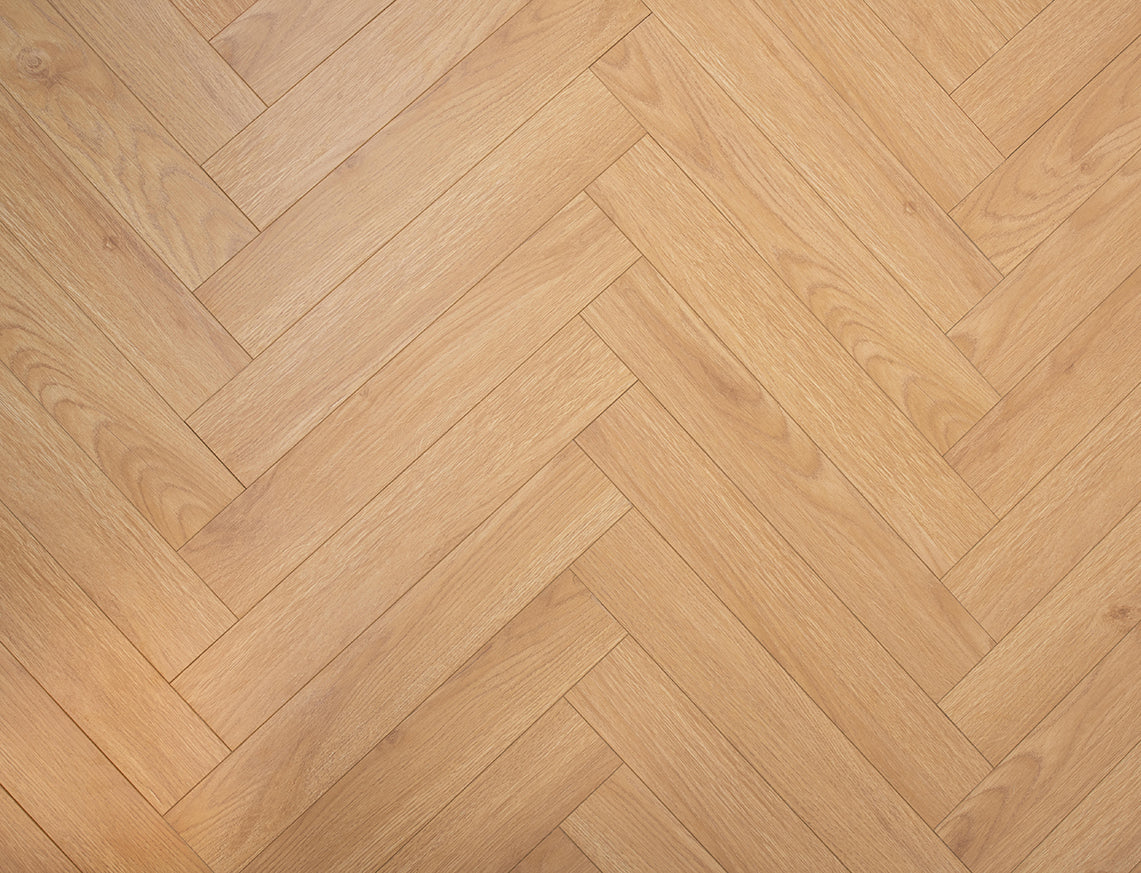
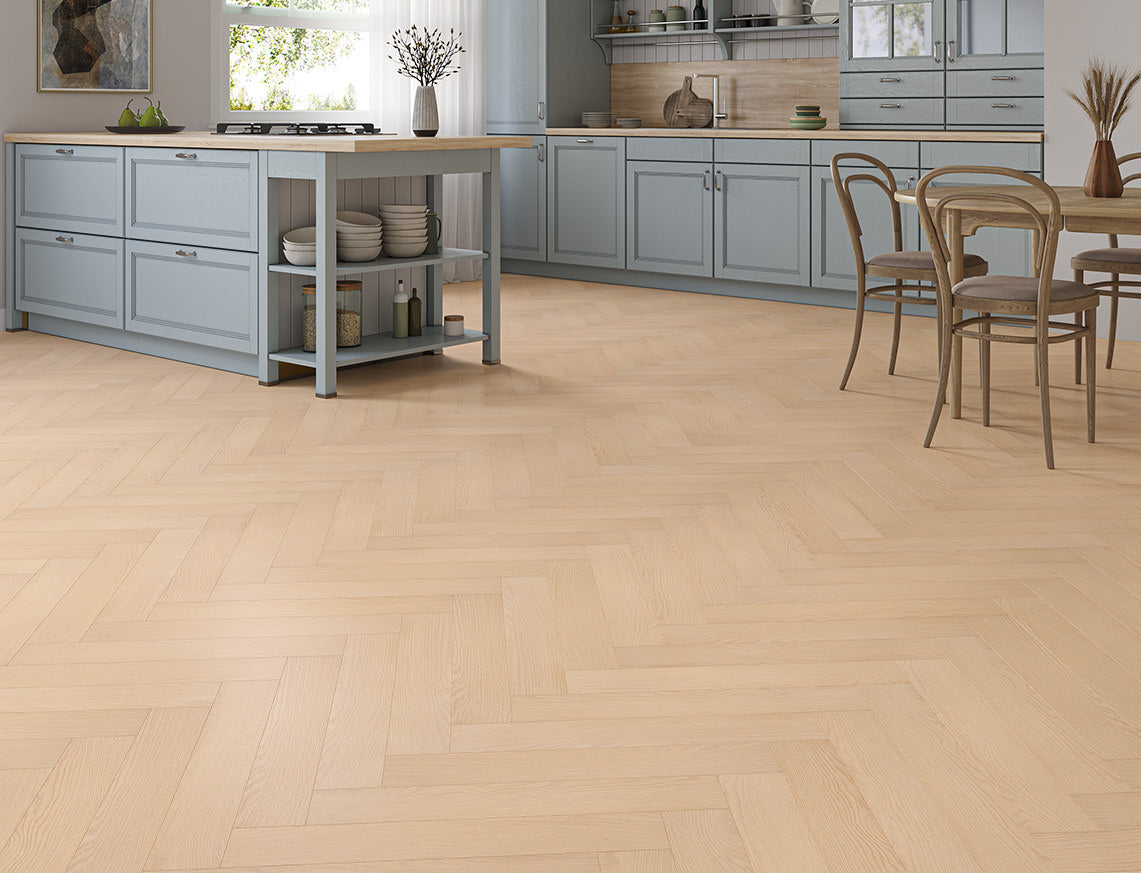
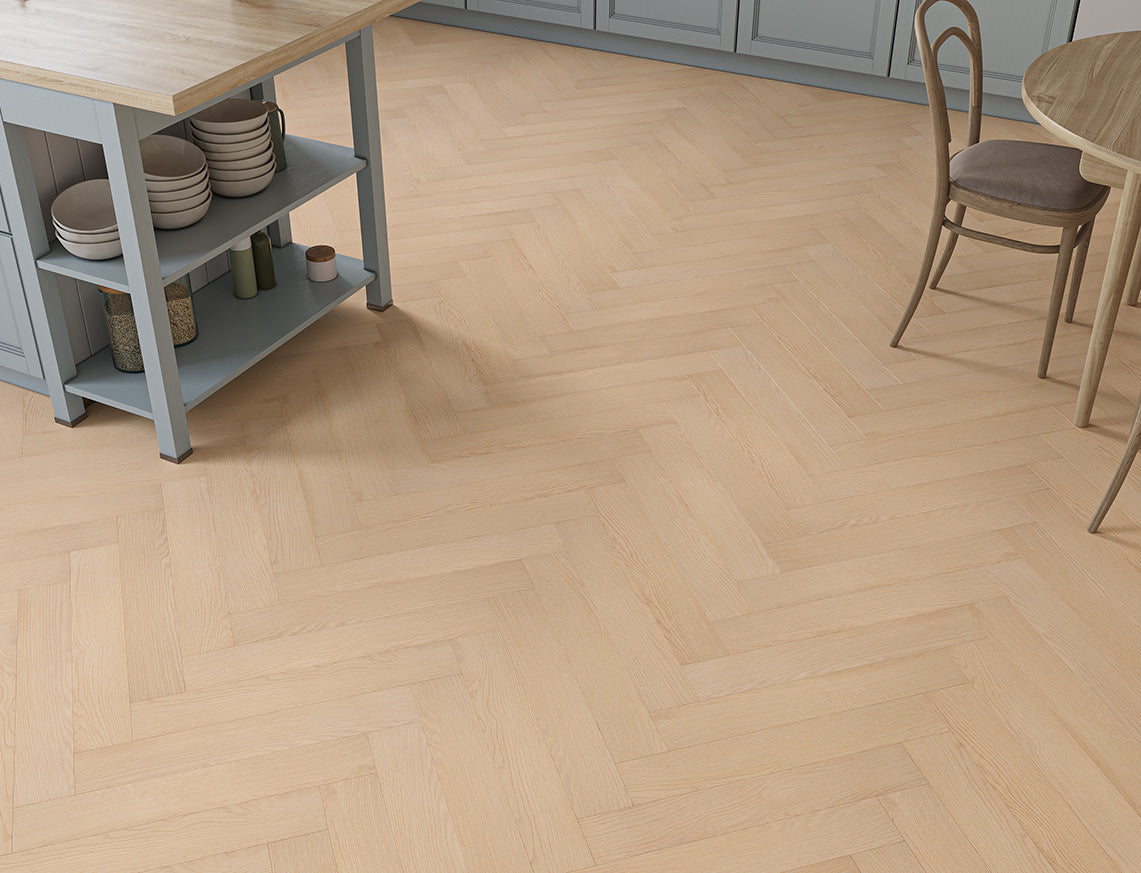
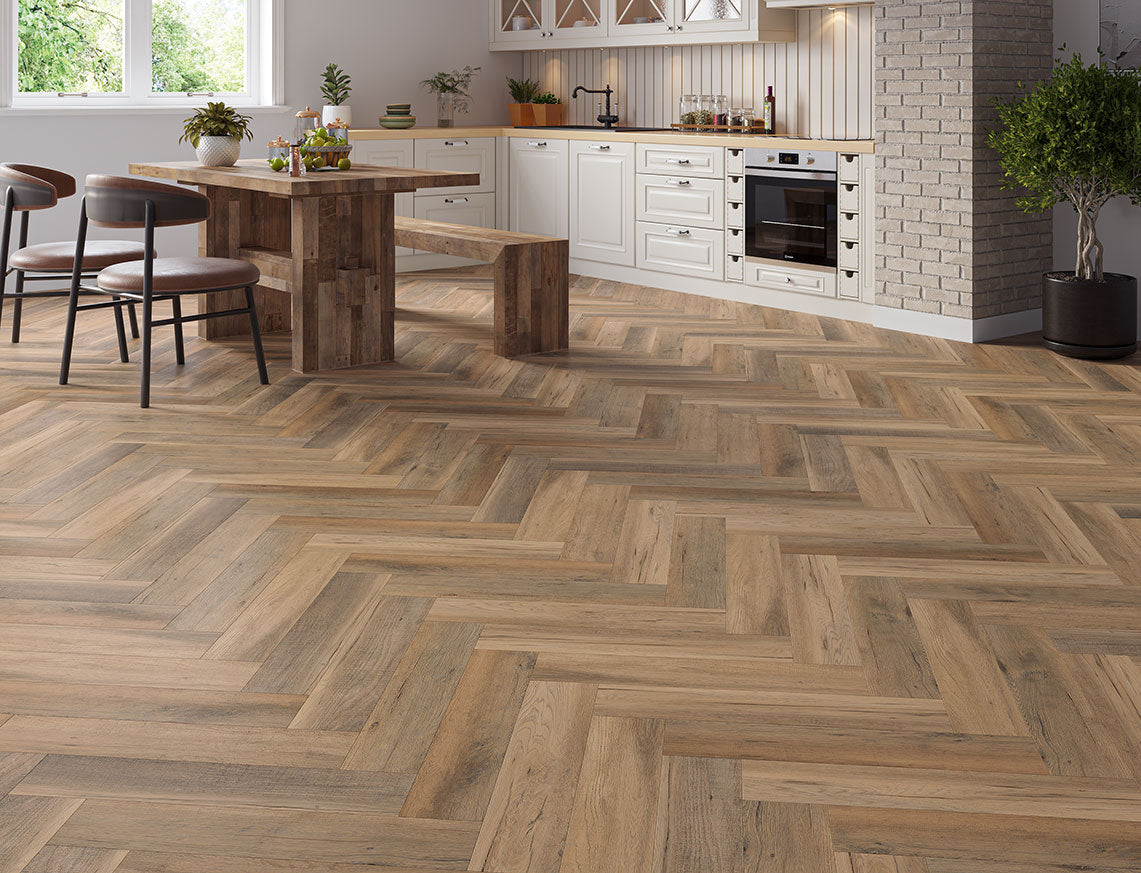
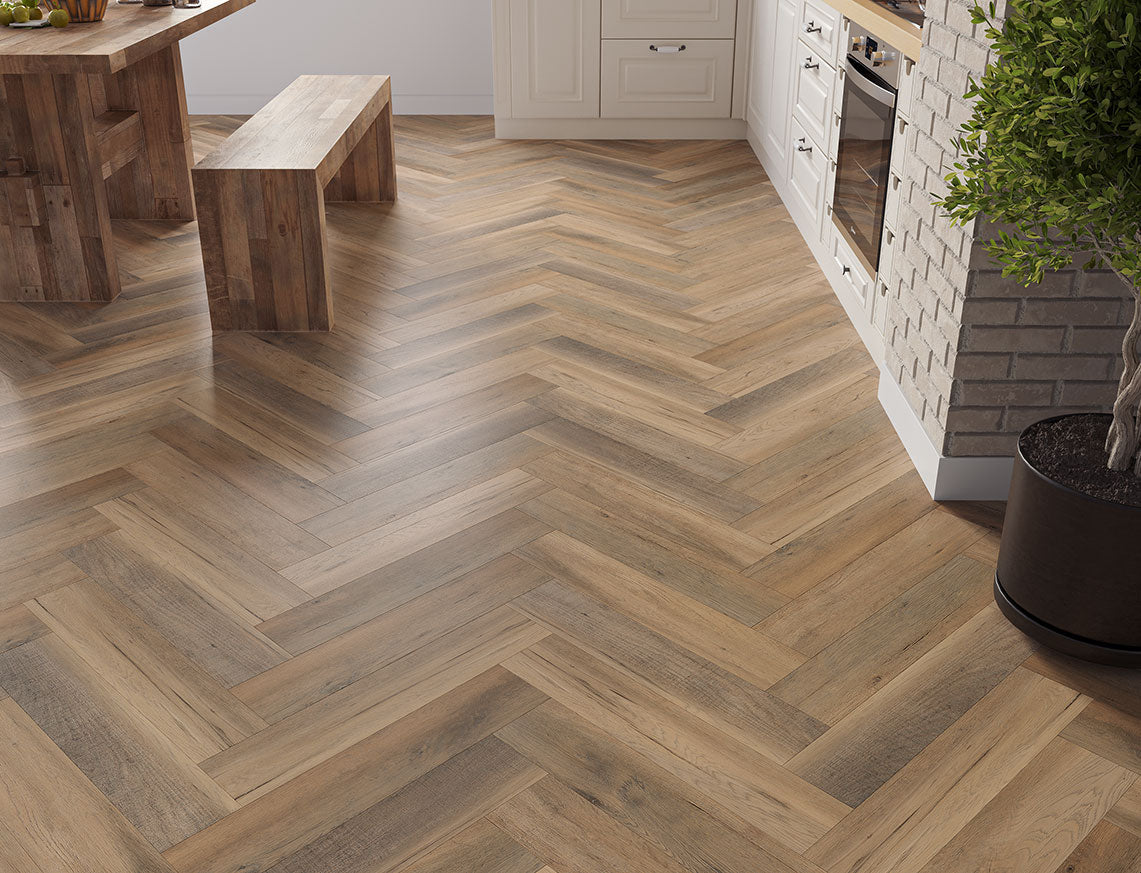
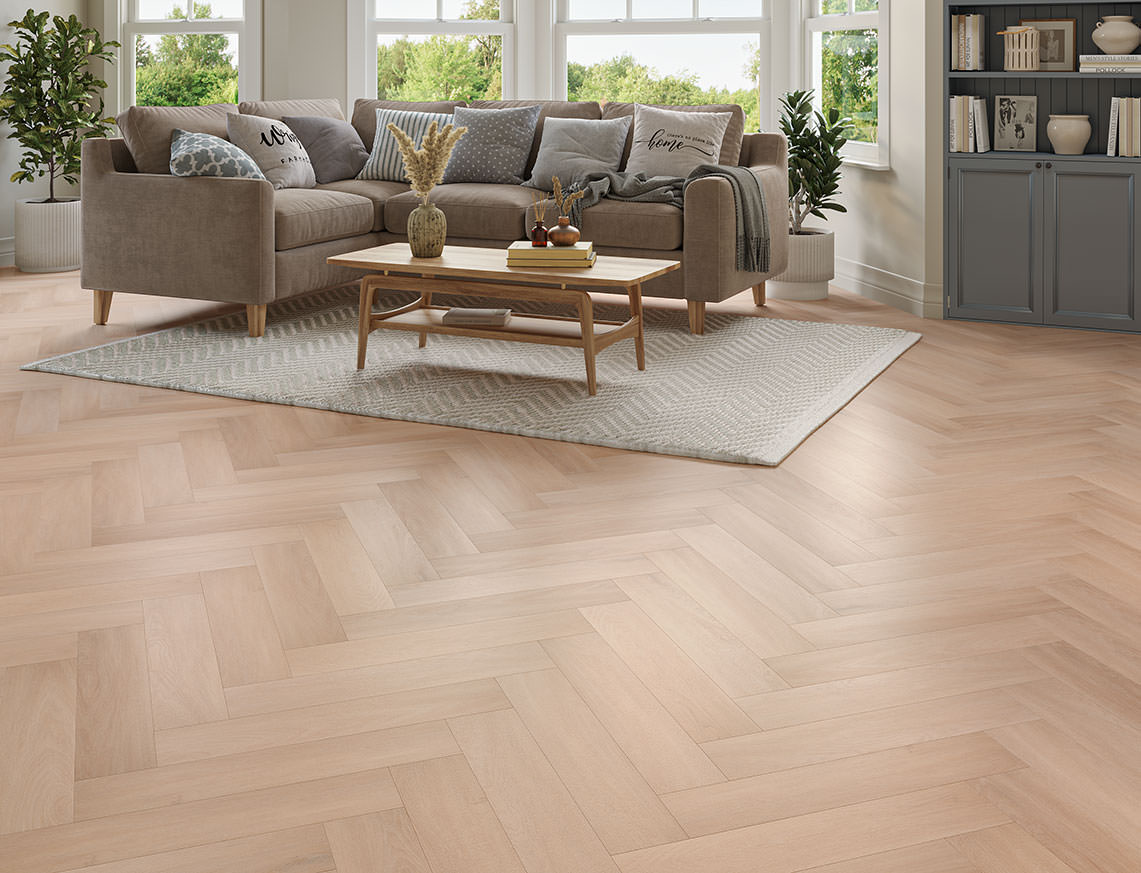
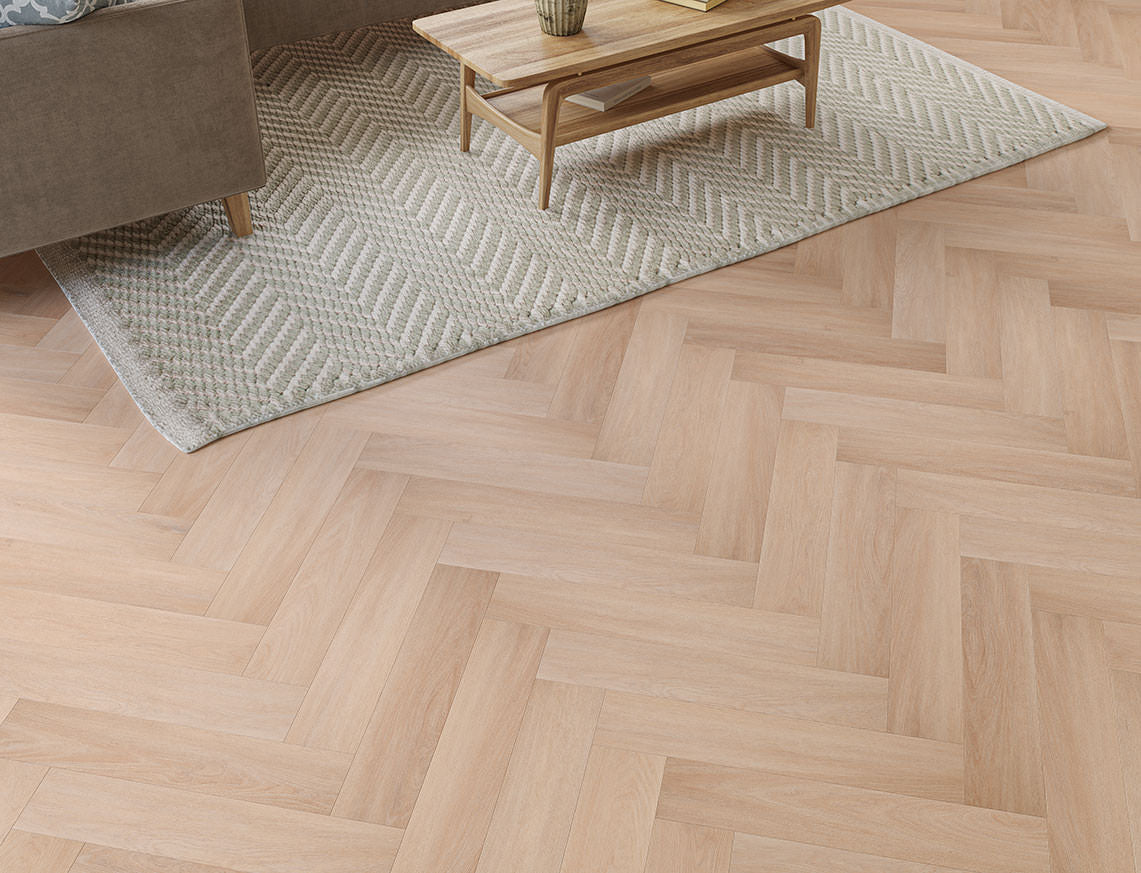
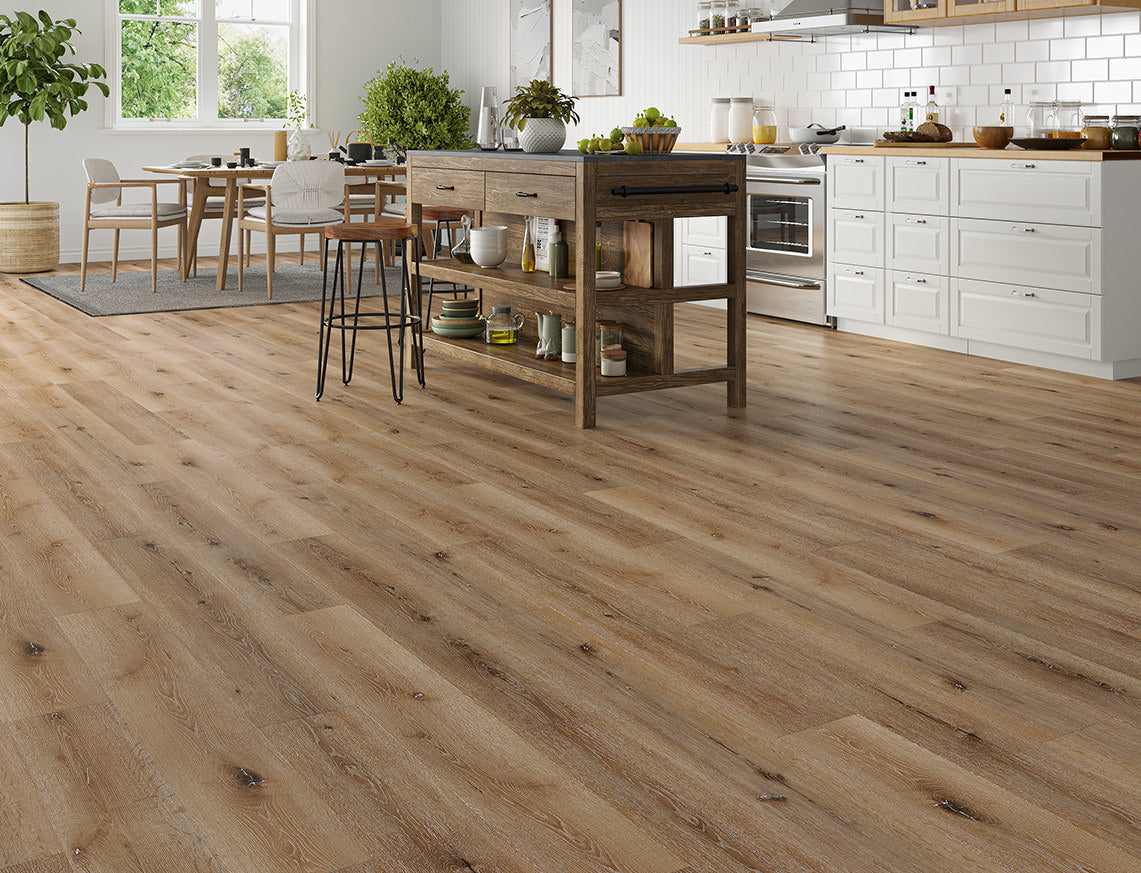
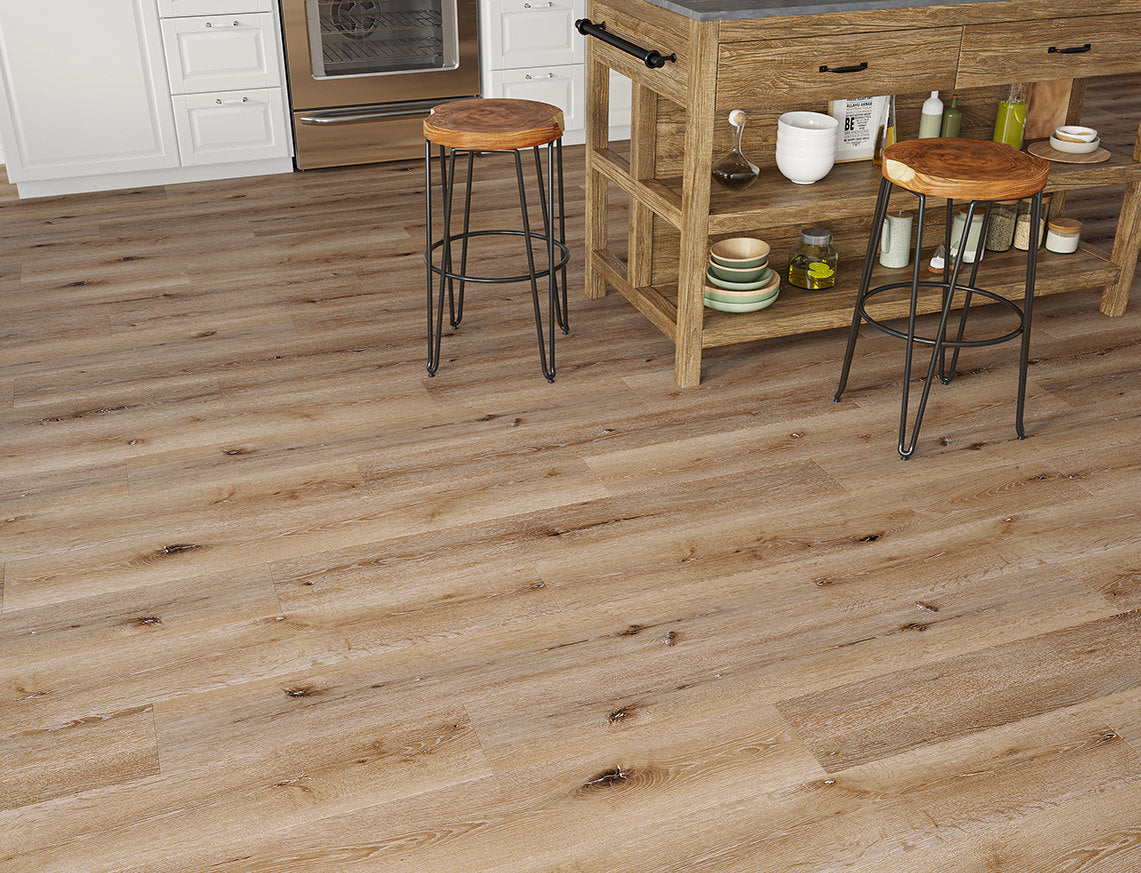
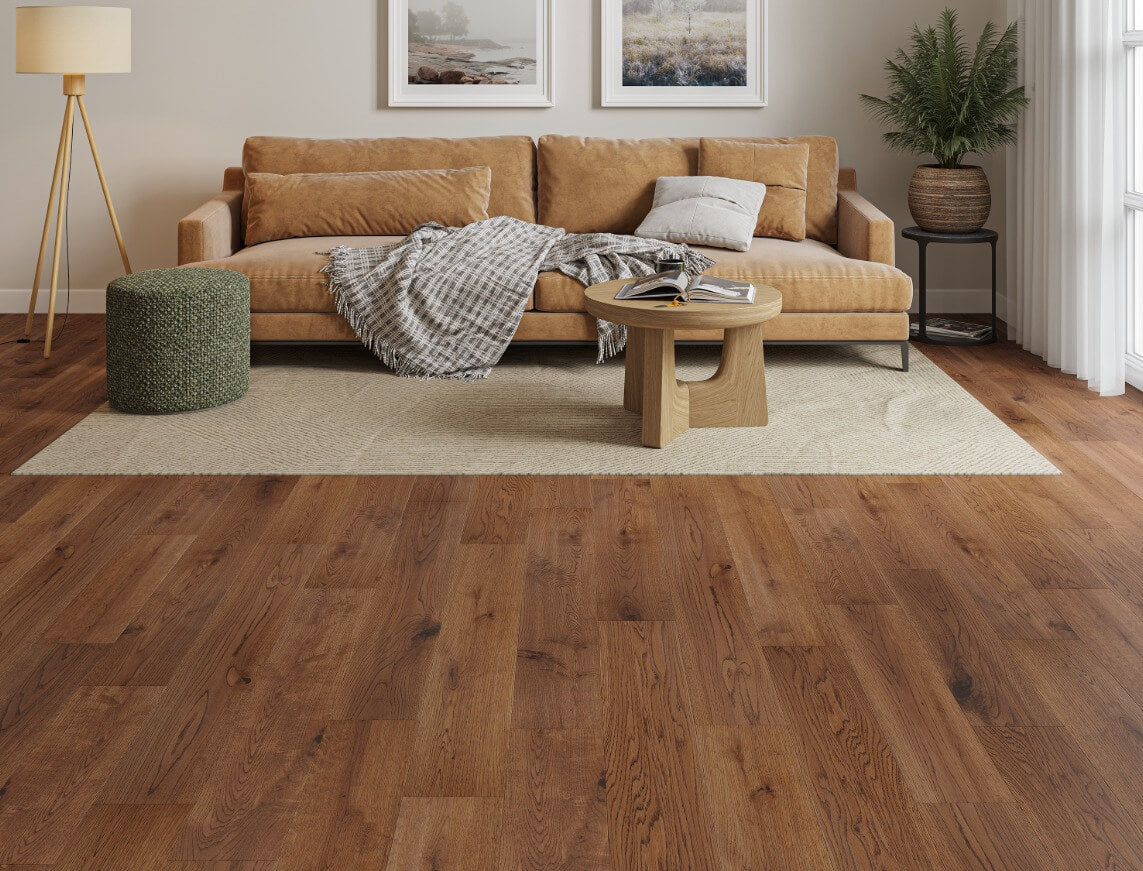
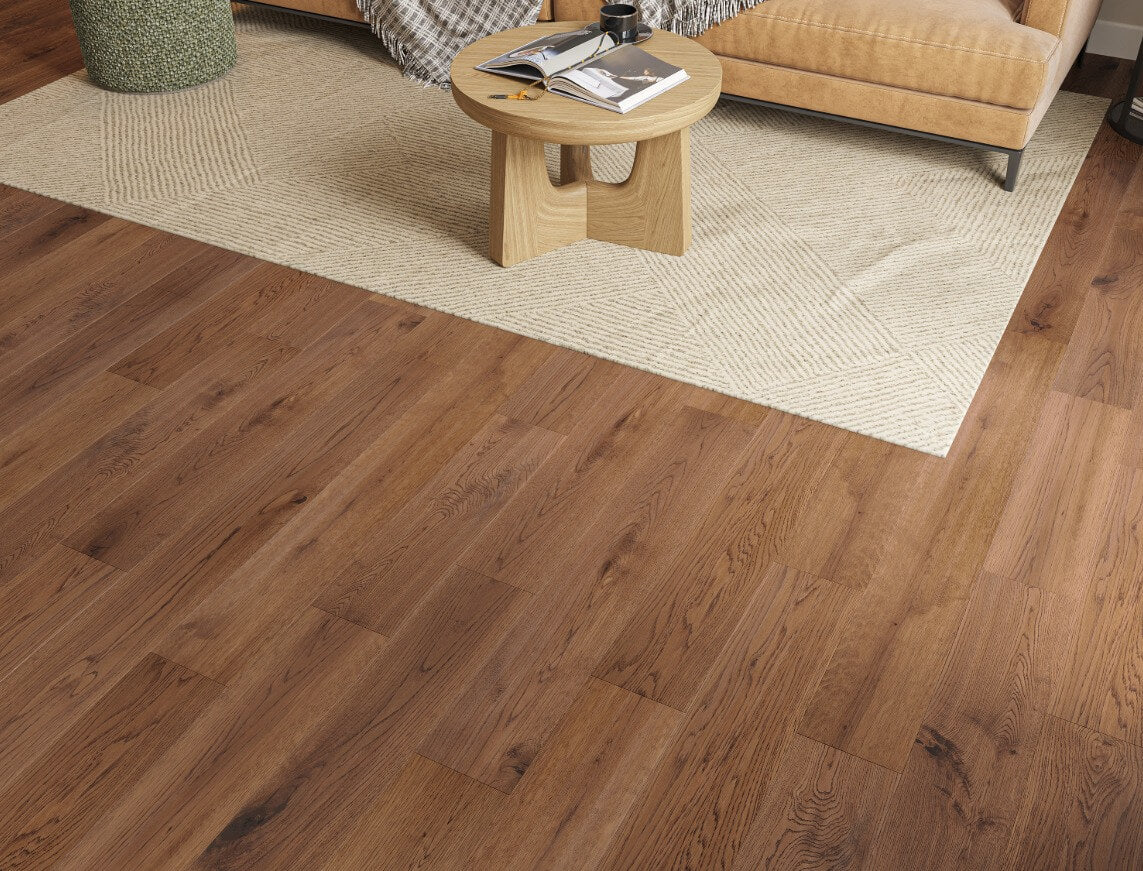
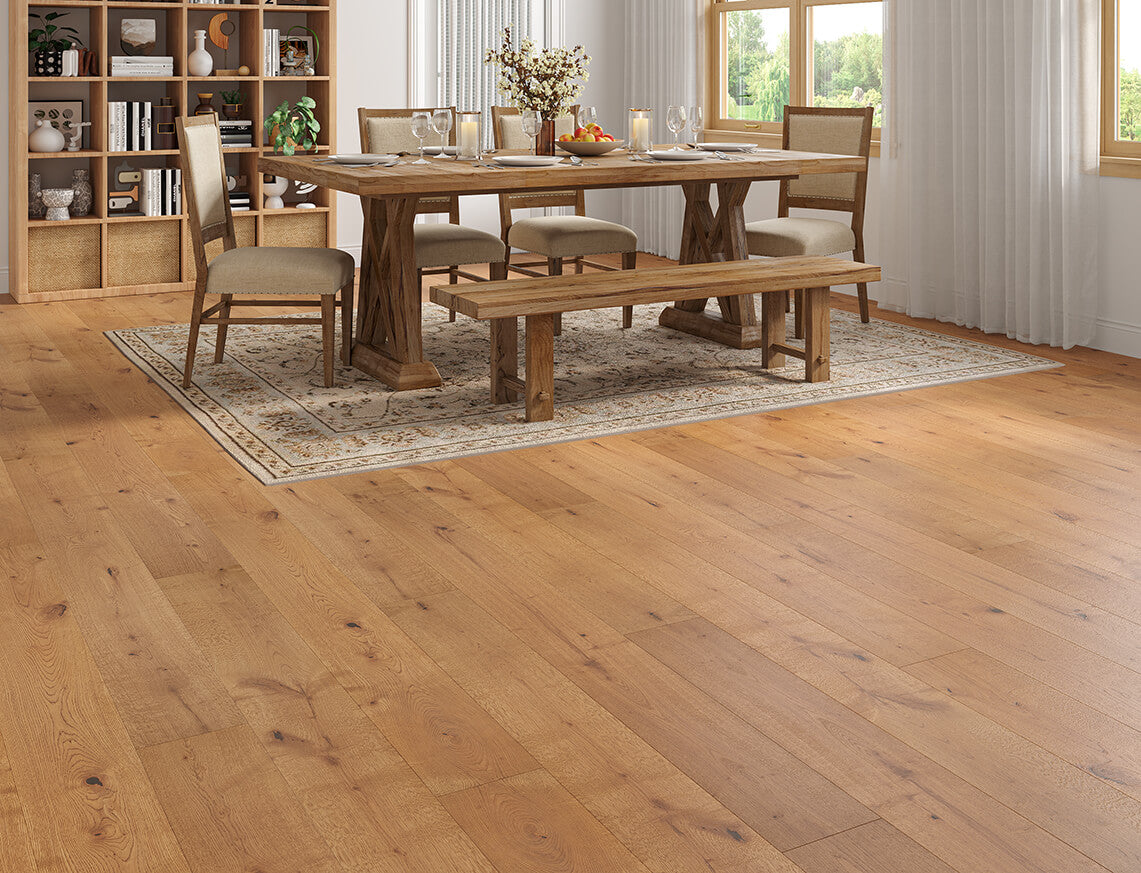
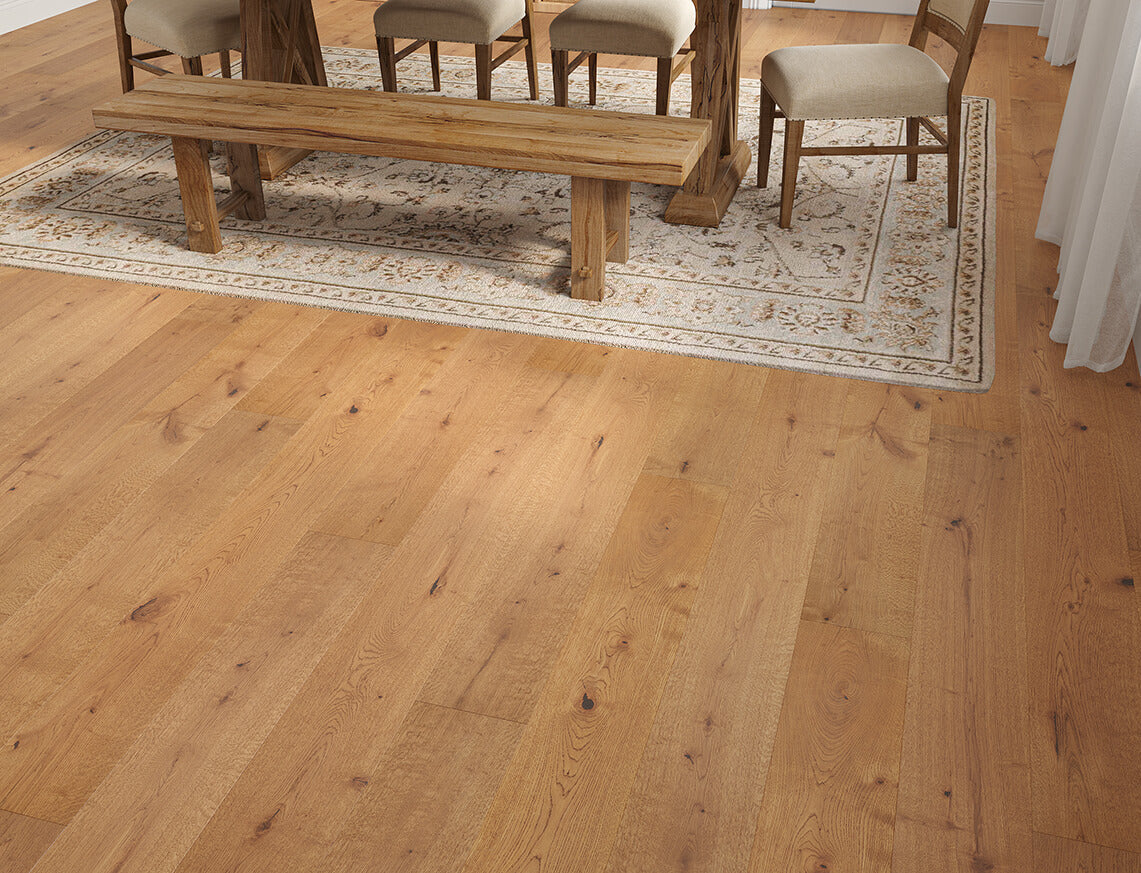
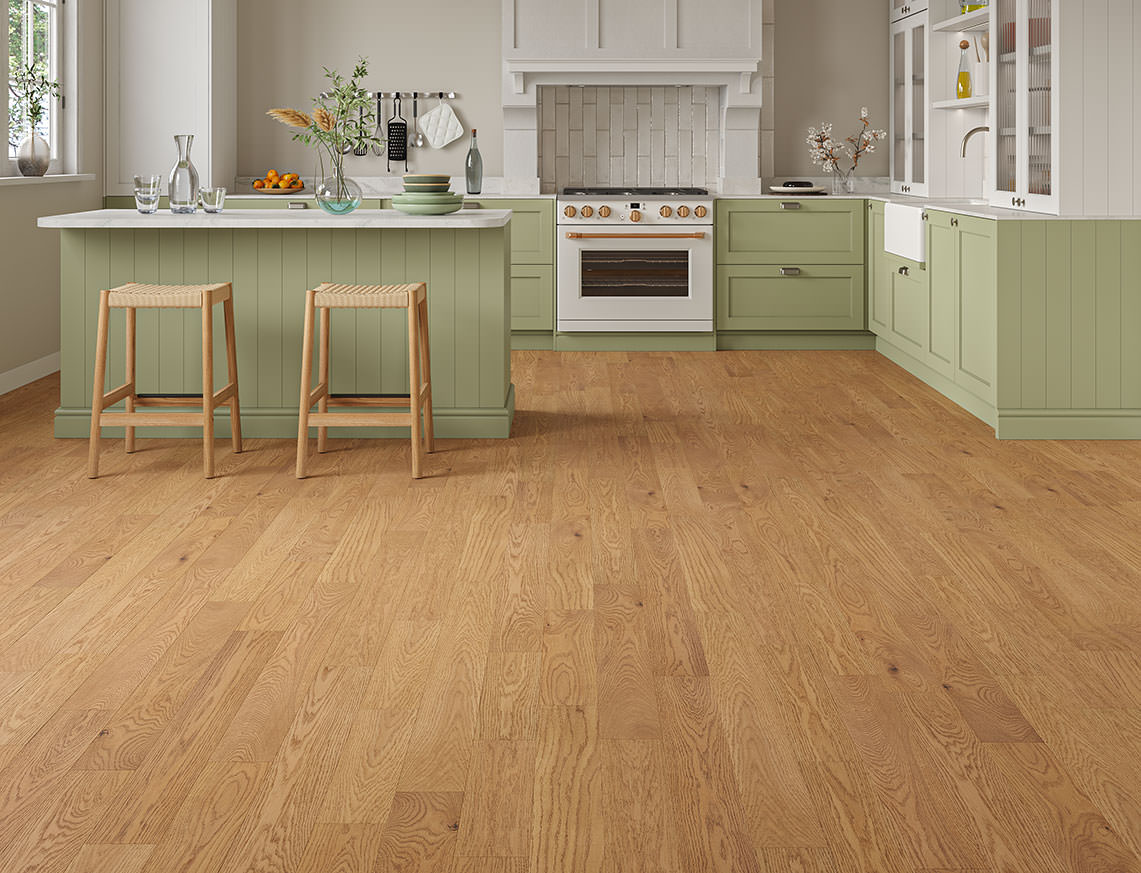
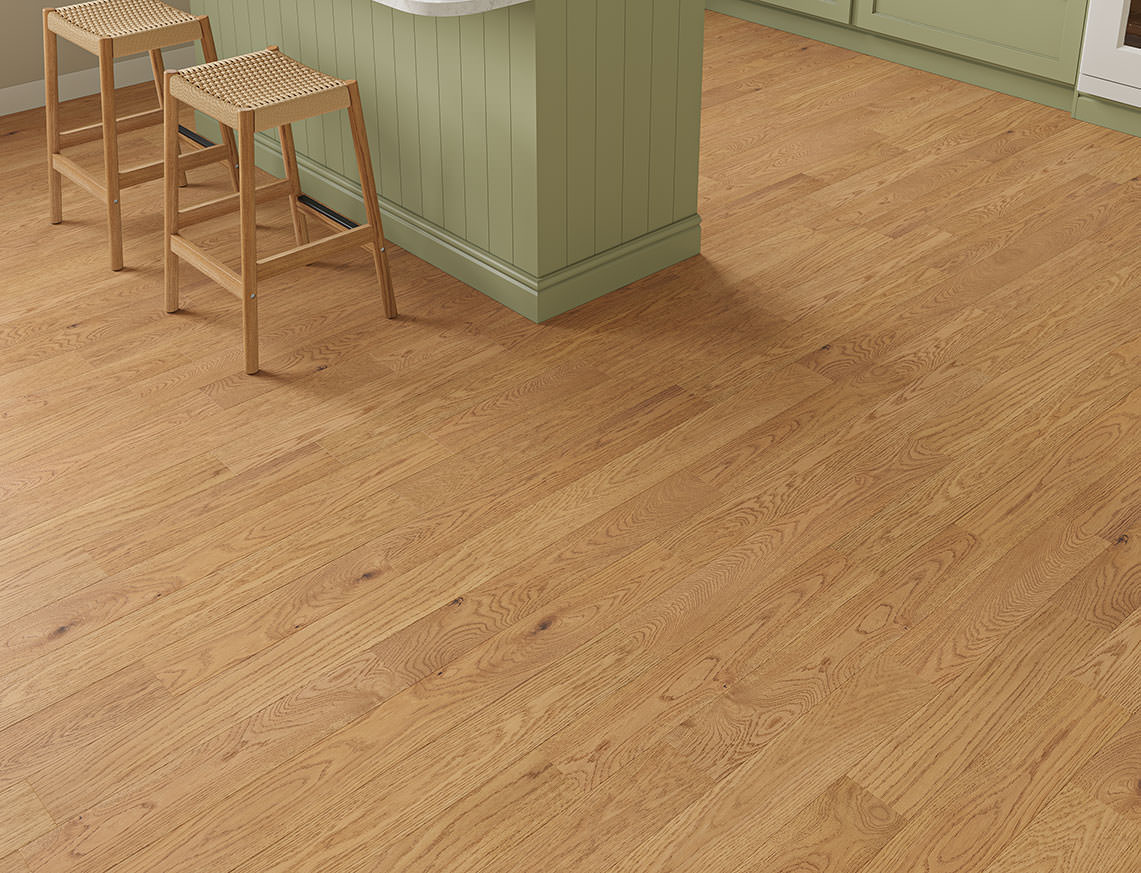
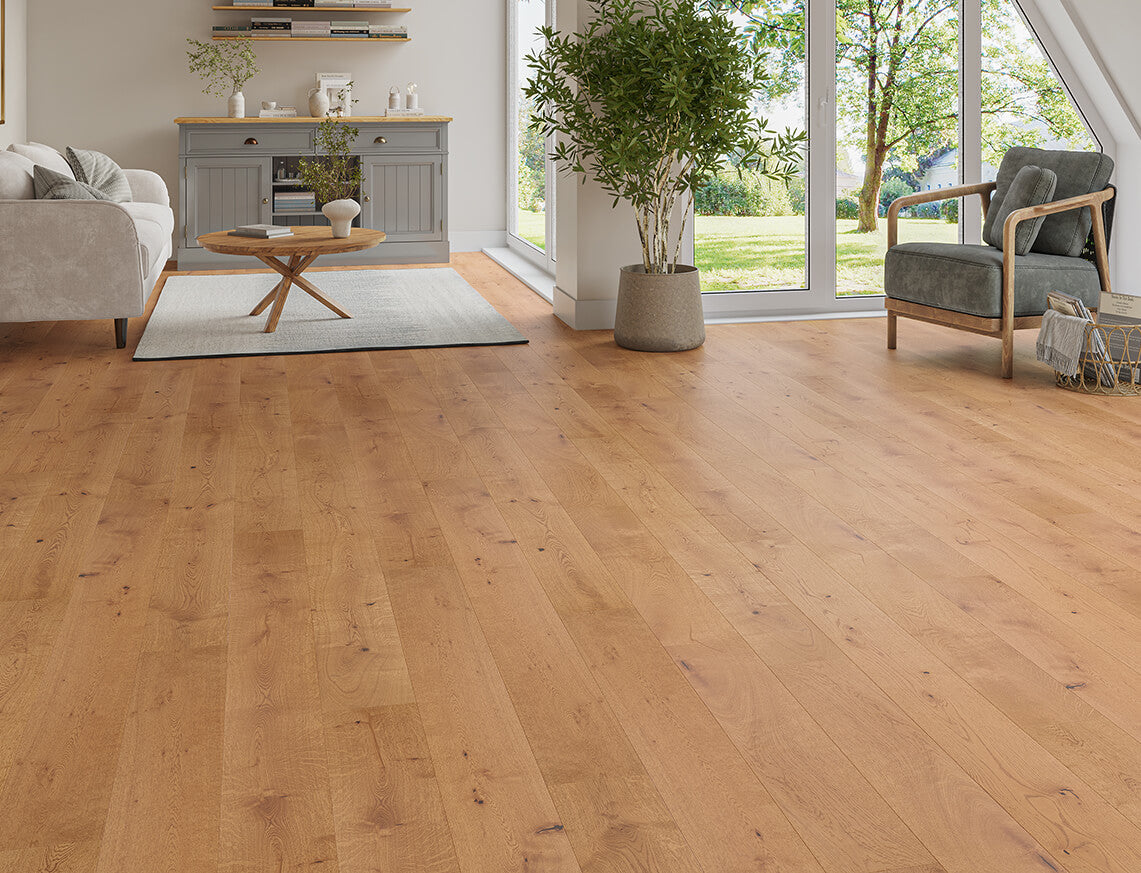
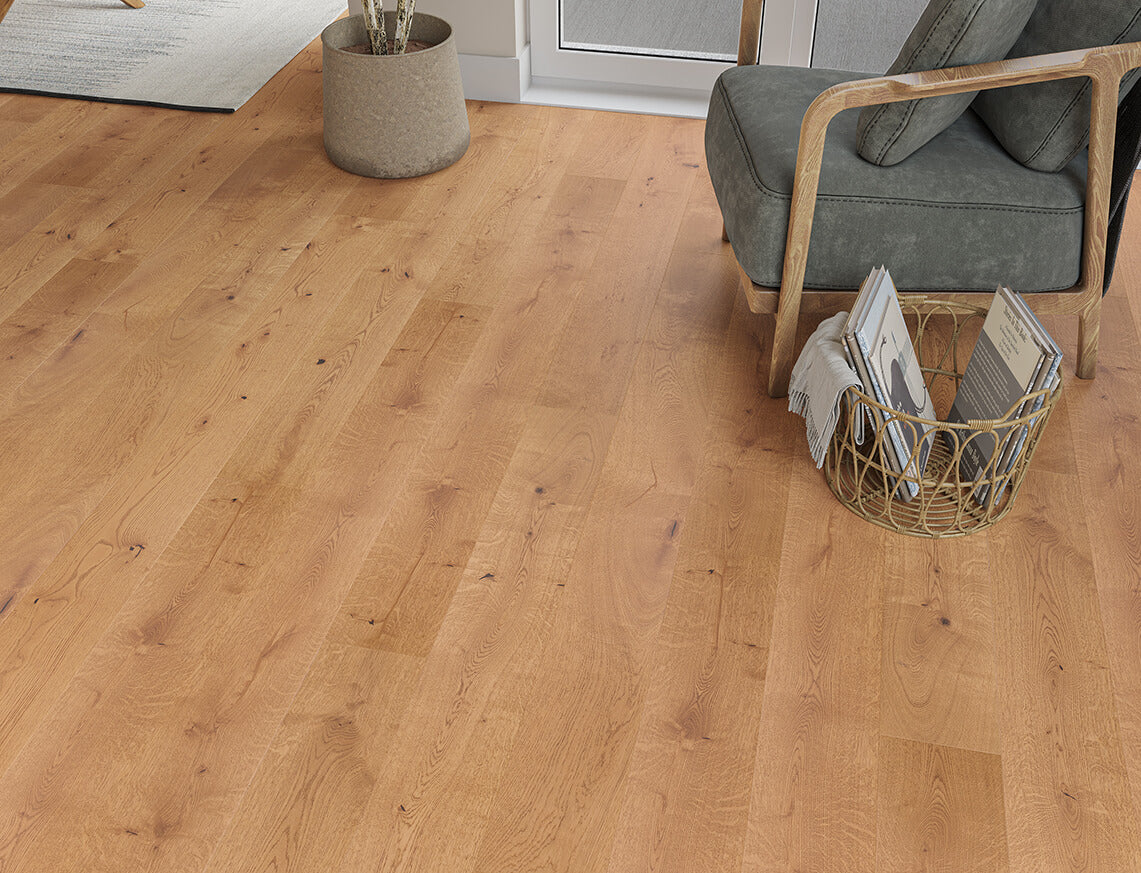
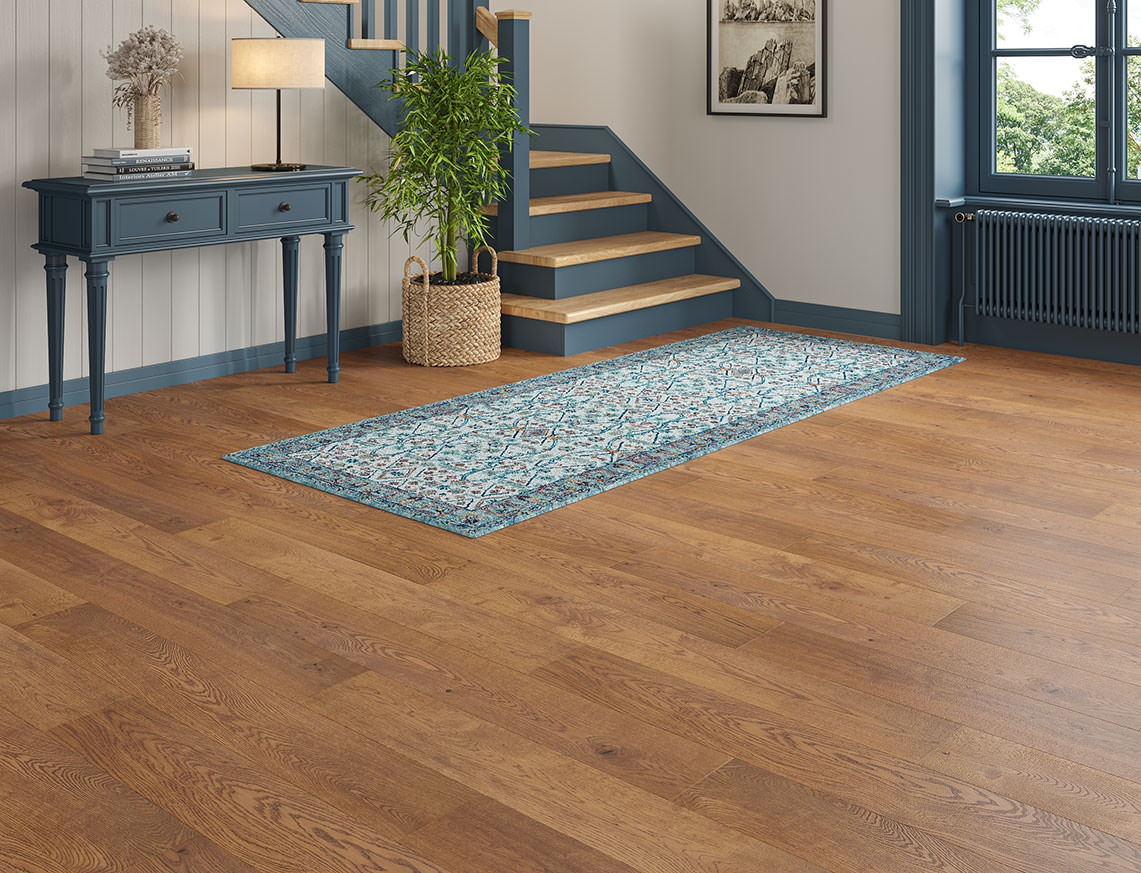
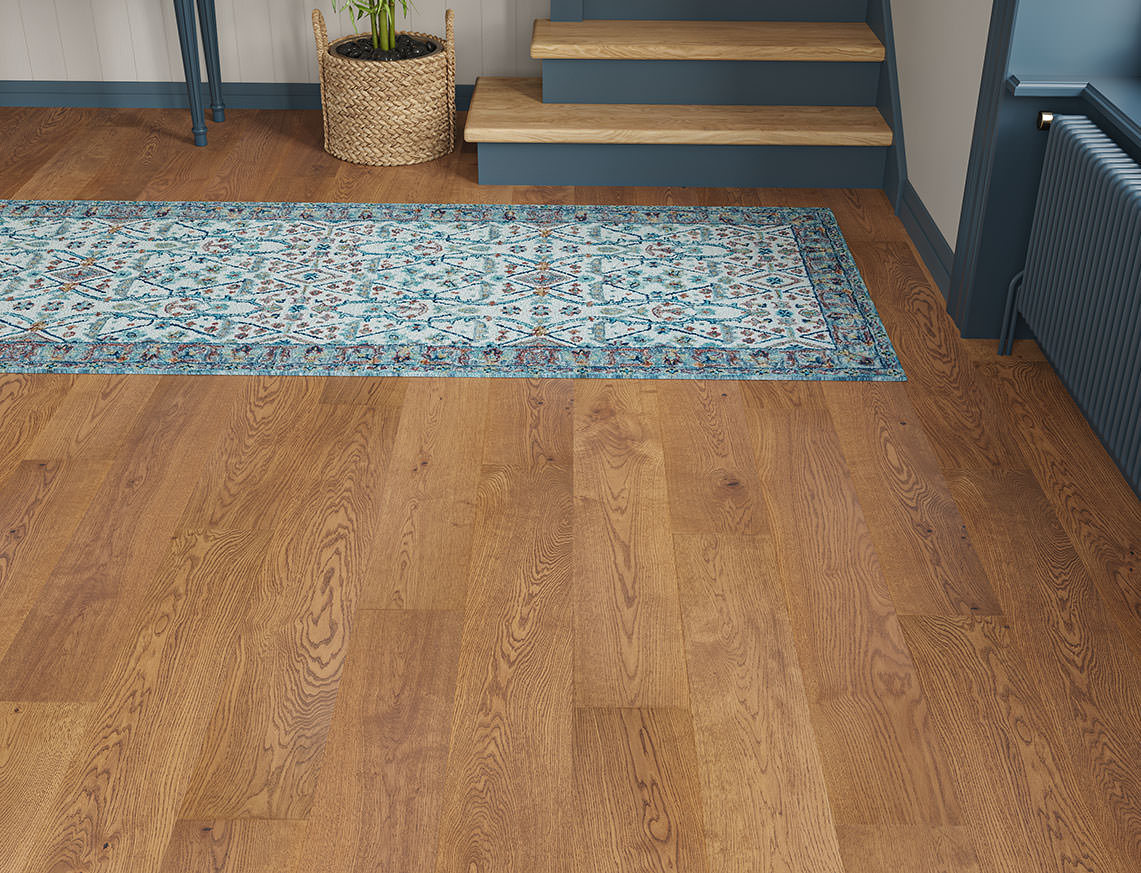
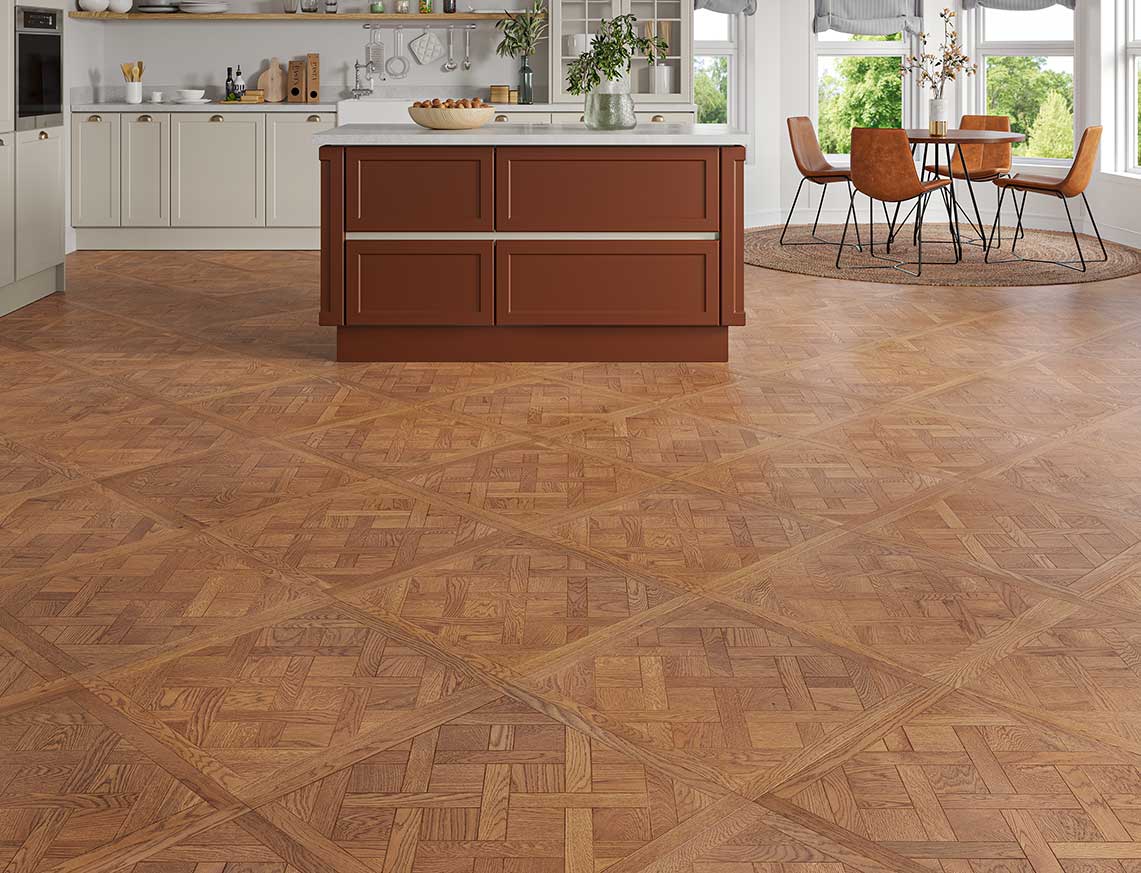
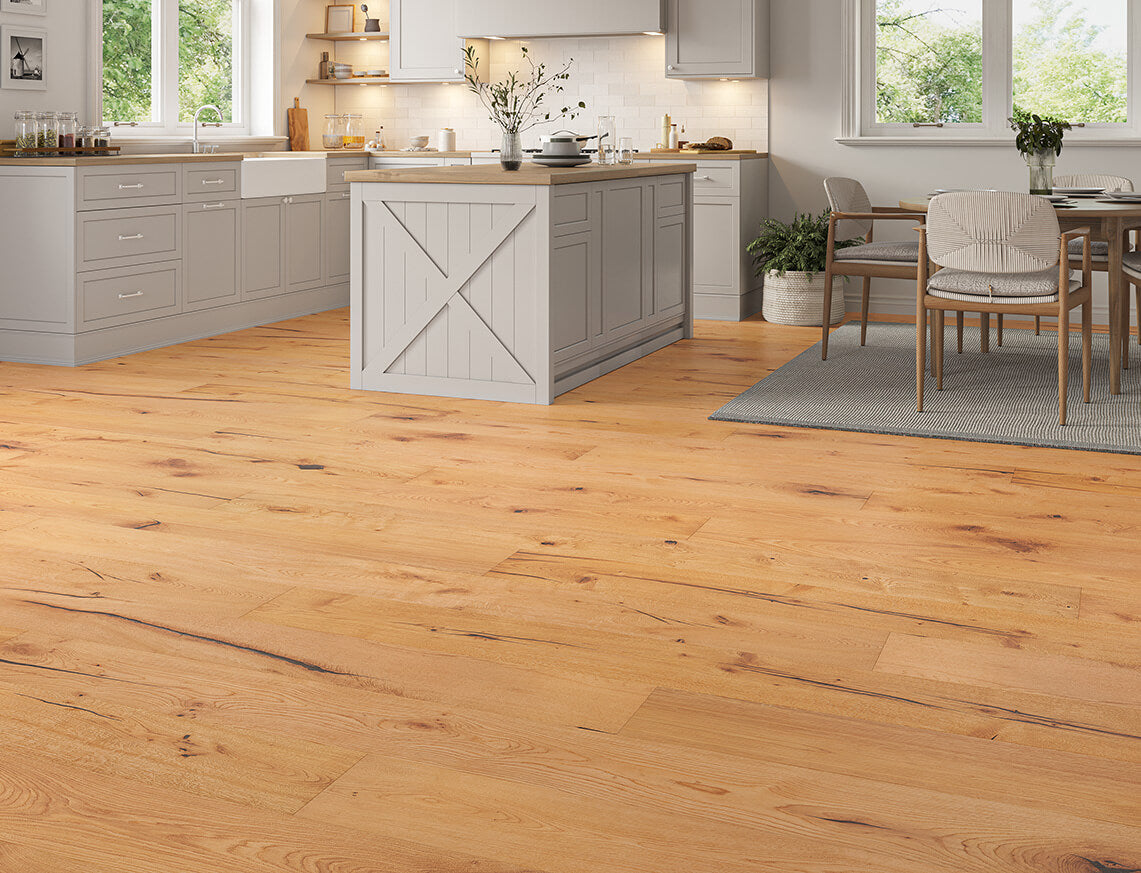
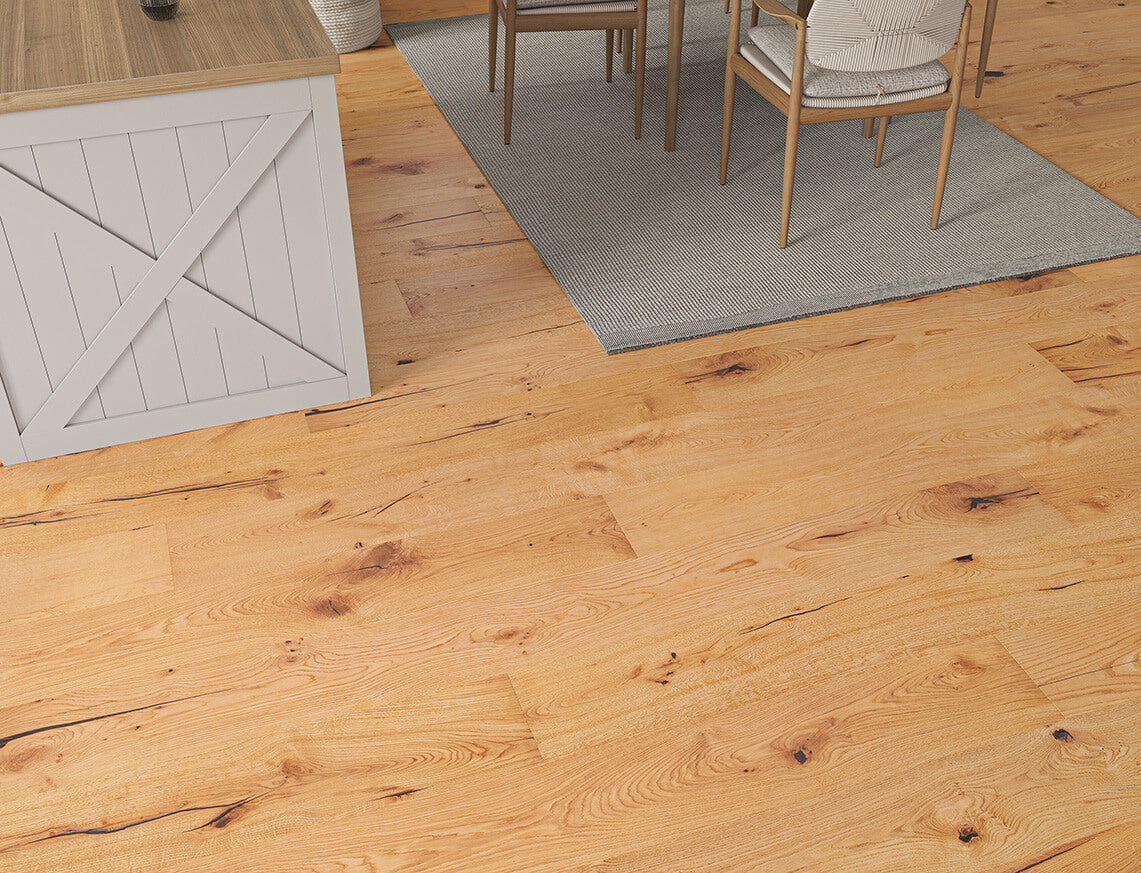
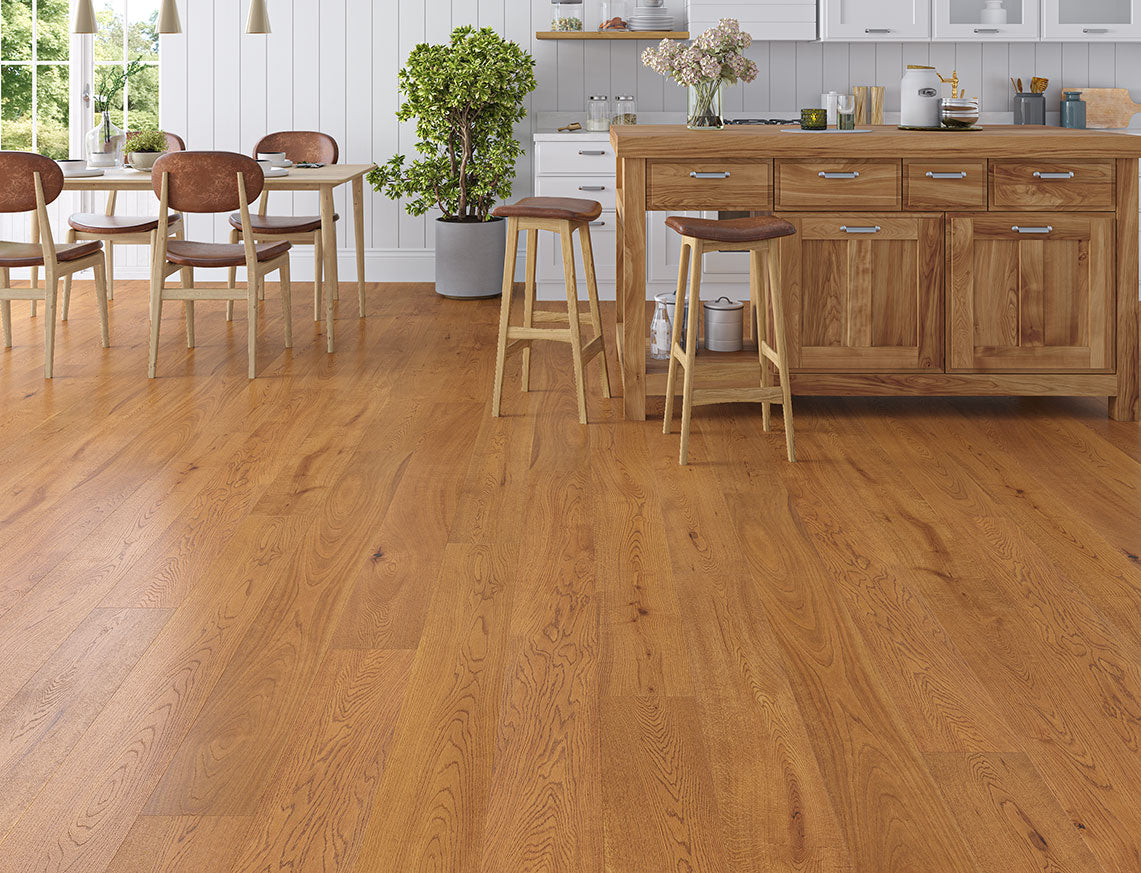
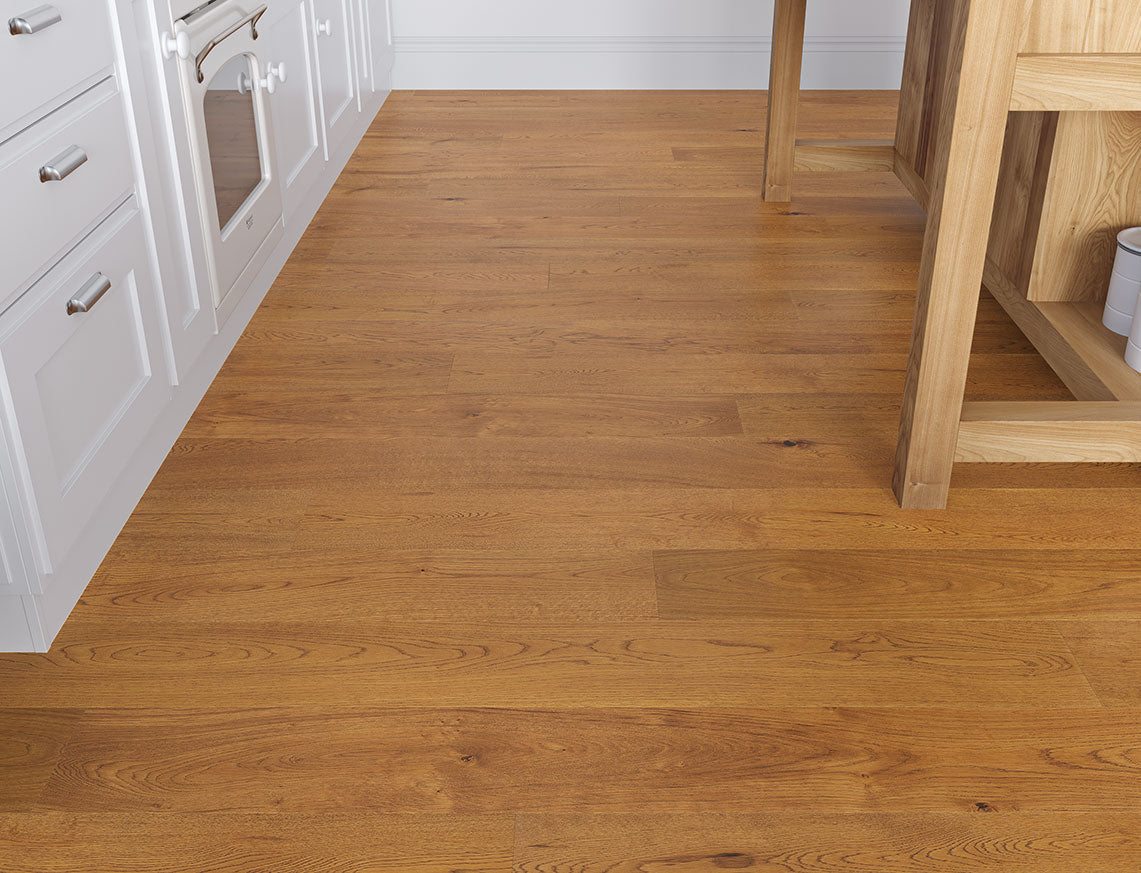
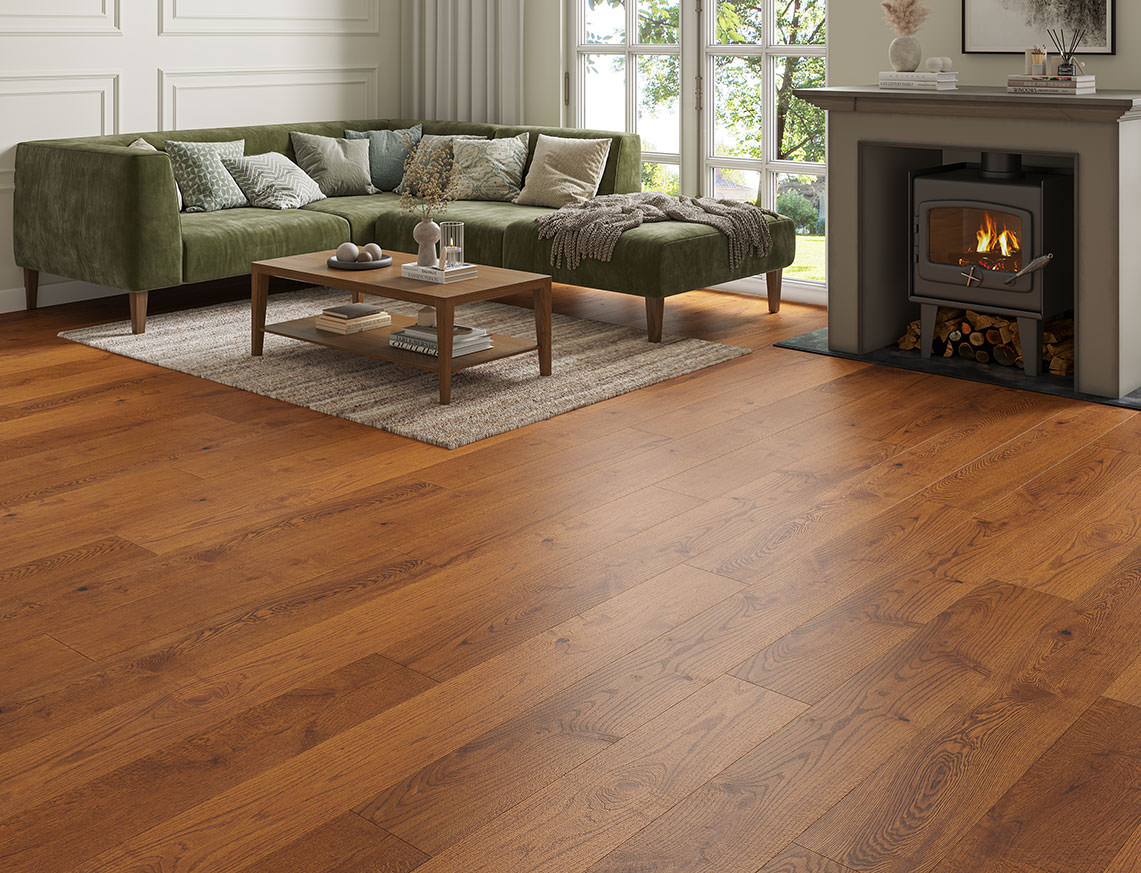
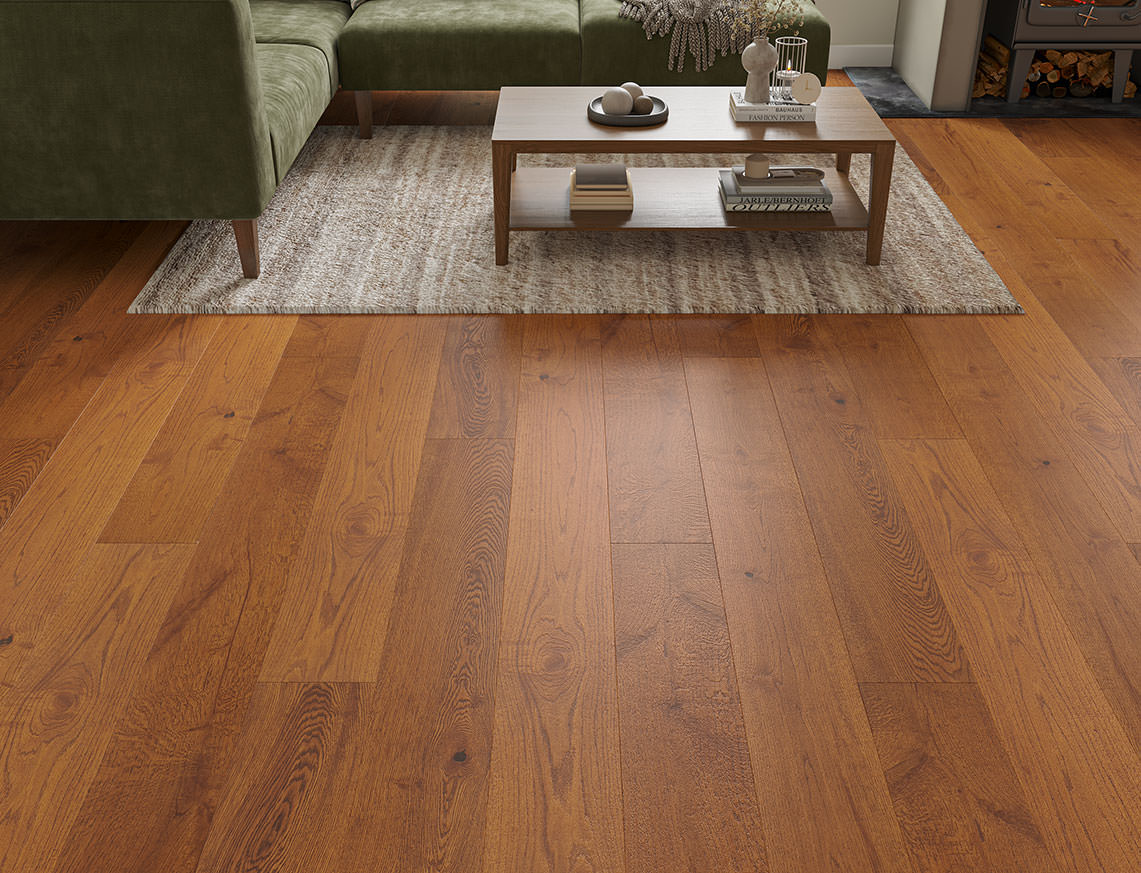
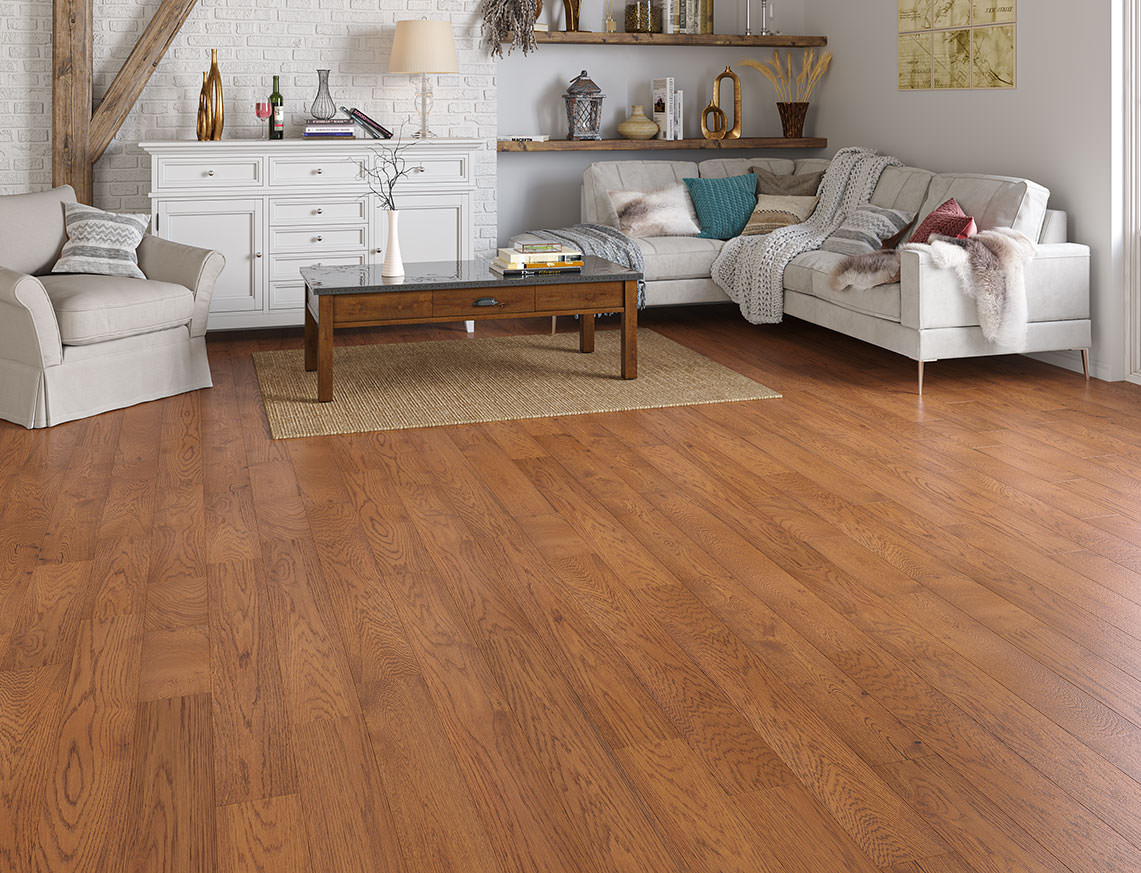
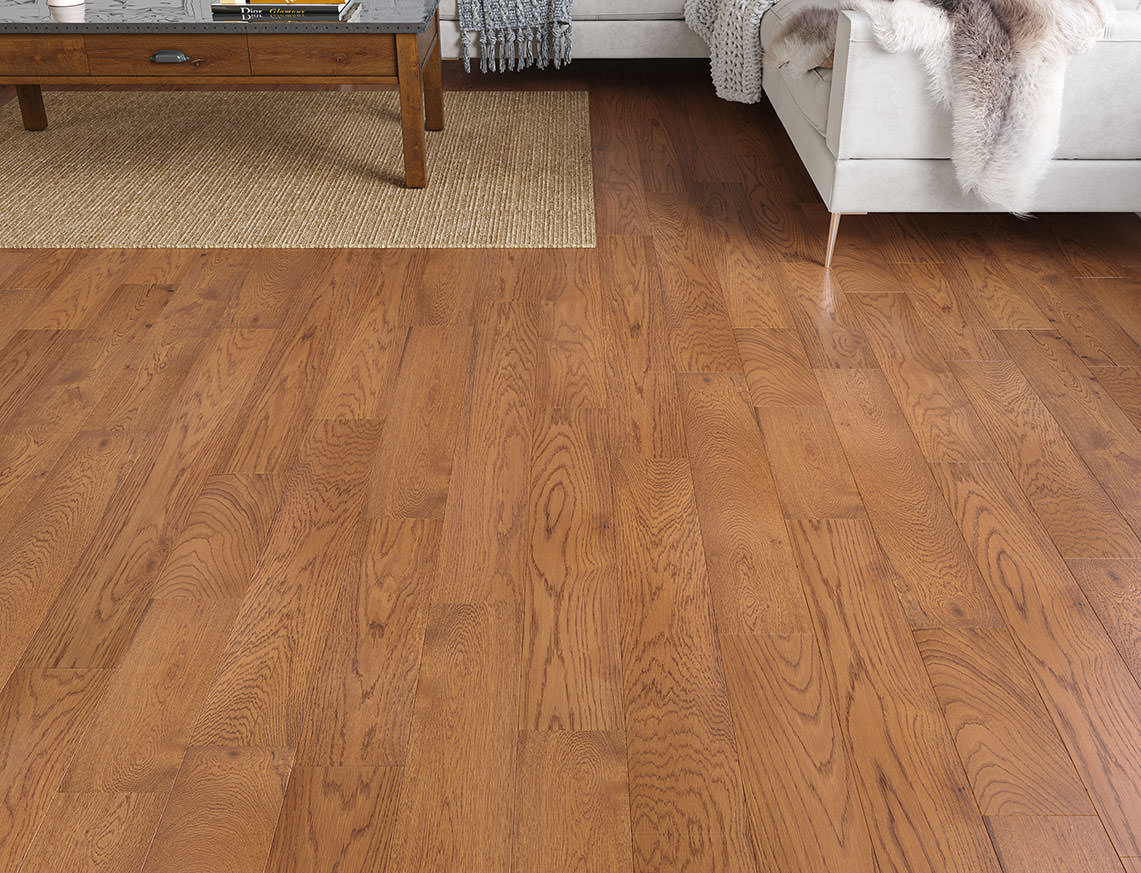
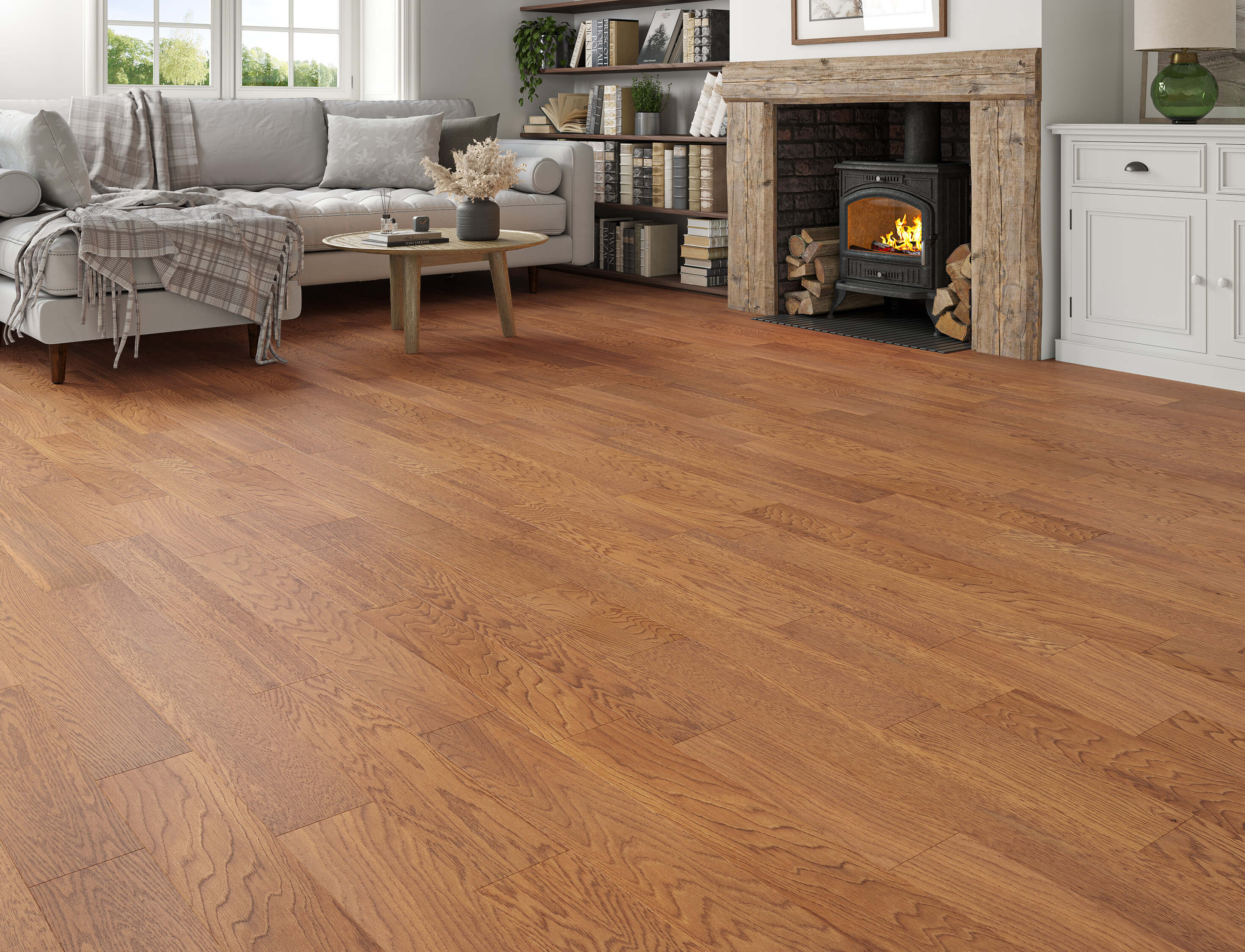
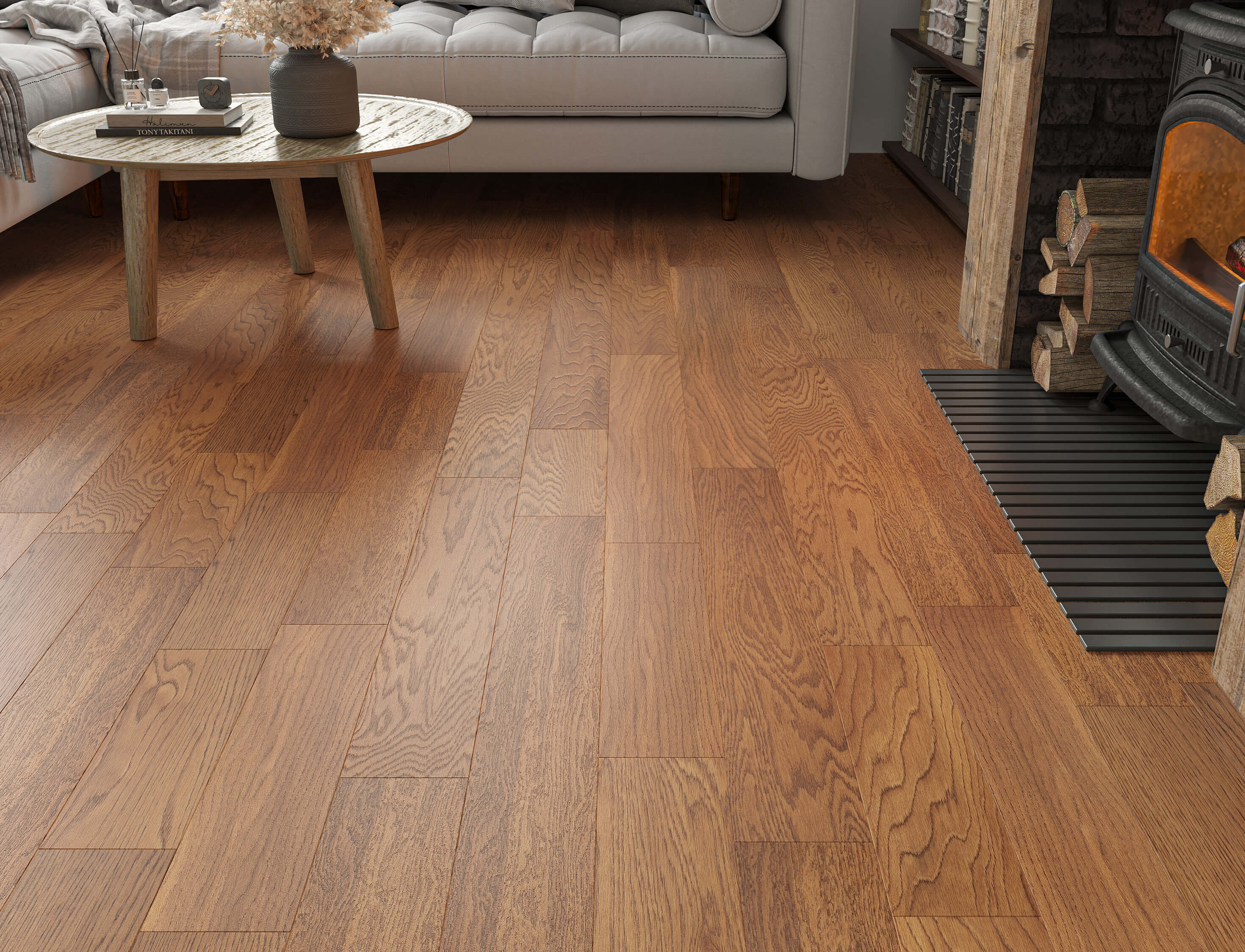
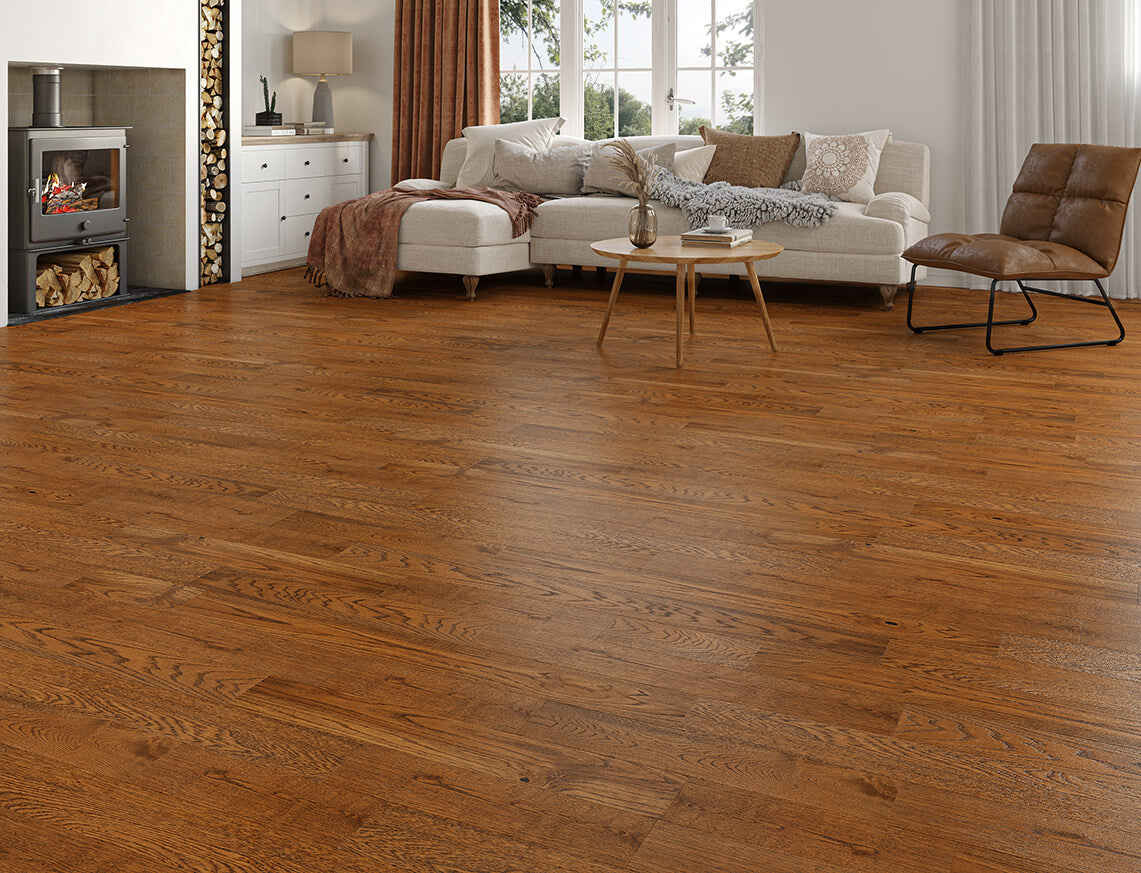
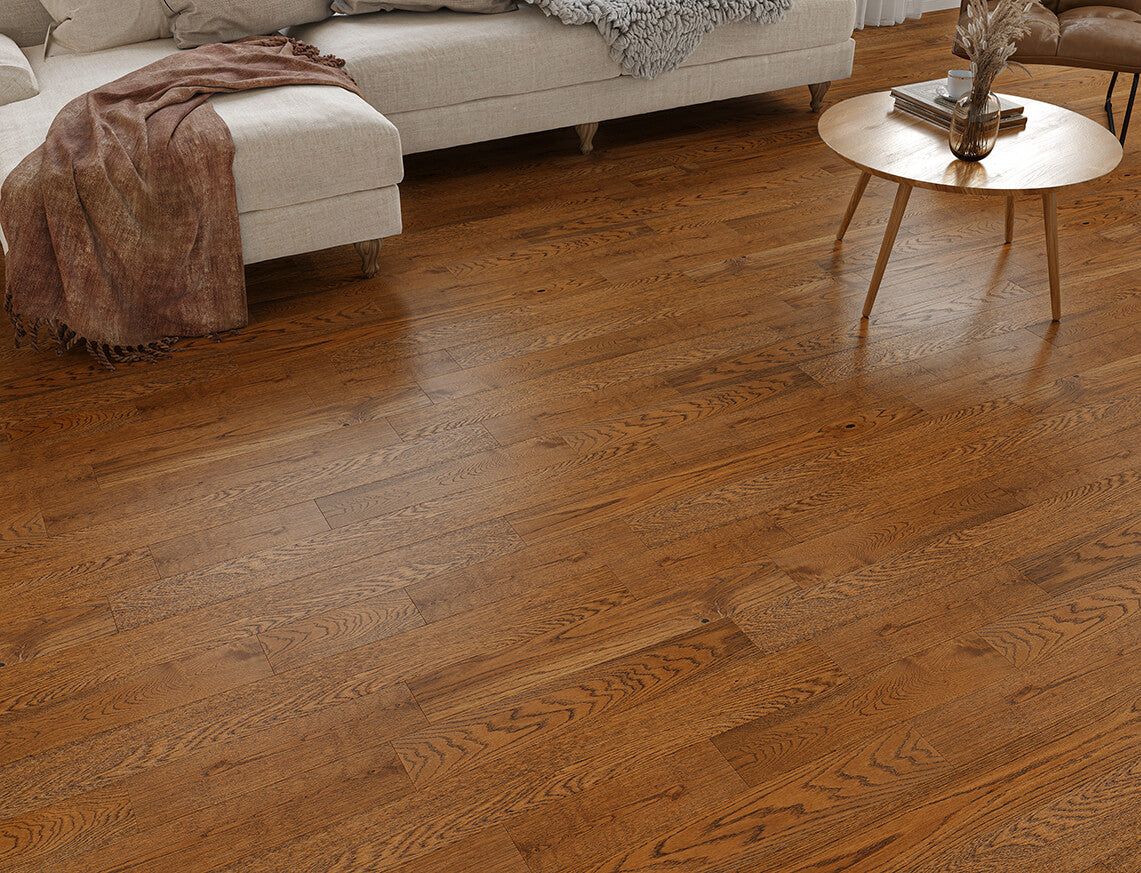
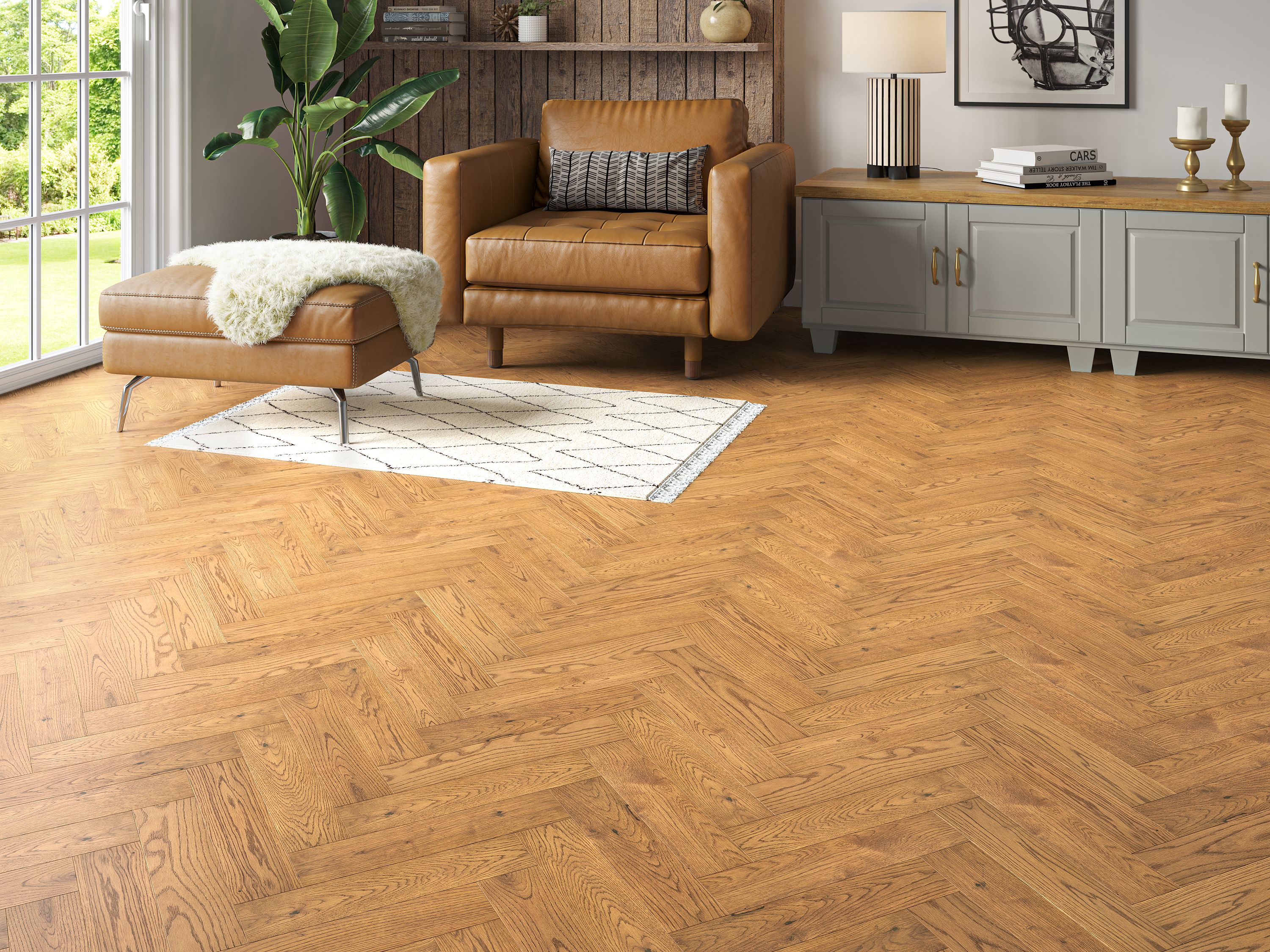
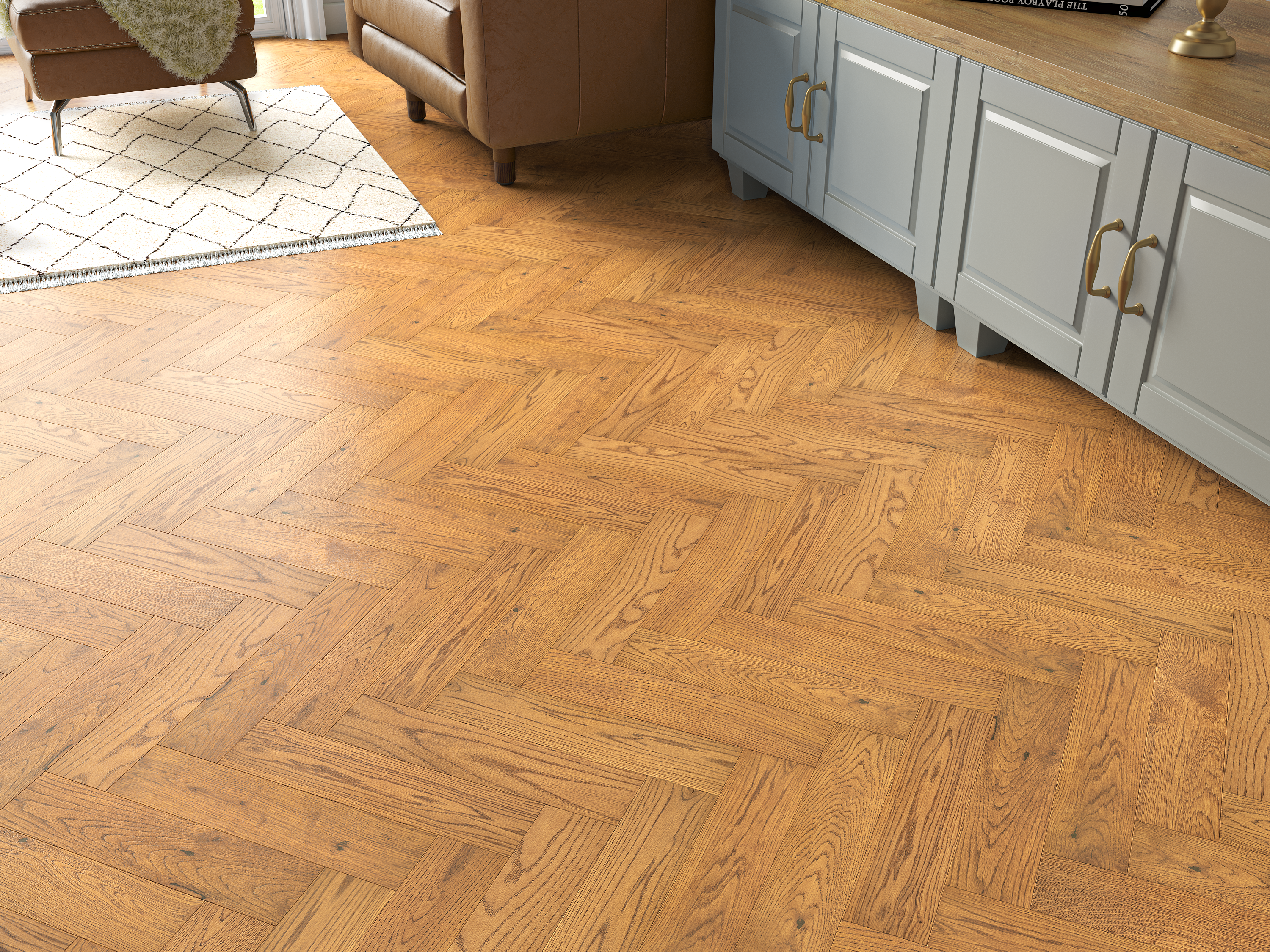
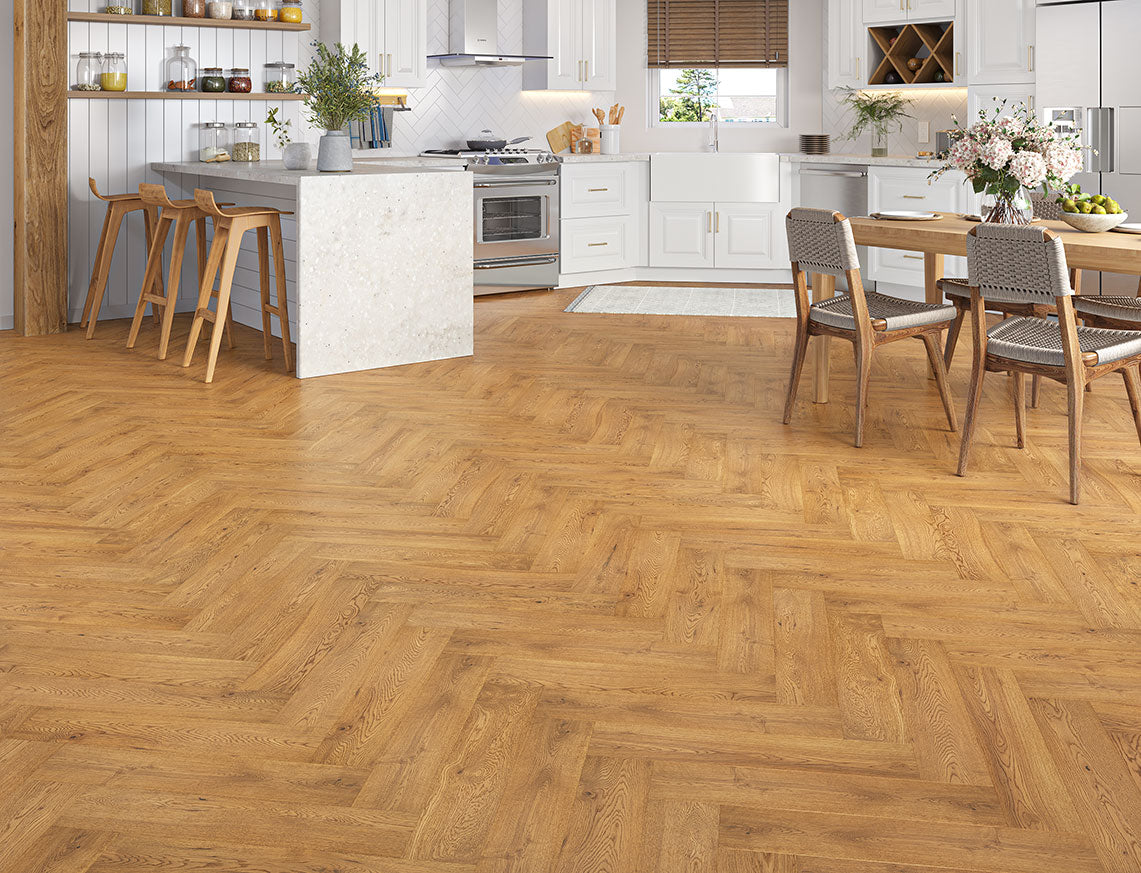
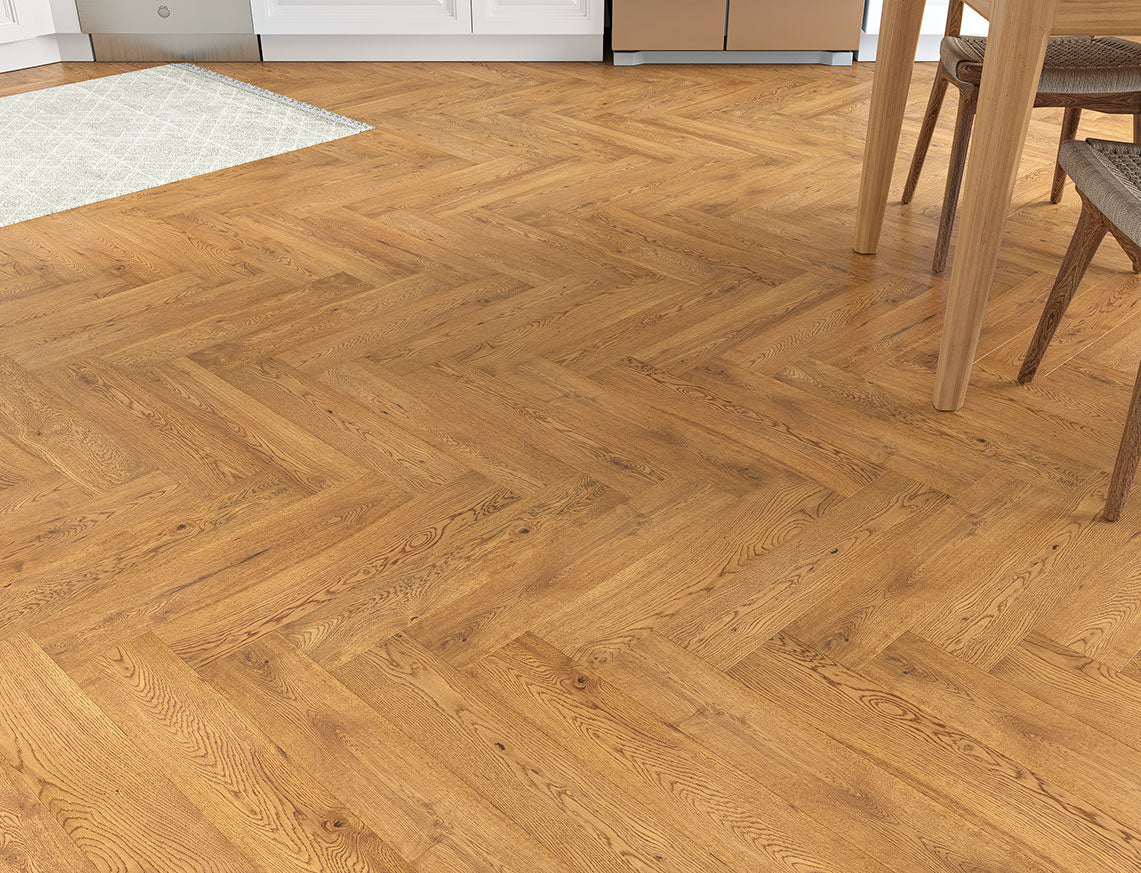
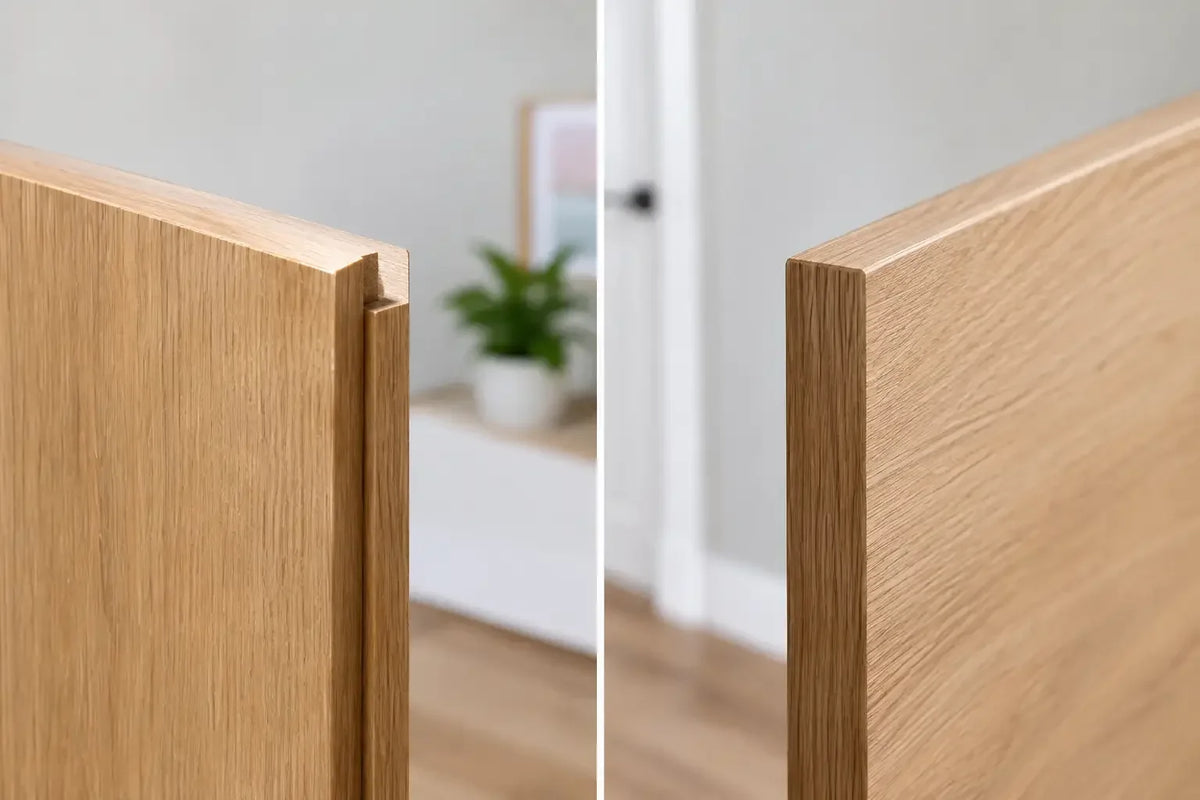
Warm honey and caramel tones with a distinct golden cast. Where a natural oak reads neutral and a grey reads cool, a golden floor actively warms a room, which makes it worth considering in spaces that need it.
It is a colour with real history in British homes. Golden oak was the standard wood floor colour for decades, and it suits period properties, traditional interiors and rooms with limited natural light particularly well.
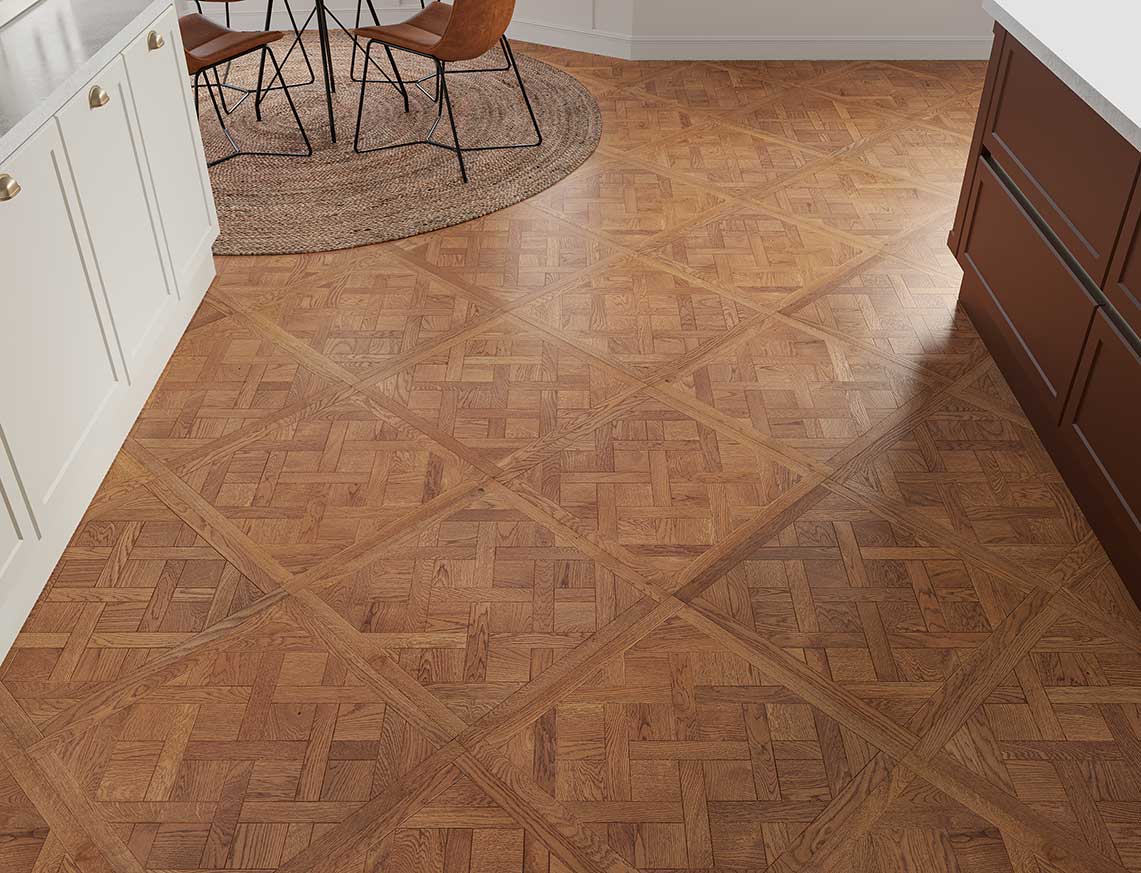
Available across engineered oak, laminate and vinyl, in plank and patterned layouts. Free A5 samples, delivered next-day.
Warmth, essentially. A golden floor pushes a room towards feeling cosy rather than crisp, and it does so regardless of the light. That is a genuine advantage in a north-facing room or a space with one small window, where a cool grey can feel slightly bleak.
It also flatters older properties. Original features, exposed brick, painted panelling and traditional joinery all sit comfortably against a golden oak floor in a way that a very cool or very contemporary floor does not.
The consideration is that golden is a more assertive colour than a natural or a grey. It will influence the rest of the room rather than sitting quietly behind it, so it works best when that warmth is part of the plan.
The range within golden
Light golden oak
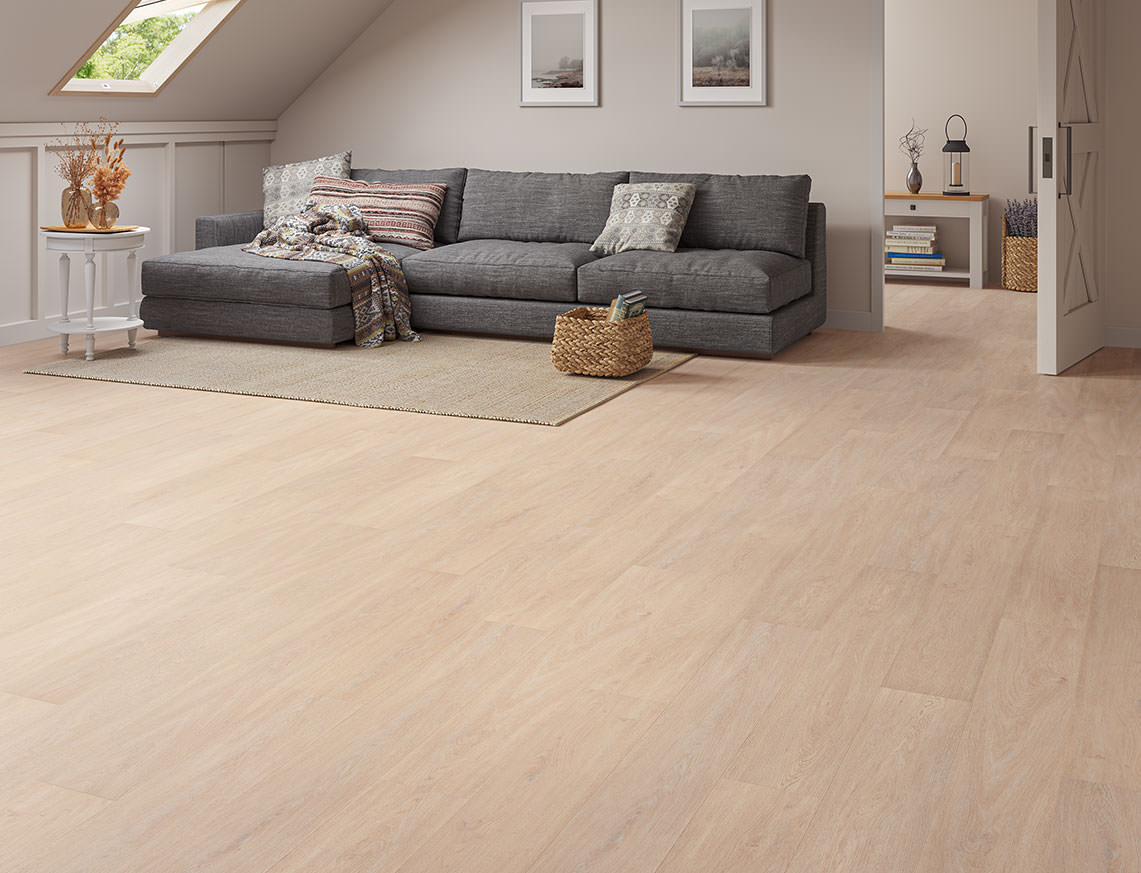
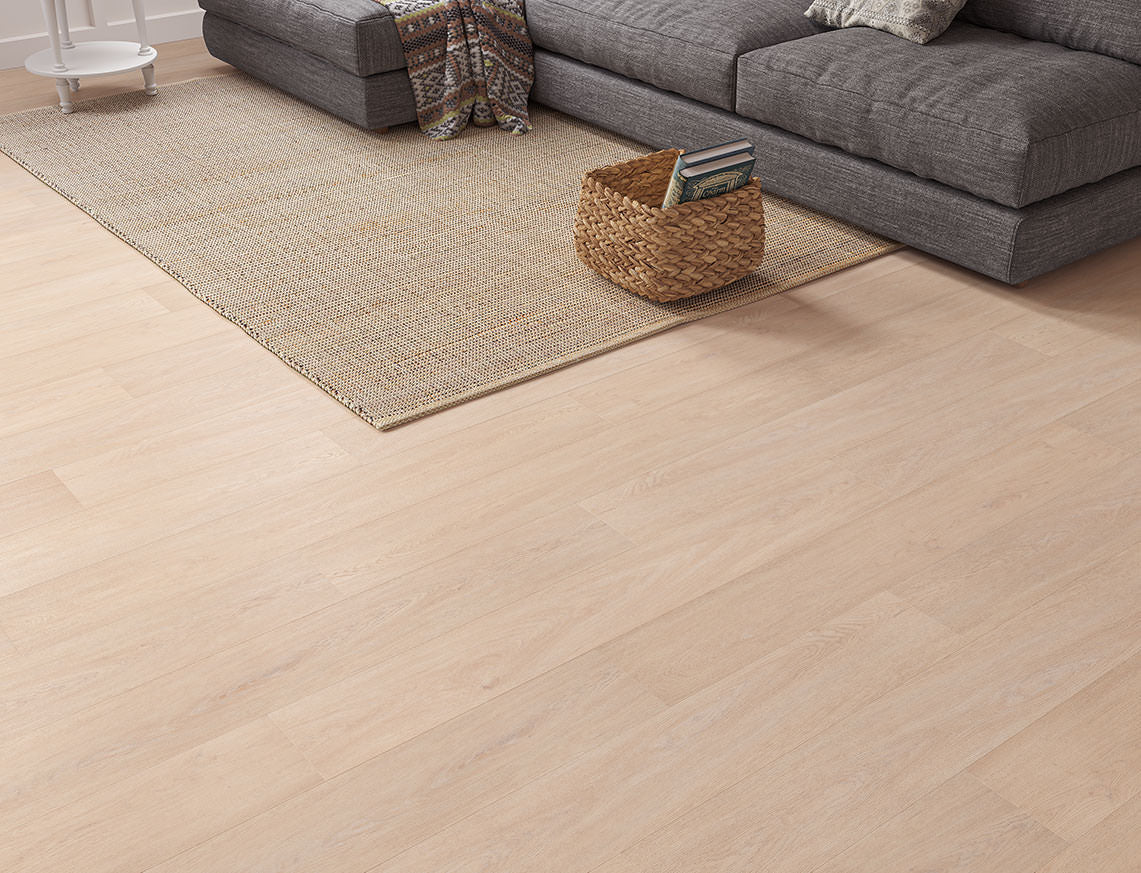
Pale enough to keep a room feeling open, with a warm cast rather than a neutral one. A good middle ground if you like pale floors but find them slightly cold.
Honey tones
The heart of the range. Genuinely golden without being orange, and the colour most people mean when they picture a traditional oak floor.
Caramel and deeper golds
Richer and darker, sitting close to the boundary with our brown collection. More depth and more presence, while keeping the warmth.
Golden and orange are not the same thing
The orange-toned floors of the 1990s gave golden oak a reputation it has largely outgrown. Modern golden tones are warmer than a natural oak but considerably more subtle than what many people remember. Worth seeing a sample before ruling it out on memory.
What golden floors pair with
Cream and warm white walls are the classic pairing and the most reliable. The room reads as traditional and settled.
Deep greens and burgundies work well in period rooms, where the warmth of the floor supports a richer wall colour rather than fighting it.
Existing oak doors and joinery often match closely, since most traditional oak woodwork sits in this tonal range. This is the group most likely to blend with what you already have.
Cool grey walls need care. The contrast between a warm floor and a cool wall can look deliberate and striking, or slightly at odds, depending on the specific tones. Worth testing with a sample.
Judging a golden floor properly
Golden tones hold their colour more consistently across different lighting than greys do, which makes them easier to judge from a sample. What changes is how warm they feel, and warm light in the evening amplifies it.
Order a free sample and look at it in the evening under your own lamps as well as in daylight, since that is when a golden floor is at its warmest. Hold it against your walls and woodwork to check the tones agree.
Golden flooring: frequently asked questions
Is golden oak flooring dated?
The very orange floors of the 1990s look of their era. Modern golden tones are more subtle and read as warm rather than orange, and they suit period properties particularly well.
Does golden flooring make a room feel warmer?
Visually, yes. It is one of the more useful choices in a north-facing room or a space with limited natural light, where a cool floor can feel austere.
What wall colours go with golden flooring?
Cream and warm whites are the safest. Deep greens and burgundies work well in traditional rooms. Cool greys can work but need testing against the specific floor.
Will golden flooring match my oak doors?
Frequently, since most traditional oak joinery sits in this tonal range. Hold a sample directly against the door to check.
Will the colour deepen over time?
Oak warms with age and light exposure, so a golden floor generally becomes richer rather than fading. Direct sunlight does this unevenly, so move rugs occasionally.